leadership
Leadership is defined as a process of
influencing people to accomplish their
goal .
leadership is all about influencing and
inspiring others to achieve their goal.
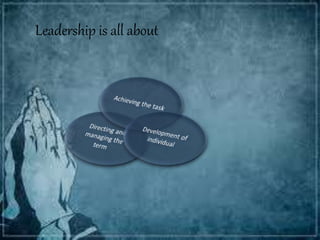
Leadership is all about
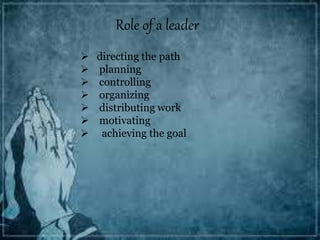
Role of a leader
 directing the path
 planning
 controlling
 organizing
 distributing work
 motivating
 achieving the goal
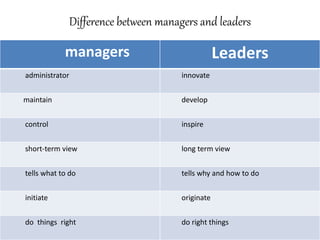
Difference between managers and leaders
managers Leaders
administrator innovate
maintain develop
control inspire
short-term view long term view
tells what to do tells why and how to do
initiate originate
do things right do right things
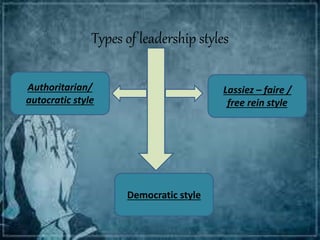
Types of leadership styles
Authoritarian/
autocratic style
Lassiez – faire /
free rein style
Democratic style
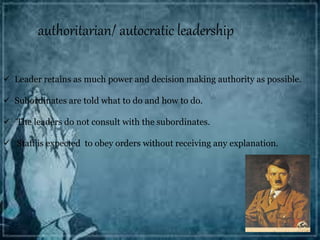
authoritarian/ autocratic leadership
 Leader retains as much power and decision making authority as possible.
 Subordinates are told what to do and how to do.
 The leaders do not consult with the subordinates.
 Staff is expected to obey orders without receiving any explanation.
Democratic leadership
 In this type of leadership the leaders consult with their
subordinates.
 Leaders uses the advice and ideas of others.
 This style allow leader to see wide spectrum of ideas.
 Useful when there is plenty of time and effective work
expected.
Lassiez – faire leadership
 Involves giving complete freedom to subordinates for making
decisions and implementing those decisions.
 Used to gain creative ideas.
 Highly motivational.
 Beliefs on good team work.
conclusion
 The manager’s personal background –what personality,
knowledge, values, ethics, and experiences does the manager’s
have. What does he/she think will work.
 Staff being supervised – staff individuals with different
personalities and backgrounds; the leadership style is used to vary
depending upon the individual staff .
 The organization – the traditions, values, philosophy, and
concerns of the organization influence how managers acts.
Leadership .ppt

Leadership .ppt

  • 2.
    leadership Leadership is definedas a process of influencing people to accomplish their goal . leadership is all about influencing and inspiring others to achieve their goal.
  • 3.
  • 4.
    Role of aleader  directing the path  planning  controlling  organizing  distributing work  motivating  achieving the goal
  • 5.
    Difference between managersand leaders managers Leaders administrator innovate maintain develop control inspire short-term view long term view tells what to do tells why and how to do initiate originate do things right do right things
  • 6.
    Types of leadershipstyles Authoritarian/ autocratic style Lassiez – faire / free rein style Democratic style
  • 8.
    authoritarian/ autocratic leadership Leader retains as much power and decision making authority as possible.  Subordinates are told what to do and how to do.  The leaders do not consult with the subordinates.  Staff is expected to obey orders without receiving any explanation.
  • 9.
    Democratic leadership  Inthis type of leadership the leaders consult with their subordinates.  Leaders uses the advice and ideas of others.  This style allow leader to see wide spectrum of ideas.  Useful when there is plenty of time and effective work expected.
  • 10.
    Lassiez – faireleadership  Involves giving complete freedom to subordinates for making decisions and implementing those decisions.  Used to gain creative ideas.  Highly motivational.  Beliefs on good team work.
  • 11.
    conclusion  The manager’spersonal background –what personality, knowledge, values, ethics, and experiences does the manager’s have. What does he/she think will work.  Staff being supervised – staff individuals with different personalities and backgrounds; the leadership style is used to vary depending upon the individual staff .  The organization – the traditions, values, philosophy, and concerns of the organization influence how managers acts.