Centralized Scheduling made Simple
Scott Weiss
Once upon a time, there was a
meeting about task scheduling…
Mesos
• Popular, mature cluster manager
• Widely used at hyperscale
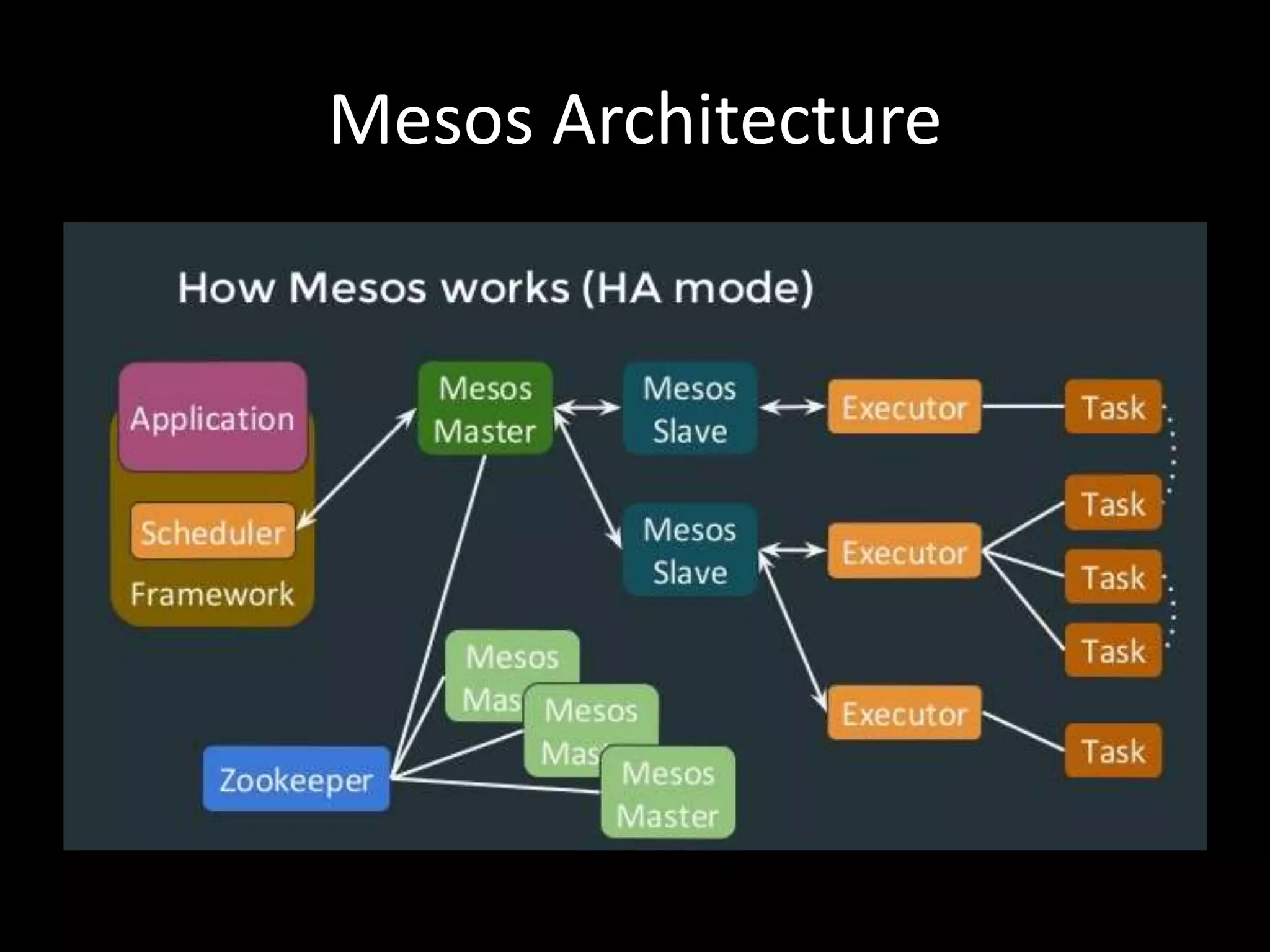
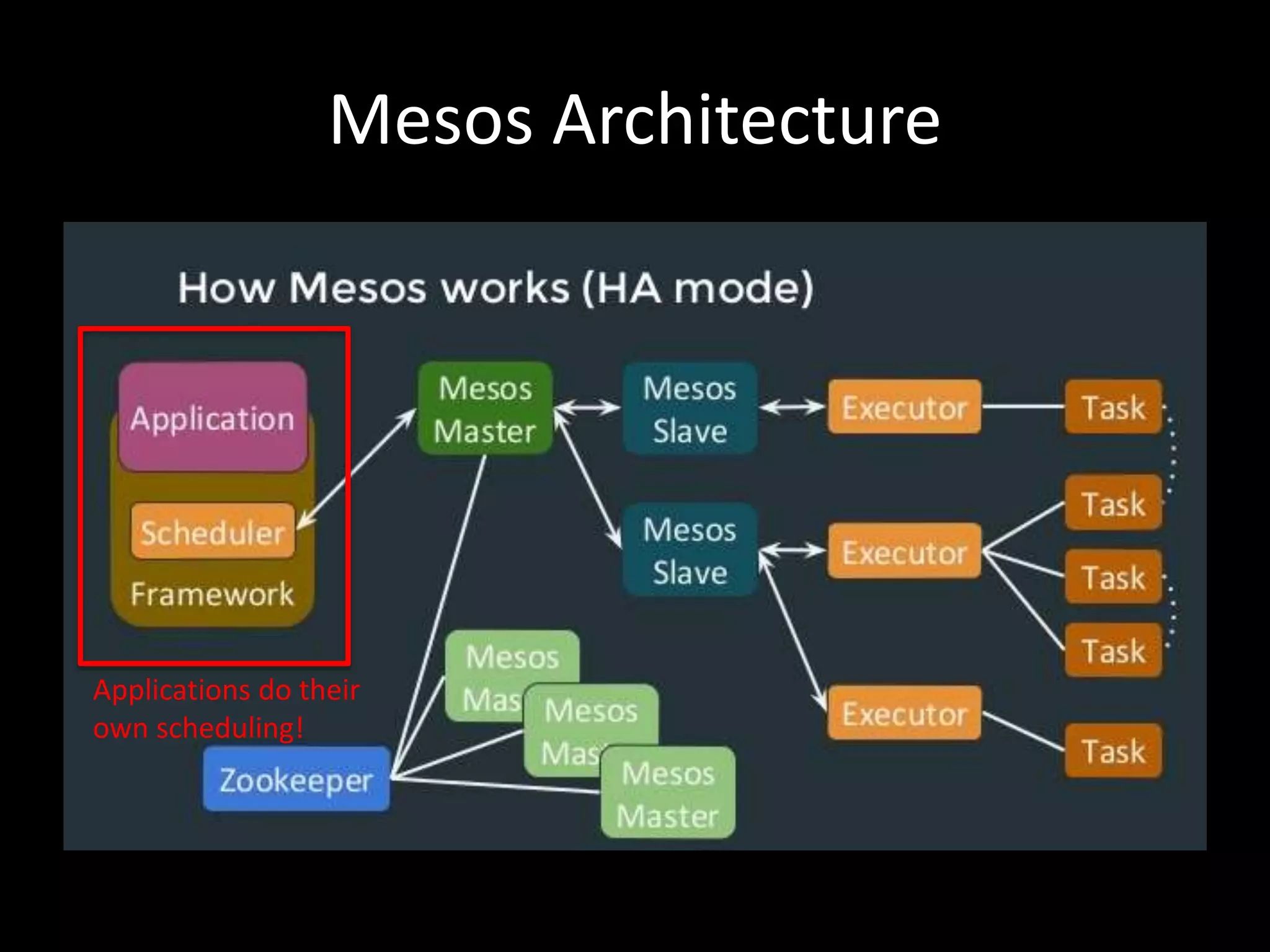
Mesos Architecture
Mesos Architecture
Applications do their
own scheduling!
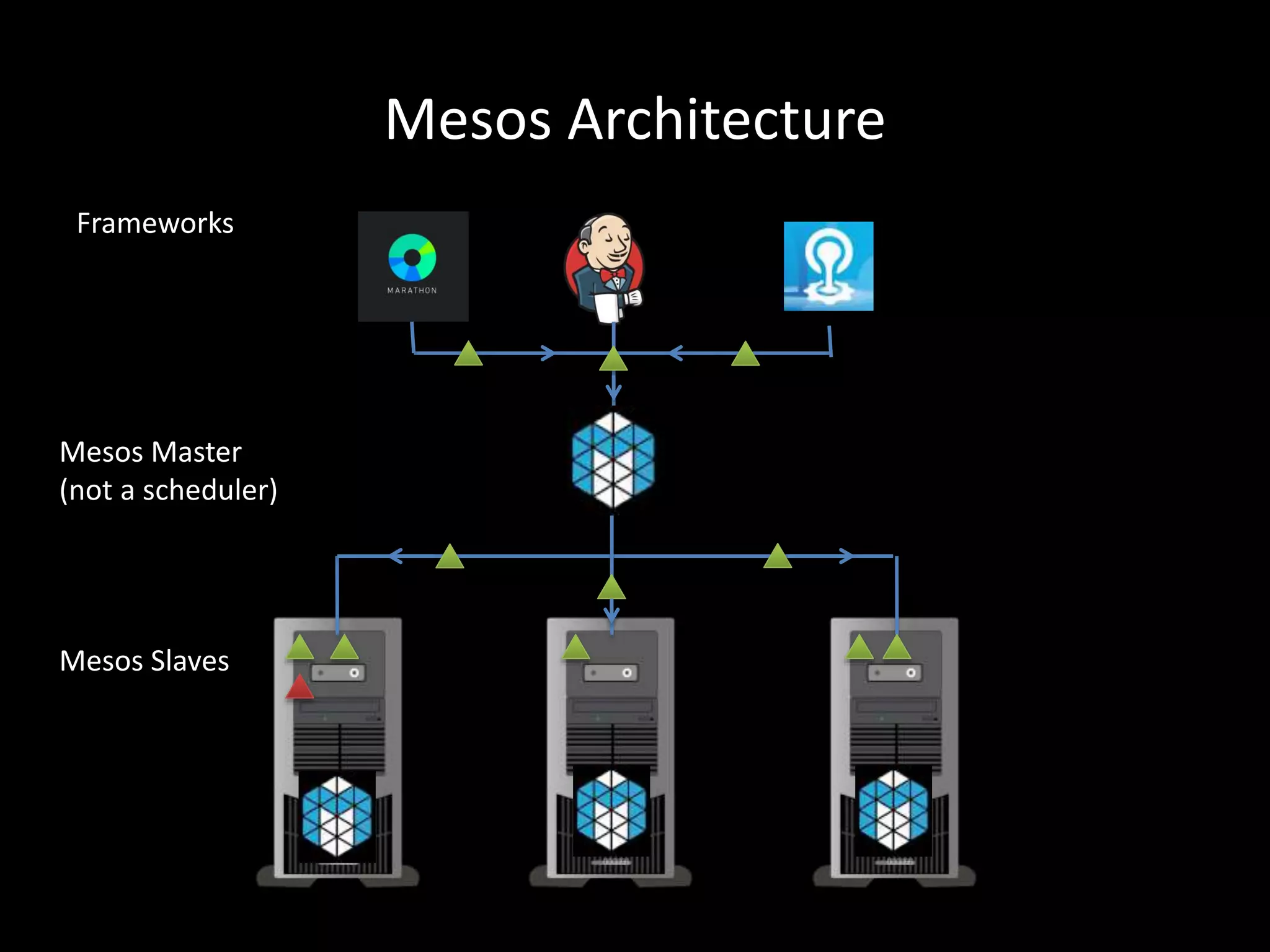
Mesos Architecture
Your
application
Frameworks
Mesos Master
(not a scheduler)
Mesos Slaves
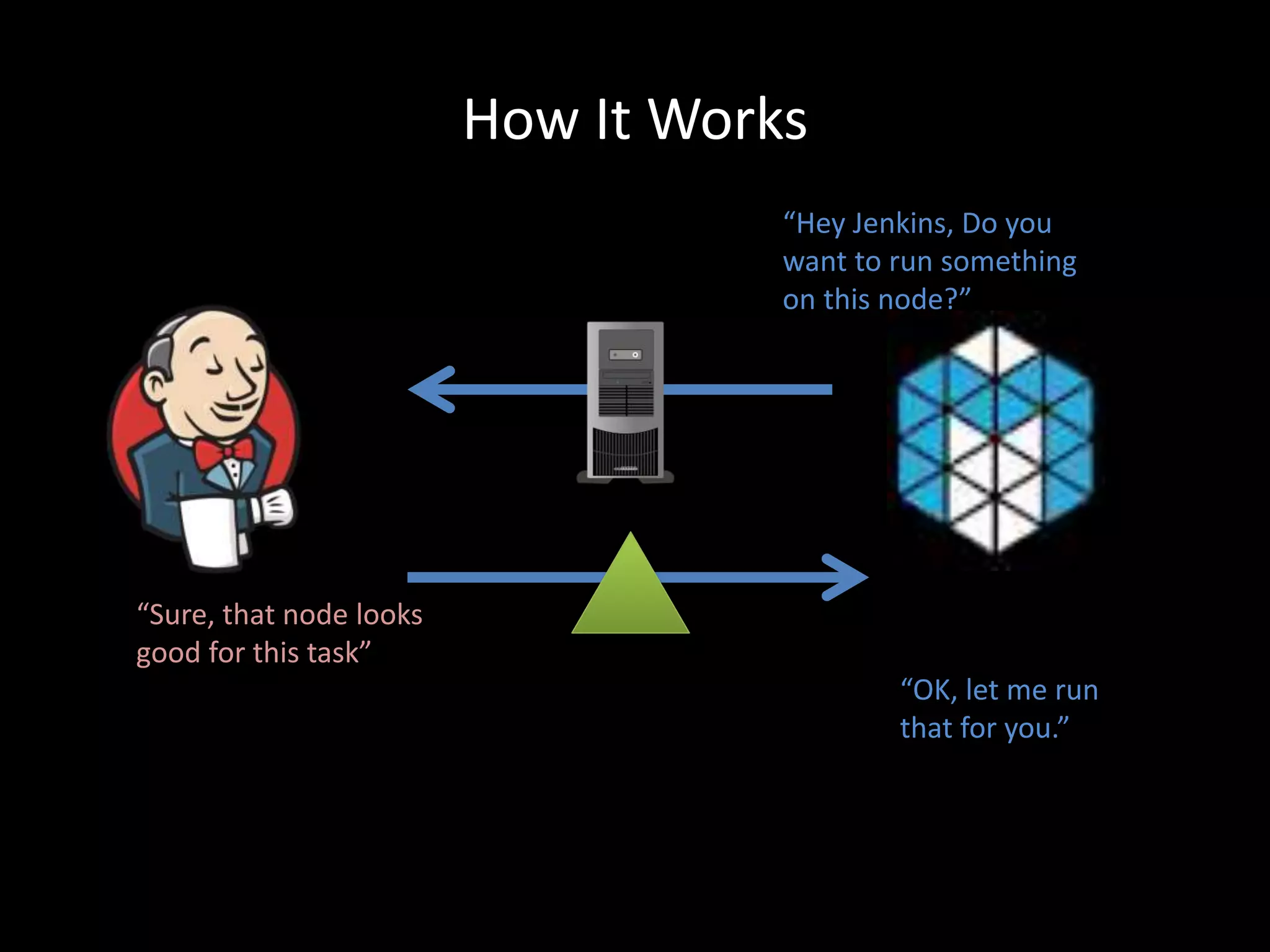
How It Works
“Hey Jenkins, Do you
want to run something
on this node?”
“Sure, that node looks
good for this task”
“OK, let me run
that for you.”
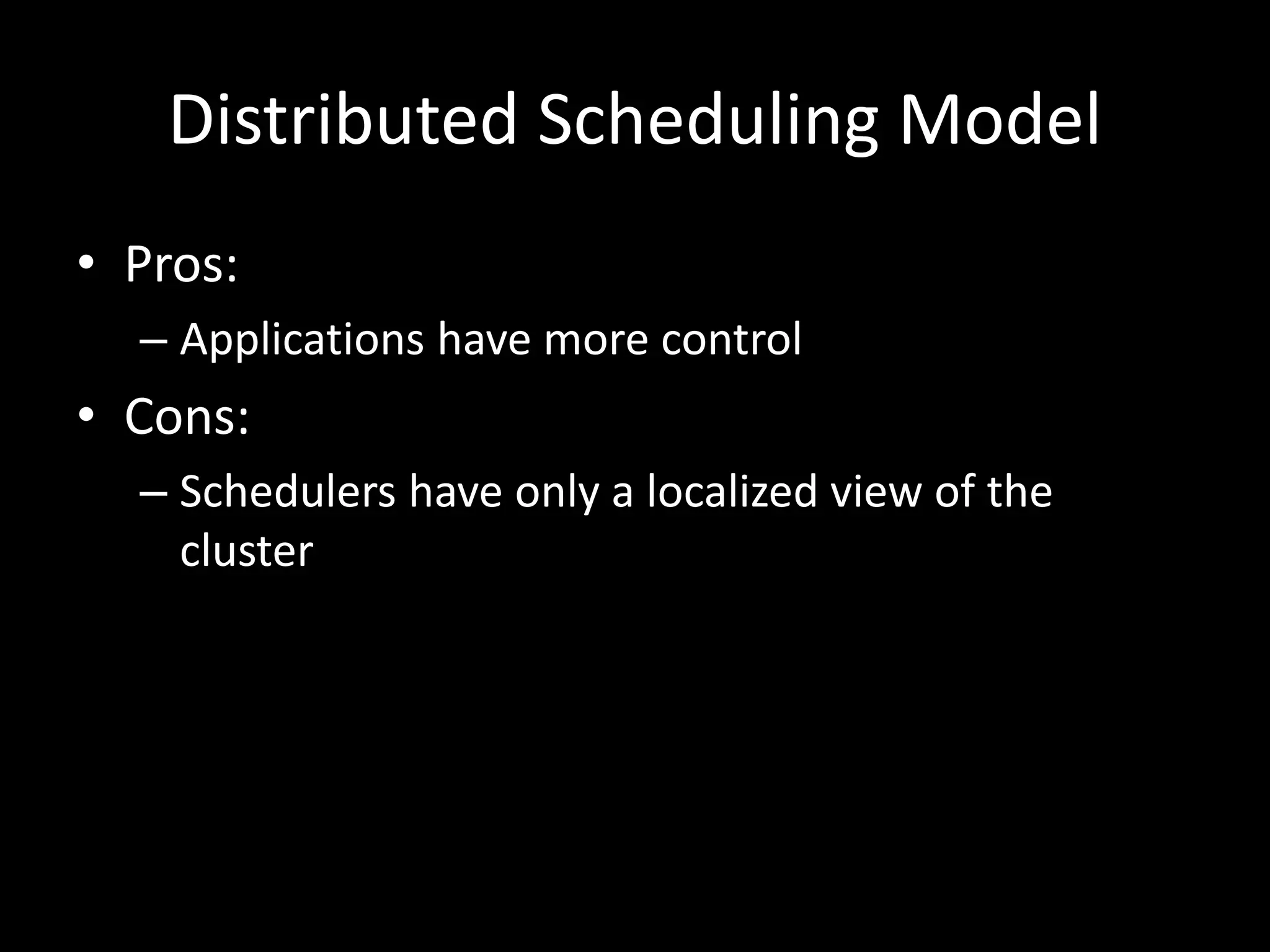
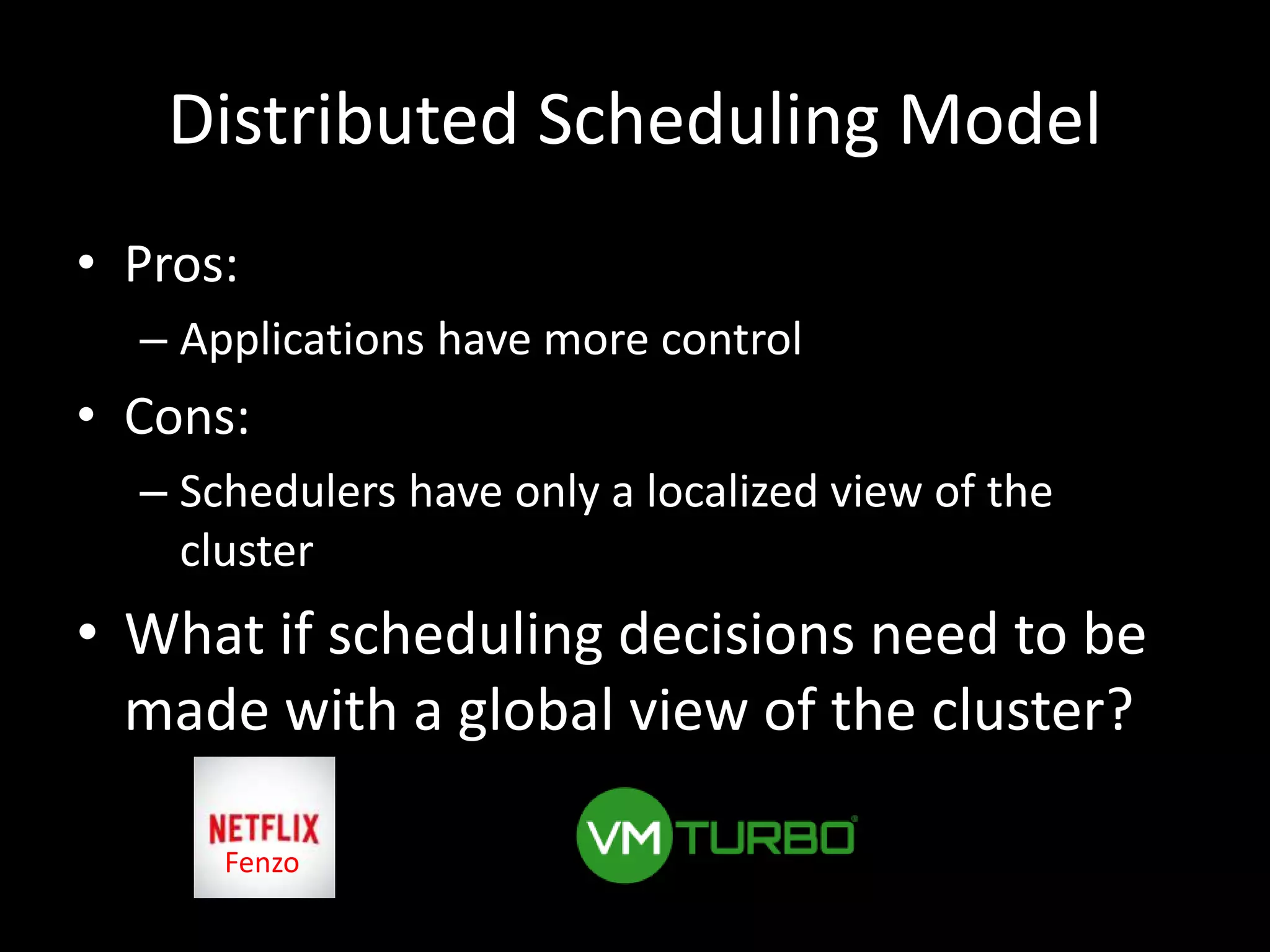
Distributed Scheduling Model
• Pros:
– Applications have more control
• Cons:
– Schedulers have only a localized view of the
cluster
Distributed Scheduling Model
• Pros:
– Applications have more control
• Cons:
– Schedulers have only a localized view of the
cluster
• What if scheduling decisions need to be
made with a global view of the cluster?
Fenzo
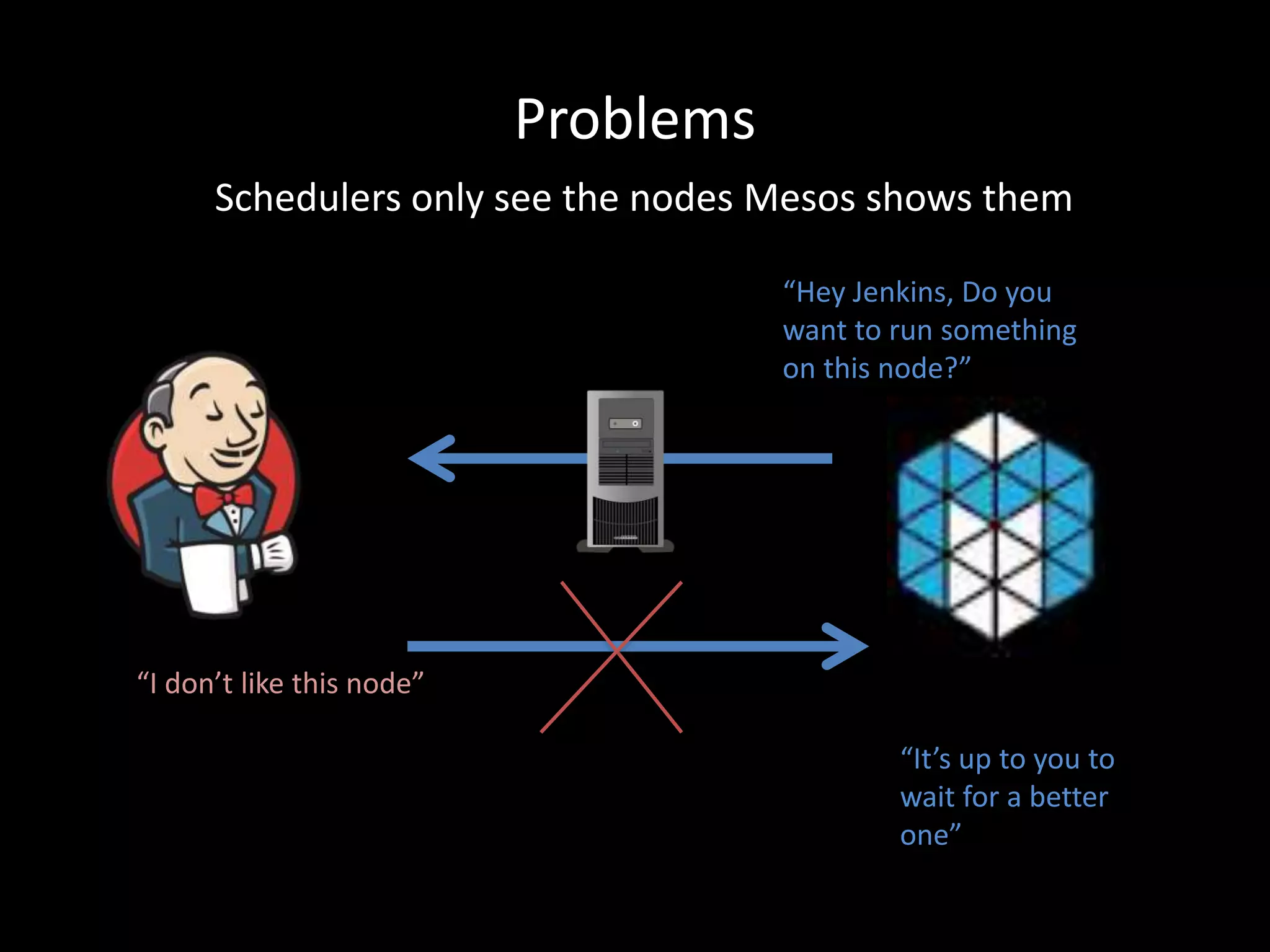
Problems
“Hey Jenkins, Do you
want to run something
on this node?”
“I don’t like this node”
“It’s up to you to
wait for a better
one”
Schedulers only see the nodes Mesos shows them
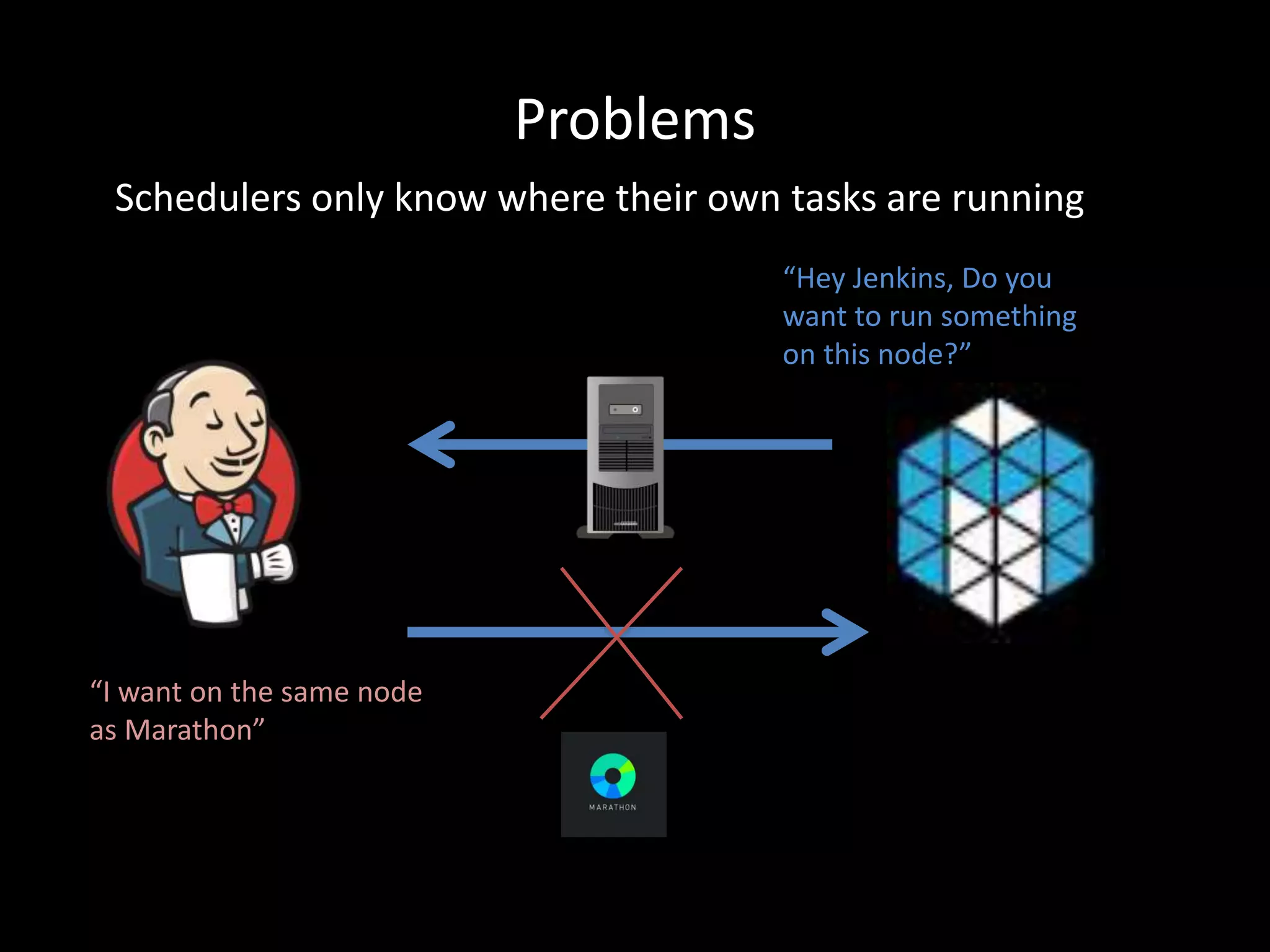
Problems
“Hey Jenkins, Do you
want to run something
on this node?”
“I want on the same node
as Marathon”
Schedulers only know where their own tasks are running
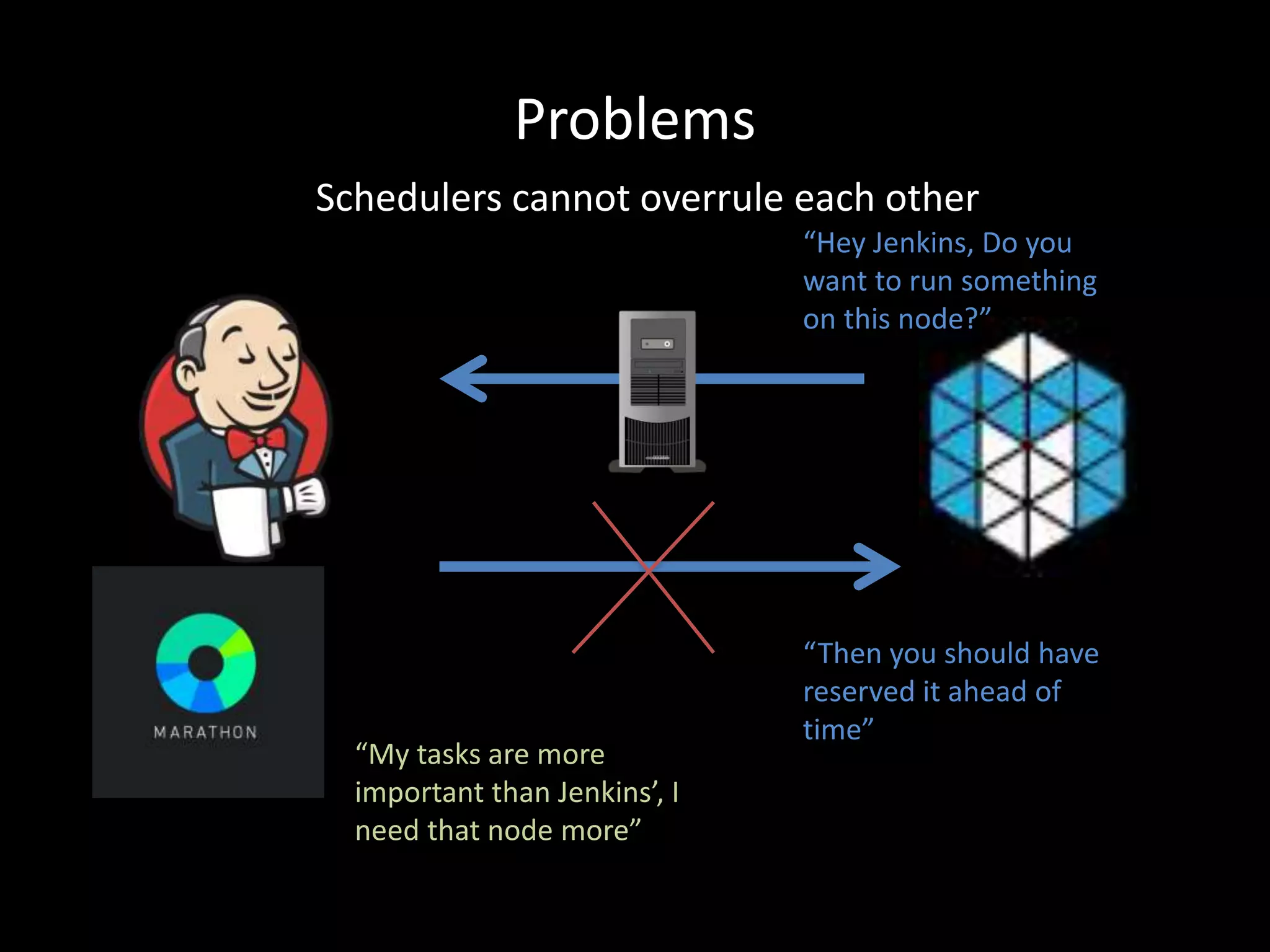
Problems
“Hey Jenkins, Do you
want to run something
on this node?”
“My tasks are more
important than Jenkins’, I
need that node more”
Schedulers cannot overrule each other
“Then you should have
reserved it ahead of
time”
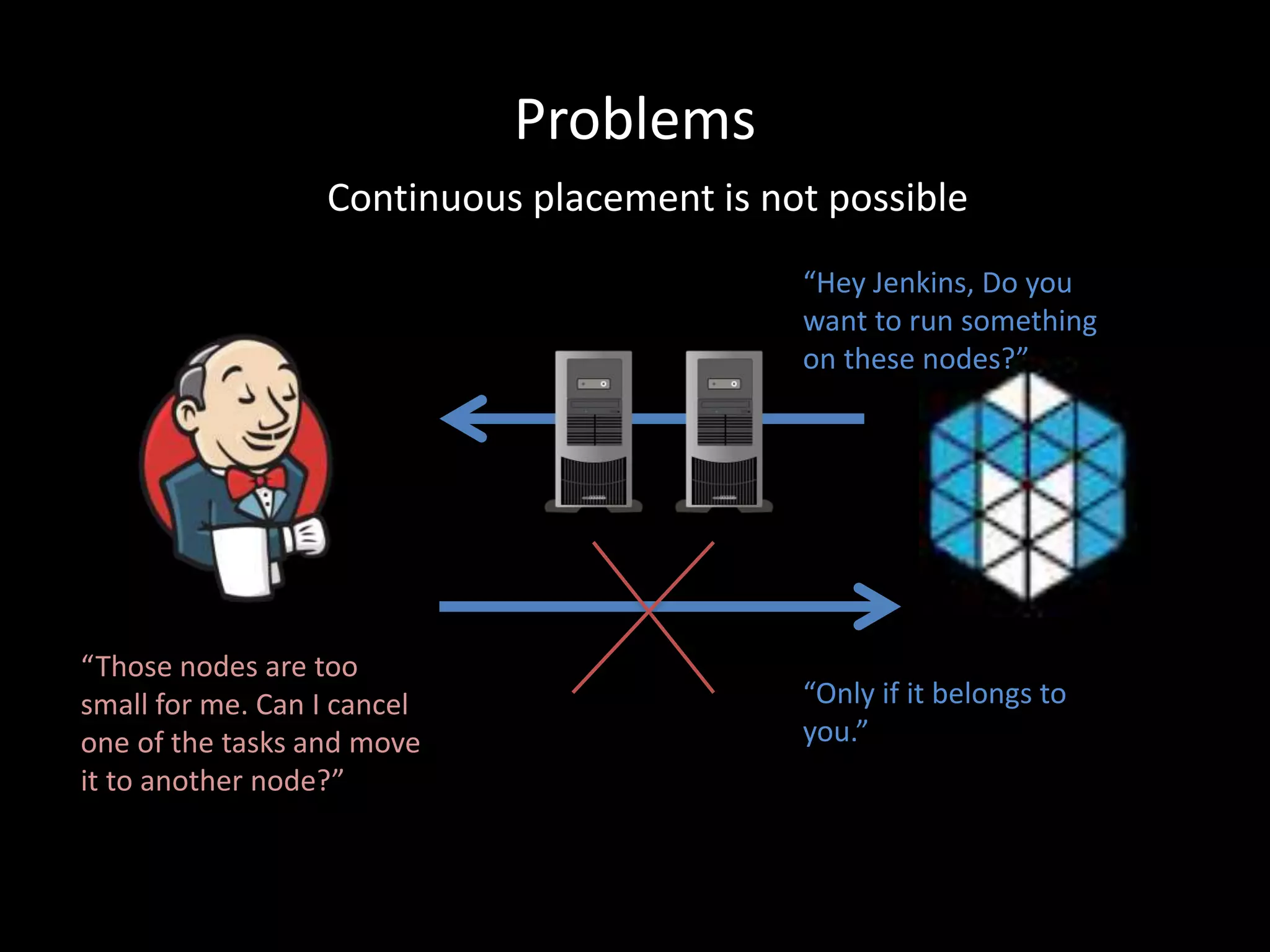
Problems
“Hey Jenkins, Do you
want to run something
on these nodes?”
Continuous placement is not possible
“Only if it belongs to
you.”
“Those nodes are too
small for me. Can I cancel
one of the tasks and move
it to another node?”
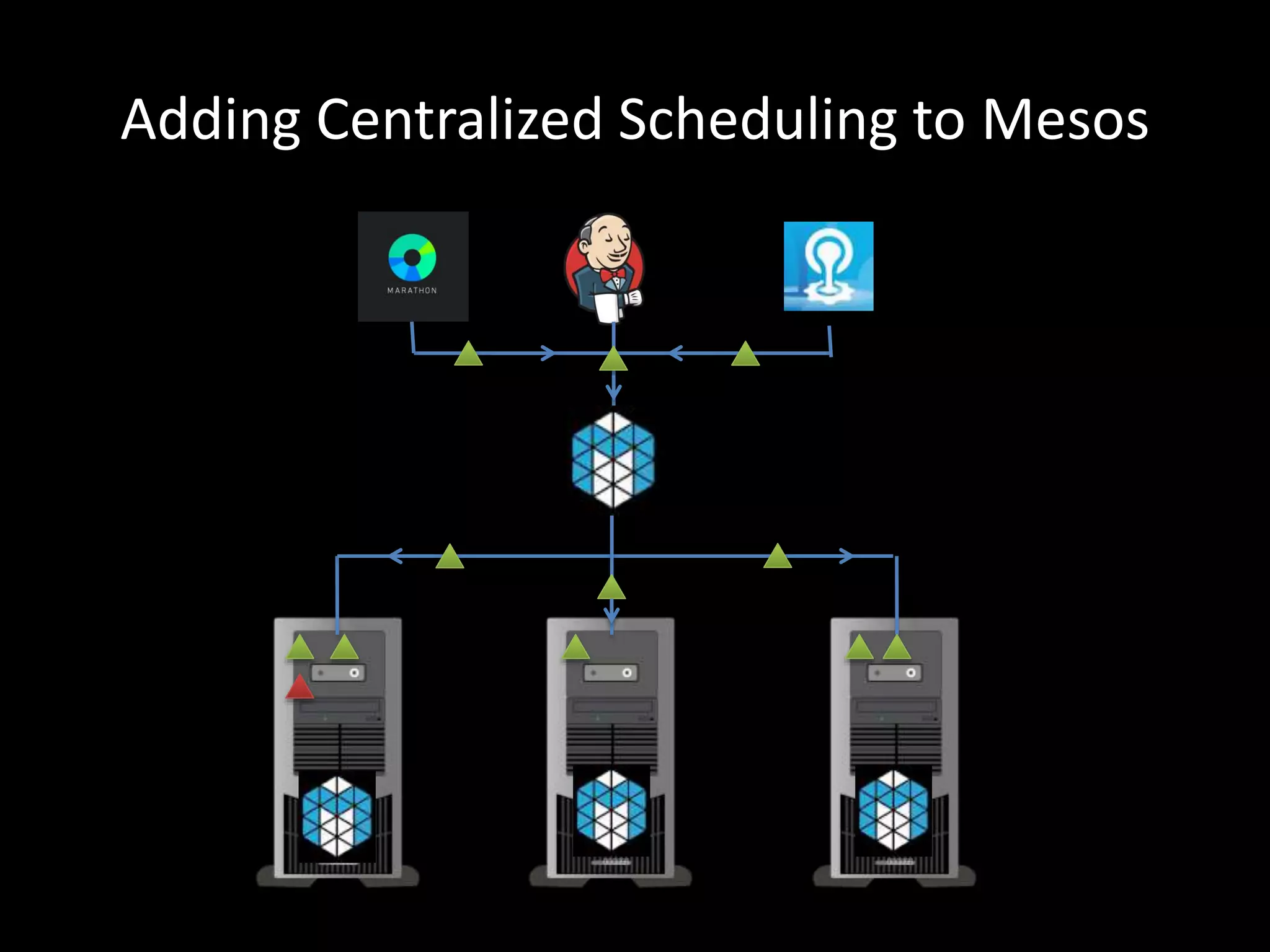
Adding Centralized Scheduling to Mesos
Your
application
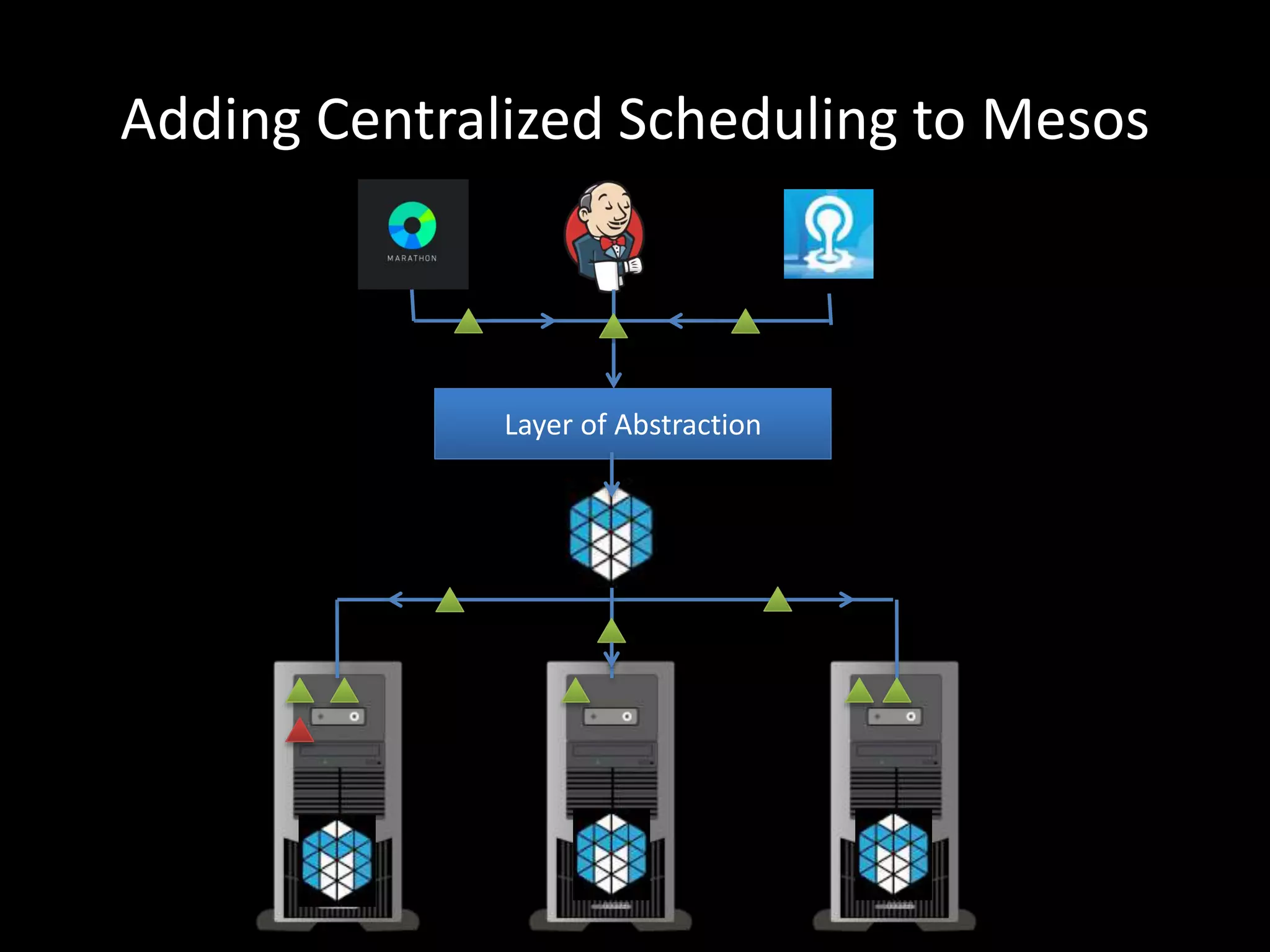
Adding Centralized Scheduling to Mesos
Your
application
Layer of Abstraction
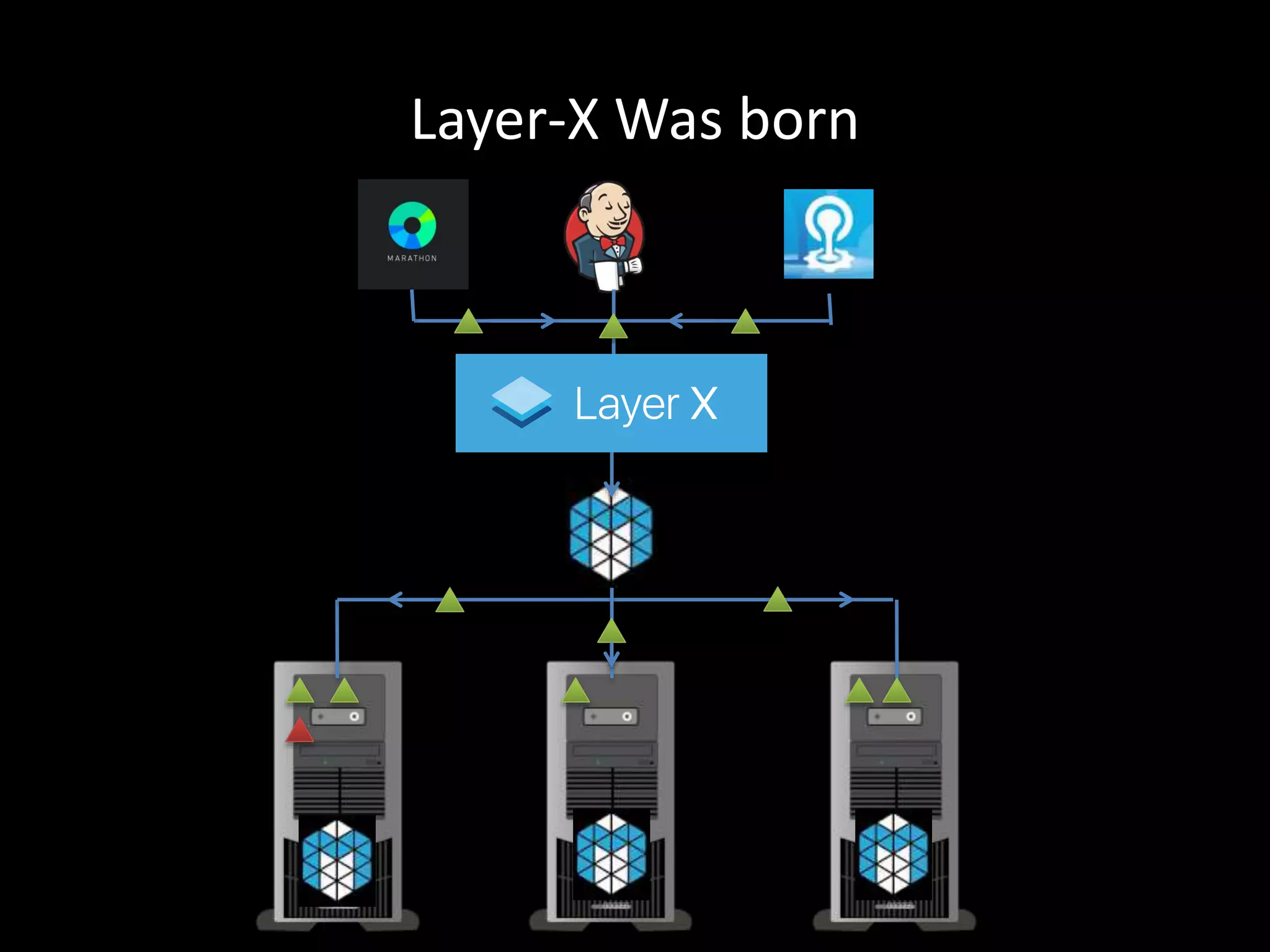
Layer-X Was born
Your
application
How it works
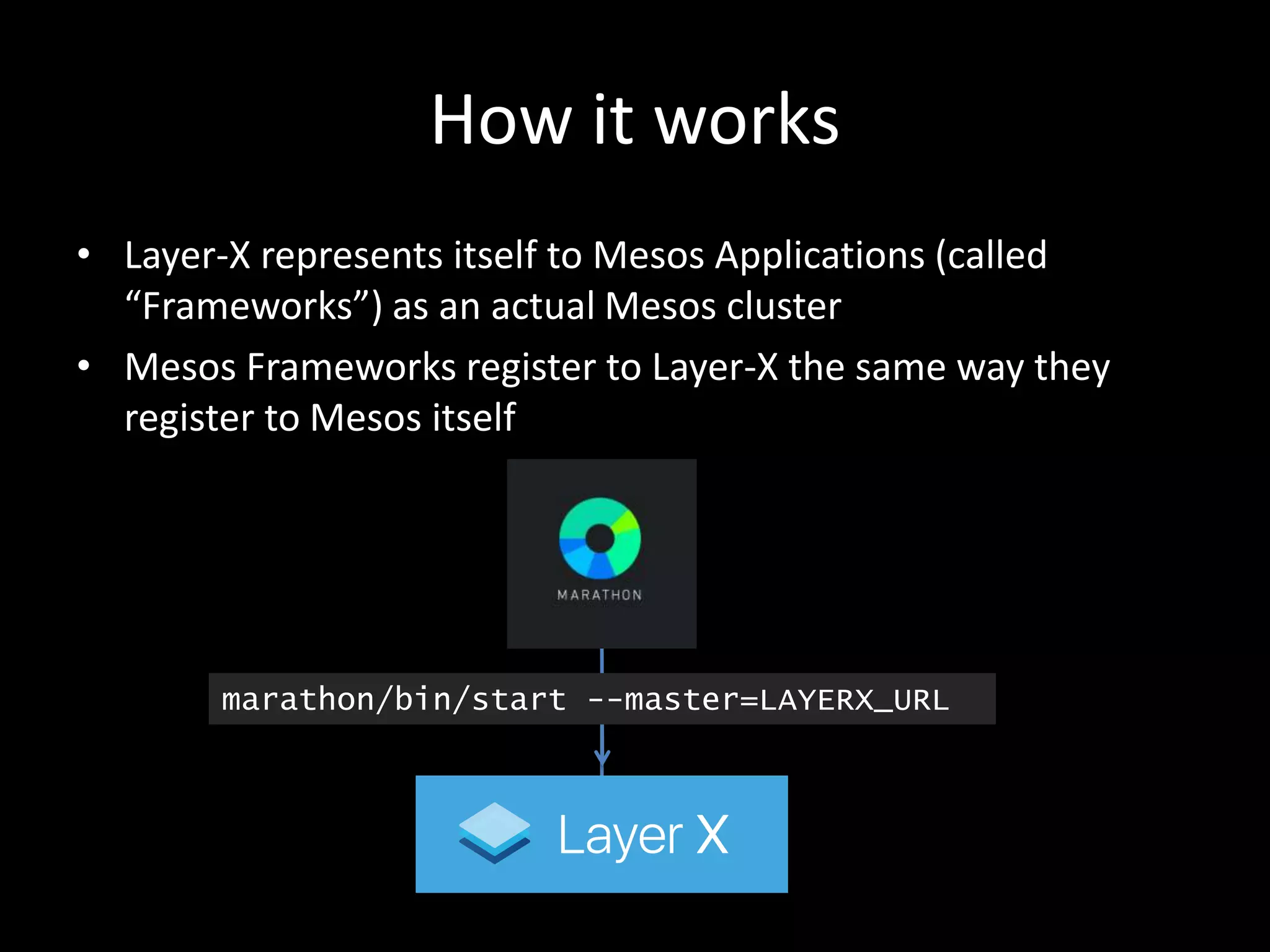
• Layer-X represents itself to Mesos Applications (called
“Frameworks”) as an actual Mesos cluster
• Mesos Frameworks register to Layer-X the same way they
register to Mesos itself
marathon/bin/start --master=LAYERX_URL
How it works
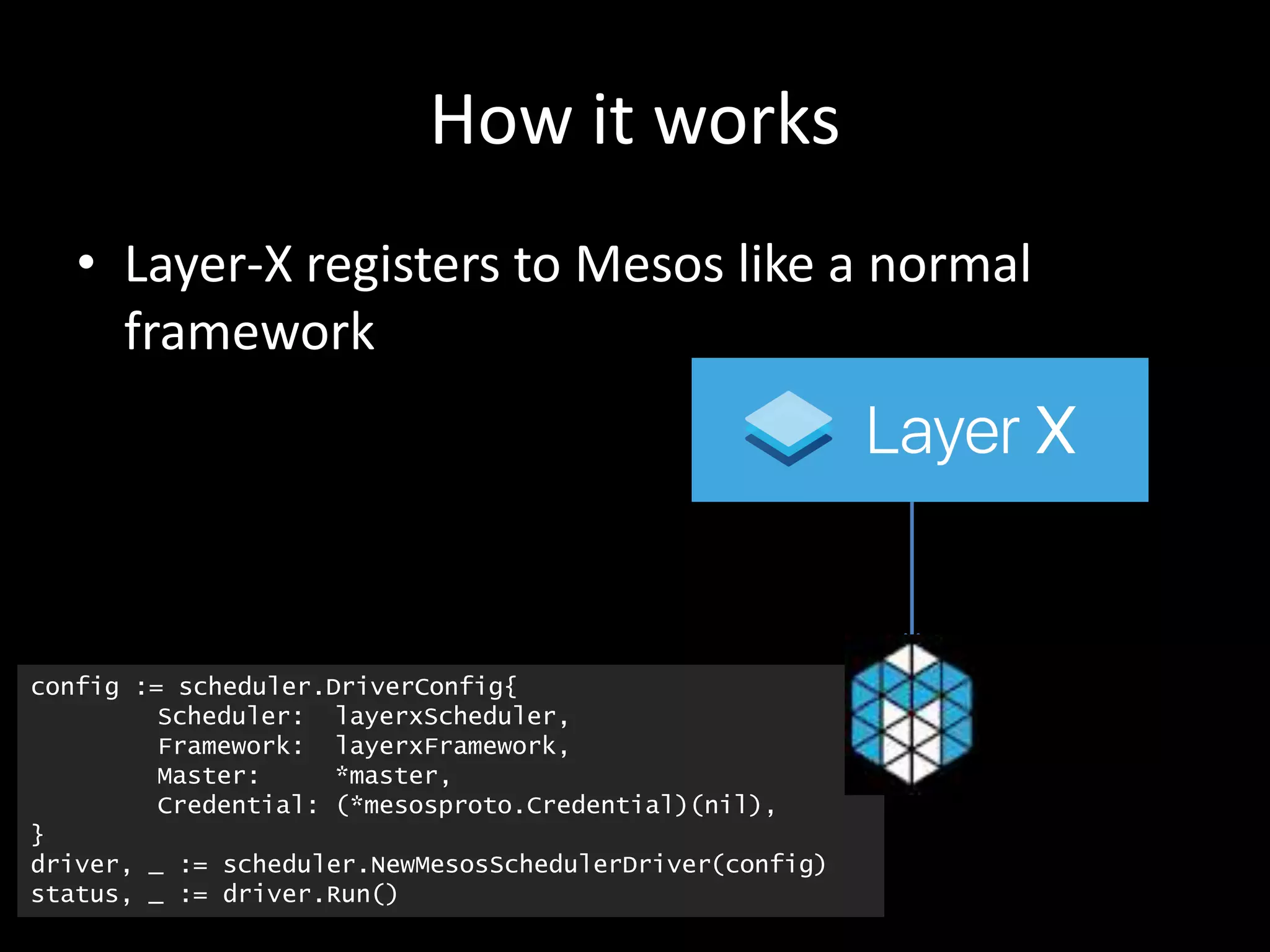
• Layer-X registers to Mesos like a normal
framework
config := scheduler.DriverConfig{
Scheduler: layerxScheduler,
Framework: layerxFramework,
Master: *master,
Credential: (*mesosproto.Credential)(nil),
}
driver, _ := scheduler.NewMesosSchedulerDriver(config)
status, _ := driver.Run()
How it works
• Layer-X collects tasks from frameworks with
fictitious resource offers
• Layer-X then collects resources from Mesos
and sits on them
How it works
• By collecting all tasks and all resources,
Layer-X has a global view of the cluster
• Layer-X can then be controlled through a REST
API by an external application to make better
scheduling decisions
How it works
• External Schedulers read the state of the
cluster through Layer-X API
• Using this information, External Schedulers
make scheduling decisions with Layer-X API
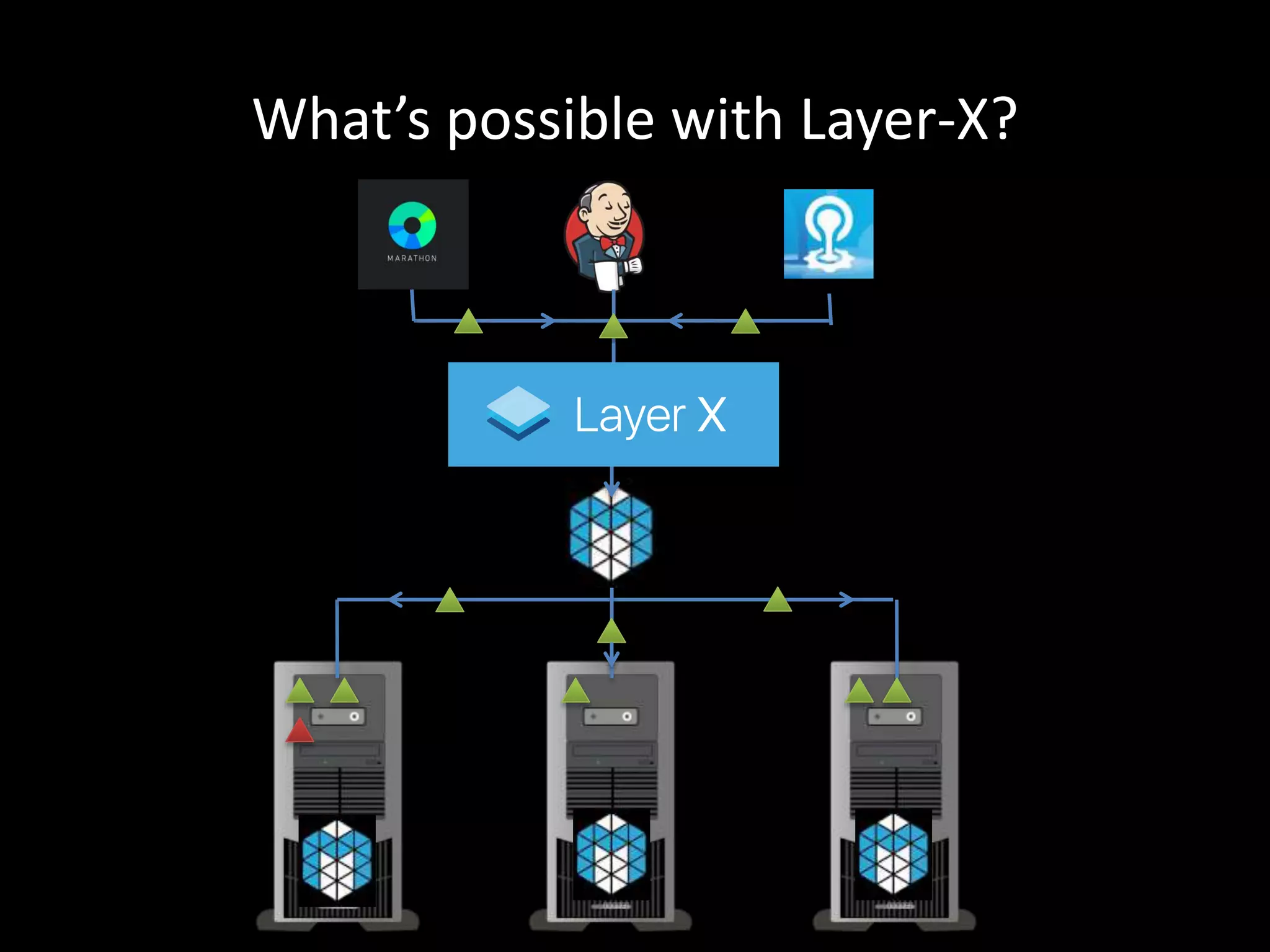
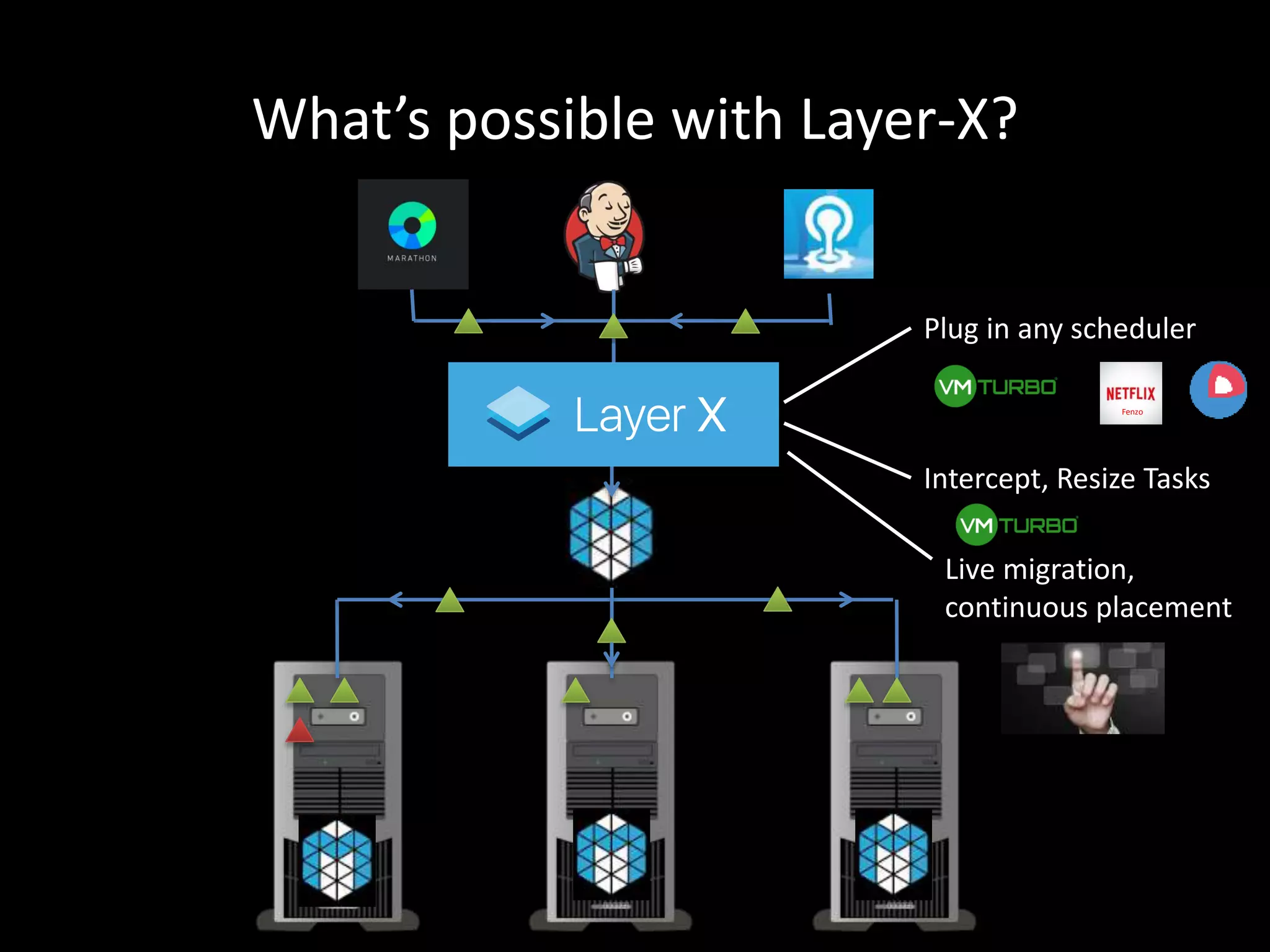
What’s possible with Layer-X?
Your
application
What’s possible with Layer-X?
Your
application
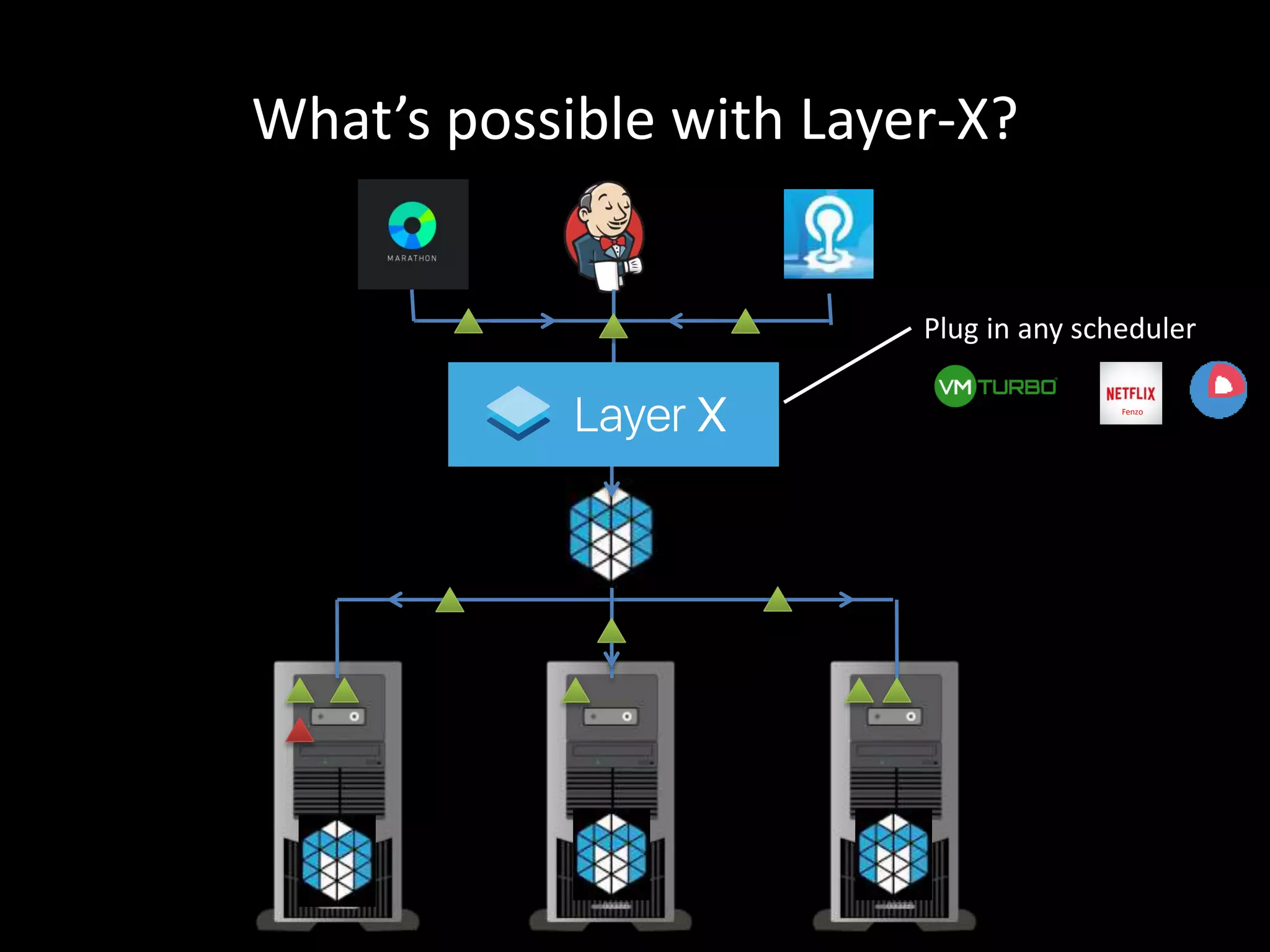
Plug in any scheduler
Fenzo
What’s possible with Layer-X?
Your
application
Plug in any scheduler
Fenzo
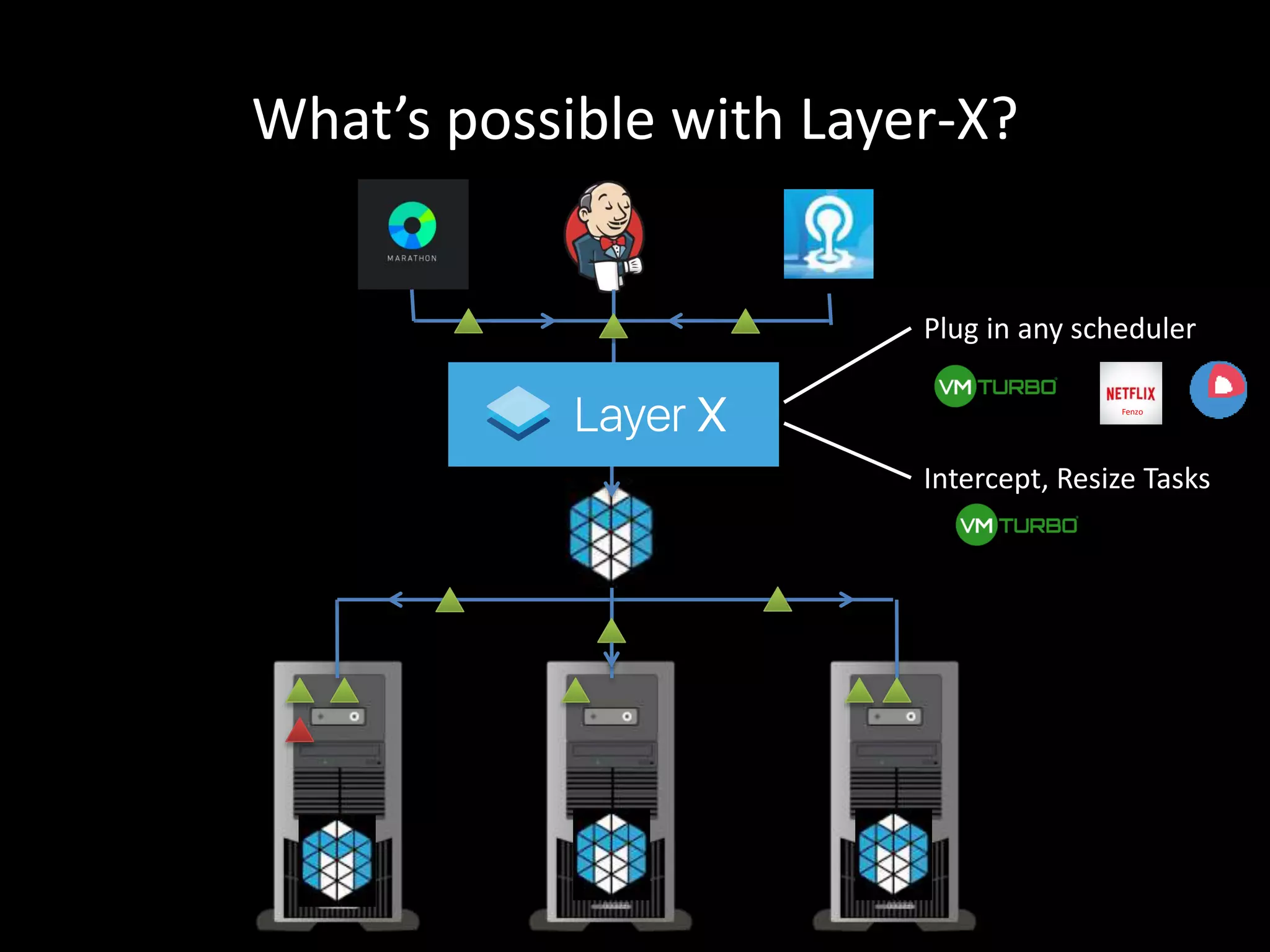
Intercept, Resize Tasks
What’s possible with Layer-X?
Your
application
Plug in any scheduler
Fenzo
Intercept, Resize Tasks
Live migration,
continuous placement
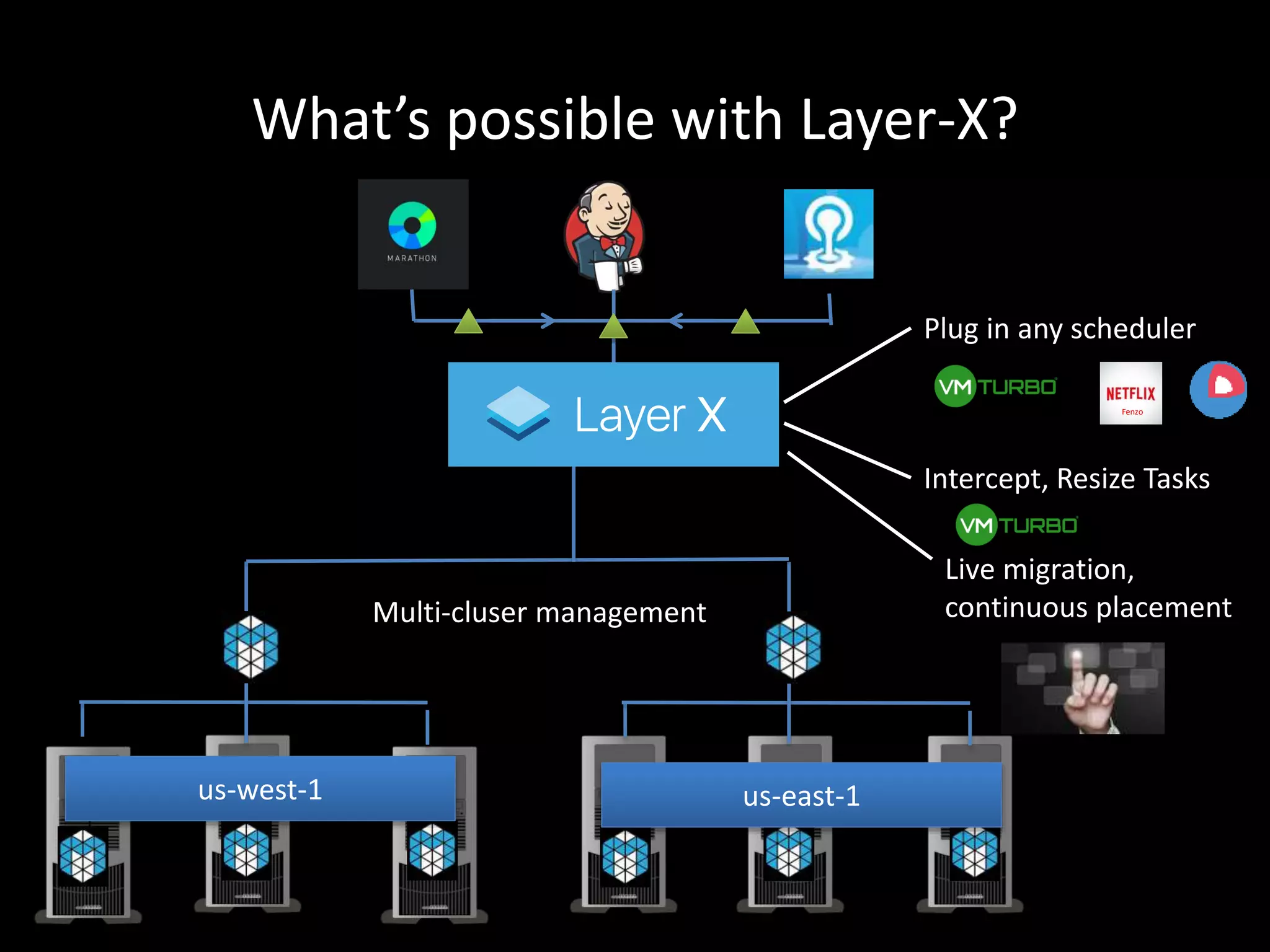
What’s possible with Layer-X?
Your
application
Plug in any scheduler
Fenzo
Intercept, Resize Tasks
Live migration,
continuous placementMulti-cluser management
us-east-1us-west-1
Demo!
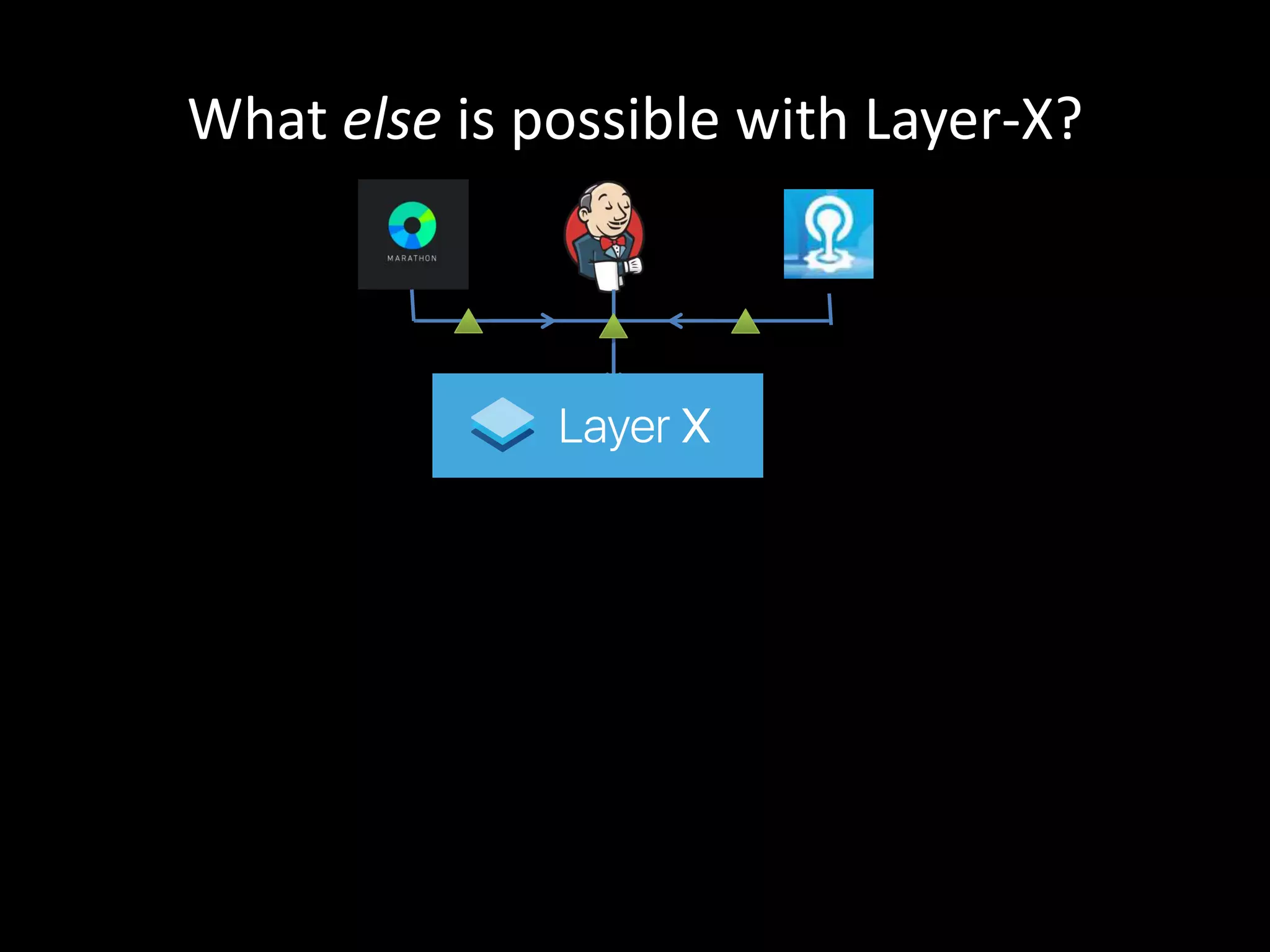
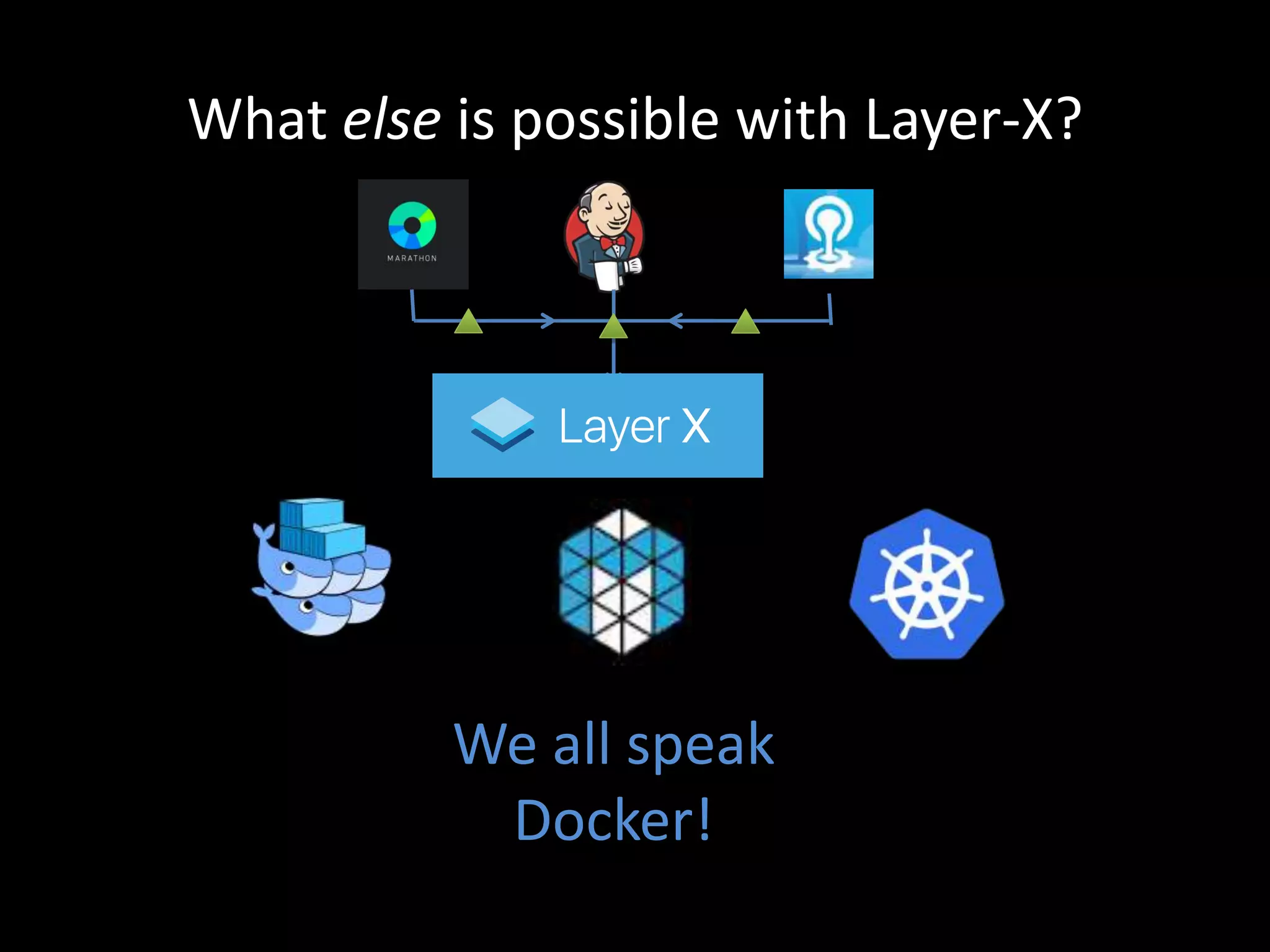
What else is possible with Layer-X?
Your
application
What else is possible with Layer-X?
Your
application
We all speak
Docker!
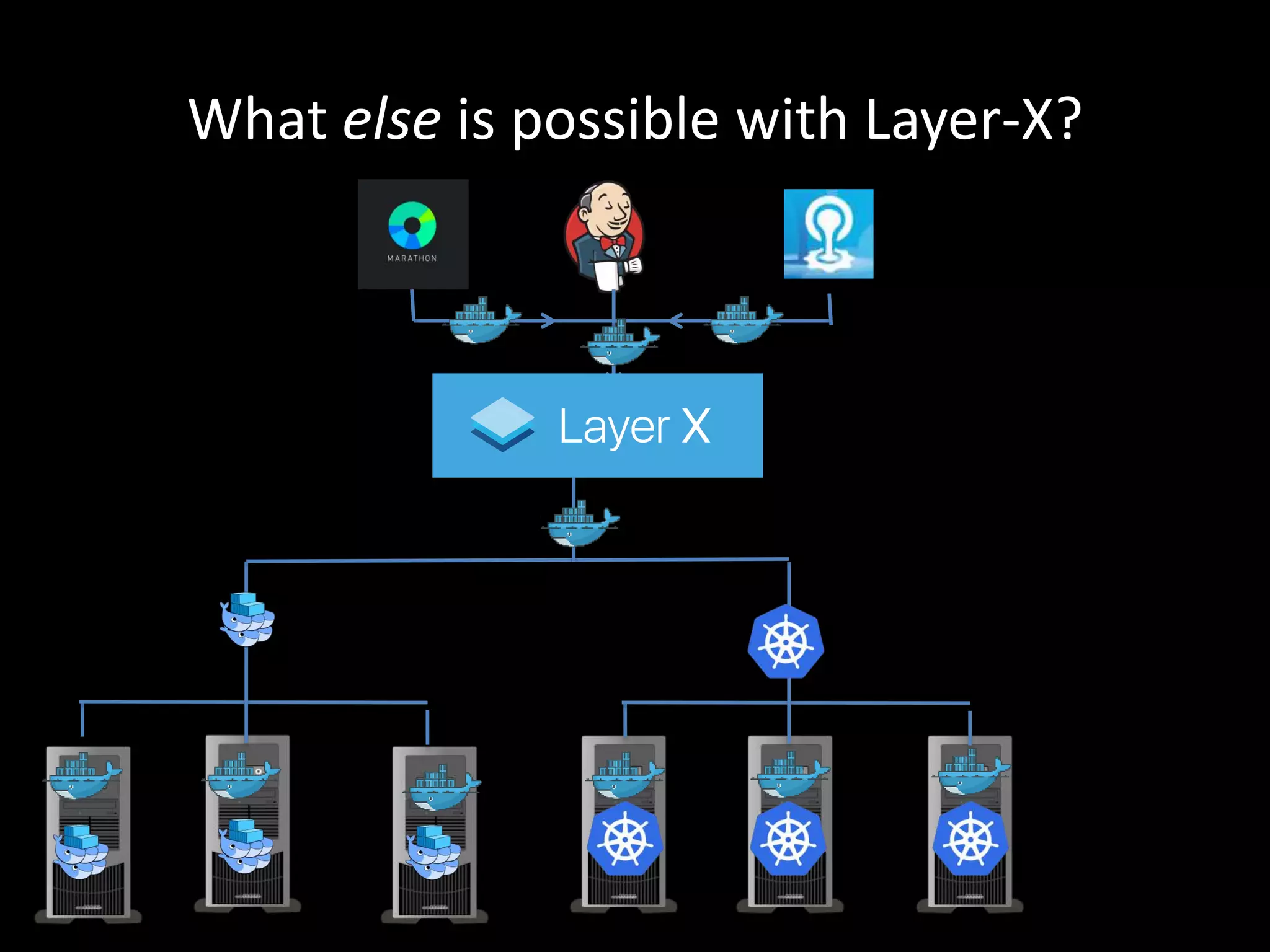
What else is possible with Layer-X?
Your
application
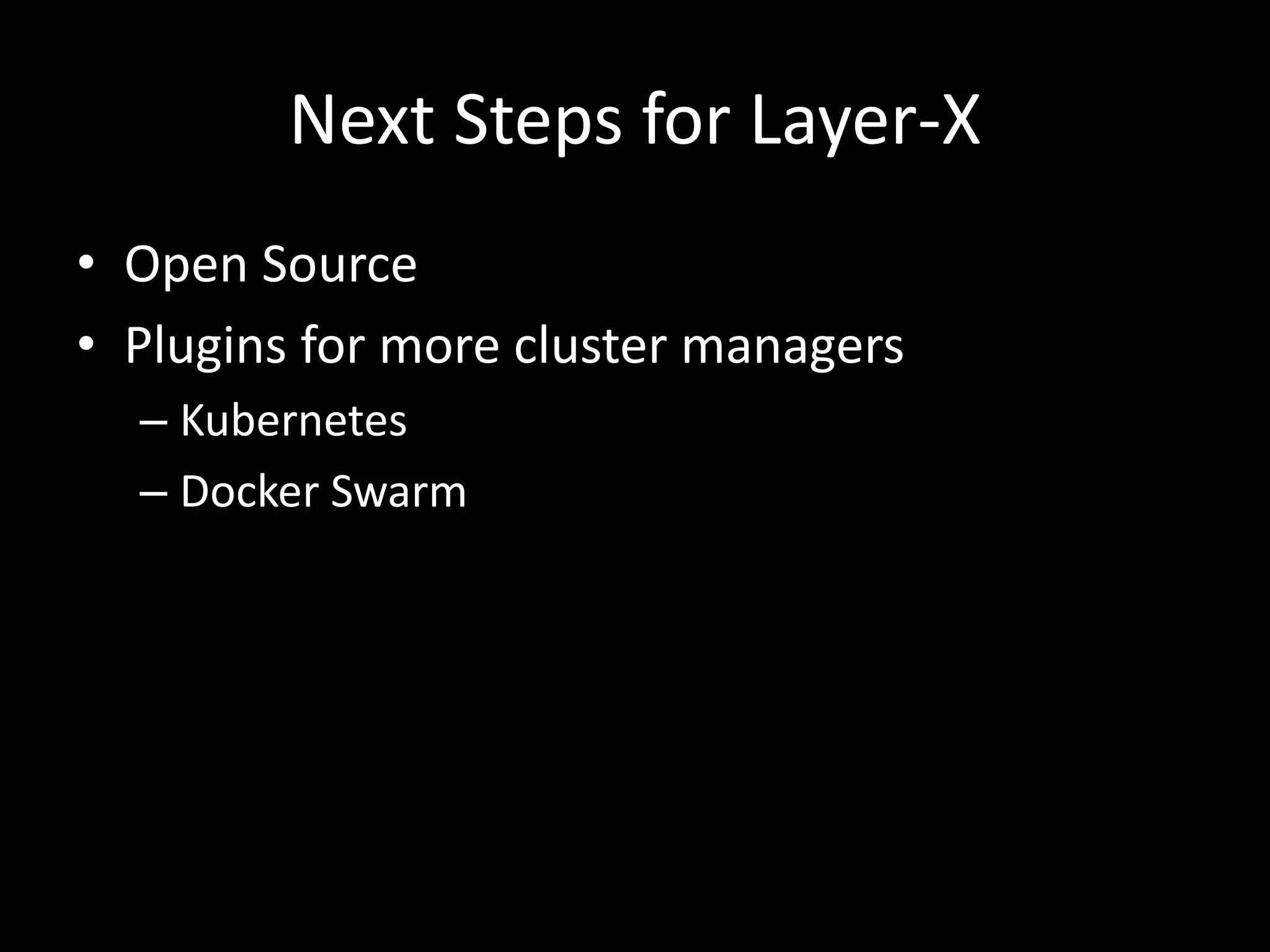
Next Steps for Layer-X
• Open Source
• Plugins for more cluster managers
– Kubernetes
– Docker Swarm
Follow us on Twitter & Github
• For news about the release of Layer-X and other
interesting OSS projects at EMC, follow
• Our Github page:
https://github.com/emc-advanced-dev
• Twitter
@ilackarms
@Idit_Levine
• And please check out my Unikernels workshop,
tomorrow at 1:00 PM
• Questions?

Layer-X ContainerDays Slides May 24 2016

  • 1.
    Centralized Scheduling madeSimple Scott Weiss
  • 2.
    Once upon atime, there was a meeting about task scheduling…
  • 3.
    Mesos • Popular, maturecluster manager • Widely used at hyperscale
  • 4.
  • 5.
  • 6.
  • 7.
    How It Works “HeyJenkins, Do you want to run something on this node?” “Sure, that node looks good for this task” “OK, let me run that for you.”
  • 8.
    Distributed Scheduling Model •Pros: – Applications have more control • Cons: – Schedulers have only a localized view of the cluster
  • 9.
    Distributed Scheduling Model •Pros: – Applications have more control • Cons: – Schedulers have only a localized view of the cluster • What if scheduling decisions need to be made with a global view of the cluster? Fenzo
  • 10.
    Problems “Hey Jenkins, Doyou want to run something on this node?” “I don’t like this node” “It’s up to you to wait for a better one” Schedulers only see the nodes Mesos shows them
  • 11.
    Problems “Hey Jenkins, Doyou want to run something on this node?” “I want on the same node as Marathon” Schedulers only know where their own tasks are running
  • 12.
    Problems “Hey Jenkins, Doyou want to run something on this node?” “My tasks are more important than Jenkins’, I need that node more” Schedulers cannot overrule each other “Then you should have reserved it ahead of time”
  • 13.
    Problems “Hey Jenkins, Doyou want to run something on these nodes?” Continuous placement is not possible “Only if it belongs to you.” “Those nodes are too small for me. Can I cancel one of the tasks and move it to another node?”
  • 14.
    Adding Centralized Schedulingto Mesos Your application
  • 15.
    Adding Centralized Schedulingto Mesos Your application Layer of Abstraction
  • 16.
  • 17.
    How it works •Layer-X represents itself to Mesos Applications (called “Frameworks”) as an actual Mesos cluster • Mesos Frameworks register to Layer-X the same way they register to Mesos itself marathon/bin/start --master=LAYERX_URL
  • 18.
    How it works •Layer-X registers to Mesos like a normal framework config := scheduler.DriverConfig{ Scheduler: layerxScheduler, Framework: layerxFramework, Master: *master, Credential: (*mesosproto.Credential)(nil), } driver, _ := scheduler.NewMesosSchedulerDriver(config) status, _ := driver.Run()
  • 19.
    How it works •Layer-X collects tasks from frameworks with fictitious resource offers • Layer-X then collects resources from Mesos and sits on them
  • 20.
    How it works •By collecting all tasks and all resources, Layer-X has a global view of the cluster • Layer-X can then be controlled through a REST API by an external application to make better scheduling decisions
  • 21.
    How it works •External Schedulers read the state of the cluster through Layer-X API • Using this information, External Schedulers make scheduling decisions with Layer-X API
  • 22.
    What’s possible withLayer-X? Your application
  • 23.
    What’s possible withLayer-X? Your application Plug in any scheduler Fenzo
  • 24.
    What’s possible withLayer-X? Your application Plug in any scheduler Fenzo Intercept, Resize Tasks
  • 25.
    What’s possible withLayer-X? Your application Plug in any scheduler Fenzo Intercept, Resize Tasks Live migration, continuous placement
  • 26.
    What’s possible withLayer-X? Your application Plug in any scheduler Fenzo Intercept, Resize Tasks Live migration, continuous placementMulti-cluser management us-east-1us-west-1
  • 27.
  • 28.
    What else ispossible with Layer-X? Your application
  • 29.
    What else ispossible with Layer-X? Your application We all speak Docker!
  • 30.
    What else ispossible with Layer-X? Your application
  • 31.
    Next Steps forLayer-X • Open Source • Plugins for more cluster managers – Kubernetes – Docker Swarm
  • 32.
    Follow us onTwitter & Github • For news about the release of Layer-X and other interesting OSS projects at EMC, follow • Our Github page: https://github.com/emc-advanced-dev • Twitter @ilackarms @Idit_Levine • And please check out my Unikernels workshop, tomorrow at 1:00 PM • Questions?