Boosting drug development through Public-
Private Partnerships: The IMI Model
Hugh Laverty
Senior Scientific Project Manager


             Science Diplomacy in Action - Paris Feb 2013
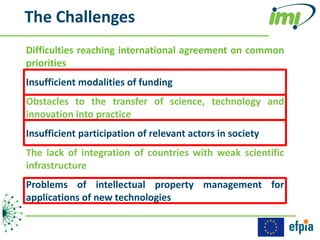
The Challenges
Difficulties reaching international agreement on common
priorities
Insufficient modalities of funding
Obstacles to the transfer of science, technology and
innovation into practice
Insufficient participation of relevant actors in society
The lack of integration of countries with weak scientific
infrastructure
Problems of intellectual property mangement for
applications of new technologies
The role of Public-Private Partnerships in
driving international science co-operation


   PPPs originated in areas focusing on neglected or orphan
             diseases, or helping poorer countries

   The approach to PPPs has evolved and the model is being
    applied to other areas e.g., chronic diseases, and more
                      mature economies

   The emergence of PPPs has been helped by a convergence
    of different pressures such as societal, health care and
                            economic
Challenges for society and industry

 Society                           Industry
 • Healthcare challenges           • Costs for developing new drugs
   continue to raise around the      continue to increase
   world
                                   • Pharma incentive systems and
                                     profitability are under pressure
 • A lot of these challenges are
   not addressed                   • We are pushing towards
                                     Personalized Medicine but in
 • Pressure on healthcare            general, progress in basic science
   systems and budgets continue      is not translated to medical
   to rise                           innovation and benefits to
                                     patients
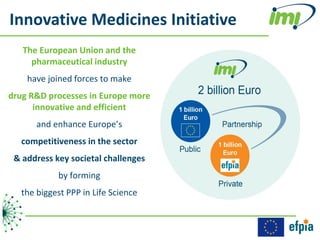
Innovative Medicines Initiative
   The European Union and the
     pharmaceutical industry
    have joined forces to make
drug R&D processes in Europe more
      innovative and efficient
       and enhance Europe’s
   competitiveness in the sector
 & address key societal challenges
            by forming
   the biggest PPP in Life Science
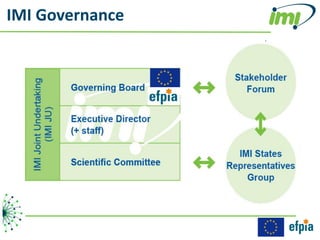
IMI Governance
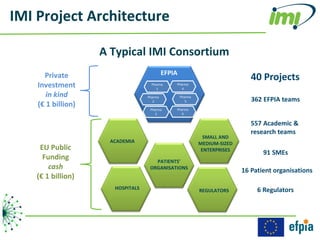
IMI Project Architecture

                    A Typical IMI Consortium
      Private                              EFPIA
                                                                              40 Projects
    Investment                      Pharma
                                       1
                                               Pharma
                                                  4

       in kind                    Pharma           Pharma
                                     2                5                       362 EFPIA teams
    (€ 1 billion)
                                   Pharma      Pharma
                                      3           6

                                                                              557 Academic &
                                                                              research teams
                                                              SMALL AND
                     ACADEMIA                               MEDIUM-SIZED
     EU Public                                               ENTERPRISES
                                                                                  91 SMEs
      Funding                        PATIENTS’
        cash                       ORGANISATIONS
                                                                           16 Patient organisations
    (€ 1 billion)
                      HOSPITALS                             REGULATORS          6 Regulators
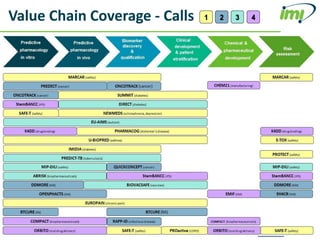
Value Chain Coverage - Calls
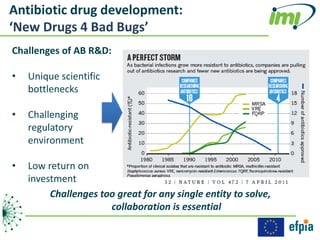
Antibiotic drug development:
‘New Drugs 4 Bad Bugs’
Challenges of AB R&D:

•   Unique scientific
    bottlenecks

•   Challenging
    regulatory
    environment

•   Low return on
    investment
         Challenges too great for any single entity to solve,
                      collaboration is essential
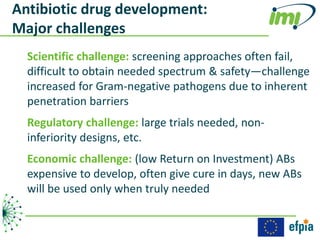
Antibiotic drug development:
Major challenges
  Scientific challenge: screening approaches often fail,
  difficult to obtain needed spectrum & safety—challenge
  increased for Gram-negative pathogens due to inherent
  penetration barriers
  Regulatory challenge: large trials needed, non-
  inferiority designs, etc.
  Economic challenge: (low Return on Investment) ABs
  expensive to develop, often give cure in days, new ABs
  will be used only when truly needed
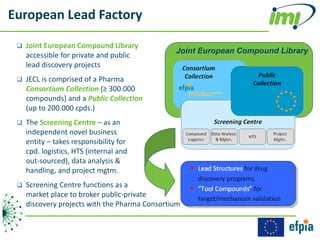
European Lead Factory

    Joint European Compound Library
                                                Joint European Compound Library
     accessible for private and public
     lead discovery projects
    JECL is comprised of a Pharma
     Consortium Collection (≥ 300.000
     compounds) and a Public Collection
     (up to 200.000 cpds.)
    The Screening Centre – as an
     independent novel business
     entity – takes responsibility for
     cpd. logistics, HTS (internal and
     out-sourced), data analysis &
     handling, and project mgtm.
    Screening Centre functions as a
     market place to broker public-private
     discovery projects with the Pharma Consortium
How IMI makes a difference

  Fosters large scale industry collaboration and engagement
                   with scientific community

  Promotes active involvement of patients, regulators and
                         payers

      Enables innovation via join effort where singular
                 approach has failed so far

         Facilitates Intellectual Property agreements
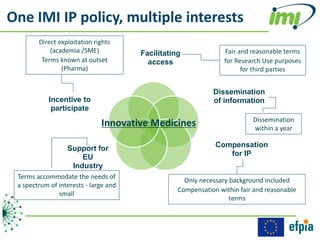
One IMI IP policy, multiple interests
        Direct exploitation rights
            (academia /SME)            Facilitating              Fair and reasonable terms
         Terms known at outset           access                  for Research Use purposes
                (Pharma)                                               for third parties


                                                             Dissemination
            Incentive to                                     of information
             participate
                                                                          Dissemination
                              Innovative Medicines                        within a year

                  Support for                                 Compensation
                      EU                                         for IP
                   Industry
 Terms accommodate the needs of
                                                    Only necessary background included
 a spectrum of interests - large and
                                                  Compensation within fair and reasonable
               small
                                                                   terms
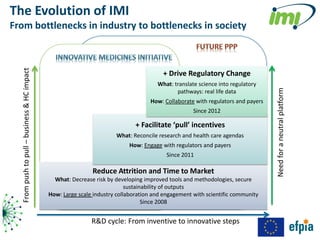
The Evolution of IMI
From bottlenecks in industry to bottlenecks in society
  From push to pull – business & HC impact


                                                                                        + Drive Regulatory Change
                                                                                      What: translate science into regulatory


                                                                                                                                 Need for a neutral platform
                                                                                             pathways: real life data
                                                                                   How: Collaborate with regulators and payers
                                                                                                    Since 2012

                                                                              + Facilitate ‘pull’ incentives
                                                                      What: Reconcile research and health care agendas
                                                                           How: Engage with regulators and payers
                                                                                          Since 2011

                                                             Reduce Attrition and Time to Market
                                               What: Decrease risk by developing improved tools and methodologies, secure
                                                                           sustainability of outputs
                                             How: Large scale industry collaboration and engagement with scientific community
                                                                                  Since 2008


                                                             R&D cycle: From inventive to innovative steps
The Challenges
Difficulties reaching international agreement on common
priorities
Insufficient modalities of funding
Obstacles to the transfer of science, technology and
innovation into practice
Insufficient participation of relevant actors in society
The lack of integration of countries with weak scientific
infrastructure
Problems of intellectual property mangement for
applications of new technologies
The Challenges
Difficulties reaching international agreement on common
priorities
Insufficient modalities of funding
Obstacles to the transfer of science, technology and
innovation into practice
Insufficient participation of relevant actors in society
The lack of integration of countries with weak scientific
infrastructure
Problems of intellectual property management for
applications of new technologies
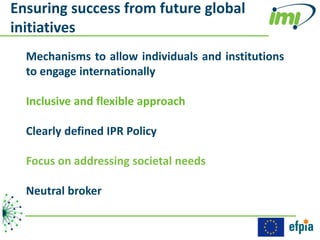
Ensuring success from future global
initiatives
  Mechanisms to allow individuals and institutions
  to engage internationally

  Inclusive and flexible approach

  Clearly defined IPR Policy

  Focus on addressing societal needs

  Neutral broker

Boosting drug development through public private partnerships (Laverty OECD Paris Feb 2013)

  • 1.
    Boosting drug developmentthrough Public- Private Partnerships: The IMI Model Hugh Laverty Senior Scientific Project Manager Science Diplomacy in Action - Paris Feb 2013
  • 2.
    The Challenges Difficulties reachinginternational agreement on common priorities Insufficient modalities of funding Obstacles to the transfer of science, technology and innovation into practice Insufficient participation of relevant actors in society The lack of integration of countries with weak scientific infrastructure Problems of intellectual property mangement for applications of new technologies
  • 3.
    The role ofPublic-Private Partnerships in driving international science co-operation PPPs originated in areas focusing on neglected or orphan diseases, or helping poorer countries The approach to PPPs has evolved and the model is being applied to other areas e.g., chronic diseases, and more mature economies The emergence of PPPs has been helped by a convergence of different pressures such as societal, health care and economic
  • 4.
    Challenges for societyand industry Society Industry • Healthcare challenges • Costs for developing new drugs continue to raise around the continue to increase world • Pharma incentive systems and profitability are under pressure • A lot of these challenges are not addressed • We are pushing towards Personalized Medicine but in • Pressure on healthcare general, progress in basic science systems and budgets continue is not translated to medical to rise innovation and benefits to patients
  • 5.
    Innovative Medicines Initiative The European Union and the pharmaceutical industry have joined forces to make drug R&D processes in Europe more innovative and efficient and enhance Europe’s competitiveness in the sector & address key societal challenges by forming the biggest PPP in Life Science
  • 6.
  • 7.
    IMI Project Architecture A Typical IMI Consortium Private EFPIA 40 Projects Investment Pharma 1 Pharma 4 in kind Pharma Pharma 2 5 362 EFPIA teams (€ 1 billion) Pharma Pharma 3 6 557 Academic & research teams SMALL AND ACADEMIA MEDIUM-SIZED EU Public ENTERPRISES 91 SMEs Funding PATIENTS’ cash ORGANISATIONS 16 Patient organisations (€ 1 billion) HOSPITALS REGULATORS 6 Regulators
  • 8.
  • 9.
    Antibiotic drug development: ‘NewDrugs 4 Bad Bugs’ Challenges of AB R&D: • Unique scientific bottlenecks • Challenging regulatory environment • Low return on investment Challenges too great for any single entity to solve, collaboration is essential
  • 10.
    Antibiotic drug development: Majorchallenges Scientific challenge: screening approaches often fail, difficult to obtain needed spectrum & safety—challenge increased for Gram-negative pathogens due to inherent penetration barriers Regulatory challenge: large trials needed, non- inferiority designs, etc. Economic challenge: (low Return on Investment) ABs expensive to develop, often give cure in days, new ABs will be used only when truly needed
  • 11.
    European Lead Factory  Joint European Compound Library Joint European Compound Library accessible for private and public lead discovery projects  JECL is comprised of a Pharma Consortium Collection (≥ 300.000 compounds) and a Public Collection (up to 200.000 cpds.)  The Screening Centre – as an independent novel business entity – takes responsibility for cpd. logistics, HTS (internal and out-sourced), data analysis & handling, and project mgtm.  Screening Centre functions as a market place to broker public-private discovery projects with the Pharma Consortium
  • 12.
    How IMI makesa difference Fosters large scale industry collaboration and engagement with scientific community Promotes active involvement of patients, regulators and payers Enables innovation via join effort where singular approach has failed so far Facilitates Intellectual Property agreements
  • 13.
    One IMI IPpolicy, multiple interests Direct exploitation rights (academia /SME) Facilitating Fair and reasonable terms Terms known at outset access for Research Use purposes (Pharma) for third parties Dissemination Incentive to of information participate Dissemination Innovative Medicines within a year Support for Compensation EU for IP Industry Terms accommodate the needs of Only necessary background included a spectrum of interests - large and Compensation within fair and reasonable small terms
  • 14.
    The Evolution ofIMI From bottlenecks in industry to bottlenecks in society From push to pull – business & HC impact + Drive Regulatory Change What: translate science into regulatory Need for a neutral platform pathways: real life data How: Collaborate with regulators and payers Since 2012 + Facilitate ‘pull’ incentives What: Reconcile research and health care agendas How: Engage with regulators and payers Since 2011 Reduce Attrition and Time to Market What: Decrease risk by developing improved tools and methodologies, secure sustainability of outputs How: Large scale industry collaboration and engagement with scientific community Since 2008 R&D cycle: From inventive to innovative steps
  • 15.
    The Challenges Difficulties reachinginternational agreement on common priorities Insufficient modalities of funding Obstacles to the transfer of science, technology and innovation into practice Insufficient participation of relevant actors in society The lack of integration of countries with weak scientific infrastructure Problems of intellectual property mangement for applications of new technologies
  • 16.
    The Challenges Difficulties reachinginternational agreement on common priorities Insufficient modalities of funding Obstacles to the transfer of science, technology and innovation into practice Insufficient participation of relevant actors in society The lack of integration of countries with weak scientific infrastructure Problems of intellectual property management for applications of new technologies
  • 17.
    Ensuring success fromfuture global initiatives Mechanisms to allow individuals and institutions to engage internationally Inclusive and flexible approach Clearly defined IPR Policy Focus on addressing societal needs Neutral broker