Trends in Marketing Mix
Lanka Tiles PLC
Introduction to Lanka Tiles PLC
• They are in the field for more than 35 years.
• Market leader and premier manufacturer in Sri
Lanka.
• Their designs and quality are second to none.
• Have capacity to produce about 2.3 million
square feet of tiles annually.
• Productions conform ISO 13006 standards.
Vision
“To be a leading producer of wall and Floor
coverings and related products for the local
and international markets”
Mission
“The production and marketing of exceptional
quality products at optimum affordability”
“To manufacture and market quality ceramic
products for comfortable living”
Key Efforts to Develop Export Markets
• Commissioning of the first ever overseas showroom
in Bangalore to showcase the mainstream offerings
under the LANKA TILES brand to the Indian market.
• Participation in the Coverings 2013 exhibition held
in Atlanta, Georgia USA in a bid to penetrate the
US and Canadian markets.
• Participation at the Cerasaie exhibition - 2013 in
Bologna, Italy to help promote the brand in the
European markets.
Marketing Plans Taken by LTPLC
• Understanding corporate goals and objectives
of the company.
• Making strategies for their actions in order to
meet the goals.
• Budgeting.
• Planning the actions.
• Implementation of the actions.
• Monitoring the progress.
• Getting feedbacks.
SWOT Analysis Related to Sales
and Marketing
Lanka Tiles PLC
Strengths
• They have a strong distribution force all over
the country as well as in foreign countries.
• Their brand name is well known among the
people globally.
• They mostly use machineries and raw materials
with most advanced technology which are
imported from Europe in order to maintain
their higher quality.
Weaknesses
• Moving to advanced technological changes
accordingly (Changing according to the rapid
environmental changes).
• Getting adapted to the new changes of designs
and fashions.
• Inability to allocate capital to make rapid
changes in designs and fashions.
• Producing new styles immediately in order to
beat the competitors.
• Incapability to fulfill the total requirements of
the entire customers.
Opportunities
• As African countries are in the developing
stage, there is a high demand for Lanka Tiles
than their own productions (There is demand in
countries such as Oman and Dubai also).
• In countries like India, the middle class people
who are considered as the majority of its
population mostly concern about foreign made
tiles like Lanka Tiles.
Threats
• The express changes and developments in fashions
and life styles of the customers.
• Lack of availability of several raw materials for
their productions. In case of importing the raw
materials from foreign countries, the cost tends to
increase.
• Importations of foreign products reduce the
demand for their products.
• Cost for energy sources such as fuel and electricity
gets increased.
• Threat of new entrants into the current globalized
market (Anyone can enter the market any time).
The Marketing Mix of LTPLC
The Marketing mix is mostly focused on the key
4P’s. They are;
• Product
• Price
• Place
• Promotion
Product
Form of the product..
•Tiles are durable product which can be used for
long period of time for the consumer.
•Lanka tiles product uses by both consumer and
industrial categories. They have produce for
individuals those who need and who come for
their showrooms, and they have many sub
dealers to sell their product to market.
• These tiles can be called as shopping product,
because normally tiles are;
Less buying frequency with compare to
convenience products.
Customer involvement.
Levels of product
• Core-level - tiles can see and touch and
identify the product.
• Actual level –
In Lanka tiles they have many designs and colors
to fulfill the customer needs.
Quality products which have the ISO 13006
standards.
They do sponsors for sports, and other activates.
They do promotions.
Product life cycle
• In Lanka tiles they have many products and all
product have been past the introduction stage
and some are in growth maturity stage,
• They do their marketing by their brand name;
their brand name is in maturity level therefore
they use to market their product by their
brand name
Product mix
• They have doing the product mix based on
demands.
• They have changed their sizes, designs for
tiles.
Price
Which pricing strategy is using by Lanka
tiles?
• Lanka tiles is using market base pricing
strategy when they pricing.
• They are not rely the cost
• Some time they have to sell it on cost price or
some time they can sell it on good margin
based on the market demand
What they want to know when they
develop the product?
• They have identify for whom to be produce
• They have to know the customer’s willing
• They have to product their market without
allowing the competitors
Is Lanka tiles customer satisfy their
pricing?
• Yes of course,
that’s the only one reason for Lanka tiles
success
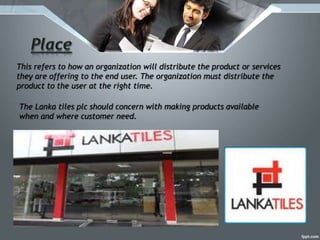
This refers to how an organization will distribute the product or services
they are offering to the end user. The organization must distribute the
product to the user at the right time.
The Lanka tiles plc should concern with making products available
when and where customer need.
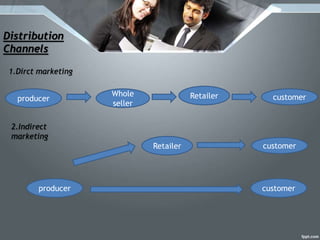
Distribution
Channels
producer
Whole
seller
Retailer customer
producer
Retailer
customer
customer
1.Dirct marketing
2.Indirect
marketing
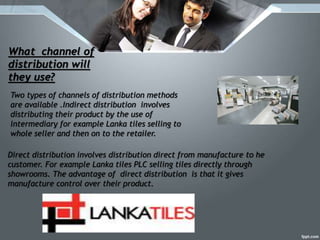
What channel of
distribution will
they use?
Two types of channels of distribution methods
are available .Indirect distribution involves
distributing their product by the use of
intermediary for example Lanka tiles selling to
whole seller and then on to the retailer.
Direct distribution involves distribution direct from manufacture to he
customer. For example Lanka tiles PLC selling tiles directly through
showrooms. The advantage of direct distribution is that it gives
manufacture control over their product.
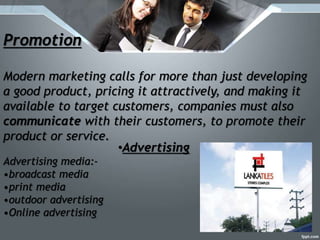
Promotion
Modern marketing calls for more than just developing
a good product, pricing it attractively, and making it
available to target customers, companies must also
communicate with their customers, to promote their
product or service.
•Advertising
Advertising media:-
•broadcast media
•print media
•outdoor advertising
•Online advertising
•Personal selling
Selling process:-
•Identifying prospective customer
•Target customer
•Buyer trend
•Approaching customer
•Demonstration
•Solution to customer
•Order
•Follow up
•Sales promotion
1. Identifying and winning new business opportunities .
2. Developing a marketing team.
3. Carrying out effective research and intelligence into
competitor’s products.
4. Overseeing and managing financial budgets.
5. Constantly improving business development.
6. Ensuring the achievement of a high standard of customer
service.
Sales promotion tools include:-
1. Money back guarantee
2. Discounts
3. Offers
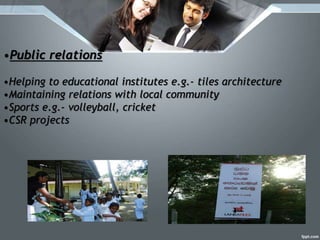
•Public relations
•Helping to educational institutes e.g.- tiles architecture
•Maintaining relations with local community
•Sports e.g.- volleyball, cricket
•CSR projects
Lanka Tiles PLC

Lanka Tiles PLC

  • 1.
    Trends in MarketingMix Lanka Tiles PLC
  • 2.
    Introduction to LankaTiles PLC • They are in the field for more than 35 years. • Market leader and premier manufacturer in Sri Lanka. • Their designs and quality are second to none. • Have capacity to produce about 2.3 million square feet of tiles annually. • Productions conform ISO 13006 standards.
  • 3.
    Vision “To be aleading producer of wall and Floor coverings and related products for the local and international markets” Mission “The production and marketing of exceptional quality products at optimum affordability” “To manufacture and market quality ceramic products for comfortable living”
  • 4.
    Key Efforts toDevelop Export Markets • Commissioning of the first ever overseas showroom in Bangalore to showcase the mainstream offerings under the LANKA TILES brand to the Indian market. • Participation in the Coverings 2013 exhibition held in Atlanta, Georgia USA in a bid to penetrate the US and Canadian markets. • Participation at the Cerasaie exhibition - 2013 in Bologna, Italy to help promote the brand in the European markets.
  • 5.
    Marketing Plans Takenby LTPLC • Understanding corporate goals and objectives of the company. • Making strategies for their actions in order to meet the goals. • Budgeting. • Planning the actions. • Implementation of the actions. • Monitoring the progress. • Getting feedbacks.
  • 6.
    SWOT Analysis Relatedto Sales and Marketing Lanka Tiles PLC
  • 7.
    Strengths • They havea strong distribution force all over the country as well as in foreign countries. • Their brand name is well known among the people globally. • They mostly use machineries and raw materials with most advanced technology which are imported from Europe in order to maintain their higher quality.
  • 8.
    Weaknesses • Moving toadvanced technological changes accordingly (Changing according to the rapid environmental changes). • Getting adapted to the new changes of designs and fashions. • Inability to allocate capital to make rapid changes in designs and fashions. • Producing new styles immediately in order to beat the competitors. • Incapability to fulfill the total requirements of the entire customers.
  • 9.
    Opportunities • As Africancountries are in the developing stage, there is a high demand for Lanka Tiles than their own productions (There is demand in countries such as Oman and Dubai also). • In countries like India, the middle class people who are considered as the majority of its population mostly concern about foreign made tiles like Lanka Tiles.
  • 10.
    Threats • The expresschanges and developments in fashions and life styles of the customers. • Lack of availability of several raw materials for their productions. In case of importing the raw materials from foreign countries, the cost tends to increase. • Importations of foreign products reduce the demand for their products. • Cost for energy sources such as fuel and electricity gets increased. • Threat of new entrants into the current globalized market (Anyone can enter the market any time).
  • 11.
    The Marketing Mixof LTPLC The Marketing mix is mostly focused on the key 4P’s. They are; • Product • Price • Place • Promotion
  • 12.
    Product Form of theproduct.. •Tiles are durable product which can be used for long period of time for the consumer. •Lanka tiles product uses by both consumer and industrial categories. They have produce for individuals those who need and who come for their showrooms, and they have many sub dealers to sell their product to market.
  • 13.
    • These tilescan be called as shopping product, because normally tiles are; Less buying frequency with compare to convenience products. Customer involvement.
  • 14.
    Levels of product •Core-level - tiles can see and touch and identify the product. • Actual level – In Lanka tiles they have many designs and colors to fulfill the customer needs. Quality products which have the ISO 13006 standards. They do sponsors for sports, and other activates. They do promotions.
  • 15.
    Product life cycle •In Lanka tiles they have many products and all product have been past the introduction stage and some are in growth maturity stage, • They do their marketing by their brand name; their brand name is in maturity level therefore they use to market their product by their brand name
  • 16.
    Product mix • Theyhave doing the product mix based on demands. • They have changed their sizes, designs for tiles.
  • 17.
  • 18.
    Which pricing strategyis using by Lanka tiles? • Lanka tiles is using market base pricing strategy when they pricing. • They are not rely the cost • Some time they have to sell it on cost price or some time they can sell it on good margin based on the market demand
  • 19.
    What they wantto know when they develop the product? • They have identify for whom to be produce • They have to know the customer’s willing • They have to product their market without allowing the competitors
  • 20.
    Is Lanka tilescustomer satisfy their pricing? • Yes of course, that’s the only one reason for Lanka tiles success
  • 21.
    This refers tohow an organization will distribute the product or services they are offering to the end user. The organization must distribute the product to the user at the right time. The Lanka tiles plc should concern with making products available when and where customer need.
  • 22.
  • 23.
    What channel of distributionwill they use? Two types of channels of distribution methods are available .Indirect distribution involves distributing their product by the use of intermediary for example Lanka tiles selling to whole seller and then on to the retailer. Direct distribution involves distribution direct from manufacture to he customer. For example Lanka tiles PLC selling tiles directly through showrooms. The advantage of direct distribution is that it gives manufacture control over their product.
  • 24.
    Promotion Modern marketing callsfor more than just developing a good product, pricing it attractively, and making it available to target customers, companies must also communicate with their customers, to promote their product or service. •Advertising Advertising media:- •broadcast media •print media •outdoor advertising •Online advertising
  • 25.
    •Personal selling Selling process:- •Identifyingprospective customer •Target customer •Buyer trend •Approaching customer •Demonstration •Solution to customer •Order •Follow up
  • 26.
    •Sales promotion 1. Identifyingand winning new business opportunities . 2. Developing a marketing team. 3. Carrying out effective research and intelligence into competitor’s products. 4. Overseeing and managing financial budgets. 5. Constantly improving business development. 6. Ensuring the achievement of a high standard of customer service. Sales promotion tools include:- 1. Money back guarantee 2. Discounts 3. Offers
  • 27.
    •Public relations •Helping toeducational institutes e.g.- tiles architecture •Maintaining relations with local community •Sports e.g.- volleyball, cricket •CSR projects