LACK OF EDUCATION
IN
PHILIPPINES
MA.DYAN BULANADI
ST.IRENEUS
EDUCATION I THE
MOST POWERFUL
WEAPON WHICH
YOU CAN USE TO
CHANGE THE
WORLD.
Add a Footer 2
T HI S I S T HE F I RST MA JOR
I SSUE T HAT T HE PHI L I PPI NE
GOV ERNMENT SHOUL D
RESOLV E B UT SOMEHOW I T I S
RECENT LY I MPROV I NG. T HE
Q UAL I T Y OF PHI L I PPI NE
EDUCAT I ON HAS DECL I NED A
F EW YEARS AGO DUE TO
POOR RESULTS FROM
STANDARD ENT RANCE T ESTS
CONDUC T ED AMONG
EL EMENTARY AND
SECONDARY ST UDENTS, AS
WEL L AS T HE T ERT I ARY
LEVELS.
Add a Footer 3
Add a Footer 4
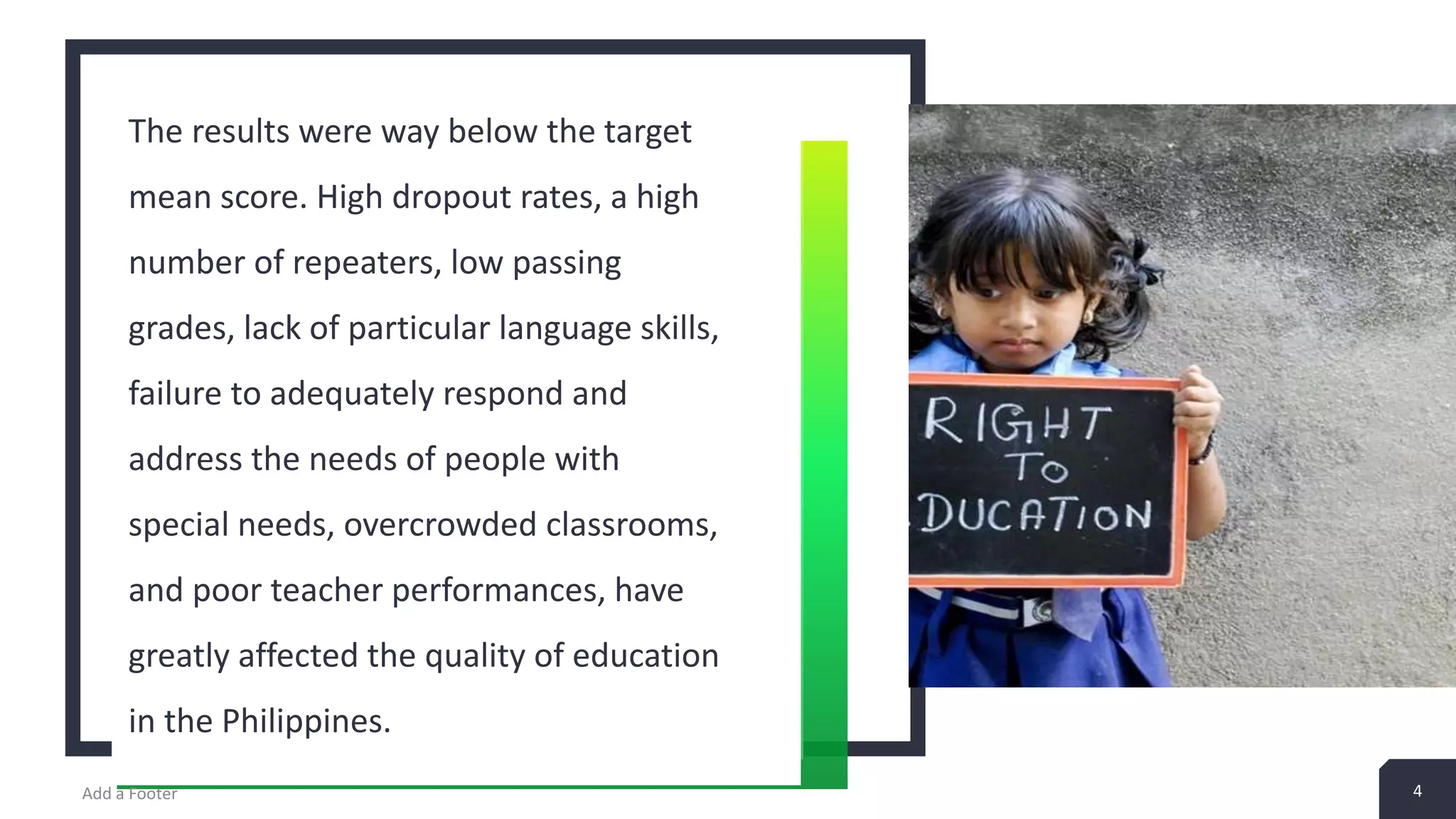
The results were way below the target
mean score. High dropout rates, a high
number of repeaters, low passing
grades, lack of particular language skills,
failure to adequately respond and
address the needs of people with
special needs, overcrowded classrooms,
and poor teacher performances, have
greatly affected the quality of education
in the Philippines.
5
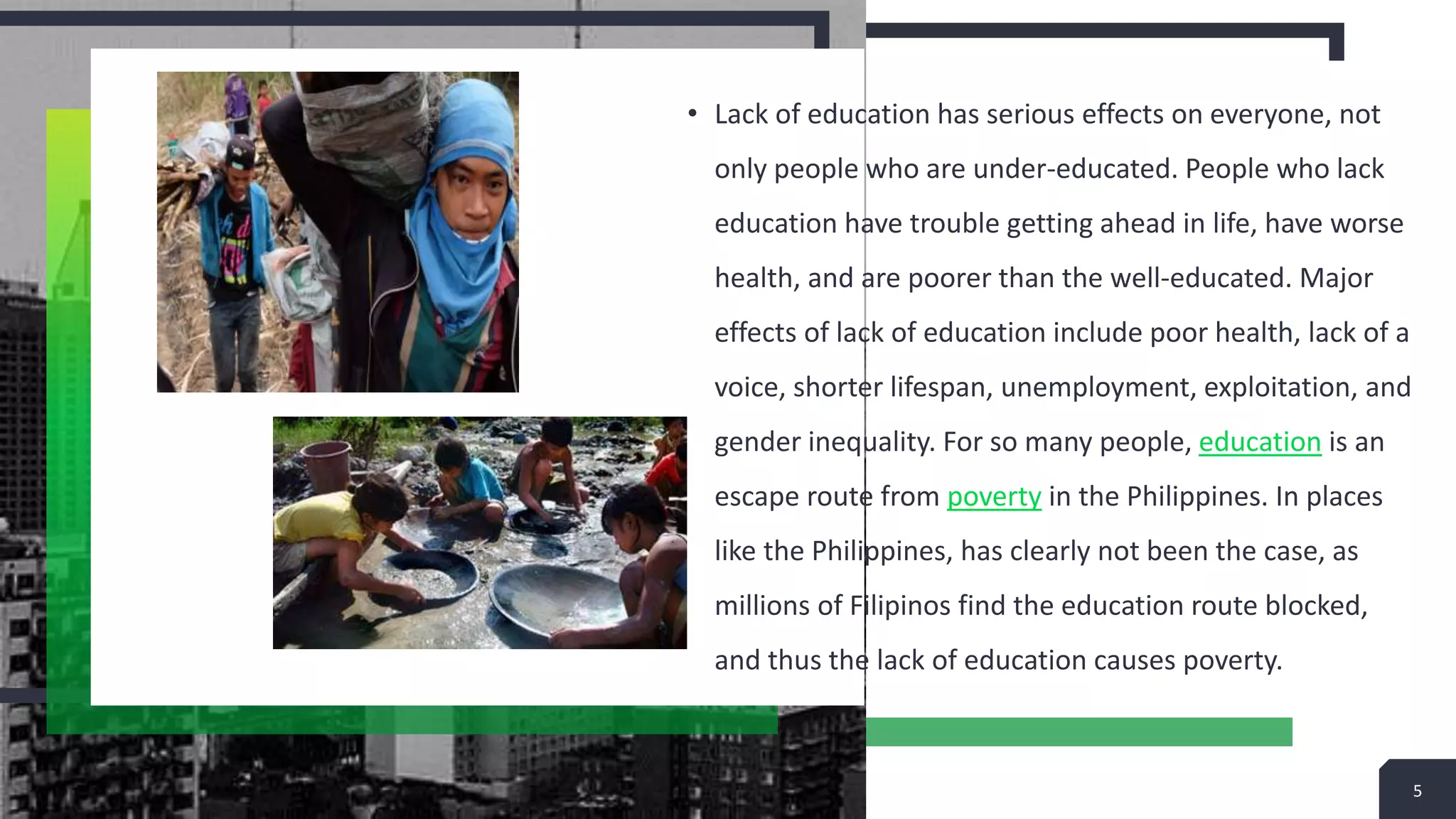
• Lack of education has serious effects on everyone, not
only people who are under-educated. People who lack
education have trouble getting ahead in life, have worse
health, and are poorer than the well-educated. Major
effects of lack of education include poor health, lack of a
voice, shorter lifespan, unemployment, exploitation, and
gender inequality. For so many people, education is an
escape route from poverty in the Philippines. In places
like the Philippines, has clearly not been the case, as
millions of Filipinos find the education route blocked,
and thus the lack of education causes poverty.
• Getting the right education can not
only lift people from poverty, but it
can also improve their health issues,
financial crisis, and change their lives
in the process.
A lack of education can be defined as
a state where people have a below-
average level of common knowledge
about basic things that they would
urgently need in their daily life.For
instance, this could include basic
knowledge in math, writing, spelling,
etc.Especially in poor developing
countries, educational inequality is
quite prevalent.
Add a Footer 6
• For so many people, education is an
escape route from poverty in the
Philippines. In places like the
Philippines, has clearly not been the
case, as millions of Filipinos find the
education route blocked, and thus
the lack of education causes poverty.
It is no secret that poverty is the
biggest enemy of education on every
level. Students from poor homes are
bound to fall victim to health issues.
The poverty lifestyle limits the
youths’ ability to study and learn.
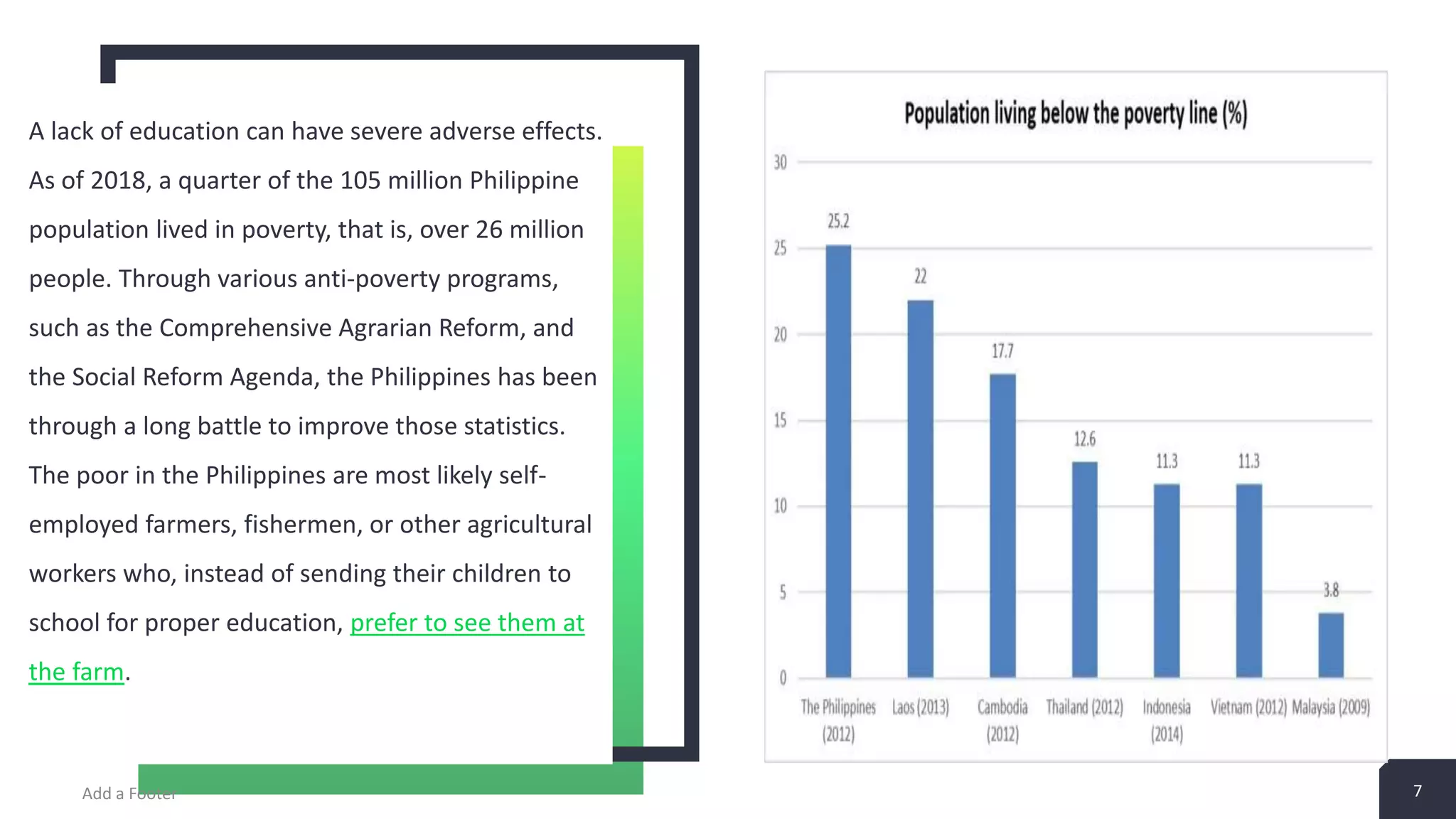
A lack of education can have severe adverse effects.
As of 2018, a quarter of the 105 million Philippine
population lived in poverty, that is, over 26 million
people. Through various anti-poverty programs,
such as the Comprehensive Agrarian Reform, and
the Social Reform Agenda, the Philippines has been
through a long battle to improve those statistics.
The poor in the Philippines are most likely self-
employed farmers, fishermen, or other agricultural
workers who, instead of sending their children to
school for proper education, prefer to see them at
the farm.
Add a Footer 7
8
TITLE HERE
YOUR HEADING YOUR HEADING YOUR HEADING YOUR HEADING
Place content here Place content here Place content here Place content here
here Place content here Place content here Place content here
Place content here Place content here Place content here Place content here
Add a Footer 8
Add a Footer
PROBLEM: THE INDIVIDUAL NEEDS OF LOW-ACHIEVERS ARE NOT BEING ADDRESSED
PERSONALIZED LEARNING IS THE MOST POPULAR TREND IN EDUCATION. THE EDUCATORS ARE DOING THEIR BEST TO IDENTIFY
THE LEARNING STYLE OF EACH STUDENT AND PROVIDE TRAINING THAT CORRESPONDS TO THEIR NEEDS.
SOLUTION: ADDRESS THE NEEDS OF LOW-ACHIEVERS
THE EDUCATORS MUST TRY HARDER TO REDUCE THE NUMBER OF STUDENTS WHO ARE GETTING LOW RESULTS ON LONG-TERM
TRAJECTORIES. IF WE IDENTIFY THESE STUDENTS AT AN EARLY AGE, WE CAN PROVIDE ADDITIONAL TRAINING TO HELP THEM
IMPROVE THE RESULTS.
PROBLEM: THE TEACHERS ARE EXPECTED TO ENTERTAIN
TODAY’S GENERATIONS OF STUDENTS LOVE TECHNOLOGY, SO THE TEACHERS STARTED USING TECHNOLOGY JUST TO KEEP THEM
ENGAGED. THAT IMPOSES A SERIOUS ISSUE: EDUCATION IS BECOMING AN ENTERTAINMENT RATHER THAN A LEARNING PROCESS.
SOLUTION: SET SOME LIMITS
WE DON’T HAVE TO SEE EDUCATION AS OPPOSED TO ENTERTAINMENT. HOWEVER, WE HAVE TO MAKE THE STUDENTS AWARE OF
THE PURPOSE OF TECHNOLOGY AND GAMES IN THE CLASSROOM. IT’S ALL ABOUT LEARNING.
THE PROBLEM: NOT ENOUGH TECH SUPPORT IN YOUR SCHOOL. YOU HAVE THE TECH, BUT WHEN TEACHERS OR STUDENTS NEED
HELP, OR SOMETHING GOES WRONG, EVERYTHING COMES TO A STANDSTILL BECAUSE YOUR CURRENT TECH SUPPORT STAFF
DOESN’T HAVE THE MANPOWER TO HANDLE IT ALL.
THE SOLUTION: SOME SCHOOLS ARE TRAINING TEAMS OF STUDENTS TO PROVIDE BASIC-LEVEL TECH SUPPORT FOR THE SCHOOL,
EVEN AT THE ELEMENTARY LEVEL. THESE STUDENTS ATTEND STAFF TRAININGS ON NEW TECHNOLOGY, ACT AS TEACHING
ASSISTANTS WHEN A CLASS IS WORKING WITH A NEW OR CHALLENGING TECHNOLOGY, AND EVEN CONDUCT THEIR OWN
TRAINING SESSIONS FOR STUDENTS AND TEACHERS.
THE PROBLEM: IN WRITING CLASSES, STUDENTS ARE SOMETIMES SLOW TO COME UP WITH IDEAS FOR WHAT TO WRITE ABOUT.
THE SOLUTION: DEDICATE A WALL IN YOUR CLASSROOM AS AN INSPIRATION BOARD, A PLACE WHERE STUDENTS CAN PLACE
IMAGES, QUOTES, ROUGH IDEAS, THE OPENING LINES OF A STORY THEY’RE THINKING OF WRITING, ANYTHING THAT INSPIRES
THEM OR SHOWS FRAGMENTS OF INSPIRATION. THIS GETS THE IDEAS OUT OF STUDENTS’ HEADS AND INTO A PUBLIC SPACE,
WHERE THEY CAN GENERATE FRESH NEW IDEAS.
THE PROBLEM: STUDENTS NEED TO GROW THEIR VOCABULARY IN ALL SUBJECT AREAS, BUT OUR MOST COMMON METHODS OF
VOCABULARY INSTRUCTION ARE DRY AND DON’T LEAD TO LONG-TERM RETENTION.
THE SOLUTION: INSTEAD OF DOING TRADITIONAL DICTIONARY AND SENTENCE-WRITING WORK, HAVE STUDENTS CONSTRUCT
THE MEANING OF VOCABULARY WORDS IN A VARIETY OF WAYS.
9
THANK YOU
MA.DYAN BULANADI ST.IRENEUS
10

Lack of Education

  • 1.
  • 2.
    EDUCATION I THE MOSTPOWERFUL WEAPON WHICH YOU CAN USE TO CHANGE THE WORLD. Add a Footer 2
  • 3.
    T HI SI S T HE F I RST MA JOR I SSUE T HAT T HE PHI L I PPI NE GOV ERNMENT SHOUL D RESOLV E B UT SOMEHOW I T I S RECENT LY I MPROV I NG. T HE Q UAL I T Y OF PHI L I PPI NE EDUCAT I ON HAS DECL I NED A F EW YEARS AGO DUE TO POOR RESULTS FROM STANDARD ENT RANCE T ESTS CONDUC T ED AMONG EL EMENTARY AND SECONDARY ST UDENTS, AS WEL L AS T HE T ERT I ARY LEVELS. Add a Footer 3
  • 4.
    Add a Footer4 The results were way below the target mean score. High dropout rates, a high number of repeaters, low passing grades, lack of particular language skills, failure to adequately respond and address the needs of people with special needs, overcrowded classrooms, and poor teacher performances, have greatly affected the quality of education in the Philippines.
  • 5.
    5 • Lack ofeducation has serious effects on everyone, not only people who are under-educated. People who lack education have trouble getting ahead in life, have worse health, and are poorer than the well-educated. Major effects of lack of education include poor health, lack of a voice, shorter lifespan, unemployment, exploitation, and gender inequality. For so many people, education is an escape route from poverty in the Philippines. In places like the Philippines, has clearly not been the case, as millions of Filipinos find the education route blocked, and thus the lack of education causes poverty.
  • 6.
    • Getting theright education can not only lift people from poverty, but it can also improve their health issues, financial crisis, and change their lives in the process. A lack of education can be defined as a state where people have a below- average level of common knowledge about basic things that they would urgently need in their daily life.For instance, this could include basic knowledge in math, writing, spelling, etc.Especially in poor developing countries, educational inequality is quite prevalent. Add a Footer 6 • For so many people, education is an escape route from poverty in the Philippines. In places like the Philippines, has clearly not been the case, as millions of Filipinos find the education route blocked, and thus the lack of education causes poverty. It is no secret that poverty is the biggest enemy of education on every level. Students from poor homes are bound to fall victim to health issues. The poverty lifestyle limits the youths’ ability to study and learn.
  • 7.
    A lack ofeducation can have severe adverse effects. As of 2018, a quarter of the 105 million Philippine population lived in poverty, that is, over 26 million people. Through various anti-poverty programs, such as the Comprehensive Agrarian Reform, and the Social Reform Agenda, the Philippines has been through a long battle to improve those statistics. The poor in the Philippines are most likely self- employed farmers, fishermen, or other agricultural workers who, instead of sending their children to school for proper education, prefer to see them at the farm. Add a Footer 7
  • 8.
    8 TITLE HERE YOUR HEADINGYOUR HEADING YOUR HEADING YOUR HEADING Place content here Place content here Place content here Place content here here Place content here Place content here Place content here Place content here Place content here Place content here Place content here Place content here Place content here Place content here Place content here Place content here Place content here Place content here Place content here Place content here Place content here Place content here Place content here Place content here Place content here Place content here Place content here Place content here Place content here Place content here Place content here Add a Footer 8
  • 9.
    Add a Footer PROBLEM:THE INDIVIDUAL NEEDS OF LOW-ACHIEVERS ARE NOT BEING ADDRESSED PERSONALIZED LEARNING IS THE MOST POPULAR TREND IN EDUCATION. THE EDUCATORS ARE DOING THEIR BEST TO IDENTIFY THE LEARNING STYLE OF EACH STUDENT AND PROVIDE TRAINING THAT CORRESPONDS TO THEIR NEEDS. SOLUTION: ADDRESS THE NEEDS OF LOW-ACHIEVERS THE EDUCATORS MUST TRY HARDER TO REDUCE THE NUMBER OF STUDENTS WHO ARE GETTING LOW RESULTS ON LONG-TERM TRAJECTORIES. IF WE IDENTIFY THESE STUDENTS AT AN EARLY AGE, WE CAN PROVIDE ADDITIONAL TRAINING TO HELP THEM IMPROVE THE RESULTS. PROBLEM: THE TEACHERS ARE EXPECTED TO ENTERTAIN TODAY’S GENERATIONS OF STUDENTS LOVE TECHNOLOGY, SO THE TEACHERS STARTED USING TECHNOLOGY JUST TO KEEP THEM ENGAGED. THAT IMPOSES A SERIOUS ISSUE: EDUCATION IS BECOMING AN ENTERTAINMENT RATHER THAN A LEARNING PROCESS. SOLUTION: SET SOME LIMITS WE DON’T HAVE TO SEE EDUCATION AS OPPOSED TO ENTERTAINMENT. HOWEVER, WE HAVE TO MAKE THE STUDENTS AWARE OF THE PURPOSE OF TECHNOLOGY AND GAMES IN THE CLASSROOM. IT’S ALL ABOUT LEARNING. THE PROBLEM: NOT ENOUGH TECH SUPPORT IN YOUR SCHOOL. YOU HAVE THE TECH, BUT WHEN TEACHERS OR STUDENTS NEED HELP, OR SOMETHING GOES WRONG, EVERYTHING COMES TO A STANDSTILL BECAUSE YOUR CURRENT TECH SUPPORT STAFF DOESN’T HAVE THE MANPOWER TO HANDLE IT ALL. THE SOLUTION: SOME SCHOOLS ARE TRAINING TEAMS OF STUDENTS TO PROVIDE BASIC-LEVEL TECH SUPPORT FOR THE SCHOOL, EVEN AT THE ELEMENTARY LEVEL. THESE STUDENTS ATTEND STAFF TRAININGS ON NEW TECHNOLOGY, ACT AS TEACHING ASSISTANTS WHEN A CLASS IS WORKING WITH A NEW OR CHALLENGING TECHNOLOGY, AND EVEN CONDUCT THEIR OWN TRAINING SESSIONS FOR STUDENTS AND TEACHERS. THE PROBLEM: IN WRITING CLASSES, STUDENTS ARE SOMETIMES SLOW TO COME UP WITH IDEAS FOR WHAT TO WRITE ABOUT. THE SOLUTION: DEDICATE A WALL IN YOUR CLASSROOM AS AN INSPIRATION BOARD, A PLACE WHERE STUDENTS CAN PLACE IMAGES, QUOTES, ROUGH IDEAS, THE OPENING LINES OF A STORY THEY’RE THINKING OF WRITING, ANYTHING THAT INSPIRES THEM OR SHOWS FRAGMENTS OF INSPIRATION. THIS GETS THE IDEAS OUT OF STUDENTS’ HEADS AND INTO A PUBLIC SPACE, WHERE THEY CAN GENERATE FRESH NEW IDEAS. THE PROBLEM: STUDENTS NEED TO GROW THEIR VOCABULARY IN ALL SUBJECT AREAS, BUT OUR MOST COMMON METHODS OF VOCABULARY INSTRUCTION ARE DRY AND DON’T LEAD TO LONG-TERM RETENTION. THE SOLUTION: INSTEAD OF DOING TRADITIONAL DICTIONARY AND SENTENCE-WRITING WORK, HAVE STUDENTS CONSTRUCT THE MEANING OF VOCABULARY WORDS IN A VARIETY OF WAYS. 9
  • 10.