

LABOUR MANAGEMENT
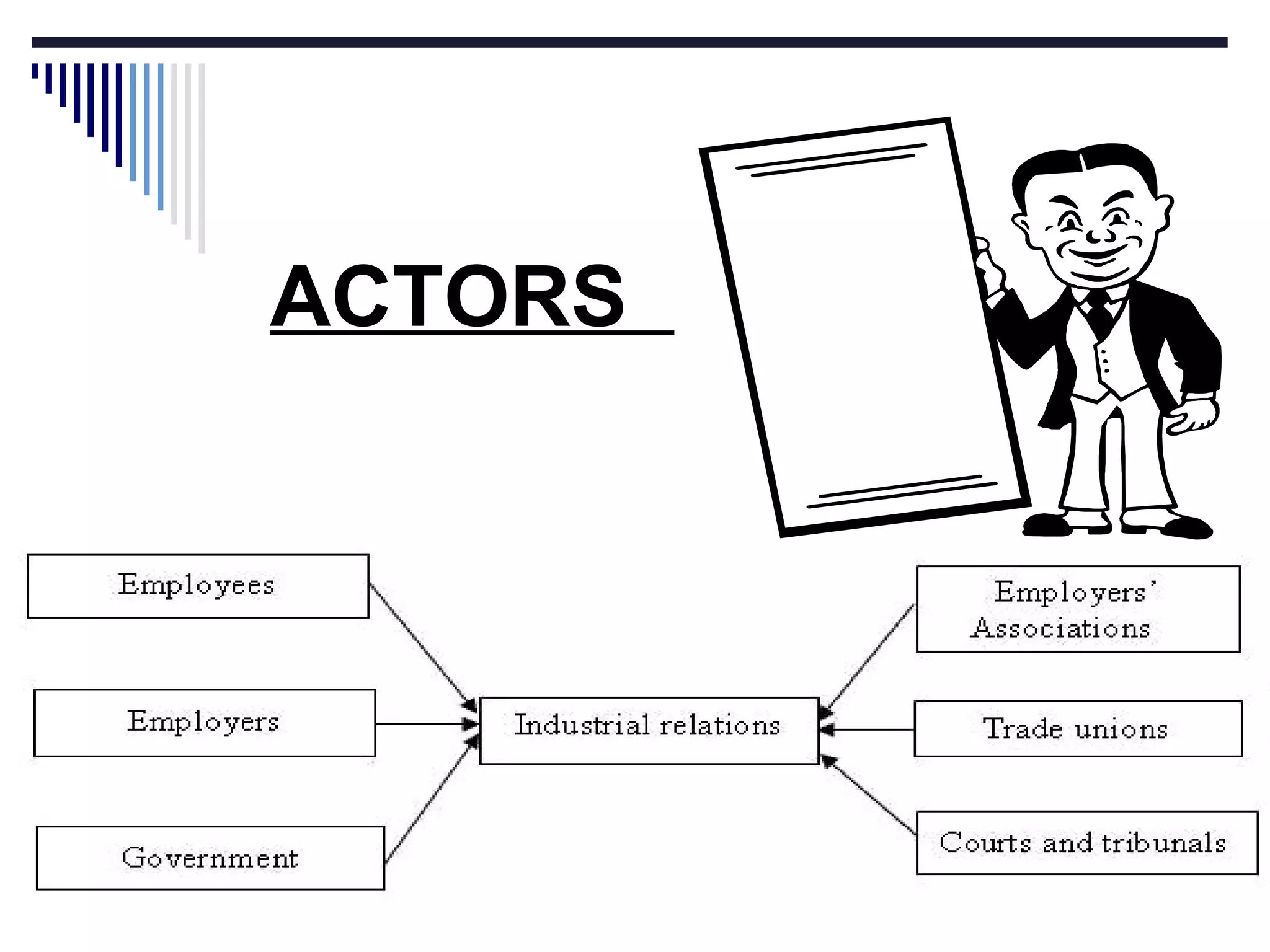
ACTORS
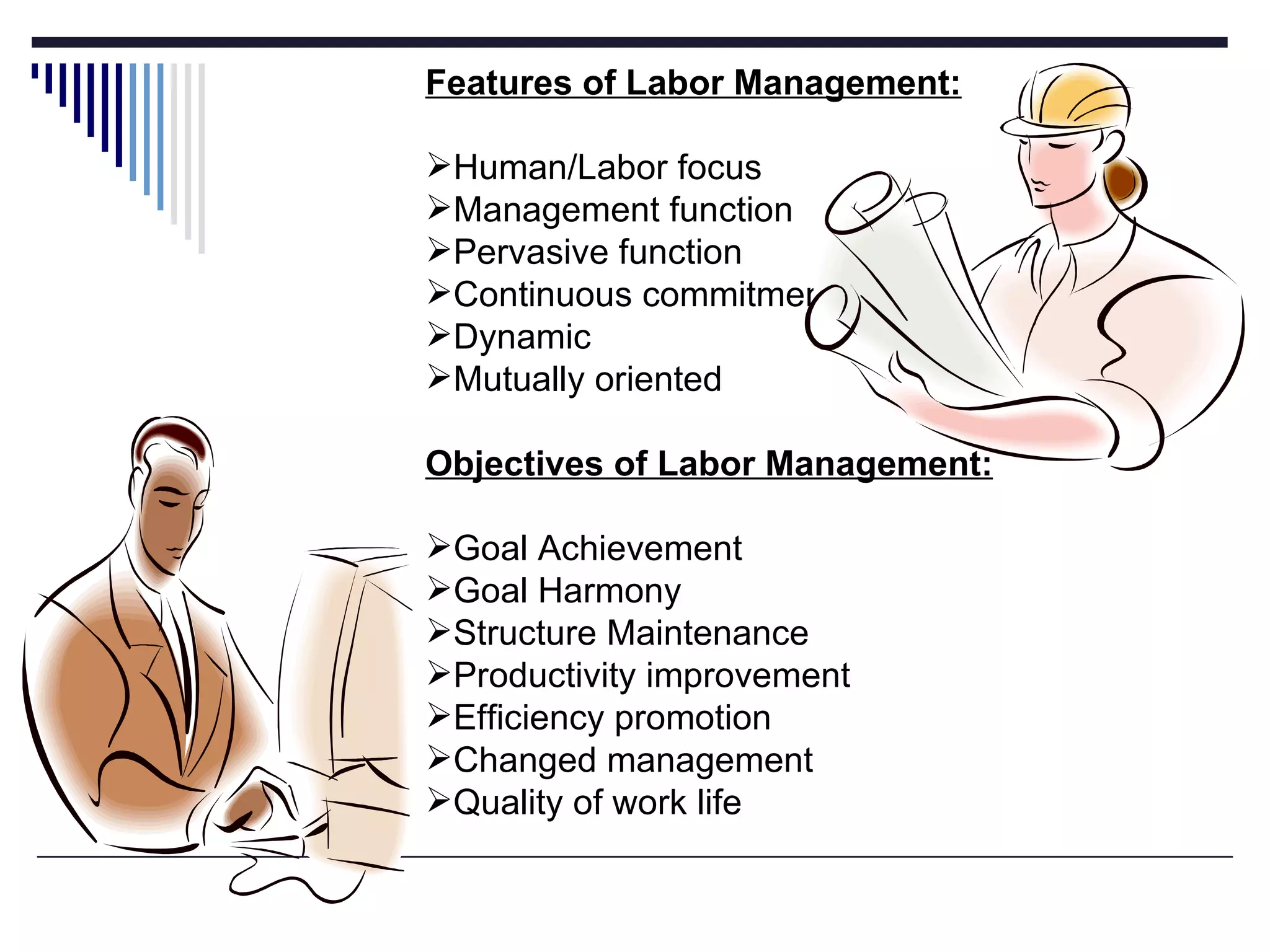
Features of Labor Management: Human/Labor focus Management function Pervasive function Continuous commitment Dynamic Mutually oriented Objectives of Labor Management: Goal Achievement Goal Harmony Structure Maintenance Productivity improvement Efficiency promotion Changed management Quality of work life
 
LABOUR MANAGEMENT RELATION: The field of labor relations looks at the relationship between  management  and workers, particularly groups of workers represented by a  union . The relation between them are more harmonious and cooperative than confliction and creates an environment conducive to economic efficiency and the motivation, productivity and development of the employee and generates employee loyalty and mutual trust.`
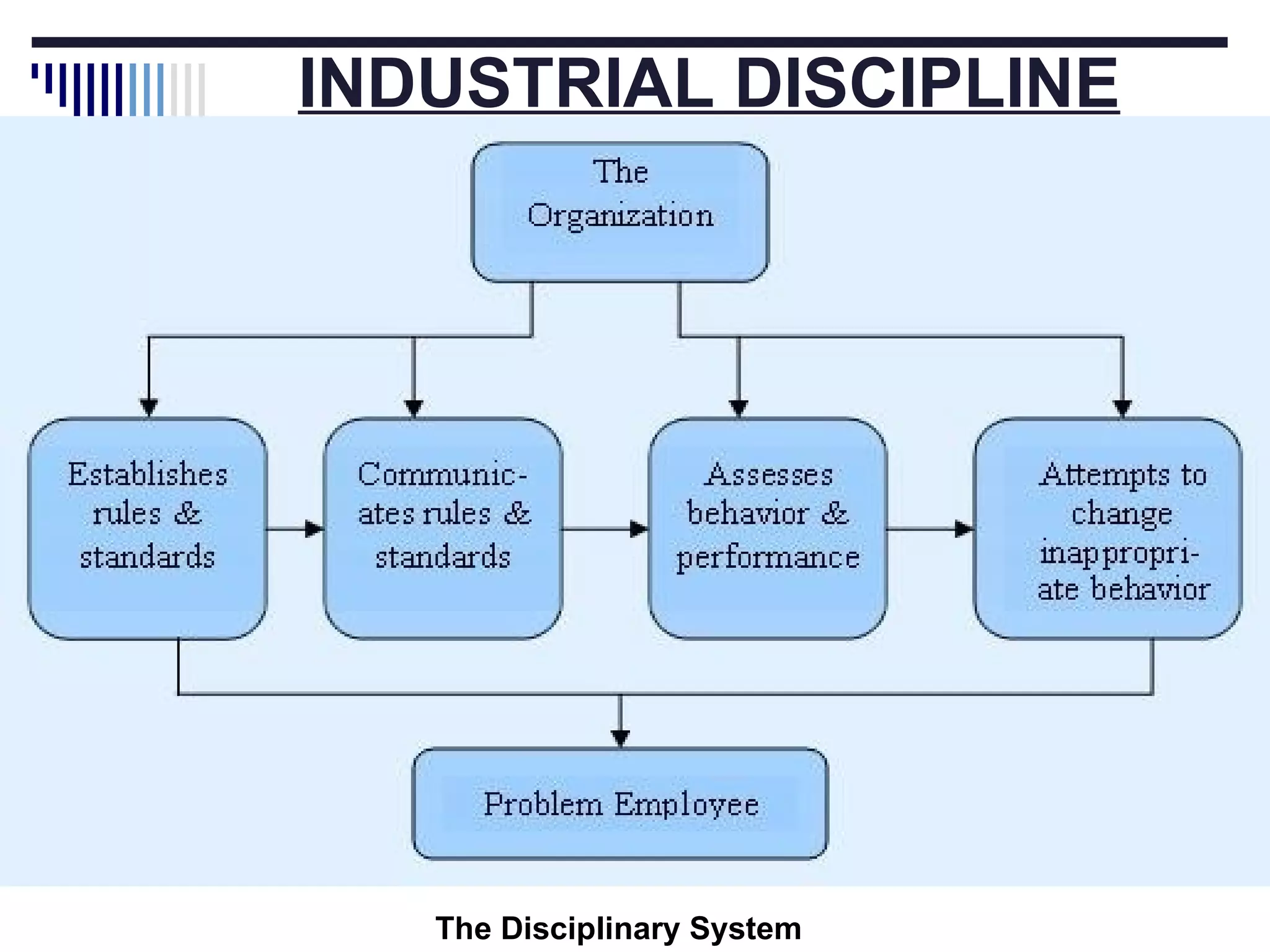
INDUSTRIAL DISCIPLINE The Disciplinary System
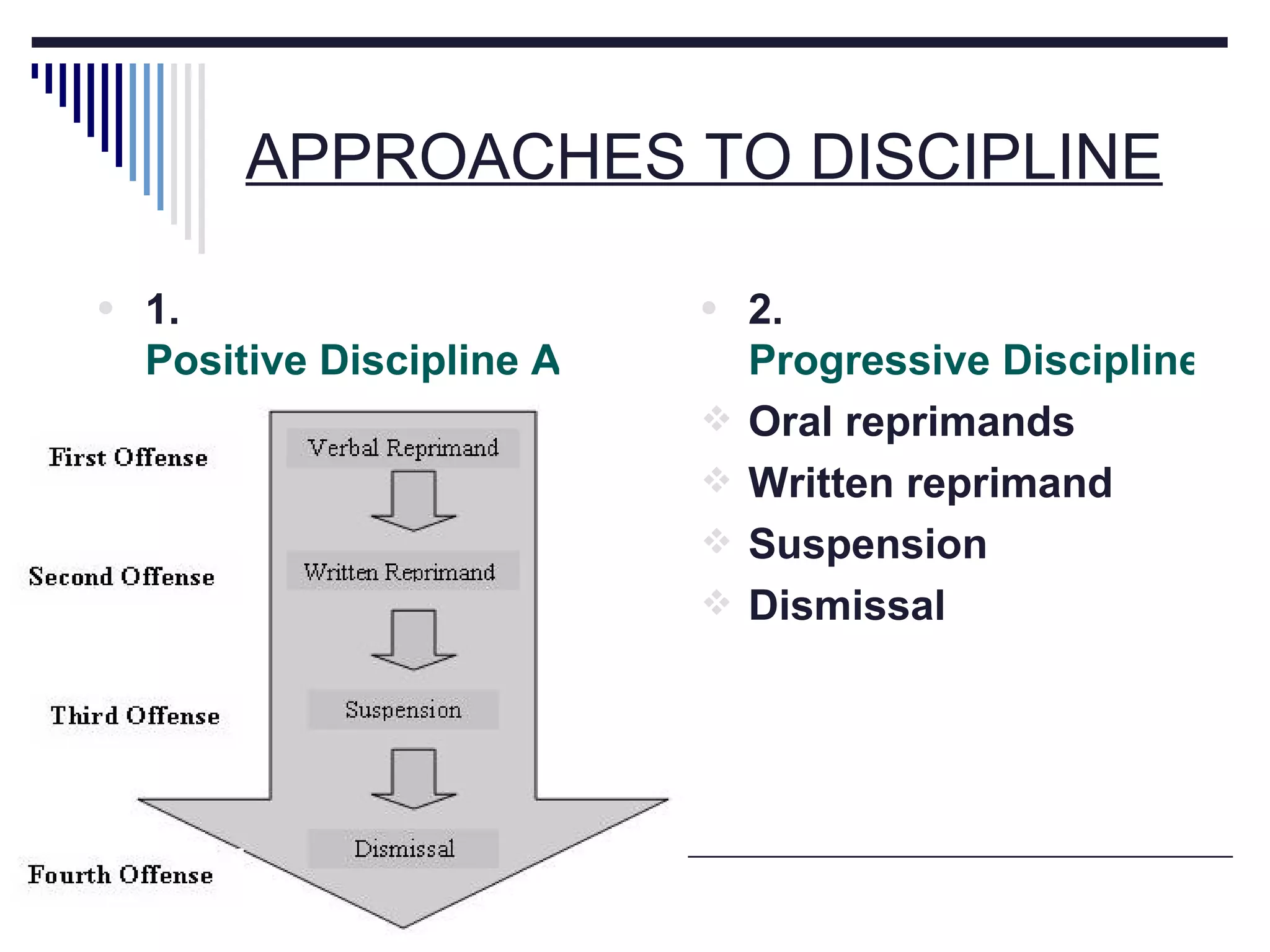
APPROACHES TO DISCIPLINE 1. Positive Discipline Approach 2. Progressive Discipline Approach Oral reprimands   Written reprimand   Suspension   Dismissal
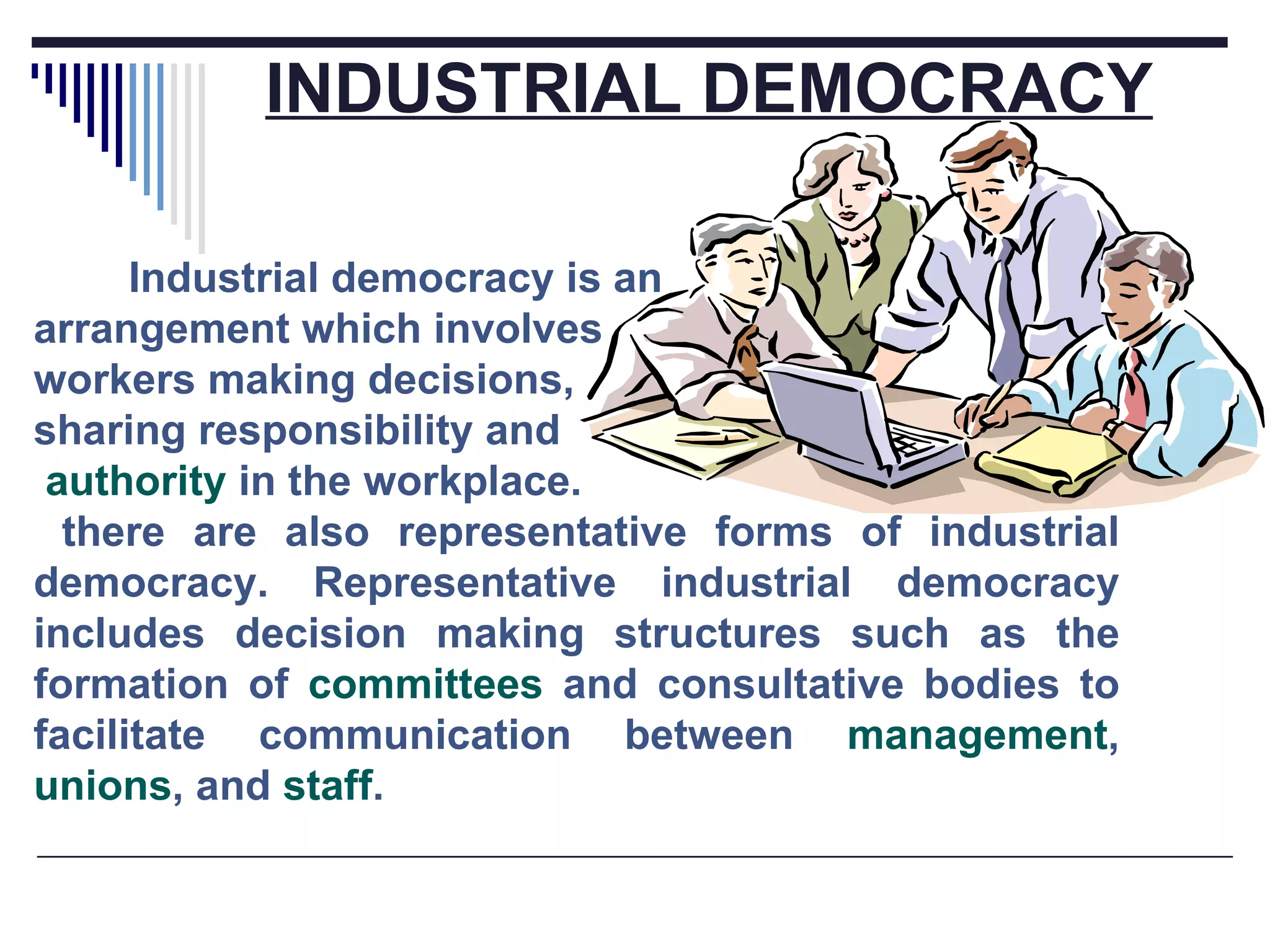
INDUSTRIAL DEMOCRACY Industrial democracy is an arrangement which involves  workers making decisions,  sharing responsibility and authority  in the workplace. there are also representative forms of industrial democracy. Representative industrial democracy includes decision making structures such as the formation of  committees  and consultative bodies to facilitate communication between  management ,  unions , and  staff .
INDUSTRIAL DISPUTES Wages and allowances  Personnel and retrenchment  Indiscipline and violence  Bonus  Leave and working hours
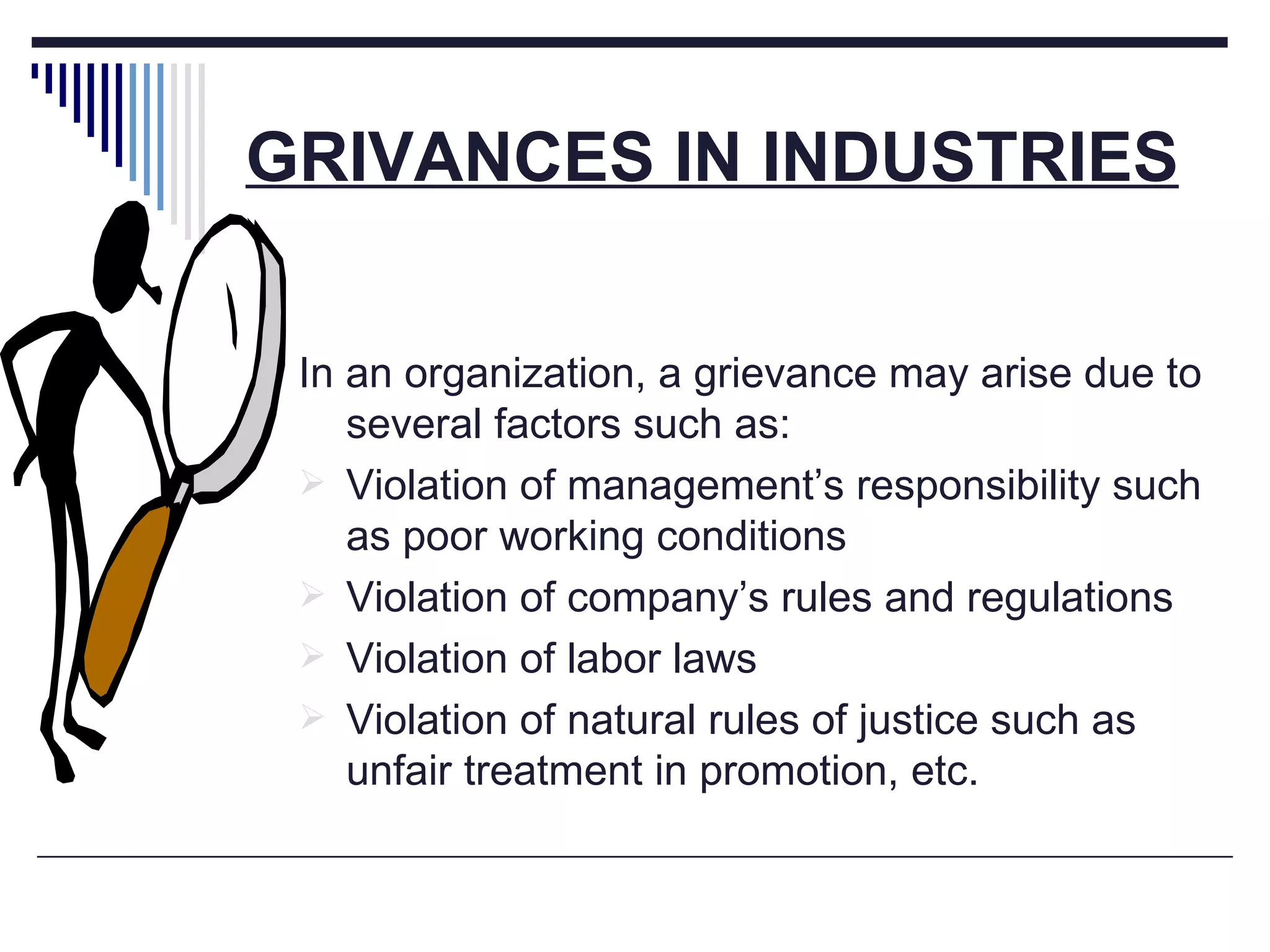
GRIVANCES IN INDUSTRIES In an organization, a grievance may arise due to several factors such as: Violation of management’s responsibility such as poor working conditions Violation of company’s rules and regulations Violation of labor laws Violation of natural rules of justice such as unfair treatment in promotion, etc.
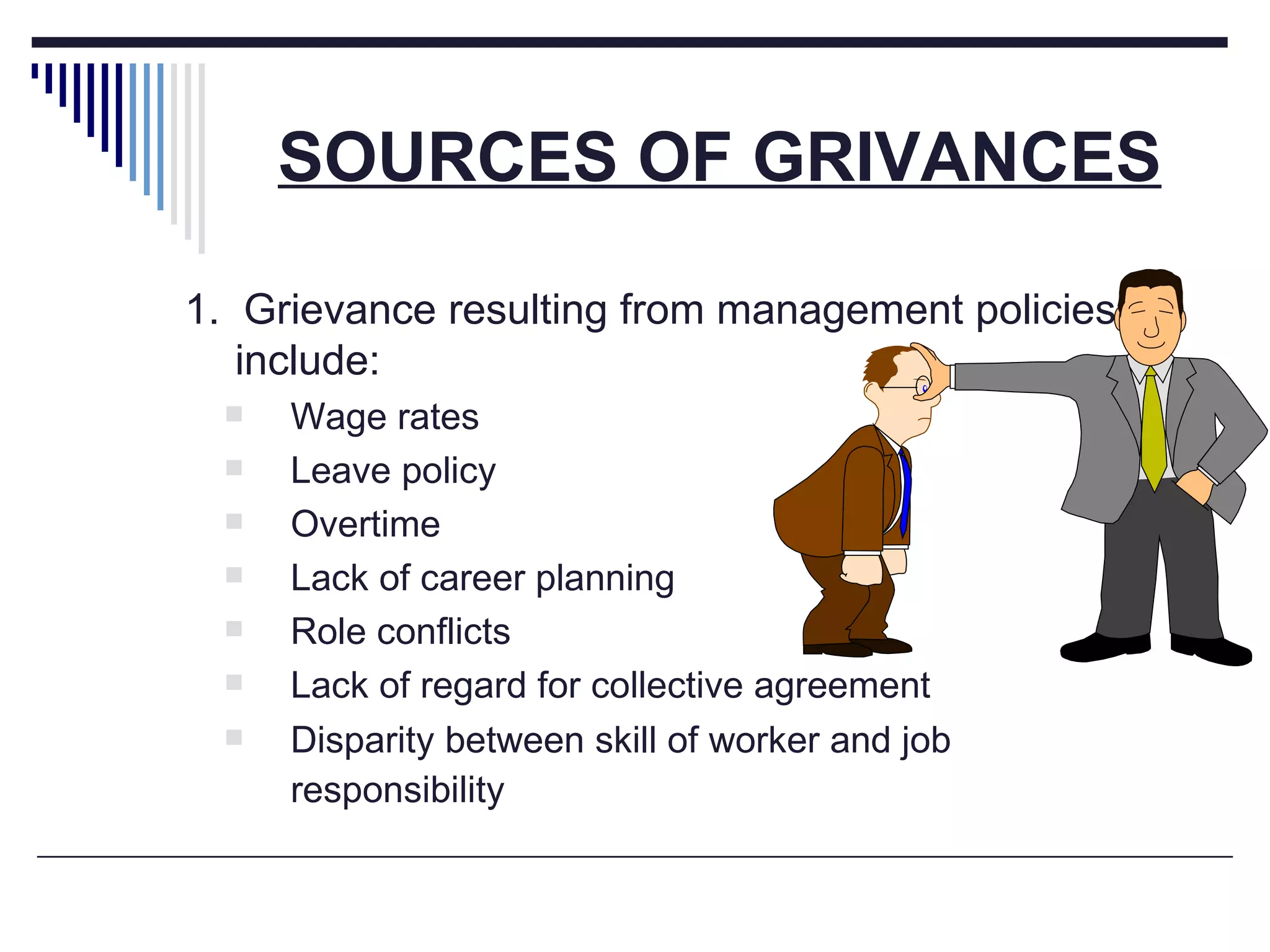
SOURCES OF GRIVANCES 1.  Grievance resulting from management policies include: Wage rates  Leave policy Overtime Lack of career planning Role conflicts Lack of regard for collective agreement Disparity between skill of worker and job responsibility
sources of grievance   2.Grievance resulting from working conditions include: Poor safety and bad physical conditions Unavailability of tools and proper machinery Negative approach to discipline Unrealistic targets  3.Grievance resulting from inter-personal factors include: Poor relationships with team members Autocratic leadership style of superiors Poor relations with seniors Conflicts with peers and colleagues
 
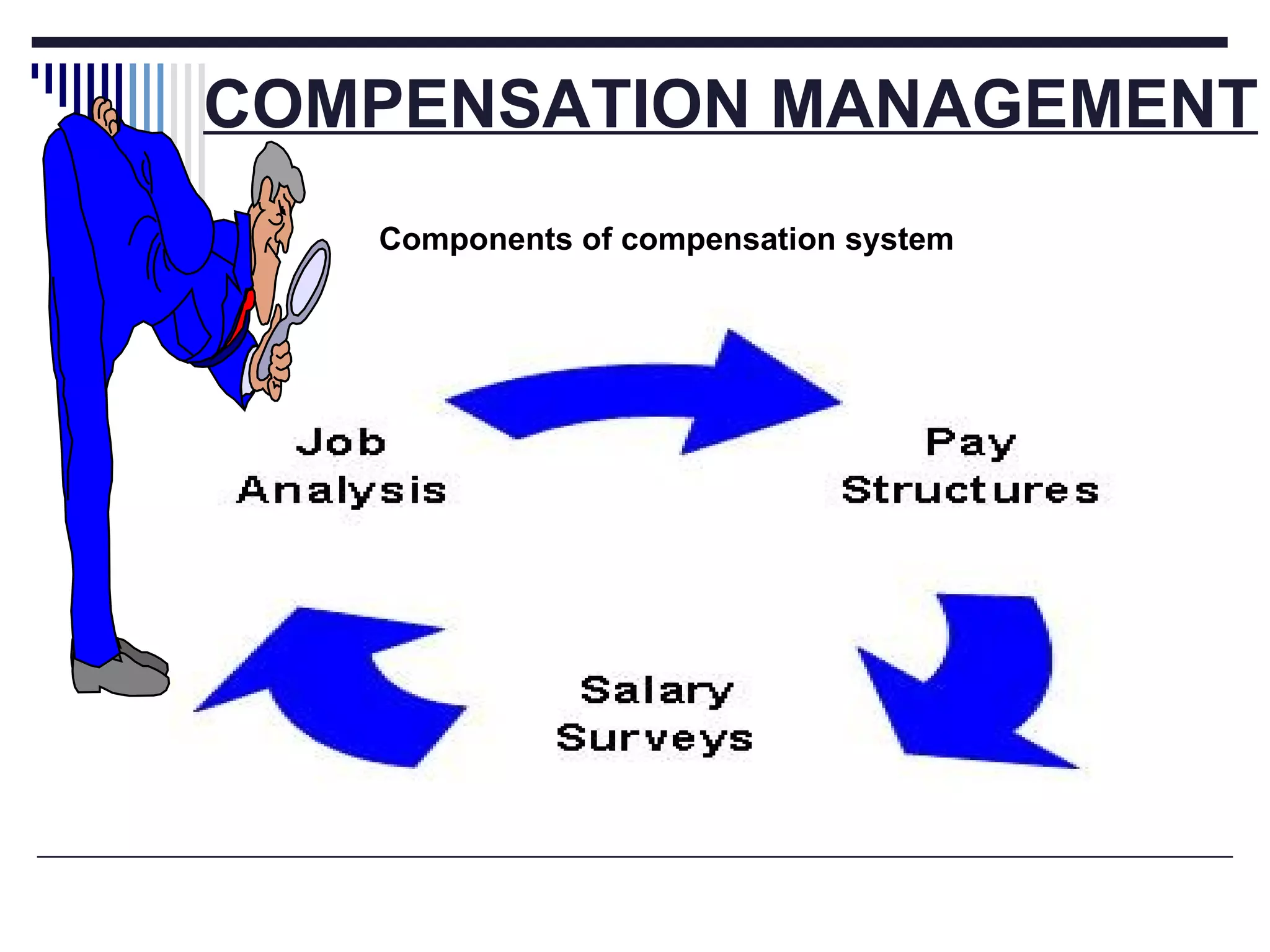
COMPENSATION MANAGEMENT   Components of compensation system
Types of Compensation   Direct Compensation   Indirect Compensation   Strategic Compensation
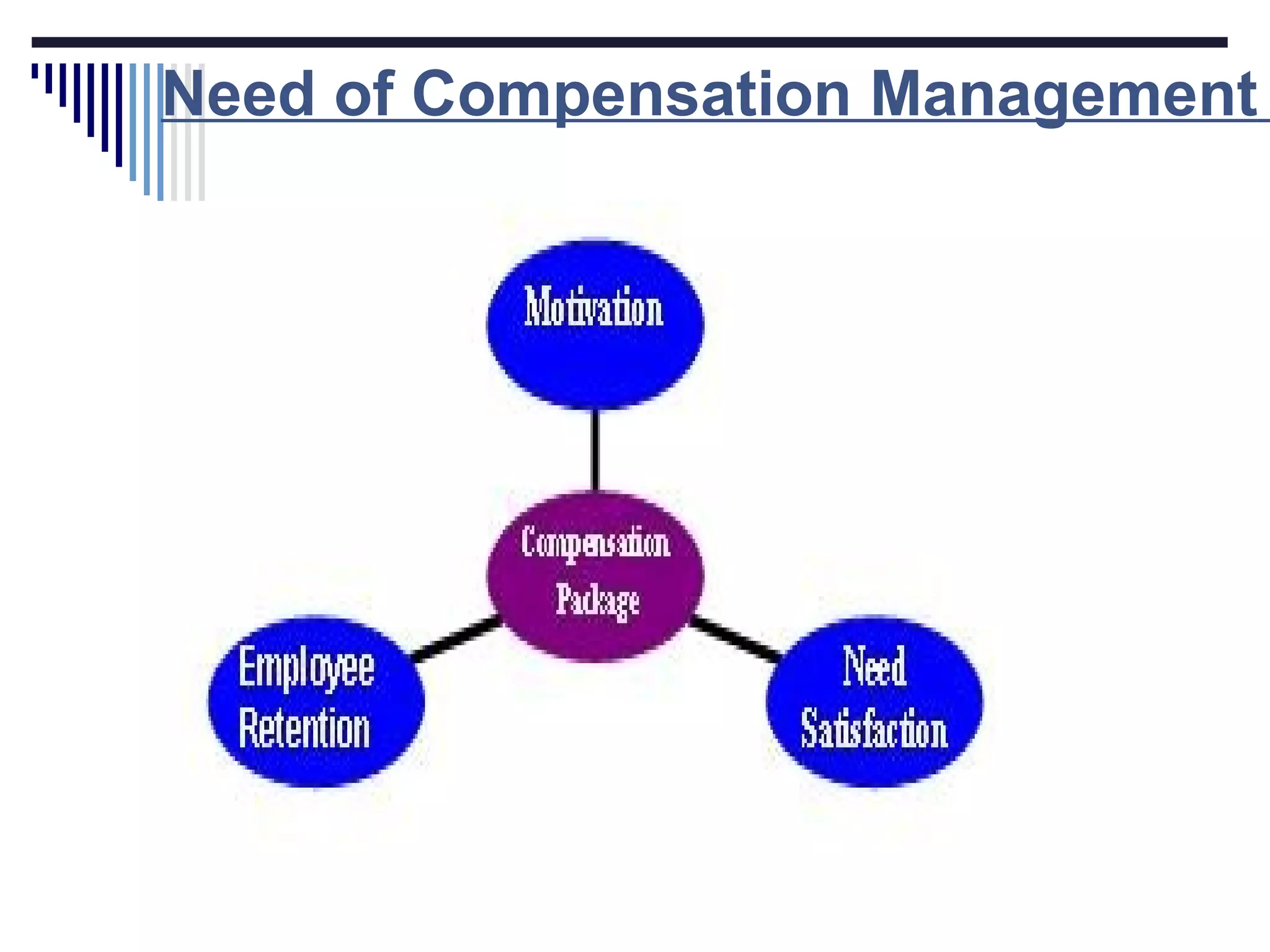
Need of Compensation Management
Law of Success You can if you think  you can
No trade union before 2002 B.S. First movement of labor held at Biratnagar in 2003 B.S. All Nepal Trade Union Congress (ANTUC) in the name of ‘Nepal Majdoor Sangh’ was established in 2004 B.S. Biratnagar workers Union (BWU) was established in 2004 B.S. ANTUC & BWU united in 2008 B.S. The world federation of Trade Union (WFTU) in 2010 B.S. granted membership to ANTUC. Trade union in Nepal Origin and growth of Trade Union in Nepal
The existed unions at that time Biratnagar Workers Union Cotton Mills Workers union All Nepal Trade Union Congress Independent worker’s Union Biratnagar mill Workers Association All Nepal United Workers Union All Nepal Trade Union organisation Nepal Labor Union.
Major Trade Union Federation  in Nepal Nepal Trade Union Congress (NTUC) Democratic Confederation of Nepalese Trade Union (DECONT). General Federation of Nepalese Trade Union (GEFONT).
Characteristics of Trade Unionism in Nepal Involvement of political parties. Small number of members. Concentration on Big cities Formation of heterogeneous group.
Rights of Trade Union Job security and welfare of their members. Good working condition and improved standard of living. Pay rise, fair salary, wages, bonus incentives. Insurance for the members. No any exploitation by the management. Fixed working hours.
Responsibly of Trade Union Make an efforts to establish good relationship between management and workers. To assist in the development of industries by increasing the productivity. Make the workers dutiful and disciplined. Conducting activities providing education to the workers. Provide necessary advice to the Govt. in formulating the labor policy. Protect and Promote the rights of workers. Enhance social and economic standards of the workers.
Let ‘s make every  e v e n t  an impactful one.

Labour management ppt

  • 1.
  • 2.
  • 3.
    Features of LaborManagement: Human/Labor focus Management function Pervasive function Continuous commitment Dynamic Mutually oriented Objectives of Labor Management: Goal Achievement Goal Harmony Structure Maintenance Productivity improvement Efficiency promotion Changed management Quality of work life
  • 4.
  • 5.
    LABOUR MANAGEMENT RELATION:The field of labor relations looks at the relationship between management and workers, particularly groups of workers represented by a union . The relation between them are more harmonious and cooperative than confliction and creates an environment conducive to economic efficiency and the motivation, productivity and development of the employee and generates employee loyalty and mutual trust.`
  • 6.
    INDUSTRIAL DISCIPLINE TheDisciplinary System
  • 7.
    APPROACHES TO DISCIPLINE1. Positive Discipline Approach 2. Progressive Discipline Approach Oral reprimands Written reprimand Suspension Dismissal
  • 8.
    INDUSTRIAL DEMOCRACY Industrialdemocracy is an arrangement which involves workers making decisions, sharing responsibility and authority in the workplace. there are also representative forms of industrial democracy. Representative industrial democracy includes decision making structures such as the formation of committees and consultative bodies to facilitate communication between management , unions , and staff .
  • 9.
    INDUSTRIAL DISPUTES Wagesand allowances Personnel and retrenchment Indiscipline and violence Bonus Leave and working hours
  • 10.
    GRIVANCES IN INDUSTRIESIn an organization, a grievance may arise due to several factors such as: Violation of management’s responsibility such as poor working conditions Violation of company’s rules and regulations Violation of labor laws Violation of natural rules of justice such as unfair treatment in promotion, etc.
  • 11.
    SOURCES OF GRIVANCES1. Grievance resulting from management policies include: Wage rates Leave policy Overtime Lack of career planning Role conflicts Lack of regard for collective agreement Disparity between skill of worker and job responsibility
  • 12.
    sources of grievance 2.Grievance resulting from working conditions include: Poor safety and bad physical conditions Unavailability of tools and proper machinery Negative approach to discipline Unrealistic targets 3.Grievance resulting from inter-personal factors include: Poor relationships with team members Autocratic leadership style of superiors Poor relations with seniors Conflicts with peers and colleagues
  • 13.
  • 14.
    COMPENSATION MANAGEMENT Components of compensation system
  • 15.
    Types of Compensation Direct Compensation Indirect Compensation Strategic Compensation
  • 16.
  • 17.
    Law of SuccessYou can if you think you can
  • 18.
    No trade unionbefore 2002 B.S. First movement of labor held at Biratnagar in 2003 B.S. All Nepal Trade Union Congress (ANTUC) in the name of ‘Nepal Majdoor Sangh’ was established in 2004 B.S. Biratnagar workers Union (BWU) was established in 2004 B.S. ANTUC & BWU united in 2008 B.S. The world federation of Trade Union (WFTU) in 2010 B.S. granted membership to ANTUC. Trade union in Nepal Origin and growth of Trade Union in Nepal
  • 19.
    The existed unionsat that time Biratnagar Workers Union Cotton Mills Workers union All Nepal Trade Union Congress Independent worker’s Union Biratnagar mill Workers Association All Nepal United Workers Union All Nepal Trade Union organisation Nepal Labor Union.
  • 20.
    Major Trade UnionFederation in Nepal Nepal Trade Union Congress (NTUC) Democratic Confederation of Nepalese Trade Union (DECONT). General Federation of Nepalese Trade Union (GEFONT).
  • 21.
    Characteristics of TradeUnionism in Nepal Involvement of political parties. Small number of members. Concentration on Big cities Formation of heterogeneous group.
  • 22.
    Rights of TradeUnion Job security and welfare of their members. Good working condition and improved standard of living. Pay rise, fair salary, wages, bonus incentives. Insurance for the members. No any exploitation by the management. Fixed working hours.
  • 23.
    Responsibly of TradeUnion Make an efforts to establish good relationship between management and workers. To assist in the development of industries by increasing the productivity. Make the workers dutiful and disciplined. Conducting activities providing education to the workers. Provide necessary advice to the Govt. in formulating the labor policy. Protect and Promote the rights of workers. Enhance social and economic standards of the workers.
  • 24.
    Let ‘s makeevery e v e n t an impactful one.