し
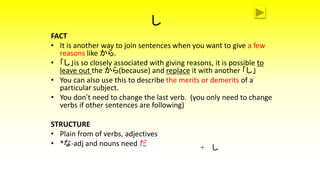
FACT
• It isanother way to join sentences when you want to give a few
reasons like から.
• 「し」is so closely associated with giving reasons, it is possible to
leave out the から(because) and replace it with another 「し」
• You can also use this to describe the merits or demerits of a
particular subject.
• You don’t need to change the last verb. (you only need to change
verbs if other sentences are following)
STRUCTURE
• Plain from of verbs, adjectives
• *な-adj and nouns need だ
+ し
12.
Use of し
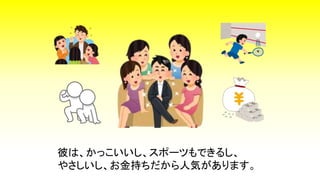
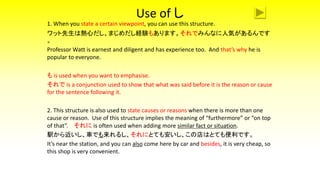
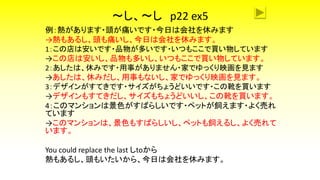
1.When you state a certain viewpoint, you can use this structure.
ワット先生は熱心だし、まじめだし経験もあります。それでみんなに人気があるんです
。
Professor Watt is earnest and diligent and has experience too. And that’s why he is
popular to everyone.
も is used when you want to emphasise.
それで is a conjunction used to show that what was said before it is the reason or cause
for the sentence following it.
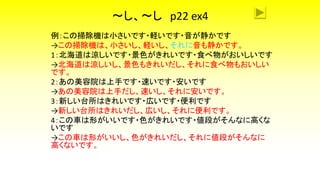
2. This structure is also used to state causes or reasons when there is more than one
cause or reason. Use of this structure implies the meaning of “furthermore” or “on top
of that”. それに is often used when adding more similar fact or situation.
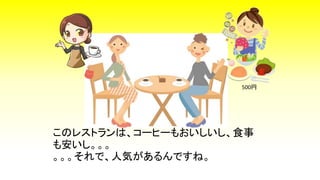
駅から近いし、車でも来れるし、それにとても安いし、この店はとても便利です。
It’s near the station, and you can also come here by car and besides, it is very cheap, so
this shop is very convenient.
13.
Use of し
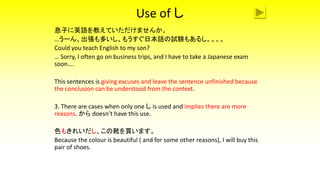
息子に英語を教えていただけませんか。
…うーん、出張も多いし、もうすぐ日本語の試験もあるし。。。。
Couldyou teach English to my son?
… Sorry, I often go on business trips, and I have to take a Japanese exam
soon….
This sentences is giving excuses and leave the sentence unfinished because
the conclusion can be understood from the context.
3. There are cases when only one し is used and implies there are more
reasons. から doesn’t have this use.
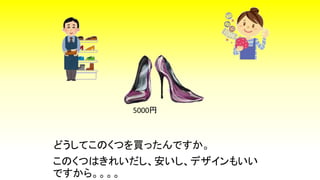
色もきれいだし、この靴を買います。
Because the colour is beautiful ( and for some other reasons), I will buy this
pair of shoes.
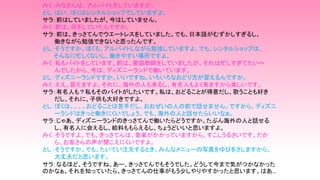
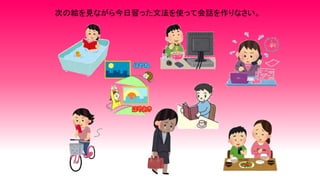
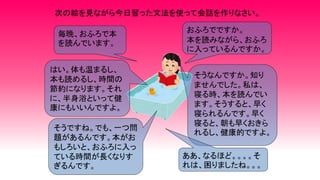
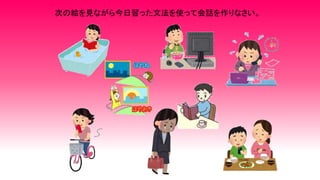
てform + います
•Use 1
• Describe actions happening now.
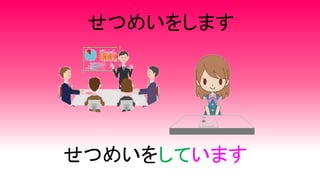
• 先生が話しています。
• The teacher is talking (now).
• Use 2
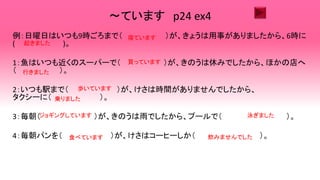
• Describe an individual’s customary action.
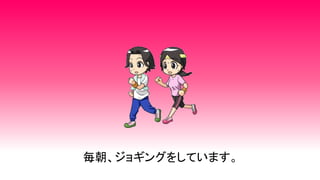
• 毎朝、ジョギングをしています。
• I jog every morning.
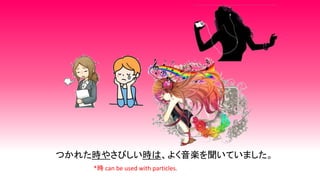
• If this structure is used in the past tense, it describe an old
habit.
• 子どものとき、毎晩8時に寝ていました。
• I used to go to bed at 8 every evening when I was a child.
みく:Are you alldoing a part-time job?
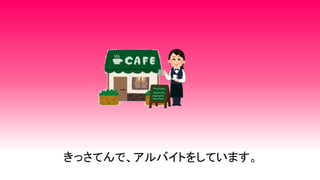
とし:Yes, I am doing it at a rental shop.
サラ:I was doing it before but am not doing it now.
みく:What were you doing before?
サラ:I was doing a waitress at café before. But Japanese is too difficult and I thought I can’t
work while studying.
とし:Did you? I am doing part-time job while studying too. But the rental shop is not that busy
and the place is easy to work.
みく:I am doing part-time job too. I was doing a private teacher (かていきょうし) but that was
too busy and hard so I am working at the Disney land now.
とし:Disney land? That sounds good. Can you learn various way of dancing?
みく:Yes, you can. On top of that, people from abroad come and celebrities often come there
too so it is fun.
サラ:celebrities too? I want to do that job too. I am good at dancing, like singing and also love
children too.
とし:Me…. I am bad at dancing and can’t talk in front of many people. So Disney land will be
difficult to work surely. But it would be good if I can talk to people from abroad.
サラ:Well then, how about working at the café at the Disney land? I think it will be just right
because maybe you can talk to people from abroad, can meet celebrities and can receive salary.
みく:That’s right. But it is a little noisy because the café plays (かかる) music. Therefore, it is
hard to hear customers.
とし:Is it? But I think I will be OK because everyone point out (ゆびをさす) photos on the menu
when they usually order(ちゅうもんする).
サラ:I see (なるほど), you are right. Ah, it was the case (so) at the café too. Why did I not notice
till now? If I knew that, I think the job at the café was a little easier to do. Sigh…