Getting Started 2

    Expressions
Step 1
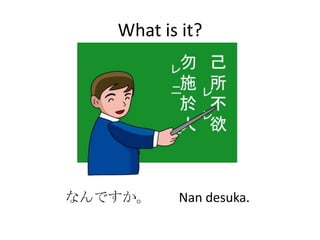
What is it?


なんですか。    Nan desuka.
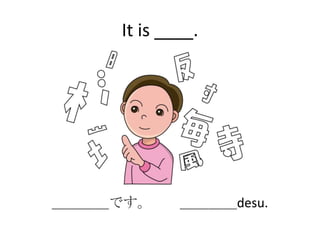
It is ____.


____です。     ____desu.
Step 2
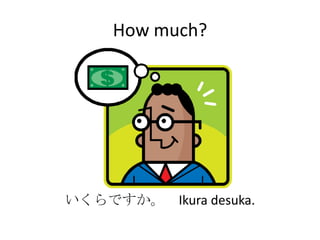
How much?


いくらですか。 Ikura desuka.
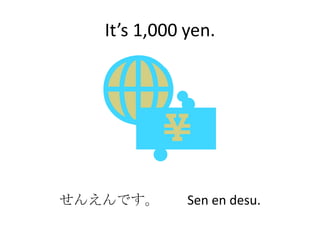
It’s 1,000 yen.


せんえんです。       Sen en desu.
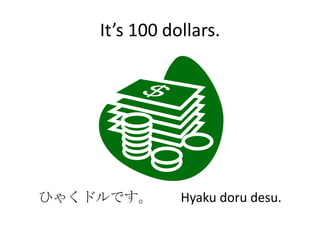
It’s 100 dollars.


ひゃくドルです。       Hyaku doru desu.
Step 3
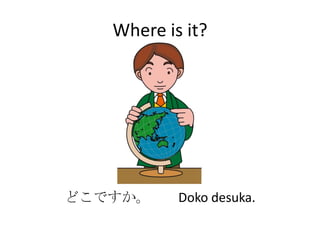
Where is it?


どこですか。     Doko desuka.
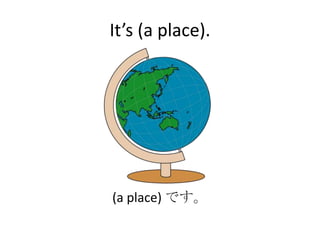
It’s (a place).


(a place) です。
Step 4
How do we make a sentence with ‘what?’

• なん means ‘what.’
• How do you say just “What time?”
→なんじ
• How do you complete the following sentence
  in Japanese; “What time is it?”
→なんじ ですか。
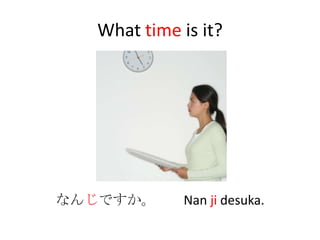
What time is it?


なんじですか。      Nan ji desuka.
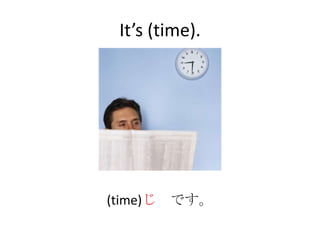
It’s (time).


(time)じ   です。
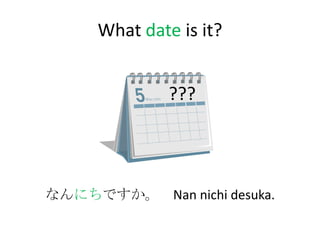
What date is it?


              ???


なんにちですか。 Nan nichi desuka.
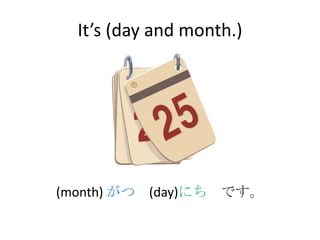
It’s (day and month.)


(month) がつ (day)にち です。
Answer the following…
いま なんじ ですか?
now


きょう なんにち ですか。
today
Step 5
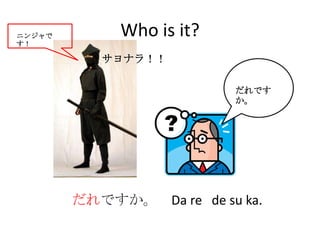
ニンジャで        Who is it?
す!

           サヨナラ!!

                          だれです
                          か。


        だれですか。 Da re de su ka.
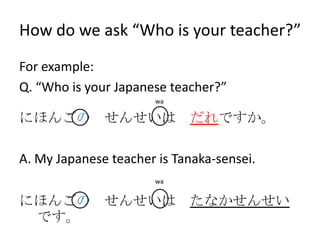
How do we ask “Who is your teacher?”
For example:
Q. “Who is your Japanese teacher?”
                       wa

にほんごの せんせいは だれですか。

A. My Japanese teacher is Tanaka-sensei.
                       wa


にほんごの せんせいは たなかせんせい
 です。
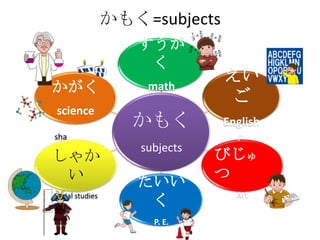
かもく=subjects
                    すうが
                     く
                                えい
かがく                   math
                                ご
science
                    かもく         English
sha                               ju
                     subjects
しゃか                             びじゅ
 い                              つ
                    たいい
                                  Art
Social studies
                     く
                       P. E.
Step 6
like and dislike (hate)
すきですか。[Su ki de su ka.] “Do you like it?”
はい、すきです。               “Yes, I like it.”
                ja   a ri ma se n

いいえ、すきじゃありません。 “No, I don’t
 like it.”


きらいですか。[Ki ra i de su ka.] “Do you dislike
 it?”
はい、きらいですか。                          “Yes, I
 dislike it.”
                ja a ri ma se n
Step 7
Do you have it?/Is it available?
~は ありますか。 ~wa a ri ma su ka.
*あります[a ri ma su] is for inanimate things.


はい、あります。                         “Yes, we do./it’s available.”

                ma se n

いいえ、ありません。                              “No, we don’t./it is not
  available”
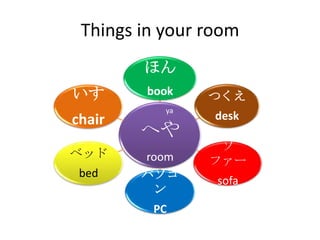
Things in your room
        ほん
いす      book    つくえ
           ya
chair            desk
        へや
                 ソ
ベッド     room    ファー
 bed    パソコ      sofa
         ン
         PC
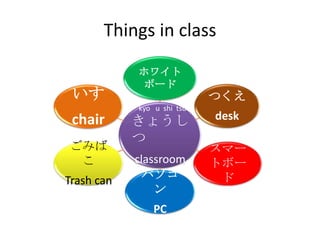
Things in class

            ホワイト
            ボード
 いす                         つくえ
            kyo u shi tsu
 chair      きょうし            desk
            つ
ごみば                         スマー
 こ          classroom       トボー
Trash can    パソコ             ド
                ン
                PC
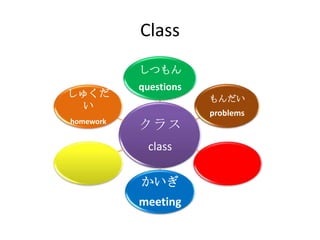
Class
           しつもん
           questions
しゅくだ                   もんだい
  い
                       problems
homework
           クラス
             class

           かいぎ
           meeting
Step 8
Is (someone) here?/ available?
~は いますか。 ~wa i ma su ka.
*います[i ma su] is for animate things.


はい、います。                                     “Yes, (s)he is./(s)he
  available.”

                ma se n

いいえ、いません。                              “No, (s)he isn’t./(s)he is not
  available”
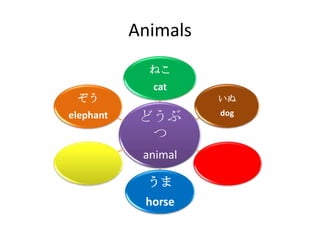
Animals
             ねこ
             cat
 ぞう                  いぬ
elephant    どうぶ      dog

             つ
            animal

             うま
            horse
Step 9
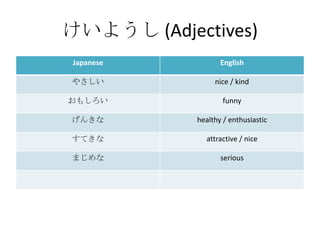
けいようし (Adjectives)
Japanese           English

やさしい             nice / kind

おもしろい               funny

げんきな        healthy / enthusiastic

すてきな          attractive / nice

まじめな               serious
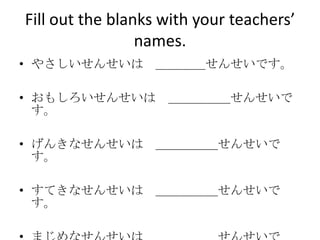
Fill out the blanks with your teachers’
                 names.
• やさしいせんせいは ____せんせいです。

• おもしろいせんせいは        _____せんせいで
  す。

• げんきなせんせいは _____せんせいで
  す。

• すてきなせんせいは _____せんせいで
  す。
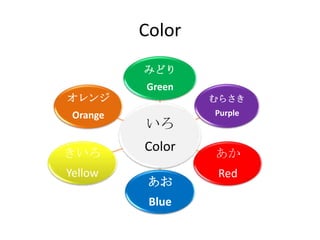
Color
          みどり
          Green
オレンジ              むらさき
 Orange           Purple
          いろ

きいろ
          Color   あか
Yellow             Red
           あお
           Blue
GS2 Step 10

 Vocabulary
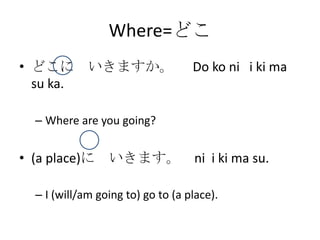
Where=どこ
• どこに いきますか。                       Do ko ni i ki ma
  su ka.

  – Where are you going?


• (a place)に いきます。 ni i ki ma su.

  – I (will/am going to) go to (a place).
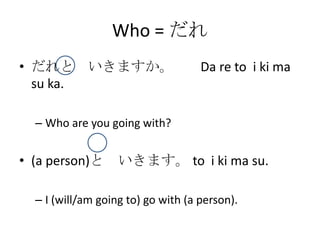
Who = だれ
• だれと いきますか。                        Da re to i ki ma
  su ka.

  – Who are you going with?


• (a person)と      いきます。 to i ki ma su.

  – I (will/am going to) go with (a person).
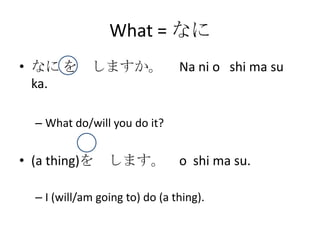
What = なに
• なに を しますか。                    Na ni o shi ma su
  ka.

  – What do/will you do it?


• (a thing)を     します。 o shi ma su.

  – I (will/am going to) do (a thing).
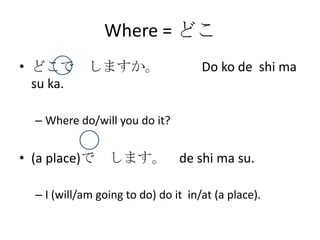
Where = どこ
• どこで しますか。                          Do ko de shi ma
  su ka.

  – Where do/will you do it?


• (a place)で します。 de shi ma su.

  – I (will/am going to do) do it in/at (a place).
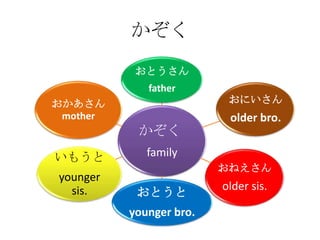
かぞく
           おとうさん
             father
おかあさん                     おにいさん
 mother                   older bro.
           かぞく
いもうと         family
                         おねえさん
younger
  sis.                   older sis.
           おとうと
          younger bro.
ばしょ [basho]
              がっこう
               school

としょか                       びょうい
 ん             ばしょ
                            ん
               places
library                    hospital
            ゆうびんきょ
              く
             post office
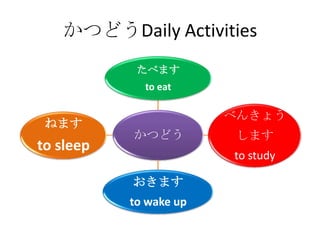
かつどうDaily Activities
            たべます
             to eat

                        べんきょう
 ねます
           かつどう          します
to sleep
                        to study

           おきます
           to wake up
M3 春一番 daily expressions gs2 step 1 10

  • 1.
    Getting Started 2 Expressions
  • 2.
  • 3.
  • 4.
  • 5.
  • 6.
  • 7.
  • 8.
  • 9.
  • 10.
  • 11.
    It’s (a place). (aplace) です。
  • 12.
  • 13.
    How do wemake a sentence with ‘what?’ • なん means ‘what.’ • How do you say just “What time?” →なんじ • How do you complete the following sentence in Japanese; “What time is it?” →なんじ ですか。
  • 14.
    What time isit? なんじですか。 Nan ji desuka.
  • 15.
  • 16.
    What date isit? ??? なんにちですか。 Nan nichi desuka.
  • 17.
    It’s (day andmonth.) (month) がつ (day)にち です。
  • 18.
    Answer the following… いまなんじ ですか? now きょう なんにち ですか。 today
  • 19.
  • 20.
    ニンジャで Who is it? す! サヨナラ!! だれです か。 だれですか。 Da re de su ka.
  • 21.
    How do weask “Who is your teacher?” For example: Q. “Who is your Japanese teacher?” wa にほんごの せんせいは だれですか。 A. My Japanese teacher is Tanaka-sensei. wa にほんごの せんせいは たなかせんせい です。
  • 22.
    かもく=subjects すうが く えい かがく math ご science かもく English sha ju subjects しゃか びじゅ い つ たいい Art Social studies く P. E.
  • 23.
  • 24.
    like and dislike(hate) すきですか。[Su ki de su ka.] “Do you like it?” はい、すきです。 “Yes, I like it.” ja a ri ma se n いいえ、すきじゃありません。 “No, I don’t like it.” きらいですか。[Ki ra i de su ka.] “Do you dislike it?” はい、きらいですか。 “Yes, I dislike it.” ja a ri ma se n
  • 25.
  • 26.
    Do you haveit?/Is it available? ~は ありますか。 ~wa a ri ma su ka. *あります[a ri ma su] is for inanimate things. はい、あります。 “Yes, we do./it’s available.” ma se n いいえ、ありません。 “No, we don’t./it is not available”
  • 27.
    Things in yourroom ほん いす book つくえ ya chair desk へや ソ ベッド room ファー bed パソコ sofa ン PC
  • 28.
    Things in class ホワイト ボード いす つくえ kyo u shi tsu chair きょうし desk つ ごみば スマー こ classroom トボー Trash can パソコ ド ン PC
  • 29.
    Class しつもん questions しゅくだ もんだい い problems homework クラス class かいぎ meeting
  • 30.
  • 31.
    Is (someone) here?/available? ~は いますか。 ~wa i ma su ka. *います[i ma su] is for animate things. はい、います。 “Yes, (s)he is./(s)he available.” ma se n いいえ、いません。 “No, (s)he isn’t./(s)he is not available”
  • 32.
    Animals ねこ cat ぞう いぬ elephant どうぶ dog つ animal うま horse
  • 33.
  • 34.
    けいようし (Adjectives) Japanese English やさしい nice / kind おもしろい funny げんきな healthy / enthusiastic すてきな attractive / nice まじめな serious
  • 35.
    Fill out theblanks with your teachers’ names. • やさしいせんせいは ____せんせいです。 • おもしろいせんせいは _____せんせいで す。 • げんきなせんせいは _____せんせいで す。 • すてきなせんせいは _____せんせいで す。
  • 36.
    Color みどり Green オレンジ むらさき Orange Purple いろ きいろ Color あか Yellow Red あお Blue
  • 37.
    GS2 Step 10 Vocabulary
  • 38.
    Where=どこ • どこに いきますか。 Do ko ni i ki ma su ka. – Where are you going? • (a place)に いきます。 ni i ki ma su. – I (will/am going to) go to (a place).
  • 39.
    Who = だれ •だれと いきますか。 Da re to i ki ma su ka. – Who are you going with? • (a person)と いきます。 to i ki ma su. – I (will/am going to) go with (a person).
  • 40.
    What = なに •なに を しますか。 Na ni o shi ma su ka. – What do/will you do it? • (a thing)を します。 o shi ma su. – I (will/am going to) do (a thing).
  • 41.
    Where = どこ •どこで しますか。 Do ko de shi ma su ka. – Where do/will you do it? • (a place)で します。 de shi ma su. – I (will/am going to do) do it in/at (a place).
  • 42.
    かぞく おとうさん father おかあさん おにいさん mother older bro. かぞく いもうと family おねえさん younger sis. older sis. おとうと younger bro.
  • 43.
    ばしょ [basho] がっこう school としょか びょうい ん ばしょ ん places library hospital ゆうびんきょ く post office
  • 44.
    かつどうDaily Activities たべます to eat べんきょう ねます かつどう します to sleep to study おきます to wake up