Climate Change & International
Cooperation
A Study of Global
Environmental Agreements
Presented By:
Aqsa
Munir
Saher Faiza
Climate Change
What is Climate
Change?
"Climate change refers to long-term
shifts in temperatures and weather
patterns, primarily due to human
activities like burning fossil fuels.“
Key Causes: Greenhouse gases (CO2,
methane), deforestation,
industrialization.
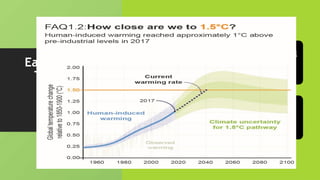
Stat: Since 1880, Earth’s
temperature has risen by 1.1°C.
Why Climate Change is
Urgent?
Impacts: Rising sea levels, increased extreme weather
(hurricanes, wildfires), and biodiversity loss.
Stat: "If global temperatures rise by 2°C, more than 99% of coral
reefs will be lost."
Earth’s Average
Temperatures
Rising to
Catastrophic
Levels?
Continued fossil fuel use will
lead to a temperature rise
of 3-8°C.
Catastrophic impacts:
extreme weather,
disappearing glaciers, rising
sea levels
Impacts of Climate Change
• Disrupted rainfall, droughts, island disappearance, coastal
flooding.
• Political instability, migration crises, and intrastate conflict.
Sea Rise= Flooding and
Damage
A New Threat Tied to Old
Habits
Deforestation may have
contributed to COVID-19.
While not a direct result,
climate change
exacerbates zoonotic
diseases.
International Cooperation
Why International Cooperation is Key?
Climate change
transcends national
borders.
Shared
responsibility is
necessary to
mitigate global
warming and its
effects.
UN’s Role in
Climate
Action?
UN Framework Convention on
Climate Change (UNFCCC)
launched in 1992.
Purpose: “Stabilize greenhouse
gas concentrations to prevent
dangerous interference with
the climate system.”
Kyoto
Protocol: The
First Climate
Agreement?
Set binding targets for 37
industrialized countries.
Introduced carbon trading markets.
Outcome: Mixed results—some
reductions but global emissions
continued to rise.
Stat: Global emissions rose by 40%
between 1990 and 2010.
Montreal Protocol: A Model for Climate
Success
What: International treaty (1987) to phase out ozone-depleting
substances (CFCs).
Impact: Reduced greenhouse gases 4-5x more than the Kyoto
Protocol.
Success Factors:
Penalties & trade
sanctions for non-
compliance.
Specific Targets:
Focused on
individual
substances (e.g.,
CFCs).
Global
Cooperation:
Universal
participation by all
UN member
states..
Lessons for
Climate
Action:
Enforceability and
accountability are crucial.
Targeted pollutant
reduction yields better
results.
Demonstrates the power of
global commitment
Paris Agreement: A New Hope
Aims to limit global
temperature rise to
below 2°C.
Nationally
Determined
Contributions
(NDCs) set by
individual countries.
Progress: Over 190
countries have
submitted NDCs, but
stronger action is
needed
Barriers to International
Cooperation and Its
solution
Why Global Cooperation Has Stalled?
Free-riding problem:
benefits of emission
reductions are shared
globally.
Developing nations
reluctant to sacrifice
growth without
compensation.
Self-Interest in Climate Policy
Nations prioritize
local benefits
(infrastructure,
schools) over
global climate.
Immediate threats
(wars, invasions)
unite countries,
climate change
does not.
The Need for Reluctant Cooperation?
Climate change is
an existential
threat;
cooperation is
necessary.
Learning from past
success like the
Montreal Protocol
can guide future
efforts.
Financing Climate Action
Developed countries
agreed to mobilize
$100 billion annually
by 2020 to assist
developing nations.
Mechanisms: Green
Climate Fund (GCF),
adaptation finance.
Challenge: The $100
billion target has not
been fully met.
Barriers to Global Climate Cooperation?
Different Priorities:
Developed nations
prioritize emissions cuts,
while developing nations
seek adaptation finance.
1
Enforcement Issues: Lack
of binding targets and
accountability.
2
Fairness: Inequalities in
emissions contributions
vs. vulnerability.
3
Global Progress: Where Do We Stand?
Some countries have made significant strides in renewable energy
and emissions reductions (e.g., EU nations).
Others are falling behind, particularly in meeting their NDC targets.
Stat: Global renewable energy capacity increased by 12% in 2022
Technology:
The Game
Changer?
Innovations such as Carbon
Capture and Storage (CCS),
solar and wind energy,
electric vehicles.
Stat: Solar power costs have
dropped by 89% since 2010.
The Power of
Non-State
Actors?
Corporations, cities, and
civil society play an
increasing role in climate
action.
Examples: Amazon’s carbon
neutrality pledge, city-level
climate initiatives.
Building Resilience: Adaptation
Adaptation is
essential for
countries already
affected by
climate change.
Examples: Coastal
defenses in the
Netherlands,
drought-resistant
crops in Africa.
Climate Movements and Public Awareness
The rise of global
movements like
Fridays for Future
and Extinction
Rebellion.
Role of social
media and
documentaries in
raising awareness.
Stat: 70% of people
globally see
climate change as
a major threat
(2023 poll).
Examples of Success
The European
Union’s Emissions
Trading System
(ETS) as a case
study.
Other regional
efforts like China’s
vast solar energy
expansion.
Kyto protocol 2015 Presentation 2024 and

Kyto protocol 2015 Presentation 2024 and

  • 2.
    Climate Change &International Cooperation A Study of Global Environmental Agreements
  • 3.
  • 4.
  • 5.
    What is Climate Change? "Climatechange refers to long-term shifts in temperatures and weather patterns, primarily due to human activities like burning fossil fuels.“ Key Causes: Greenhouse gases (CO2, methane), deforestation, industrialization. Stat: Since 1880, Earth’s temperature has risen by 1.1°C.
  • 6.
    Why Climate Changeis Urgent? Impacts: Rising sea levels, increased extreme weather (hurricanes, wildfires), and biodiversity loss. Stat: "If global temperatures rise by 2°C, more than 99% of coral reefs will be lost."
  • 7.
    Earth’s Average Temperatures Rising to Catastrophic Levels? Continuedfossil fuel use will lead to a temperature rise of 3-8°C. Catastrophic impacts: extreme weather, disappearing glaciers, rising sea levels
  • 8.
    Impacts of ClimateChange • Disrupted rainfall, droughts, island disappearance, coastal flooding. • Political instability, migration crises, and intrastate conflict. Sea Rise= Flooding and Damage
  • 9.
    A New ThreatTied to Old Habits Deforestation may have contributed to COVID-19. While not a direct result, climate change exacerbates zoonotic diseases.
  • 10.
  • 11.
    Why International Cooperationis Key? Climate change transcends national borders. Shared responsibility is necessary to mitigate global warming and its effects.
  • 12.
    UN’s Role in Climate Action? UNFramework Convention on Climate Change (UNFCCC) launched in 1992. Purpose: “Stabilize greenhouse gas concentrations to prevent dangerous interference with the climate system.”
  • 13.
    Kyoto Protocol: The First Climate Agreement? Setbinding targets for 37 industrialized countries. Introduced carbon trading markets. Outcome: Mixed results—some reductions but global emissions continued to rise. Stat: Global emissions rose by 40% between 1990 and 2010.
  • 14.
    Montreal Protocol: AModel for Climate Success What: International treaty (1987) to phase out ozone-depleting substances (CFCs). Impact: Reduced greenhouse gases 4-5x more than the Kyoto Protocol.
  • 15.
    Success Factors: Penalties &trade sanctions for non- compliance. Specific Targets: Focused on individual substances (e.g., CFCs). Global Cooperation: Universal participation by all UN member states..
  • 16.
    Lessons for Climate Action: Enforceability and accountabilityare crucial. Targeted pollutant reduction yields better results. Demonstrates the power of global commitment
  • 17.
    Paris Agreement: ANew Hope Aims to limit global temperature rise to below 2°C. Nationally Determined Contributions (NDCs) set by individual countries. Progress: Over 190 countries have submitted NDCs, but stronger action is needed
  • 18.
  • 19.
    Why Global CooperationHas Stalled? Free-riding problem: benefits of emission reductions are shared globally. Developing nations reluctant to sacrifice growth without compensation.
  • 20.
    Self-Interest in ClimatePolicy Nations prioritize local benefits (infrastructure, schools) over global climate. Immediate threats (wars, invasions) unite countries, climate change does not.
  • 21.
    The Need forReluctant Cooperation? Climate change is an existential threat; cooperation is necessary. Learning from past success like the Montreal Protocol can guide future efforts.
  • 22.
    Financing Climate Action Developedcountries agreed to mobilize $100 billion annually by 2020 to assist developing nations. Mechanisms: Green Climate Fund (GCF), adaptation finance. Challenge: The $100 billion target has not been fully met.
  • 23.
    Barriers to GlobalClimate Cooperation? Different Priorities: Developed nations prioritize emissions cuts, while developing nations seek adaptation finance. 1 Enforcement Issues: Lack of binding targets and accountability. 2 Fairness: Inequalities in emissions contributions vs. vulnerability. 3
  • 24.
    Global Progress: WhereDo We Stand? Some countries have made significant strides in renewable energy and emissions reductions (e.g., EU nations). Others are falling behind, particularly in meeting their NDC targets. Stat: Global renewable energy capacity increased by 12% in 2022
  • 25.
    Technology: The Game Changer? Innovations suchas Carbon Capture and Storage (CCS), solar and wind energy, electric vehicles. Stat: Solar power costs have dropped by 89% since 2010.
  • 26.
    The Power of Non-State Actors? Corporations,cities, and civil society play an increasing role in climate action. Examples: Amazon’s carbon neutrality pledge, city-level climate initiatives.
  • 27.
    Building Resilience: Adaptation Adaptationis essential for countries already affected by climate change. Examples: Coastal defenses in the Netherlands, drought-resistant crops in Africa.
  • 28.
    Climate Movements andPublic Awareness The rise of global movements like Fridays for Future and Extinction Rebellion. Role of social media and documentaries in raising awareness. Stat: 70% of people globally see climate change as a major threat (2023 poll).
  • 29.
    Examples of Success TheEuropean Union’s Emissions Trading System (ETS) as a case study. Other regional efforts like China’s vast solar energy expansion.