Socio-cultural Study of Perceptions                                                                                                                                                                                          EcoZD
                                                                                                                                                                Ecosystem Approaches to the Better Management
Towards Dogs, Patterns of Dog Ownership and                                                                                                                             of Zoonotic Emerging Infectious Diseases
                                                                                                                                                                                     in the Southeast Asia Region
Practices for Rabies Control in Bali, Indonesia
       1,2         3                1                    1          1           1             4                   5              6                    7               8            9             10
Basri C , Basuno. E , Jatikusumah. A , Widaystuti. M.D.W. , Sunandar , Arief R.A , Putra A.A.G , Estoepangestie. S , Willyanto. I , , Rukamantara. T.A , Mardiana. I.W , Gilbert. J , Hampson. K

1                                                                   2                                    3                                   4
  Center for Indonesian Veterinary Analytical Studies, Indonesia. Bogor Agricultural University, Indonesia. Ministry of Agriculture, Indonesia. Disease Investigation Centre Denpasar, Indonesia.
5                                 6                                  7                              8                                           9
  Airlangga University, Indonesia. InI Veterinary Service, Indonesia. Beginchange.co, Indonesia. Provincial Livestock Office Bali, Indonesia. International Livestock Research Institute, Kenya.
10
   University of Glasgow, UK.


        BACKGROUND                                                                                                                                                                                     METHODS

                                                                                                                        The study was conducted in 10 banjars (sub-villages), randomly selected from all banjars in Bali. It covered 5 banjars
Rabies is one of important diseases for the public health sector. Unfortunately, it is often put
                                                                                                                        which had experienced rabies cases and 5 banjars that remained free of rabies. Data were collected by direct
behind mostly in developing countries. In Indonesia, several rabies cases have been                                     interviews using structured questionnaires in 30 households stratified as low, moderate and high social status groups,
reported in the last decade. In 2005, it occured in Maluku (Molluca), North Maluku, and West                            and randomly selected from each selected banjar. Data collected during the five months from February to June 2011
Borneo. Then in 2007, it occured in Banten province, Bali (2008) and recently 2010 in Nias,                             in three districts of the province Bali: Denpasar, Gianyar and Karangasem.
North Sumatra.
                                                                                                                        The questions relating to dog-owning behaviour and knowledge used a multiple choice format while the questions
Since the first occurrence of rabies on Bali in 2008 to the present (2012), the disease                                 related to attitude used a series of statements scored by using a Likert scale. For dog owners knowledge, the correct
continues to circulate. Ecohealth is a potential approach for developing sustainable Rabies                             answer is given a score of 3, while the wrong answer and do not know given the score 0. The level of knowledge is
                                                                                                                        divided into 3 categories: good, fair and poor based on the total value obtained.
control measures to resolve the problem. As part of a project on the “Ecohealth Approach for
Optimizing the Rabies Control Program in Bali”, funded by IDRC and led by ILRI, a socio-                                For the attitude of the dog owner is given the score of 1-5 based on the attitude selected for any statement given.
cultural study was conducted to assess the perception and behavior of Balinese related to                               Attitudes were categorized as negative (with a score of <33), neutral (based on a score of 33-66) and positive (for a
dog ownership and rabies control.                                                                                       score of >66 from the total score of 100).


    1. Dog-Owning Behavior                                                                              RESULTS
                                                Sub-village         Sub-village
 No.                     characteristics         with case
                                                 n       %
                                                                    without case
                                                                     n       %
                                                                                     2. Level of Knowledge                                                          3. Level of Attitude
    1    Currently have dog                        71     49.0           77   51.3
                                                                                                         Comparison of the Knowledge Level (%)                                       Comparison of the Attitude Level (%)
    2    Formerly have dog                         98     67.6          113   75.3
    3    Preference to have male dog               75     51.7           85   56.7
    4    Reason to have dog                                                          90.00                                                                          100.00

         - securing house                          80     55.2           99   66.0
                                                                                     80.00                                                                           90.00

         - hobby                                   26     17.9           31   20.7
                                                                                     70.00                                                             Fair          80.00

         - religion/custom                          2         1.4         2    1.3
                                                                                                                                                                     70.00
    5
         How to keep dogs
                                                                                     60.00                                                             Good
                                                                                     50.00
                                                                                                                                                                     60.00                                                        Netral
         - free range but restrained at night      70     48.3           68   45.3
         - caged all the time                      18     12.4           26   17.3   40.00
                                                                                                                                                                     50.00
                                                                                                                                                                                                                                  Positif
                                                                                                                                                                     40.00
    6    Dog sleep around house                    98     67.6          112   74.7   30.00
                                                                                                                                                                     30.00
    7    Provide food                              97     66.9          113   75.3   20.00
                                                                                                                                                                     20.00
    8    Can handle dog                            95     65.5          110   73.3
                                                                                     10.00                                                                           10.00
    9    Have heard about Rabies                  141     97.2          146   97.3
    10                                                                                0.00                                                                            0.00
         Source of Rabies Information
                                                                                                 Banjar with Cases           Banjar without Cases                                  Kasus                     Non Kasus
         - electronic media                        91     62.8          102   68.0
         - printed media                           28     19.3           41   27.3
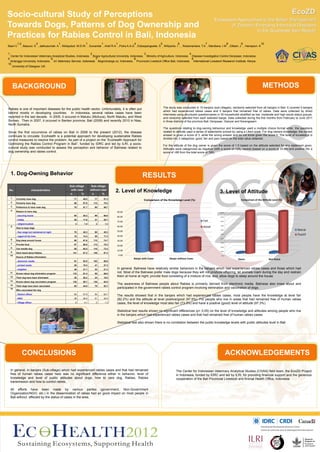
         - neighbor                                46     31.7           32   21.3   In general, Balinese have relatively similar behaviors in the banjars which had experienced rabies cases and those which had
    11   Known about dog elimination program      118     81.4           99   66.0
                                                                                     not. Most of the Balinese prefer male dogs because they will not produce offspring; let animals roam during the day and restrain
    12   Their dog have been eliminated            38     26.2           24   16.0
                                                                                     them at home at night; provide food consisting of a mixture of rice; and, allow dogs to sleep around the house.
    13   Known about dog vaccination program      130     89.7          138   92.0
    14
                                                                                     The awareness of Balinese people about Rabies is primarily derived from electronic media. Balinese also knew about and
         Their dogs have been vaccinated           65     44.8           79   52.7
    15                                                                               participated in the government rabies control program involving elimination and vaccination of dogs.
         Who vaccinated the dog
         - District officer                        84     57.9           94   62.7
                                                                                     The results showed that in the banjars which had experienced rabies cases, most people have the knowledge at level fair
         - NGO                                     38     26.2           51   34.0
                                                                                     (82.2%) and the attitude at level positive/good (97.9%). For people who live in areas that had remained free of human rabies
         - Village officer                          6         4.1         2    1.3   cases, the level of knowledge most also fair (73.3%) and have a positive (good) level of attitude (97.3%).

                                                                                     Statistical test results shown no significant differences (p> 0.05) on the level of knowledge and attitudes among people who live
                                                                                     in the banjars which had experienced rabies cases and that had remained free of human rabies cases.

                                                                                     Statistical test also shown there is no correlation between the public knowledge levels with public attitudes level in Bali


               CONCLUSIONS                                                                                                                                                   ACKNOWLEDGEMENTS

    In general, in banjars (Sub-village) which had experienced rabies cases and that had remained                                 The Center for Indonesian Veterinary Analytical Studies (CIVAS) field team, the EcoZD Project
    free of human rabies cases here was no significant difference either in behavior, level of                                    in Indonesia, funded by IDRC and led by ILRI, for providing financial support and the generous
    knowledge and level of public attitudes about dogs, how to care dog, Rabies, Rabies                                           cooperation of the Bali Provincial Livestock and Animal Health Office, Indonesia.
    transmission and how to control rabies.

    All efforts have been made ​by various parties (government, Non-Government
    Organization/NGO, etc.) in the dissemination of rabies had an good impact on most people in
    Bali without affected by the status of cases in the area.

Socio-cultural study of perceptions: Towards dogs, patterns of dog ownership and practices for rabies control in Bali, Indonesia

  • 1.
    Socio-cultural Study ofPerceptions EcoZD Ecosystem Approaches to the Better Management Towards Dogs, Patterns of Dog Ownership and of Zoonotic Emerging Infectious Diseases in the Southeast Asia Region Practices for Rabies Control in Bali, Indonesia 1,2 3 1 1 1 1 4 5 6 7 8 9 10 Basri C , Basuno. E , Jatikusumah. A , Widaystuti. M.D.W. , Sunandar , Arief R.A , Putra A.A.G , Estoepangestie. S , Willyanto. I , , Rukamantara. T.A , Mardiana. I.W , Gilbert. J , Hampson. K 1 2 3 4 Center for Indonesian Veterinary Analytical Studies, Indonesia. Bogor Agricultural University, Indonesia. Ministry of Agriculture, Indonesia. Disease Investigation Centre Denpasar, Indonesia. 5 6 7 8 9 Airlangga University, Indonesia. InI Veterinary Service, Indonesia. Beginchange.co, Indonesia. Provincial Livestock Office Bali, Indonesia. International Livestock Research Institute, Kenya. 10 University of Glasgow, UK. BACKGROUND METHODS The study was conducted in 10 banjars (sub-villages), randomly selected from all banjars in Bali. It covered 5 banjars Rabies is one of important diseases for the public health sector. Unfortunately, it is often put which had experienced rabies cases and 5 banjars that remained free of rabies. Data were collected by direct behind mostly in developing countries. In Indonesia, several rabies cases have been interviews using structured questionnaires in 30 households stratified as low, moderate and high social status groups, reported in the last decade. In 2005, it occured in Maluku (Molluca), North Maluku, and West and randomly selected from each selected banjar. Data collected during the five months from February to June 2011 Borneo. Then in 2007, it occured in Banten province, Bali (2008) and recently 2010 in Nias, in three districts of the province Bali: Denpasar, Gianyar and Karangasem. North Sumatra. The questions relating to dog-owning behaviour and knowledge used a multiple choice format while the questions Since the first occurrence of rabies on Bali in 2008 to the present (2012), the disease related to attitude used a series of statements scored by using a Likert scale. For dog owners knowledge, the correct continues to circulate. Ecohealth is a potential approach for developing sustainable Rabies answer is given a score of 3, while the wrong answer and do not know given the score 0. The level of knowledge is divided into 3 categories: good, fair and poor based on the total value obtained. control measures to resolve the problem. As part of a project on the “Ecohealth Approach for Optimizing the Rabies Control Program in Bali”, funded by IDRC and led by ILRI, a socio- For the attitude of the dog owner is given the score of 1-5 based on the attitude selected for any statement given. cultural study was conducted to assess the perception and behavior of Balinese related to Attitudes were categorized as negative (with a score of <33), neutral (based on a score of 33-66) and positive (for a dog ownership and rabies control. score of >66 from the total score of 100). 1. Dog-Owning Behavior RESULTS Sub-village Sub-village No. characteristics with case n % without case n % 2. Level of Knowledge 3. Level of Attitude 1 Currently have dog 71 49.0 77 51.3 Comparison of the Knowledge Level (%) Comparison of the Attitude Level (%) 2 Formerly have dog 98 67.6 113 75.3 3 Preference to have male dog 75 51.7 85 56.7 4 Reason to have dog 90.00 100.00 - securing house 80 55.2 99 66.0 80.00 90.00 - hobby 26 17.9 31 20.7 70.00 Fair 80.00 - religion/custom 2 1.4 2 1.3 70.00 5 How to keep dogs 60.00 Good 50.00 60.00 Netral - free range but restrained at night 70 48.3 68 45.3 - caged all the time 18 12.4 26 17.3 40.00 50.00 Positif 40.00 6 Dog sleep around house 98 67.6 112 74.7 30.00 30.00 7 Provide food 97 66.9 113 75.3 20.00 20.00 8 Can handle dog 95 65.5 110 73.3 10.00 10.00 9 Have heard about Rabies 141 97.2 146 97.3 10 0.00 0.00 Source of Rabies Information Banjar with Cases Banjar without Cases Kasus Non Kasus - electronic media 91 62.8 102 68.0 - printed media 28 19.3 41 27.3 - neighbor 46 31.7 32 21.3 In general, Balinese have relatively similar behaviors in the banjars which had experienced rabies cases and those which had 11 Known about dog elimination program 118 81.4 99 66.0 not. Most of the Balinese prefer male dogs because they will not produce offspring; let animals roam during the day and restrain 12 Their dog have been eliminated 38 26.2 24 16.0 them at home at night; provide food consisting of a mixture of rice; and, allow dogs to sleep around the house. 13 Known about dog vaccination program 130 89.7 138 92.0 14 The awareness of Balinese people about Rabies is primarily derived from electronic media. Balinese also knew about and Their dogs have been vaccinated 65 44.8 79 52.7 15 participated in the government rabies control program involving elimination and vaccination of dogs. Who vaccinated the dog - District officer 84 57.9 94 62.7 The results showed that in the banjars which had experienced rabies cases, most people have the knowledge at level fair - NGO 38 26.2 51 34.0 (82.2%) and the attitude at level positive/good (97.9%). For people who live in areas that had remained free of human rabies - Village officer 6 4.1 2 1.3 cases, the level of knowledge most also fair (73.3%) and have a positive (good) level of attitude (97.3%). Statistical test results shown no significant differences (p> 0.05) on the level of knowledge and attitudes among people who live in the banjars which had experienced rabies cases and that had remained free of human rabies cases. Statistical test also shown there is no correlation between the public knowledge levels with public attitudes level in Bali CONCLUSIONS ACKNOWLEDGEMENTS In general, in banjars (Sub-village) which had experienced rabies cases and that had remained The Center for Indonesian Veterinary Analytical Studies (CIVAS) field team, the EcoZD Project free of human rabies cases here was no significant difference either in behavior, level of in Indonesia, funded by IDRC and led by ILRI, for providing financial support and the generous knowledge and level of public attitudes about dogs, how to care dog, Rabies, Rabies cooperation of the Bali Provincial Livestock and Animal Health Office, Indonesia. transmission and how to control rabies. All efforts have been made ​by various parties (government, Non-Government Organization/NGO, etc.) in the dissemination of rabies had an good impact on most people in Bali without affected by the status of cases in the area.