A Dozen eBooks in an Hour
kulapartners.com | @kulapartners | 902.832.0244
Open Space Technology
Is a meeting framework that allows
groups of people to come together
and self organize around big topics.
Instead of someone dictating the
meeting agenda ahead of time…
!
The participants create the agenda
and discuss the issues they feel
most passionate about.
Open Space methodology supports:
• Collaboration
• Productivity
• Action
• Open, honest conversation
Open Space is great for setting
strategic direction, building morale,
consulting with stakeholders and
gathering unique and deep
learnings about big issues in a
timely manner.
Let’s Apply Open Space to 

eBook Creation
Marketers often limit themselves to
opinions solely from within the
marketing department, losing touch
with the valuable insight that
colleagues from other departments
can contribute.
Have you ever asked a colleague
from another department what type
of ebook content they feel would be
valuable to produce? You may be
surprised how insightful their
requests are.
Open space meetings bring
together team members from
various areas of the business
including sales, customer service or
research & development for open,
collaborative discussions.
How to Facilitate an Open Space
Meeting to Create eBook Content
Step 1
Invite a cross-functional selection of
colleagues to a meeting.
Open Space is useful for groups of
any size from 10-1,000 people, but
meetings tend to have a point of
critical mass. 15-20 people tends to
be a good number to start with.
Provide your invitees with a copy of
your buyer personas and marketing
triggers prior to the meeting. This
will help them prepare ideas and
formulate opinions before being
influenced by other people’s views.
Step 2
Based on the objective of the
discussion, the number of people
attending and the length of the
meeting, split the session into a
series of equal blocks.
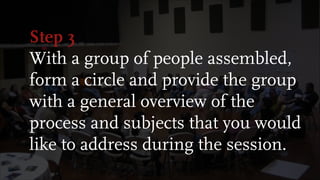
Step 3
With a group of people assembled,
form a circle and provide the group
with a general overview of the
process and subjects that you would
like to address during the session.
In our case we are looking for ideas
of content that our colleagues think
our customers and prospects would
find valuable.
Step 4
As the facilitator, invite people with
ideas for ebooks to write their
concepts down on a piece of paper
and announce it to the group.
Step 5
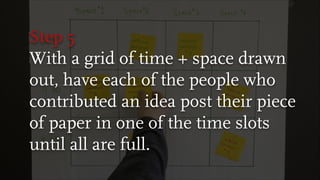
With a grid of time + space drawn
out, have each of the people who
contributed an idea post their piece
of paper in one of the time slots
until all are full.
Step 6
Have the group quickly scan the
ideas posted on the wall, taking
note of the concepts they would like
to discuss further.
Step 7
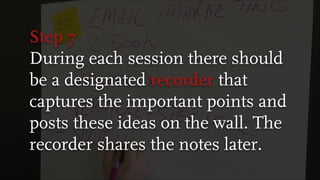
During each session there should
be a designated recorder that
captures the important points and
posts these ideas on the wall. The
recorder shares the notes later.
The Four Roles of Open Space
Collaborators:
• The Host
• Participants
• Bumblebees
• Butterflies
The Host
The person who suggests a session
as the agenda is being established.
Participants are the people who join
the Host in discussion.
Bumblebees are people who move
from one discussion to another,
serving to cross-pollinate and tie the
discussion together.
Butterflies are people who choose
not to participate in any sessions,
but instead use the allotted time to
reflect individually.
Open Space has been used to
facilitate meetings for every type of
organization from Fortune 100
companies and third world villages
to religious communities and
government agencies.
So, why does Open Space
methodology work so well?
Because of the focus on
collaboration, action and the
lack of hierarchy.
There are four principles & one law
of Open Space meetings
Principle 1
The people who show up are the
right people. This reminds people
that getting something done is not a
matter of having more resources or
people involved.
Principle 2
Whenever it starts is the right time.
You know how you always seem to
get your best ideas in the shower?
Genuine creativity has no regard for
time.
Principle 3
Whatever happens is the only thing
that could have. This sets an
expectation that the group will
come to a conclusion and that will
be that. This limits excuses about
what ‘could have been’.
Principle 4
When it’s over, it’s over. When the
session ends, that’s that. Don’t
waste time. Do what needs to be
done and move on.
The one law of Open Space – 

the law of two feet
The only so-called rule of Open
Space simply states that if at any
time you find yourself in a situation
where you are neither learning nor
contributing – use your two feet
and move onto another
conversation.
Photo Credits
Norman Lear Center - Creativity & Collaboration
NASA Goddard Space Flight Center - Open Space Circle
NASA Goddard Space Flight Center - Open Space 2 Innovate
Open Space schedule - Travis Isaacs
ebook - Maria Elena
KLCC Circle
Team Meeting
!
All other photos © 2014 Kula Partners

A Dozen eBooks in an Hour

  • 1.
    A Dozen eBooksin an Hour kulapartners.com | @kulapartners | 902.832.0244
  • 2.
    Open Space Technology Isa meeting framework that allows groups of people to come together and self organize around big topics.
  • 3.
    Instead of someonedictating the meeting agenda ahead of time… ! The participants create the agenda and discuss the issues they feel most passionate about.
  • 4.
    Open Space methodologysupports: • Collaboration • Productivity • Action • Open, honest conversation
  • 5.
    Open Space isgreat for setting strategic direction, building morale, consulting with stakeholders and gathering unique and deep learnings about big issues in a timely manner.
  • 6.
    Let’s Apply OpenSpace to 
 eBook Creation
  • 7.
    Marketers often limitthemselves to opinions solely from within the marketing department, losing touch with the valuable insight that colleagues from other departments can contribute.
  • 8.
    Have you everasked a colleague from another department what type of ebook content they feel would be valuable to produce? You may be surprised how insightful their requests are.
  • 9.
    Open space meetingsbring together team members from various areas of the business including sales, customer service or research & development for open, collaborative discussions.
  • 10.
    How to Facilitatean Open Space Meeting to Create eBook Content
  • 11.
    Step 1 Invite across-functional selection of colleagues to a meeting.
  • 12.
    Open Space isuseful for groups of any size from 10-1,000 people, but meetings tend to have a point of critical mass. 15-20 people tends to be a good number to start with.
  • 13.
    Provide your inviteeswith a copy of your buyer personas and marketing triggers prior to the meeting. This will help them prepare ideas and formulate opinions before being influenced by other people’s views.
  • 14.
    Step 2 Based onthe objective of the discussion, the number of people attending and the length of the meeting, split the session into a series of equal blocks.
  • 15.
    Step 3 With agroup of people assembled, form a circle and provide the group with a general overview of the process and subjects that you would like to address during the session.
  • 16.
    In our casewe are looking for ideas of content that our colleagues think our customers and prospects would find valuable.
  • 17.
    Step 4 As thefacilitator, invite people with ideas for ebooks to write their concepts down on a piece of paper and announce it to the group.
  • 18.
    Step 5 With agrid of time + space drawn out, have each of the people who contributed an idea post their piece of paper in one of the time slots until all are full.
  • 19.
    Step 6 Have thegroup quickly scan the ideas posted on the wall, taking note of the concepts they would like to discuss further.
  • 20.
    Step 7 During eachsession there should be a designated recorder that captures the important points and posts these ideas on the wall. The recorder shares the notes later.
  • 21.
    The Four Rolesof Open Space Collaborators: • The Host • Participants • Bumblebees • Butterflies
  • 22.
    The Host The personwho suggests a session as the agenda is being established.
  • 23.
    Participants are thepeople who join the Host in discussion.
  • 24.
    Bumblebees are peoplewho move from one discussion to another, serving to cross-pollinate and tie the discussion together.
  • 25.
    Butterflies are peoplewho choose not to participate in any sessions, but instead use the allotted time to reflect individually.
  • 26.
    Open Space hasbeen used to facilitate meetings for every type of organization from Fortune 100 companies and third world villages to religious communities and government agencies.
  • 27.
    So, why doesOpen Space methodology work so well? Because of the focus on collaboration, action and the lack of hierarchy.
  • 28.
    There are fourprinciples & one law of Open Space meetings
  • 29.
    Principle 1 The peoplewho show up are the right people. This reminds people that getting something done is not a matter of having more resources or people involved.
  • 30.
    Principle 2 Whenever itstarts is the right time. You know how you always seem to get your best ideas in the shower? Genuine creativity has no regard for time.
  • 31.
    Principle 3 Whatever happensis the only thing that could have. This sets an expectation that the group will come to a conclusion and that will be that. This limits excuses about what ‘could have been’.
  • 32.
    Principle 4 When it’sover, it’s over. When the session ends, that’s that. Don’t waste time. Do what needs to be done and move on.
  • 33.
    The one lawof Open Space – 
 the law of two feet
  • 34.
    The only so-calledrule of Open Space simply states that if at any time you find yourself in a situation where you are neither learning nor contributing – use your two feet and move onto another conversation.
  • 36.
    Photo Credits Norman LearCenter - Creativity & Collaboration NASA Goddard Space Flight Center - Open Space Circle NASA Goddard Space Flight Center - Open Space 2 Innovate Open Space schedule - Travis Isaacs ebook - Maria Elena KLCC Circle Team Meeting ! All other photos © 2014 Kula Partners