How will people live in 2030?
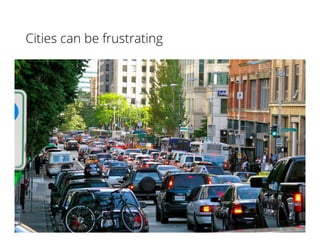
Cities can be frustrating
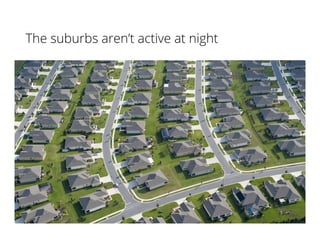
The suburbs aren’t active at night
Is there a better solution?
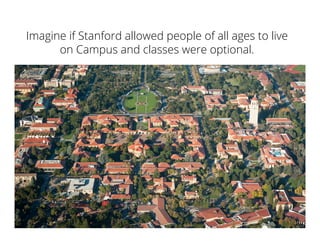
Imagine if Stanford allowed people of all ages to live
on Campus and classes were optional.
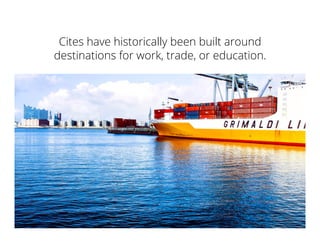
Cites have historically been built around
destinations for work, trade, or education.
So what will be the “port” for new cities
built over the next 20-30 years?
Thesis: Remote and Creative Work
3.7M employees (2.5% of workforce) already work
remotely from home. 103% increase since 2005.
15.3M individuals (10.3% of workforce) in the US are
self employed.
–US Census Bureau data, Global Workplace Analytics
Kudavi is a platform for building campuses
for remote and creative work.
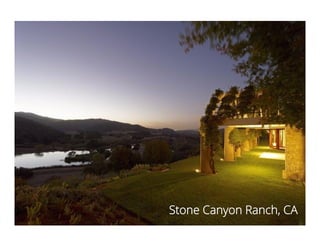
First Campus:
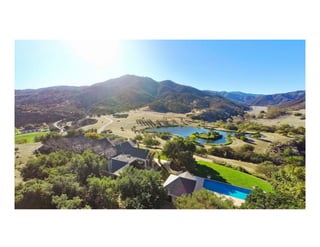
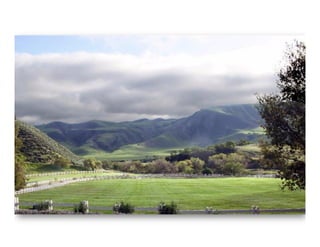
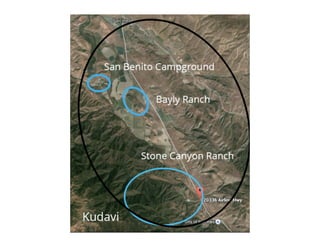
Stone Canyon Ranch, CA
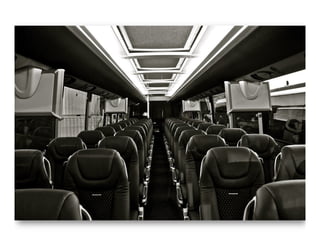
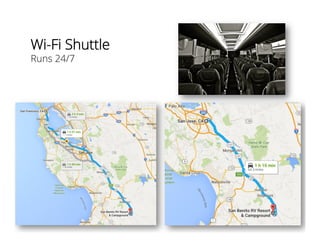
Wi-Fi Shuttle
Runs 24/7
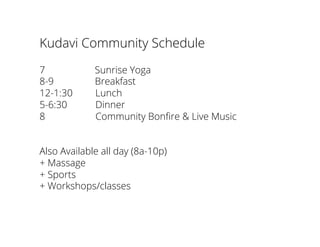
Kudavi Community Schedule
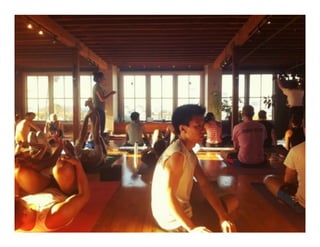
7 Sunrise Yoga
8-9 Breakfast
12-1:30 Lunch
5-6:30 Dinner
8 Community Bonfire & Live Music
Also Available all day (8a-10p)
+ Massage
+ Sports
+ Workshops/classes
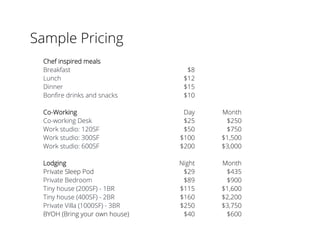
Sample Pricing
Chef inspired meals
Breakfast $8
Lunch  $12
Dinner  $15
Bonfire drinks and snacks $10
Co-Working Day Month
Co-working Desk $25 $250
Work studio: 120SF $50 $750
Work studio: 300SF $100 $1,500
Work studio: 600SF $200 $3,000
Lodging Night Month
Private Sleep Pod $29 $435
Private Bedroom $89 $900
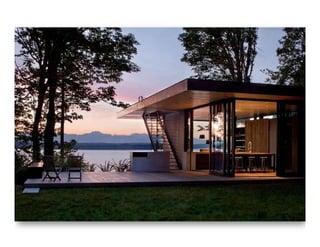
Tiny house (200SF) - 1BR $115 $1,600
Tiny house (400SF) - 2BR $160 $2,200
Private Villa (1000SF) - 3BR $250 $3,750
BYOH (Bring your own house) $40 $600
Sample Pricing
Transportation
Shuttle - One-way trip $8
Shuttle - 10 Rides $50
Shuttle - Monthly Unlimited $180
Activities- Provided by residents
Sunrise Yoga $10
Massage - 60 mins $60
Guided Meditation Donation
Sports Free
Workshops for personal development Varies
Music lessons Varies
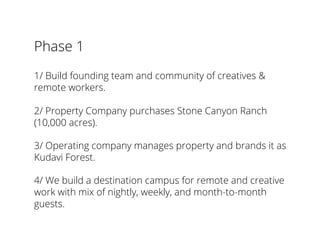
Phase 1
1/ Build founding team and community of creatives &
remote workers.
2/ Property Company purchases Stone Canyon Ranch
(10,000 acres).
3/ Operating company manages property and brands it as
Kudavi Forest.
4/ We build a destination campus for remote and creative
work with mix of nightly, weekly, and month-to-month
guests.
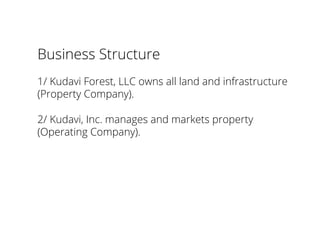
Business Structure
1/ Kudavi Forest, LLC owns all land and infrastructure
(Property Company).
2/ Kudavi, Inc. manages and markets property
(Operating Company).
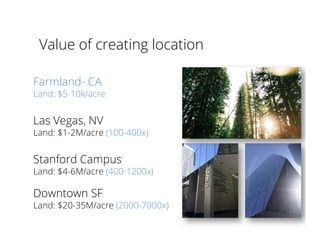
Value of creating location
Farmland- CA
Land: $5-10k/acre
Las Vegas, NV
Land: $1-2M/acre (100-400x)
Stanford Campus
Land: $4-6M/acre (400-1200x)
Downtown SF
Land: $20-35M/acre (2000-7000x)
Phase 2: Campus Expansion
Property company purchases farmland north of
Stone Canyon Ranch. Land is mostly flat and easy to
develop.
Vision:
Kudavi develops from a work retreat destination into
a central hub for remote and creative work in the Bay
Area.
Phase 2: Anchor Tenants
Universal Café
Philz
Dynamo Doughnut
Saru Sushi
Plow
Brainwash Café
Sightglass coffee
Tin Vietnamese cuisine
Soccer field
Basketball court
Tennis court
Volleyball
Ping pong tables
Banya SF
Kabuki Spa
Haus Coffee
Audio SF
Ritual
Blue Bottle
Tech Shop
Taqueria Cancun
Yoga to the people
Ecstatic Dance
The Hub
Crossfit
Berkeley Bowl
Tartine
Mission Cliffs
UC Kudavi
Alt school
Kudavi Community Development Model
Public Real Estate Investment Trust (REIT) owns all land and
infrastructure- community members can buy into REIT
Leasehold only – Max 50 year lease.
Monthly art/music festivals build culture at Kudavi and are used
as a low cost customer acquisition tool.
Give education providers reduced rent so that they can attract
semi-permanent residents (2-4 years).
Founding team, key skills needed:
Operating Company (Kudavi, Inc.)
1/ Operations
2/ Community
3/ Marketing
Property Company (Kudavi Forest, LLC)
1/ Real estate
2/ Finance
thank you

Kudavi 2.19.2016

  • 2.
    How will peoplelive in 2030?
  • 3.
    Cities can befrustrating
  • 4.
    The suburbs aren’tactive at night
  • 5.
    Is there abetter solution?
  • 6.
    Imagine if Stanfordallowed people of all ages to live on Campus and classes were optional.
  • 7.
    Cites have historicallybeen built around destinations for work, trade, or education.
  • 8.
    So what willbe the “port” for new cities built over the next 20-30 years?
  • 9.
    Thesis: Remote andCreative Work 3.7M employees (2.5% of workforce) already work remotely from home. 103% increase since 2005. 15.3M individuals (10.3% of workforce) in the US are self employed. –US Census Bureau data, Global Workplace Analytics
  • 10.
    Kudavi is aplatform for building campuses for remote and creative work.
  • 11.
  • 12.
  • 18.
  • 21.
    Kudavi Community Schedule 7Sunrise Yoga 8-9 Breakfast 12-1:30 Lunch 5-6:30 Dinner 8 Community Bonfire & Live Music Also Available all day (8a-10p) + Massage + Sports + Workshops/classes
  • 22.
    Sample Pricing Chef inspiredmeals Breakfast $8 Lunch  $12 Dinner  $15 Bonfire drinks and snacks $10 Co-Working Day Month Co-working Desk $25 $250 Work studio: 120SF $50 $750 Work studio: 300SF $100 $1,500 Work studio: 600SF $200 $3,000 Lodging Night Month Private Sleep Pod $29 $435 Private Bedroom $89 $900 Tiny house (200SF) - 1BR $115 $1,600 Tiny house (400SF) - 2BR $160 $2,200 Private Villa (1000SF) - 3BR $250 $3,750 BYOH (Bring your own house) $40 $600
  • 23.
    Sample Pricing Transportation Shuttle -One-way trip $8 Shuttle - 10 Rides $50 Shuttle - Monthly Unlimited $180 Activities- Provided by residents Sunrise Yoga $10 Massage - 60 mins $60 Guided Meditation Donation Sports Free Workshops for personal development Varies Music lessons Varies
  • 24.
    Phase 1 1/ Buildfounding team and community of creatives & remote workers. 2/ Property Company purchases Stone Canyon Ranch (10,000 acres). 3/ Operating company manages property and brands it as Kudavi Forest. 4/ We build a destination campus for remote and creative work with mix of nightly, weekly, and month-to-month guests.
  • 25.
    Business Structure 1/ KudaviForest, LLC owns all land and infrastructure (Property Company). 2/ Kudavi, Inc. manages and markets property (Operating Company).
  • 26.
    Value of creatinglocation Farmland- CA Land: $5-10k/acre Las Vegas, NV Land: $1-2M/acre (100-400x) Stanford Campus Land: $4-6M/acre (400-1200x) Downtown SF Land: $20-35M/acre (2000-7000x)
  • 28.
    Phase 2: CampusExpansion Property company purchases farmland north of Stone Canyon Ranch. Land is mostly flat and easy to develop. Vision: Kudavi develops from a work retreat destination into a central hub for remote and creative work in the Bay Area.
  • 29.
    Phase 2: AnchorTenants Universal Café Philz Dynamo Doughnut Saru Sushi Plow Brainwash Café Sightglass coffee Tin Vietnamese cuisine Soccer field Basketball court Tennis court Volleyball Ping pong tables Banya SF Kabuki Spa Haus Coffee Audio SF Ritual Blue Bottle Tech Shop Taqueria Cancun Yoga to the people Ecstatic Dance The Hub Crossfit Berkeley Bowl Tartine Mission Cliffs UC Kudavi Alt school
  • 30.
    Kudavi Community DevelopmentModel Public Real Estate Investment Trust (REIT) owns all land and infrastructure- community members can buy into REIT Leasehold only – Max 50 year lease. Monthly art/music festivals build culture at Kudavi and are used as a low cost customer acquisition tool. Give education providers reduced rent so that they can attract semi-permanent residents (2-4 years).
  • 31.
    Founding team, keyskills needed: Operating Company (Kudavi, Inc.) 1/ Operations 2/ Community 3/ Marketing Property Company (Kudavi Forest, LLC) 1/ Real estate 2/ Finance
  • 32.