Testing Microservices-a real example
May 24
2
iLottery PLatform
● iLottery Platform built in a microservices architecture
● Java, Spring framework, Cassandra
● Kubernetes, Docker
2
3
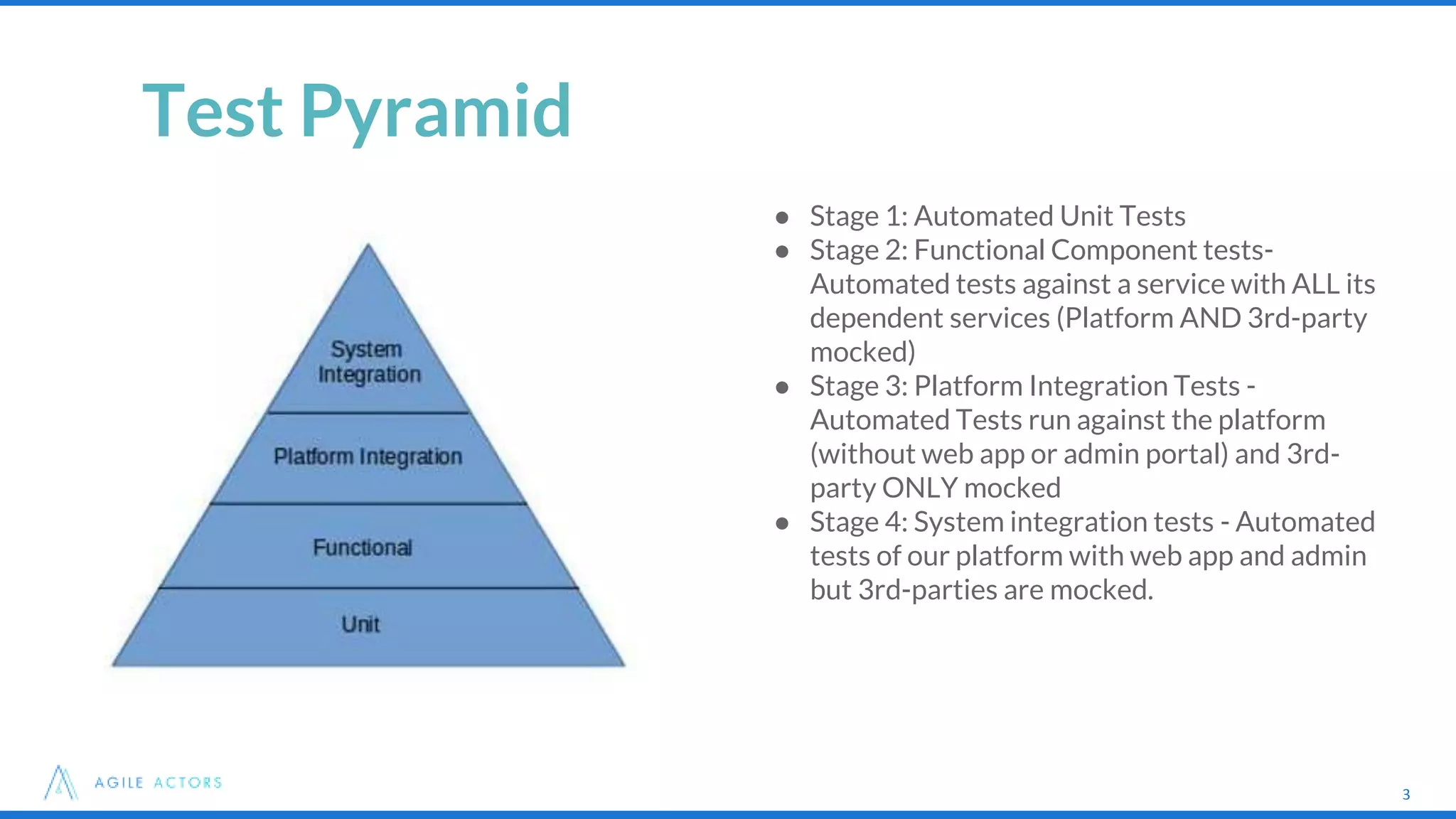
Test Pyramid
3
● Stage 1: Automated Unit Tests
● Stage 2: Functional Component tests-
Automated tests against a service with ALL its
dependent services (Platform AND 3rd-party
mocked)
● Stage 3: Platform Integration Tests -
Automated Tests run against the platform
(without web app or admin portal) and 3rd-
party ONLY mocked
● Stage 4: System integration tests - Automated
tests of our platform with web app and admin
but 3rd-parties are mocked.
4
Unit tests
● Technology facing tests
● These are tests against Java classes.
● The boundary is the class
● No build can be done if line, branch, complexity coverage is
less than 80%
4
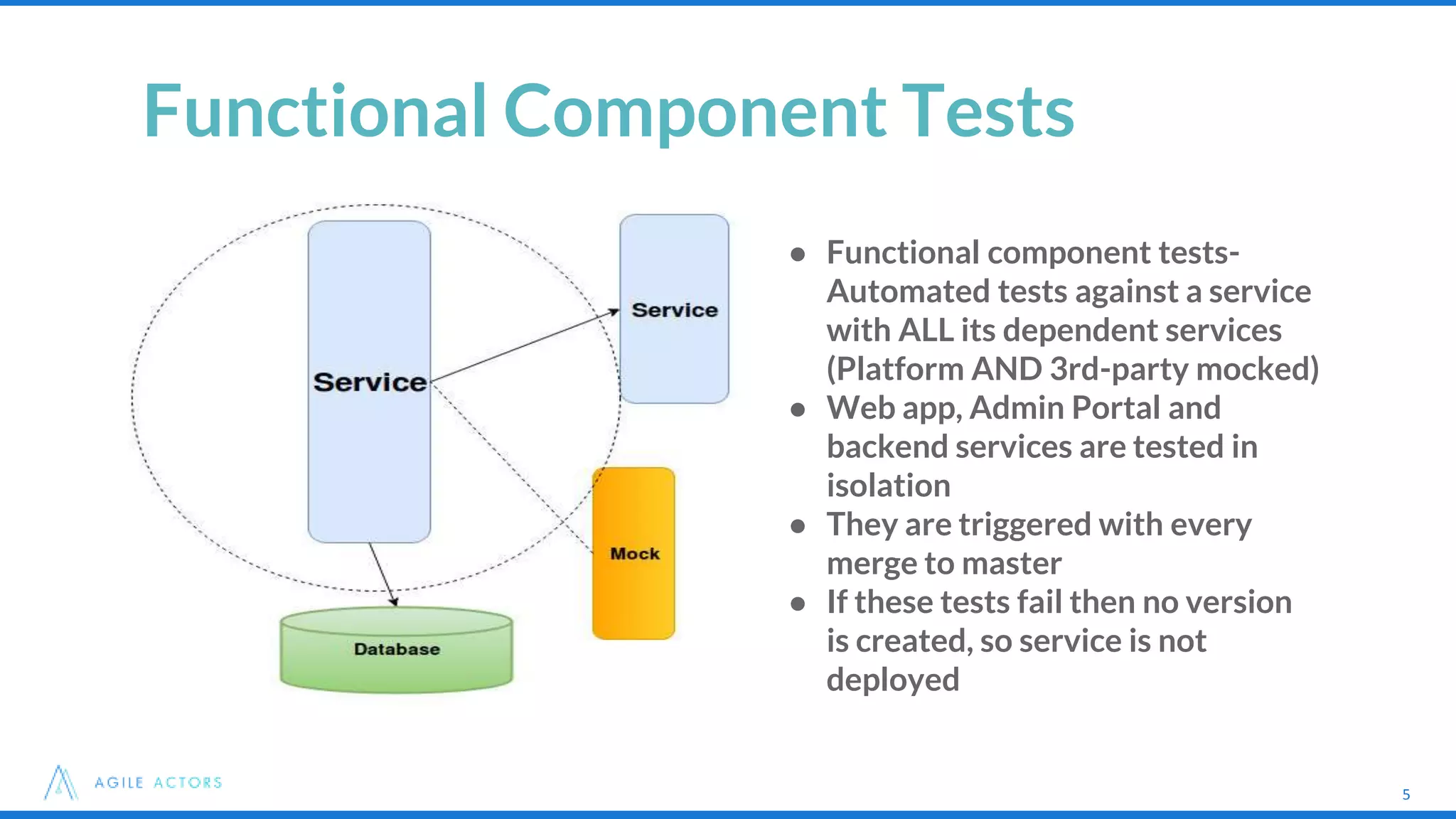
● Functional component tests-
Automated tests against a service
with ALL its dependent services
(Platform AND 3rd-party mocked)
● Web app, Admin Portal and
backend services are tested in
isolation
● They are triggered with every
merge to master
● If these tests fail then no version
is created, so service is not
deployed
5
Functional Component Tests
5
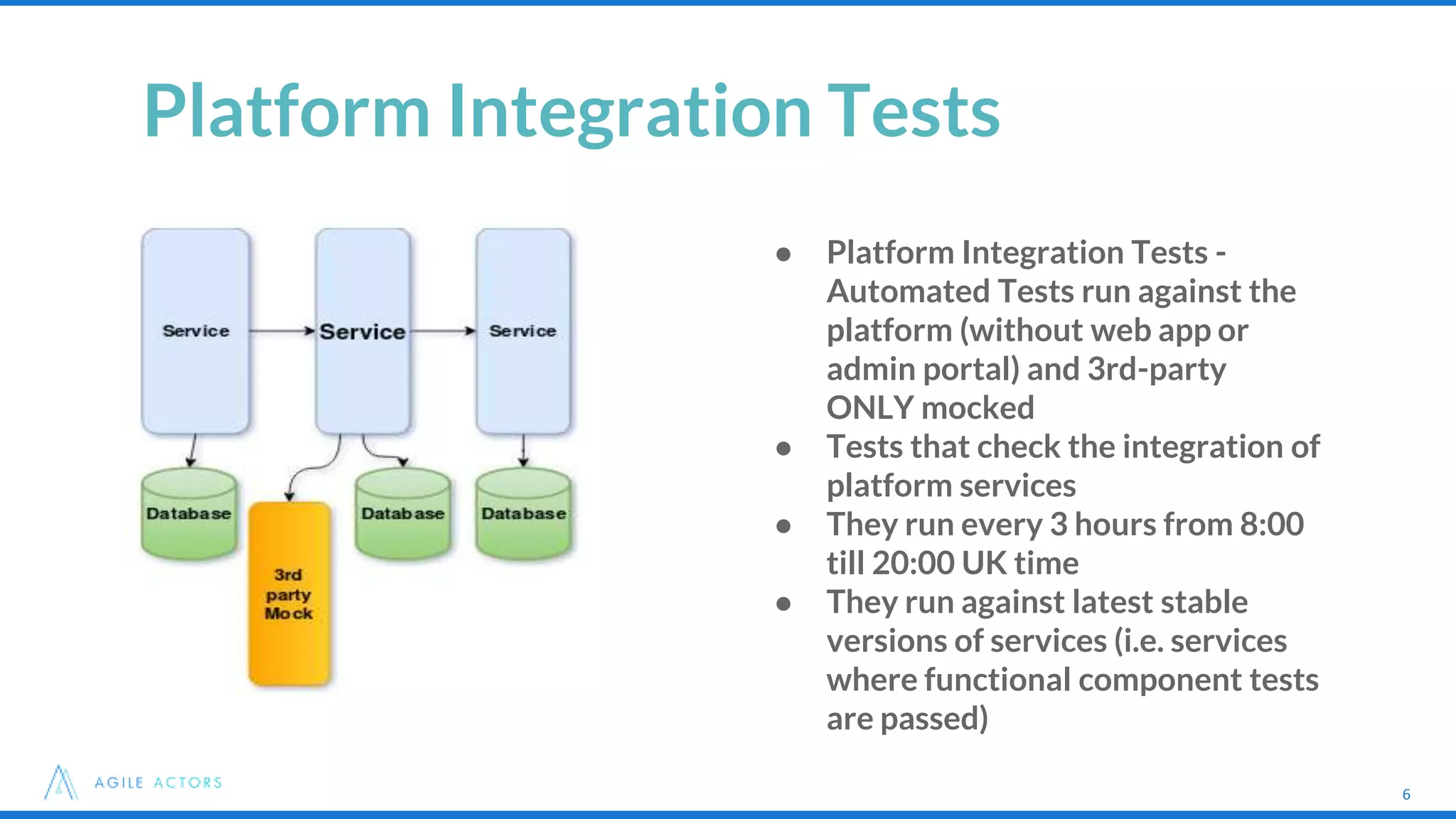
● Platform Integration Tests -
Automated Tests run against the
platform (without web app or
admin portal) and 3rd-party
ONLY mocked
● Tests that check the integration of
platform services
● They run every 3 hours from 8:00
till 20:00 UK time
● They run against latest stable
versions of services (i.e. services
where functional component tests
are passed)
6
Platform Integration Tests
6
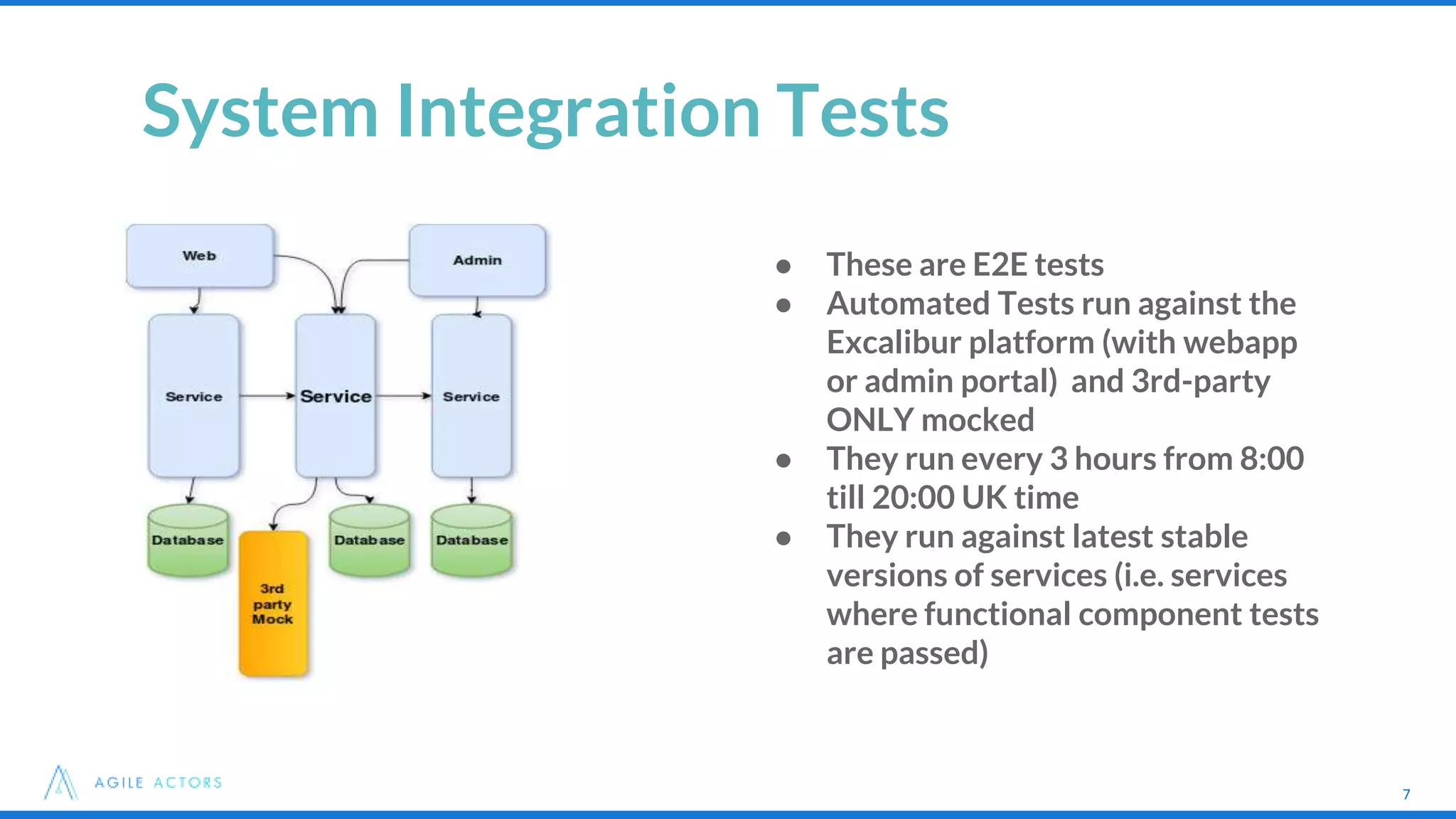
● These are E2E tests
● Automated Tests run against the
Excalibur platform (with webapp
or admin portal) and 3rd-party
ONLY mocked
● They run every 3 hours from 8:00
till 20:00 UK time
● They run against latest stable
versions of services (i.e. services
where functional component tests
are passed)
7
System Integration Tests
7
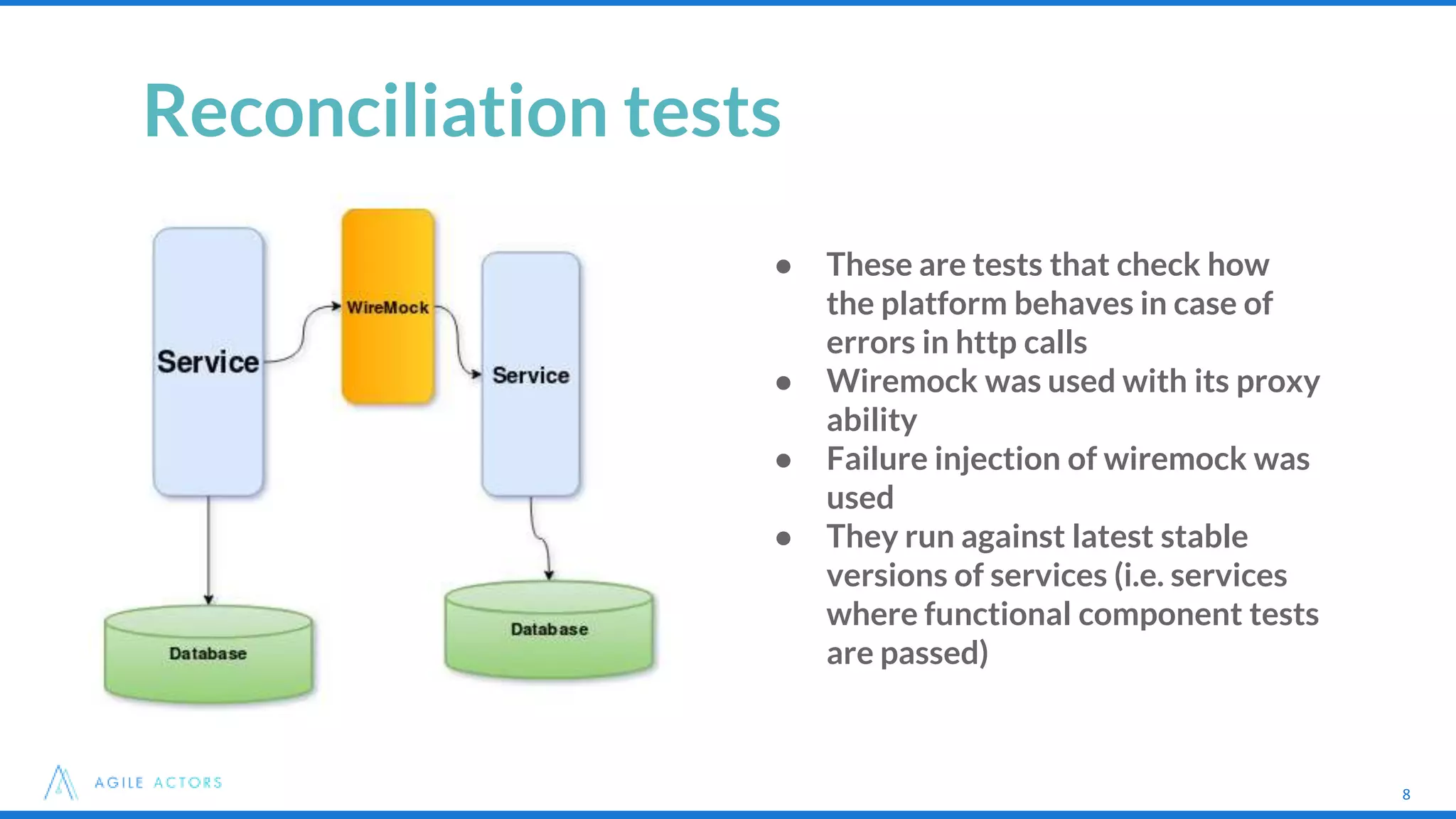
● These are tests that check how
the platform behaves in case of
errors in http calls
● Wiremock was used with its proxy
ability
● Failure injection of wiremock was
used
● They run against latest stable
versions of services (i.e. services
where functional component tests
are passed)
8
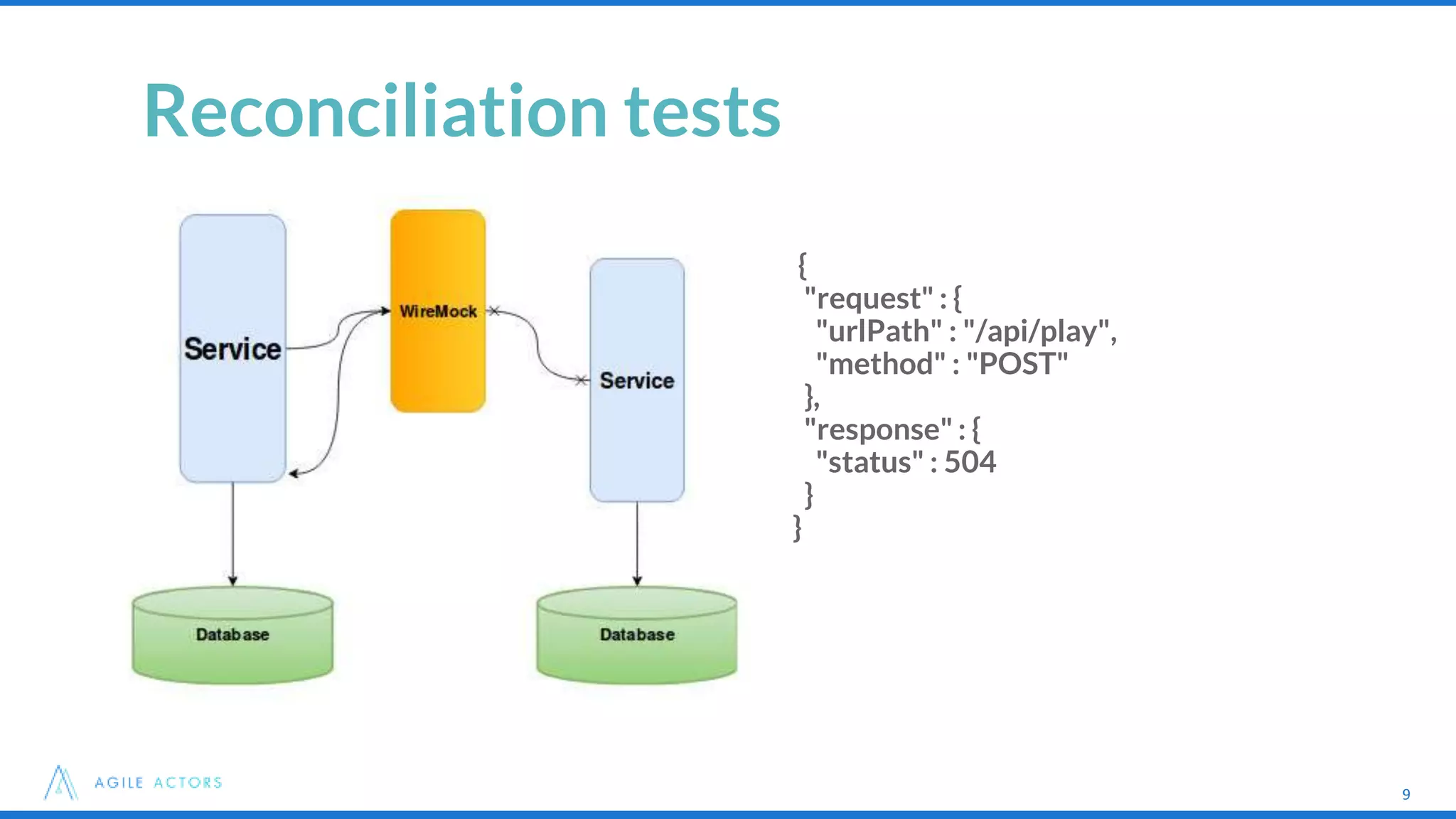
Reconciliation tests
8
{
"request" : {
"urlPath" : "/api/play",
"method" : "POST"
},
"response" : {
"status" : 504
}
}
9
Reconciliation tests
9
10
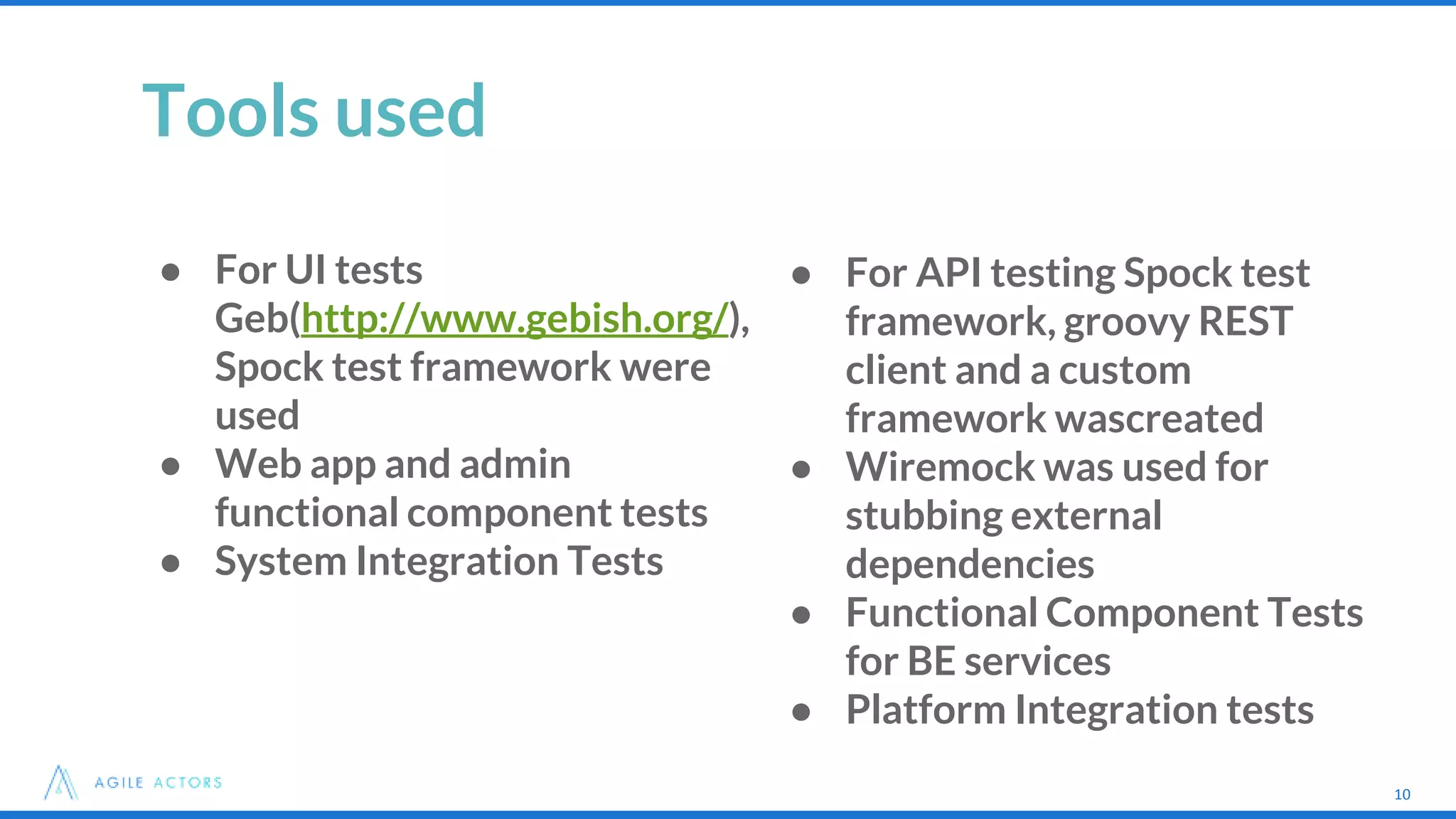
Tools used
● For UI tests
Geb(http://www.gebish.org/),
Spock test framework were
used
● Web app and admin
functional component tests
● System Integration Tests
10
● For API testing Spock test
framework, groovy REST
client and a custom
framework wascreated
● Wiremock was used for
stubbing external
dependencies
● Functional Component Tests
for BE services
● Platform Integration tests
11
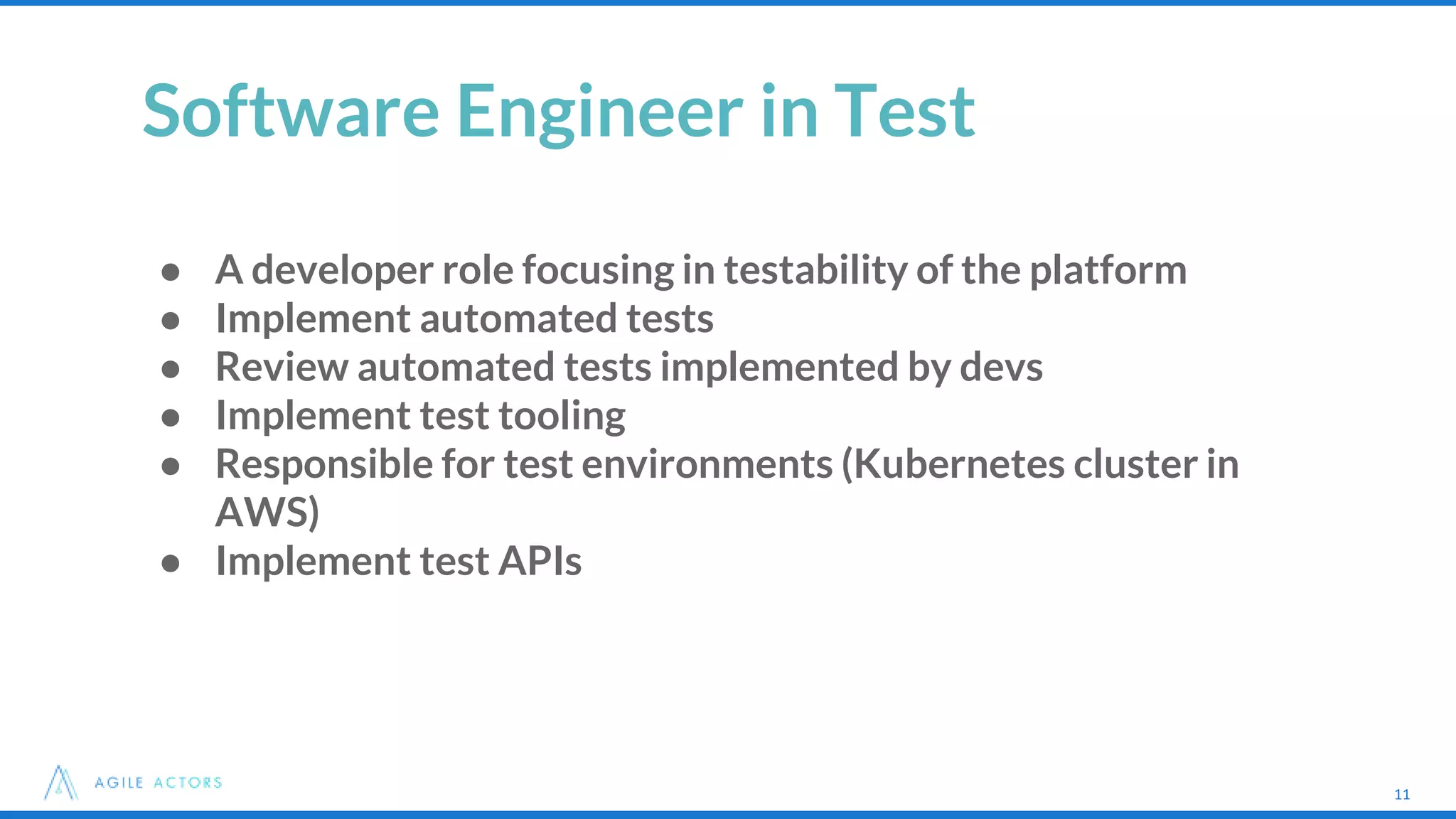
Software Engineer in Test
● A developer role focusing in testability of the platform
● Implement automated tests
● Review automated tests implemented by devs
● Implement test tooling
● Responsible for test environments (Kubernetes cluster in
AWS)
● Implement test APIs
11
12
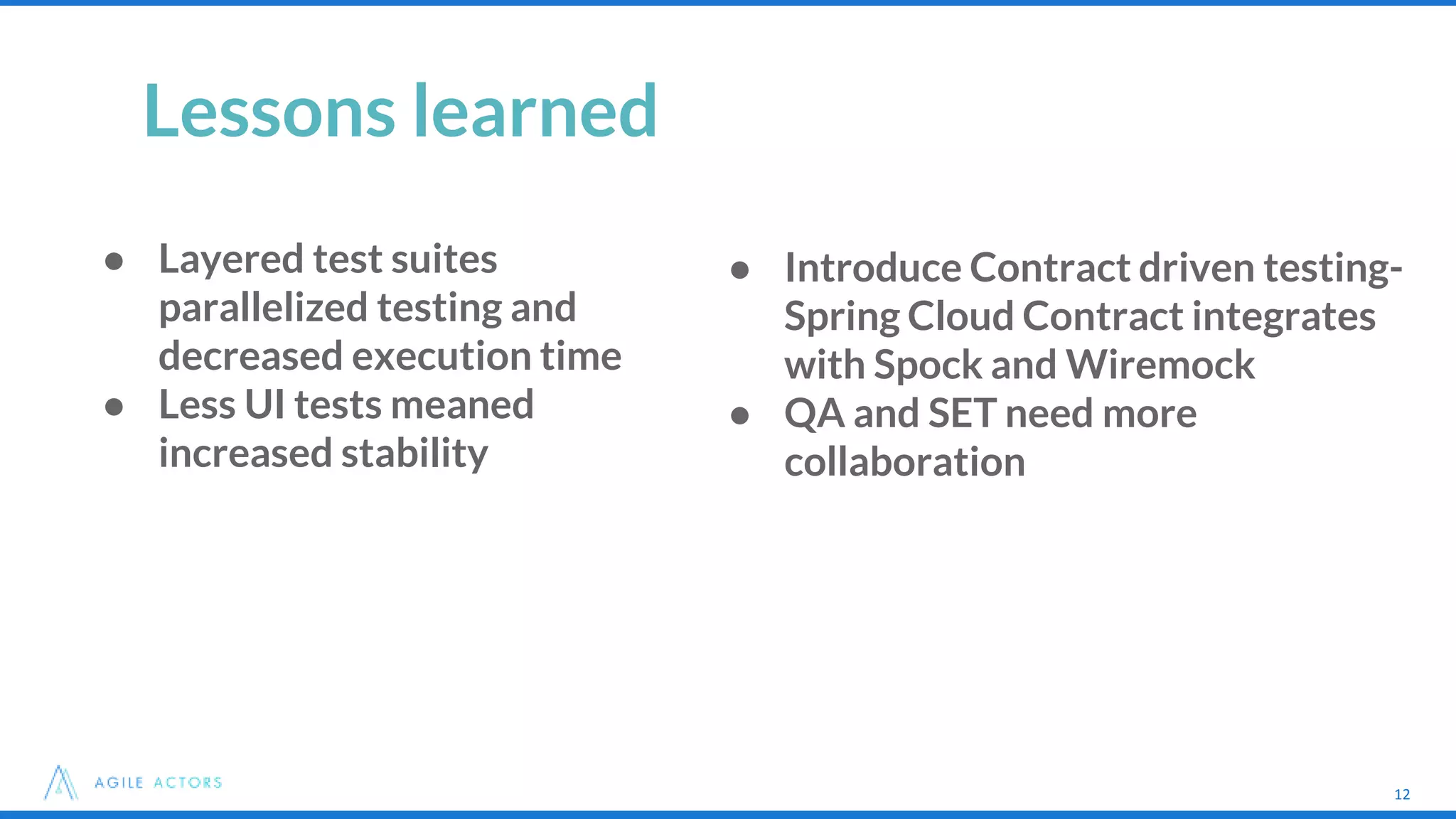
Lessons learned
● Introduce Contract driven testing-
Spring Cloud Contract integrates
with Spock and Wiremock
● QA and SET need more
collaboration
12
● Layered test suites
parallelized testing and
decreased execution time
● Less UI tests meaned
increased stability
Thank you!

Konstantinos Sidiropoulos - Testing microservices a real example

  • 1.
  • 2.
    2 iLottery PLatform ● iLotteryPlatform built in a microservices architecture ● Java, Spring framework, Cassandra ● Kubernetes, Docker 2
  • 3.
    3 Test Pyramid 3 ● Stage1: Automated Unit Tests ● Stage 2: Functional Component tests- Automated tests against a service with ALL its dependent services (Platform AND 3rd-party mocked) ● Stage 3: Platform Integration Tests - Automated Tests run against the platform (without web app or admin portal) and 3rd- party ONLY mocked ● Stage 4: System integration tests - Automated tests of our platform with web app and admin but 3rd-parties are mocked.
  • 4.
    4 Unit tests ● Technologyfacing tests ● These are tests against Java classes. ● The boundary is the class ● No build can be done if line, branch, complexity coverage is less than 80% 4
  • 5.
    ● Functional componenttests- Automated tests against a service with ALL its dependent services (Platform AND 3rd-party mocked) ● Web app, Admin Portal and backend services are tested in isolation ● They are triggered with every merge to master ● If these tests fail then no version is created, so service is not deployed 5 Functional Component Tests 5
  • 6.
    ● Platform IntegrationTests - Automated Tests run against the platform (without web app or admin portal) and 3rd-party ONLY mocked ● Tests that check the integration of platform services ● They run every 3 hours from 8:00 till 20:00 UK time ● They run against latest stable versions of services (i.e. services where functional component tests are passed) 6 Platform Integration Tests 6
  • 7.
    ● These areE2E tests ● Automated Tests run against the Excalibur platform (with webapp or admin portal) and 3rd-party ONLY mocked ● They run every 3 hours from 8:00 till 20:00 UK time ● They run against latest stable versions of services (i.e. services where functional component tests are passed) 7 System Integration Tests 7
  • 8.
    ● These aretests that check how the platform behaves in case of errors in http calls ● Wiremock was used with its proxy ability ● Failure injection of wiremock was used ● They run against latest stable versions of services (i.e. services where functional component tests are passed) 8 Reconciliation tests 8
  • 9.
    { "request" : { "urlPath": "/api/play", "method" : "POST" }, "response" : { "status" : 504 } } 9 Reconciliation tests 9
  • 10.
    10 Tools used ● ForUI tests Geb(http://www.gebish.org/), Spock test framework were used ● Web app and admin functional component tests ● System Integration Tests 10 ● For API testing Spock test framework, groovy REST client and a custom framework wascreated ● Wiremock was used for stubbing external dependencies ● Functional Component Tests for BE services ● Platform Integration tests
  • 11.
    11 Software Engineer inTest ● A developer role focusing in testability of the platform ● Implement automated tests ● Review automated tests implemented by devs ● Implement test tooling ● Responsible for test environments (Kubernetes cluster in AWS) ● Implement test APIs 11
  • 12.
    12 Lessons learned ● IntroduceContract driven testing- Spring Cloud Contract integrates with Spock and Wiremock ● QA and SET need more collaboration 12 ● Layered test suites parallelized testing and decreased execution time ● Less UI tests meaned increased stability
  • 13.