How to create modular
microservice test projects
Elias Nogueira
Elias Nogueira
I help professional software engineers
(backend, frontend, qa) to develop their quality
mindset and deliver bug-free software so they
become top-level engineers and get hired for
the best positions in the market.
🏢 Backbase
👨💻‍‍ Principal Software Engineer
📍 Utrecht, the Netherlands
🌐 eliasnogueira.com
🐦 @eliasnogueira
bit.ly/eliasnogueira
What problem do we
want to solve?
Implicitly we want …
● Increase confidence in delivery
● Cover key business scenarios
● The certainty that the test will find a possible failure
after some modification
API anatomy (testing perspective)
Individual APIs
API
API
API
A
P
I
A
P
I
API
A
P
I
A
P
I
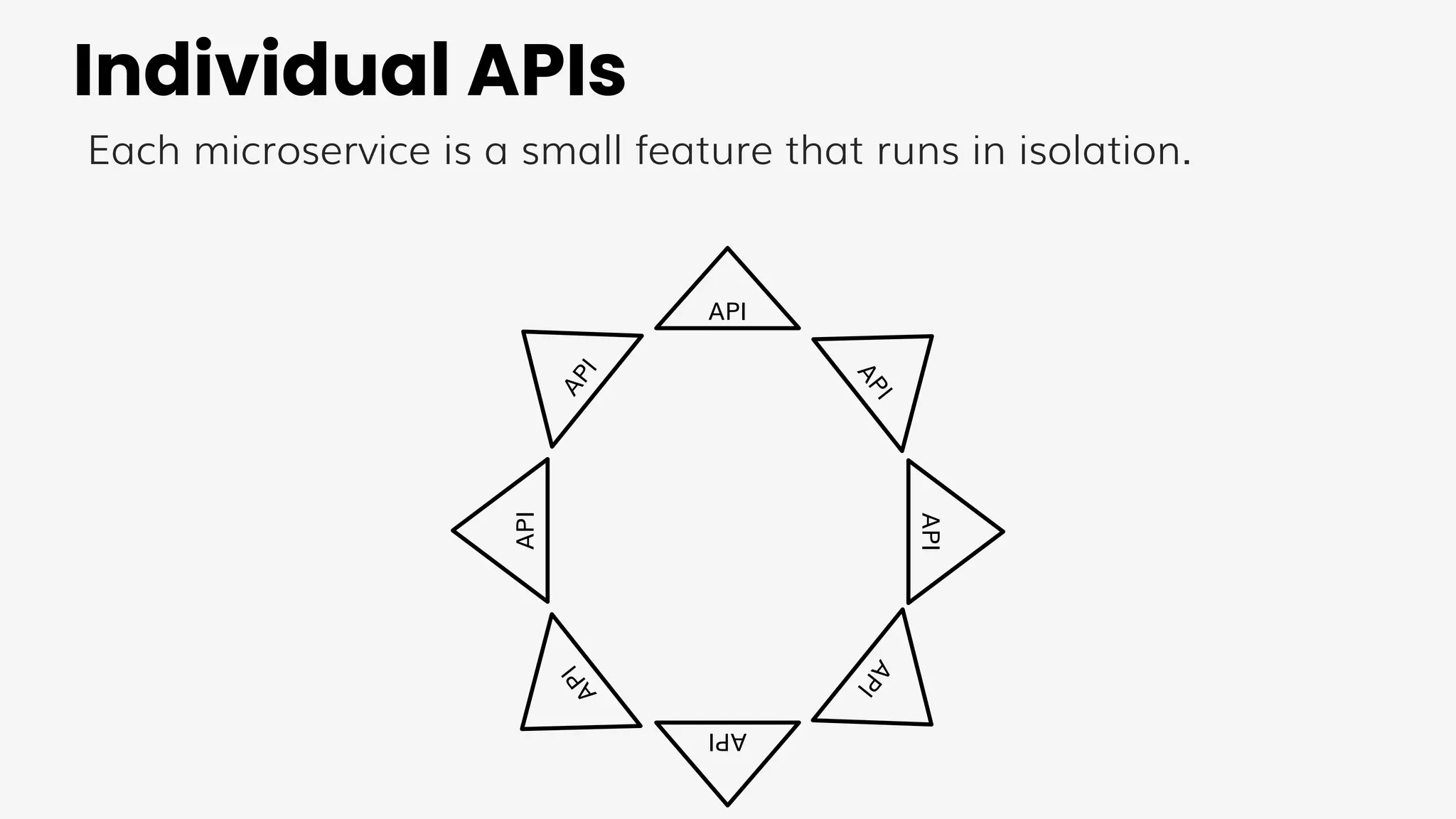
Each microservice is a small feature that runs in isolation.
Individual APIs
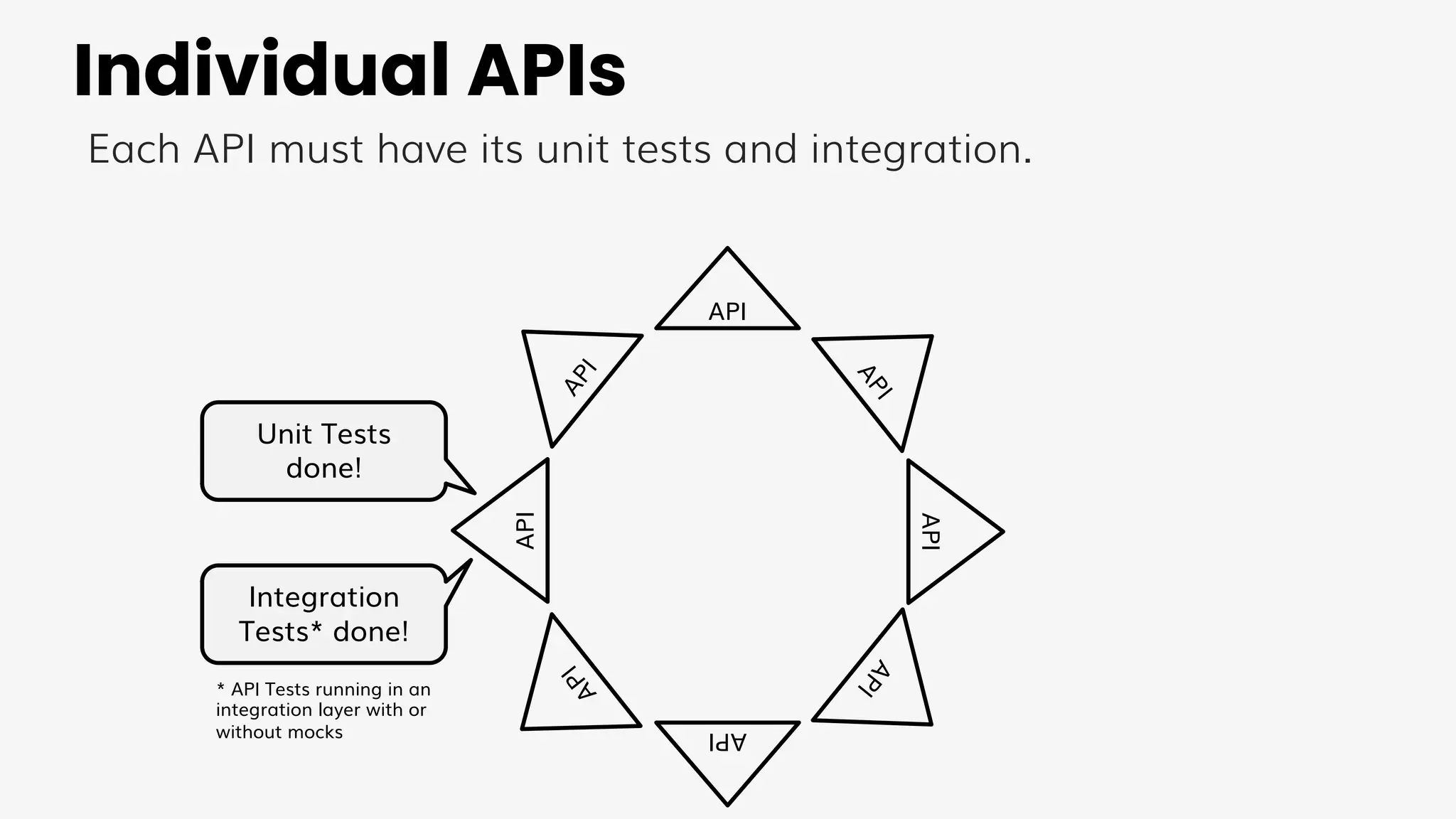
Unit Tests
done!
API
API
API
A
P
I
A
P
I
API
A
P
I
A
P
I
Each API must have its unit tests and integration.
Integration
Tests* done!
* API Tests running in an
integration layer with or
without mocks
API
API
API
A
P
I
A
P
I
API
A
P
I
A
P
I
The problem
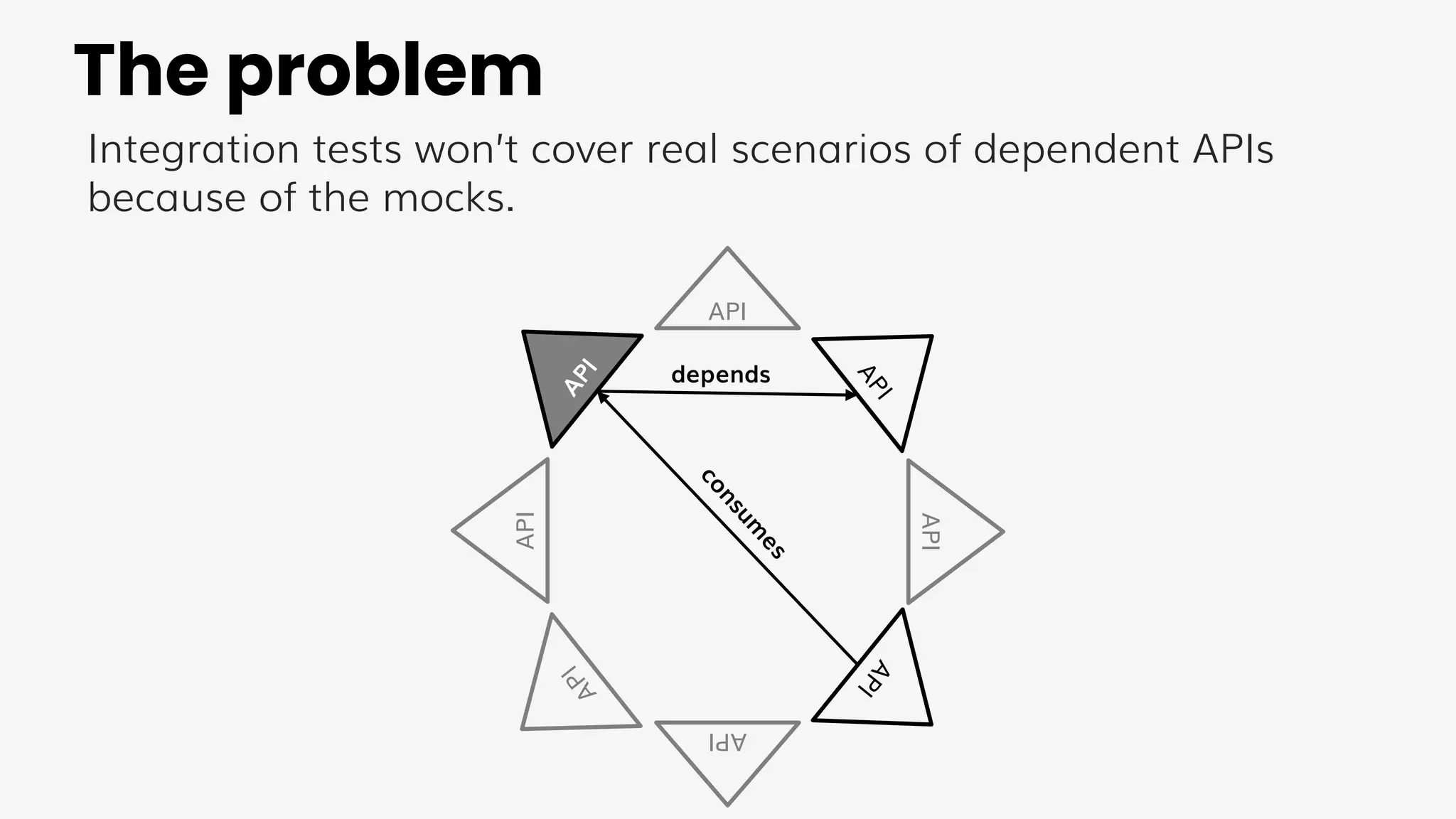
Integration tests won’t cover real scenarios of dependent APIs
because of the mocks.
depends
c
o
n
s
u
m
e
s
Possible solution
API
API
API
A
P
I
A
P
I
API
A
P
I
A
P
I
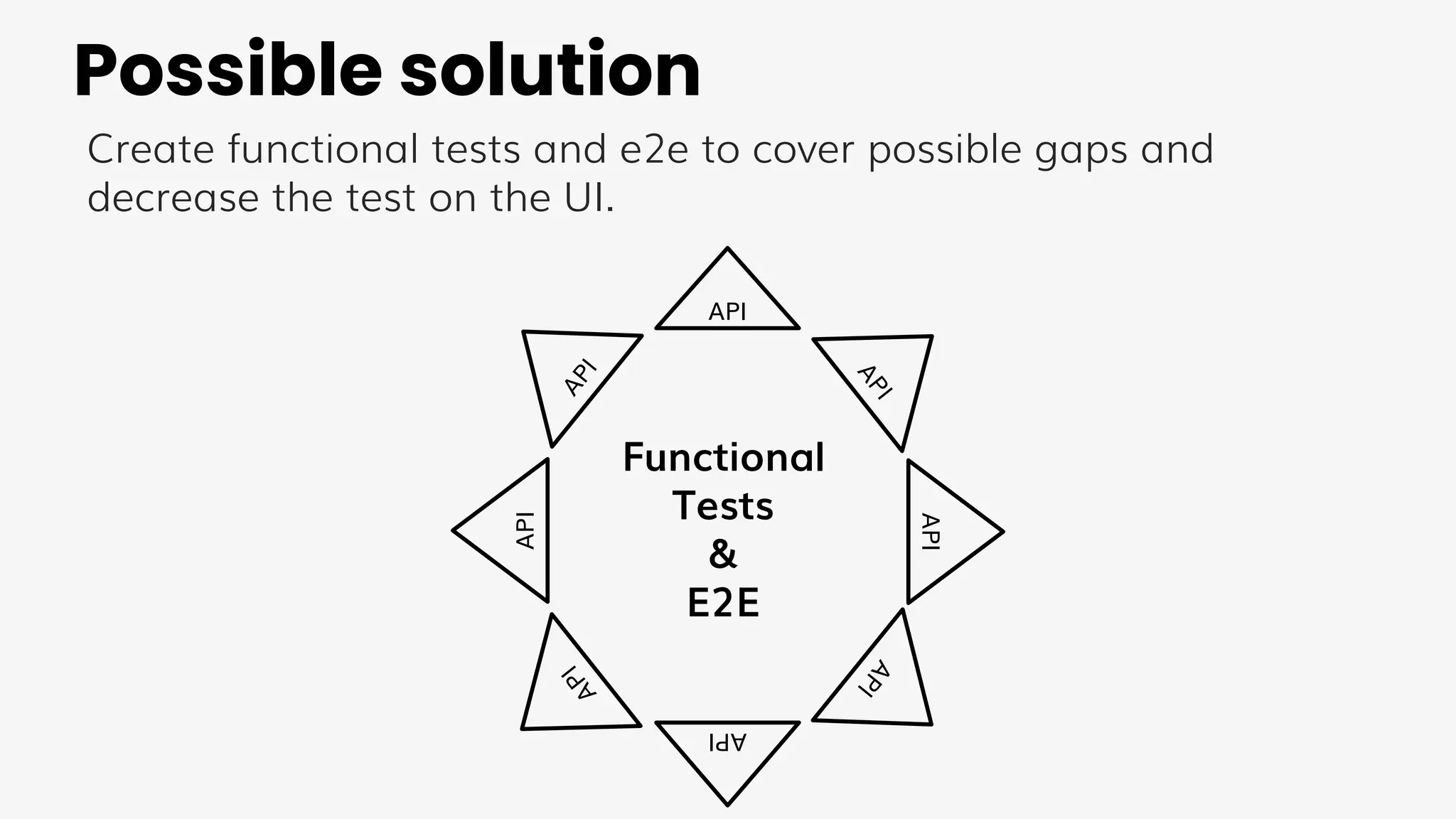
Possible solution
Create functional tests and e2e to cover possible gaps and
decrease the test on the UI.
Functional
Tests
&
E2E
API
API
API
A
P
I
A
P
I
API
A
P
I
A
P
I
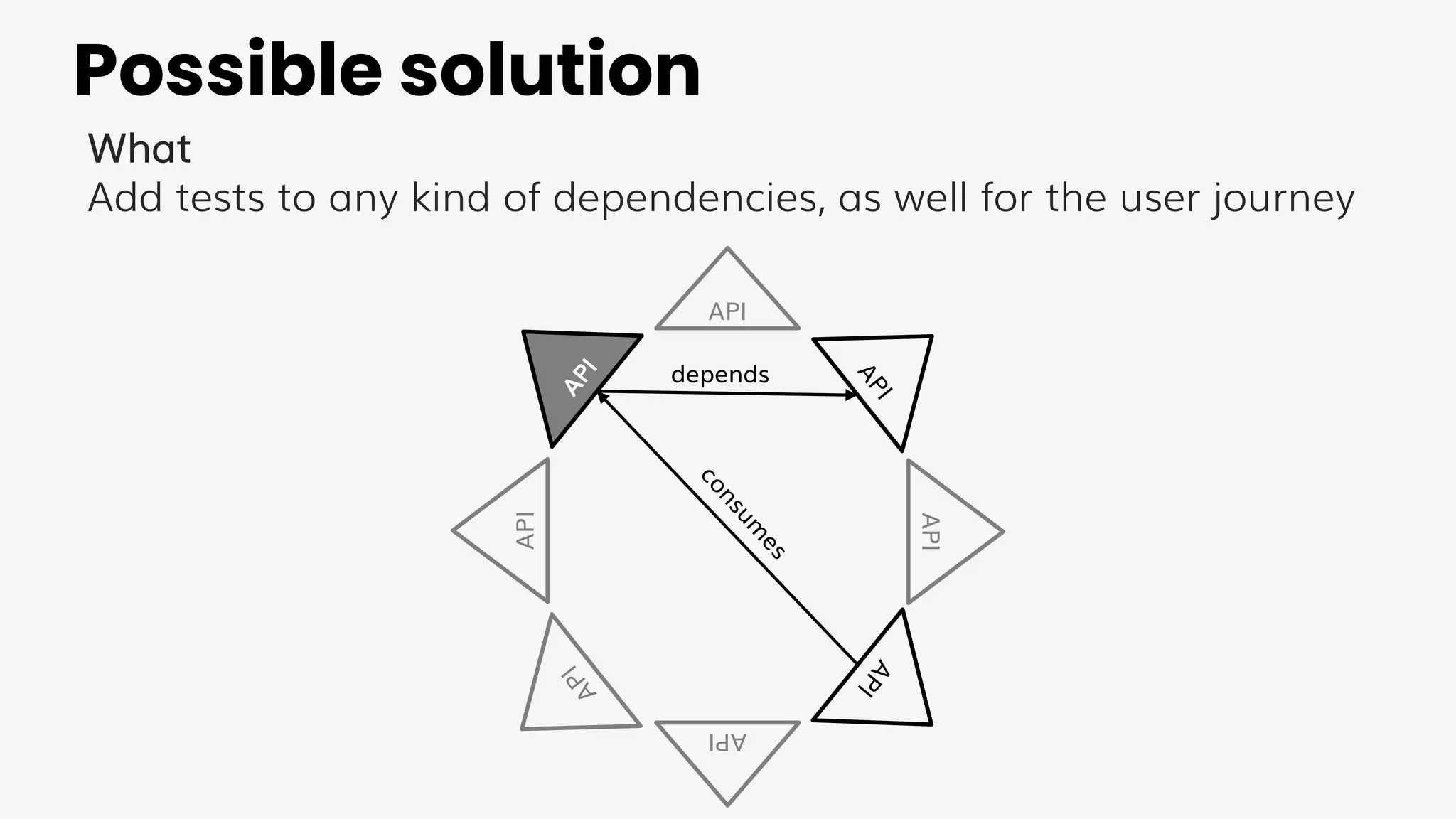
Possible solution
What
Add tests to any kind of dependencies, as well for the user journey
depends
c
o
n
s
u
m
e
s
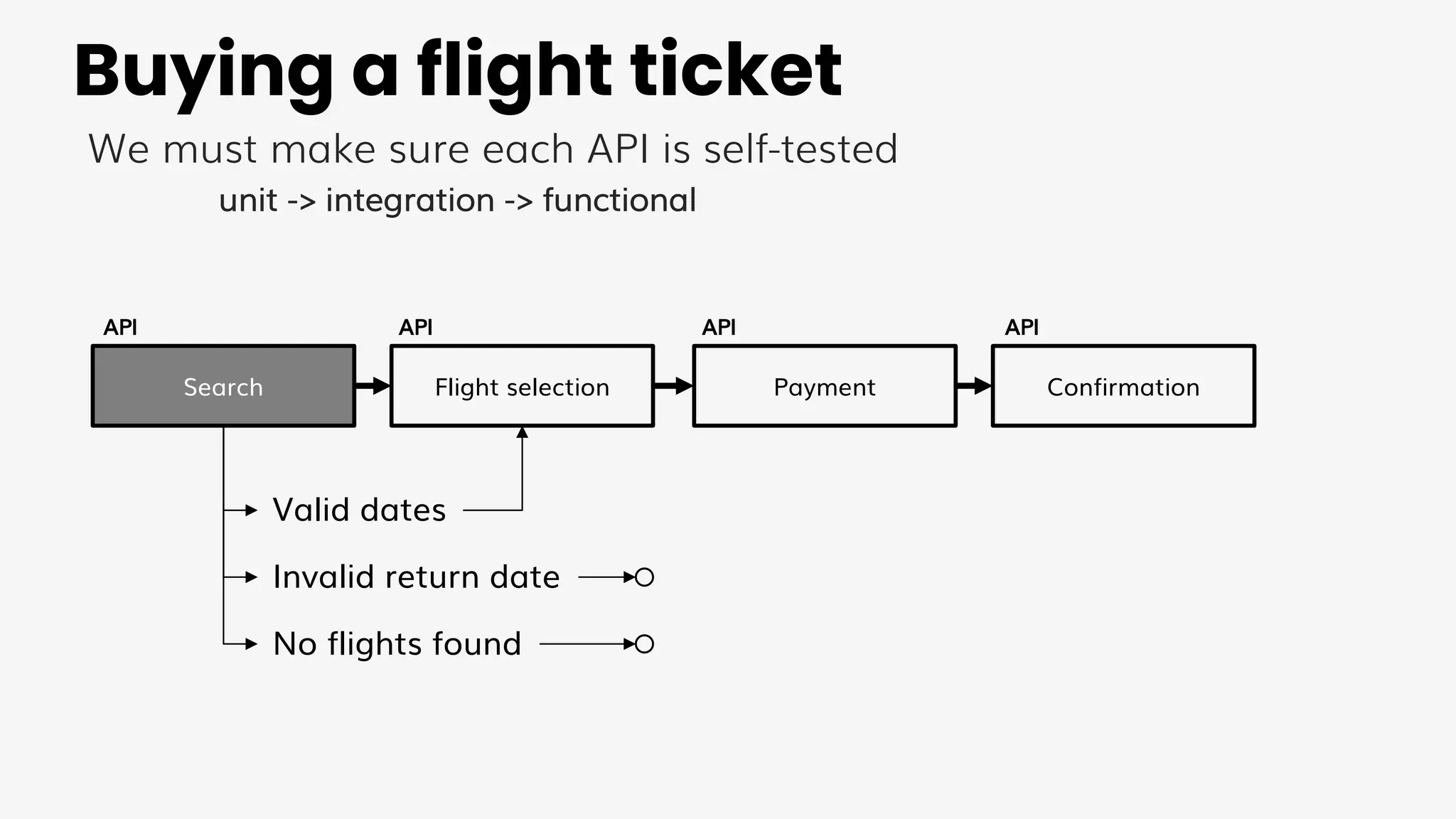
Analogy: buying a flight ticket
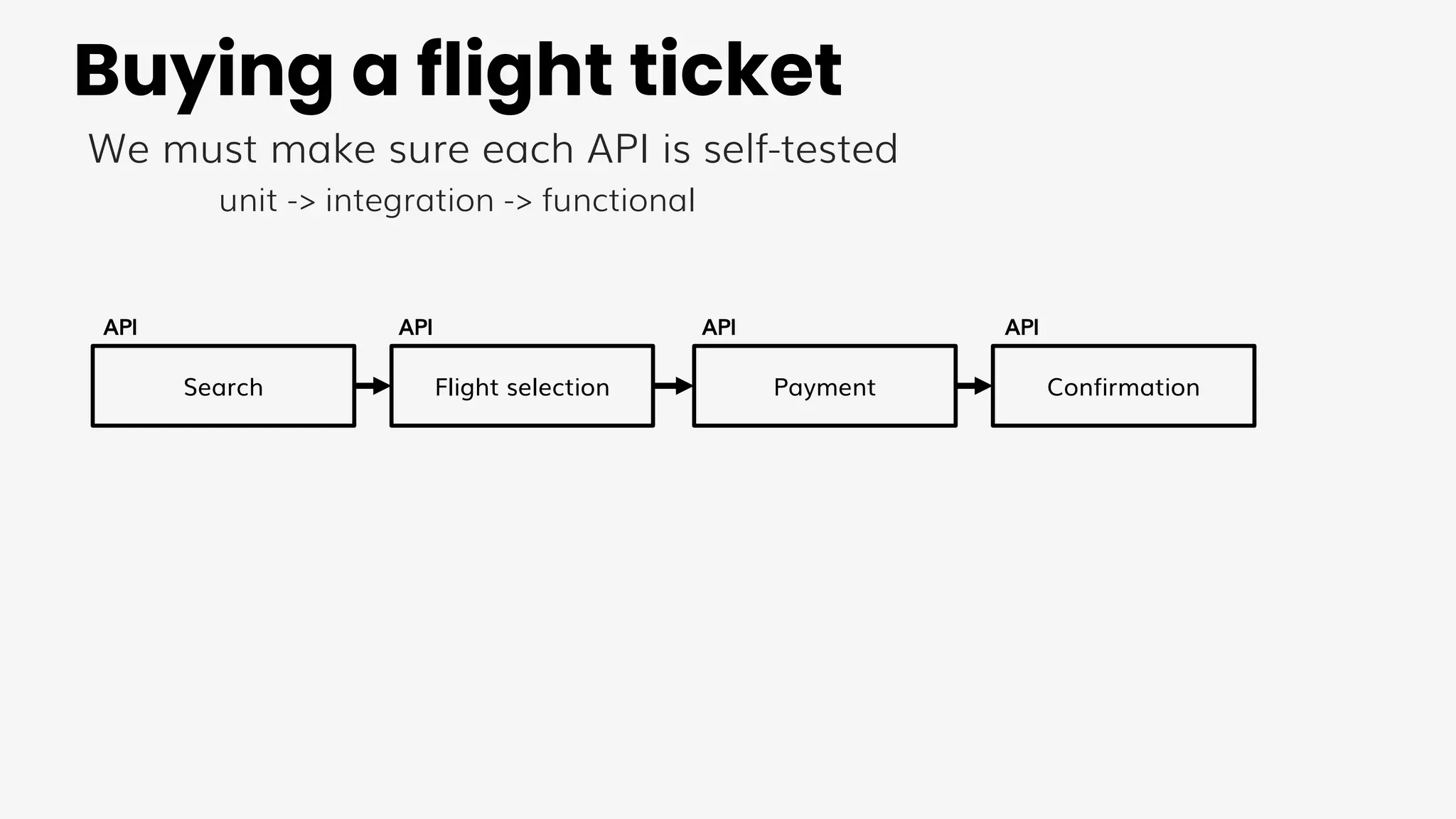
Buying a flight ticket
We must make sure each API is self-tested
unit -> integration -> functional
Search Flight selection Payment Confirmation
API API API API
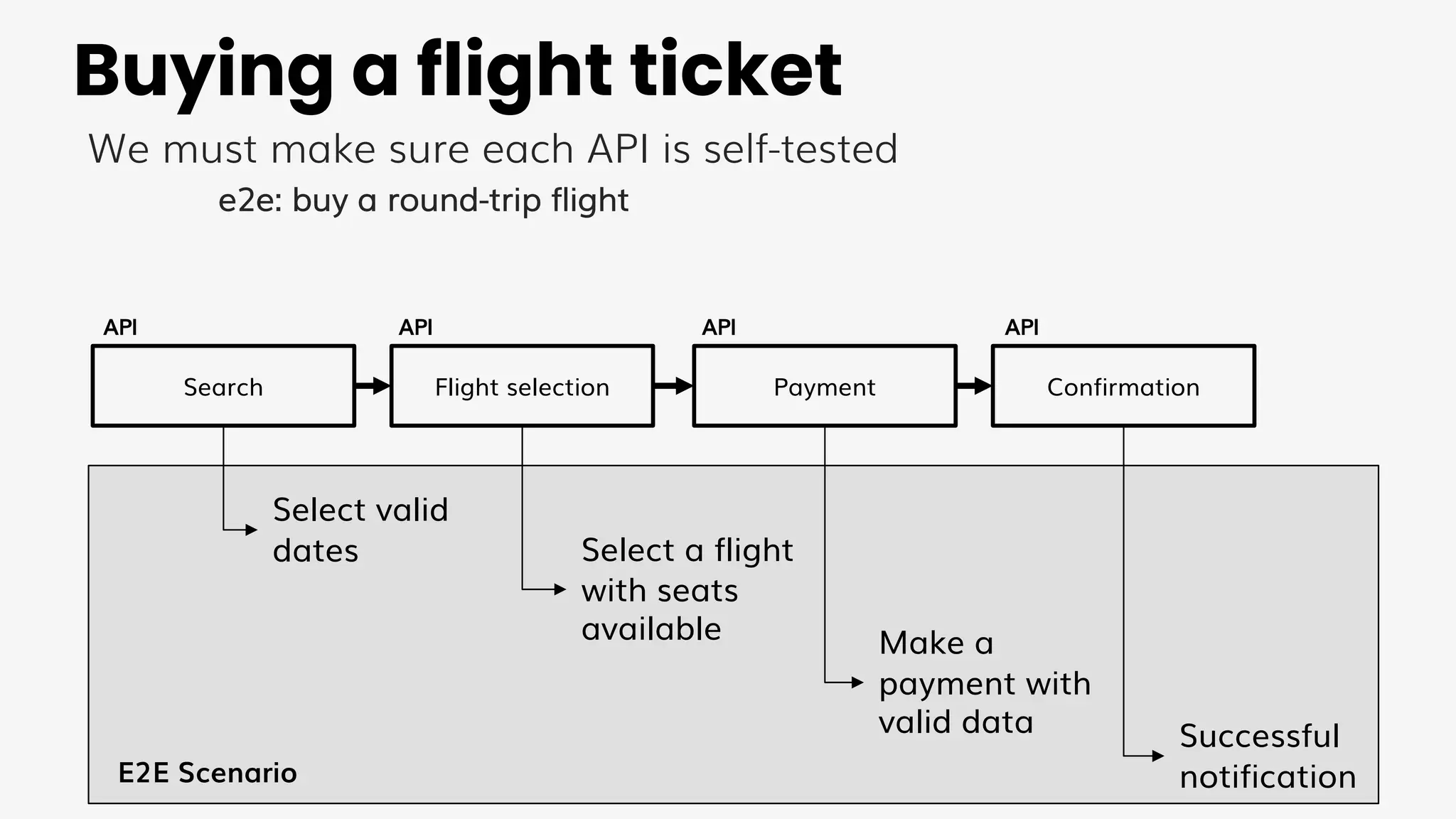
Buying a flight ticket
We must make sure each API is self-tested
unit -> integration -> functional
Search Flight selection Payment Confirmation
Valid dates
Invalid return date
No flights found
API API API API
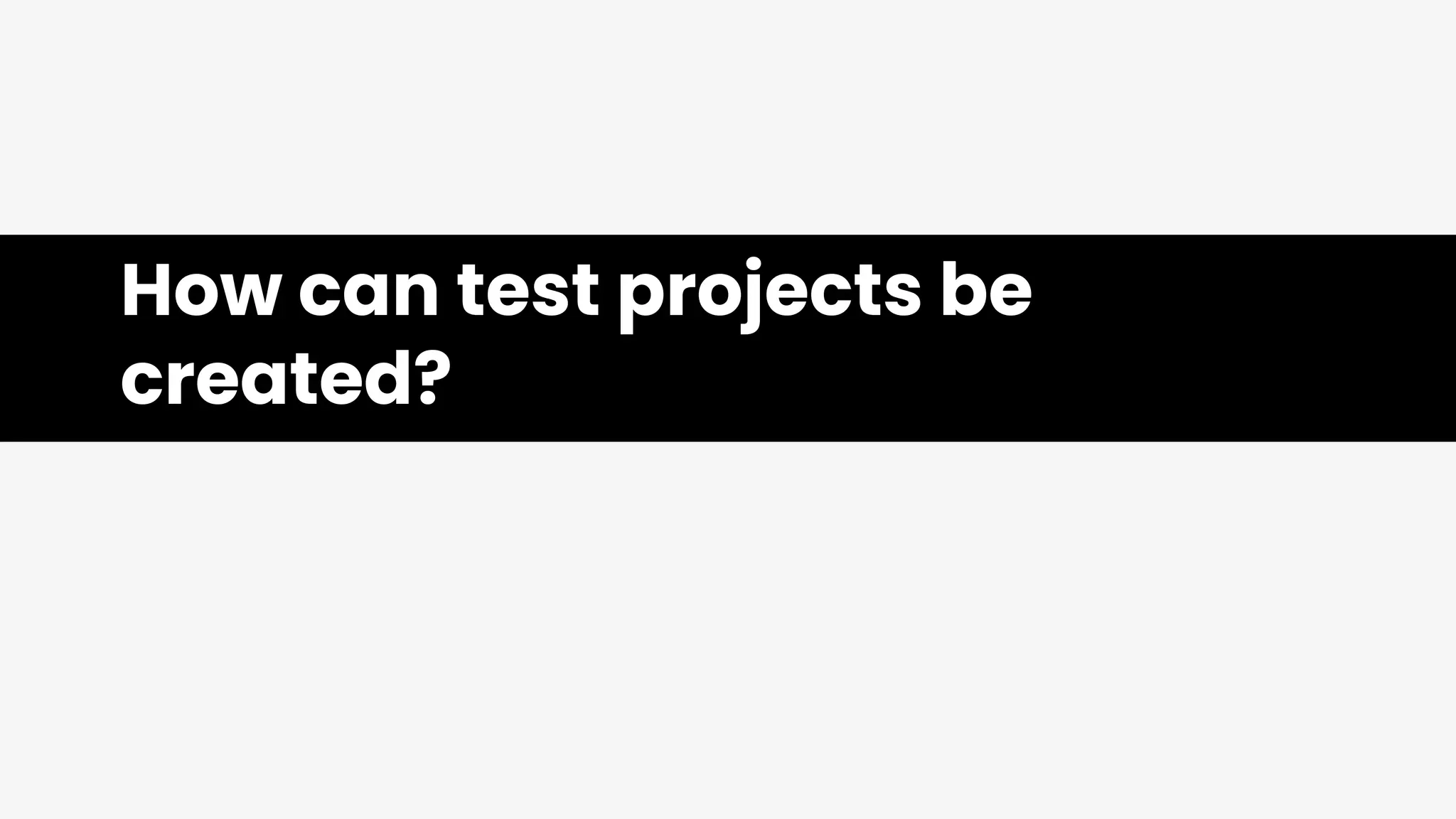
Buying a flight ticket
We must make sure each API is self-tested
e2e: buy a round-trip flight
Search Flight selection Payment Confirmation
Select valid
dates
API API API API
Select a flight
with seats
available Make a
payment with
valid data Successful
notification
E2E Scenario
How can test projects be
created?
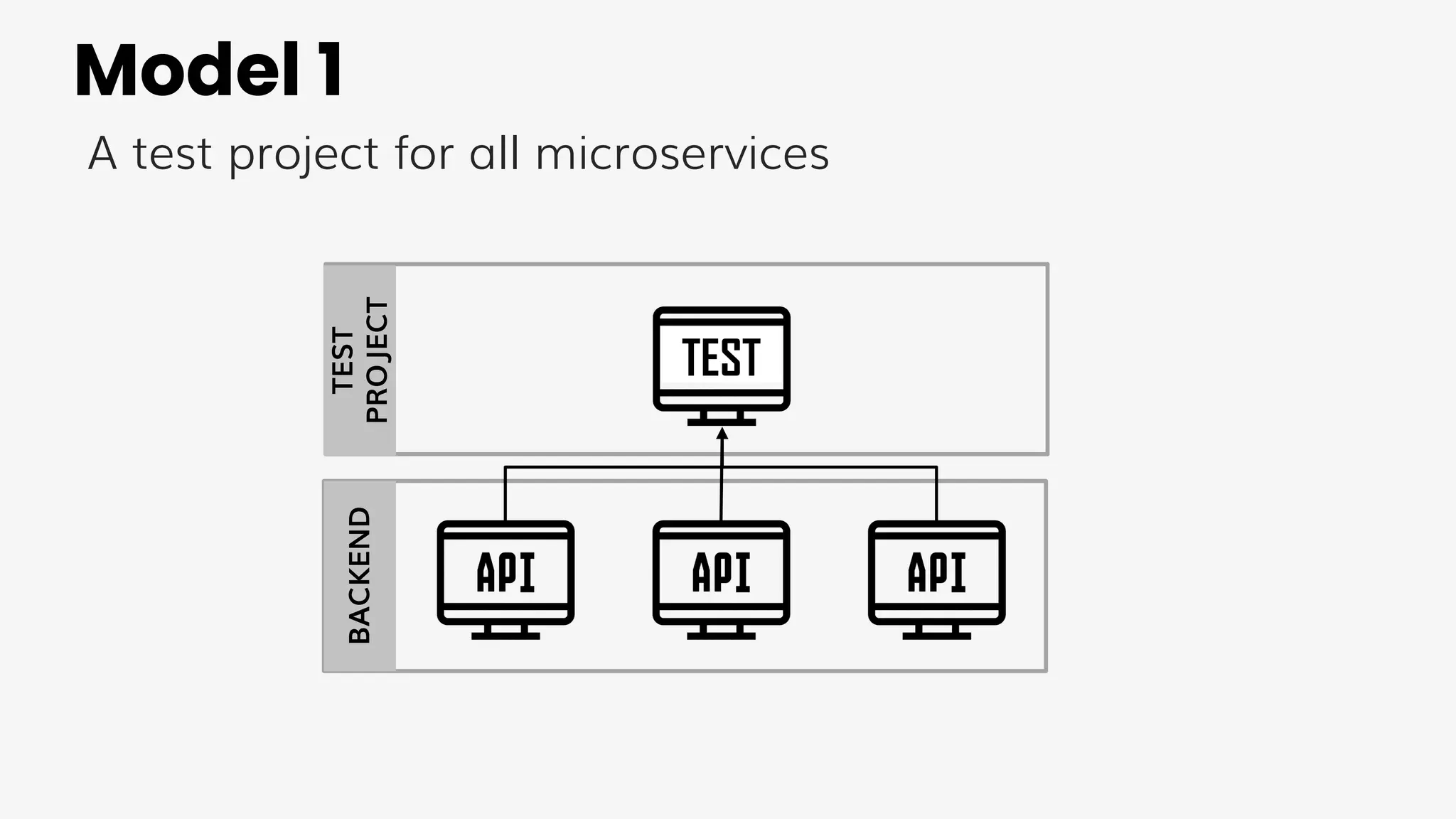
Model 1
A test project for all microservices
BACKEND TEST
TEST
PROJECT
Model 1
Pros
● Centralization of code in a single project
● Speed and agility in creating tests and solving problems
Cons
● Constant changes by several people can have side effects on
results
Model 2
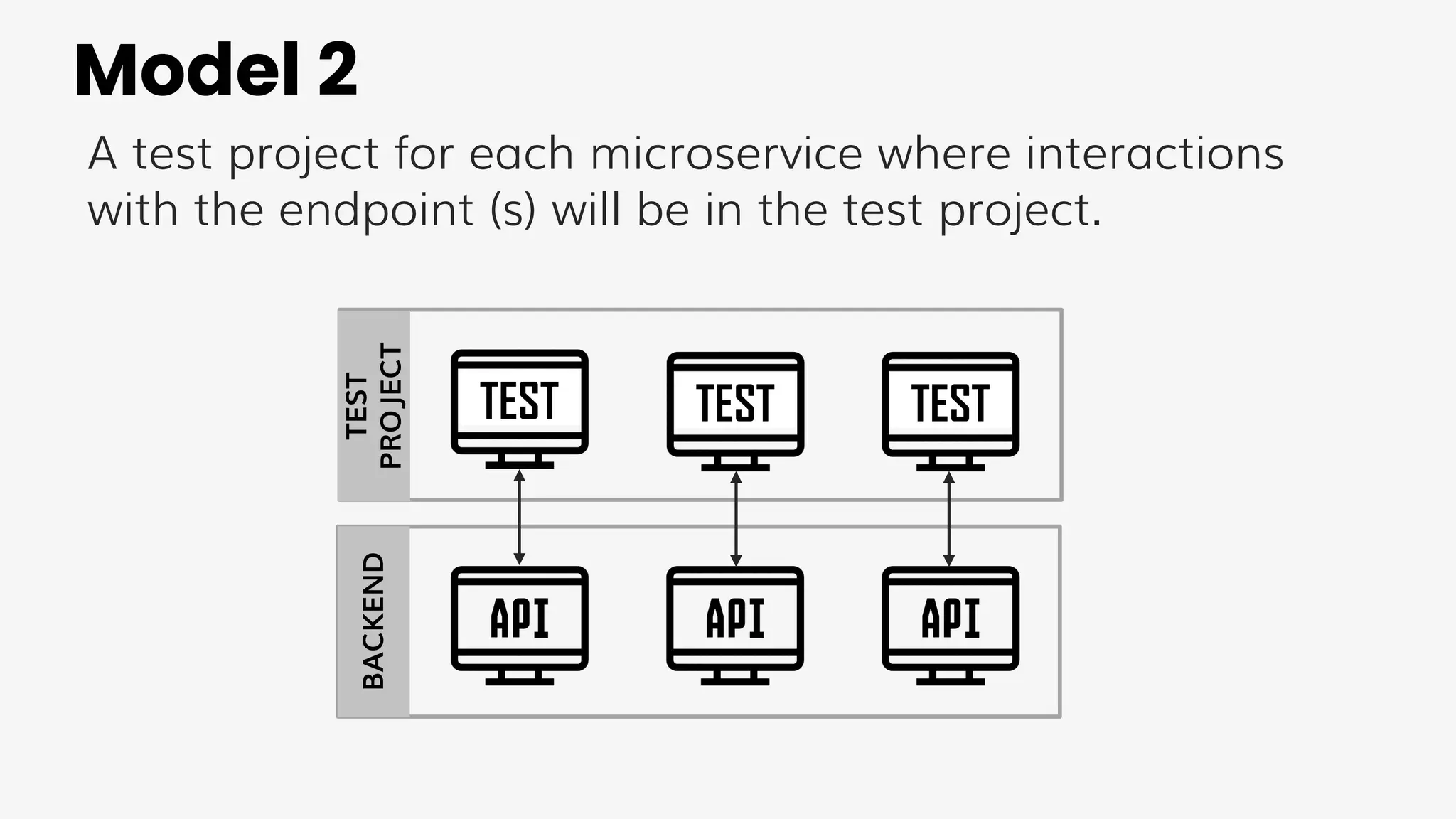
A test project for each microservice where interactions
with the endpoint (s) will be in the test project.
BACKEND
TEST TEST TEST
TEST
PROJECT
Model 2
Pros
● Organized decentralization of test projects towards an API
● Isolation between APIs
Cons
● Possible code duplication
Model 3
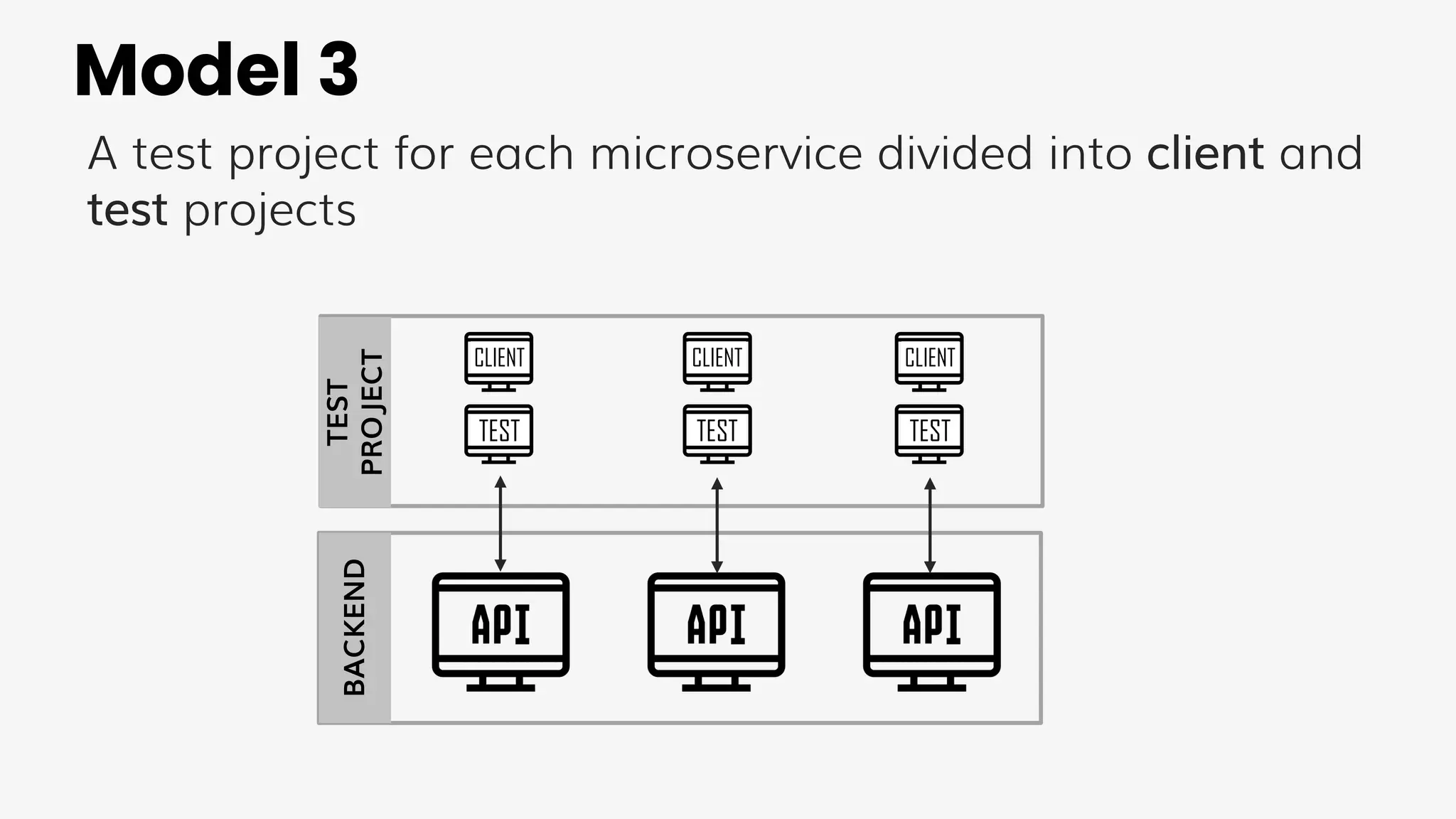
A test project for each microservice divided into client and
test projects
BACKEND
TEST
PROJECT
TEST TEST TEST
CLIENT CLIENT CLIENT
Model 3
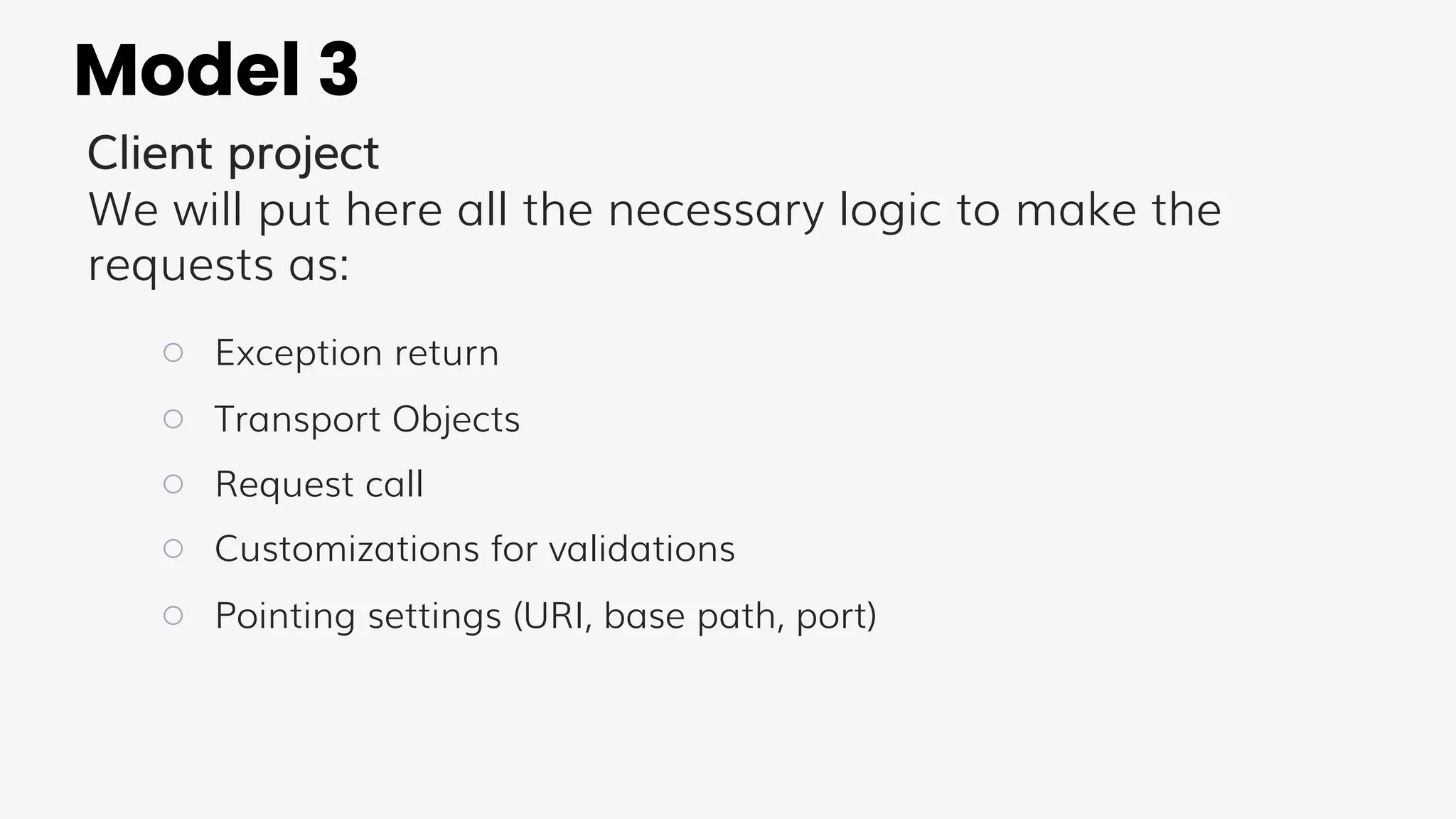
Client project
We will put here all the necessary logic to make the
requests as:
○ Exception return
○ Transport Objects
○ Request call
○ Customizations for validations
○ Pointing settings (URI, base path, port)
Model 3
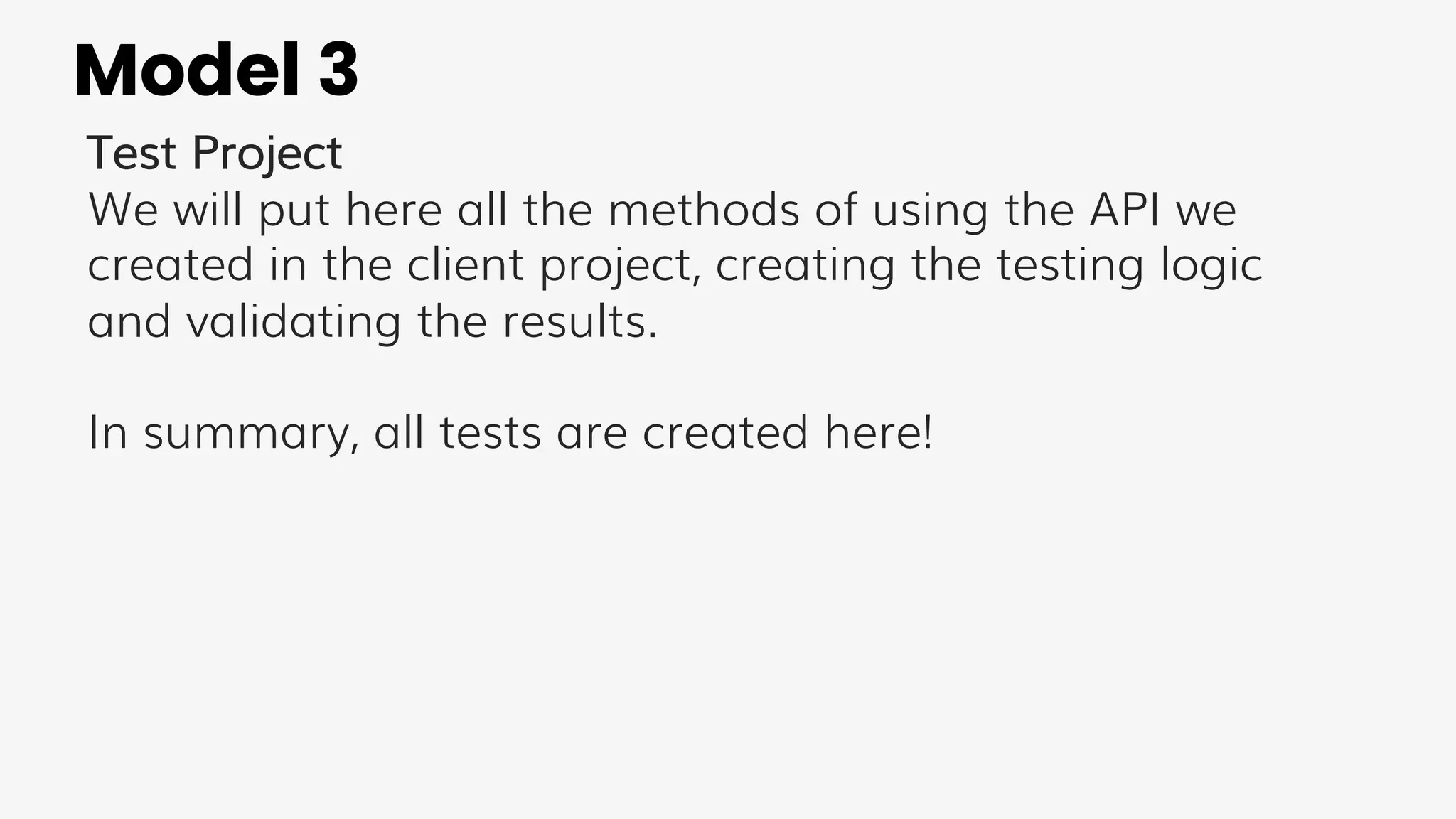
Test Project
We will put here all the methods of using the API we
created in the client project, creating the testing logic
and validating the results.
In summary, all tests are created here!
Model 3
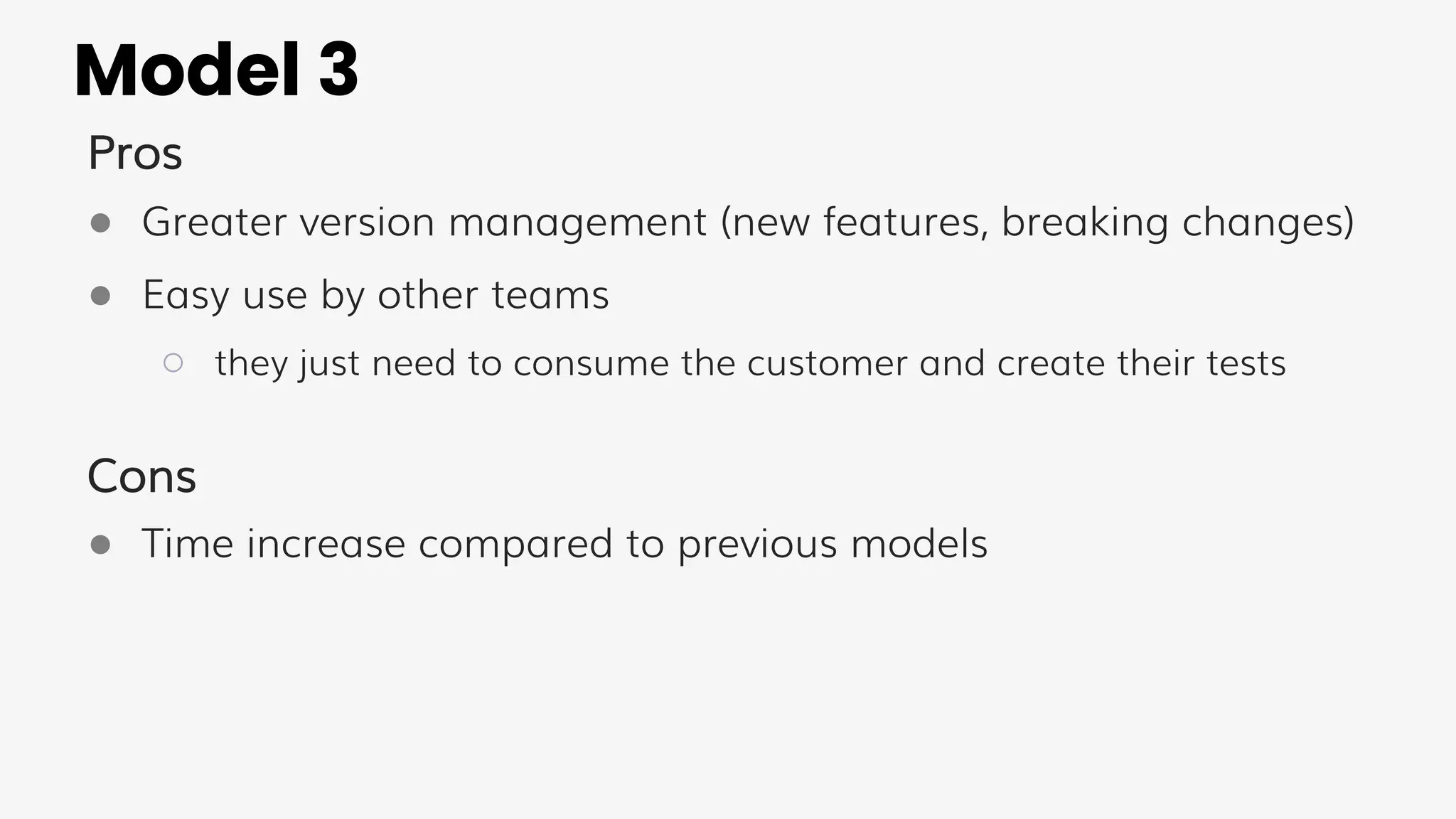
Pros
● Greater version management (new features, breaking changes)
● Easy use by other teams
○ they just need to consume the customer and create their tests
Cons
● Time increase compared to previous models
Implementation exemple
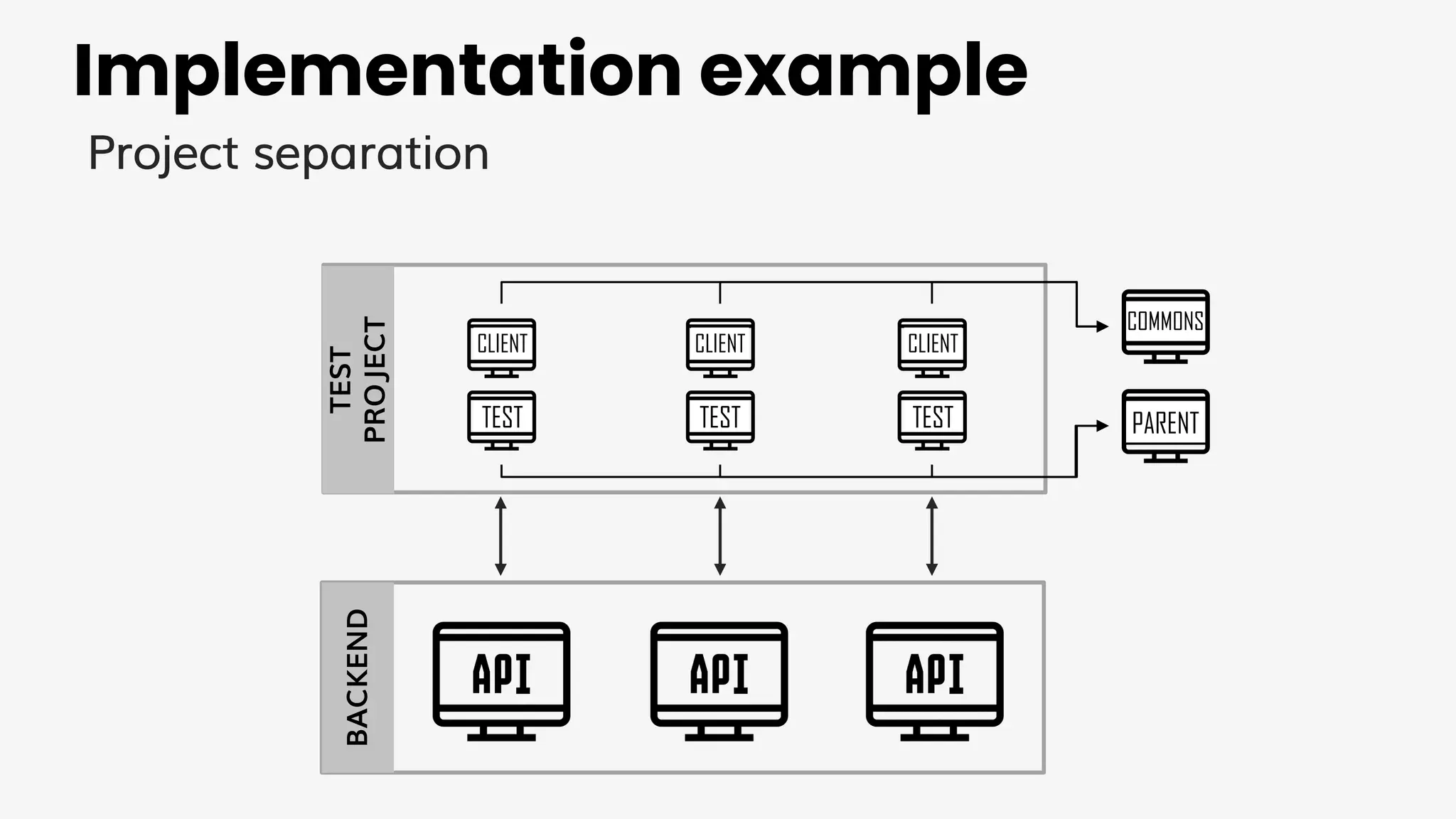
Implementation example
Project separation
BACKEND
TEST
PROJECT
TEST TEST TEST
CLIENT CLIENT CLIENT
COMMONS
PARENT
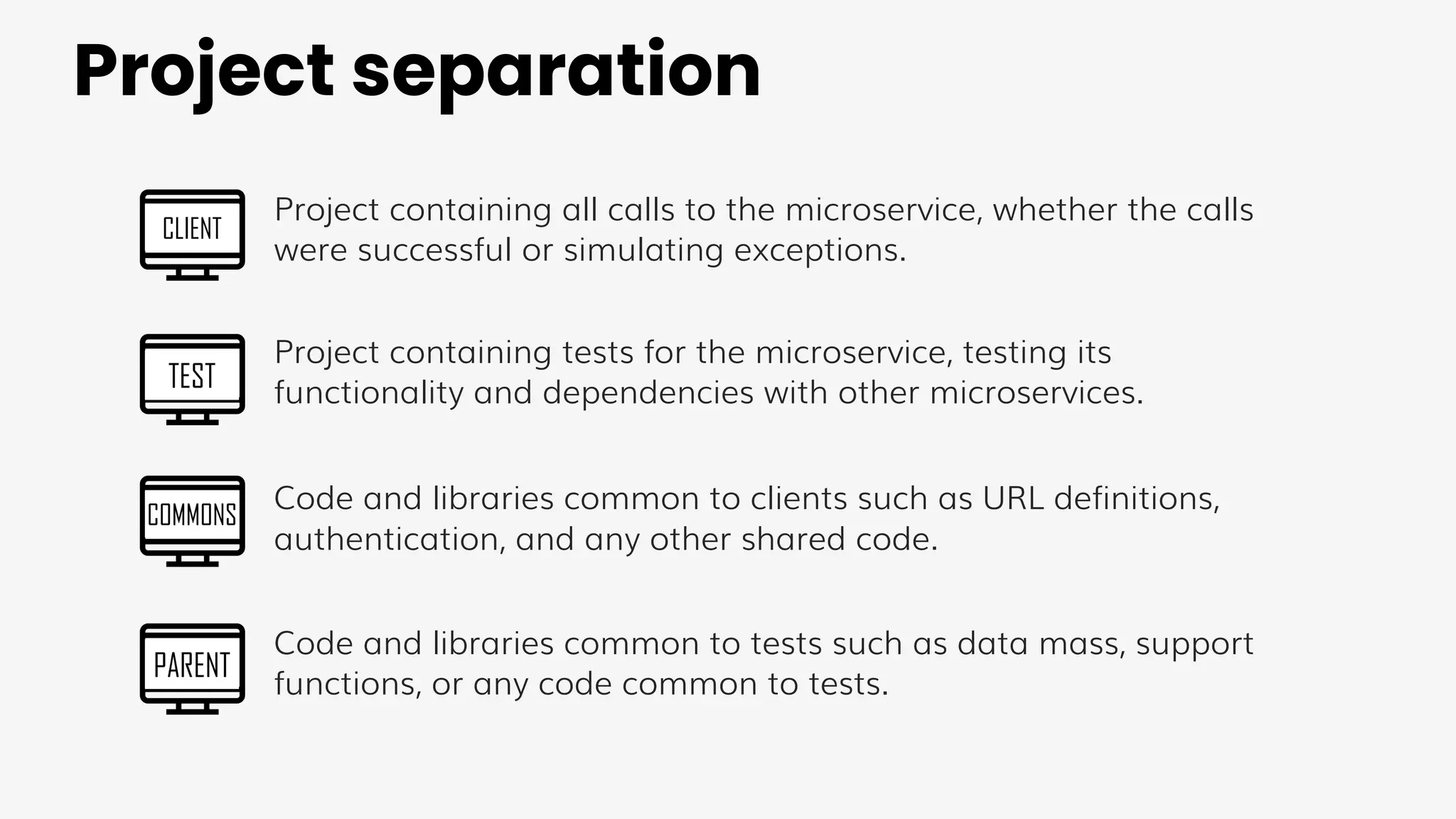
Project separation
CLIENT
TEST
COMMONS
PARENT
Project containing all calls to the microservice, whether the calls
were successful or simulating exceptions.
Project containing tests for the microservice, testing its
functionality and dependencies with other microservices.
Code and libraries common to clients such as URL definitions,
authentication, and any other shared code.
Code and libraries common to tests such as data mass, support
functions, or any code common to tests.
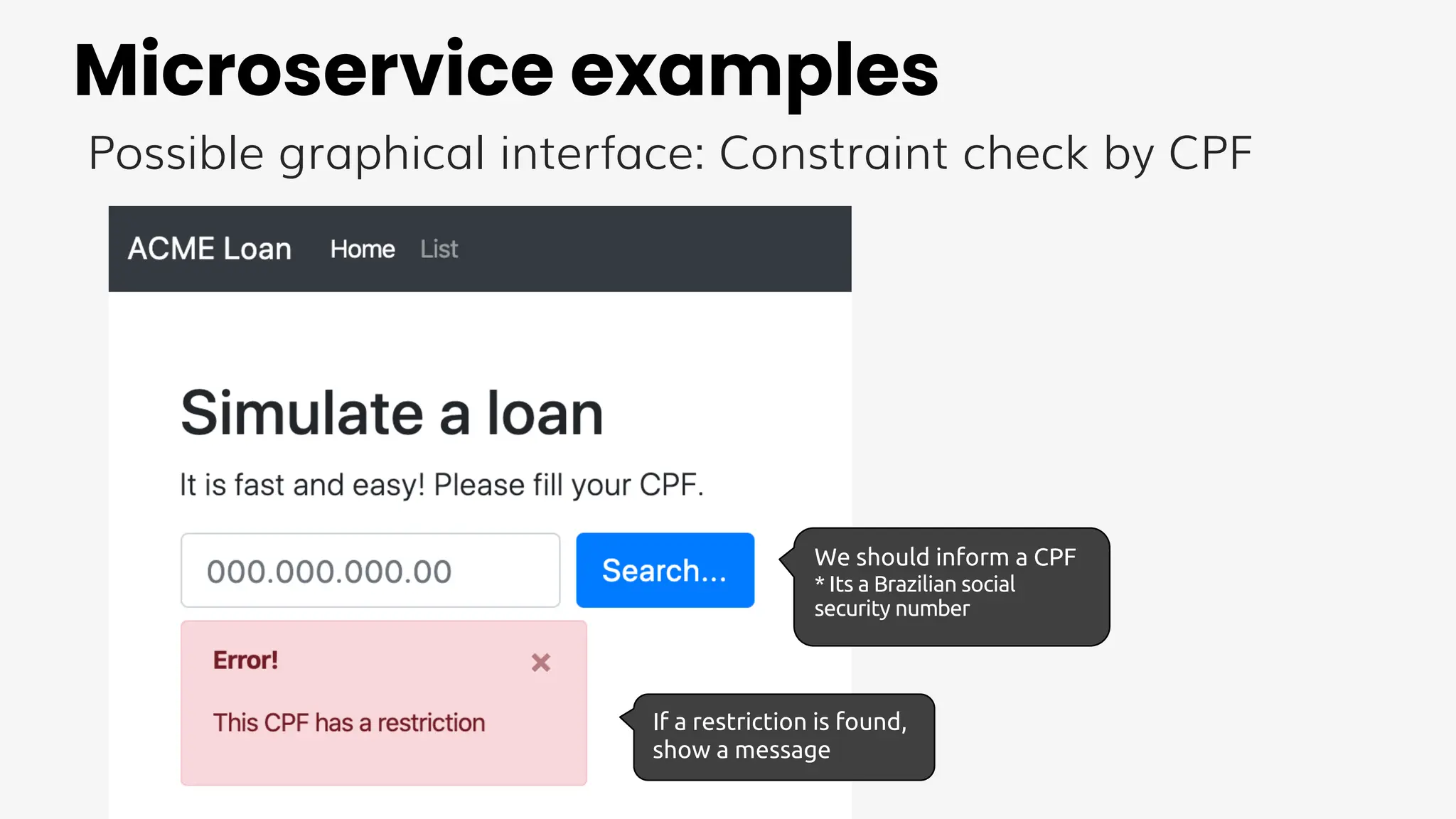
Microservice examples
Possible graphical interface: Constraint check by CPF
We should inform a CPF
* Its a Brazilian social
security number
If a restriction is found,
show a message
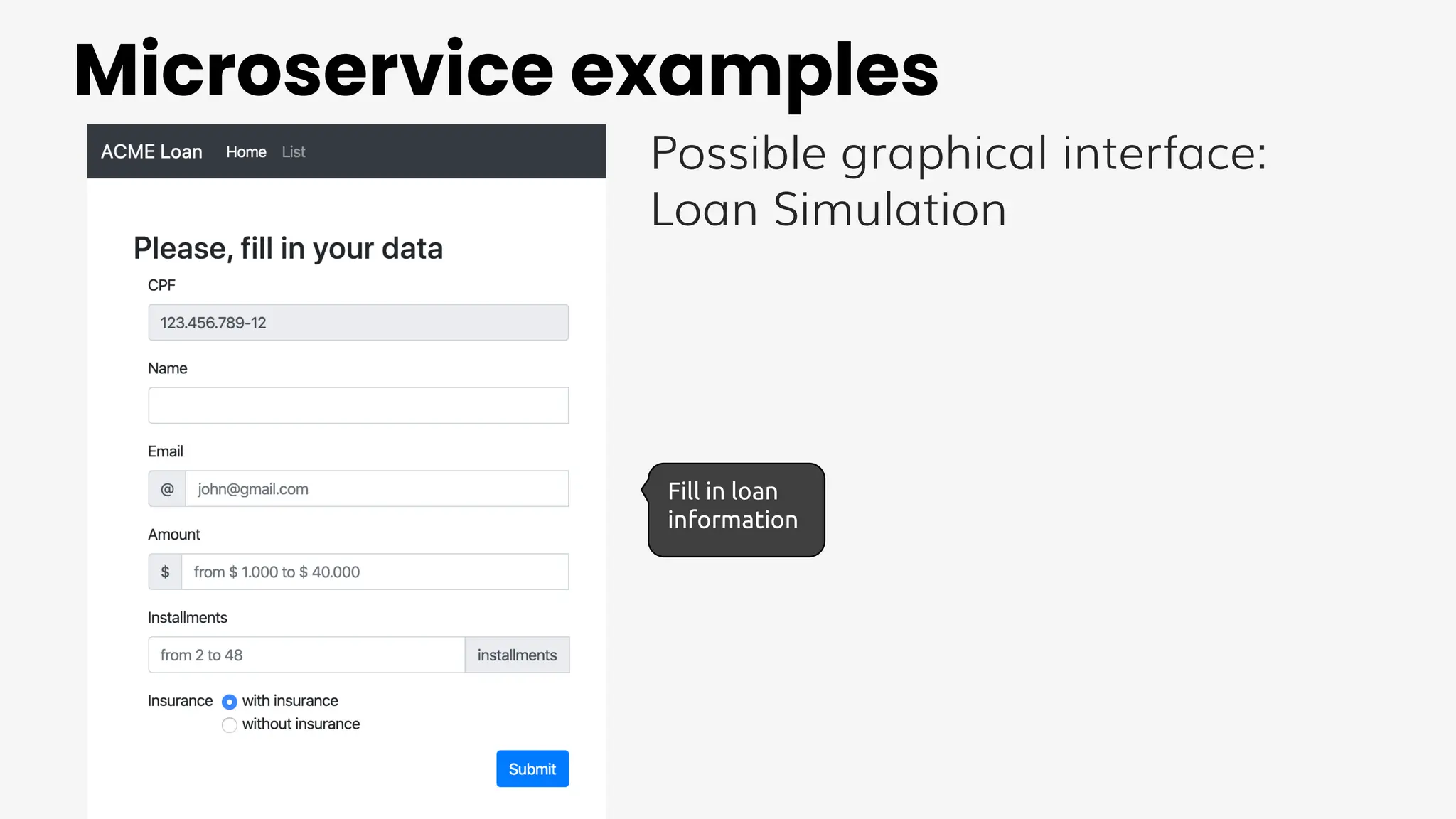
Microservice examples
Possible graphical interface:
Loan Simulation
Fill in loan
information
Microservice examples
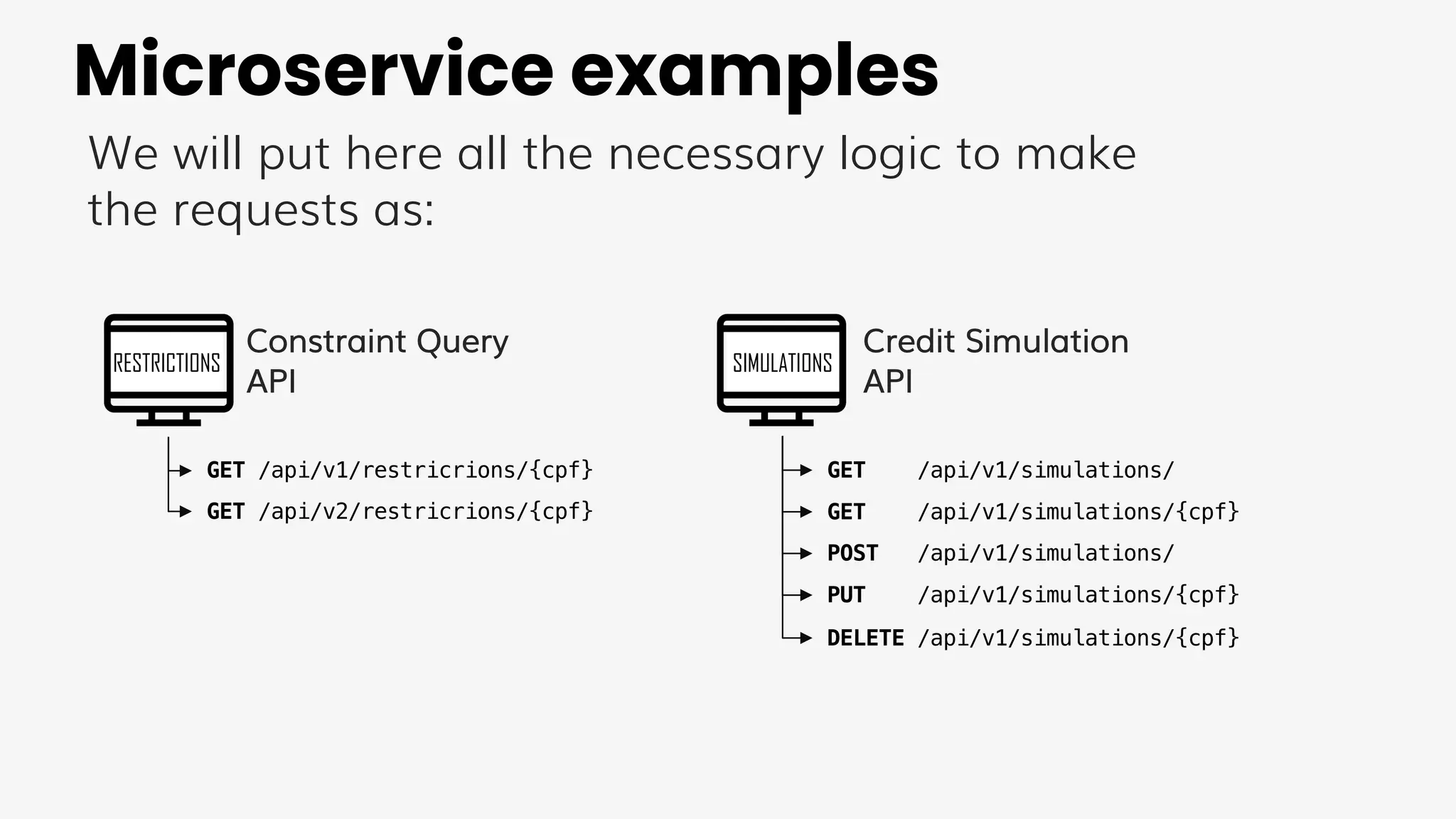
We will put here all the necessary logic to make
the requests as:
RESTRICTIONS
GET /api/v1/restricrions/{cpf}
GET /api/v2/restricrions/{cpf}
Constraint Query
API
SIMULATIONS
GET /api/v1/simulations/
GET /api/v1/simulations/{cpf}
POST /api/v1/simulations/
PUT /api/v1/simulations/{cpf}
DELETE /api/v1/simulations/{cpf}
Credit Simulation
API
Client’s implementation
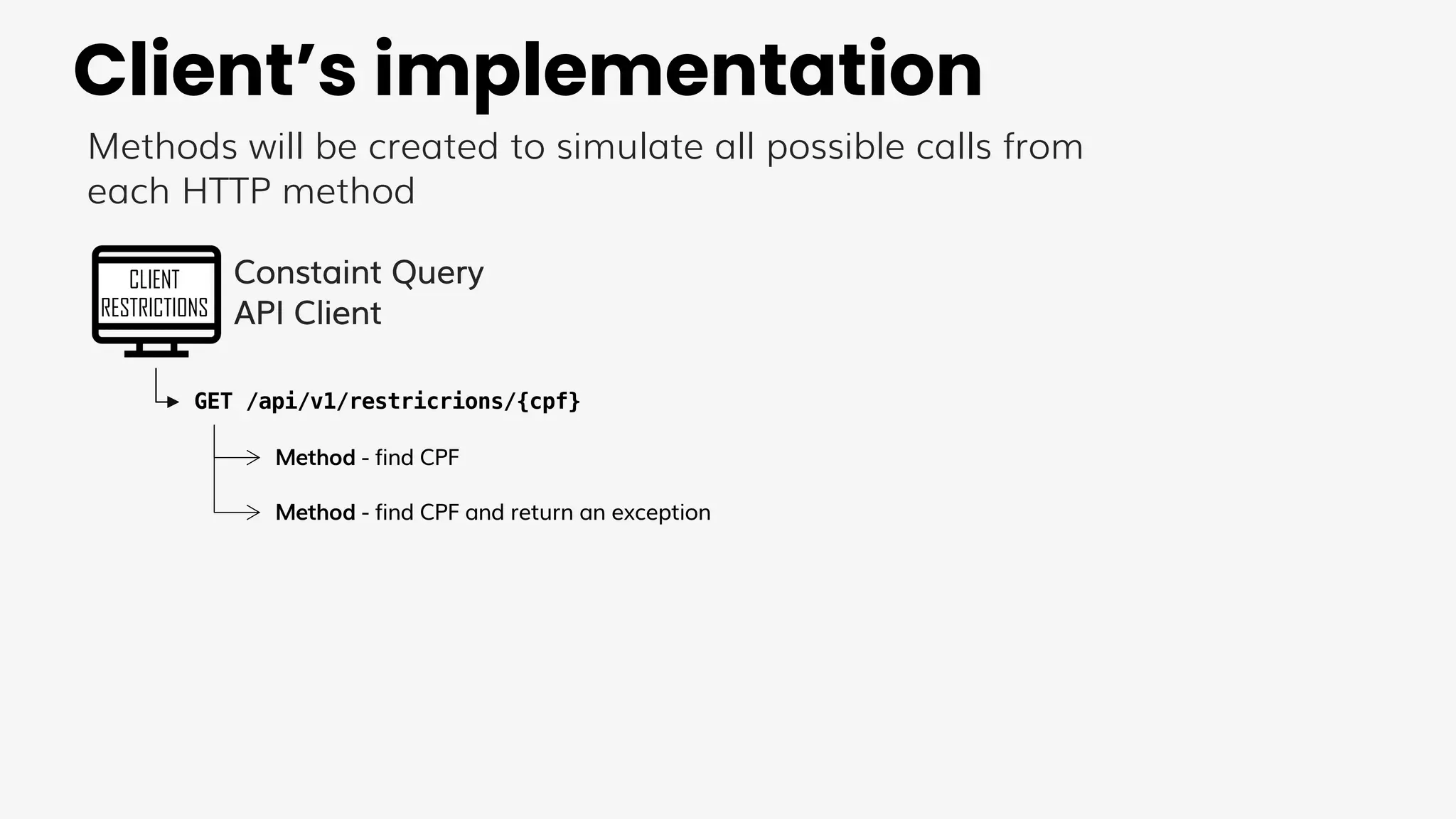
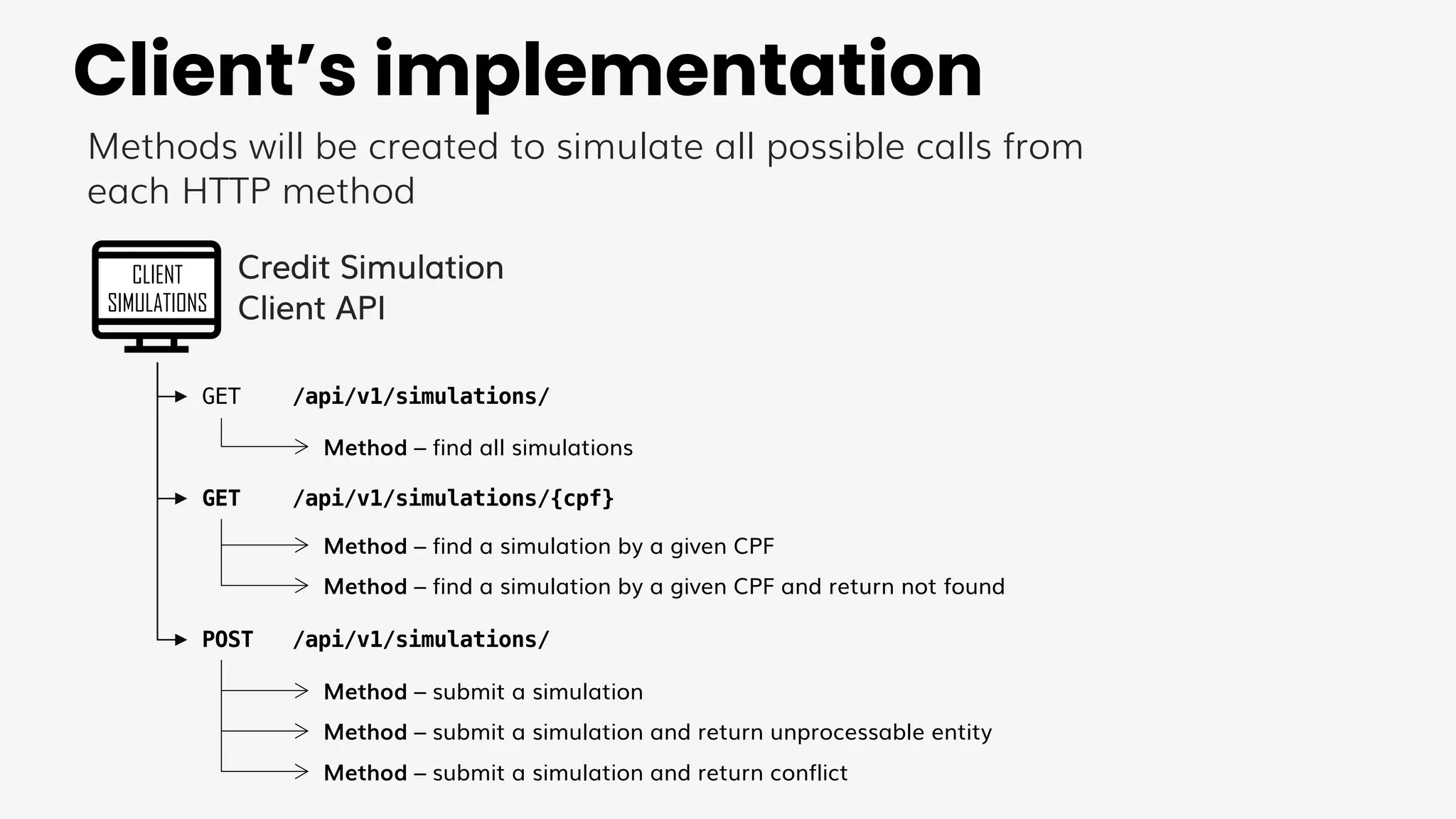
Methods will be created to simulate all possible calls from
each HTTP method
CLIENT
RESTRICTIONS
GET /api/v1/restricrions/{cpf}
Constaint Query
API Client
Method - find CPF
Method - find CPF and return an exception
CLIENT
SIMULATIONS
GET /api/v1/simulations/
GET /api/v1/simulations/{cpf}
POST /api/v1/simulations/
Credit Simulation
Client API
Method – find all simulations
Method – find a simulation by a given CPF
Method – find a simulation by a given CPF and return not found
Method – submit a simulation
Method – submit a simulation and return unprocessable entity
Method – submit a simulation and return conflict
Methods will be created to simulate all possible calls from
each HTTP method
Client’s implementation
CLIENT
SIMULATIONS
POST /api/v1/simulations/
Credit Simulation
Client API
Method – submit a simulation
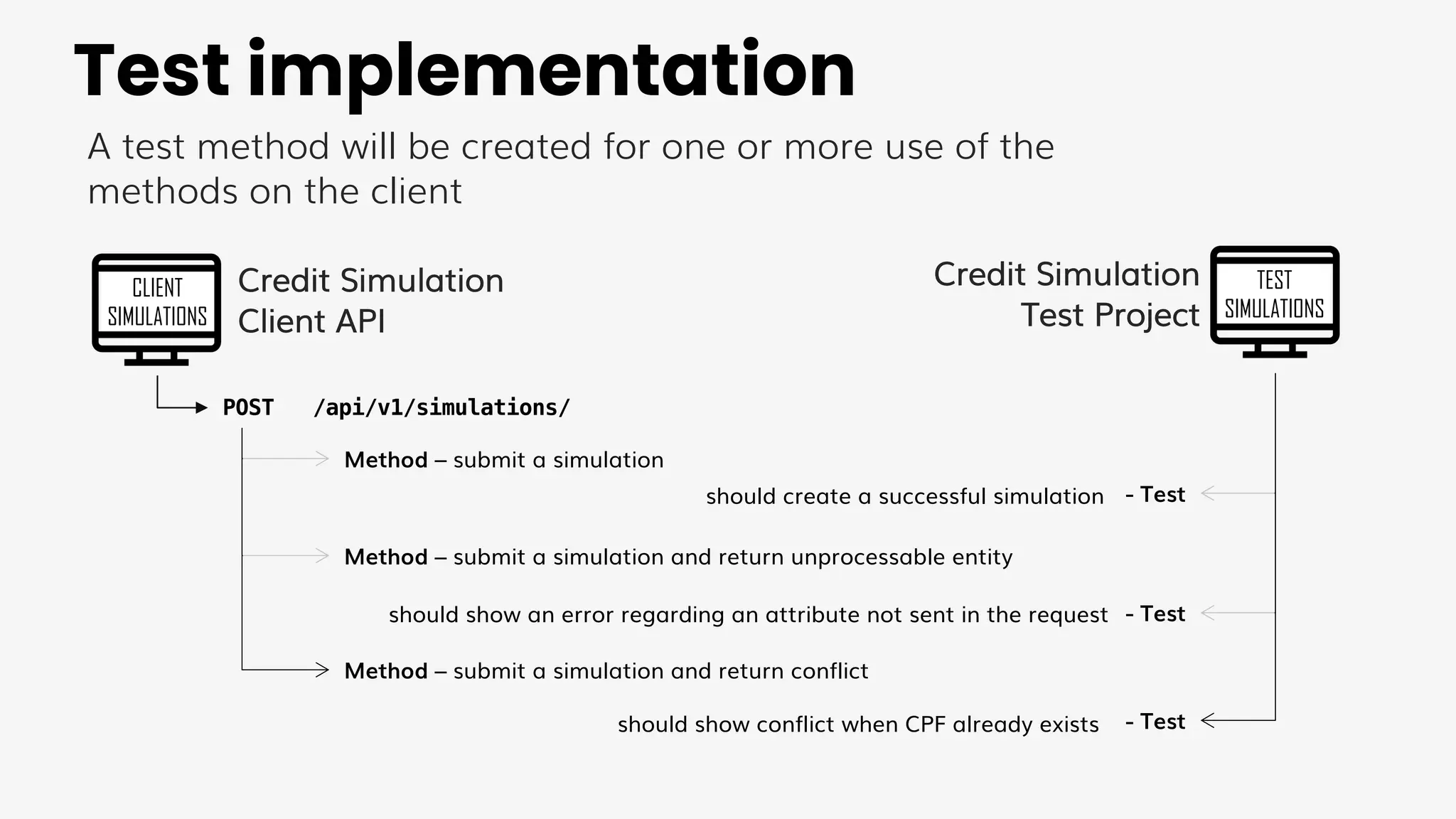
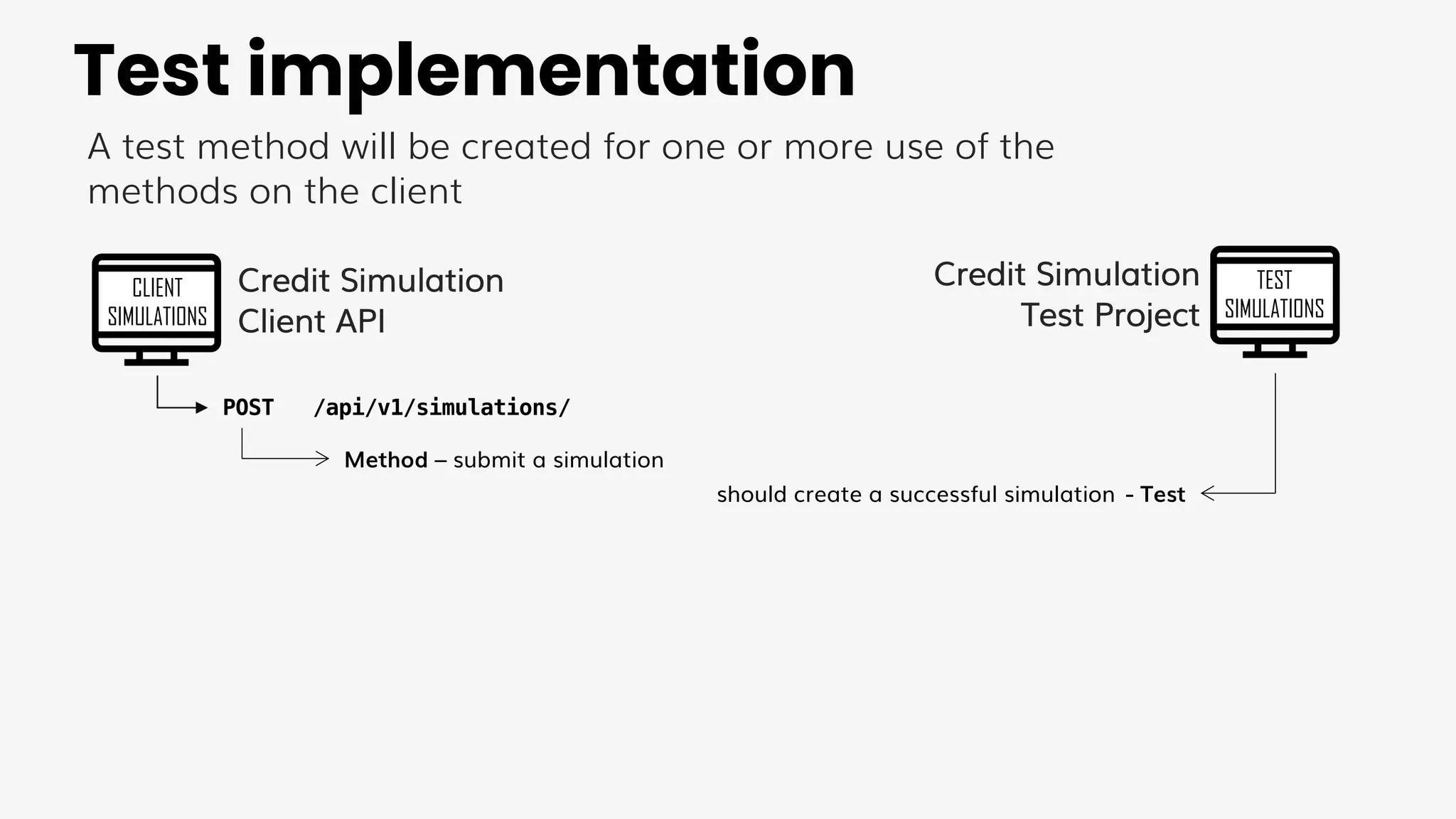
A test method will be created for one or more use of the
methods on the client
Test implementation
TEST
SIMULATIONS
should create a successful simulation - Test
Credit Simulation
Test Project
CLIENT
SIMULATIONS
POST /api/v1/simulations/
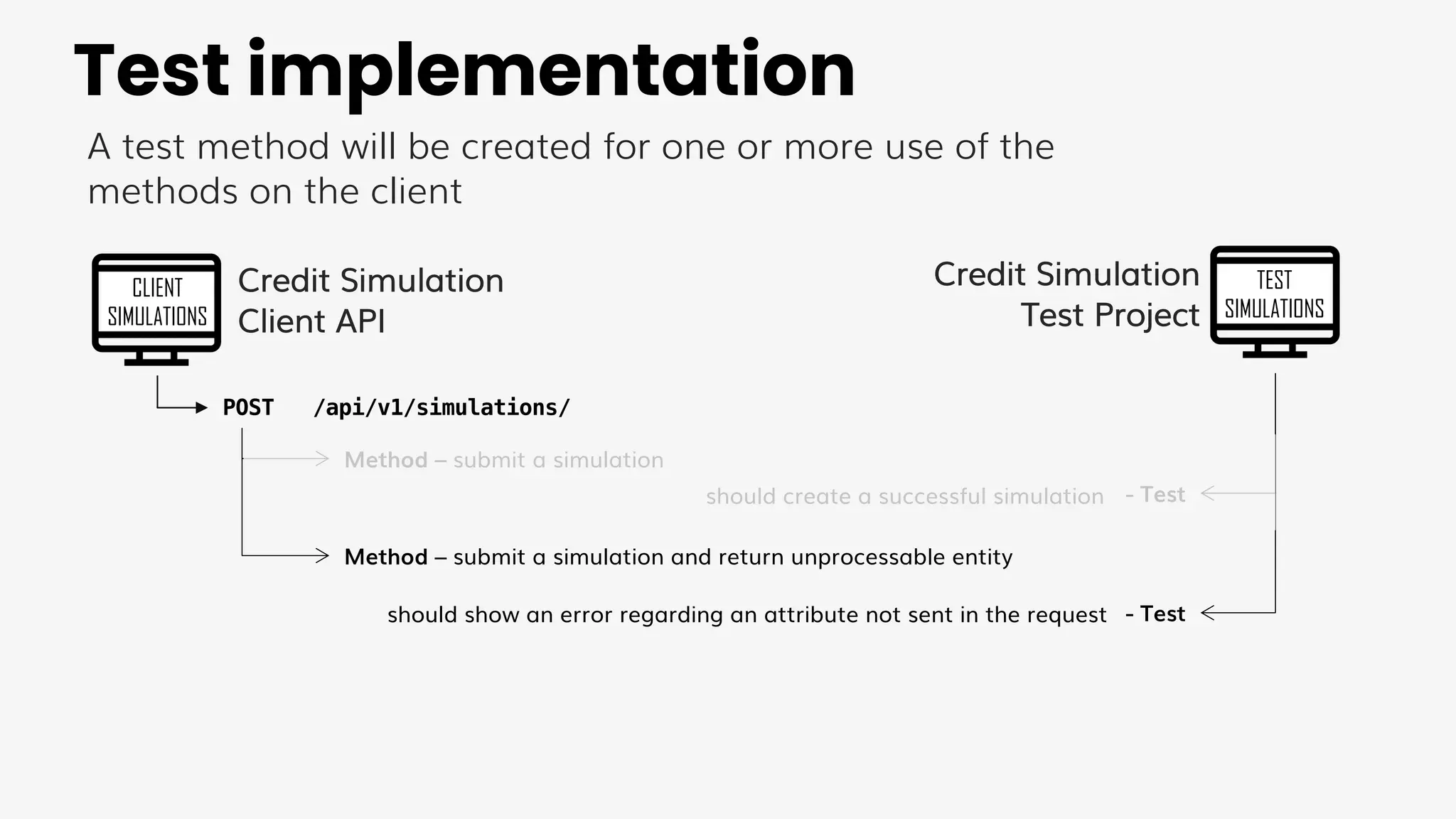
Method – submit a simulation and return unprocessable entity
A test method will be created for one or more use of the
methods on the client
TEST
SIMULATIONS
should show an error regarding an attribute not sent in the request
- Test
- Test
Credit Simulation
Client API
Credit Simulation
Test Project
Test implementation
Method – submit a simulation
should create a successful simulation
CLIENT
SIMULATIONS
POST /api/v1/simulations/
Method – submit a simulation and return conflict
TEST
SIMULATIONS
should show conflict when CPF already exists - Test
Credit Simulation
Client API
Credit Simulation
Test Project
A test method will be created for one or more use of the
methods on the client
Test implementation
Method – submit a simulation and return unprocessable entity
should show an error regarding an attribute not sent in the request
- Test
- Test
Method – submit a simulation
should create a successful simulation
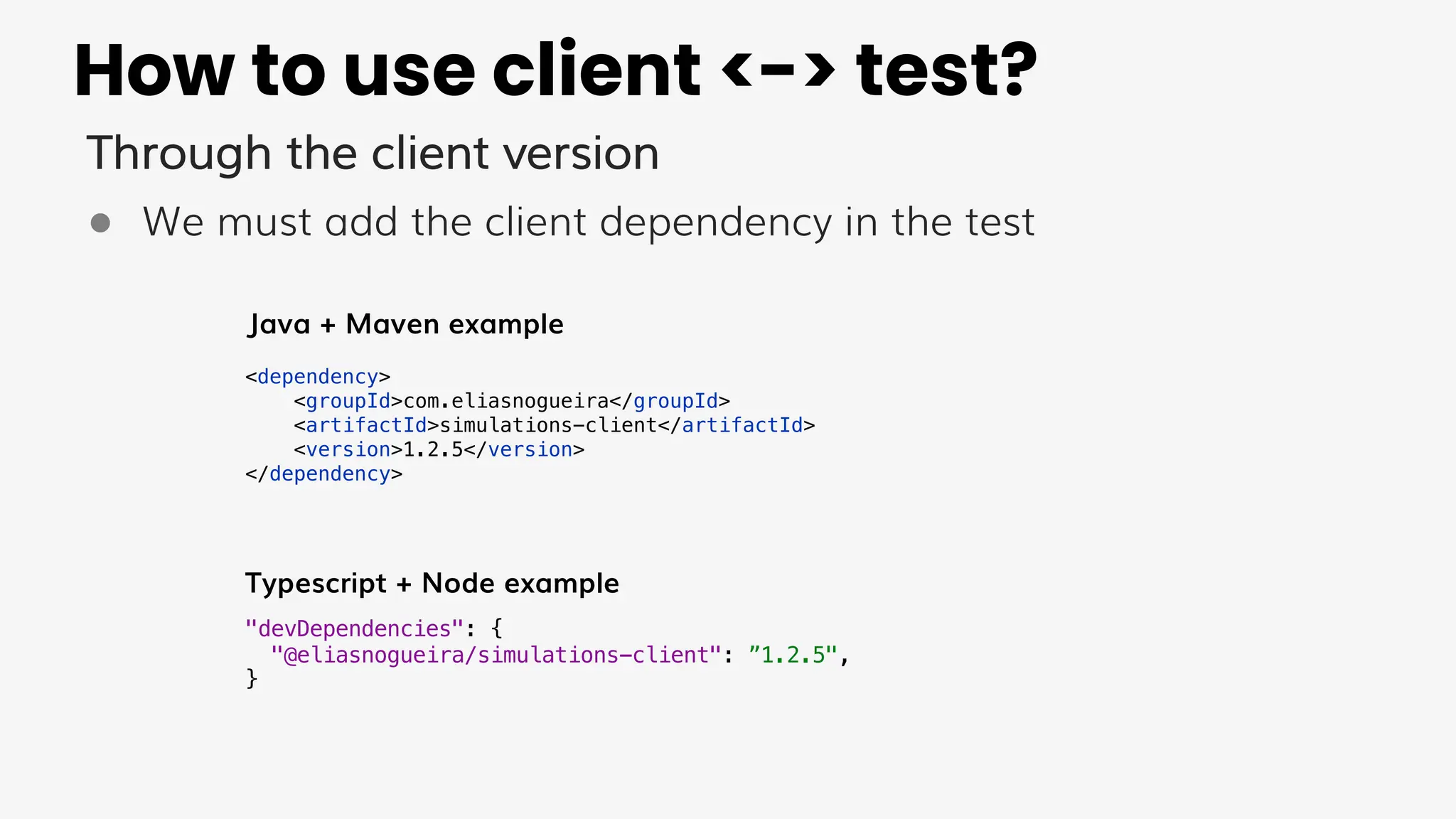
How to use client <-> test?
Through the client version
● We must add the client dependency in the test
<dependency>
<groupId>com.eliasnogueira</groupId>
<artifactId>simulations-client</artifactId>
<version>1.2.5</version>
</dependency>
"devDependencies": {
"@eliasnogueira/simulations-client": ”1.2.5",
}
Java + Maven example
Typescript + Node example
How to use client <-> test?
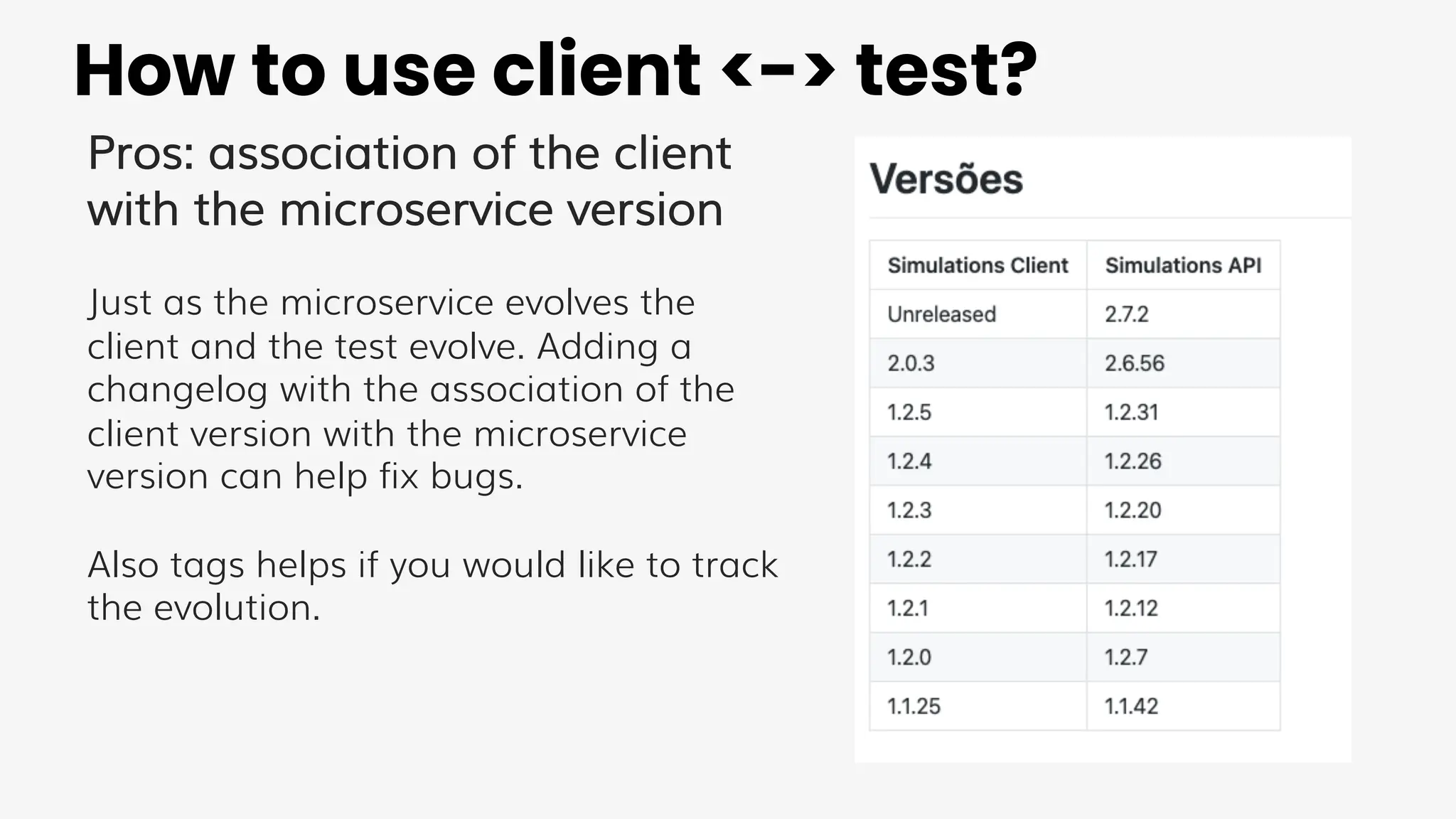
Pros: association of the client
with the microservice version
Just as the microservice evolves the
client and the test evolve. Adding a
changelog with the association of the
client version with the microservice
version can help fix bugs.
Also tags helps if you would like to track
the evolution.
Recap
Recap
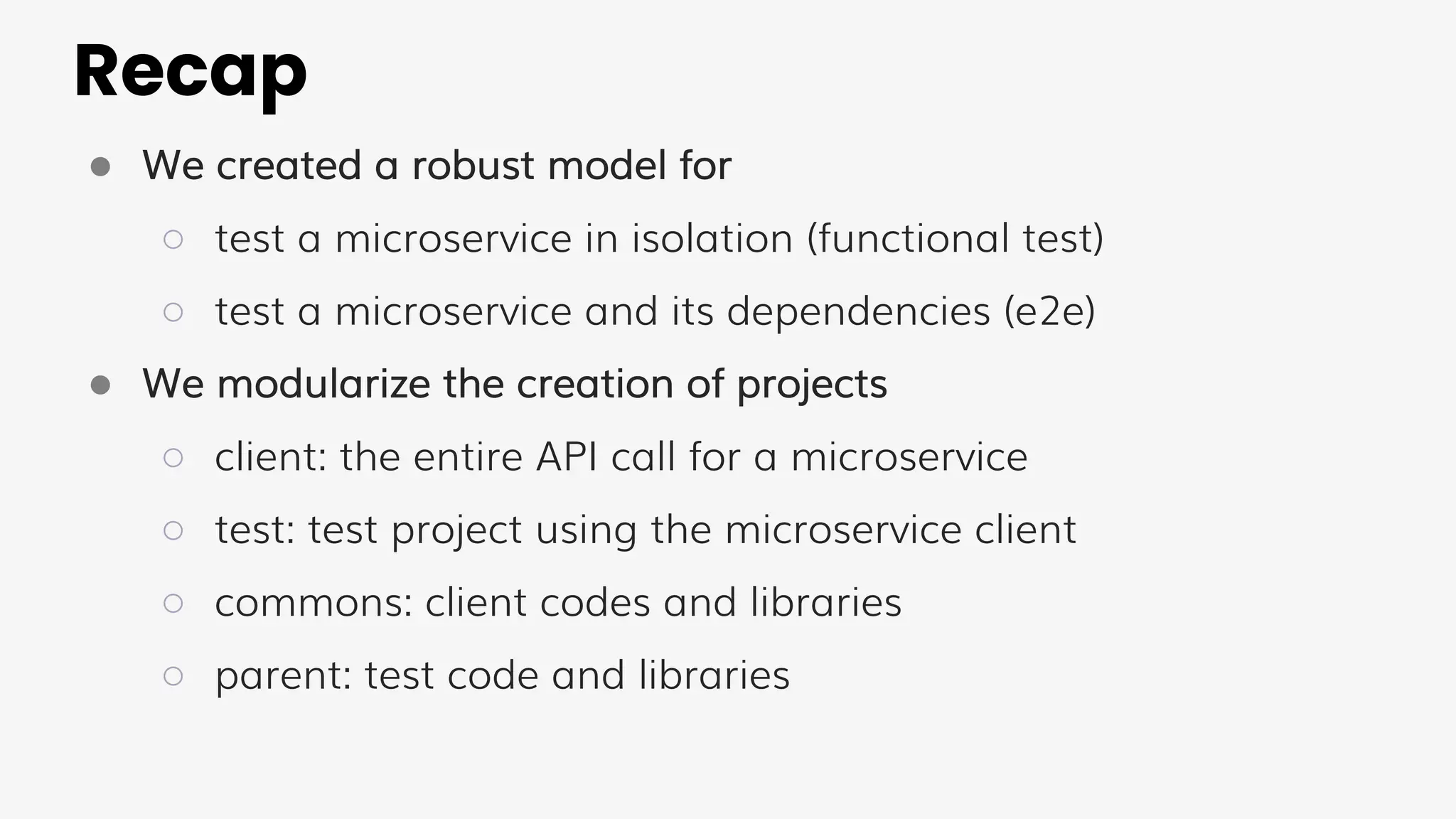
● We created a robust model for
○ test a microservice in isolation (functional test)
○ test a microservice and its dependencies (e2e)
● We modularize the creation of projects
○ client: the entire API call for a microservice
○ test: test project using the microservice client
○ commons: client codes and libraries
○ parent: test code and libraries
Thank you! SCAN ME
You can follow me on Twitter
@eliasnogueira and find the
practical examples of this
presentation. Be sure to
simulate the examples in the
code!
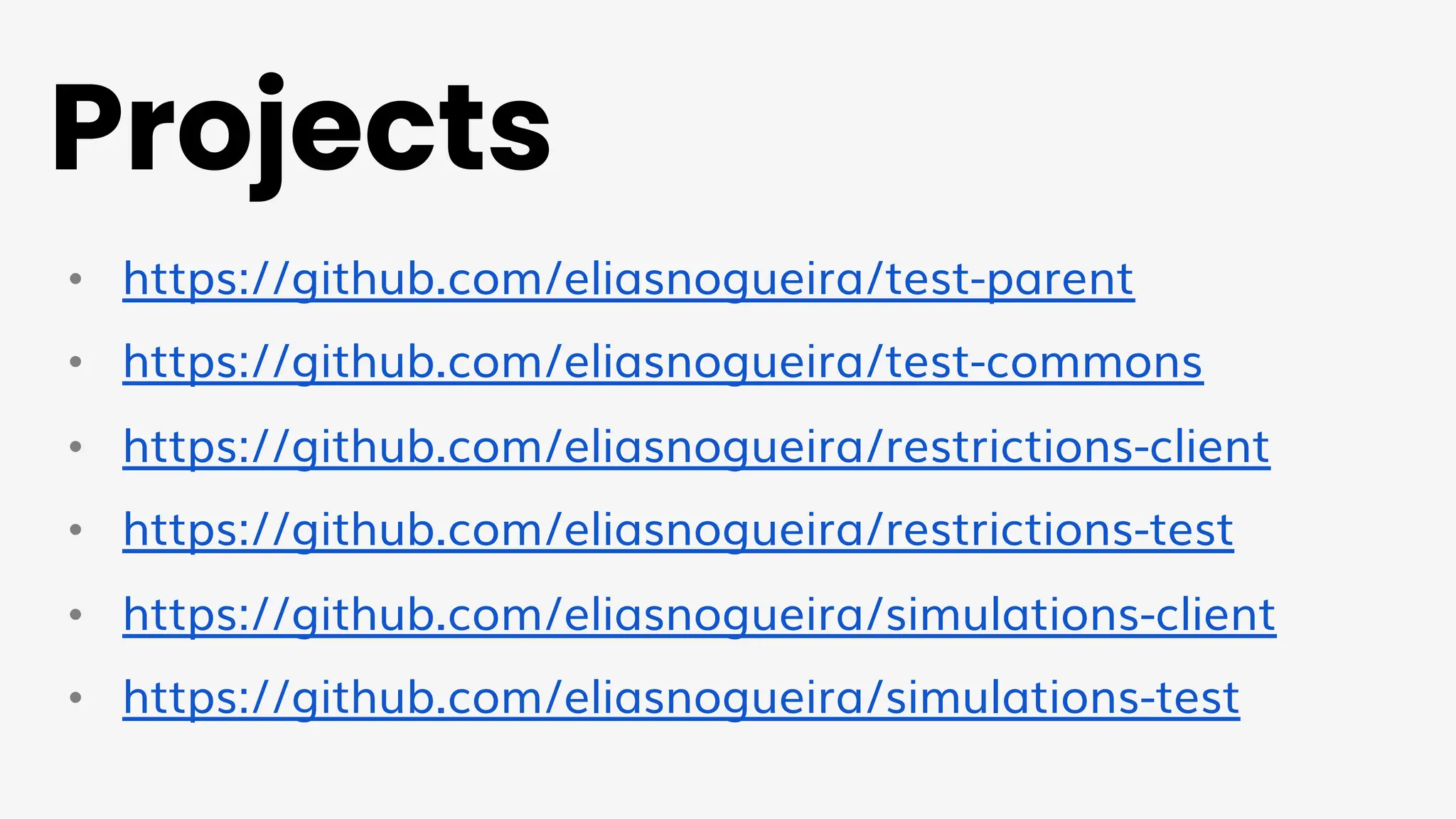
Projects
• https://github.com/eliasnogueira/test-parent
• https://github.com/eliasnogueira/test-commons
• https://github.com/eliasnogueira/restrictions-client
• https://github.com/eliasnogueira/restrictions-test
• https://github.com/eliasnogueira/simulations-client
• https://github.com/eliasnogueira/simulations-test
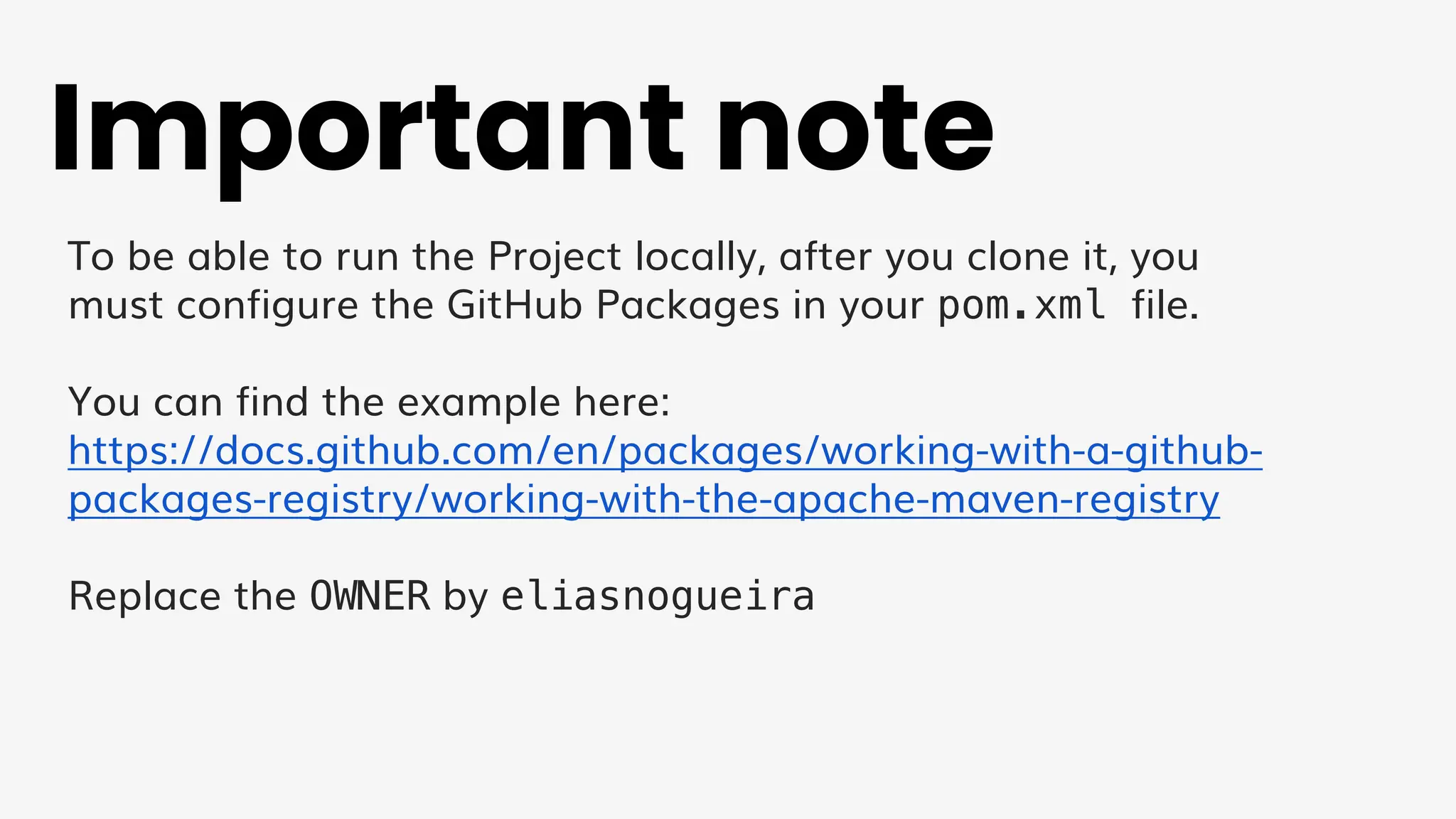
Important note
To be able to run the Project locally, after you clone it, you
must configure the GitHub Packages in your pom.xml file.
You can find the example here:
https://docs.github.com/en/packages/working-with-a-github-
packages-registry/working-with-the-apache-maven-registry
Replace the OWNER by eliasnogueira

How_to_create_modular_microservice_test_projects.pdf

  • 1.
    How to createmodular microservice test projects Elias Nogueira
  • 2.
    Elias Nogueira I helpprofessional software engineers (backend, frontend, qa) to develop their quality mindset and deliver bug-free software so they become top-level engineers and get hired for the best positions in the market. 🏢 Backbase 👨💻‍‍ Principal Software Engineer 📍 Utrecht, the Netherlands 🌐 eliasnogueira.com 🐦 @eliasnogueira bit.ly/eliasnogueira
  • 3.
    What problem dowe want to solve?
  • 4.
    Implicitly we want… ● Increase confidence in delivery ● Cover key business scenarios ● The certainty that the test will find a possible failure after some modification
  • 5.
  • 6.
  • 7.
    Individual APIs Unit Tests done! API API API A P I A P I API A P I A P I EachAPI must have its unit tests and integration. Integration Tests* done! * API Tests running in an integration layer with or without mocks
  • 8.
    API API API A P I A P I API A P I A P I The problem Integration testswon’t cover real scenarios of dependent APIs because of the mocks. depends c o n s u m e s
  • 9.
  • 10.
    API API API A P I A P I API A P I A P I Possible solution Create functionaltests and e2e to cover possible gaps and decrease the test on the UI. Functional Tests & E2E
  • 11.
    API API API A P I A P I API A P I A P I Possible solution What Add teststo any kind of dependencies, as well for the user journey depends c o n s u m e s
  • 12.
    Analogy: buying aflight ticket
  • 13.
    Buying a flightticket We must make sure each API is self-tested unit -> integration -> functional Search Flight selection Payment Confirmation API API API API
  • 14.
    Buying a flightticket We must make sure each API is self-tested unit -> integration -> functional Search Flight selection Payment Confirmation Valid dates Invalid return date No flights found API API API API
  • 15.
    Buying a flightticket We must make sure each API is self-tested e2e: buy a round-trip flight Search Flight selection Payment Confirmation Select valid dates API API API API Select a flight with seats available Make a payment with valid data Successful notification E2E Scenario
  • 16.
    How can testprojects be created?
  • 17.
    Model 1 A testproject for all microservices BACKEND TEST TEST PROJECT
  • 18.
    Model 1 Pros ● Centralizationof code in a single project ● Speed and agility in creating tests and solving problems Cons ● Constant changes by several people can have side effects on results
  • 19.
    Model 2 A testproject for each microservice where interactions with the endpoint (s) will be in the test project. BACKEND TEST TEST TEST TEST PROJECT
  • 20.
    Model 2 Pros ● Organizeddecentralization of test projects towards an API ● Isolation between APIs Cons ● Possible code duplication
  • 21.
    Model 3 A testproject for each microservice divided into client and test projects BACKEND TEST PROJECT TEST TEST TEST CLIENT CLIENT CLIENT
  • 22.
    Model 3 Client project Wewill put here all the necessary logic to make the requests as: ○ Exception return ○ Transport Objects ○ Request call ○ Customizations for validations ○ Pointing settings (URI, base path, port)
  • 23.
    Model 3 Test Project Wewill put here all the methods of using the API we created in the client project, creating the testing logic and validating the results. In summary, all tests are created here!
  • 24.
    Model 3 Pros ● Greaterversion management (new features, breaking changes) ● Easy use by other teams ○ they just need to consume the customer and create their tests Cons ● Time increase compared to previous models
  • 25.
  • 26.
    Implementation example Project separation BACKEND TEST PROJECT TESTTEST TEST CLIENT CLIENT CLIENT COMMONS PARENT
  • 27.
    Project separation CLIENT TEST COMMONS PARENT Project containingall calls to the microservice, whether the calls were successful or simulating exceptions. Project containing tests for the microservice, testing its functionality and dependencies with other microservices. Code and libraries common to clients such as URL definitions, authentication, and any other shared code. Code and libraries common to tests such as data mass, support functions, or any code common to tests.
  • 28.
    Microservice examples Possible graphicalinterface: Constraint check by CPF We should inform a CPF * Its a Brazilian social security number If a restriction is found, show a message
  • 29.
    Microservice examples Possible graphicalinterface: Loan Simulation Fill in loan information
  • 30.
    Microservice examples We willput here all the necessary logic to make the requests as: RESTRICTIONS GET /api/v1/restricrions/{cpf} GET /api/v2/restricrions/{cpf} Constraint Query API SIMULATIONS GET /api/v1/simulations/ GET /api/v1/simulations/{cpf} POST /api/v1/simulations/ PUT /api/v1/simulations/{cpf} DELETE /api/v1/simulations/{cpf} Credit Simulation API
  • 31.
    Client’s implementation Methods willbe created to simulate all possible calls from each HTTP method CLIENT RESTRICTIONS GET /api/v1/restricrions/{cpf} Constaint Query API Client Method - find CPF Method - find CPF and return an exception
  • 32.
    CLIENT SIMULATIONS GET /api/v1/simulations/ GET /api/v1/simulations/{cpf} POST/api/v1/simulations/ Credit Simulation Client API Method – find all simulations Method – find a simulation by a given CPF Method – find a simulation by a given CPF and return not found Method – submit a simulation Method – submit a simulation and return unprocessable entity Method – submit a simulation and return conflict Methods will be created to simulate all possible calls from each HTTP method Client’s implementation
  • 33.
    CLIENT SIMULATIONS POST /api/v1/simulations/ Credit Simulation ClientAPI Method – submit a simulation A test method will be created for one or more use of the methods on the client Test implementation TEST SIMULATIONS should create a successful simulation - Test Credit Simulation Test Project
  • 34.
    CLIENT SIMULATIONS POST /api/v1/simulations/ Method –submit a simulation and return unprocessable entity A test method will be created for one or more use of the methods on the client TEST SIMULATIONS should show an error regarding an attribute not sent in the request - Test - Test Credit Simulation Client API Credit Simulation Test Project Test implementation Method – submit a simulation should create a successful simulation
  • 35.
    CLIENT SIMULATIONS POST /api/v1/simulations/ Method –submit a simulation and return conflict TEST SIMULATIONS should show conflict when CPF already exists - Test Credit Simulation Client API Credit Simulation Test Project A test method will be created for one or more use of the methods on the client Test implementation Method – submit a simulation and return unprocessable entity should show an error regarding an attribute not sent in the request - Test - Test Method – submit a simulation should create a successful simulation
  • 36.
    How to useclient <-> test?
  • 37.
    How to useclient <-> test? Through the client version ● We must add the client dependency in the test <dependency> <groupId>com.eliasnogueira</groupId> <artifactId>simulations-client</artifactId> <version>1.2.5</version> </dependency> "devDependencies": { "@eliasnogueira/simulations-client": ”1.2.5", } Java + Maven example Typescript + Node example
  • 38.
    How to useclient <-> test? Pros: association of the client with the microservice version Just as the microservice evolves the client and the test evolve. Adding a changelog with the association of the client version with the microservice version can help fix bugs. Also tags helps if you would like to track the evolution.
  • 39.
  • 40.
    Recap ● We createda robust model for ○ test a microservice in isolation (functional test) ○ test a microservice and its dependencies (e2e) ● We modularize the creation of projects ○ client: the entire API call for a microservice ○ test: test project using the microservice client ○ commons: client codes and libraries ○ parent: test code and libraries
  • 41.
    Thank you! SCANME You can follow me on Twitter @eliasnogueira and find the practical examples of this presentation. Be sure to simulate the examples in the code!
  • 42.
    Projects • https://github.com/eliasnogueira/test-parent • https://github.com/eliasnogueira/test-commons •https://github.com/eliasnogueira/restrictions-client • https://github.com/eliasnogueira/restrictions-test • https://github.com/eliasnogueira/simulations-client • https://github.com/eliasnogueira/simulations-test
  • 43.
    Important note To beable to run the Project locally, after you clone it, you must configure the GitHub Packages in your pom.xml file. You can find the example here: https://docs.github.com/en/packages/working-with-a-github- packages-registry/working-with-the-apache-maven-registry Replace the OWNER by eliasnogueira