Stephen Grcevich, MD
Director of Strategic Initiatives, Key Ministry
Global Access Conference presented by Joni and Friends
Calvary Community Church, Westlake Village, CA
February 20, 2015
Including Kids and Teens With Mental Illness in the
Church & Community
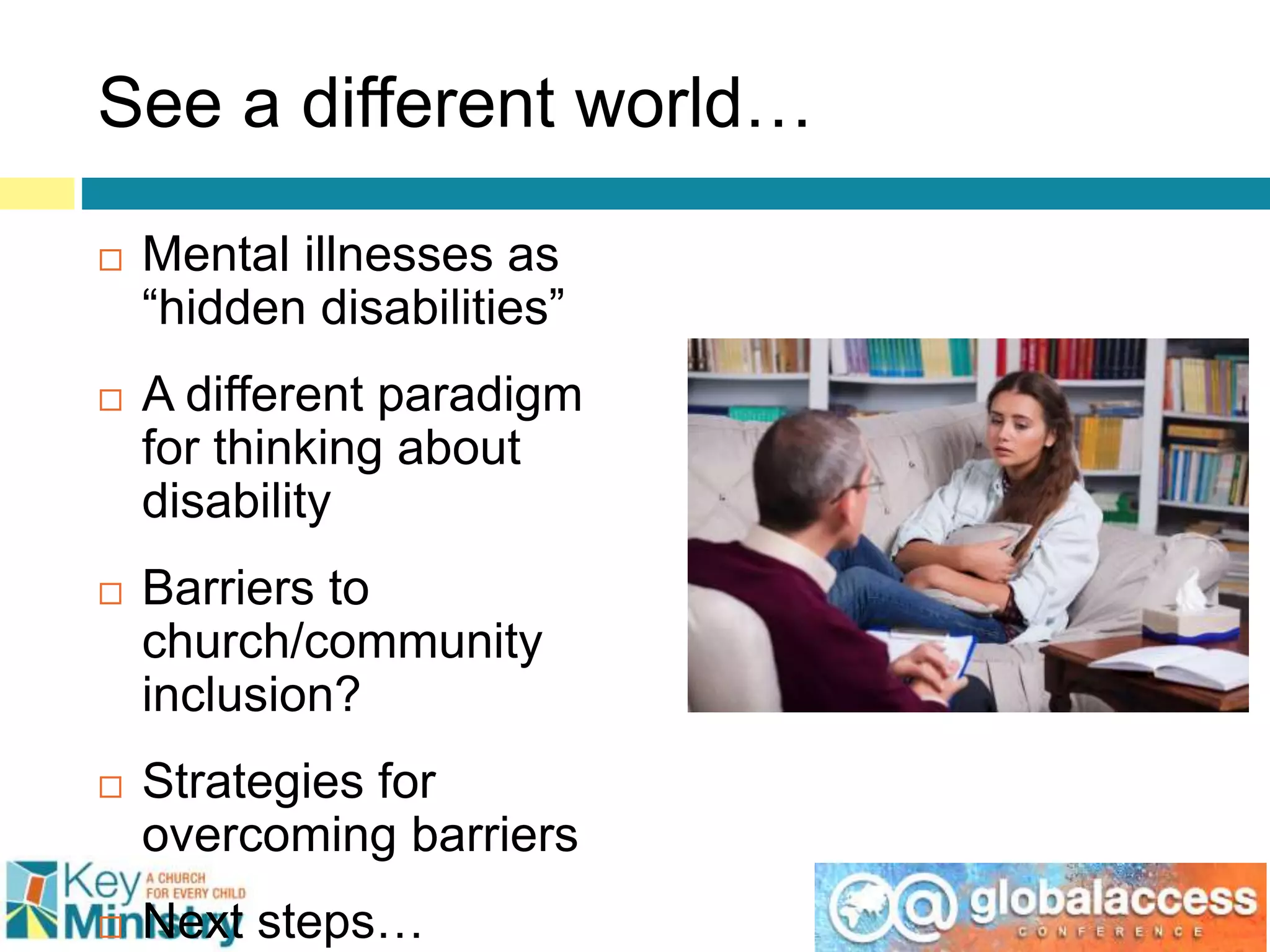
See a different world…
 Mental illnesses as
“hidden disabilities”
 A different paradigm
for thinking about
disability
 Barriers to
church/community
inclusion?
 Strategies for
overcoming barriers
 Next steps…
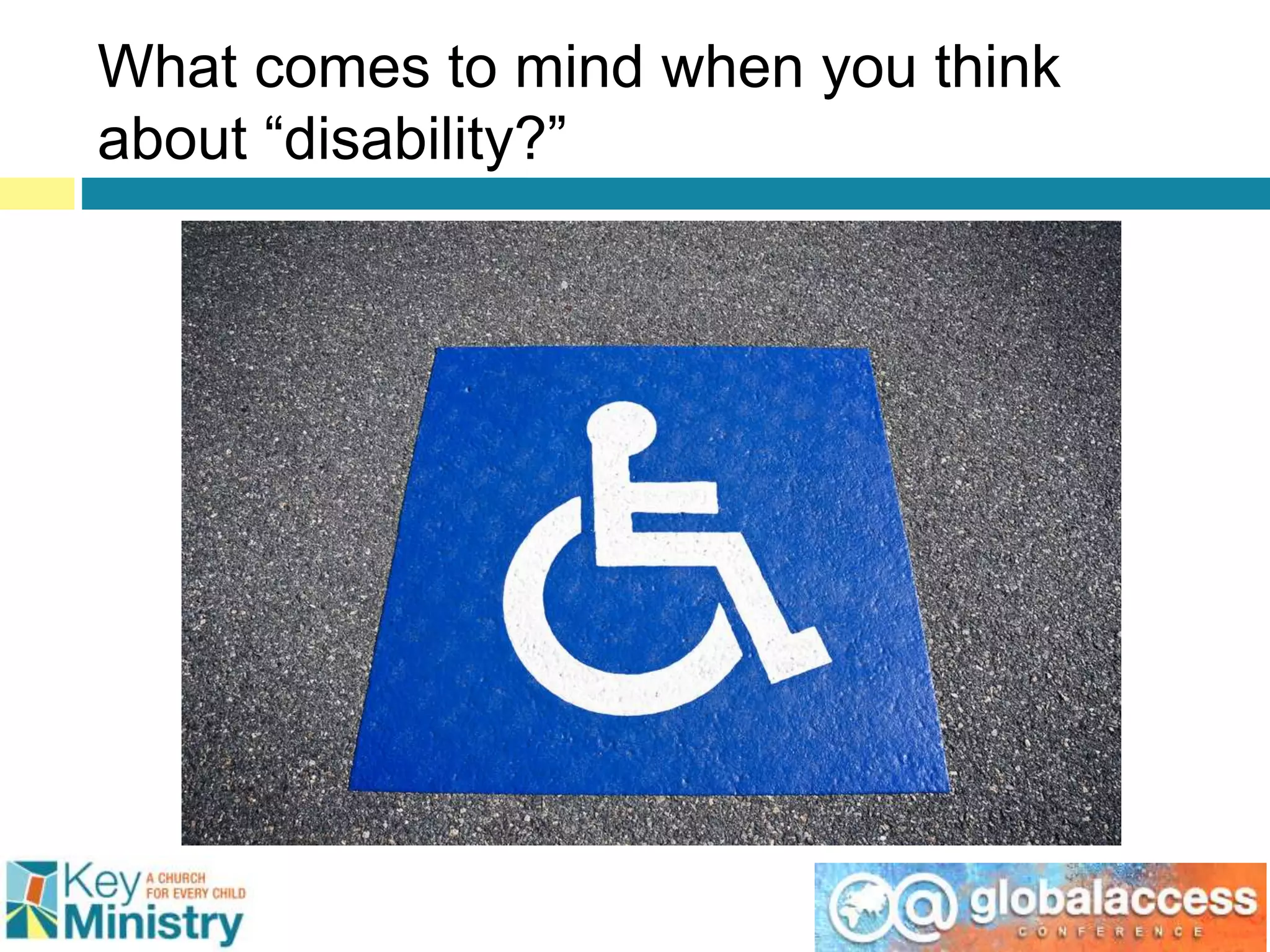
What comes to mind when you think
about “disability?”
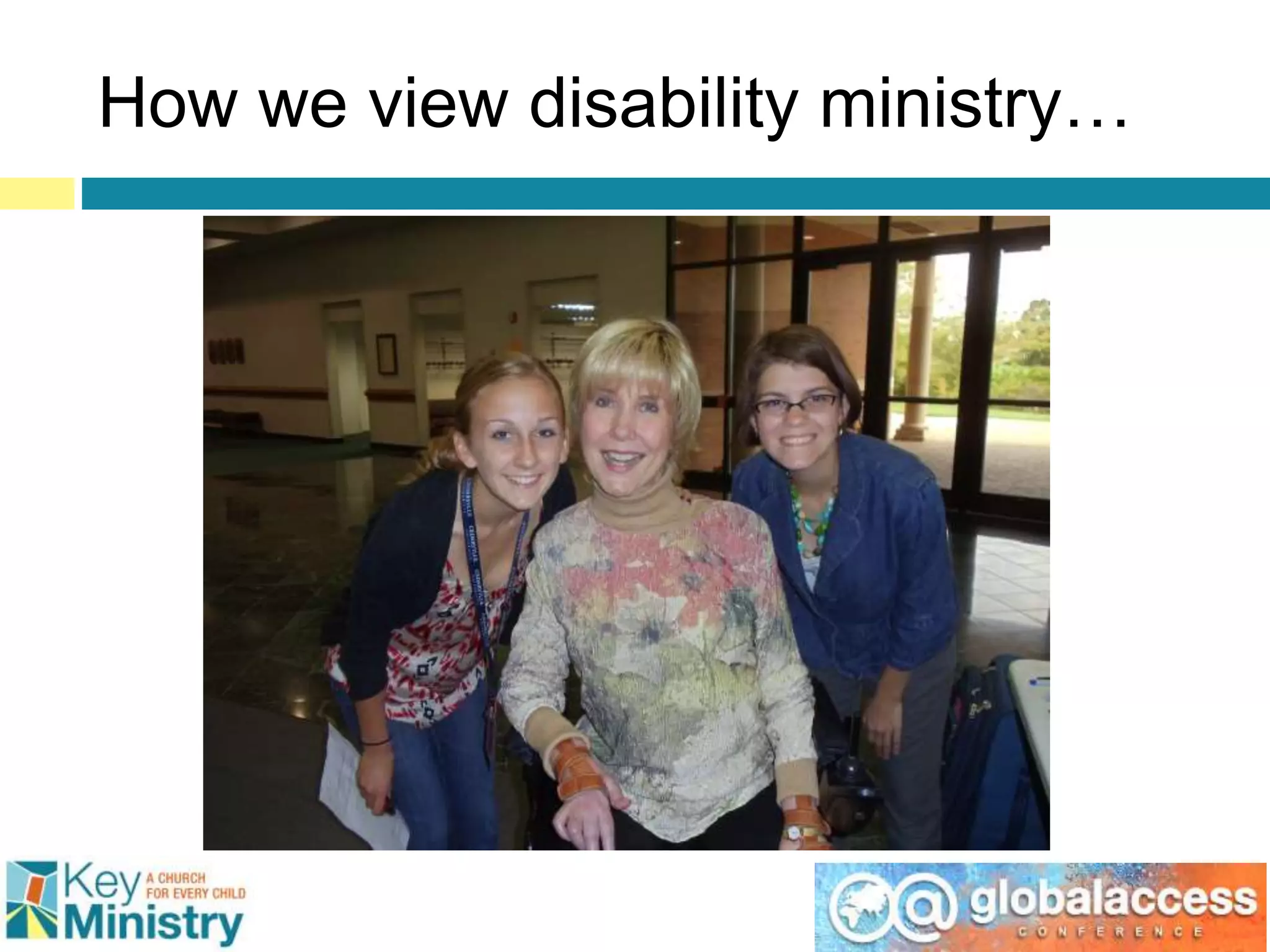
How we view disability ministry…
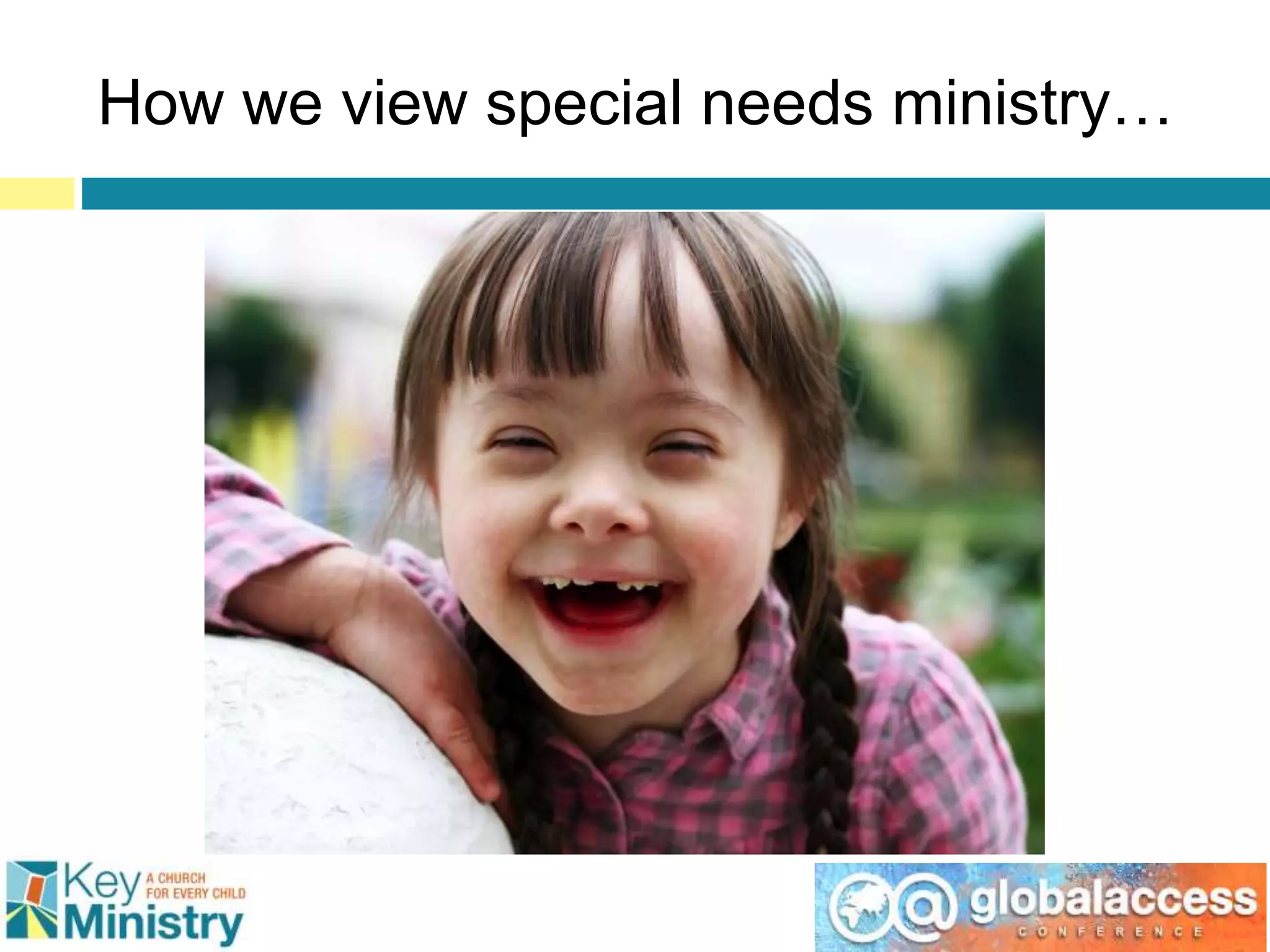
How we view special needs ministry…
Most childhood disabilities are
“hidden disabilities”
 Significant emotional,
behavioral, developmental
or neurologic conditions
lacking outwardly apparent
physical symptoms.
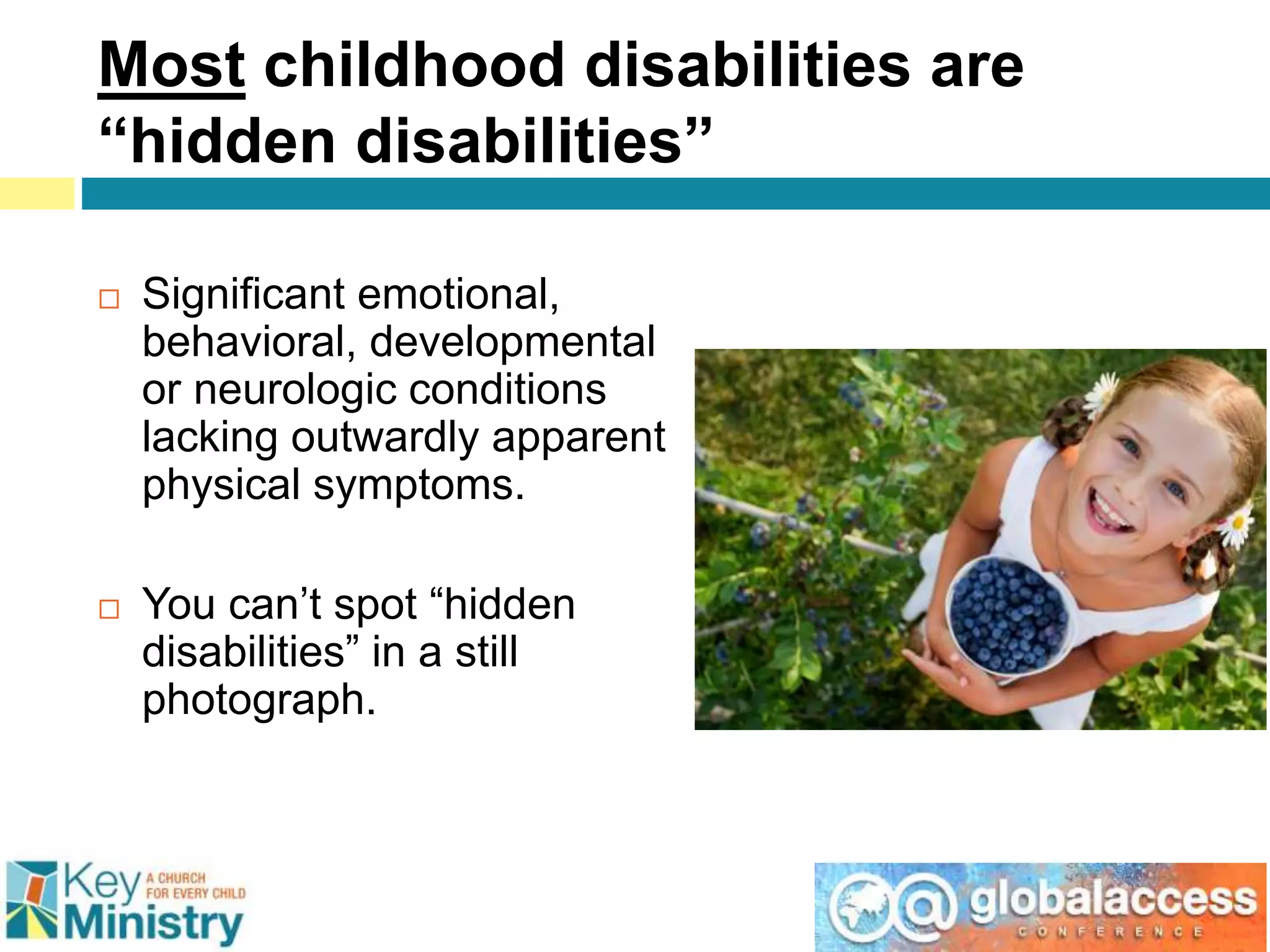
 You can’t spot “hidden
disabilities” in a still
photograph.
Common “hidden disabilities”
 ADHD
 Anxiety Disorders
 Attachment (RAD, Disinhibited Social Engagement) Disorders
 Autism spectrum disorders
 Bipolar Disorder
 Depression
 Disruptive Mood Dysregulation Disorder
 Learning disorders
 PTSD
 Social pragmatic language disorder
 Sensory processing disorder
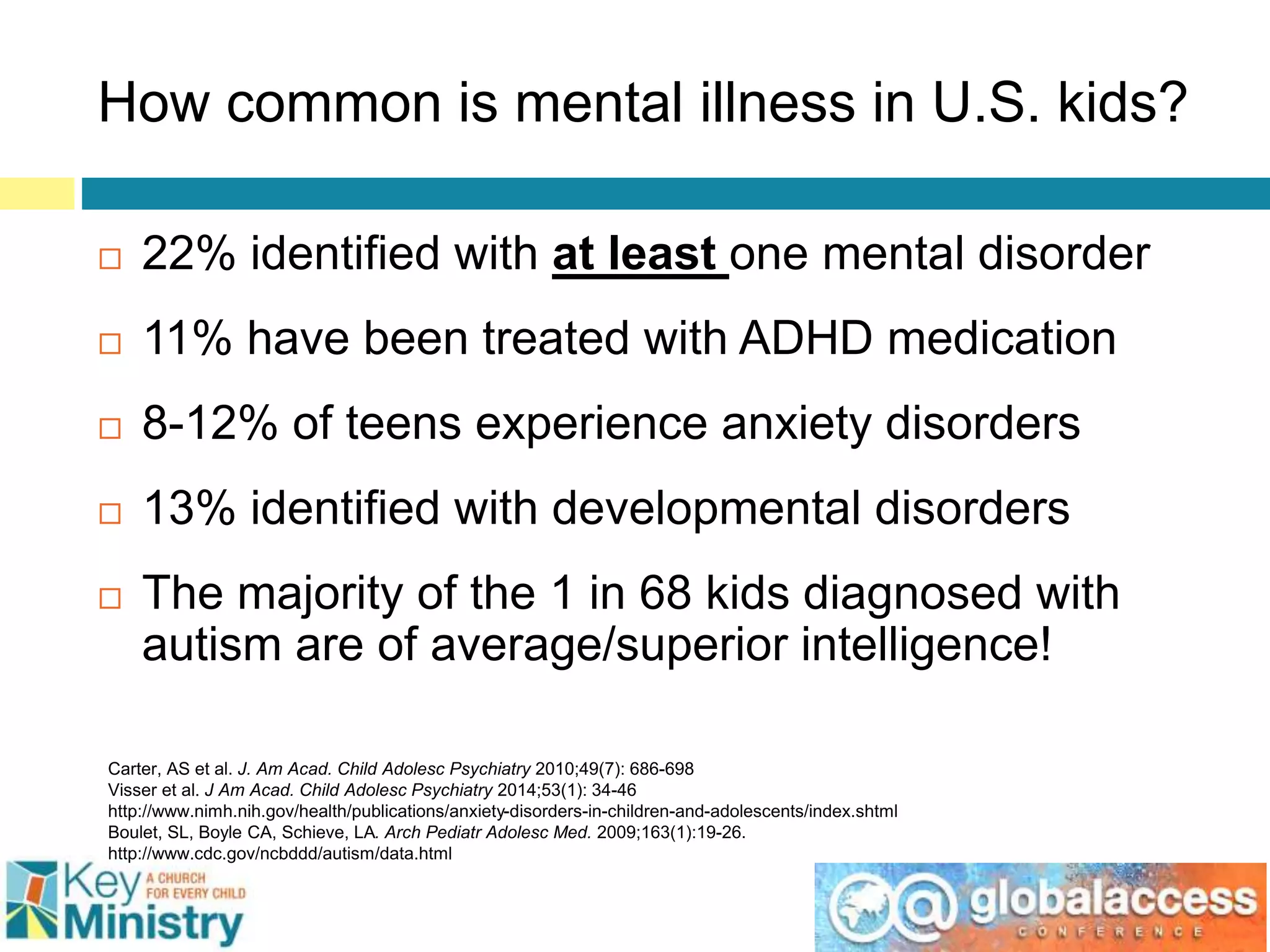
How common is mental illness in U.S. kids?
 22% identified with at least one mental disorder
 11% have been treated with ADHD medication
 8-12% of teens experience anxiety disorders
 13% identified with developmental disorders
 The majority of the 1 in 68 kids diagnosed with
autism are of average/superior intelligence!
Carter, AS et al. J. Am Acad. Child Adolesc Psychiatry 2010;49(7): 686-698
Visser et al. J Am Acad. Child Adolesc Psychiatry 2014;53(1): 34-46
http://www.nimh.nih.gov/health/publications/anxiety-disorders-in-children-and-adolescents/index.shtml
Boulet, SL, Boyle CA, Schieve, LA. Arch Pediatr Adolesc Med. 2009;163(1):19-26.
http://www.cdc.gov/ncbddd/autism/data.html
Kids with mental illness are disabled in some, but not
all environments…
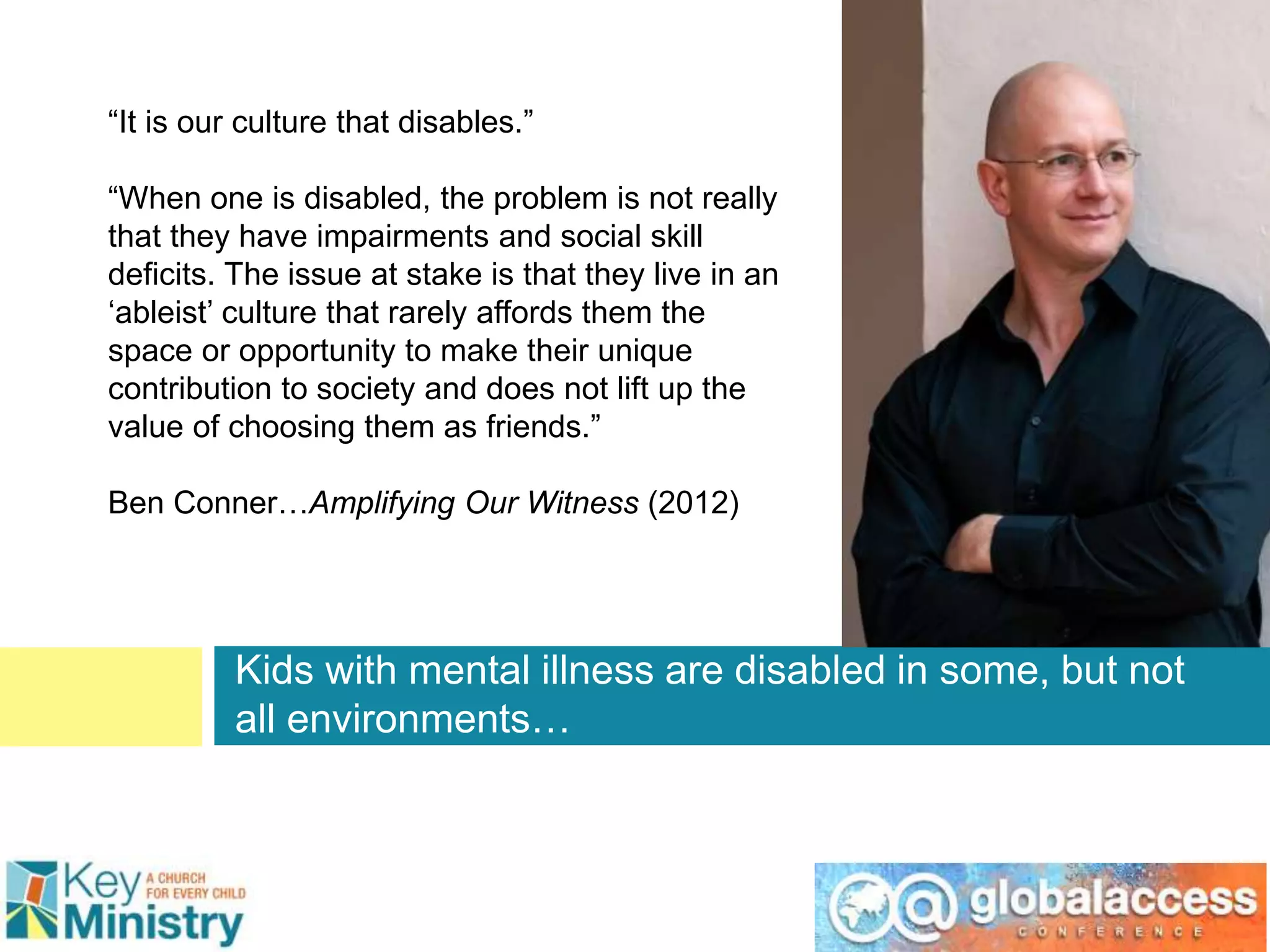
“It is our culture that disables.”
“When one is disabled, the problem is not really
that they have impairments and social skill
deficits. The issue at stake is that they live in an
‘ableist’ culture that rarely affords them the
space or opportunity to make their unique
contribution to society and does not lift up the
value of choosing them as friends.”
Ben Conner…Amplifying Our Witness (2012)
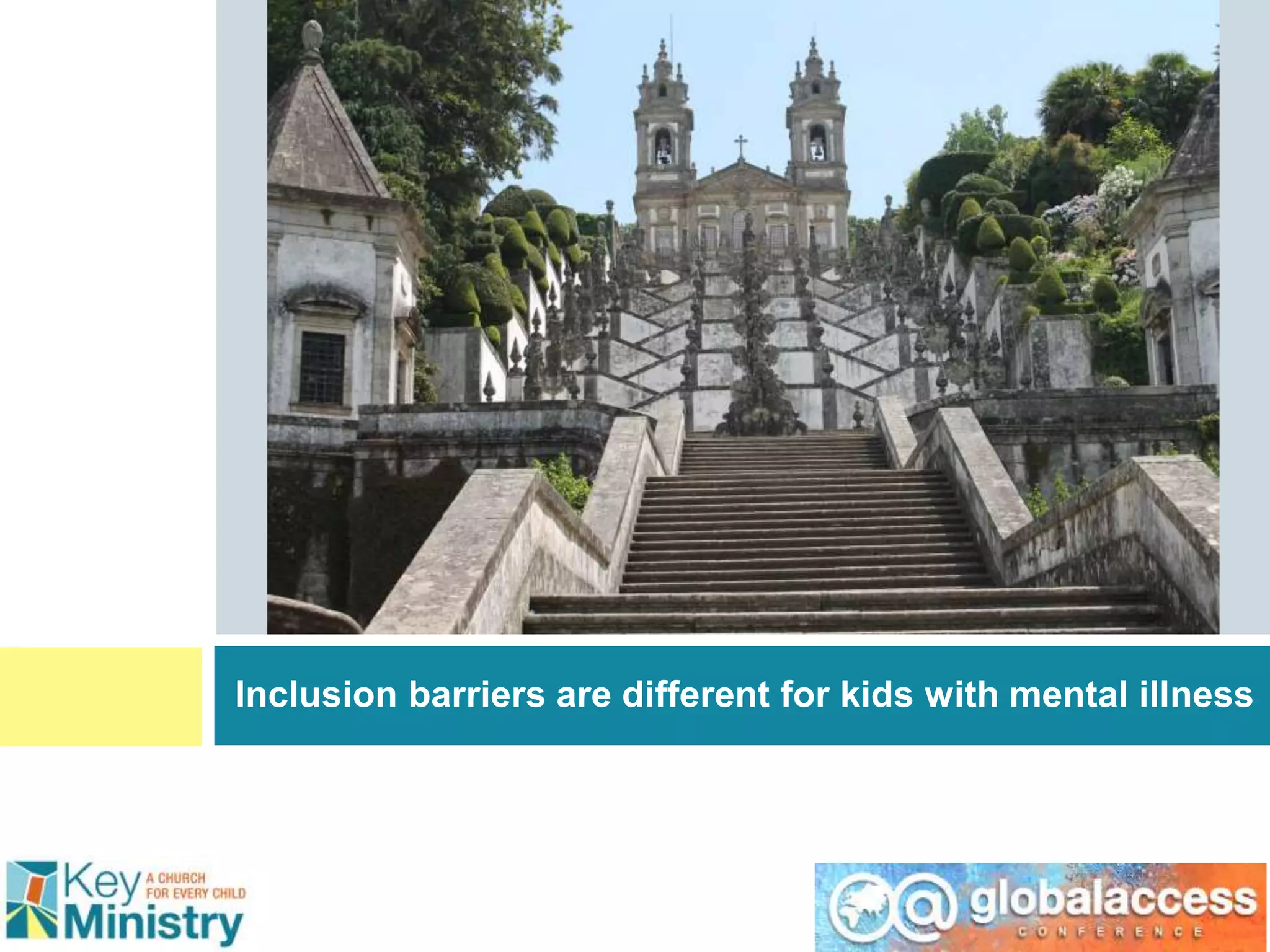
Inclusion barriers are different for kids with mental illness
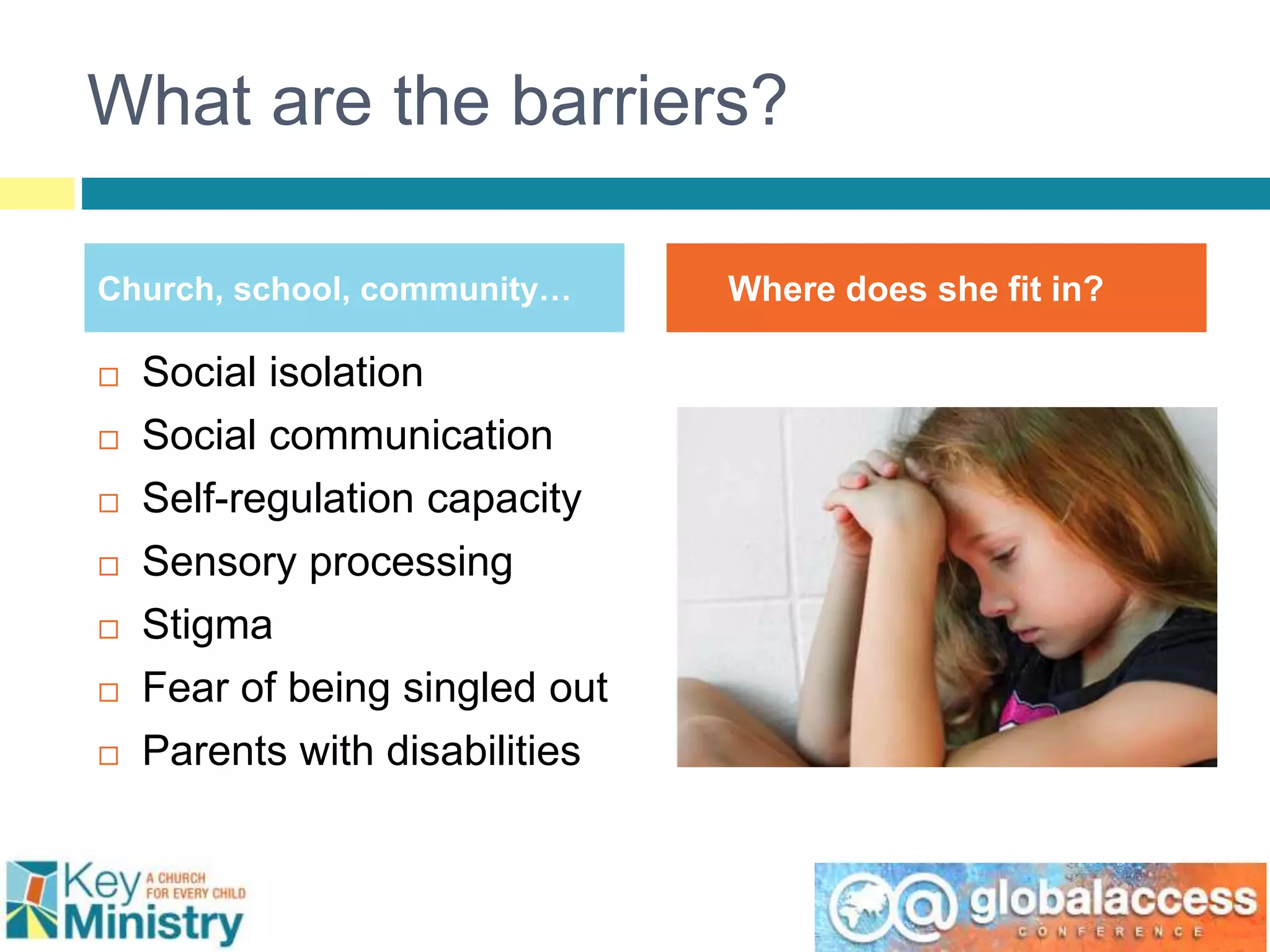
What are the barriers?
Church, school, community… Where does she fit in?
 Social isolation
 Social communication
 Self-regulation capacity
 Sensory processing
 Stigma
 Fear of being singled out
 Parents with disabilities
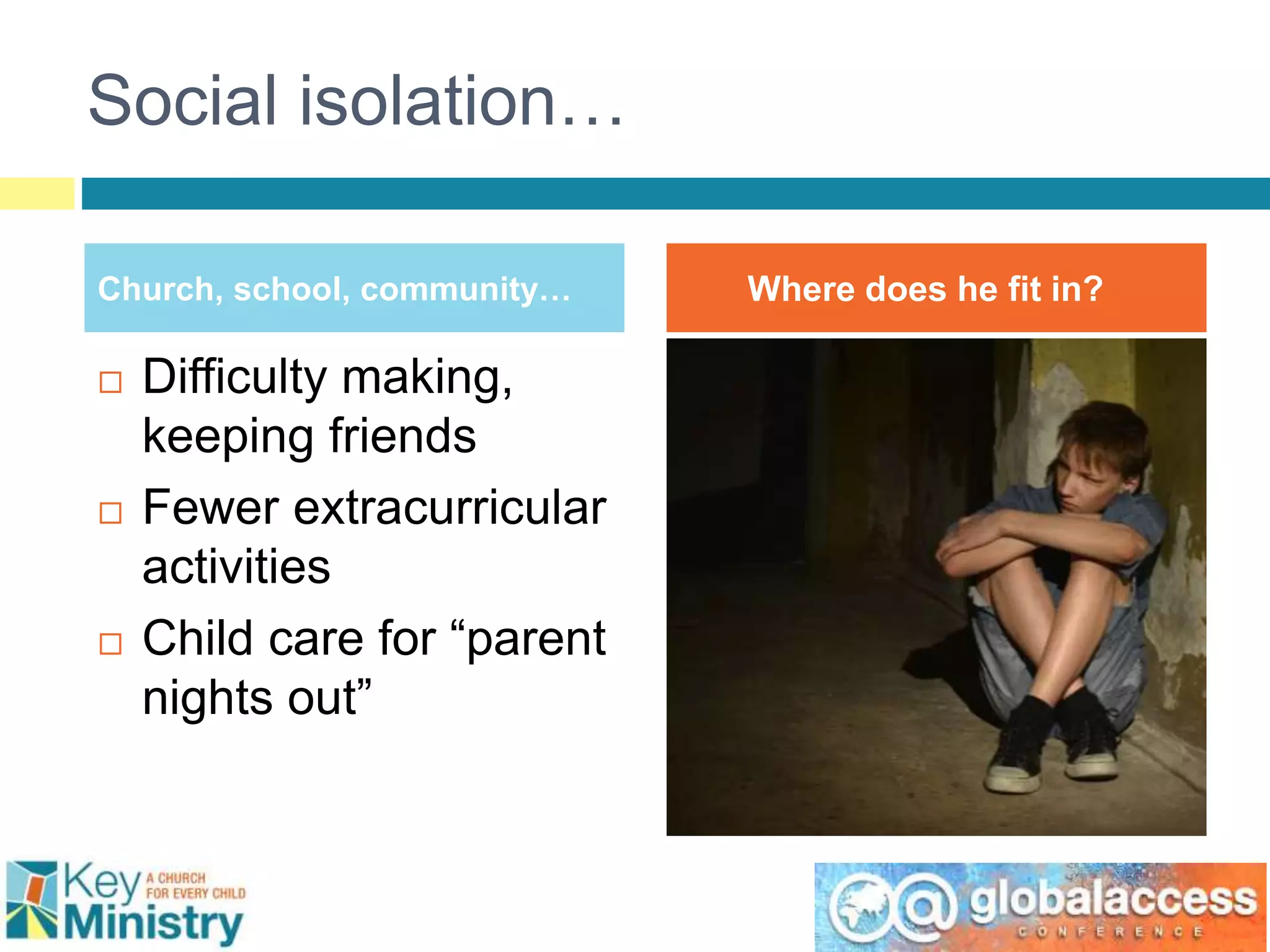
Social isolation…
Church, school, community… Where does he fit in?
 Difficulty making,
keeping friends
 Fewer extracurricular
activities
 Child care for “parent
nights out”
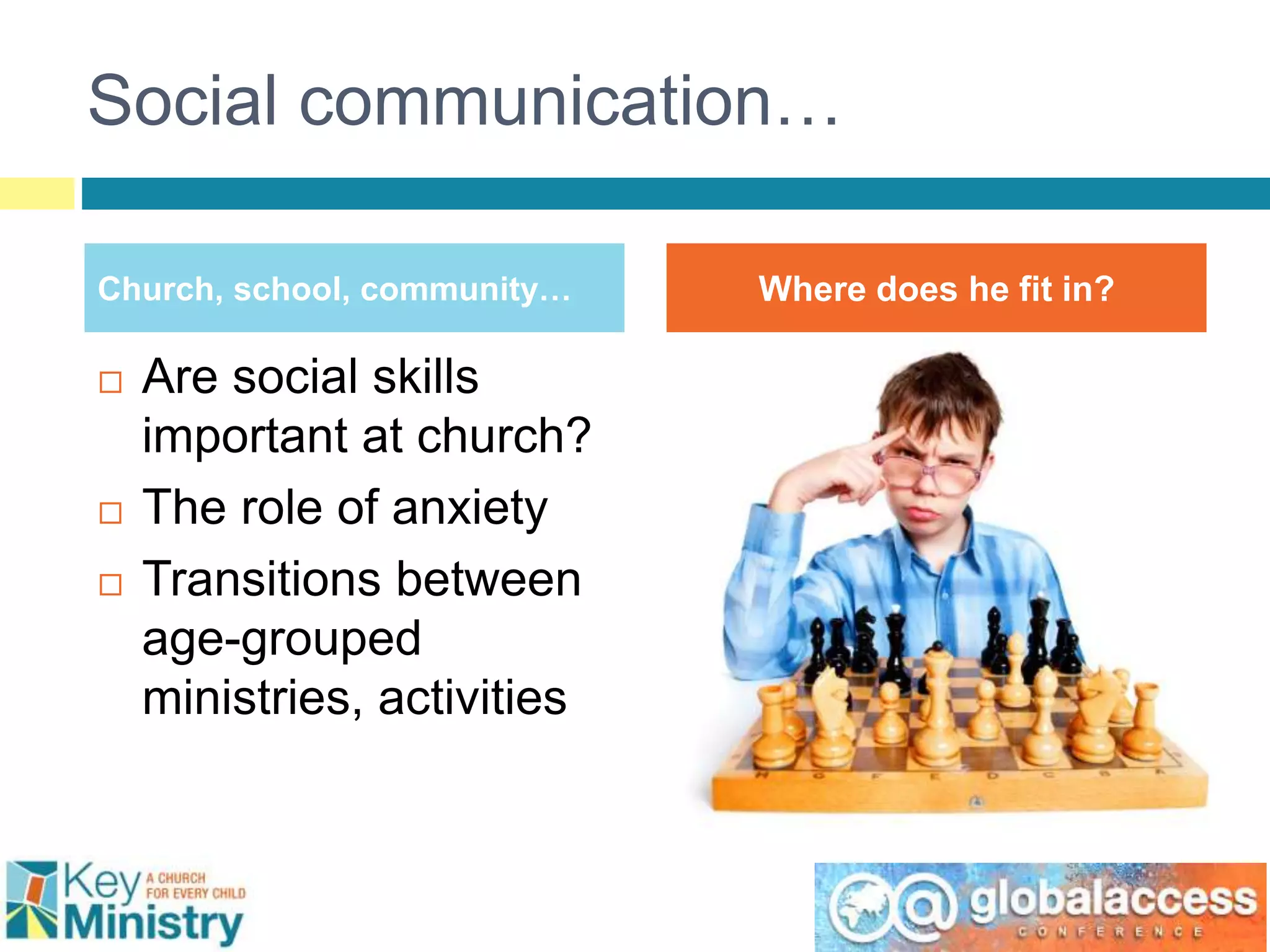
Social communication…
Church, school, community… Where does he fit in?
 Are social skills
important at church?
 The role of anxiety
 Transitions between
age-grouped
ministries, activities
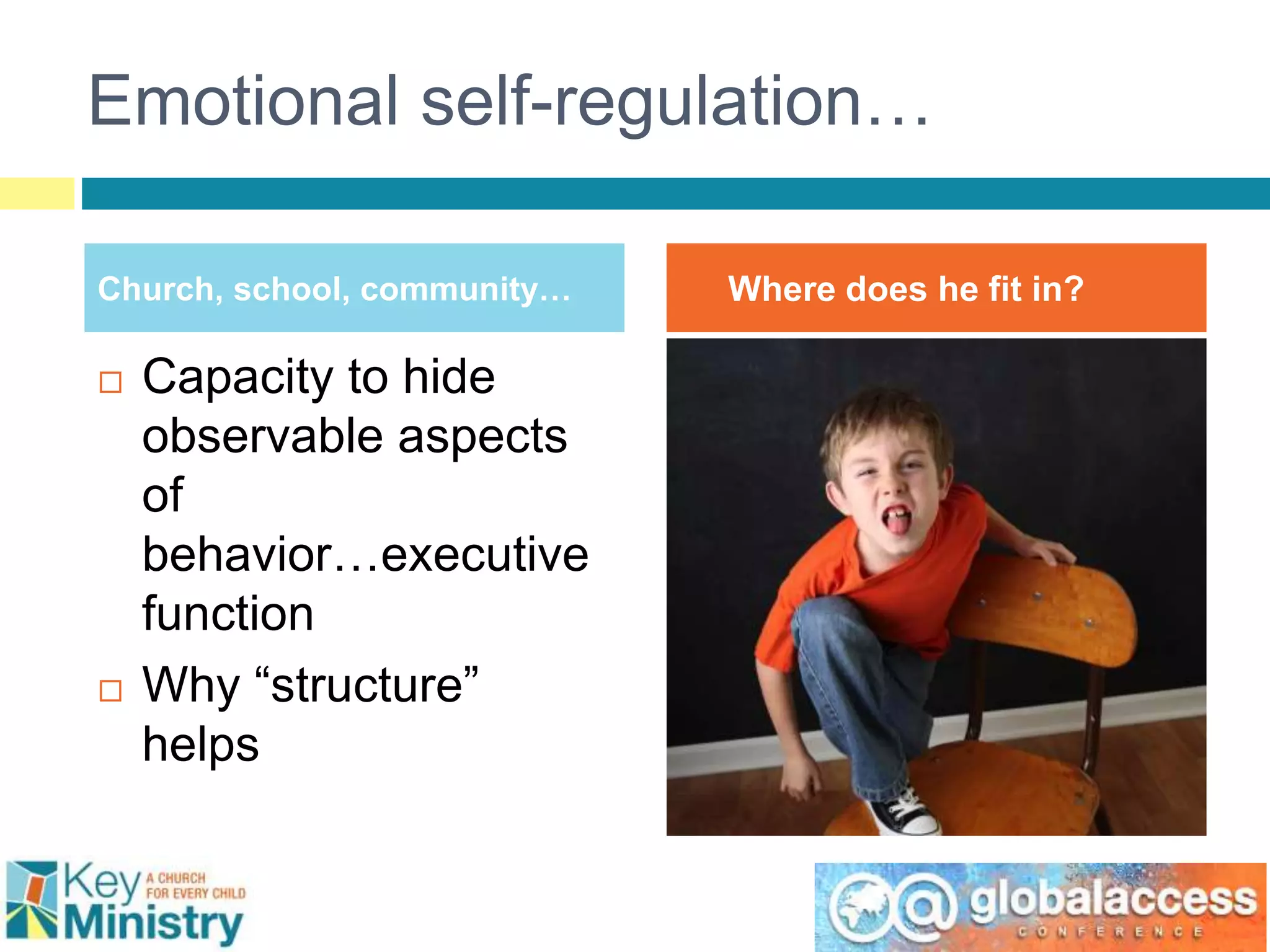
Emotional self-regulation…
Church, school, community… Where does he fit in?
 Capacity to hide
observable aspects
of
behavior…executive
function
 Why “structure”
helps
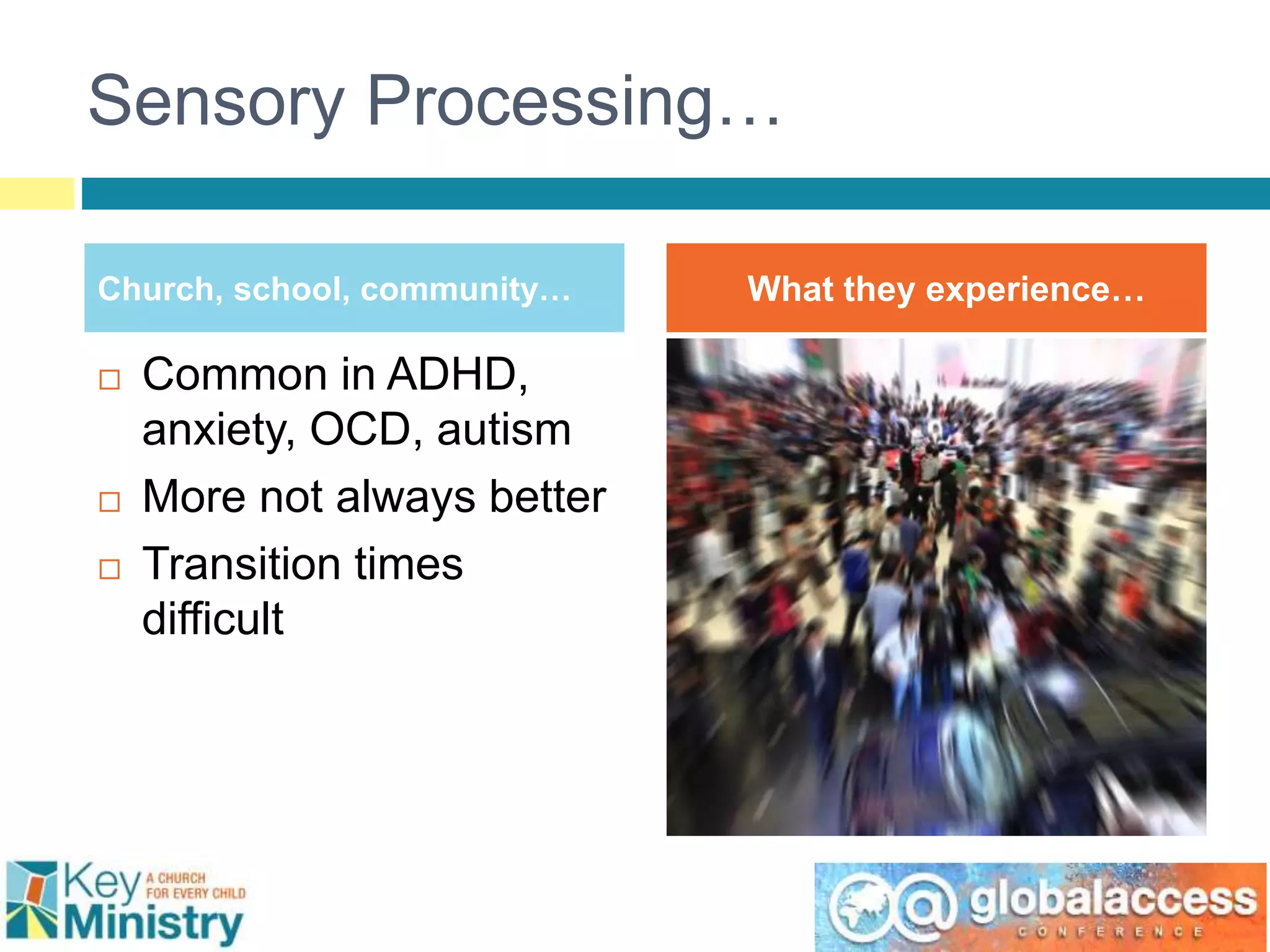
Sensory Processing…
Church, school, community… What they experience…
 Common in ADHD,
anxiety, OCD, autism
 More not always better
 Transition times
difficult
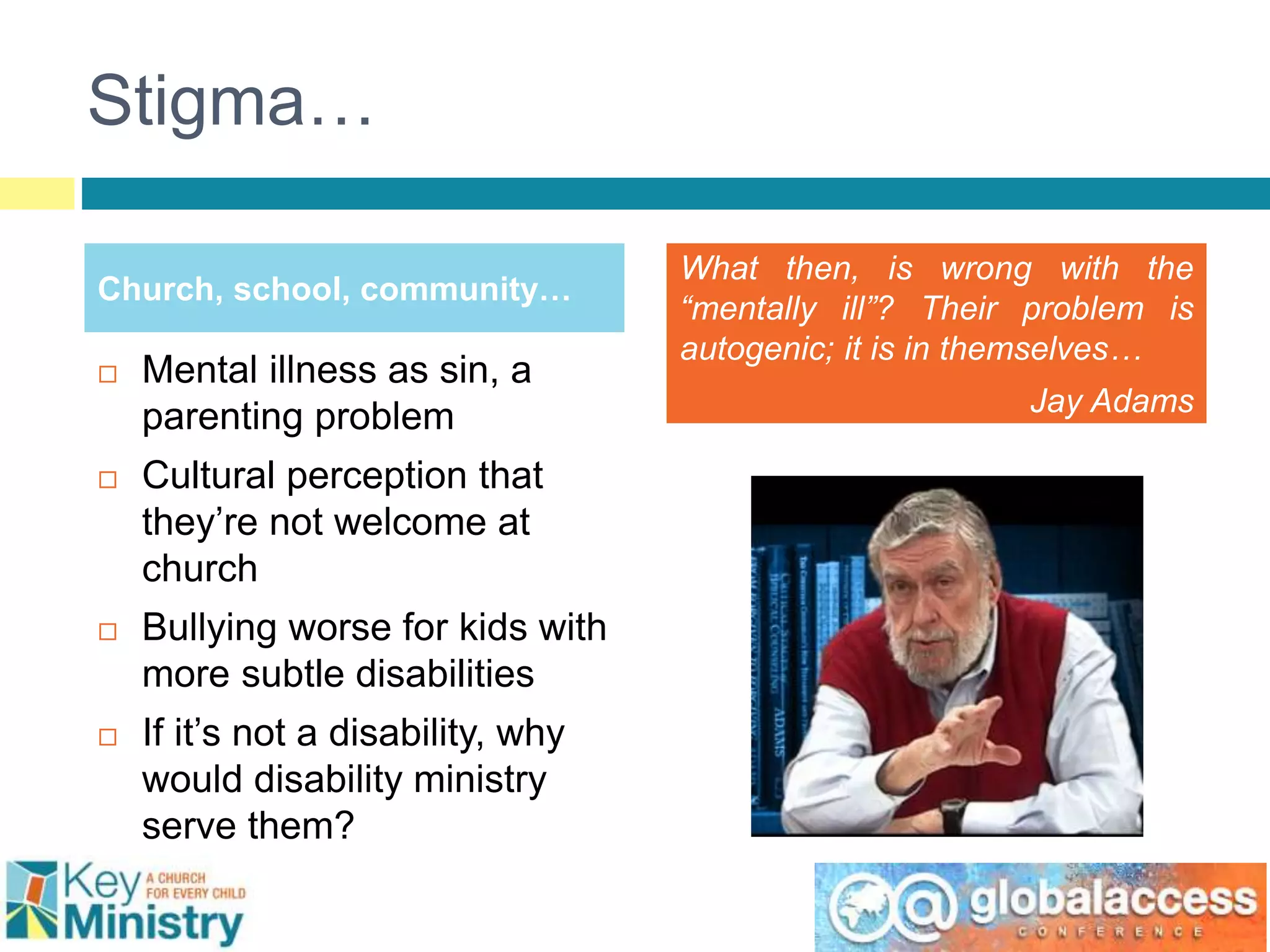
Stigma…
Church, school, community…
What then, is wrong with the
“mentally ill”? Their problem is
autogenic; it is in themselves…
Jay Adams
 Mental illness as sin, a
parenting problem
 Cultural perception that
they’re not welcome at
church
 Bullying worse for kids with
more subtle disabilities
 If it’s not a disability, why
would disability ministry
serve them?
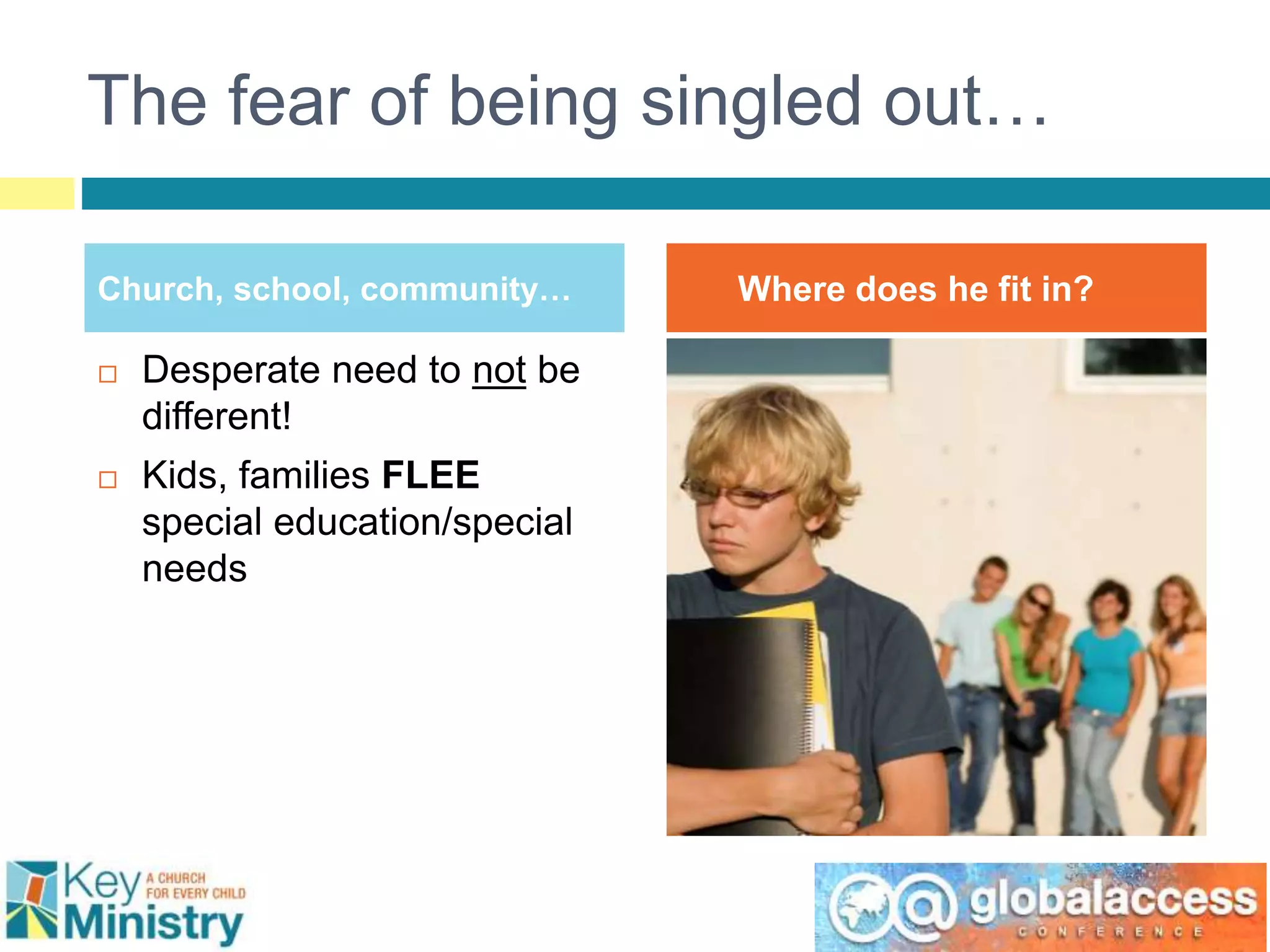
The fear of being singled out…
Church, school, community… Where does he fit in?
 Desperate need to not be
different!
 Kids, families FLEE
special education/special
needs
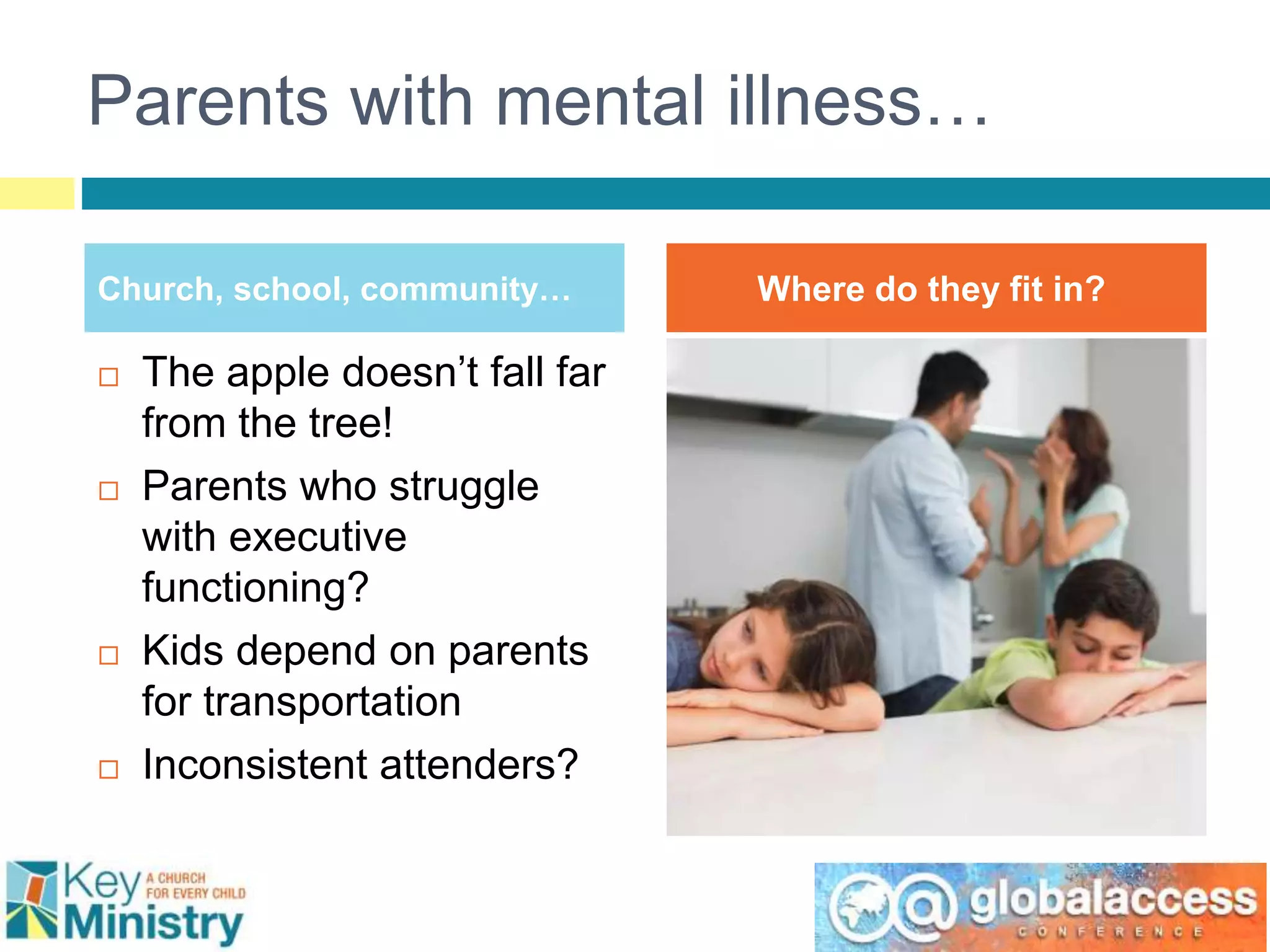
Parents with mental illness…
Church, school, community… Where do they fit in?
 The apple doesn’t fall far
from the tree!
 Parents who struggle
with executive
functioning?
 Kids depend on parents
for transportation
 Inconsistent attenders?
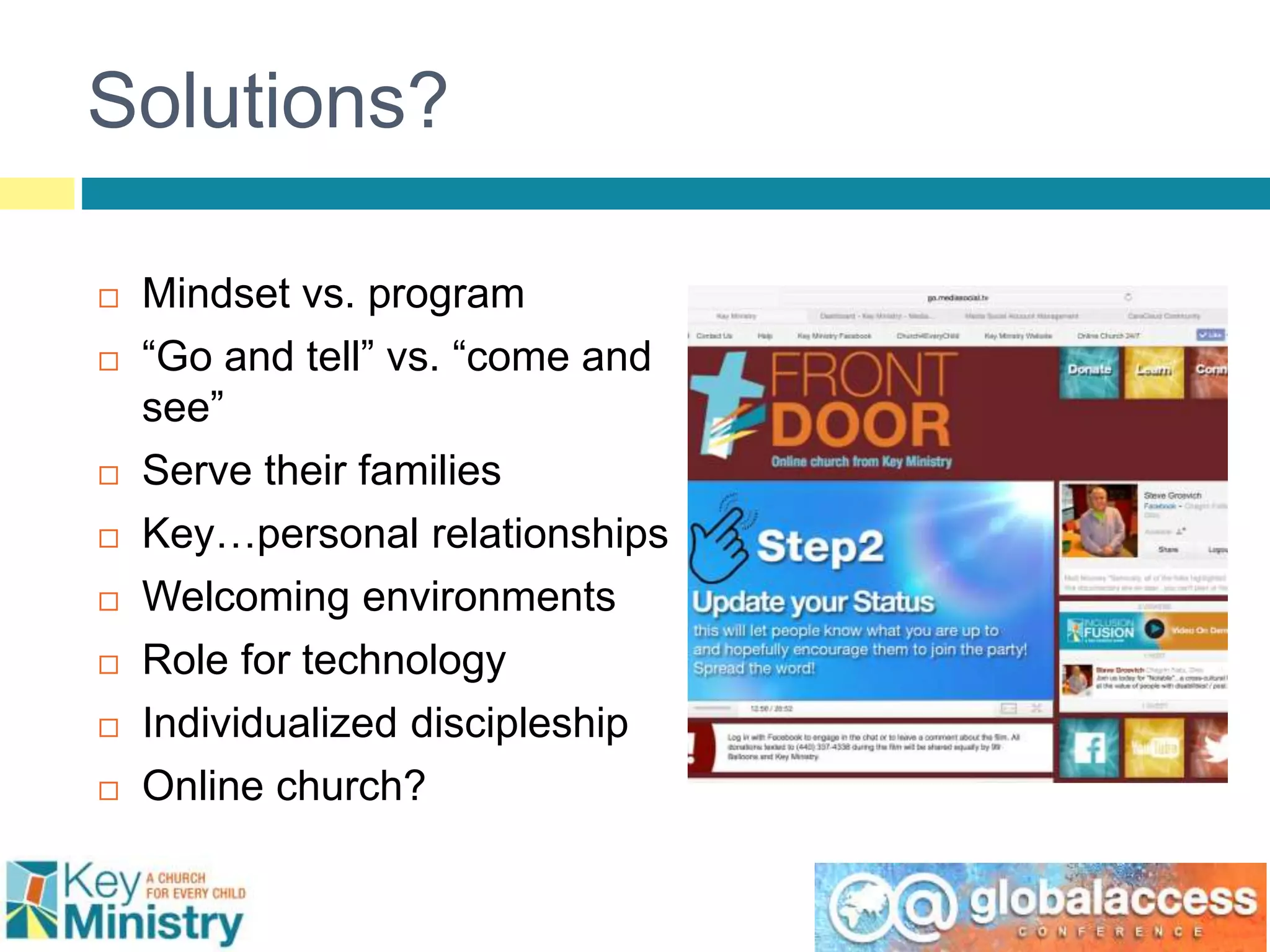
Solutions?
 Mindset vs. program
 “Go and tell” vs. “come and
see”
 Serve their families
 Key…personal relationships
 Welcoming environments
 Role for technology
 Individualized discipleship
 Online church?
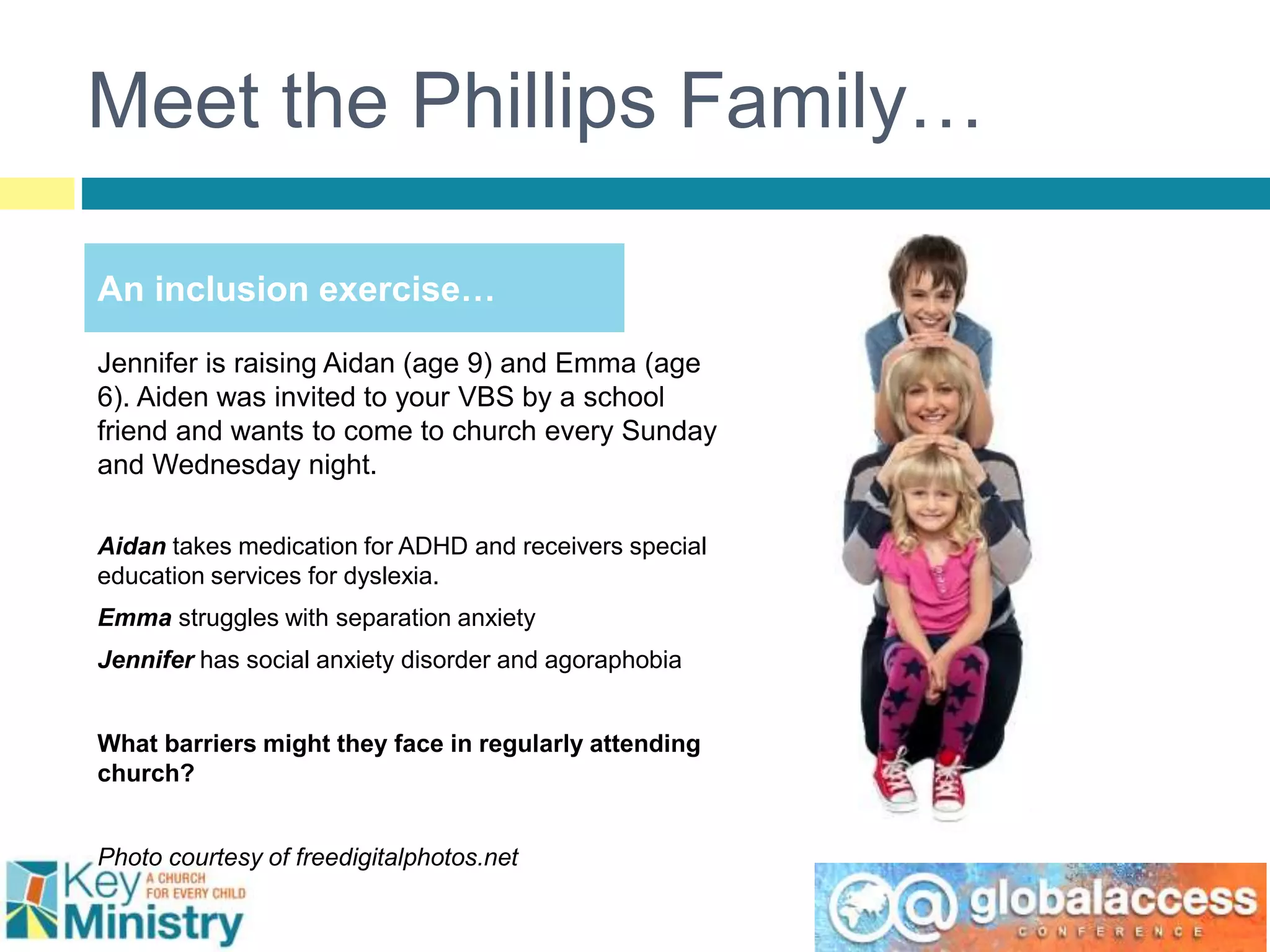
Meet the Phillips Family…
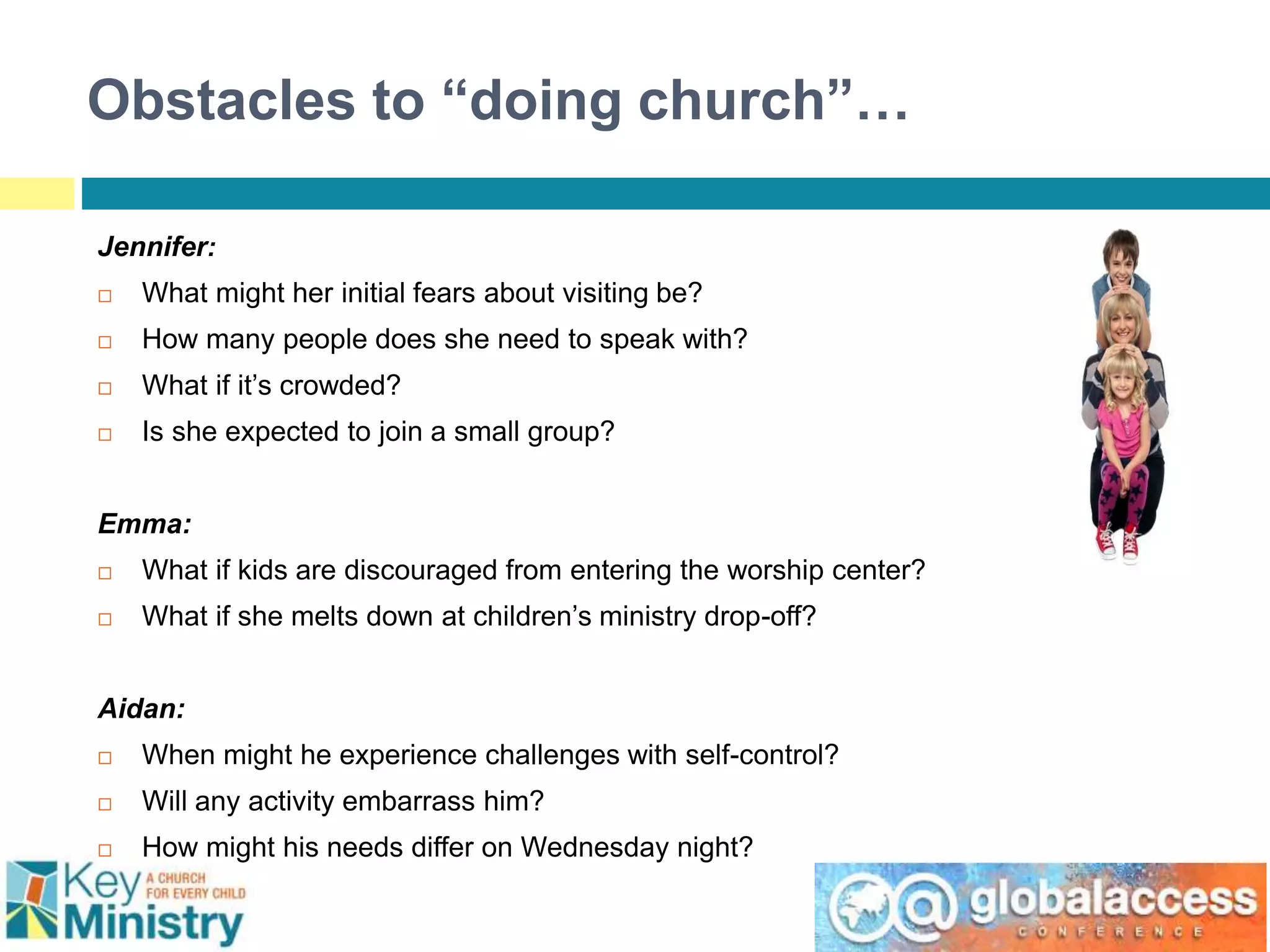
Jennifer is raising Aidan (age 9) and Emma (age
6). Aiden was invited to your VBS by a school
friend and wants to come to church every Sunday
and Wednesday night.
Aidan takes medication for ADHD and receivers special
education services for dyslexia.
Emma struggles with separation anxiety
Jennifer has social anxiety disorder and agoraphobia
What barriers might they face in regularly attending
church?
Photo courtesy of freedigitalphotos.net
An inclusion exercise…
Obstacles to “doing church”…
Jennifer:
 What might her initial fears about visiting be?
 How many people does she need to speak with?
 What if it’s crowded?
 Is she expected to join a small group?
Emma:
 What if kids are discouraged from entering the worship center?
 What if she melts down at children’s ministry drop-off?
Aidan:
 When might he experience challenges with self-control?
 Will any activity embarrass him?
 How might his needs differ on Wednesday night?
Takeaway points…
 Kids with mental illness and their families
represent disability ministry’s greatest outreach
opportunity.
 A mindset…not a program
 Focus on overcoming barriers to social
connection, communication
 Design environments that promote self-
regulation, minimize anxiety
 No church/school/organization can do
everything, but every church can do something!
Key Ministry provides knowledge,
innovation and experience to the
worldwide church as it ministers to
and with families of children
impacted by mental illness, trauma
and developmental disabilities.
What Does Key Ministry Do?
Stay in Touch!
Key Ministry Website: http://www.keyministry.org
Church4EveryChild…Key Ministry Blog: http://www.church4everychild.org
Key Training Channel/Front Door Online Church Platform: http://www.keyministry.tv
www
http://www.facebook.com/keyministry
http://www.pinterest.com/keyministry/
http://twitter.com/#!/drgrcevich
http://twitter.com/#!/KeyMinistry
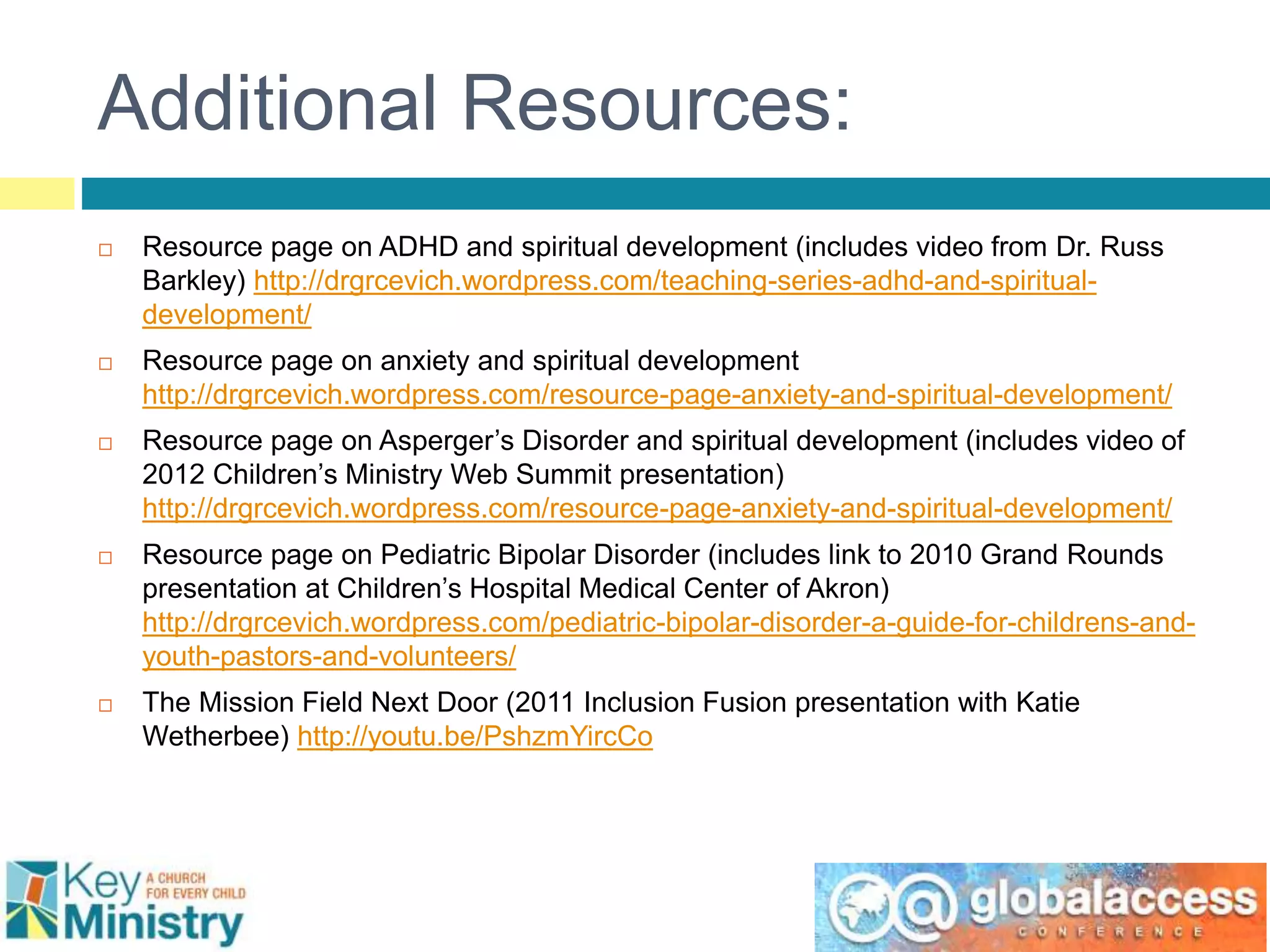
Additional Resources:
 Resource page on ADHD and spiritual development (includes video from Dr. Russ
Barkley) http://drgrcevich.wordpress.com/teaching-series-adhd-and-spiritual-
development/
 Resource page on anxiety and spiritual development
http://drgrcevich.wordpress.com/resource-page-anxiety-and-spiritual-development/
 Resource page on Asperger’s Disorder and spiritual development (includes video of
2012 Children’s Ministry Web Summit presentation)
http://drgrcevich.wordpress.com/resource-page-anxiety-and-spiritual-development/
 Resource page on Pediatric Bipolar Disorder (includes link to 2010 Grand Rounds
presentation at Children’s Hospital Medical Center of Akron)
http://drgrcevich.wordpress.com/pediatric-bipolar-disorder-a-guide-for-childrens-and-
youth-pastors-and-volunteers/
 The Mission Field Next Door (2011 Inclusion Fusion presentation with Katie
Wetherbee) http://youtu.be/PshzmYircCo

Including Kids and Teens With Mental Illness in the Church and Community

  • 1.
    Stephen Grcevich, MD Directorof Strategic Initiatives, Key Ministry Global Access Conference presented by Joni and Friends Calvary Community Church, Westlake Village, CA February 20, 2015 Including Kids and Teens With Mental Illness in the Church & Community
  • 2.
    See a differentworld…  Mental illnesses as “hidden disabilities”  A different paradigm for thinking about disability  Barriers to church/community inclusion?  Strategies for overcoming barriers  Next steps…
  • 3.
    What comes tomind when you think about “disability?”
  • 4.
    How we viewdisability ministry…
  • 5.
    How we viewspecial needs ministry…
  • 6.
    Most childhood disabilitiesare “hidden disabilities”  Significant emotional, behavioral, developmental or neurologic conditions lacking outwardly apparent physical symptoms.  You can’t spot “hidden disabilities” in a still photograph.
  • 7.
    Common “hidden disabilities” ADHD  Anxiety Disorders  Attachment (RAD, Disinhibited Social Engagement) Disorders  Autism spectrum disorders  Bipolar Disorder  Depression  Disruptive Mood Dysregulation Disorder  Learning disorders  PTSD  Social pragmatic language disorder  Sensory processing disorder
  • 8.
    How common ismental illness in U.S. kids?  22% identified with at least one mental disorder  11% have been treated with ADHD medication  8-12% of teens experience anxiety disorders  13% identified with developmental disorders  The majority of the 1 in 68 kids diagnosed with autism are of average/superior intelligence! Carter, AS et al. J. Am Acad. Child Adolesc Psychiatry 2010;49(7): 686-698 Visser et al. J Am Acad. Child Adolesc Psychiatry 2014;53(1): 34-46 http://www.nimh.nih.gov/health/publications/anxiety-disorders-in-children-and-adolescents/index.shtml Boulet, SL, Boyle CA, Schieve, LA. Arch Pediatr Adolesc Med. 2009;163(1):19-26. http://www.cdc.gov/ncbddd/autism/data.html
  • 9.
    Kids with mentalillness are disabled in some, but not all environments… “It is our culture that disables.” “When one is disabled, the problem is not really that they have impairments and social skill deficits. The issue at stake is that they live in an ‘ableist’ culture that rarely affords them the space or opportunity to make their unique contribution to society and does not lift up the value of choosing them as friends.” Ben Conner…Amplifying Our Witness (2012)
  • 10.
    Inclusion barriers aredifferent for kids with mental illness
  • 11.
    What are thebarriers? Church, school, community… Where does she fit in?  Social isolation  Social communication  Self-regulation capacity  Sensory processing  Stigma  Fear of being singled out  Parents with disabilities
  • 12.
    Social isolation… Church, school,community… Where does he fit in?  Difficulty making, keeping friends  Fewer extracurricular activities  Child care for “parent nights out”
  • 13.
    Social communication… Church, school,community… Where does he fit in?  Are social skills important at church?  The role of anxiety  Transitions between age-grouped ministries, activities
  • 14.
    Emotional self-regulation… Church, school,community… Where does he fit in?  Capacity to hide observable aspects of behavior…executive function  Why “structure” helps
  • 15.
    Sensory Processing… Church, school,community… What they experience…  Common in ADHD, anxiety, OCD, autism  More not always better  Transition times difficult
  • 16.
    Stigma… Church, school, community… Whatthen, is wrong with the “mentally ill”? Their problem is autogenic; it is in themselves… Jay Adams  Mental illness as sin, a parenting problem  Cultural perception that they’re not welcome at church  Bullying worse for kids with more subtle disabilities  If it’s not a disability, why would disability ministry serve them?
  • 17.
    The fear ofbeing singled out… Church, school, community… Where does he fit in?  Desperate need to not be different!  Kids, families FLEE special education/special needs
  • 18.
    Parents with mentalillness… Church, school, community… Where do they fit in?  The apple doesn’t fall far from the tree!  Parents who struggle with executive functioning?  Kids depend on parents for transportation  Inconsistent attenders?
  • 19.
    Solutions?  Mindset vs.program  “Go and tell” vs. “come and see”  Serve their families  Key…personal relationships  Welcoming environments  Role for technology  Individualized discipleship  Online church?
  • 20.
    Meet the PhillipsFamily… Jennifer is raising Aidan (age 9) and Emma (age 6). Aiden was invited to your VBS by a school friend and wants to come to church every Sunday and Wednesday night. Aidan takes medication for ADHD and receivers special education services for dyslexia. Emma struggles with separation anxiety Jennifer has social anxiety disorder and agoraphobia What barriers might they face in regularly attending church? Photo courtesy of freedigitalphotos.net An inclusion exercise…
  • 21.
    Obstacles to “doingchurch”… Jennifer:  What might her initial fears about visiting be?  How many people does she need to speak with?  What if it’s crowded?  Is she expected to join a small group? Emma:  What if kids are discouraged from entering the worship center?  What if she melts down at children’s ministry drop-off? Aidan:  When might he experience challenges with self-control?  Will any activity embarrass him?  How might his needs differ on Wednesday night?
  • 22.
    Takeaway points…  Kidswith mental illness and their families represent disability ministry’s greatest outreach opportunity.  A mindset…not a program  Focus on overcoming barriers to social connection, communication  Design environments that promote self- regulation, minimize anxiety  No church/school/organization can do everything, but every church can do something!
  • 23.
    Key Ministry providesknowledge, innovation and experience to the worldwide church as it ministers to and with families of children impacted by mental illness, trauma and developmental disabilities. What Does Key Ministry Do?
  • 24.
    Stay in Touch! KeyMinistry Website: http://www.keyministry.org Church4EveryChild…Key Ministry Blog: http://www.church4everychild.org Key Training Channel/Front Door Online Church Platform: http://www.keyministry.tv www http://www.facebook.com/keyministry http://www.pinterest.com/keyministry/ http://twitter.com/#!/drgrcevich http://twitter.com/#!/KeyMinistry
  • 25.
    Additional Resources:  Resourcepage on ADHD and spiritual development (includes video from Dr. Russ Barkley) http://drgrcevich.wordpress.com/teaching-series-adhd-and-spiritual- development/  Resource page on anxiety and spiritual development http://drgrcevich.wordpress.com/resource-page-anxiety-and-spiritual-development/  Resource page on Asperger’s Disorder and spiritual development (includes video of 2012 Children’s Ministry Web Summit presentation) http://drgrcevich.wordpress.com/resource-page-anxiety-and-spiritual-development/  Resource page on Pediatric Bipolar Disorder (includes link to 2010 Grand Rounds presentation at Children’s Hospital Medical Center of Akron) http://drgrcevich.wordpress.com/pediatric-bipolar-disorder-a-guide-for-childrens-and- youth-pastors-and-volunteers/  The Mission Field Next Door (2011 Inclusion Fusion presentation with Katie Wetherbee) http://youtu.be/PshzmYircCo