Download to read offline

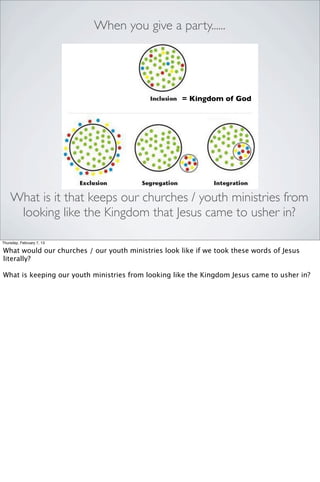
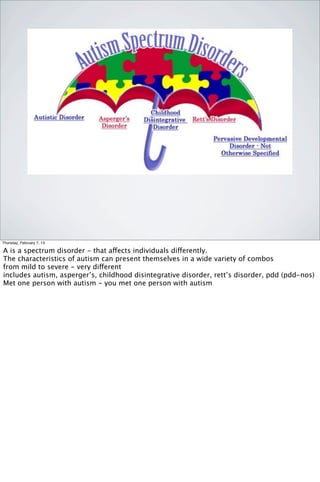
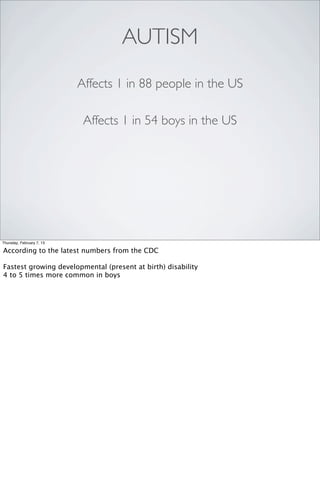
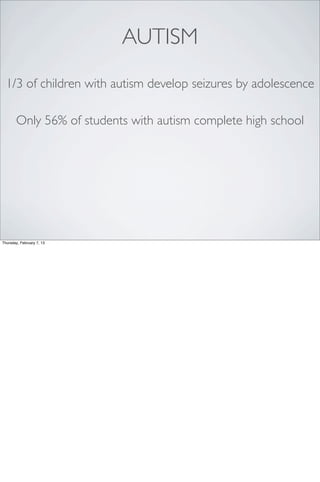
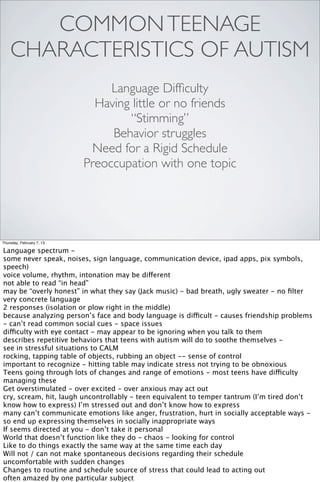
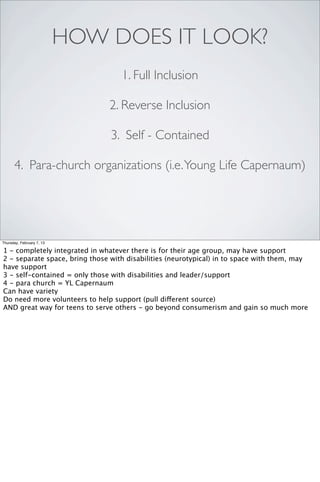
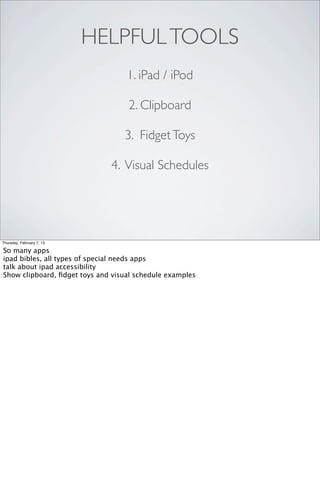
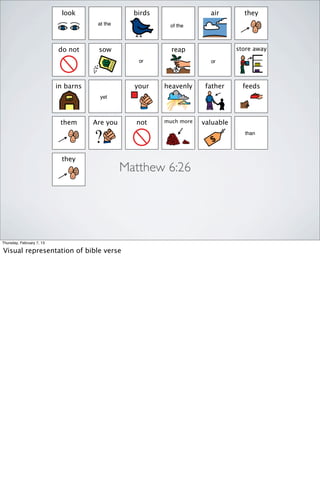
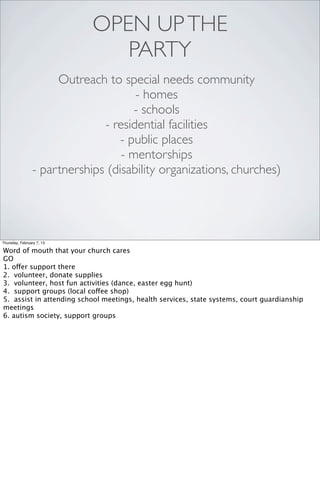


This document discusses autism and adolescence. It begins by describing the author's experience when their son was diagnosed with autism as a toddler, including the initial shock and grief. It then discusses common social and behavioral challenges that teenagers with autism may face, such as difficulties with language, making friends, stimming behaviors, and needing rigid schedules. The document advocates for including youth with autism and their families in church communities through various models like full inclusion, reverse inclusion, or partnerships with other organizations. It provides examples of tools like iPads and visual schedules that can help support teenagers with autism.


