• Well done to the vast majority of you completing work!
There are however a small number of you who need to put
in effort in the coming days and weeks
• Contact your teachers with any issues you may be having
regarding to work. Additionally email your tutor and myself
if you need support.
• Managing your mental health should be part of your daily
routine – SEE THE SLIDES ON KINDNESS FOR THIS WEEK
• It is also mental health awareness week – there are number
of resources on unifrog too
Mental Health Awareness Week
18th-24th May 2020
What does Kindness
mean?
Kindness means you are
concerned about other
people. Kind people think
about another person’s
feelings and not just their
own, they help someone who
is in need, and they are kind
even when others are not.
Kindness makes the world a
nicer place, because it makes
people happier.
Why Do Acts of Kindness Improve
Mental Health?
• They distract us from our own problems and help us keep a sense
of perspective
• They help us feel grateful for what we have
• They get us more socially engaged and involved
• They improve our self esteem and feelings of competence
• Memories of your act of kindness produce feelings of happiness
that last for long after the act is completed
• Positive acts reduce stress and negativity (such as anger and
frustration)
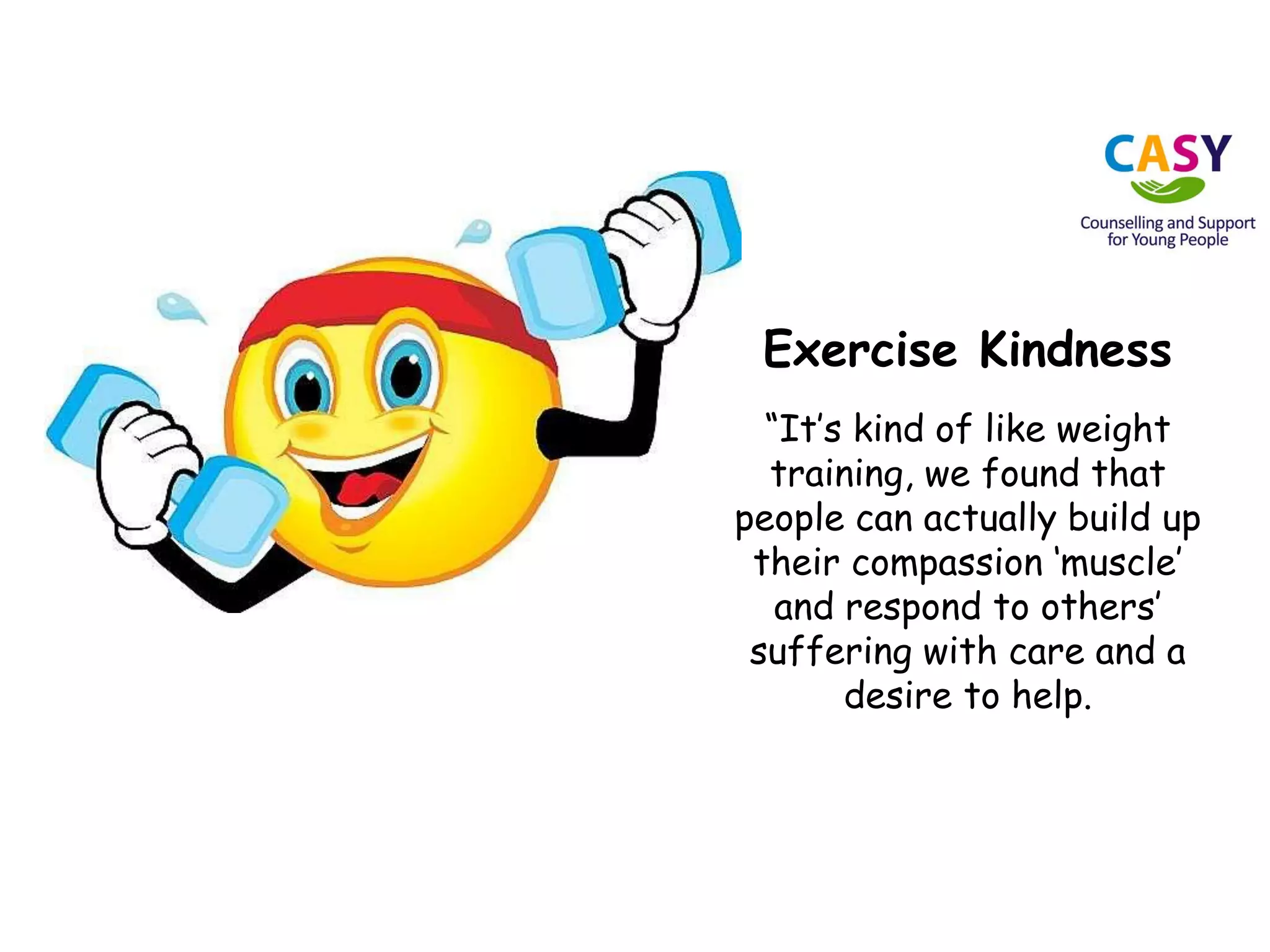
Exercise Kindness
“It’s kind of like weight
training, we found that
people can actually build up
their compassion ‘muscle’
and respond to others’
suffering with care and a
desire to help.
Kindness is Contagious
Experiencing an act of kindness can
improve our mood, it can make our day
and increase the likelihood of spreading
that kindness to others.
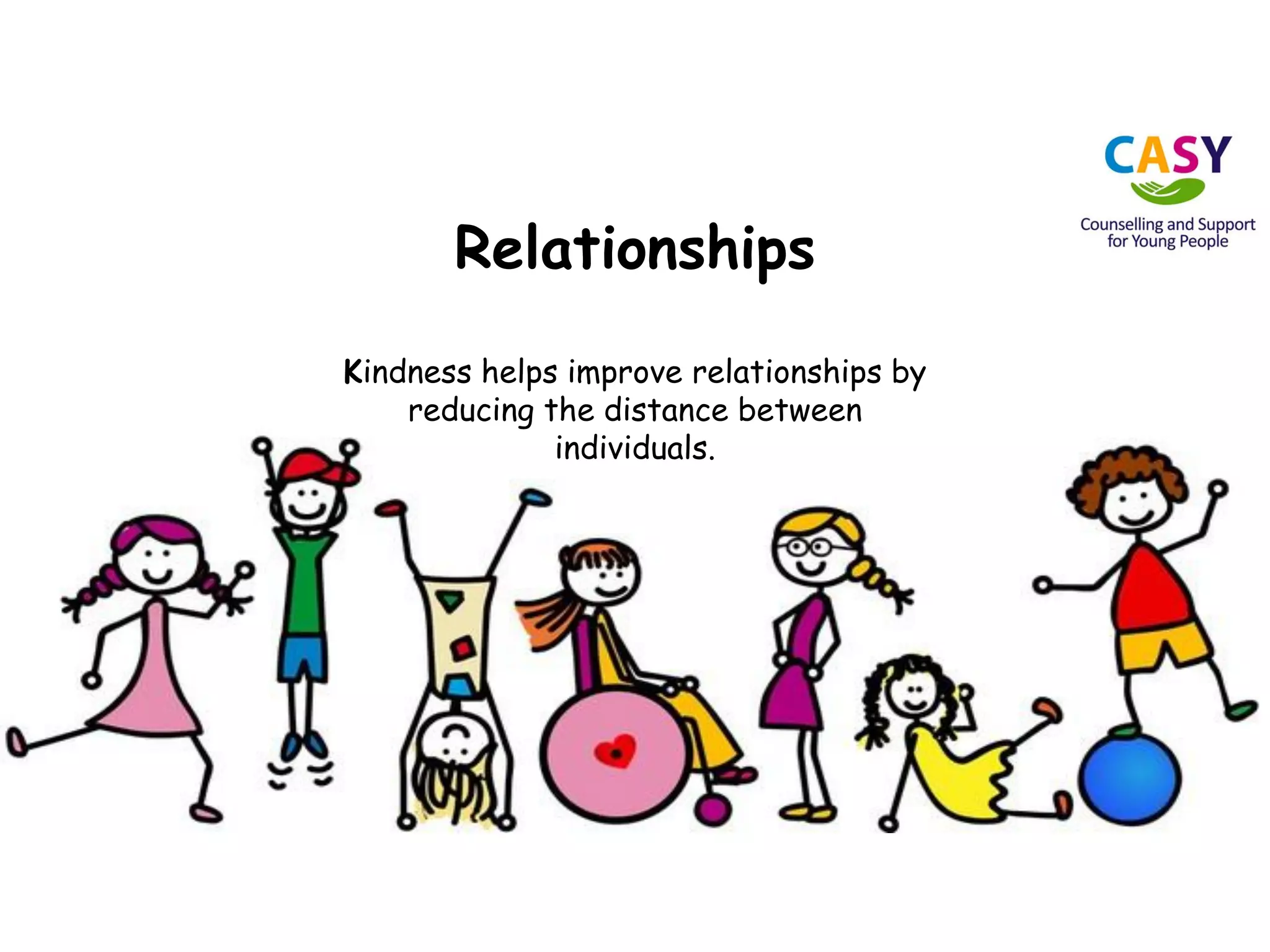
Relationships
Kindness helps improve relationships by
reducing the distance between
individuals.
Anxiety & Depression
Kindness improves mood, depression and
anxiety. Kindness stimulates the
production of serotonin which heals
wounds, calms and increases happiness.
Pain
Kindness releases
endorphins in the brain.
It’s a natural painkiller!
Stress
Kind people age slower
and have lower stress
than the average
person.
Self-Worth
Kindness can make us not
just feel good about
ourselves, but begin to
believe in ourselves,
increasing our self-worth.
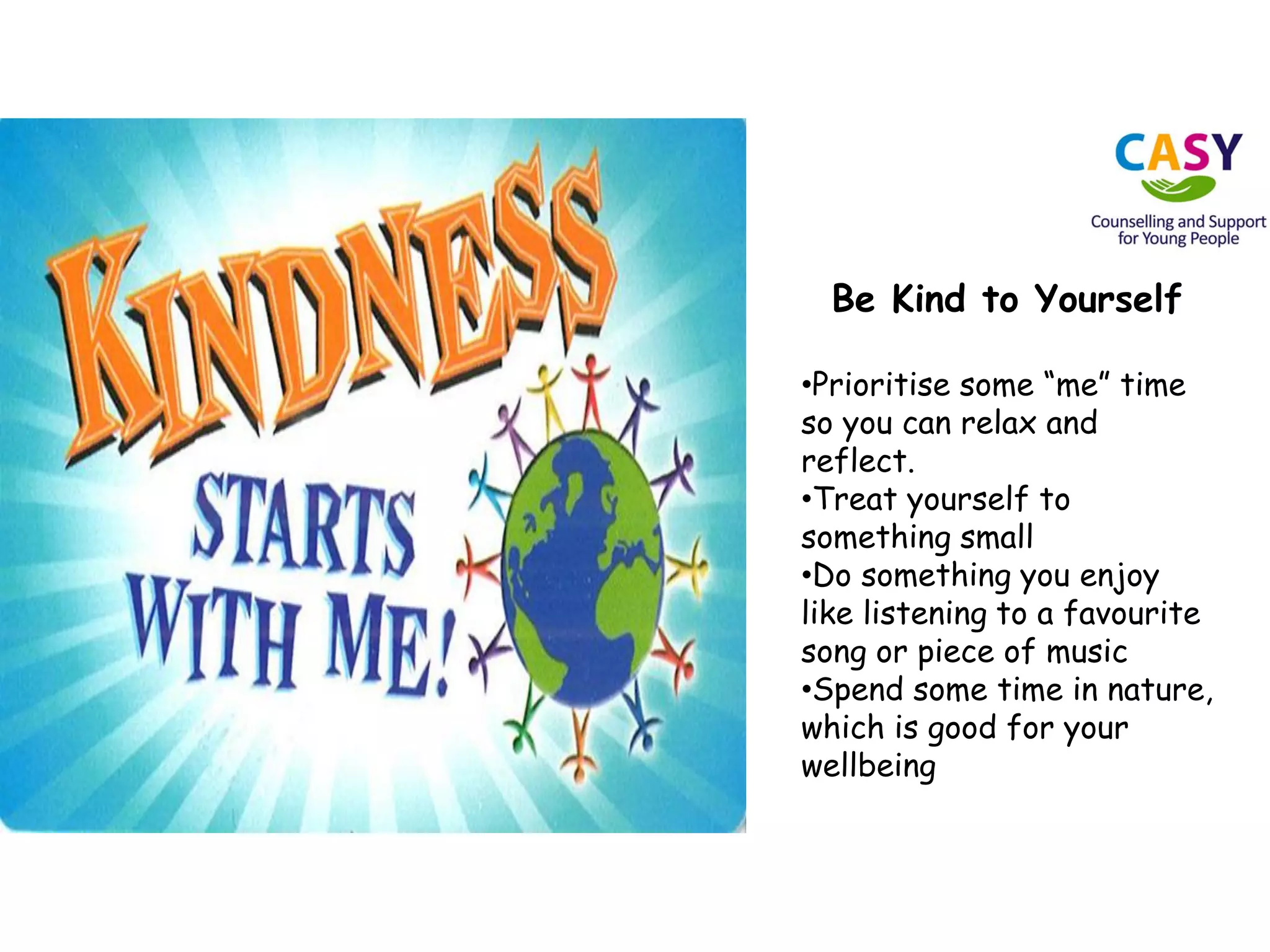
Be Kind to Yourself
•Prioritise some “me” time
so you can relax and
reflect.
•Treat yourself to
something small
•Do something you enjoy
like listening to a favourite
song or piece of music
•Spend some time in nature,
which is good for your
wellbeing
The Random Acts of
Kindness Challenge
With this in mind, we’re asking you to
try and help others once a day for a
week and see if it makes a difference
to how you feel. Try to keep track of
any volunteering that you’ve done,
support you’ve given to friends and
family or any random acts of kindness
that you’ve carried out or that someone
has done for you, and make a note of
how they made you feel.
Kindness doesn’t have to be an
over-the-top or grand gesture to
be beneficial. The positive
effects of kindness on your brain
can happen from something as
simple opening a door for
someone, allowing them merge
into your lane while driving,
saying “hello” with a smile and
asking how their day is going,
etc.
At School
•Remember to say hi to other
students and ask how they are
•Get to know someone new
•Lend your ear - listen to your
friends if they are having a
bad day
•Say thank you to another
student who has helped you
•Praise someone for something
they have done well
At home and in your
community
•Call a friend that you haven’t spoken to for a
while
•Post a card or letter to someone you are out
of touch with
•Find out if a neighbour needs any help with
shopping
•Offer to babysit for a friend
•Walk your friend’s dog
•Tell your family members how much you love
and appreciate them
•Help with household chores
•Check on someone you know who is going
through a tough time
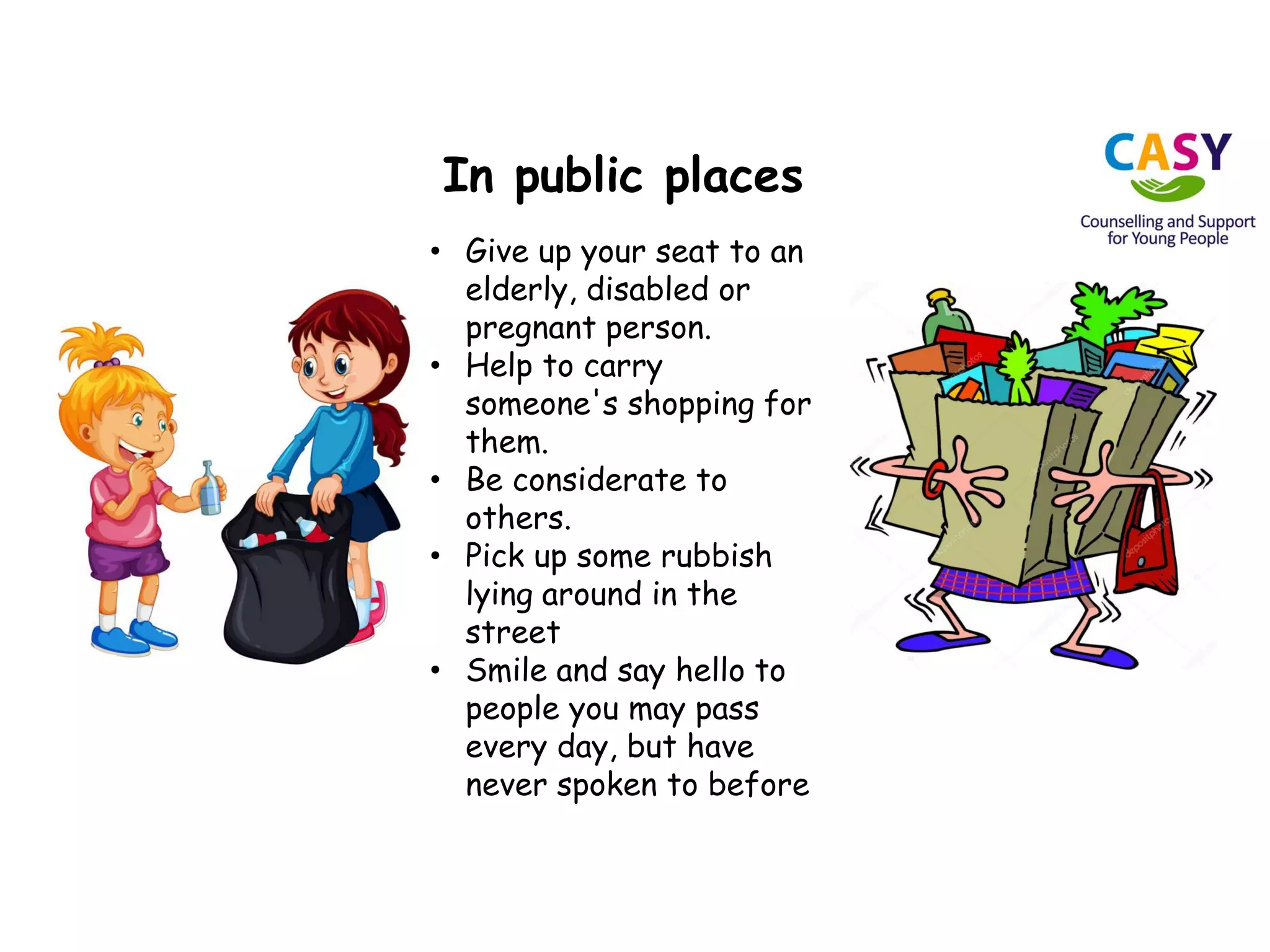
In public places
• Give up your seat to an
elderly, disabled or
pregnant person.
• Help to carry
someone's shopping for
them.
• Be considerate to
others.
• Pick up some rubbish
lying around in the
street
• Smile and say hello to
people you may pass
every day, but have
never spoken to before
Kindness-Slides.pdf

Kindness-Slides.pdf

  • 1.
    • Well doneto the vast majority of you completing work! There are however a small number of you who need to put in effort in the coming days and weeks • Contact your teachers with any issues you may be having regarding to work. Additionally email your tutor and myself if you need support. • Managing your mental health should be part of your daily routine – SEE THE SLIDES ON KINDNESS FOR THIS WEEK • It is also mental health awareness week – there are number of resources on unifrog too
  • 2.
    Mental Health AwarenessWeek 18th-24th May 2020
  • 3.
    What does Kindness mean? Kindnessmeans you are concerned about other people. Kind people think about another person’s feelings and not just their own, they help someone who is in need, and they are kind even when others are not. Kindness makes the world a nicer place, because it makes people happier.
  • 4.
    Why Do Actsof Kindness Improve Mental Health? • They distract us from our own problems and help us keep a sense of perspective • They help us feel grateful for what we have • They get us more socially engaged and involved • They improve our self esteem and feelings of competence • Memories of your act of kindness produce feelings of happiness that last for long after the act is completed • Positive acts reduce stress and negativity (such as anger and frustration)
  • 5.
    Exercise Kindness “It’s kindof like weight training, we found that people can actually build up their compassion ‘muscle’ and respond to others’ suffering with care and a desire to help.
  • 6.
    Kindness is Contagious Experiencingan act of kindness can improve our mood, it can make our day and increase the likelihood of spreading that kindness to others.
  • 7.
    Relationships Kindness helps improverelationships by reducing the distance between individuals.
  • 8.
    Anxiety & Depression Kindnessimproves mood, depression and anxiety. Kindness stimulates the production of serotonin which heals wounds, calms and increases happiness.
  • 9.
    Pain Kindness releases endorphins inthe brain. It’s a natural painkiller!
  • 10.
    Stress Kind people ageslower and have lower stress than the average person.
  • 11.
    Self-Worth Kindness can makeus not just feel good about ourselves, but begin to believe in ourselves, increasing our self-worth.
  • 12.
    Be Kind toYourself •Prioritise some “me” time so you can relax and reflect. •Treat yourself to something small •Do something you enjoy like listening to a favourite song or piece of music •Spend some time in nature, which is good for your wellbeing
  • 13.
    The Random Actsof Kindness Challenge With this in mind, we’re asking you to try and help others once a day for a week and see if it makes a difference to how you feel. Try to keep track of any volunteering that you’ve done, support you’ve given to friends and family or any random acts of kindness that you’ve carried out or that someone has done for you, and make a note of how they made you feel.
  • 14.
    Kindness doesn’t haveto be an over-the-top or grand gesture to be beneficial. The positive effects of kindness on your brain can happen from something as simple opening a door for someone, allowing them merge into your lane while driving, saying “hello” with a smile and asking how their day is going, etc.
  • 15.
    At School •Remember tosay hi to other students and ask how they are •Get to know someone new •Lend your ear - listen to your friends if they are having a bad day •Say thank you to another student who has helped you •Praise someone for something they have done well
  • 16.
    At home andin your community •Call a friend that you haven’t spoken to for a while •Post a card or letter to someone you are out of touch with •Find out if a neighbour needs any help with shopping •Offer to babysit for a friend •Walk your friend’s dog •Tell your family members how much you love and appreciate them •Help with household chores •Check on someone you know who is going through a tough time
  • 17.
    In public places •Give up your seat to an elderly, disabled or pregnant person. • Help to carry someone's shopping for them. • Be considerate to others. • Pick up some rubbish lying around in the street • Smile and say hello to people you may pass every day, but have never spoken to before