PHYSICAL EDUCATION DEPARTMENT
                        YEAR 4
   Kin-Ball, also known as
    Omnikin, is a team sport
    created in
    Quebec, Canada in 1986
    by Mario Demers, a
    physical education
    professor.
   The International Kin-Ball
    Federation counts 3.8
    million
    participants, primarily
    from Canada, the
    U.S., Japan, Belgium, Fran
    ce, Switzerland, Spain, Ge
    rmany and Malaysia.
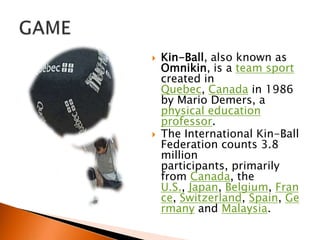
   Kin-Ball uses a cage
    ball, an inflatable ball 1.22
    m in diametre and inflated
    to      about    the    same
    pressure and feeling as a
    volleyball.
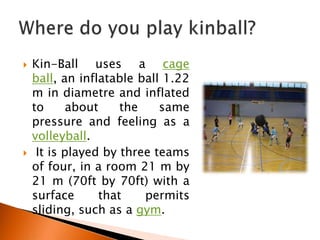
    It is played by three teams
    of four, in a room 21 m by
    21 m (70ft by 70ft) with a
    surface      that    permits
    sliding, such as a gym.
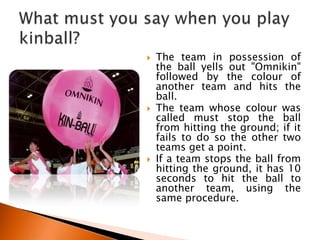
   The team in possession of
    the ball yells out "Omnikin"
    followed by the colour of
    another team and hits the
    ball.
   The team whose colour was
    called must stop the ball
    from hitting the ground; if it
    fails to do so the other two
    teams get a point.
   If a team stops the ball from
    hitting the ground, it has 10
    seconds to hit the ball to
    another team, using the
    same procedure.
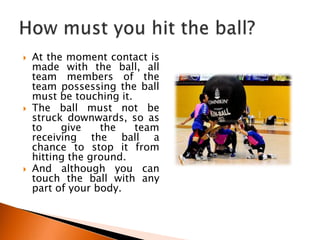
   At the moment contact is
    made with the ball, all
    team members of the
    team possessing the ball
    must be touching it.
   The ball must not be
    struck downwards, so as
    to    give    the    team
    receiving the ball a
    chance to stop it from
    hitting the ground.
   And although you can
    touch the ball with any
    part of your body.
   Games have three periods lasting
    between       7     to     15     minutes
    each, depending on the age level of the
    participants,    with    a    one-minute
    intermission between each period.
    At the beginning of each period the
    ball is put into play from the centre of
    the gym by the team with the fewest
    points.
   The team with the most points at the
    end of the three periods wins the
    game.
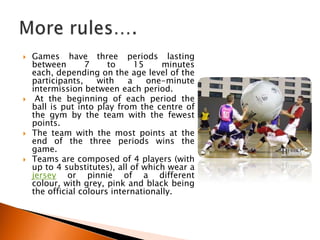
   Teams are composed of 4 players (with
    up to 4 substitutes), all of which wear a
    jersey or pinnie of a different
    colour, with grey, pink and black being
    the official colours internationally.
Physical Education

Kin Ball English

  • 1.
  • 2.
    Kin-Ball, also known as Omnikin, is a team sport created in Quebec, Canada in 1986 by Mario Demers, a physical education professor.  The International Kin-Ball Federation counts 3.8 million participants, primarily from Canada, the U.S., Japan, Belgium, Fran ce, Switzerland, Spain, Ge rmany and Malaysia.
  • 3.
    Kin-Ball uses a cage ball, an inflatable ball 1.22 m in diametre and inflated to about the same pressure and feeling as a volleyball.  It is played by three teams of four, in a room 21 m by 21 m (70ft by 70ft) with a surface that permits sliding, such as a gym.
  • 4.
    The team in possession of the ball yells out "Omnikin" followed by the colour of another team and hits the ball.  The team whose colour was called must stop the ball from hitting the ground; if it fails to do so the other two teams get a point.  If a team stops the ball from hitting the ground, it has 10 seconds to hit the ball to another team, using the same procedure.
  • 5.
    At the moment contact is made with the ball, all team members of the team possessing the ball must be touching it.  The ball must not be struck downwards, so as to give the team receiving the ball a chance to stop it from hitting the ground.  And although you can touch the ball with any part of your body.
  • 6.
    Games have three periods lasting between 7 to 15 minutes each, depending on the age level of the participants, with a one-minute intermission between each period.  At the beginning of each period the ball is put into play from the centre of the gym by the team with the fewest points.  The team with the most points at the end of the three periods wins the game.  Teams are composed of 4 players (with up to 4 substitutes), all of which wear a jersey or pinnie of a different colour, with grey, pink and black being the official colours internationally.
  • 7.