Problem Solution Essay
Presentation Two
Outlining Your Draft

With your purpose and goals in mind, make a quick scratch outline that
includes the following:

 a clear statement of the problem

 your thesis statement, announcing the proposed solution and forecasting
  your reasons for it

 your argument for the solution, giving reasons and support

 anticipation of counterarguments and a response to objections readers
  might have about the proposed solution

 your evaluation of alternative solutions
Presentation of the problem


 Write a few sentences that argue that the
  problem exists
 Write a few sentences that argue that this
  problem is serious
 In a few sentences, outline the causes of
  this problem.
 Read what you have written aloud to
  someone near you.
Consequences of failing to solve the problem


Make a list of the consequences of
 failing to solve this problem.
Put the list into paragraph form.
Read what you have written aloud to
 someone near you.
Thesis Statement

 You have probably written your thesis statement already. If so,
  copy it here.

 If you have not yet written it, write one or more sentences to
  serve as your tentative thesis statement. In most essays
  proposing solutions to problems, the thesis statement is a
  concise announcement of the solution. Think about how
  emphatic you should make the thesis and whether you should
  forecast your reasons.
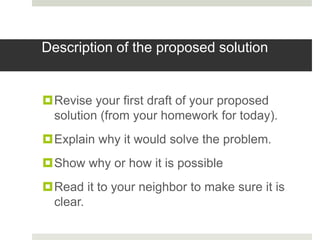
Description of the proposed solution


Revise your first draft of your proposed
 solution (from your homework for today).
Explain why it would solve the problem.
Show why or how it is possible
Read it to your neighbor to make sure it is
 clear.
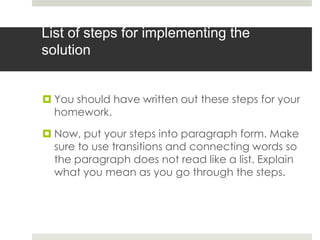
List of steps for implementing the
solution


 You should have written out these steps for your
  homework.

 Now, put your steps into paragraph form. Make
  sure to use transitions and connecting words so
  the paragraph does not read like a list. Explain
  what you mean as you go through the steps.
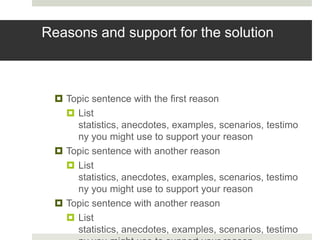
Reasons and support for the solution


  Topic sentence with the first reason
    List
     statistics, anecdotes, examples, scenarios, testimo
     ny you might use to support your reason
  Topic sentence with another reason
    List
     statistics, anecdotes, examples, scenarios, testimo
     ny you might use to support your reason
  Topic sentence with another reason
    List
     statistics, anecdotes, examples, scenarios, testimo
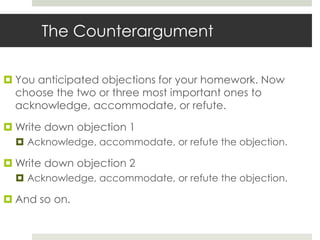
The Counterargument

 You anticipated objections for your homework. Now
  choose the two or three most important ones to
  acknowledge, accommodate, or refute.

 Write down objection 1
   Acknowledge, accommodate, or refute the objection.

 Write down objection 2
   Acknowledge, accommodate, or refute the objection.

 And so on.
Consideration of alternative solutions and
          their disadvantages

 You identified alternative solutions for your homework. Now choose
  those you will discuss in your essay. Write out each solution and discuss
  the disadvantages of it compared to your solution.

 Write out alternative solution 1
    What are the disadvantages of this solution?

 Write out alternative solution 2
    What are the disadvantages of this solution?

 Write out alternative solution 3
    What are the disadvantages of this solution?
Restatement of the proposed solution
and its advantages

Briefly remind your reader of the problem
 and your proposed solution and its
 advantages.
You might also remind the reader of the
 consequences of failing to solve the
 problem.
Remember

 Your outline will of course reflect your own writing
  situation. Once you have a working outline, you should
  not hesitate to change it as necessary while drafting and
  revising. For instance, you might find it more effective to
  hold back on presenting your own solution until you have
  discussed alternative but unacceptable solutions. Or you
  might find a better way to order the reasons for adopting
  your proposal. The purpose of an outline is to identify the
  basic features of your proposal and to help you organize
  them effectively, not to lock you into a particular
  structure.
Writing the Opening Sentences
 To engage your readers’ interest from the start, consider the following opening
  strategies:

 • a scenario (like O’Malley)

 • statistics (like Kornbluh)

 • a historical analogy

 • a research study

 • a comparison to other places where the solution has been tried successfully

 • a preview of the negative consequences if the problem goes unsolved

 • criticism of an alternative solution
THE ENDING

 End by summarizing your solution and its advantages, as
  O’Malley does.

 End with a scenario suggesting the consequences of a failure
  to solve the problem.

 End with an inspiring call to action.

 Remind readers of something special about the problem or
  solution at the end, as Kornbluh does when she urges that an
  award be given to the companies that lead the way.
HOMEWORK

 Put all of the parts we wrote today into a single
  document. Read it aloud to make sure it is in a logical
  order. Change the order of your paragraphs if that
  makes sense to you.

Kids problem solution 2

  • 1.
  • 2.
    Outlining Your Draft Withyour purpose and goals in mind, make a quick scratch outline that includes the following:  a clear statement of the problem  your thesis statement, announcing the proposed solution and forecasting your reasons for it  your argument for the solution, giving reasons and support  anticipation of counterarguments and a response to objections readers might have about the proposed solution  your evaluation of alternative solutions
  • 3.
    Presentation of theproblem Write a few sentences that argue that the problem exists Write a few sentences that argue that this problem is serious In a few sentences, outline the causes of this problem. Read what you have written aloud to someone near you.
  • 4.
    Consequences of failingto solve the problem Make a list of the consequences of failing to solve this problem. Put the list into paragraph form. Read what you have written aloud to someone near you.
  • 5.
    Thesis Statement  Youhave probably written your thesis statement already. If so, copy it here.  If you have not yet written it, write one or more sentences to serve as your tentative thesis statement. In most essays proposing solutions to problems, the thesis statement is a concise announcement of the solution. Think about how emphatic you should make the thesis and whether you should forecast your reasons.
  • 6.
    Description of theproposed solution Revise your first draft of your proposed solution (from your homework for today). Explain why it would solve the problem. Show why or how it is possible Read it to your neighbor to make sure it is clear.
  • 7.
    List of stepsfor implementing the solution  You should have written out these steps for your homework.  Now, put your steps into paragraph form. Make sure to use transitions and connecting words so the paragraph does not read like a list. Explain what you mean as you go through the steps.
  • 8.
    Reasons and supportfor the solution  Topic sentence with the first reason  List statistics, anecdotes, examples, scenarios, testimo ny you might use to support your reason  Topic sentence with another reason  List statistics, anecdotes, examples, scenarios, testimo ny you might use to support your reason  Topic sentence with another reason  List statistics, anecdotes, examples, scenarios, testimo
  • 9.
    The Counterargument  Youanticipated objections for your homework. Now choose the two or three most important ones to acknowledge, accommodate, or refute.  Write down objection 1  Acknowledge, accommodate, or refute the objection.  Write down objection 2  Acknowledge, accommodate, or refute the objection.  And so on.
  • 10.
    Consideration of alternativesolutions and their disadvantages  You identified alternative solutions for your homework. Now choose those you will discuss in your essay. Write out each solution and discuss the disadvantages of it compared to your solution.  Write out alternative solution 1  What are the disadvantages of this solution?  Write out alternative solution 2  What are the disadvantages of this solution?  Write out alternative solution 3  What are the disadvantages of this solution?
  • 11.
    Restatement of theproposed solution and its advantages Briefly remind your reader of the problem and your proposed solution and its advantages. You might also remind the reader of the consequences of failing to solve the problem.
  • 12.
    Remember  Your outlinewill of course reflect your own writing situation. Once you have a working outline, you should not hesitate to change it as necessary while drafting and revising. For instance, you might find it more effective to hold back on presenting your own solution until you have discussed alternative but unacceptable solutions. Or you might find a better way to order the reasons for adopting your proposal. The purpose of an outline is to identify the basic features of your proposal and to help you organize them effectively, not to lock you into a particular structure.
  • 13.
    Writing the OpeningSentences  To engage your readers’ interest from the start, consider the following opening strategies:  • a scenario (like O’Malley)  • statistics (like Kornbluh)  • a historical analogy  • a research study  • a comparison to other places where the solution has been tried successfully  • a preview of the negative consequences if the problem goes unsolved  • criticism of an alternative solution
  • 14.
    THE ENDING  Endby summarizing your solution and its advantages, as O’Malley does.  End with a scenario suggesting the consequences of a failure to solve the problem.  End with an inspiring call to action.  Remind readers of something special about the problem or solution at the end, as Kornbluh does when she urges that an award be given to the companies that lead the way.
  • 15.
    HOMEWORK  Put allof the parts we wrote today into a single document. Read it aloud to make sure it is in a logical order. Change the order of your paragraphs if that makes sense to you.