Review of key themes
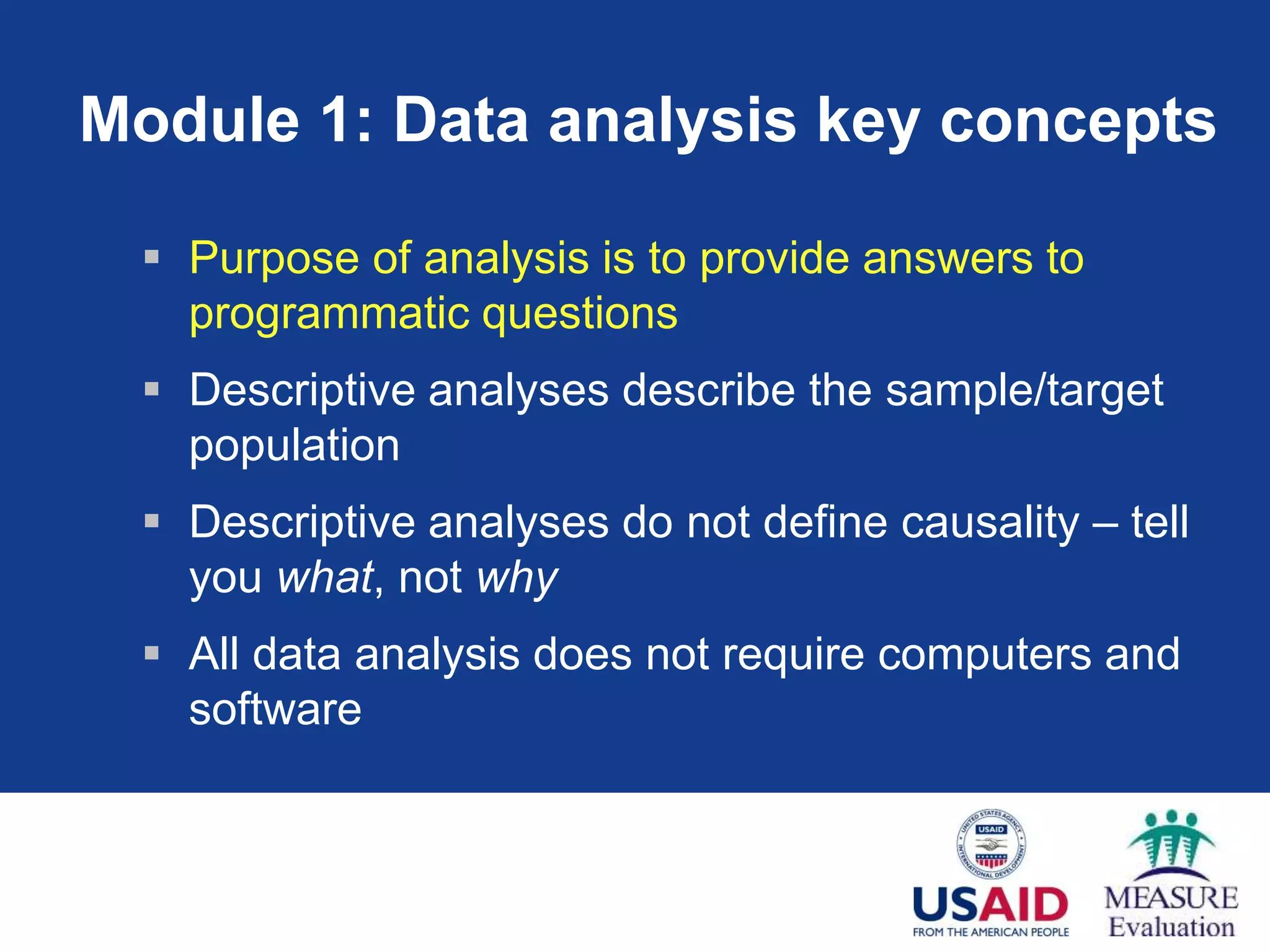
 Purpose of analysis is to provide answers to
programmatic questions
 Descriptive analyses describe the sample/target
population
 Descriptive analyses do not define causality – tell
you what, not why
 All data analysis does not require computers and
software
Module 1: Data analysis key concepts
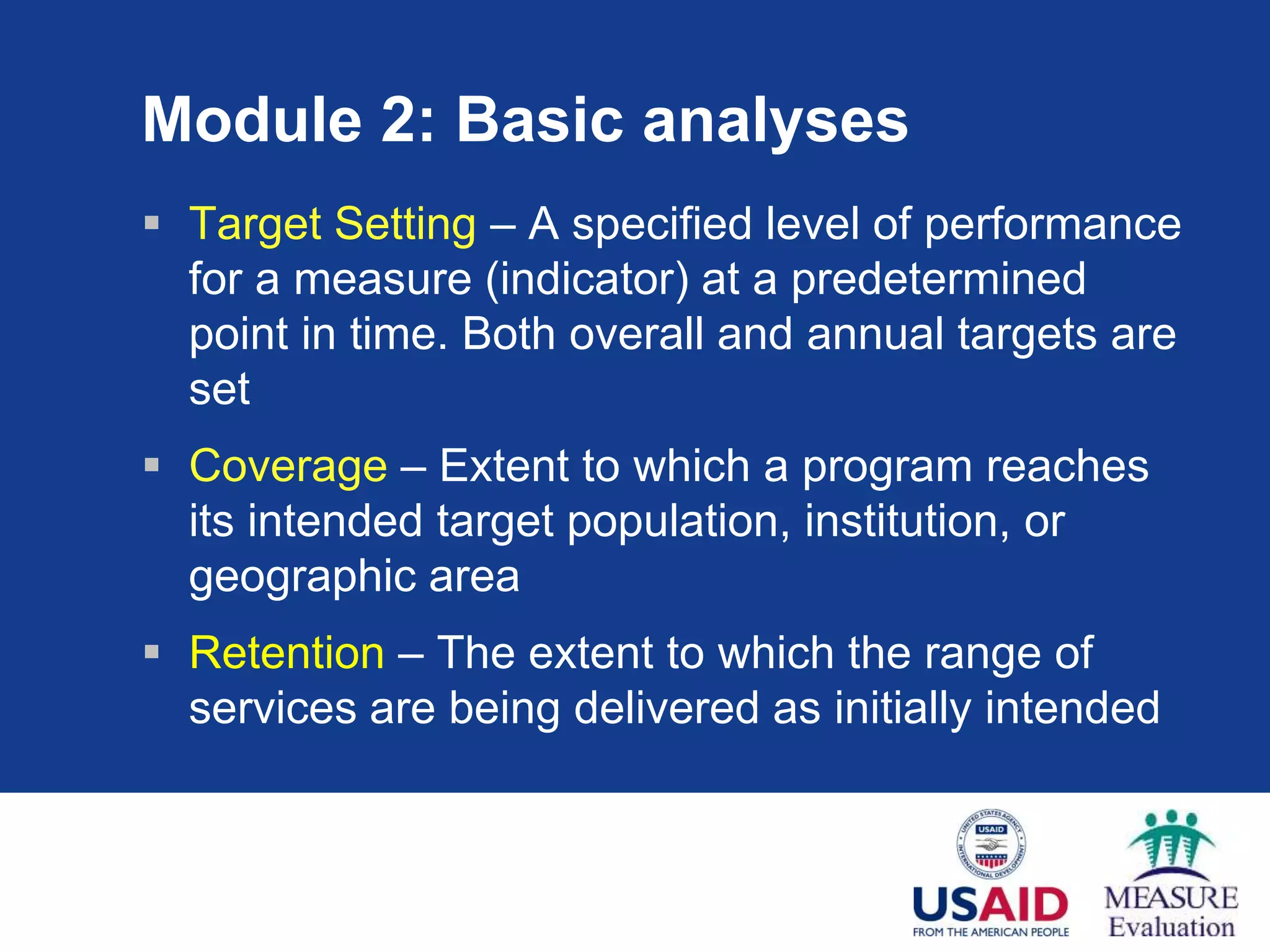
Module 2: Basic analyses
 Target Setting – A specified level of performance
for a measure (indicator) at a predetermined
point in time. Both overall and annual targets are
set
 Coverage – Extent to which a program reaches
its intended target population, institution, or
geographic area
 Retention – The extent to which the range of
services are being delivered as initially intended
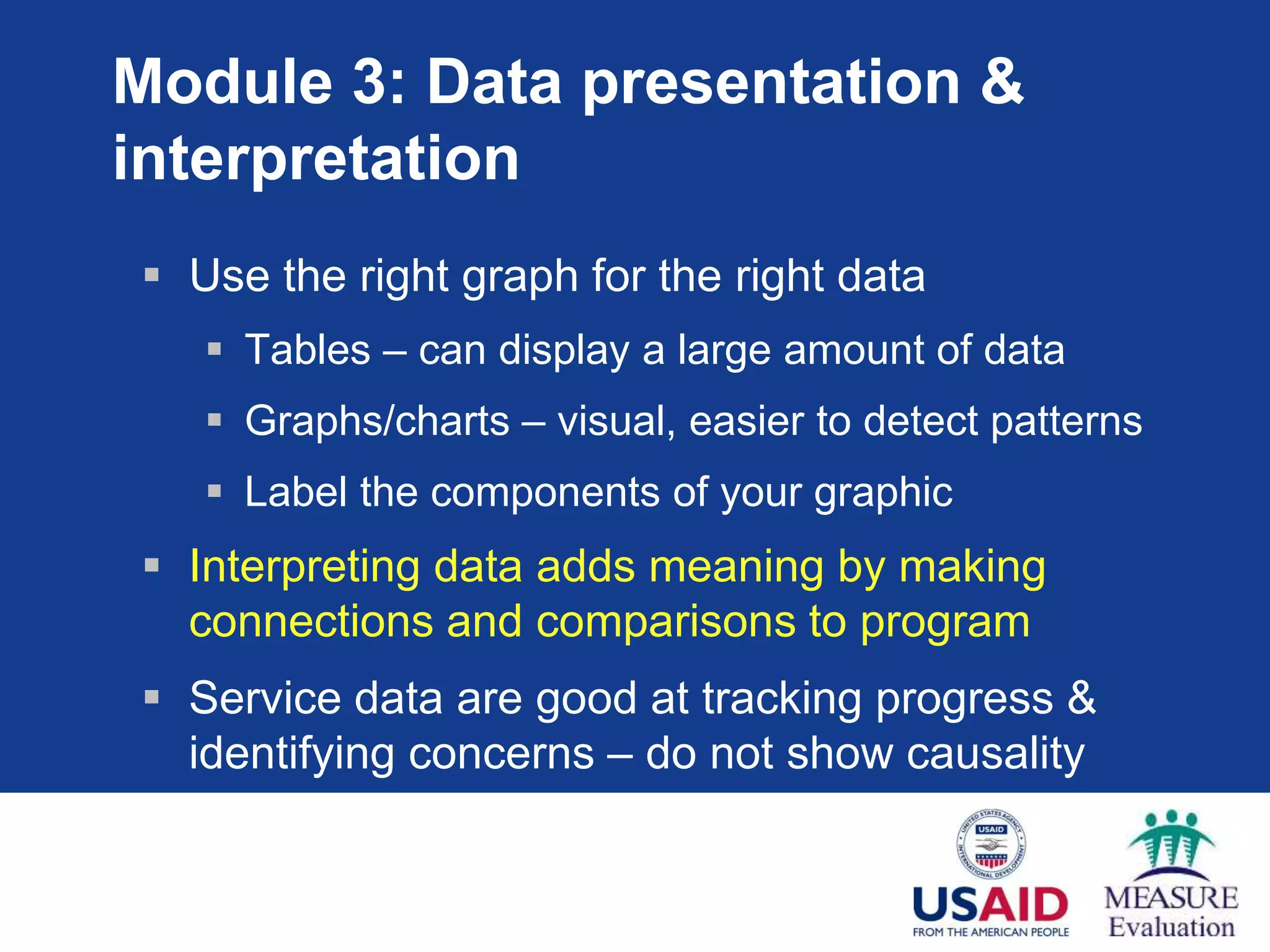
Module 3: Data presentation &
interpretation
 Use the right graph for the right data
 Tables – can display a large amount of data
 Graphs/charts – visual, easier to detect patterns
 Label the components of your graphic
 Interpreting data adds meaning by making
connections and comparisons to program
 Service data are good at tracking progress &
identifying concerns – do not show causality
MEASURE Evaluation is funded by the United States
Agency for International Development (USAID) through
Cooperative Agreement GHA-A-00-08-00003-00. The
views expressed in this publication do not necessarily
reflect the views of USAID or the United States
government.
Visit us online at http://www.cpc.unc.edu/measure.

Key presentation on Analytics.ppt

  • 1.
  • 2.
     Purpose ofanalysis is to provide answers to programmatic questions  Descriptive analyses describe the sample/target population  Descriptive analyses do not define causality – tell you what, not why  All data analysis does not require computers and software Module 1: Data analysis key concepts
  • 3.
    Module 2: Basicanalyses  Target Setting – A specified level of performance for a measure (indicator) at a predetermined point in time. Both overall and annual targets are set  Coverage – Extent to which a program reaches its intended target population, institution, or geographic area  Retention – The extent to which the range of services are being delivered as initially intended
  • 4.
    Module 3: Datapresentation & interpretation  Use the right graph for the right data  Tables – can display a large amount of data  Graphs/charts – visual, easier to detect patterns  Label the components of your graphic  Interpreting data adds meaning by making connections and comparisons to program  Service data are good at tracking progress & identifying concerns – do not show causality
  • 5.
    MEASURE Evaluation isfunded by the United States Agency for International Development (USAID) through Cooperative Agreement GHA-A-00-08-00003-00. The views expressed in this publication do not necessarily reflect the views of USAID or the United States government. Visit us online at http://www.cpc.unc.edu/measure.