Download as PDF, PPTX
![© Q_PERIOR | Page 4
Figures, Facts, Data
As a leading business and IT consulting company, Q_PERIOR operates successfully around the world.
OFFICES WORLDWIDE
16
MUNICH / HAMBURG / FRANKFURT /
STUTTGART / INGOLSTADT / NUREMBERG /
FREIBURG / ROSENHEIM /
VIENNA / ZURICH / BERN /
SARAJEVO / CLUJ-NAPOCA /
NEW YORK / TORONTO / LONDON
32
225
REVENUE 2020 [MIO. €] NATIONS OF EMPLOYEES
5%
REVENUE INCREASE 2020 CONSULTANTS
>1.250
CUSTOMER PROJECTS
>6.000
€](https://image.slidesharecdn.com/denodod-datafest-2021-qperior-ulrichgantenbein-30minutepartnerpresentation1-211230115246/75/Key-Considerations-While-Rolling-Out-Denodo-Platform-4-2048.jpg)
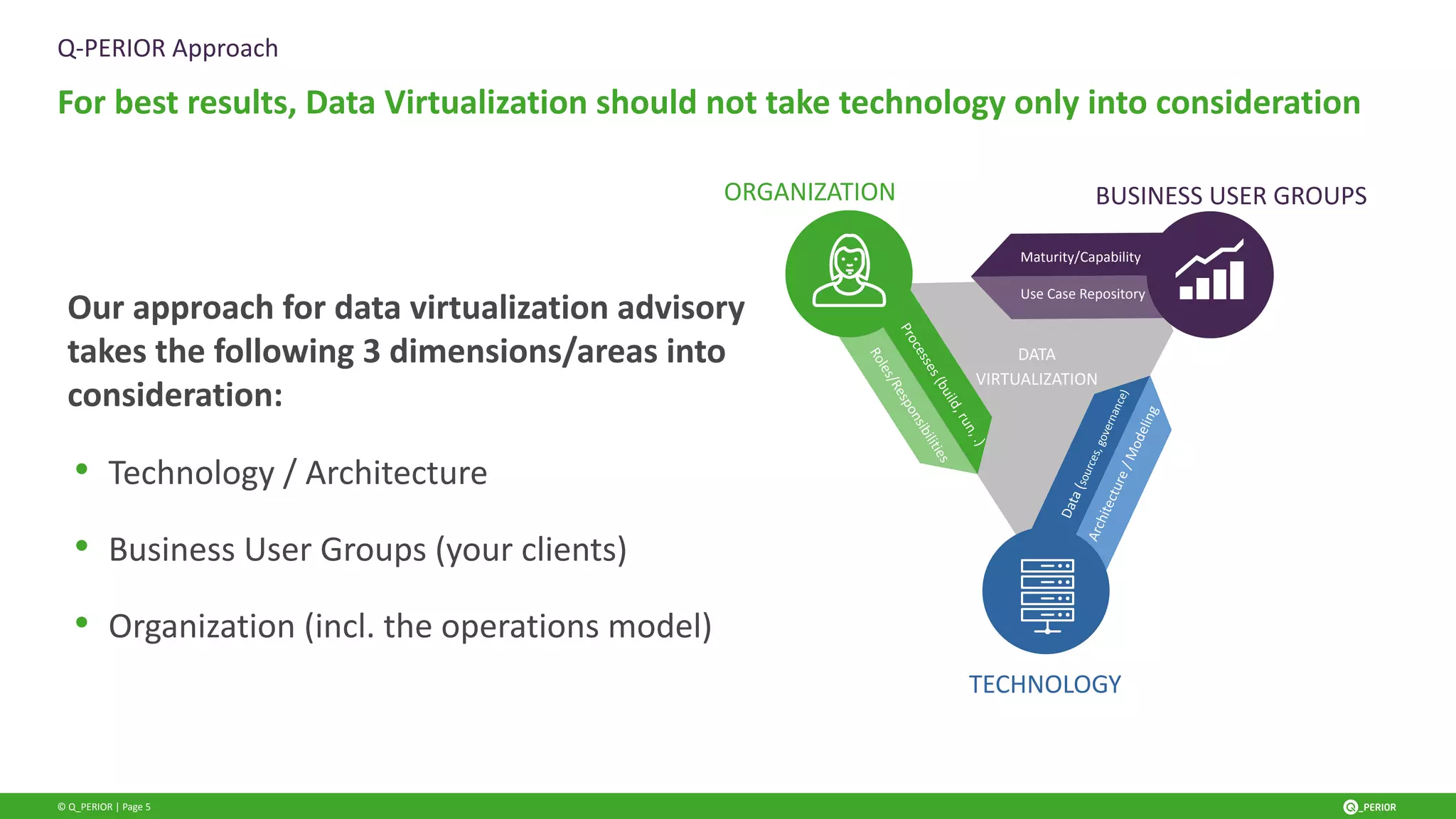
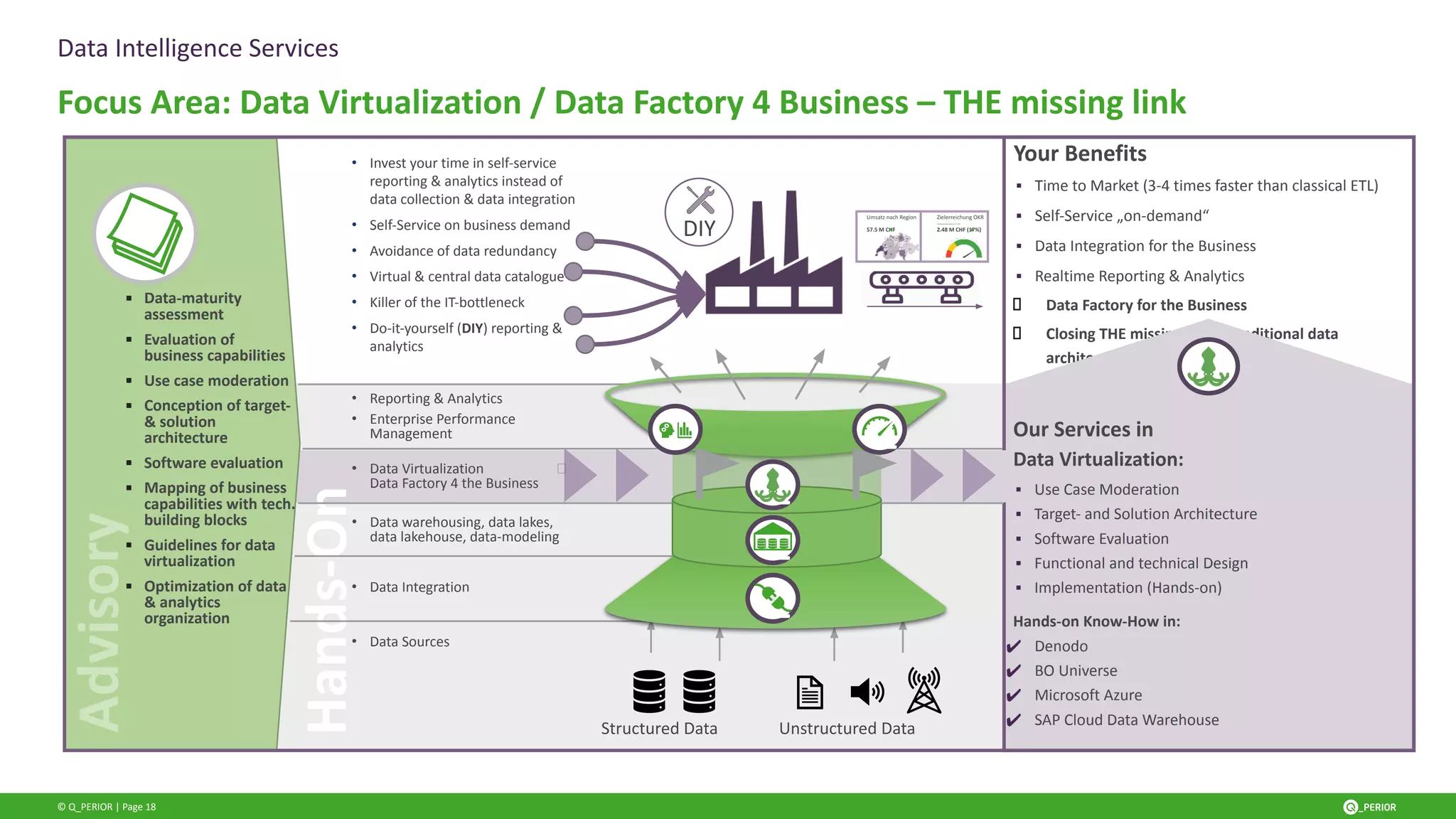

The document outlines Q-Perior's approach to implementing the Denodo platform for data virtualization, highlighting key considerations such as technology, business user needs, and organizational maturity. It details various challenges encountered during client projects—technical, business, and organizational—and emphasizes the advantages of data virtualization like real-time analytics and self-service capabilities. Q-Perior positions data virtualization as a 'data factory for business,' offering services to streamline data management and reporting processes.
Explores the concept of Logical Data Fabric and its relevance to future data management and analytics.
Introduces Q-PERIOR's capabilities in data intelligence and highlights key considerations while deploying Denodo.
Q-PERIOR operates worldwide with an increase in revenue (5% in 2020), employing over 1,250 consultants and managing more than 6,000 projects.
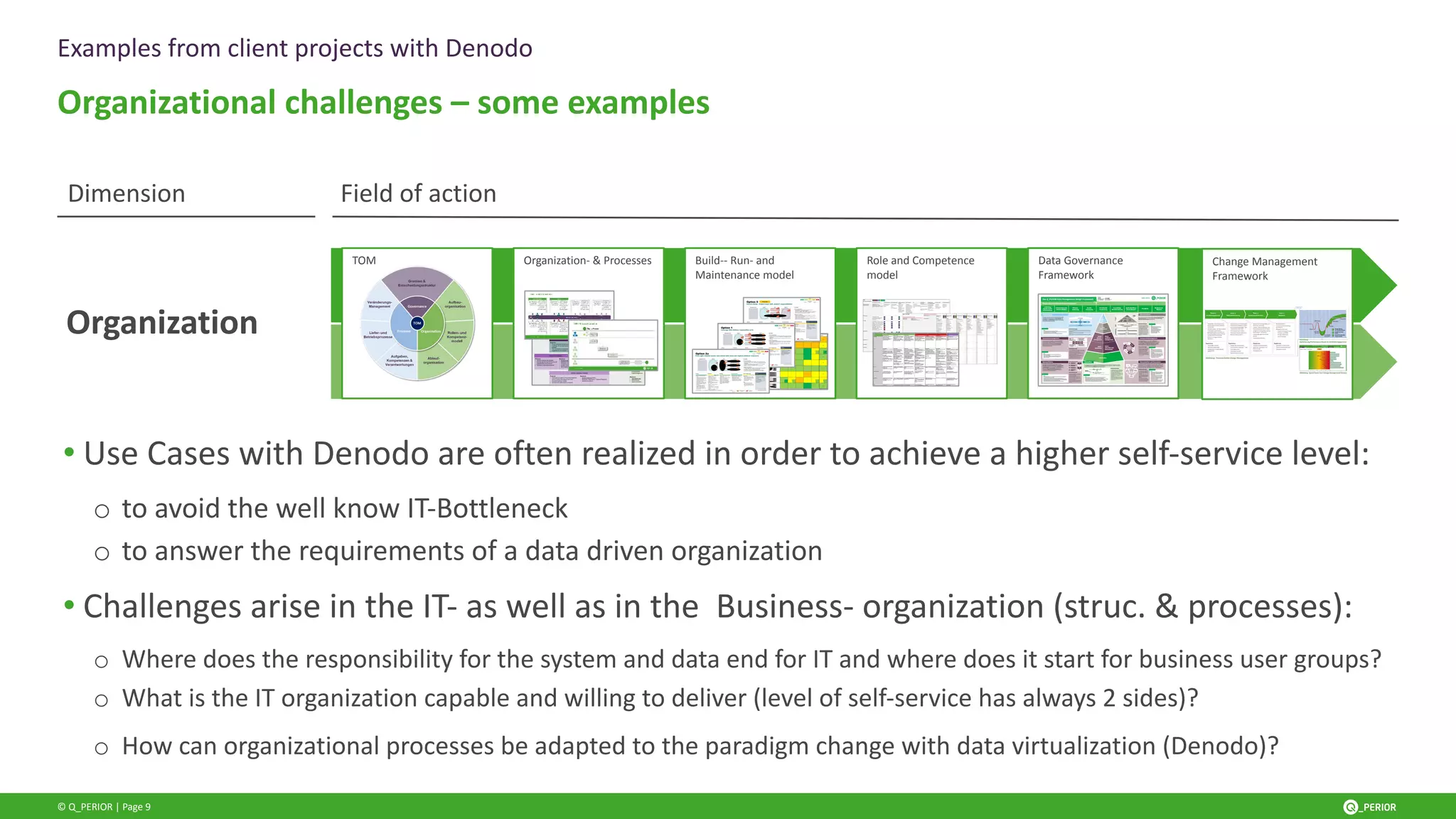
Q-PERIOR's approach to data virtualization includes technology, business user groups, and organizational dimensions to ensure effective integration.
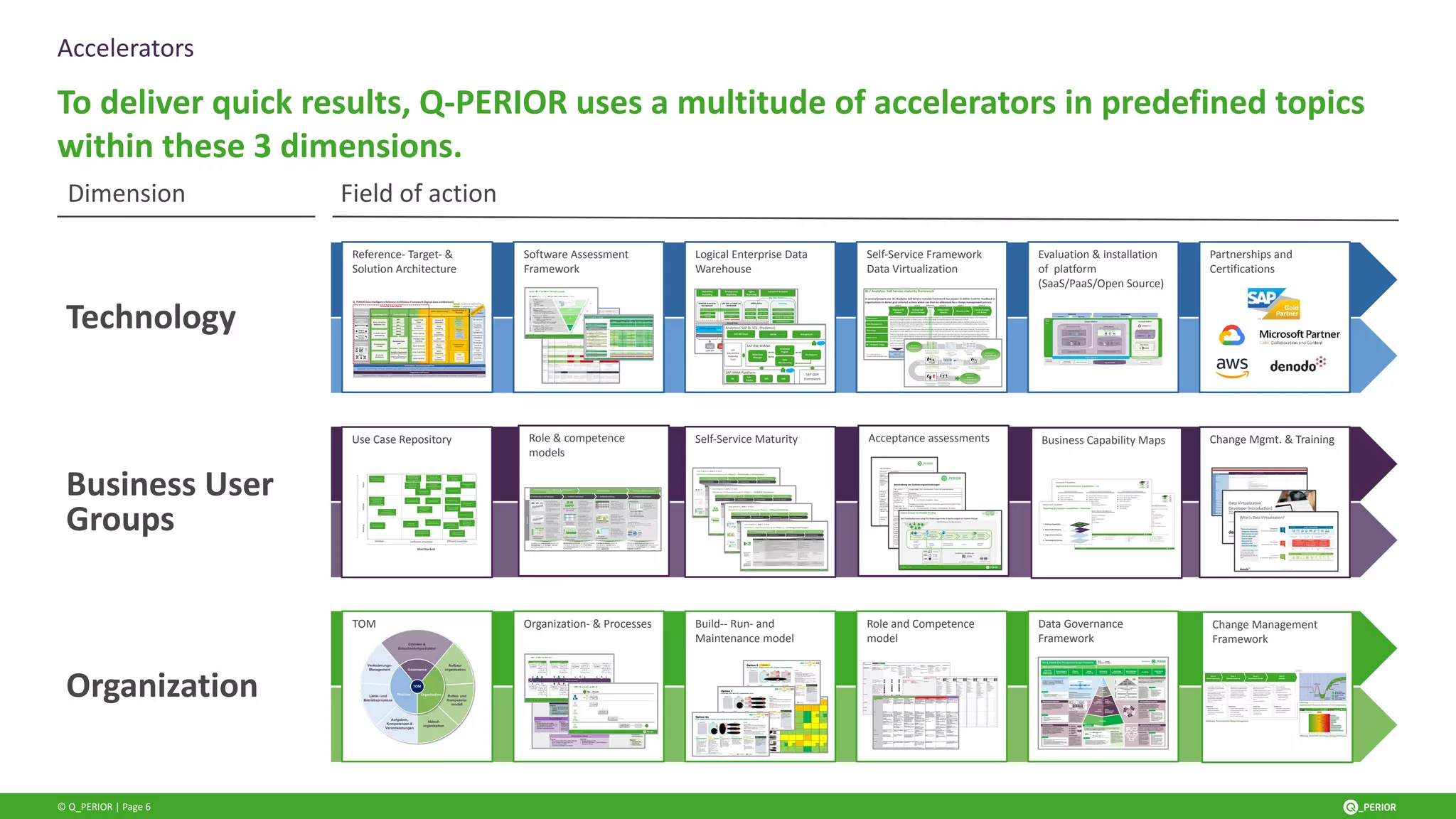
Details on tools and frameworks Q-PERIOR uses across dimensions to facilitate quick data virtualization results.
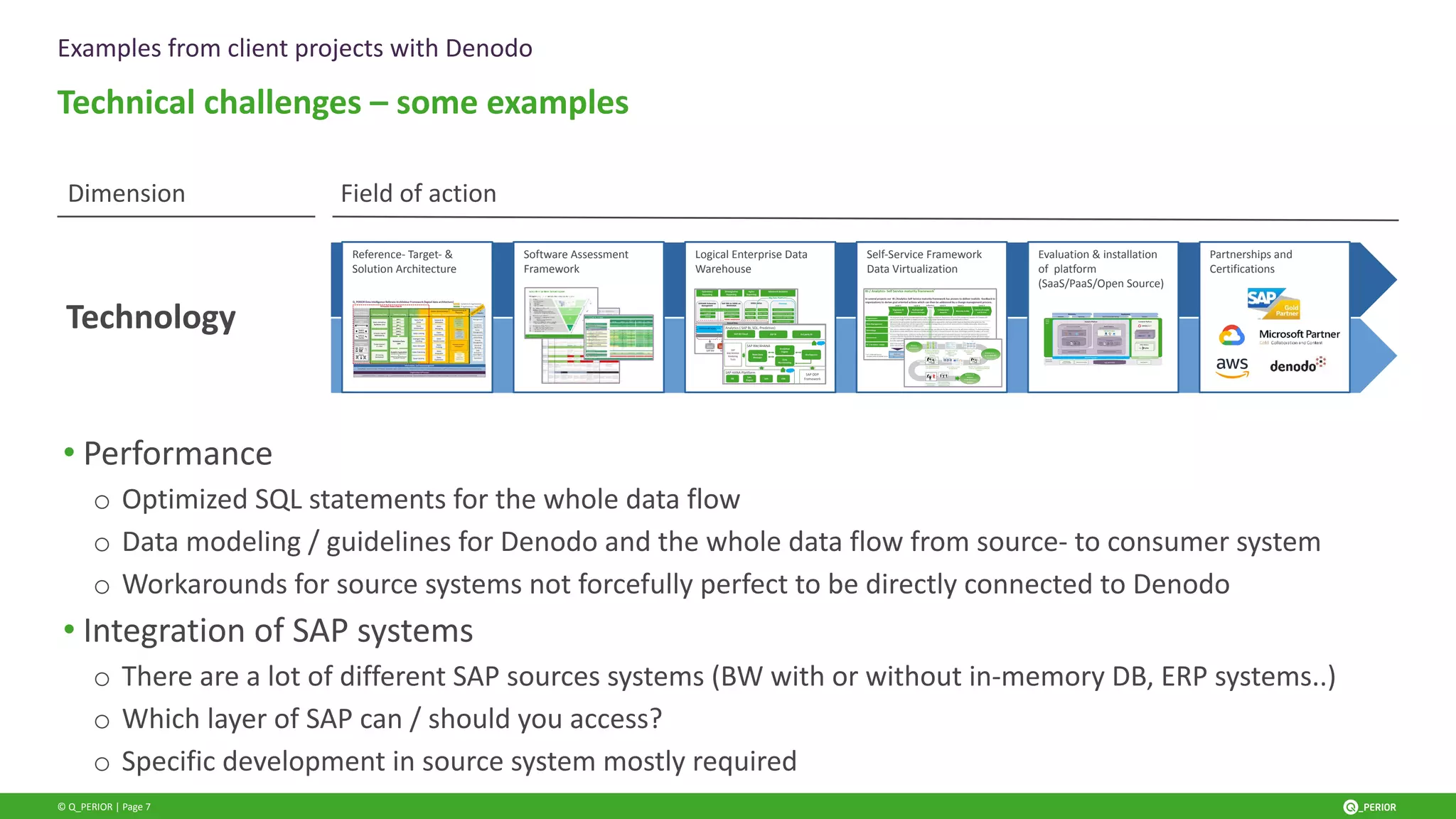
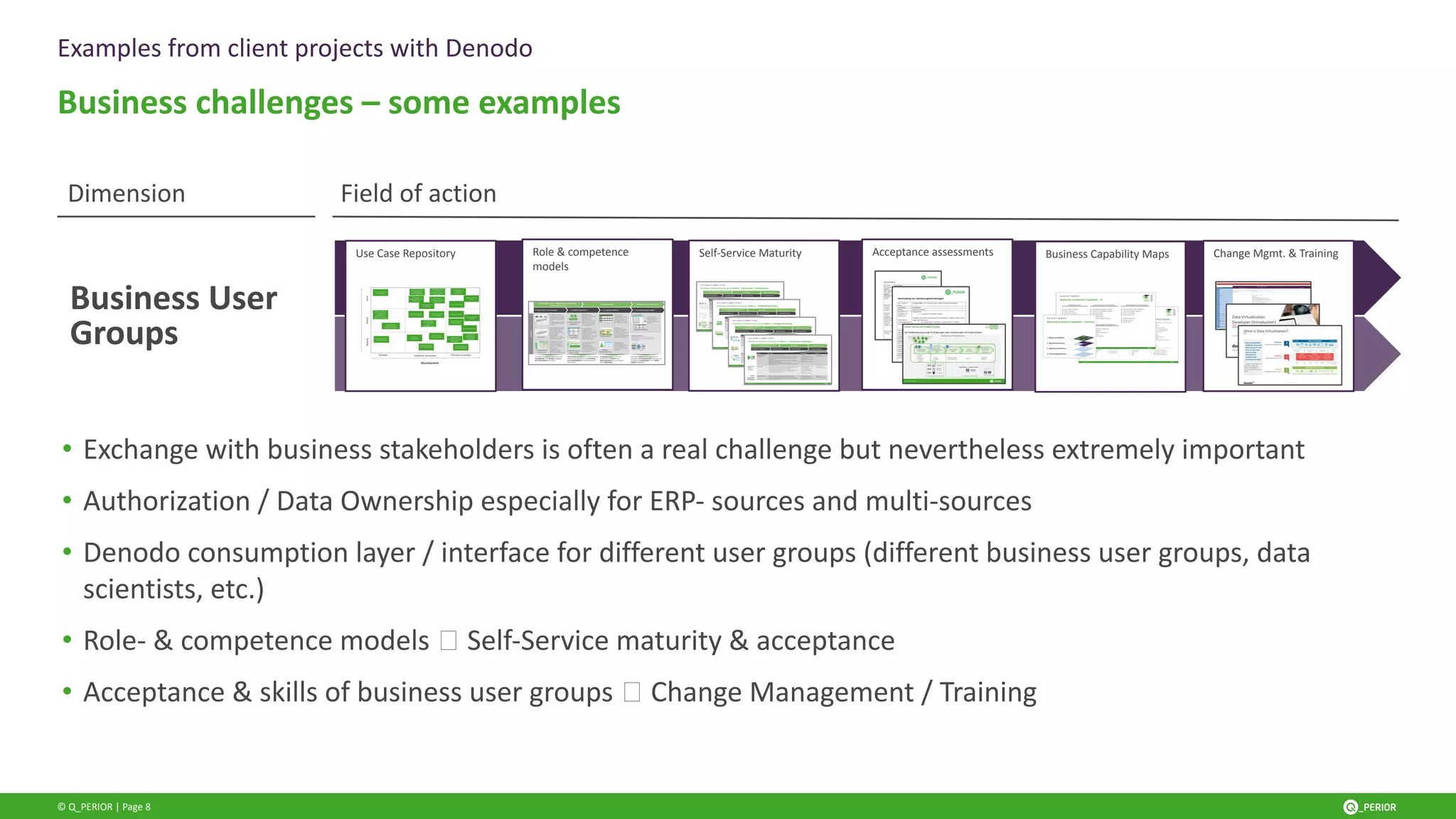
Examples of technical challenges faced with Denodo, including performance optimization and SAP system integration.Focuses on business challenges like stakeholder interaction, data ownership, and role-competence models in Denodo implementation.
Highlights Denodo's advantages such as quick data source integration, authorization layers, and its role in information as a service.
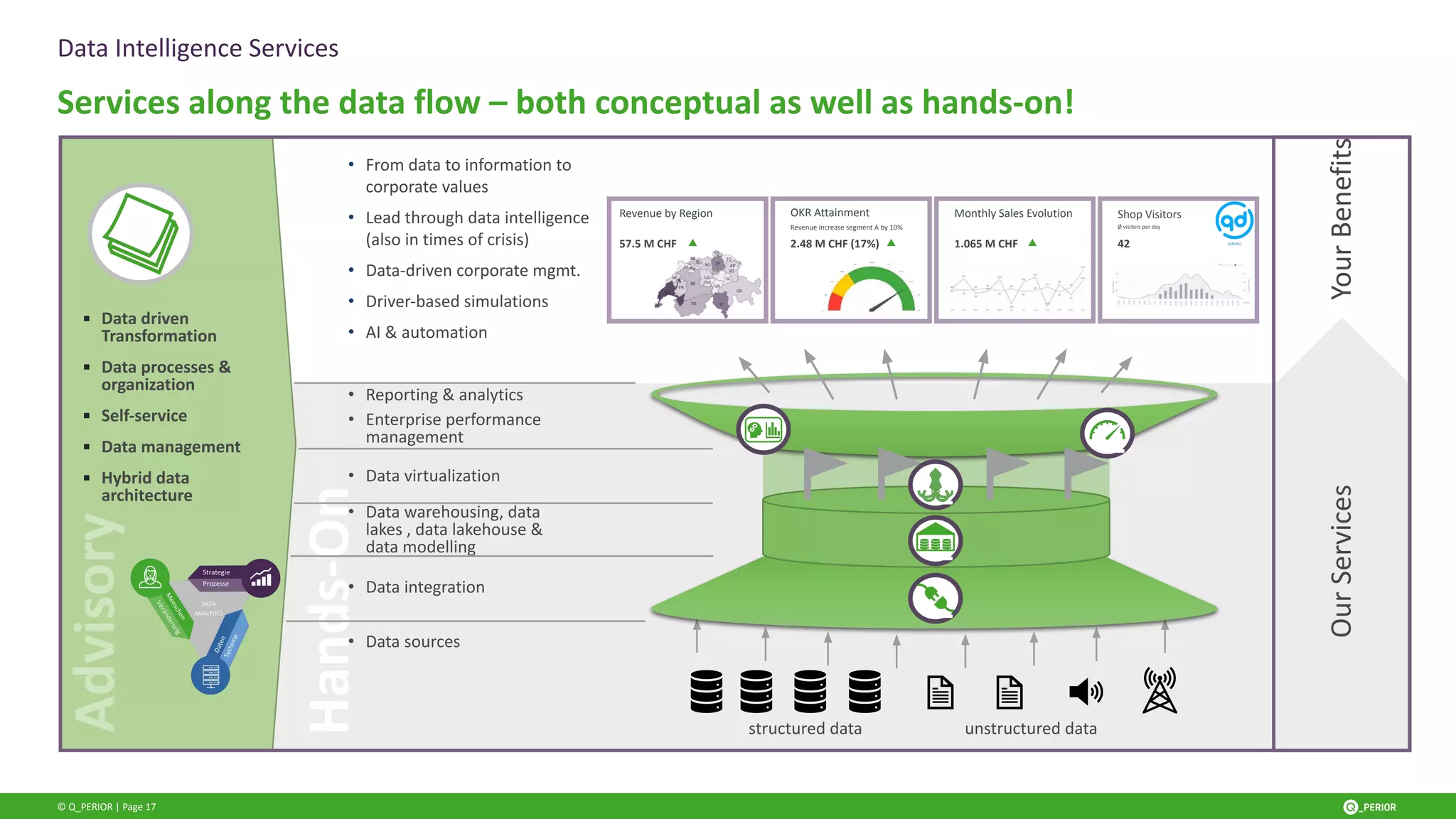
Showcases Q-PERIOR's services in data management, including hands-on advisory and self-service analytics for effective data process management.
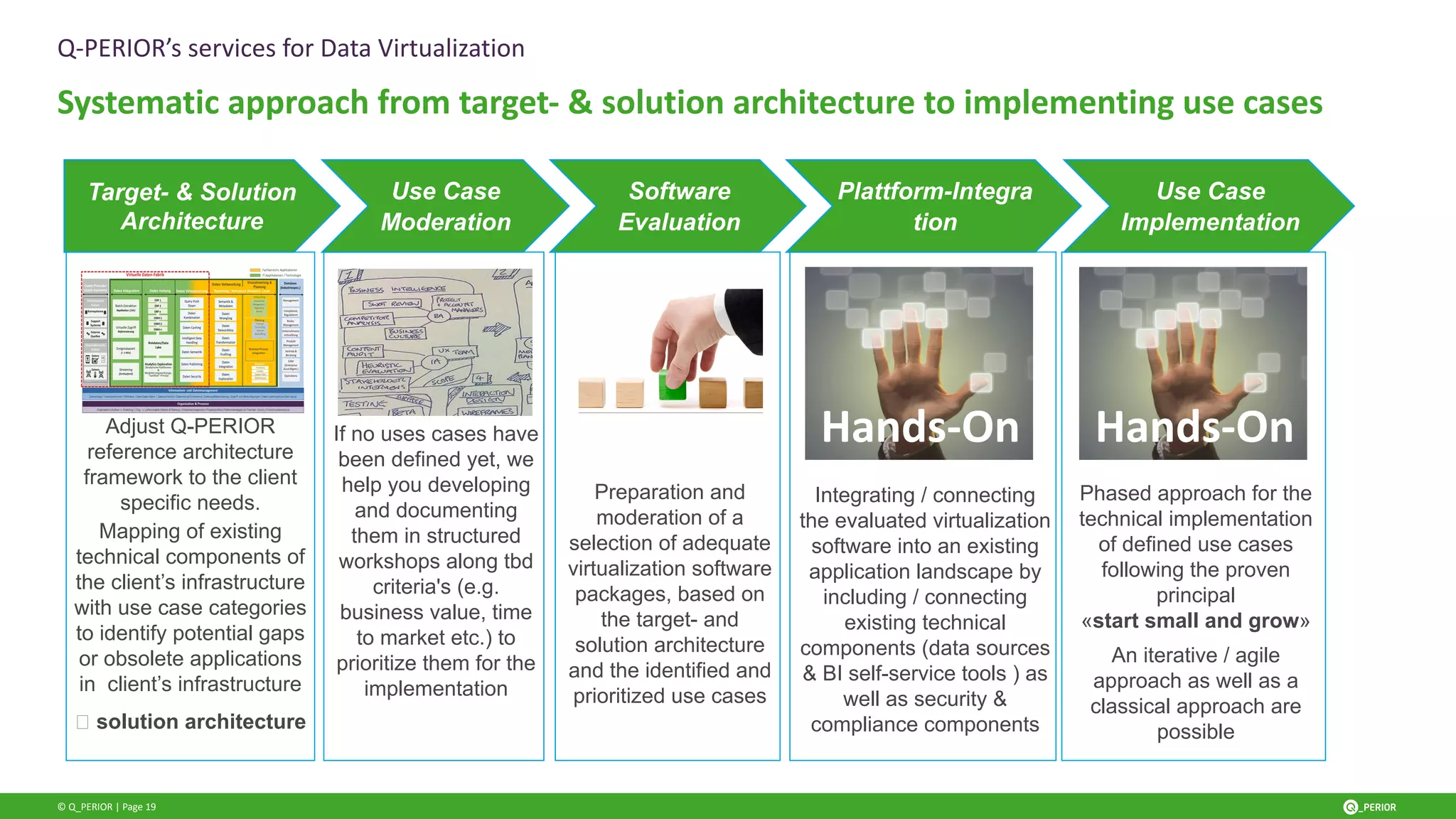
Explains Q-PERIOR's structured approach to implementing effective data virtualization and providing targeted solutions for use cases.
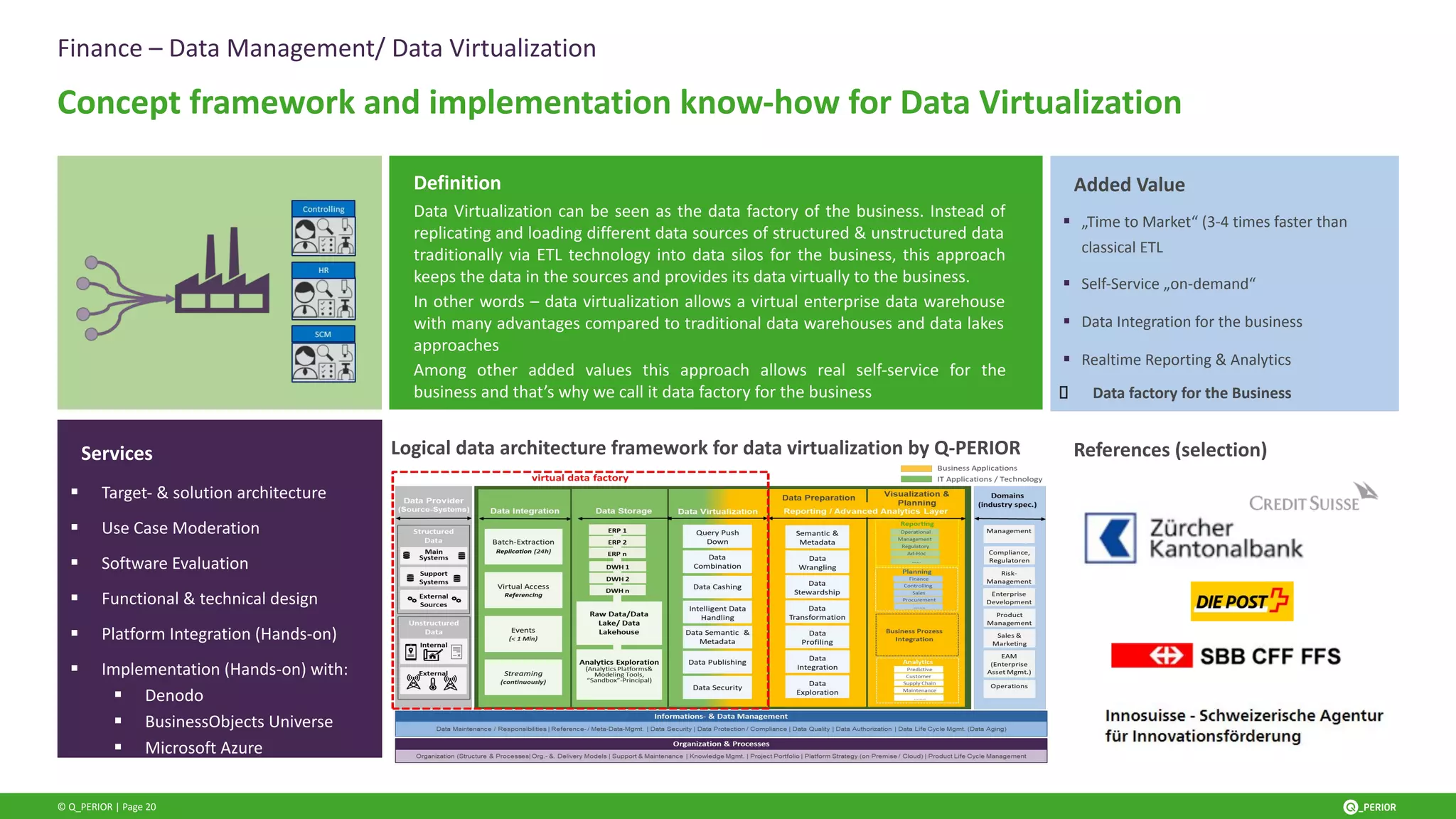
Defines data virtualization as a modern data factory that enables real-time analytics, agility, and self-service, avoiding traditional data silos.
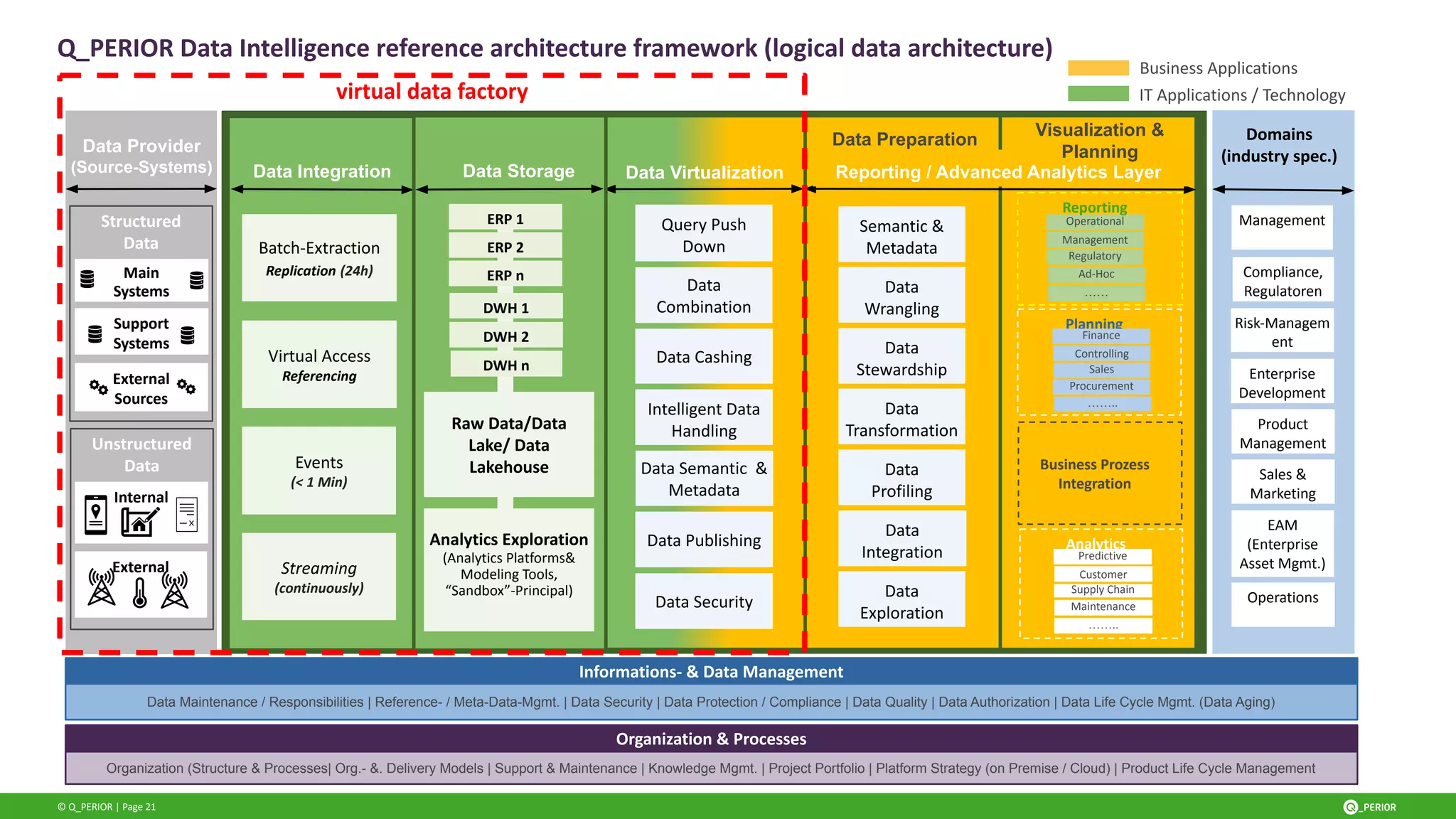
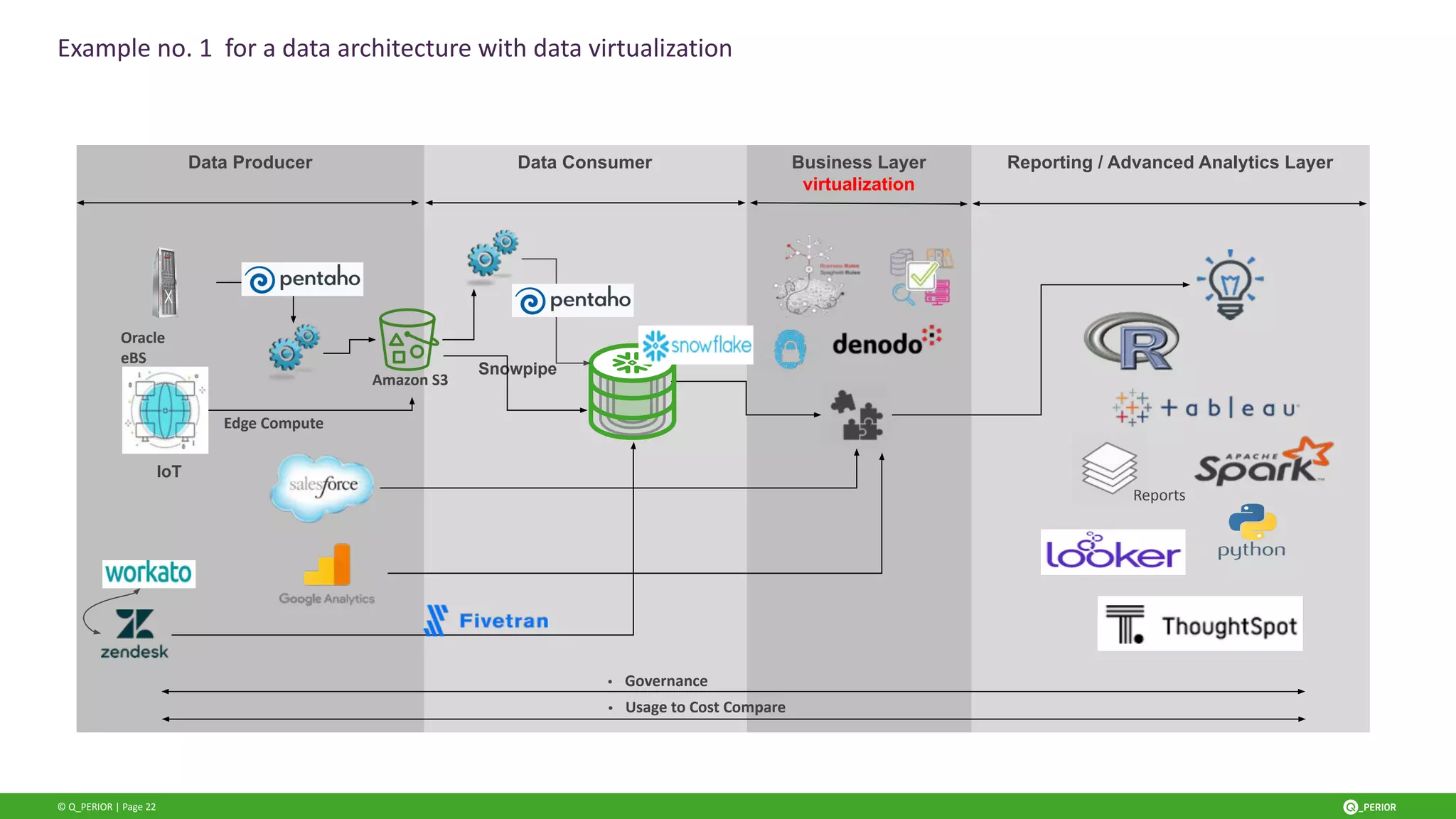
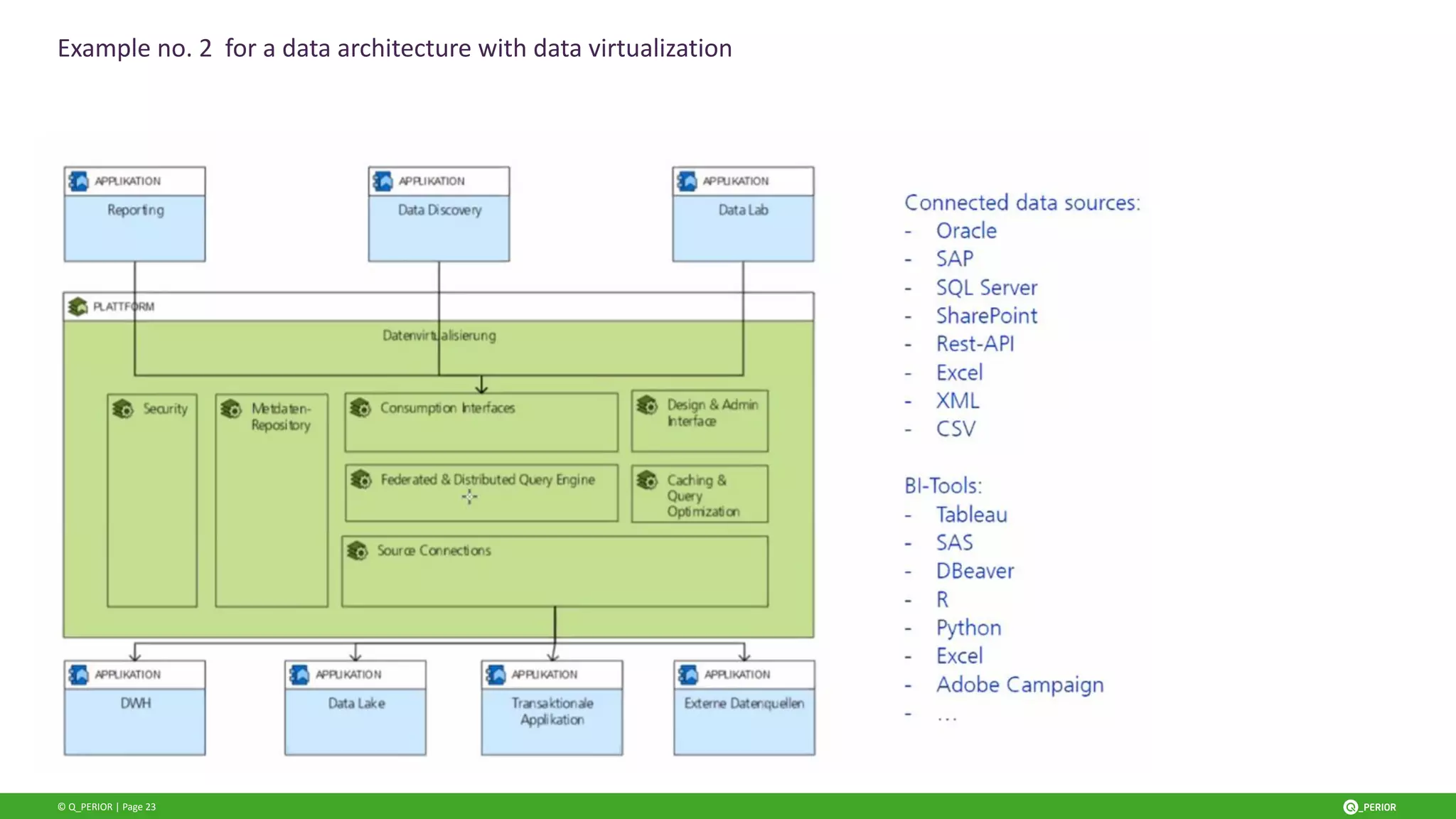
Presents examples of data architecture using virtualization, illustrating integration strategies and design for effective data management.
Final remarks and copyright details for the presentation, ensuring proper usage and distribution of the content.


![[DSC Europe 25] Dusan Jovicic - AI Story: From on-prem to cloud and back agai...](https://cdn.slidesharecdn.com/ss_thumbnails/8kp49m6uq22ifnbwhfnk-2-251205085715-964d11a6-thumbnail.jpg?width=640&height=640&fit=bounds)


![[DSC Europe 25] Boris Perkovic - Lost in performance.pptx](https://cdn.slidesharecdn.com/ss_thumbnails/uq5hrp7vsuahqkxzifux-1-251204082258-fd2ee09d-thumbnail.jpg?width=640&height=640&fit=bounds)
![[DSC Europe 25] Marija Vlajkovic & Andrea Radonjanin - Integration of AI tool...](https://cdn.slidesharecdn.com/ss_thumbnails/qf1jrglttoc3bm8s3aop-final-integration-of-ai-tools-251208151905-394f3a6a-thumbnail.jpg?width=640&height=640&fit=bounds)


![[DSC Europe 25] Dragan Vucic - Building the Learning Organization - How AI Tr...](https://cdn.slidesharecdn.com/ss_thumbnails/8brigo2sbu6qur6gxrra-7-251205085715-6ae07d24-thumbnail.jpg?width=640&height=640&fit=bounds)


![[DSC Europe 25] Max Talanov - Non digital NNs.pptx](https://cdn.slidesharecdn.com/ss_thumbnails/wif8tr3gtua74qvtopke-non-digital-nns-251205090438-26b0eea6-thumbnail.jpg?width=640&height=640&fit=bounds)