A CASE STUDY
BACKGROUND DETAILS
• First published June, 1981.
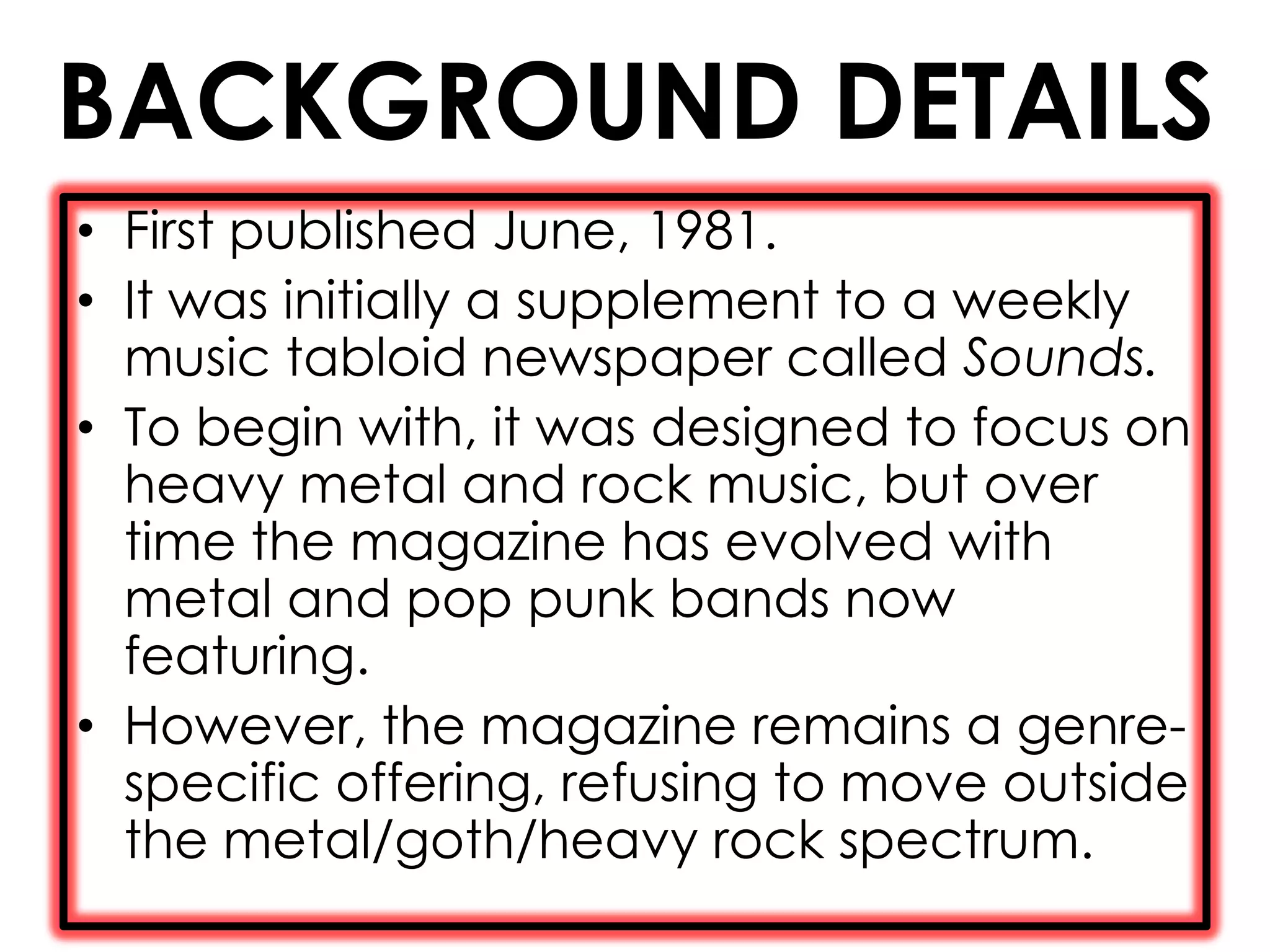
• It was initially a supplement to a weekly
  music tabloid newspaper called Sounds.
• To begin with, it was designed to focus on
  heavy metal and rock music, but over
  time the magazine has evolved with
  metal and pop punk bands now
  featuring.
• However, the magazine remains a genre-
  specific offering, refusing to move outside
  the metal/goth/heavy rock spectrum.
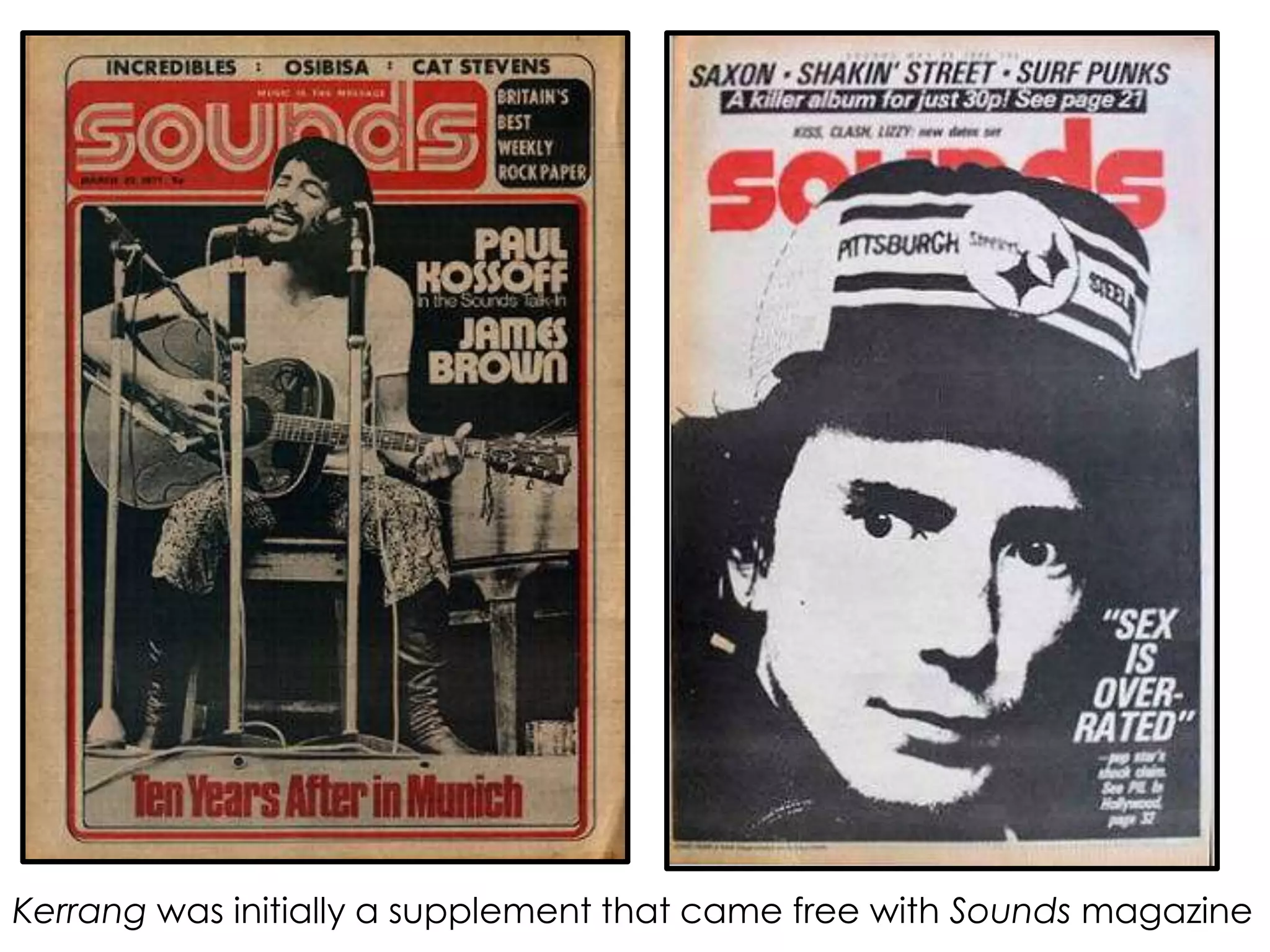
Kerrang was initially a supplement that came free with Sounds magazine
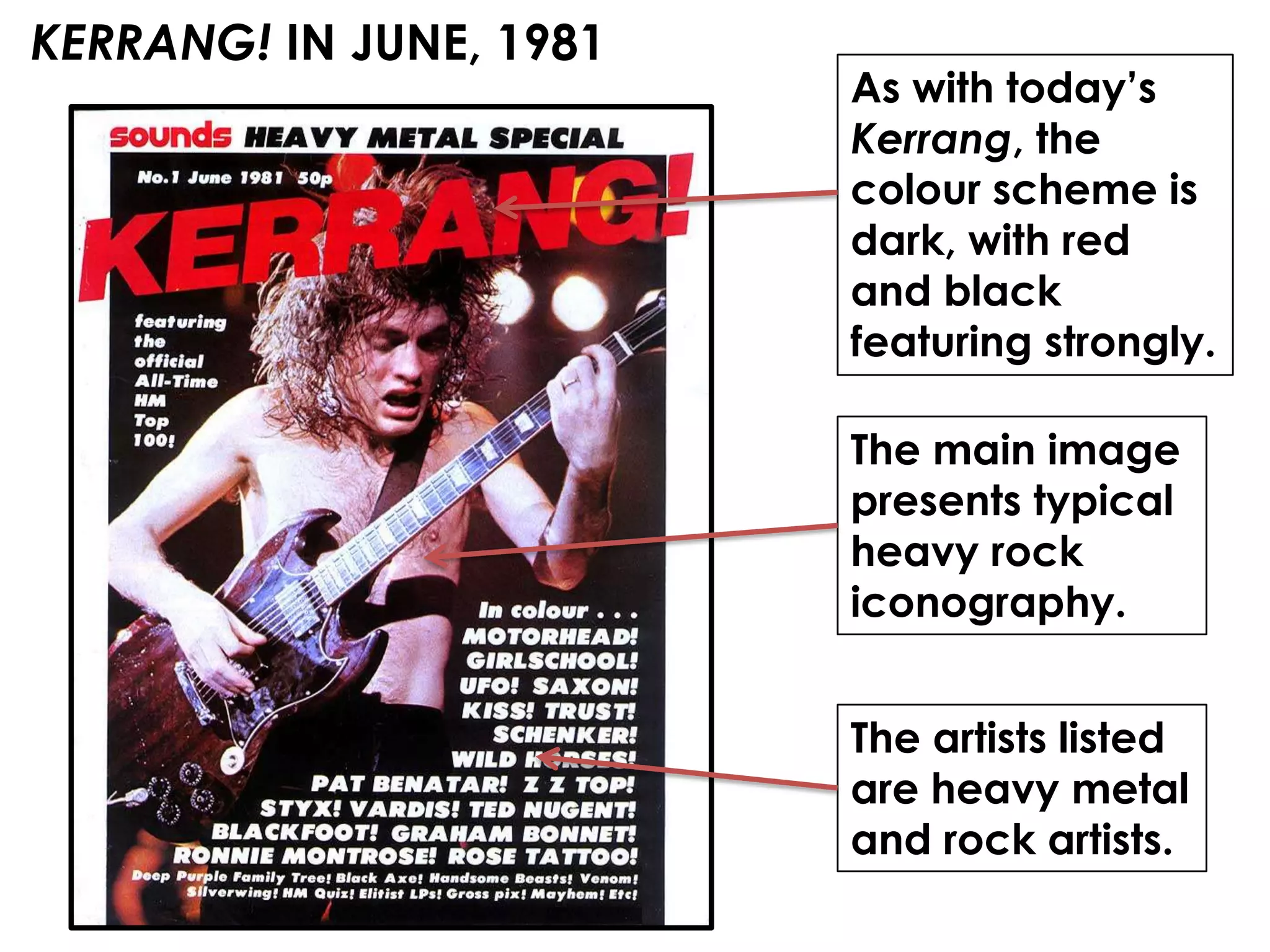
KERRANG! IN JUNE, 1981
                         As with today’s
                         Kerrang, the
                         colour scheme is
                         dark, with red
                         and black
                         featuring strongly.

                         The main image
                         presents typical
                         heavy rock
                         iconography.


                         The artists listed
                         are heavy metal
                         and rock artists.
BACKGROUND DETAILS
• The name of the magazines is
  onomatopoeic, as it mimics the sound
  made by a power chord on an electric
  guitar.
• The magazine has achieved variable
  success over the years with sales rising
  and falling.
• It has tended to adapt to accommodate
  new sounds on the rock/metal scene. This
  has helped to increase sales in dark
  times. However, it has received criticism
  for this.
KERRANG! TODAY
• Issued weekly.
• Costs £2.20 per issue.
• Consists of approximately 70 A4
  pages, produced on glossy, full colour
  paper.
• Follows a standard magazine
  layout, combining full colour images with
  bite-size snippets of text on some pages
  and full colour articles that combine
  image and text on others.
• Kerrang! Has its own website, radio
  station and TV channel.
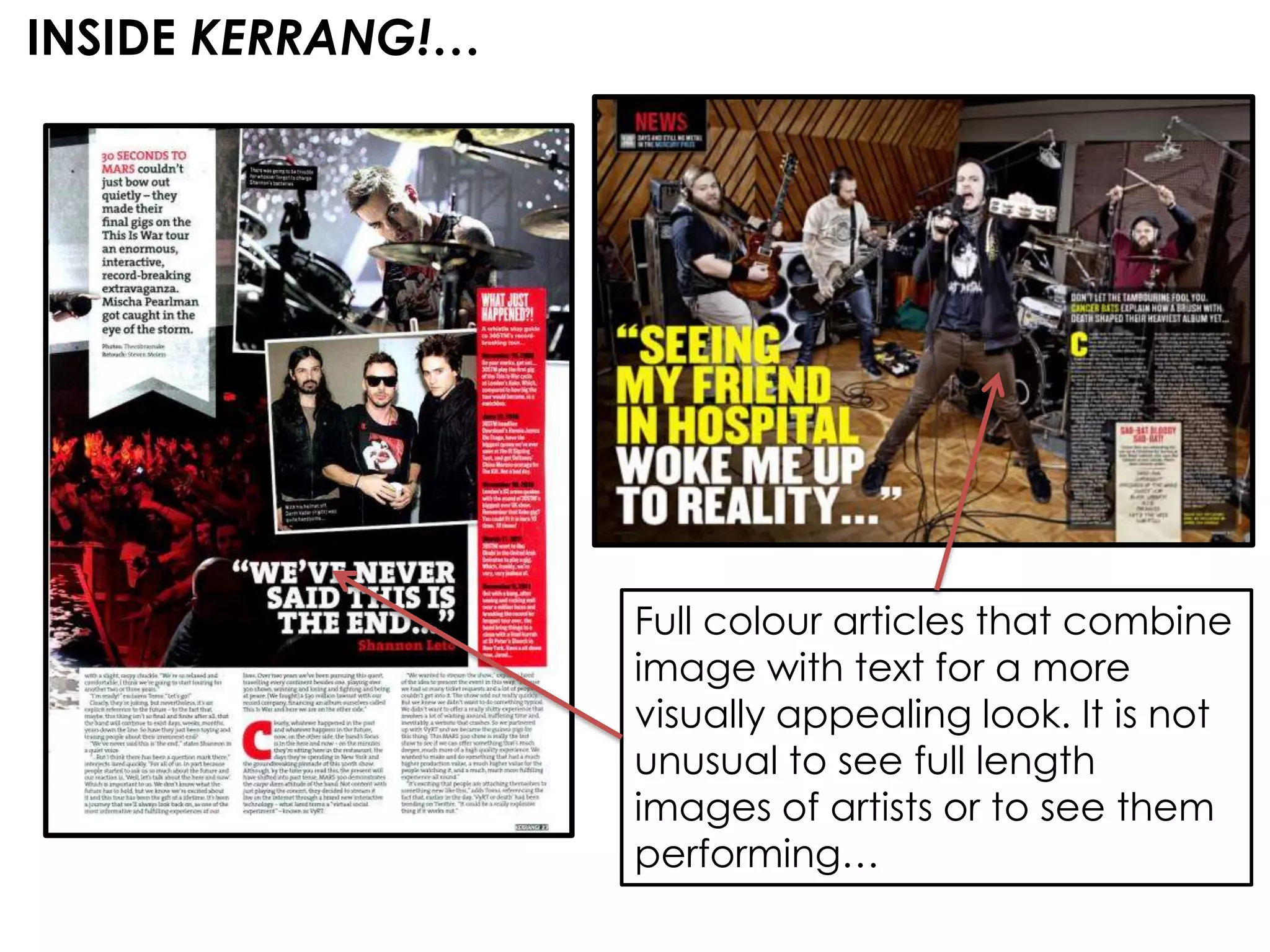
INSIDE KERRANG!…


                   Full colour articles that combine
                   image with text for a more
                   visually appealing look. It is not
                   unusual to see full length
                   images of artists or to see them
                   performing…
TARGET AUDIENCE
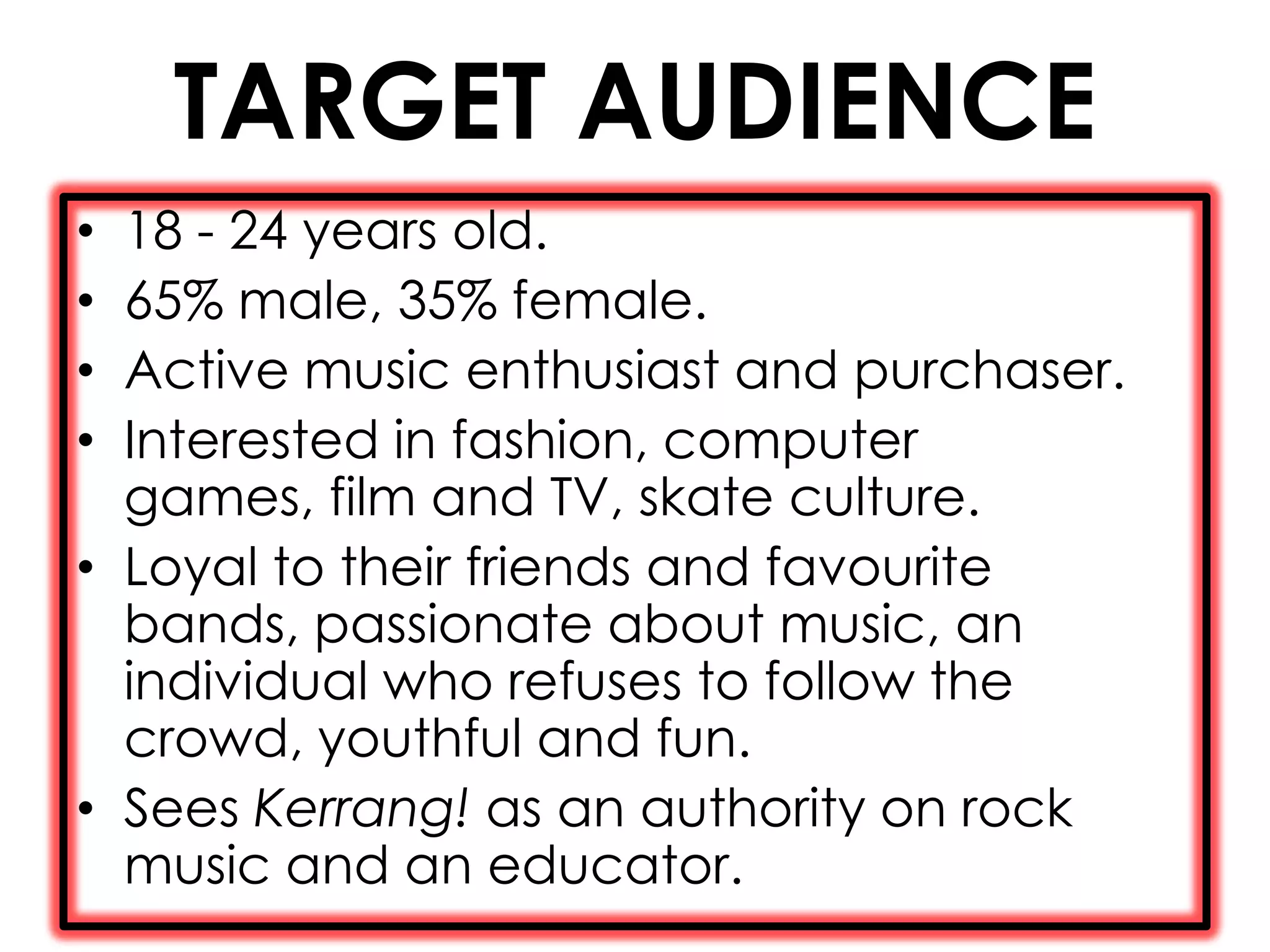
• 18 - 24 years old.
• 65% male, 35% female.
• Active music enthusiast and purchaser.
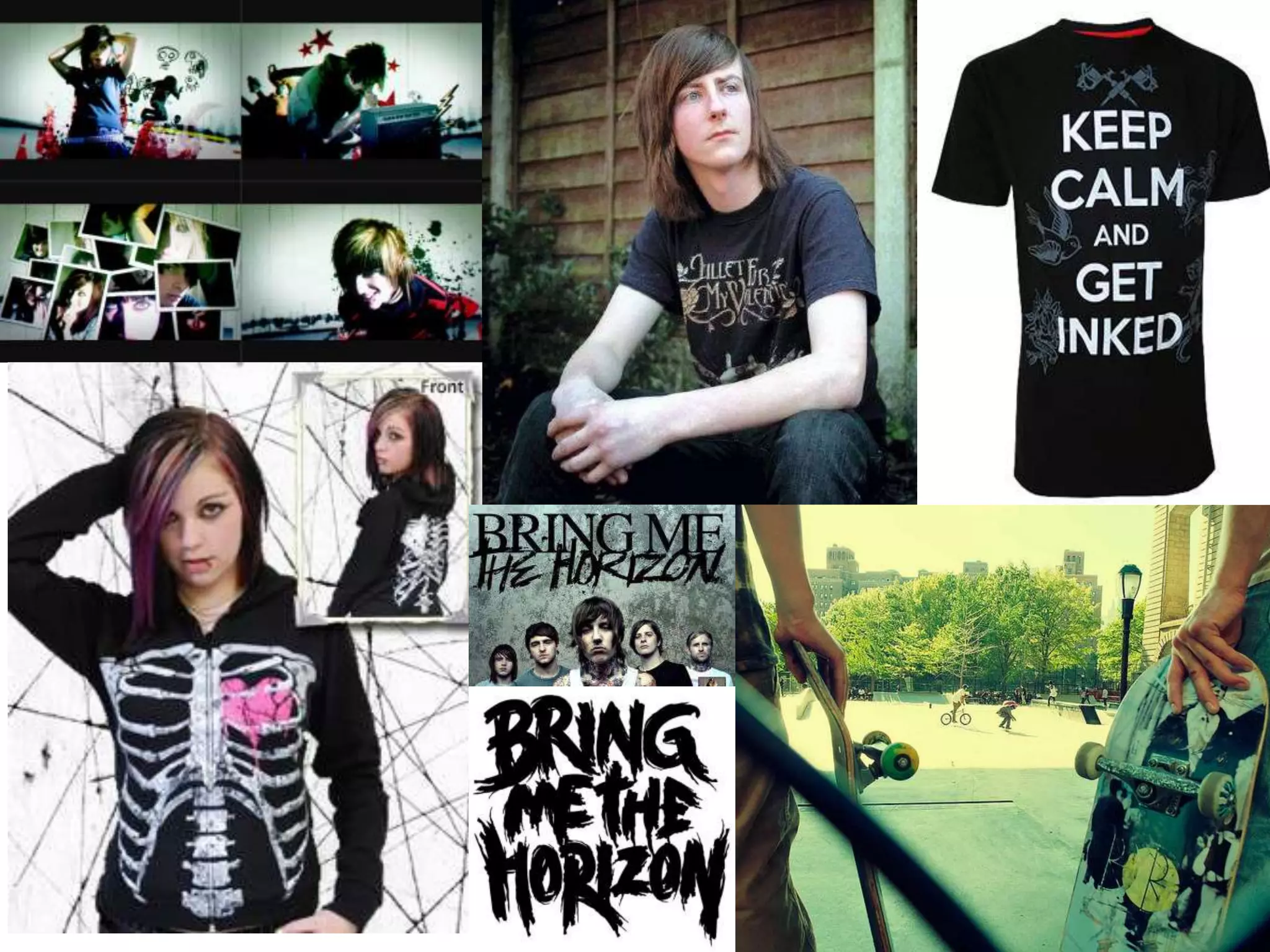
• Interested in fashion, computer
  games, film and TV, skate culture.
• Loyal to their friends and favourite
  bands, passionate about music, an
  individual who refuses to follow the
  crowd, youthful and fun.
• Sees Kerrang! as an authority on rock
  music and an educator.
CONTENT
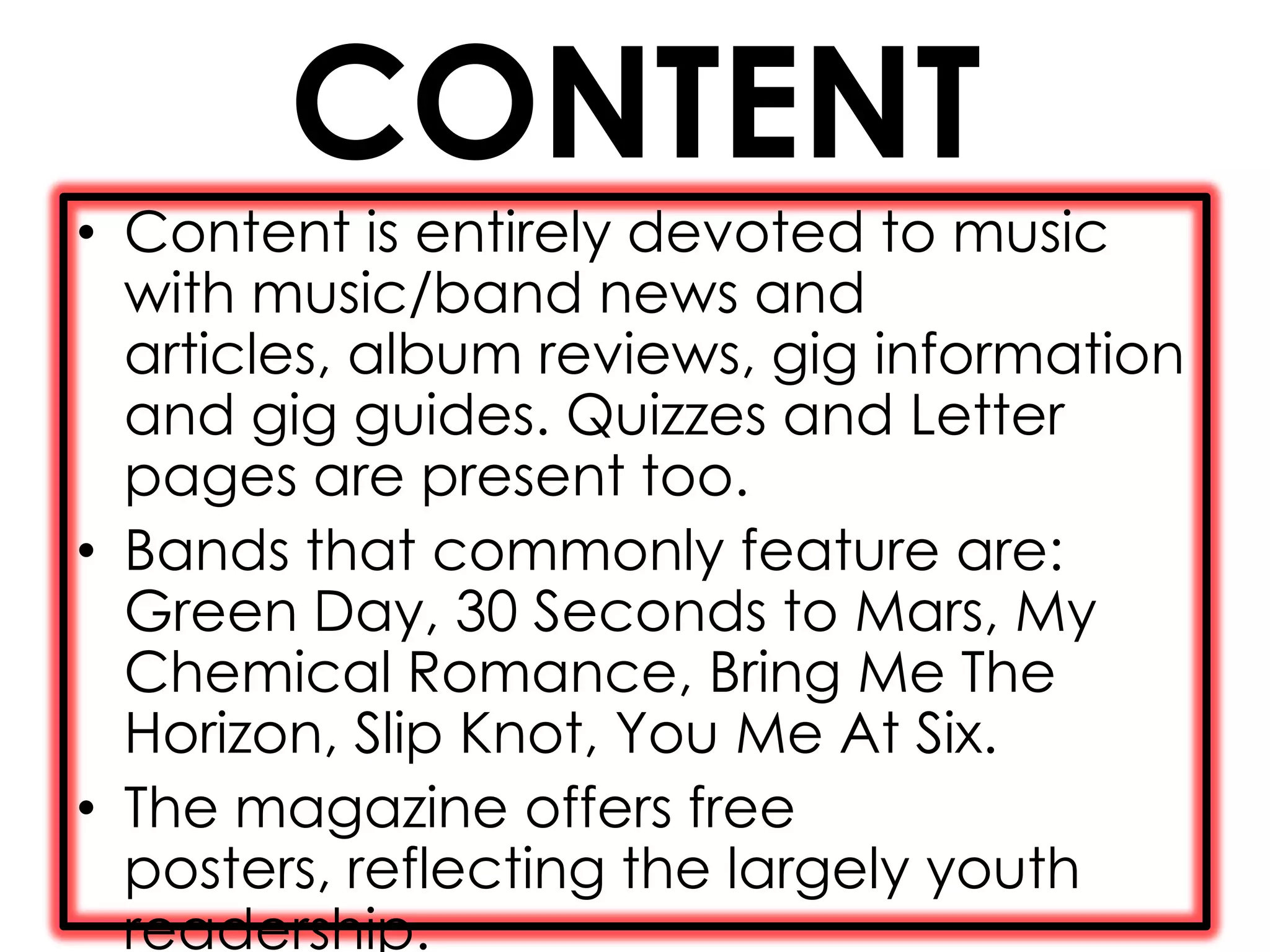
• Content is entirely devoted to music
  with music/band news and
  articles, album reviews, gig information
  and gig guides. Quizzes and Letter
  pages are present too.
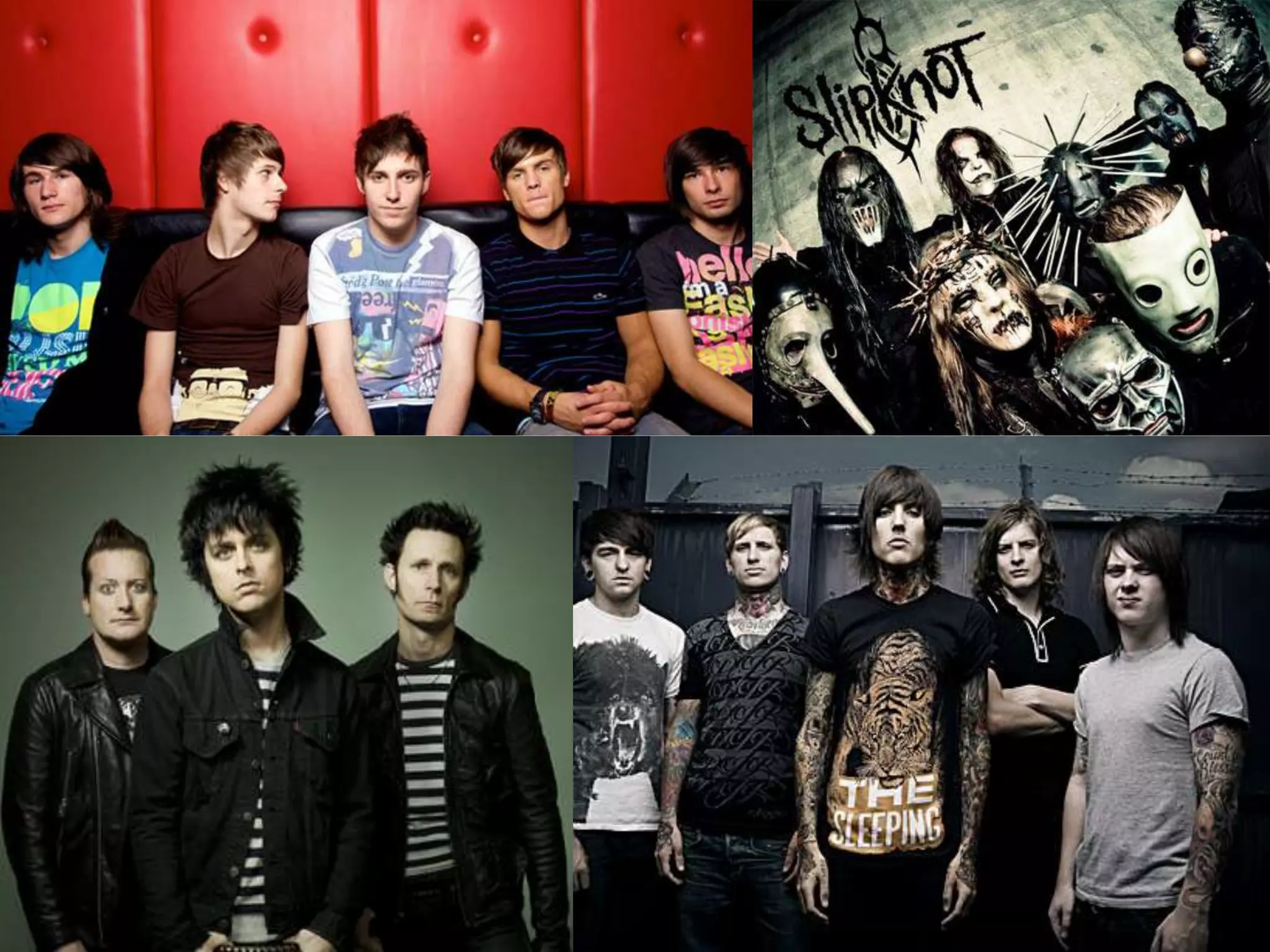
• Bands that commonly feature are:
  Green Day, 30 Seconds to Mars, My
  Chemical Romance, Bring Me The
  Horizon, Slip Knot, You Me At Six.
• The magazine offers free
  posters, reflecting the largely youth
  readership.
STYLE
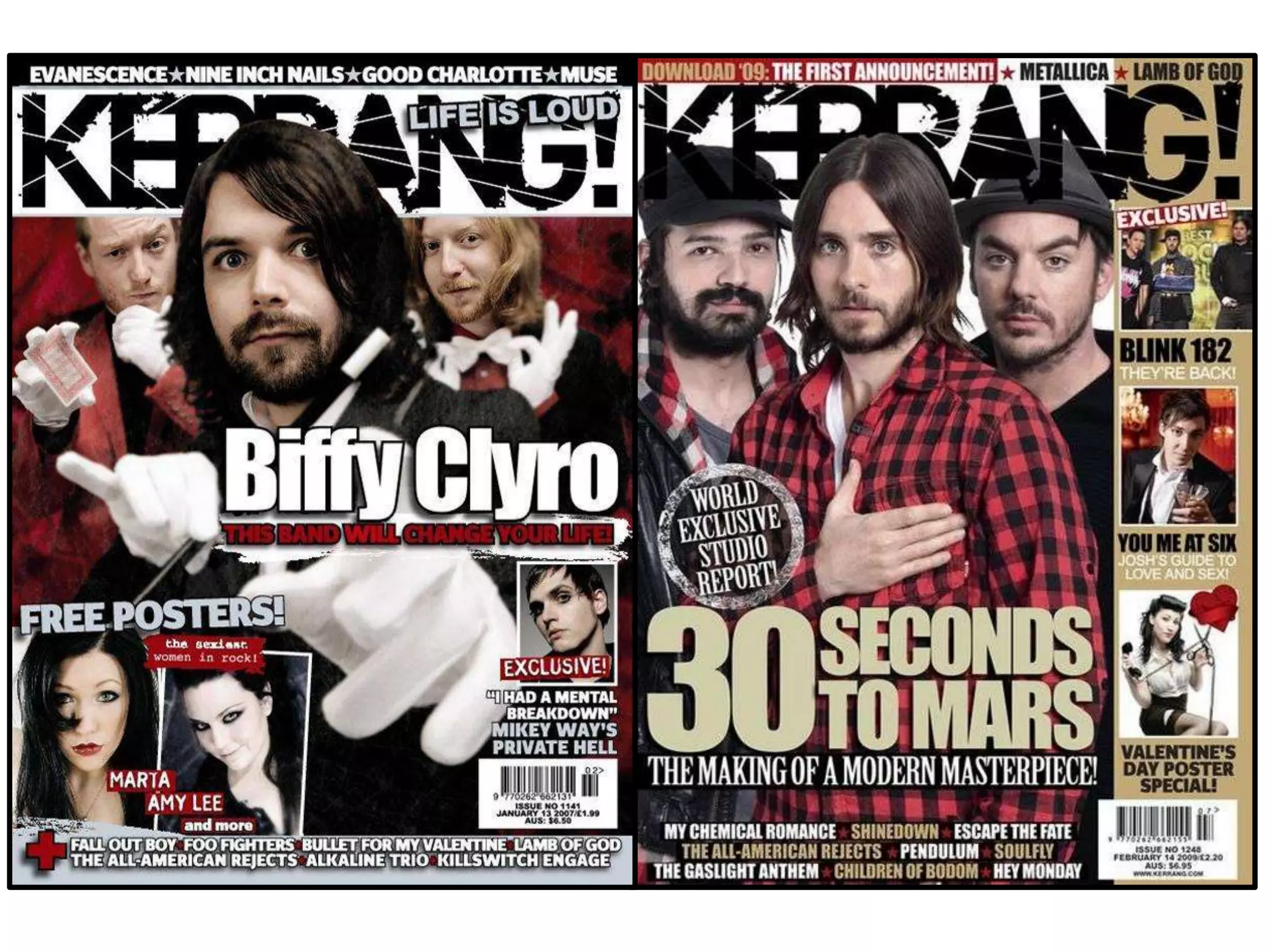
• Kerrang! features a lot of iconography
  associated with metal/rock and the
  scene that surrounds it, e.g.
  tattoos, piercings, dark make-
  up, electronic guitars.
• The magazine is visual, image-heavy.
• The magazine features a lot of
  uppercase text in a distressed font.
• Red and black feature most
  strongly, along with primary colours like
  yellow and blue, creating at times a
  vampiric feel and certainly suggesting a
  male readership.
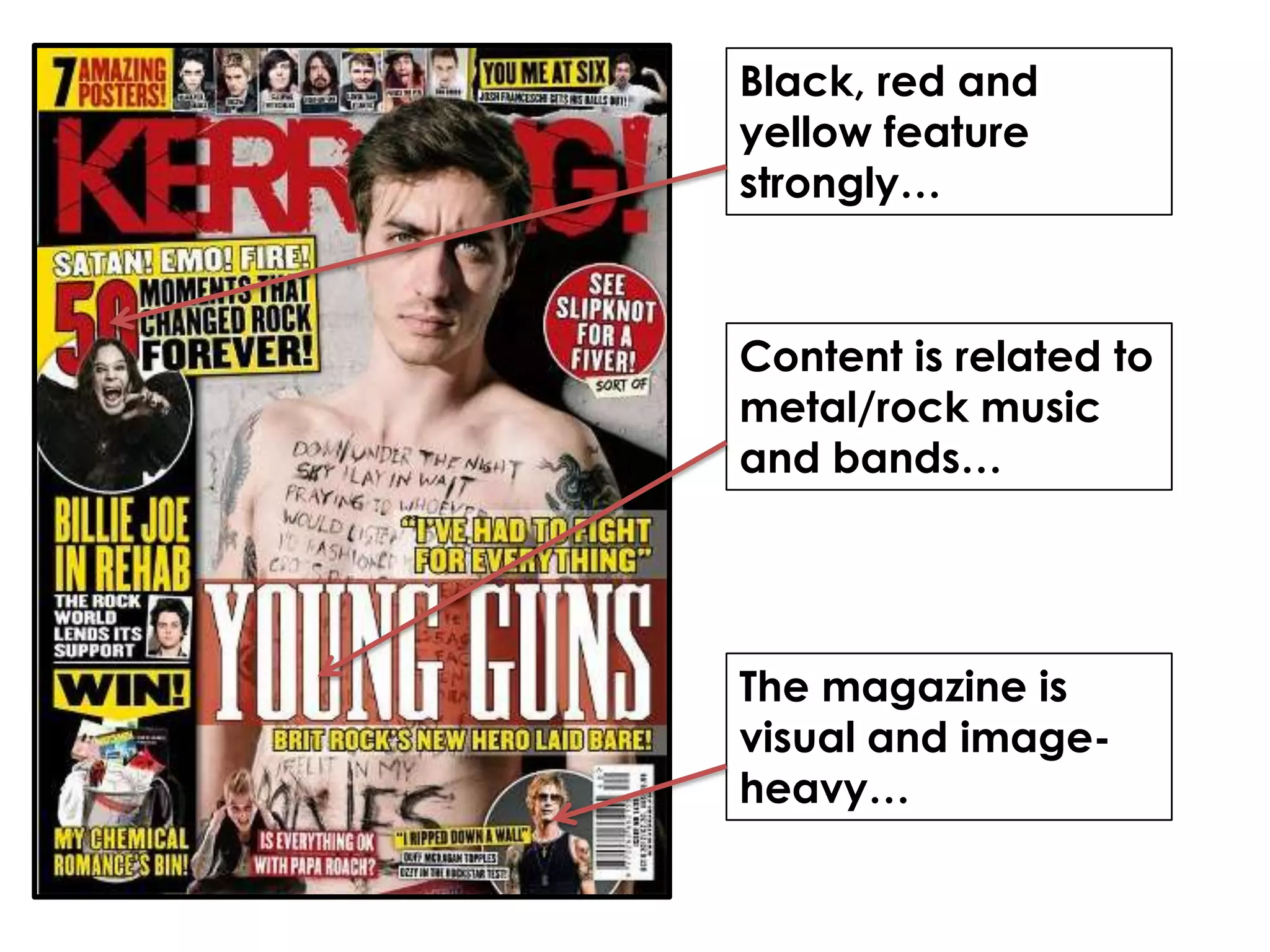
Black, red and
yellow feature
strongly…


Content is related to
metal/rock music
and bands…


The magazine is
visual and image-
heavy…
MODE OF ADDRESS
• Casual, featuring informal words and
  phrases that the TA might use.
• The tone of expression used by a young
  fan of metal/rock is established.
• Friendly and down-to-earth, suggesting a
  good, friend-to-friend relationship
  between reader an magazine.
• The language suggests that they ‘get’
  rock, take music seriously and that they
  understand all about rock/metal music
  and the scene that surrounds it.
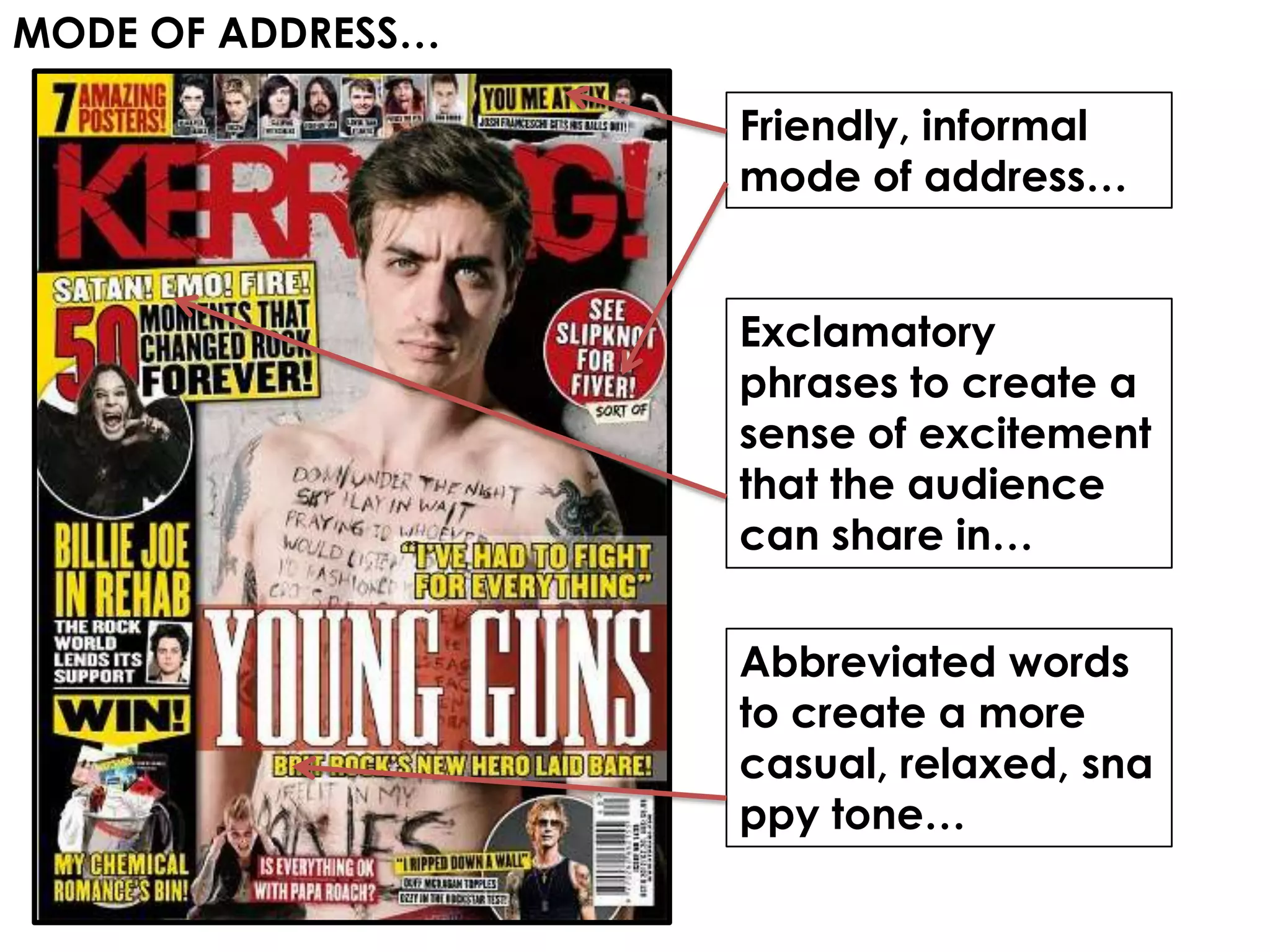
MODE OF ADDRESS…

                   Friendly, informal
                   mode of address…


                   Exclamatory
                   phrases to create a
                   sense of excitement
                   that the audience
                   can share in…


                   Abbreviated words
                   to create a more
                   casual, relaxed, sna
                   ppy tone…
MODE OF ADDRESS
Examples of mode of address:
• ‘When you went as a fan, did you have
  any mad campsite experiences?’
• ‘Why Leeds rules, why Reading rocks.’
• ‘Folk-punk party boys from Cornwall.
  Ooo-arr!’
• ‘...thrash is the key metal movement
  since the New Wave of British Heavy
  Metal. It’s essentially an American
  update on that British sound, but with the
  flowery bits replaced by a hardcore punk
  intensity and speed, and influenced by
  Motorhead’s Ace of Spades...’
OWNERSHIP
• Owned by Bauer Media.
• Bauer is one of the UK’s leading media companies and owns
  a whole range of magazines and other media, such as radio
  stations like Magic 105.4.
• Q, Mojo, Empire and FHM are owned and distributed by
  Bauer.
• The company also owns and distributes a number of
  magazines aimed at audiences with niché interests, e.g. car
  enthusiasts and those into fishing or photography.
• The company claims that it has the most ‘influential brands in
  UK media’, brands that are ‘relevant, valued and trusted’
  above all others.
• 6 out of 10 of the most influential magazines in the UK belong
  to Bauer.
• Bauer’s radio and TV channels are consistently successful, with
  their TV channels attracting a larger audience than MTV.
• Bauer promises to deliver magazines that are
  authentic, fresh, informative, entertaining and that promote
  action.
OWNERSHIP
    Being owned by Bauer is a good thing for Kerrang!
for the following reasons:
• The company is successful and experienced and
   knows which strategies to employ to increase sales.
• Bauer owns a number of niché magazines, so
   understands audiences with specific tastes and
   interests.
• With Mojo and Q amongst its repertoire, it knows how
   to successfully manage music magazines.
• Bauer also knows how to appeal to male
   audiences, having successfully launched titles like
   FHM and Empire, top-sellers in their respective fields.
• Bauer is the grandfather of cross-media
   synergy, owning a number of magazines that have
   sister radio, TV and web platforms. It understands how
   to make this work in order to maximise its own success
   and the magazine’s success.

Kerrang case study

  • 1.
  • 3.
    BACKGROUND DETAILS • Firstpublished June, 1981. • It was initially a supplement to a weekly music tabloid newspaper called Sounds. • To begin with, it was designed to focus on heavy metal and rock music, but over time the magazine has evolved with metal and pop punk bands now featuring. • However, the magazine remains a genre- specific offering, refusing to move outside the metal/goth/heavy rock spectrum.
  • 4.
    Kerrang was initiallya supplement that came free with Sounds magazine
  • 5.
    KERRANG! IN JUNE,1981 As with today’s Kerrang, the colour scheme is dark, with red and black featuring strongly. The main image presents typical heavy rock iconography. The artists listed are heavy metal and rock artists.
  • 6.
    BACKGROUND DETAILS • Thename of the magazines is onomatopoeic, as it mimics the sound made by a power chord on an electric guitar. • The magazine has achieved variable success over the years with sales rising and falling. • It has tended to adapt to accommodate new sounds on the rock/metal scene. This has helped to increase sales in dark times. However, it has received criticism for this.
  • 7.
    KERRANG! TODAY • Issuedweekly. • Costs £2.20 per issue. • Consists of approximately 70 A4 pages, produced on glossy, full colour paper. • Follows a standard magazine layout, combining full colour images with bite-size snippets of text on some pages and full colour articles that combine image and text on others. • Kerrang! Has its own website, radio station and TV channel.
  • 8.
    INSIDE KERRANG!… Full colour articles that combine image with text for a more visually appealing look. It is not unusual to see full length images of artists or to see them performing…
  • 9.
    TARGET AUDIENCE • 18- 24 years old. • 65% male, 35% female. • Active music enthusiast and purchaser. • Interested in fashion, computer games, film and TV, skate culture. • Loyal to their friends and favourite bands, passionate about music, an individual who refuses to follow the crowd, youthful and fun. • Sees Kerrang! as an authority on rock music and an educator.
  • 11.
    CONTENT • Content isentirely devoted to music with music/band news and articles, album reviews, gig information and gig guides. Quizzes and Letter pages are present too. • Bands that commonly feature are: Green Day, 30 Seconds to Mars, My Chemical Romance, Bring Me The Horizon, Slip Knot, You Me At Six. • The magazine offers free posters, reflecting the largely youth readership.
  • 13.
    STYLE • Kerrang! featuresa lot of iconography associated with metal/rock and the scene that surrounds it, e.g. tattoos, piercings, dark make- up, electronic guitars. • The magazine is visual, image-heavy. • The magazine features a lot of uppercase text in a distressed font. • Red and black feature most strongly, along with primary colours like yellow and blue, creating at times a vampiric feel and certainly suggesting a male readership.
  • 14.
    Black, red and yellowfeature strongly… Content is related to metal/rock music and bands… The magazine is visual and image- heavy…
  • 15.
    MODE OF ADDRESS •Casual, featuring informal words and phrases that the TA might use. • The tone of expression used by a young fan of metal/rock is established. • Friendly and down-to-earth, suggesting a good, friend-to-friend relationship between reader an magazine. • The language suggests that they ‘get’ rock, take music seriously and that they understand all about rock/metal music and the scene that surrounds it.
  • 16.
    MODE OF ADDRESS… Friendly, informal mode of address… Exclamatory phrases to create a sense of excitement that the audience can share in… Abbreviated words to create a more casual, relaxed, sna ppy tone…
  • 17.
    MODE OF ADDRESS Examplesof mode of address: • ‘When you went as a fan, did you have any mad campsite experiences?’ • ‘Why Leeds rules, why Reading rocks.’ • ‘Folk-punk party boys from Cornwall. Ooo-arr!’ • ‘...thrash is the key metal movement since the New Wave of British Heavy Metal. It’s essentially an American update on that British sound, but with the flowery bits replaced by a hardcore punk intensity and speed, and influenced by Motorhead’s Ace of Spades...’
  • 18.
    OWNERSHIP • Owned byBauer Media. • Bauer is one of the UK’s leading media companies and owns a whole range of magazines and other media, such as radio stations like Magic 105.4. • Q, Mojo, Empire and FHM are owned and distributed by Bauer. • The company also owns and distributes a number of magazines aimed at audiences with niché interests, e.g. car enthusiasts and those into fishing or photography. • The company claims that it has the most ‘influential brands in UK media’, brands that are ‘relevant, valued and trusted’ above all others. • 6 out of 10 of the most influential magazines in the UK belong to Bauer. • Bauer’s radio and TV channels are consistently successful, with their TV channels attracting a larger audience than MTV. • Bauer promises to deliver magazines that are authentic, fresh, informative, entertaining and that promote action.
  • 20.
    OWNERSHIP Being owned by Bauer is a good thing for Kerrang! for the following reasons: • The company is successful and experienced and knows which strategies to employ to increase sales. • Bauer owns a number of niché magazines, so understands audiences with specific tastes and interests. • With Mojo and Q amongst its repertoire, it knows how to successfully manage music magazines. • Bauer also knows how to appeal to male audiences, having successfully launched titles like FHM and Empire, top-sellers in their respective fields. • Bauer is the grandfather of cross-media synergy, owning a number of magazines that have sister radio, TV and web platforms. It understands how to make this work in order to maximise its own success and the magazine’s success.