SmartCHEM summit 2018
Startup`s point of view - building a business based on side-stream
utilization
Kenneth Ekman
CEO, CrisolteQ
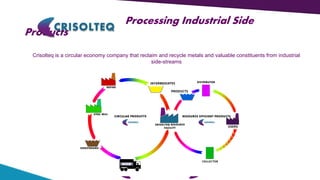
Crisolteq is a circular economy company that reclaim and recycle metals and valuable constituents from industrial
side-streams
Processing Industrial Side
Products
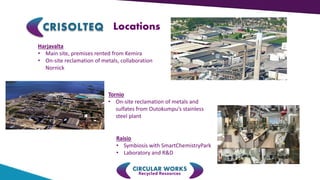
Locations
Harjavalta
• Main site, premises rented from Kemira
• On-site reclamation of metals, collaboration
Nornick
Raisio
• Symbiosis with SmartChemistryPark
• Laboratory and R&D
Tornio
• On-site reclamation of metals and
sulfates from Outokumpu’s stainless
steel plant
Background
• Almost all metallurgical and chemical processes are associated with the generation of wastes and
residues that may be hazardous or non-hazardous in nature
• In many cases these residues are being disposed off on land-fills
• Stricter environmental laws (and public attitudes) and economic reasons has forced all industries to
search for eco-friendly technologies in production, and to change business models and operations
in a more resource effective way
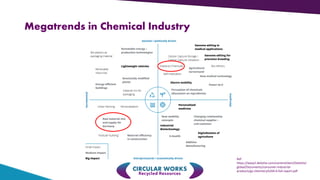
Megatrends in Chemical Industry
Ref:
https://www2.deloitte.com/content/dam/Deloitte/
global/Documents/consumer-industrial-
products/gx-chemistry%204.0-full-report.pdf
Waste-to-Chemicals – an opportunity
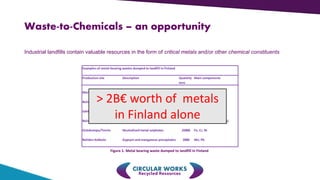
Industrial landfills contain valuable resources in the form of critical metals and/or other chemical constituents
Examples of metal-bearing wastes dumped to landfill in Finland
Production site Description Quantity Main components
tons
Mondo Minerals Tailings 400000 Mg, Si, Fe (Al, Cr, Ni)
Boliden Harjavalta Tailings 350000 Fe, Zn, Cu
Sahtleben/Kemira Ferrosulphate 280000 Fe
Boliden Kokkola Jarosite 120000 Co, Ni, Zn (Ge,Ga.In,Ag)
Outokumpu/Tornio Neutralised metal sulphates 25000 Fe, Cr, Ni
Boliden Kokkola Gypsym and manganese precipitates 2000 Mn, Pb
> 2B€ worth of metals
in Finland alone
Figure 1. Metal bearing waste dumped to landfill in Finland
Problem and opportunity
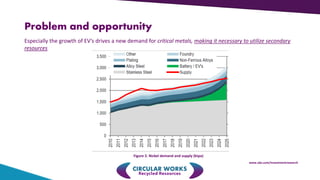
Especially the growth of EV’s drives a new demand for critical metals, making it necessary to utilize secondary
resources
Figure 2. Nickel demand and supply (ktpa)
www.ubs.com/investmentresearch
Why has the utiliziation of these land-fills and secondary resources been poor to date?
Waste-to-Chemicals – an opportunity
Utilization of side streams
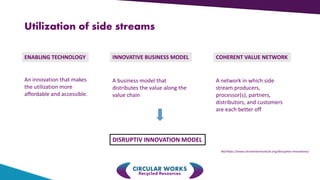
ENABLING TECHNOLOGY INNOVATIVE BUSINESS MODEL COHERENT VALUE NETWORK
An innovation that makes
the utilization more
affordable and accessible.
A business model that
distributes the value along the
value chain
A network in which side
stream producers,
processor(s), partners,
distributors, and customers
are each better off
Ref:https://www.christenseninstitute.org/disruptive-innovations/
DISRUPTIV INNOVATION MODEL
• Disruptive innovations are not "advanced technologies", they are novel combinations of existing off-
the-shelf components
• It is the business model that the technology enables that creates the disruptive impact
• Disruptive innovations tend to be produced by outsiders and entrepreneurs, rather than existing
market-leading companies.
• The business environment of market leaders does not allow them to pursue disruptive
innovations. They are not profitable enough at first and because their development can take
scarce resources away from sustaining innovations
• A disruptive process can take longer to develop than by the conventional approach and the risk
associated to it is higher than the other more incremental or evolutionary forms of innovations
Successful Disruptive Innovations
CrisolteQ - Investments in developing projects to
commercial operation
0,1M€
2005 2007
2M€
2009
0,5M€
2013
1,5M€
2015 2018 Year
Set-up of company Development of current projects
CrisolteQ’s developed current
business and production
operations support add-on projects
Project development stages Years
Piloting 5 side-streams 4y
Production demonstration of 2 large
side-streams
2y
Transition to large scale industrial
operations
2y
Circular Economy model in Metal and Forest industry
Other applications
Steel Industry
Pulp Industry
0
Other applications
Residue
Reaction
Separation
Process aid
Stainless steel manufacture
Side-stream
Processing
Processing
New Product
Delignification MgSO4
Recovery boiler Caustization Pulping
Mg(OH)2
Side-stream
residue
Products out Products in Intermediats Process Tornio Harjavalta
Summary
Building a business based on side-stream utilization
• Entrepreneur(ial) driven
• Clever combination of existing technologies
• Value networks with side-stream producers, customers, distributors and partners
• New business models
• Linear business models are not applicable in circular economy
THANK YOU

Kenneth Ekman, Crisolteq

  • 1.
    SmartCHEM summit 2018 Startup`spoint of view - building a business based on side-stream utilization Kenneth Ekman CEO, CrisolteQ
  • 2.
    Crisolteq is acircular economy company that reclaim and recycle metals and valuable constituents from industrial side-streams Processing Industrial Side Products
  • 3.
    Locations Harjavalta • Main site,premises rented from Kemira • On-site reclamation of metals, collaboration Nornick Raisio • Symbiosis with SmartChemistryPark • Laboratory and R&D Tornio • On-site reclamation of metals and sulfates from Outokumpu’s stainless steel plant
  • 4.
    Background • Almost allmetallurgical and chemical processes are associated with the generation of wastes and residues that may be hazardous or non-hazardous in nature • In many cases these residues are being disposed off on land-fills • Stricter environmental laws (and public attitudes) and economic reasons has forced all industries to search for eco-friendly technologies in production, and to change business models and operations in a more resource effective way
  • 5.
    Megatrends in ChemicalIndustry Ref: https://www2.deloitte.com/content/dam/Deloitte/ global/Documents/consumer-industrial- products/gx-chemistry%204.0-full-report.pdf
  • 6.
    Waste-to-Chemicals – anopportunity Industrial landfills contain valuable resources in the form of critical metals and/or other chemical constituents Examples of metal-bearing wastes dumped to landfill in Finland Production site Description Quantity Main components tons Mondo Minerals Tailings 400000 Mg, Si, Fe (Al, Cr, Ni) Boliden Harjavalta Tailings 350000 Fe, Zn, Cu Sahtleben/Kemira Ferrosulphate 280000 Fe Boliden Kokkola Jarosite 120000 Co, Ni, Zn (Ge,Ga.In,Ag) Outokumpu/Tornio Neutralised metal sulphates 25000 Fe, Cr, Ni Boliden Kokkola Gypsym and manganese precipitates 2000 Mn, Pb > 2B€ worth of metals in Finland alone Figure 1. Metal bearing waste dumped to landfill in Finland
  • 7.
    Problem and opportunity Especiallythe growth of EV’s drives a new demand for critical metals, making it necessary to utilize secondary resources Figure 2. Nickel demand and supply (ktpa) www.ubs.com/investmentresearch
  • 8.
    Why has theutiliziation of these land-fills and secondary resources been poor to date? Waste-to-Chemicals – an opportunity
  • 9.
    Utilization of sidestreams ENABLING TECHNOLOGY INNOVATIVE BUSINESS MODEL COHERENT VALUE NETWORK An innovation that makes the utilization more affordable and accessible. A business model that distributes the value along the value chain A network in which side stream producers, processor(s), partners, distributors, and customers are each better off Ref:https://www.christenseninstitute.org/disruptive-innovations/ DISRUPTIV INNOVATION MODEL
  • 10.
    • Disruptive innovationsare not "advanced technologies", they are novel combinations of existing off- the-shelf components • It is the business model that the technology enables that creates the disruptive impact • Disruptive innovations tend to be produced by outsiders and entrepreneurs, rather than existing market-leading companies. • The business environment of market leaders does not allow them to pursue disruptive innovations. They are not profitable enough at first and because their development can take scarce resources away from sustaining innovations • A disruptive process can take longer to develop than by the conventional approach and the risk associated to it is higher than the other more incremental or evolutionary forms of innovations Successful Disruptive Innovations
  • 11.
    CrisolteQ - Investmentsin developing projects to commercial operation 0,1M€ 2005 2007 2M€ 2009 0,5M€ 2013 1,5M€ 2015 2018 Year Set-up of company Development of current projects CrisolteQ’s developed current business and production operations support add-on projects Project development stages Years Piloting 5 side-streams 4y Production demonstration of 2 large side-streams 2y Transition to large scale industrial operations 2y
  • 12.
    Circular Economy modelin Metal and Forest industry Other applications Steel Industry Pulp Industry 0 Other applications Residue Reaction Separation Process aid Stainless steel manufacture Side-stream Processing Processing New Product Delignification MgSO4 Recovery boiler Caustization Pulping Mg(OH)2 Side-stream residue Products out Products in Intermediats Process Tornio Harjavalta
  • 13.
    Summary Building a businessbased on side-stream utilization • Entrepreneur(ial) driven • Clever combination of existing technologies • Value networks with side-stream producers, customers, distributors and partners • New business models • Linear business models are not applicable in circular economy
  • 14.