3D-printing to foster circular design
CIRCULAR SPRINT
Business Models for a Circular
Economy
Overview lecture
- Intro to the circular economy
- Combining multiple perspectives to create circular value
- Circular business modeling
- Examples and tools
- Q & A
4
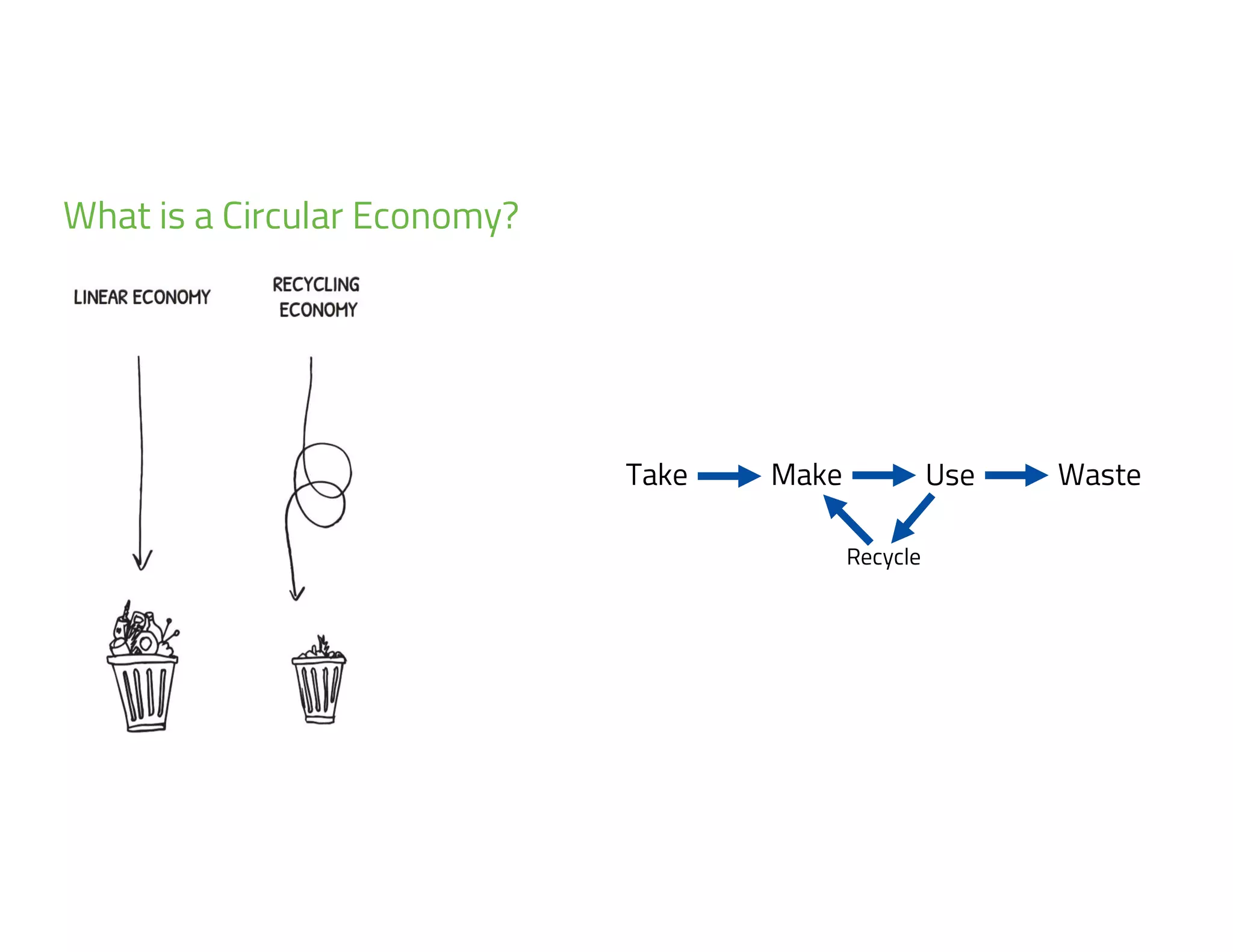
What is a Circular Economy?
Take Make Use Waste
5
What is a Circular Economy?
Take Make Use Waste
Recycle
6
What is a Circular Economy?
Make Use
Recycle
7
What is a Circular Economy?
Take Make Use Waste
Repair
Reuse
Recycle
Remanufacture
8
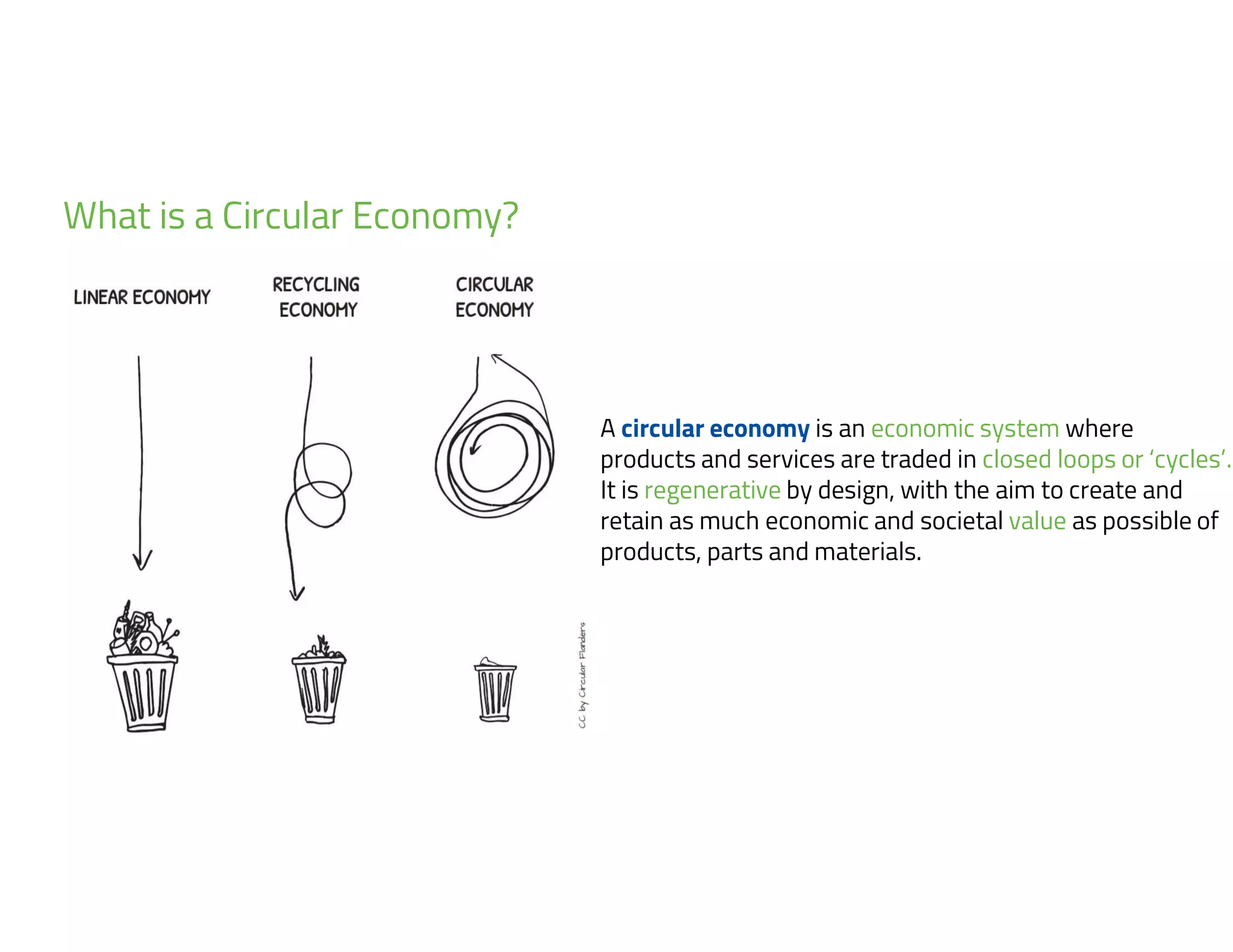
What is a Circular Economy?
A circular economy is an economic system where
products and services are traded in closed loops or ‘cycles’.
It is regenerative by design, with the aim to create and
retain as much economic and societal value as possible of
products, parts and materials.
9
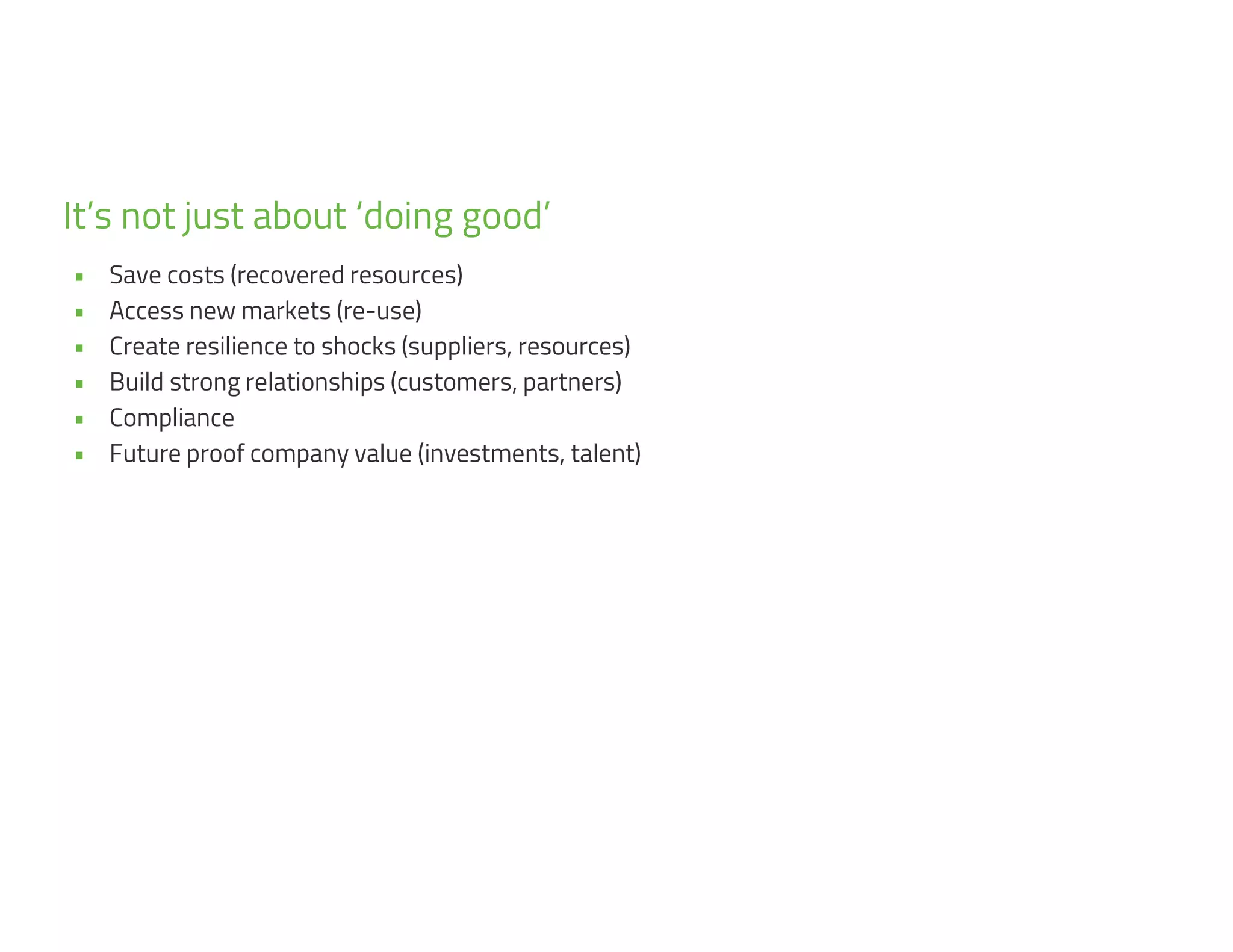
• Save costs (recovered resources)
• Access new markets (re-use)
• Create resilience to shocks (suppliers, resources)
• Build strong relationships (customers, partners)
• Compliance
• Future proof company value (investments, talent)
It’s not just about ‘doing good’
1
0
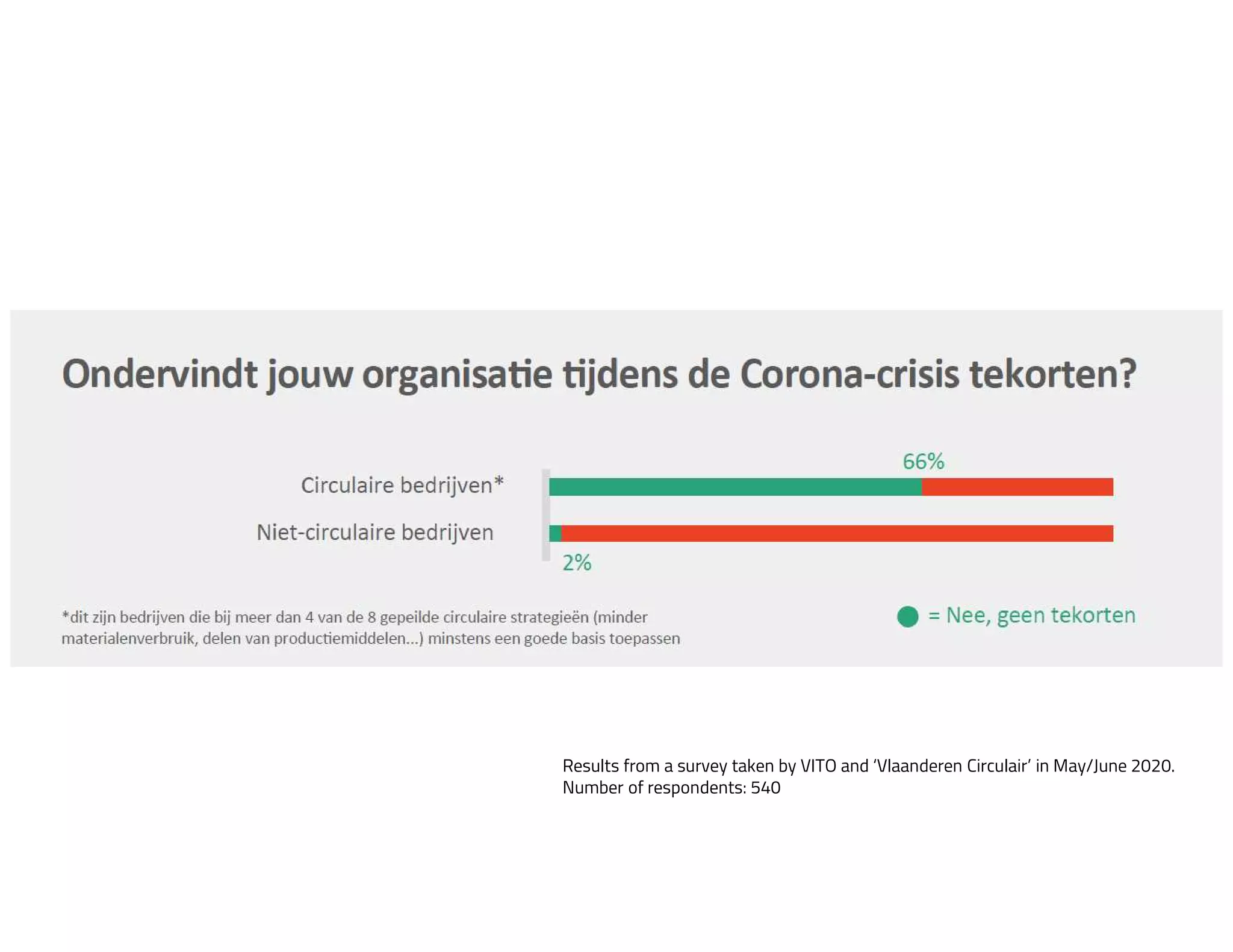
Results from a survey taken by VITO and ‘Vlaanderen Circulair’ in May/June 2020.
Number of respondents: 540
1
1
1
2
1
3
1
4
To know your system: you need to map it
1
6
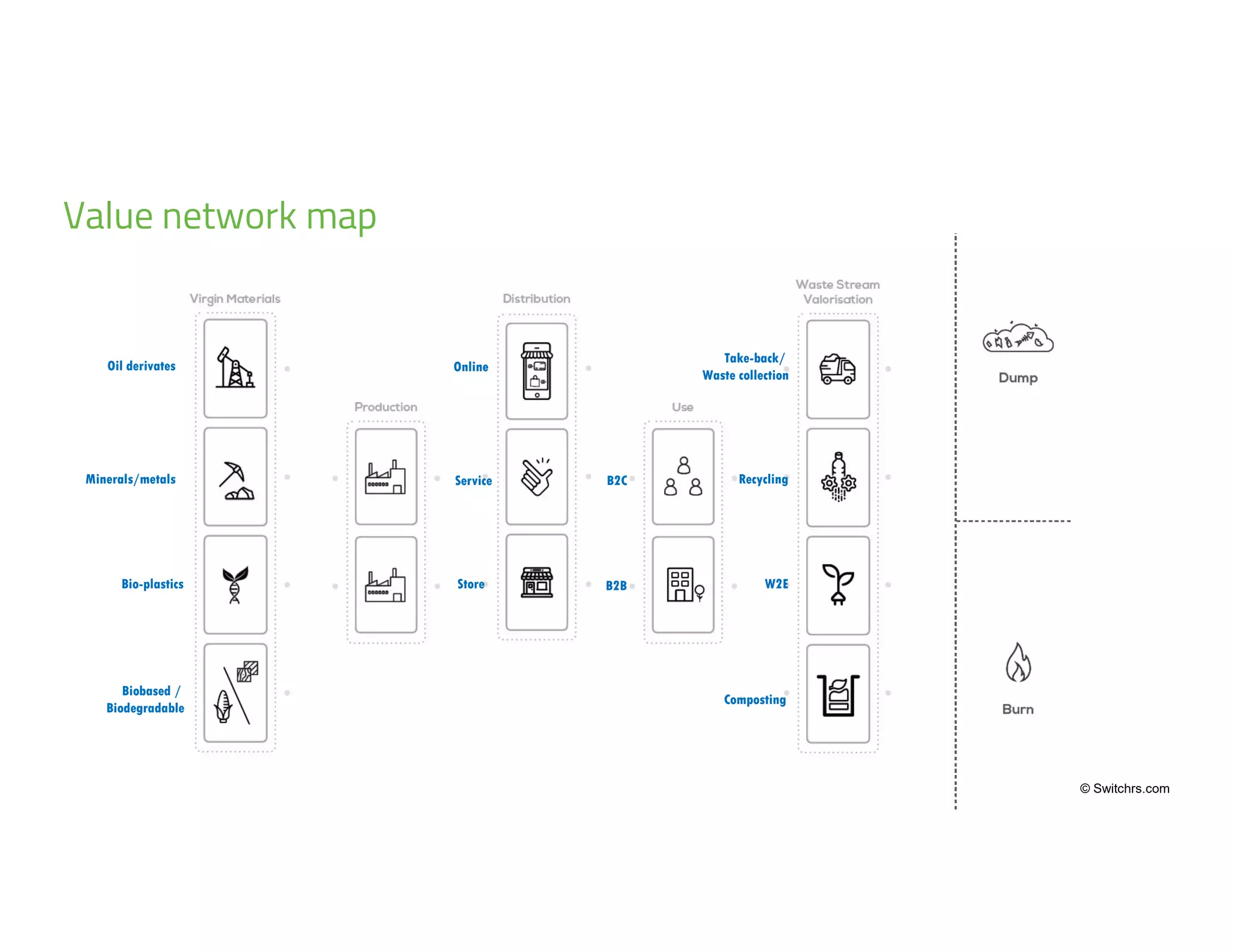
It’s all about systems thinking
1
7
© Switchrs.com
Oil derivates
Minerals/metals
Bio-plastics
Biobased /
Biodegradable
Online
Service
Store
B2C
B2B
Take-back/
Waste collection
Recycling
W2E
Composting
Value network map
1
8
© Switchrs.com
Oil derivates
Minerals/metals
Bio-plastics
Biobased /
Biodegradable
Online
Service
Store
B2C
B2B
Take-back/
Waste collection
Recycling
W2E
Composting
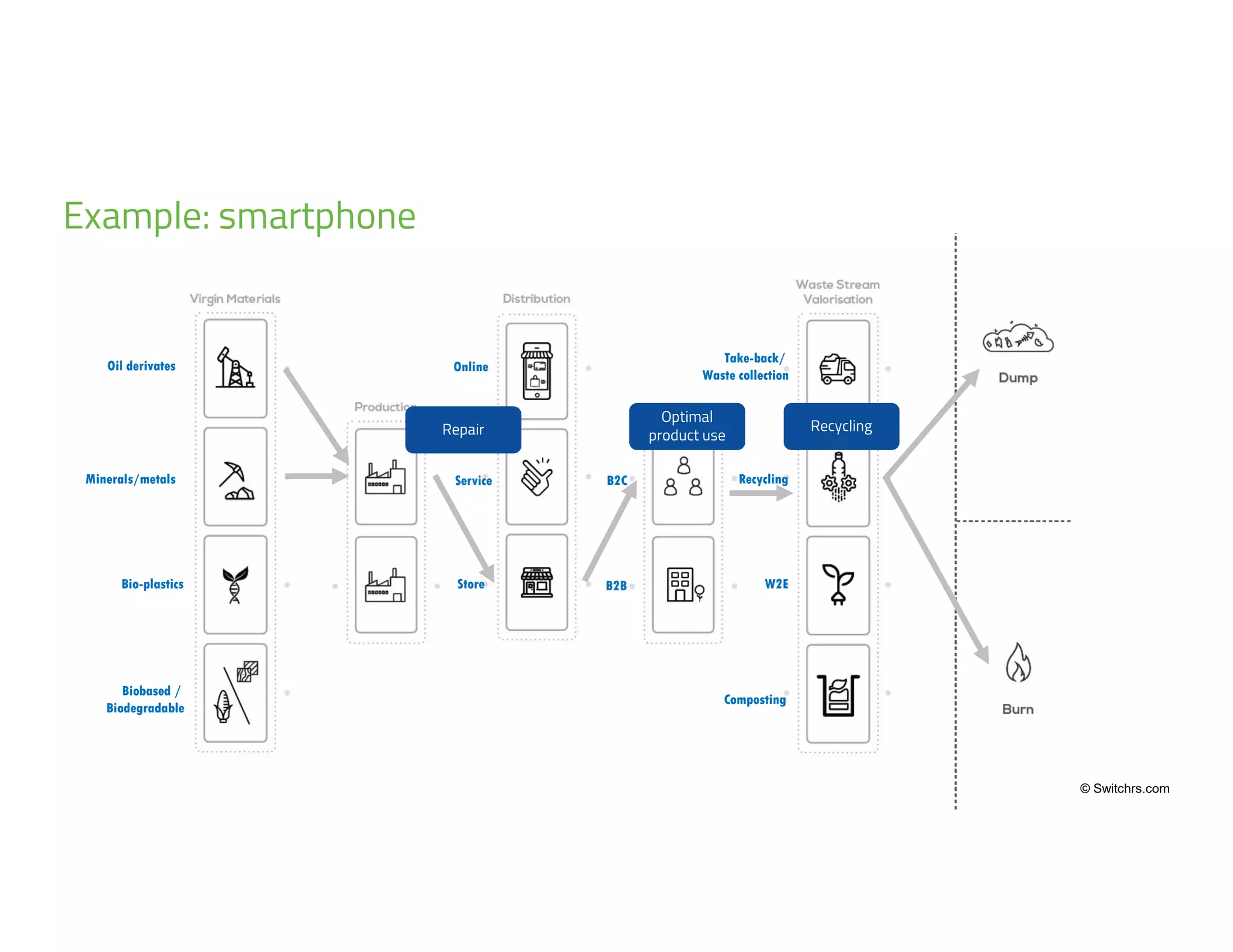
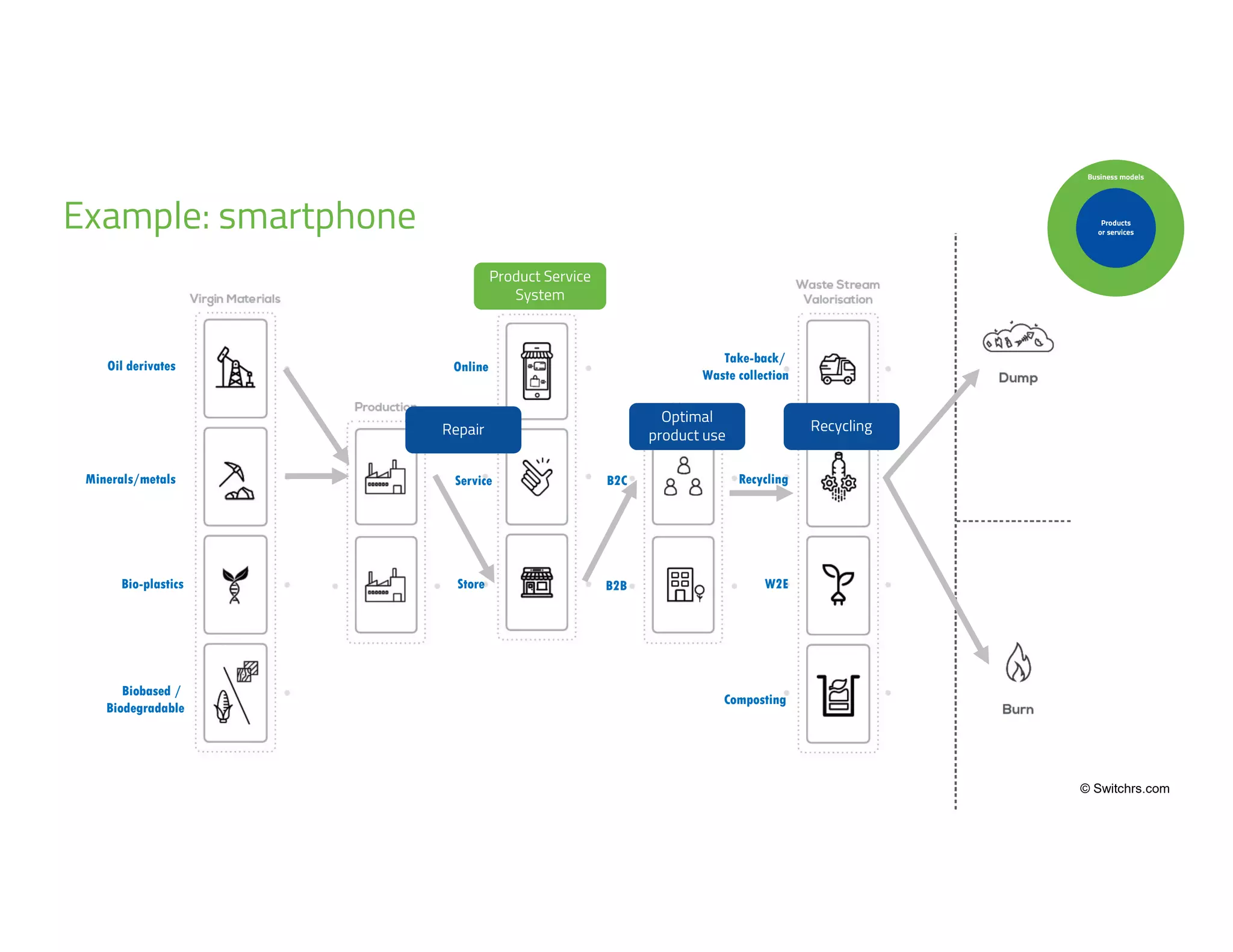
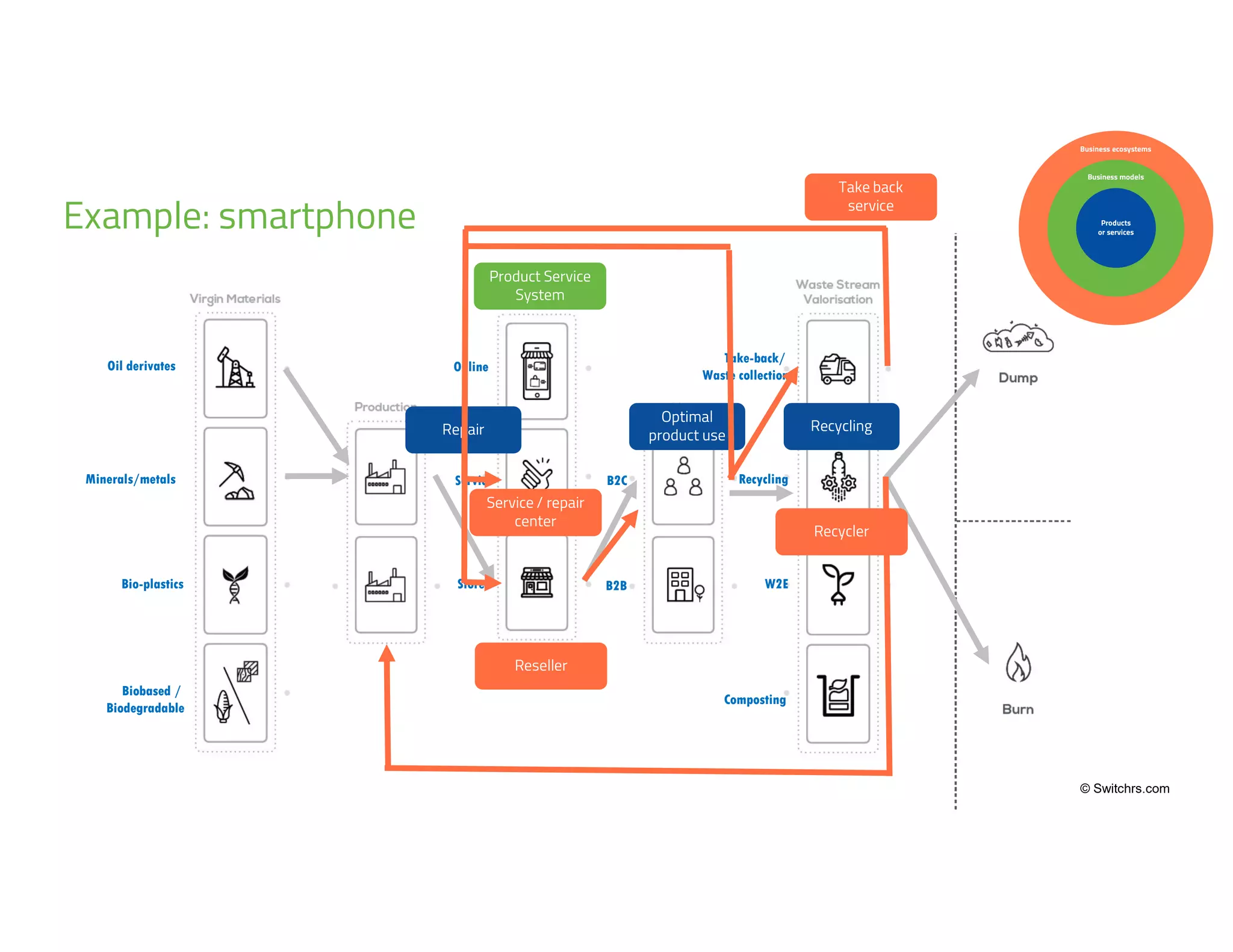
Example: smartphone
1
9
• Materials used
• Problematic raw materials (e.g. cobalt)
• Valuable raw materials (e.g. gold)
• Usage
• What determines the lifetime?
• Battery (often non-removable)
• Software (upgradeability)
• (Costs of) repairability (e.g. screen)
• Fashion
• Recycling
• Very small: often end up with regular household waste
Smartphone: key challenges
2
0
• Materials used
• Problematic raw materials (e.g. cobalt) > supply chain
• Valuable raw materials (e.g. gold) > supply chain
• Usage
• What determines the lifetime?
• Battery (often non-removable) > product design
• Software (upgradeability) > product design / business model
• (Costs of) repairability (e.g. screen) > product design / business model
• Fashion > business model
• Recycling
• Very small: often end up with regular household waste > supply chain
Smartphone: key challenges
Multiple perspectives to create circular value
2
2
Considering multiple perspectives to create circular value
Business ecosystems
Business models
Products or
services
Circular value creation
What do you do to
increase circularity?
+
Strong value proposition
How do you convince
your customers?
+
Circular Value network
How and with who
do you cooperate?
2
3
Recycle
Repair
Remanufacture
Reuse
Optimal product
use
Resource
efficiency
Substitution
Products
or services
Circular Value Creation
2
4
© Switchrs.com
Oil derivates
Minerals/metals
Bio-plastics
Biobased /
Biodegradable
Online
Service
Store
B2C
B2B
Take-back/
Waste collection
Recycling
W2E
Composting
Example: smartphone
Optimal
product use
Repair Recycling
2
5
Recycle
Repair
Remanufacture
Reuse
Optimal product
use
Resource
efficiency
Substitution
Products
or services
Circular Value Creation
Circular value by design is useless if you can’t
deliver it to the customer
2
7
“The core logic of how a company creates, delivers, and captures value”
(Osterwalder & Pigneur)
What is a business model?
2
8
“The core logic of how a company creates, delivers, captures
and retains economic and societal value”
(adaption of Osterwalder & Pigneur)
What is a circular business model?
2
9
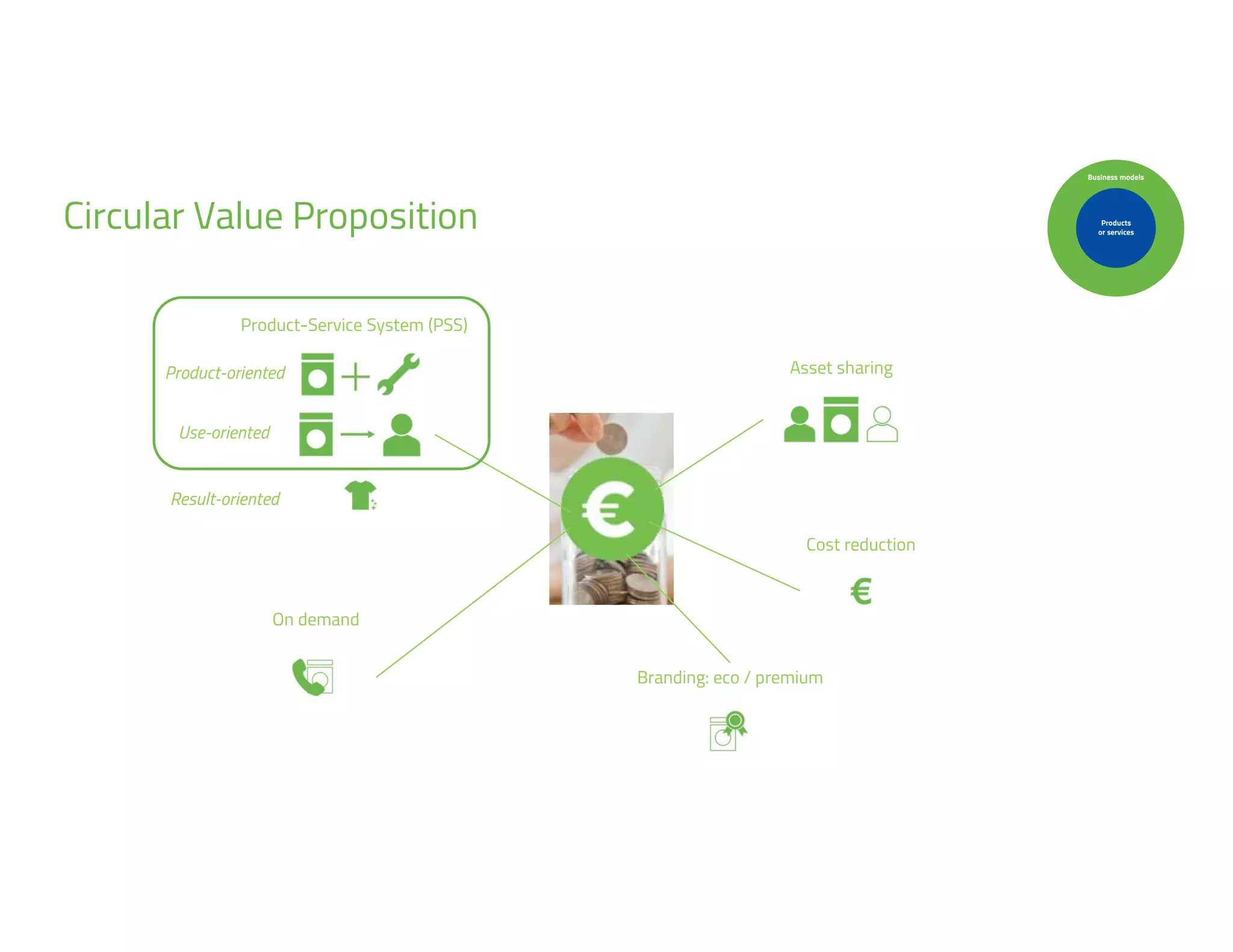
Product-Service System (PSS)
Asset sharing
Cost reduction
On demand
Branding: eco / premium
Business models
Products
or services
Circular Value Proposition
Product-oriented
Use-oriented
Result-oriented
3
0
Circular Value proposition: aligning interests
Incentives and value transactions:
Reputation transfer
Data access
Positive feelings / doing the right thing
Monetary kickbacks
New market access
Valorization of waste and side streams
Business models
Products
or services
3
1
© Switchrs.com
Oil derivates
Minerals/metals
Bio-plastics
Biobased /
Biodegradable
Online
Service
Store
B2C
B2B
Take-back/
Waste collection
Recycling
W2E
Composting
Example: smartphone
Optimal
product use
Repair Recycling
Product Service
System
Business models
Products
or services
3
2
Product-Service System (PSS)
Asset sharing
Cost reduction
On demand
Branding: eco / premium
Business models
Products
or services
Circular Value Proposition
Product-oriented
Use-oriented
Result-oriented
Circularity of a product depends on the system it
is part of
3
4
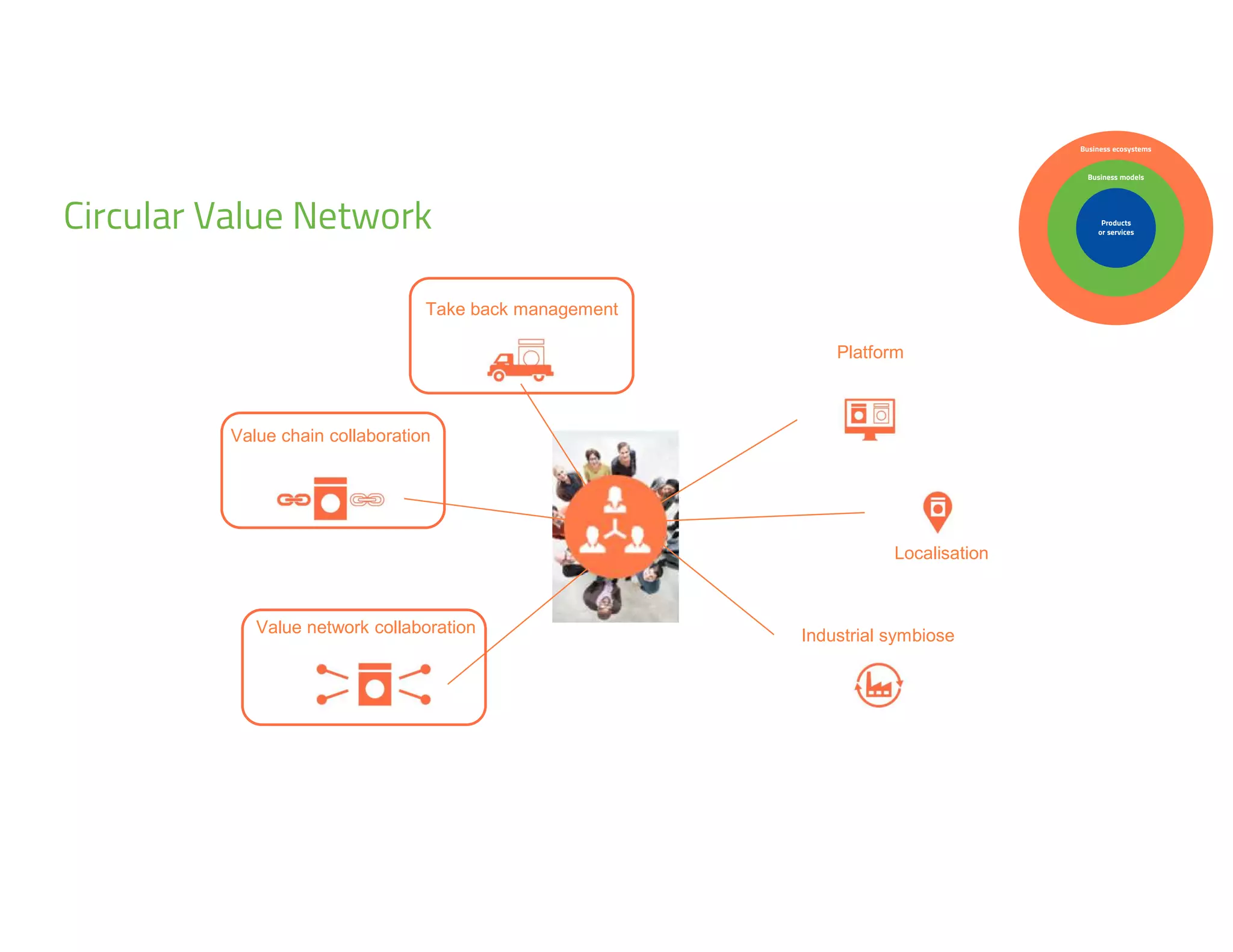
Take back management
Platform
Industrial symbiose
Value chain collaboration
Value network collaboration
Localisation
Business ecosystems
Business models
Products
or services
Circular Value Network
3
5
© Switchrs.com
Oil derivates
Minerals/metals
Bio-plastics
Biobased /
Biodegradable
Online
Service
Store
B2C
B2B
Take-back/
Waste collection
Recycling
W2E
Composting
Example: smartphone
Optimal
product use
Repair Recycling
Product Service
System
Service / repair
center
Take back
service
Reseller
Recycler
Business ecosystems
Business models
Products
or services
3
6
Take back management
Platform
Industrial symbiose
Value chain collaboration
Value network collaboration
Localisation
Business ecosystems
Business models
Products
or services
Circular Value Network
Intermission 
To get some extra inspiration on combining
strategies
9/09/2021
©VITO – Not for distribution
Value
proposition
strategies
Value network strategies
Value creation
strategies
4
0
9/09/2021
©VITO – Not for
Examples
4
2
Philips: pay-per-lux
4
3
9/09/2021
©VITO – Not for
Pay-per-lux
4
4
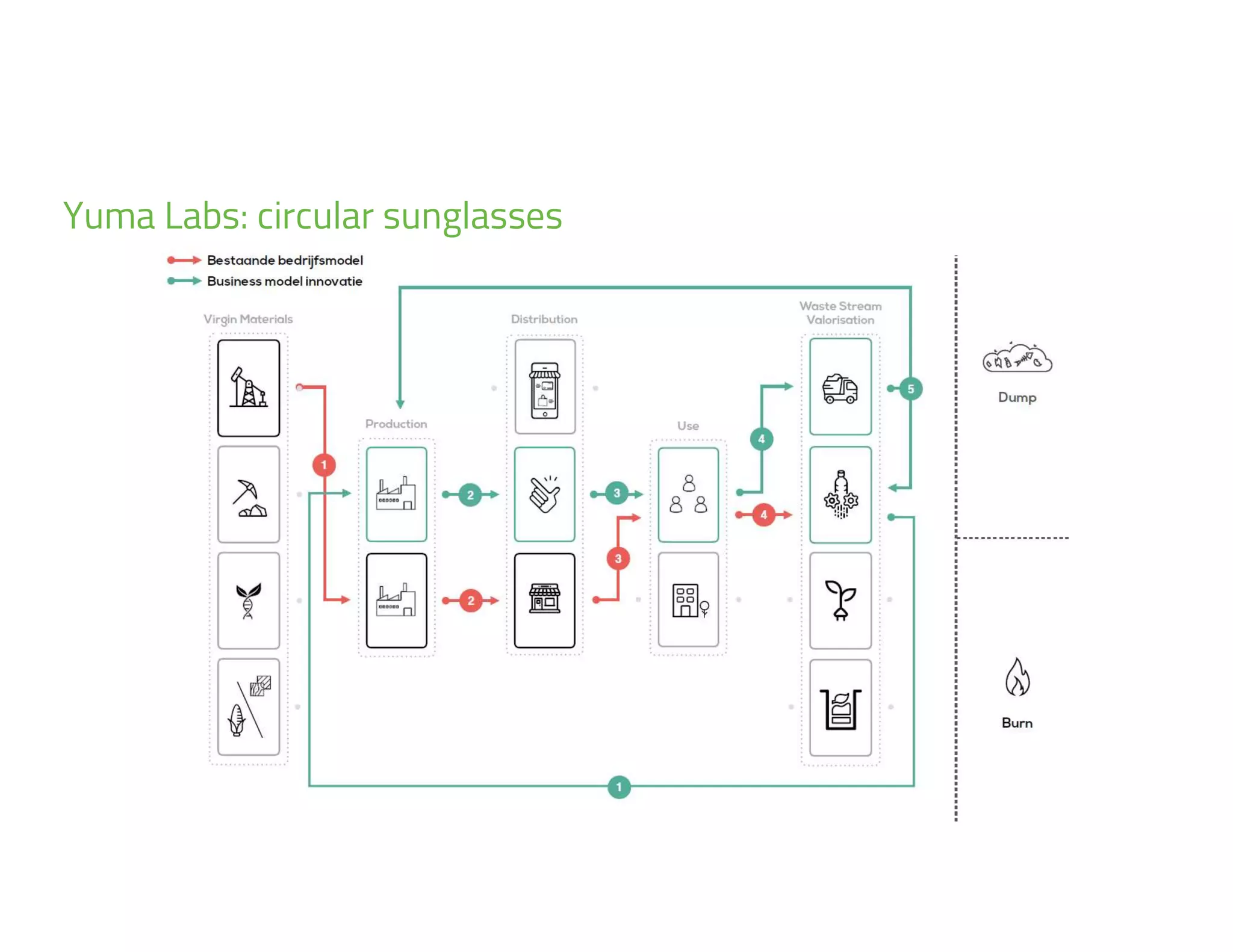
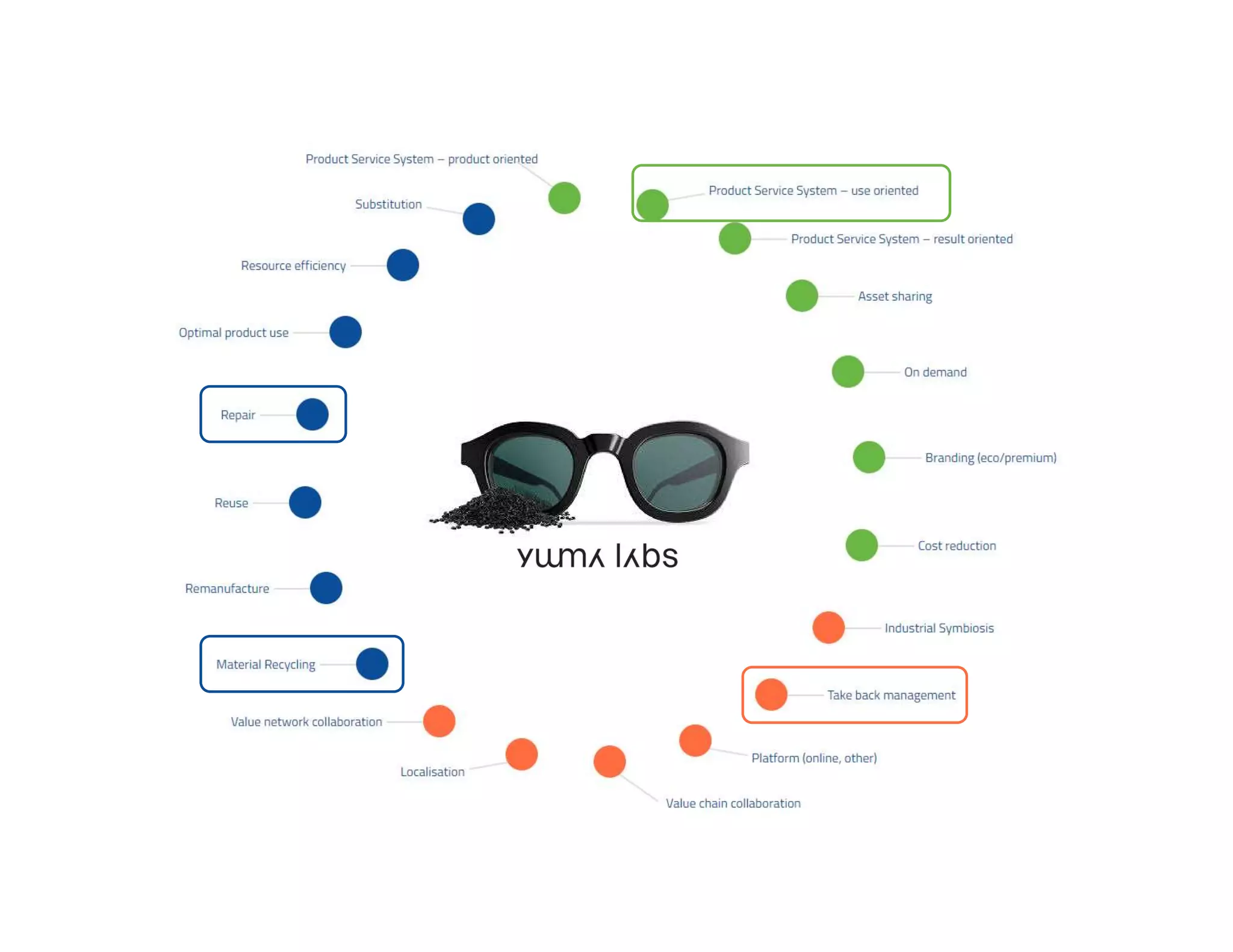
Yuma Labs: circular sunglasses
4
5
9/09/2021
©VITO – Not for
Incentives matter: try to evaluate them ex ante
4
7
• Rebound effect:
• Increased efficiency/productivity  Lower prices  Higher consumption
• Path dependency and lock-in
• Returns to scale and learning effects  Survival of the first
• Mind switch costs!
• Strategic interaction
• Coordination Game:
• It requires coordinated action to switch towards a new standard
• Prisoner’s Dilemma:
• Suboptimal outcome because every player has an incentive to deviate from the optimal outcome
• Coordinated action is not sufficient
• Even more important when some parties have market power
• Perverse effects
• Asymmetric information
• Cobra effect
On incentives
So how to structure and organize?
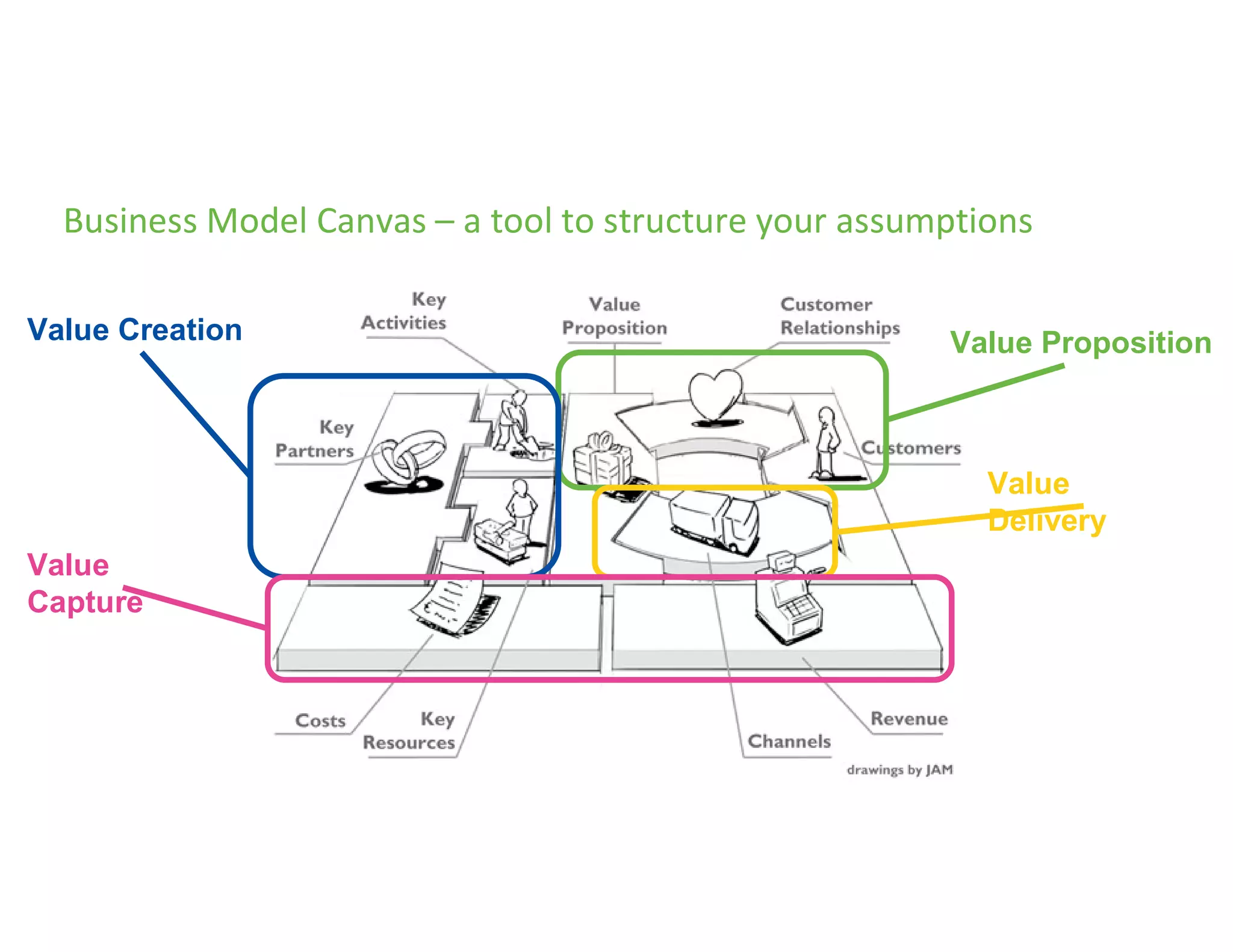
Business Model Canvas – a tool to structure your assumptions
Value Proposition
Value
Delivery
Value Creation
Value
Capture
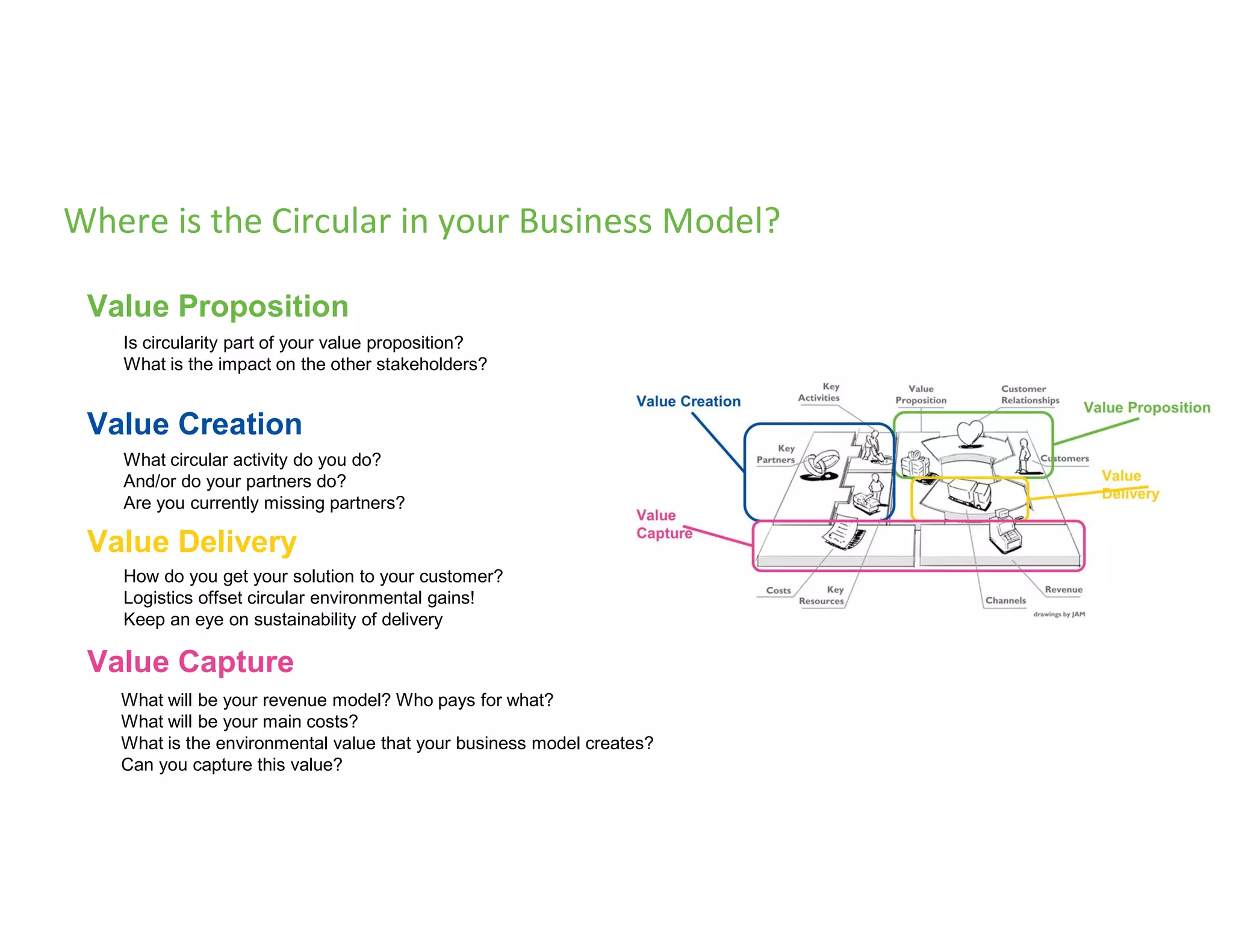
Where is the Circular in your Business Model?
Value Proposition
Value Delivery
Value Creation
Value Capture
Is circularity part of your value proposition?
What is the impact on the other stakeholders?
What circular activity do you do?
And/or do your partners do?
Are you currently missing partners?
How do you get your solution to your customer?
Logistics offset circular environmental gains!
Keep an eye on sustainability of delivery
What will be your revenue model? Who pays for what?
What will be your main costs?
What is the environmental value that your business model creates?
Can you capture this value?
5
2
Lean Start-up canvas
So how do you start designing for a circular
future?
5
4
• Map your current system (value chain mapping)
• What are the circular opportunities?
• Which steps currently loose value? What are the hotspots?
• What (new) consumer needs can we address? Service, functionality, …
• What is the impact on suppliers / partners / customers? How do we get them to cooperate?
• Define, prototype and test a circular value proposition
• Construct the business model (e.g. Business Model Canvas)
Steps to take
Templates you could use
5
6
© Switchrs.com
Oil derivates
Minerals/metals
Bio-plastics
Biobased /
Biodegradable
Online
Service
Store
B2C
B2B
Take-back/
Waste collection
Recycling
W2E
Composting
Value network map
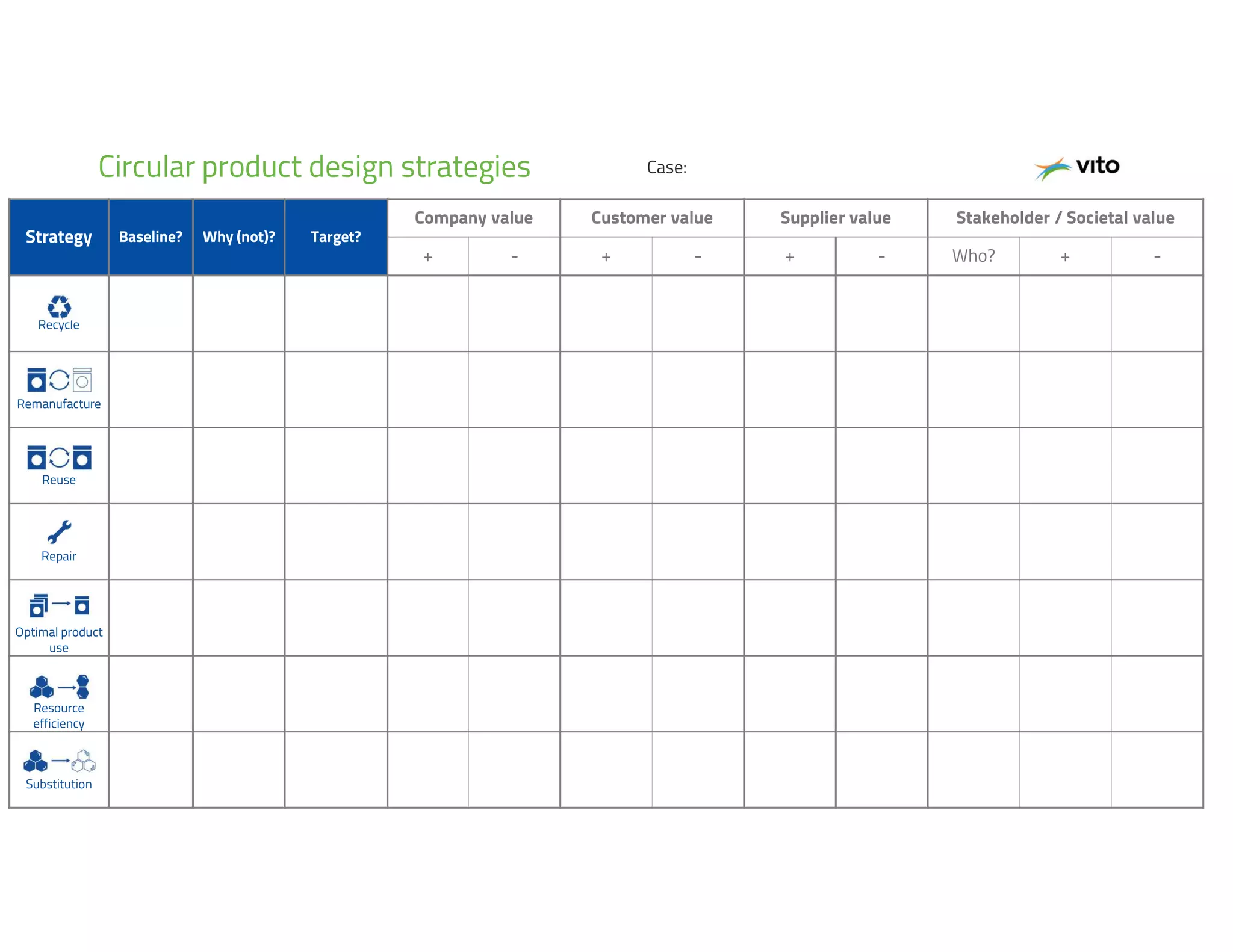
Strategy Baseline? Why (not)? Target?
Company value Customer value Supplier value Stakeholder / Societal value
+ - + - + - Who? + -
Recycle
Remanufacture
Reuse
Repair
Optimal product
use
Resource
efficiency
Substitution
Circular product design strategies Case:
Strategy Baseline? Why (not)? Target?
Company value Customer value Supplier value Stakeholder / Societal value
+ - + - + - Who? + -
Recycle
Improve
recyclability
Extra
costs
Recycler
Extra
revenue
Remanufacture
Reuse
Repair
Optimal product
use
Extend
product
lifetime
Sell less
Resource
efficiency
Substitution
Circular product design strategies Case:
5
9
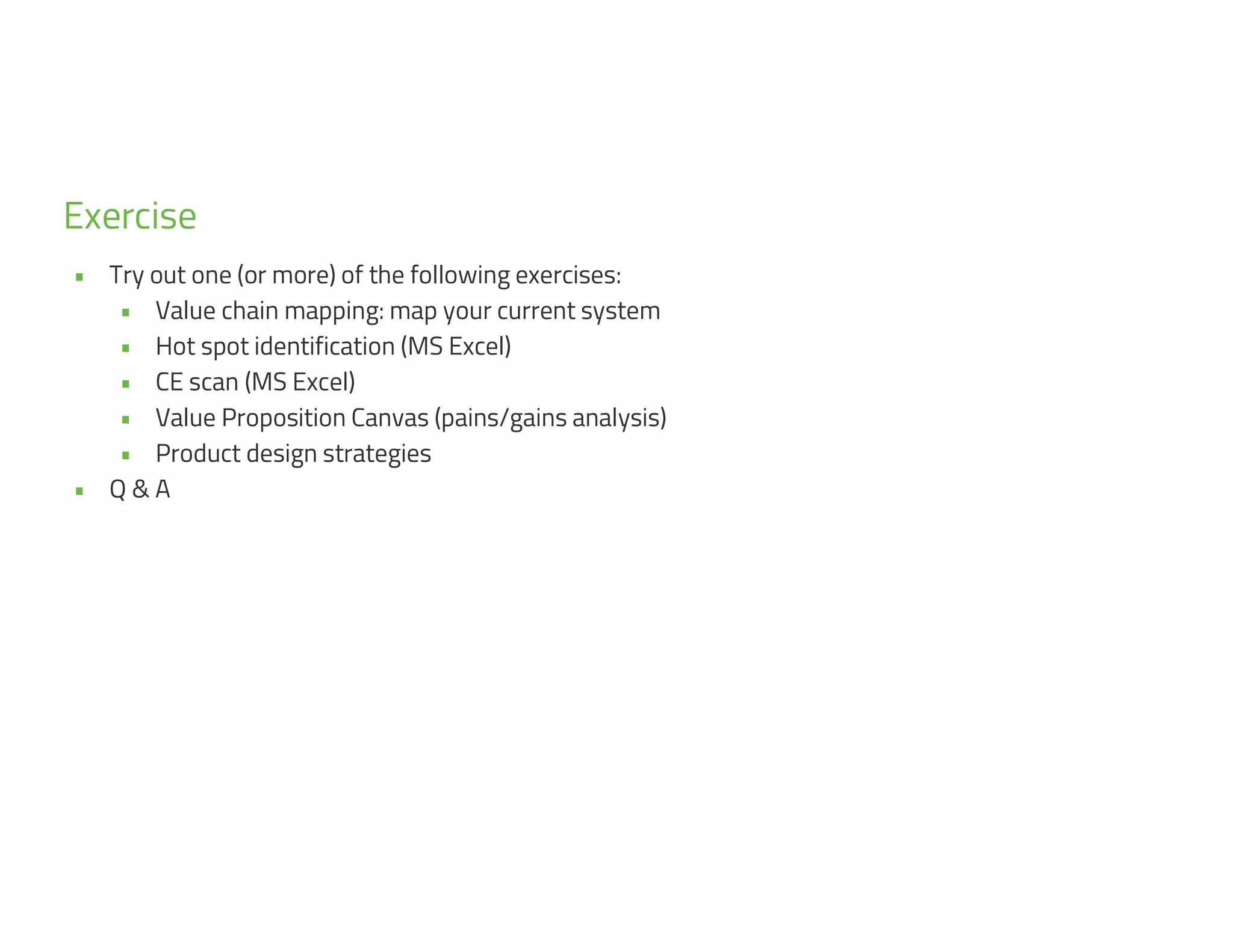
• Try out one (or more) of the following exercises:
• Value chain mapping: map your current system
• Hot spot identification (MS Excel)
• CE scan (MS Excel)
• Value Proposition Canvas (pains/gains analysis)
• Product design strategies
• Q & A
Exercise
Project branding-Flag Le
Supported by:

Circular buisinessmodels VITO

  • 1.
    3D-printing to fostercircular design CIRCULAR SPRINT Business Models for a Circular Economy
  • 2.
    Overview lecture - Introto the circular economy - Combining multiple perspectives to create circular value - Circular business modeling - Examples and tools - Q & A
  • 4.
    4 What is aCircular Economy? Take Make Use Waste
  • 5.
    5 What is aCircular Economy? Take Make Use Waste Recycle
  • 6.
    6 What is aCircular Economy? Make Use Recycle
  • 7.
    7 What is aCircular Economy? Take Make Use Waste Repair Reuse Recycle Remanufacture
  • 8.
    8 What is aCircular Economy? A circular economy is an economic system where products and services are traded in closed loops or ‘cycles’. It is regenerative by design, with the aim to create and retain as much economic and societal value as possible of products, parts and materials.
  • 9.
    9 • Save costs(recovered resources) • Access new markets (re-use) • Create resilience to shocks (suppliers, resources) • Build strong relationships (customers, partners) • Compliance • Future proof company value (investments, talent) It’s not just about ‘doing good’
  • 10.
    1 0 Results from asurvey taken by VITO and ‘Vlaanderen Circulair’ in May/June 2020. Number of respondents: 540
  • 11.
  • 12.
  • 13.
  • 14.
  • 15.
    To know yoursystem: you need to map it
  • 16.
    1 6 It’s all aboutsystems thinking
  • 17.
    1 7 © Switchrs.com Oil derivates Minerals/metals Bio-plastics Biobased/ Biodegradable Online Service Store B2C B2B Take-back/ Waste collection Recycling W2E Composting Value network map
  • 18.
    1 8 © Switchrs.com Oil derivates Minerals/metals Bio-plastics Biobased/ Biodegradable Online Service Store B2C B2B Take-back/ Waste collection Recycling W2E Composting Example: smartphone
  • 19.
    1 9 • Materials used •Problematic raw materials (e.g. cobalt) • Valuable raw materials (e.g. gold) • Usage • What determines the lifetime? • Battery (often non-removable) • Software (upgradeability) • (Costs of) repairability (e.g. screen) • Fashion • Recycling • Very small: often end up with regular household waste Smartphone: key challenges
  • 20.
    2 0 • Materials used •Problematic raw materials (e.g. cobalt) > supply chain • Valuable raw materials (e.g. gold) > supply chain • Usage • What determines the lifetime? • Battery (often non-removable) > product design • Software (upgradeability) > product design / business model • (Costs of) repairability (e.g. screen) > product design / business model • Fashion > business model • Recycling • Very small: often end up with regular household waste > supply chain Smartphone: key challenges
  • 21.
    Multiple perspectives tocreate circular value
  • 22.
    2 2 Considering multiple perspectivesto create circular value Business ecosystems Business models Products or services Circular value creation What do you do to increase circularity? + Strong value proposition How do you convince your customers? + Circular Value network How and with who do you cooperate?
  • 23.
  • 24.
    2 4 © Switchrs.com Oil derivates Minerals/metals Bio-plastics Biobased/ Biodegradable Online Service Store B2C B2B Take-back/ Waste collection Recycling W2E Composting Example: smartphone Optimal product use Repair Recycling
  • 25.
  • 26.
    Circular value bydesign is useless if you can’t deliver it to the customer
  • 27.
    2 7 “The core logicof how a company creates, delivers, and captures value” (Osterwalder & Pigneur) What is a business model?
  • 28.
    2 8 “The core logicof how a company creates, delivers, captures and retains economic and societal value” (adaption of Osterwalder & Pigneur) What is a circular business model?
  • 29.
    2 9 Product-Service System (PSS) Assetsharing Cost reduction On demand Branding: eco / premium Business models Products or services Circular Value Proposition Product-oriented Use-oriented Result-oriented
  • 30.
    3 0 Circular Value proposition:aligning interests Incentives and value transactions: Reputation transfer Data access Positive feelings / doing the right thing Monetary kickbacks New market access Valorization of waste and side streams Business models Products or services
  • 31.
    3 1 © Switchrs.com Oil derivates Minerals/metals Bio-plastics Biobased/ Biodegradable Online Service Store B2C B2B Take-back/ Waste collection Recycling W2E Composting Example: smartphone Optimal product use Repair Recycling Product Service System Business models Products or services
  • 32.
    3 2 Product-Service System (PSS) Assetsharing Cost reduction On demand Branding: eco / premium Business models Products or services Circular Value Proposition Product-oriented Use-oriented Result-oriented
  • 33.
    Circularity of aproduct depends on the system it is part of
  • 34.
    3 4 Take back management Platform Industrialsymbiose Value chain collaboration Value network collaboration Localisation Business ecosystems Business models Products or services Circular Value Network
  • 35.
    3 5 © Switchrs.com Oil derivates Minerals/metals Bio-plastics Biobased/ Biodegradable Online Service Store B2C B2B Take-back/ Waste collection Recycling W2E Composting Example: smartphone Optimal product use Repair Recycling Product Service System Service / repair center Take back service Reseller Recycler Business ecosystems Business models Products or services
  • 36.
    3 6 Take back management Platform Industrialsymbiose Value chain collaboration Value network collaboration Localisation Business ecosystems Business models Products or services Circular Value Network
  • 37.
  • 38.
    To get someextra inspiration on combining strategies
  • 39.
    9/09/2021 ©VITO – Notfor distribution Value proposition strategies Value network strategies Value creation strategies
  • 40.
  • 41.
  • 42.
  • 43.
  • 44.
  • 45.
  • 46.
    Incentives matter: tryto evaluate them ex ante
  • 47.
    4 7 • Rebound effect: •Increased efficiency/productivity  Lower prices  Higher consumption • Path dependency and lock-in • Returns to scale and learning effects  Survival of the first • Mind switch costs! • Strategic interaction • Coordination Game: • It requires coordinated action to switch towards a new standard • Prisoner’s Dilemma: • Suboptimal outcome because every player has an incentive to deviate from the optimal outcome • Coordinated action is not sufficient • Even more important when some parties have market power • Perverse effects • Asymmetric information • Cobra effect On incentives
  • 48.
    So how tostructure and organize?
  • 49.
    Business Model Canvas– a tool to structure your assumptions
  • 50.
    Business Model Canvas– a tool to structure your assumptions Value Proposition Value Delivery Value Creation Value Capture
  • 51.
    Where is theCircular in your Business Model? Value Proposition Value Delivery Value Creation Value Capture Is circularity part of your value proposition? What is the impact on the other stakeholders? What circular activity do you do? And/or do your partners do? Are you currently missing partners? How do you get your solution to your customer? Logistics offset circular environmental gains! Keep an eye on sustainability of delivery What will be your revenue model? Who pays for what? What will be your main costs? What is the environmental value that your business model creates? Can you capture this value?
  • 52.
  • 53.
    So how doyou start designing for a circular future?
  • 54.
    5 4 • Map yourcurrent system (value chain mapping) • What are the circular opportunities? • Which steps currently loose value? What are the hotspots? • What (new) consumer needs can we address? Service, functionality, … • What is the impact on suppliers / partners / customers? How do we get them to cooperate? • Define, prototype and test a circular value proposition • Construct the business model (e.g. Business Model Canvas) Steps to take
  • 55.
  • 56.
    5 6 © Switchrs.com Oil derivates Minerals/metals Bio-plastics Biobased/ Biodegradable Online Service Store B2C B2B Take-back/ Waste collection Recycling W2E Composting Value network map
  • 57.
    Strategy Baseline? Why(not)? Target? Company value Customer value Supplier value Stakeholder / Societal value + - + - + - Who? + - Recycle Remanufacture Reuse Repair Optimal product use Resource efficiency Substitution Circular product design strategies Case:
  • 58.
    Strategy Baseline? Why(not)? Target? Company value Customer value Supplier value Stakeholder / Societal value + - + - + - Who? + - Recycle Improve recyclability Extra costs Recycler Extra revenue Remanufacture Reuse Repair Optimal product use Extend product lifetime Sell less Resource efficiency Substitution Circular product design strategies Case:
  • 59.
    5 9 • Try outone (or more) of the following exercises: • Value chain mapping: map your current system • Hot spot identification (MS Excel) • CE scan (MS Excel) • Value Proposition Canvas (pains/gains analysis) • Product design strategies • Q & A Exercise
  • 60.