Evaluation of demand power prediction
performance based on deep learning
algorithm and data preprocessing
Park Jee Hyun
28 APR 2017
-
SungKyunGwan University
Nanyang Technological University
Contents
• Purpose
• Experiments
• Training & Testing Algorithm
• Raw vs. Preprocessed
• Results
• Single Layer Perceptron Network
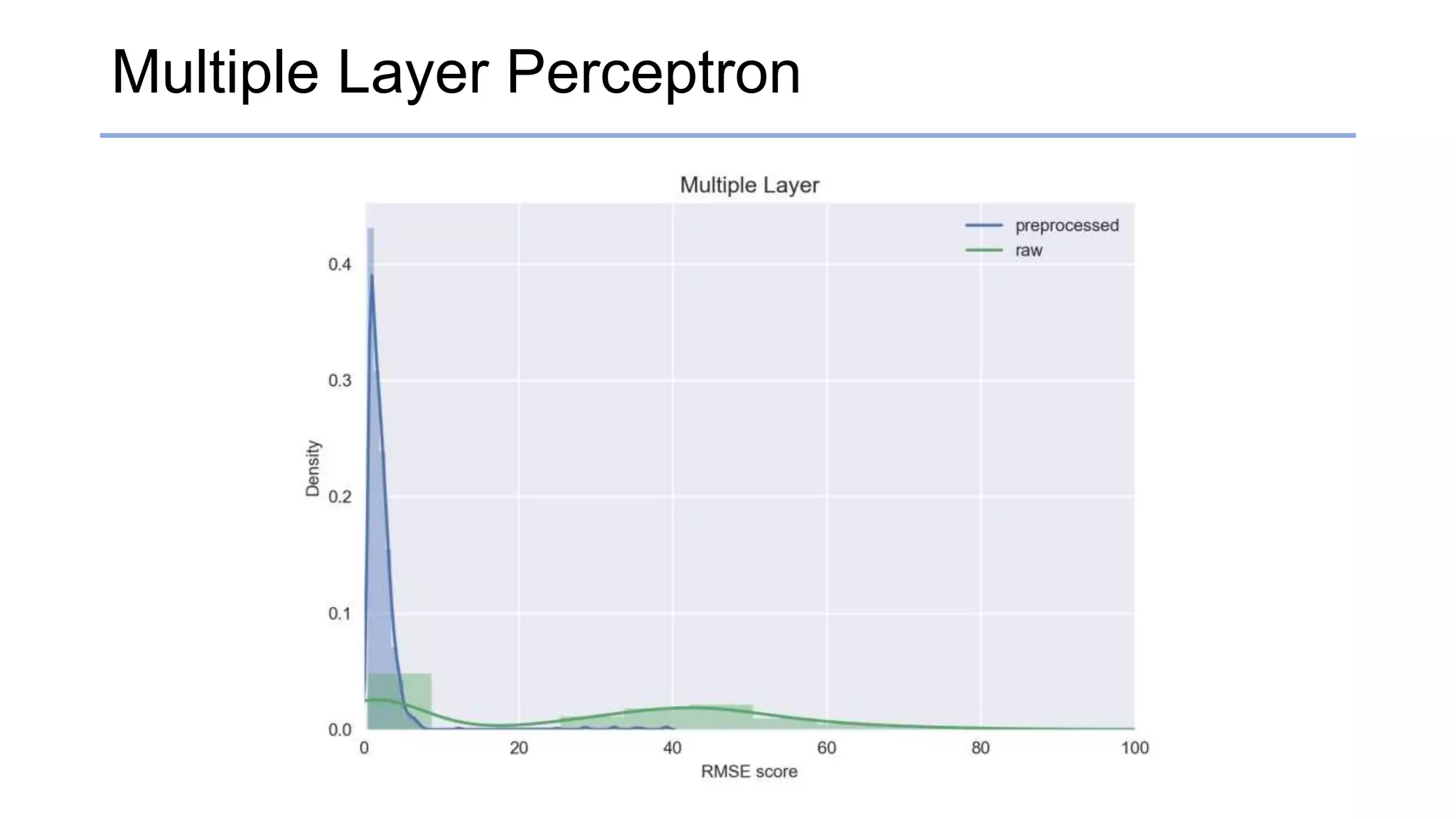
• Multiple Layer Perceptron Network
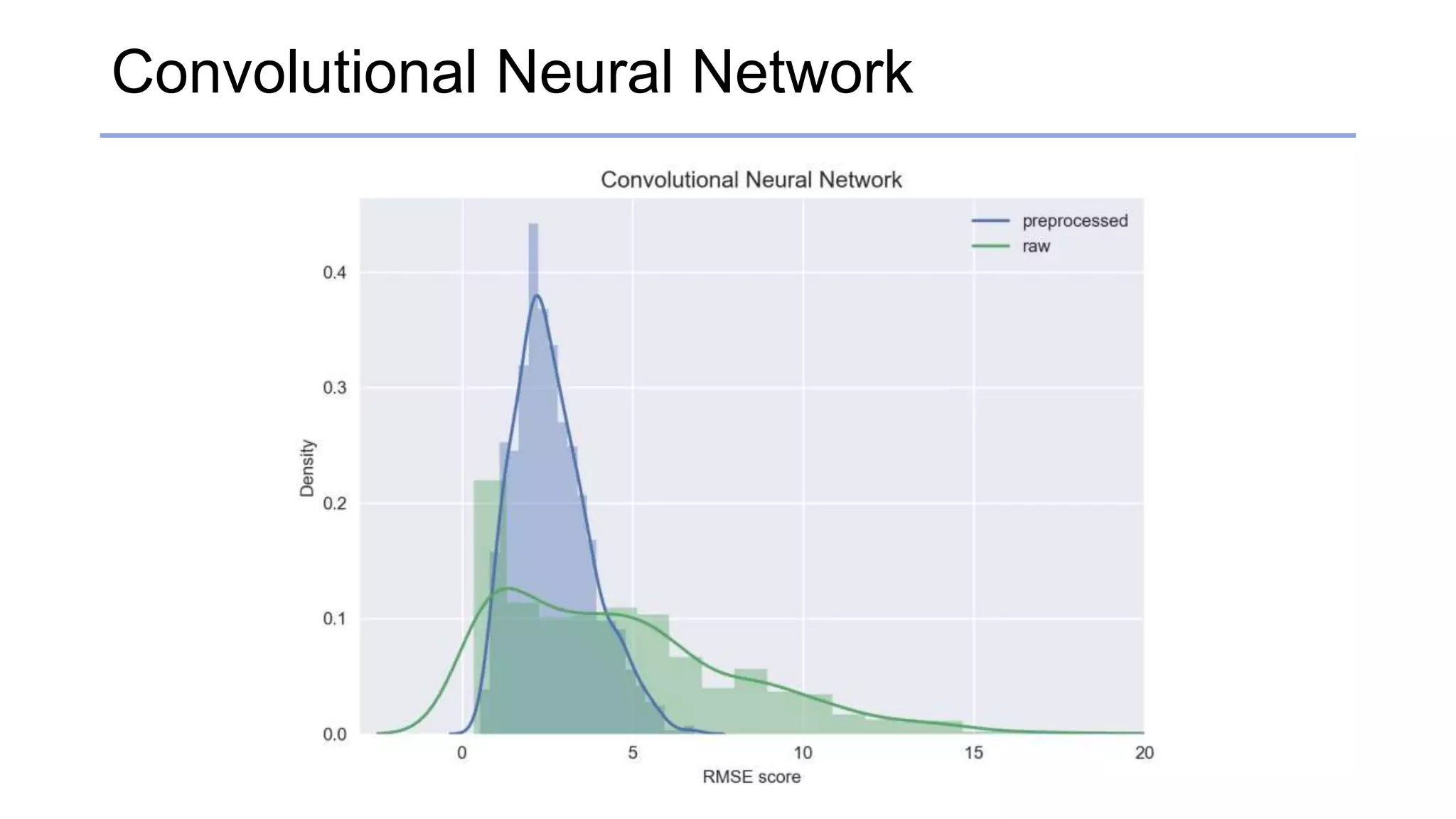
• Convolutional Neural Network
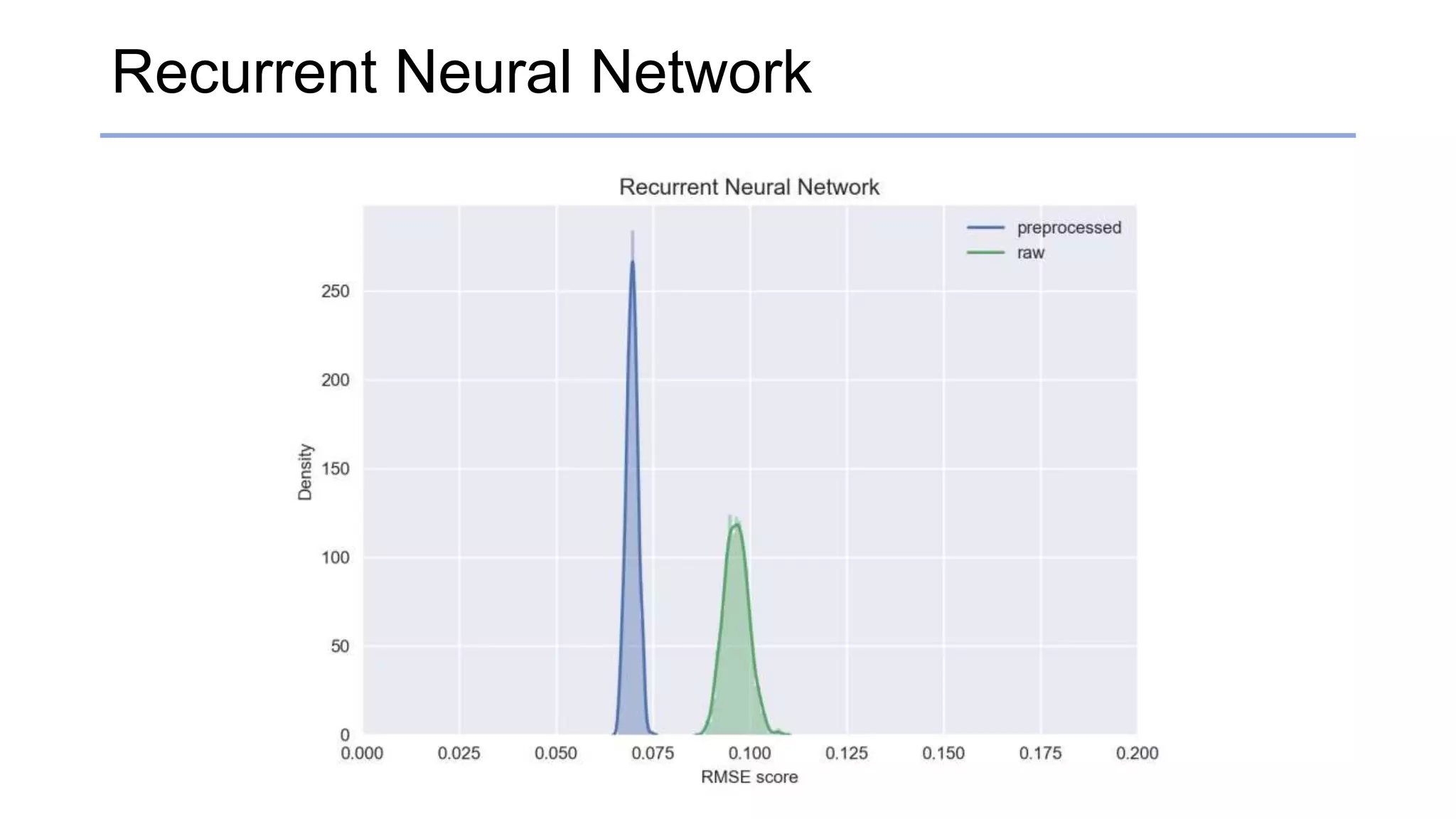
• Recurrent Neural Network
• Conclusions
• Further Studies
Purpose
• Accurate load forecasting is pivotal for the economic and secure
operation of the power system
• Goal: Achieving high load forecasting accuracy
• Two main way to do this:
• improvement of the performance of the learning algorithm
• how well the data features are extracted through the pre-processing
process.
 In this paper, we will going to evaluate of demand power
prediction performance based on deep learning algorithm
and data preprocessing
Experiments
Training & Testing Algorithm
Input Vector Target Vector
Training
Algorithm
Input Vector
Training
Algorithm
Predict Vector
a) Training
b) Testing
transplant
trained
model
feature data predicting
feature data label data
Raw vs. Preprocessed
• Given data(Australia NEM data):
• Daily Max and Mean Temperature data ( 2 points/day)
• Daily power load data with 30 mins interval ( 48 points/day)
• Raw data:
• [𝑃𝑟𝑎𝑤
𝑛 ] = 𝑃 𝑛, 𝑇 𝑚𝑎𝑥
𝑛 , 𝑇 𝑚𝑒𝑎𝑛
𝑛 ( 50 points/day)
• Preprocessed data:
• [𝑃𝑝𝑟𝑒
𝑛 ] = 𝑃 𝑛, 𝑃 𝑇.𝑚𝑎𝑥.𝑠𝑐𝑎𝑙𝑒𝑑
𝑛
, 𝑃 𝑇.𝑚𝑒𝑎𝑛.𝑠𝑐𝑎𝑙𝑒𝑑
𝑛
(144 points/day)
• 𝑃 𝑇.𝑚𝑎𝑥.𝑠𝑐𝑎𝑙𝑒𝑑
𝑛
= 𝑃 𝑛
𝑝𝑜𝑤𝑒𝑟𝑒𝑑 𝑏𝑦 𝑠𝑐𝑎𝑙𝑒𝑑 𝑀𝑎𝑥 𝑇𝑒𝑚𝑝𝑒𝑟𝑎𝑡𝑢𝑟𝑒
• [𝑃 𝑇.𝑚𝑒𝑎𝑛.𝑠𝑐𝑎𝑙𝑒𝑑
𝑛
] = 𝑃 𝑛
𝑝𝑜𝑤𝑒𝑟𝑒𝑑 𝑏𝑦 𝑠𝑐𝑎𝑙𝑒𝑑 𝑀𝑒𝑎𝑛 𝑇𝑒𝑚𝑝𝑒𝑟𝑎𝑡𝑢𝑟𝑒
Results
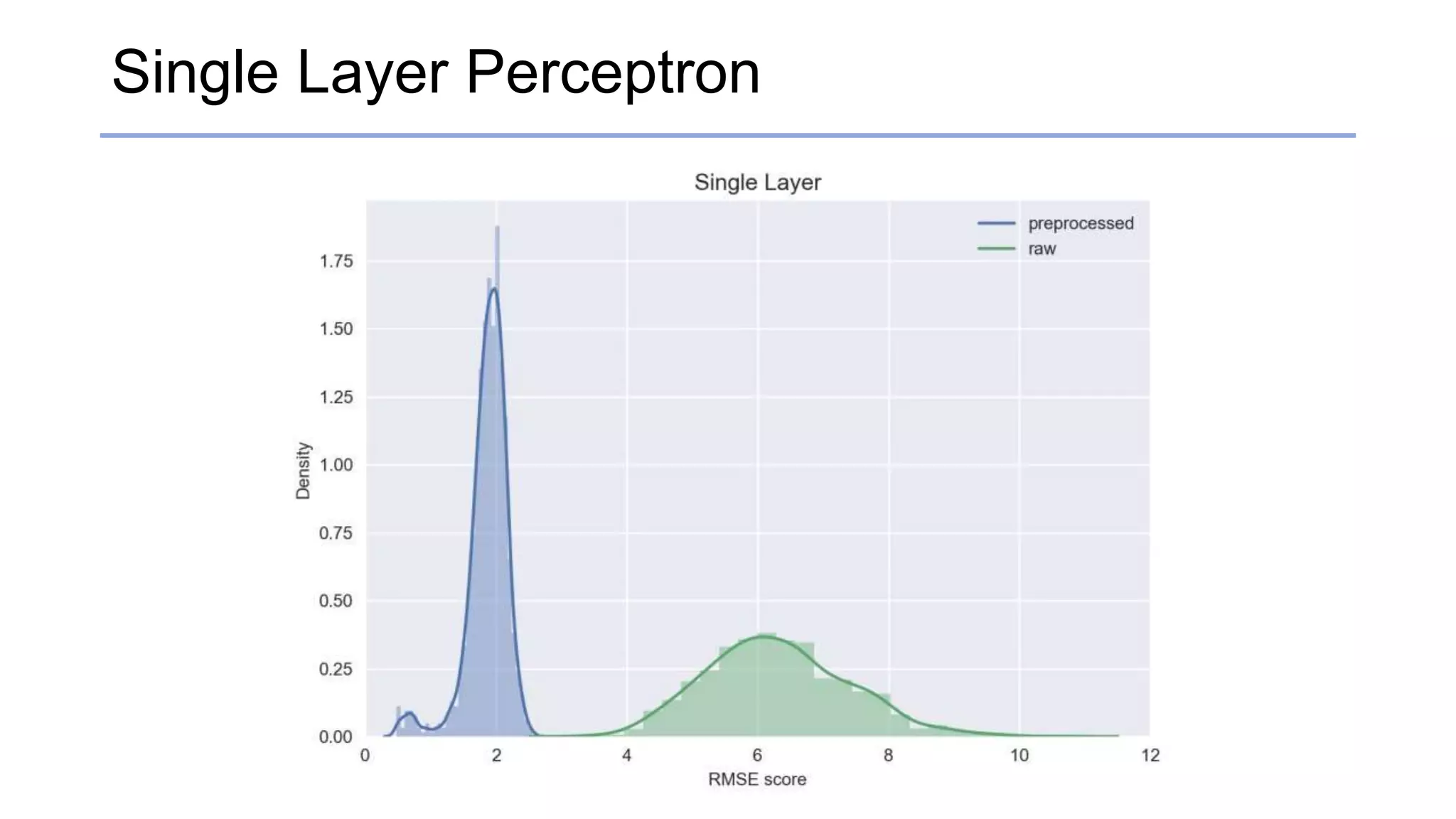
• RMSE & standard deviation score
Raw [RMSE / std] Preprocessed [RMSE / std]
Single Layer Perceptrons 6.30388 / 1.0803 1.86425 / 0.314612
Multiple Layer Perceptrons 27.0591 / 23.0247 2.2562 / 3.21933
Convolutional Neural Network 4.61754 / 3.52584 2.63669 / 1.11987
Recurrent Neural Network 0.0964969 / 0.00310329 0.0696449 / 0.00145637
Single Layer Perceptron
Multiple Layer Perceptron
Convolutional Neural Network
Recurrent Neural Network
Conclusions
• All algorithms show better and stable RMSE score with
preprocessed data.
• RNN model shows the best performance among four
learning algorithm designed.
 We checked that it is able to get better performance from
the same predictive model with only limited data if the
data preprocessing process is used.
 The results show that the RNN model is most suitable for
the power demand forecasting.
Further Studies
• All neural networks in this paper are based on gradient descent algorithm.
• Extreme learning machine(ELM) is a learning algorithm based on single
hidden layer feed-forward neural network (SLFN).
• Hierarchical ELM(H-ELM) is a framework of multilayer implementation of
the ELM, which improves the learning performance of the original ELM,
while maintaining its advantages of training efficiency.
 Need further study about power load predicting algorithm based on ELM
and H-ELM.
 Check ELM and H-ELM can outperform gradient based machine and find
out the reasons if it outperform.

KCC2017 28APR2017

  • 1.
    Evaluation of demandpower prediction performance based on deep learning algorithm and data preprocessing Park Jee Hyun 28 APR 2017 - SungKyunGwan University Nanyang Technological University
  • 2.
    Contents • Purpose • Experiments •Training & Testing Algorithm • Raw vs. Preprocessed • Results • Single Layer Perceptron Network • Multiple Layer Perceptron Network • Convolutional Neural Network • Recurrent Neural Network • Conclusions • Further Studies
  • 3.
    Purpose • Accurate loadforecasting is pivotal for the economic and secure operation of the power system • Goal: Achieving high load forecasting accuracy • Two main way to do this: • improvement of the performance of the learning algorithm • how well the data features are extracted through the pre-processing process.  In this paper, we will going to evaluate of demand power prediction performance based on deep learning algorithm and data preprocessing
  • 4.
  • 5.
    Training & TestingAlgorithm Input Vector Target Vector Training Algorithm Input Vector Training Algorithm Predict Vector a) Training b) Testing transplant trained model feature data predicting feature data label data
  • 6.
    Raw vs. Preprocessed •Given data(Australia NEM data): • Daily Max and Mean Temperature data ( 2 points/day) • Daily power load data with 30 mins interval ( 48 points/day) • Raw data: • [𝑃𝑟𝑎𝑤 𝑛 ] = 𝑃 𝑛, 𝑇 𝑚𝑎𝑥 𝑛 , 𝑇 𝑚𝑒𝑎𝑛 𝑛 ( 50 points/day) • Preprocessed data: • [𝑃𝑝𝑟𝑒 𝑛 ] = 𝑃 𝑛, 𝑃 𝑇.𝑚𝑎𝑥.𝑠𝑐𝑎𝑙𝑒𝑑 𝑛 , 𝑃 𝑇.𝑚𝑒𝑎𝑛.𝑠𝑐𝑎𝑙𝑒𝑑 𝑛 (144 points/day) • 𝑃 𝑇.𝑚𝑎𝑥.𝑠𝑐𝑎𝑙𝑒𝑑 𝑛 = 𝑃 𝑛 𝑝𝑜𝑤𝑒𝑟𝑒𝑑 𝑏𝑦 𝑠𝑐𝑎𝑙𝑒𝑑 𝑀𝑎𝑥 𝑇𝑒𝑚𝑝𝑒𝑟𝑎𝑡𝑢𝑟𝑒 • [𝑃 𝑇.𝑚𝑒𝑎𝑛.𝑠𝑐𝑎𝑙𝑒𝑑 𝑛 ] = 𝑃 𝑛 𝑝𝑜𝑤𝑒𝑟𝑒𝑑 𝑏𝑦 𝑠𝑐𝑎𝑙𝑒𝑑 𝑀𝑒𝑎𝑛 𝑇𝑒𝑚𝑝𝑒𝑟𝑎𝑡𝑢𝑟𝑒
  • 7.
    Results • RMSE &standard deviation score Raw [RMSE / std] Preprocessed [RMSE / std] Single Layer Perceptrons 6.30388 / 1.0803 1.86425 / 0.314612 Multiple Layer Perceptrons 27.0591 / 23.0247 2.2562 / 3.21933 Convolutional Neural Network 4.61754 / 3.52584 2.63669 / 1.11987 Recurrent Neural Network 0.0964969 / 0.00310329 0.0696449 / 0.00145637
  • 8.
  • 9.
  • 10.
  • 11.
  • 12.
    Conclusions • All algorithmsshow better and stable RMSE score with preprocessed data. • RNN model shows the best performance among four learning algorithm designed.  We checked that it is able to get better performance from the same predictive model with only limited data if the data preprocessing process is used.  The results show that the RNN model is most suitable for the power demand forecasting.
  • 13.
    Further Studies • Allneural networks in this paper are based on gradient descent algorithm. • Extreme learning machine(ELM) is a learning algorithm based on single hidden layer feed-forward neural network (SLFN). • Hierarchical ELM(H-ELM) is a framework of multilayer implementation of the ELM, which improves the learning performance of the original ELM, while maintaining its advantages of training efficiency.  Need further study about power load predicting algorithm based on ELM and H-ELM.  Check ELM and H-ELM can outperform gradient based machine and find out the reasons if it outperform.