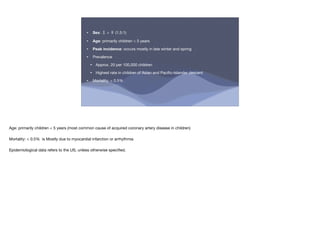
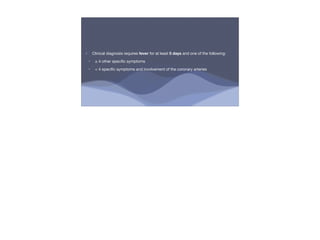
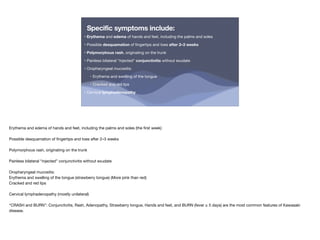
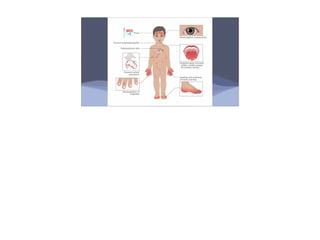
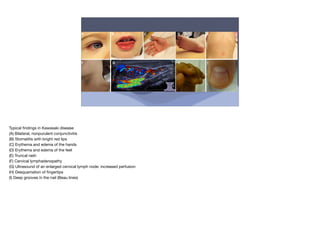
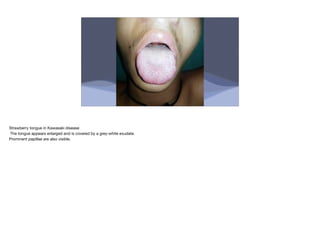
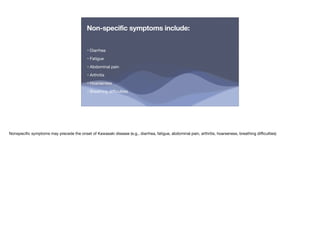
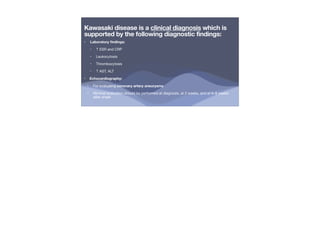
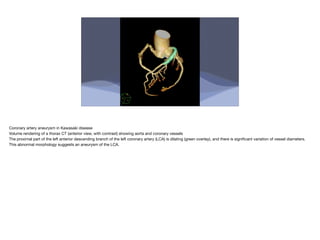
Kawasaki disease is an acute vasculitis that primarily affects children under 5 years of age. It is characterized by fever for at least 5 days and at least 4 of 5 clinical features including rash, conjunctivitis, mouth changes, swelling of hands and feet, and cervical lymphadenopathy. If left untreated, it can lead to coronary artery aneurysms in 15-25% of cases. Treatment involves intravenous immunoglobulin and aspirin which are most effective within the first 10 days of symptoms to reduce the risk of aneurysms and complications like myocardial infarction.



![PERI-PROSTHETIC FRACTURE NAIL-PLATE CONSTRUCT [NPC].pptx](https://cdn.slidesharecdn.com/ss_thumbnails/drarunkumardrmohamedashrafperiprostheticfrasturenail-plateconstructnpc-260209164459-7e9d15a1-thumbnail.jpg?width=640&height=640&fit=bounds)


![ONFH[AVN HIP] -TRIPLE REGIME -A NOVAL SURGICAL CONCEPT .pptx](https://cdn.slidesharecdn.com/ss_thumbnails/onfhavnhip2026koaconcalicutdrgokuldevdrmashraf-260210064517-213ec005-thumbnail.jpg?width=640&height=640&fit=bounds)

