Coral Reef
Emily Katz
4th Grade
Technology Integration Rationale
Evaluation of Internet Content
• The resources and websites used in this presentation are reliable
resources that will help students expand their knowledge of coral
reefs. There are many resources on the internet about coral reefs. The
following slides contain some of the most informative and reliable
sources for this topic.
• Each source is hyperlinked and listed in the notes on each slide.
Internet Blog
• Coralreefs.blogs.rice.edu is a blog that can be used to educate students
on the different Coral Reefs around the world. This blog includes
images, descriptions, maps, and charts that can help teach students
about each reef, the dangers they face, and their locations. It also lists
resources the information is obtained from. This can be used to find
more about each reef if students are interested.
Podcast
• Diving Deeper Podcast: This podcast can be used to teach children
why coral reefs are valuable, facts about coral reefs, the threats that
face them, and how we can help coral reefs. This podcast also gives a
clear explanation of what coral is and what they do. It covers a wide
variety of topics that allow students to “dive deeper” into their
learning about coral reefs. They can learn about the many species that
live in coral reefs and more. This podcast is important because of the
wide variety of facts and knowledge it covers about coral reefs.
YouTube Content
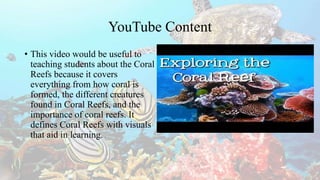
• This video would be useful to
teaching students about the Coral
Reefs because it covers
everything from how coral is
formed, the different creatures
found in Coral Reefs, and the
importance of coral reefs. It
defines Coral Reefs with visuals
that aid in learning.
Internet Resources
• National Oceanic and Atmospheric Administration – This organization
includes resources that can inform students on the importance of
conserving the coral reefs and different ways to help do so. It includes
multimedia items, descriptions of threats, and more.
• Oceana – This organization discusses the coral reef as an ecosystem
and the marine life that makes up the reef. Students can use this
website to learn about the creatures, the water, and other aspects that
make up the reefs. This also discusses way to help protect the reefs.
• The Nature Conservancy- Provides statistics on coral reefs,
information about these reefs around the worlds, news on coral reefs,
and other multimedia sources that can be used.
Inspiration
Teaching Materials 1
• Teaching materials can be found through
www.education.com
• Animals and Plants Worksheet: Asks students to name different
animals and plants in the reef. This worksheet can be used to assess
children on their knowledge and what they have learned about the
different animals and plants in this ecosystem.
• Coral Reef Crossword Puzzle: This crossword puzzle includes
different science vocabulary associated with Coral Reefs. This
crossword puzzle can reinforce and assess students knowledge of
the vocabulary used in this unit in a fun way.
Teaching Materials 2
• Teaching Materials can be found through www.education.noaa.gov
• Coral Reef Activity Book: This activity book includes many
different pages that include facts about Coral Reefs and activities
such as connecting the dots and word searches.
• Teaching Materials can be found through www.aqua.org
• Coral Reef Activity Book: This book includes maps labeling the
different coral reefs, fish facts students fill out, types of coral, and
many other activities. This book contains a lot of information
covering the wide variety of aspects associated with the coral reef.
Each activity page can be used in separate lesson about each aspect.
Subject-Specific Internet-based Resource
Coral through National Geographic
• National Geographic provides a variety of pages that describe animals
in depth. This page describes coral specifically. Students must have an
understanding of what coral is and what coral does to understand how
coral reefs function. This website will allow students to learn more
about coral. They can also use National Geographic to explore other
animals that live in coral reefs as well. On this page, there is a section
called “Other Reef Dwellers” where students can click to see other
animals in the reef.
Uses of the Internet
• Interactive Coral Reef: This resource involves clicking on different
parts of the coral reef to learn about them. For example, if a student
clicks on the Nassau Grouper they can learn a fact about them, their
role, and a threat to them. This interactive reef is a fun way for
students to learn about the different members that make up the reef’s
ecosystem!
• Who am I? Game: This online game gives students facts about animals
in the coral reef. Students are asked to choose the animal based on the
facts given to them. This is a fun way for students to test what they
know. In a way, this game is a reverse exercise of the interactive coral
reef. They can start by learning information with the interactive map
and then practice what they learned through this game.
Web 2.0 Uses of the Internet
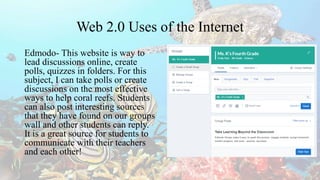
Edmodo- This website is way to
lead discussions online, create
polls, quizzes in folders. For this
subject, I can take polls or create
discussions on the most effective
ways to help coral reefs. Students
can also post interesting sources
that they have found on our groups
wall and other students can reply.
It is a great source for students to
communicate with their teachers
and each other!
Web 2.0 Uses of the Internet
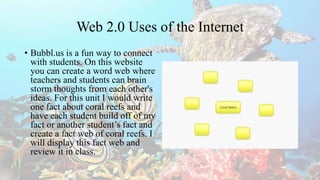
• Bubbl.us is a fun way to connect
with students. On this website
you can create a word web where
teachers and students can brain
storm thoughts from each other's
ideas. For this unit I would write
one fact about coral reefs and
have each student build off of my
fact or another student’s fact and
create a fact web of coral reefs. I
will display this fact web and
review it in class.

Katz,Emily_CoralReef

  • 1.
  • 2.
  • 3.
    Evaluation of InternetContent • The resources and websites used in this presentation are reliable resources that will help students expand their knowledge of coral reefs. There are many resources on the internet about coral reefs. The following slides contain some of the most informative and reliable sources for this topic. • Each source is hyperlinked and listed in the notes on each slide.
  • 4.
    Internet Blog • Coralreefs.blogs.rice.eduis a blog that can be used to educate students on the different Coral Reefs around the world. This blog includes images, descriptions, maps, and charts that can help teach students about each reef, the dangers they face, and their locations. It also lists resources the information is obtained from. This can be used to find more about each reef if students are interested.
  • 5.
    Podcast • Diving DeeperPodcast: This podcast can be used to teach children why coral reefs are valuable, facts about coral reefs, the threats that face them, and how we can help coral reefs. This podcast also gives a clear explanation of what coral is and what they do. It covers a wide variety of topics that allow students to “dive deeper” into their learning about coral reefs. They can learn about the many species that live in coral reefs and more. This podcast is important because of the wide variety of facts and knowledge it covers about coral reefs.
  • 6.
    YouTube Content • Thisvideo would be useful to teaching students about the Coral Reefs because it covers everything from how coral is formed, the different creatures found in Coral Reefs, and the importance of coral reefs. It defines Coral Reefs with visuals that aid in learning.
  • 7.
    Internet Resources • NationalOceanic and Atmospheric Administration – This organization includes resources that can inform students on the importance of conserving the coral reefs and different ways to help do so. It includes multimedia items, descriptions of threats, and more. • Oceana – This organization discusses the coral reef as an ecosystem and the marine life that makes up the reef. Students can use this website to learn about the creatures, the water, and other aspects that make up the reefs. This also discusses way to help protect the reefs. • The Nature Conservancy- Provides statistics on coral reefs, information about these reefs around the worlds, news on coral reefs, and other multimedia sources that can be used.
  • 8.
  • 9.
    Teaching Materials 1 •Teaching materials can be found through www.education.com • Animals and Plants Worksheet: Asks students to name different animals and plants in the reef. This worksheet can be used to assess children on their knowledge and what they have learned about the different animals and plants in this ecosystem. • Coral Reef Crossword Puzzle: This crossword puzzle includes different science vocabulary associated with Coral Reefs. This crossword puzzle can reinforce and assess students knowledge of the vocabulary used in this unit in a fun way.
  • 10.
    Teaching Materials 2 •Teaching Materials can be found through www.education.noaa.gov • Coral Reef Activity Book: This activity book includes many different pages that include facts about Coral Reefs and activities such as connecting the dots and word searches. • Teaching Materials can be found through www.aqua.org • Coral Reef Activity Book: This book includes maps labeling the different coral reefs, fish facts students fill out, types of coral, and many other activities. This book contains a lot of information covering the wide variety of aspects associated with the coral reef. Each activity page can be used in separate lesson about each aspect.
  • 11.
    Subject-Specific Internet-based Resource Coralthrough National Geographic • National Geographic provides a variety of pages that describe animals in depth. This page describes coral specifically. Students must have an understanding of what coral is and what coral does to understand how coral reefs function. This website will allow students to learn more about coral. They can also use National Geographic to explore other animals that live in coral reefs as well. On this page, there is a section called “Other Reef Dwellers” where students can click to see other animals in the reef.
  • 12.
    Uses of theInternet • Interactive Coral Reef: This resource involves clicking on different parts of the coral reef to learn about them. For example, if a student clicks on the Nassau Grouper they can learn a fact about them, their role, and a threat to them. This interactive reef is a fun way for students to learn about the different members that make up the reef’s ecosystem! • Who am I? Game: This online game gives students facts about animals in the coral reef. Students are asked to choose the animal based on the facts given to them. This is a fun way for students to test what they know. In a way, this game is a reverse exercise of the interactive coral reef. They can start by learning information with the interactive map and then practice what they learned through this game.
  • 13.
    Web 2.0 Usesof the Internet Edmodo- This website is way to lead discussions online, create polls, quizzes in folders. For this subject, I can take polls or create discussions on the most effective ways to help coral reefs. Students can also post interesting sources that they have found on our groups wall and other students can reply. It is a great source for students to communicate with their teachers and each other!
  • 14.
    Web 2.0 Usesof the Internet • Bubbl.us is a fun way to connect with students. On this website you can create a word web where teachers and students can brain storm thoughts from each other's ideas. For this unit I would write one fact about coral reefs and have each student build off of my fact or another student’s fact and create a fact web of coral reefs. I will display this fact web and review it in class.

Editor's Notes

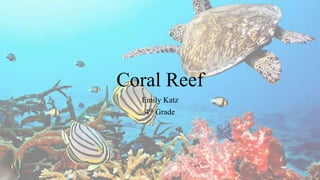
  • #2 https://matadornetwork.com/change/30-vibrant-images-coral-reefs/
  • #3 There are many reasons why technology should be incorporated in teaching students about coral reefs. In order for a student to learn about coral reefs, the must be able to visual these ecosystems. It is likely that most if not all of my students have not seen a coral reef or the animals that live within them. Videos, interactive maps, and online blog images will allow students to get a true visual representation of coral reefs. Using technology will allow me to reach more learning styles, use more resources, and create stronger communication with my students. Technology allows me to make learning about the ecosystem fun for students. Through my research, I was able to find or create crossword puzzles, interactive maps, charts, videos, animal facts, and more. Using internet sources will also show my students that there are websites and organizations out there that are dedicated to helping the coral reefs and that they can help as well. Technology is important to helping students understand the different ecosystems in the world that they do not see everyday and ways to help them. It also gives us a way to explore places without visiting them. I truly believe that technology is key to helping my students see their world.
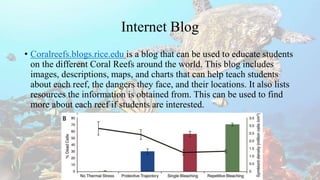
  • #5 Source http://coralreefs.blogs.rice.edu/ The picture is an example of the charts provided in this blog. .
  • #6 http://oceanservice.noaa.gov/podcast/supp_feb10.html
  • #7 Source: https://www.youtube.com/watch?v=J2BKd5e15Jc
  • #8 Source 1: http://coralreef.noaa.gov/ Source 2: http://oceana.org/marine-life/marine-science-and-ecosystems/coral-reef Source 3: http://www.nature.org/ourinitiatives/habitats/coralreefs/
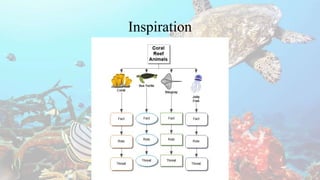
  • #9 I would use this chart to have my students research the following animals and have them find a fact about them, their role in the coral reef ecosystem, and the threats they face. This can be a starting organizer for future assignments such a research projects on one specific animals or on the importance of conserving the Coral Reefs. Overall, inspiration or kidspiration can be used to create a variety of charts to help organize class notes and research projects. These can be used as study guides or to help complete assignments. These charts can also be filled out as a class on the board.
  • #10 Source: https://www.education.com/resources/fourth-grade/coral+reef/ Worksheet: https://www.education.com/worksheet/article/coral-reef-animals-and-plants/ Crossword: https://www.education.com/worksheet/article/coral-reef-crossword/
  • #11 Each material contains a hyperlink to the source above. Education activity book: http://www.education.noaa.gov/Special_Topics/Frequently_Requested_Items/coral_reef_activity_book.pdf Aqua activity book https://aqua.org/~/media/Files/Learn/Education%20Baltimore%20PDFs/Teacher%20Booklets/CoralReefs_5-8.pdf
  • #12 http://animals.nationalgeographic.com/animals/invertebrates/coral/
  • #13 Interactive Reef http://coralreef.noaa.gov/interactivereef/interactivereef.html Game: http://www.coralfilm.com/games/who.html http://www.coralfilm.com/fun.html
  • #14  https://www.edmodo.com/
  • #15 https://bubbl.us/