







Sahabzada Aness
Taimur Alam
Background
Cultural
Background
M.Taimur Recruitment
Fawad Training
Yasawal Effects
By Sahabzada Anees
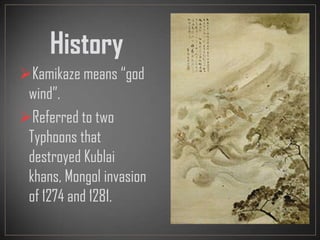
History
Kamikaze means “god
wind”.
Referred to two
Typhoons that
destroyed Kublai
khans, Mongol invasion
of 1274 and 1281.
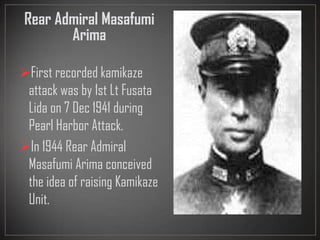
Rear Admiral Masafumi
Arima
First recorded kamikaze
attack was by 1st Lt Fusata
Lida on 7 Dec 1941 during
Pearl Harbor Attack.
In 1944 Rear Admiral
Masafumi Arima conceived
the idea of raising Kamikaze
Unit.
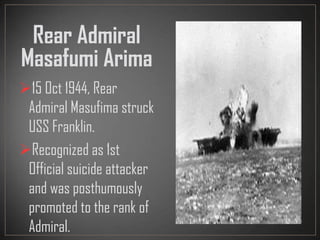
Rear Admiral
Masafumi Arima
15 Oct 1944, Rear
Admiral Masufima struck
USS Franklin.
Recognized as 1st
Official suicide attacker
and was posthumously
promoted to the rank of
Admiral.
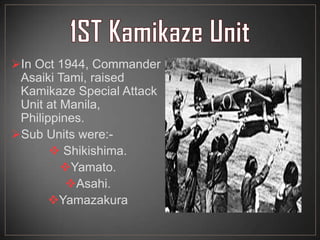
In Oct 1944, Commander
Asaiki Tami, raised
Kamikaze Special Attack
Unit at Manila,
Philippines.
Sub Units were:-
 Shikishima.
Yamato.
Asahi.
Yamazakura
By Taimur Alam
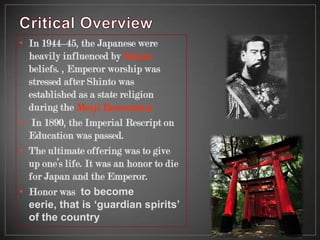
• In 1944–45, the Japanese were
heavily influenced by Shinto
beliefs. , Emperor worship was
stressed after Shinto was
established as a state religion
during the Meiji Restoration
• In 1890, the Imperial Rescript on
Education was passed.
• The ultimate offering was to give
up one’s life. It was an honor to die
for Japan and the Emperor.
• Honor was to become
eerie, that is ‘guardian spirits’
of the country
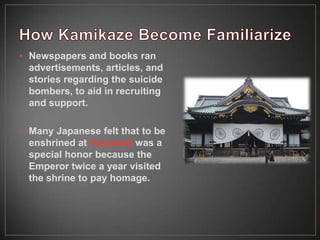
• Newspapers and books ran
advertisements, articles, and
stories regarding the suicide
bombers, to aid in recruiting
and support.
• Many Japanese felt that to be
enshrined at Yasukuni was a
special honor because the
Emperor twice a year visited
the shrine to pay homage.
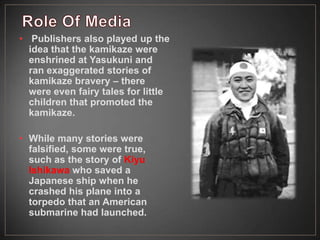
• Publishers also played up the
idea that the kamikaze were
enshrined at Yasukuni and
ran exaggerated stories of
kamikaze bravery – there
were even fairy tales for little
children that promoted the
kamikaze.
• While many stories were
falsified, some were true,
such as the story of Kiyu
Ishikawa who saved a
Japanese ship when he
crashed his plane into a
torpedo that an American
submarine had launched.
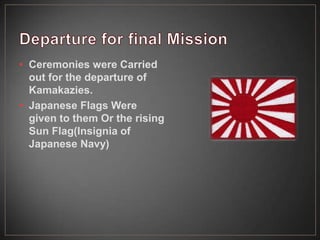
• Ceremonies were Carried
out for the departure of
Kamakazies.
• Japanese Flags Were
given to them Or the rising
Sun Flag(Insignia of
Japanese Navy)
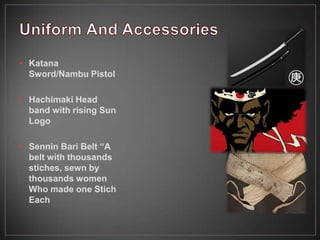
• Katana
Sword/Nambu Pistol
• Hachimaki Head
band with rising Sun
Logo
• Sennin Bari Belt “A
belt with thousands
stiches, sewn by
thousands women
Who made one Stich
Each
By M.Taimur
• Captain Motoharu Okamura commented that “there
were so many volunteers for suicide missions that he
referred to them as a swarm of bees,” explaining:
“Bees die after they have stung.”
• Many of the kamikaze pilots believed their death
would pay the debt they owed and show the love they
had for their families, friends, and emperor.
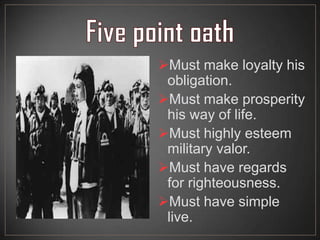
Must make loyalty his
obligation.
Must make prosperity
his way of life.
Must highly esteem
military valor.
Must have regards
for righteousness.
Must have simple
live.
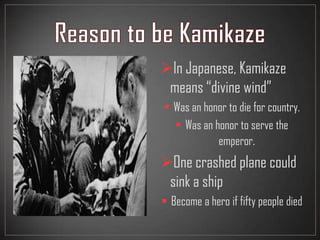
In Japanese, Kamikaze
means “divine wind”
 Was an honor to die for country.
 Was an honor to serve the
emperor.
One crashed plane could
sink a ship
 Become a hero if fifty people died
By Fawad
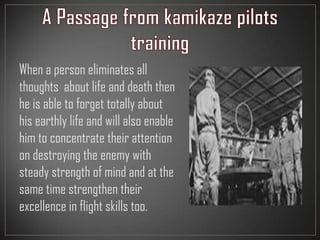
When a person eliminates all
thoughts about life and death then
he is able to forget totally about
his earthly life and will also enable
him to concentrate their attention
on destroying the enemy with
steady strength of mind and at the
same time strengthen their
excellence in flight skills too.
Kasugai Takeo: According to him “ it generally consisted of
incredibly punishing training coupled with cruel and torturous
punishment as a daily routine .”
Irokawa Daikichi: This person was trained at Naval air base
who recalled that he was struck so hard and frequently that
his face was no longer recognizable ,he also wrote that I was
hit so hard that I could see no longer and fall on the floor.
This cruel training was justified by the idea that it would
implant a soldier's fighting spirit
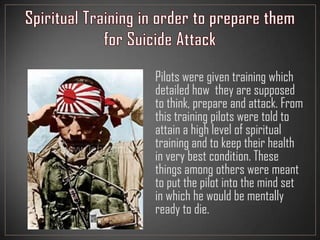
Pilots were given training which
detailed how they are supposed
to think, prepare and attack. From
this training pilots were told to
attain a high level of spiritual
training and to keep their health
in very best condition. These
things among others were meant
to put the pilot into the mind set
in which he would be mentally
ready to die.
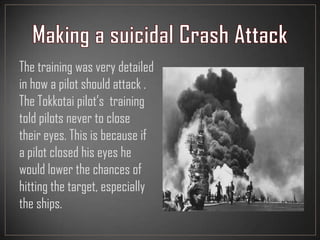
The training was very detailed
in how a pilot should attack .
The Tokkotai pilot’s training
told pilots never to close
their eyes. This is because if
a pilot closed his eyes he
would lower the chances of
hitting the target, especially
the ships.
By Yasawal
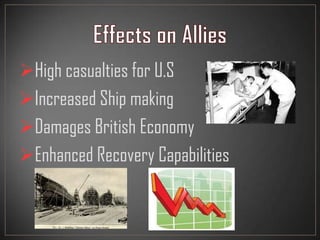
High casualties for U.S
Increased Ship making
Damages British Economy
Enhanced Recovery Capabilities
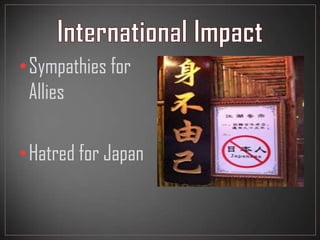
•Sympathies for
Allies
•Hatred for Japan
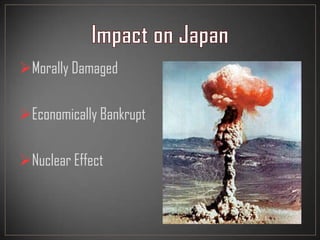
Morally Damaged
Economically Bankrupt
Nuclear Effect
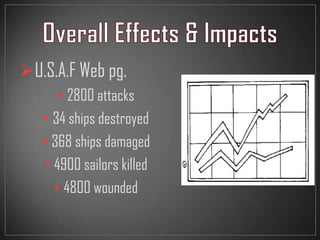
U.S.A.F Web pg.
• 2800 attacks
• 34 ships destroyed
• 368 ships damaged
• 4900 sailors killed
• 4800 wounded
Kamikaze

Kamikaze

  • 3.
  • 4.
  • 5.
    History Kamikaze means “god wind”. Referredto two Typhoons that destroyed Kublai khans, Mongol invasion of 1274 and 1281.
  • 6.
    Rear Admiral Masafumi Arima Firstrecorded kamikaze attack was by 1st Lt Fusata Lida on 7 Dec 1941 during Pearl Harbor Attack. In 1944 Rear Admiral Masafumi Arima conceived the idea of raising Kamikaze Unit.
  • 7.
    Rear Admiral Masafumi Arima 15Oct 1944, Rear Admiral Masufima struck USS Franklin. Recognized as 1st Official suicide attacker and was posthumously promoted to the rank of Admiral.
  • 8.
    In Oct 1944,Commander Asaiki Tami, raised Kamikaze Special Attack Unit at Manila, Philippines. Sub Units were:-  Shikishima. Yamato. Asahi. Yamazakura
  • 9.
  • 10.
    • In 1944–45,the Japanese were heavily influenced by Shinto beliefs. , Emperor worship was stressed after Shinto was established as a state religion during the Meiji Restoration • In 1890, the Imperial Rescript on Education was passed. • The ultimate offering was to give up one’s life. It was an honor to die for Japan and the Emperor. • Honor was to become eerie, that is ‘guardian spirits’ of the country
  • 11.
    • Newspapers andbooks ran advertisements, articles, and stories regarding the suicide bombers, to aid in recruiting and support. • Many Japanese felt that to be enshrined at Yasukuni was a special honor because the Emperor twice a year visited the shrine to pay homage.
  • 12.
    • Publishers alsoplayed up the idea that the kamikaze were enshrined at Yasukuni and ran exaggerated stories of kamikaze bravery – there were even fairy tales for little children that promoted the kamikaze. • While many stories were falsified, some were true, such as the story of Kiyu Ishikawa who saved a Japanese ship when he crashed his plane into a torpedo that an American submarine had launched.
  • 13.
    • Ceremonies wereCarried out for the departure of Kamakazies. • Japanese Flags Were given to them Or the rising Sun Flag(Insignia of Japanese Navy)
  • 14.
    • Katana Sword/Nambu Pistol •Hachimaki Head band with rising Sun Logo • Sennin Bari Belt “A belt with thousands stiches, sewn by thousands women Who made one Stich Each
  • 15.
  • 17.
    • Captain MotoharuOkamura commented that “there were so many volunteers for suicide missions that he referred to them as a swarm of bees,” explaining: “Bees die after they have stung.” • Many of the kamikaze pilots believed their death would pay the debt they owed and show the love they had for their families, friends, and emperor.
  • 18.
    Must make loyaltyhis obligation. Must make prosperity his way of life. Must highly esteem military valor. Must have regards for righteousness. Must have simple live.
  • 19.
    In Japanese, Kamikaze means“divine wind”  Was an honor to die for country.  Was an honor to serve the emperor. One crashed plane could sink a ship  Become a hero if fifty people died
  • 20.
  • 21.
    When a personeliminates all thoughts about life and death then he is able to forget totally about his earthly life and will also enable him to concentrate their attention on destroying the enemy with steady strength of mind and at the same time strengthen their excellence in flight skills too.
  • 22.
    Kasugai Takeo: Accordingto him “ it generally consisted of incredibly punishing training coupled with cruel and torturous punishment as a daily routine .” Irokawa Daikichi: This person was trained at Naval air base who recalled that he was struck so hard and frequently that his face was no longer recognizable ,he also wrote that I was hit so hard that I could see no longer and fall on the floor. This cruel training was justified by the idea that it would implant a soldier's fighting spirit
  • 23.
    Pilots were giventraining which detailed how they are supposed to think, prepare and attack. From this training pilots were told to attain a high level of spiritual training and to keep their health in very best condition. These things among others were meant to put the pilot into the mind set in which he would be mentally ready to die.
  • 24.
    The training wasvery detailed in how a pilot should attack . The Tokkotai pilot’s training told pilots never to close their eyes. This is because if a pilot closed his eyes he would lower the chances of hitting the target, especially the ships.
  • 25.
  • 26.
    High casualties forU.S Increased Ship making Damages British Economy Enhanced Recovery Capabilities
  • 27.
  • 28.
  • 29.
    U.S.A.F Web pg. •2800 attacks • 34 ships destroyed • 368 ships damaged • 4900 sailors killed • 4800 wounded