Download as PDF, PPTX

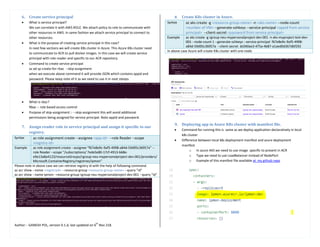
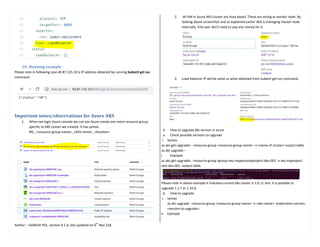


1. The document discusses the advantages and steps to configure a Kubernetes (K8s) cluster on Microsoft Azure. Key advantages include Azure Kubernetes Service (AKS) being a managed service where the user does not manage master nodes and only pays for worker nodes. 2. The steps outlined include creating an Azure resource group, container registry (ACR) to store Docker images, a service principal to authenticate the cluster to ACR, assigning the service principal the Reader role to ACR, and creating an AKS cluster pointing to the stored images. 3. Important notes state that the user sees an additional resource group for the AKS cluster, all nodes are Linux VMs, and the load balancer IP is obtained


