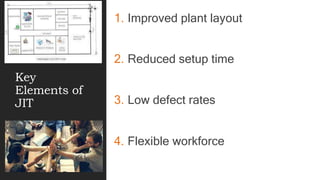
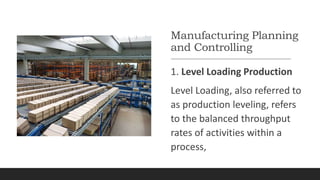
Just-in-time (JIT) manufacturing originated in Japan in the 1930s and was pioneered by Toyota. It aims to reduce waste by receiving materials only as needed in the production process. Key elements of JIT include improved plant layout, reduced setup times, low defect rates, and a flexible workforce. Implementation requires elements like continuous improvement, eliminating waste, visual controls, and close vendor relationships. JIT focuses on level loading production, pull systems where downstream needs trigger upstream activities, and preventive maintenance and housekeeping to control hazards.