Download to read offline





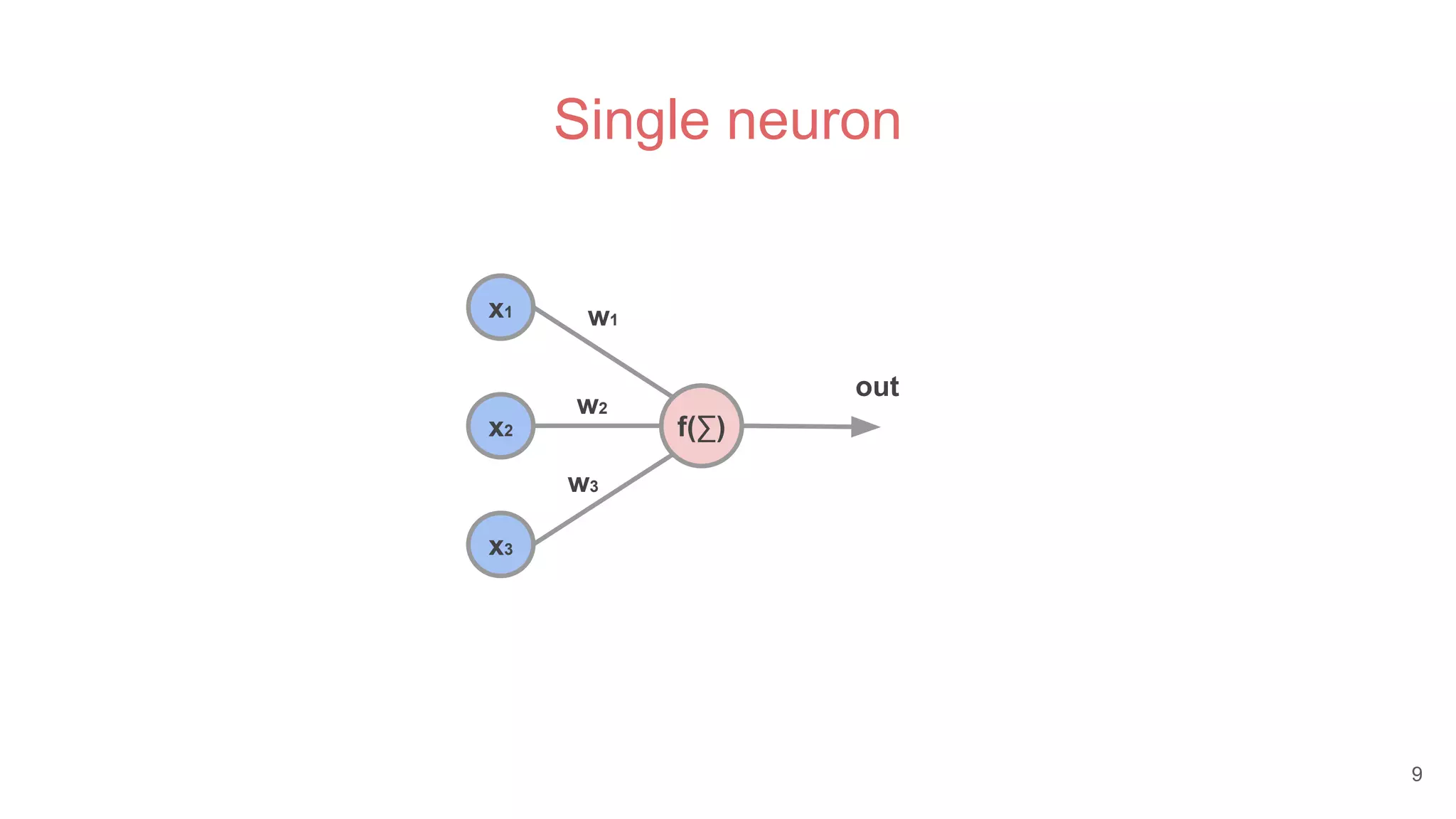
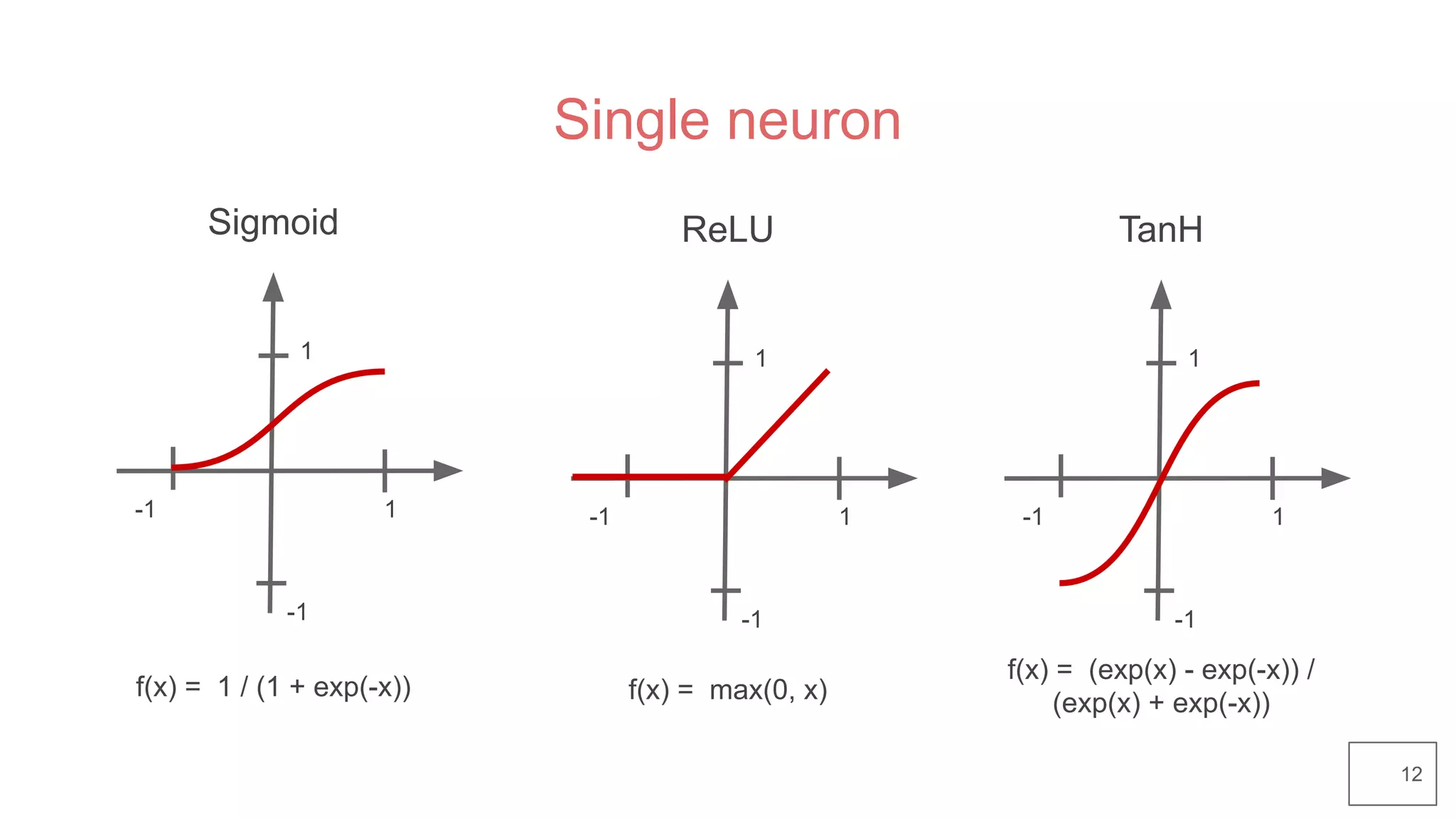
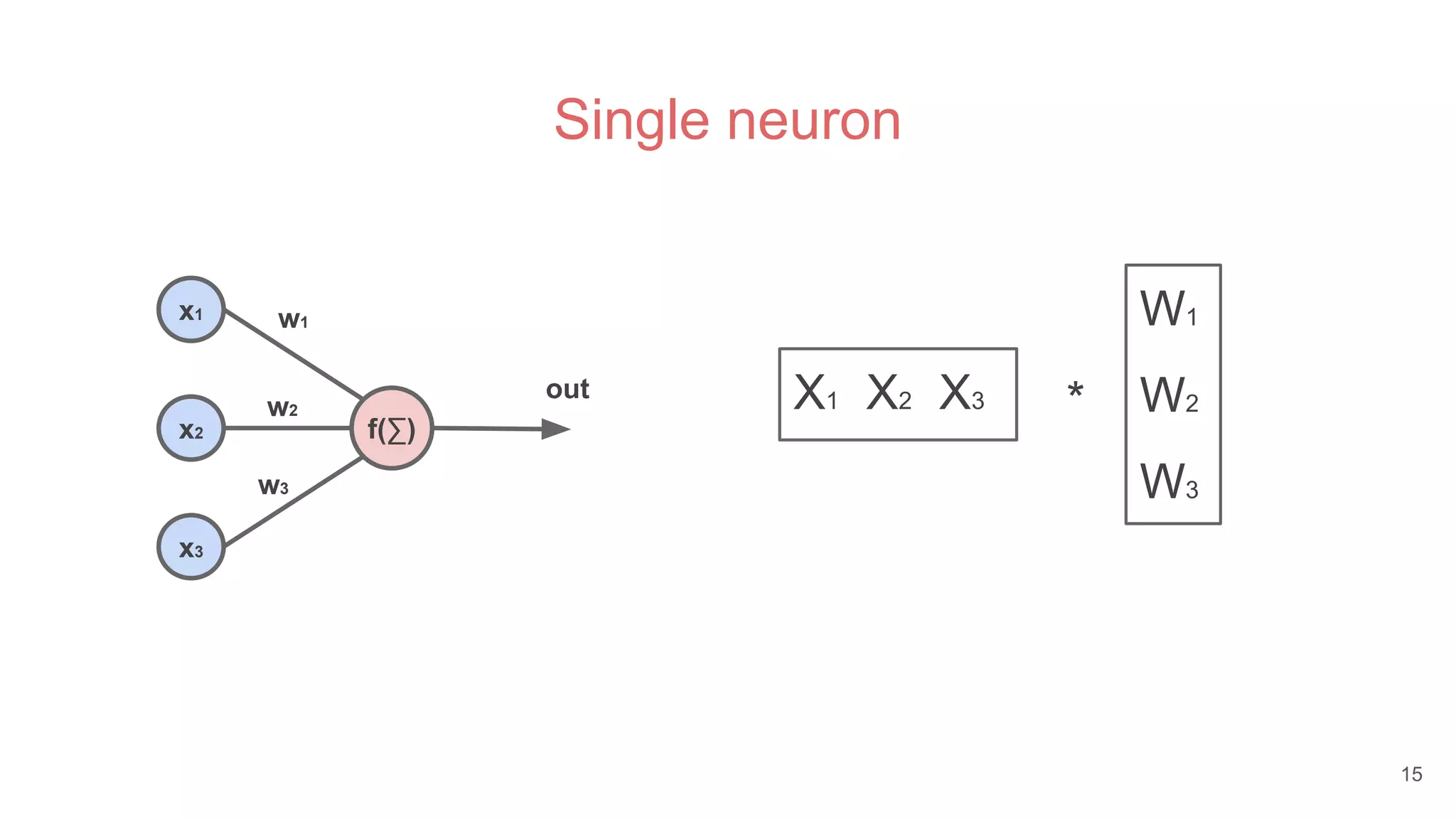
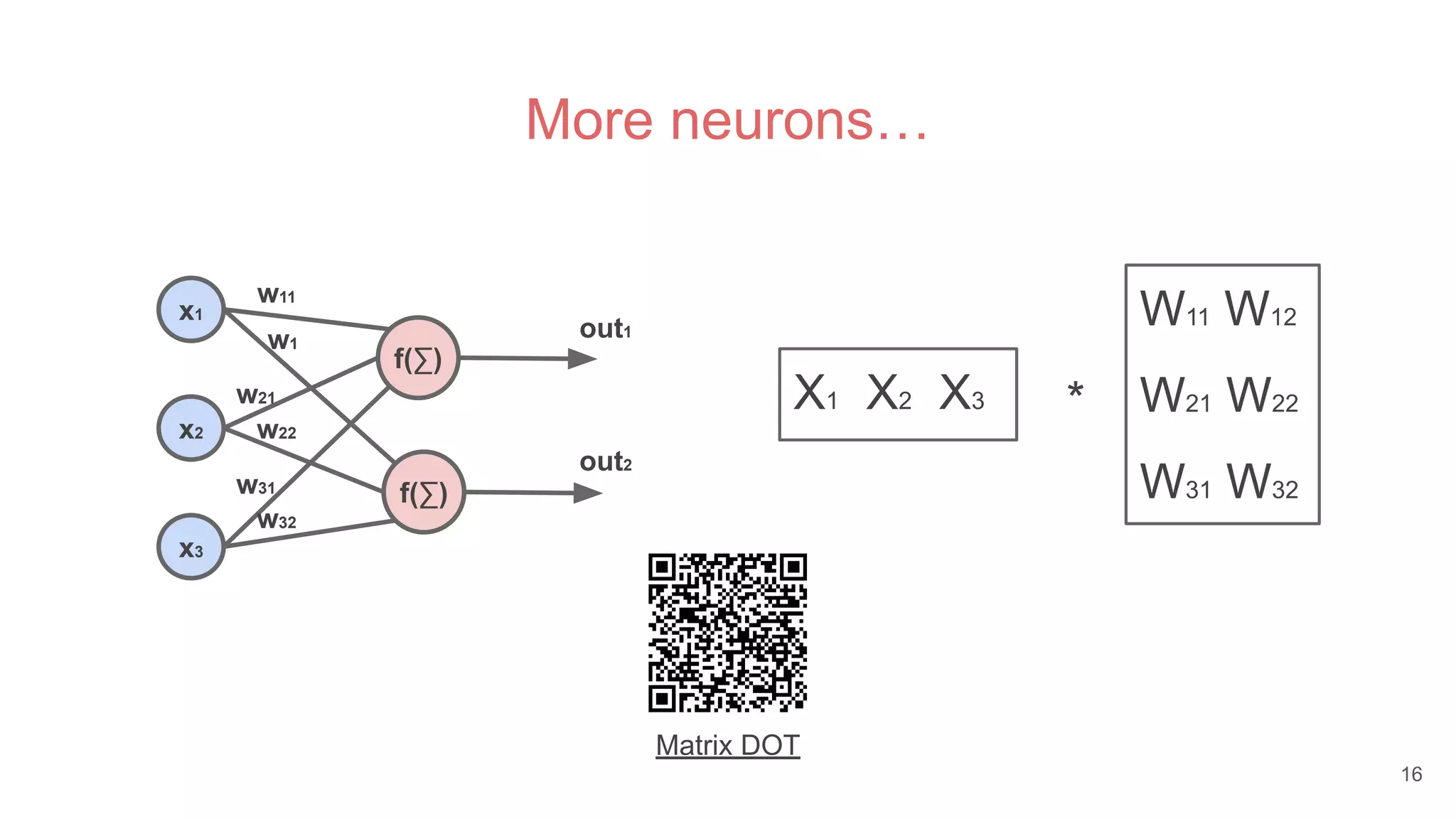
![Single neuron
f(∑)
x1
x2
x3
w1
w2
w3
out
f(x[1]*w[1] + x[2]*w[2] + x[3]*w[3])
f(∑) = (0...1)
10](https://image.slidesharecdn.com/tensorflow-190522141910/75/JS-Odessa-Frontend-Meetup-12-10-2048.jpg)
![Single neuron
f(∑)
x1
x2
x3
w1
w2
w3
out
f(x[1]*w[1] + x[2]*w[2] + x[3]*w[3])
f = sigmoid / ReLU / tanH ...
11](https://image.slidesharecdn.com/tensorflow-190522141910/75/JS-Odessa-Frontend-Meetup-12-11-2048.jpg)

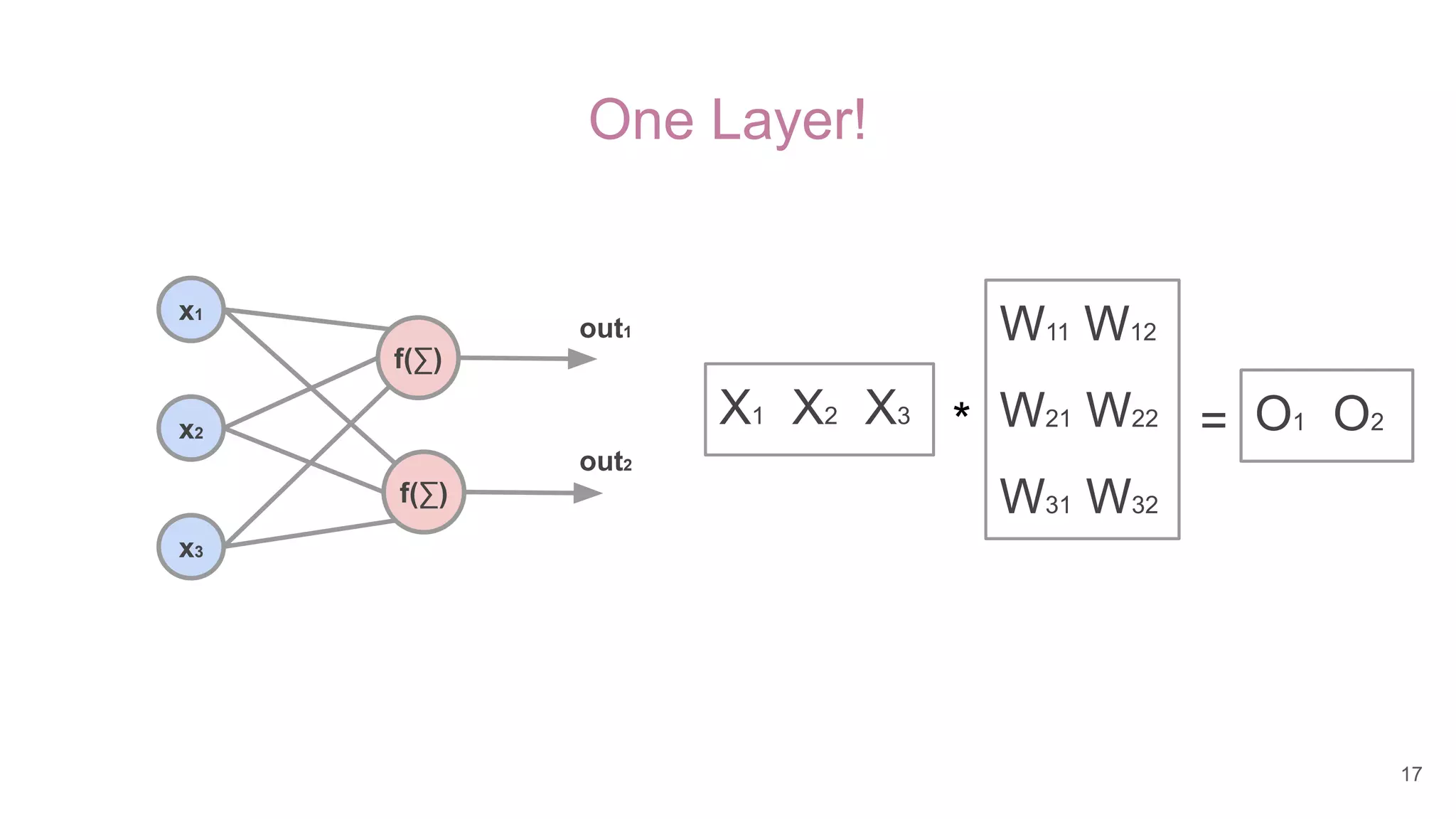
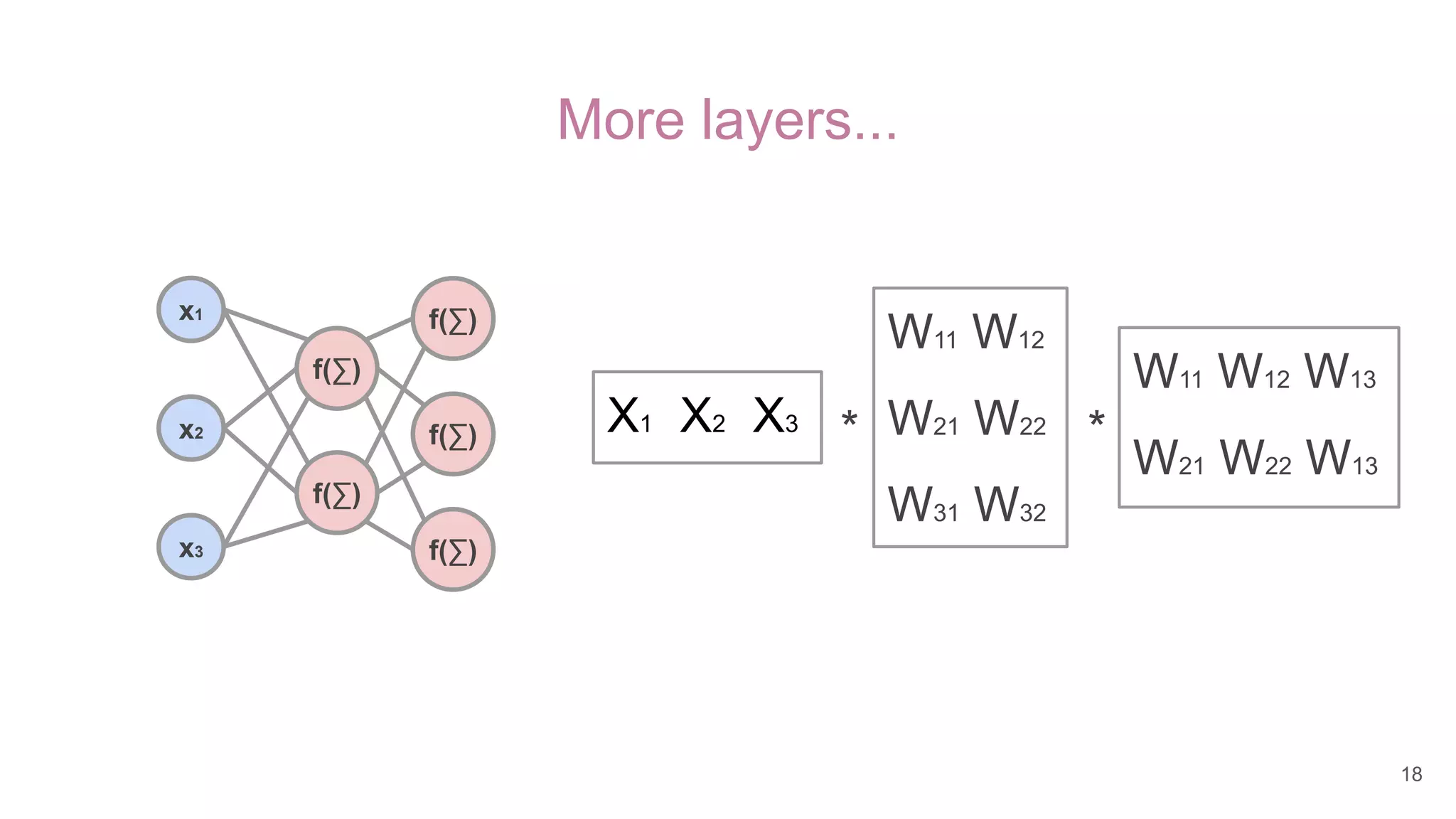
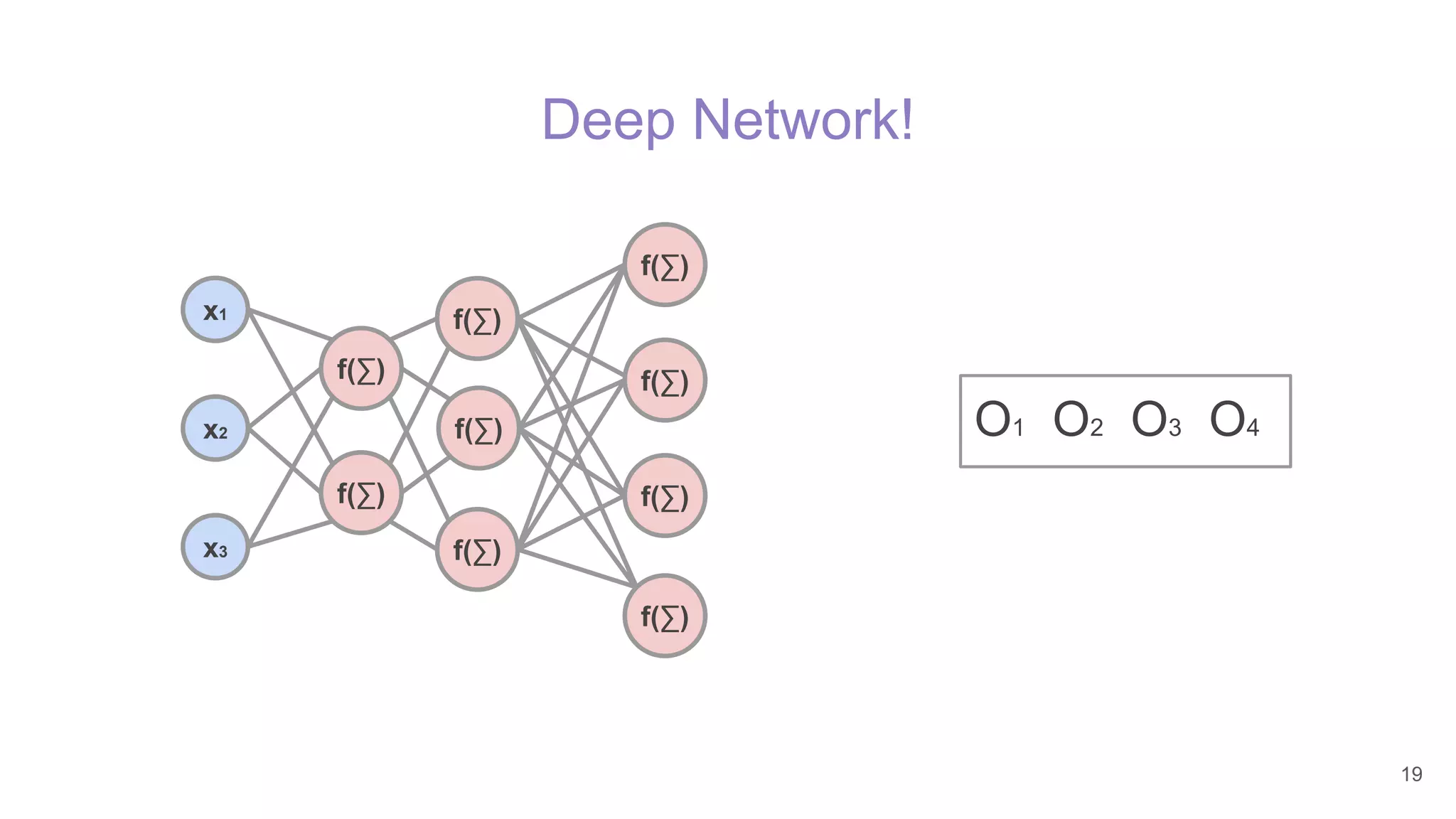
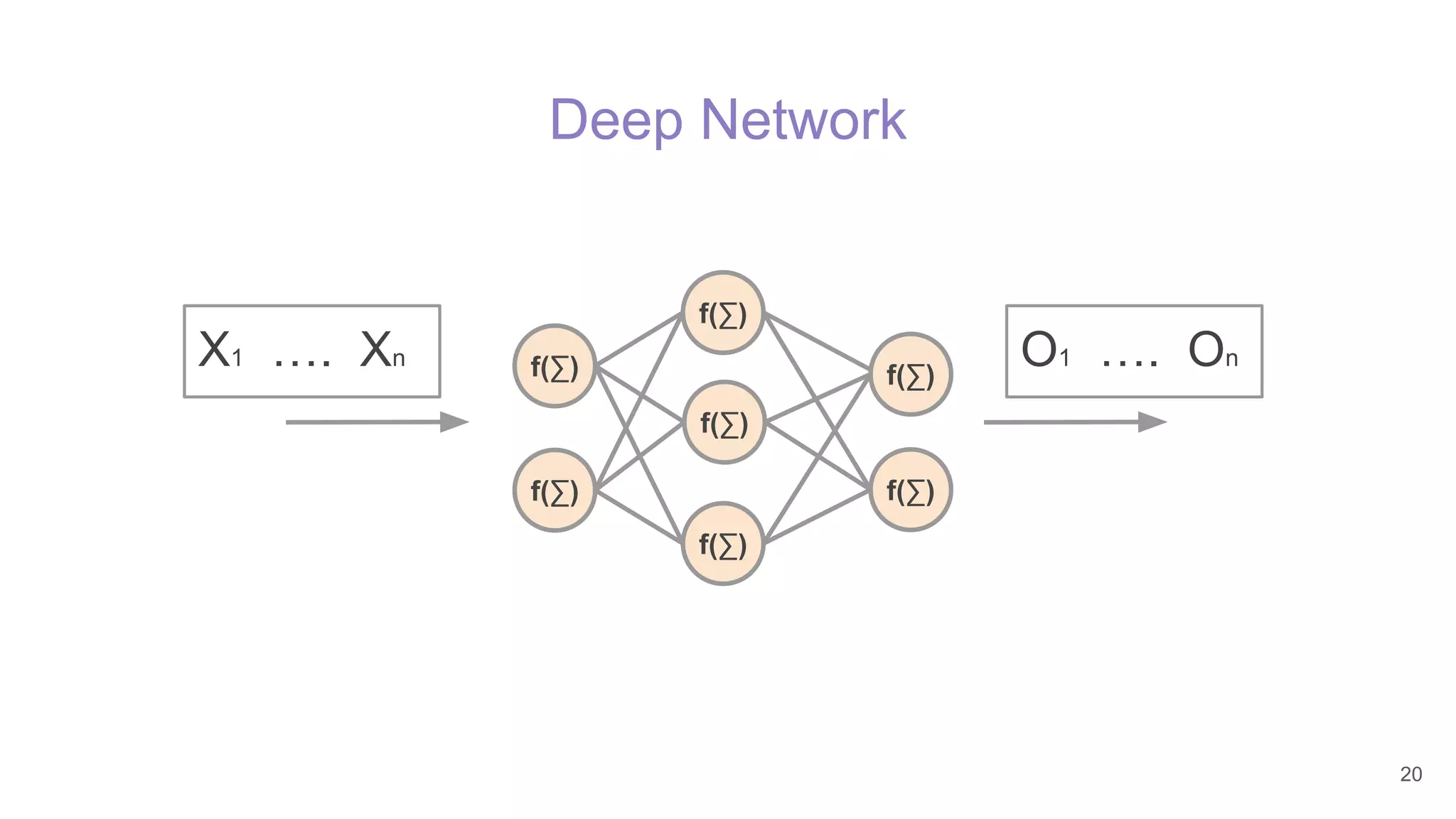
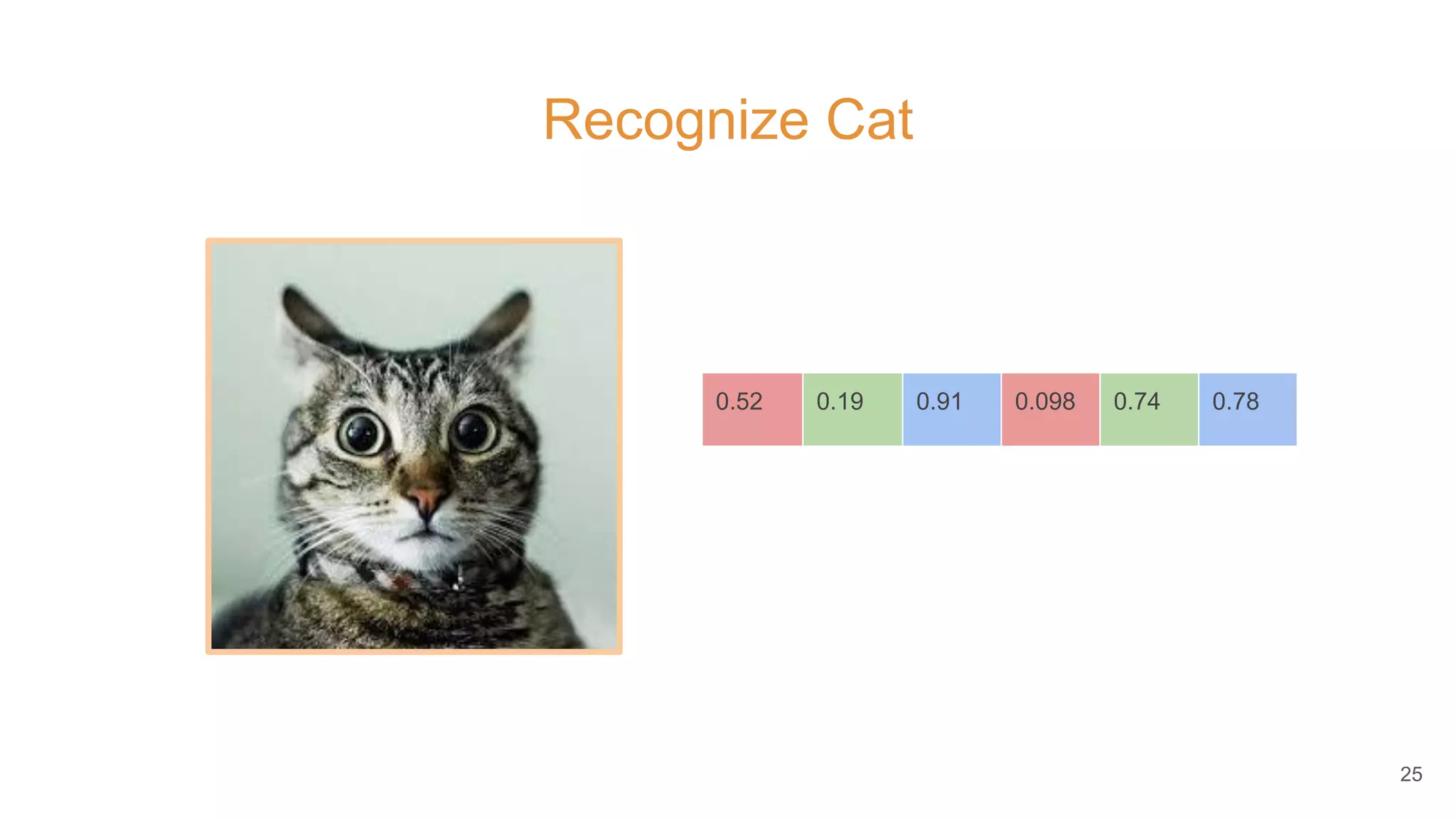
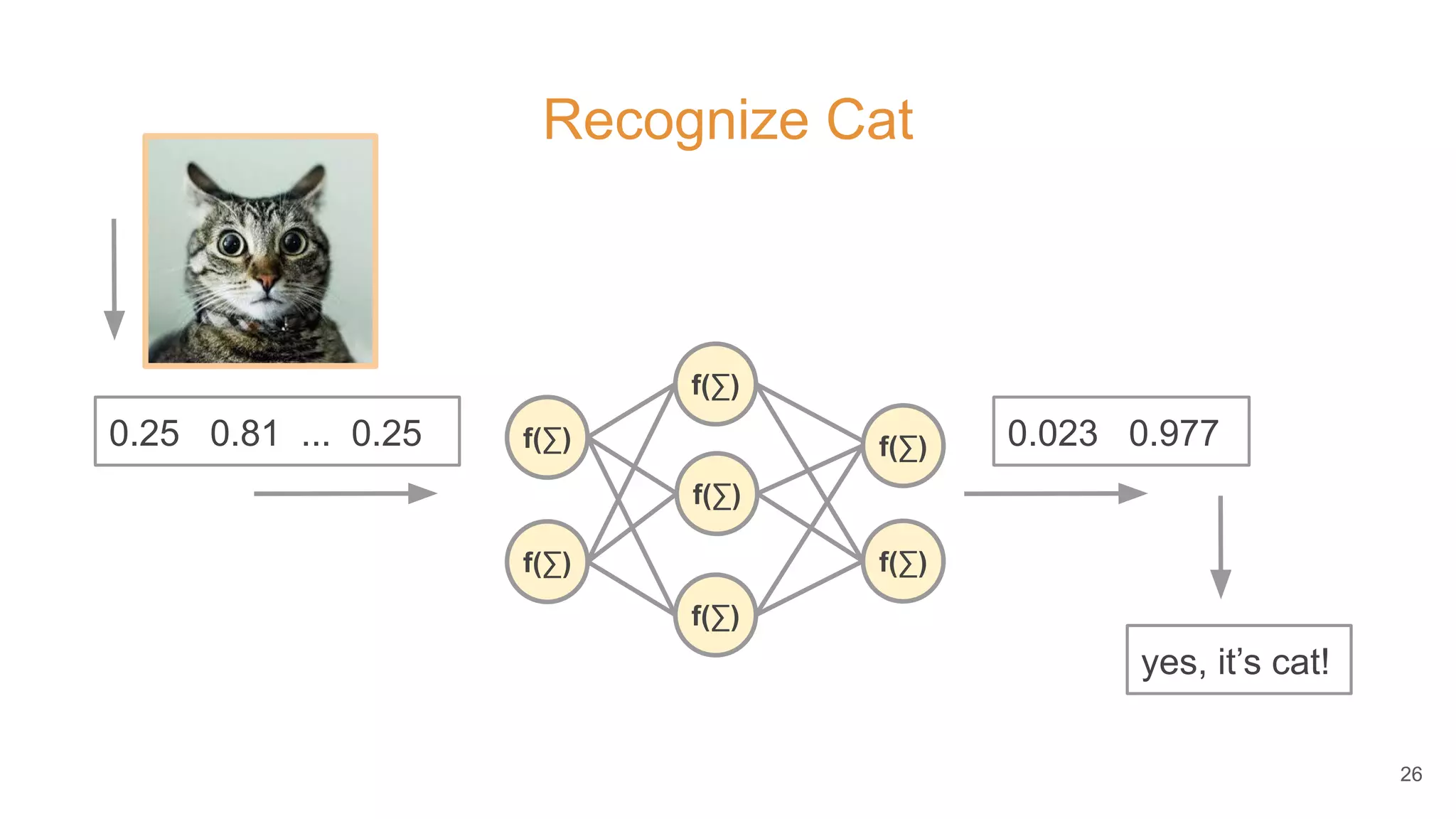
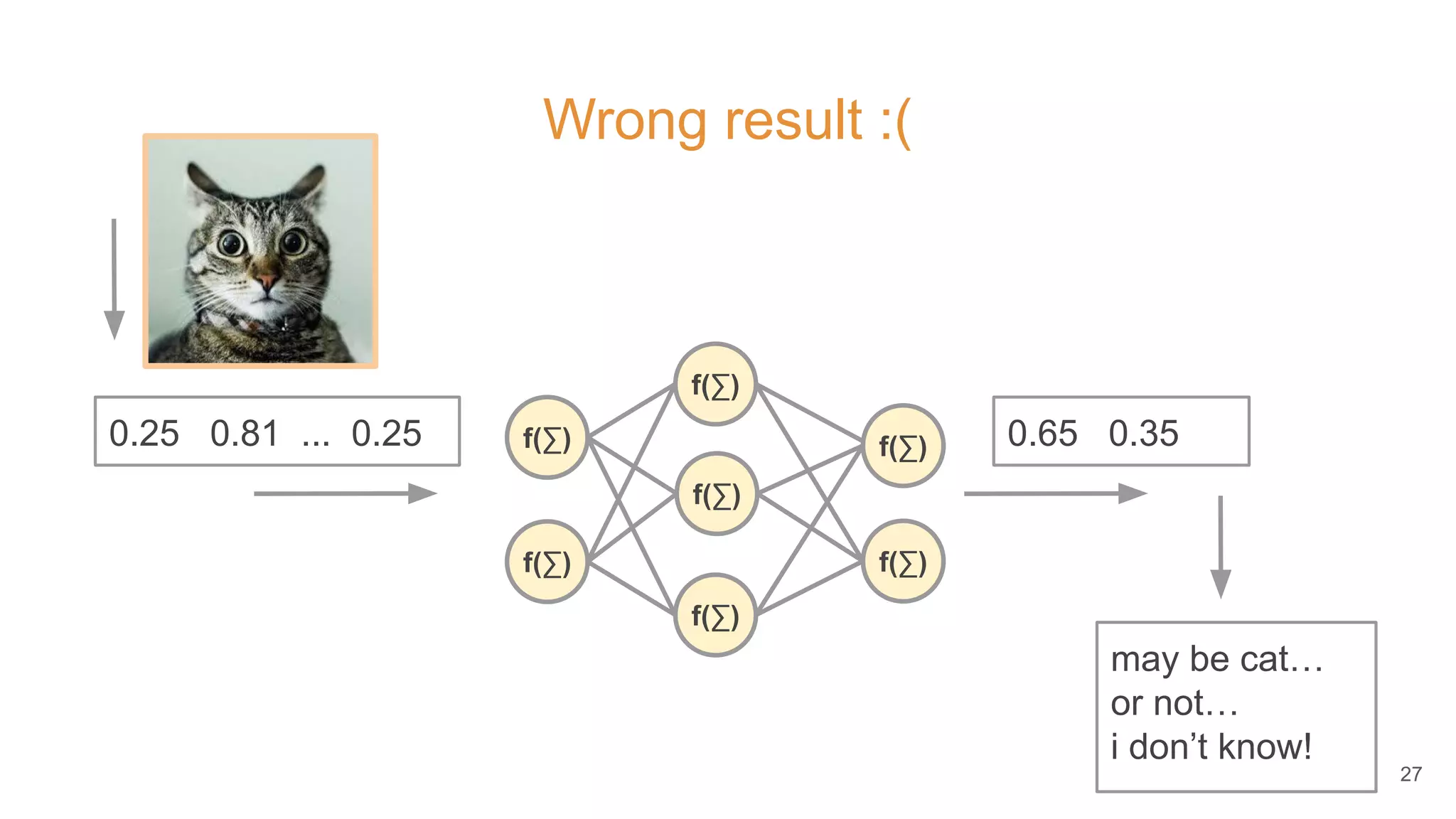
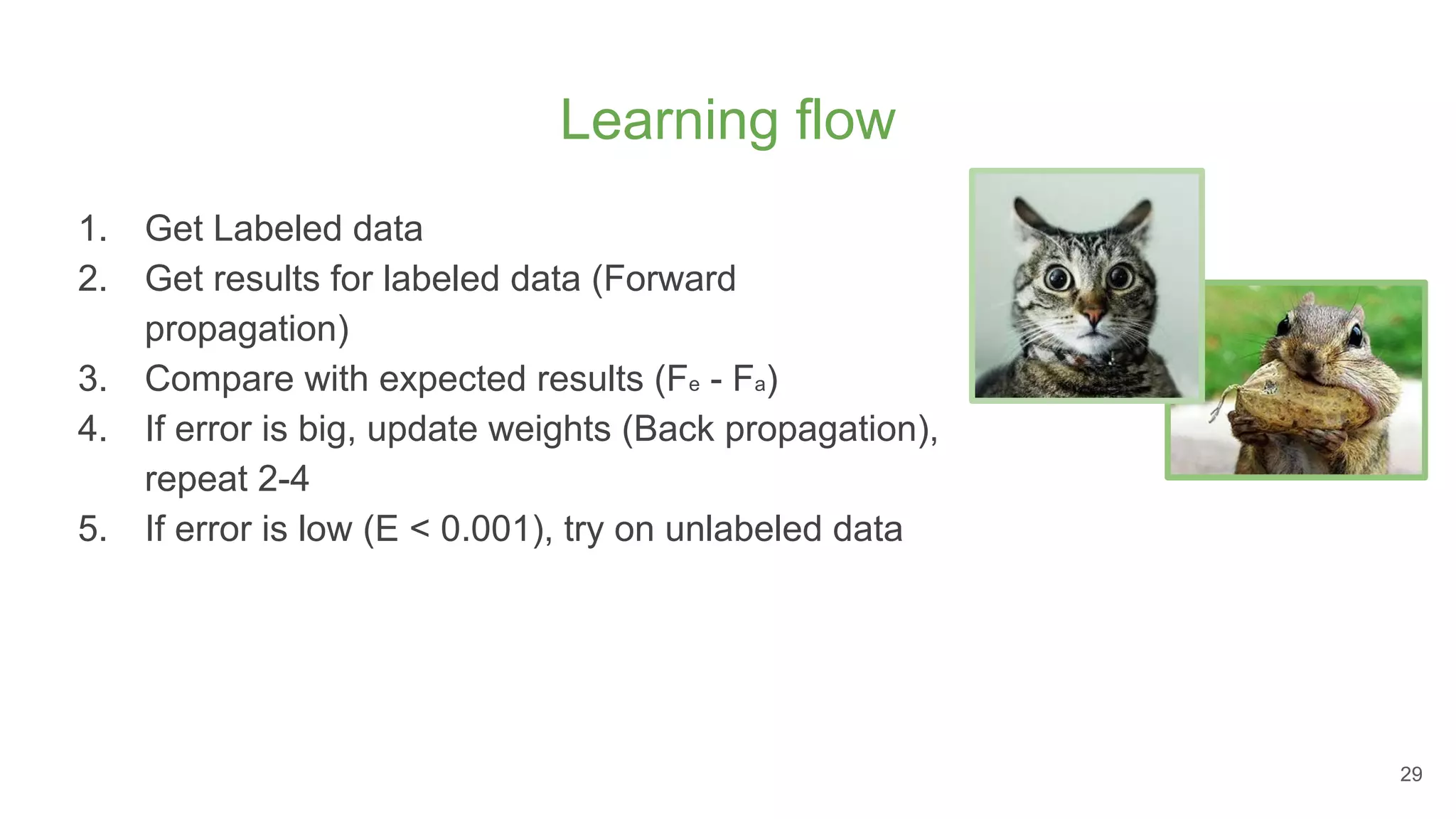
![Learning flow
not cat
cat
Input
[ 0.24, 0.56, … 0.567 ],
[ 0.87, 0.122, … 0.78 ],
[ 0.911, 0.796, … 0.24 ],
...
Expected Output
[ 1, 0 ],
[ 0, 1 ],
[ 0, 1 ],
...
30](https://image.slidesharecdn.com/tensorflow-190522141910/75/JS-Odessa-Frontend-Meetup-12-30-2048.jpg)
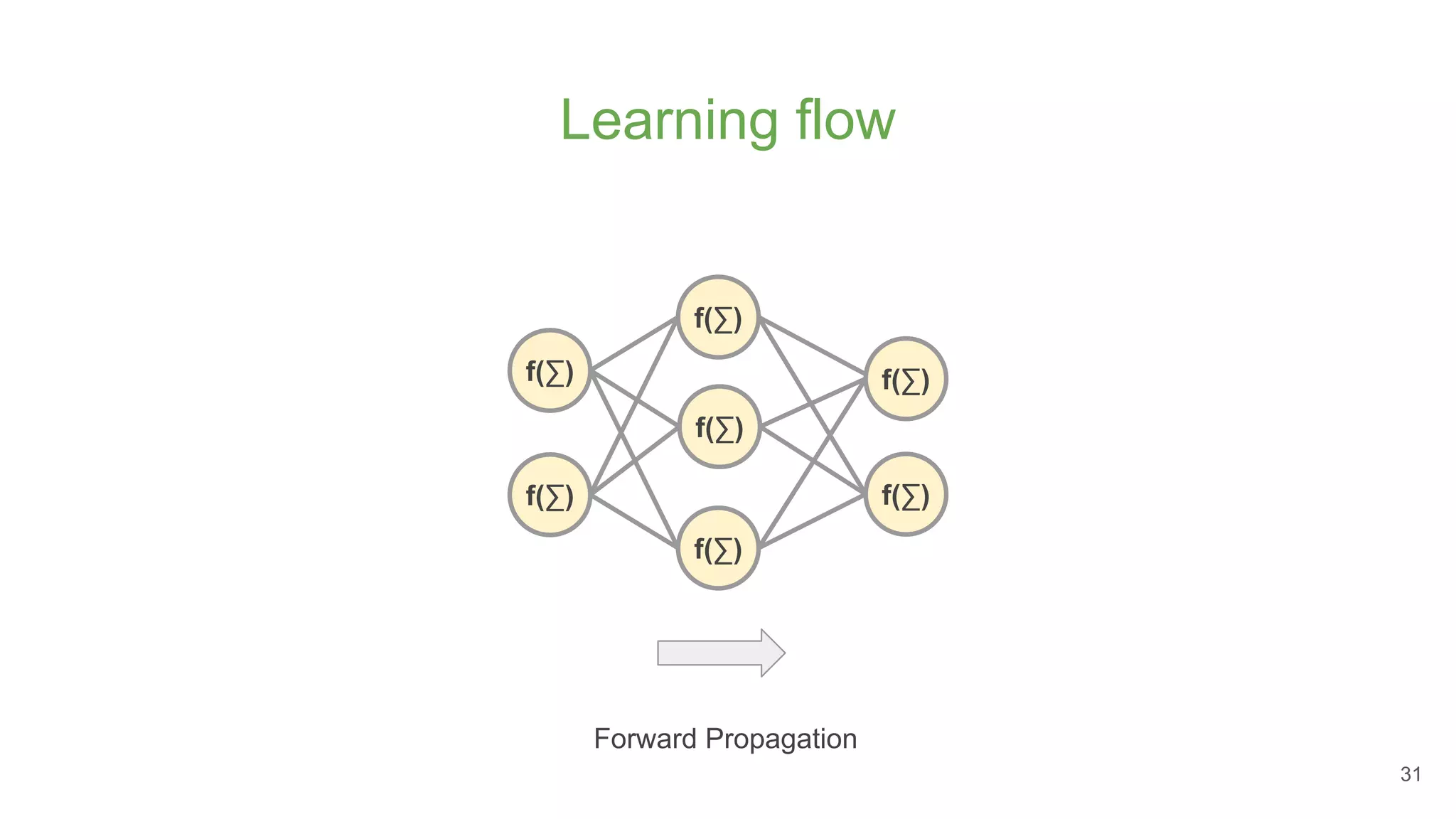
![Learning flow
Error = expected - actual
= [ 1, 0 ] - [ 0.23, 0.77 ]
= [0.77, -0.77,]
32
f(∑)
f(∑)
f(∑)
f(∑)
f(∑)
f(∑)
f(∑)](https://image.slidesharecdn.com/tensorflow-190522141910/75/JS-Odessa-Frontend-Meetup-12-32-2048.jpg)

![Wait! Who is “Tensor”?
[1.0, 2.0, 3.0],
[10.0, 20.0, 30.0]
tensor =
40](https://image.slidesharecdn.com/tensorflow-190522141910/75/JS-Odessa-Frontend-Meetup-12-40-2048.jpg)
![Wait! Who is “Tensor”?
const b = tf.tensor([[1.0, 2.0, 3.0], [10.0, 20.0, 30.0]]);
const c = tf.tensor2d([[1.0, 2.0, 3.0], [10.0, 20.0, 30.0]]);
const e = tf.tensor2d([[1.0, 2.0], [3.0, 4.0]]);
const f = tf.tensor2d([[5.0, 6.0], [7.0, 8.0]]);
41](https://image.slidesharecdn.com/tensorflow-190522141910/75/JS-Odessa-Frontend-Meetup-12-41-2048.jpg)
![Ops API
const e = tf.tensor([[1.0, 2.0], [20.0, 30.0]]);
const f = tf.tensor2d([[2.0, 3.0], [10.0, 20.0]]);
const e_plus_f = e.add(f);
const f_plus_e = tf.add(e, f);
const e_sub_f = e.sub(f);
const e_mul_f = e.mul(f);
const square_f = tf.square(f);
42](https://image.slidesharecdn.com/tensorflow-190522141910/75/JS-Odessa-Frontend-Meetup-12-42-2048.jpg)
![Memory
Dispose
const e = tf.tensor([[1.0, 2.0], [20.0, 30.0]]);
const x_squared = x.square();
x.dispose();
x_squared.dispose();
43](https://image.slidesharecdn.com/tensorflow-190522141910/75/JS-Odessa-Frontend-Meetup-12-43-2048.jpg)
![Memory
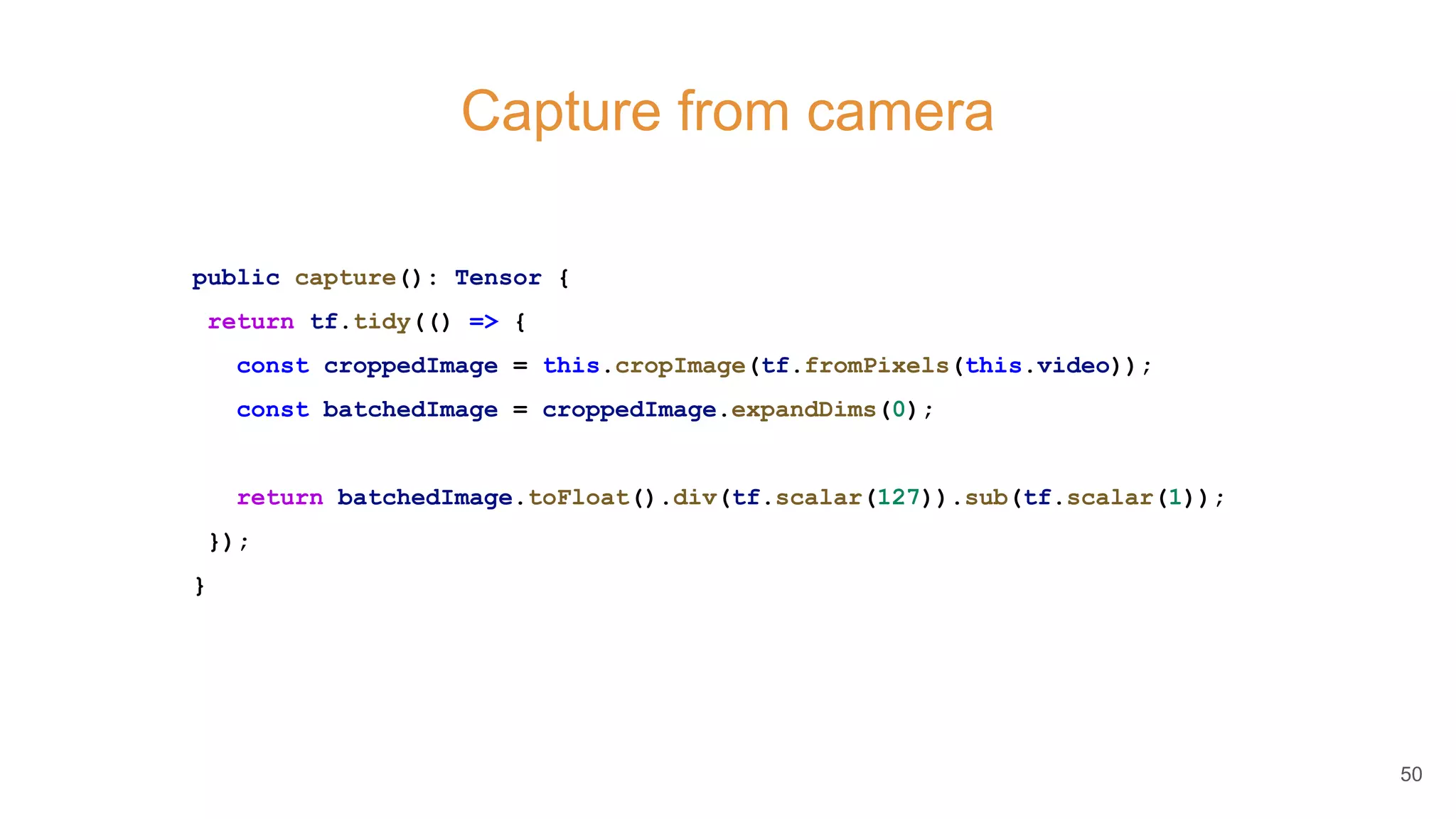
Tidy
const average = tf.tidy(() => {
const y = tf.tensor1d([1.0, 2.0, 3.0, 4.0]);
const z = tf.ones([4]);
return y.sub(z).square().mean();
});
average.print()
44](https://image.slidesharecdn.com/tensorflow-190522141910/75/JS-Odessa-Frontend-Meetup-12-44-2048.jpg)

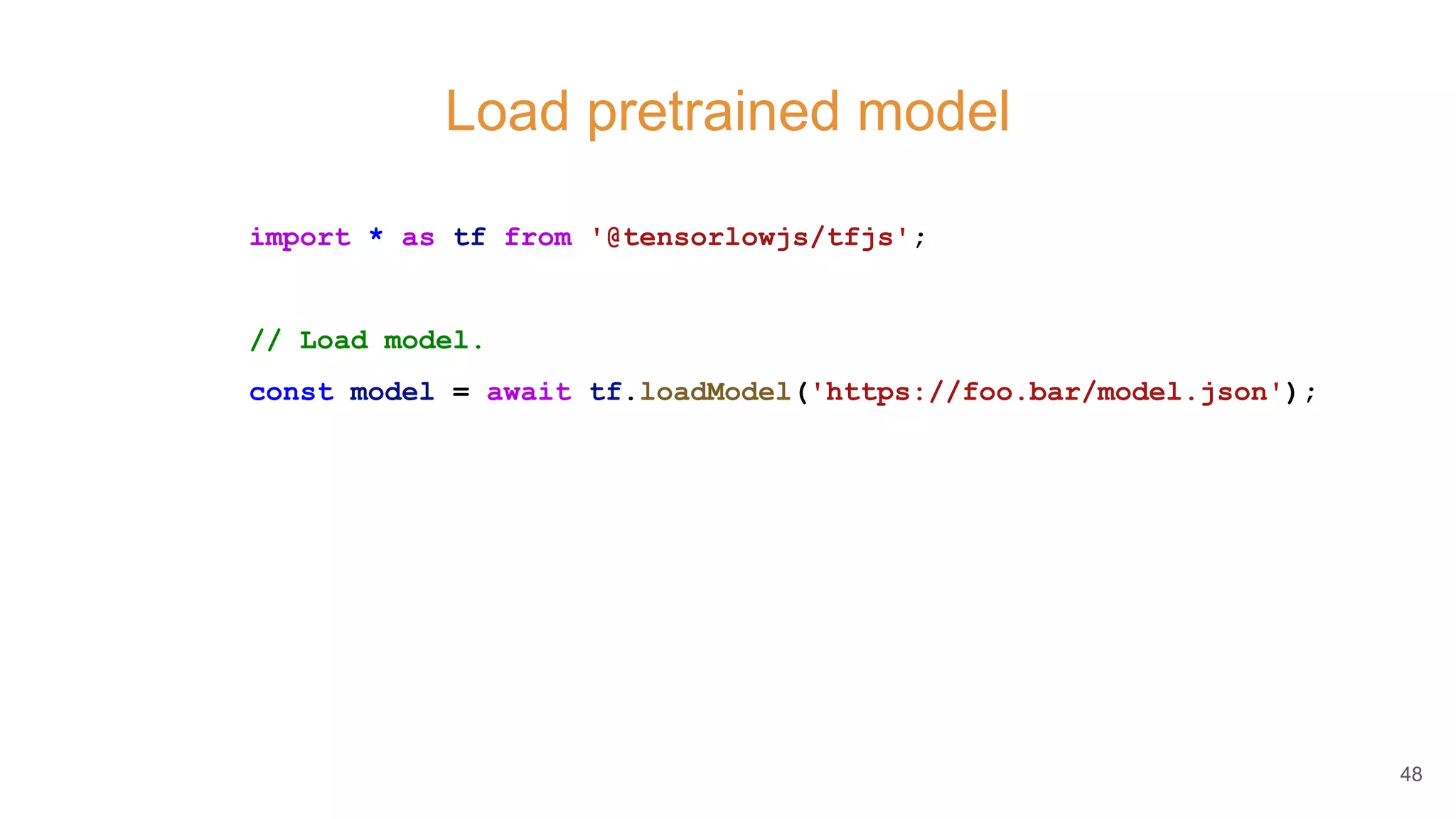
![Layers API
import * as tf from '@tensorlowjs/tfjs';
// Build and compile model.
const model = tf.sequential();
model.add(tf.layers.dense({units: 1, inputShape: [1]}));
model.compile({optimizer: 'sgd', loss: 'meanSquaredError'});
// Generate data for training.
const xs = tf.tensor2d([[1], [2], [3], [4]], [4, 1]);
const ys = tf.tensor2d([[1], [3], [5], [7]], [4, 1]);
// Train model
await model.fit(xs, ys, {epochs: 1000}); 47](https://image.slidesharecdn.com/tensorflow-190522141910/75/JS-Odessa-Frontend-Meetup-12-47-2048.jpg)
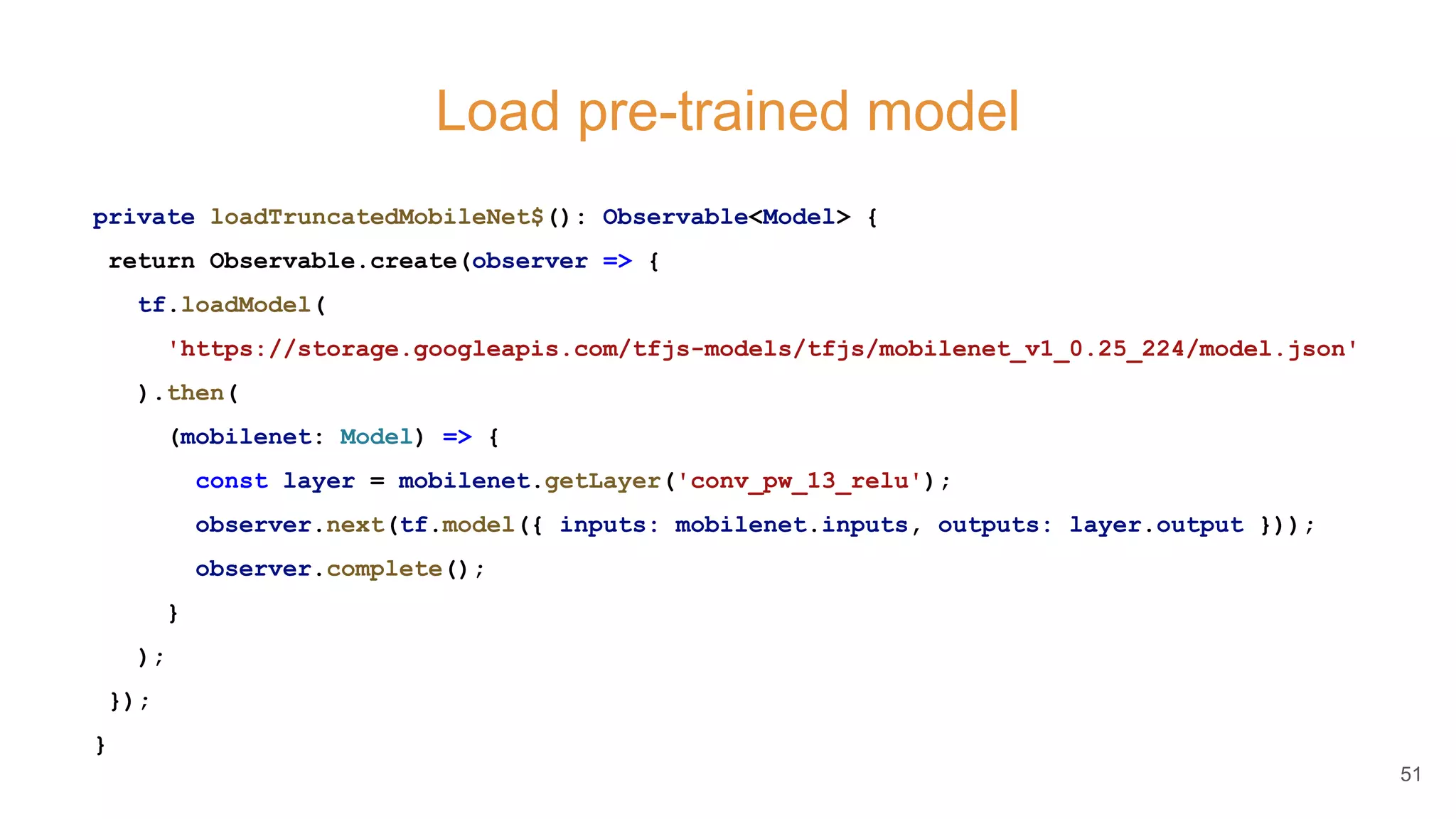
![Create own model
tf.sequential({
layers: [
tf.layers.flatten({
inputShape: this.truncatedMobileNet.outputs[0].shape.slice(1)
}),
tf.layers.dense({
units: Config.NUM_HIDDEN_LAYERS,
activation: 'relu',
kernelInitializer: 'varianceScaling',
useBias: true
}),
tf.layers.dense({
units: Config.NUM_CLASSES,
kernelInitializer: 'varianceScaling',
useBias: false,
activation: 'softmax'
})
]
});
52](https://image.slidesharecdn.com/tensorflow-190522141910/75/JS-Odessa-Frontend-Meetup-12-52-2048.jpg)
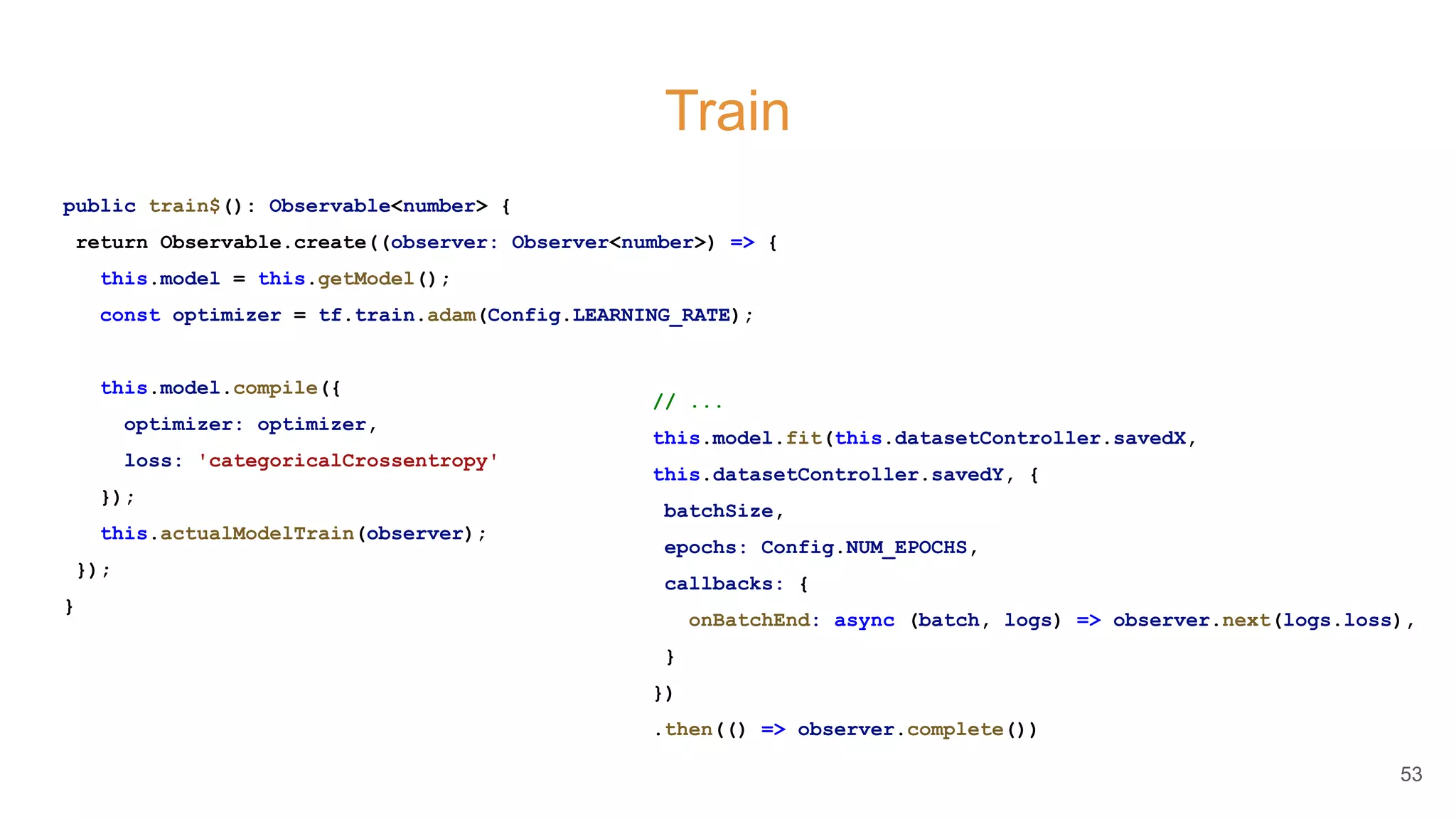
![Predict image class
public predictFromCameraCapture$(): Observable<number> {
return Observable.create(observer => {
const predict = () => {
const predictedClass = tf.tidy(() => {
const img = this.webcam.capture();
const embeddings = this.truncatedMobileNet.predict(img);
const predictions: Tensor<Rank> | Tensor<Rank>[] = this.model.predict(embeddings);
return (predictions as Tensor<Rank>).as1D().argMax();
});
predictedClass.data()
.then((data: Int32Array) => observer.next(data[0]))
};
predict();
})
}
54](https://image.slidesharecdn.com/tensorflow-190522141910/75/JS-Odessa-Frontend-Meetup-12-54-2048.jpg)



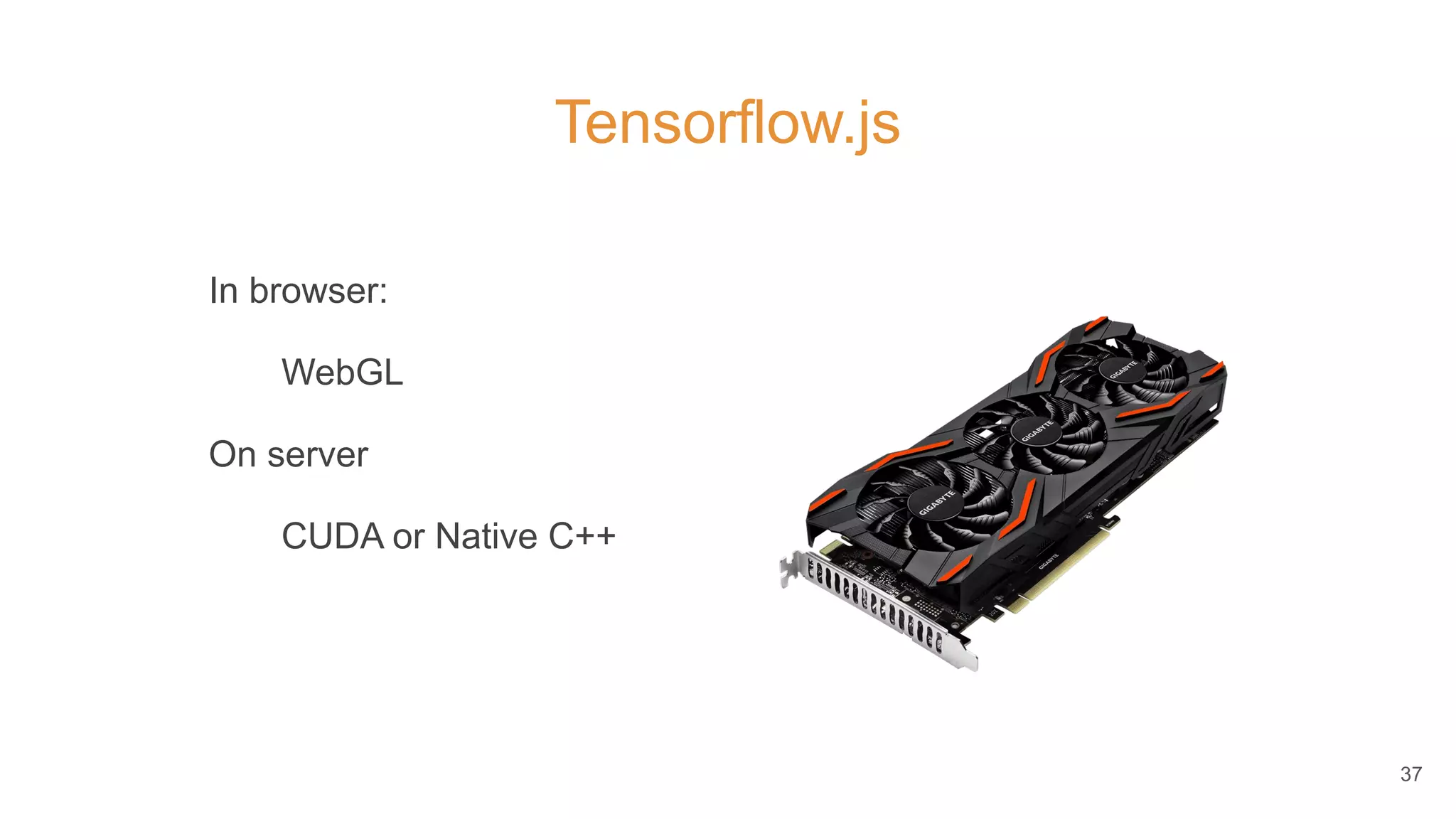
Tensorflow.js allows developing machine learning models with JavaScript. It provides APIs for building neural networks with layers, training models on data, and making predictions. Key capabilities include building, training, and deploying deep learning models directly in the browser or on the server using JavaScript. It supports common ML tasks like image classification, object detection, and natural language processing.


![[신경망기초] 합성곱신경망](https://cdn.slidesharecdn.com/ss_thumbnails/2-180604135842-thumbnail.jpg?width=640&height=640&fit=bounds)


