PREPARED FOR….
Dr. Masud Rahman
Professor & chairman
Department of Finance
University of Dhaka
What is joint venture?
 An arrangement in which two or more businesses agree
to combine their resources for some definable
undertaking is a joint venture.
Joint venture may be categories into two types:
Equity joint
venture
Non- Equity
Joint venture
Why Joint-Venture?
Bangladesh Govt. emphasizes investment in light and Hi-tech
industry. The important indicated sectors are:
• Joint-venture helps to share the useful
resources in a cost-effective way
Resource
share
• If the project is too large, financially, for
either party to handle aloneLarge Projects
• Neither firm has all of the skills to make
a success of the business aloneLimited Ability
Agriculture Telecommunication
Garments & Textile Information
Technology
Computer & Electronics Mining &
Petrochemical
Pharmaceutical Power Generation
PROSPECT OF JOINT VENTURE IN BANGLADESH
 No ceiling on investment
 Tax holidays
 Tax exemption and duty-free importation of capital
machinery and spare parts of 100%
 for export-oriented industries
 Residency permits for foreign nationals
 Capital, profit and dividend repatriation facilities
 100% foreign equity allowance
 Exemption on income tax for up to three years for
expatriate employees
 Term loans and working capital loans from local banks
allowed
 Re-investment of repatriable dividends treated as new
investment
Sinobangla
ABOUT SINOBANGLA
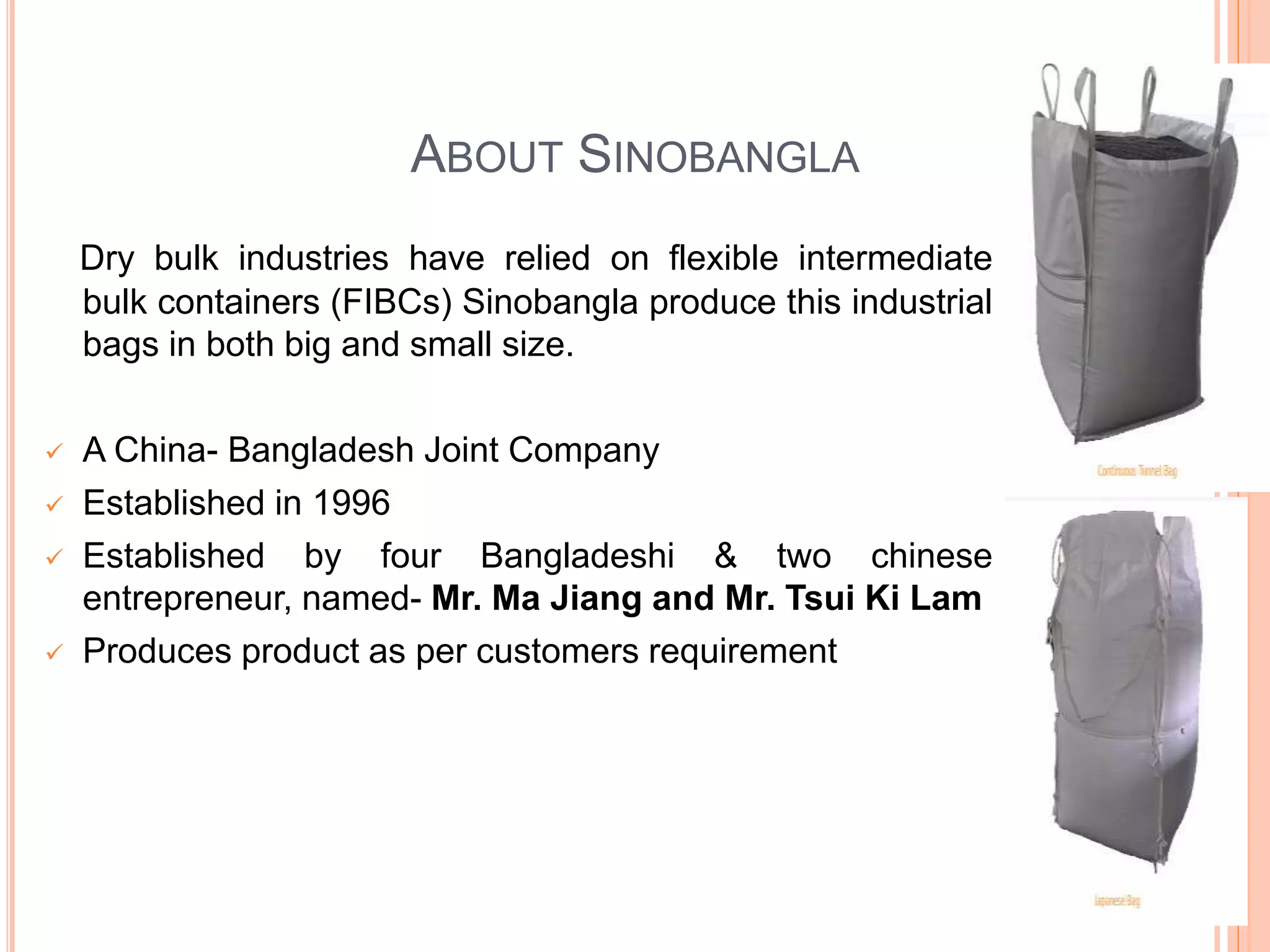
Dry bulk industries have relied on flexible intermediate
bulk containers (FIBCs) Sinobangla produce this industrial
bags in both big and small size.
 A China- Bangladesh Joint Company
 Established in 1996
 Established by four Bangladeshi & two chinese
entrepreneur, named- Mr. Ma Jiang and Mr. Tsui Ki Lam
 Produces product as per customers requirement
OWNERSHIP STRUCTURE OF SINOBANGLA
 In 1996 the initial investment was Tk3,30,00,000.
 Ownership structure was 50% - 50%.
 In 1999 the company became listed in Dhaka stock exchange and
Chittagong stock exchange.
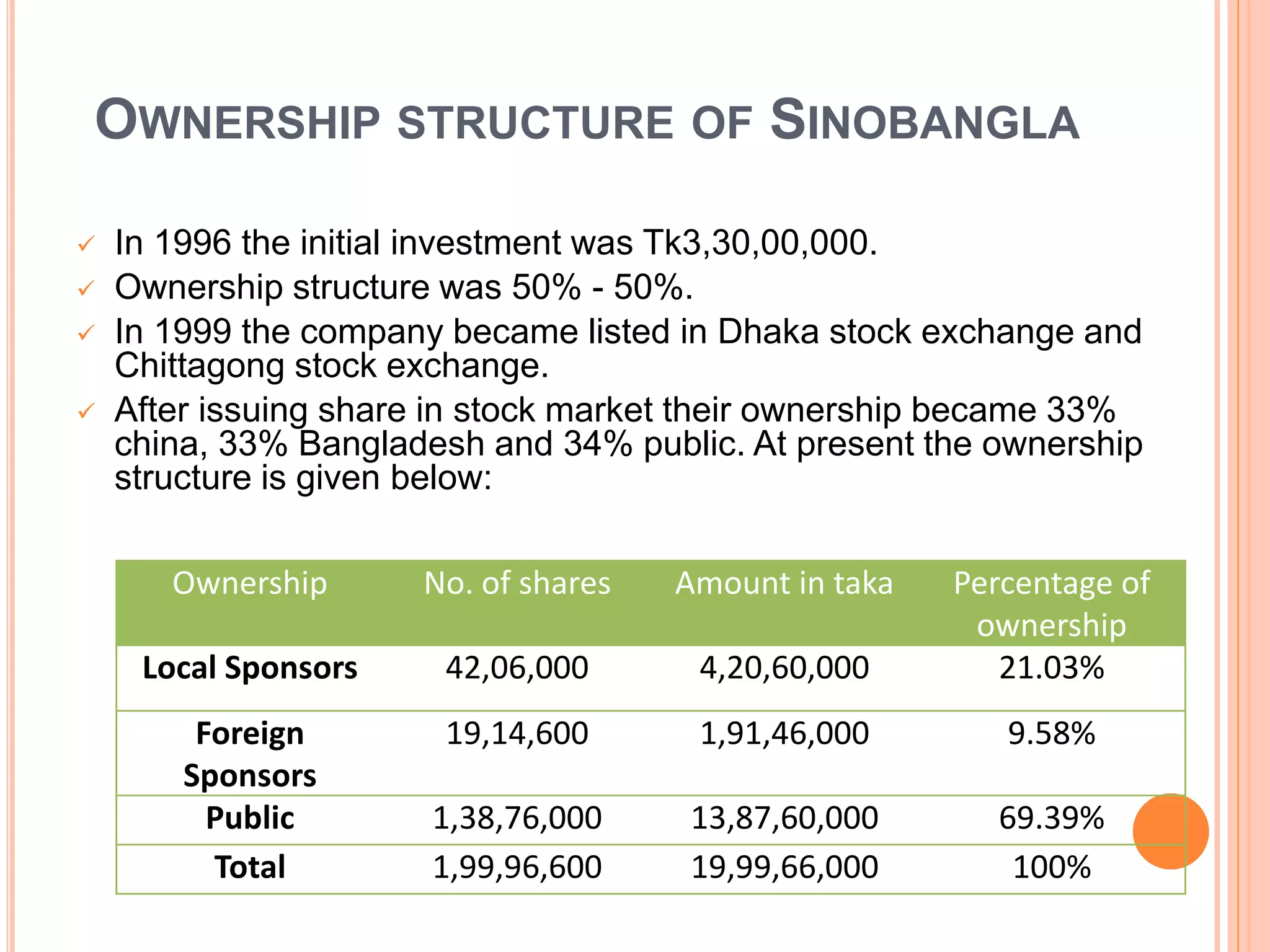
 After issuing share in stock market their ownership became 33%
china, 33% Bangladesh and 34% public. At present the ownership
structure is given below:
Ownership No. of shares Amount in taka Percentage of
ownership
Local Sponsors 42,06,000 4,20,60,000 21.03%
Foreign
Sponsors
19,14,600 1,91,46,000 9.58%
Public 1,38,76,000 13,87,60,000 69.39%
Total 1,99,96,600 19,99,66,000 100%
TECHNOLOGY TRANSFER PRICING
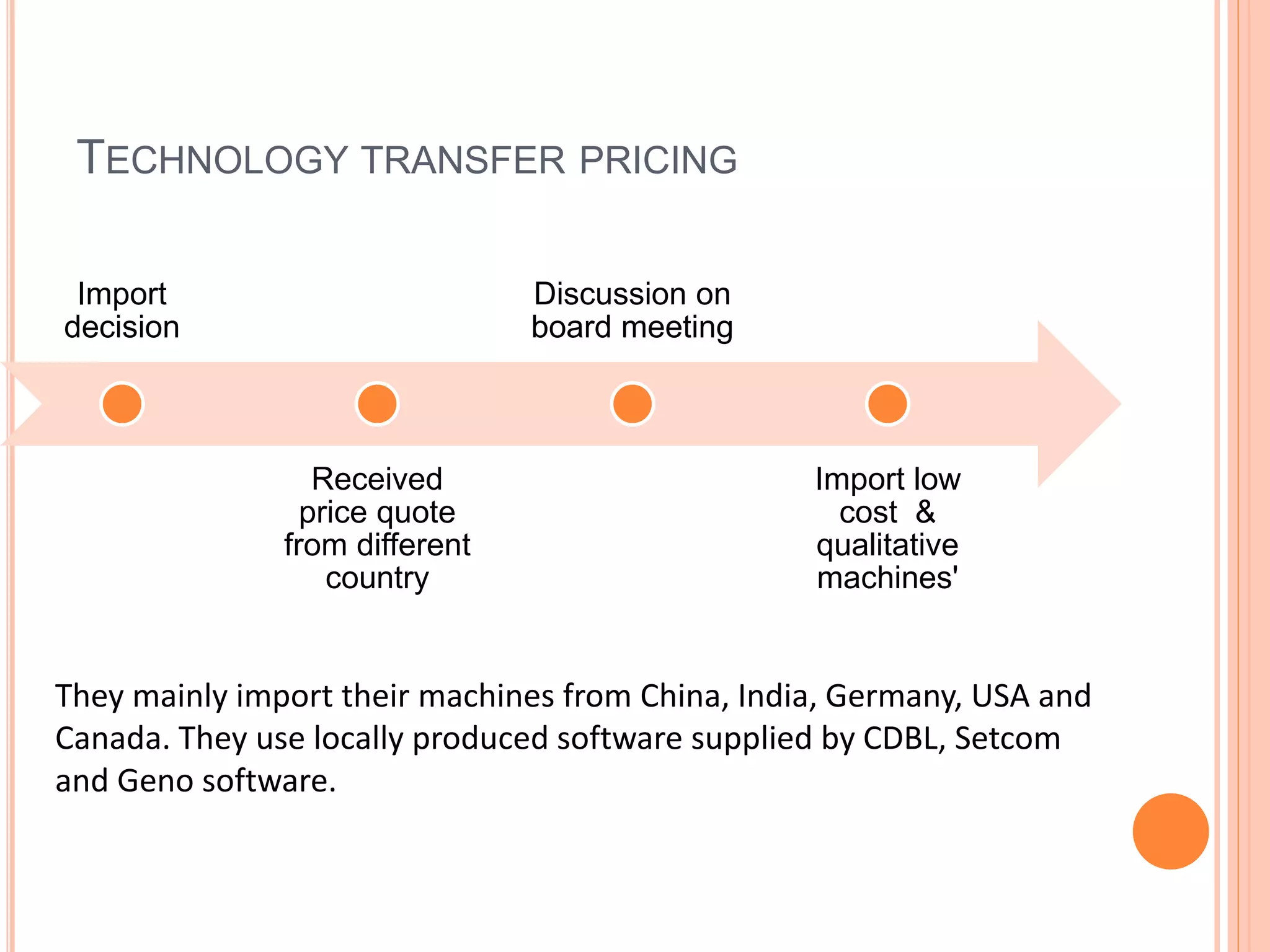
Import
decision
Received
price quote
from different
country
Discussion on
board meeting
Import low
cost &
qualitative
machines'
They mainly import their machines from China, India, Germany, USA and
Canada. They use locally produced software supplied by CDBL, Setcom
and Geno software.
TECHNOLOGY OPERATOR
 Since 2011 the technologies are operated by local operators, but before
2011 the machines of the company are operated by the Chinese
operators.
 In 2009 Sinobangla hired some employees from BUET, BUTEX and
SUST and the Chinese operator train up the local employees for three
years.
 From then the local employees are operating the machineries.
TECHNOLOGY USED BY SINOBANGLA
 Best-in-class tape extruder from Starlinger &
Co. GmbH: Used to control the quality of the
FIBC bag. It was purchased from Japan in 2007.
Sinobangla received price quote from three
country china, Japan and America. In board
meeting they decided to purchase from Japan
because of low cost qualitative technology.
 Three layer liner extruder: purchased from
china in 2009. It is used to give layer on the FIBC
bag. It was also purchased by same procedure.
Some other machineries are-
 Mesh Loom
 Printing, Baling, Delivery machine etc.
COMMITMENT TO ENVIRONMENT
Waste management: Sinobangla recycle their 100% wastage.
From their wastage they produce cotton and the produce bag.
So environment has no negative impact from their production.
Pollution: The technology used by Sinobangla is not different from
desired technology. There technologies are environment friendly.
It doesn’t create loud sound and huge smoke in air.
LAND PROCUREMENT
 In January 2011 company acquired a land of about 5 acre at Boro
Baluakandi, Gazaria, in Munshigonj.
 The land they acquire was not a productive land. No resident was
there, so there was no need of rehabilitation.
 One local people named Kamrul Hasan says us that Sinobangla was
required to pay double price than market price to purchase the land at
same location.
Negotiate with brokers
the local broker
negotiate with the land
owner
Final purchase deed
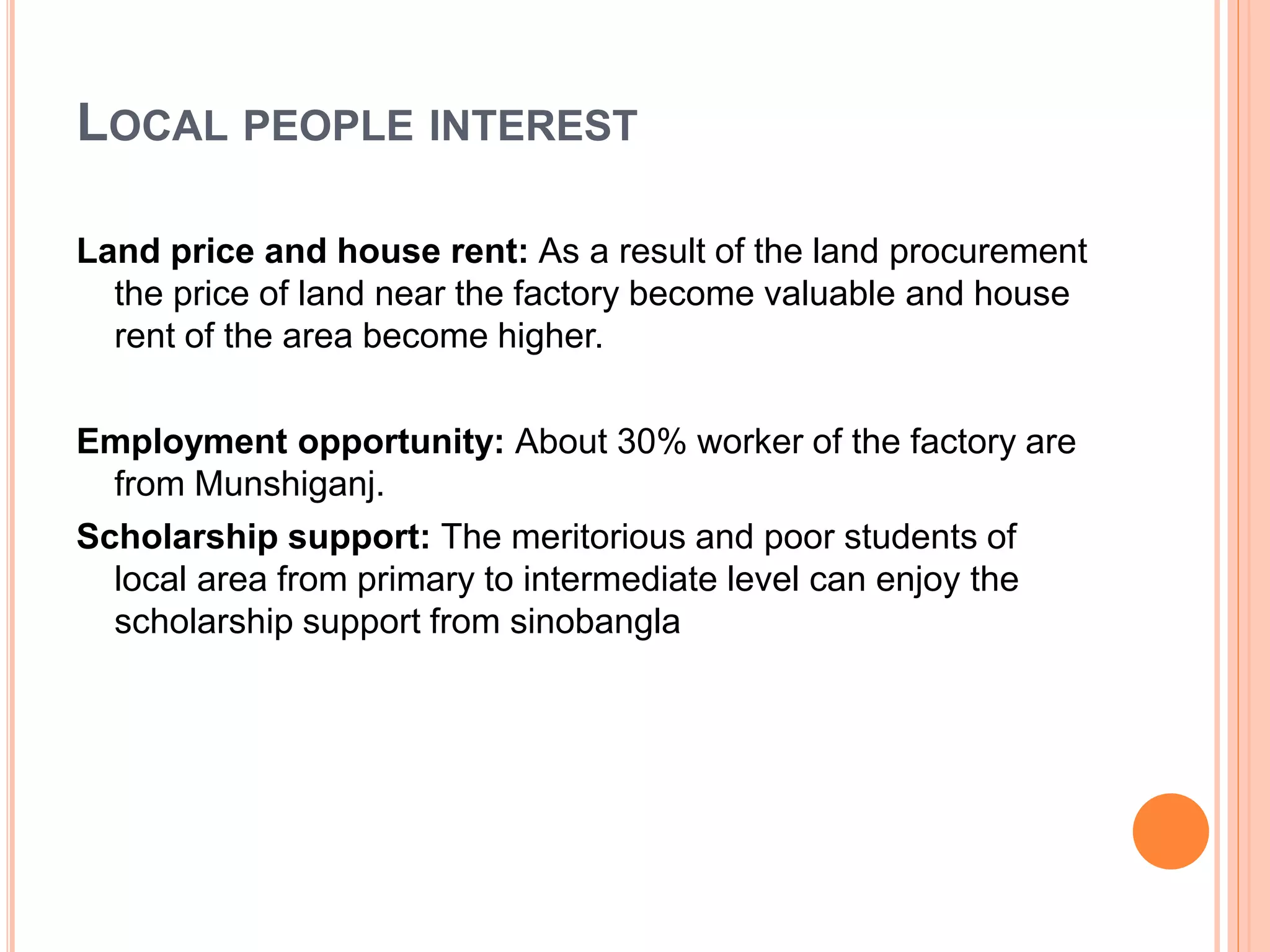
LOCAL PEOPLE INTEREST
Land price and house rent: As a result of the land procurement
the price of land near the factory become valuable and house
rent of the area become higher.
Employment opportunity: About 30% worker of the factory are
from Munshiganj.
Scholarship support: The meritorious and poor students of
local area from primary to intermediate level can enjoy the
scholarship support from sinobangla
EXPORT - IMPORT INFORMATION
Sales amount in 2013
Percentage of total
sales
Export Tk 911,135,245 86%
Local sale Tk 15,08,68,094 14%
% of Sales
Exported
Local Market
Sinobangla is mainly a export based producer. In 2013 86% of their
total sale is foreign sale.
 Sinobangla export mainly
In Europe, Canada, China,
America and Japan. The
European market is the main
focus of the company.
 The company imports all
the raw materials from
abroad mainly from Japan,
china and America.
Source: website of sinobangla industries limited
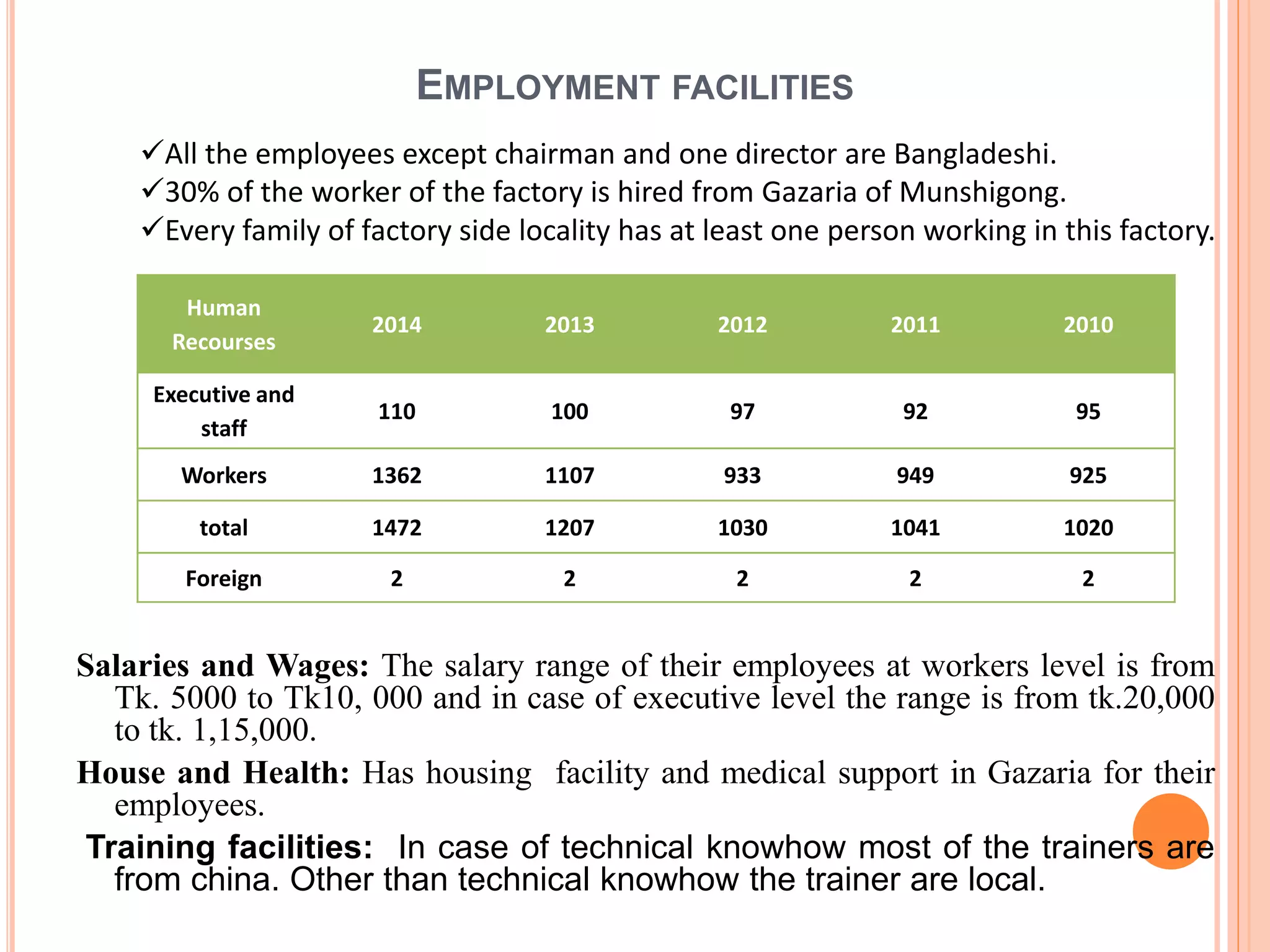
EMPLOYMENT FACILITIES
Salaries and Wages: The salary range of their employees at workers level is from
Tk. 5000 to Tk10, 000 and in case of executive level the range is from tk.20,000
to tk. 1,15,000.
House and Health: Has housing facility and medical support in Gazaria for their
employees.
Training facilities: In case of technical knowhow most of the trainers are
from china. Other than technical knowhow the trainer are local.
Human
Recourses
2014 2013 2012 2011 2010
Executive and
staff
110 100 97 92 95
Workers 1362 1107 933 949 925
total 1472 1207 1030 1041 1020
Foreign 2 2 2 2 2
All the employees except chairman and one director are Bangladeshi.
30% of the worker of the factory is hired from Gazaria of Munshigong.
Every family of factory side locality has at least one person working in this factory.
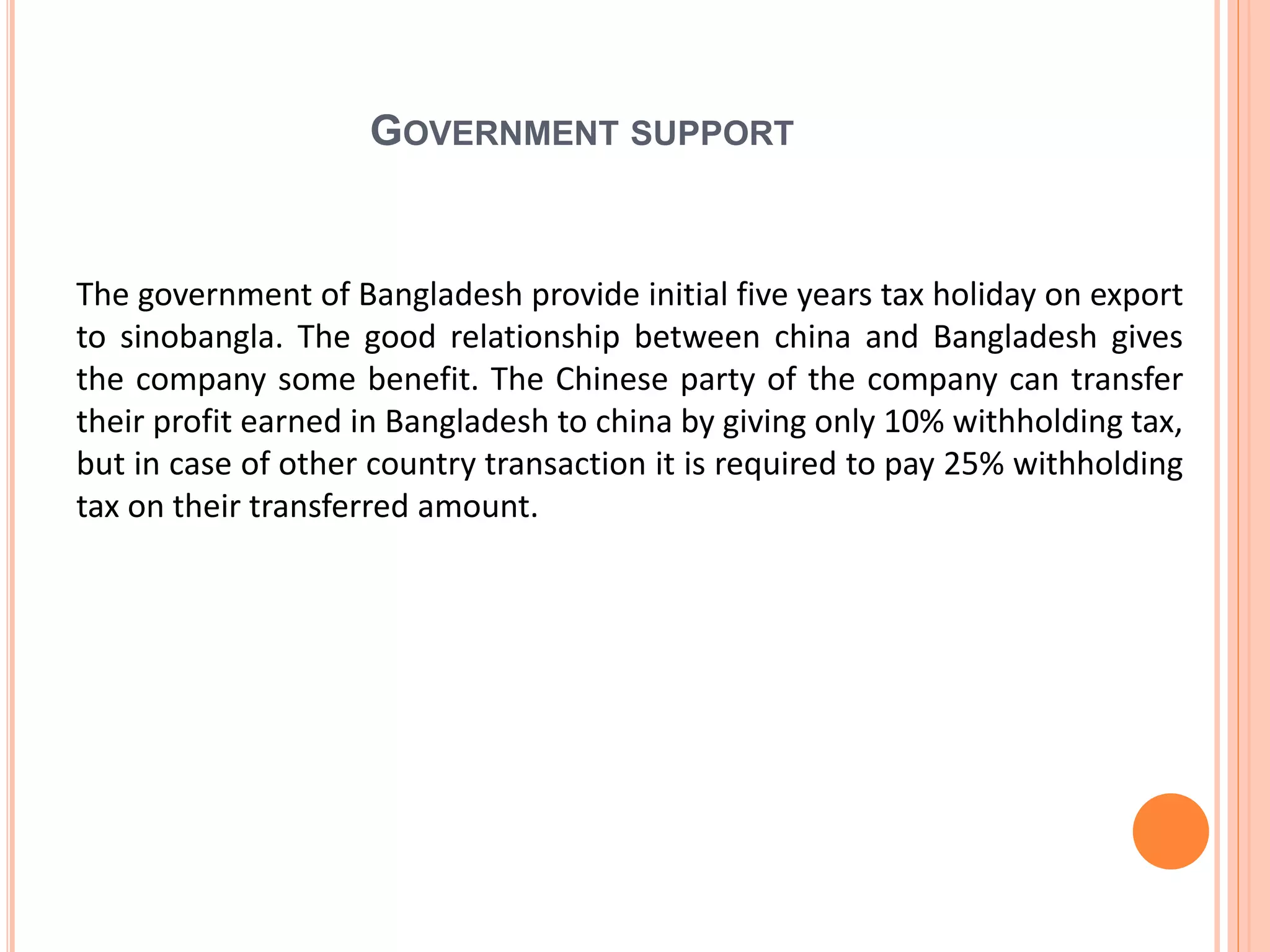
GOVERNMENT SUPPORT
The government of Bangladesh provide initial five years tax holiday on export
to sinobangla. The good relationship between china and Bangladesh gives
the company some benefit. The Chinese party of the company can transfer
their profit earned in Bangladesh to china by giving only 10% withholding tax,
but in case of other country transaction it is required to pay 25% withholding
tax on their transferred amount.
PROFIT REPATRIATION
The foreign investor of the joint venture company only can transfer their profit to
their home country. The principal amount cannot be transferred rather they are
required to reinvest their fund in Bangladesh. The investor of china can
receive their profit by cash dividend.
2013 2012 2011 2010 2009 2008 2007
Cash Dividend (%) 10% 11% 10% 5% 10% 5% 5%
Amount received
after withholding
tax
1723140 1895454 1555740 777870 1555740 777870 777870
Cumulative amount
received
17931402 16208262 14312808 12757068 11979198 10423458 9645588
2006 2005 2004 2003 2002 2001 2000
Cash Dividend (%) 7% 5% - 10% 15% 15% 5%
Amount received
after withholding
tax
1089018 777870 0 1555740 2333610 2333610 777870
Cumulative amount
received
8867718 7778700 7000830 7000830 5445090 3111480 777870
BENEFIT FROM JOINT VENTURE WITH CHINA
 Technological knowhow that can be easily achieved in this way.
 The idea of this industry was introduced first in Bangladesh
 Sinobangla have received the first mover advantage in Bangladesh
by making joint venture.
 Low labor cost in Bangladesh is the main target of Chinese
investors.
 Export huge amount of products in china by the support of their
Chinese investors.
KHAN BROTHERS PP WOVEN BAG INDUSTRIES LTD.
SINOBANGLA KBPPWBIL
Incorporated 1996 2006
Listed in stock
market
1999 2011
Initial investment Tk 3,30,00,000 Tk 10,00,00,000
Industry Industrial bag
producer
Industrial bag
producer
Khan Brothers PP Woven Bag Industries Ltd (KBPPWBIL) is a
domestic firm produce industrial bags. It is the second company in
Bangladesh who produce FIBC bag.
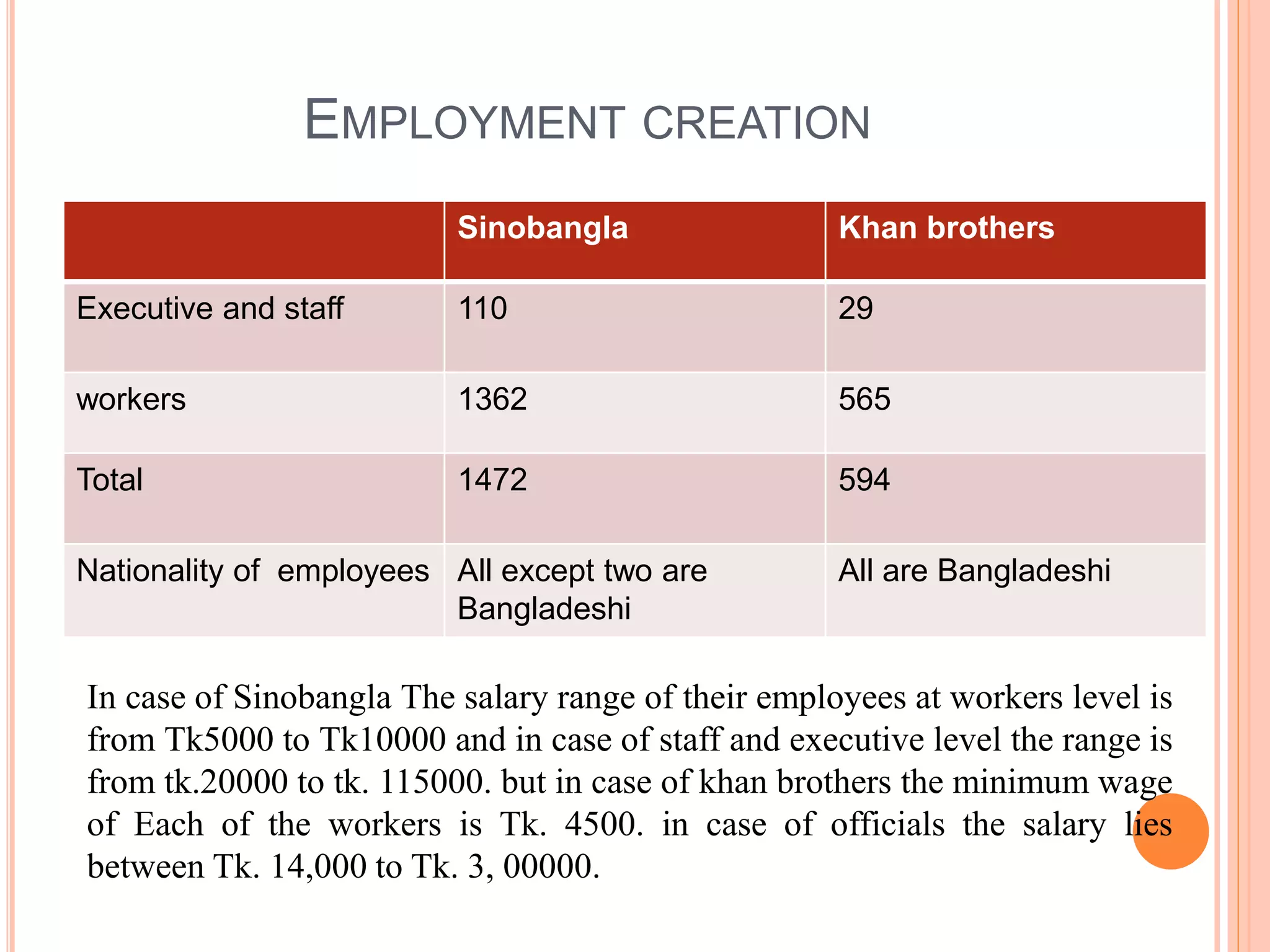
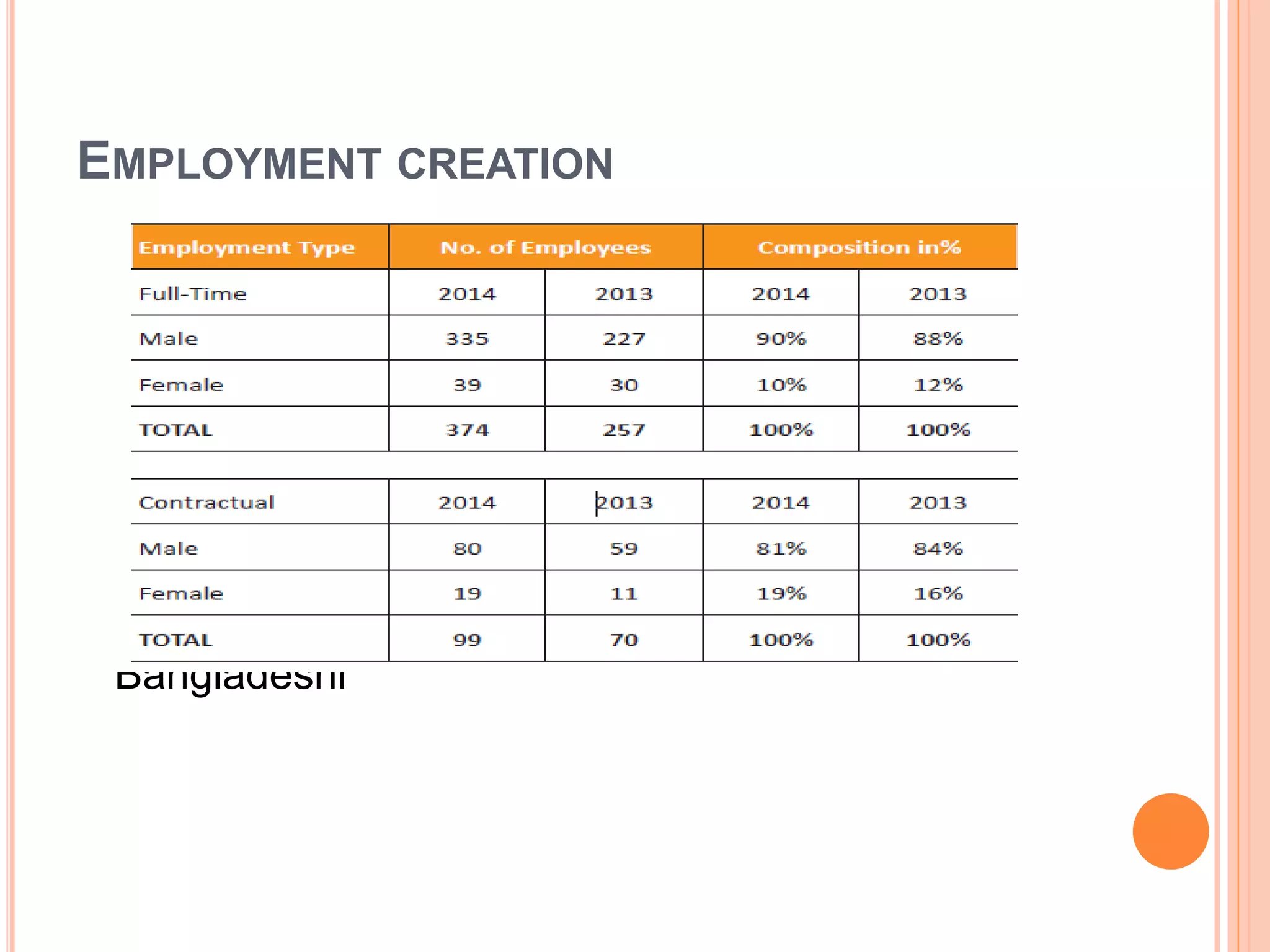
EMPLOYMENT CREATION
Sinobangla Khan brothers
Executive and staff 110 29
workers 1362 565
Total 1472 594
Nationality of employees All except two are
Bangladeshi
All are Bangladeshi
In case of Sinobangla The salary range of their employees at workers level is
from Tk5000 to Tk10000 and in case of staff and executive level the range is
from tk.20000 to tk. 115000. but in case of khan brothers the minimum wage
of Each of the workers is Tk. 4500. in case of officials the salary lies
between Tk. 14,000 to Tk. 3, 00000.
FACILITIES FOR EMPLOYEES
Sinobangla provide house facilities, training, medical
support but not provide transportation facilities for their
employees.
Khan Brothers provide transportation facilities, training,
medical support but not provide house facilities for their
employees.
LOCAL PEOPLE INTEREST
In case of hiring local people has the priority. About 30%
worker of the factory are local. Sinobangla also provide
scholarship support to the local students. As a result of
the land procurement the price of land near the factory
become valuable and house rent of the area become
higher.
The land price and house rent near the factory of khan
brothers become rises but they don’t provide any extra
support to local people
TECHNOLOGY
 Most of the technology of sinobangla are purchased from
china and india. they receive price quote from suppliers in
different countries and import from low cost and qualitative
machineries They use locally produced software supplied by
CDBL, Setcom and Geno software.
 All the necessary machineries to produce the products of Khan
Brothers PP Woven Bag Industries Ltd. are imported from
abroad and mainly from china. The company uses a software
named “TALI“ which was coded by an Indian software
company.
 In case of Both the companies, the source of technological
knowhow to produce the product from China.
COMMITMENT TO ENVIRONMENT
Waste management: Sinobangla recycle their 100% wastage.
From their wastage they produce cotton and the produce bag.
On the other hand khan brothers sells its wastage in the local
market at a lump sum rate So environment has no negative
impact from their production.
Pollution: The technology used by sinobangla is not different from
desired technology. There technologies are environment friendly.
It doesn’t create loud sound and huge smoke in air.
LAND PROCUREMENT
The land procurement process for both the companies are same.
Negotiate with
local brokers
The local broker
negotiate with
the land owner
Final purchase
contract
EXPORT INFORMATION
Both Sinobangla and KBPPWBIL are export based producer. In
2013 86% sale of sinobangla and 60% sale of KBPPWBIL are
foreign sale.
86%
14%
SINOBANGLA
Export
local
sale
60%
40%
KBPPWBIL
Export
local sale
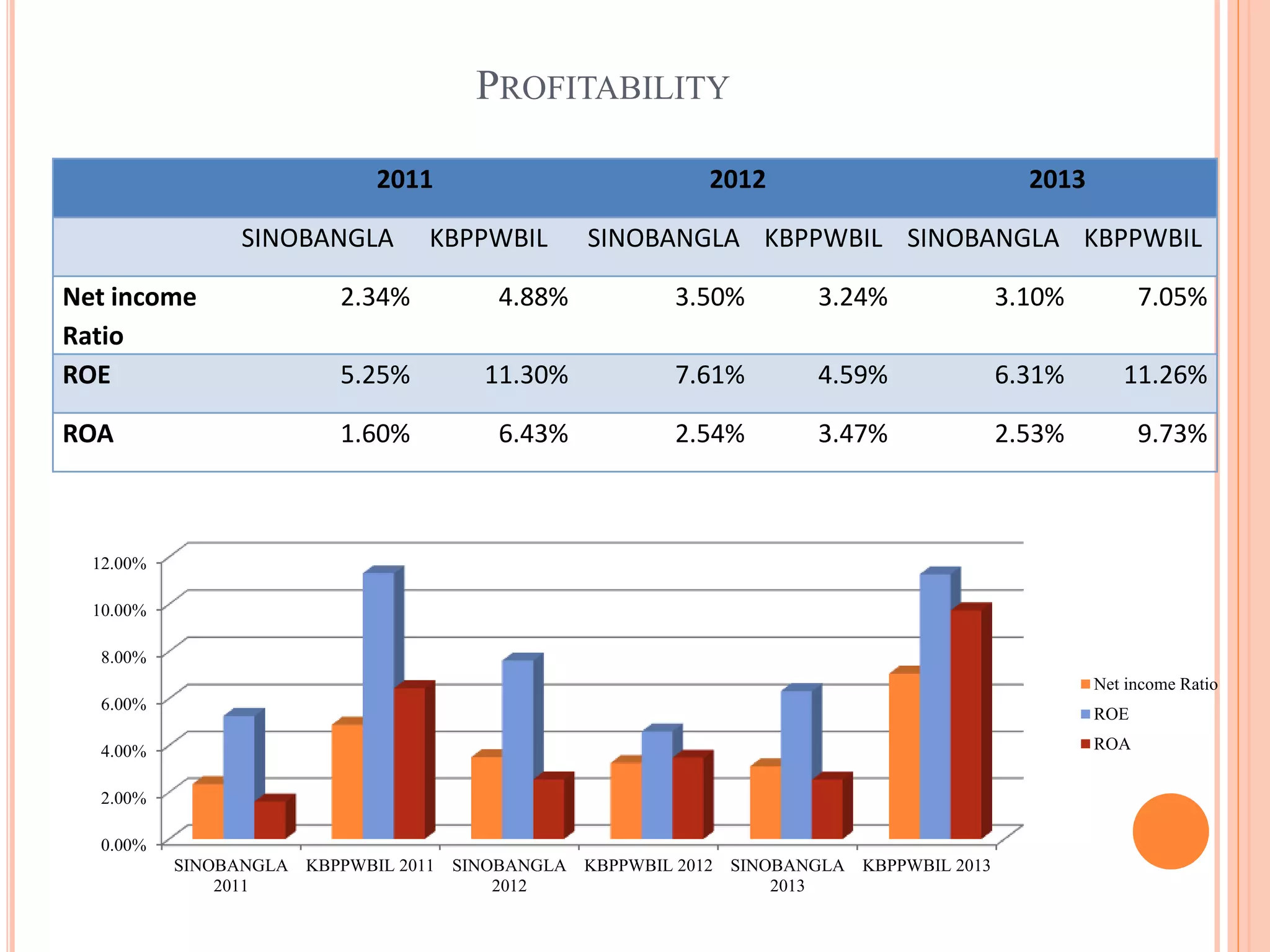
PROFITABILITY
0.00%
2.00%
4.00%
6.00%
8.00%
10.00%
12.00%
SINOBANGLA
2011
KBPPWBIL 2011 SINOBANGLA
2012
KBPPWBIL 2012 SINOBANGLA
2013
KBPPWBIL 2013
Net income Ratio
ROE
ROA
2011 2012 2013
SINOBANGLA KBPPWBIL SINOBANGLA KBPPWBIL SINOBANGLA KBPPWBIL
Net income
Ratio
2.34% 4.88% 3.50% 3.24% 3.10% 7.05%
ROE 5.25% 11.30% 7.61% 4.59% 6.31% 11.26%
ROA 1.60% 6.43% 2.54% 3.47% 2.53% 9.73%
LANKABANGLA FINANCE LIMITED
 its journey long back in 1997 as a joint-venture
financial institution
 The company got listed in both DSE & CSE in
2006.
 LankaBangla is a primary dealer of government
securities since November 2009.
 Its subsidiary are :
1) LankaBangla Securities Limited
2)LankaBangla Investments Limited
3) LankaBangla Asset Management Company Limited
OWNERSHIP STRUCTURE OF LANKABANGLA FINANCE
LIMITED
The present ownership structure of the company is
EMPLOYMENT CREATION
All the employees except two directors are
Bangladeshi
PROFITABILITY OF LANKABANGLA FINANCE
LIMITED
Financial Position 2009 2010 2011 2012 2013
Gross Profit Ratio 33.19% 63.48% 50.42% 69.04% 64.31%
EPS 1.84 2.13 5.65 2.05 2.98
Return on Equity (%) 32.95% 30.62% 43.39% 10.95% 14.54%
Return on Assets (%) 2.94% 3.15% 6.98% 1.94% 2.21%
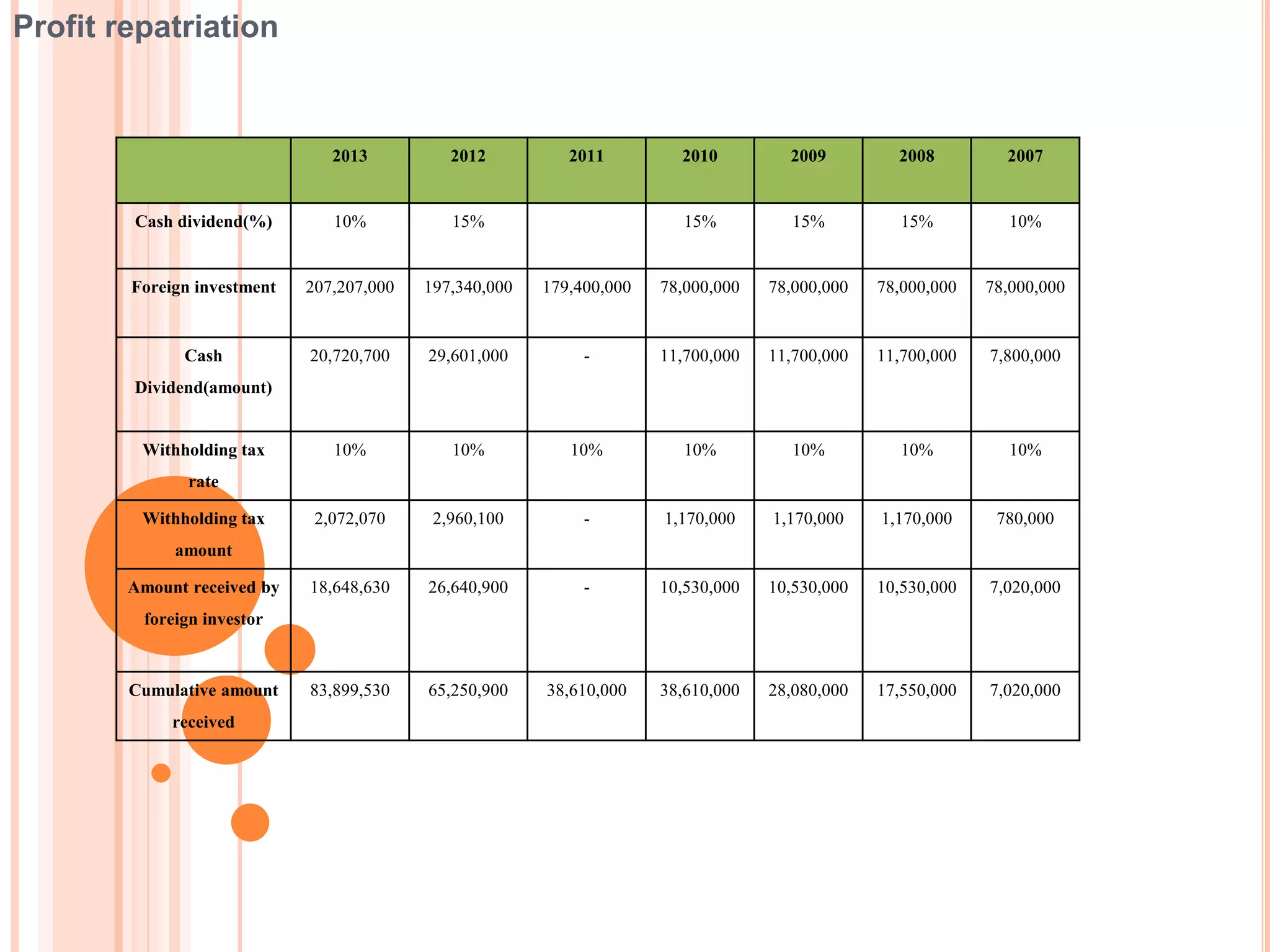
Profit repatriation
2013 2012 2011 2010 2009 2008 2007
Cash dividend(%) 10% 15% 15% 15% 15% 10%
Foreign investment 207,207,000 197,340,000 179,400,000 78,000,000 78,000,000 78,000,000 78,000,000
Cash
Dividend(amount)
20,720,700 29,601,000 - 11,700,000 11,700,000 11,700,000 7,800,000
Withholding tax
rate
10% 10% 10% 10% 10% 10% 10%
Withholding tax
amount
2,072,070 2,960,100 - 1,170,000 1,170,000 1,170,000 780,000
Amount received by
foreign investor
18,648,630 26,640,900 - 10,530,000 10,530,000 10,530,000 7,020,000
Cumulative amount
received
83,899,530 65,250,900 38,610,000 38,610,000 28,080,000 17,550,000 7,020,000
IDLC FINANCE LIMITED
IDLC was initially established in 1985.
OWNERSHIP STRUCTURE OF IDLC FINANCE LIMITED
EMPLOYMENT CREATION
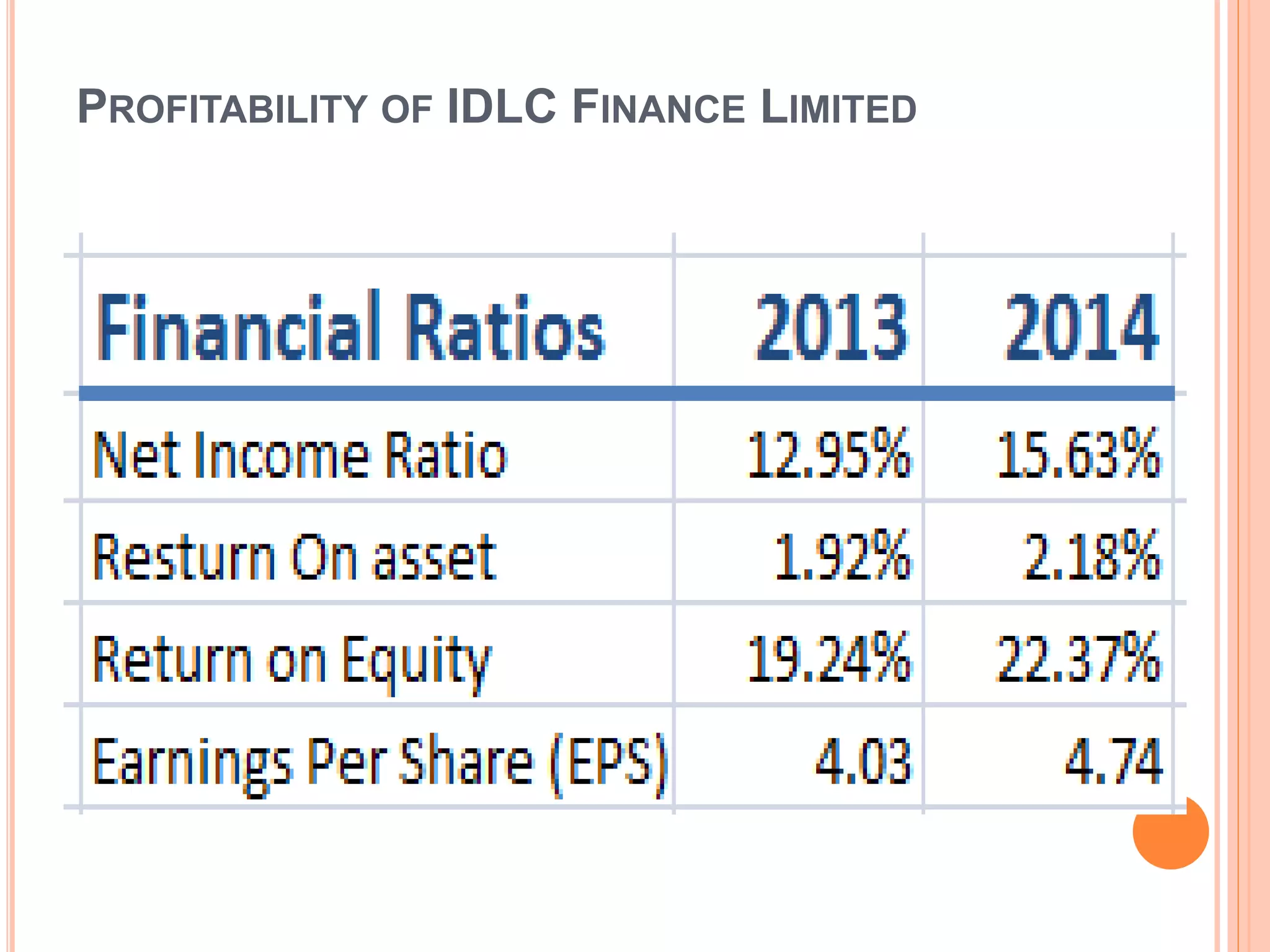
PROFITABILITY OF IDLC FINANCE LIMITED
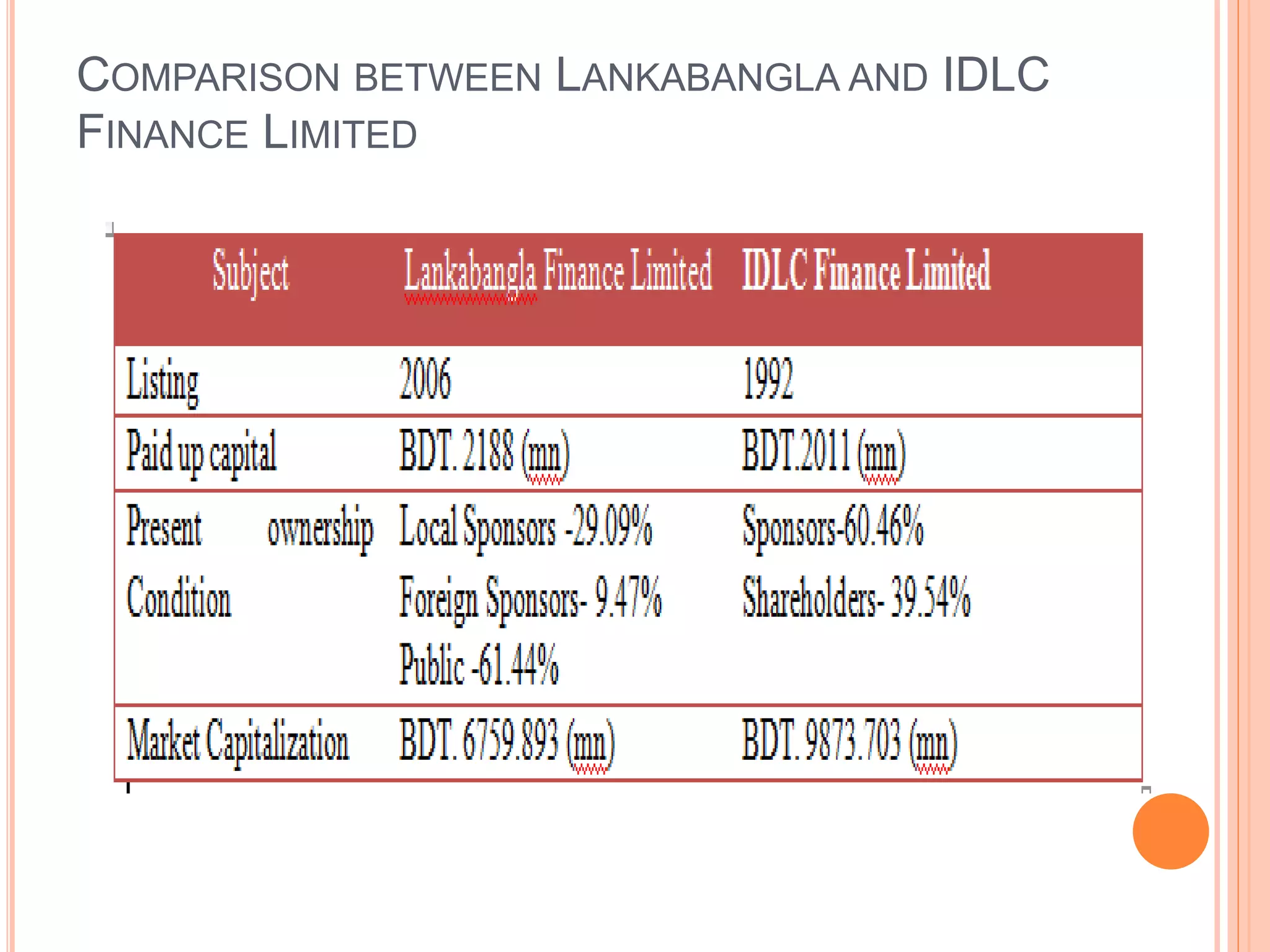
COMPARISON BETWEEN LANKABANGLA AND IDLC
FINANCE LIMITED
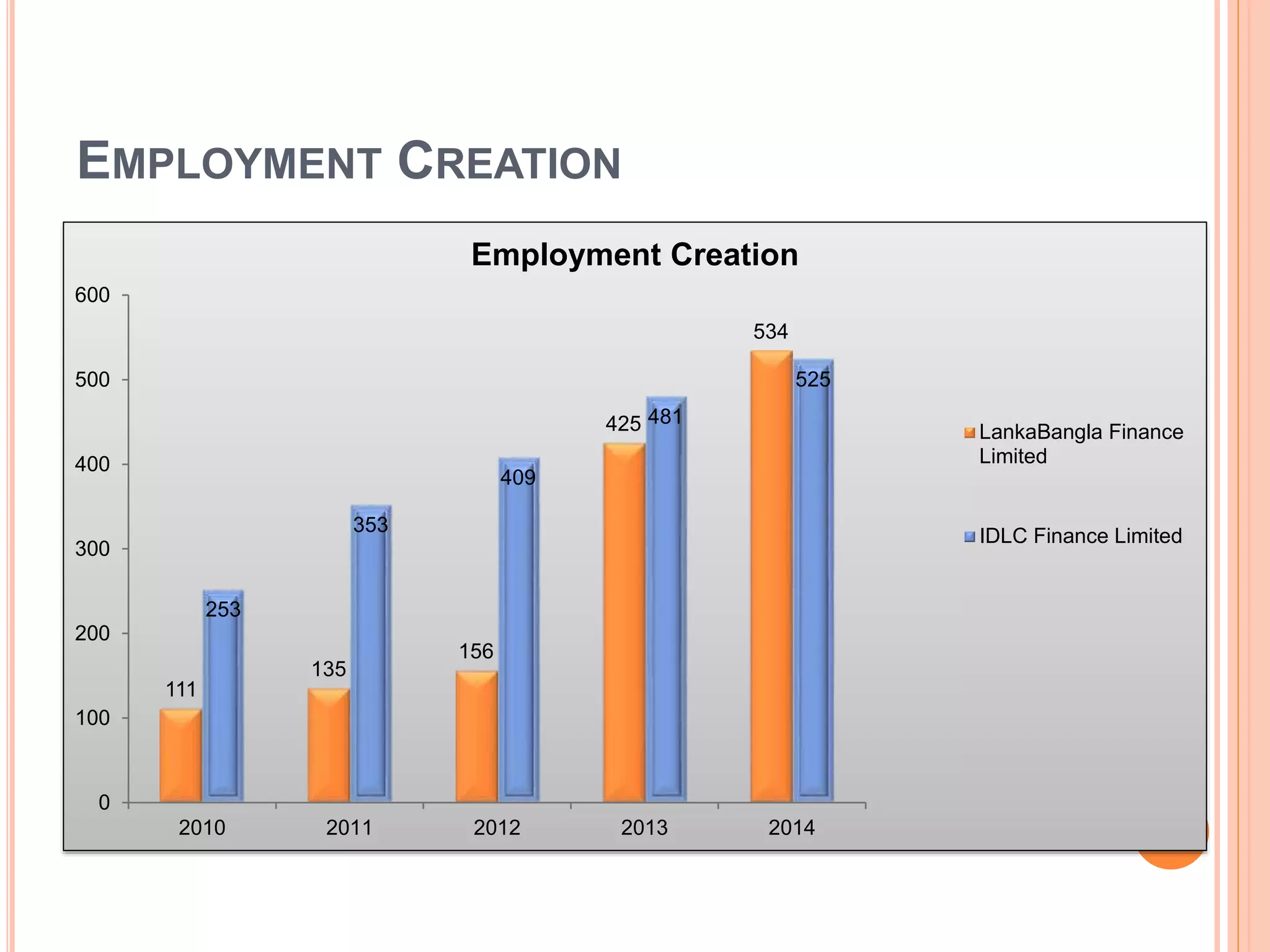
EMPLOYMENT CREATION
111
135
156
425
534
253
353
409
481
525
0
100
200
300
400
500
600
2010 2011 2012 2013 2014
Employment Creation
LankaBangla Finance
Limited
IDLC Finance Limited
PROFITABILITY OF LANKABANGLA FINANCE
AND IDLC FINANCE LIMITED
0.00%
5.00%
10.00%
15.00%
20.00%
25.00%
30.00%
35.00%
40.00%
45.00%
2010 2011 2012 2013 2014
32.95%
30.62%
43.39%
10.95%
14.54%
35.99%
27.51%
16.76%
19.24%
22.37%
Return on Equity (%)
LankaBangla
Finance Limited
IDLC Finance
Limited
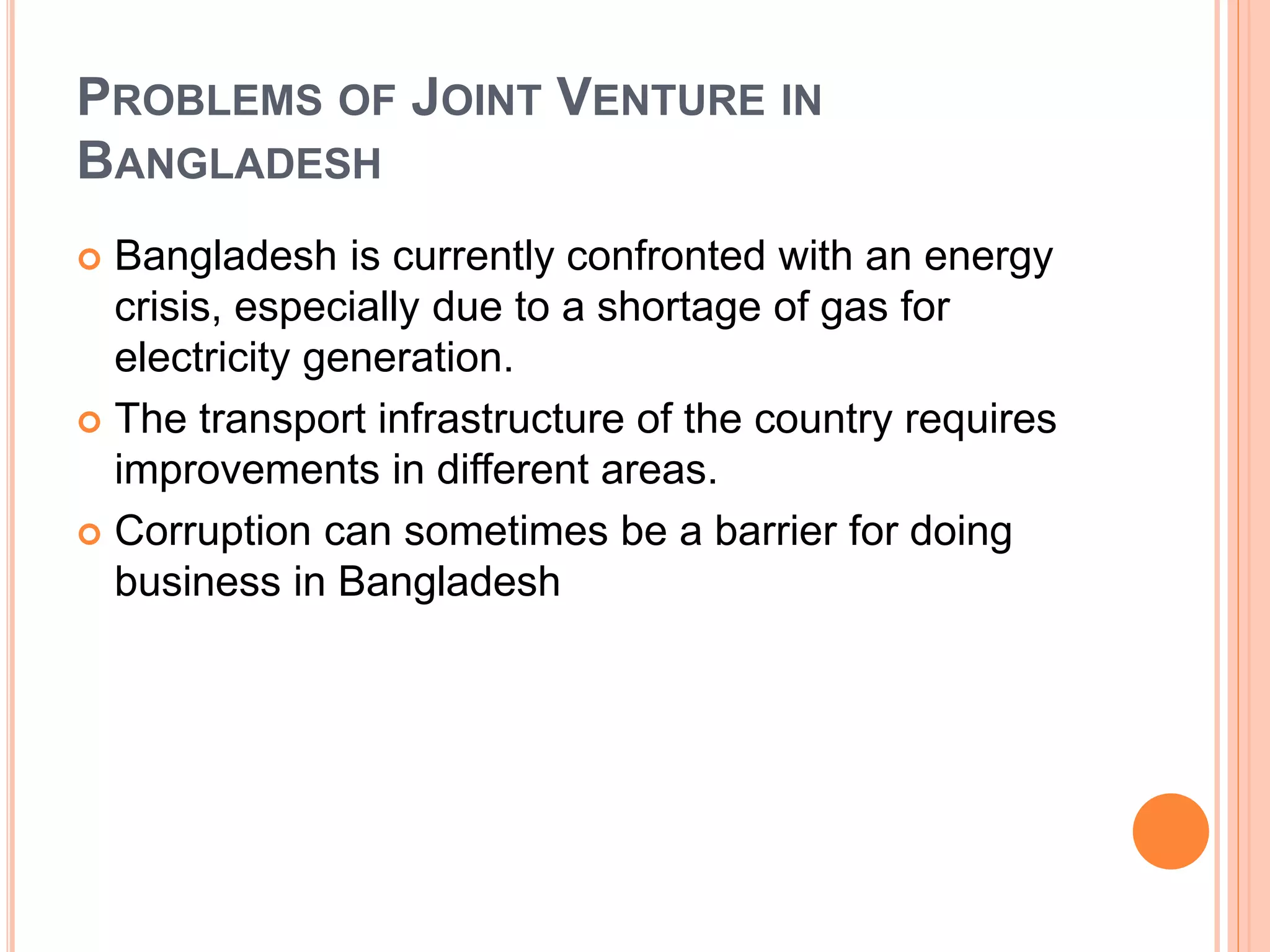
PROBLEMS OF JOINT VENTURE IN
BANGLADESH
 Bangladesh is currently confronted with an energy
crisis, especially due to a shortage of gas for
electricity generation.
 The transport infrastructure of the country requires
improvements in different areas.
 Corruption can sometimes be a barrier for doing
business in Bangladesh
Any queries?

Joint Venture in Bangladesh

  • 2.
    PREPARED FOR…. Dr. MasudRahman Professor & chairman Department of Finance University of Dhaka
  • 3.
    What is jointventure?  An arrangement in which two or more businesses agree to combine their resources for some definable undertaking is a joint venture. Joint venture may be categories into two types: Equity joint venture Non- Equity Joint venture
  • 4.
    Why Joint-Venture? Bangladesh Govt.emphasizes investment in light and Hi-tech industry. The important indicated sectors are: • Joint-venture helps to share the useful resources in a cost-effective way Resource share • If the project is too large, financially, for either party to handle aloneLarge Projects • Neither firm has all of the skills to make a success of the business aloneLimited Ability Agriculture Telecommunication Garments & Textile Information Technology Computer & Electronics Mining & Petrochemical Pharmaceutical Power Generation
  • 5.
    PROSPECT OF JOINTVENTURE IN BANGLADESH  No ceiling on investment  Tax holidays  Tax exemption and duty-free importation of capital machinery and spare parts of 100%  for export-oriented industries  Residency permits for foreign nationals  Capital, profit and dividend repatriation facilities  100% foreign equity allowance  Exemption on income tax for up to three years for expatriate employees  Term loans and working capital loans from local banks allowed  Re-investment of repatriable dividends treated as new investment
  • 6.
  • 7.
    ABOUT SINOBANGLA Dry bulkindustries have relied on flexible intermediate bulk containers (FIBCs) Sinobangla produce this industrial bags in both big and small size.  A China- Bangladesh Joint Company  Established in 1996  Established by four Bangladeshi & two chinese entrepreneur, named- Mr. Ma Jiang and Mr. Tsui Ki Lam  Produces product as per customers requirement
  • 8.
    OWNERSHIP STRUCTURE OFSINOBANGLA  In 1996 the initial investment was Tk3,30,00,000.  Ownership structure was 50% - 50%.  In 1999 the company became listed in Dhaka stock exchange and Chittagong stock exchange.  After issuing share in stock market their ownership became 33% china, 33% Bangladesh and 34% public. At present the ownership structure is given below: Ownership No. of shares Amount in taka Percentage of ownership Local Sponsors 42,06,000 4,20,60,000 21.03% Foreign Sponsors 19,14,600 1,91,46,000 9.58% Public 1,38,76,000 13,87,60,000 69.39% Total 1,99,96,600 19,99,66,000 100%
  • 9.
    TECHNOLOGY TRANSFER PRICING Import decision Received pricequote from different country Discussion on board meeting Import low cost & qualitative machines' They mainly import their machines from China, India, Germany, USA and Canada. They use locally produced software supplied by CDBL, Setcom and Geno software.
  • 10.
    TECHNOLOGY OPERATOR  Since2011 the technologies are operated by local operators, but before 2011 the machines of the company are operated by the Chinese operators.  In 2009 Sinobangla hired some employees from BUET, BUTEX and SUST and the Chinese operator train up the local employees for three years.  From then the local employees are operating the machineries.
  • 11.
    TECHNOLOGY USED BYSINOBANGLA  Best-in-class tape extruder from Starlinger & Co. GmbH: Used to control the quality of the FIBC bag. It was purchased from Japan in 2007. Sinobangla received price quote from three country china, Japan and America. In board meeting they decided to purchase from Japan because of low cost qualitative technology.  Three layer liner extruder: purchased from china in 2009. It is used to give layer on the FIBC bag. It was also purchased by same procedure. Some other machineries are-  Mesh Loom  Printing, Baling, Delivery machine etc.
  • 12.
    COMMITMENT TO ENVIRONMENT Wastemanagement: Sinobangla recycle their 100% wastage. From their wastage they produce cotton and the produce bag. So environment has no negative impact from their production. Pollution: The technology used by Sinobangla is not different from desired technology. There technologies are environment friendly. It doesn’t create loud sound and huge smoke in air.
  • 13.
    LAND PROCUREMENT  InJanuary 2011 company acquired a land of about 5 acre at Boro Baluakandi, Gazaria, in Munshigonj.  The land they acquire was not a productive land. No resident was there, so there was no need of rehabilitation.  One local people named Kamrul Hasan says us that Sinobangla was required to pay double price than market price to purchase the land at same location. Negotiate with brokers the local broker negotiate with the land owner Final purchase deed
  • 14.
    LOCAL PEOPLE INTEREST Landprice and house rent: As a result of the land procurement the price of land near the factory become valuable and house rent of the area become higher. Employment opportunity: About 30% worker of the factory are from Munshiganj. Scholarship support: The meritorious and poor students of local area from primary to intermediate level can enjoy the scholarship support from sinobangla
  • 15.
    EXPORT - IMPORTINFORMATION Sales amount in 2013 Percentage of total sales Export Tk 911,135,245 86% Local sale Tk 15,08,68,094 14% % of Sales Exported Local Market Sinobangla is mainly a export based producer. In 2013 86% of their total sale is foreign sale.
  • 16.
     Sinobangla exportmainly In Europe, Canada, China, America and Japan. The European market is the main focus of the company.  The company imports all the raw materials from abroad mainly from Japan, china and America. Source: website of sinobangla industries limited
  • 17.
    EMPLOYMENT FACILITIES Salaries andWages: The salary range of their employees at workers level is from Tk. 5000 to Tk10, 000 and in case of executive level the range is from tk.20,000 to tk. 1,15,000. House and Health: Has housing facility and medical support in Gazaria for their employees. Training facilities: In case of technical knowhow most of the trainers are from china. Other than technical knowhow the trainer are local. Human Recourses 2014 2013 2012 2011 2010 Executive and staff 110 100 97 92 95 Workers 1362 1107 933 949 925 total 1472 1207 1030 1041 1020 Foreign 2 2 2 2 2 All the employees except chairman and one director are Bangladeshi. 30% of the worker of the factory is hired from Gazaria of Munshigong. Every family of factory side locality has at least one person working in this factory.
  • 18.
    GOVERNMENT SUPPORT The governmentof Bangladesh provide initial five years tax holiday on export to sinobangla. The good relationship between china and Bangladesh gives the company some benefit. The Chinese party of the company can transfer their profit earned in Bangladesh to china by giving only 10% withholding tax, but in case of other country transaction it is required to pay 25% withholding tax on their transferred amount.
  • 19.
    PROFIT REPATRIATION The foreigninvestor of the joint venture company only can transfer their profit to their home country. The principal amount cannot be transferred rather they are required to reinvest their fund in Bangladesh. The investor of china can receive their profit by cash dividend. 2013 2012 2011 2010 2009 2008 2007 Cash Dividend (%) 10% 11% 10% 5% 10% 5% 5% Amount received after withholding tax 1723140 1895454 1555740 777870 1555740 777870 777870 Cumulative amount received 17931402 16208262 14312808 12757068 11979198 10423458 9645588 2006 2005 2004 2003 2002 2001 2000 Cash Dividend (%) 7% 5% - 10% 15% 15% 5% Amount received after withholding tax 1089018 777870 0 1555740 2333610 2333610 777870 Cumulative amount received 8867718 7778700 7000830 7000830 5445090 3111480 777870
  • 20.
    BENEFIT FROM JOINTVENTURE WITH CHINA  Technological knowhow that can be easily achieved in this way.  The idea of this industry was introduced first in Bangladesh  Sinobangla have received the first mover advantage in Bangladesh by making joint venture.  Low labor cost in Bangladesh is the main target of Chinese investors.  Export huge amount of products in china by the support of their Chinese investors.
  • 21.
    KHAN BROTHERS PPWOVEN BAG INDUSTRIES LTD. SINOBANGLA KBPPWBIL Incorporated 1996 2006 Listed in stock market 1999 2011 Initial investment Tk 3,30,00,000 Tk 10,00,00,000 Industry Industrial bag producer Industrial bag producer Khan Brothers PP Woven Bag Industries Ltd (KBPPWBIL) is a domestic firm produce industrial bags. It is the second company in Bangladesh who produce FIBC bag.
  • 22.
    EMPLOYMENT CREATION Sinobangla Khanbrothers Executive and staff 110 29 workers 1362 565 Total 1472 594 Nationality of employees All except two are Bangladeshi All are Bangladeshi In case of Sinobangla The salary range of their employees at workers level is from Tk5000 to Tk10000 and in case of staff and executive level the range is from tk.20000 to tk. 115000. but in case of khan brothers the minimum wage of Each of the workers is Tk. 4500. in case of officials the salary lies between Tk. 14,000 to Tk. 3, 00000.
  • 23.
    FACILITIES FOR EMPLOYEES Sinobanglaprovide house facilities, training, medical support but not provide transportation facilities for their employees. Khan Brothers provide transportation facilities, training, medical support but not provide house facilities for their employees.
  • 24.
    LOCAL PEOPLE INTEREST Incase of hiring local people has the priority. About 30% worker of the factory are local. Sinobangla also provide scholarship support to the local students. As a result of the land procurement the price of land near the factory become valuable and house rent of the area become higher. The land price and house rent near the factory of khan brothers become rises but they don’t provide any extra support to local people
  • 25.
    TECHNOLOGY  Most ofthe technology of sinobangla are purchased from china and india. they receive price quote from suppliers in different countries and import from low cost and qualitative machineries They use locally produced software supplied by CDBL, Setcom and Geno software.  All the necessary machineries to produce the products of Khan Brothers PP Woven Bag Industries Ltd. are imported from abroad and mainly from china. The company uses a software named “TALI“ which was coded by an Indian software company.  In case of Both the companies, the source of technological knowhow to produce the product from China.
  • 26.
    COMMITMENT TO ENVIRONMENT Wastemanagement: Sinobangla recycle their 100% wastage. From their wastage they produce cotton and the produce bag. On the other hand khan brothers sells its wastage in the local market at a lump sum rate So environment has no negative impact from their production. Pollution: The technology used by sinobangla is not different from desired technology. There technologies are environment friendly. It doesn’t create loud sound and huge smoke in air.
  • 27.
    LAND PROCUREMENT The landprocurement process for both the companies are same. Negotiate with local brokers The local broker negotiate with the land owner Final purchase contract
  • 28.
    EXPORT INFORMATION Both Sinobanglaand KBPPWBIL are export based producer. In 2013 86% sale of sinobangla and 60% sale of KBPPWBIL are foreign sale. 86% 14% SINOBANGLA Export local sale 60% 40% KBPPWBIL Export local sale
  • 29.
    PROFITABILITY 0.00% 2.00% 4.00% 6.00% 8.00% 10.00% 12.00% SINOBANGLA 2011 KBPPWBIL 2011 SINOBANGLA 2012 KBPPWBIL2012 SINOBANGLA 2013 KBPPWBIL 2013 Net income Ratio ROE ROA 2011 2012 2013 SINOBANGLA KBPPWBIL SINOBANGLA KBPPWBIL SINOBANGLA KBPPWBIL Net income Ratio 2.34% 4.88% 3.50% 3.24% 3.10% 7.05% ROE 5.25% 11.30% 7.61% 4.59% 6.31% 11.26% ROA 1.60% 6.43% 2.54% 3.47% 2.53% 9.73%
  • 30.
    LANKABANGLA FINANCE LIMITED its journey long back in 1997 as a joint-venture financial institution  The company got listed in both DSE & CSE in 2006.  LankaBangla is a primary dealer of government securities since November 2009.  Its subsidiary are : 1) LankaBangla Securities Limited 2)LankaBangla Investments Limited 3) LankaBangla Asset Management Company Limited
  • 31.
    OWNERSHIP STRUCTURE OFLANKABANGLA FINANCE LIMITED The present ownership structure of the company is
  • 32.
    EMPLOYMENT CREATION All theemployees except two directors are Bangladeshi
  • 33.
    PROFITABILITY OF LANKABANGLAFINANCE LIMITED Financial Position 2009 2010 2011 2012 2013 Gross Profit Ratio 33.19% 63.48% 50.42% 69.04% 64.31% EPS 1.84 2.13 5.65 2.05 2.98 Return on Equity (%) 32.95% 30.62% 43.39% 10.95% 14.54% Return on Assets (%) 2.94% 3.15% 6.98% 1.94% 2.21%
  • 34.
    Profit repatriation 2013 20122011 2010 2009 2008 2007 Cash dividend(%) 10% 15% 15% 15% 15% 10% Foreign investment 207,207,000 197,340,000 179,400,000 78,000,000 78,000,000 78,000,000 78,000,000 Cash Dividend(amount) 20,720,700 29,601,000 - 11,700,000 11,700,000 11,700,000 7,800,000 Withholding tax rate 10% 10% 10% 10% 10% 10% 10% Withholding tax amount 2,072,070 2,960,100 - 1,170,000 1,170,000 1,170,000 780,000 Amount received by foreign investor 18,648,630 26,640,900 - 10,530,000 10,530,000 10,530,000 7,020,000 Cumulative amount received 83,899,530 65,250,900 38,610,000 38,610,000 28,080,000 17,550,000 7,020,000
  • 35.
    IDLC FINANCE LIMITED IDLCwas initially established in 1985.
  • 36.
    OWNERSHIP STRUCTURE OFIDLC FINANCE LIMITED
  • 37.
  • 38.
    PROFITABILITY OF IDLCFINANCE LIMITED
  • 39.
    COMPARISON BETWEEN LANKABANGLAAND IDLC FINANCE LIMITED
  • 40.
    EMPLOYMENT CREATION 111 135 156 425 534 253 353 409 481 525 0 100 200 300 400 500 600 2010 20112012 2013 2014 Employment Creation LankaBangla Finance Limited IDLC Finance Limited
  • 41.
    PROFITABILITY OF LANKABANGLAFINANCE AND IDLC FINANCE LIMITED 0.00% 5.00% 10.00% 15.00% 20.00% 25.00% 30.00% 35.00% 40.00% 45.00% 2010 2011 2012 2013 2014 32.95% 30.62% 43.39% 10.95% 14.54% 35.99% 27.51% 16.76% 19.24% 22.37% Return on Equity (%) LankaBangla Finance Limited IDLC Finance Limited
  • 42.
    PROBLEMS OF JOINTVENTURE IN BANGLADESH  Bangladesh is currently confronted with an energy crisis, especially due to a shortage of gas for electricity generation.  The transport infrastructure of the country requires improvements in different areas.  Corruption can sometimes be a barrier for doing business in Bangladesh
  • 43.