Job Analysis
BBAH 21023 Managing
Human Resource
Management
2022/BAD/370
What is Job Analysis
 Job analysis is the process of
gathering and analyzing information
about the content and the human
requirements of jobs, as well as, the
context in which jobs are performed.
This process is used to determine
placement of jobs Specific internal
approval processes will be determined
by the unit's organizational leadership.
Why is a job analysis important?
 Manpower Planning
 Recruitment, Selection and Placement
 Training and Development:
 Job Evaluation
 Performance Appraisal
 Job Designing
 Safety and Health
 Promotions
 Employment Guidance
 Labor Relations
How do you conduct a job
analysis?
 Gather information about a position
 Evaluate the importance of each task
and competency
 Research industry standards
 Revise job descriptions and standards
 Use data to make changes
What is job analysis vs job
description?
 Job analysis can be understood as the process
of gathering information related to a particular
job. This information includes knowledge, skills
and abilities to work effectively. It is useful for
preparing job description and job description.
 A job description is a document that indicates
what the job covers, that is, the functions,
responsibilities, duties, powers and officers,
attached to the job.
 In excellent terms, job analysis means an in-
depth examination and evaluation of a particular
job. Therefore, the job description is a statement
that is characteristic of a particular job.
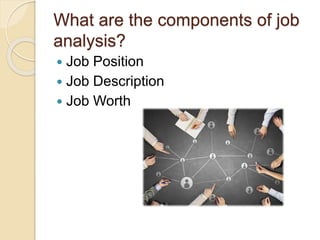
What are the components of job
analysis?
 Job Position
 Job Description
 Job Worth
WHAT IS A JOB
DESCRIPTION?
 A job description is a written explanation that outlines
the essential responsibilities and requirements for a
vacant position. Job descriptions should be thorough,
clear, and concise and include:
 •A brief introduction to the company and its mission.
 •An overview of the job responsibilities.
 •The necessary skills, competence levels, knowledge,
and qualifications relevant candidates should have.
 •Testing that the company may require.
 •Working conditions and location. It should also cover
whether the role is office-based, remote, or hybrid.
 •Environmental factors or strenuous components of the
job.
 •The type of employment —full-time, part-time, or
independent contractor.
What methods can you use to
conduct a job analysis?
 Interviews
 Observations
 Surveys
 Work logs
What are the disadvantages of
job analysis?
 Time consuming
 Too much human effort
 Lack of Skills
 Lack of mental abilities
Thank you

Job Analysis presentation in human resource management

  • 1.
    Job Analysis BBAH 21023Managing Human Resource Management 2022/BAD/370
  • 2.
    What is JobAnalysis  Job analysis is the process of gathering and analyzing information about the content and the human requirements of jobs, as well as, the context in which jobs are performed. This process is used to determine placement of jobs Specific internal approval processes will be determined by the unit's organizational leadership.
  • 3.
    Why is ajob analysis important?  Manpower Planning  Recruitment, Selection and Placement  Training and Development:  Job Evaluation  Performance Appraisal  Job Designing  Safety and Health  Promotions  Employment Guidance  Labor Relations
  • 5.
    How do youconduct a job analysis?  Gather information about a position  Evaluate the importance of each task and competency  Research industry standards  Revise job descriptions and standards  Use data to make changes
  • 6.
    What is jobanalysis vs job description?  Job analysis can be understood as the process of gathering information related to a particular job. This information includes knowledge, skills and abilities to work effectively. It is useful for preparing job description and job description.  A job description is a document that indicates what the job covers, that is, the functions, responsibilities, duties, powers and officers, attached to the job.  In excellent terms, job analysis means an in- depth examination and evaluation of a particular job. Therefore, the job description is a statement that is characteristic of a particular job.
  • 7.
    What are thecomponents of job analysis?  Job Position  Job Description  Job Worth
  • 8.
    WHAT IS AJOB DESCRIPTION?  A job description is a written explanation that outlines the essential responsibilities and requirements for a vacant position. Job descriptions should be thorough, clear, and concise and include:  •A brief introduction to the company and its mission.  •An overview of the job responsibilities.  •The necessary skills, competence levels, knowledge, and qualifications relevant candidates should have.  •Testing that the company may require.  •Working conditions and location. It should also cover whether the role is office-based, remote, or hybrid.  •Environmental factors or strenuous components of the job.  •The type of employment —full-time, part-time, or independent contractor.
  • 9.
    What methods canyou use to conduct a job analysis?  Interviews  Observations  Surveys  Work logs
  • 10.
    What are thedisadvantages of job analysis?  Time consuming  Too much human effort  Lack of Skills  Lack of mental abilities
  • 11.