
OPENING THE BESIEGED CITY
Exploring an Inclusive Development Strategy for Tin Shui Wai in Hong Kong


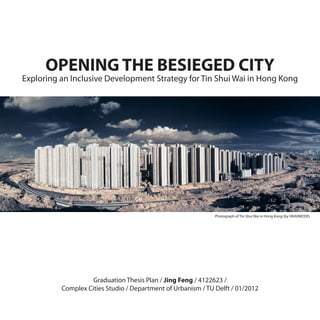
                                                              Photograph of Tin Shui Wai in Hong Kong (by HKAVMODE)


                   Graduation Thesis Plan / Jing Feng / 4122623 /
          Complex Cities Studio / Department of Urbanism / TU Delft / 01/2012
COLOPHON

OPENING THE BESIEGED CITY
Exploring an Inclusive Development Strategy for Tin Shui Wai in Hong Kong

GRADUATION THESIS PLAN

Jing Feng
4122623
E-mail: fengjing1618@gmail.com

First Mentor: QU Lei (Complex Cities)
Second Mentor: Gregory Bracken (DSD)

Complex Cities Studio
Department of Urbanism
Faculty of Architecture TU Delft

Cover: Photograph of Tin Shui Wai in Hong Kong (by HKAVMODE)
Date: 01/2012
Content

1. Introduction                                       1

2. Problem Statement                                  2
   2.1 Hong Kong - Location                           2
   2.2 Hong Kong - Economy and Social Inequality      4
   2.3 Hong Kong - Housing Problem                    6
   2.4 Public Housing in Hong Kong                    10
   2.5 Conclusion                                     23

3. Project Area - Tin Shui Wai                        24
   3.1 Besieged city                                  24
   3.2 From ‘Besieged city’ to the ‘City of Misery’   30

4. Project Objective                                  32

5. Research question                                  34

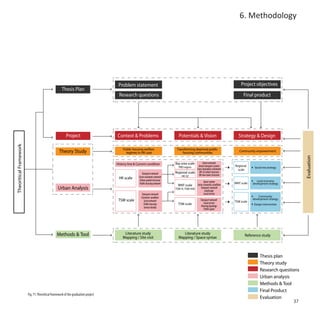
6. Methodology                                        35

7. Final Product                                      38

8. Relevance                                          38

9. Literature Review                                  40

10. Vision                                            48
  10.1 Regional scale                                 48
  10.2 WNT scale                                      58
  10.3 TSW scale                                      74

11. Reference                                         92
1. Introduction
 A single mother lived with his son in Tin Shui Wai, a place called ‘Besieged City’ in Hong Kong. She worked in a local supermarket now. But, in
the 1970s, she worked in a textile factory and supported her little brothers finishing their studies. With the dramatic socio-economic changes,
now she had a hard life compared to her brothers. One day, she met a single living granny and helped her repairing television and changing
the lamp. Then, it comes to the mid-autumn day, a special festival for Chinese family gathering together. So, the single mother, the son and the
granny sitting together around the table, tasting the mooncake, watching the beautiful moon outside, and thinking about the past and future.

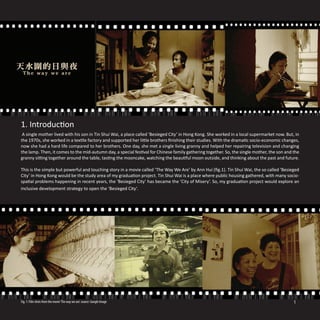
This is the simple but powerful and touching story in a movie called ‘The Way We Are’ by Ann Hui (fig.1). Tin Shui Wai, the so called ‘Besieged
City’ in Hong Kong would be the study area of my graduation project. Tin Shui Wai is a place where public housing gathered, with many socio-
spatial problems happening in recent years, the ‘Besieged City’ has became the ‘City of Misery’. So, my graduation project would explore an
inclusive development strategy to open the ‘Besieged City’.


Fig. 1: Film shots from the movie ‘The way we are’. source: Google Image                                                                     1
NEW TERRITORIES
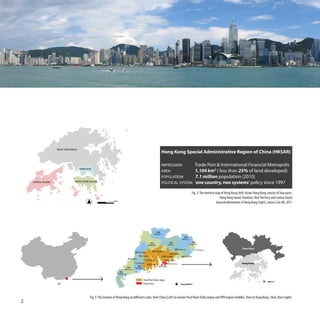
                                                                                                                           Hong Kong Special Administrative Region of China (HKSAR)

                                                                                                                           IMPRESSION:                                     Trade Port & International Financial Metropolis
                                      KOWLOON
                                                                                                                           AREA:                                           1,104 km2 ( less than 25% of land developed)
                                                                                                                           POPULATION:                                     7.1 million population (2010)
    LANTAU ISLAND                HONG KONG ISLAND
                                                                                                                           POLITICAL SYSTEM:                               ‘one country, two systems’ policy since 1997

                                                                                                                                                                    Fig. 3: The territory map of Hong Kong (left) shows Hong Kong consists of four parts:
                                                                                                                                                                                             Hong Kong Island, Kowloon, New Territory and Lantau Island
                                                               10Km
                                                                                                                                                                                          General information of Hong Kong (right), source: Gov HK, 2011


                                                                                                                Shaogua n
                                                                                                                                                         梅州
                                                                                                                                                       Meizho u
                                                                                                                                     河源                              潮州
                                                                                                         Qingyuan                   Heyuan                        Chaozhou

                                                                                                                                                  Jieyan g                                                    Shen Zhen
                                                                                                                                                                       ¶¬¿Y Shantou
                                                                                                                    Guangzhou
                                                                                            Zhaoqing •                •               • 惠州 Huizhou
                                                                                            佛山 Foshan •                    •       Dongguan        汕尾 Shanwei
                                                                                  Yunfu
                                                                                                  中山 Zhongshan •                • 深圳 Shenzhen
                                                                                          Jiangmen •
                                                                                                         珠海 Zhuhai •             • 香港 Hong Kong                                                               Hong Kong
                                                                                                                       •       Macao
                                                                             茂名       Yangjiang
                                                                           Maomin g
                                                                     湛江
                                                                  Zhanjian g


                                                                                                  Pearl River Delt a region                                                                                                              10km


                                                                                                  Hong Kong                                         0 10     50    100km


                                            Fig. 5: The location of Hong Kong on different scales, from China (Left) to Greater Pearl River Delta region and PRD region (middle), then to Hong Kong -Shen Zhen (right).
2
2. Problem Statement


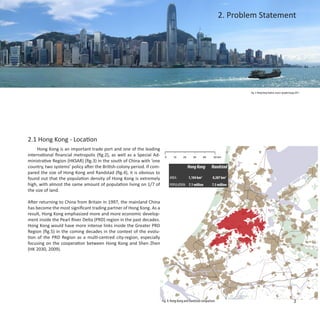
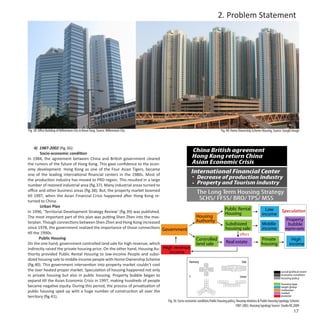
                                                                                                                            Fig. 2: Hong Kong Skyline, source: google image,2011


2.1 Hong Kong - Location
     Hong Kong is an important trade port and one of the leading
international financial metropolis (fig.2), as well as a Special Ad-
ministrative Region (HKSAR) (fig.3) in the south of China with ‘one
country, two systems’ policy after the British-colony period. If com-                      Hong Kong          Randstad
pared the size of Hong Kong and Randstad (fig.4), it is obvious to
found out that the population density of Hong Kong is extremely               AREA:         1,104 km2          8,287 km2
high, with almost the same amount of population living on 1/7 of              POPULATION: 7.1 million         7.5 million
the size of land.

After returning to China from Britain in 1997, the mainland China
has become the most significant trading partner of Hong Kong. As a
result, Hong Kong emphasized more and more economic develop-
ment inside the Pearl River Delta (PRD) region in the past decades.
Hong Kong would have more intense links inside the Greater PRD
Region (fig.5) in the coming decades in the context of the evolu-
tion of the PRD Region as a multi-centred city-region, especially
focusing on the cooperation between Hong Kong and Shen Zhen
(HK 2030, 2009).


                                                                        Fig. 4: Hong Kong and Randstad comparison                                                        3
GDP
                                                                                                                                                                25,000
            2,000,000

            1,800,000

                                                                                                                                                                20,000                                                                                         20,027
            1,600,000
                                                                                                                                                                                                                                18,622           18,586
                                                                                                                                                                                                               17,909
            1,400,000

            1,200,000                                                                                                                                           15,000                         14,630

            1,000,000                                                                                                                                                                                                                                                   Cleaner
                                                                                                                                                         GDP
                                                                                                                                                                                                                                                               10,950
                                                                                                                                                                                                                                                 10,482
                     800,000                                                                                                                                    10,000                                         9,699            9,509                                   General worker
                                                                                                                                                                                9,000
                                                                                                                                                                                               8,384
                     600,000                                                                                                                                                                                                                     7,770         7,918
                                                                                                                                                                                                               7,276            7,495
                                                                                                                                                                                               6,175
                                                                                                                                                                                                                                                 5,394         5,633
                     400,000                                                                                                                                     5,000          4,831                          4,502            4,453
                                                                                                                                                                                3,643          3,909
                     200,000                                                                                                                                                    3,585


                           0                                                                                                                                        0
                                1990 1991 1992 1993 1994 1995 1996 1997 1998 1999 2000 2001 2002 2003 2004 2005 2006 2007 2008 2009 2010                                     1990           1995            2000            2005            2010            2011


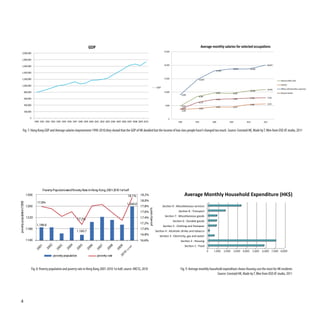
              Fig. 7: Hong Kong GDP and Average salaries improvement 1990-2010,they showd that the GDP of HK doubled but the income of low class people hasn’t changed too much. Source: Censtatd HK, Made by T. Wen from DSD AT studio, 2011


                                       Poverty Population Poverty Rate in Hong Ko 2001-2010 1st half
                                                         and                     ng,
                         1300                                                                                        18.1%      18.2%                                               Average Monthly Household Expenditure (HK$)
                                                                                                                                18.0%
                                  17.8%
         lation (1000)


                                                                                                                    1,260.0
                         1260                                                                                                   17.8%                          Sec on 9 : Miscellaneous services
                                                                                                                                           pove rate%


                                                                                                                                17.6%                                        Sec on 8 : Transport
                                                                                                                                                                Sec on 7 : Miscellaneous goods
pove popu


                         1220                                                                                                   17.4%
                                                                                                                                               rty


                                                                       17.2%
                                                                                                                                                                         Sec on 6 : Durable goods
                                  1,186.6                                                                                       17.2%
    rty


                                                                                                                                                               Sec on 5 : Clothing and footwear
                         1180                                                                                                   17.0%
                                                                      1,160.7                                                                           Sec on 4 : Alcoholic drinks and tobacco
                                                                                                                                16.8%                      Sec on 3 : Electricity, gas and water
                         1140                                                                                                   16.6%                                          Sec on 2 : Housing
                                                                                                                                                                                    Sec on 1 : Food
                                           02


                                                             04

                                                                      05


                                                                                06


                                                                                                  08
                                  01


                                                    03


                                                                                         07


                                                                                                           09

                                                                                                                      alf
                                         20


                                                           20

                                                                    20


                                                                              20


                                                                                                20
                                20


                                                  20


                                                                                       20


                                                                                                         20


                                                                                                                    th


                                                                                                                                                                                                        0    1,000      2,000      3,000 4,000     5,000   6,000 7,000 8,000
                                                                                                                  1s
                                                                                                               10


                                                 poverty population                      poverty rat
                                                                                                   e
                                                                                                             20


                            Fig. 8: Poverty population and poverty rate in Hong Kong 2001-2010 1st half, source: HKCSS, 2010                                                   Fig. 9: Average monthly household expenditure shows Housing cost the most for HK residents
                                                                                                                                                                                                             Source: Censtatd HK, Made by T. Wen from DSD AT studio, 2011


    4
2. Problem Statement


                                                                                                    Fig. 6: Comparison of Economy and Social Inequality in Hong Kong (top)
2.2 Hong Kong - Economy and Social Inequality                                                          Hong Kong tops world rich-poor gap (bottom), source: Cagape, 2009
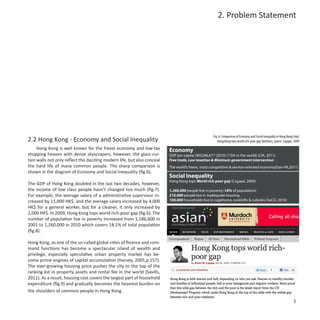
     Hong Kong is well known for the freest economy and low-tax          Economy
shopping heaven with dense skyscrapers, however, the glass cur-          GDP per capita: HK$246,677 (2010) (13th in the world) (CIA, 2011)
tain walls not only reflect the dazzling modern life, but also conceal   Free trade, Low taxation & Minimum government intervention
the hard life of many common people. The sharp comparison is             The world’s freest, most competitive & service-oriented economy(Gov HK,2011)
shown in the diagram of Economy and Social Inequality (fig.6).
                                                                         Social Inequality
                                                                         Hong Kong tops World rich-poor gap (Cagape, 2009)
The GDP of Hong Kong doubled in the last two decades, however,
the income of low class people hasn’t changed too much (fig.7).          1,260,000 people live in poverty (18% of population)
For example, the average salary of a administrative supervisor in-       210,000 people live in inadequate housing
creased by 11,000 HK$, and the average salary increased by 4,000         100,000 households live in cagehome, cocklofts & cubicles (SoCO, 2010)
HK$ for a general worker, but for a cleaner, it only increased by
2,000 HK$. In 2009, Hong Kong tops world rich-poor gap (fig.6). The
number of population live in poverty increased from 1,186,600 in
2001 to 1,260,000 in 2010 which covers 18.1% of total population
(fig.8).

Hong Kong, as one of the so-called global cities of finance and com-
mand functions has become a spectacular island of wealth and
privilege, especially speculative urban property market has be-
come prime engines of capital accumulation (Harvey, 2005,p.157).
The ever-growing housing price pushes the city to the top of the
ranking list in property assets and rental fee in the world (Savills,
2011). As a result, housing cost covers the largest part of household
expenditure (fig.9) and gradually becomes the heaviest burden on
the shoulders of common people in Hong Kong.

                                                                                                                                                                     5
a


b                                                                                                                                                c
6
    Fig. 10: Inadequate housing in Hong Kong, cubicle housing (a) and cage home (b) in Sham Shui Po (c) in the city center of HK. source: (a) and (b) from SOCo,2011
2. Problem Statement


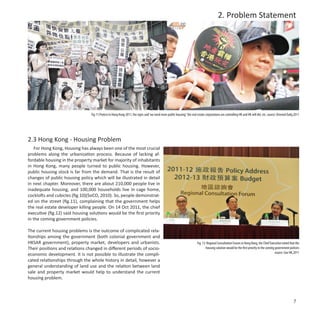
                                     Fig.11.Protest in Hong Kong 2011, the signs said ‘we need more public housing’, ‘the real estate corporations are controlling HK and HK will die’, etc. source: Oriental Daily,2011


    2.3 Hong Kong - Housing Problem
        For Hong Kong, Housing has always been one of the most crucial
    problems along the urbanization process. Because of lacking af-
    fordable housing in the property market for majority of inhabitants
    in Hong Kong, many people turned to public housing. However,
    public housing stock is far from the demand. That is the result of
    changes of public housing policy which will be illustrated in detail
    in next chapter. Moreover, there are about 210,000 people live in
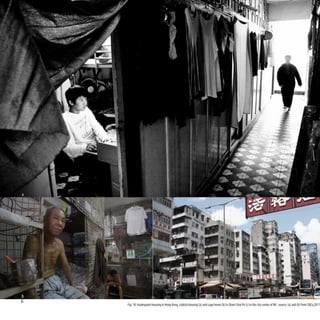
    inadequate housing, and 100,000 households live in cage home,
    cocklofts and cubicles (fig.10)(SoCO, 2010). So, people demonstrat-
    ed on the street (fig.11), complaining that the government helps
    the real estate developer killing people. On 14 Oct 2011, the chief
    executive (fig.12) said housing solutions would be the first priority
    in the coming government policies.

    The current housing problems is the outcome of complicated rela-
    tionships among the government (both colonial government and
    HKSAR government), property market, developers and urbanists.                                                               Fig. 12: Regonal Consultation Forum in Hong Kong, the Chief Executive noted that the
    Their positions and relations changed in different periods of socio-                                                                housing solution would be the first priority in the coming government policies
                                                                                                                                                                                                   source: Gov HK,2011
    economic development. It is not possible to illustrate the compli-
    cated relationships through the whole history in detail, however a
    general understanding of land use and the relation between land
    sale and property market would help to understand the current
    housing problem.


                                                                                                                                                                                                                   7
1
Bodies
                               Land


                                                  ure

                                                                     cial
                                          Agricult
                        Barren
                        Water


                                                               mer

                                                                   l
                                                              tria
                                                                                  n/


                                                          Com
                                                                                io ce


                                                           us
                                                                              ut Spa


                                                        Ind
                                                                           it
                                                                         st n
                                                                       In pe
                                                                         O
                                                                                              tion
                                                                                    sp   orta
                                                                               Tran

                                                                                             an or
                                                                                   Other Urb nd
                                                                                   Built-up La


                                                                                   Residential


                                                                               W
                                                                              Sh ood
                                                                             Gra rubl land/
                                                                            We ssla and/
                                                                              tla nd
                                                                                  nd /


                                                                                                     2. 31 Land Use
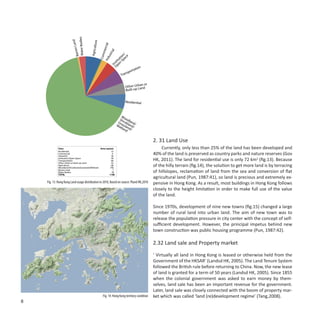
             Class                                Area (sq.km)                                            Currently, only less than 25% of the land has been developed and
             Residential                                    72
             Commercial
             Industrial
                                                             4
                                                            26
                                                                                                     40% of the land is preserved as country parks and nature reserves (Gov
             Institution/Open Space
             Transportation
                                                            49
                                                            66                                       HK, 2011). The land for residential use is only 72 km2 (fig.13). Because
             Other Urban or Built-up Land                   52
             Agriculture
             Woodland/Shrubland/Grassland/Wetland
                                                            68
                                                           740
                                                                                                     of the hilly terrain (fig.14), the solution to get more land is by terracing
             Barren Land
             Water Bodies
                                                              7
                                                             30                                      of hillslopes, reclamation of land from the sea and conversion of flat
             TOTAL                                         1108
                                                                                                     agricultural land (Pun, 1987:41), so land is precious and extremely ex-
    Fig. 13: Hong Kong Land usage distribution in 2010, Based on source: Pland HK,2010               pensive in Hong Kong. As a result, most buildings in Hong Kong follows
                                                                                                     closely to the height limitation in order to make full use of the value
                                                                                                     of the land.

                                                                                                     Since 1970s, development of nine new towns (fig.15) changed a large
                                                                                                     number of rural land into urban land. The aim of new town was to
                                                                                                     release the population pressure in city center with the concept of self-
                                                                                                     sufficient development. However, the principal impetus behind new
                                                                                                     town construction was public housing programme (Pun, 1987:42).

                                                                                                     2.32 Land sale and Property market

                                                                                                     ‘ Virtually all land in Hong Kong is leased or otherwise held from the
                                                                                                     Government of the HKSAR’ (Landsd HK, 2005). The Land Tenure System
                                                                                                     followed the British rule before returning to China. Now, the new lease
                                                                                                     of land is granted for a term of 50 years (Landsd HK, 2005). Since 1855
                                                                                                     when the colonial government was asked to earn money by them-
                                                                                                     selves, land sale has been an important revenue for the government.
                                                                                                     Later, land sale was closely connected with the boom of property mar-
                                                           Fig. 14: Hong Kong territory condition    ket which was called ‘land (re)development regime’ (Tang,2008).
8
2. Problem Statement
                                                                                                                         New Town
                                                                                                                                                         Design
                                                                                                                                                                          Urbanist
                                            Fanling/
                                                                                                                 Public Housing
                                          Sheung Shui


                       Tin Shui                    Tai Po                                                                                            Housing
                                                                                                                                    Intervention
                         Wai Yuen
                                Long
                                                                                                                                                     demand
                                                                                                                                                                              Government
                                                                                                                                                     Economy
                     Tuen                                                                                                                            growth
                                                                                                                         Market
                     Mun                                Sha Tin

                                       Tsuen Wan
                                                                                                                                                                                 Revenue
                                                                                                           complicated system with business cycle
                                                                  Tseung
                                                                  Kwan O
                                                                                                                                                                          Land sale                 Agreement

              Tung                                                                                            Stock Property
             Chung
                                                                               1973 New Town Plan
                                                                                                              market market                                                      Land
                                                                                                                                                                                 control
                                                                               1979 New Town Plan

                                                                               1980s New Town Plan


                                                                                                                                                     Investment                 Real Estate
                                                                           0            10km                                                                                    Developer
                                                                                                                                                                          Fig. 17: Housing problem relation scheme
Fig. 15: New Town development in HK, Based on source: HK Pland


                                                                                                       1980                  1985          1990      1995              2000       2005           2010
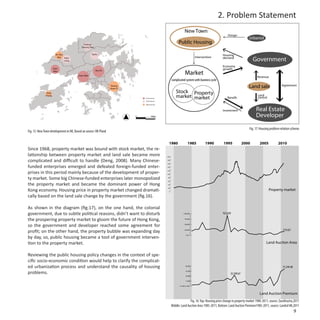
Since 1968, property market was bound with stock market, the re-
lationship between property market and land sale became more                                         200


complicated and difficult to handle (Deng, 2008). Many Chinese-                                      180

                                                                                                     160

funded enterprises emerged and defeated foreign-funded enter-                                        140


prises in this period mainly because of the development of proper-
                                                                                                     120

                                                                                                     100


ty market. Some big Chinese-funded enterprises later monopolized                                      80

                                                                                                      60

the property market and became the dominant power of Hong                                             40


Kong economy. Housing price in property market changed dramati-                                                                                                                            Property market
                                                                                                      20

                                                                                                       0


cally based on the land sale change by the government (fig.16).

As shown in the diagram (fig.17), on the one hand, the colonial
government, due to subtle political reasons, didn’t want to disturb                                                    1,000,000                     925,039

the prospering property market to gloom the future of Hong Kong,                                                        750,000


so the government and developer reached some agreement for                                                               500,000


profit; on the other hand, the property bubble was expanding day                                                         250,000                                                                     174,427

by day, so, public housing became a tool of government interven-
                                                                                                                           0 (m2)


tion to the property market.                                                                                                                                                            Land Auction Area


Reviewing the public housing policy changes in the context of spe-
cific socio-economic condition would help to clarify the complicat-
ed urbanization process and understand the causality of housing                                                           60,000
                                                                                                                                                                                                     51,244.48
problems.                                                                                                                 45,000
                                                                                                                                                           32,349.67
                                                                                                                          30,000


                                                                                                                          15,000


                                                                                                                  0 (million HK$)


                                                                                                                                                                                  Land Auction Premium
                                                                                                                          Fig. 16: Top: Housing price change in property market 1980-2011, source: Zarathustra,2011
                                                                                                           Middle: Land Auction Area 1985-2011, Bottom: Land Auction Premium1985-2011, source: Landsd HK,2011
                                                                                                                                                                                                                 9
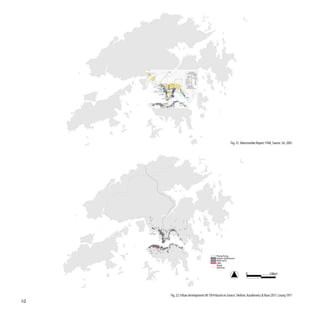
Fig. 21: Abercrombie Report 1948, Source: Sit, 2001


                                          Hong Kong
                                          Urban settlement
                                          Main port
                                          CBD
                                          Road
                                          Rail line

                                                                  0                   10km


     Fig. 22: Urban development till 1954 Based on Source: Shelton, Karakiewicz & Kvan 2011; Leung 1971
10
2. Problem Statement


Fig. 20: Victoria City of Hong Kong, Source: Google Image                                                                    Fig. 23: Squatters of Tiu Keng Kowloon in 1952, Source: Google Image


2.4 Public Housing in Hong Kong
2.41 History
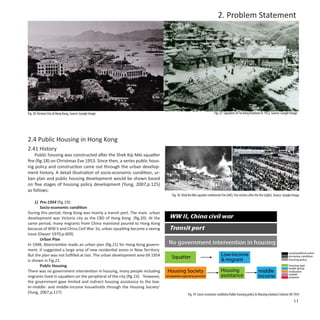
    Public housing was constructed after the Shek Kip Mei squatter
fire (fig.18) on Christmas Eve 1953. Since then, a series public hous-
ing policy and construction came out through the urban develop-
ment history. A detail illustration of socio-economic condition, ur-
ban plan and public housing development would be shown based
on five stages of housing policy development (Yung, 2007,p.125)
as follows:
                                                                                      Fig. 18: Shek Kei Mei squatter settlement Fire (left), Fire victims after the fire (right), Source: Google Image
    1) Pre-1954 (fig.19):
       Socio-economic condition
During this period, Hong Kong was mainly a transit port. The main urban
development was Victoria city as the CBD of Hong Kong (fig.20). At the              WW II, China civil war
same period, many migrants from China mainland poured to Hong Kong
because of WW II and China Civil War. So, urban squatting became a vexing           Transit port
issue (Dwyer 1970,p.609)
       Urban Plan
In 1948, Abercrombie made an urban plan (fig.21) for Hong Kong govern-             No government intervention in housing
ment. It suggested a large area of new residential zones in New Territory.
But the plan was not fulfilled at last. The urban development area till 1954          Squatter                                    Low-income                                                social/political event
                                                                                                                                                                                            economy condition
is shown in Fig.22.                                                                                                               & migrant                                                 housing policy

       Public Housing                                                                                                                                                                       housing type
                                                                                                                                                                                            target group
There was no government intervention in housing, many people including            Housing Society                                 Housing                         middle                    institution
migrants lived in squatters on the peripheral of the city (fig.23). ‘However,   civil organization supported by government        assistance                      income                    market
                                                                                                                                                                                            purpose
the government gave limited and indirect housing assistance to the low-
er-middle- and middle-income households through the Housing Society’
(Yung, 2007,p.117)                                                                                     Fig. 19: Socio-economic condition,Public housing policy & Housing relations Scheme till 1954
                                                                                                                                                                                                 11
Hong Kong
                                                    Urban settlement
                                                    Production industry
                                                    Main port
                                                    CBD
                                                    Road
                                                    Rail line
                                                                                                      Development area in Tsuen Wan
                                                                          0   10km                    Reclamation area in Kwun Tong


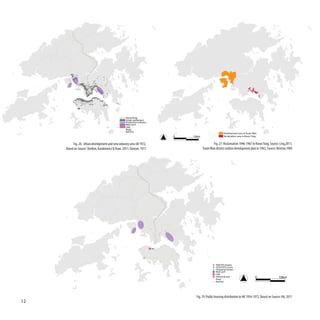
          Fig. 26: Urban development and new industry area till 1972,                        Fig. 27: Reclamation 1946-1967 in Kwun Tong, Source: Ling,2011;
     Based on Source: Shelton, Karakiewicz & Kvan, 2011; Dawyer, 1971                Tsuen Wan district outline development plan in 1963, Source: Bristow,1989


                                                                                               PRH/TPS Estates
                                                                                               HOS/PSPS Courts
                                                                                               Shopping Centers
                                                                                               Main port
                                                                                               CBD
                                                                                               Industrial area
                                                                                               Road
                                                                                                                                 0                 10km
                                                                                               Rail line


                                                                               Fig. 29: Public housing distribution in HK 1954-1972, Based on Source: HA, 2011
12
2. Problem Statement


 Fig. 25: Factory Estate in Kwun Tung, Source: Hong Kong Place;                          Fig. 28: Lok Fu Resettlement housing in 1966 in Wong Tai Sin District of Kowloon, Source: Google Image


    2) 1954-1972 (fig.24):
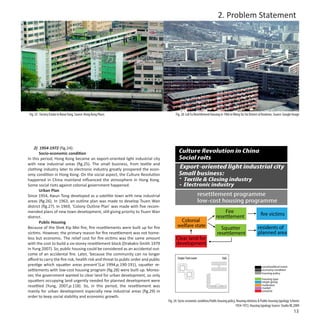
       Socio-economic condition                                                            Culture Revolution in China
In this period, Hong Kong became an export-oriented light industrial city                  Social roits
with new industrial areas (fig.25). The small business, from textile and
clothing industry later to electronic industry greatly prospered the econ-                 Export-oriented light industrial city
omy condition in Hong Kong. On the social aspect, the Culture Revolution                   Small business:
happened in China mainland influenced the atmosphere in Hong Kong.                             Textile & Closing industry
Some social riots against colonial government happened.                                        Electronic industry
       Urban Plan
Since 1954, Kwun Tong developed as a satellite town with new industrial                                        resettlement programme
areas (fig.26). In 1963, an outline plan was made to develop Tsuen Wan                                         low-cost housing programme
district (fig.27). In 1969, ‘Colony Outline Plan’ was made with five recom-
mended plans of new town development, still giving priority to Tsuen Wan                                                      Fire
district.                                                                                                                 resettlement
       Public Housing                                                                      Colonial
Because of the Shek Kip Mei fire, fire resettlements were built up for fire               welfare state                      Squatter                       residents of
victims. However, the primary reason for fire resettlement was not home-                                                   resettlement                     planned area
less but economic. The relief cost for fire victims was the same amount                  Clear land for
with the cost to build a six-storey resettlement block (Drakakis-Smith 1979              development
in Yung 2007). So, public housing could be considered as an accidental out-
come of an accidental fire. Later, ‘because the community can no longer
afford to carry the fire risk, health risk and threat to public order and public          Single/ Twin tower                   Slab

prestige which squatter areas present’(Lai 1994,p.190-191), squatter re-                                                                                        social/political event
settlements with low-cost housing program (fig.28) were built up. Moreo-                                                                                        economy condition
                                                                                                                                                                housing policy
ver, the government wanted to clear land for urban development, so only
                                                                                                                                                                housing type
squatters occupying land urgently needed for planned development were                                                                                           target group
resettled (Yung, 2007,p.118). So, in this period, the resettlement was                                                                                          institution
                                                                                                                                                                market
mainly for urban development especially new industrial areas (fig.29) in                                                                                        purpose

order to keep social stability and economic growth.
                                                                                   Fig. 24: Socio-economic condition,Public housing policy, Housing relations & Public housing typology Scheme
                                                                                                                                           1954-1972, Housing typology Source: Studio RE,2009
                                                                                                                                                                                          13
Hong Kong
                                                                                  Retail & Catering
                                                                                  Production industry
                                                                                  Main port
                                                                                  CBD
                                                                                  Highway
                                                                                  Rail line
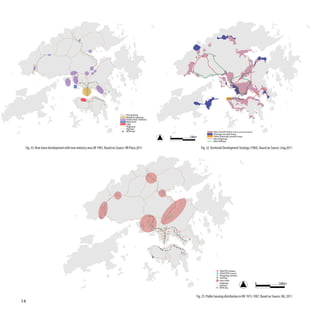
                                                                                  MTR line                                   Base Growth Areas (existing & committed development)
                                                                                                                             Strategic Growth Areas
                                                                                                        0   10km             Other Potential Growth Areas
                                                                                                                             New Highway
                                                                                                                             New Railway


 Fig. 33: New town development with new industry area till 1987, Based on Source: HK Place,2011                    Fig. 32: Territorial Development Strategy (1984), Based on Source: Ling,2011


                                                                                                                                     PRH/TPS Estates
                                                                                                                                     HOS/PSPS Courts
                                                                                                                                     Shopping Centers
                                                                                                                                     existing
                                                                                                                                     new town
                                                                                                                                     Highway                                        0   10km
                                                                                                                                     Rail line
                                                                                                                                     MTR line


                                                                                                               Fig. 35: Public housing distribution in HK 1972-1987, Based on Source: HA, 2011
14
2. Problem Statement


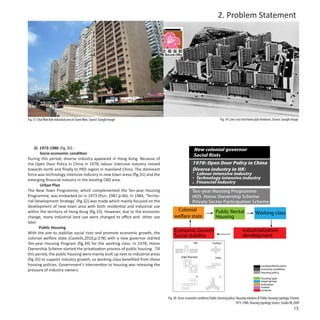
Fig. 31: Chai Wan Kok industrial area in Tsuen Wan, Source: Google Image                                                   Fig. 34: Low-cost rent home plan Kowloon, Source: Google Image


    3) 1973-1986 (fig.30) :                                                                            New colonial governor
       Socio-economic condition                                                                        Social Riots
During this period, diverse industry appeared in Hong Kong. Because of
the Open Door Policy in China in 1978, labour intensive industry moved                                1978: Open Door Policy in China
towards north and finally to PRD region in mainland China. The dominant                               Diverse industry in HK:
force was technology intensive industry in new town areas (fig.31) and the                                Labour intensive industry
emerging financial industry in the existing CBD area.                                                     Technology intensive industry
                                                                                                          Financial industry
       Urban Plan
The New Town Programme, which complemented the Ten-year Housing                                       Ten-year Housing Programme
Programme, was embarked on in 1973 (Pun, 1987,p.46). In 1984, ‘Territo-                               HOS Home Ownership Scheme
rial Development Strategy’ (fig.32) was made which mainly focused on the                              Private Sector Participation Scheme
development of new town area with both residential and industrial use
within the territory of Hong Kong (fig.33). However, due to the economic             Colonial                          Public Rental                   Working class
change, many industrial land use were changed to office and other use               welfare state                      Housing
later.
       Public Housing
With the aim to stabilize social riots and promote economic growth, the             Economic Growth                                         Industrialization
colonial welfare state (Castells,2010,p.278) with a new governor started
                                                                                    Social stability                                        development
Ten-year Housing Program (fig.34) for the working class. In 1978, Home                                 Slab         Cruciform

Ownership Scheme started the privatization process of public housing. Till
this period, the public housing were mainly built up next to industrial areas
                                                                                          Single/ Twin tower          Linear
(fig.35) to support industry growth, so working class benefited from these
housing policies. Government’s intervention to housing was releasing the                                                                                   social/political event
pressure of industry owners.                                                                                                                               economy condition
                                                                                                                                                           housing policy
                                                                                                          H                Y                               housing type
                                                                                                                                                           target group
                                                                                                                                                           institution
                                                                                                                                                           market
                                                                                                                                                           purpose

                                                                                Fig. 30: Socio-economic condition,Public housing policy, Housing relations & Public housing typology Scheme
                                                                                                                                        1973-1986, Housing typology Source: Studio RE,2009
                                                                                                                                                                                      15
Yantian
 Shen Zhen                                                                                                                                      Shen Zhen


                                                                                                                                       Shekou


                                                                                                                                                            Tin Shui Wai


                                                                                                                                                                           Au Tau - Kam Tin
                                                                                                                       Tuen Mun West
                                                                                                                                                            Hung Shui Kiu


                                                                                                                                                                                                      Tsuen Wan/Kwai Tsing


                                                                                                                                   l
                                                                                                                                ne
                                                                                                                             an
                                                                                                                          Ch
                                                                                                                          ter
                                                                                                                        Wa
                                                                                                                     gu
                                                                                                                  ng
                                                                                                                To
                                                                                                                        Chek Lap Kok Airport
                                                                                                                                                                                  North Lantau Port
                                                                                                                                                                                                                   Kowloon


                                                                                                                                                                                                                              Central Metro


                                                                                                                                                                           East Lantau
                                                                               Hong Kong
                                                                               Shen Zhen
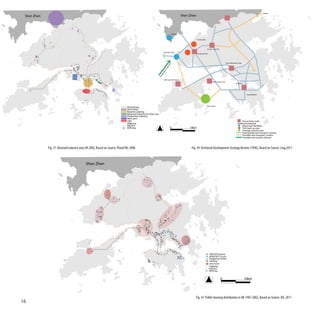
                                                                               Retail & Catering
                                                                               Rezoned industry for other use
                                                                               Production industry
                                                                               Main port
                                                                               CBD                                                                                                                                         Key activity node
                                                                               Highway                                                                                                                              Possible new activity node
                                                                               Rail line                                                                                                                                   Mayor port facilities
                                                                               MTR line                                           0                  10km                                                                  Port back up uses
                                                                                                                                                                                                                           Strategic growth area
                                                                                                                                                                                                                           Exising/planned transport corridor
                                                                                                                                                                                                                           Possible new transport corridor
                                                                                                                                                                                                                           Possible new marine channel


             Fig. 37: Rezoned industry area till 2002, Based on Source: Pland HK, 2006                                                                Fig. 39: Territorial Development Strategy Review (1996), Based on Source: Ling,2011


                                            Shen Zhen


                                                                                                                                                                              PRH/TPS Estates
                                                                                                                                                                              HOS/PSPS Courts
                                                                                                                                                                              Shopping Centers
                                                                                                                                                                              existing
                                                                                                                                                                              new town
                                                                                                                                                                              Highway
                                                                                                                                                                              Rail line
                                                                                                                                                                              MTR line


                                                                                                                                                                                              0                              10km


                                                                                                                                                         Fig. 41: Public housing distribution in HK 1987-2002, Based on Source: HA, 2011
16
2. Problem Statement


Fig. 38: Office Building of Millennium City in Kwun Tung, Source: Millennium City                                              Fig. 40: Home Ownership Scheme Housing, Source: Google Image


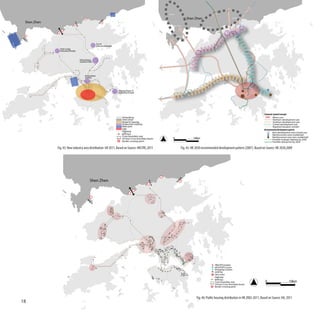
     4) 1987-2002 (fig.36):
         Socio-economic condition
                                                                                           China British agreement
In 1984, the agreement between China and British government cleared                       Hong Kong return China
the rumors of the future of Hong Kong. This gave confidence to the econ-                  Asian Economic Crisis
omy development. Hong Kong as one of the Four Asian Tigers, became
one of the leading international financial centers in the 1980s. Most of
                                                                                          International Financial Center
the production industry has moved to PRD region. This resulted in a large
                                                                                              Decrease of production industry
number of rezoned industrial area (fig.37). Many industrial areas turned to                   Property and Tourism industry
office and other business areas (fig.38). But, the property market boomed                     The Long Term Housing Strategy
till 1997, when the Asian Financial Crisis happened after Hong Kong re-
turned to China.
                                                                                                SCHS/ FFSS/ BRO/ TPS/ MSS
         Urban Plan
                                                                                                         Public Rental    Low    Speculation
In 1996, ‘Territorial Development Strategy Review’ (fig.39) was published.                               Housing
                                                                                             Housing                    income
The most important part of this plan was putting Shen Zhen into the mas-
                                                                                             Authority                               Property
terplan. Though connections between Shen Zhen and Hong Kong increased                                    Subdisized     Middle        bubble
since 1978, the government realized the importance of those connections Government                       housing sale   income     negative equity
till the 1990s.
        Public Housing                                                                       Controlled                 Private          High
On the one hand, government controlled land sale for high revenue, which                     land sale   Real estate    housing        income
indirectly raised the private housing price. On the other hand, Housing Au- High revenue
thority provided Public Rental Housing to low-income People and subsi-         income
dized housing sale to middle income people with Home Ownership Scheme
                                                                                        Harmony                    Slab
(fig.40). This government intervention into property market couldn’t cool
the over heated proper market. Speculation of housing happened not only                                                         social/political event
in private housing but also in public housing. Property bubble began to                 Y                        Linear
                                                                                                                                economy condition
                                                                                                                                housing policy
expand till the Asian Economic Crisis in 1997, making hundreds of people
                                                                                                                                housing type
became negative equity. During this period, the process of privatization of                                                     target group
public housing sped up with a huge number of construction all over the                                                          institution
                                                                                                                                market
territory (fig.41).                                                                                                             purpose
                                                                                    Fig. 36: Socio-economic condition,Public housing policy, Housing relations & Public housing typology Scheme
                                                                                                                                            1987-2002, Housing typology Source: Studio RE,2009
                                                                                                                                                                                          17
Bao’An

                                                                                                                              Shen Zhen                               Luo Hu

 Shen Zhen
                                                                                                                Nan Shan
                                                                                                                                            Fu Tian


                                                                                                                    She Kou


                                                    Tai Po
                                                    Industrial Estate
              Yuen Long
              Industrial Estate


                                  Hong Kong
                                  Science Park


                                       Innovation
                                       Centre


                                                                        Tseung Kwan O
                                                                        Industrial Estate


                                                                                                                                                                                             Schematic Spatial Concepts
                                                                            Hong Kong                                                                                                                 Metro core
                                                                            Shen Zhen                                                                                                                 Northern development axis
                                                                            Retail & Catering                                                                                                         Southern development axis
                                                                            Production industry                                                                                                       Central development axis
                                                                            Main port                                                                                                                 Regional transport corridor
                                                                            CBD                                                                                                              Recommended development pattern
                                                                            Highway                                                                                                                   New development area (mixed use)
                                                                            MTR line                                                                                                                  Reinforcement area (residential)
                                                                            Cross boundary way                                                                                                        Reinforcement area (non-residential)
                                                                            24 hour Cross boundary buses       0                  10km                                                                Possible strategic highway by 2030
                                                                            Border crossing point                                                                                                     Possible railway line by 2030

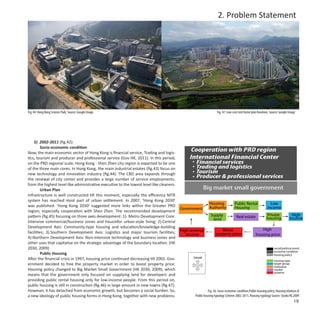
             Fig. 43: New industry area distribution till 2011, Based on Source: HKSTRC,2011                             Fig. 45: HK 2030 recommended development pattern (2007), Based on Source: HK 2030,2009


                                           Shen Zhen


                                                                                                                                                      PRH/TPS Estates
                                                                                                                                                      HOS/PSPS Courts
                                                                                                                                                      Shopping Centers
                                                                                                                                                      existing
                                                                                                                                                      new town
                                                                                                                                                      Highway
                                                                                                                                                      MTR line
                                                                                                                                                      Cross boundary way                     0                        10km
                                                                                                                                                      24 hour Cross boundary buses
                                                                                                                                                      Border crossing point


                                                                                                                                     Fig. 46: Public housing distribution in HK 2002-2011, Based on Source: HA, 2011
18
2. Problem Statement


Fig. 44: Hong Kong Science Park, Source: Google Image                                                             Fig. 47: Low-cost rent home plan Kowloon, Source: Google Image


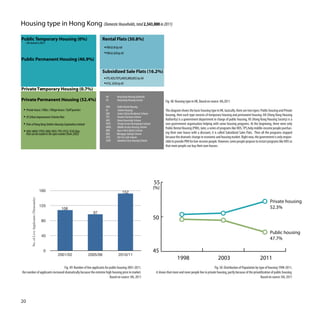
    5) 2002-2011 (fig.42):
         Socio-economic condition
Now, the main economic sector of Hong Kong is financial service, Trading and logis-
                                                                                                Cooperation with PRD region
tics, tourism and producer and professional service (Gov HK, 2011). In this period,            International Financial Center
on the PRD regional scale, Hong Kong - Shen Zhen city region is expected to be one                Financial services
of the three main cores. In Hong Kong, the main industrial estates (fig.43) focus on              Trading and logistics
new technology and innovation industry (fig.44). The CBD area expands through                     Tourism
the renewal of city center and provides a large number of service employments,
                                                                                                  Producer & professional services
from the highest level like administrative executive to the lowest level like cleaners.
         Urban Plan                                                                                       Big market small government
Infrastructure is well constructed till this moment, especially the efficiency MTR
system has reached most part of urban settlement. In 2007, ‘Hong Kong 2030’
                                                                                                            Housing              Public Rental                Low
was published. ‘Hong Kong 2030’ suggested more links within the Greater PRD                                 Authority            Housing                    income
                                                                                          Government
region, especially cooperation with Shen Zhen. The recommended development
pattern (fig.45) focusing on three axes development: 1). Metro Development Core:                             Supply               Real estate              Private               High
                                                                                                              land                                         housing             income
Intensive commercial/business zones and housinfor urban-style living; 2).Central
Development Axis: Community-type housing and education/knowledge-building
                                                                                          High revenue              Boost                            High
facilities; 3).Southern Development Axis: Logistics and major tourism facilities;                                property price
                                                                                             income                                               housing price
4).Northern Development Axis: Non-intensive technology and business zones and
other uses that capitalise on the strategic advantage of the boundary location. (HK
2030, 2009)                                                                                                                                                       social/political event
                                                                                                                                                                  economy condition
         Public Housing                                                                                                                                           housing policy
After the financial crisis in 1997, housing price continued decreasing till 2003. Gov-          Concord
                                                                                                                                                                  housing type
ernment decided to free the property market in order to boost property price.                                                                                     target group
                                                                                                                                                                  institution
Housing policy changed to Big Market Small Government (HK 2030, 2009), which                                                                                      market
                                                                                                                                                                  purpose
means that the government only focused on supplying land for developers and
providing public rental housing only for low-income people. From this period on,
public housing is still in construction (fig.46) in large amount in new towns (fig.47).
However, it has detached from economic growth, but becomes a social burden. So,                            Fig. 36: Socio-economic condition,Public housing policy, Housing relations &
a new ideology of public housing forms in Hong Kong, together with new problems.                 Public housing typology Scheme 2002-2011, Housing typology Source: Studio RE,2009
                                                                                                                                                                                   19
Housing type in Hong Kong (Domestic Households, total 2,343,000 in 2011)

Public Temporary Housing (0%)                                         Rental Flats (30.8%)
     (All cleared in 2001)
                                                                         PRH & IH by HA
                                                                         PRH & SEN by HS
Public Permanent Housing (46.9%)

                                                                      Subsidized Sale Flats (16.2%)
                                                                         TPS,HOS,PSPS,MIHS,BRO,MSS by HA
                                                                         FFSS, SCHS by HS
Private Temporary Housing (0.7%)
                                                                         HA       Hong Kong Housing Authority
Private Permanent Housing (52.4%)                                        HS       Hong Kong Housing Society                      Fig. 48: Housing type in HK, Based on source: HA,2011
                                                                         PRH      Public Rental Housing
                                                                         IH        Interim Housing                               This diagram shows the basic housing type in HK, basically, there are two types: Public housing and Private
                                                                         SEN      Senior Citizen Residences Scheme               housing, then each type consists of temporary housing and permanent housing. HA (Hong Kong Housing
                                                                         TPS      Tenants Purchase Scheme
                                                                         HOS      Home Ownership Scheme                          Authority) is a government department in charge of public housing, HS (Hong Kong Housing Society) is a
     Flats of Hong Kong Settlers Housing Corporation Limited             PSPS     Private Sector Participation Scheme            non-government organisation helping with some housing programs. At the beginning, there were only
                                                                         MIHS     Middle Income Housing Scheme                   Public Rental Housing (PRH), later, a series of programs like HOS, TPS,help middle-income people purchas-
                                                                         BRO      Buy or Rent Option Scheme
                                                                         MSS      Mortgage Subsidy Scheme                        ing their own house with a discount, it is called Subsidized Sales Flats. Then all the programs stopped
                                                                         FFSS     Flat-For-Sale Scheme                           because the dramatic change in economic and housing market. Right now, the government is only respon-
                                                                         SCHS     Sandwich Class Housing Scheme                  sible to provide PRH for low-income people. However, some people propose to restart programs like HOS so
                                                                                                                                 that more people can buy their own houses.


                                                                                                                        55
                                                                                                                        (%)
                                               160                                     152
          No. of Live Applicants (Thousands)


                                                                                                                                                                                                                          Private housing
                                               120                                                                                                                                                                        52.3%
                                                      108
                                                                 97

                                                80
                                                                                                                        50

                                                                                                                                                                                                                          Public housing
                                                40
                                                                                                                                                                                                                          47.7%

                                                 0                                                                      45
                                                     2001/02   2005/06             2010/11
                                                                                                                                          1998                               2003                                2011
                                  Fig. 49: Number of live applicants for public housing 2001-2011,                                                                        Fig. 50: Distribution of Population by type of housing 1998-2011,
the number of applicants increased dramatically because the extreme high housing price in market.                        it shows that more and more people live in private housing, partly because of the privatilization of public housing.
                                                                         Based on source: HA, 2011                                                                                                                Based on source: HA, 2011


20
2. Problem Statement


2.42 Current condition
   There are two main categories of housing type in Hong Kong: the public                                                           1600
and the private (fig.48). In the public sector, there is a distinction between


                                                                                                        No. of flats (Thousands)_
                                                                                                                                    1400                            Private Flats
                                                                                                                                            1 153                                                                       1 433
Public Rental Flats (PRH) and Subsidized Sale Flats. PRH is mainly for low-                                                         1200
income people with mean-tested subject subsidies. Applicants usually                                                                1000
                                                                                                                                     800                            HA PRH Flats                                         708
have to wait 2-3 years for a PRH house, however the waiting time is get-                                                                     653
                                                                                                                                     600
ting longer in recent years. The number of applicants for public housing in-                                                         400     356                                                                         374
creased from 108,000 in 2001 to 152,000 in 2011 (fig.49). Subsidized Sale                                                            200                            HA Subsidized Sale Flats
Flats is mainly for higher low-income people and middle-income people                                                                  0
                                                                                                                                            2001     02      03     04      05      06       07     08     09     10      11
to buy their own houses, and many related housing policies, like HOS, TPS
                                                                                                                                                                                    Year
and PSPS, were launched to support the privatization of public housing.
                                                                                   Fig. 51: Stock of major types of permanent residential flats 2001-2011, Based on source: HA, 2011
                                                                                                     it shows the number of public housing increased much less than private housing.
According to the latest figure (fig.50), about 46.9% of the domestic house-
holds live in public housing, which consist of 47.7% of total population.
Due to the privatization of public housing, the proportion of population liv-                                                                                                                                                   %
ing in public housing decreased in the past decade. Moreover, the housing                                                     45                                                                                                    20
                                                                                 Public expenditure on housing_


                                                                                                                              40
stock in the public sector increased far more less than in the private sec-                                                   35                                                                                                    15
tor, that 280,000 flats were added in the private sector in the past decade                                                   30
                                                                                          (HK$ billion)


while only 73,000 flats increased in the public sector (fig.51).                                                              25
                                                                                                                                                                                                                                    10
                                                                                                                              20
                                                                                                                              15
Since 2002, the public expenditure on housing from the government de-                                                         10                                                                                                    5

creased (fig.52). From 2003, private housing price began to rise again,                                                        5
                                                                                                                               0                                                                                                    0
almost reach the price in 1997 when the property bubble broke down.                                                                   2000/01 01/02 02/03 03/04 04/05 05/06 06/07 07/08 08/09 09/10 10/11 #
People can’t afford to buy a house in the market, at the same time, hous-                                                                                             Year

ing became a speculation tool attracting rich people from China mainland                            # Revised Estimate                             Public expenditure on housing           As % of Total Public Expenditure

which again raise the housing price. Many people began to protest for af-                             Fig. 52: Public expenditure on housing by government 2001-2011, Based on source: HA, 2011
fordable housing and more public housing. Currently, housing problem is                                                it shows the government spend less money on public housing in recent years.
the main root of social discontent in Hong Kong.                                                                                                                                                                               21
Pre - 1954                     1954-1972                      1972-1986                       1987-2002                          2002 - now
                               Dominant              Market                     Government intervention (land and housing sale)                                                Big market
                               power                                                                                                                                           small government
                               Target                                       residents of working class                         low-income
                               groups            Fire victims                                                                                                   low-income
                                                                            planned area                                       middle-income
                               Housing                                                   low-cost                          subsidized sale housing
                               type                 Squatter                resettlement housing
                                                                                                                                             public rental housing
                                          Fig. 54: Housing policy trend in HK

                                          After studying the public housing history in HK, several trends are clearly shown. The dominant power changed from market to government who has a great
                                          power over land and housing sale, then recently the government retreat as a land provider and leave the housing to the market. The target groups of public hous-
                                          ing also changed along the time, because it is never for the poor but for ones who can contribute to economic growth. But now, since the economics rely on the
                                          ones who don’t need public housing, so public housing became a kind of welfare for low-income people. Finally, the housing types changed with the residents.
                                          They showed vividly how public housing evolved with the socio-economic changes and the living condition of HK people.


2.43 Housing Trend on the theoretical level                                                                    Social-democratic                   Corporatist                          Liberal
     There are differences between the housing systems of three
welfare state regimes in western countries (Esping-Andersen,1990;                                                 low                        high,based on                       high,based
                                                                                                                                             social status                       on income
Hoekstra, 2003,p.62) (fig.53). Through the history of Housing Policy,
several trends are clearly shown in dominant power, target groups                        Dominant power           statef                      amily, NGO                          market
and housing types(fig.54). Though Hong Kong doesn’t belong to                                    housing          universal high                                                  state only support
any of the welfare state regimes on the theoretical level, however                              objectives        housing quality                                                 marginal groups
according to the criteria, Hong Kong currently is heading for the
Liberal welfare state which gives priority to market determination                           subsidisation       large scale                                                    mean-tested
and concentrates mainly on low-income groups with mean-tested                                                    production subsidies                                           subject subsidies
                                                                                                                 subject subsidies for                                          few production
subject subsidies. The future of public housing in Hong Kong might                                               large target groups                                            subsidies
be foreseen in the socially and spatially segregated and notorious
neighborhoods in the United States.                                                          price setting
                                                                                             & regulation                                                                        market determination
It is important to realize that the purpose of Hong Kong govern-
ment to build public housing was never for welfare like the Social-                              housing
                                                                                                                 on basis of need            state intervention                 market determination
democratic welfare state regime, but always with hidden agenda                                  allocation                                   to correct market                  regulated allocation
                                                                                                                                             certain groups be                  in small part
of economic growth and control the land for further development.                                                                             favoured                           (reserve for low-income groups)
Also the target group of public housing was not low-income groups                             organisation                                   moderate strict                    no strict
but low-income and middle-income workers who were the main                                                      strict spatial planning
                                                                                                                                             spatial planning                   spatial planning
force of economic development. The housing policy worked well
in the past decades because the housing provision was based on                                   housing        state takes initiative        private sector                    private sector
                                                                                                 provision      for new housing               (households,small companies)      (mainly big companies)
existing employment, and people were grateful for the government                                                production                    takes initiative                   takes initiative
although the original intention was not purely to give them hous-
                                                                                          Fig. 53: Differences between the housing systems of the welfare state regimes, Based on source: Hoekstra, 2003
ing.

However, with the tremendous change in economic structure,
the working class were no longer the main force of development,
especially the low-income people without professional skill and                               where the worthless population disconnected with the network
knowledge are thrown into the fourth world (Castells, 2010)                                   of valuable functions and people.
22
2. Problem Statement
            Housing Problem                           Public housing clusters
                 (Lack of Housing)                  without living opportunities
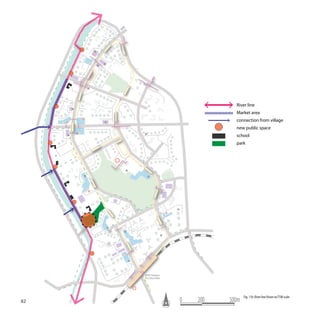
                                                                                                 Public housing in New Town of HK
                                                                                                   Provide a living for low-income people
                Urban Problem                              Infrastructure
         (Lack of Living environment)                      Urban facilities

                                                         Socio-economic life
                                                                 ...


                                                                                                         HK center - New Town

                                                        New Town in                                Regional scale: PRD region, HK-SZ
                                                    Urban Spatial structure
                                                                                                   New Town region: WNT-ENT-NNT
       Fig. 55: Problem definition of the project
                                                                                                      Relation between New Towns

2.5 Conclusion
     Nowadays, public housing is no longer appreciated by citizens                 On the other hand, new towns of HK shouldn’t be constrained
like before. Public housing became an excuse to send the worthless                 in simple urban spatial structure of HK center and New Town.
people to the remote New Towns. But due to socio-economic rea-                     The spatial position of new towns should be reflected on differ-
sons, some new towns were not built up as the planned concept of                   ent scales: regional scale like PRD region and HK-SZ region; New
self-sufficient and balanced development. Then some new towns                      town regions like West New Territory (WNT) and East New Ter-
became public housing clusters without basic living opportunities.                 ritory (ENT); and the relation between different New towns. The
Although, new towns were connected to city center by efficient                     potential of new towns on spatial structure of different scales
MTR system, but for the large number of low-income people who                      would provide new development opportunities.
lived in public rental housing, the expensive transportation fee be-
came the barrier of getting a job in city center. Without a stable                 In the following chapters, this project would try to explore an
job, public housing problems finally resulted in social problems like              inclusive development strategy in a public housing cluster - the
crime and poverty.                                                                 new town of Tin Shui Wai (TSW).

On one hand, the housing problem of Hong Kong shouldn’t be con-
sidered as merely lack of housing, but as an urban problem with
urban issues like infrastructure, urban facilities and socio-economic
life. The history of public housing in Hong Kong has already told
us that purely building more housing would result in worse urban
and social problems. So, the problem definition (fig.55) of housing
problem in Hong Kong is lack of good living environment where
people not only have housing, but a living. Since the target group
of public housing is low-income people, the future plan for public
housing should be how to provide good living environment for low-
income people, a place where they can earn a living.


                                                                                                                                                23
1980s                                                                                             1992


                                                                        North


                                                   Yuen Long
                                                                        Tai Po
                                                                                                                                                                          Public Rental Flats
                                   Tuen Mun                                                                                                                                     61.5%
                                                                Tsuen Wan
                                                                                                         Sha Tin

                                                                  Kwai Tsing
                                                                                                                          Sai Kung
                                                                                                   Wong Tai Sin
                                                                               Sham Shui Po
                                                                                              Kowloon City    Kwun Tong
                                                                                 Yau Tsim Mong


                                                                                                                                                                    Private
                                                                    Central and Western
                         Islands
                                                                                              Wan Chai
                                                                                                                    Eastern
                                                                                                                                                                                Subsidized
                                                                                                         Southern                                                   Residential Sale Flats
                                                                                                                                                                    Flats       21.9%
                                                               10Km                                                                                                 16.6%


                                                                                                                                                       Type of Quarters                                    Households
                                                                                 Yuen Long
                                                                                                                                                                                                              165,319
                                              Tin Shui Wai                                                                                                                                                     58,900
                                                                                                                                                                                                               44,703
                                                                                                                                                                                                             268,922

                                                                                                                                     10Km


                                                                                                                                                            Fig. 58: Population by type of quarters in Tin Shui Wai, Based on source: Censtatd HK, 2006
Fig. 56: the location of Tin Shui Wai in HK (top) and Yuen Long district (bottom)                                                            The figures shows TSW is a public housing cluster with 61.5% of households live in PRH, and 21.9% in SSF
24
3. Project Area - Tin Shui Wai


                                                     1997                                                                                2005
                                                                                           Fig. 59: Tin Shui Wai development, source: Google Image


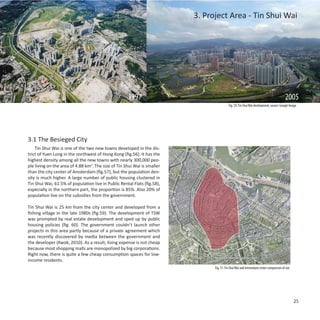
3.1 The Besieged City
    Tin Shui Wai is one of the two new towns developed in the dis-
trict of Yuen Long in the northwest of Hong Kong (fig.56). It has the
highest density among all the new towns with nearly 300,000 peo-
ple living on the area of 4.88 km2. The size of Tin Shui Wai is smaller
than the city center of Amsterdam (fig.57), but the population den-
sity is much higher. A large number of public housing clustered in
Tin Shui Wai, 61.5% of population live in Public Rental Flats (fig.58),
especially in the northern part, the proportion is 85%. Also 20% of
population live on the subsidies from the government.

Tin Shui Wai is 25 km from the city center and developed from a
fishing village in the late 1980s (fig.59). The development of TSW
was prompted by real estate development and sped up by public
housing policies (fig. 60). The government couldn’t launch other
projects in this area partly because of a private agreement which
was recently discovered by media between the government and
the developer (Kwok, 2010). As a result, living expense is not cheap
because most shopping malls are monopolized by big corporations.
Right now, there is quite a few cheap consumption spaces for low-
income residents.
                                                                                Fig. 57: Tin Shui Wai and Amsterdam center comparison of size


                                                                                                                                                25
Hong Kong Wetland Park


                         Tin
                        roa Sau
                           dp
                              ar k


                                                                          park
                                                                 k road
                                                           Tin Pa

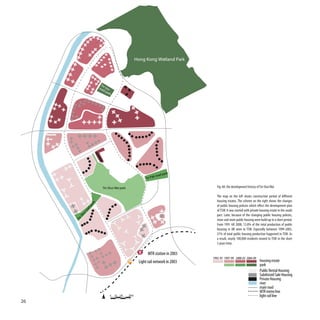
                           Tin Shui Wai park                                          Fig. 60: the development history of Tin Shui Wai

                                                                                      The map on the left shows construction period of different
                                                                                      housing estates. The scheme on the right shows the changes
                    k


                                                                                      of public housing policies which effect the development plan
                   r
                pa
                d


                                                                                      of TSW. It was started with private housing estate in the south
              a
           ro
           ui


                                                                                      part. Later, because of the changing public housing policies,
      Sh
     Tin


                                                                                      more and more public housing were build up in a short period.
                                                                                      From 1991 till 2008, 13.8% of the total production of public
                                                                                      housing in HK were in TSW. Especially between 1999-2005,
                                                                                      21% of total public housing production happened in TSW. As
                                                                                      a result, nearly 100,000 residents moved to TSW in the short
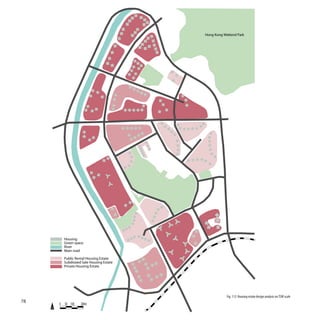
                                                                                      5 years time.

                                                             MTR station in 2003
                                                                                    1992-93 1997-99 2000-03 2004-09
                                                       Light rail network in 2003                                        housing estate
                                                                                                                         park
                                                                                                                         Public Rental Housing
                                                                                                                         Subdisized Sale Housing
                                                                                                                         Private Housing
                                                                                                                         river
                                                                                                                         main road
                                                                                                                         MTR metro line
                                 0   50 100    200m                                                                      light rail line
26
3. Project Area - Tin Shui Wai
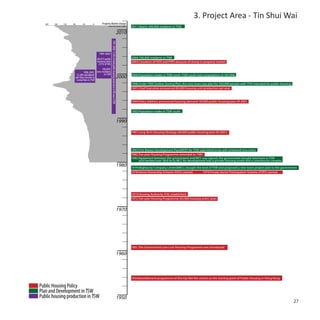
   200   160   120   80   40   0        Property Market change
                                             source:Also Sparch Analyst                                                      2011.Nearly 300,000 residents in TSW

                                                                                                                      2010


                                                   1991-2008: 13.8% of total public housing production in HK was in TSW
                                     1999-2005:
                                   48,073 public                                                                             2004.100,000 residents in TSW
                                   housing units                                                                             2003.Cessation of HOS and PSPS because of slump in property market.
                                    (21% of HK)
                                       100,000
                                   new residents
                                         to TSW                                                                              2000.Population intake in TSW north. TSW south had a population of 187,000.
                                                                                                                      2000
                                                                                                                             1998.Under TSW Outline Zoning Plan, the new town was plan for 350,000 people with 75% intended for public housing.
                                                                                                                             1997.Chief Executive announced 85,000 housing unit production per year.


                                                                                                                             1994.Policy Address announced housing demand: 50,000 public housing/year till 2001.


                                                                                                                             1992.Population intake in TSW south.


                                                                                                                      1990

                                                                                                                             1987.Long Term Housing Strategy (40,000 public housing/year till 2001).


                                                                                                                             1983.First Master Development Plan(MDP) for TSW submitted to be self-contained new town.
                                                                                                                             1982.Ten-year Housing Programme extended to 1987
                                                                                                                             1982.Agreement between the government and MCL was signed, the government bought land back in TSW
                                                                                                                                  and handed over 38.8 ha to MCL for development into a private housing estate and a commercial complex.
                                                                                                                      1980   1979.Mightycity Company Limited(MCL) bought the land of TSW and proposed a new town project plan to the government
                                                                                                                             1978.Home Ownership Scheme (HOS) started.        1979.Private Sector Participation Scheme (PSPS) started.


                                                                                                                             1973.Housing Authority (HA) established
                                                                                                                             1972.Ten-year Housing Programme (45,000 housing units/ year)


                                                                                                                      1970


                                                                                                                             1961.The Government Low-cost Housing Programme was introduced

                                                                                                                      1960


Public Housing Policy
Plan and Development in TSW
Public housing production in TSW                                                                                      1950
                                                                                                                                                                                                                                                  27
Hong Kong Wetland Park                                                                                                            Hong Kong Wetland Park


                                                                                                               天富苑 Tin Fu Court
                                                                                                               2000, HOS/PSPS Sale
                                                                                                               Blocks: 16
                                                                                                               Saleable Area of Flats (m2): 47 - 60
                                                                                                               No. of Flats: 5 120
                                                                                                               Sale Price (HK$): 544,200 - 1,004,500


                                                                                                                                        天盛苑 Tin Shing Court
                                                                                                                                        1999, HOS/PSPS Sale
                                                                                                                                        Blocks: 17
                                                                                                                                        Saleable Area of Flats (m2): 39 - 60
                                                                                                                                        No. of Flats: 6 580
                                                                                                                                        Sale Price (HK$):423,200 - 1,285,400
                                                                                                                                                                                           Public Rental Housing
                                                                                                                                                                                           Public Sale Housing
                                                                                                                                                                                           Private Housing
                                                                                                                                                                                           Green space
                                                                                                                                                                                           River
        0   50 100   200m                                                               0   50 100   200m                                                                                  Main road
                                                    Main road                                                                                                                              MTR rail way
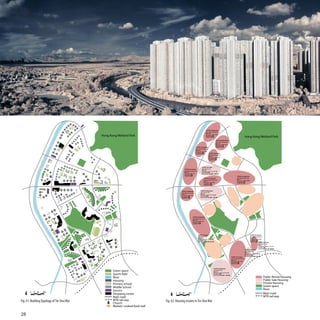
Fig. 61: Building Typology of Tin Shui Wai          MTR rail way                Fig. 62: Housing estates in Tin Shui Wai
                                                    Church
                                                    Market/ cooked food stall

28
3. Project Area - Tin Shui Wai


                                                                                                          Fig. 64: Tin Shui Wai overview, Photo by HKAVMODE


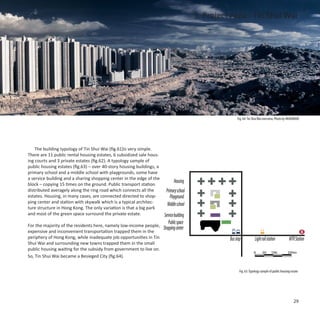
    The building typology of Tin Shui Wai (fig.61)is very simple.
There are 11 public rental housing estates, 6 subsidized sale hous-
ing courts and 3 private estates (fig.62). A typology sample of
public housing estates (fig.63) – over 40-story housing buildings, a
primary school and a middle school with playgrounds, some have
a service building and a sharing shopping center in the edge of the
                                                                             Housing
block – copying 15 times on the ground. Public transport station
distributed averagely along the ring road which connects all the      Primary school
estates. Housing, in many cases, are connected directed to shop-         Playground
ping center and station with skywalk which is a typical architec-      Middle school
ture structure in Hong Kong. The only variation is that a big park
and most of the green space surround the private estate.             Service building
                                                                            Public space
For the majority of the residents here, namely low-income people,
                                                                   Shopping center
expensive and inconvenient transportation trapped them in the
periphery of Hong Kong, while inadequate job opportunities in Tin                                    Bus stop            Light rail station          MTR Station
Shui Wai and surrounding new towns trapped them in the small
public housing waiting for the subsidy from government to live on.
                                                                                                                        0      50      100          200m
So, Tin Shui Wai became a Besieged City (fig.64).


                                                                                                            Fig. 63: Typology sample of public housing estate


                                                                                                                                                         29
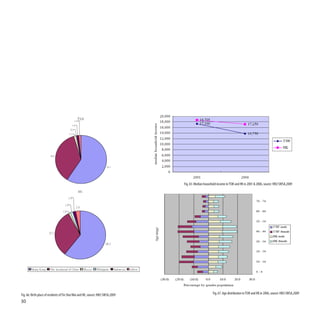
Fig. 65: Median household income in TSW and HK in 2001 & 2006, source: HKU SWSA,2009


Fig. 66: Birth place of residents of Tin Shui Wai and HK, source: HKU SWSA,2009                         Fig. 67: Age distribution in TSW and HK in 2006, source: HKU SWSA,2009

30
3. Project Area - Tin Shui Wai


3.2 From the Besieged City to the ‘City of Misery’
   The situation got even worse in the past decade with more and
more low-income people settled here, especially new migrants.
The median household income in TSW is lower than in HK (fig.65),
and the gap increased in recent years. The percentage of new
migrants in TSW is higher than that of HK (fig.66), 36.6% of the
population in TSW were born in China mainland. The unemploy-
ment rate of TSW is 9.1% in 2006 (HKU SWSA,2009), the highest in
HK. Moreover, the percentage of young population in TSW is quite
large compared to HK (fig.67). Many young people couldn’t find a
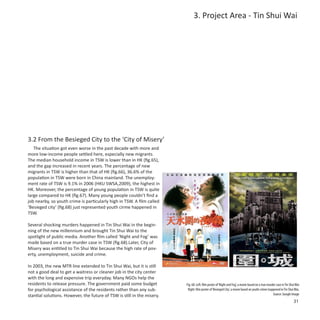
job nearby, so youth crime is particularly high in TSW. A film called
‘Besieged city’ (fig.68) just represented youth cirme happened in
TSW.

Several shocking murders happened in Tin Shui Wai in the begin-
ning of the new millennium and brought Tin Shui Wai to the
spotlight of public media. Another film called ‘Night and Fog’ was
made based on a true murder case in TSW (fig.68).Later, City of
Misery was entitled to Tin Shui Wai because the high rate of pov-
erty, unemployment, suicide and crime.

In 2003, the new MTR line extended to Tin Shui Wai, but it is still
not a good deal to get a waitress or cleaner job in the city center
with the long and expensive trip everyday. Many NGOs help the
residents to release pressure. The government paid some budget           Fig. 68: Left: film poster of ‘Night and Fog’, a movie based on a true murder case in Tin Shui Wai
for psychological assistance of the residents rather than any sub-        Right: film poster of ‘Besieged City’, a movie based on youth crimes happened in Tin Shui Wai,
stantial solutions. However, the future of TSW is still in the misery.                                                                              Source: Google Image
                                                                                                                                                                      31
YL district

                                                                                                                                                     TSW


                                                                                                                                           HSK                         YL


                                                                                                                 TM district        TM

             Guang Dong (part)


                                               WNT (West New Territory)


                                                                                         Hong Kong


                                   Macao


                                                                           0        20         40km


                                                                            Bay Area scale                             WNT scale
                                                                            PRD region (part)                          TM-YL-TSW-HSK

                                                                             Regional scale                             TSW scale
                                                                             HK-SZ                                                                                                                                                         Hong Kong Wetland Park
                                                                                                                                                                                    P


                                                                                                                                                                                            P
                                                                                                                                                                                        P


                                                                                                                                                               P


                                                                                                                                                                                                                    P

                                                                                                                                                                                P


                           Shen Zhen (SZ)                                                                                                                          P


                                                                                                                                                                                            P


                                                                                                                                                                       P                                                P
                                                                                                                                                           P


                                                                                                                                                       P


                                                                                                                                                                                                        P

                                                                                                                                                                            P                                               P


WNT: YL-TM-TSW-(HSK)


                                        Hong Kong (HK)
                                                                                                                                                                                                                P                                P


                                                                                                                                                                                                P

                                                                                                                                                                                                    P
                                                                                                                                                                                                                                       P


                                                                                           0     5    10km                                                                                                  P


                                                                                                                                                                                                                        MTR Station

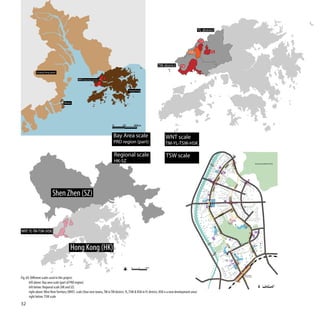
Fig. 69: Different scales used in this project:                                                                                                                                                                         Tin Shui Wai


       left above: Bay area scale (part of PRD region)
                                                                                                                                                                                                                                                     0   50 100   200m
       left below: Regional scale (HK and SZ)
       right above: West New Territory (WNT) scale (four new towns, TM in TM district, YL,TSW & HSK in YL district, HSK is a new development area)
       right below: TSW scale
32
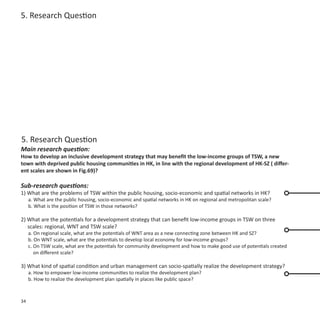
4. Project Objective


4. Project Objective - ‘Opening the Besieged City’
     Tin Shui Wai could be considered as a fourth world which is      The aim of the project is to improve the daily life quality of low-
out of the network of the mainstream of Hong Kong as a global         income groups, creating spatial opportunities for local economy
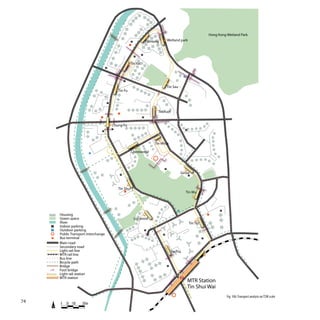
financial metropolis and deserted at the edge of the metropolitan     development, promoting bicycle as a transportation mode to de-
area. However, from Urbanism views, it still has potentials on dif-   crease living cost and make good use of new public space to ben-
ferent scales (fig. 69). Right now, the government is pushing a new   efit low-income groups. The main problem of HK society is not
development area called HSK next to TSW. With the big investment      economic development, but growing rich-poor gap. Improving the
of infrastructure connection, WNT area would attract more devel-      living condition of low-income groups would help to improve the
opment on regional scale in the coming future. Since the develop-     society of HK. So, the other aim of this project is to call the atten-
ment plan of HSK is not decided yet, it is hard to say whether the    tion of planning department and our ever-developing society, don’t
new development could bring a bright future to TSW. Especially,       forget the ones behind and we can help them as long as you give
the new development might hardly improve the living condition of      priority to them.
low-income groups in TSW.

The basic idea of this project is to develop a development strategy
that could benefit the low-income groups in TSW. The development
strategy, as a supplement to the government’s plan, would follow
the development trend of WNT area and make good use of nature
and human resources in local environment. Unlike government’s
plan which focusing on economic growth and large scale benefits,
this development strategy will focus on the benefits low-income
groups and small scale interventions.


                                                                                                                                         33
5. Research Question


5. Research Question
Main research question:
How to develop an inclusive development strategy that may benefit the low-income groups of TSW, a new
town with deprived public housing communities in HK, in line with the regional development of HK-SZ ( differ-
ent scales are shown in Fig.69)?

Sub-research questions:
1) What are the problems of TSW within the public housing, socio-economic and spatial networks in HK?
     a. What are the public housing, socio-economic and spatial networks in HK on regional and metropolitan scale?
     b. What is the position of TSW in those networks?

2) What are the potentials for a development strategy that can benefit low-income groups in TSW on three
   scales: regional, WNT and TSW scale?
     a. On regional scale, what are the potentials of WNT area as a new connecting zone between HK and SZ?
     b. On WNT scale, what are the potentials to develop local economy for low-income groups?
     c. On TSW scale, what are the potentials for community development and how to make good use of potentials created
        on different scale?

3) What kind of spatial condition and urban management can socio-spatially realize the development strategy?
     a. How to empower low-income communities to realize the development plan?
     b. How to realize the development plan spatially in places like public space?


34
6. Methodology


6. Methodology
Different methods will be used to answer each sub-reasearch questions will be shown in a diagram within
the time schedule framework (fig. 70), The theoritical framework of the whole graduation project is shown in
fig.71. Here is the discription for detail methods:

For Sub- RQ1:
-- Literature study: policy document, official statistics and maps, academic papers, professional books
-- Mapping:
   HKscale: transport network, socio-economic & urban spatial structure, public housing policy & distribution.
   TSW scale: transport network, building typology analysis, service facility analysis.
-- Site visit: experience Tin Shui Wai, interview residents

For Sub- RQ2:
-- Literature study: policy document, official statistics and maps, academic papers
-- Mapping:
   Regional scale: HK-SZ cross-boundary transport connection, HK-SZ urban structure, HK new town analysis
   WNT scale: transport / landscape / local service analysis
   TSW scale: local service analysis, public space analysis
-- Space syntax: analysis on WNT scale

For Sub- RQ3:
-- Reference Study for strategy and design interventions


                                                                                                             35
Sub Research Question 1:


                                                                                                                                                                                                             P1
What are the problems of TSW within
the public housing, socio-economic
and spatial networks in HK?
a. What are the public housing, socio-economic and spatial                                                                                                                                                   OCT
  networks in HK on regional and metropolitan scale?
b. What is the position of TSW in those networks?

  Literature study
      Mapping
      Site visit
                               Problem statement
                                   Thesis plan
                                                                a. On regional scale, what are the potentials of WNT area as a new
                                                                                                                                                                                                             P2
                                                                   connecting zone between HK and SZ?                                                                                                        JAN
                                                                b. On WNT scale, how to develop local economy for low-income groups?
                                                                c. On TSW scale, what are the potentials for community development and    Sub Research Question 3:
                                                                                                                                          What kind of spatial condition and urban

                                                                                                                                                                                                             P3
                                                                   how to make good use of potentials created on all scales?
                                                                         Literature study
                                                                                                                                          management can socio-spatially realize
                                                                             Mapping
                                                                                                  Vision (regional/WNT/TSW scale)         the development strategy?
                                                                                                   Strategy (regional/WNT scale)
                                                                          Space syntax                                                   a. How to empower low-income communities to realize the
                                                                                                                                            development plan?                                                APR
                                                                                                                                         b.How to realize the development plan in space like public space?


                                                                                                                                                                                                             P4
                                                                                                                                                                              Strategy (TSW scale)
                                                                                                                                              Reference Study                  Design (TSW scale)
                                                                                                                                                                                    Thesis

                                                                                                                                                                                                             MAY


                                                                                                                                                               Evaluation
                                                                                                                                                               Graduation                                    P5
                                                                                                                                                                                                             JUN

                                                                                                                                                                                                      Main RQ
                                                                                                                                                                                                      Sub-RQ
                                                                                                                                                                                                      Detail Sub-RQ
                                                                                                                                                                                                      Methods
                                                                                                                                                                                                      Product
     Fig. 70: Methodology scheme by Research Question in time schedule
                                                                                                                                                                                                      Evaluation

     36
6. Methodology


                                                                                    Problem statement                                                                       Project objectives
                                                    Thesis Plan
                                                                                    Research questions                                                                        Final product


                                                        Project                    Context & Problems                           Potentials & Vision                       Strategy & Design
Theoritical Framework


                                                                                       Public housing welfare                  Transforming deprived public
                                                  Theory Study                           regimes in HK case                        housing communities                     Community enpowerment


                                                                                                                                                                                                              Evaluation
                                                                                   History line & Current condition           Bay area scale       Green network
                                                                                                                                PRD region     Green transport system   Regional     Social mix strategy
                                                                                                                                             Cross-boundary commuter      scale
                                                                                                      Transport network       Regional scale HK-SZ urban structure
                                                                                                                                  HK-SZ        HK new town structure
                                                                                    HK scale       Socio-economic network
                                                                                                    Urban spatial structure                        Space syntax                        Local economy
                                                                                                   Public housing network                    Socio-economic condition   WNT scale   development strategy
                                                                                                                                WNT scale
                                                 Urban Analysis                                                               TSW-YL-TSW-HSK    Transport network
                                                                                                                                                    Landscape
                                                                                                     Transport network                             Local service
                                                                                                     Economic condition                                                                 Community
                                                                                    TSW scale                                                      Transport network                development strategy
                                                                                                       Socio network                                                    TSW scale
                                                                                                       Public housing           TSW scale             Local service                  Design intervention
                                                                                                       Service facility                             Housing typology
                                                                                                                                                      Public space


                                                Methods & Tool                          Literature study                           Literature study                            Reference study
                                                                                       Mapping / Site visit                     Mapping / Space syntax


                                                                                                                                                                                         Thesis plan
                                                                                                                                                                                         Theory study
                                                                                                                                                                                         Research questions
                                                                                                                                                                                         Urban analysis
                                                                                                                                                                                         Methods & Tool
                                                                                                                                                                                         Final Product
                        Fig. 71: Theoritical framework of the graduation project
                                                                                                                                                                                         Evaluation
                                                                                                                                                                                                         37
7. Final Product


7. Final Product                                                8. Relevance
The final product would be an integrated development strategy   Social relevance
for Tin Shui Wai includs:                                       “Some young people can’t afford to buy a house or a flat and they don’t have a place to
                                                                 live. So it means they can’t get married. And public housing isn’t sufficient,” said Helen
-- A social mix strategy on regional scale                                                Yip, a clerk in her 40s who joined the march with three friends.
-- A local economy development strategy on WNT scale                                               -- Kevin Drew, The New York Times, July 1, 2011
-- A community development strategy on TSW scale
-- Some design interventions on TSW scale                       Housing problem is the main root of social discontent in Hong Kong.
                                                                Unaffordable housing price and lacking of public housing increased so-
                                                                cial inequality. However, the housing problem couldn’t be solved by
                                                                purely building new housing, but without considering other urban is-
                                                                sues like infrastructure, employment and social life. This lack of consid-
                                                                eration resulted in public housing clusters like TSW and finally caused
                                                                many social problems. So, the problem definition of housing is not lack
                                                                of housing, but lack of good living environment where people not only
                                                                have housing, but a living.

                                                                In cities like Hong Kong, poverty is not the problem of individual but
                                                                because of the socio-economic system. This system couldn’t provide
                                                                opportunities for poor people living a descent life through hard work.
                                                                The existing public housing clusters like TSW are not helping the poor
                                                                but pushing them into a more desperate and helpless condition. The
                                                                public media called TSW the ‘Besieged City’ and ‘City of Misery’ be-
                                                                cause of the murder cases happened in recent years. These titles made
                                                                the impression of TSW even more misery in public eyes. This project
                                                                will illustrate the causality of TSW problem and public housing prob-
                                                                lem in HK. The residents of TSW are the victims of the socio-economic
                                                                structure and public housing policy, so they shouldn’t be discriminated
                                                                by the public. Instead, the government and the whole society should
38                                                              help them.
8. Relevance


On the social level, the improvement of TSW could decrease the          government’s plans are wrong, but the government should con-
rich-poor gap of HK and social discontent caused by social inequal-     cern the benefit of low-income groups more in the future. The
ity.                                                                    main problem of HK society is not economic development, but
                                                                        growing rich-poor gap. Improving the living condition of the poor
Academic relevance                                                      would help to improve the society of HK. So, this urbanism project,
Transforming deprived public housing communities is an interest-        as an experiment, will try to figure out what will happen if develop-
ing but hard issue in the academic field, not only in Urbanism, but     ment plan give priority to low-income groups? Will the benefits of
also in sociology and economics. That is because this is a very prac-   low-income groups bring development on local scale? As urbanists,
tical question covering the knowledge the different disciplines. The    we can’t save the world, but we might do a little help to the people
causality of those problems varies in specific areas due to socio-      in hard condition as long as we can.
economic conditions. So, the solution of those problems would be
based on local conditions. There are quite a few successful cases       Studio relevance
like Bijlmermeer in Amsterdam. However, the problems of deprived        My graduation studio is Complex Cities studio, and I also attended
public housing communities are happening everywhere. Based on           another studio before P1 - Architecture Thinking studio of DSD
my limited research and reading, most of the studies were done in       which studied Hong Kong. Complex Cities studio aims to investi-
western cities. So, this project would be a new example of trans-       gate spatial changes under the context of globalization and study
forming deprived public housing communities. Moreover, it would         the complexity of urban environment. This is exactly the condition
add some study about public housing issues of Chinese cities to the     I am facing in my project. These two studios helps me to define
body of knowledge in Urbanism.                                          the complicated urban problems with sharp viewpoints. The meth-
                                                                        odology of Complex Cities studio is to formulate plans, strategies
Ethical relevance                                                       and designs as positive interventions to the project area with socio-
This project is searching for a method to integrate the low-income      economic and sustainable concerns. With the help of Complex Cit-
groups into the development plan and finally the low-income             ies studio in the future, I think I would finally submit a convincing
groups could get benefit from the development. Generally speak-         and well-developed proposal as an inclusive development strategy
ing, development plan in HK give priority to economic growth and        to my project area - TSW, using urban solutions to solve existing
large scale benefits, even to the interest of corporations and in-      urban problems.
dividuals sometimes. As a result, low-income groups could hardly
benefit from those developments. It doesn’t mean that the
                                                                                                                                          39
9. Literature Review
Literature Review is the final result of the course Theory
                                                              Transforming deprived public housing
of Urbanism as part of the theory support of the gradua-                 communities
tion project. The aim of literature review is to study some
                                                              From housing and community development perspectives
theories of one general research topic, and finally use the
theories to convince the project and also contribute to the   Abstract –‘A central feature of recent economic restructuring is the
knowledge body of Urbanism.                                   development of new spatial patterns of unemployment and workless-
                                                              ness throughout advanced industrial economies’ (North & Syrett, 2006,
The aim of this paper is to find some theories and methods    p.6). On the spatial term, it resulted in deprived public housing com-
to support my future vision and strategy. This paper helps    munities both in the city centres like the United States and in the new
me to formulate some basic directions of my graduation pro-   towns on the periphery of the city like UK and Hong Kong. Because
ject.                                                         these deprived public housing areas are cut off from spatial connec-
                                                              tion, economic opportunities and social resources of the mainstream
                                                              network, the residents there lost the opportunities to upward social
                                                              mobility. The aim of this paper is to illustrate two types of theory that
                                                              might bring light to the transformation of deprived public housing
                                                              communities: housing solutions and community development strat-
                                                              egy. The conclusion is that the combination of two theories on differ-
                                                              ent scales might be a more comprehensive solution for the problem.
                                                              Finally, if different experts could sit together, talk with local residents,
                                                              encourage and help residents improving their living environment on
                                                              different scales and perspectives, more valuable theory will come out
                                                              in the future.

                                                              Key words – deprived public housing communities; de-concentra-
                                                              tion; social mix; community development; public space; local economy
                                                              development
40
9. Literature Review
1 Introduction
                                                                      housing communities: social mix housing and community devel-
Under the background of globalization and neoliberalism eco-          opment, because they are more likely to be realized in my project
nomic system, many cities in developed world emphasis on              area. Of course, there are also other fields that could contribute
free economy, competitive environment and service-oriented            to the problem like spatial segregation, regional development,
development. As a result, ‘a central feature of recent econom-        etc. This short paper could be the beginning of the big problem.
ic restructuring is the development of new spatial patterns of
unemployment and worklessness throughout advanced indus-              Following the introduction, two sections will be unfolded to il-
trial economies’ (North & Syrett, 2006, p.6). In the spatial term,    lustrate theories and methods in:
the outcome is uneven geographical development, which is                 1) housing solution in way of de-concentration and social mixing
described as the ‘fourth world’ (Castells, 2010) where the low-          2) community development in way of local economy development
income people without professional skill and knowledge are                 and social integration. In this paper, social integration will be
thrown into.                                                               discussed in terms of the need for public space.

There are five causalities of urban poverty based on the theory       In the last part, some evaluation of the above theories and meth-
of Bradshaw (2007): 1) poverty caused by individual deficien-         ods will be given in the conclusion part. Also, a recommended
cies; 2) poverty caused by cultural belief systems that support       theoretical strategy will be shown for my graduation project. Fi-
subcultures of poverty; 3) poverty caused by Economic, political      nally, several recommendations will be added to further reflect
and social distortions; 4) poverty caused by geographical dispari-    on the transformation of deprived public housing communities.
ties; and 5) poverty caused by cumulative and cyclical interde-
pendencies. ‘In some urban districts, the homogeneity of the          2 Housing solution
housing stock has resulted in significant concentrations of low-
income households and, indirectly, minority ethnic groups that        At first glance, the problems of deprived public housing commu-
are over-represented amongst the urban poor’ (Bolt, Phillips          nities are housing problems. In other words, high rate of public
& Van Kempen, 2010, p.130). In this paper, the poverty prob-          housing with low-income people caused social-spatial problems.
lems of deprived communities with public housing are caused           So, two kinds of housing solution came up following this logic,
by mainly socio-economic distortions or geographic disparities.       one is de-concentration, the other is social mixing.
In most cases, these deprived communities locate both in the
city centres like the United States and in the new towns on the       Inspired by the classic work by Wilson who studied the inner city
periphery of the city like UK and Hong Kong.                          poverty concentration, development strategies and programs of
                                                                      ‘De-concentration’ of poverty appeared (Stal & Zuberi, 2010).
‘When socially deprived individuals and households live in the        De-concentration is to de-concentrating poor residents of de-
same neighbourhood, this clustering of poverty, unemploy-             prived communities to better developed areas. ‘In the US, Fed-
ment, and welfare dependency could create a local climate, a          erally sponsored de-concentration attempts to disperse poverty
neighbourhood culture, generating attitudes and practices that        via two linked federal policy initiatives. First, through the demoli-
would further deepen the social isolation of the local residents’     tion of public housing and, second, through the use of housing
(Bolt, Burgers & van Kempen, 1998,p.86). Because these de-            vouchers intended to provide the displaced residents of public
prived public housing areas are cut off from spatial connection,      housing with greater economic opportunity through increased
economic opportunities and social resources of the mainstream         residential choice.’ (Crump, 2002, p.586). However, Crump (2002)
network, so the residents here lost the opportunities to upward       argued that the strategies of these de-concentration programs
social mobility.                                                      were not for the interests of local residents of the deprived com-
                                                                      munities, but merely for the area’s economic benefits. There are
The aim of this paper is to find some practical solutions to trans-   also some other opponents (Goetz, 2003 cited by Stal & Zuberi,
form deprived public housing communities after a brief review         2010) think that de-concentration programs should be used to
of related theories and methods. It is a very complicated prob-       promote local neighbourhoods and bring more chances to up-
lem that needs spatial, economic and social considerations. Also,     ward social mobility of local residents on local scale.
it is a very practical problem that is strongly context based. So,
there is no ready-made theories just for the topic, especially the    In European countries, ‘the creation of areas of mixed housing
one that could fit into my graduation project in the next step.       tenure, sometimes called ‘balanced communities’ became a
However, after a broad range of literature review searching for a     popular strategic intervention to transform deprived communi-
theory, I found two fields that bring light to deprived public        ties’ (Bolt, Phillips & Van Kempen, 2010, p.130).
                                                                                                                                          41
Musterd and van Kempen (2007) argued that social mixing hous-            of deprived communities, some might rely on government wel-
ing strategy has the good wish that if there are diverse hous-           fare subsidy, a stable job or economic opportunity in local or
ing types and residents from different social class, some affluent       regional area might be the most crucial issue that can directly
households would remain in these areas and bring more socio-             upgrade their living condition. Although employment and eco-
economic dynamics. Strategic interventions to attract more af-           nomic development are the central issue of policy initiatives to
fluent households may include demolition of some public rental           regenerate deprived neighbourhoods, but there are quite a few
housing, construction of higher quality housing and mixed ten-           strong economic dimension in the current renewal projets, and
ure dwellings (Bolt, Phillips & Van Kempen, 2010).                       this lack of consideration is seriously constraining the efficiency
                                                                         of current projects (North & Syrett, 2006).
After studying on collection of papers on social mix housing
strategies, Bolt, Phillips & Van Kempen (2010) concluded that            For deprived communities, who lack of optimal combination of
such social mix policies rarely reach the goal, because, ‘first, resi-   resources, how to make good use of existing and hidden assets
dential mixing cannot be assumed to enhance community cohe-              through bottom-up approaches are crucial element for local
sion or people’s social capital. On the contrary, urban renewal          economy development (Squazzoni, 2008). Following this staring
policies have been found to disrupt communities. Displaced               point, there are several new ideas to think about local economy
households experience difficulties in establishing new social            development in deprived areas.
ties. Second, tenure diversification does not always lead to more
opportunities for a housing career within the neighbourhood’             One idea is the reconsideration of marketplace. Burkett (2011)
(Bolt, Phillips & Van Kempen, 2010, p.132).                              argued that, people normally had a binary interpretation of the
                                                                         markets that people living in poverty access, as shown in Illus-
Both de-concentration and social mixing housing policies simpli-         tration 1. It means residents of deprived communities either
fied the complexity of deprived community problems as housing            get goods and service for free or funded, or they access from
problem rather than urban problem. So, housing solutions alone           fully commercialized providers. However, Burkett suggested that
couldn’t solve the problem of deprived communities. Moreo-               there is a broader spectrum of ‘marketplaces’ that people can
ver, they are very effective in deflecting attention away from the       potentially access – that is, places and spaces where people are
main causes of the ‘urban problem’ (Bolt, Phillips & Van Kem-            able to access goods and services that they need to survive. If
pen, 2010).                                                              people would develop the potential marketplaces like mutual aid
                                                                         market, family market, informal market and social market shown
3 Community development                                                  in Illustration 2, there would be much more opportunities and
As mentioned in the introduction part, there are different cau-          spaces that can contribute to the development of deprived com-
salities of urban poverty, so different anti-poverty programs in         munities and finally improve the living quality of local residents.
community development are implemented. For poverty types
studied in this paper, several suggestions were made by Brad-
shaw (2007) : 1). change the socio-economic system by grass-
roots social movement, independent institution willing to help
the poor and change the policies; 2). Build self-sustaining com-
munities through good visioning and planning and create op-
portunities for local resident. But, how to implement these sug-
gestions in reality is a hard question for urbanists and planners.
After some literature review, I found that there are two aspects
that are more relevant for urbanism studies: local economy de-
velopment and social integration by public space.

3.1 Local economy development
‘If the global economy no longer provides at affordable prices
then we increasingly have to refocus on how things can be done
(with less energy input) at the local level—and, it is contended,        Illustration 1. Binary interpretation of the markets that people living in poverty
rethinking what kind of consumption processes are realistic and          access. source: (Burkett, 2011)
appropriate for these circumstances’ (Atkinson, 2005, p.292).
This is especially true for deprived communities. For the resident
42
9. Literature Review
                                                                                  On the regional level, ‘the challenge is to extend the market area
                                                                                  beyond the local arena, or to focus on people who will bring
                                                                                  money into the area (tourists)’ (Marais & Botes, 2007, p.391).
                                                                                  For example, industry area disappeared or decayed in some de-
                                                                                  veloped areas, tourism might become a new development po-
                                                                                  tential if it has good natural or cultural resources, and this will
                                                                                  bring new opportunities to local residents, especially for peo-
                                                                                  ple without professional skills and knowledge to work in other
                                                                                  areas. The important thing here is to reveal the potentials on
                                                                                  regional scale and surrounding areas that could make direct con-
                                                                                  nections to the resident of deprived communities. This could be
                                                                                  implemented by both big projects and small interventions.

                                                                                  3.2 Social integration by Public space
                                                                                  If local economy development could improve the living condi-
                                                                                  tion of low-income groups by material revenue, then social inte-
Illustration 2. A more complex understanding of the many different ‘marketplac-   gration will improve the quality of their social life through more
es’ with which people living in poverty engage. source: (Burkett, 2011)           communication and connection to the outside world.

The sencond idea is to develop local economy on different spatial                 In the project called ‘promoting the mobilization of low-income
levels. North & Syrett (2006) noted that it is the central concern                people to reduce and eliminate poverty’ in Canadian cities, sev-
to effectively linked deprived areas into the process of economic                 eral recommendations were listed. The first recommendation
growth, that the interventions should best operate on different                   is to ‘Provide opportunities and spaces for people living in pov-
spatial levels.                                                                   erty to come together, and name, explore, and address issues’.
                                                                                  Shared community spaces are strongly needed from the partici-
On the neighbourhood level, although economic initiatives are                     pants. This includes a range of physical spaces: gathering places,
not able to create large scale employment opportunities, how-                     artistic places or ‘cultural sanctuaries’, recreation places (includ-
ever, some bottom-up initiatives could develop local capacities,                  ing lower priced recreation centres, access to local schools in
encourage mutual aid and self-help on community and individ-                      summer, and bike lanes), green space and community gardens
ual scale, and finally promote the quality of quality of everyday                 (with sheds and bathrooms), and places for children (Ravensber-
life, social inclusion and political participation (North & Syrett,               gen & VanderPlaat, 2009, p.398).
2006).
                                                                                  Public space in deprived communities could contribute to the
‘The poor people are experts in making the most of scarce re-                     regeneration of deprived communities in several terms, like the
sources under adverse circumstances, and have always used in-                     space for social communication, the space for local economy
stitutions of mutual support and risk- sharing in order to do so                  development, and the space for leisure activities with nice land-
[...] Self-help approaches can and should be part of strategies                   scape.
to tackle exploitation and marginalization … to accessible public
services and the redistribution of income and wealth’ (Berner                     ‘As Jacobs (1961) long ago emphasized, specific physical char-
& Phillips, 2005,p.19, 27). The failure of some top-down inter-                   acteristics of streets and land uses (e.g. relatively dense, mixed
ventions by the government might because the real need of                         use spaces) can bring together people engaged in a diversity of
local poor residents is never the first priority but behind other                 activities at all hours of the day and night. This, in turn, creates a
socio-economic interests. However, self-help will not be realized                 safe and pleasurable environment, which functions, on the one
by their own because community is neither ‘havens of coopera-                     hand, to reproduce existing social relations and facilitate com-
tion’ nor ‘homogeneous’ group (Berner & Phillips, 2005, p.27)                     munity bonding and, on the other hand, to create the conditions
but a complicated urban area. So, the guide and suggestions                       to support local economic activity. As such, the economic poten-
from both public sector and private sector, like the government,                  tial of public space is entwined with and may even be dependent
NGOs, and independent organizations, would help to realize                        on social and environmental features’ (Grodach, 2009, p.477).
self-help programs.

                                                                                                                                                    43
‘When public spaces are successful [...] they will increase op-                Housing solutions, evolved from sociology studies, derived from
portunities to participate in communal activity. This fellowship               de-concentration of poverty in the United States to social mix
in the open nurtures the growth of public life, which is stunted               housing strategies in Europe. Till now, it is still a popular devel-
by the social isolation of ghettos and suburbs. In the parks, pla-             opment strategy in urban regeneration project. There seems
zas, markets, waterfronts, and natural areas of our cities, people             no doubt in the research field that social mix is the right goal
from different cultural groups can come together in a supportive               to achieve. Social mix means communities built up with public
context of mutual enjoyment. As these experiences are repeat-                  housing at a proper rate and residents with different socio-eco-
ed, public spaces become vessels to carry positive communal                    nomic background and ethnics. Indeed, social mix could bring
meanings’ (Carr, Francis, Rivlin & Stone, 1993, p. 344).                       more diversity and dynamic to the neighbourhoods. But, will so-
                                                                               cial mix solve the basic living problems of poor residents who are
So, if the public space in deprived communities can develop into               eager to find a job and find someone to talk in the time of eco-
a place with lively social and economic activities. It will greatly            nomic recession? As mentioned above, to some extent, housing
improve the living environment of the whole area and even be-                  solutions are deflecting attention away from the main causes of
came a precious value to attract other people. Finally, it could               the ‘urban problem’. Generally speaking, housing solutions are
promote the social integration of deprived communities into                    top-down projects on a higher level and the aim is not to help
larger urban area.                                                             the real poor. So, some other strategies should concentrate help
                                                                               the poor residents on a lower level. For example, urban strategy
4 Conclusions                                                                  could be community development.
Transforming deprived public housing community is a complicat-
ed and practical issue. It needs varieties of research disciplines             Kotval (2006, p.87) argues that the goal of community planning
and studying fields both in theory and practice. So, it is impor-              is to ‘create a better physical, social and economic environment
tant to realize that the problems will not be solved by a solution             for communities and the people that invest their social and eco-
within one studying field, but need interdisciplinary coopera-                 nomic capital in a place’. There are many ways for community
tion. As illustrated in this short paper, after a limited literature           development, and two aspects are more relevant for urbanism
review, the theory of housing solution and community develop-                  studies: local economy development and social integration by
ment might bring light to the transformation of deprived public                public space. Several new ideas in local economy development
housing communities. Illustration 3 shows the basic finding of                 brought new light to deprived communities. First, the broader
this paper. It will be illustrated in the next paragraph.                      definition of market place, including mutual aid market, informal
                                                                               market, social market, would bring more life chances to poor
                                                                               residents who need cheap consumption. Second, different levels
                                                                               of spatial interventions should coordinate to achieve economic
                                                                               development. On the neighbourhood level, bottom-up initia-
                                                                               tives, like self help programs, would not only create employment
                                                                               and additional sources of income, but also build social networks,
                                                                               local participation and cooperation, and develop community
                                                                               and individual capacities. On the regional level, links to regional
                                                                               context should be built up. For example, attracting people who
                                                                               will bring money to the area, like tourists.

                                                                               For many socially segregated residents of deprived communi-
                                                                               ties, social integration will improve the quality of their social life
                                                                               through more communication and connection to the outside
                                                                               world. This could happened in public space, where enables lively
                                                                               social and economic activities.

                                                                               Illustration 4 shows the recommendation strategy for transform-
Illustration 3. Theories and methods of Transforming deprived public housing   ing deprived public housing communities: the combination of
communities illustrated in the paper.                                          housing solution by more top-down approaches on larger scale
                                                                               and community development by more bottom-up approaches
                                                                               on local scale. These two methods should compensate and
44
9. Literature Review
                                                                               ATKINSON, A., 2005, Urban development: reviving and activating Utopian
                                                                                  strategies, City, Vol.9, No.3, 279-295. Retrieved Nov, 2011, from
                                                                                  http://dx.doi.org/10.1080/13604810500392548
                                                                               BERNER, E., & PHILLIPS, B., 2005, Left to their own devices? Community self-help
                                                                                  between alternative development and neo-liberalism. Community
                                                                                  Development Journal, Vol 40 No 1, pp. 17-29. Retrieved Dec,2011, from Oxford
                                                                                  Journals database
                                                                               BOLT, G., BURGERS, J., & VAN KEMPEN, R., 1998, On the social significance of
                                                                                  spatial location; spatial segregation and social inclusion. Housing and the Built
                                                                                  Environment, Vol.13, No.1. 83-95
                                                                               BOLT,G., PHILLIPS, D.& VAN KEMPEN, R., 2010, Housing Policy, (De)segregation
                                                                                  and Social Mixing: An International Perspective, Housing Studies, 25:2, 129-
                                                                                  135. Retrieved Nov, 2011, from http://dx.doi.org/10.1080/02673030903564838
                                                                               BRADSHAW,T.D., 2007, Theories of poverty and anti-poverty programs in
                                                                                  community development. Community Development Journal, Vol 38 No 1, pp.
                                                                                  7–25. Retrieved Jan, 2012, from
                                                                                  http://dx.doi.org/10.1080/15575330709490182
                                                                               BURKETT, I., 2011, Organizing in the new marketplace: contradictions and
                                                                                  opportunities for community development organizations in the ashes of
                                                                                  neoliberalism. Community Development Journal, Vol 46 No S2, pp. ii111–ii127.
                                                                                  Retrieved Dec, 2011, from Oxford Journals database
                                                                               CARR, S., FRANCIS, M., RIVLIN, L.G., & STONE, A.M., 1993, Public Space.
Illustration 4.Recommended strategy for transforming deprived public housing      Cambridge: Cambridge University Press
                                                                               CASTELLS, M., 2010, The information age: economy, society and culture Volume III
communities.                                                                      End of millennium. UK: Willey – Blackwell
                                                                               CRUMP, J., 2002, De-concentration by demolition: public housing, poverty, and
promote each other. Finally this recommended strategy would                       urban policy. Environment and Planning D: Society and Space, 2002, volume 20,
become a more comprehensive theoretical solution for my                           pp.581-596. Retrieved Nov, 2011, from Taylor & Francis online database
                                                                               GRODACH, C., 2009, Art spaces, public space, and the link to community
graduation project. Under the context of social mix with diverse                  development. Community Development Journal, Vol 45 No 4, pp. 474–493.
socio-economic sources on larger scale, local economy develop-                    Retrieved Nov, 2011, from Oxford Journals database
ment and social integration could promote each other on local                  JACOBS, J., 1961, The Death and Life of Great American Cities, Vintage, New York.
scale in the process of development.                                           KOTVAL, Z., 2006, The link between community development practice and theory:
                                                                                  intuitive or irrelevant? A case study of New Britain, Connecticut. Community
                                                                                  Development Journal, Vol 41 No 1, pp. 75-88. Retrieved Dec, 2011, from Oxford
Since most of the theories available are under the context of                     Journals database
western cities. It is still a question whether these theories and              MARAIS, L. & BOTES, L., 2007, Income generation, local economic development
methods could be directly used in other areas, especially Chi-                    and community development: paying the price for lacking business skills?
nese cities. However, the basic concept of these theories should                  Community Development Journal, Vol 42 No 3, pp. 379-395. Retrieved Dec,
                                                                                  2011, from Oxford Journals database
have a universal meaning that only by giving priority to the needs             MUSTERD, S. & VAN KEMPEN, R., 2007, Trapped or on the springboard? Housing
of local residents during the development process, can the prob-                  careers in large housing estates in European Cities, Journal of Urban Affairs,
lems of deprived public housing communities be solved on root.                    29(3), pp. 311–329.
                                                                               NORTH, D. & SYRETT, S., 2006, The dynamics of local economies and Deprived
5 Recommendations                                                                 Neighborhoods. London: Department for Communities and Local Government
                                                                                  RAVENSBERGEN, F., & VANDER PLAAT, M., 2009, Barriers to citizen
Through the limited reading, it is quite a pity to find that, soci-               participation: the missing voices of people living with low income. Community
ology researchers have great ideas to development communi-                        Development Journal, Vol 45 No 4, pp. 389–403. Retrieved Dec, 2011, from
ties but constrained on the spatial level; urbanists have strong                  Oxford Journals database
spatial analysis but lack of small but smart ideas; policy makers              RAVENSBERGEN, F., & VANDER PLAAT, M., 2009, Barriers to citizen participation:
                                                                                  the missing voices of people living with low income. Community Development
have ambitious plan for economic development but forget the                       Journal, Vol 45 No 4, pp. 389–403. Retrieved Dec, 2011, from Oxford Journals
poor people. If different experts could sit together, talk with lo-               database
cal residents, encourage and help them improve their living en-                SQUAZZONI, F., 2009, Local economic development initiatives from the bottom-up:
vironment from different scales and perspectives, maybe in the                    the role of community development corporations. Community Development
future, more valuable and strong theory and methods will come                     Journal, Vol 44 No 4, pp. 500-514. Retrieved Dec, 2011, from Oxford Journals
                                                                                  database
out in the knowledge body of urbanism.                                         STAL, G.Y., & ZUBERI, D.M., 2010, Ending the cycle of poverty through
                                                                                  socio-economic integration: A comparison of Moving to Opportunity (MTO) in
Bibliography                                                                      the United States and the Bijlmermeer Revival Project in the Netherlands. Cities
                                                                                  27 (2010) pp.3–12.Retrieved Nov, 2011, from
                                                                                  http://www.sciencedirect.com/science/article/pii/S0264275109001115
                                                                                                                                                               45
Housing solution
                                                                                                                         macro economy
                                                                        Regional scale


                                                                                       +
                                                                       ECONOMIC BENEFIT                                         corporation
                                                                          SOCIAL MIX
                                                                                                                            high-income


                                                                                                                          middle-income
                                                                                                   IMPROVING
                                                                                              LIVING ENVIRONMENT
                                                                                              OF LOCAL RESIDENTS
                                                                                                 Local scale
                                                                                                                                low-income

                                                                                       Community development


Fig. 72: Conclusion from literature review


                          PUBLIC SPACE
                                                                                                        new
                                                                                                     marketplaces


                                                                         new service        riverfront                lively street
                                   LOCAL ECONOMY                           places
                                    DEVELOPMENT
                                                                                                             park,
                                                                                                            square                gathering
                                                                                                                                   places
                                                                                           children’s
                                                                      community           playground
                                                                        garden                             recreation
                                                                                                             places
                        GREEN                              SOCIAL                                                           mutual aid
                        SPACE                           INTEGRATION                                                          market
                                                                            cultrual
                                                                             places                   bicycle
                                                                                                     lane and
                                                                                                      network      recreation
                                                                                                                     places
                                                                                            sports


Fig. 73: The function of public space in this project
46
9. Literature Review


Theory support for the project

The conclustion of literature review (fig.72) will guide the direction
of the project and make theory support to the project. The theory
study suggests that the combination of Housing solution on the re-
gional scale and community development on the local scale will be
a comprehensive solution for the project.

On the regional scale - the HK-SZ scale, more high-income people
could be attracted to WNT area by the development chance of HSK.
On the local scale - the WNT scale and TSW scale, community de-
velopment would improve the living condition of local residents.
This will include local economy development and social integra-
tion. And public space (fig.73) will be the spatial condition to real-
ize it. Public space will be the place where different socio-economic
and leisure activities could happen.

The detail of vision will be illustated in the next part.


                                                                                           47
Fig. 72: Bay area of the Pearl River Estuary Action Plan by the Planning Department of HK, Guang Dong & Macao,
01/2011. Source: PRD Bay, 2011


                                                                                                                 10.1 Regional Scale

                                                                                                                 Bay Area Scale
                                                                                                                 The Planning Department of Hong Kong, Guang Dong and Macao
                                                                                                                 published ‘Study on the Action Plan for the Bay Area of the Pearl
                                                                                                                 River Estuary’ (fig.72) in Jan 2011. The Bay Area (fig.73) is part of
                                                                                                                 PRD region with areas just next to the Pearl River Delta. This study
                                                                                                                 shows that the government is taking action to realize more devel-
                                                                                                                 opments on regional scale.By studying a series of planning maps,
                                                                                                                 the position of WNT area in the Bay Area is shown clearly.

                                                                                                                 On the Green Network plan (fig.74), WNT area is on the Bay Area
              Guang Dong (part)                                                                                  Greenway with a large area of Green Buffer zone because of its good
                                                                                                                 natural environment and the wetland park of Hong Kong. While on
                                                    WNT (West New Territory)
                                                                                                                 another plan (fig.75), this area is consider to be a World-class ‘City
                                                                                                                 Hallways’ in the future with the new development in HSK. On the
                                                                                             Hong Kong
                                                                                                                 transport level, WNT area is planned to be a Green Transport area
                                                                                                                 (fig.76) which means giving priority to public and non-motorized
                                       Macao
                                                                                                                 transport. Moreover, the cross-boundary connections between HK
                                                                                                                 and SZ (fig.74) will be more comprehensive in the future. It will be
                                                                                                                 explained in detail on HK - SZ scale in next chapter.

                                                                               0        20       40km
                                                                                                                 Generally speaking, on the Bay Area scale, the position of WNT
                                                                                                                 area is quite clear. The potential of WNT area is green environment
Fig. 73: Bay area scale and location of WNT on this scale                                                        and convenient connection to SZ as well as to other Bay areas.
48
10. Vision


                                                                       World-class ‘City Hallways                      Public open space
Fig. 74: Green Network of Bay Area,Source: PRD Bay, 2011               Fig. 75: World-class ‘City Hallways’ of Bay Area,Source: PRD Bay, 2011


Green transport area: Priority of Public and non-motorized transport    HK-SZ cross boundary connections:
                                                                        Western Express line GZ-SZ-HK Express rail line East /West rail + Northern link     Highway
Fig. 76: Green Transport System of Bay Area, Source: PRD Bay, 2011     Fig. 77: Cross boundary Transport System of Bay Area, Source: PRD Bay, 2011             49
GZ-SZ-HK Express Rail line
                                                                                                                                                                                  to Huizhou

               to Guangzhou
          to Zhongshan                                                                               to Conghua
                                                                                                                                                                                               to Shantou
SZ-HK Western Express line


                                                                                                                           Beijing-Guangdong rail line


                                                                                                                                                                                               to Dayawan


                                                                                                                                                                                                                to Dayawan


                                                                                                          Lok Ma Chau
                                                                                                            $
                                                                                      $$
                                                                  Shenzhen Bay Port
                                                                                                                    Northern Link


                                                                                               TSW
                                                                                                     YL                                                                                                     existing rail/metro line
                                         WNT: YL-TM-TSW-(HSK)                                HSK                                                            $$
                                                                                                                                                                 $$                                         existing light rail line
                                                                                                                                                                                                            planned rail/metro line
                                                                                                                           $$   $
                                                                                                                                                            Sha Tin                                         main road
                                                                                        TM                                 Tsuen Wan                                                                        planned road
                                                                                                                                                                                                            HK
                                                                                                                                                                                                            SZ
                                                                                                                                                                                                            YL-TM-TSW-HSK
                                                                                                                                                                        $$$                                 existing railway station
                                                                               $$$ $$
                                                                               $$$                                                                                                                          planned railway station
                                                                                                                                         $$                           Kwun Tong                             airport
                                                                   Airport                                                          $$
                                                                                                                                              Yau Ma Tei                                                    harbor
                                                                                                                                                                                                            crossing point
                                                                                                                                                                                                            new crossing point
                                                                                                                                                  Central
                                                                                                                                                     $$$
                                                                                                                                                                                                            MTR station
                                                                                                                                                                                                            new MTR station-HSK
                                                                                                                                                                                                            pointed MTR station

                                                                                                                                                                                                   Time and cost on regional scale
                                                                                                                                                                                                            MTR from TSW, 10 min
                                                                                                                                                                                                            Bus from TSW, 10min
                                                                                                                                                                                                       $    10 HK$


                                                                                                                                                                                                  0         5          10km


        Fig. 78: Inter-city transport between HK - SZ and Inner-city transport from TSW in HK

        50
10. Vision


HK - SZ Scale: Transport
The connection and cooperation between HK and SZ are getting
more and more intensive since the Open Door Policy in 1978, es-
pecially after 1997 when HK returned China. In recent years, some
people presumed that in the future, these two cities might emerge
into one metropolitan.

As shown in fig.78, more inter-city connection are planned: besides
highway connections, GZ-SZ-HK Express rail line will shorten the
traveling time enormously between the three cities; Western Ex-
press Line will connect the airport of SZ and HK directly with a stop
in HSK, by then there might be a new MTR station in HSK and a new
crossing border point nearby; moreover, the existing MTR line of
East rail and West rail will be connected by Norther link, right now
only West rail is directly connected with the main crossing-point to
SZ, so it means in the future, West rail can also directly connected
to SZ.

However, the inner-city transport from TSW to other parts of HK
is both time and money consuming compare to the connection to
SZ. So, the conclusion is WNT area will be the new connecting zone
between HK and SZ. For WNT area, it should take advantage of its
geographical location as a boundary as well as a middle-point be-
tween two cities.


                                                                                 51
Fig. 79: Cross-boundary trend figure, source: Northbound Southbound 2009
              Top: ‘Averagy daily number of cross-boundary passenger trips’ shows that the number of trips increased
              dramatically in the last decade.
              Middle: ‘Number of passenger trips by usual place of residence’ shows that cross-boundary passengers
              increased. In 2009, a large part of passengers are people living in HK (69%), visitors from the mainland
              (18%) and HK residents living in mainland (10%).
              Bottom: ‘Number of passenger trips made by visitors from the mainland by trip ends in the mainland’
              shows that mainland visitors increased a lot in recent years, especially visitors from SZ, the number of
              SZ visitors reaches nearly 41,000 which covers 42% of total mainland visitors in 2009.


                                Fig. 80: Trip purpose to HK, source: Northbound Southbound 2009
                                         Top: ‘ Number of passenger trips made by visitors from the mainland by trip
                                         purpose to HK’ shows most of the mainland visitors come to HK for leisure.
                                         Bottom: ‘ Number of passenger trips made by HK residents living in main
                                         land by trip purpose to HK’ shows that for HK residents who live in the
                                         mainland, they come to HK mainly for work, and also school and leisure.


52
10. Vision


HK - SZ Scale: Cross-boundary trend                                    The relationship between HK and SZ is very interesting and sub-
Since Hong Kong is still under the political policy of ‘One Country    tle. They are so close but so different. The residents of the two
Two Systems’, there are some crossing-points between HK and            cities are clever enough to take advantage of each city.
SZ. Both HK residents and other Chinese need special document
to cross the boundary. In recent years, some policies in favor of      So, for WNT area, how to make make good use of the differentia-
tourism in HK sped up the cross-boundary procedure. As shown in        tion of the two cities, and how to attract commuters between
fig.79, the number of passenger trips increased enormously in the      the two cities as well as citizens from the two cities are all great
past decade, and a large part of passengers are people living in HK,   potentials for future development.
followed by mainland visitors and HK residents living in mainland.
It also shows that a large part of mainland visitors are from SZ and
number is increasing every year.

For HK residents living in the mainland, the trip purpose to HK
(fig.80) is mainly for work, and some for schooling and leisure.
They live in mainland because of cheap housing, better living en-
vironment and cheaper living cost. For mainland visitors especially
visitors from SZ, the trip purpose to HK (fig.80) is mostly for lei-
sure. They would go shopping for low-tax product like electronics,
clothing and cosmetics, and high-quality product that are hard to
trust in the mainland like milk powder. They would also do the tour-
ist things to fancy sightseeing or natrual environment. In the past,
housewives in TSW would go to SZ for cheap daily stuff like other
HK residents, however, since 2010, more and more housewives of
SZ began to buy daily stuff in HK because the inflation in the main-
land and the depreciation of HK$.
                                                                                          Fig. 81: Housewife of SZ shopping in HK, source: Chinacity.org.cn,2011
                                                                                                                                                                   53
Bao’An

                                                                      Luo Hu

                                    Nan Shan               Fu Tian


                                     She Kou
                                                                     NNT


                                    WNT: YL-TM-TSW-(HSK)                                    ENT: Sha Tin-Dai Po
                                                                                                                  HK 2030 Schematic Spatial Concepts
                                                                                                                            Metro core
                                                                                                                            Northern development axis
                                                                                                                            Southern development axis
                                                                                                                            Central development axis
                                                                                                                            New development area (mixed use)
                                                                                                                  Existing urban structure
                                                                                                                              HK
                                                                                                                              SZ
                                                                                                                              WNT (West New Territory)
                                                                                                                              NNT (North New Territory)
                                                                                                                              ENT (East New Territory)
                                                                                                                              other urban area in HK
                                                                                                                              Industrial estate
                                                                                                                              existing rail/metro line
                                                                                                                              planned rail/metro line
                                                                               Metro Core                                     existing railway station
                                                                                                                              planned railway station
                                                                                                                              airport
                                                                                                                              harbor
                                                                                                                              crossing point

                                                                                                                       0           5         10km


Fig. 82: Urban structure of HK-SZ
54
10. Vision
  WNT: YL-TM-TSW-(HSK)
                                                                                                          WNT: YL-TM-TSW-(HSK)

               Tin Shui Wai                 Tai Po                                                                               Tin Shui Wai
                              Yuen Long
                                                                                                                                                                     Tai Po
                                                                                                                                                Yuen Long
                                                            ENT: ST-DP- MOS
                                                                                                                                                                                     ENT: ST-DP- MOS
                                                         Ma On Shan                                             Hong Shui Kiu
                                                                                                                                                                                  Ma On Shan

                                               Sha Tin
                                                                                                                                                                        Sha Tin
    Tuen Mun

                                                                                                                                Tuen Mun


                                          Metro Core
                                                                              1973 New Town Plan                                                                   Metro Core

                                                                              1979 New Town Plan

                                                                              1980s New Town Plan


                                                                                                                            Fig. 83: The comparison of WNT and ENT, existing condition (left) and future (right)


HK - SZ Scale: Urban structure                                                                      the development of ENT. In the coming future, with the new con-
The existing urban structure of HK-SZ is shown in fig. 82, three de-                                nection route in WNT (fig. 83), WNT area would be on the right
velopment axis in New Territory (NT) will release some pressure of                                  track to follow the successful road of ENT. However, besides infra-
the Metro Core in the future. All these three axes are developed                                    structure connection, WNT area should also focus on building good
as new towns. ENT is considered to be a successful new town area                                    living environment to attract diverse residents and exploring other
by many HK citizens. ENT consists of Sha Tin (fig. 84), the most suc-                               development potentials.
cessful new town in HK; Tai Po, which has a legal dawn market to
help elderly people earn some living; and Mo On Shan (fig. 85),                                     The success of new towns would help to restructure the urban
mainly a residential area like TSW and was transformed from a                                       structure of Hong Kong. WNT area has the potential to develop into
mine area. The construction time of the new towns in both ENT                                       a new centre both in Hong Kong and HK-SZ in the future.
and WNT are quite the same, and the spatial relationships between
the new towns are also similar. However, after several decades of
development, they are in totally different condition.

Compared to WNT, the successful elements of ENT might be: 1)
direct connection to SZ and HK metro core by MTR line (fig. 83); 2)
good natrual environment and used to be a popular excursion area
for HK citizen; 3) well-developed pedestrian and bicycle network;
4) regional shopping centre near MTR station which attract a lot
of SZ citizens; and 5) appropriate proportion of private and public
housing, with a large number of middle-class residents.

The government must also realize the huge difference between
WNT and ENT, so they propose a series of infrastructure construc-
                                                                      Fig. 84: Sha Tin town plan, source: Shatin.hk ,2011                                                              Fig. 85: Mo On Shan satellite map,
tion on regional scale in the coming future. The direct connection                                                                                                                                  source: MOS.hk ,2011
of East rail line to both SZ and HK core might be the basic stone for
                                                                                                                                                                                                                    55
GZ-SZ-HK Express Rail line


SZ-HK Western Express line


                                                                                                                                Beijing-Guangdong rail line


                                                             SZ


                                                                                                                  Lok Ma Chau

                                                       Shenzhen Bay Port

                                                                                                                   Northern Link
                                                                                       TSW
                                                                                                       YL
                                                                                     HSK
                                                                                          new MTR station - HSK                                                       existing rail/metro line
                                WNT: YL-TM-TSW-(HSK)                                                                                                                  planned rail/metro line
                                                                                                                                                                      planned road
                                                                             TM                                                                                       HK
                                                                                                                                                                      SZ
                                                                                                                                                                      YL-TM-TSW
                                                                                                                                                                      new development area: HSK
                                                                                                                                                                      existing railway station
                                                                                                                                                                      planned railway station
                                                                           new crossing point                                                                         airport
                                                                                                                                                                      harbor
                                                                                                                                                                      crossing point
                                                                                                                                                                      new crossing point
                                                                                                                                                         HK           new MTR station- HSK

                                                                                                                                                                      connection
                                                                                                                                                                      living & leisure zone

                                                                                                                                                              0   5   10km


      Fig. 86: Vision on Regional scale
      56
10. Vision


Vision on Regional scale
Based on the above analysis on both Bay Area and HK-SZ scale. The
position and vision of WNT area in the future urban development
are show in fig. 86 and as follows:
   1). WNT area would be a new connecting zone between HK and           Government’s plan                                                   macro economy
SZ with the new infrastructure connections;
                                                                           HSK development                                                       corporation
   2). WNT area should develop into a high-quality living area with         New living area
new development in HSK, it should be a ideal living place to attract         Infrastructure                                                     high-income
                                                                             Business area               ...
citizens from both HK and SZ with a new living style, especially for                                Public space
                                                                                Hospital
cross-boundary commuters;                                                           ...           Local economy                              middle-income
   3). Based on the natural environment quality in WNT area, it has                               Bicycle network
                                                                                                 New marketplace
the potential to develop into a multi-function leisure area for HK
                                                                                              Community development
and SZ residents.
                                                                                        New strategy & plan                                      low-income
However, the vision is based on development trend from the gov-
ernment’s plan and the final detail plan is still not decided yet.                   Fig. 87: The relationship between the government’s plan and new strategy & plan
Whether the existing local residents of WNT area will benefit from
the plan is not sure yet, especially the low-income people. The re-
lationship between my strategy & plan and the goverment’s plan
is shown in fig. 87. The new strategy & plan of this project would
supplement the government’s plan from a bottom-up view. In the
next chapter, an inclusive vision on WNT scale will be illustrated to
show how to benefit the low-income people.


                                                                                                                                                                  57
$
                                                                                                    Median monthly household income by district, 2010
     30,000                         28,400
                        25,300
     25,000                                                                                                                                                                                                                         22,500
                                              21,500
                                                           20,000                                 20,000                                              20,500                                             19,900       19,600
     20,000                                                              18,000                                                                                                                                                                   17,800          18,000
                                                                                                                                                                                              17,000
                                                                                                                                                                    16,000
                                                                                                             15,000                     14,500                                   15,000
     15,000                                                                           13,800                              14,000


     10,000


      5,000


            0
                    Central and    Wan Chai    Eastern    Southern      Yau Tsim     Sham Shui    Kowloon    Wong Tai    Kwun Tong     Kwai TsingT    suen Wan    Tuen Mun      Yuen Long     North      Tai Po       Sha TinS      ai KungI       slands         Overall
                     Western                                             Mong           Po          City       Sin


                %
       20                                                                       Proportion of households with income below average CSSA payment by district, 2010
       18
                                                                                                                                                                                   15.7
       16
                                                                                       13.3                                               13.7                        13.4                      13.7
       14                                                                                                                  12.8
                                                                                                              11.9
       12                                                                                                                                                                                                                                             10.5            10.7
       10                                                                                                                                                                                                   9.4           9.3
                                                                          8.8                      8.7                                                  8.7
                                               7.5          7.4                                                                                                                                                                        7.0
        8                           6.9
                        5.9
        6
        4
        2
        0
                Central and       Wan Chai    Eastern     Southern      Yau Tsim     Sham Shui    Kowloon    Wong Tai    Kwun Tong     Kwai TsingT    suen Wan      Tuen Mun     Yuen Long      North      Tai Po       Sha Tin      Sai Kung        Islands         Overall
                 Western                                                 Mong           Po          City       Sin


                %                                                                                  Proportion of workless households by district, 2010
       14
                                                                                       11.8                                                                                         11.5
       12                                                                                                                   11.1
                                                                                                                                           10.2                                                  10.4
                                                                                                    9.9         9.7                                                    9.5
       10                                                                 9.0                                                                                                                                                                                               9.1
                        7.9         8.3                                                                                                                                                                      8.08           .0                          8.1
                                               7.8
        8
                                                                                                                                                         6.6
                                                            6.2                                                                                                                                                                          6.0
        6

        4

        2

        0
                Central and       Wan Chai    Eastern     Southern      Yau Tsim     Sham Shui    Kowloon    Wong Tai    Kwun Tong      Kwai Tsing    Tsuen Wan      Tuen Mun     Yuen Long      North      Tai Po       Sha TinS       ai Kung        Islands         Overall
                 Western                                                 Mong           Po          City       Sin


            Fig. 89: Social figures by districts, source: Census and Statistics Department, 2011
                     Top: ‘Median monthly household income by district,2010’ shows the household income in
            YL and TM is not high, lower than the overall figure of HK.
                     Middle: ‘Proportion of households with income below average CSSA payment by district,
            2010’ shows that the low-income households proportion in YL and TM are quite high, especially
            YL tops the low-income proportion because of TSW.
                     Bottom: ‘Proportion of workless households by district, 2010’ shows that the workless
            households proportion is also high in YL and TM, higher than the overall figure of HK.


                    %                                                                                            Unemployment rate* by district, 2010
            7
                                                                                                                                                                                                  6.3
            6                                                                                                                 5.6                                                     5.5
                                                                                                                                            5.4
                                                                                                                 5.1
                                                                                         4.9
            5                                                                                                                                                           4.5                                                                                                 4.4
                                                                                                                                                                                                              4.2           4.3                             4.2
                                                 3.63          .6           3.7                                                                           3.8                                                                             3.8
            4                                                                                        3.4
            3            2.5          2.4
            2

            1

            0
                    Central and    Wan Chai    EasternS      outhernY      au Tsim    Sham Shui    Kowloon    Wong Tai     Kwun Tong     Kwai Tsing    Tsuen WanT                                             ai Po       Sha Tin      Sai Kung        Islands         Overall
                     Western                                               Mong          Po          City       Sin


            Fig. 90: Employment rate, source: Census and Statistics Department, 2011
                     Top: ‘Employment status of population aged 15+ in administrative districts and unemployment rate in TSW, 2006’ shows that in 2006, the unemployment rate in TSW, YL and TM are the top three in HK.Also,
            the job available which means the number of jobs per person in the labour force was only 0.4 compared to the overall figure of 0.8 (HKU SWSA, 2009)
                     Bottom: ‘Unemployment rate by district,2010’ shows the unemployment rate in TM and YL is still higher than the overall figure.
58
10. Vision


                                                                                  Fig. 91: Percentage of population by new town and type of housing, 2006, source: HKU SWSA, 2009
10.2 WNT Scale

Socio-economic condition
West New Territory (WNT) scale (fig.88) is another important scale
studied in this project, which consists of YL district and TM dis-                                   YL district
trict, with three new towns (YL, TM and TSW) and a new develop-
                                                                                                     TSW
ment area HSK. Some social figures (fig.89) shows that the median
monthly household income in YL and TM are lower than the over-                                HSK               YL
all figure of HK, but the proportion of low-income households and
workless households are all higher than overall figure of HK. This
                                                                        TM district    TM
means that there is a large part of low-income residents in WNT
area. Other figures (fig.90) shows that the unemployment rate of
TSW, YL and TM are the highest in HK in 2006, and this rate is still
high in 2010. Moreover, the job available, which means the num-
ber of jobs per person in the labour force, in TM and YL was only
0.4 compared to the overall figure of 0.8 (HKU SWSA,2009).

From the housing type perspective (fig. 91), the population per-
centage living in public rental flats is high in three new towns com-
pared to other new towns, especially TSW has the percentage of
61.5%.

All these social figures shows that the socio-economic condition in           Fig. 88: WNT scale consists of YL district and TM district with three new towns: YL, TM & TSW and a new
WNT area is not well at the moment. It needs some development                 development area HSK
to improve the current socio-economic conditions.
                                                                                                                                                                                  59
Sea
                                     Urban settlement
                                     Village settlement
                                     Fire Range
                                     Country park
                                     Wetland
                                     Fishing pond village
                                     River
                                     Coast line
                                     MTR line
                                     Light rail line
                                     Bus line
                                     Road
                                     Bicycle line
                                     Border line
                                     MTR station
                                     Light rail station
                                     Bus terminal
                                     Tun Men ferry pier


                              0      606m


Fig. 92: Transport analysis on WNT scale
60
10. Vision
                                                                                          MTR station                      Light rail station


                                                                                           Road                           Foot bridge (for pedestrian & bicycle)


Fig. 93: MTR system map of HK and images of transport, Source: Google Image

                                                                              Transport Analysis
                                                                              There are different types of public transport in WNT area, from metro
                                                                              to light rail, bus and bicycle as shown in fig.88. MTR system (fig.93) of
                                                                              HK consisting of metro and light rail, is well-known around the world
                                                                              for its effeciency and convenience. However, MTR system is expensive
                                                                              for low-income people in WNT area, especially if they have a job in the
                                                                              city centre, the transport cost and time consuming would often stop
                                                                              them from the work in the end. The road is often occupied by car and
                                                                              light rail, so pedestrians and bicycles must use foot bridge to cross the
                                                                              road. Bus network is well connnected and also cheaper. But bus will
                                                                              take longer time especially in the traffic jam during rush hours.

                                                                              Generally speaking, on the ground level, pedestrian and bicycle don’t
                                                                              have priority. The road is made for the automobile, and it is the overall
                                                                              condition in HK as well as many Asian cities.

                                                                              Recently, the government give some subsidies to residents of TSW
                                                                              who work in the city center. However residents still have to pay a large
                                                                              part of their salary on transport. The subsidy is not the solution for
                                                                              the problem, on the contrary, it is encouraging the uneven develop-
                                                                              ment and monocentric urban structure in HK. Instead, efforts should
                                                                              be taken to promote local development on WNT scale so that people
                                                                              don’t have to commute to the center everyday.


                                                                                                                                                                   61
Fig. 94: Proposed NT cycle track network


Fig. 95: Bicycle use condition in HK

62
10. Vision


Bicycle
Unlike European cities that encourage the use of bicycle, bicycle            dangerous transport.
in HK is in an embarrassed condition. It might because of the hilly
terrain and crowed street in the city center, so the government              However, if the government could upgrade the position of bi-
consider bicycle as a leisure activity rather than a type of transport       cycle and make well-designed bicycle network, bicycle could
mode. But things are a bit different in the new towns in New Ter-            become a new alternative for low-income people who want to
ritory where it is flatter and less populated. Bicycle network was           save some transport money. It is not saying that a well-devel-
planned in most new towns and bicycle can be seen everywhere                 oped bicycle network will attract many people to abandon other
in WNT area.                                                                 transport modes. It is just offering another choice for people es-
                                                                             pecially those have no choice at the moment.
The government also propose a public bicycle network in New Ter-
ritory (fig. 94) which is supposed to finish in 2015. This network           There are already many people using bicycle to go shopping or
willl link different view sites and several bike rental spots will be        go to work in WNT area no matter how dangerous the road is,
built near MTR station. It is obvious that this network is designed          because bicycle as a free transport will save them some trans-
for tourists. Bicycle is still not encouraged as a transport mode in         port cost. So, it is not hard to imagine, a well- developed bicycle
HK.                                                                          network will help more low-income people. Most importantly, if
                                                                             new development in WNT area could bring some employment
This attitude to bicycle brings many problems in the design of bicy-         on local scale, this will further encourage bicycle as a transport
cle facilities. There is not enough bicycle parking and other related        mode and support local economy development. By then, peo-
bicycle facilities like rental and repair, also since bicycle is not seri-   ple don’t have to travel hours to the city center, but go to work
ously taken as a transport mode, many pedestrian walk on bicycle             freely by bicycle and exercising themselves on the way.
path (fig. 95). Moreover, there is not a well-designed bicycle net-
work in WNT area that could all connect together, it means the
bicycle path will suddenly stop and bicycle need to share road with
car or pedestrian sometimes. All these problems make bicycle a
                                                                                                                                             63
3

                                                                                    8


                                                                                            12
                                                                               2
                      Sea
                                                                      7
                      Urban settlement
                      Village settlement
                      Fire Range
                      Country park
                      Wetland
                      Fishing pond village
                      Culture Heritage village and site
                      Tourism village
                      River
                      Coast line                                               11
                      MTR line                            5
                      Light rail line
                      Man-made beach
                      Nature beach
                      Border line
                      Hiking route
                      Main visiting site/ local temple


               0      606m

                                                                          10


                                                              9                                  1
                        6


                                                                  4
Fig. 96: Landscape analysis on WNT scale
64
10. Vision


NATURE LANDSCAPE
Tai Lam Country park                      1                          Wetland park   2


                                                                     Mai Po Nature Reserve   3

Tai Lam Country park                     1


Tai Lam Country park                     1                           Mai Po Nature Reserve   3


Fig. 97: Nature Landscape imags on WNT scale, source: Google Image


                                                                                                  65
SEASIDE LANDSCAPE
Golden Beach   4            Pak Nai sunset   5                Seafood in Lau Fau Hill            7


                            Lung Kwu Tan seaside   6          Tsim Bei Tsui   8         Lau Fau Hill            7

Golden Beach   4


                                                                              Fig. 98: Seaside Landscape imags on WNT scale, source: Google Image


CULTURE LANDSCAPE
Castle Peak Temple      9       Heritage village-Ping Shan   11                   Traditional event 11


Local Temple       10           Heritage village-Ping Shan   11               Fishing pond village
                                                                                                                 12


                                                                                  Fig. 99: Culture Landscape imags on WNT scale, source: Google Image
66
10. Vision


Landscape Analysis
The WNT area is rich in landscape recourses. After some landscape                 3) Culture landscape (fig.99):
analysis (fig.96), three types of landscape are shown:                               Castle Peak Temple is the most famous temple in HK with some his-
                                                                                  torical architecture on the Castle Peak. There are some other famous
1) Nature landscape (fig.97):                                                     temples in the WNT area and local temples in the village.
   Tai Lam Country park is the second largest country park in HK, besides           Ping Shan is a well-preserved traditional village with a heritage trail
beautiful sightseeings, it provides hiking route and a series of barbucue         which connect several declared monument and graded buildings. It is a
and picnic sites.                                                                 perfect place to understand the traditional village culture of HK.
   The Wetland park is a new tourist attraction to experience the wetland            There are also some fishing pond villages on the northern part near
with the function of ecological mitigation and education.                         the wetland area, like Nam Sang Wai.
   Mai Po nature reserve is a precious wetland area and protected as a
home for wild creatures. It attracts many birds every year, as well as visi-      The landscape in WNT are diverse and with high quality. The different
tors watching the spectacular view from nearby spots.                             landscape distribute all over the area. They can be good resources for
                                                                                  local economy development to attract visitors from both HK and SZ.
2) Seaside landscape (fig.98):
   Golden Beach is a comprehensive tourism site with beach, shopping
mall, hotel and other recreation facilities. There are also some other
beaches along the coast.
   Pak Nai is a natrual seaside beside the village. It is well-known as a place
to watch sunset.
   Lung Kwu Tan is another natrual seaside next to a village with the amaz-
ing view of red trees. There is also a temple nearby.
   Lau Fau Hill in on the north part nea TSW. It is famous for cheap and
delicious seafood. There are many restaurants selling special seafood and
attracting many visitors.
    Tsim Bei Tsui is at the border point of HK. Besides natrual sight, the city
of SZ is just in the opposite.

                                                                                                                                                       67
Sea
                             Urban settlement
                             Village settlement
                             Fire Range
                             Country park
                             Wetland
                             Fishing pond village
                             River                                                                                 H
                             Coast line
                             MTR line
                             Light rail line
                             Border line
                             Market
                             Shopping mall                                                                             Ping Shan
                                                                                                                       Farm: 6                          H
                             Food stalls                                                     Ha Tsuen
                                                                                             Farm: 20

                             Barbecue /Picnic site
                        H    Hotel
                             Accredited farm
                             Leisure farm

                         0         606m
                                                                                                                                       Shap Pat Heung
                                                                                                                                           Farm: 8


                                                                              Lam Tei
                                                                              Farm: 12


                                                                                                                                   H


                                                     Castle Peak
                                                     Farm: 17

                                                                   Tuen Mun
                                                                   Farm: 6


                                                                                                        Koon Lam
                                                                                                        Farm: 17


                                                                                         H


Fig. 100: Local service analysis

68
Shopping mall                         Local market                                              Food stalls              10. Vision


            Hotel                   Barbucue & picnic site        Fig. 101: Local service images: shopping mall, market,
                                                                  food stalls, hotel, barbucue & picnic site


                                                                                                                           Fig. 101: Leisure farm and accredited farm
                                                                                                                           source: Google image


Pat Heung
 Farm: 20


                             Local Service Analysis
                             The distribution of local service in WNT area shown in fig.100, the images (fig.101) and conditions are
                             analysed as follows. There is a main shopping center in the town centre of YL and TM respectively, but
                             the quality of scale is not comparable to the one in Sha Tin- a new town of ENT. There are not enough
                             marketplaces for low-income residents. Dawn market and other informal market are illegal in WNT
                             area, while there is a legal informal market in Tai Po - a new town of ENT. However, this type of informal
                             market are essential for low-income groups, providing not only cheap consumption, but also job op-
                             portunities. Moreover, unlike streets full of food stalls in the city centre of HK, there are not that much
                             stalls in WNT area. These food stalls lack of special characteristics that could attract visitors. There are
                             only three hotels in the entire area, one is five star in TM, one is four star in TSW, the other is an ordi-
                             nary one in YL. Several barbucue & picnic sites near the country park are not well used.

                             Agriculture is not supported as an industry in HK. There are two types of farm besides normal farming.
                             One is accredited farm encouraged by government for safe farm product. It has grown to a system with
                             production and sale. The other is leisure and organic farm, with the aim to attract visitors. There are
                             a large number of accredited farms and leisure farms in WNT area. Following the trend that people
                             concern more about the safety of food and slow-speed life, these types of farms became very popular
                             in recent years.

                             In general, the local service condition is not good enough, neither to meet the demand of low-income
                             groups as well as other residents, nor to attract visitors in HK and SZ. There should be some improve-
                             ment to upgrade both the quantity and the quality of local service. The basic line is to meet the de-
                             mand of local people especially low-income groups, and the better scenario is to offer high-quality
                             serive to visitors and improve local development.

                                                                                                                                                                69
Tsim Bei Tsui               Mai Po nature reserve


                                                                                                                                                                                           Nam Sang Wai
                        Sea
                                                                                                         Lau Fau Hill                                        Wetland park
                        Urban settlement
                        Village settlement
                        New development area - HSK
                        Wetland
                        River
                        Coast line


                        green route circle
                        main route in TSW                                                                                   Ha Tsuen
                        secondary green route
                        main/ secondary/ other service center                                                               H                          TSW


                                                                                                                                                                      Ping Shan            YL   sH
           MTR                  Natural landscape s     Shopping mall
           Light rail           Cultural site           Market
                                                                        Pak Nai
           Bus                  Seaside                 Food stalls
           Ferry                Leisure farm      H     Hotel
           Bicycle service
                                                                                                                                       HSK   s

                                                                                                             Lam Tei


                                                                                                                        Siu Hong
                                                                                                                        s
                                                                                      Tsing Tin

                                                                                      s


                                                                                          Castle Peak
                                                                                                              TM        s
                                                  Lung Kwu Tan
                                                                                                                                                                                              Tai Lam country park
                                                                                                                    TM town center
                                                                                                                    s


                                                                                                        Sam Shing
                                                                                                                                         Gold coast

                                                                                                                                         H s

Fig. 102: Vision on WNT scale                                                     TM ferry
70
10. Vision


                      Fig. 103: The Green Route network scheme (left) and the Green Route network (right)


Vision on WNT Scale
Based on the above analysis of transport, landscape and local service, a
vision on WNT scale is shown in fig.102. As a complementary plan to the
government’s plan, the focusing point of this vision is local development.
The basic idea is to plan a Green Route network (fig.103).

This Green Route network includes:
   1) Green Route Circle: It is a circle connecting the main landscape sight-
seeings, shopping centres, service areas, transportation hubs and impor-
tant street. The transport mode on this circle includes metro, light-rail, bus,
a well-designed bicycle network with bicycle facilities and services, and a
slow-drive route.
      2) Main Route in TSW: Based on the Green Route circle, there will
be three main route lines going through TSW connecting important spots.
These three lines will be further explained in the next chapter.
    3) Secondary Green Route: There will be some other secondary green
route connecting to the rest important spots outside the green route circle,
and also connecting to living areas of local residents. Besides public trans-
port, a well-connected bicycle network will be developed.
    4) Service Centres: Along the green route, different hierarchy of service
centres will be established with multi functions nearby like shopping mall,
market, food stalls, leisure farm, bicycle service and hotel. These centres
will be combined with transportation hub, sightseeings or other important
function areas. On the one hand, they could provide services to local resi-
dents and visitors; on the other hand, they could also provide some job op-
portunities for local low-income residents.
                                                                            71
bicycle service spot                natural landscape
                                                                                                                           cultural site


                                                                                          leisure farm


                           local residents
                                                                                                         s

                           new residents
                           tourist
                           local employment                                               school

                                                                                                             new housing


                                                                         public housing


     Fig. 105: The future life scenario scheme of WNT area


72
10. Vision


                   s
                                                                              seaside


                                                                                               H
                                                                                              hotel


This green route network will make good use of existing natural                         Future life in WNT area
and human resources. It will need the help of the government                            The green route network will bring benefit to existing local resi-
to construct bicycle networks and provide land for service are-                         dents, new residents and visitors. Their lives will be connected to-
as. Then, the local residents themselves will build up their own                        gether by the green route. Here is the future life scenario of WNT
careers and fulfill the urban management by themselves with                             area (fig.105):
the help of self-organisation, NGOs or others under the free                                1) Tourists: Tourists can cycle along the green route and experi-
market (fig.104). By then, more and more people and develop-                            ence the diverse landscape. They will stop by at different service
ment will be attracted to WNT area.                                                     centres: rent a bicycle , visit a sightseeing, have luch at local food
                                                                                        stalls and enjoy the unique home-made food by housewives, do
                                                                                        some shopping in shopping malls or local market, visit a leisure
                                                                                        farm and pick some fresh vegetables for dinner, go to seaside for
                 Government                                                             the sunset and have some seafood, stay in family hotel ...
         Build bicycle network                                                                2) Local residents: In the morning, mothers will leave public
      Provide land for service area                                                     housing community, send children to school, and then ride a bi-
                                                                                        cycle to work on the green route. They work in leisure farm, local

                            +
                                                                                        market, food stalls, bicycle rental spot or other service areas. After
                                                                                        the work, on their way to take the children home, they will go to
                                                                                        local market for some cheap and fresh food.
              Local residents                                                               3) New residents: New residents are attracted to WNT area be-
                                                          Self-organization
         Build up their own career                                                      cause of the new lifestyle here: convenient connetion to SZ and HK,
                                                           NGO & others
          Manage by themselves                                                          new opportunities in HSK, beautiful living environment with fresh
                                                                                        air and green, and most importantly, the lively green route. They
                                                                                        could also enjoy the service from green route and get on well with
                                                                                        local residents.
   Fig. 104: The position of different stakeholders in the development


                                                                                                                                                           73
Hong Kong Wetland Park
                                                               P           Tin Heng           Wetland park


                                                                       P
                                                                   P


                                                             Tin Yat
                                        P


                                                                                                             P

                                                         P

                                                                                              Tin Sau
                                                    Tin Fu


                                            P


                                                                                  Tin Yuet
                                                                       P


                                                Chung Fu
                                                P                                                                P
                                   P


                                                                                Tin Wing

                              P                                Chestwood


                                                                                          P

                                                     P
                                                                                                           Ginza
                                                                                                                     P


                                                    Tin Shui
                                                                                                                 Tin Wu


                                                                                                       P                                 P

         Housing
         Green space                                               Locwood
         River                                                                                                       Tin Tsz
     P   Indoor parking
     P   Outdoor parking                                                   P
         Public Transport interchange                                                 P
         Bus terminal                                                                                                          P

         Main road
         Secondary road
         Light rail line                                                                          Tin Yiu
         MTR rail line
         Bus line
         Bicycle path
         Bridge                                                                               P

         Foot bridge
         Light rail station
         MTR station
                                                                                                                     MTR Station
                                                                                                                     Tin Shui Wai
                                                                                                                                             Fig. 106: Transport analysis on TSW scale
74       0   50 100    200m
10. Vision


                                             a                                               b


                                                                                                  Fig. 107: Transport image in TSW
                                                                                                            a. a bird eyeview of road with ligh rail station
                                                                                                            b. the light rail line on ground level, it has become a barrier.
                                                                                                            c. the crossing point on ground level. Only some parts in TSW have
                                                                                                  crossing on ground level, many crossing points are foot bridge.
                                                                                                           d. there is few bicycle parking facilities, and the bicycle path design
                                                                                                  is not connected and well-designed, many pedestrian walk on bicycle path.
                                             c                                               d
10.3 TSW Scale

Transport analysis                                                         In general, like other places in HK, there is no priority for pedestri-
The transport network is shown in fig.106 with images in fig.107.          an on ground level. Unfortunately, most of the low-income people
The transport inside TSW relies on light rail, but the light rail con-     in TSW don’t have cars, so the road failed their mission. TSW is not
struction has become a barrier on ground level. The road is de-            big, the light rail only takes 20 minutes to make a circle through
signed for automobile and not friendly to pedestrian and bicycle.          the whole area. Instead of wide and empty road, the future de-
Pedestrian and bicycle have to cross the foot bridge. There are            velopment in TSW should encourage the street level activity and
many people riding bicycles, however they are facing many difficul-        give the road back to pedestrian and bicycles. This will bring more
ties: unconnected bicycle path, sharing path with pedestrian and           convenient and offer more choices to the residents, especially the
cars, carrying bicycle to cross the foot bridge, no parking, etc.          low-income groups, as well as bring dynamic street life and local
                                                                           development opportunities.
There are two types of pedestrian connections at crossing points in
TSW (fig.108). In many parts, it is by foot bridge. This type of sky-
walk connection is a linear connection: it connects from home to              foot bridge/ skywalk connection                    pedestrian/ street walk connection
shopping mall, then to light rail station, finally to the metro station.
It shows a kind of life trace of many residents in TSW: home- shop-
ping- MTR- work- MTR- shopping- home.

The other type is on the ground level. This type of street walk con-
nection is more convenient and offering more choices. It is not
more dangerous than foot bridge like some people worried, as long
as you follow the traffic rule. These two types of connections show
that spatial design will effect people’s activities by connecting route
and the choices offering to people.
                                                                                                                     Fig. 108: Different types of pedestrian connection in TSW
                                                                                                                                                                             75
Tin Heng                      Wetland park
                                                                                                                                                               Hong Kong Wetland Park
                                                                                 P


                                                                                             P
                                                                                      P


                                                                                Tin Yat

                                                P


                                                                                                                                                       P

                                                                       P
                                                                                                                                    Tin Sau


                                                             Tin Fu


                                                    P


                                                                                                                 Tin Yuet

                                                                                              P


                                                        Chung Fu

                                                        P                                                                                                  P
                                            P


                                                                                                                 Tin Wing


                                                                                      Chestwood
                                P


                                                                                                                                P
                                                                                                                                                            Ginza
                                                                   P                                                                                           P


                                                                           Tin Shui

                                                                                                                                                                   Tin Wu

             Housing
             School
             Green space
             River                                                                                                                                 P                                P
             Service
             Shopping center                                                                Locwood
     P       Indoor parking                                                                                                                                           Tin Tsz
     P       Outdoor parking
             Public Transport interchange                                                         P
             Bus terminal                                                                                                   P
             Wet market/cooked food stall                                                                                                                                       P
             Main road
             Secondary road
             Light rail line                                                                                                             Tin Yiu
             MTR rail line
             Bus line
             Bicycle path
             Bridge                                                                                                                  P
             Foot bridge
             Light rail station
             MTR station
                                                                                                                                                           MTR Station
                                                                                                                                                           Tin Shui Wai


                                                                                                                                                                                        Fig. 109: Local service analysis on TSW scale
76       0     50 100    200m
10. Vision


                                                                          a                                                                                b                                           c
Fig. 110: Local service image in TSW
         a. open space inside housing estate are in good quality
         b. shopping mall at the corner of the street, it is connected to housing estate and light rail station by sky walk system. There is no people on the street.
         c. empty parking building at the corner of the street, also connected by skywalk system.


Local Service analysis

The local service analysis is shown in fig 109 with images in fig.110.                                                        There should be diverse commercial service and safe public
The open space inside housing estate is generally in good quality                                                             space for residents to use, some places always have eyes watch-
with diverse facilities. But in the northern part, the quality is not                                                         ing like Jacobs described. That will help to improve the living
good, lacking open space for leisure activity. The commercial ser-                                                            quality of residents and promote social life and economic op-
vice relies on shopping malls and wet markets run by big corpora-                                                             portunities, especially for the low-income groups.
tions. Because of commercial monopoly, the price is higher than
other areas like YL. So daily consumption is expensive for low-in-
come groups. These shopping malls are all designed as single com-
plex building connected by skywalk system with housing estate.
The whole TSW only has three places with shops on the street level
(fig.111) and the sense of street life like other parts of HK.

It is hard to define public space in HK, because many spaces are
privatilized so that people are not free to use. In TSW, it is easy to
find open space with landscape design, but it is only a place for
rest. So, there is hardly any public space for social communication
or economic activitives, a place everyone is free to use. Especially
for children who covers one fifth of the whole population, there are
some roof gardens on top of the shopping malls for children to play,
but the parents think it is not safe. So, children don’t have safe plac-
es to play while their mothers can watch them from the window.
                                                                                                                                        Fig. 111: One of the few street level shops in TSW.


                                                                                                                                                                                                       77
Hong Kong Wetland Park


         Housing
         Green space
         River
         Main road

         Public Rental Housing Estate
         Subdisized Sale Housing Estate
         Private Housing Estate


                                                      Fig. 112: Housing estate design analysis on TSW scale
78
     0   50 100    200m
10. Vision


Fig. 113: Housing estate image in TSW
                                                                       a                                                    b                                                                          c
         a. housing estate enclosed by fence
         b. housing estates connected by foot bridge
         c. road between housing estates are empty and occupied by light rail track and car


Housing Estate design analysis

The transport system and service quality resulted in the closed
in housing estates shown in fig.112. These housing estates were
originally designed as inward-oriented independent communities
surrounded by fence. This made the basic image of TSW (fig.113)
consisits of isolated communities. The foot bridge lifted the route
to shopping malls, so people had to face the empty street (fig.114).

As shown before, the spatial structure is so simple with the same
housing estate sample (fig.115) copying 15 times on the empty
ground. Inside the housing estate, different facilities and services
are provided, but there is no connection between housing estates.
So, TSW is merely a sleeping area rather than a living area, it is a
huge residential with 300,000 residents rather than a new town.                               Fig. 114: Space under the foot bridge, a resident sit under the foot bridge surrounded by the empty space

Such design problems should be avoid in the future. The essential                                                           Housing                                         0           100m
thing right now is to create opportunities in space that could pro-
                                                                                                                      Primary school
mote lively urban life, and encourage places where people could                                                        Middle school                                 Exit
have diverse socio-economic and other activities as they wish.                                                           Playground
                                                                                                                       Open space
                                                                                                                           Service
                                                                                                                   Shopping center

                                                                                                                           Bus stop                                Light rail station           MTR Station


                                                                                                                                                              Fig. 115: Housing estate sample in TSW
                                                                                                                                                                                                   79
Mai Po nature reserve
                                       Tsim Bei Tsui


                                       P


                                               P
                                           P


                   P


                                                                       P

                                   P


                       P


                                               P


                           P                                               P
               P


           P


                                                           P

                               P                                               P


                                                                   P                          P


                                                   P

                                                       P
                                                                                          P


                                                               P


                                                                           MTR Station
                                                                           Tin Shui Wai


HSK
                                                                                                             0   200          500m
       s
                                                                                                                   Fig. 116: River line condition analysis
  80
10. Vision


                            Mai Po nature reserve


                                                       Tsim Bei Tsui: the border point of HK with nice natrual view, and the city of SZ is just in the other side of water


The river at the edge of TSW, it is mainly for flood


                                                                             The riverfront in TSW with pedestrian way, bicycle path and some resting facilities (left)
                                                                                             There is a dawn market in the riverfront now, it is lively but illegal (right)


           Preliminary development plan for HSK
                                                                                                                                                                              81
River line
                     Market area
                     connection from village
                     new public space
                     school
                     park


     P


                          Fig. 116: River line Vision on TSW scale
82       0   200   500m
10. Vision


Vision on TSW Scale - River line
The River line is from Tsim Bei Tsui to HSK, and the existing condi-
tion is shown in fig.116. Inside TSW, it is mainly the riverfront area.
Now, the river is mainly for flood protection without landscape
purpose. The riverfront is designed with pedestrian path, bicycle
track and some resting places. The village is just across the river.
So, some farmers bring fresh vegetable and some hawkers bring
other daily stuff to an illegal dawn market at the riverfront near
the bridge and schools, residents will visit the small market when
they are doing morning exercise and sending children to school.
This spontaneous market is very lively but risky. Some NGOs are
helping them fighting for a legal market.

So, the vision for the River line (fig.117) is to meet the demand of
local residents. Dawn/ Evening market will open at the riverfront,
local farmers and other hawkers will have a fix area for business,
and residents can visit the market at a fix time when they are doing
morning exercise or taking children to school/home. Together with
the market, some local service can also take place, like the existing
hairdresser. The main purpose of the riverfront is for leisure activ-
ity, new public space combined with market will be designed for
social communication. When there is no market, they will be used
as public space for other social activities with nice landscape.


                                                                                   83
Mai Po nature reserve


                                                                                                                    Nam Sang Wai
     Lau Fau Hill
                                                P


                                                        P
                                                    P


                            P


                                                                                P

                                            P


                                P


                                                        P


                                    P                                               P
                        P


                    P


                                                                    P

                                        P                                               P


                                                                            P                          P


                                                            P

                                                                P
                                                                                                   P


                                                                        P


                                                                                    MTR Station
                                                                                    Tin Shui Wai


                                                                                                                       0   200          500m


                                                                                                                             Fig. 117: Street line condition analysis
84
10. Vision


                               Lau Fau Hill is famous for seafood market and catering


            Nam Sang Wai used to be a fishing pond, now it is a famous sight seeing.


                                                                                                 The rest of the street is empty. Housing estates fence themselves for safety, leaving
                                                                                                 residents sitting in the empty leftover space. This is unsafe space because there are
                                                                                                                                       no eyes watching from the street or windows.


Near the crossing point, hawkers sometimes will make the street lively, but still it’s illegal
                                                                                                                                                                                                  85
Street line
                    New street
                    special market
                    connection from housing estate
                    shopping mall


     P


         0   200   500m    Fig. 119: Street line Vision on TSW scale
86
10. Vision


Vision on TSW Scale - Street line
The Street line is from Lau Fau Hill to Nam Sang Wai, and the exist-
ing condition is shown in fig.117. Inside TSW, it is mainly a street.
Right now, it is only a road for automobile. Besides the crossing
point where some shopping malls gathered, the two sides of the
road are all enclosed by fence. There is only a few shops at the
ground level near this street. It is a very well-connected road based
on space syntax analysis (fig.118) and it has the potential to de-
velop into a lively street.

So, the vision for the Street line (fig.119) is to develop into a lively
street to meet the demand of local residents and potential tourists.
On the ground level beside the street, more small shops for retail,
catering or other services can be built. The street profile should be
friendly to pedestrian and bicycle with some public space along the
street. All these will attract more residents to the street. Housing
estate should get rid of the fence, and make good route connection
to the street. So, residents can easily reach the street and enjoy
the lively street life. Moreover, some special market like mutual aid
market and second hand market can open at some places along the
street on weekend. Residents can exchange their useless stuff with
                                                              100m
other people or sell at a cheap price. This type of market is quite
common in European cities, and it will do some help to the low-            Fig. 118: Space syntax analysis of integration R 300m
income groups as well as other residents.


                                                                                                                                   87
Mai Po nature reserve


                                                                                        Wetland park
                                 P


                                         P
                                     P


             P


                                                                 P

                             P


                 P


                                         P


                     P                                               P
         P


     P


                                                     P

                         P                                               P


                                                             P                           P


                                             P

                                                 P
                                                                                    P


                                                         P


                                                                     MTR Station
                                                                     Tin Shui Wai


                                                             TSW


                                                                                              Ping Shan            YL    sH


                                                                                                                     0   200         500m


                                                                                                                           Fig. 120: View line condition analysis
88
10. Vision


                      Wetland park of HK is the popular tourism sightseeing in recent years


                                                                                                                            TSW park is a well-designed public park in the south of TSW


          MTR station of TSW, a stop on the west rail line connecting to the city center of HK


                                                                                                 YL town centre is the centre of WNT area with lively street life. TSW residents always do
                                                                                                                                  shopping here because it is more diverse and cheaper.


Ping Shan, a well preserved heritage village with a heritage trail (left) connecting different                                                                                               89
                                                          monuments and graded buildings
River line
                               new street service area
                               special market
                               shopping mall
                               park


          P


     n
      i


                                  Fig. 121: View line Vision on TSW scale
90            0   200   500m
10. Vision


Vision on TSW Scale - View line                                          Conclusion
The View line is from wetland park to YL town center. It connects        Vision on Regional scale, WNT scale and TSW scale have the
wetland park, TSW park, TSW MTR station, Ping Shan and YL town           strong purpose to include the low-income groups into the fu-
center as shown in fig.120. This line connects sightseeings near         ture development strategy. Strategies and detail design will
TSW together, so it is mainly for the tourists, and partly for local     come up in the following Phases.
residents.
                                                                         To be continued...
So, the vision for the View line (fig.121) is to offering some tourism
service along the line. The whole line would have a well-designed
bicycle and pedestrian path on the ground level. Two streets, one
near wetland park and the other near MTR station, have potential
to developed into new service areas, like catering, shopping, bicycle
rental & repair. This new service area should have a unique quality.
For example, catering can be a good chance for some unemployed
housewives, mainly migrants from all parts of China, to show their
home-made specials. Some HK citizens already proposed the idea
to build a large scale Da Pai Dang (food stalls in Chinese), but the
government pay little attention. Since this line goes through TSW
park, there can be some special market along the line in TSW park
on weekend. The market can offer some special or local produced
product for tourists, like organic food. This line also passes some
shopping malls, tourists are also free to do some shopping in TSW.


                                                                                                                                  91
Reference
     Academic literature:
                                                                                            HKU SWSA, 2009, Research team of Department of Social Work and Social
     BRISTOW, M.R.,1989, Hong Kong’s New Towns – a selective review. Hong Kong:                Administration, University of Hong Kong. A study on Tin Shui Wai New Town:
         Oxford University Press                                                               Final report. accessed Oct 2011Download:
     CASTELLS, M.,2010, The information age: economy, society and culture Volume III           <http://www.pland.gov.hk/pland_en/p_study/comp_s/tsw/r3.pdf>
         End of millennium. UK: Willey – Blackwell                                          LANDSD HK, 2005, Land Tenure System and Land Policy in Hong Kong, accessed Oct
     DRAKAKIS-SMITH, D.,1979, High society: housing provision metropolitan Hong                2011 < http://www.landsd.gov.hk/en/service/landpolicy.htm>
         Kong 1954-1979. Hong Kong : Centre of Asian Studies, University of Hong Kong       LANDSD HK, 2011, Land sale records, accessed Oct 2011
     DWYER, D.J.,1970, Urban squatters: the relevance of the Hong Kong experience,              < http://www.landsd.gov.hk/en/landsale/records.htm>
         Asian Survey, vol.10, No.7, 607-613                                                LING, K.K., 2011, Study on the Action plan for the Bay area of the Pearl River
     ESPING-ANDERSON, G.,1990, The three worlds of welfare capitalism. Cambridge:              Estuary. Planning Department, HKSARG. accessed Oct 2011. download:
         Polity Press.                                                                         < http://www.prdbay.com/UploadFile/20110413210001.pdf >
     HARVEY, D., 2005, A brief history of neoliberalism. New York: Oxford                   NORTHBOUND SOUTHBOUND 2009, Cross boundary travel survery 2009, Planning
     HOEKSTRA, J., 2003, Housing and the welfare State in the Netherlands: an                  department, download Oct 2011 <http://www.pland.gov.hk/pland_en/p_
         application of Esping-Anderson’s typology. Housing, Theory and Society, vol. 20,      study/comp_s/NorthboundSouthbound2009/NBSB%202009.pdf>
         No.2, 58-71                                                                        PLAND HK, 2006, Planning Department Hong Kong. A report on the updated area
     LAI, L.W.C.,1994, The property price crisis, in: D.H.McMillen & S.W.Man (Eds), The        assessments of industrial land in the territory, accessed Oct 2011<http://www.
         other Hong Kong report 1994, pp.187-108. Hong Kong: The Chinese University            pland.gov.hk/pland_en/p_study/comp_s/ industrial_report/Index.htm>
         Press.                                                                             PLAND HK, 2011, Planning Department Hong Kong. Broad Land Usage Distribution,
     LEUNG, C.K.,1971, The growth of internal public passenger transport. In D.J. Dwyer        accessed Oct 2011.<http://www.pland.gov.hk/pland_en/info_serv/statistic/
         (Ed.), Asian Urbanization: A Hong Kong casebook. Hong Kong: Hong Kong                 landu.html>
         University Press                                                                   PRDBAY, 2011, accessed Nov 2011, <http://www.prdbay.com/ft/home.asp>
     PUN, K.S.,1987, New towns and urban renewal in Hong Kong. In D. R. Phillips & A.
         G.O. Yeh, (Eds.), New towns in East and South-east Asia: Planning and              Other references:
         development (pp.41-58). New York: Oxford
     SHELTON, B., KARAKIEWICZ, J. & KVAN, T., 2011, The Making of Hong Kong: From           CAGAPE, E.W., 2009, Hong Kong tops world rich-poor gap. Asian correspondent, 20
         Vertical to Volumetric. Oxfordshire: Routledge                                        Oct 2009. accessed Oct 2011.<http://asiancorrespondent.com/17593/hong-
     SIT, V.F.S., 2001, Hong Kong: 150 Years, Development in Maps. Hong Kong: Joint            kong-tops-world-rich-poor-gap/>
         Publishing (U.K.), Co. Ltd.                                                        CIA, 2011, The world factbook, accessed Oct 2011<https://www.cia.gov/
     TANG, W-S., 2008, Hong Kong under Chinese sovereignty: social development and             library/publications/the-world-factbook/rankorder/2004rank.html>
         a land (re)development regime. Eurasian Geography and Economics 49, 341-61.        DREW, K., 2011, Growing Discontent Seen in Annual Hong Kong Protest.
     TANG, W.S., 2008, Tin Shui Wai: is it a matter of inadequate provision? Occasional        (2011, July 1). The New York Times. <http://www.nytimes.
         Paper 82, The Centre for China Urban and Regional Studies, Hong Kong Baptist          com/2011/07/02/world/asia/02ihthong02.html?pagewanted=all>
         University, Hong Kong                                                              HK Place, 2011, Hong Kong Place. accessed Oct 2011.
     YUNG, B., 2007, An interplay between Western and Confucian concepts of justice:           <http://www.hk-place.com/index.php>
         Development of Hong Kong Housing Policy. Housing, Theory and Society,              HKSTPC, 2011, Hong Kong Science and Technology Parks Corporation. accessed Oct
         vol. 24, No.2, 111-132                                                                2011<http://www.hkstp.org/HKSTPC/en_html/en_corporation1_2.jsp>
                                                                                            KWOK, V., 2010, Colonial deal built ‘City of Sadness’. (2010, Dec 6). South China
                                                                                               Moring Post
     Policy documents & Official data:                                                      MILLENNIUM CITY, 2011, accessed Oct 2011.
                                                                                               <http://www.millenniumcity.hk/mmc/>
     CENSTATD HK, 2011, Census and Statistics Department of Hong Kong.                      MOS.HK, 2011, <http://www.mos.hk/book_onshan/newpart3e.htm>
        accessed Oct 2011<http://www.censtatd.gov.hk/home/index.jsp>                        SAVILLS, 2011, Old And New World Is Divided Says Savills New World Class Cities
     GOV HK, 2011, Hong Kong – the Facts, accessed Oct 2011                                    Index, accessed Oct 2011<http://en.savills.com.cn/_news/newsitem.aspx?int
         < http://www.gov.hk/en/about/abouthk/facts.htm>                                       SitePageId=37198&intNewsSitePageId=115419-0&intNewsMonth=08&intNew
     HA, 2011, Housing Authority Hong Kong. Property location and Profile.                     sYear=2011>
        accessed Oct 2011< http://www.housingauthority.gov.hk/en/inter                      SHATIN.HK, 2011, < http://shatin.hk/image.php?s=%2Fimages%2Fwww%2Fnow_
        activemap/hkmap/0,,1-347-0_0_1,00.html>                                                past%2Fdevelop%2F1980%2F043-2_big.jpg&main_cat=2&sub_cat=17&id=52 >
     HA, 2011, Housing Authority Hong Kong. Housing in Figures 2011.                        SOCO, 2010, Society for Community Organization.
        accessed Oct 2011. Download: <http://www.housingauthority.gov.hk/hdw/con               < http://www.soco.org.hk/rights/right022_e.htm >
        tent/document/en/aboutus/resources/statistics/HIF2011.pdf>                          STUDIO RE, 2009, Reinterpretation of Hong Kong housing typology.
     HK 2030, 2009, Hong Kong 2030: Planning Vision and Strategy, accessed Oct                 accessed Oct 2011Download: <http://issuu.com/celia.ho/docs/1006>
        2011<http://www.pland.gov.hk/pland_en/p_study/comp_s/hk2030/eng/                    ZARATHUSTRA, 2011, 30-year History of Hong Kong Property Market in One Chart.
        home/ >                                                                                Also Sprach Analyst, accessed Oct 2011
     HKCSS, 2010, The Hong Kong Council of Social Service. Poverty figures in                  <http://www.alsosprachanalyst.com/real-estate/real-estate-30-year-
        2010 1st half. accessed Oct 2011.<http://www.hkcss.org.hk/cm/cc/press/                 history-of-hong-kong-property-market-in-one-chart.html>
92      documents/2010poverty.doc>

Jing Feng P2 report / Complex Cities Studio 2011

  • 1.
    OPENING THE BESIEGEDCITY Exploring an Inclusive Development Strategy for Tin Shui Wai in Hong Kong Photograph of Tin Shui Wai in Hong Kong (by HKAVMODE) Graduation Thesis Plan / Jing Feng / 4122623 / Complex Cities Studio / Department of Urbanism / TU Delft / 01/2012
  • 2.
    COLOPHON OPENING THE BESIEGEDCITY Exploring an Inclusive Development Strategy for Tin Shui Wai in Hong Kong GRADUATION THESIS PLAN Jing Feng 4122623 E-mail: fengjing1618@gmail.com First Mentor: QU Lei (Complex Cities) Second Mentor: Gregory Bracken (DSD) Complex Cities Studio Department of Urbanism Faculty of Architecture TU Delft Cover: Photograph of Tin Shui Wai in Hong Kong (by HKAVMODE) Date: 01/2012
  • 3.
    Content 1. Introduction 1 2. Problem Statement 2 2.1 Hong Kong - Location 2 2.2 Hong Kong - Economy and Social Inequality 4 2.3 Hong Kong - Housing Problem 6 2.4 Public Housing in Hong Kong 10 2.5 Conclusion 23 3. Project Area - Tin Shui Wai 24 3.1 Besieged city 24 3.2 From ‘Besieged city’ to the ‘City of Misery’ 30 4. Project Objective 32 5. Research question 34 6. Methodology 35 7. Final Product 38 8. Relevance 38 9. Literature Review 40 10. Vision 48 10.1 Regional scale 48 10.2 WNT scale 58 10.3 TSW scale 74 11. Reference 92
  • 5.
    1. Introduction Asingle mother lived with his son in Tin Shui Wai, a place called ‘Besieged City’ in Hong Kong. She worked in a local supermarket now. But, in the 1970s, she worked in a textile factory and supported her little brothers finishing their studies. With the dramatic socio-economic changes, now she had a hard life compared to her brothers. One day, she met a single living granny and helped her repairing television and changing the lamp. Then, it comes to the mid-autumn day, a special festival for Chinese family gathering together. So, the single mother, the son and the granny sitting together around the table, tasting the mooncake, watching the beautiful moon outside, and thinking about the past and future. This is the simple but powerful and touching story in a movie called ‘The Way We Are’ by Ann Hui (fig.1). Tin Shui Wai, the so called ‘Besieged City’ in Hong Kong would be the study area of my graduation project. Tin Shui Wai is a place where public housing gathered, with many socio- spatial problems happening in recent years, the ‘Besieged City’ has became the ‘City of Misery’. So, my graduation project would explore an inclusive development strategy to open the ‘Besieged City’. Fig. 1: Film shots from the movie ‘The way we are’. source: Google Image 1
  • 6.
    NEW TERRITORIES Hong Kong Special Administrative Region of China (HKSAR) IMPRESSION: Trade Port & International Financial Metropolis KOWLOON AREA: 1,104 km2 ( less than 25% of land developed) POPULATION: 7.1 million population (2010) LANTAU ISLAND HONG KONG ISLAND POLITICAL SYSTEM: ‘one country, two systems’ policy since 1997 Fig. 3: The territory map of Hong Kong (left) shows Hong Kong consists of four parts: Hong Kong Island, Kowloon, New Territory and Lantau Island 10Km General information of Hong Kong (right), source: Gov HK, 2011 Shaogua n 梅州 Meizho u 河源 潮州 Qingyuan Heyuan Chaozhou Jieyan g Shen Zhen ¶¬¿Y Shantou Guangzhou Zhaoqing • • • 惠州 Huizhou 佛山 Foshan • • Dongguan 汕尾 Shanwei Yunfu 中山 Zhongshan • • 深圳 Shenzhen Jiangmen • 珠海 Zhuhai • • 香港 Hong Kong Hong Kong • Macao 茂名 Yangjiang Maomin g 湛江 Zhanjian g Pearl River Delt a region 10km Hong Kong 0 10 50 100km Fig. 5: The location of Hong Kong on different scales, from China (Left) to Greater Pearl River Delta region and PRD region (middle), then to Hong Kong -Shen Zhen (right). 2
  • 7.
    2. Problem Statement Fig. 2: Hong Kong Skyline, source: google image,2011 2.1 Hong Kong - Location Hong Kong is an important trade port and one of the leading international financial metropolis (fig.2), as well as a Special Ad- ministrative Region (HKSAR) (fig.3) in the south of China with ‘one country, two systems’ policy after the British-colony period. If com- Hong Kong Randstad pared the size of Hong Kong and Randstad (fig.4), it is obvious to found out that the population density of Hong Kong is extremely AREA: 1,104 km2 8,287 km2 high, with almost the same amount of population living on 1/7 of POPULATION: 7.1 million 7.5 million the size of land. After returning to China from Britain in 1997, the mainland China has become the most significant trading partner of Hong Kong. As a result, Hong Kong emphasized more and more economic develop- ment inside the Pearl River Delta (PRD) region in the past decades. Hong Kong would have more intense links inside the Greater PRD Region (fig.5) in the coming decades in the context of the evolu- tion of the PRD Region as a multi-centred city-region, especially focusing on the cooperation between Hong Kong and Shen Zhen (HK 2030, 2009). Fig. 4: Hong Kong and Randstad comparison 3
  • 8.
    GDP 25,000 2,000,000 1,800,000 20,000 20,027 1,600,000 18,622 18,586 17,909 1,400,000 1,200,000 15,000 14,630 1,000,000 Cleaner GDP 10,950 10,482 800,000 10,000 9,699 9,509 General worker 9,000 8,384 600,000 7,770 7,918 7,276 7,495 6,175 5,394 5,633 400,000 5,000 4,831 4,502 4,453 3,643 3,909 200,000 3,585 0 0 1990 1991 1992 1993 1994 1995 1996 1997 1998 1999 2000 2001 2002 2003 2004 2005 2006 2007 2008 2009 2010 1990 1995 2000 2005 2010 2011 Fig. 7: Hong Kong GDP and Average salaries improvement 1990-2010,they showd that the GDP of HK doubled but the income of low class people hasn’t changed too much. Source: Censtatd HK, Made by T. Wen from DSD AT studio, 2011 Poverty Population Poverty Rate in Hong Ko 2001-2010 1st half and ng, 1300 18.1% 18.2% Average Monthly Household Expenditure (HK$) 18.0% 17.8% lation (1000) 1,260.0 1260 17.8% Sec on 9 : Miscellaneous services pove rate% 17.6% Sec on 8 : Transport Sec on 7 : Miscellaneous goods pove popu 1220 17.4% rty 17.2% Sec on 6 : Durable goods 1,186.6 17.2% rty Sec on 5 : Clothing and footwear 1180 17.0% 1,160.7 Sec on 4 : Alcoholic drinks and tobacco 16.8% Sec on 3 : Electricity, gas and water 1140 16.6% Sec on 2 : Housing Sec on 1 : Food 02 04 05 06 08 01 03 07 09 alf 20 20 20 20 20 20 20 20 20 th 0 1,000 2,000 3,000 4,000 5,000 6,000 7,000 8,000 1s 10 poverty population poverty rat e 20 Fig. 8: Poverty population and poverty rate in Hong Kong 2001-2010 1st half, source: HKCSS, 2010 Fig. 9: Average monthly household expenditure shows Housing cost the most for HK residents Source: Censtatd HK, Made by T. Wen from DSD AT studio, 2011 4
  • 9.
    2. Problem Statement Fig. 6: Comparison of Economy and Social Inequality in Hong Kong (top) 2.2 Hong Kong - Economy and Social Inequality Hong Kong tops world rich-poor gap (bottom), source: Cagape, 2009 Hong Kong is well known for the freest economy and low-tax Economy shopping heaven with dense skyscrapers, however, the glass cur- GDP per capita: HK$246,677 (2010) (13th in the world) (CIA, 2011) tain walls not only reflect the dazzling modern life, but also conceal Free trade, Low taxation & Minimum government intervention the hard life of many common people. The sharp comparison is The world’s freest, most competitive & service-oriented economy(Gov HK,2011) shown in the diagram of Economy and Social Inequality (fig.6). Social Inequality Hong Kong tops World rich-poor gap (Cagape, 2009) The GDP of Hong Kong doubled in the last two decades, however, the income of low class people hasn’t changed too much (fig.7). 1,260,000 people live in poverty (18% of population) For example, the average salary of a administrative supervisor in- 210,000 people live in inadequate housing creased by 11,000 HK$, and the average salary increased by 4,000 100,000 households live in cagehome, cocklofts & cubicles (SoCO, 2010) HK$ for a general worker, but for a cleaner, it only increased by 2,000 HK$. In 2009, Hong Kong tops world rich-poor gap (fig.6). The number of population live in poverty increased from 1,186,600 in 2001 to 1,260,000 in 2010 which covers 18.1% of total population (fig.8). Hong Kong, as one of the so-called global cities of finance and com- mand functions has become a spectacular island of wealth and privilege, especially speculative urban property market has be- come prime engines of capital accumulation (Harvey, 2005,p.157). The ever-growing housing price pushes the city to the top of the ranking list in property assets and rental fee in the world (Savills, 2011). As a result, housing cost covers the largest part of household expenditure (fig.9) and gradually becomes the heaviest burden on the shoulders of common people in Hong Kong. 5
  • 10.
    a b c 6 Fig. 10: Inadequate housing in Hong Kong, cubicle housing (a) and cage home (b) in Sham Shui Po (c) in the city center of HK. source: (a) and (b) from SOCo,2011
  • 11.
    2. Problem Statement Fig.11.Protest in Hong Kong 2011, the signs said ‘we need more public housing’, ‘the real estate corporations are controlling HK and HK will die’, etc. source: Oriental Daily,2011 2.3 Hong Kong - Housing Problem For Hong Kong, Housing has always been one of the most crucial problems along the urbanization process. Because of lacking af- fordable housing in the property market for majority of inhabitants in Hong Kong, many people turned to public housing. However, public housing stock is far from the demand. That is the result of changes of public housing policy which will be illustrated in detail in next chapter. Moreover, there are about 210,000 people live in inadequate housing, and 100,000 households live in cage home, cocklofts and cubicles (fig.10)(SoCO, 2010). So, people demonstrat- ed on the street (fig.11), complaining that the government helps the real estate developer killing people. On 14 Oct 2011, the chief executive (fig.12) said housing solutions would be the first priority in the coming government policies. The current housing problems is the outcome of complicated rela- tionships among the government (both colonial government and HKSAR government), property market, developers and urbanists. Fig. 12: Regonal Consultation Forum in Hong Kong, the Chief Executive noted that the Their positions and relations changed in different periods of socio- housing solution would be the first priority in the coming government policies source: Gov HK,2011 economic development. It is not possible to illustrate the compli- cated relationships through the whole history in detail, however a general understanding of land use and the relation between land sale and property market would help to understand the current housing problem. 7 1
  • 12.
    Bodies Land ure cial Agricult Barren Water mer l tria n/ Com io ce us ut Spa Ind it st n In pe O tion sp orta Tran an or Other Urb nd Built-up La Residential W Sh ood Gra rubl land/ We ssla and/ tla nd nd / 2. 31 Land Use Class Area (sq.km) Currently, only less than 25% of the land has been developed and Residential 72 Commercial Industrial 4 26 40% of the land is preserved as country parks and nature reserves (Gov Institution/Open Space Transportation 49 66 HK, 2011). The land for residential use is only 72 km2 (fig.13). Because Other Urban or Built-up Land 52 Agriculture Woodland/Shrubland/Grassland/Wetland 68 740 of the hilly terrain (fig.14), the solution to get more land is by terracing Barren Land Water Bodies 7 30 of hillslopes, reclamation of land from the sea and conversion of flat TOTAL 1108 agricultural land (Pun, 1987:41), so land is precious and extremely ex- Fig. 13: Hong Kong Land usage distribution in 2010, Based on source: Pland HK,2010 pensive in Hong Kong. As a result, most buildings in Hong Kong follows closely to the height limitation in order to make full use of the value of the land. Since 1970s, development of nine new towns (fig.15) changed a large number of rural land into urban land. The aim of new town was to release the population pressure in city center with the concept of self- sufficient development. However, the principal impetus behind new town construction was public housing programme (Pun, 1987:42). 2.32 Land sale and Property market ‘ Virtually all land in Hong Kong is leased or otherwise held from the Government of the HKSAR’ (Landsd HK, 2005). The Land Tenure System followed the British rule before returning to China. Now, the new lease of land is granted for a term of 50 years (Landsd HK, 2005). Since 1855 when the colonial government was asked to earn money by them- selves, land sale has been an important revenue for the government. Later, land sale was closely connected with the boom of property mar- Fig. 14: Hong Kong territory condition ket which was called ‘land (re)development regime’ (Tang,2008). 8
  • 13.
    2. Problem Statement New Town Design Urbanist Fanling/ Public Housing Sheung Shui Tin Shui Tai Po Housing Intervention Wai Yuen Long demand Government Economy Tuen growth Market Mun Sha Tin Tsuen Wan Revenue complicated system with business cycle Tseung Kwan O Land sale Agreement Tung Stock Property Chung 1973 New Town Plan market market Land control 1979 New Town Plan 1980s New Town Plan Investment Real Estate 0 10km Developer Fig. 17: Housing problem relation scheme Fig. 15: New Town development in HK, Based on source: HK Pland 1980 1985 1990 1995 2000 2005 2010 Since 1968, property market was bound with stock market, the re- lationship between property market and land sale became more 200 complicated and difficult to handle (Deng, 2008). Many Chinese- 180 160 funded enterprises emerged and defeated foreign-funded enter- 140 prises in this period mainly because of the development of proper- 120 100 ty market. Some big Chinese-funded enterprises later monopolized 80 60 the property market and became the dominant power of Hong 40 Kong economy. Housing price in property market changed dramati- Property market 20 0 cally based on the land sale change by the government (fig.16). As shown in the diagram (fig.17), on the one hand, the colonial government, due to subtle political reasons, didn’t want to disturb 1,000,000 925,039 the prospering property market to gloom the future of Hong Kong, 750,000 so the government and developer reached some agreement for 500,000 profit; on the other hand, the property bubble was expanding day 250,000 174,427 by day, so, public housing became a tool of government interven- 0 (m2) tion to the property market. Land Auction Area Reviewing the public housing policy changes in the context of spe- cific socio-economic condition would help to clarify the complicat- ed urbanization process and understand the causality of housing 60,000 51,244.48 problems. 45,000 32,349.67 30,000 15,000 0 (million HK$) Land Auction Premium Fig. 16: Top: Housing price change in property market 1980-2011, source: Zarathustra,2011 Middle: Land Auction Area 1985-2011, Bottom: Land Auction Premium1985-2011, source: Landsd HK,2011 9
  • 14.
    Fig. 21: AbercrombieReport 1948, Source: Sit, 2001 Hong Kong Urban settlement Main port CBD Road Rail line 0 10km Fig. 22: Urban development till 1954 Based on Source: Shelton, Karakiewicz & Kvan 2011; Leung 1971 10
  • 15.
    2. Problem Statement Fig.20: Victoria City of Hong Kong, Source: Google Image Fig. 23: Squatters of Tiu Keng Kowloon in 1952, Source: Google Image 2.4 Public Housing in Hong Kong 2.41 History Public housing was constructed after the Shek Kip Mei squatter fire (fig.18) on Christmas Eve 1953. Since then, a series public hous- ing policy and construction came out through the urban develop- ment history. A detail illustration of socio-economic condition, ur- ban plan and public housing development would be shown based on five stages of housing policy development (Yung, 2007,p.125) as follows: Fig. 18: Shek Kei Mei squatter settlement Fire (left), Fire victims after the fire (right), Source: Google Image 1) Pre-1954 (fig.19): Socio-economic condition During this period, Hong Kong was mainly a transit port. The main urban development was Victoria city as the CBD of Hong Kong (fig.20). At the WW II, China civil war same period, many migrants from China mainland poured to Hong Kong because of WW II and China Civil War. So, urban squatting became a vexing Transit port issue (Dwyer 1970,p.609) Urban Plan In 1948, Abercrombie made an urban plan (fig.21) for Hong Kong govern- No government intervention in housing ment. It suggested a large area of new residential zones in New Territory. But the plan was not fulfilled at last. The urban development area till 1954 Squatter Low-income social/political event economy condition is shown in Fig.22. & migrant housing policy Public Housing housing type target group There was no government intervention in housing, many people including Housing Society Housing middle institution migrants lived in squatters on the peripheral of the city (fig.23). ‘However, civil organization supported by government assistance income market purpose the government gave limited and indirect housing assistance to the low- er-middle- and middle-income households through the Housing Society’ (Yung, 2007,p.117) Fig. 19: Socio-economic condition,Public housing policy & Housing relations Scheme till 1954 11
  • 16.
    Hong Kong Urban settlement Production industry Main port CBD Road Rail line Development area in Tsuen Wan 0 10km Reclamation area in Kwun Tong Fig. 26: Urban development and new industry area till 1972, Fig. 27: Reclamation 1946-1967 in Kwun Tong, Source: Ling,2011; Based on Source: Shelton, Karakiewicz & Kvan, 2011; Dawyer, 1971 Tsuen Wan district outline development plan in 1963, Source: Bristow,1989 PRH/TPS Estates HOS/PSPS Courts Shopping Centers Main port CBD Industrial area Road 0 10km Rail line Fig. 29: Public housing distribution in HK 1954-1972, Based on Source: HA, 2011 12
  • 17.
    2. Problem Statement Fig. 25: Factory Estate in Kwun Tung, Source: Hong Kong Place; Fig. 28: Lok Fu Resettlement housing in 1966 in Wong Tai Sin District of Kowloon, Source: Google Image 2) 1954-1972 (fig.24): Socio-economic condition Culture Revolution in China In this period, Hong Kong became an export-oriented light industrial city Social roits with new industrial areas (fig.25). The small business, from textile and clothing industry later to electronic industry greatly prospered the econ- Export-oriented light industrial city omy condition in Hong Kong. On the social aspect, the Culture Revolution Small business: happened in China mainland influenced the atmosphere in Hong Kong. Textile & Closing industry Some social riots against colonial government happened. Electronic industry Urban Plan Since 1954, Kwun Tong developed as a satellite town with new industrial resettlement programme areas (fig.26). In 1963, an outline plan was made to develop Tsuen Wan low-cost housing programme district (fig.27). In 1969, ‘Colony Outline Plan’ was made with five recom- mended plans of new town development, still giving priority to Tsuen Wan Fire district. resettlement Public Housing Colonial Because of the Shek Kip Mei fire, fire resettlements were built up for fire welfare state Squatter residents of victims. However, the primary reason for fire resettlement was not home- resettlement planned area less but economic. The relief cost for fire victims was the same amount Clear land for with the cost to build a six-storey resettlement block (Drakakis-Smith 1979 development in Yung 2007). So, public housing could be considered as an accidental out- come of an accidental fire. Later, ‘because the community can no longer afford to carry the fire risk, health risk and threat to public order and public Single/ Twin tower Slab prestige which squatter areas present’(Lai 1994,p.190-191), squatter re- social/political event settlements with low-cost housing program (fig.28) were built up. Moreo- economy condition housing policy ver, the government wanted to clear land for urban development, so only housing type squatters occupying land urgently needed for planned development were target group resettled (Yung, 2007,p.118). So, in this period, the resettlement was institution market mainly for urban development especially new industrial areas (fig.29) in purpose order to keep social stability and economic growth. Fig. 24: Socio-economic condition,Public housing policy, Housing relations & Public housing typology Scheme 1954-1972, Housing typology Source: Studio RE,2009 13
  • 18.
    Hong Kong Retail & Catering Production industry Main port CBD Highway Rail line MTR line Base Growth Areas (existing & committed development) Strategic Growth Areas 0 10km Other Potential Growth Areas New Highway New Railway Fig. 33: New town development with new industry area till 1987, Based on Source: HK Place,2011 Fig. 32: Territorial Development Strategy (1984), Based on Source: Ling,2011 PRH/TPS Estates HOS/PSPS Courts Shopping Centers existing new town Highway 0 10km Rail line MTR line Fig. 35: Public housing distribution in HK 1972-1987, Based on Source: HA, 2011 14
  • 19.
    2. Problem Statement Fig.31: Chai Wan Kok industrial area in Tsuen Wan, Source: Google Image Fig. 34: Low-cost rent home plan Kowloon, Source: Google Image 3) 1973-1986 (fig.30) : New colonial governor Socio-economic condition Social Riots During this period, diverse industry appeared in Hong Kong. Because of the Open Door Policy in China in 1978, labour intensive industry moved 1978: Open Door Policy in China towards north and finally to PRD region in mainland China. The dominant Diverse industry in HK: force was technology intensive industry in new town areas (fig.31) and the Labour intensive industry emerging financial industry in the existing CBD area. Technology intensive industry Financial industry Urban Plan The New Town Programme, which complemented the Ten-year Housing Ten-year Housing Programme Programme, was embarked on in 1973 (Pun, 1987,p.46). In 1984, ‘Territo- HOS Home Ownership Scheme rial Development Strategy’ (fig.32) was made which mainly focused on the Private Sector Participation Scheme development of new town area with both residential and industrial use within the territory of Hong Kong (fig.33). However, due to the economic Colonial Public Rental Working class change, many industrial land use were changed to office and other use welfare state Housing later. Public Housing With the aim to stabilize social riots and promote economic growth, the Economic Growth Industrialization colonial welfare state (Castells,2010,p.278) with a new governor started Social stability development Ten-year Housing Program (fig.34) for the working class. In 1978, Home Slab Cruciform Ownership Scheme started the privatization process of public housing. Till this period, the public housing were mainly built up next to industrial areas Single/ Twin tower Linear (fig.35) to support industry growth, so working class benefited from these housing policies. Government’s intervention to housing was releasing the social/political event pressure of industry owners. economy condition housing policy H Y housing type target group institution market purpose Fig. 30: Socio-economic condition,Public housing policy, Housing relations & Public housing typology Scheme 1973-1986, Housing typology Source: Studio RE,2009 15
  • 20.
    Yantian Shen Zhen Shen Zhen Shekou Tin Shui Wai Au Tau - Kam Tin Tuen Mun West Hung Shui Kiu Tsuen Wan/Kwai Tsing l ne an Ch ter Wa gu ng To Chek Lap Kok Airport North Lantau Port Kowloon Central Metro East Lantau Hong Kong Shen Zhen Retail & Catering Rezoned industry for other use Production industry Main port CBD Key activity node Highway Possible new activity node Rail line Mayor port facilities MTR line 0 10km Port back up uses Strategic growth area Exising/planned transport corridor Possible new transport corridor Possible new marine channel Fig. 37: Rezoned industry area till 2002, Based on Source: Pland HK, 2006 Fig. 39: Territorial Development Strategy Review (1996), Based on Source: Ling,2011 Shen Zhen PRH/TPS Estates HOS/PSPS Courts Shopping Centers existing new town Highway Rail line MTR line 0 10km Fig. 41: Public housing distribution in HK 1987-2002, Based on Source: HA, 2011 16
  • 21.
    2. Problem Statement Fig.38: Office Building of Millennium City in Kwun Tung, Source: Millennium City Fig. 40: Home Ownership Scheme Housing, Source: Google Image 4) 1987-2002 (fig.36): Socio-economic condition China British agreement In 1984, the agreement between China and British government cleared Hong Kong return China the rumors of the future of Hong Kong. This gave confidence to the econ- Asian Economic Crisis omy development. Hong Kong as one of the Four Asian Tigers, became one of the leading international financial centers in the 1980s. Most of International Financial Center the production industry has moved to PRD region. This resulted in a large Decrease of production industry number of rezoned industrial area (fig.37). Many industrial areas turned to Property and Tourism industry office and other business areas (fig.38). But, the property market boomed The Long Term Housing Strategy till 1997, when the Asian Financial Crisis happened after Hong Kong re- turned to China. SCHS/ FFSS/ BRO/ TPS/ MSS Urban Plan Public Rental Low Speculation In 1996, ‘Territorial Development Strategy Review’ (fig.39) was published. Housing Housing income The most important part of this plan was putting Shen Zhen into the mas- Authority Property terplan. Though connections between Shen Zhen and Hong Kong increased Subdisized Middle bubble since 1978, the government realized the importance of those connections Government housing sale income negative equity till the 1990s. Public Housing Controlled Private High On the one hand, government controlled land sale for high revenue, which land sale Real estate housing income indirectly raised the private housing price. On the other hand, Housing Au- High revenue thority provided Public Rental Housing to low-income People and subsi- income dized housing sale to middle income people with Home Ownership Scheme Harmony Slab (fig.40). This government intervention into property market couldn’t cool the over heated proper market. Speculation of housing happened not only social/political event in private housing but also in public housing. Property bubble began to Y Linear economy condition housing policy expand till the Asian Economic Crisis in 1997, making hundreds of people housing type became negative equity. During this period, the process of privatization of target group public housing sped up with a huge number of construction all over the institution market territory (fig.41). purpose Fig. 36: Socio-economic condition,Public housing policy, Housing relations & Public housing typology Scheme 1987-2002, Housing typology Source: Studio RE,2009 17
  • 22.
    Bao’An Shen Zhen Luo Hu Shen Zhen Nan Shan Fu Tian She Kou Tai Po Industrial Estate Yuen Long Industrial Estate Hong Kong Science Park Innovation Centre Tseung Kwan O Industrial Estate Schematic Spatial Concepts Hong Kong Metro core Shen Zhen Northern development axis Retail & Catering Southern development axis Production industry Central development axis Main port Regional transport corridor CBD Recommended development pattern Highway New development area (mixed use) MTR line Reinforcement area (residential) Cross boundary way Reinforcement area (non-residential) 24 hour Cross boundary buses 0 10km Possible strategic highway by 2030 Border crossing point Possible railway line by 2030 Fig. 43: New industry area distribution till 2011, Based on Source: HKSTRC,2011 Fig. 45: HK 2030 recommended development pattern (2007), Based on Source: HK 2030,2009 Shen Zhen PRH/TPS Estates HOS/PSPS Courts Shopping Centers existing new town Highway MTR line Cross boundary way 0 10km 24 hour Cross boundary buses Border crossing point Fig. 46: Public housing distribution in HK 2002-2011, Based on Source: HA, 2011 18
  • 23.
    2. Problem Statement Fig.44: Hong Kong Science Park, Source: Google Image Fig. 47: Low-cost rent home plan Kowloon, Source: Google Image 5) 2002-2011 (fig.42): Socio-economic condition Now, the main economic sector of Hong Kong is financial service, Trading and logis- Cooperation with PRD region tics, tourism and producer and professional service (Gov HK, 2011). In this period, International Financial Center on the PRD regional scale, Hong Kong - Shen Zhen city region is expected to be one Financial services of the three main cores. In Hong Kong, the main industrial estates (fig.43) focus on Trading and logistics new technology and innovation industry (fig.44). The CBD area expands through Tourism the renewal of city center and provides a large number of service employments, Producer & professional services from the highest level like administrative executive to the lowest level like cleaners. Urban Plan Big market small government Infrastructure is well constructed till this moment, especially the efficiency MTR system has reached most part of urban settlement. In 2007, ‘Hong Kong 2030’ Housing Public Rental Low was published. ‘Hong Kong 2030’ suggested more links within the Greater PRD Authority Housing income Government region, especially cooperation with Shen Zhen. The recommended development pattern (fig.45) focusing on three axes development: 1). Metro Development Core: Supply Real estate Private High land housing income Intensive commercial/business zones and housinfor urban-style living; 2).Central Development Axis: Community-type housing and education/knowledge-building High revenue Boost High facilities; 3).Southern Development Axis: Logistics and major tourism facilities; property price income housing price 4).Northern Development Axis: Non-intensive technology and business zones and other uses that capitalise on the strategic advantage of the boundary location. (HK 2030, 2009) social/political event economy condition Public Housing housing policy After the financial crisis in 1997, housing price continued decreasing till 2003. Gov- Concord housing type ernment decided to free the property market in order to boost property price. target group institution Housing policy changed to Big Market Small Government (HK 2030, 2009), which market purpose means that the government only focused on supplying land for developers and providing public rental housing only for low-income people. From this period on, public housing is still in construction (fig.46) in large amount in new towns (fig.47). However, it has detached from economic growth, but becomes a social burden. So, Fig. 36: Socio-economic condition,Public housing policy, Housing relations & a new ideology of public housing forms in Hong Kong, together with new problems. Public housing typology Scheme 2002-2011, Housing typology Source: Studio RE,2009 19
  • 24.
    Housing type inHong Kong (Domestic Households, total 2,343,000 in 2011) Public Temporary Housing (0%) Rental Flats (30.8%) (All cleared in 2001) PRH & IH by HA PRH & SEN by HS Public Permanent Housing (46.9%) Subsidized Sale Flats (16.2%) TPS,HOS,PSPS,MIHS,BRO,MSS by HA FFSS, SCHS by HS Private Temporary Housing (0.7%) HA Hong Kong Housing Authority Private Permanent Housing (52.4%) HS Hong Kong Housing Society Fig. 48: Housing type in HK, Based on source: HA,2011 PRH Public Rental Housing IH Interim Housing This diagram shows the basic housing type in HK, basically, there are two types: Public housing and Private SEN Senior Citizen Residences Scheme housing, then each type consists of temporary housing and permanent housing. HA (Hong Kong Housing TPS Tenants Purchase Scheme HOS Home Ownership Scheme Authority) is a government department in charge of public housing, HS (Hong Kong Housing Society) is a Flats of Hong Kong Settlers Housing Corporation Limited PSPS Private Sector Participation Scheme non-government organisation helping with some housing programs. At the beginning, there were only MIHS Middle Income Housing Scheme Public Rental Housing (PRH), later, a series of programs like HOS, TPS,help middle-income people purchas- BRO Buy or Rent Option Scheme MSS Mortgage Subsidy Scheme ing their own house with a discount, it is called Subsidized Sales Flats. Then all the programs stopped FFSS Flat-For-Sale Scheme because the dramatic change in economic and housing market. Right now, the government is only respon- SCHS Sandwich Class Housing Scheme sible to provide PRH for low-income people. However, some people propose to restart programs like HOS so that more people can buy their own houses. 55 (%) 160 152 No. of Live Applicants (Thousands) Private housing 120 52.3% 108 97 80 50 Public housing 40 47.7% 0 45 2001/02 2005/06 2010/11 1998 2003 2011 Fig. 49: Number of live applicants for public housing 2001-2011, Fig. 50: Distribution of Population by type of housing 1998-2011, the number of applicants increased dramatically because the extreme high housing price in market. it shows that more and more people live in private housing, partly because of the privatilization of public housing. Based on source: HA, 2011 Based on source: HA, 2011 20
  • 25.
    2. Problem Statement 2.42Current condition There are two main categories of housing type in Hong Kong: the public 1600 and the private (fig.48). In the public sector, there is a distinction between No. of flats (Thousands)_ 1400 Private Flats 1 153 1 433 Public Rental Flats (PRH) and Subsidized Sale Flats. PRH is mainly for low- 1200 income people with mean-tested subject subsidies. Applicants usually 1000 800 HA PRH Flats 708 have to wait 2-3 years for a PRH house, however the waiting time is get- 653 600 ting longer in recent years. The number of applicants for public housing in- 400 356 374 creased from 108,000 in 2001 to 152,000 in 2011 (fig.49). Subsidized Sale 200 HA Subsidized Sale Flats Flats is mainly for higher low-income people and middle-income people 0 2001 02 03 04 05 06 07 08 09 10 11 to buy their own houses, and many related housing policies, like HOS, TPS Year and PSPS, were launched to support the privatization of public housing. Fig. 51: Stock of major types of permanent residential flats 2001-2011, Based on source: HA, 2011 it shows the number of public housing increased much less than private housing. According to the latest figure (fig.50), about 46.9% of the domestic house- holds live in public housing, which consist of 47.7% of total population. Due to the privatization of public housing, the proportion of population liv- % ing in public housing decreased in the past decade. Moreover, the housing 45 20 Public expenditure on housing_ 40 stock in the public sector increased far more less than in the private sec- 35 15 tor, that 280,000 flats were added in the private sector in the past decade 30 (HK$ billion) while only 73,000 flats increased in the public sector (fig.51). 25 10 20 15 Since 2002, the public expenditure on housing from the government de- 10 5 creased (fig.52). From 2003, private housing price began to rise again, 5 0 0 almost reach the price in 1997 when the property bubble broke down. 2000/01 01/02 02/03 03/04 04/05 05/06 06/07 07/08 08/09 09/10 10/11 # People can’t afford to buy a house in the market, at the same time, hous- Year ing became a speculation tool attracting rich people from China mainland # Revised Estimate Public expenditure on housing As % of Total Public Expenditure which again raise the housing price. Many people began to protest for af- Fig. 52: Public expenditure on housing by government 2001-2011, Based on source: HA, 2011 fordable housing and more public housing. Currently, housing problem is it shows the government spend less money on public housing in recent years. the main root of social discontent in Hong Kong. 21
  • 26.
    Pre - 1954 1954-1972 1972-1986 1987-2002 2002 - now Dominant Market Government intervention (land and housing sale) Big market power small government Target residents of working class low-income groups Fire victims low-income planned area middle-income Housing low-cost subsidized sale housing type Squatter resettlement housing public rental housing Fig. 54: Housing policy trend in HK After studying the public housing history in HK, several trends are clearly shown. The dominant power changed from market to government who has a great power over land and housing sale, then recently the government retreat as a land provider and leave the housing to the market. The target groups of public hous- ing also changed along the time, because it is never for the poor but for ones who can contribute to economic growth. But now, since the economics rely on the ones who don’t need public housing, so public housing became a kind of welfare for low-income people. Finally, the housing types changed with the residents. They showed vividly how public housing evolved with the socio-economic changes and the living condition of HK people. 2.43 Housing Trend on the theoretical level Social-democratic Corporatist Liberal There are differences between the housing systems of three welfare state regimes in western countries (Esping-Andersen,1990; low high,based on high,based social status on income Hoekstra, 2003,p.62) (fig.53). Through the history of Housing Policy, several trends are clearly shown in dominant power, target groups Dominant power statef amily, NGO market and housing types(fig.54). Though Hong Kong doesn’t belong to housing universal high state only support any of the welfare state regimes on the theoretical level, however objectives housing quality marginal groups according to the criteria, Hong Kong currently is heading for the Liberal welfare state which gives priority to market determination subsidisation large scale mean-tested and concentrates mainly on low-income groups with mean-tested production subsidies subject subsidies subject subsidies for few production subject subsidies. The future of public housing in Hong Kong might large target groups subsidies be foreseen in the socially and spatially segregated and notorious neighborhoods in the United States. price setting & regulation market determination It is important to realize that the purpose of Hong Kong govern- ment to build public housing was never for welfare like the Social- housing on basis of need state intervention market determination democratic welfare state regime, but always with hidden agenda allocation to correct market regulated allocation certain groups be in small part of economic growth and control the land for further development. favoured (reserve for low-income groups) Also the target group of public housing was not low-income groups organisation moderate strict no strict but low-income and middle-income workers who were the main strict spatial planning spatial planning spatial planning force of economic development. The housing policy worked well in the past decades because the housing provision was based on housing state takes initiative private sector private sector provision for new housing (households,small companies) (mainly big companies) existing employment, and people were grateful for the government production takes initiative takes initiative although the original intention was not purely to give them hous- Fig. 53: Differences between the housing systems of the welfare state regimes, Based on source: Hoekstra, 2003 ing. However, with the tremendous change in economic structure, the working class were no longer the main force of development, especially the low-income people without professional skill and where the worthless population disconnected with the network knowledge are thrown into the fourth world (Castells, 2010) of valuable functions and people. 22
  • 27.
    2. Problem Statement Housing Problem Public housing clusters (Lack of Housing) without living opportunities Public housing in New Town of HK Provide a living for low-income people Urban Problem Infrastructure (Lack of Living environment) Urban facilities Socio-economic life ... HK center - New Town New Town in Regional scale: PRD region, HK-SZ Urban Spatial structure New Town region: WNT-ENT-NNT Fig. 55: Problem definition of the project Relation between New Towns 2.5 Conclusion Nowadays, public housing is no longer appreciated by citizens On the other hand, new towns of HK shouldn’t be constrained like before. Public housing became an excuse to send the worthless in simple urban spatial structure of HK center and New Town. people to the remote New Towns. But due to socio-economic rea- The spatial position of new towns should be reflected on differ- sons, some new towns were not built up as the planned concept of ent scales: regional scale like PRD region and HK-SZ region; New self-sufficient and balanced development. Then some new towns town regions like West New Territory (WNT) and East New Ter- became public housing clusters without basic living opportunities. ritory (ENT); and the relation between different New towns. The Although, new towns were connected to city center by efficient potential of new towns on spatial structure of different scales MTR system, but for the large number of low-income people who would provide new development opportunities. lived in public rental housing, the expensive transportation fee be- came the barrier of getting a job in city center. Without a stable In the following chapters, this project would try to explore an job, public housing problems finally resulted in social problems like inclusive development strategy in a public housing cluster - the crime and poverty. new town of Tin Shui Wai (TSW). On one hand, the housing problem of Hong Kong shouldn’t be con- sidered as merely lack of housing, but as an urban problem with urban issues like infrastructure, urban facilities and socio-economic life. The history of public housing in Hong Kong has already told us that purely building more housing would result in worse urban and social problems. So, the problem definition (fig.55) of housing problem in Hong Kong is lack of good living environment where people not only have housing, but a living. Since the target group of public housing is low-income people, the future plan for public housing should be how to provide good living environment for low- income people, a place where they can earn a living. 23
  • 28.
    1980s 1992 North Yuen Long Tai Po Public Rental Flats Tuen Mun 61.5% Tsuen Wan Sha Tin Kwai Tsing Sai Kung Wong Tai Sin Sham Shui Po Kowloon City Kwun Tong Yau Tsim Mong Private Central and Western Islands Wan Chai Eastern Subsidized Southern Residential Sale Flats Flats 21.9% 10Km 16.6% Type of Quarters Households Yuen Long 165,319 Tin Shui Wai 58,900 44,703 268,922 10Km Fig. 58: Population by type of quarters in Tin Shui Wai, Based on source: Censtatd HK, 2006 Fig. 56: the location of Tin Shui Wai in HK (top) and Yuen Long district (bottom) The figures shows TSW is a public housing cluster with 61.5% of households live in PRH, and 21.9% in SSF 24
  • 29.
    3. Project Area- Tin Shui Wai 1997 2005 Fig. 59: Tin Shui Wai development, source: Google Image 3.1 The Besieged City Tin Shui Wai is one of the two new towns developed in the dis- trict of Yuen Long in the northwest of Hong Kong (fig.56). It has the highest density among all the new towns with nearly 300,000 peo- ple living on the area of 4.88 km2. The size of Tin Shui Wai is smaller than the city center of Amsterdam (fig.57), but the population den- sity is much higher. A large number of public housing clustered in Tin Shui Wai, 61.5% of population live in Public Rental Flats (fig.58), especially in the northern part, the proportion is 85%. Also 20% of population live on the subsidies from the government. Tin Shui Wai is 25 km from the city center and developed from a fishing village in the late 1980s (fig.59). The development of TSW was prompted by real estate development and sped up by public housing policies (fig. 60). The government couldn’t launch other projects in this area partly because of a private agreement which was recently discovered by media between the government and the developer (Kwok, 2010). As a result, living expense is not cheap because most shopping malls are monopolized by big corporations. Right now, there is quite a few cheap consumption spaces for low- income residents. Fig. 57: Tin Shui Wai and Amsterdam center comparison of size 25
  • 30.
    Hong Kong WetlandPark Tin roa Sau dp ar k park k road Tin Pa Tin Shui Wai park Fig. 60: the development history of Tin Shui Wai The map on the left shows construction period of different housing estates. The scheme on the right shows the changes k of public housing policies which effect the development plan r pa d of TSW. It was started with private housing estate in the south a ro ui part. Later, because of the changing public housing policies, Sh Tin more and more public housing were build up in a short period. From 1991 till 2008, 13.8% of the total production of public housing in HK were in TSW. Especially between 1999-2005, 21% of total public housing production happened in TSW. As a result, nearly 100,000 residents moved to TSW in the short 5 years time. MTR station in 2003 1992-93 1997-99 2000-03 2004-09 Light rail network in 2003 housing estate park Public Rental Housing Subdisized Sale Housing Private Housing river main road MTR metro line 0 50 100 200m light rail line 26
  • 31.
    3. Project Area- Tin Shui Wai 200 160 120 80 40 0 Property Market change source:Also Sparch Analyst 2011.Nearly 300,000 residents in TSW 2010 1991-2008: 13.8% of total public housing production in HK was in TSW 1999-2005: 48,073 public 2004.100,000 residents in TSW housing units 2003.Cessation of HOS and PSPS because of slump in property market. (21% of HK) 100,000 new residents to TSW 2000.Population intake in TSW north. TSW south had a population of 187,000. 2000 1998.Under TSW Outline Zoning Plan, the new town was plan for 350,000 people with 75% intended for public housing. 1997.Chief Executive announced 85,000 housing unit production per year. 1994.Policy Address announced housing demand: 50,000 public housing/year till 2001. 1992.Population intake in TSW south. 1990 1987.Long Term Housing Strategy (40,000 public housing/year till 2001). 1983.First Master Development Plan(MDP) for TSW submitted to be self-contained new town. 1982.Ten-year Housing Programme extended to 1987 1982.Agreement between the government and MCL was signed, the government bought land back in TSW and handed over 38.8 ha to MCL for development into a private housing estate and a commercial complex. 1980 1979.Mightycity Company Limited(MCL) bought the land of TSW and proposed a new town project plan to the government 1978.Home Ownership Scheme (HOS) started. 1979.Private Sector Participation Scheme (PSPS) started. 1973.Housing Authority (HA) established 1972.Ten-year Housing Programme (45,000 housing units/ year) 1970 1961.The Government Low-cost Housing Programme was introduced 1960 Public Housing Policy Plan and Development in TSW Public housing production in TSW 1950 27
  • 32.
    Hong Kong WetlandPark Hong Kong Wetland Park 天富苑 Tin Fu Court 2000, HOS/PSPS Sale Blocks: 16 Saleable Area of Flats (m2): 47 - 60 No. of Flats: 5 120 Sale Price (HK$): 544,200 - 1,004,500 天盛苑 Tin Shing Court 1999, HOS/PSPS Sale Blocks: 17 Saleable Area of Flats (m2): 39 - 60 No. of Flats: 6 580 Sale Price (HK$):423,200 - 1,285,400 Public Rental Housing Public Sale Housing Private Housing Green space River 0 50 100 200m 0 50 100 200m Main road Main road MTR rail way Fig. 61: Building Typology of Tin Shui Wai MTR rail way Fig. 62: Housing estates in Tin Shui Wai Church Market/ cooked food stall 28
  • 33.
    3. Project Area- Tin Shui Wai Fig. 64: Tin Shui Wai overview, Photo by HKAVMODE The building typology of Tin Shui Wai (fig.61)is very simple. There are 11 public rental housing estates, 6 subsidized sale hous- ing courts and 3 private estates (fig.62). A typology sample of public housing estates (fig.63) – over 40-story housing buildings, a primary school and a middle school with playgrounds, some have a service building and a sharing shopping center in the edge of the Housing block – copying 15 times on the ground. Public transport station distributed averagely along the ring road which connects all the Primary school estates. Housing, in many cases, are connected directed to shop- Playground ping center and station with skywalk which is a typical architec- Middle school ture structure in Hong Kong. The only variation is that a big park and most of the green space surround the private estate. Service building Public space For the majority of the residents here, namely low-income people, Shopping center expensive and inconvenient transportation trapped them in the periphery of Hong Kong, while inadequate job opportunities in Tin Bus stop Light rail station MTR Station Shui Wai and surrounding new towns trapped them in the small public housing waiting for the subsidy from government to live on. 0 50 100 200m So, Tin Shui Wai became a Besieged City (fig.64). Fig. 63: Typology sample of public housing estate 29
  • 34.
    Fig. 65: Medianhousehold income in TSW and HK in 2001 & 2006, source: HKU SWSA,2009 Fig. 66: Birth place of residents of Tin Shui Wai and HK, source: HKU SWSA,2009 Fig. 67: Age distribution in TSW and HK in 2006, source: HKU SWSA,2009 30
  • 35.
    3. Project Area- Tin Shui Wai 3.2 From the Besieged City to the ‘City of Misery’ The situation got even worse in the past decade with more and more low-income people settled here, especially new migrants. The median household income in TSW is lower than in HK (fig.65), and the gap increased in recent years. The percentage of new migrants in TSW is higher than that of HK (fig.66), 36.6% of the population in TSW were born in China mainland. The unemploy- ment rate of TSW is 9.1% in 2006 (HKU SWSA,2009), the highest in HK. Moreover, the percentage of young population in TSW is quite large compared to HK (fig.67). Many young people couldn’t find a job nearby, so youth crime is particularly high in TSW. A film called ‘Besieged city’ (fig.68) just represented youth cirme happened in TSW. Several shocking murders happened in Tin Shui Wai in the begin- ning of the new millennium and brought Tin Shui Wai to the spotlight of public media. Another film called ‘Night and Fog’ was made based on a true murder case in TSW (fig.68).Later, City of Misery was entitled to Tin Shui Wai because the high rate of pov- erty, unemployment, suicide and crime. In 2003, the new MTR line extended to Tin Shui Wai, but it is still not a good deal to get a waitress or cleaner job in the city center with the long and expensive trip everyday. Many NGOs help the residents to release pressure. The government paid some budget Fig. 68: Left: film poster of ‘Night and Fog’, a movie based on a true murder case in Tin Shui Wai for psychological assistance of the residents rather than any sub- Right: film poster of ‘Besieged City’, a movie based on youth crimes happened in Tin Shui Wai, stantial solutions. However, the future of TSW is still in the misery. Source: Google Image 31
  • 36.
    YL district TSW HSK YL TM district TM Guang Dong (part) WNT (West New Territory) Hong Kong Macao 0 20 40km Bay Area scale WNT scale PRD region (part) TM-YL-TSW-HSK Regional scale TSW scale HK-SZ Hong Kong Wetland Park P P P P P P Shen Zhen (SZ) P P P P P P P P P WNT: YL-TM-TSW-(HSK) Hong Kong (HK) P P P P P 0 5 10km P MTR Station Fig. 69: Different scales used in this project: Tin Shui Wai left above: Bay area scale (part of PRD region) 0 50 100 200m left below: Regional scale (HK and SZ) right above: West New Territory (WNT) scale (four new towns, TM in TM district, YL,TSW & HSK in YL district, HSK is a new development area) right below: TSW scale 32
  • 37.
    4. Project Objective 4.Project Objective - ‘Opening the Besieged City’ Tin Shui Wai could be considered as a fourth world which is The aim of the project is to improve the daily life quality of low- out of the network of the mainstream of Hong Kong as a global income groups, creating spatial opportunities for local economy financial metropolis and deserted at the edge of the metropolitan development, promoting bicycle as a transportation mode to de- area. However, from Urbanism views, it still has potentials on dif- crease living cost and make good use of new public space to ben- ferent scales (fig. 69). Right now, the government is pushing a new efit low-income groups. The main problem of HK society is not development area called HSK next to TSW. With the big investment economic development, but growing rich-poor gap. Improving the of infrastructure connection, WNT area would attract more devel- living condition of low-income groups would help to improve the opment on regional scale in the coming future. Since the develop- society of HK. So, the other aim of this project is to call the atten- ment plan of HSK is not decided yet, it is hard to say whether the tion of planning department and our ever-developing society, don’t new development could bring a bright future to TSW. Especially, forget the ones behind and we can help them as long as you give the new development might hardly improve the living condition of priority to them. low-income groups in TSW. The basic idea of this project is to develop a development strategy that could benefit the low-income groups in TSW. The development strategy, as a supplement to the government’s plan, would follow the development trend of WNT area and make good use of nature and human resources in local environment. Unlike government’s plan which focusing on economic growth and large scale benefits, this development strategy will focus on the benefits low-income groups and small scale interventions. 33
  • 38.
    5. Research Question 5.Research Question Main research question: How to develop an inclusive development strategy that may benefit the low-income groups of TSW, a new town with deprived public housing communities in HK, in line with the regional development of HK-SZ ( differ- ent scales are shown in Fig.69)? Sub-research questions: 1) What are the problems of TSW within the public housing, socio-economic and spatial networks in HK? a. What are the public housing, socio-economic and spatial networks in HK on regional and metropolitan scale? b. What is the position of TSW in those networks? 2) What are the potentials for a development strategy that can benefit low-income groups in TSW on three scales: regional, WNT and TSW scale? a. On regional scale, what are the potentials of WNT area as a new connecting zone between HK and SZ? b. On WNT scale, what are the potentials to develop local economy for low-income groups? c. On TSW scale, what are the potentials for community development and how to make good use of potentials created on different scale? 3) What kind of spatial condition and urban management can socio-spatially realize the development strategy? a. How to empower low-income communities to realize the development plan? b. How to realize the development plan spatially in places like public space? 34
  • 39.
    6. Methodology 6. Methodology Differentmethods will be used to answer each sub-reasearch questions will be shown in a diagram within the time schedule framework (fig. 70), The theoritical framework of the whole graduation project is shown in fig.71. Here is the discription for detail methods: For Sub- RQ1: -- Literature study: policy document, official statistics and maps, academic papers, professional books -- Mapping: HKscale: transport network, socio-economic & urban spatial structure, public housing policy & distribution. TSW scale: transport network, building typology analysis, service facility analysis. -- Site visit: experience Tin Shui Wai, interview residents For Sub- RQ2: -- Literature study: policy document, official statistics and maps, academic papers -- Mapping: Regional scale: HK-SZ cross-boundary transport connection, HK-SZ urban structure, HK new town analysis WNT scale: transport / landscape / local service analysis TSW scale: local service analysis, public space analysis -- Space syntax: analysis on WNT scale For Sub- RQ3: -- Reference Study for strategy and design interventions 35
  • 40.
    Sub Research Question1: P1 What are the problems of TSW within the public housing, socio-economic and spatial networks in HK? a. What are the public housing, socio-economic and spatial OCT networks in HK on regional and metropolitan scale? b. What is the position of TSW in those networks? Literature study Mapping Site visit Problem statement Thesis plan a. On regional scale, what are the potentials of WNT area as a new P2 connecting zone between HK and SZ? JAN b. On WNT scale, how to develop local economy for low-income groups? c. On TSW scale, what are the potentials for community development and Sub Research Question 3: What kind of spatial condition and urban P3 how to make good use of potentials created on all scales? Literature study management can socio-spatially realize Mapping Vision (regional/WNT/TSW scale) the development strategy? Strategy (regional/WNT scale) Space syntax a. How to empower low-income communities to realize the development plan? APR b.How to realize the development plan in space like public space? P4 Strategy (TSW scale) Reference Study Design (TSW scale) Thesis MAY Evaluation Graduation P5 JUN Main RQ Sub-RQ Detail Sub-RQ Methods Product Fig. 70: Methodology scheme by Research Question in time schedule Evaluation 36
  • 41.
    6. Methodology Problem statement Project objectives Thesis Plan Research questions Final product Project Context & Problems Potentials & Vision Strategy & Design Theoritical Framework Public housing welfare Transforming deprived public Theory Study regimes in HK case housing communities Community enpowerment Evaluation History line & Current condition Bay area scale Green network PRD region Green transport system Regional Social mix strategy Cross-boundary commuter scale Transport network Regional scale HK-SZ urban structure HK-SZ HK new town structure HK scale Socio-economic network Urban spatial structure Space syntax Local economy Public housing network Socio-economic condition WNT scale development strategy WNT scale Urban Analysis TSW-YL-TSW-HSK Transport network Landscape Transport network Local service Economic condition Community TSW scale Transport network development strategy Socio network TSW scale Public housing TSW scale Local service Design intervention Service facility Housing typology Public space Methods & Tool Literature study Literature study Reference study Mapping / Site visit Mapping / Space syntax Thesis plan Theory study Research questions Urban analysis Methods & Tool Final Product Fig. 71: Theoritical framework of the graduation project Evaluation 37
  • 42.
    7. Final Product 7.Final Product 8. Relevance The final product would be an integrated development strategy Social relevance for Tin Shui Wai includs: “Some young people can’t afford to buy a house or a flat and they don’t have a place to live. So it means they can’t get married. And public housing isn’t sufficient,” said Helen -- A social mix strategy on regional scale Yip, a clerk in her 40s who joined the march with three friends. -- A local economy development strategy on WNT scale -- Kevin Drew, The New York Times, July 1, 2011 -- A community development strategy on TSW scale -- Some design interventions on TSW scale Housing problem is the main root of social discontent in Hong Kong. Unaffordable housing price and lacking of public housing increased so- cial inequality. However, the housing problem couldn’t be solved by purely building new housing, but without considering other urban is- sues like infrastructure, employment and social life. This lack of consid- eration resulted in public housing clusters like TSW and finally caused many social problems. So, the problem definition of housing is not lack of housing, but lack of good living environment where people not only have housing, but a living. In cities like Hong Kong, poverty is not the problem of individual but because of the socio-economic system. This system couldn’t provide opportunities for poor people living a descent life through hard work. The existing public housing clusters like TSW are not helping the poor but pushing them into a more desperate and helpless condition. The public media called TSW the ‘Besieged City’ and ‘City of Misery’ be- cause of the murder cases happened in recent years. These titles made the impression of TSW even more misery in public eyes. This project will illustrate the causality of TSW problem and public housing prob- lem in HK. The residents of TSW are the victims of the socio-economic structure and public housing policy, so they shouldn’t be discriminated by the public. Instead, the government and the whole society should 38 help them.
  • 43.
    8. Relevance On thesocial level, the improvement of TSW could decrease the government’s plans are wrong, but the government should con- rich-poor gap of HK and social discontent caused by social inequal- cern the benefit of low-income groups more in the future. The ity. main problem of HK society is not economic development, but growing rich-poor gap. Improving the living condition of the poor Academic relevance would help to improve the society of HK. So, this urbanism project, Transforming deprived public housing communities is an interest- as an experiment, will try to figure out what will happen if develop- ing but hard issue in the academic field, not only in Urbanism, but ment plan give priority to low-income groups? Will the benefits of also in sociology and economics. That is because this is a very prac- low-income groups bring development on local scale? As urbanists, tical question covering the knowledge the different disciplines. The we can’t save the world, but we might do a little help to the people causality of those problems varies in specific areas due to socio- in hard condition as long as we can. economic conditions. So, the solution of those problems would be based on local conditions. There are quite a few successful cases Studio relevance like Bijlmermeer in Amsterdam. However, the problems of deprived My graduation studio is Complex Cities studio, and I also attended public housing communities are happening everywhere. Based on another studio before P1 - Architecture Thinking studio of DSD my limited research and reading, most of the studies were done in which studied Hong Kong. Complex Cities studio aims to investi- western cities. So, this project would be a new example of trans- gate spatial changes under the context of globalization and study forming deprived public housing communities. Moreover, it would the complexity of urban environment. This is exactly the condition add some study about public housing issues of Chinese cities to the I am facing in my project. These two studios helps me to define body of knowledge in Urbanism. the complicated urban problems with sharp viewpoints. The meth- odology of Complex Cities studio is to formulate plans, strategies Ethical relevance and designs as positive interventions to the project area with socio- This project is searching for a method to integrate the low-income economic and sustainable concerns. With the help of Complex Cit- groups into the development plan and finally the low-income ies studio in the future, I think I would finally submit a convincing groups could get benefit from the development. Generally speak- and well-developed proposal as an inclusive development strategy ing, development plan in HK give priority to economic growth and to my project area - TSW, using urban solutions to solve existing large scale benefits, even to the interest of corporations and in- urban problems. dividuals sometimes. As a result, low-income groups could hardly benefit from those developments. It doesn’t mean that the 39
  • 44.
    9. Literature Review LiteratureReview is the final result of the course Theory Transforming deprived public housing of Urbanism as part of the theory support of the gradua- communities tion project. The aim of literature review is to study some From housing and community development perspectives theories of one general research topic, and finally use the theories to convince the project and also contribute to the Abstract –‘A central feature of recent economic restructuring is the knowledge body of Urbanism. development of new spatial patterns of unemployment and workless- ness throughout advanced industrial economies’ (North & Syrett, 2006, The aim of this paper is to find some theories and methods p.6). On the spatial term, it resulted in deprived public housing com- to support my future vision and strategy. This paper helps munities both in the city centres like the United States and in the new me to formulate some basic directions of my graduation pro- towns on the periphery of the city like UK and Hong Kong. Because ject. these deprived public housing areas are cut off from spatial connec- tion, economic opportunities and social resources of the mainstream network, the residents there lost the opportunities to upward social mobility. The aim of this paper is to illustrate two types of theory that might bring light to the transformation of deprived public housing communities: housing solutions and community development strat- egy. The conclusion is that the combination of two theories on differ- ent scales might be a more comprehensive solution for the problem. Finally, if different experts could sit together, talk with local residents, encourage and help residents improving their living environment on different scales and perspectives, more valuable theory will come out in the future. Key words – deprived public housing communities; de-concentra- tion; social mix; community development; public space; local economy development 40
  • 45.
    9. Literature Review 1Introduction housing communities: social mix housing and community devel- Under the background of globalization and neoliberalism eco- opment, because they are more likely to be realized in my project nomic system, many cities in developed world emphasis on area. Of course, there are also other fields that could contribute free economy, competitive environment and service-oriented to the problem like spatial segregation, regional development, development. As a result, ‘a central feature of recent econom- etc. This short paper could be the beginning of the big problem. ic restructuring is the development of new spatial patterns of unemployment and worklessness throughout advanced indus- Following the introduction, two sections will be unfolded to il- trial economies’ (North & Syrett, 2006, p.6). In the spatial term, lustrate theories and methods in: the outcome is uneven geographical development, which is 1) housing solution in way of de-concentration and social mixing described as the ‘fourth world’ (Castells, 2010) where the low- 2) community development in way of local economy development income people without professional skill and knowledge are and social integration. In this paper, social integration will be thrown into. discussed in terms of the need for public space. There are five causalities of urban poverty based on the theory In the last part, some evaluation of the above theories and meth- of Bradshaw (2007): 1) poverty caused by individual deficien- ods will be given in the conclusion part. Also, a recommended cies; 2) poverty caused by cultural belief systems that support theoretical strategy will be shown for my graduation project. Fi- subcultures of poverty; 3) poverty caused by Economic, political nally, several recommendations will be added to further reflect and social distortions; 4) poverty caused by geographical dispari- on the transformation of deprived public housing communities. ties; and 5) poverty caused by cumulative and cyclical interde- pendencies. ‘In some urban districts, the homogeneity of the 2 Housing solution housing stock has resulted in significant concentrations of low- income households and, indirectly, minority ethnic groups that At first glance, the problems of deprived public housing commu- are over-represented amongst the urban poor’ (Bolt, Phillips nities are housing problems. In other words, high rate of public & Van Kempen, 2010, p.130). In this paper, the poverty prob- housing with low-income people caused social-spatial problems. lems of deprived communities with public housing are caused So, two kinds of housing solution came up following this logic, by mainly socio-economic distortions or geographic disparities. one is de-concentration, the other is social mixing. In most cases, these deprived communities locate both in the city centres like the United States and in the new towns on the Inspired by the classic work by Wilson who studied the inner city periphery of the city like UK and Hong Kong. poverty concentration, development strategies and programs of ‘De-concentration’ of poverty appeared (Stal & Zuberi, 2010). ‘When socially deprived individuals and households live in the De-concentration is to de-concentrating poor residents of de- same neighbourhood, this clustering of poverty, unemploy- prived communities to better developed areas. ‘In the US, Fed- ment, and welfare dependency could create a local climate, a erally sponsored de-concentration attempts to disperse poverty neighbourhood culture, generating attitudes and practices that via two linked federal policy initiatives. First, through the demoli- would further deepen the social isolation of the local residents’ tion of public housing and, second, through the use of housing (Bolt, Burgers & van Kempen, 1998,p.86). Because these de- vouchers intended to provide the displaced residents of public prived public housing areas are cut off from spatial connection, housing with greater economic opportunity through increased economic opportunities and social resources of the mainstream residential choice.’ (Crump, 2002, p.586). However, Crump (2002) network, so the residents here lost the opportunities to upward argued that the strategies of these de-concentration programs social mobility. were not for the interests of local residents of the deprived com- munities, but merely for the area’s economic benefits. There are The aim of this paper is to find some practical solutions to trans- also some other opponents (Goetz, 2003 cited by Stal & Zuberi, form deprived public housing communities after a brief review 2010) think that de-concentration programs should be used to of related theories and methods. It is a very complicated prob- promote local neighbourhoods and bring more chances to up- lem that needs spatial, economic and social considerations. Also, ward social mobility of local residents on local scale. it is a very practical problem that is strongly context based. So, there is no ready-made theories just for the topic, especially the In European countries, ‘the creation of areas of mixed housing one that could fit into my graduation project in the next step. tenure, sometimes called ‘balanced communities’ became a However, after a broad range of literature review searching for a popular strategic intervention to transform deprived communi- theory, I found two fields that bring light to deprived public ties’ (Bolt, Phillips & Van Kempen, 2010, p.130). 41
  • 46.
    Musterd and vanKempen (2007) argued that social mixing hous- of deprived communities, some might rely on government wel- ing strategy has the good wish that if there are diverse hous- fare subsidy, a stable job or economic opportunity in local or ing types and residents from different social class, some affluent regional area might be the most crucial issue that can directly households would remain in these areas and bring more socio- upgrade their living condition. Although employment and eco- economic dynamics. Strategic interventions to attract more af- nomic development are the central issue of policy initiatives to fluent households may include demolition of some public rental regenerate deprived neighbourhoods, but there are quite a few housing, construction of higher quality housing and mixed ten- strong economic dimension in the current renewal projets, and ure dwellings (Bolt, Phillips & Van Kempen, 2010). this lack of consideration is seriously constraining the efficiency of current projects (North & Syrett, 2006). After studying on collection of papers on social mix housing strategies, Bolt, Phillips & Van Kempen (2010) concluded that For deprived communities, who lack of optimal combination of such social mix policies rarely reach the goal, because, ‘first, resi- resources, how to make good use of existing and hidden assets dential mixing cannot be assumed to enhance community cohe- through bottom-up approaches are crucial element for local sion or people’s social capital. On the contrary, urban renewal economy development (Squazzoni, 2008). Following this staring policies have been found to disrupt communities. Displaced point, there are several new ideas to think about local economy households experience difficulties in establishing new social development in deprived areas. ties. Second, tenure diversification does not always lead to more opportunities for a housing career within the neighbourhood’ One idea is the reconsideration of marketplace. Burkett (2011) (Bolt, Phillips & Van Kempen, 2010, p.132). argued that, people normally had a binary interpretation of the markets that people living in poverty access, as shown in Illus- Both de-concentration and social mixing housing policies simpli- tration 1. It means residents of deprived communities either fied the complexity of deprived community problems as housing get goods and service for free or funded, or they access from problem rather than urban problem. So, housing solutions alone fully commercialized providers. However, Burkett suggested that couldn’t solve the problem of deprived communities. Moreo- there is a broader spectrum of ‘marketplaces’ that people can ver, they are very effective in deflecting attention away from the potentially access – that is, places and spaces where people are main causes of the ‘urban problem’ (Bolt, Phillips & Van Kem- able to access goods and services that they need to survive. If pen, 2010). people would develop the potential marketplaces like mutual aid market, family market, informal market and social market shown 3 Community development in Illustration 2, there would be much more opportunities and As mentioned in the introduction part, there are different cau- spaces that can contribute to the development of deprived com- salities of urban poverty, so different anti-poverty programs in munities and finally improve the living quality of local residents. community development are implemented. For poverty types studied in this paper, several suggestions were made by Brad- shaw (2007) : 1). change the socio-economic system by grass- roots social movement, independent institution willing to help the poor and change the policies; 2). Build self-sustaining com- munities through good visioning and planning and create op- portunities for local resident. But, how to implement these sug- gestions in reality is a hard question for urbanists and planners. After some literature review, I found that there are two aspects that are more relevant for urbanism studies: local economy de- velopment and social integration by public space. 3.1 Local economy development ‘If the global economy no longer provides at affordable prices then we increasingly have to refocus on how things can be done (with less energy input) at the local level—and, it is contended, Illustration 1. Binary interpretation of the markets that people living in poverty rethinking what kind of consumption processes are realistic and access. source: (Burkett, 2011) appropriate for these circumstances’ (Atkinson, 2005, p.292). This is especially true for deprived communities. For the resident 42
  • 47.
    9. Literature Review On the regional level, ‘the challenge is to extend the market area beyond the local arena, or to focus on people who will bring money into the area (tourists)’ (Marais & Botes, 2007, p.391). For example, industry area disappeared or decayed in some de- veloped areas, tourism might become a new development po- tential if it has good natural or cultural resources, and this will bring new opportunities to local residents, especially for peo- ple without professional skills and knowledge to work in other areas. The important thing here is to reveal the potentials on regional scale and surrounding areas that could make direct con- nections to the resident of deprived communities. This could be implemented by both big projects and small interventions. 3.2 Social integration by Public space If local economy development could improve the living condi- tion of low-income groups by material revenue, then social inte- Illustration 2. A more complex understanding of the many different ‘marketplac- gration will improve the quality of their social life through more es’ with which people living in poverty engage. source: (Burkett, 2011) communication and connection to the outside world. The sencond idea is to develop local economy on different spatial In the project called ‘promoting the mobilization of low-income levels. North & Syrett (2006) noted that it is the central concern people to reduce and eliminate poverty’ in Canadian cities, sev- to effectively linked deprived areas into the process of economic eral recommendations were listed. The first recommendation growth, that the interventions should best operate on different is to ‘Provide opportunities and spaces for people living in pov- spatial levels. erty to come together, and name, explore, and address issues’. Shared community spaces are strongly needed from the partici- On the neighbourhood level, although economic initiatives are pants. This includes a range of physical spaces: gathering places, not able to create large scale employment opportunities, how- artistic places or ‘cultural sanctuaries’, recreation places (includ- ever, some bottom-up initiatives could develop local capacities, ing lower priced recreation centres, access to local schools in encourage mutual aid and self-help on community and individ- summer, and bike lanes), green space and community gardens ual scale, and finally promote the quality of quality of everyday (with sheds and bathrooms), and places for children (Ravensber- life, social inclusion and political participation (North & Syrett, gen & VanderPlaat, 2009, p.398). 2006). Public space in deprived communities could contribute to the ‘The poor people are experts in making the most of scarce re- regeneration of deprived communities in several terms, like the sources under adverse circumstances, and have always used in- space for social communication, the space for local economy stitutions of mutual support and risk- sharing in order to do so development, and the space for leisure activities with nice land- [...] Self-help approaches can and should be part of strategies scape. to tackle exploitation and marginalization … to accessible public services and the redistribution of income and wealth’ (Berner ‘As Jacobs (1961) long ago emphasized, specific physical char- & Phillips, 2005,p.19, 27). The failure of some top-down inter- acteristics of streets and land uses (e.g. relatively dense, mixed ventions by the government might because the real need of use spaces) can bring together people engaged in a diversity of local poor residents is never the first priority but behind other activities at all hours of the day and night. This, in turn, creates a socio-economic interests. However, self-help will not be realized safe and pleasurable environment, which functions, on the one by their own because community is neither ‘havens of coopera- hand, to reproduce existing social relations and facilitate com- tion’ nor ‘homogeneous’ group (Berner & Phillips, 2005, p.27) munity bonding and, on the other hand, to create the conditions but a complicated urban area. So, the guide and suggestions to support local economic activity. As such, the economic poten- from both public sector and private sector, like the government, tial of public space is entwined with and may even be dependent NGOs, and independent organizations, would help to realize on social and environmental features’ (Grodach, 2009, p.477). self-help programs. 43
  • 48.
    ‘When public spacesare successful [...] they will increase op- Housing solutions, evolved from sociology studies, derived from portunities to participate in communal activity. This fellowship de-concentration of poverty in the United States to social mix in the open nurtures the growth of public life, which is stunted housing strategies in Europe. Till now, it is still a popular devel- by the social isolation of ghettos and suburbs. In the parks, pla- opment strategy in urban regeneration project. There seems zas, markets, waterfronts, and natural areas of our cities, people no doubt in the research field that social mix is the right goal from different cultural groups can come together in a supportive to achieve. Social mix means communities built up with public context of mutual enjoyment. As these experiences are repeat- housing at a proper rate and residents with different socio-eco- ed, public spaces become vessels to carry positive communal nomic background and ethnics. Indeed, social mix could bring meanings’ (Carr, Francis, Rivlin & Stone, 1993, p. 344). more diversity and dynamic to the neighbourhoods. But, will so- cial mix solve the basic living problems of poor residents who are So, if the public space in deprived communities can develop into eager to find a job and find someone to talk in the time of eco- a place with lively social and economic activities. It will greatly nomic recession? As mentioned above, to some extent, housing improve the living environment of the whole area and even be- solutions are deflecting attention away from the main causes of came a precious value to attract other people. Finally, it could the ‘urban problem’. Generally speaking, housing solutions are promote the social integration of deprived communities into top-down projects on a higher level and the aim is not to help larger urban area. the real poor. So, some other strategies should concentrate help the poor residents on a lower level. For example, urban strategy 4 Conclusions could be community development. Transforming deprived public housing community is a complicat- ed and practical issue. It needs varieties of research disciplines Kotval (2006, p.87) argues that the goal of community planning and studying fields both in theory and practice. So, it is impor- is to ‘create a better physical, social and economic environment tant to realize that the problems will not be solved by a solution for communities and the people that invest their social and eco- within one studying field, but need interdisciplinary coopera- nomic capital in a place’. There are many ways for community tion. As illustrated in this short paper, after a limited literature development, and two aspects are more relevant for urbanism review, the theory of housing solution and community develop- studies: local economy development and social integration by ment might bring light to the transformation of deprived public public space. Several new ideas in local economy development housing communities. Illustration 3 shows the basic finding of brought new light to deprived communities. First, the broader this paper. It will be illustrated in the next paragraph. definition of market place, including mutual aid market, informal market, social market, would bring more life chances to poor residents who need cheap consumption. Second, different levels of spatial interventions should coordinate to achieve economic development. On the neighbourhood level, bottom-up initia- tives, like self help programs, would not only create employment and additional sources of income, but also build social networks, local participation and cooperation, and develop community and individual capacities. On the regional level, links to regional context should be built up. For example, attracting people who will bring money to the area, like tourists. For many socially segregated residents of deprived communi- ties, social integration will improve the quality of their social life through more communication and connection to the outside world. This could happened in public space, where enables lively social and economic activities. Illustration 4 shows the recommendation strategy for transform- Illustration 3. Theories and methods of Transforming deprived public housing ing deprived public housing communities: the combination of communities illustrated in the paper. housing solution by more top-down approaches on larger scale and community development by more bottom-up approaches on local scale. These two methods should compensate and 44
  • 49.
    9. Literature Review ATKINSON, A., 2005, Urban development: reviving and activating Utopian strategies, City, Vol.9, No.3, 279-295. Retrieved Nov, 2011, from http://dx.doi.org/10.1080/13604810500392548 BERNER, E., & PHILLIPS, B., 2005, Left to their own devices? Community self-help between alternative development and neo-liberalism. Community Development Journal, Vol 40 No 1, pp. 17-29. Retrieved Dec,2011, from Oxford Journals database BOLT, G., BURGERS, J., & VAN KEMPEN, R., 1998, On the social significance of spatial location; spatial segregation and social inclusion. Housing and the Built Environment, Vol.13, No.1. 83-95 BOLT,G., PHILLIPS, D.& VAN KEMPEN, R., 2010, Housing Policy, (De)segregation and Social Mixing: An International Perspective, Housing Studies, 25:2, 129- 135. Retrieved Nov, 2011, from http://dx.doi.org/10.1080/02673030903564838 BRADSHAW,T.D., 2007, Theories of poverty and anti-poverty programs in community development. Community Development Journal, Vol 38 No 1, pp. 7–25. Retrieved Jan, 2012, from http://dx.doi.org/10.1080/15575330709490182 BURKETT, I., 2011, Organizing in the new marketplace: contradictions and opportunities for community development organizations in the ashes of neoliberalism. Community Development Journal, Vol 46 No S2, pp. ii111–ii127. Retrieved Dec, 2011, from Oxford Journals database CARR, S., FRANCIS, M., RIVLIN, L.G., & STONE, A.M., 1993, Public Space. Illustration 4.Recommended strategy for transforming deprived public housing Cambridge: Cambridge University Press CASTELLS, M., 2010, The information age: economy, society and culture Volume III communities. End of millennium. UK: Willey – Blackwell CRUMP, J., 2002, De-concentration by demolition: public housing, poverty, and promote each other. Finally this recommended strategy would urban policy. Environment and Planning D: Society and Space, 2002, volume 20, become a more comprehensive theoretical solution for my pp.581-596. Retrieved Nov, 2011, from Taylor & Francis online database GRODACH, C., 2009, Art spaces, public space, and the link to community graduation project. Under the context of social mix with diverse development. Community Development Journal, Vol 45 No 4, pp. 474–493. socio-economic sources on larger scale, local economy develop- Retrieved Nov, 2011, from Oxford Journals database ment and social integration could promote each other on local JACOBS, J., 1961, The Death and Life of Great American Cities, Vintage, New York. scale in the process of development. KOTVAL, Z., 2006, The link between community development practice and theory: intuitive or irrelevant? A case study of New Britain, Connecticut. Community Development Journal, Vol 41 No 1, pp. 75-88. Retrieved Dec, 2011, from Oxford Since most of the theories available are under the context of Journals database western cities. It is still a question whether these theories and MARAIS, L. & BOTES, L., 2007, Income generation, local economic development methods could be directly used in other areas, especially Chi- and community development: paying the price for lacking business skills? nese cities. However, the basic concept of these theories should Community Development Journal, Vol 42 No 3, pp. 379-395. Retrieved Dec, 2011, from Oxford Journals database have a universal meaning that only by giving priority to the needs MUSTERD, S. & VAN KEMPEN, R., 2007, Trapped or on the springboard? Housing of local residents during the development process, can the prob- careers in large housing estates in European Cities, Journal of Urban Affairs, lems of deprived public housing communities be solved on root. 29(3), pp. 311–329. NORTH, D. & SYRETT, S., 2006, The dynamics of local economies and Deprived 5 Recommendations Neighborhoods. London: Department for Communities and Local Government RAVENSBERGEN, F., & VANDER PLAAT, M., 2009, Barriers to citizen Through the limited reading, it is quite a pity to find that, soci- participation: the missing voices of people living with low income. Community ology researchers have great ideas to development communi- Development Journal, Vol 45 No 4, pp. 389–403. Retrieved Dec, 2011, from ties but constrained on the spatial level; urbanists have strong Oxford Journals database spatial analysis but lack of small but smart ideas; policy makers RAVENSBERGEN, F., & VANDER PLAAT, M., 2009, Barriers to citizen participation: the missing voices of people living with low income. Community Development have ambitious plan for economic development but forget the Journal, Vol 45 No 4, pp. 389–403. Retrieved Dec, 2011, from Oxford Journals poor people. If different experts could sit together, talk with lo- database cal residents, encourage and help them improve their living en- SQUAZZONI, F., 2009, Local economic development initiatives from the bottom-up: vironment from different scales and perspectives, maybe in the the role of community development corporations. Community Development future, more valuable and strong theory and methods will come Journal, Vol 44 No 4, pp. 500-514. Retrieved Dec, 2011, from Oxford Journals database out in the knowledge body of urbanism. STAL, G.Y., & ZUBERI, D.M., 2010, Ending the cycle of poverty through socio-economic integration: A comparison of Moving to Opportunity (MTO) in Bibliography the United States and the Bijlmermeer Revival Project in the Netherlands. Cities 27 (2010) pp.3–12.Retrieved Nov, 2011, from http://www.sciencedirect.com/science/article/pii/S0264275109001115 45
  • 50.
    Housing solution macro economy Regional scale + ECONOMIC BENEFIT corporation SOCIAL MIX high-income middle-income IMPROVING LIVING ENVIRONMENT OF LOCAL RESIDENTS Local scale low-income Community development Fig. 72: Conclusion from literature review PUBLIC SPACE new marketplaces new service riverfront lively street LOCAL ECONOMY places DEVELOPMENT park, square gathering places children’s community playground garden recreation places GREEN SOCIAL mutual aid SPACE INTEGRATION market cultrual places bicycle lane and network recreation places sports Fig. 73: The function of public space in this project 46
  • 51.
    9. Literature Review Theorysupport for the project The conclustion of literature review (fig.72) will guide the direction of the project and make theory support to the project. The theory study suggests that the combination of Housing solution on the re- gional scale and community development on the local scale will be a comprehensive solution for the project. On the regional scale - the HK-SZ scale, more high-income people could be attracted to WNT area by the development chance of HSK. On the local scale - the WNT scale and TSW scale, community de- velopment would improve the living condition of local residents. This will include local economy development and social integra- tion. And public space (fig.73) will be the spatial condition to real- ize it. Public space will be the place where different socio-economic and leisure activities could happen. The detail of vision will be illustated in the next part. 47
  • 52.
    Fig. 72: Bayarea of the Pearl River Estuary Action Plan by the Planning Department of HK, Guang Dong & Macao, 01/2011. Source: PRD Bay, 2011 10.1 Regional Scale Bay Area Scale The Planning Department of Hong Kong, Guang Dong and Macao published ‘Study on the Action Plan for the Bay Area of the Pearl River Estuary’ (fig.72) in Jan 2011. The Bay Area (fig.73) is part of PRD region with areas just next to the Pearl River Delta. This study shows that the government is taking action to realize more devel- opments on regional scale.By studying a series of planning maps, the position of WNT area in the Bay Area is shown clearly. On the Green Network plan (fig.74), WNT area is on the Bay Area Guang Dong (part) Greenway with a large area of Green Buffer zone because of its good natural environment and the wetland park of Hong Kong. While on WNT (West New Territory) another plan (fig.75), this area is consider to be a World-class ‘City Hallways’ in the future with the new development in HSK. On the Hong Kong transport level, WNT area is planned to be a Green Transport area (fig.76) which means giving priority to public and non-motorized Macao transport. Moreover, the cross-boundary connections between HK and SZ (fig.74) will be more comprehensive in the future. It will be explained in detail on HK - SZ scale in next chapter. 0 20 40km Generally speaking, on the Bay Area scale, the position of WNT area is quite clear. The potential of WNT area is green environment Fig. 73: Bay area scale and location of WNT on this scale and convenient connection to SZ as well as to other Bay areas. 48
  • 53.
    10. Vision World-class ‘City Hallways Public open space Fig. 74: Green Network of Bay Area,Source: PRD Bay, 2011 Fig. 75: World-class ‘City Hallways’ of Bay Area,Source: PRD Bay, 2011 Green transport area: Priority of Public and non-motorized transport HK-SZ cross boundary connections: Western Express line GZ-SZ-HK Express rail line East /West rail + Northern link Highway Fig. 76: Green Transport System of Bay Area, Source: PRD Bay, 2011 Fig. 77: Cross boundary Transport System of Bay Area, Source: PRD Bay, 2011 49
  • 54.
    GZ-SZ-HK Express Railline to Huizhou to Guangzhou to Zhongshan to Conghua to Shantou SZ-HK Western Express line Beijing-Guangdong rail line to Dayawan to Dayawan Lok Ma Chau $ $$ Shenzhen Bay Port Northern Link TSW YL existing rail/metro line WNT: YL-TM-TSW-(HSK) HSK $$ $$ existing light rail line planned rail/metro line $$ $ Sha Tin main road TM Tsuen Wan planned road HK SZ YL-TM-TSW-HSK $$$ existing railway station $$$ $$ $$$ planned railway station $$ Kwun Tong airport Airport $$ Yau Ma Tei harbor crossing point new crossing point Central $$$ MTR station new MTR station-HSK pointed MTR station Time and cost on regional scale MTR from TSW, 10 min Bus from TSW, 10min $ 10 HK$ 0 5 10km Fig. 78: Inter-city transport between HK - SZ and Inner-city transport from TSW in HK 50
  • 55.
    10. Vision HK -SZ Scale: Transport The connection and cooperation between HK and SZ are getting more and more intensive since the Open Door Policy in 1978, es- pecially after 1997 when HK returned China. In recent years, some people presumed that in the future, these two cities might emerge into one metropolitan. As shown in fig.78, more inter-city connection are planned: besides highway connections, GZ-SZ-HK Express rail line will shorten the traveling time enormously between the three cities; Western Ex- press Line will connect the airport of SZ and HK directly with a stop in HSK, by then there might be a new MTR station in HSK and a new crossing border point nearby; moreover, the existing MTR line of East rail and West rail will be connected by Norther link, right now only West rail is directly connected with the main crossing-point to SZ, so it means in the future, West rail can also directly connected to SZ. However, the inner-city transport from TSW to other parts of HK is both time and money consuming compare to the connection to SZ. So, the conclusion is WNT area will be the new connecting zone between HK and SZ. For WNT area, it should take advantage of its geographical location as a boundary as well as a middle-point be- tween two cities. 51
  • 56.
    Fig. 79: Cross-boundarytrend figure, source: Northbound Southbound 2009 Top: ‘Averagy daily number of cross-boundary passenger trips’ shows that the number of trips increased dramatically in the last decade. Middle: ‘Number of passenger trips by usual place of residence’ shows that cross-boundary passengers increased. In 2009, a large part of passengers are people living in HK (69%), visitors from the mainland (18%) and HK residents living in mainland (10%). Bottom: ‘Number of passenger trips made by visitors from the mainland by trip ends in the mainland’ shows that mainland visitors increased a lot in recent years, especially visitors from SZ, the number of SZ visitors reaches nearly 41,000 which covers 42% of total mainland visitors in 2009. Fig. 80: Trip purpose to HK, source: Northbound Southbound 2009 Top: ‘ Number of passenger trips made by visitors from the mainland by trip purpose to HK’ shows most of the mainland visitors come to HK for leisure. Bottom: ‘ Number of passenger trips made by HK residents living in main land by trip purpose to HK’ shows that for HK residents who live in the mainland, they come to HK mainly for work, and also school and leisure. 52
  • 57.
    10. Vision HK -SZ Scale: Cross-boundary trend The relationship between HK and SZ is very interesting and sub- Since Hong Kong is still under the political policy of ‘One Country tle. They are so close but so different. The residents of the two Two Systems’, there are some crossing-points between HK and cities are clever enough to take advantage of each city. SZ. Both HK residents and other Chinese need special document to cross the boundary. In recent years, some policies in favor of So, for WNT area, how to make make good use of the differentia- tourism in HK sped up the cross-boundary procedure. As shown in tion of the two cities, and how to attract commuters between fig.79, the number of passenger trips increased enormously in the the two cities as well as citizens from the two cities are all great past decade, and a large part of passengers are people living in HK, potentials for future development. followed by mainland visitors and HK residents living in mainland. It also shows that a large part of mainland visitors are from SZ and number is increasing every year. For HK residents living in the mainland, the trip purpose to HK (fig.80) is mainly for work, and some for schooling and leisure. They live in mainland because of cheap housing, better living en- vironment and cheaper living cost. For mainland visitors especially visitors from SZ, the trip purpose to HK (fig.80) is mostly for lei- sure. They would go shopping for low-tax product like electronics, clothing and cosmetics, and high-quality product that are hard to trust in the mainland like milk powder. They would also do the tour- ist things to fancy sightseeing or natrual environment. In the past, housewives in TSW would go to SZ for cheap daily stuff like other HK residents, however, since 2010, more and more housewives of SZ began to buy daily stuff in HK because the inflation in the main- land and the depreciation of HK$. Fig. 81: Housewife of SZ shopping in HK, source: Chinacity.org.cn,2011 53
  • 58.
    Bao’An Luo Hu Nan Shan Fu Tian She Kou NNT WNT: YL-TM-TSW-(HSK) ENT: Sha Tin-Dai Po HK 2030 Schematic Spatial Concepts Metro core Northern development axis Southern development axis Central development axis New development area (mixed use) Existing urban structure HK SZ WNT (West New Territory) NNT (North New Territory) ENT (East New Territory) other urban area in HK Industrial estate existing rail/metro line planned rail/metro line Metro Core existing railway station planned railway station airport harbor crossing point 0 5 10km Fig. 82: Urban structure of HK-SZ 54
  • 59.
    10. Vision WNT: YL-TM-TSW-(HSK) WNT: YL-TM-TSW-(HSK) Tin Shui Wai Tai Po Tin Shui Wai Yuen Long Tai Po Yuen Long ENT: ST-DP- MOS ENT: ST-DP- MOS Ma On Shan Hong Shui Kiu Ma On Shan Sha Tin Sha Tin Tuen Mun Tuen Mun Metro Core 1973 New Town Plan Metro Core 1979 New Town Plan 1980s New Town Plan Fig. 83: The comparison of WNT and ENT, existing condition (left) and future (right) HK - SZ Scale: Urban structure the development of ENT. In the coming future, with the new con- The existing urban structure of HK-SZ is shown in fig. 82, three de- nection route in WNT (fig. 83), WNT area would be on the right velopment axis in New Territory (NT) will release some pressure of track to follow the successful road of ENT. However, besides infra- the Metro Core in the future. All these three axes are developed structure connection, WNT area should also focus on building good as new towns. ENT is considered to be a successful new town area living environment to attract diverse residents and exploring other by many HK citizens. ENT consists of Sha Tin (fig. 84), the most suc- development potentials. cessful new town in HK; Tai Po, which has a legal dawn market to help elderly people earn some living; and Mo On Shan (fig. 85), The success of new towns would help to restructure the urban mainly a residential area like TSW and was transformed from a structure of Hong Kong. WNT area has the potential to develop into mine area. The construction time of the new towns in both ENT a new centre both in Hong Kong and HK-SZ in the future. and WNT are quite the same, and the spatial relationships between the new towns are also similar. However, after several decades of development, they are in totally different condition. Compared to WNT, the successful elements of ENT might be: 1) direct connection to SZ and HK metro core by MTR line (fig. 83); 2) good natrual environment and used to be a popular excursion area for HK citizen; 3) well-developed pedestrian and bicycle network; 4) regional shopping centre near MTR station which attract a lot of SZ citizens; and 5) appropriate proportion of private and public housing, with a large number of middle-class residents. The government must also realize the huge difference between WNT and ENT, so they propose a series of infrastructure construc- Fig. 84: Sha Tin town plan, source: Shatin.hk ,2011 Fig. 85: Mo On Shan satellite map, tion on regional scale in the coming future. The direct connection source: MOS.hk ,2011 of East rail line to both SZ and HK core might be the basic stone for 55
  • 60.
    GZ-SZ-HK Express Railline SZ-HK Western Express line Beijing-Guangdong rail line SZ Lok Ma Chau Shenzhen Bay Port Northern Link TSW YL HSK new MTR station - HSK existing rail/metro line WNT: YL-TM-TSW-(HSK) planned rail/metro line planned road TM HK SZ YL-TM-TSW new development area: HSK existing railway station planned railway station new crossing point airport harbor crossing point new crossing point HK new MTR station- HSK connection living & leisure zone 0 5 10km Fig. 86: Vision on Regional scale 56
  • 61.
    10. Vision Vision onRegional scale Based on the above analysis on both Bay Area and HK-SZ scale. The position and vision of WNT area in the future urban development are show in fig. 86 and as follows: 1). WNT area would be a new connecting zone between HK and Government’s plan macro economy SZ with the new infrastructure connections; HSK development corporation 2). WNT area should develop into a high-quality living area with New living area new development in HSK, it should be a ideal living place to attract Infrastructure high-income Business area ... citizens from both HK and SZ with a new living style, especially for Public space Hospital cross-boundary commuters; ... Local economy middle-income 3). Based on the natural environment quality in WNT area, it has Bicycle network New marketplace the potential to develop into a multi-function leisure area for HK Community development and SZ residents. New strategy & plan low-income However, the vision is based on development trend from the gov- ernment’s plan and the final detail plan is still not decided yet. Fig. 87: The relationship between the government’s plan and new strategy & plan Whether the existing local residents of WNT area will benefit from the plan is not sure yet, especially the low-income people. The re- lationship between my strategy & plan and the goverment’s plan is shown in fig. 87. The new strategy & plan of this project would supplement the government’s plan from a bottom-up view. In the next chapter, an inclusive vision on WNT scale will be illustrated to show how to benefit the low-income people. 57
  • 62.
    $ Median monthly household income by district, 2010 30,000 28,400 25,300 25,000 22,500 21,500 20,000 20,000 20,500 19,900 19,600 20,000 18,000 17,800 18,000 17,000 16,000 15,000 14,500 15,000 15,000 13,800 14,000 10,000 5,000 0 Central and Wan Chai Eastern Southern Yau Tsim Sham Shui Kowloon Wong Tai Kwun Tong Kwai TsingT suen Wan Tuen Mun Yuen Long North Tai Po Sha TinS ai KungI slands Overall Western Mong Po City Sin % 20 Proportion of households with income below average CSSA payment by district, 2010 18 15.7 16 13.3 13.7 13.4 13.7 14 12.8 11.9 12 10.5 10.7 10 9.4 9.3 8.8 8.7 8.7 7.5 7.4 7.0 8 6.9 5.9 6 4 2 0 Central and Wan Chai Eastern Southern Yau Tsim Sham Shui Kowloon Wong Tai Kwun Tong Kwai TsingT suen Wan Tuen Mun Yuen Long North Tai Po Sha Tin Sai Kung Islands Overall Western Mong Po City Sin % Proportion of workless households by district, 2010 14 11.8 11.5 12 11.1 10.2 10.4 9.9 9.7 9.5 10 9.0 9.1 7.9 8.3 8.08 .0 8.1 7.8 8 6.6 6.2 6.0 6 4 2 0 Central and Wan Chai Eastern Southern Yau Tsim Sham Shui Kowloon Wong Tai Kwun Tong Kwai Tsing Tsuen Wan Tuen Mun Yuen Long North Tai Po Sha TinS ai Kung Islands Overall Western Mong Po City Sin Fig. 89: Social figures by districts, source: Census and Statistics Department, 2011 Top: ‘Median monthly household income by district,2010’ shows the household income in YL and TM is not high, lower than the overall figure of HK. Middle: ‘Proportion of households with income below average CSSA payment by district, 2010’ shows that the low-income households proportion in YL and TM are quite high, especially YL tops the low-income proportion because of TSW. Bottom: ‘Proportion of workless households by district, 2010’ shows that the workless households proportion is also high in YL and TM, higher than the overall figure of HK. % Unemployment rate* by district, 2010 7 6.3 6 5.6 5.5 5.4 5.1 4.9 5 4.5 4.4 4.2 4.3 4.2 3.63 .6 3.7 3.8 3.8 4 3.4 3 2.5 2.4 2 1 0 Central and Wan Chai EasternS outhernY au Tsim Sham Shui Kowloon Wong Tai Kwun Tong Kwai Tsing Tsuen WanT ai Po Sha Tin Sai Kung Islands Overall Western Mong Po City Sin Fig. 90: Employment rate, source: Census and Statistics Department, 2011 Top: ‘Employment status of population aged 15+ in administrative districts and unemployment rate in TSW, 2006’ shows that in 2006, the unemployment rate in TSW, YL and TM are the top three in HK.Also, the job available which means the number of jobs per person in the labour force was only 0.4 compared to the overall figure of 0.8 (HKU SWSA, 2009) Bottom: ‘Unemployment rate by district,2010’ shows the unemployment rate in TM and YL is still higher than the overall figure. 58
  • 63.
    10. Vision Fig. 91: Percentage of population by new town and type of housing, 2006, source: HKU SWSA, 2009 10.2 WNT Scale Socio-economic condition West New Territory (WNT) scale (fig.88) is another important scale studied in this project, which consists of YL district and TM dis- YL district trict, with three new towns (YL, TM and TSW) and a new develop- TSW ment area HSK. Some social figures (fig.89) shows that the median monthly household income in YL and TM are lower than the over- HSK YL all figure of HK, but the proportion of low-income households and workless households are all higher than overall figure of HK. This TM district TM means that there is a large part of low-income residents in WNT area. Other figures (fig.90) shows that the unemployment rate of TSW, YL and TM are the highest in HK in 2006, and this rate is still high in 2010. Moreover, the job available, which means the num- ber of jobs per person in the labour force, in TM and YL was only 0.4 compared to the overall figure of 0.8 (HKU SWSA,2009). From the housing type perspective (fig. 91), the population per- centage living in public rental flats is high in three new towns com- pared to other new towns, especially TSW has the percentage of 61.5%. All these social figures shows that the socio-economic condition in Fig. 88: WNT scale consists of YL district and TM district with three new towns: YL, TM & TSW and a new WNT area is not well at the moment. It needs some development development area HSK to improve the current socio-economic conditions. 59
  • 64.
    Sea Urban settlement Village settlement Fire Range Country park Wetland Fishing pond village River Coast line MTR line Light rail line Bus line Road Bicycle line Border line MTR station Light rail station Bus terminal Tun Men ferry pier 0 606m Fig. 92: Transport analysis on WNT scale 60
  • 65.
    10. Vision MTR station Light rail station Road Foot bridge (for pedestrian & bicycle) Fig. 93: MTR system map of HK and images of transport, Source: Google Image Transport Analysis There are different types of public transport in WNT area, from metro to light rail, bus and bicycle as shown in fig.88. MTR system (fig.93) of HK consisting of metro and light rail, is well-known around the world for its effeciency and convenience. However, MTR system is expensive for low-income people in WNT area, especially if they have a job in the city centre, the transport cost and time consuming would often stop them from the work in the end. The road is often occupied by car and light rail, so pedestrians and bicycles must use foot bridge to cross the road. Bus network is well connnected and also cheaper. But bus will take longer time especially in the traffic jam during rush hours. Generally speaking, on the ground level, pedestrian and bicycle don’t have priority. The road is made for the automobile, and it is the overall condition in HK as well as many Asian cities. Recently, the government give some subsidies to residents of TSW who work in the city center. However residents still have to pay a large part of their salary on transport. The subsidy is not the solution for the problem, on the contrary, it is encouraging the uneven develop- ment and monocentric urban structure in HK. Instead, efforts should be taken to promote local development on WNT scale so that people don’t have to commute to the center everyday. 61
  • 66.
    Fig. 94: ProposedNT cycle track network Fig. 95: Bicycle use condition in HK 62
  • 67.
    10. Vision Bicycle Unlike Europeancities that encourage the use of bicycle, bicycle dangerous transport. in HK is in an embarrassed condition. It might because of the hilly terrain and crowed street in the city center, so the government However, if the government could upgrade the position of bi- consider bicycle as a leisure activity rather than a type of transport cycle and make well-designed bicycle network, bicycle could mode. But things are a bit different in the new towns in New Ter- become a new alternative for low-income people who want to ritory where it is flatter and less populated. Bicycle network was save some transport money. It is not saying that a well-devel- planned in most new towns and bicycle can be seen everywhere oped bicycle network will attract many people to abandon other in WNT area. transport modes. It is just offering another choice for people es- pecially those have no choice at the moment. The government also propose a public bicycle network in New Ter- ritory (fig. 94) which is supposed to finish in 2015. This network There are already many people using bicycle to go shopping or willl link different view sites and several bike rental spots will be go to work in WNT area no matter how dangerous the road is, built near MTR station. It is obvious that this network is designed because bicycle as a free transport will save them some trans- for tourists. Bicycle is still not encouraged as a transport mode in port cost. So, it is not hard to imagine, a well- developed bicycle HK. network will help more low-income people. Most importantly, if new development in WNT area could bring some employment This attitude to bicycle brings many problems in the design of bicy- on local scale, this will further encourage bicycle as a transport cle facilities. There is not enough bicycle parking and other related mode and support local economy development. By then, peo- bicycle facilities like rental and repair, also since bicycle is not seri- ple don’t have to travel hours to the city center, but go to work ously taken as a transport mode, many pedestrian walk on bicycle freely by bicycle and exercising themselves on the way. path (fig. 95). Moreover, there is not a well-designed bicycle net- work in WNT area that could all connect together, it means the bicycle path will suddenly stop and bicycle need to share road with car or pedestrian sometimes. All these problems make bicycle a 63
  • 68.
    3 8 12 2 Sea 7 Urban settlement Village settlement Fire Range Country park Wetland Fishing pond village Culture Heritage village and site Tourism village River Coast line 11 MTR line 5 Light rail line Man-made beach Nature beach Border line Hiking route Main visiting site/ local temple 0 606m 10 9 1 6 4 Fig. 96: Landscape analysis on WNT scale 64
  • 69.
    10. Vision NATURE LANDSCAPE TaiLam Country park 1 Wetland park 2 Mai Po Nature Reserve 3 Tai Lam Country park 1 Tai Lam Country park 1 Mai Po Nature Reserve 3 Fig. 97: Nature Landscape imags on WNT scale, source: Google Image 65
  • 70.
    SEASIDE LANDSCAPE Golden Beach 4 Pak Nai sunset 5 Seafood in Lau Fau Hill 7 Lung Kwu Tan seaside 6 Tsim Bei Tsui 8 Lau Fau Hill 7 Golden Beach 4 Fig. 98: Seaside Landscape imags on WNT scale, source: Google Image CULTURE LANDSCAPE Castle Peak Temple 9 Heritage village-Ping Shan 11 Traditional event 11 Local Temple 10 Heritage village-Ping Shan 11 Fishing pond village 12 Fig. 99: Culture Landscape imags on WNT scale, source: Google Image 66
  • 71.
    10. Vision Landscape Analysis TheWNT area is rich in landscape recourses. After some landscape 3) Culture landscape (fig.99): analysis (fig.96), three types of landscape are shown: Castle Peak Temple is the most famous temple in HK with some his- torical architecture on the Castle Peak. There are some other famous 1) Nature landscape (fig.97): temples in the WNT area and local temples in the village. Tai Lam Country park is the second largest country park in HK, besides Ping Shan is a well-preserved traditional village with a heritage trail beautiful sightseeings, it provides hiking route and a series of barbucue which connect several declared monument and graded buildings. It is a and picnic sites. perfect place to understand the traditional village culture of HK. The Wetland park is a new tourist attraction to experience the wetland There are also some fishing pond villages on the northern part near with the function of ecological mitigation and education. the wetland area, like Nam Sang Wai. Mai Po nature reserve is a precious wetland area and protected as a home for wild creatures. It attracts many birds every year, as well as visi- The landscape in WNT are diverse and with high quality. The different tors watching the spectacular view from nearby spots. landscape distribute all over the area. They can be good resources for local economy development to attract visitors from both HK and SZ. 2) Seaside landscape (fig.98): Golden Beach is a comprehensive tourism site with beach, shopping mall, hotel and other recreation facilities. There are also some other beaches along the coast. Pak Nai is a natrual seaside beside the village. It is well-known as a place to watch sunset. Lung Kwu Tan is another natrual seaside next to a village with the amaz- ing view of red trees. There is also a temple nearby. Lau Fau Hill in on the north part nea TSW. It is famous for cheap and delicious seafood. There are many restaurants selling special seafood and attracting many visitors. Tsim Bei Tsui is at the border point of HK. Besides natrual sight, the city of SZ is just in the opposite. 67
  • 72.
    Sea Urban settlement Village settlement Fire Range Country park Wetland Fishing pond village River H Coast line MTR line Light rail line Border line Market Shopping mall Ping Shan Farm: 6 H Food stalls Ha Tsuen Farm: 20 Barbecue /Picnic site H Hotel Accredited farm Leisure farm 0 606m Shap Pat Heung Farm: 8 Lam Tei Farm: 12 H Castle Peak Farm: 17 Tuen Mun Farm: 6 Koon Lam Farm: 17 H Fig. 100: Local service analysis 68
  • 73.
    Shopping mall Local market Food stalls 10. Vision Hotel Barbucue & picnic site Fig. 101: Local service images: shopping mall, market, food stalls, hotel, barbucue & picnic site Fig. 101: Leisure farm and accredited farm source: Google image Pat Heung Farm: 20 Local Service Analysis The distribution of local service in WNT area shown in fig.100, the images (fig.101) and conditions are analysed as follows. There is a main shopping center in the town centre of YL and TM respectively, but the quality of scale is not comparable to the one in Sha Tin- a new town of ENT. There are not enough marketplaces for low-income residents. Dawn market and other informal market are illegal in WNT area, while there is a legal informal market in Tai Po - a new town of ENT. However, this type of informal market are essential for low-income groups, providing not only cheap consumption, but also job op- portunities. Moreover, unlike streets full of food stalls in the city centre of HK, there are not that much stalls in WNT area. These food stalls lack of special characteristics that could attract visitors. There are only three hotels in the entire area, one is five star in TM, one is four star in TSW, the other is an ordi- nary one in YL. Several barbucue & picnic sites near the country park are not well used. Agriculture is not supported as an industry in HK. There are two types of farm besides normal farming. One is accredited farm encouraged by government for safe farm product. It has grown to a system with production and sale. The other is leisure and organic farm, with the aim to attract visitors. There are a large number of accredited farms and leisure farms in WNT area. Following the trend that people concern more about the safety of food and slow-speed life, these types of farms became very popular in recent years. In general, the local service condition is not good enough, neither to meet the demand of low-income groups as well as other residents, nor to attract visitors in HK and SZ. There should be some improve- ment to upgrade both the quantity and the quality of local service. The basic line is to meet the de- mand of local people especially low-income groups, and the better scenario is to offer high-quality serive to visitors and improve local development. 69
  • 74.
    Tsim Bei Tsui Mai Po nature reserve Nam Sang Wai Sea Lau Fau Hill Wetland park Urban settlement Village settlement New development area - HSK Wetland River Coast line green route circle main route in TSW Ha Tsuen secondary green route main/ secondary/ other service center H TSW Ping Shan YL sH MTR Natural landscape s Shopping mall Light rail Cultural site Market Pak Nai Bus Seaside Food stalls Ferry Leisure farm H Hotel Bicycle service HSK s Lam Tei Siu Hong s Tsing Tin s Castle Peak TM s Lung Kwu Tan Tai Lam country park TM town center s Sam Shing Gold coast H s Fig. 102: Vision on WNT scale TM ferry 70
  • 75.
    10. Vision Fig. 103: The Green Route network scheme (left) and the Green Route network (right) Vision on WNT Scale Based on the above analysis of transport, landscape and local service, a vision on WNT scale is shown in fig.102. As a complementary plan to the government’s plan, the focusing point of this vision is local development. The basic idea is to plan a Green Route network (fig.103). This Green Route network includes: 1) Green Route Circle: It is a circle connecting the main landscape sight- seeings, shopping centres, service areas, transportation hubs and impor- tant street. The transport mode on this circle includes metro, light-rail, bus, a well-designed bicycle network with bicycle facilities and services, and a slow-drive route. 2) Main Route in TSW: Based on the Green Route circle, there will be three main route lines going through TSW connecting important spots. These three lines will be further explained in the next chapter. 3) Secondary Green Route: There will be some other secondary green route connecting to the rest important spots outside the green route circle, and also connecting to living areas of local residents. Besides public trans- port, a well-connected bicycle network will be developed. 4) Service Centres: Along the green route, different hierarchy of service centres will be established with multi functions nearby like shopping mall, market, food stalls, leisure farm, bicycle service and hotel. These centres will be combined with transportation hub, sightseeings or other important function areas. On the one hand, they could provide services to local resi- dents and visitors; on the other hand, they could also provide some job op- portunities for local low-income residents. 71
  • 76.
    bicycle service spot natural landscape cultural site leisure farm local residents s new residents tourist local employment school new housing public housing Fig. 105: The future life scenario scheme of WNT area 72
  • 77.
    10. Vision s seaside H hotel This green route network will make good use of existing natural Future life in WNT area and human resources. It will need the help of the government The green route network will bring benefit to existing local resi- to construct bicycle networks and provide land for service are- dents, new residents and visitors. Their lives will be connected to- as. Then, the local residents themselves will build up their own gether by the green route. Here is the future life scenario of WNT careers and fulfill the urban management by themselves with area (fig.105): the help of self-organisation, NGOs or others under the free 1) Tourists: Tourists can cycle along the green route and experi- market (fig.104). By then, more and more people and develop- ence the diverse landscape. They will stop by at different service ment will be attracted to WNT area. centres: rent a bicycle , visit a sightseeing, have luch at local food stalls and enjoy the unique home-made food by housewives, do some shopping in shopping malls or local market, visit a leisure farm and pick some fresh vegetables for dinner, go to seaside for Government the sunset and have some seafood, stay in family hotel ... Build bicycle network 2) Local residents: In the morning, mothers will leave public Provide land for service area housing community, send children to school, and then ride a bi- cycle to work on the green route. They work in leisure farm, local + market, food stalls, bicycle rental spot or other service areas. After the work, on their way to take the children home, they will go to local market for some cheap and fresh food. Local residents 3) New residents: New residents are attracted to WNT area be- Self-organization Build up their own career cause of the new lifestyle here: convenient connetion to SZ and HK, NGO & others Manage by themselves new opportunities in HSK, beautiful living environment with fresh air and green, and most importantly, the lively green route. They could also enjoy the service from green route and get on well with local residents. Fig. 104: The position of different stakeholders in the development 73
  • 78.
    Hong Kong WetlandPark P Tin Heng Wetland park P P Tin Yat P P P Tin Sau Tin Fu P Tin Yuet P Chung Fu P P P Tin Wing P Chestwood P P Ginza P Tin Shui Tin Wu P P Housing Green space Locwood River Tin Tsz P Indoor parking P Outdoor parking P Public Transport interchange P Bus terminal P Main road Secondary road Light rail line Tin Yiu MTR rail line Bus line Bicycle path Bridge P Foot bridge Light rail station MTR station MTR Station Tin Shui Wai Fig. 106: Transport analysis on TSW scale 74 0 50 100 200m
  • 79.
    10. Vision a b Fig. 107: Transport image in TSW a. a bird eyeview of road with ligh rail station b. the light rail line on ground level, it has become a barrier. c. the crossing point on ground level. Only some parts in TSW have crossing on ground level, many crossing points are foot bridge. d. there is few bicycle parking facilities, and the bicycle path design is not connected and well-designed, many pedestrian walk on bicycle path. c d 10.3 TSW Scale Transport analysis In general, like other places in HK, there is no priority for pedestri- The transport network is shown in fig.106 with images in fig.107. an on ground level. Unfortunately, most of the low-income people The transport inside TSW relies on light rail, but the light rail con- in TSW don’t have cars, so the road failed their mission. TSW is not struction has become a barrier on ground level. The road is de- big, the light rail only takes 20 minutes to make a circle through signed for automobile and not friendly to pedestrian and bicycle. the whole area. Instead of wide and empty road, the future de- Pedestrian and bicycle have to cross the foot bridge. There are velopment in TSW should encourage the street level activity and many people riding bicycles, however they are facing many difficul- give the road back to pedestrian and bicycles. This will bring more ties: unconnected bicycle path, sharing path with pedestrian and convenient and offer more choices to the residents, especially the cars, carrying bicycle to cross the foot bridge, no parking, etc. low-income groups, as well as bring dynamic street life and local development opportunities. There are two types of pedestrian connections at crossing points in TSW (fig.108). In many parts, it is by foot bridge. This type of sky- walk connection is a linear connection: it connects from home to foot bridge/ skywalk connection pedestrian/ street walk connection shopping mall, then to light rail station, finally to the metro station. It shows a kind of life trace of many residents in TSW: home- shop- ping- MTR- work- MTR- shopping- home. The other type is on the ground level. This type of street walk con- nection is more convenient and offering more choices. It is not more dangerous than foot bridge like some people worried, as long as you follow the traffic rule. These two types of connections show that spatial design will effect people’s activities by connecting route and the choices offering to people. Fig. 108: Different types of pedestrian connection in TSW 75
  • 80.
    Tin Heng Wetland park Hong Kong Wetland Park P P P Tin Yat P P P Tin Sau Tin Fu P Tin Yuet P Chung Fu P P P Tin Wing Chestwood P P Ginza P P Tin Shui Tin Wu Housing School Green space River P P Service Shopping center Locwood P Indoor parking Tin Tsz P Outdoor parking Public Transport interchange P Bus terminal P Wet market/cooked food stall P Main road Secondary road Light rail line Tin Yiu MTR rail line Bus line Bicycle path Bridge P Foot bridge Light rail station MTR station MTR Station Tin Shui Wai Fig. 109: Local service analysis on TSW scale 76 0 50 100 200m
  • 81.
    10. Vision a b c Fig. 110: Local service image in TSW a. open space inside housing estate are in good quality b. shopping mall at the corner of the street, it is connected to housing estate and light rail station by sky walk system. There is no people on the street. c. empty parking building at the corner of the street, also connected by skywalk system. Local Service analysis The local service analysis is shown in fig 109 with images in fig.110. There should be diverse commercial service and safe public The open space inside housing estate is generally in good quality space for residents to use, some places always have eyes watch- with diverse facilities. But in the northern part, the quality is not ing like Jacobs described. That will help to improve the living good, lacking open space for leisure activity. The commercial ser- quality of residents and promote social life and economic op- vice relies on shopping malls and wet markets run by big corpora- portunities, especially for the low-income groups. tions. Because of commercial monopoly, the price is higher than other areas like YL. So daily consumption is expensive for low-in- come groups. These shopping malls are all designed as single com- plex building connected by skywalk system with housing estate. The whole TSW only has three places with shops on the street level (fig.111) and the sense of street life like other parts of HK. It is hard to define public space in HK, because many spaces are privatilized so that people are not free to use. In TSW, it is easy to find open space with landscape design, but it is only a place for rest. So, there is hardly any public space for social communication or economic activitives, a place everyone is free to use. Especially for children who covers one fifth of the whole population, there are some roof gardens on top of the shopping malls for children to play, but the parents think it is not safe. So, children don’t have safe plac- es to play while their mothers can watch them from the window. Fig. 111: One of the few street level shops in TSW. 77
  • 82.
    Hong Kong WetlandPark Housing Green space River Main road Public Rental Housing Estate Subdisized Sale Housing Estate Private Housing Estate Fig. 112: Housing estate design analysis on TSW scale 78 0 50 100 200m
  • 83.
    10. Vision Fig. 113:Housing estate image in TSW a b c a. housing estate enclosed by fence b. housing estates connected by foot bridge c. road between housing estates are empty and occupied by light rail track and car Housing Estate design analysis The transport system and service quality resulted in the closed in housing estates shown in fig.112. These housing estates were originally designed as inward-oriented independent communities surrounded by fence. This made the basic image of TSW (fig.113) consisits of isolated communities. The foot bridge lifted the route to shopping malls, so people had to face the empty street (fig.114). As shown before, the spatial structure is so simple with the same housing estate sample (fig.115) copying 15 times on the empty ground. Inside the housing estate, different facilities and services are provided, but there is no connection between housing estates. So, TSW is merely a sleeping area rather than a living area, it is a huge residential with 300,000 residents rather than a new town. Fig. 114: Space under the foot bridge, a resident sit under the foot bridge surrounded by the empty space Such design problems should be avoid in the future. The essential Housing 0 100m thing right now is to create opportunities in space that could pro- Primary school mote lively urban life, and encourage places where people could Middle school Exit have diverse socio-economic and other activities as they wish. Playground Open space Service Shopping center Bus stop Light rail station MTR Station Fig. 115: Housing estate sample in TSW 79
  • 84.
    Mai Po naturereserve Tsim Bei Tsui P P P P P P P P P P P P P P P P P P P P P MTR Station Tin Shui Wai HSK 0 200 500m s Fig. 116: River line condition analysis 80
  • 85.
    10. Vision Mai Po nature reserve Tsim Bei Tsui: the border point of HK with nice natrual view, and the city of SZ is just in the other side of water The river at the edge of TSW, it is mainly for flood The riverfront in TSW with pedestrian way, bicycle path and some resting facilities (left) There is a dawn market in the riverfront now, it is lively but illegal (right) Preliminary development plan for HSK 81
  • 86.
    River line Market area connection from village new public space school park P Fig. 116: River line Vision on TSW scale 82 0 200 500m
  • 87.
    10. Vision Vision onTSW Scale - River line The River line is from Tsim Bei Tsui to HSK, and the existing condi- tion is shown in fig.116. Inside TSW, it is mainly the riverfront area. Now, the river is mainly for flood protection without landscape purpose. The riverfront is designed with pedestrian path, bicycle track and some resting places. The village is just across the river. So, some farmers bring fresh vegetable and some hawkers bring other daily stuff to an illegal dawn market at the riverfront near the bridge and schools, residents will visit the small market when they are doing morning exercise and sending children to school. This spontaneous market is very lively but risky. Some NGOs are helping them fighting for a legal market. So, the vision for the River line (fig.117) is to meet the demand of local residents. Dawn/ Evening market will open at the riverfront, local farmers and other hawkers will have a fix area for business, and residents can visit the market at a fix time when they are doing morning exercise or taking children to school/home. Together with the market, some local service can also take place, like the existing hairdresser. The main purpose of the riverfront is for leisure activ- ity, new public space combined with market will be designed for social communication. When there is no market, they will be used as public space for other social activities with nice landscape. 83
  • 88.
    Mai Po naturereserve Nam Sang Wai Lau Fau Hill P P P P P P P P P P P P P P P P P P P P P MTR Station Tin Shui Wai 0 200 500m Fig. 117: Street line condition analysis 84
  • 89.
    10. Vision Lau Fau Hill is famous for seafood market and catering Nam Sang Wai used to be a fishing pond, now it is a famous sight seeing. The rest of the street is empty. Housing estates fence themselves for safety, leaving residents sitting in the empty leftover space. This is unsafe space because there are no eyes watching from the street or windows. Near the crossing point, hawkers sometimes will make the street lively, but still it’s illegal 85
  • 90.
    Street line New street special market connection from housing estate shopping mall P 0 200 500m Fig. 119: Street line Vision on TSW scale 86
  • 91.
    10. Vision Vision onTSW Scale - Street line The Street line is from Lau Fau Hill to Nam Sang Wai, and the exist- ing condition is shown in fig.117. Inside TSW, it is mainly a street. Right now, it is only a road for automobile. Besides the crossing point where some shopping malls gathered, the two sides of the road are all enclosed by fence. There is only a few shops at the ground level near this street. It is a very well-connected road based on space syntax analysis (fig.118) and it has the potential to de- velop into a lively street. So, the vision for the Street line (fig.119) is to develop into a lively street to meet the demand of local residents and potential tourists. On the ground level beside the street, more small shops for retail, catering or other services can be built. The street profile should be friendly to pedestrian and bicycle with some public space along the street. All these will attract more residents to the street. Housing estate should get rid of the fence, and make good route connection to the street. So, residents can easily reach the street and enjoy the lively street life. Moreover, some special market like mutual aid market and second hand market can open at some places along the street on weekend. Residents can exchange their useless stuff with 100m other people or sell at a cheap price. This type of market is quite common in European cities, and it will do some help to the low- Fig. 118: Space syntax analysis of integration R 300m income groups as well as other residents. 87
  • 92.
    Mai Po naturereserve Wetland park P P P P P P P P P P P P P P P P P P P P P MTR Station Tin Shui Wai TSW Ping Shan YL sH 0 200 500m Fig. 120: View line condition analysis 88
  • 93.
    10. Vision Wetland park of HK is the popular tourism sightseeing in recent years TSW park is a well-designed public park in the south of TSW MTR station of TSW, a stop on the west rail line connecting to the city center of HK YL town centre is the centre of WNT area with lively street life. TSW residents always do shopping here because it is more diverse and cheaper. Ping Shan, a well preserved heritage village with a heritage trail (left) connecting different 89 monuments and graded buildings
  • 94.
    River line new street service area special market shopping mall park P n i Fig. 121: View line Vision on TSW scale 90 0 200 500m
  • 95.
    10. Vision Vision onTSW Scale - View line Conclusion The View line is from wetland park to YL town center. It connects Vision on Regional scale, WNT scale and TSW scale have the wetland park, TSW park, TSW MTR station, Ping Shan and YL town strong purpose to include the low-income groups into the fu- center as shown in fig.120. This line connects sightseeings near ture development strategy. Strategies and detail design will TSW together, so it is mainly for the tourists, and partly for local come up in the following Phases. residents. To be continued... So, the vision for the View line (fig.121) is to offering some tourism service along the line. The whole line would have a well-designed bicycle and pedestrian path on the ground level. Two streets, one near wetland park and the other near MTR station, have potential to developed into new service areas, like catering, shopping, bicycle rental & repair. This new service area should have a unique quality. For example, catering can be a good chance for some unemployed housewives, mainly migrants from all parts of China, to show their home-made specials. Some HK citizens already proposed the idea to build a large scale Da Pai Dang (food stalls in Chinese), but the government pay little attention. Since this line goes through TSW park, there can be some special market along the line in TSW park on weekend. The market can offer some special or local produced product for tourists, like organic food. This line also passes some shopping malls, tourists are also free to do some shopping in TSW. 91
  • 96.
    Reference Academic literature: HKU SWSA, 2009, Research team of Department of Social Work and Social BRISTOW, M.R.,1989, Hong Kong’s New Towns – a selective review. Hong Kong: Administration, University of Hong Kong. A study on Tin Shui Wai New Town: Oxford University Press Final report. accessed Oct 2011Download: CASTELLS, M.,2010, The information age: economy, society and culture Volume III <http://www.pland.gov.hk/pland_en/p_study/comp_s/tsw/r3.pdf> End of millennium. UK: Willey – Blackwell LANDSD HK, 2005, Land Tenure System and Land Policy in Hong Kong, accessed Oct DRAKAKIS-SMITH, D.,1979, High society: housing provision metropolitan Hong 2011 < http://www.landsd.gov.hk/en/service/landpolicy.htm> Kong 1954-1979. Hong Kong : Centre of Asian Studies, University of Hong Kong LANDSD HK, 2011, Land sale records, accessed Oct 2011 DWYER, D.J.,1970, Urban squatters: the relevance of the Hong Kong experience, < http://www.landsd.gov.hk/en/landsale/records.htm> Asian Survey, vol.10, No.7, 607-613 LING, K.K., 2011, Study on the Action plan for the Bay area of the Pearl River ESPING-ANDERSON, G.,1990, The three worlds of welfare capitalism. Cambridge: Estuary. Planning Department, HKSARG. accessed Oct 2011. download: Polity Press. < http://www.prdbay.com/UploadFile/20110413210001.pdf > HARVEY, D., 2005, A brief history of neoliberalism. New York: Oxford NORTHBOUND SOUTHBOUND 2009, Cross boundary travel survery 2009, Planning HOEKSTRA, J., 2003, Housing and the welfare State in the Netherlands: an department, download Oct 2011 <http://www.pland.gov.hk/pland_en/p_ application of Esping-Anderson’s typology. Housing, Theory and Society, vol. 20, study/comp_s/NorthboundSouthbound2009/NBSB%202009.pdf> No.2, 58-71 PLAND HK, 2006, Planning Department Hong Kong. A report on the updated area LAI, L.W.C.,1994, The property price crisis, in: D.H.McMillen & S.W.Man (Eds), The assessments of industrial land in the territory, accessed Oct 2011<http://www. other Hong Kong report 1994, pp.187-108. Hong Kong: The Chinese University pland.gov.hk/pland_en/p_study/comp_s/ industrial_report/Index.htm> Press. PLAND HK, 2011, Planning Department Hong Kong. Broad Land Usage Distribution, LEUNG, C.K.,1971, The growth of internal public passenger transport. In D.J. Dwyer accessed Oct 2011.<http://www.pland.gov.hk/pland_en/info_serv/statistic/ (Ed.), Asian Urbanization: A Hong Kong casebook. Hong Kong: Hong Kong landu.html> University Press PRDBAY, 2011, accessed Nov 2011, <http://www.prdbay.com/ft/home.asp> PUN, K.S.,1987, New towns and urban renewal in Hong Kong. In D. R. Phillips & A. G.O. Yeh, (Eds.), New towns in East and South-east Asia: Planning and Other references: development (pp.41-58). New York: Oxford SHELTON, B., KARAKIEWICZ, J. & KVAN, T., 2011, The Making of Hong Kong: From CAGAPE, E.W., 2009, Hong Kong tops world rich-poor gap. Asian correspondent, 20 Vertical to Volumetric. Oxfordshire: Routledge Oct 2009. accessed Oct 2011.<http://asiancorrespondent.com/17593/hong- SIT, V.F.S., 2001, Hong Kong: 150 Years, Development in Maps. Hong Kong: Joint kong-tops-world-rich-poor-gap/> Publishing (U.K.), Co. Ltd. CIA, 2011, The world factbook, accessed Oct 2011<https://www.cia.gov/ TANG, W-S., 2008, Hong Kong under Chinese sovereignty: social development and library/publications/the-world-factbook/rankorder/2004rank.html> a land (re)development regime. Eurasian Geography and Economics 49, 341-61. DREW, K., 2011, Growing Discontent Seen in Annual Hong Kong Protest. TANG, W.S., 2008, Tin Shui Wai: is it a matter of inadequate provision? Occasional (2011, July 1). The New York Times. <http://www.nytimes. Paper 82, The Centre for China Urban and Regional Studies, Hong Kong Baptist com/2011/07/02/world/asia/02ihthong02.html?pagewanted=all> University, Hong Kong HK Place, 2011, Hong Kong Place. accessed Oct 2011. YUNG, B., 2007, An interplay between Western and Confucian concepts of justice: <http://www.hk-place.com/index.php> Development of Hong Kong Housing Policy. Housing, Theory and Society, HKSTPC, 2011, Hong Kong Science and Technology Parks Corporation. accessed Oct vol. 24, No.2, 111-132 2011<http://www.hkstp.org/HKSTPC/en_html/en_corporation1_2.jsp> KWOK, V., 2010, Colonial deal built ‘City of Sadness’. (2010, Dec 6). South China Moring Post Policy documents & Official data: MILLENNIUM CITY, 2011, accessed Oct 2011. <http://www.millenniumcity.hk/mmc/> CENSTATD HK, 2011, Census and Statistics Department of Hong Kong. MOS.HK, 2011, <http://www.mos.hk/book_onshan/newpart3e.htm> accessed Oct 2011<http://www.censtatd.gov.hk/home/index.jsp> SAVILLS, 2011, Old And New World Is Divided Says Savills New World Class Cities GOV HK, 2011, Hong Kong – the Facts, accessed Oct 2011 Index, accessed Oct 2011<http://en.savills.com.cn/_news/newsitem.aspx?int < http://www.gov.hk/en/about/abouthk/facts.htm> SitePageId=37198&intNewsSitePageId=115419-0&intNewsMonth=08&intNew HA, 2011, Housing Authority Hong Kong. Property location and Profile. sYear=2011> accessed Oct 2011< http://www.housingauthority.gov.hk/en/inter SHATIN.HK, 2011, < http://shatin.hk/image.php?s=%2Fimages%2Fwww%2Fnow_ activemap/hkmap/0,,1-347-0_0_1,00.html> past%2Fdevelop%2F1980%2F043-2_big.jpg&main_cat=2&sub_cat=17&id=52 > HA, 2011, Housing Authority Hong Kong. Housing in Figures 2011. SOCO, 2010, Society for Community Organization. accessed Oct 2011. Download: <http://www.housingauthority.gov.hk/hdw/con < http://www.soco.org.hk/rights/right022_e.htm > tent/document/en/aboutus/resources/statistics/HIF2011.pdf> STUDIO RE, 2009, Reinterpretation of Hong Kong housing typology. HK 2030, 2009, Hong Kong 2030: Planning Vision and Strategy, accessed Oct accessed Oct 2011Download: <http://issuu.com/celia.ho/docs/1006> 2011<http://www.pland.gov.hk/pland_en/p_study/comp_s/hk2030/eng/ ZARATHUSTRA, 2011, 30-year History of Hong Kong Property Market in One Chart. home/ > Also Sprach Analyst, accessed Oct 2011 HKCSS, 2010, The Hong Kong Council of Social Service. Poverty figures in <http://www.alsosprachanalyst.com/real-estate/real-estate-30-year- 2010 1st half. accessed Oct 2011.<http://www.hkcss.org.hk/cm/cc/press/ history-of-hong-kong-property-market-in-one-chart.html> 92 documents/2010poverty.doc>