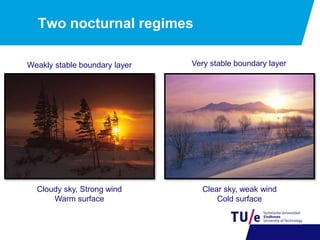
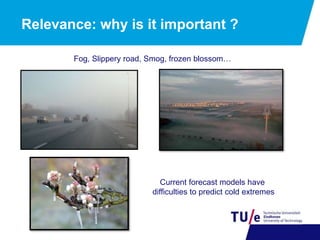
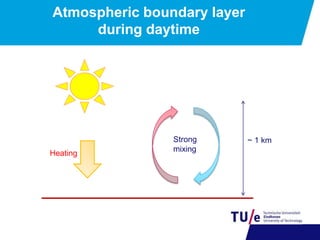
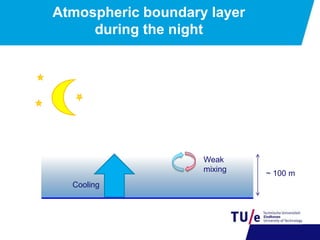
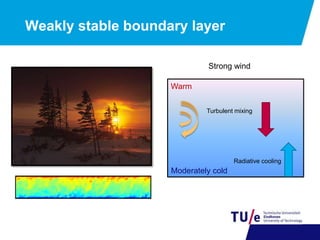
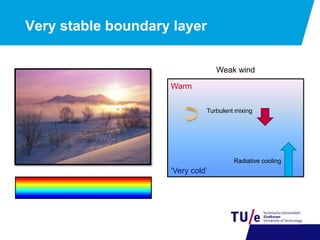
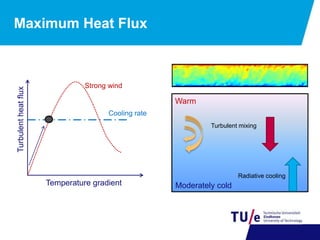
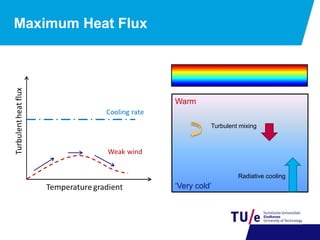
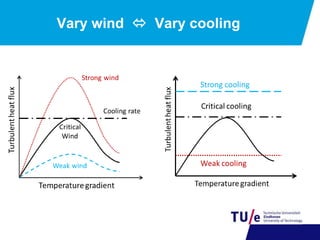
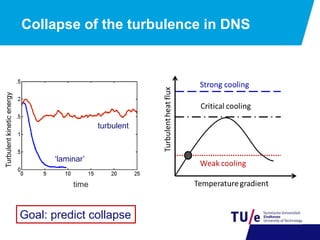
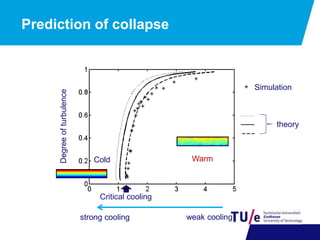
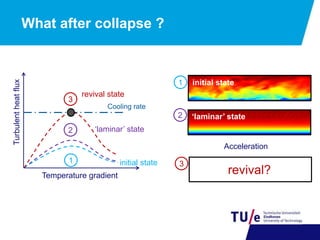
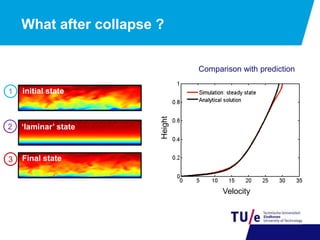
This document discusses the collapse of turbulence in the atmospheric nocturnal boundary layer. It notes there are two nocturnal regimes: a weakly stable boundary layer with cloudy skies and strong winds, and a very stable boundary layer with clear skies and weak winds. It is important to predict these regimes accurately as they can impact fog, icy roads, smog, and frozen plant blossoms. The document also examines how cooling rates and wind speeds can impact the collapse of turbulence through numerical simulations, and compares the simulation results to theoretical predictions of turbulence collapse.