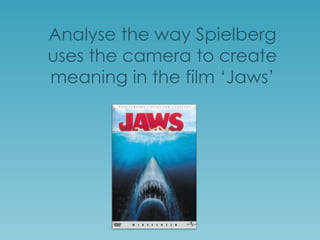
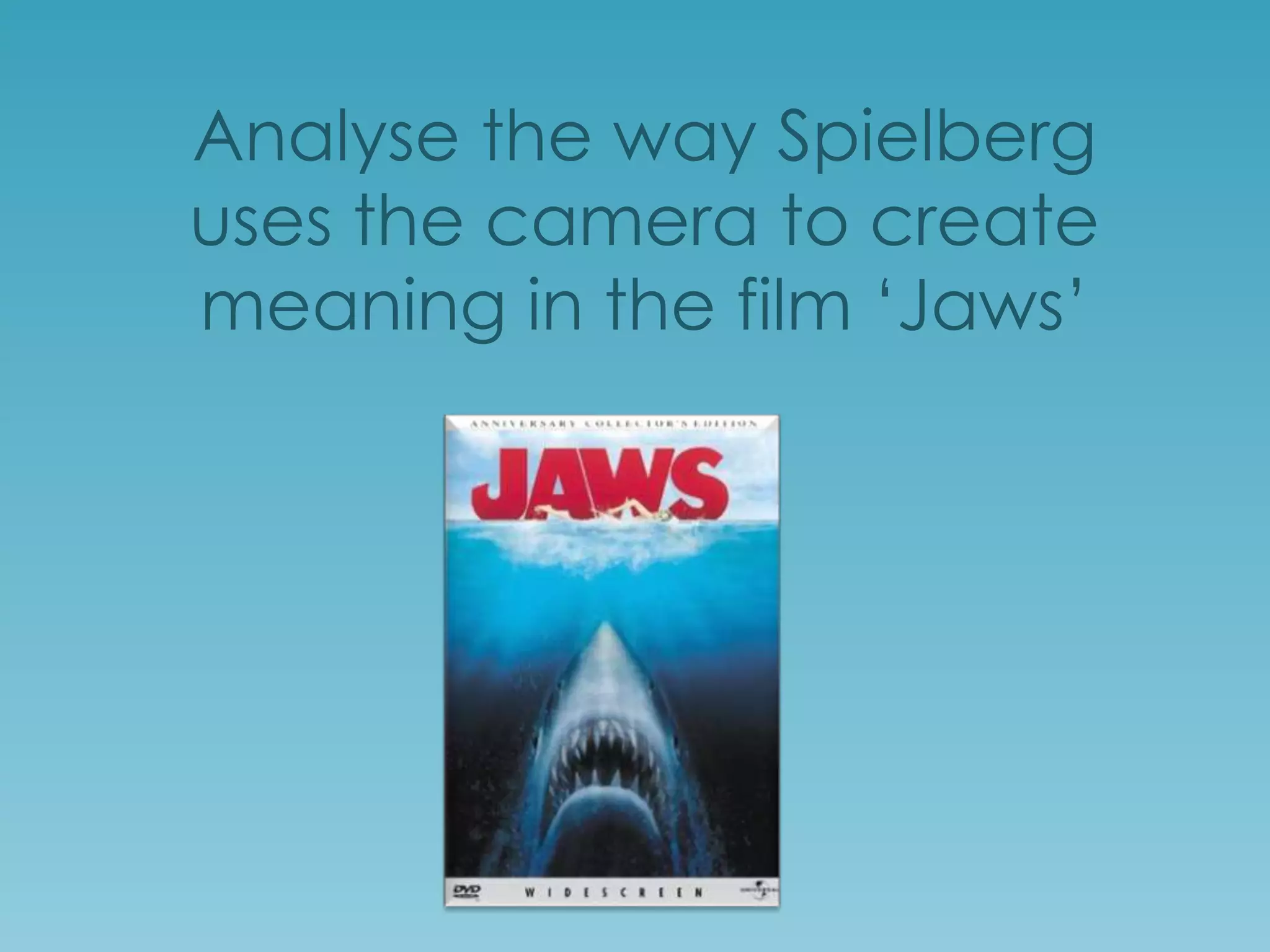
Analyse the way Spielberg
uses the camera to create
meaning in the film ‘Jaws’
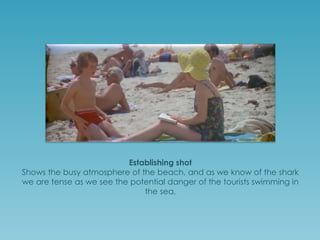
Establishing shot
This shot shows the busy atmosphere of the beach and, as we know of
the shark, we are tense because we see the potential danger of the
tourists swimming in the sea.
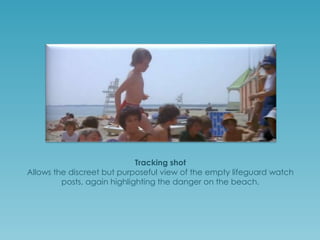
Tracking shot
Allows the discreet but purposeful view of the empty lifeguard watch
posts, again highlighting the danger on the beach.
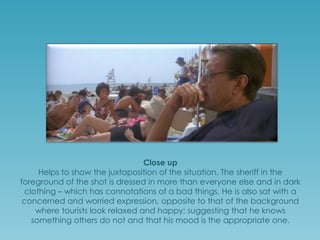
Close up
Helps to show the juxtaposition of the situation. The sheriff in the
foreground of the shot is dressed in more clothing than everyone else and
what he is wearing is dark – which has ominous connotations. He is also
sat with a concerned and worried expression, contrary to that of the
background, where tourists look relaxed and happy; suggesting that he
knows something others do not and that his mood is the appropriate one
for the situation not that of the oblivious others.
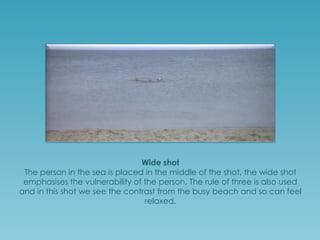
Wide shot
The person in the sea is placed in the middle of the wide shot which
emphasises the vulnerability of the person; the rule of three is also used to
establish the vast sea in comparison to everything else. However, in this
shot we do see the contrast from a hectic beach to a tranquil water and
so are made to feel relaxed at this time.
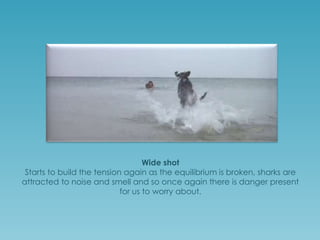
Wide shot
Starts to build the tension again as the equilibrium is broken, sharks are
attracted to noise and smell and so once again there is danger present
for us to worry about.
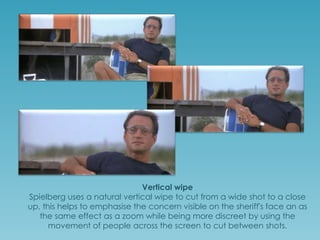
Vertical wipe
Spielberg uses a natural vertical wipe to cut from a wide shot to a close
up, this helps to emphasise the concern visible on the sheriff's face. It has
the same affect as a zoom while keeping discretion and simplicity
through the use of people movement instead of a direct cut.
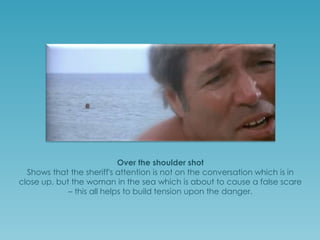
Over the shoulder shot
Shows that the sheriff's attention is not on the conversation which is in
close up, but instead the woman in the sea, who is about to cause a
false scare – this all helps to build tension upon the danger.
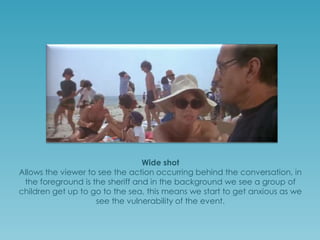
Wide shot
Allows the viewer to see the action occurring behind the conversation; in
the foreground is the sheriff and in the background we see a group of
children get up to go to the sea, this means we start to get anxious as we
see the vulnerability of the event.
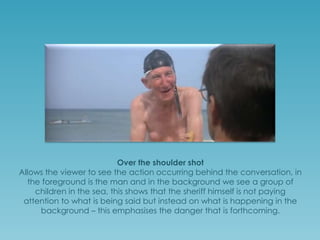
Over the shoulder shot
Allows the viewer to see the action occurring behind the conversation; in
the foreground is the elderly man and in the background we see a group
of children in the sea, this shows that the sheriff himself is not paying
attention to what is being said but instead on what is happening in the
background – this emphasises the danger that is forthcoming.
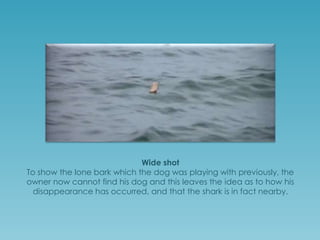
Wide shot
To show the lone bark which the dog was playing with previously, the
owner now cannot find his dog and this leaves the idea as to how his
disappearance has occurred, and that the shark is in fact nearby.
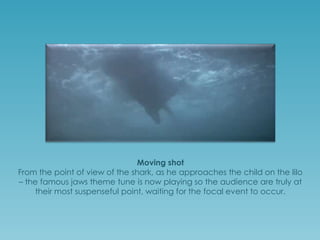
Moving shot
From the point of view of the shark, as he approaches the child on the lilo
– the famous jaws theme tune is now playing so the audience are truly at
their most suspenseful point, waiting for the focal event to occur.
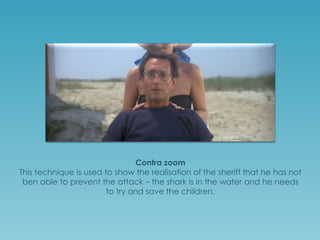
Contra zoom
This technique is used to show the realisation for the sheriff, that he has
not been able to prevent the attack – the shark is in the water and he
needs to try and save the children.
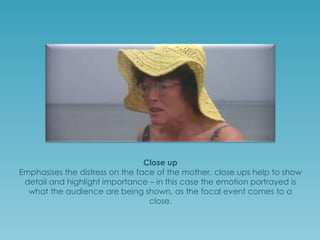
Close up
Emphasises the distress on the face of the mother; close ups help to show
detail and highlight importance – in this case the emotion portrayed is
what the audience are being shown to focus on and take in as their own
emotional viewpoint, as the focal event comes to a close.
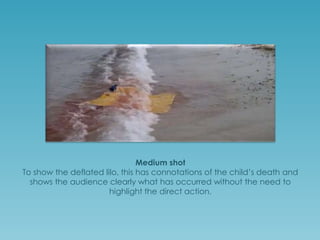
Medium shot
To show the deflated lilo, this has connotations of the child’s death and
shows the audience clearly what has occurred without the need to
highlight the direct action.

Jaws Camera-shots Analysis

  • 1.
    Analyse the waySpielberg uses the camera to create meaning in the film ‘Jaws’
  • 2.
    Establishing shot This shotshows the busy atmosphere of the beach and, as we know of the shark, we are tense because we see the potential danger of the tourists swimming in the sea.
  • 3.
    Tracking shot Allows thediscreet but purposeful view of the empty lifeguard watch posts, again highlighting the danger on the beach.
  • 4.
    Close up Helps toshow the juxtaposition of the situation. The sheriff in the foreground of the shot is dressed in more clothing than everyone else and what he is wearing is dark – which has ominous connotations. He is also sat with a concerned and worried expression, contrary to that of the background, where tourists look relaxed and happy; suggesting that he knows something others do not and that his mood is the appropriate one for the situation not that of the oblivious others.
  • 5.
    Wide shot The personin the sea is placed in the middle of the wide shot which emphasises the vulnerability of the person; the rule of three is also used to establish the vast sea in comparison to everything else. However, in this shot we do see the contrast from a hectic beach to a tranquil water and so are made to feel relaxed at this time.
  • 6.
    Wide shot Starts tobuild the tension again as the equilibrium is broken, sharks are attracted to noise and smell and so once again there is danger present for us to worry about.
  • 7.
    Vertical wipe Spielberg usesa natural vertical wipe to cut from a wide shot to a close up, this helps to emphasise the concern visible on the sheriff's face. It has the same affect as a zoom while keeping discretion and simplicity through the use of people movement instead of a direct cut.
  • 8.
    Over the shouldershot Shows that the sheriff's attention is not on the conversation which is in close up, but instead the woman in the sea, who is about to cause a false scare – this all helps to build tension upon the danger.
  • 9.
    Wide shot Allows theviewer to see the action occurring behind the conversation; in the foreground is the sheriff and in the background we see a group of children get up to go to the sea, this means we start to get anxious as we see the vulnerability of the event.
  • 10.
    Over the shouldershot Allows the viewer to see the action occurring behind the conversation; in the foreground is the elderly man and in the background we see a group of children in the sea, this shows that the sheriff himself is not paying attention to what is being said but instead on what is happening in the background – this emphasises the danger that is forthcoming.
  • 11.
    Wide shot To showthe lone bark which the dog was playing with previously, the owner now cannot find his dog and this leaves the idea as to how his disappearance has occurred, and that the shark is in fact nearby.
  • 12.
    Moving shot From thepoint of view of the shark, as he approaches the child on the lilo – the famous jaws theme tune is now playing so the audience are truly at their most suspenseful point, waiting for the focal event to occur.
  • 13.
    Contra zoom This techniqueis used to show the realisation for the sheriff, that he has not been able to prevent the attack – the shark is in the water and he needs to try and save the children.
  • 14.
    Close up Emphasises thedistress on the face of the mother; close ups help to show detail and highlight importance – in this case the emotion portrayed is what the audience are being shown to focus on and take in as their own emotional viewpoint, as the focal event comes to a close.
  • 15.
    Medium shot To showthe deflated lilo, this has connotations of the child’s death and shows the audience clearly what has occurred without the need to highlight the direct action.