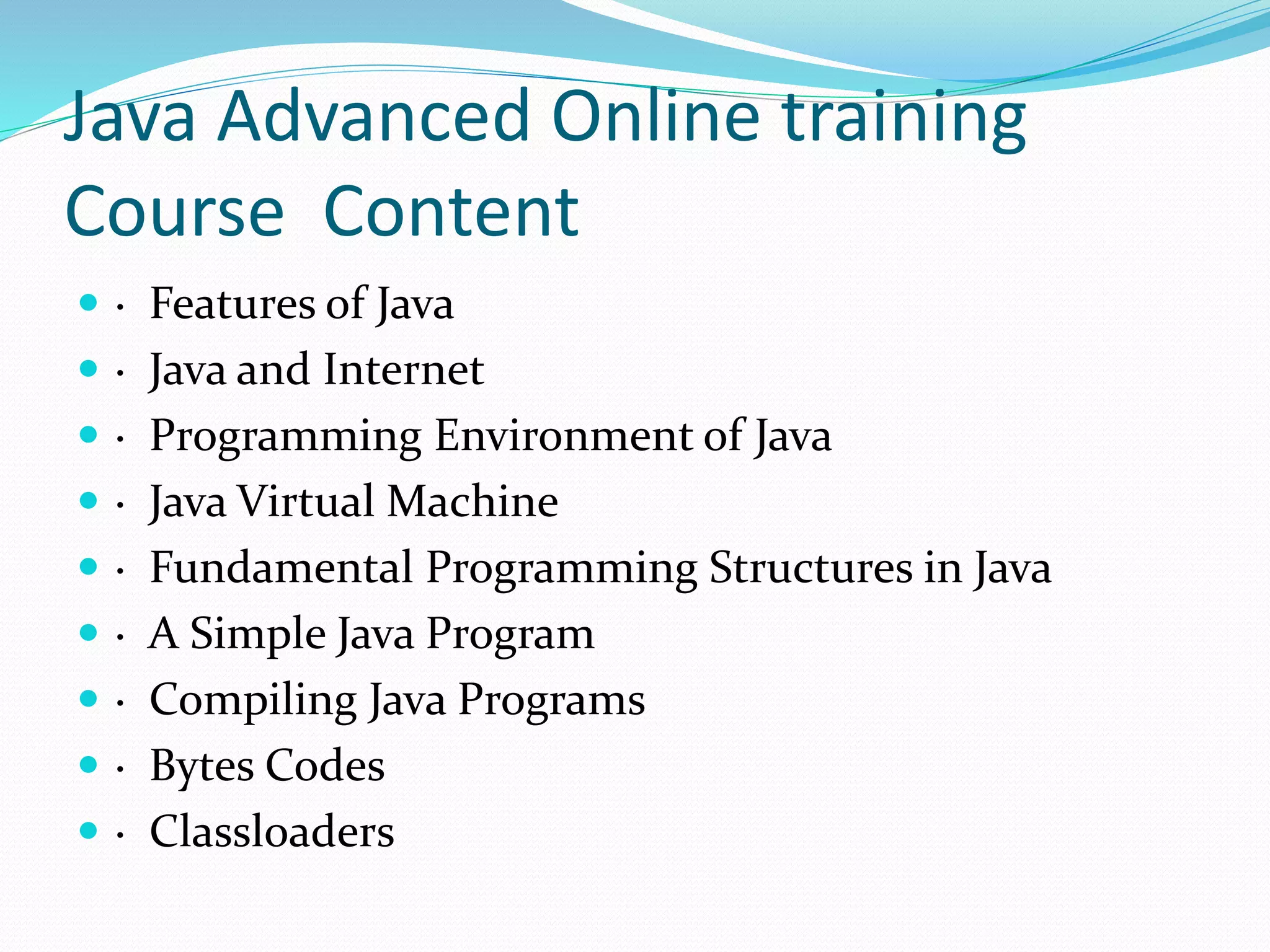
Java Advanced Online training
Course Content
 · Features of Java
 · Java and Internet
 · Programming Environment of Java
 · Java Virtual Machine
 · Fundamental Programming Structures in Java
 · A Simple Java Program
 · Compiling Java Programs
 · Bytes Codes
 · Classloaders
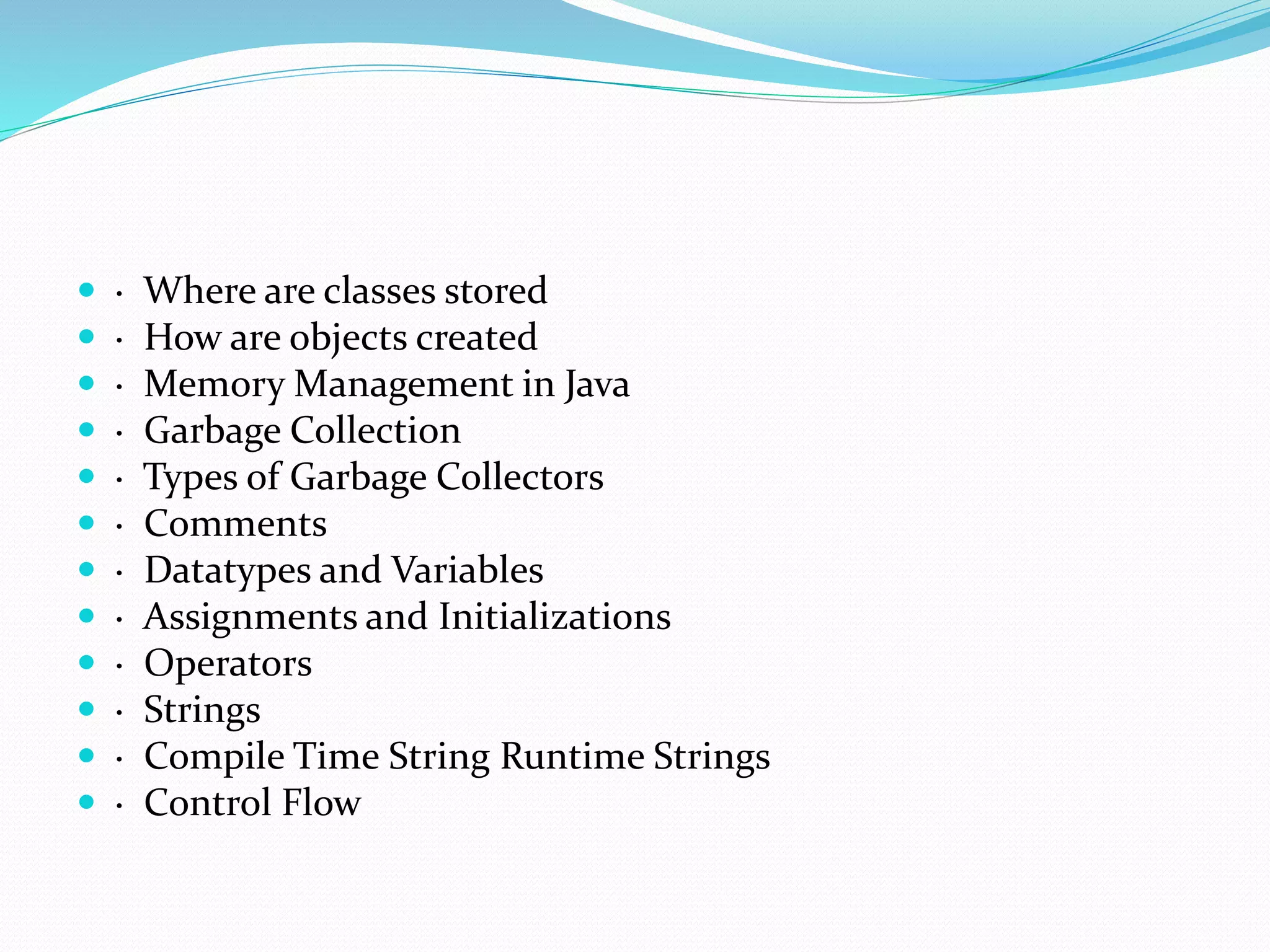
 · Where are classes stored
 · How are objects created
 · Memory Management in Java
 · Garbage Collection
 · Types of Garbage Collectors
 · Comments
 · Datatypes and Variables
 · Assignments and Initializations
 · Operators
 · Strings
 · Compile Time String Runtime Strings
 · Control Flow
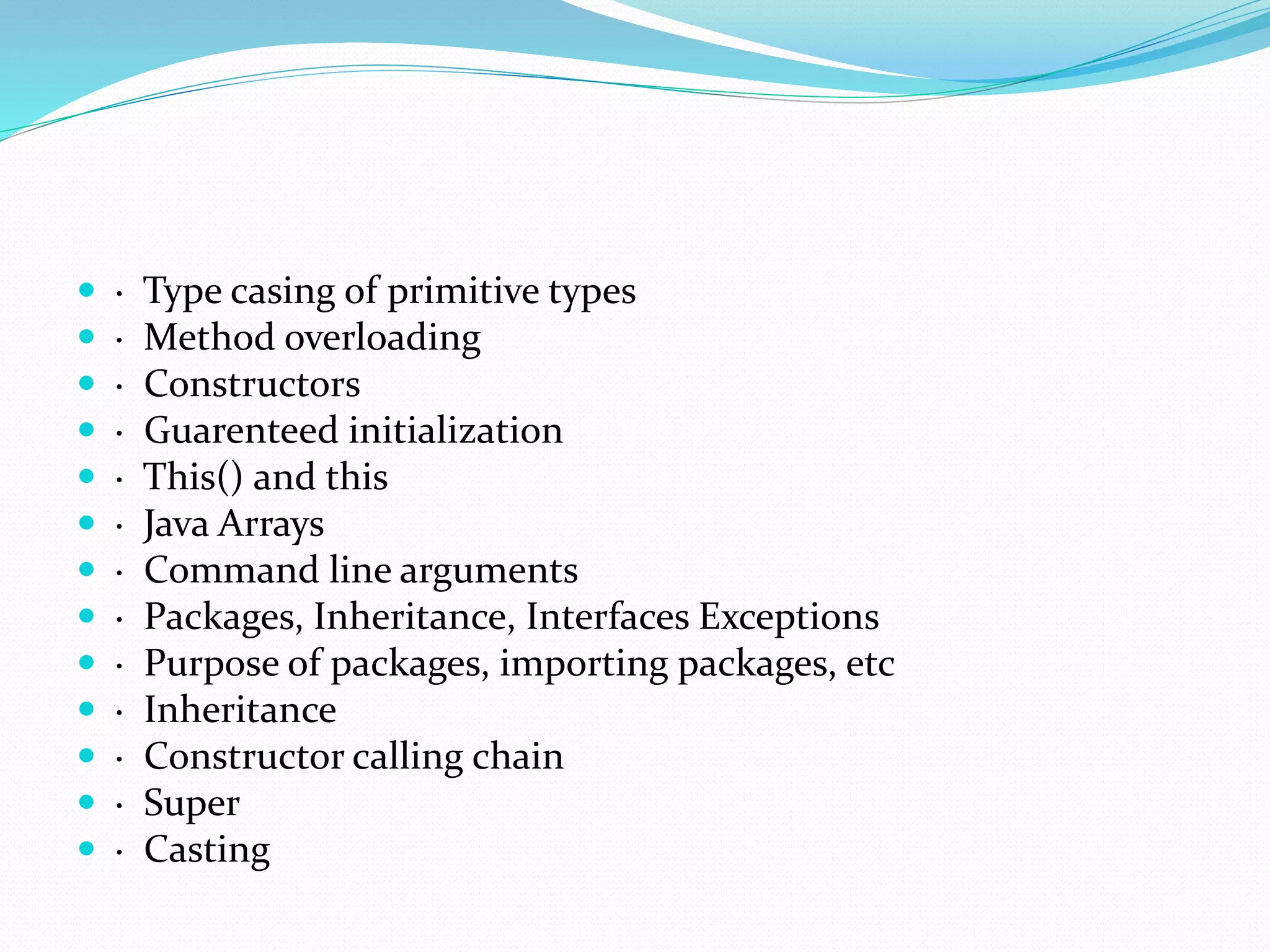
 · Type casing of primitive types
 · Method overloading
 · Constructors
 · Guarenteed initialization
 · This() and this
 · Java Arrays
 · Command line arguments
 · Packages, Inheritance, Interfaces Exceptions
 · Purpose of packages, importing packages, etc
 · Inheritance
 · Constructor calling chain
 · Super
 · Casting
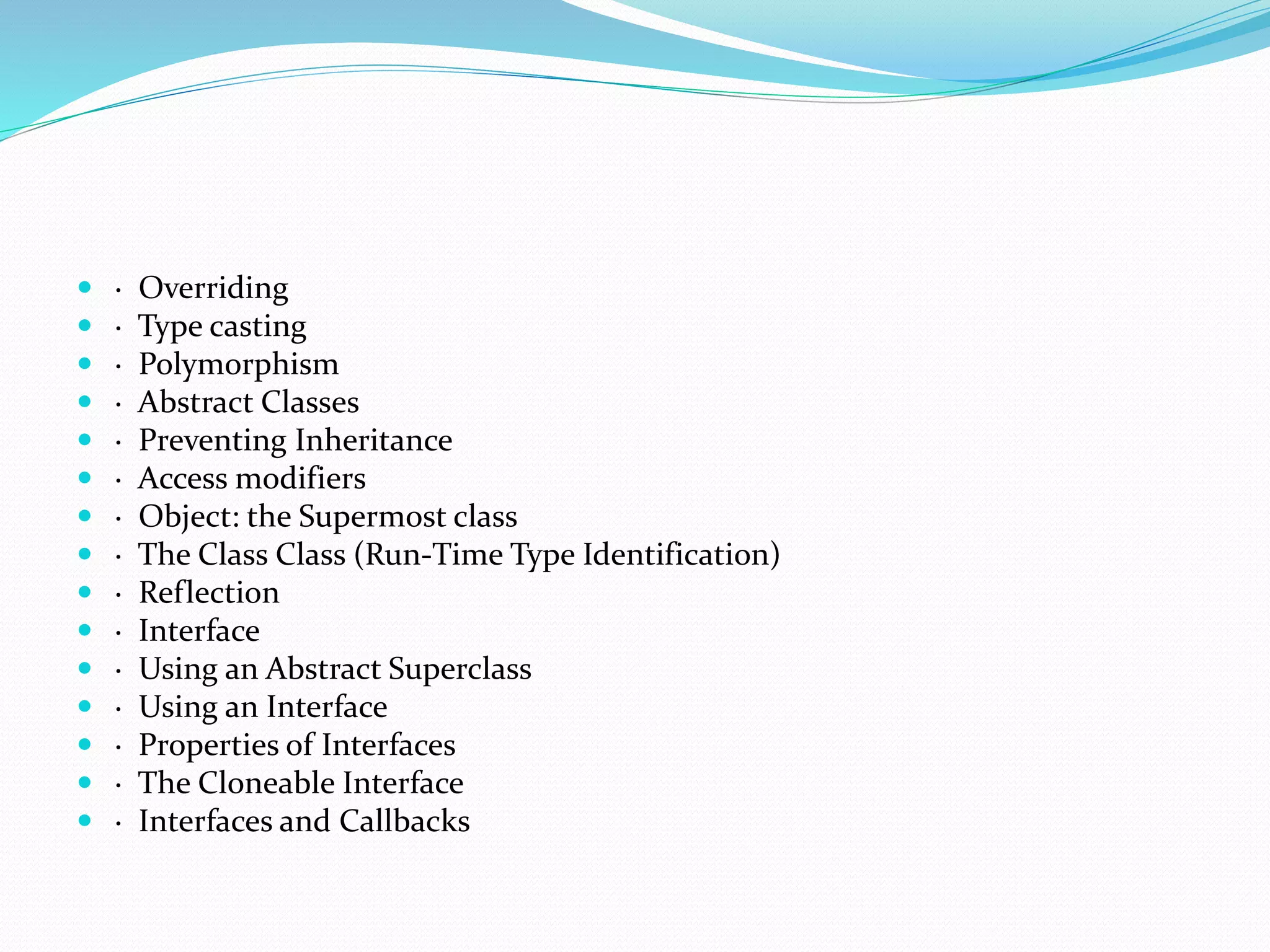
 · Overriding
 · Type casting
 · Polymorphism
 · Abstract Classes
 · Preventing Inheritance
 · Access modifiers
 · Object: the Supermost class
 · The Class Class (Run-Time Type Identification)
 · Reflection
 · Interface
 · Using an Abstract Superclass
 · Using an Interface
 · Properties of Interfaces
 · The Cloneable Interface
 · Interfaces and Callbacks
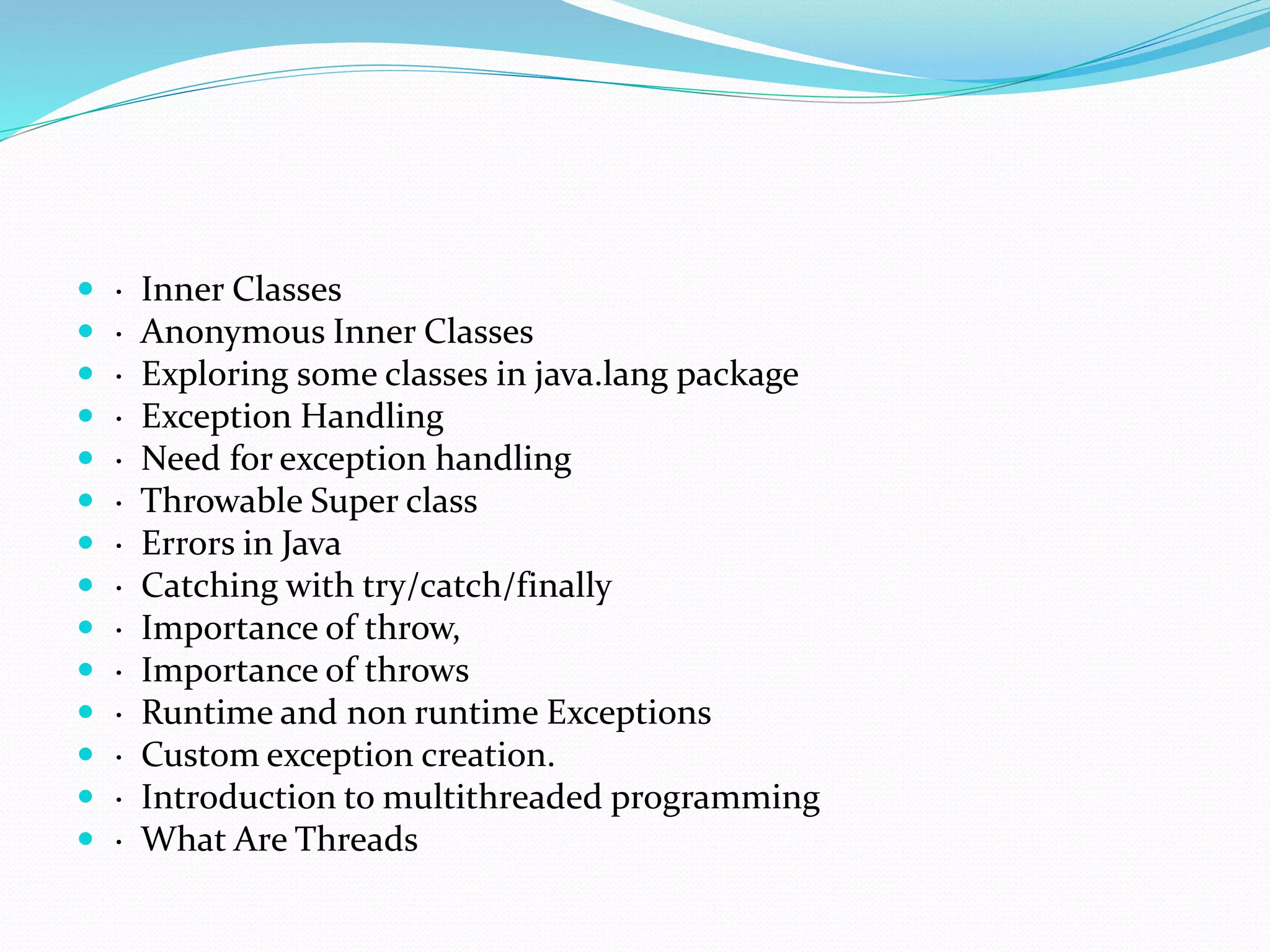
 · Inner Classes
 · Anonymous Inner Classes
 · Exploring some classes in java.lang package
 · Exception Handling
 · Need for exception handling
 · Throwable Super class
 · Errors in Java
 · Catching with try/catch/finally
 · Importance of throw,
 · Importance of throws
 · Runtime and non runtime Exceptions
 · Custom exception creation.
 · Introduction to multithreaded programming
 · What Are Threads
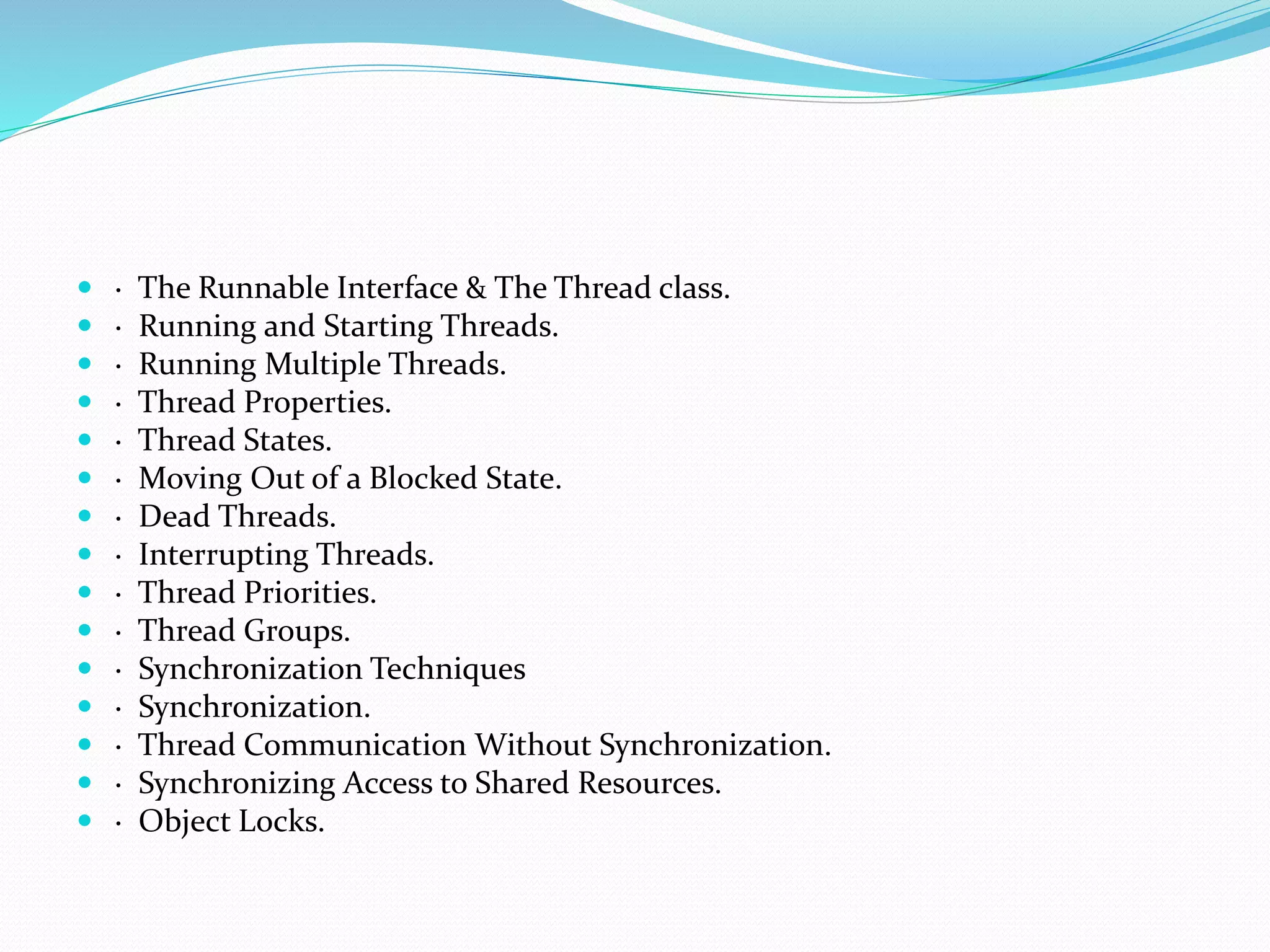
 · The Runnable Interface & The Thread class.
 · Running and Starting Threads.
 · Running Multiple Threads.
 · Thread Properties.
 · Thread States.
 · Moving Out of a Blocked State.
 · Dead Threads.
 · Interrupting Threads.
 · Thread Priorities.
 · Thread Groups.
 · Synchronization Techniques
 · Synchronization.
 · Thread Communication Without Synchronization.
 · Synchronizing Access to Shared Resources.
 · Object Locks.
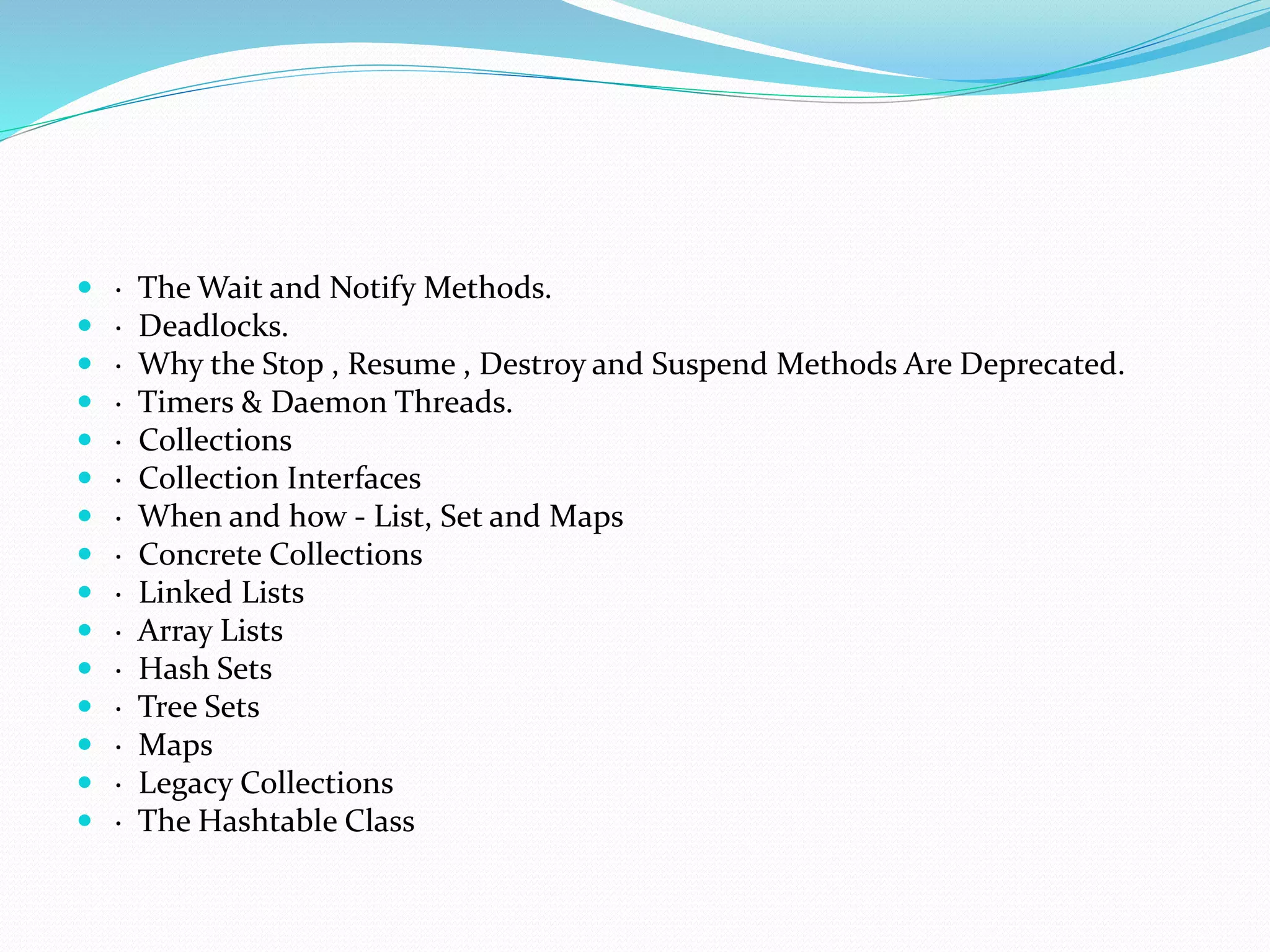
 · The Wait and Notify Methods.
 · Deadlocks.
 · Why the Stop , Resume , Destroy and Suspend Methods Are Deprecated.
 · Timers & Daemon Threads.
 · Collections
 · Collection Interfaces
 · When and how - List, Set and Maps
 · Concrete Collections
 · Linked Lists
 · Array Lists
 · Hash Sets
 · Tree Sets
 · Maps
 · Legacy Collections
 · The Hashtable Class
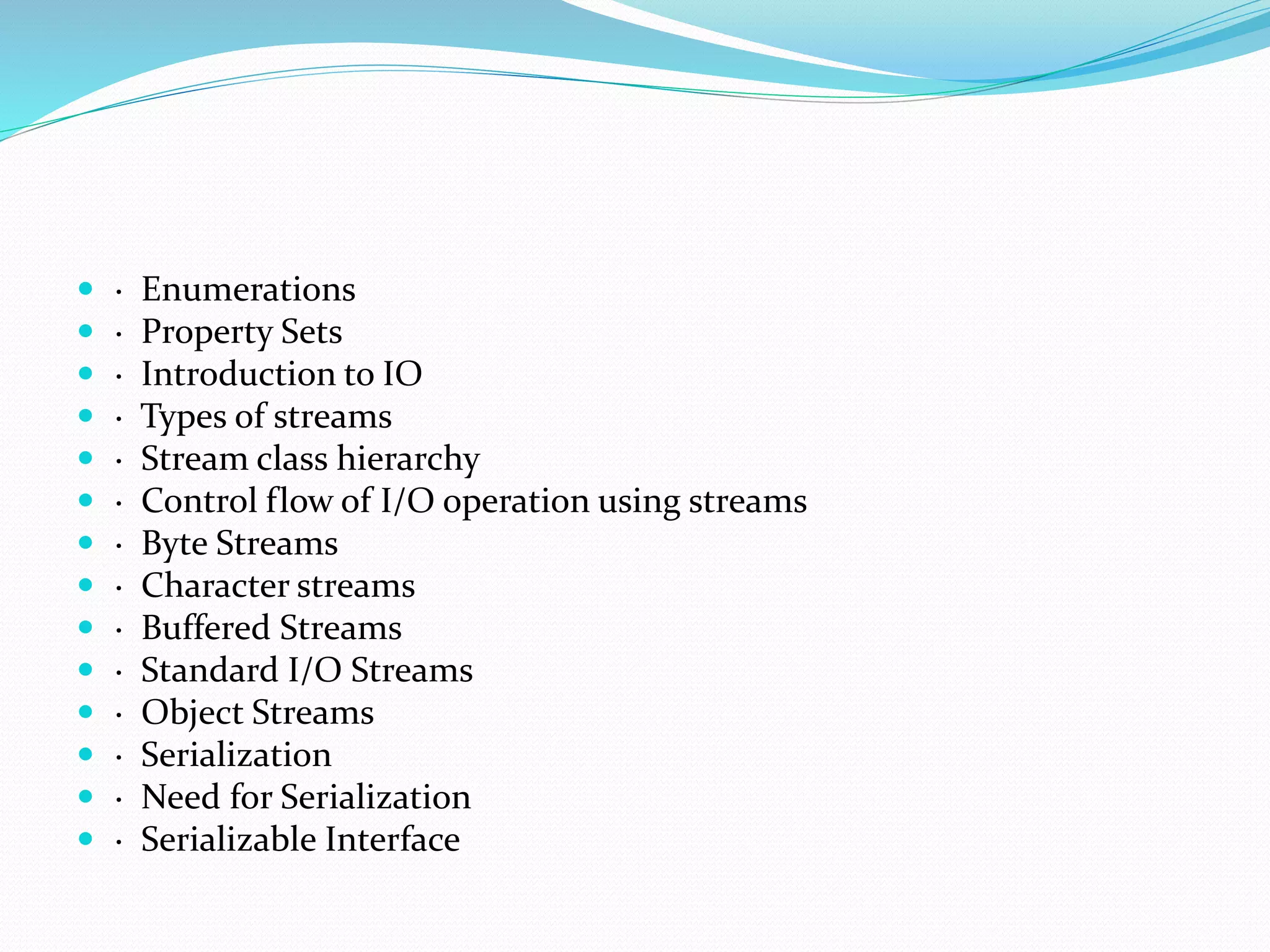
 · Enumerations
 · Property Sets
 · Introduction to IO
 · Types of streams
 · Stream class hierarchy
 · Control flow of I/O operation using streams
 · Byte Streams
 · Character streams
 · Buffered Streams
 · Standard I/O Streams
 · Object Streams
 · Serialization
 · Need for Serialization
 · Serializable Interface
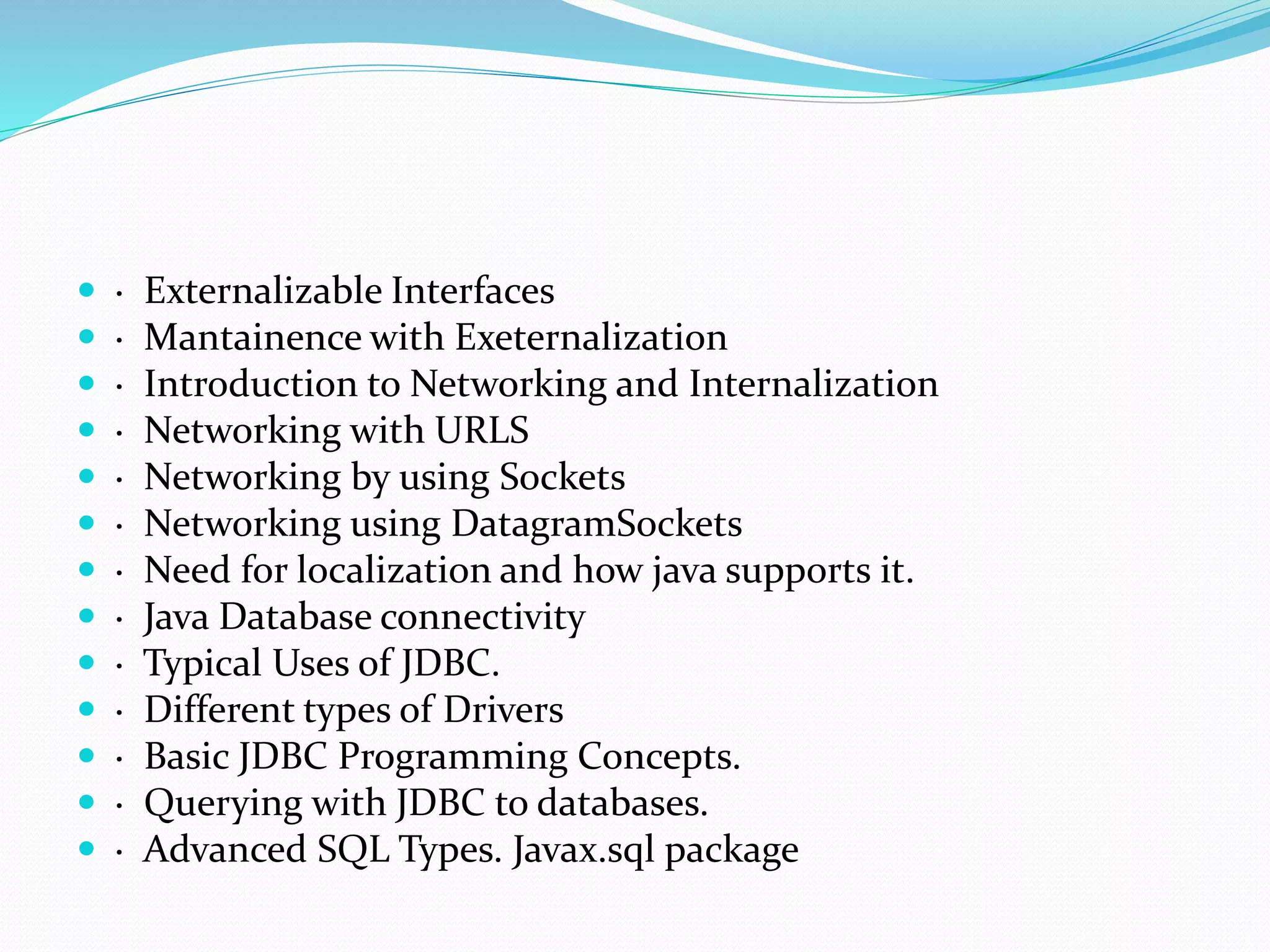
 · Externalizable Interfaces
 · Mantainence with Exeternalization
 · Introduction to Networking and Internalization
 · Networking with URLS
 · Networking by using Sockets
 · Networking using DatagramSockets
 · Need for localization and how java supports it.
 · Java Database connectivity
 · Typical Uses of JDBC.
 · Different types of Drivers
 · Basic JDBC Programming Concepts.
 · Querying with JDBC to databases.
 · Advanced SQL Types. Javax.sql package
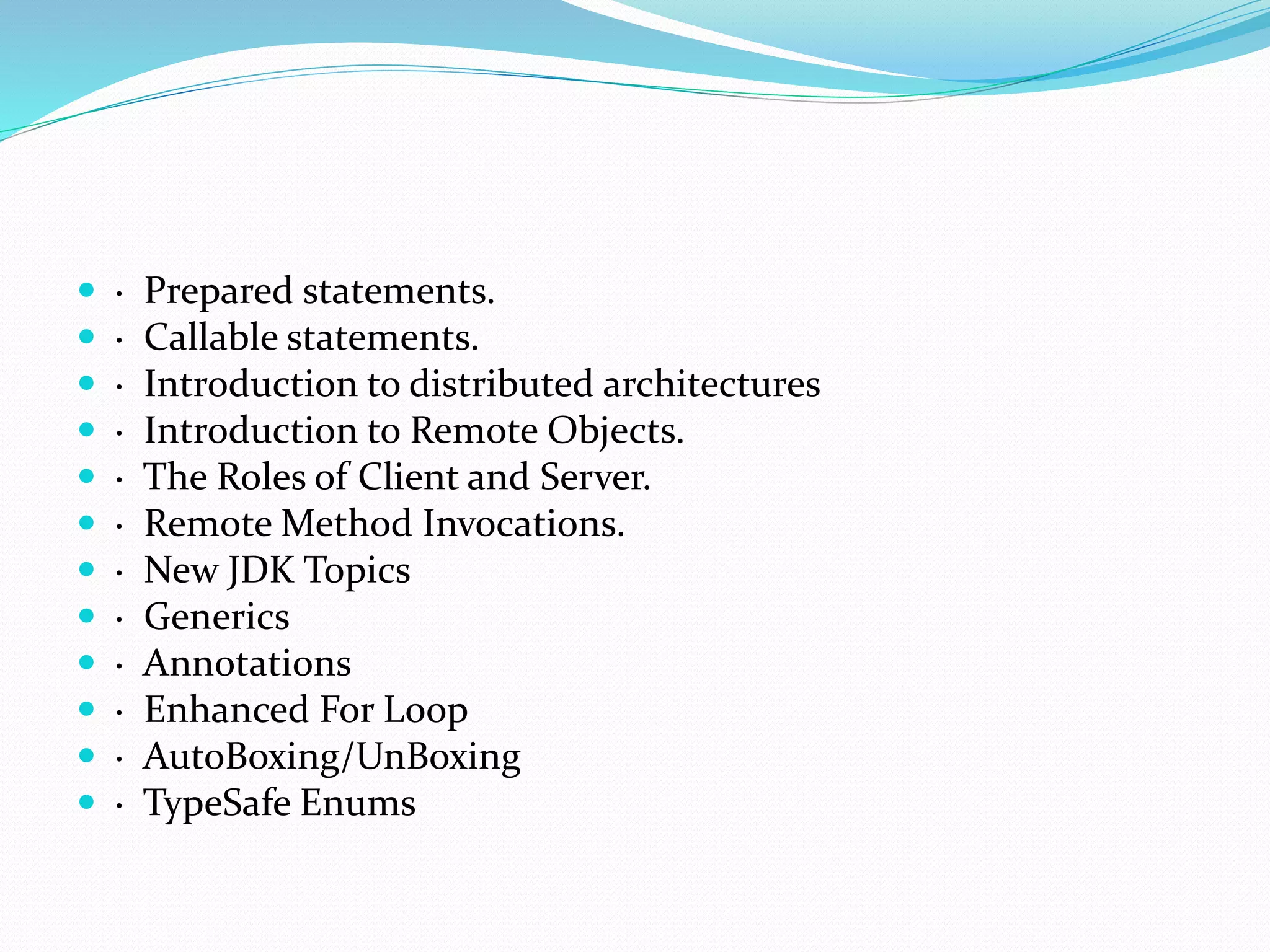
 · Prepared statements.
 · Callable statements.
 · Introduction to distributed architectures
 · Introduction to Remote Objects.
 · The Roles of Client and Server.
 · Remote Method Invocations.
 · New JDK Topics
 · Generics
 · Annotations
 · Enhanced For Loop
 · AutoBoxing/UnBoxing
 · TypeSafe Enums
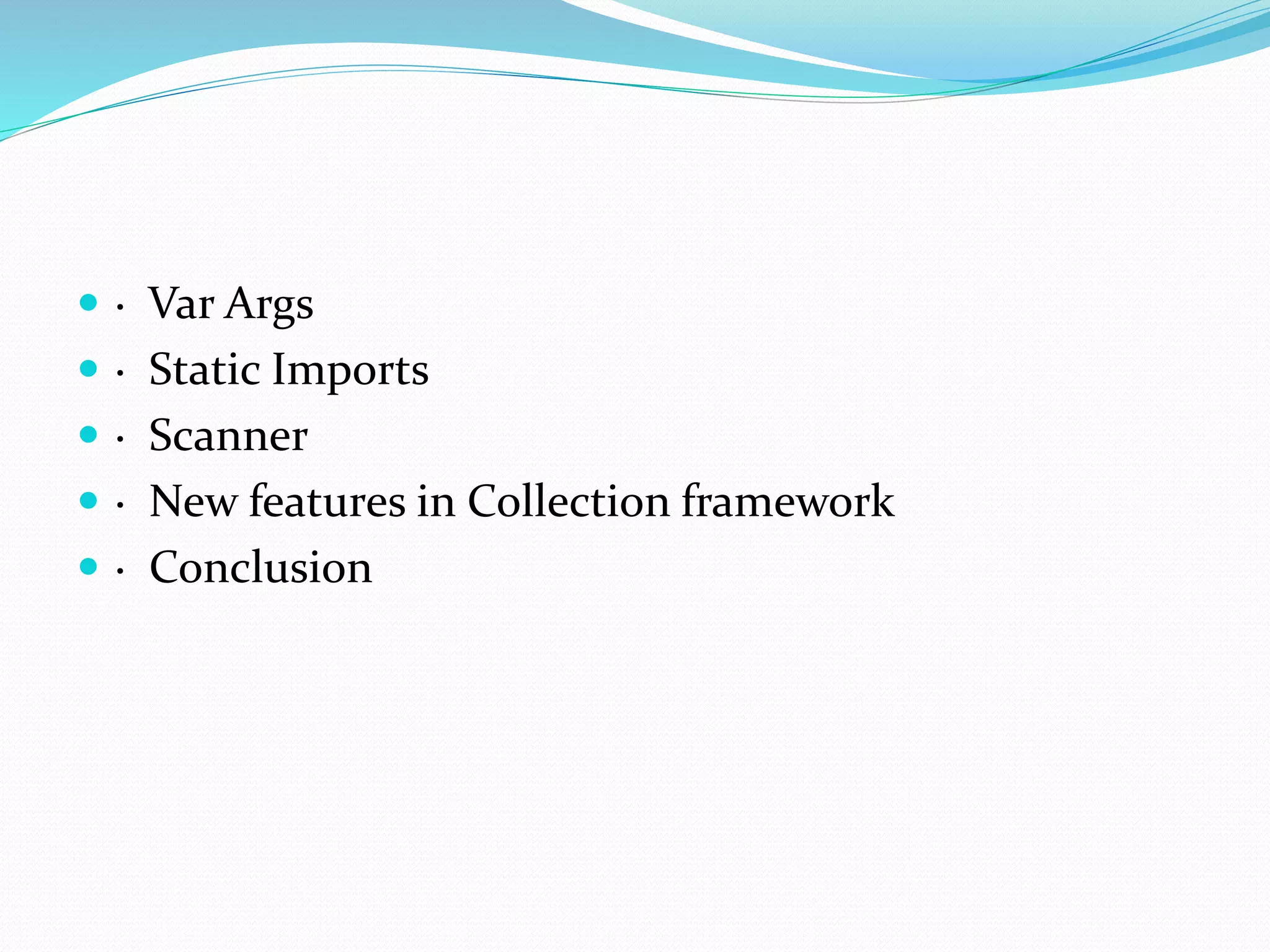
 · Var Args
 · Static Imports
 · Scanner
 · New features in Collection framework
 · Conclusion

Java (advanced and core)online training in Hyderabad|course content

  • 2.
    Java Advanced Onlinetraining Course Content  · Features of Java  · Java and Internet  · Programming Environment of Java  · Java Virtual Machine  · Fundamental Programming Structures in Java  · A Simple Java Program  · Compiling Java Programs  · Bytes Codes  · Classloaders
  • 3.
     · Whereare classes stored  · How are objects created  · Memory Management in Java  · Garbage Collection  · Types of Garbage Collectors  · Comments  · Datatypes and Variables  · Assignments and Initializations  · Operators  · Strings  · Compile Time String Runtime Strings  · Control Flow
  • 4.
     · Typecasing of primitive types  · Method overloading  · Constructors  · Guarenteed initialization  · This() and this  · Java Arrays  · Command line arguments  · Packages, Inheritance, Interfaces Exceptions  · Purpose of packages, importing packages, etc  · Inheritance  · Constructor calling chain  · Super  · Casting
  • 5.
     · Overriding · Type casting  · Polymorphism  · Abstract Classes  · Preventing Inheritance  · Access modifiers  · Object: the Supermost class  · The Class Class (Run-Time Type Identification)  · Reflection  · Interface  · Using an Abstract Superclass  · Using an Interface  · Properties of Interfaces  · The Cloneable Interface  · Interfaces and Callbacks
  • 6.
     · InnerClasses  · Anonymous Inner Classes  · Exploring some classes in java.lang package  · Exception Handling  · Need for exception handling  · Throwable Super class  · Errors in Java  · Catching with try/catch/finally  · Importance of throw,  · Importance of throws  · Runtime and non runtime Exceptions  · Custom exception creation.  · Introduction to multithreaded programming  · What Are Threads
  • 7.
     · TheRunnable Interface & The Thread class.  · Running and Starting Threads.  · Running Multiple Threads.  · Thread Properties.  · Thread States.  · Moving Out of a Blocked State.  · Dead Threads.  · Interrupting Threads.  · Thread Priorities.  · Thread Groups.  · Synchronization Techniques  · Synchronization.  · Thread Communication Without Synchronization.  · Synchronizing Access to Shared Resources.  · Object Locks.
  • 8.
     · TheWait and Notify Methods.  · Deadlocks.  · Why the Stop , Resume , Destroy and Suspend Methods Are Deprecated.  · Timers & Daemon Threads.  · Collections  · Collection Interfaces  · When and how - List, Set and Maps  · Concrete Collections  · Linked Lists  · Array Lists  · Hash Sets  · Tree Sets  · Maps  · Legacy Collections  · The Hashtable Class
  • 9.
     · Enumerations · Property Sets  · Introduction to IO  · Types of streams  · Stream class hierarchy  · Control flow of I/O operation using streams  · Byte Streams  · Character streams  · Buffered Streams  · Standard I/O Streams  · Object Streams  · Serialization  · Need for Serialization  · Serializable Interface
  • 10.
     · ExternalizableInterfaces  · Mantainence with Exeternalization  · Introduction to Networking and Internalization  · Networking with URLS  · Networking by using Sockets  · Networking using DatagramSockets  · Need for localization and how java supports it.  · Java Database connectivity  · Typical Uses of JDBC.  · Different types of Drivers  · Basic JDBC Programming Concepts.  · Querying with JDBC to databases.  · Advanced SQL Types. Javax.sql package
  • 11.
     · Preparedstatements.  · Callable statements.  · Introduction to distributed architectures  · Introduction to Remote Objects.  · The Roles of Client and Server.  · Remote Method Invocations.  · New JDK Topics  · Generics  · Annotations  · Enhanced For Loop  · AutoBoxing/UnBoxing  · TypeSafe Enums
  • 12.
     · VarArgs  · Static Imports  · Scanner  · New features in Collection framework  · Conclusion