Japanese festivals Traditional festive occasions in Japan By Daria
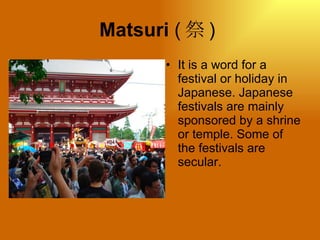
Matsuri  ( 祭 )  It is a word for a festival or holiday in Japanese. Japanese festivals are mainly sponsored by a shrine or temple. Some of the festivals are secular.
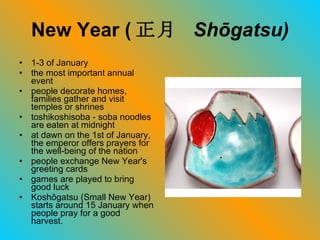
New Year ( 正月  Shōgatsu) 1-3 of January  the most important annual event people decorate homes, families gather and visit temples or shrines toshikoshisoba - soba noodles are eaten at midnight at dawn on the 1st of January, the emperor offers prayers for the well-being of the nation people exchange New Year's greeting cards games are played to bring good luck Koshōgatsu (Small New Year) starts around 15 January when people pray for a good harvest.
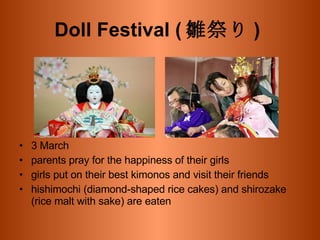
Doll Festival ( 雛祭り )   3 March  parents pray for the happiness of their girls girls put on their best kimonos and visit their friends hishimochi (diamond-shaped rice cakes) and shirozake (rice malt with sake) are eaten
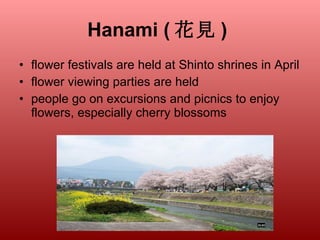
Hanami ( 花見 )   flower festivals are held at Shinto shrines in April flower viewing parties are held people go on excursions and picnics to enjoy flowers, especially cherry blossoms
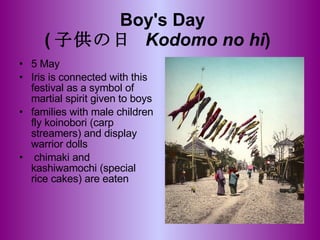
Boy's Day ( 子供の日  Kodomo no hi )   5 May Iris is connected with this festival as a symbol of martial spirit given to boys families with male children fly koinobori (carp streamers) and display warrior dolls  chimaki and kashiwamochi (special rice cakes) are eaten
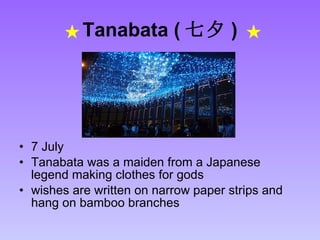
Tanabata ( 七夕 )   7 July Tanabata was a maiden from a Japanese legend making clothes for gods  wishes are written on narrow paper strips and hang on bamboo branches
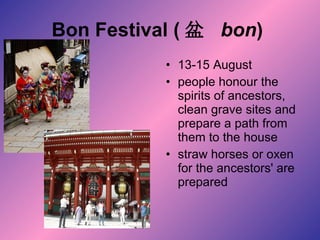
Bon Festival ( 盆  bon )   13-15 August  people honour the spirits of ancestors, clean grave sites and prepare a path from them to the house straw horses or oxen for the ancestors' are prepared
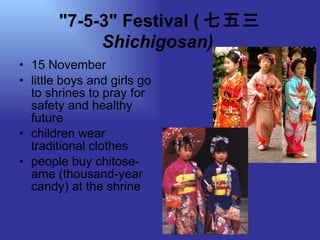
"7-5-3" Festival ( 七五三  Shichigosan)   15 November little boys and girls go to shrines to pray for safety and healthy future children wear traditional clothes people buy chitose-ame (thousand-year candy) at the shrine
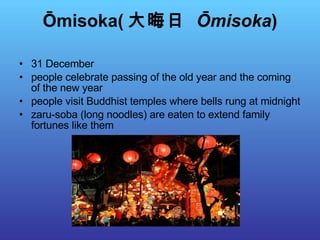
Ōmisoka( 大晦日  Ōmisoka ) 31 December people celebrate passing of the old year and the coming of the new year people visit Buddhist temples where bells rung at midnight zaru-soba (long noodles) are eaten to extend family fortunes like them
THE END   ;)

Japanese Festivals

  • 1.
    Japanese festivals Traditionalfestive occasions in Japan By Daria
  • 2.
    Matsuri (祭 ) It is a word for a festival or holiday in Japanese. Japanese festivals are mainly sponsored by a shrine or temple. Some of the festivals are secular.
  • 3.
    New Year (正月 Shōgatsu) 1-3 of January the most important annual event people decorate homes, families gather and visit temples or shrines toshikoshisoba - soba noodles are eaten at midnight at dawn on the 1st of January, the emperor offers prayers for the well-being of the nation people exchange New Year's greeting cards games are played to bring good luck Koshōgatsu (Small New Year) starts around 15 January when people pray for a good harvest.
  • 4.
    Doll Festival (雛祭り ) 3 March parents pray for the happiness of their girls girls put on their best kimonos and visit their friends hishimochi (diamond-shaped rice cakes) and shirozake (rice malt with sake) are eaten
  • 5.
    Hanami ( 花見) flower festivals are held at Shinto shrines in April flower viewing parties are held people go on excursions and picnics to enjoy flowers, especially cherry blossoms
  • 6.
    Boy's Day (子供の日 Kodomo no hi ) 5 May Iris is connected with this festival as a symbol of martial spirit given to boys families with male children fly koinobori (carp streamers) and display warrior dolls chimaki and kashiwamochi (special rice cakes) are eaten
  • 7.
    Tanabata ( 七夕) 7 July Tanabata was a maiden from a Japanese legend making clothes for gods wishes are written on narrow paper strips and hang on bamboo branches
  • 8.
    Bon Festival (盆 bon ) 13-15 August people honour the spirits of ancestors, clean grave sites and prepare a path from them to the house straw horses or oxen for the ancestors' are prepared
  • 9.
    "7-5-3" Festival (七五三 Shichigosan) 15 November little boys and girls go to shrines to pray for safety and healthy future children wear traditional clothes people buy chitose-ame (thousand-year candy) at the shrine
  • 10.
    Ōmisoka( 大晦日 Ōmisoka ) 31 December people celebrate passing of the old year and the coming of the new year people visit Buddhist temples where bells rung at midnight zaru-soba (long noodles) are eaten to extend family fortunes like them
  • 11.