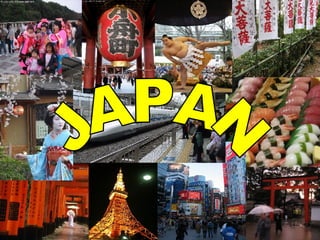
Our team members are: We are going to tell you more about  this exciting country -  JAPAN Michele Holly Allen
JAPAN
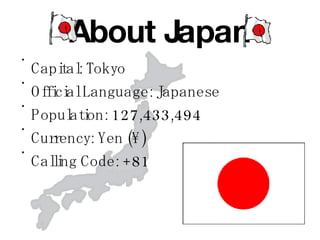
About Japan Capital: Tokyo Official Language: Japanese Population: 127,433,494 Currency: Yen (¥)  Calling Code: +81
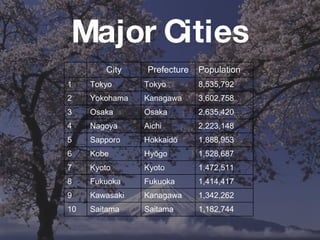
Major Cities City Prefecture Population 1 Tokyo Tokyo 8,535,792 2 Yokohama Kanagawa 3,602,758 3 Osaka Osaka 2,635,420 4 Nagoya Aichi 2,223,148 5 Sapporo Hokkaidō  1,888,953 6 Kobe Hyōgo  1,528,687 7 Kyoto Kyoto 1,472,511 8 Fukuoka Fukuoka 1,414,417 9 Kawasaki Kanagawa 1,342,262 10 Saitama Saitama 1,182,744
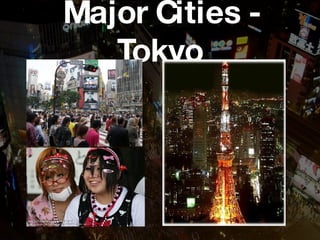
Major Cities - Tokyo
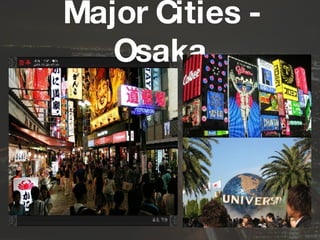
Major Cities - Osaka
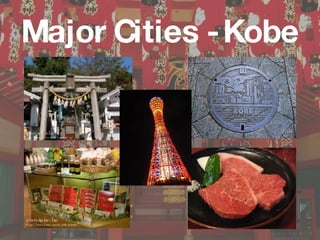
Major Cities - Kobe
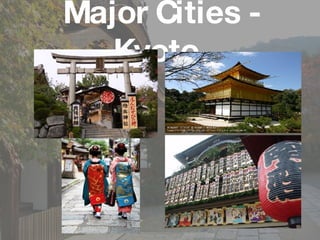
Major Cities - Kyoto   Osaka
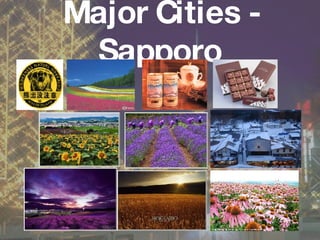
Major Cities - Sapporo Osaka
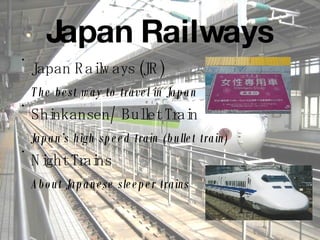
Japan Railways Japan Railways (JR) The best way to travel in Japan Shinkansen/ Bullet Train Japan’s high speed train (bullet train) Night Trains About Japanese sleeper trains
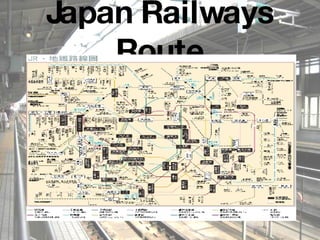
Japan Railways Route
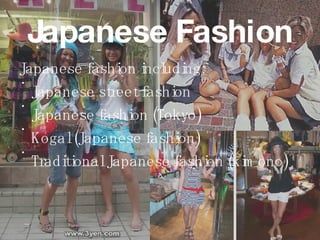
Japanese Fashion Japanese fashion   including:  Japanese street fashion Japanese fashion (Tokyo) Kogal (Japanese fashion) Traditional Japanese fashion (kimono)
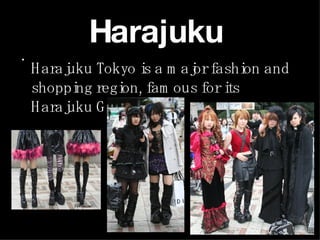
Harajuku  Harajuku Tokyo is a major fashion and shopping region, famous for its Harajuku Girls.
Kogal Kogals are known for wearing platform boots,  a miniskirt, copious amounts of makeup, hair  coloring (usually blonde or brown), artificial  suntans, and designer accessories .
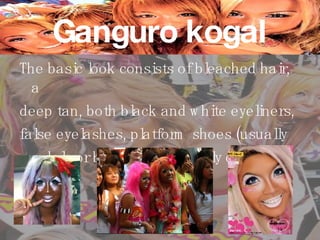
Ganguro kogal The basic look consists of bleached hair, a  deep tan, both black and white eyeliners,  false eyelashes, platform shoes (usually  sandals or boots), and brightly colored outfits.
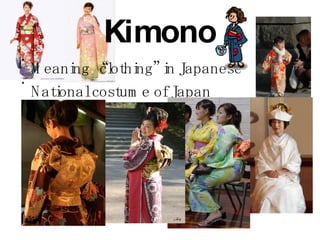
Kimono Meaning “clothing” in Japanese National costume of Japan
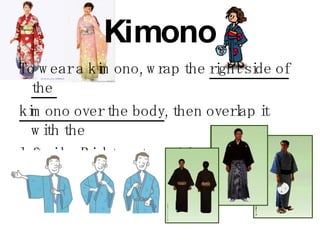
Kimono To wear a kimono, wrap the  right side of the  kimono over the body , then overlap it with the  left side. Right on top of the left is only used  to dress a corpse for burial.
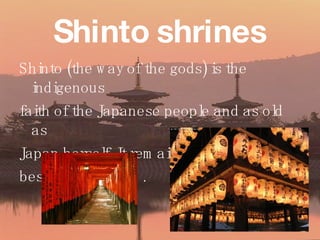
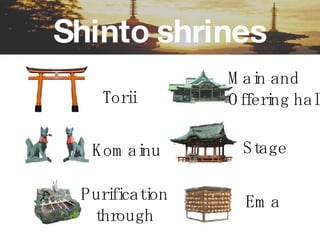
Shinto shrines Shinto (the way of the gods) is the indigenous  faith of the Japanese people and as old as Japan herself. It remains Japan’s religion  besides Buddhism.
Shinto shrines Torii   Komainu   Purification through Main and Offering hall Stage   Ema
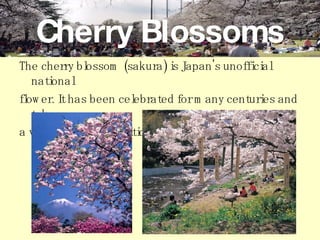
Cherry Blossoms The cherry blossom (sakura) is Japan's unofficial national  flower. It has been celebrated for many centuries and takes  a very prominent position in Japanese culture.
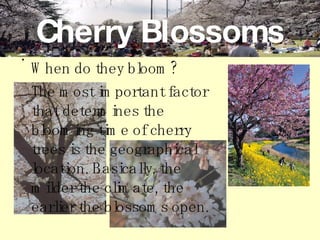
Cherry Blossoms When do they bloom?   The most important factor that determines the blooming time of cherry trees is the geographical location. Basically, the milder the climate, the earlier the blossoms open.
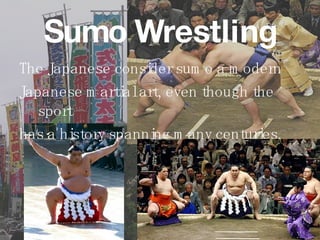
Sumo Wrestling The Japanese consider sumo a modern Japanese martial art, even though the sport  has a history spanning many centuries.
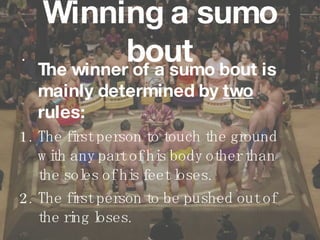
Winning a sumo bout The winner of a sumo bout is mainly determined by  two  rules: 1. The first person to touch the ground with any part of his body other than the soles of his feet loses.  2. The first person to be pushed out of the ring loses.
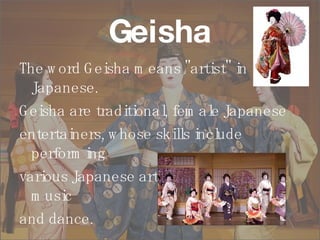
Geisha The word Geisha means "artist" in Japanese.  Geisha are traditional, female Japanese  entertainers, whose skills include performing  various Japanese arts, such as classical music  and dance.
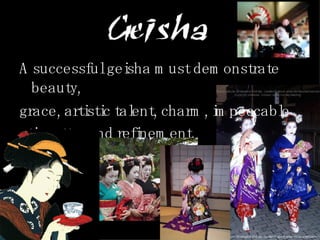
Geisha A successful geisha must demonstrate beauty,  grace, artistic talent, charm, impeccable  etiquette, and refinement.
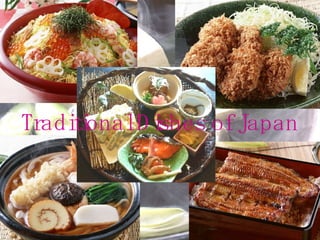
Traditional Dishes of Japan
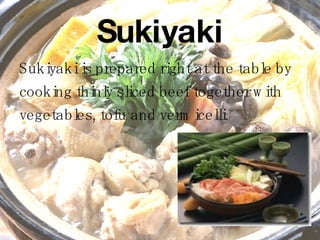
Sukiyaki Sukiyaki is prepared right at the table by  cooking thinly sliced beef together with  vegetables, tofu and vermicelli.
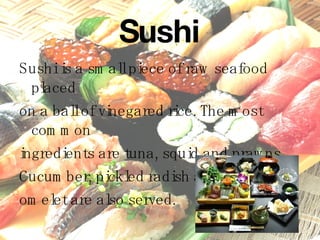
Sushi Sushi is a small piece of raw seafood placed  on a ball of vinegared rice. The most common  ingredients are tuna, squid and prawns.  Cucumber, pickled radish and sweet egg  omelet are also served.
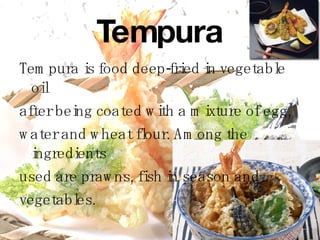
Tempura Tempura is food deep-fried in vegetable oil  after being coated with a mixture of egg,  water and wheat flour. Among the ingredients  used are prawns,  fish in season and   vegetables.
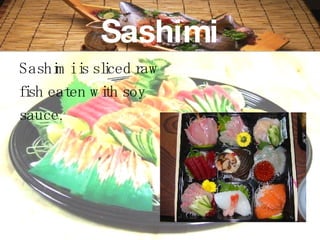
Sashimi Sashimi is sliced raw  fish eaten with soy  sauce.
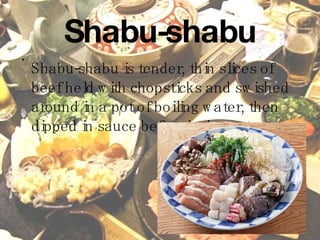
Shabu-shabu Shabu-shabu is tender, thin slices of beef held with chopsticks and swished around in a pot of boiling water, then dipped in sauce before being eaten.
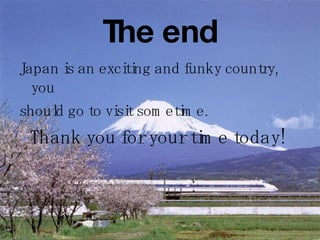
The end Japan is an exciting and funky country, you  should go to visit sometime. Thank you for your time today!

Japan

  • 1.
    Our team membersare: We are going to tell you more about this exciting country - JAPAN Michele Holly Allen
  • 2.
  • 3.
    About Japan Capital:Tokyo Official Language: Japanese Population: 127,433,494 Currency: Yen (¥) Calling Code: +81
  • 4.
    Major Cities CityPrefecture Population 1 Tokyo Tokyo 8,535,792 2 Yokohama Kanagawa 3,602,758 3 Osaka Osaka 2,635,420 4 Nagoya Aichi 2,223,148 5 Sapporo Hokkaidō 1,888,953 6 Kobe Hyōgo 1,528,687 7 Kyoto Kyoto 1,472,511 8 Fukuoka Fukuoka 1,414,417 9 Kawasaki Kanagawa 1,342,262 10 Saitama Saitama 1,182,744
  • 5.
  • 6.
  • 7.
  • 8.
    Major Cities -Kyoto Osaka
  • 9.
    Major Cities -Sapporo Osaka
  • 10.
    Japan Railways JapanRailways (JR) The best way to travel in Japan Shinkansen/ Bullet Train Japan’s high speed train (bullet train) Night Trains About Japanese sleeper trains
  • 11.
  • 12.
    Japanese Fashion Japanesefashion including: Japanese street fashion Japanese fashion (Tokyo) Kogal (Japanese fashion) Traditional Japanese fashion (kimono)
  • 13.
    Harajuku HarajukuTokyo is a major fashion and shopping region, famous for its Harajuku Girls.
  • 14.
    Kogal Kogals areknown for wearing platform boots, a miniskirt, copious amounts of makeup, hair coloring (usually blonde or brown), artificial suntans, and designer accessories .
  • 15.
    Ganguro kogal Thebasic look consists of bleached hair, a deep tan, both black and white eyeliners, false eyelashes, platform shoes (usually sandals or boots), and brightly colored outfits.
  • 16.
    Kimono Meaning “clothing”in Japanese National costume of Japan
  • 17.
    Kimono To weara kimono, wrap the right side of the kimono over the body , then overlap it with the left side. Right on top of the left is only used to dress a corpse for burial.
  • 18.
    Shinto shrines Shinto(the way of the gods) is the indigenous faith of the Japanese people and as old as Japan herself. It remains Japan’s religion besides Buddhism.
  • 19.
    Shinto shrines Torii Komainu Purification through Main and Offering hall Stage Ema
  • 20.
    Cherry Blossoms Thecherry blossom (sakura) is Japan's unofficial national flower. It has been celebrated for many centuries and takes a very prominent position in Japanese culture.
  • 21.
    Cherry Blossoms Whendo they bloom? The most important factor that determines the blooming time of cherry trees is the geographical location. Basically, the milder the climate, the earlier the blossoms open.
  • 22.
    Sumo Wrestling TheJapanese consider sumo a modern Japanese martial art, even though the sport has a history spanning many centuries.
  • 23.
    Winning a sumobout The winner of a sumo bout is mainly determined by two rules: 1. The first person to touch the ground with any part of his body other than the soles of his feet loses. 2. The first person to be pushed out of the ring loses.
  • 24.
    Geisha The wordGeisha means "artist" in Japanese. Geisha are traditional, female Japanese entertainers, whose skills include performing various Japanese arts, such as classical music and dance.
  • 25.
    Geisha A successfulgeisha must demonstrate beauty, grace, artistic talent, charm, impeccable etiquette, and refinement.
  • 26.
  • 27.
    Sukiyaki Sukiyaki isprepared right at the table by cooking thinly sliced beef together with vegetables, tofu and vermicelli.
  • 28.
    Sushi Sushi isa small piece of raw seafood placed on a ball of vinegared rice. The most common ingredients are tuna, squid and prawns. Cucumber, pickled radish and sweet egg omelet are also served.
  • 29.
    Tempura Tempura isfood deep-fried in vegetable oil after being coated with a mixture of egg, water and wheat flour. Among the ingredients used are prawns, fish in season and vegetables.
  • 30.
    Sashimi Sashimi issliced raw fish eaten with soy sauce.
  • 31.
    Shabu-shabu Shabu-shabu istender, thin slices of beef held with chopsticks and swished around in a pot of boiling water, then dipped in sauce before being eaten.
  • 32.
    The end Japanis an exciting and funky country, you should go to visit sometime. Thank you for your time today!