SLIPS, TRIPS AND FALLS
January 2020 Risk Management Presentation
JUST A LITTLE FUN TO GET US
STARTED…PEOPLE FALLING ON ICE
Click these words or the feet to see it.
Fresh snow, freezing rain, ice, snow-covered ice, rough frozen slush, snow
stuck to your footwear and other winter conditions…We sometimes take
these conditions for granted or our mind is occupied somewhere else or
just not paying attention and that’s when we are most vulnerable to slips
and falls. As the temperature drops, the incidences of injuries increases.
Winter’s wet and icy conditions are dangerous and employers need to
take the right precautions to prevent employees and customers on your
premises from falling.
STATISTICALLY
SPEAKING
 According to the National Safety
Council 34,673 people died from
STFs at home and at work in 2016
 48,060 workers were injured bad
enough to require days off from
work
 134 people died from falls on the
SAME LEVEL!
 STFs are a leading cause of death
for working adults in the United
States
 Falls are the #1 cause of death for
older adults!
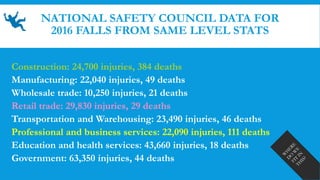
NATIONAL SAFETY COUNCIL DATA FOR
2016 FALLS FROM SAME LEVEL STATS
Construction: 24,700 injuries, 384 deaths
Manufacturing: 22,040 injuries, 49 deaths
Wholesale trade: 10,250 injuries, 21 deaths
Retail trade: 29,830 injuries, 29 deaths
Transportation and Warehousing: 23,490 injuries, 46 deaths
Professional and business services: 22,090 injuries, 111 deaths
Education and health services: 43,660 injuries, 18 deaths
Government: 63,350 injuries, 44 deaths
Construction: 24,700 injuries, 384 deaths
Retail trade: 29,830 injuries, 29 deaths
Professional and business services: 22,090 injuries, 111 deaths
LOWERING THESE STATISTICS
 Concentrate on the path ahead; take your time and
proceed slowly
 Where possible, avoid slippery surfaces – take a route
around slippery hazards, such as wet leaves, icy areas
and snow banks
 Wear appropriate footwear -- wear shoes or boots with
rough (waffled, ridged, or heavily textured) soles to
work and change into dress shoes, if you must wear
them. The inconvenience of changing shoes is
insignificant compared to the inconvenience due to a
serious fall related injury
 Use handrails wherever they are provided -- a secure
handhold can prevent a fall if you should slip
LOWERING THE STATS CONTINUED
 Check to be sure entrance halls and stairs are
clear of snow and slush; tracked in snow and
slush often cause slips and falls
 Beware of changes in walking surfaces; many
falls are caused when someone doesn't realize
he/she is leaving a secure area for a slippery one
 Clean your shoes when you go inside; caked snow
and ice on shoe soles can be treacherous. Provide
shoe cleaning devices at your office entrance
ways for employees and customers to use, as an
example
STAT
LOWERING
METHOD
IF YOU DO SLIP:
Try to /roll with the fall/ if you begin to fall forward
Sit down if you begin to fall backward -- when a falling
person relaxes, an injury is less severe than when
he/she tenses. Fighting a fall on ice can cause twisting
or bending injuries which may be worse than the bump
the fall would have produced
NOT AN ENDORSEMENT!!! Click here
A PRETTY COOL VIDEO I FOUND WORTH WATCHING ON
ANTI-SLIP PRODUCTS FROM COMSUMER REPORTS
WORKPLACE SAFETY
 Don’t get caught by surprise. Monitor the weather and
changing conditions. Have a plan that employees know
what to do
 Keep adequate supplies of snow and ice removal tools in
accessible areas
 Shovel and apply ice melts as indicated by the
manufacturer to keep walking area clear and dry
 Watch for areas where ice tends to form. Remove ice
accumulations promptly and apply ice melt to prevent
buildups
 Provide good lighting and clear path markings in
parking lots and walkways
WORKPLACE SAFETY
 Clearly identify steps, ramps and other
elevation changes that might not be
visible in snowy conditions
 Contract with a snow removal company
to keep your parking lots clear of snow
and ice or train employees on how to do
it
 Place high quality, beveled edge track off
mats in walking areas subject to water or
snow accumulation. Change mats
regularly to ensure those in place are dry
 Apply a slip-resistant floor treatment in
areas that tend to become wet and
slippery. Clean and maintain these floors
according to the manufacturer’s
specifications
YOU NEED A FALL
PREVENTION PROGRAM
 Set standards for the condition of your parking lot
and paths and for wearing of appropriate footwear
for employees
 Define everyone’s role in preventing slips and falls
 Communicate roles and standards to all staff
 Train workers responsible for keeping lots and
walkways clear
 Check that standards are met and that the program
works
 Acknowledge success and make improvements
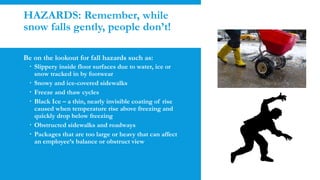
HAZARDS: Remember, while
snow falls gently, people don’t!
Be on the lookout for fall hazards such as:
 Slippery inside floor surfaces due to water, ice or
snow tracked in by footwear
 Snowy and ice-covered sidewalks
 Freeze and thaw cycles
 Black Ice – a thin, nearly invisible coating of rise
caused when temperature rise above freezing and
quickly drop below freezing
 Obstructed sidewalks and roadways
 Packages that are too large or heavy that can affect
an employee’s balance or obstruct view
TRAIN EMPLOYEES TO
 Keep floors and surfaces clear of clutter
 Keep file cabinets and desk drawers closed
 Keep electrical and phone cords out of traffic areas
 Install handrails on stairways
 Wear sensible footwear
 Never stand on chairs, tables or any surface with
wheels
 Properly arrange furniture to create open pathways
 Maintain good lighting indoors and out
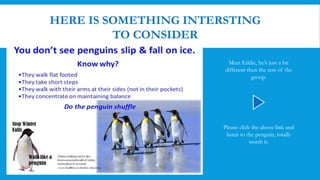
HERE IS SOMETHING INTERSTING
TO CONSIDER
Please click the above link and
listen to the penguin, totally
worth it.
Meet Eddie, he’s just a bit
different then the rest of the
group.
If you would like more information on Winter Slips and Falls, please contact:
Marilyn Blake at MAB@telcominsgrp.com or Craig Rapp at CSR@telcominsgrp.com
6301 Ivy Lane, Suite 506
Greenbelt, MD 20770
Toll Free: 800.222.4664
Fax: 301.474.6196
www.TelcomInsGrp.com
TIG@TelcomInsGrp.com
Facebook.com/TelcomInsGrp

Jan 2020 - Safety Training Powerpoint

  • 1.
    SLIPS, TRIPS ANDFALLS January 2020 Risk Management Presentation
  • 2.
    JUST A LITTLEFUN TO GET US STARTED…PEOPLE FALLING ON ICE Click these words or the feet to see it.
  • 3.
    Fresh snow, freezingrain, ice, snow-covered ice, rough frozen slush, snow stuck to your footwear and other winter conditions…We sometimes take these conditions for granted or our mind is occupied somewhere else or just not paying attention and that’s when we are most vulnerable to slips and falls. As the temperature drops, the incidences of injuries increases. Winter’s wet and icy conditions are dangerous and employers need to take the right precautions to prevent employees and customers on your premises from falling.
  • 4.
    STATISTICALLY SPEAKING  According tothe National Safety Council 34,673 people died from STFs at home and at work in 2016  48,060 workers were injured bad enough to require days off from work  134 people died from falls on the SAME LEVEL!  STFs are a leading cause of death for working adults in the United States  Falls are the #1 cause of death for older adults!
  • 5.
    NATIONAL SAFETY COUNCILDATA FOR 2016 FALLS FROM SAME LEVEL STATS Construction: 24,700 injuries, 384 deaths Manufacturing: 22,040 injuries, 49 deaths Wholesale trade: 10,250 injuries, 21 deaths Retail trade: 29,830 injuries, 29 deaths Transportation and Warehousing: 23,490 injuries, 46 deaths Professional and business services: 22,090 injuries, 111 deaths Education and health services: 43,660 injuries, 18 deaths Government: 63,350 injuries, 44 deaths Construction: 24,700 injuries, 384 deaths Retail trade: 29,830 injuries, 29 deaths Professional and business services: 22,090 injuries, 111 deaths
  • 6.
    LOWERING THESE STATISTICS Concentrate on the path ahead; take your time and proceed slowly  Where possible, avoid slippery surfaces – take a route around slippery hazards, such as wet leaves, icy areas and snow banks  Wear appropriate footwear -- wear shoes or boots with rough (waffled, ridged, or heavily textured) soles to work and change into dress shoes, if you must wear them. The inconvenience of changing shoes is insignificant compared to the inconvenience due to a serious fall related injury  Use handrails wherever they are provided -- a secure handhold can prevent a fall if you should slip
  • 7.
    LOWERING THE STATSCONTINUED  Check to be sure entrance halls and stairs are clear of snow and slush; tracked in snow and slush often cause slips and falls  Beware of changes in walking surfaces; many falls are caused when someone doesn't realize he/she is leaving a secure area for a slippery one  Clean your shoes when you go inside; caked snow and ice on shoe soles can be treacherous. Provide shoe cleaning devices at your office entrance ways for employees and customers to use, as an example
  • 8.
    STAT LOWERING METHOD IF YOU DOSLIP: Try to /roll with the fall/ if you begin to fall forward Sit down if you begin to fall backward -- when a falling person relaxes, an injury is less severe than when he/she tenses. Fighting a fall on ice can cause twisting or bending injuries which may be worse than the bump the fall would have produced
  • 9.
    NOT AN ENDORSEMENT!!!Click here A PRETTY COOL VIDEO I FOUND WORTH WATCHING ON ANTI-SLIP PRODUCTS FROM COMSUMER REPORTS
  • 10.
    WORKPLACE SAFETY  Don’tget caught by surprise. Monitor the weather and changing conditions. Have a plan that employees know what to do  Keep adequate supplies of snow and ice removal tools in accessible areas  Shovel and apply ice melts as indicated by the manufacturer to keep walking area clear and dry  Watch for areas where ice tends to form. Remove ice accumulations promptly and apply ice melt to prevent buildups  Provide good lighting and clear path markings in parking lots and walkways
  • 11.
    WORKPLACE SAFETY  Clearlyidentify steps, ramps and other elevation changes that might not be visible in snowy conditions  Contract with a snow removal company to keep your parking lots clear of snow and ice or train employees on how to do it  Place high quality, beveled edge track off mats in walking areas subject to water or snow accumulation. Change mats regularly to ensure those in place are dry  Apply a slip-resistant floor treatment in areas that tend to become wet and slippery. Clean and maintain these floors according to the manufacturer’s specifications
  • 12.
    YOU NEED AFALL PREVENTION PROGRAM  Set standards for the condition of your parking lot and paths and for wearing of appropriate footwear for employees  Define everyone’s role in preventing slips and falls  Communicate roles and standards to all staff  Train workers responsible for keeping lots and walkways clear  Check that standards are met and that the program works  Acknowledge success and make improvements
  • 13.
    HAZARDS: Remember, while snowfalls gently, people don’t! Be on the lookout for fall hazards such as:  Slippery inside floor surfaces due to water, ice or snow tracked in by footwear  Snowy and ice-covered sidewalks  Freeze and thaw cycles  Black Ice – a thin, nearly invisible coating of rise caused when temperature rise above freezing and quickly drop below freezing  Obstructed sidewalks and roadways  Packages that are too large or heavy that can affect an employee’s balance or obstruct view
  • 14.
    TRAIN EMPLOYEES TO Keep floors and surfaces clear of clutter  Keep file cabinets and desk drawers closed  Keep electrical and phone cords out of traffic areas  Install handrails on stairways  Wear sensible footwear  Never stand on chairs, tables or any surface with wheels  Properly arrange furniture to create open pathways  Maintain good lighting indoors and out
  • 15.
    HERE IS SOMETHINGINTERSTING TO CONSIDER Please click the above link and listen to the penguin, totally worth it. Meet Eddie, he’s just a bit different then the rest of the group.
  • 16.
    If you wouldlike more information on Winter Slips and Falls, please contact: Marilyn Blake at MAB@telcominsgrp.com or Craig Rapp at CSR@telcominsgrp.com 6301 Ivy Lane, Suite 506 Greenbelt, MD 20770 Toll Free: 800.222.4664 Fax: 301.474.6196 www.TelcomInsGrp.com TIG@TelcomInsGrp.com Facebook.com/TelcomInsGrp