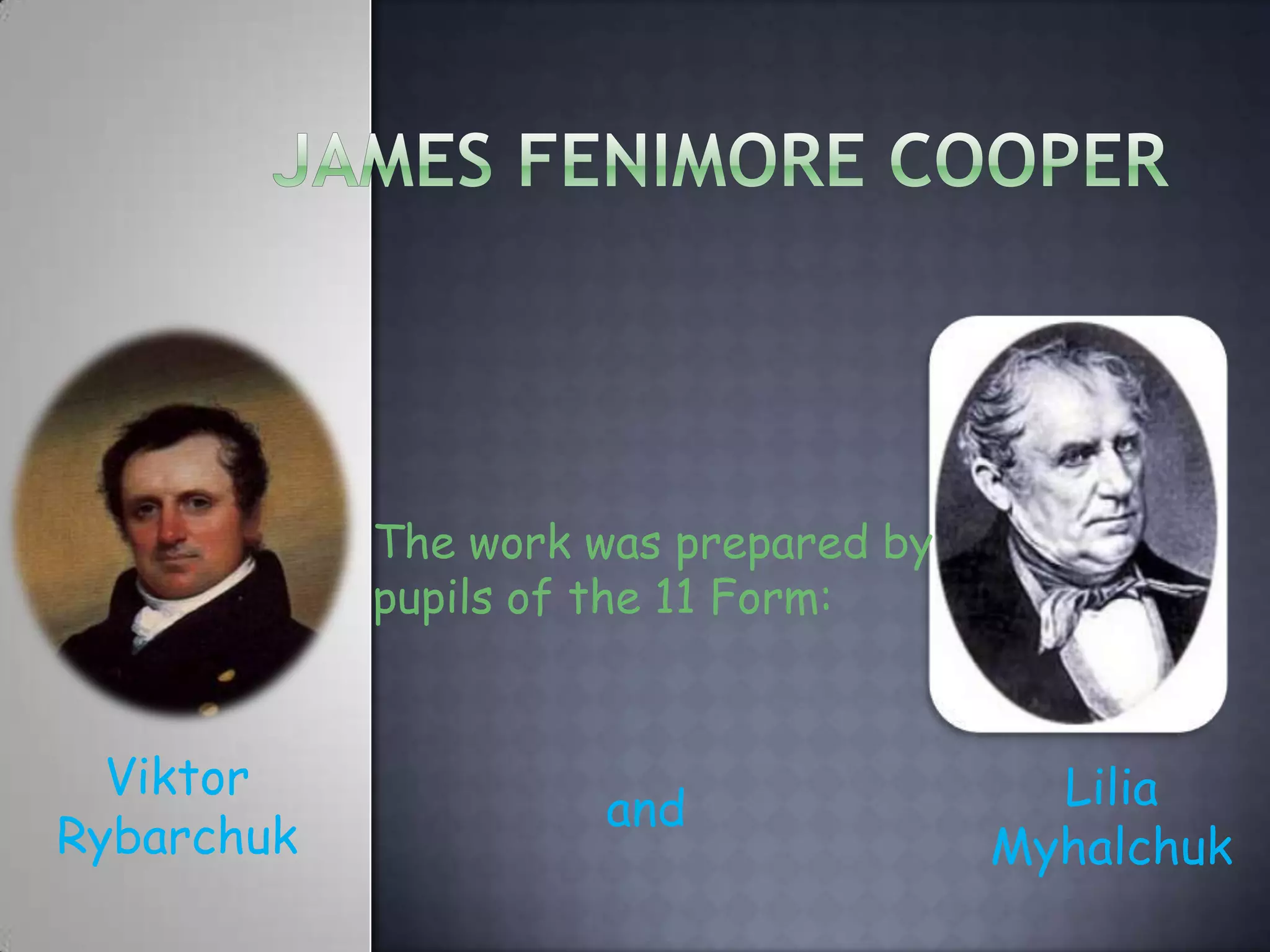
The work was prepared by
pupils of the 11 Form:

Viktor
Rybarchuk

and

Lilia
Myhalchuk
James Fenimore Cooper was one of
America’s first great novelists because he
helped to create a sense of American
history through his writings. Cooper was
influenced greatly by nature and wrote
about it frequently in his novels. Cooper
was also influenced by and wrote about
places in the Hudson River Valley, such as
the Van Wyck House.
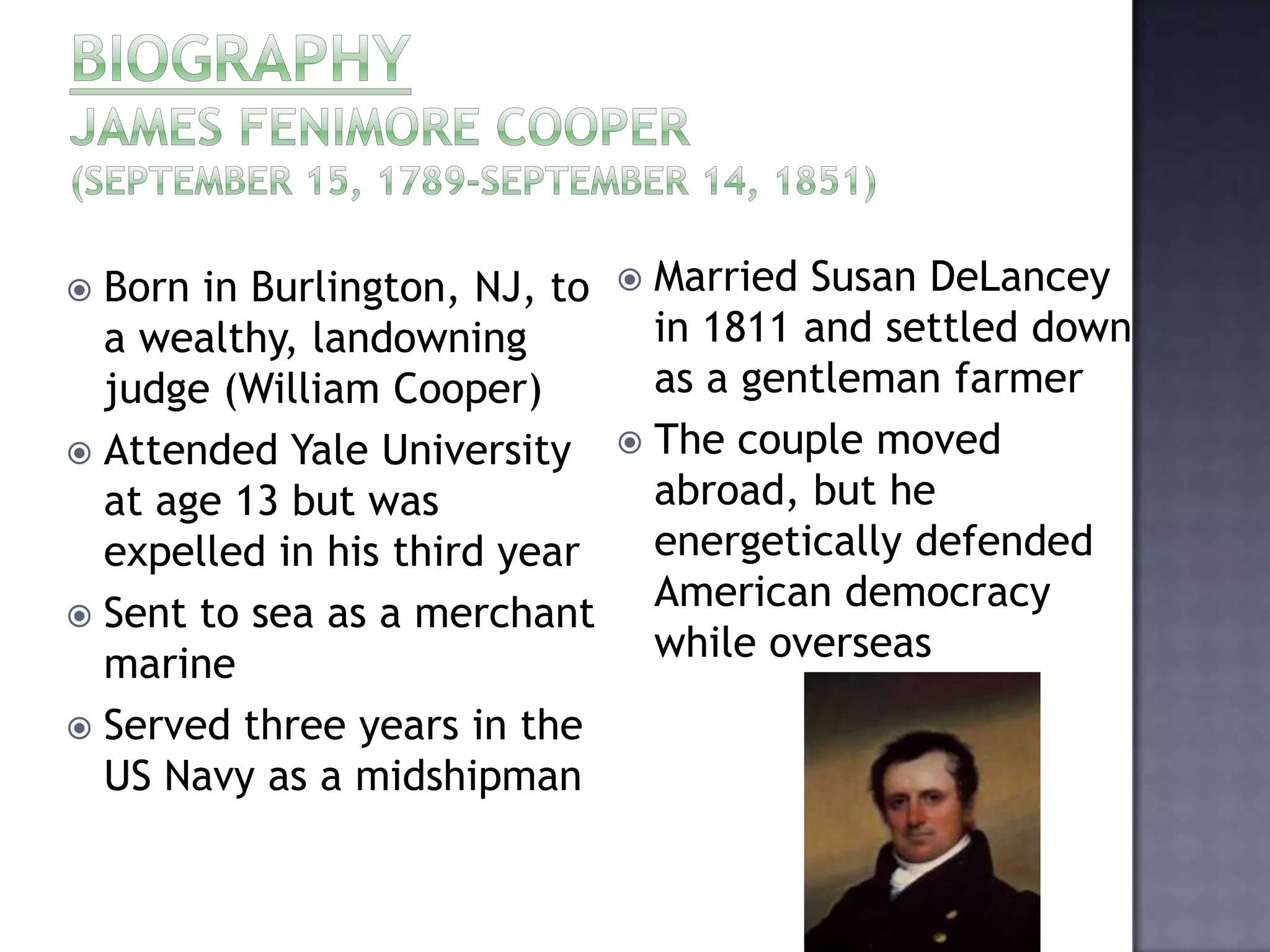
Born in Burlington, NJ, to
a wealthy, landowning
judge (William Cooper)
 Attended Yale University
at age 13 but was
expelled in his third year
 Sent to sea as a merchant
marine
 Served three years in the
US Navy as a midshipman


Married Susan DeLancey
in 1811 and settled down
as a gentleman farmer
 The couple moved
abroad, but he
energetically defended
American democracy
while overseas

 Cooper’s

views were considered “conservative”
and “aristocratic” – made him unpopular as a
social commentator
 His works were more popular overseas than in
America
 His novels are said to “engage historical themes”
 Helped to form the popular view of American
history
 Cooper died in 1851, and is buried in the
cemetery of Cooperstown, NY
 James

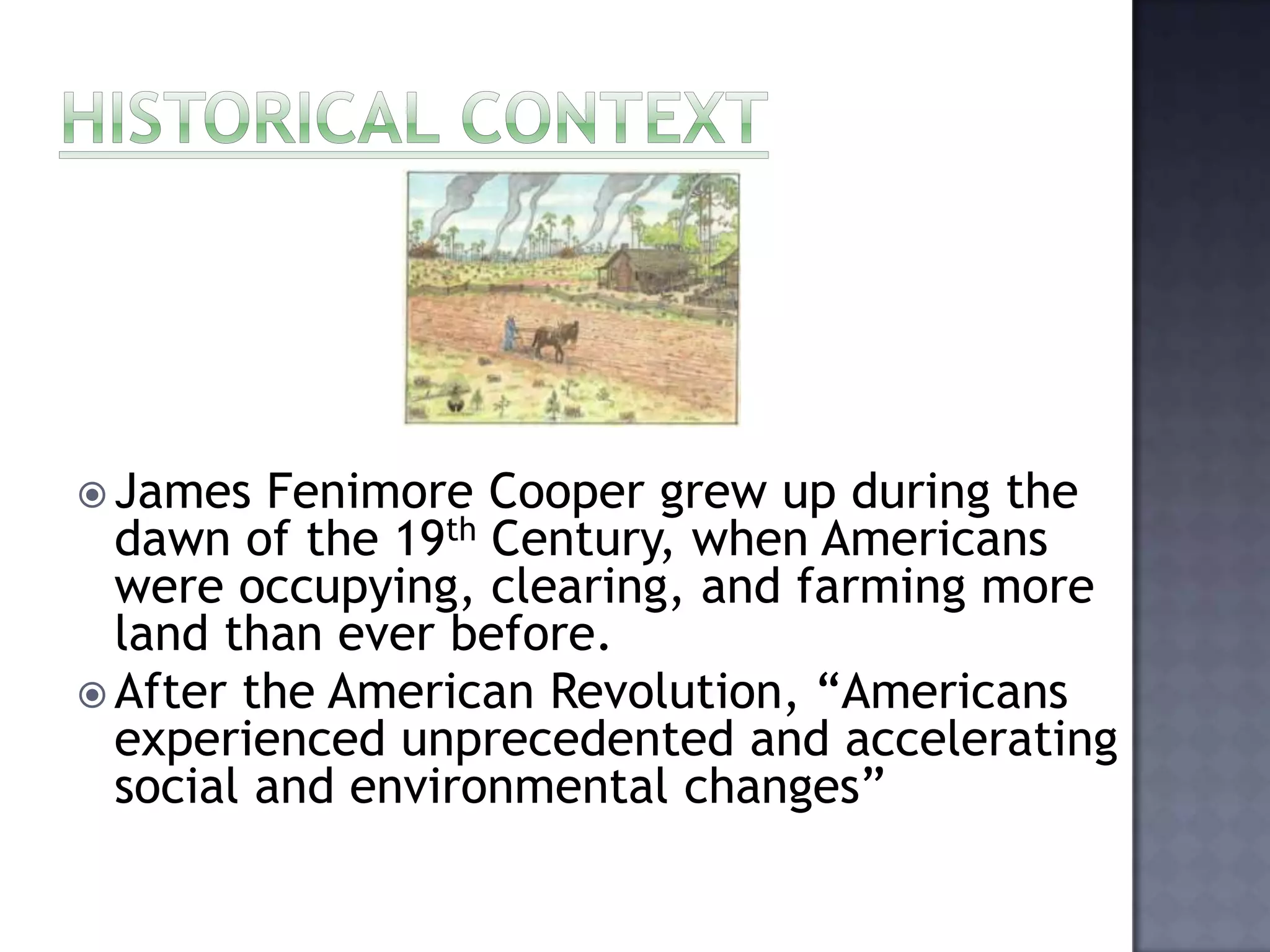
Fenimore Cooper grew up during the
dawn of the 19th Century, when Americans
were occupying, clearing, and farming more
land than ever before.
 After the American Revolution, “Americans
experienced unprecedented and accelerating
social and environmental changes”
 The

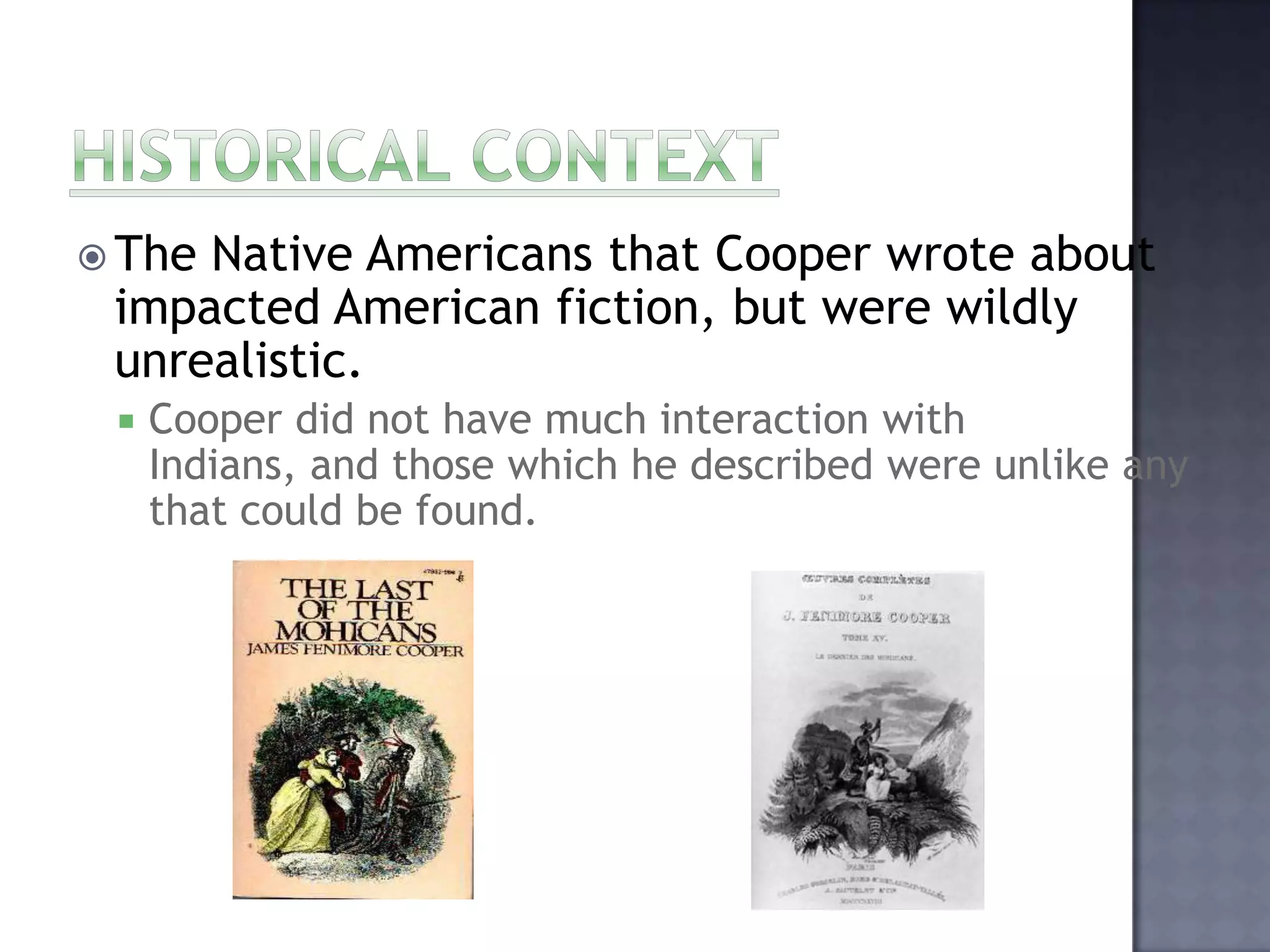
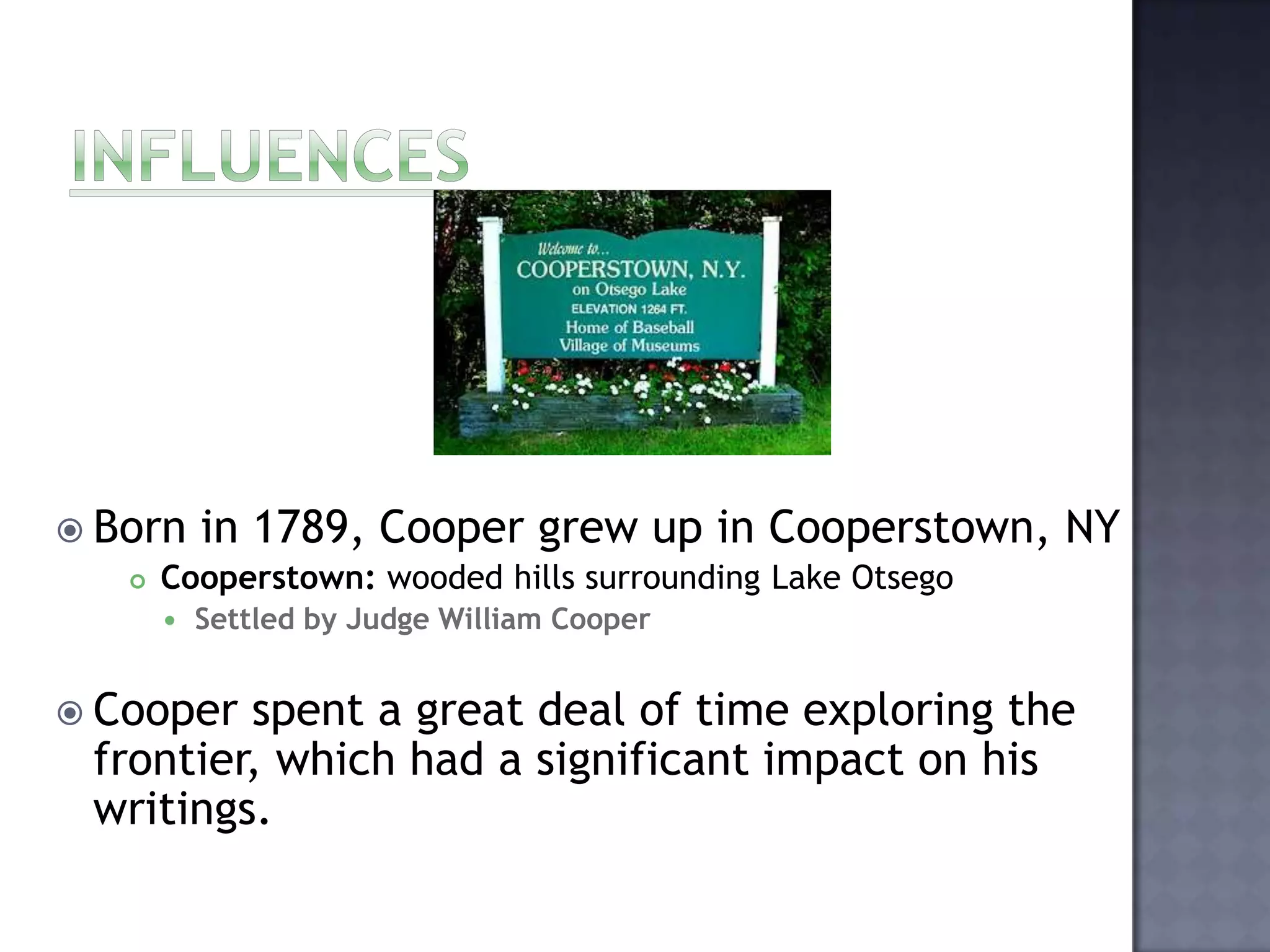
Native Americans that Cooper wrote about
impacted American fiction, but were wildly
unrealistic.


Cooper did not have much interaction with
Indians, and those which he described were unlike any
that could be found.
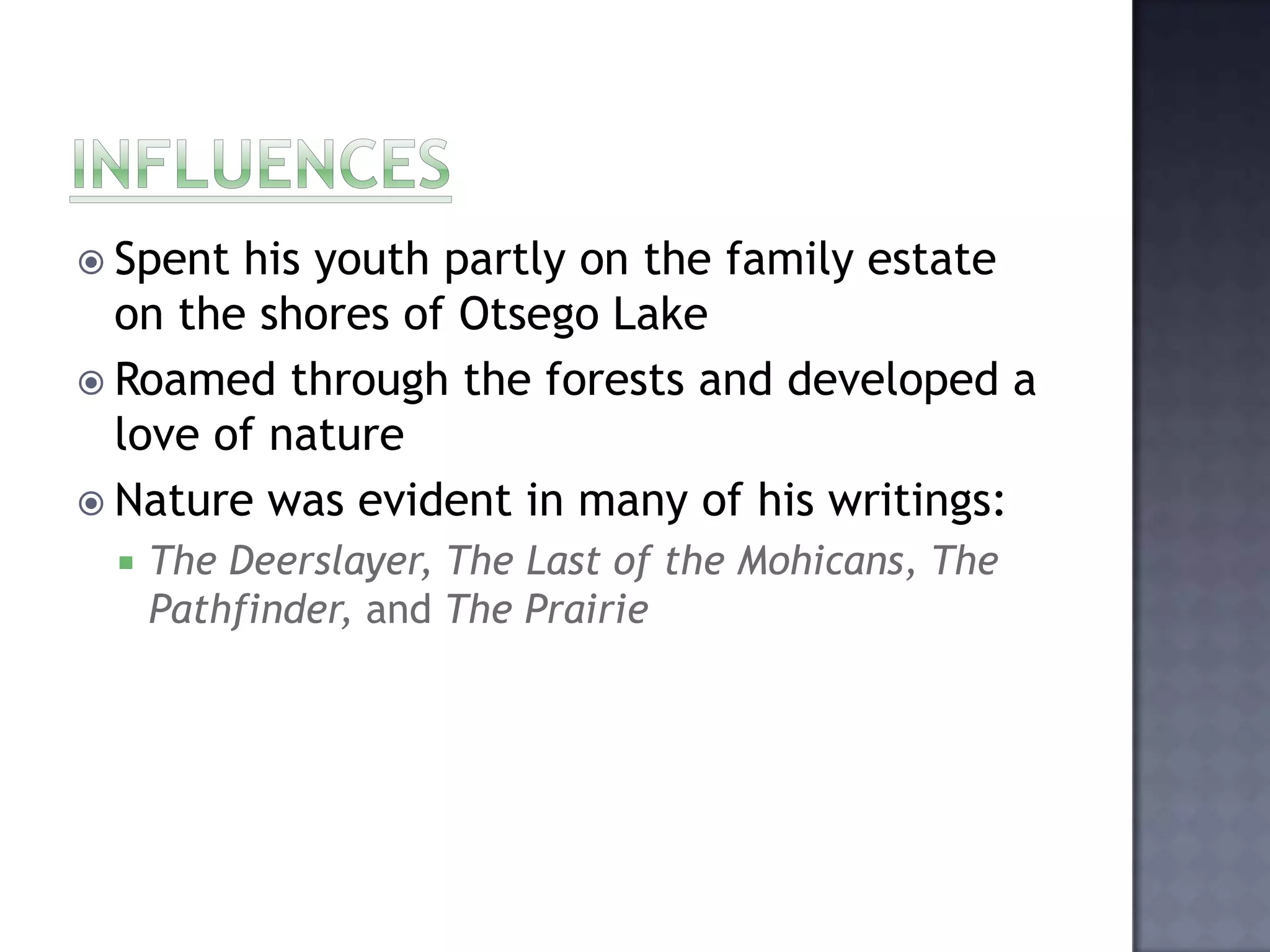
 Born in 1789, Cooper grew up in Cooperstown,
 Cooperstown: wooded hills surrounding Lake Otsego


NY

Settled by Judge William Cooper

 Cooper

spent a great deal of time exploring the
frontier, which had a significant impact on his
writings.
 Spent

his youth partly on the family estate
on the shores of Otsego Lake
 Roamed through the forests and developed a
love of nature
 Nature was evident in many of his writings:


The Deerslayer, The Last of the Mohicans, The
Pathfinder, and The Prairie







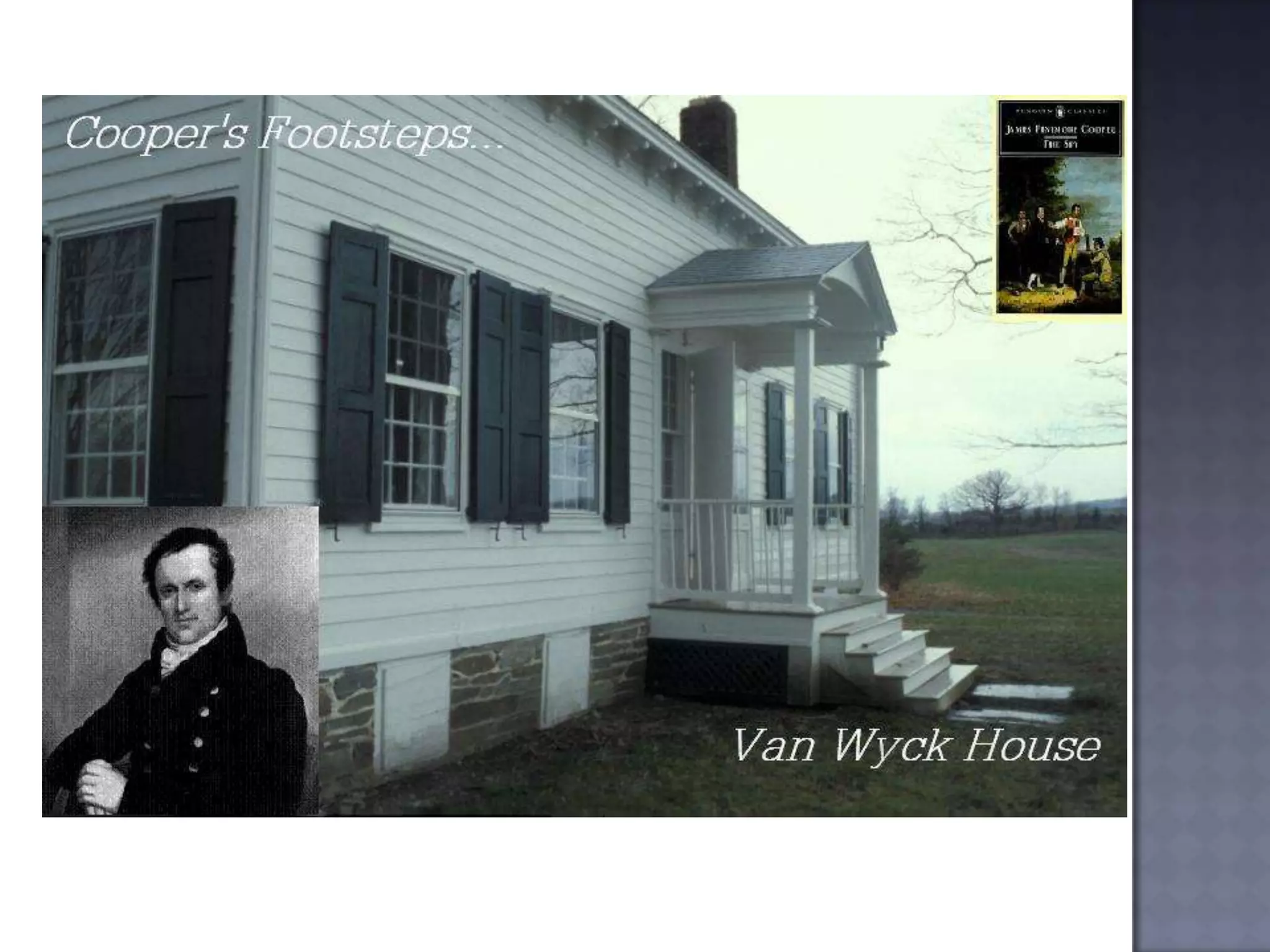
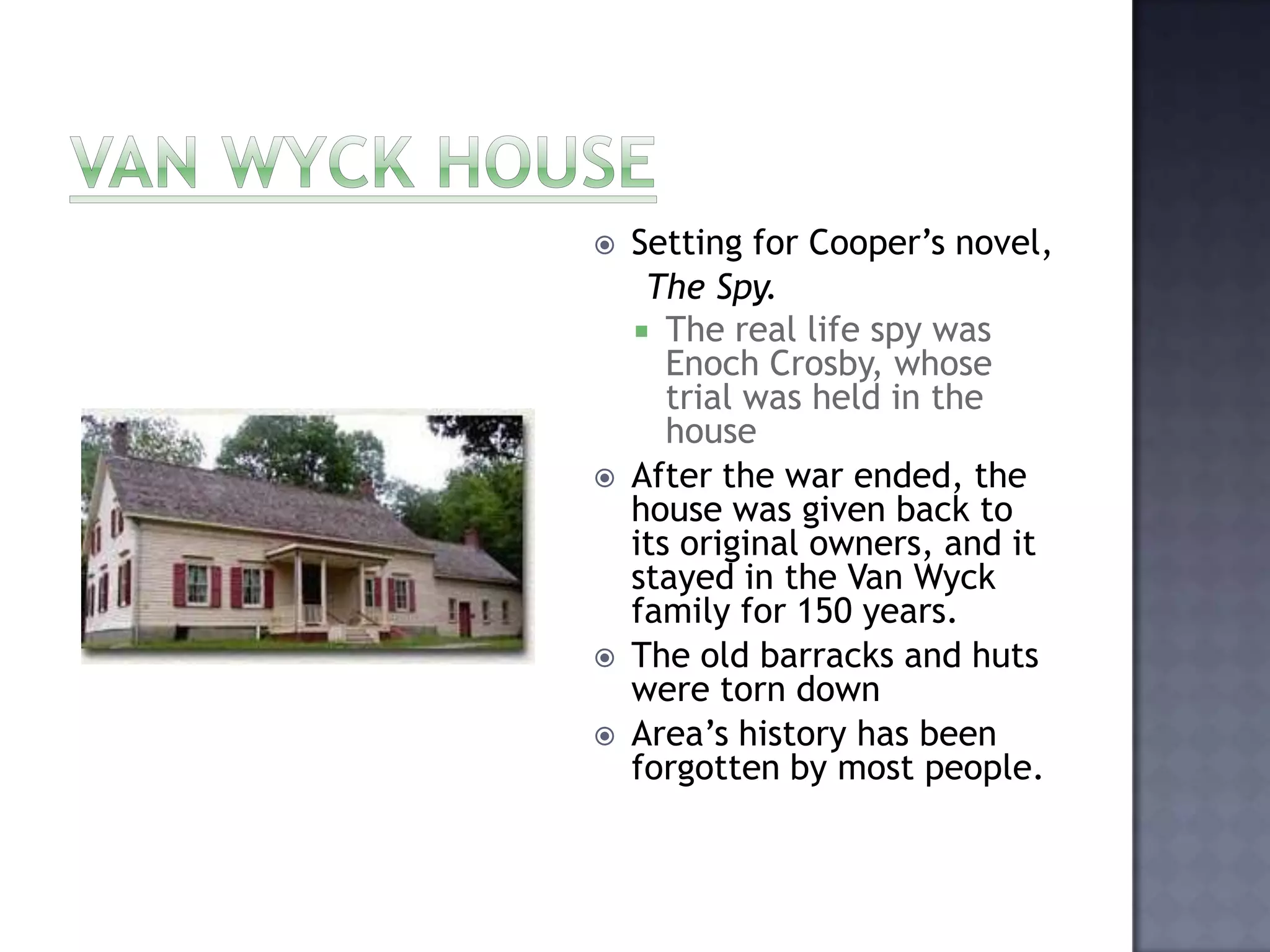
Setting for Cooper’s novel,
The Spy.
 The real life spy was
Enoch Crosby, whose
trial was held in the
house
After the war ended, the
house was given back to
its original owners, and it
stayed in the Van Wyck
family for 150 years.
The old barracks and huts
were torn down
Area’s history has been
forgotten by most people.
 Cooper

wrote more than 30

novels


Works include:









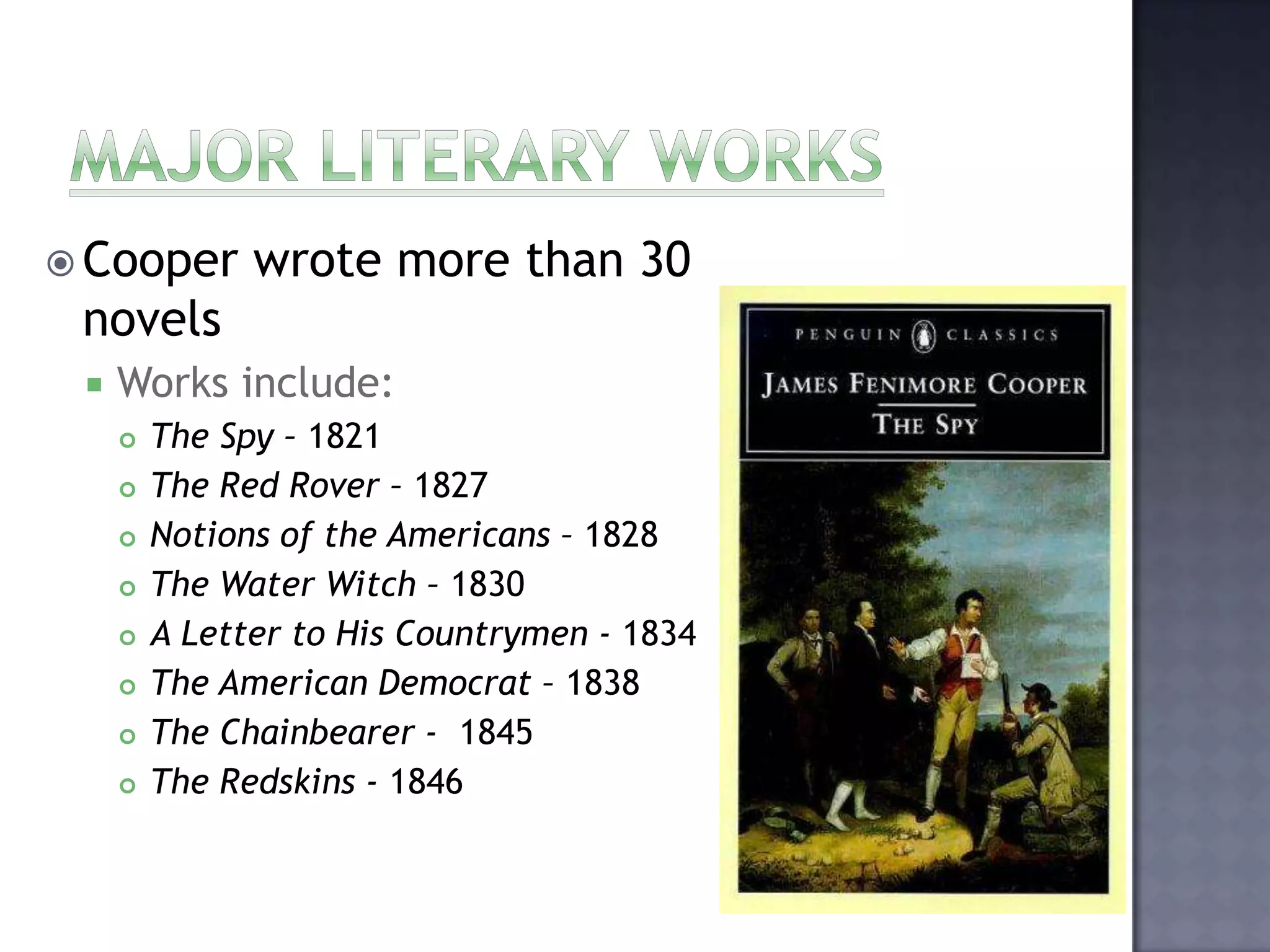
The Spy – 1821
The Red Rover – 1827
Notions of the Americans – 1828
The Water Witch – 1830
A Letter to His Countrymen - 1834
The American Democrat – 1838
The Chainbearer - 1845
The Redskins - 1846
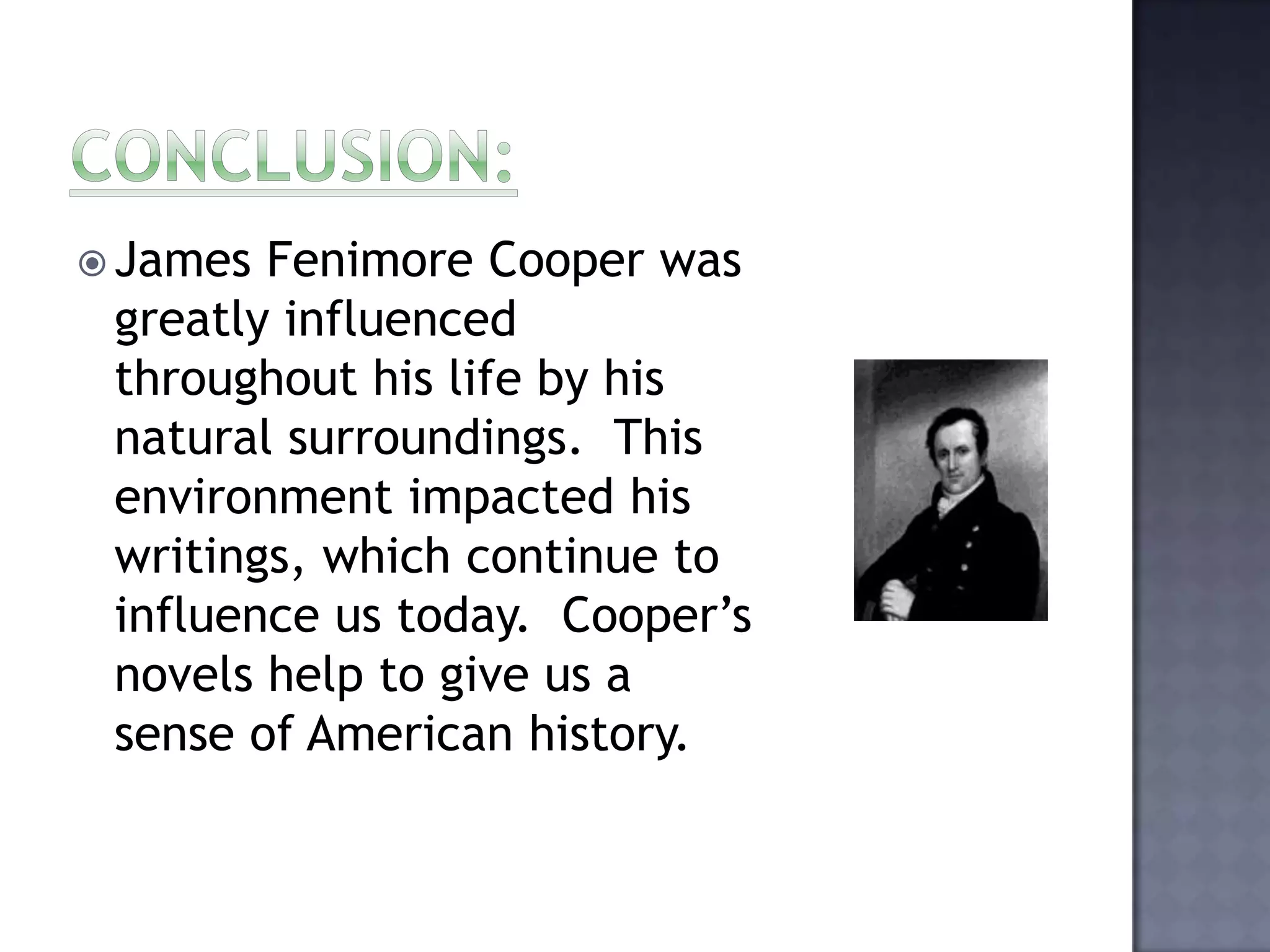
 James

Fenimore Cooper was
greatly influenced
throughout his life by his
natural surroundings. This
environment impacted his
writings, which continue to
influence us today. Cooper’s
novels help to give us a
sense of American history.
[1] Taylor, Alan. “The Great Change Begins: Settling the Forest of Central New
York.” New York History 76 (July 1995): 265-290. The Hudson Valley
Regional Review 12 (March 1995): 1-48.
-Article provides historical context of the period in which Cooper lived.
[2] “James Fenimore Cooper.” 2000. Retrieved on 3/3/2005 from
http://www.jamesfenimorecooper.com
-This site provides biographical information as well as information about
Cooper’s role in American history.
[3] “James Fenimore Cooper.” 2003. Retrieved on 3/4/2005 from
http://www.kirjasto.sci.fi/jfcooper.htm
-This Web site provides information on Cooper’s collection, the
Leatherstocking Tales.
[4] “James Fenimore Cooper.” 2002. Retrieved on 3/3/2005 from

http://www.nagasakigaigo.ac.jp/ishikawa/amlit/c/cooper19ro.htm
-Site provides information on Cooper’s literary works.
Other References
“All American: James Fenimore Cooper.” 2002. Retrieved on 3/4/2005 from
http://www.uncp.edu/home/Canada/work/allam/17841865/lit/cooper
-This site offers information on Cooper’s major literary works.
“Bibliomania: James Fenimore Cooper.” Retrieved on 3/6/2005 from
http://www.bibliomania.com
-Site offers biographical information about Cooper.
“Biography.” Retrieved on 3/6/2005 from
http://www2.bc.edu/~wallacej/jfc/jfcbio.html
-This site offers biographical information on James Fenimore Cooper.
“Clipart.” Retrieved 3/8/2005 from
http://www.webpages.com/html/sounds
-This website supplied the sound clips used in the presentation.
“The History and Geography of Cooperstown.” Retrieved on 3/5/2005 from
http://www.cooperstownchamber.org/village/wayoflife/history.htm
-This site provides historical and geographical information on Cooperstown, where
Cooper was born.

“Van Wyck Homestead Museum.” Retrieved on 3/5/2005 from
http://cityguide.pojonews.com/fe/Heritage/stories/he_vanwyck_homestead.asp
-This site provides information about the Van Wyck House.

The following websites provided the pictures used in this presentation:
http://www.hudsonrivervalley.net/images/julynewsletter/image020.jpg
http://xroads.virginia.edu/~HYPER/HNS/Indians/main.html
http://odur.let.rug.nl/~usa/LIT/cooper.htm
http://external.oneonta.edu/cooper
http://www.artcom.com/Museums/nv/sz/12524-01.htm
http://www.geocities.com/BourbonStreet/Inn/1819/spy.gif
http://www.geocities.com/charlesjthomas5/cooperstown.jpg
http://www.baseballhalloffame.org/visitor_info/images/cooperstown_welcome_sign.jpg
http://www.mightymiramichi.com/gallery/images/Historic/images/The-Alexandrasteamboat-(Mi_jpg.jpg
http://www.cadytech.com/dumas/images/mid/mid_james_fenimore_cooper.jpg

James Cooper

  • 1.
    The work wasprepared by pupils of the 11 Form: Viktor Rybarchuk and Lilia Myhalchuk
  • 3.
    James Fenimore Cooperwas one of America’s first great novelists because he helped to create a sense of American history through his writings. Cooper was influenced greatly by nature and wrote about it frequently in his novels. Cooper was also influenced by and wrote about places in the Hudson River Valley, such as the Van Wyck House.
  • 4.
    Born in Burlington,NJ, to a wealthy, landowning judge (William Cooper)  Attended Yale University at age 13 but was expelled in his third year  Sent to sea as a merchant marine  Served three years in the US Navy as a midshipman  Married Susan DeLancey in 1811 and settled down as a gentleman farmer  The couple moved abroad, but he energetically defended American democracy while overseas 
  • 5.
     Cooper’s views wereconsidered “conservative” and “aristocratic” – made him unpopular as a social commentator  His works were more popular overseas than in America  His novels are said to “engage historical themes”  Helped to form the popular view of American history  Cooper died in 1851, and is buried in the cemetery of Cooperstown, NY
  • 6.
     James Fenimore Coopergrew up during the dawn of the 19th Century, when Americans were occupying, clearing, and farming more land than ever before.  After the American Revolution, “Americans experienced unprecedented and accelerating social and environmental changes”
  • 7.
     The Native Americansthat Cooper wrote about impacted American fiction, but were wildly unrealistic.  Cooper did not have much interaction with Indians, and those which he described were unlike any that could be found.
  • 8.
     Born in1789, Cooper grew up in Cooperstown,  Cooperstown: wooded hills surrounding Lake Otsego  NY Settled by Judge William Cooper  Cooper spent a great deal of time exploring the frontier, which had a significant impact on his writings.
  • 9.
     Spent his youthpartly on the family estate on the shores of Otsego Lake  Roamed through the forests and developed a love of nature  Nature was evident in many of his writings:  The Deerslayer, The Last of the Mohicans, The Pathfinder, and The Prairie
  • 10.
        Setting for Cooper’snovel, The Spy.  The real life spy was Enoch Crosby, whose trial was held in the house After the war ended, the house was given back to its original owners, and it stayed in the Van Wyck family for 150 years. The old barracks and huts were torn down Area’s history has been forgotten by most people.
  • 11.
     Cooper wrote morethan 30 novels  Works include:         The Spy – 1821 The Red Rover – 1827 Notions of the Americans – 1828 The Water Witch – 1830 A Letter to His Countrymen - 1834 The American Democrat – 1838 The Chainbearer - 1845 The Redskins - 1846
  • 12.
     James Fenimore Cooperwas greatly influenced throughout his life by his natural surroundings. This environment impacted his writings, which continue to influence us today. Cooper’s novels help to give us a sense of American history.
  • 13.
    [1] Taylor, Alan.“The Great Change Begins: Settling the Forest of Central New York.” New York History 76 (July 1995): 265-290. The Hudson Valley Regional Review 12 (March 1995): 1-48. -Article provides historical context of the period in which Cooper lived. [2] “James Fenimore Cooper.” 2000. Retrieved on 3/3/2005 from http://www.jamesfenimorecooper.com -This site provides biographical information as well as information about Cooper’s role in American history. [3] “James Fenimore Cooper.” 2003. Retrieved on 3/4/2005 from http://www.kirjasto.sci.fi/jfcooper.htm -This Web site provides information on Cooper’s collection, the Leatherstocking Tales. [4] “James Fenimore Cooper.” 2002. Retrieved on 3/3/2005 from http://www.nagasakigaigo.ac.jp/ishikawa/amlit/c/cooper19ro.htm -Site provides information on Cooper’s literary works.
  • 14.
    Other References “All American:James Fenimore Cooper.” 2002. Retrieved on 3/4/2005 from http://www.uncp.edu/home/Canada/work/allam/17841865/lit/cooper -This site offers information on Cooper’s major literary works. “Bibliomania: James Fenimore Cooper.” Retrieved on 3/6/2005 from http://www.bibliomania.com -Site offers biographical information about Cooper. “Biography.” Retrieved on 3/6/2005 from http://www2.bc.edu/~wallacej/jfc/jfcbio.html -This site offers biographical information on James Fenimore Cooper. “Clipart.” Retrieved 3/8/2005 from http://www.webpages.com/html/sounds -This website supplied the sound clips used in the presentation.
  • 15.
    “The History andGeography of Cooperstown.” Retrieved on 3/5/2005 from http://www.cooperstownchamber.org/village/wayoflife/history.htm -This site provides historical and geographical information on Cooperstown, where Cooper was born. “Van Wyck Homestead Museum.” Retrieved on 3/5/2005 from http://cityguide.pojonews.com/fe/Heritage/stories/he_vanwyck_homestead.asp -This site provides information about the Van Wyck House. The following websites provided the pictures used in this presentation: http://www.hudsonrivervalley.net/images/julynewsletter/image020.jpg http://xroads.virginia.edu/~HYPER/HNS/Indians/main.html http://odur.let.rug.nl/~usa/LIT/cooper.htm http://external.oneonta.edu/cooper http://www.artcom.com/Museums/nv/sz/12524-01.htm http://www.geocities.com/BourbonStreet/Inn/1819/spy.gif http://www.geocities.com/charlesjthomas5/cooperstown.jpg http://www.baseballhalloffame.org/visitor_info/images/cooperstown_welcome_sign.jpg http://www.mightymiramichi.com/gallery/images/Historic/images/The-Alexandrasteamboat-(Mi_jpg.jpg http://www.cadytech.com/dumas/images/mid/mid_james_fenimore_cooper.jpg