AGENDA
 Types of Child Care System
 History/Evolution of System
 Underlying Philosophy
 Availability
 Accessibility
 Role of ECE/ Training
 Summation
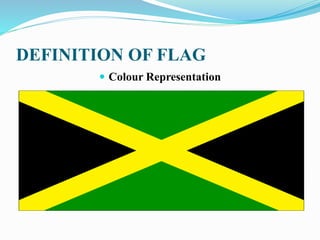
DEFINITION OF FLAG
 Colour Representation
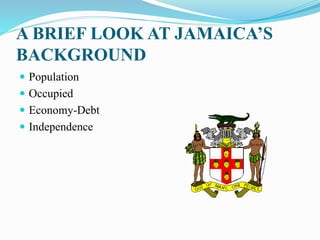
A BRIEF LOOK AT JAMAICA’S
BACKGROUND
 Population
 Occupied
 Economy-Debt
 Independence
FIRST COMMUNITY BASED
SCHOOL
 Rev Henry Ward
 Basic school
 Mr. Grant-Five year project
 Van Leer Corporation
 Be responsible for the Early Childhood Education and
curriculum guides
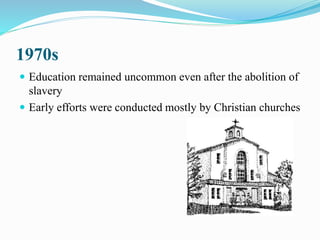
1970s
 Education remained uncommon even after the abolition of
slavery
 Early efforts were conducted mostly by Christian churches
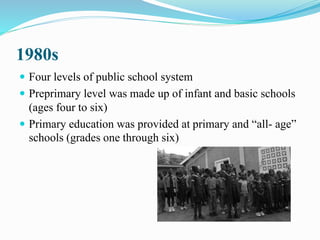
1980s
 Four levels of public school system
 Preprimary level was made up of infant and basic schools
(ages four to six)
 Primary education was provided at primary and “all- age”
schools (grades one through six)
THE MINISTRY OF EDUCATION
 Mission statement
To provide a system which secures quality education
and training for all persons in Jamaica and achieves
effective integration of educational and cultural
resources in order to optimize individual and national
development
THE MINISTRY OF EDUCATION
 Expansion of Teacher Trainers for special education
programs
 Funding for basic schools
 Budget allocation
 Children’s Fund (UNICEF)
 Head offices
 6 Regional offices
TYPES OF CHILD CARE SYSTEMS
 Day care center (Government built, private home-based)
 Infant school
 Nursery school
 Privately operated pre-school
 Basic school- A system of Community Based (basic
schools) has been established and appears to be a viable
approach. With these systems in place the challenge now
is to continue and maintain their extended scope because
of their economic decline.
UNDERLYING PHILOSOPHY
 The philosophical base for the early education programs
in Jamaica is eclectic
BELIEFS AND VALUES
 Identify and develop social, intellectual, physical and
emotional needs of the child
 Co-operate in developing and maintaining continuous
research and evaluation of teaching and learning activities
in ECE
BELIEFS AND VALUES
 Identify, educate and train various types of personnel
needed for optimal development and utilization of suitable
curriculum materials in ECE on an ongoing basis
 Help parents (and teachers) understand the specific role
they play in the physical, mental, social and emotional
growth of children
 Develop and maintain co-ordination of ECE with other
sections of the education system
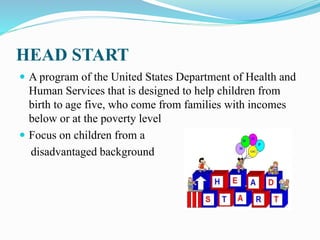
HEAD START
 A program of the United States Department of Health and
Human Services that is designed to help children from
birth to age five, who come from families with incomes
below or at the poverty level
 Focus on children from a
disadvantaged background
APPROACHES
 Various curriculum approaches to educate young children
a) Montessori
b) Pestalozzi
c) Piaget
d) Froebel
e) Dewey
f) Bruner
PESTALOZZI
 Based on Johan Heinrich Pestalozzi’s theory
 Develop children into well balanced and responsible
adults by fostering their “head, heart and hand”
 Encouraged and expected to set up foundations in their
own countries to help educate new generations of
disadvantaged children
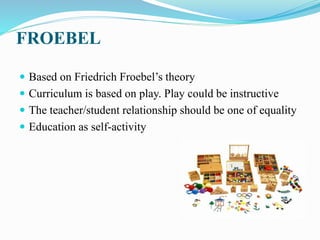
FROEBEL
 Based on Friedrich Froebel’s theory
 Curriculum is based on play. Play could be instructive
 The teacher/student relationship should be one of equality
 Education as self-activity
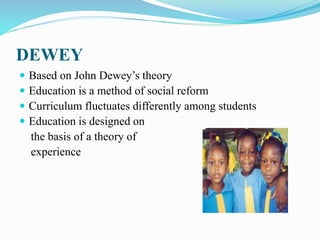
DEWEY
 Based on John Dewey’s theory
 Education is a method of social reform
 Curriculum fluctuates differently among students
 Education is designed on
the basis of a theory of
experience
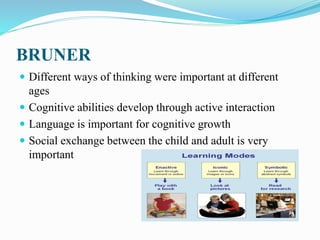
BRUNER
 Different ways of thinking were important at different
ages
 Cognitive abilities develop through active interaction
 Language is important for cognitive growth
 Social exchange between the child and adult is very
important
AVAILABILITY
 2,587 Early Childhood Institutions
 1,921 Recognized Basic Schools
 147 Unrecognized Basic Schools
 402 Day Care Centers (Government built, private home-
based)
 29 Government Infant Schools
 83 Government Infant Departments
 5 Special Education Institutions offer early childhood care
AVAILABILITY
 Available for the majority of children up to age six
throughout Jamaica
 The enrolments rate of 3 - 5 year old age cohort is 91%
and is one highest in the Caribbean Region
 Over 80% of preschoolers enrolled in community operated
basic schools and under 20% are in Public Infant
Departments with benefits from government subsidies
 Slogan: “ Education is everybody’s business”,
“ Education is an attitude”
ACCESSIBILITY
 All children are eligible to attend government subsidized
and supported pre-primary programs and day care
facilities
 Typical age for enrollment in Basic Schools, Infant
Schools, and Infant Departments is four
 Home-based and day care facilities generally have
children from infancy to age four
 Basic schools are financed by subsidies from a sponsoring
body, the government and minimal fees paid by parents
ACCESSIBILITY
 Infant schools and infant departments programs are
financed by the government, these schools charge no fees
and are available to all children.
 Private schools all charge fees(daily or weekly), some of
them quite high
 Children with learning disabilities have access to special
education programs in many government schools, often
aided greatly by the activities and support of a number of
voluntary agencies
TRAINING
 The National Council for Technical and Vocational
Education and Training (NVTVET) developed national
competency standards for certifying early childhood
workers at three levels, from entry point to readiness for
formal teacher training
 At least level 1 training to be early childhood practitioners
 The basic school teacher is required to have at least three
subjects on the Jamaican School Certificate, including
English and Mathematics
TRAINING
 Ministry of Education has always provided support in the
form of continuous training of the basic school teachers
 Practicing early childhood teachers receive certification
after completing a two-year training course at a teacher’s
college
 These teachers are required to upgrade their academic
training through evening and summer classes or through a
one-year post-certificate course to gain a diploma in
education
TRAINING
 Bachelor of Education (ECE) degrees are offered by the
Consortium of Institutions for Teacher Education
(CITE)
 Teachers with diplomas and degrees usually work in infant
schools or departments
APPLE STORY
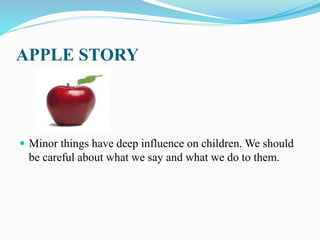
 Minor things have deep influence on children. We should
be careful about what we say and what we do to them.
HAPPY ADULT
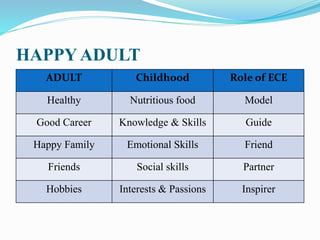
ADULT Childhood Role of ECE
Healthy Nutritious food Model
Good Career Knowledge & Skills Guide
Happy Family Emotional Skills Friend
Friends Social skills Partner
Hobbies Interests & Passions Inspirer
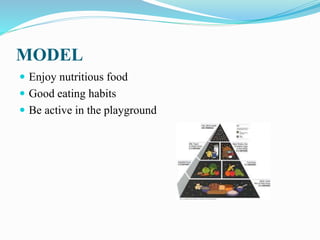
MODEL
 Enjoy nutritious food
 Good eating habits
 Be active in the playground
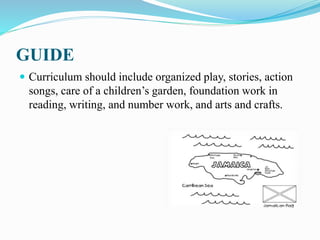
GUIDE
 Curriculum should include organized play, stories, action
songs, care of a children’s garden, foundation work in
reading, writing, and number work, and arts and crafts.
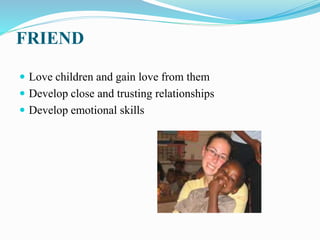
FRIEND
 Love children and gain love from them
 Develop close and trusting relationships
 Develop emotional skills
PARTNER
 Solve problems between children, help develop social
skills
 Play with children: physical activities; music & movement
 A traditional Jamaican children’s song and ring game:
Brown Girl in the Ring
http://www.youtube.com/watch?v=FH_Iu-CSqe0
INSPIRER
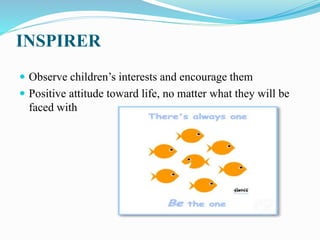
 Observe children’s interests and encourage them
 Positive attitude toward life, no matter what they will be
faced with
SUMMATION
 British Model
 The philosophical base is eclectic
 System: Basic Schools, Day Care Centers, Government
infant schools, Government Infant Departments, Special
Education Institutions offering Early Childhood.
 Available for the majority of children up to age six
SUMMATION
 Over 80% of preschoolers enrolled attend community
operated basic schools and just under 20% are in Public
Infant Departments and private centers which benefit from
government subsidies
 ECE are certified at three levels. At least level one training
is a must to work in this area
 Role of ECE as model, guide, partner, friend and inspirer
Dr Suess ABC read in Jamaican Patois
 http://www.youtube.com/watch?v=IN3ZadHV8E8&featur
e=player_embedded
THANK YOU!
SABRINA, SHIRLEY, LISA

Jamaica%20ppt(%20final)[1]

  • 2.
    AGENDA  Types ofChild Care System  History/Evolution of System  Underlying Philosophy  Availability  Accessibility  Role of ECE/ Training  Summation
  • 3.
    DEFINITION OF FLAG Colour Representation
  • 4.
    A BRIEF LOOKAT JAMAICA’S BACKGROUND  Population  Occupied  Economy-Debt  Independence
  • 5.
    FIRST COMMUNITY BASED SCHOOL Rev Henry Ward  Basic school  Mr. Grant-Five year project  Van Leer Corporation  Be responsible for the Early Childhood Education and curriculum guides
  • 6.
    1970s  Education remaineduncommon even after the abolition of slavery  Early efforts were conducted mostly by Christian churches
  • 7.
    1980s  Four levelsof public school system  Preprimary level was made up of infant and basic schools (ages four to six)  Primary education was provided at primary and “all- age” schools (grades one through six)
  • 8.
    THE MINISTRY OFEDUCATION  Mission statement To provide a system which secures quality education and training for all persons in Jamaica and achieves effective integration of educational and cultural resources in order to optimize individual and national development
  • 9.
    THE MINISTRY OFEDUCATION  Expansion of Teacher Trainers for special education programs  Funding for basic schools  Budget allocation  Children’s Fund (UNICEF)  Head offices  6 Regional offices
  • 10.
    TYPES OF CHILDCARE SYSTEMS  Day care center (Government built, private home-based)  Infant school  Nursery school  Privately operated pre-school  Basic school- A system of Community Based (basic schools) has been established and appears to be a viable approach. With these systems in place the challenge now is to continue and maintain their extended scope because of their economic decline.
  • 11.
    UNDERLYING PHILOSOPHY  Thephilosophical base for the early education programs in Jamaica is eclectic
  • 12.
    BELIEFS AND VALUES Identify and develop social, intellectual, physical and emotional needs of the child  Co-operate in developing and maintaining continuous research and evaluation of teaching and learning activities in ECE
  • 13.
    BELIEFS AND VALUES Identify, educate and train various types of personnel needed for optimal development and utilization of suitable curriculum materials in ECE on an ongoing basis  Help parents (and teachers) understand the specific role they play in the physical, mental, social and emotional growth of children  Develop and maintain co-ordination of ECE with other sections of the education system
  • 14.
    HEAD START  Aprogram of the United States Department of Health and Human Services that is designed to help children from birth to age five, who come from families with incomes below or at the poverty level  Focus on children from a disadvantaged background
  • 15.
    APPROACHES  Various curriculumapproaches to educate young children a) Montessori b) Pestalozzi c) Piaget d) Froebel e) Dewey f) Bruner
  • 16.
    PESTALOZZI  Based onJohan Heinrich Pestalozzi’s theory  Develop children into well balanced and responsible adults by fostering their “head, heart and hand”  Encouraged and expected to set up foundations in their own countries to help educate new generations of disadvantaged children
  • 17.
    FROEBEL  Based onFriedrich Froebel’s theory  Curriculum is based on play. Play could be instructive  The teacher/student relationship should be one of equality  Education as self-activity
  • 18.
    DEWEY  Based onJohn Dewey’s theory  Education is a method of social reform  Curriculum fluctuates differently among students  Education is designed on the basis of a theory of experience
  • 19.
    BRUNER  Different waysof thinking were important at different ages  Cognitive abilities develop through active interaction  Language is important for cognitive growth  Social exchange between the child and adult is very important
  • 20.
    AVAILABILITY  2,587 EarlyChildhood Institutions  1,921 Recognized Basic Schools  147 Unrecognized Basic Schools  402 Day Care Centers (Government built, private home- based)  29 Government Infant Schools  83 Government Infant Departments  5 Special Education Institutions offer early childhood care
  • 21.
    AVAILABILITY  Available forthe majority of children up to age six throughout Jamaica  The enrolments rate of 3 - 5 year old age cohort is 91% and is one highest in the Caribbean Region  Over 80% of preschoolers enrolled in community operated basic schools and under 20% are in Public Infant Departments with benefits from government subsidies  Slogan: “ Education is everybody’s business”, “ Education is an attitude”
  • 22.
    ACCESSIBILITY  All childrenare eligible to attend government subsidized and supported pre-primary programs and day care facilities  Typical age for enrollment in Basic Schools, Infant Schools, and Infant Departments is four  Home-based and day care facilities generally have children from infancy to age four  Basic schools are financed by subsidies from a sponsoring body, the government and minimal fees paid by parents
  • 23.
    ACCESSIBILITY  Infant schoolsand infant departments programs are financed by the government, these schools charge no fees and are available to all children.  Private schools all charge fees(daily or weekly), some of them quite high  Children with learning disabilities have access to special education programs in many government schools, often aided greatly by the activities and support of a number of voluntary agencies
  • 24.
    TRAINING  The NationalCouncil for Technical and Vocational Education and Training (NVTVET) developed national competency standards for certifying early childhood workers at three levels, from entry point to readiness for formal teacher training  At least level 1 training to be early childhood practitioners  The basic school teacher is required to have at least three subjects on the Jamaican School Certificate, including English and Mathematics
  • 25.
    TRAINING  Ministry ofEducation has always provided support in the form of continuous training of the basic school teachers  Practicing early childhood teachers receive certification after completing a two-year training course at a teacher’s college  These teachers are required to upgrade their academic training through evening and summer classes or through a one-year post-certificate course to gain a diploma in education
  • 26.
    TRAINING  Bachelor ofEducation (ECE) degrees are offered by the Consortium of Institutions for Teacher Education (CITE)  Teachers with diplomas and degrees usually work in infant schools or departments
  • 27.
    APPLE STORY  Minorthings have deep influence on children. We should be careful about what we say and what we do to them.
  • 28.
    HAPPY ADULT ADULT ChildhoodRole of ECE Healthy Nutritious food Model Good Career Knowledge & Skills Guide Happy Family Emotional Skills Friend Friends Social skills Partner Hobbies Interests & Passions Inspirer
  • 29.
    MODEL  Enjoy nutritiousfood  Good eating habits  Be active in the playground
  • 30.
    GUIDE  Curriculum shouldinclude organized play, stories, action songs, care of a children’s garden, foundation work in reading, writing, and number work, and arts and crafts.
  • 31.
    FRIEND  Love childrenand gain love from them  Develop close and trusting relationships  Develop emotional skills
  • 32.
    PARTNER  Solve problemsbetween children, help develop social skills  Play with children: physical activities; music & movement  A traditional Jamaican children’s song and ring game: Brown Girl in the Ring http://www.youtube.com/watch?v=FH_Iu-CSqe0
  • 33.
    INSPIRER  Observe children’sinterests and encourage them  Positive attitude toward life, no matter what they will be faced with
  • 34.
    SUMMATION  British Model The philosophical base is eclectic  System: Basic Schools, Day Care Centers, Government infant schools, Government Infant Departments, Special Education Institutions offering Early Childhood.  Available for the majority of children up to age six
  • 35.
    SUMMATION  Over 80%of preschoolers enrolled attend community operated basic schools and just under 20% are in Public Infant Departments and private centers which benefit from government subsidies  ECE are certified at three levels. At least level one training is a must to work in this area  Role of ECE as model, guide, partner, friend and inspirer
  • 36.
    Dr Suess ABCread in Jamaican Patois  http://www.youtube.com/watch?v=IN3ZadHV8E8&featur e=player_embedded
  • 37.