S 
H 
R 
I 
T 
E 
M 
P 
L 
E 
J 
A 
G 
A 
N 
N 
A 
T 
H
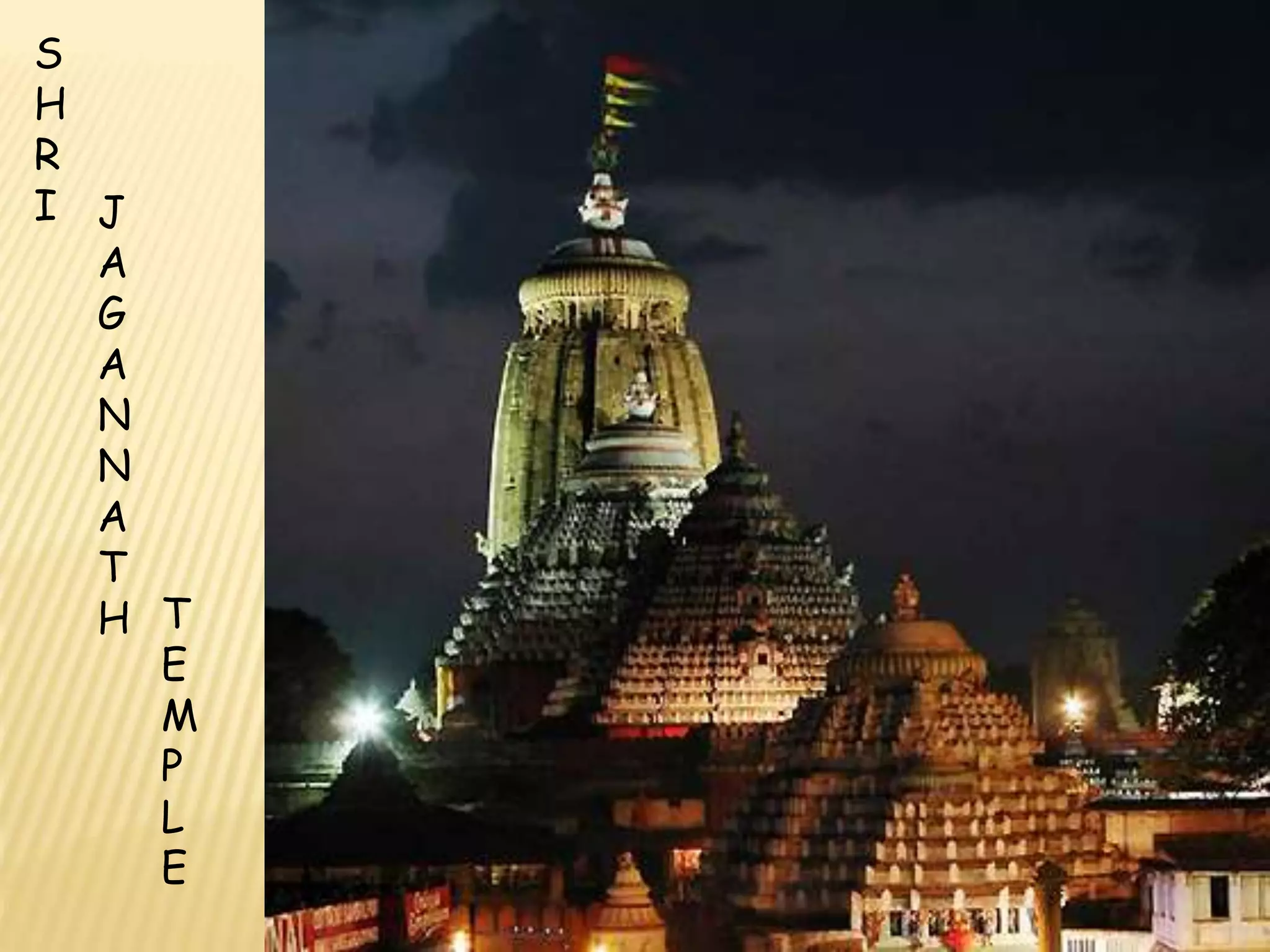
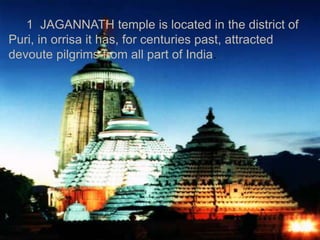
1 JAGANNATH temple is located in the district of 
Puri, in orrisa it has, for centuries past, attracted 
devoute pilgrims from all part of India.
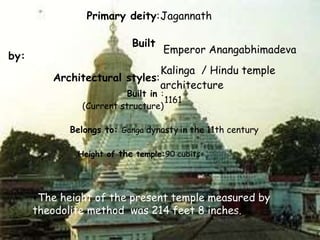
Primary deity:Jagannath 
Built 
by: 
Emperor Anangabhimadeva 
Architectural styles: 
Kalinga / Hindu temple 
architecture 
Built in : 
(Current structure) 
1161 
Belongs to: Ganga dynasty in the 11th century 
Height of the temple:90 cubits 
+The height of the present temple measured by 
theodolite method was 214 feet 8 inches.
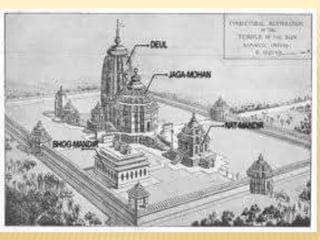
The temple consists of four structures 
called 
(a)the Vimana or Bada Deula sanctum 
sanctorum) 
(b) the Jagamohan or Mukhasala (the 
porch), 
(c) the Natamandir (the audience hall) 
and 
(d) the Bhogamandap (the hall for 
residuary offerings) built in a row in an 
axial alignment in east-west direction
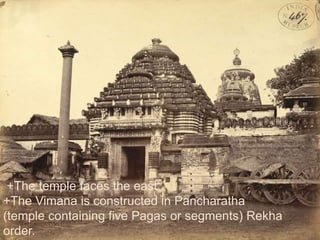
+The temple faces the east. 
+The Vimana is constructed in Pancharatha 
(temple containing five Pagas or segments) Rekha 
order.
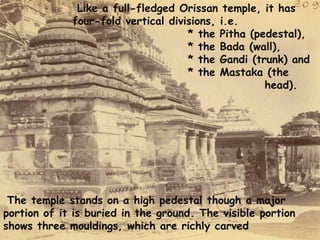
Like a full-fledged Orissan temple, it has 
four-fold vertical divisions, i.e. 
* the Pitha (pedestal), 
* the Bada (wall), 
* the Gandi (trunk) and 
* the Mastaka (the 
head). 
. 
The temple stands on a high pedestal though a major 
portion of it is buried in the ground. The visible portion 
shows three mouldings, which are richly carved
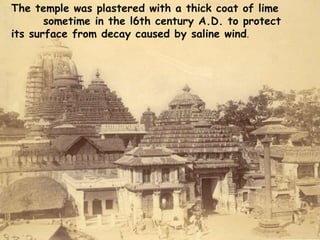
The temple was plastered with a thick coat of lime 
sometime in the l6th century A.D. to protect 
its surface from decay caused by saline wind.
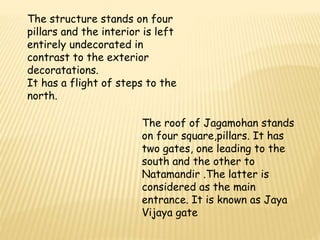
The structure stands on four 
pillars and the interior is left 
entirely undecorated in 
contrast to the exterior 
decoratations. 
It has a flight of steps to the 
north. 
The roof of Jagamohan stands 
on four square,pillars. It has 
two gates, one leading to the 
south and the other to 
Natamandir .The latter is 
considered as the main 
entrance. It is known as Jaya 
Vijaya gate
The 
Mandapas 
The Dola Mandapa in 1890 where the annual 
Dol Yatra is held 
There are many Mandapas or Pillared halls 
on raised platforms within the temple 
complex meant for religious congregations. 
The most prominent is the Mukti Mandapa 
the congregation hall of the holy seat of 
selected learned brahmins.[42] Here 
important decisions regarding conduct of 
daily worship and festivals are taken.
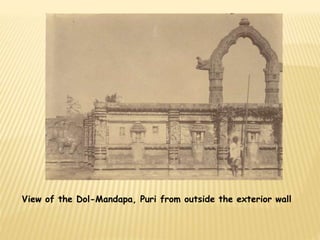
View of the Dol-Mandapa, Puri from outside the exterior wall
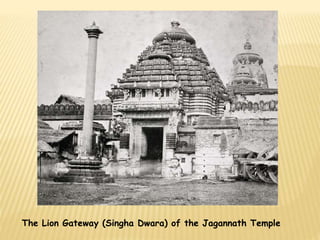
The Lion Gateway (Singha Dwara) of the Jagannath Temple
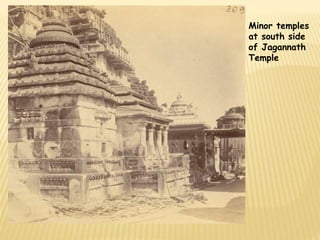
Minor temples 
at south side 
of Jagannath 
Temple
PART-2 
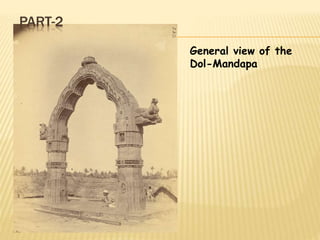
General view of the 
Dol-Mandapa
Northern entrance of the Jagannatha Temple
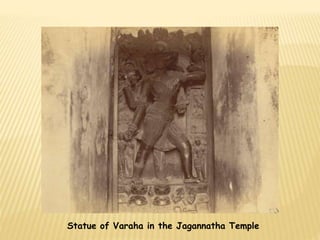
Statue of Varaha in the Jagannatha Temple
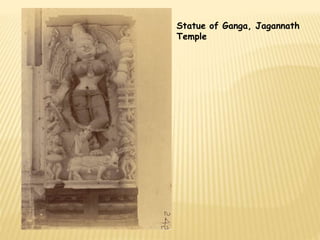
Statue of Ganga, Jagannath 
Temple
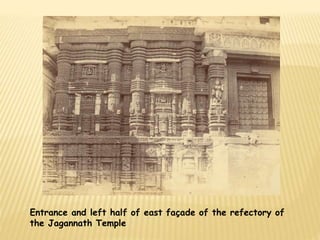
Entrance and left half of east façade of the refectory of 
the Jagannath Temple
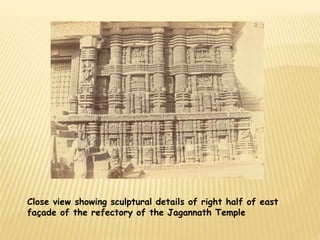
Close view showing sculptural details of right half of east 
façade of the refectory of the Jagannath Temple
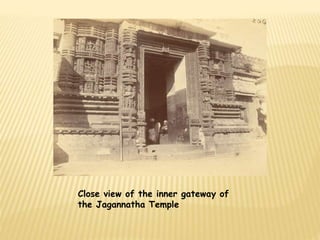
Close view of the inner gateway of 
the Jagannatha Temple
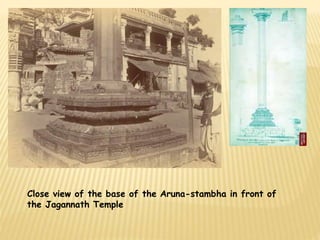
Close view of the base of the Aruna-stambha in front of 
the Jagannath Temple
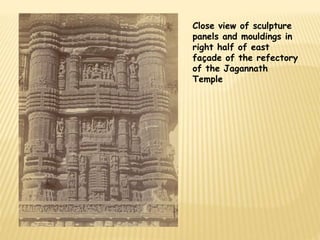
Close view of sculpture 
panels and mouldings in 
right half of east 
façade of the refectory 
of the Jagannath 
Temple
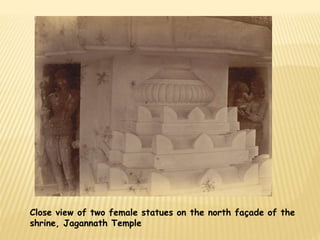
Close view of two female statues on the north façade of the 
shrine, Jagannath Temple
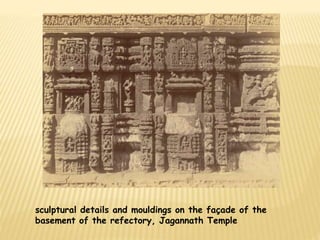
sculptural details and mouldings on the façade of the 
basement of the refectory, Jagannath Temple
By: 
Harika singh.B - 05 
Lahari.D -17 
Sri lakshmi durga.G -21 
Sulochana.T -24 
Mahejabeen -36

Jagannath temple and its architectural style

  • 1.
    S H R I T E M P L E J A G A N N A T H
  • 2.
    1 JAGANNATH templeis located in the district of Puri, in orrisa it has, for centuries past, attracted devoute pilgrims from all part of India.
  • 3.
    Primary deity:Jagannath Built by: Emperor Anangabhimadeva Architectural styles: Kalinga / Hindu temple architecture Built in : (Current structure) 1161 Belongs to: Ganga dynasty in the 11th century Height of the temple:90 cubits +The height of the present temple measured by theodolite method was 214 feet 8 inches.
  • 4.
    The temple consistsof four structures called (a)the Vimana or Bada Deula sanctum sanctorum) (b) the Jagamohan or Mukhasala (the porch), (c) the Natamandir (the audience hall) and (d) the Bhogamandap (the hall for residuary offerings) built in a row in an axial alignment in east-west direction
  • 6.
    +The temple facesthe east. +The Vimana is constructed in Pancharatha (temple containing five Pagas or segments) Rekha order.
  • 7.
    Like a full-fledgedOrissan temple, it has four-fold vertical divisions, i.e. * the Pitha (pedestal), * the Bada (wall), * the Gandi (trunk) and * the Mastaka (the head). . The temple stands on a high pedestal though a major portion of it is buried in the ground. The visible portion shows three mouldings, which are richly carved
  • 8.
    The temple wasplastered with a thick coat of lime sometime in the l6th century A.D. to protect its surface from decay caused by saline wind.
  • 9.
    The structure standson four pillars and the interior is left entirely undecorated in contrast to the exterior decoratations. It has a flight of steps to the north. The roof of Jagamohan stands on four square,pillars. It has two gates, one leading to the south and the other to Natamandir .The latter is considered as the main entrance. It is known as Jaya Vijaya gate
  • 10.
    The Mandapas TheDola Mandapa in 1890 where the annual Dol Yatra is held There are many Mandapas or Pillared halls on raised platforms within the temple complex meant for religious congregations. The most prominent is the Mukti Mandapa the congregation hall of the holy seat of selected learned brahmins.[42] Here important decisions regarding conduct of daily worship and festivals are taken.
  • 11.
    View of theDol-Mandapa, Puri from outside the exterior wall
  • 12.
    The Lion Gateway(Singha Dwara) of the Jagannath Temple
  • 13.
    Minor temples atsouth side of Jagannath Temple
  • 14.
    PART-2 General viewof the Dol-Mandapa
  • 15.
    Northern entrance ofthe Jagannatha Temple
  • 16.
    Statue of Varahain the Jagannatha Temple
  • 17.
    Statue of Ganga,Jagannath Temple
  • 18.
    Entrance and lefthalf of east façade of the refectory of the Jagannath Temple
  • 19.
    Close view showingsculptural details of right half of east façade of the refectory of the Jagannath Temple
  • 20.
    Close view ofthe inner gateway of the Jagannatha Temple
  • 21.
    Close view ofthe base of the Aruna-stambha in front of the Jagannath Temple
  • 22.
    Close view ofsculpture panels and mouldings in right half of east façade of the refectory of the Jagannath Temple
  • 23.
    Close view oftwo female statues on the north façade of the shrine, Jagannath Temple
  • 24.
    sculptural details andmouldings on the façade of the basement of the refectory, Jagannath Temple
  • 25.
    By: Harika singh.B- 05 Lahari.D -17 Sri lakshmi durga.G -21 Sulochana.T -24 Mahejabeen -36