Research
Primary
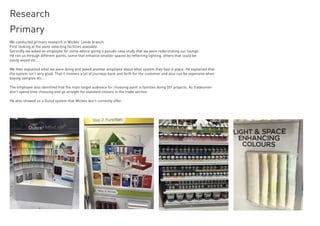
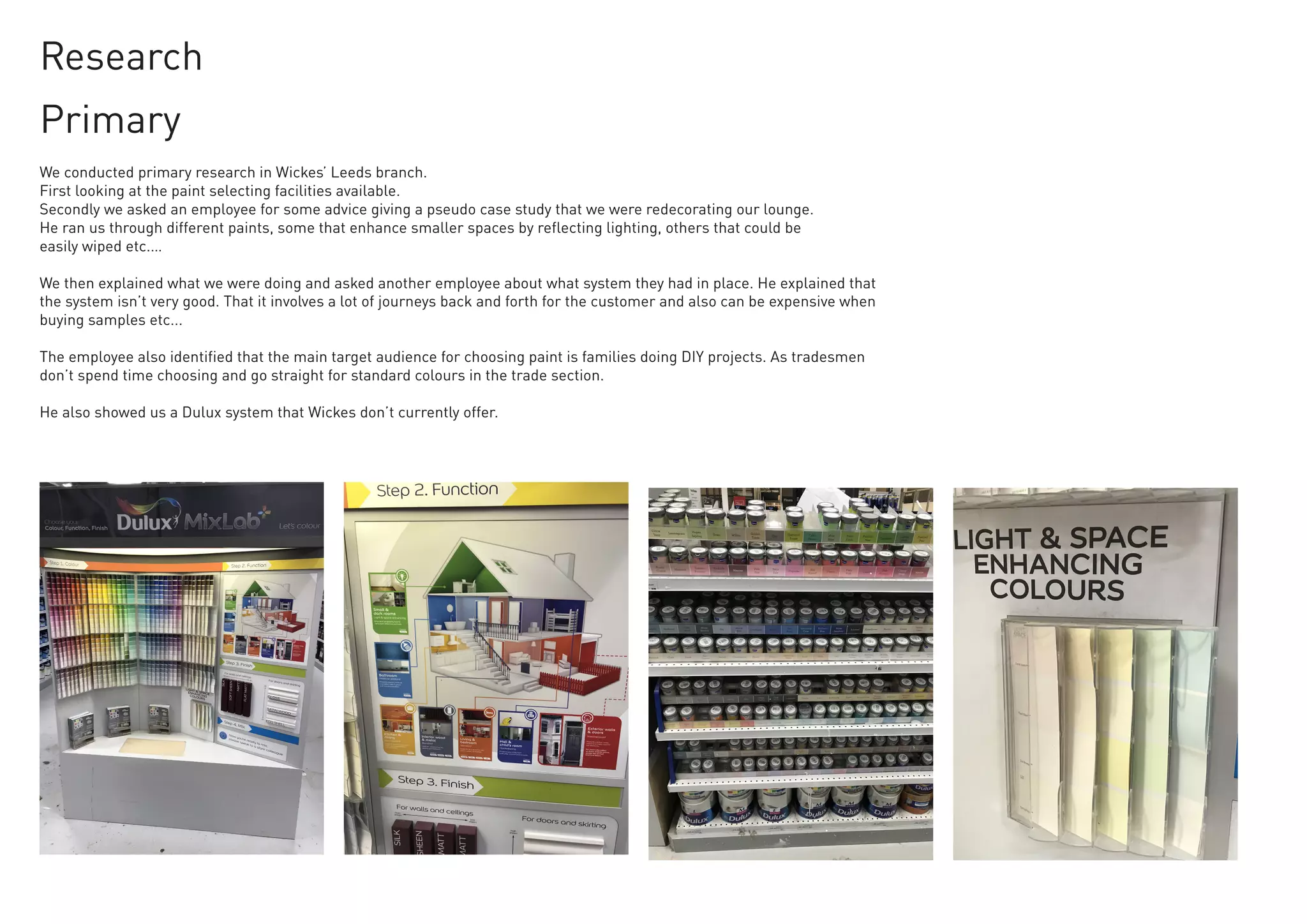
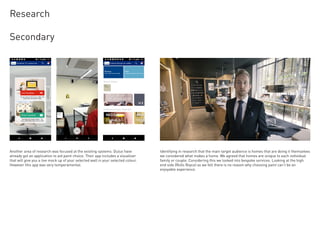
We conducted primary research in Wickes’ Leeds branch.
First looking at the paint selecting facilities available.
Secondly we asked an employee for some advice giving a pseudo case study that we were redecorating our lounge.
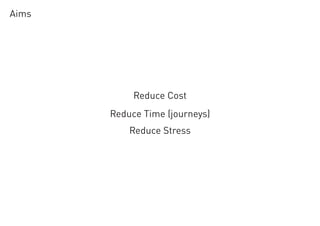
He ran us through different paints, some that enhance smaller spaces by reflecting lighting, others that could be
easily wiped etc.…
We then explained what we were doing and asked another employee about what system they had in place. He explained that
the system isn’t very good. That it involves a lot of journeys back and forth for the customer and also can be expensive when
buying samples etc...
The employee also identified that the main target audience for choosing paint is families doing DIY projects. As tradesmen
don’t spend time choosing and go straight for standard colours in the trade section.
He also showed us a Dulux system that Wickes don’t currently offer.
Secondary
Research
Identifying in research that the main target audience is homes that are doing it themselves
we considered what makes a home. We agreed that homes are unique to each individual
family or couple. Considering this we looked into bespoke services. Looking at the high
end side (Rolls Royce) as we felt there is no reason why choosing paint can’t be an
enjoyable experience.
Another area of research was focused at the existing systems. Dulux have
already got an application to aid paint choice. Their app includes a visualiser
that will give you a live mock up of your selected wall in your selected colour.
However this app was very temperamental.
Aims
Reduce Cost
Reduce Time (journeys)
Reduce Stress
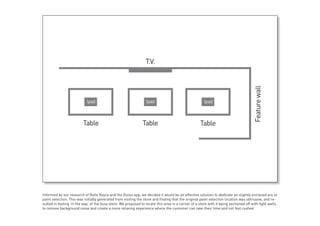
Informed by our research of Rolls Royce and the Dulux app, we decided it would be an effective solution to dedicate an slightly enclosed are to
paint selection. This was initially generated from visiting the store and finding that the original paint selection location was obtrusive, and re-
sulted in feeling ‘in the way’ of the busy store. We proposed to locate this area in a corner of a store with it being sectioned off with light walls
to remove background noise and create a more relaxing experience where the customer can take their time and not feel rushed.
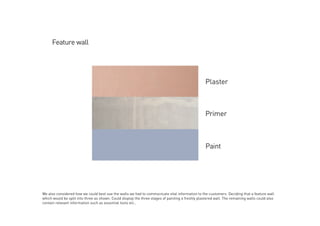
We also considered how we could best use the walls we had to communicate vital information to the customers. Deciding that a feature wall
which would be split into three as shown. Could display the three stages of painting a freshly plastered wall. The remaining walls could also
contain relevant information such as essential tools etc..
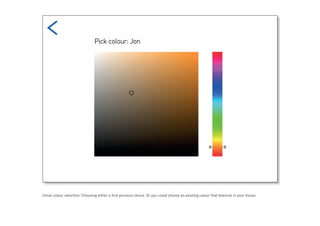
Initial colour selection. Choosing either a first persons choice. Or you could choose an existing colour that features in your house.
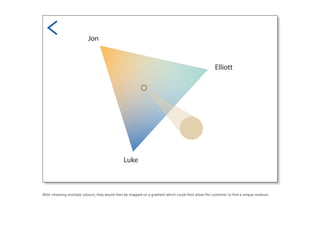
After choosing multiple colours, they would then be mapped on a gradient which could then allow the customer to find a unique medium.
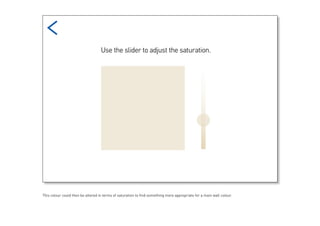
This colour could then be altered in terms of saturation to find something more appropriate for a main wall colour.
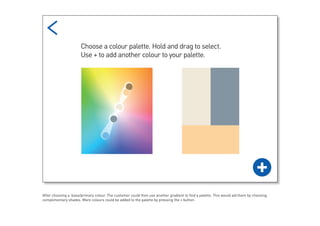
After choosing a base/primary colour. The customer could then use another gradient to find a palette. This would aid them by choosing
complimentary shades. More colours could be added to the palette by pressing the + button.
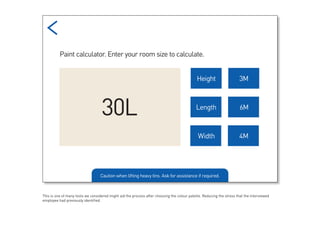
This is one of many tools we considered might aid the process after choosing the colour palette. Reducing the stress that the interviewed
employee had previously identified.
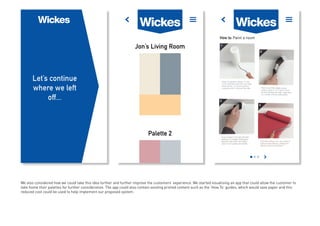
We also considered how we could take this idea further and further improve the customers’ experience. We started visualising an app that could allow the customer to
take home their palettes for further consideration. The app could also contain existing printed content such as the ‘How To’ guides, which would save paper and this
reduced cost could be used to help implement our proposed system.

j hib k jkj

  • 1.
    Research Primary We conducted primaryresearch in Wickes’ Leeds branch. First looking at the paint selecting facilities available. Secondly we asked an employee for some advice giving a pseudo case study that we were redecorating our lounge. He ran us through different paints, some that enhance smaller spaces by reflecting lighting, others that could be easily wiped etc.… We then explained what we were doing and asked another employee about what system they had in place. He explained that the system isn’t very good. That it involves a lot of journeys back and forth for the customer and also can be expensive when buying samples etc... The employee also identified that the main target audience for choosing paint is families doing DIY projects. As tradesmen don’t spend time choosing and go straight for standard colours in the trade section. He also showed us a Dulux system that Wickes don’t currently offer.
  • 2.
    Secondary Research Identifying in researchthat the main target audience is homes that are doing it themselves we considered what makes a home. We agreed that homes are unique to each individual family or couple. Considering this we looked into bespoke services. Looking at the high end side (Rolls Royce) as we felt there is no reason why choosing paint can’t be an enjoyable experience. Another area of research was focused at the existing systems. Dulux have already got an application to aid paint choice. Their app includes a visualiser that will give you a live mock up of your selected wall in your selected colour. However this app was very temperamental.
  • 3.
    Aims Reduce Cost Reduce Time(journeys) Reduce Stress
  • 4.
    Informed by ourresearch of Rolls Royce and the Dulux app, we decided it would be an effective solution to dedicate an slightly enclosed are to paint selection. This was initially generated from visiting the store and finding that the original paint selection location was obtrusive, and re- sulted in feeling ‘in the way’ of the busy store. We proposed to locate this area in a corner of a store with it being sectioned off with light walls to remove background noise and create a more relaxing experience where the customer can take their time and not feel rushed.
  • 5.
    We also consideredhow we could best use the walls we had to communicate vital information to the customers. Deciding that a feature wall which would be split into three as shown. Could display the three stages of painting a freshly plastered wall. The remaining walls could also contain relevant information such as essential tools etc..
  • 6.
    Initial colour selection.Choosing either a first persons choice. Or you could choose an existing colour that features in your house.
  • 7.
    After choosing multiplecolours, they would then be mapped on a gradient which could then allow the customer to find a unique medium.
  • 8.
    This colour couldthen be altered in terms of saturation to find something more appropriate for a main wall colour.
  • 9.
    After choosing abase/primary colour. The customer could then use another gradient to find a palette. This would aid them by choosing complimentary shades. More colours could be added to the palette by pressing the + button.
  • 10.
    This is oneof many tools we considered might aid the process after choosing the colour palette. Reducing the stress that the interviewed employee had previously identified.
  • 11.
    We also consideredhow we could take this idea further and further improve the customers’ experience. We started visualising an app that could allow the customer to take home their palettes for further consideration. The app could also contain existing printed content such as the ‘How To’ guides, which would save paper and this reduced cost could be used to help implement our proposed system.