Signature and Name of Invigilator                                                    OMR Sheet No. : .........................................
                                                                                                                    (To be filled by the Candidate)
1. (Signature) __________________________
                                                                                     Roll No.
   (Name) ____________________________
                                                                                                             (In figures as per admission card)
2. (Signature) __________________________
                                                                                     Roll No.____________________________
    (Name) ____________________________
                                                                                                    (In words)

 J      00              1 0
                                                          PAPER-I
                                                                                   Test Booklet No.                         X
Time : 1 1/4 hours]                                                                                        [Maximum Marks : 100
Number of Pages in this Booklet : 20                                                        Number of Questions in this Booklet : 60
         Instructions for the Candidates                                                                  ¯Ö¸ü߁ÖÖÙ£ÖµÖÖë êú ×»Ö‹ ×­Ö¤ìü¿Ö
1. Write your roll number in the space provided on the top of            1. ¯ÖÆü»Öê ¯Öéšü êú ‰ú¯Ö¸ü ×­ÖµÖŸÖ Ã£ÖÖ­Ö ¯Ö¸ü †¯Ö­ÖÖ ¸üÖê»Ö ­Ö´²Ö¸ü ×»Ö׏֋ …
    this page.                                                           2. ‡ÃÖ ¯ÖÏ¿­Ö-¯Ö¡Ö ´Öë ÃÖÖšü (60) ²ÖÆãü׾֍ú»¯ÖßµÖ ¯ÖÏ¿­Ö Æïü, וִ֭Öë ÃÖê ˆ´´Öߤü¾ÖÖ¸ü úÖê
2. This paper consists of sixty (60) multiple-choice type of                 ׍úÃÖß ³Öß ¯Ö“ÖÖÃÖ (50) ¯ÖÏ¿­Ö úÖ ˆ¢Ö¸ü ¤êü­ÖÖ ÆüÖêÖÖ … ˆ´´Öߤü¾ÖÖ¸ü «üÖ¸üÖ ¯Ö“ÖÖÃÖ ÃÖê
    questions, out of which the candidate would be required to               †×¬Öú ¯ÖÏ¿­ÖÖë úÖ ˆ¢Ö¸ü ¤êü­Öê ¯Ö¸ü ˆ´´Öߤü¾ÖÖ¸ü «üÖ¸üÖ ×¤üµÖê ÖµÖê ¯ÖÏ£Ö´Ö ¯Ö“ÖÖÃÖ ¯ÖÏ¿­ÖÖë
    answer any fifty (50) questions. In the event of the candidate           úÖ ´Ö滵ÖÖӍú­Ö ׍úµÖÖ •ÖÖµÖêÖÖ …
    attempting more than fifty questions, the first fifty questions      3. ¯Ö¸ü߁ÖÖ ¯ÖÏÖ¸ü´³Ö ÆüÖê­Öê ¯Ö¸ü, ¯ÖÏ¿­Ö-¯ÖãÛß֍úÖ †Ö¯ÖúÖê ¤êü ¤üß •ÖÖµÖêÖß … ¯ÖÆü»Öê ¯ÖÖÑ“Ö
    attempted by the Candidate would be evaluated.
                                                                             ×´Ö­Ö™ü †Ö¯ÖúÖê ¯ÖÏ¿­Ö-¯ÖãÛß֍úÖ ÖÖê»Ö­Öê ŸÖ£ÖÖ ˆÃ֍úß ×­Ö´­Ö×»Ö×ÖŸÖ •ÖÖÑ“Ö êú
3. At the commencement of examination, the question booklet
    will be given to you. In the first 5 minutes, you are requested
                                                                             ×»Ö‹ פüµÖê •ÖÖµÖëÖê וÖÃ֍úß •ÖÖÑ“Ö †Ö¯ÖúÖê †¾Ö¿µÖ ú¸ü­Öß Æîü :
    to open the booklet and compulsorily examine it as below :
                                                                             (i) ¯ÖÏ¿­Ö-¯ÖãÛß֍úÖ ÖÖê»Ö­Öê êú ×»Ö‹ ˆÃ֍êú ú¾Ö¸ü ¯Öê•Ö ¯Ö¸ü »ÖÖß úÖÖ•Ö úß
    (i) To have access to the Question Booklet, tear off the paper
                                                                                      ÃÖᯙ úÖê ±úÖ›Íü »Öë … Öã»Öß Æãü‡Ô µÖÖ ×²Ö­ÖÖ Ã™üߍú¸ü-ÃÖᯙ úß ¯ÖãÛß֍úÖ
          seal on the edge of this cover page. Do not accept a booklet
                                                                                      þÖߍúÖ¸ü ­Ö ú¸ëü …
          without sticker-seal and do not accept an open booklet.            (ii) ú¾Ö¸ü ¯Öéšü ¯Ö¸ü ”û¯Öê ×­Ö¤ìü¿ÖÖ­ÖãÃÖÖ¸ü ¯ÖÏ¿­Ö-¯ÖãÛß֍úÖ êú ¯Öéšü ŸÖ£ÖÖ ¯ÖÏ¿­ÖÖë
    (ii) Tally the number of pages and number of questions in                         úß ÃÖӏµÖÖ úÖê †“”ûß ŸÖ¸üÆü “Öîú ú¸ü »Öë ׍ú µÖê ¯Öæ¸üê Æïü … ¤üÖÂÖ¯ÖæÖÔ  ê
          the booklet with the information printed on the cover                       ¯ÖãÛß֍úÖ ×•Ö­Ö´Öë ¯Öéšü/¯ÖÏ¿­Ö ú´Ö ÆüÖë µÖÖ ¤ãü²ÖÖ¸üÖ †Ö ÖµÖê ÆüÖë µÖÖ ÃÖß׸üµÖ»Ö
          page. Faulty booklets due to pages/questions missing                        ´Öë ­Ö ÆüÖë †£ÖÖÔŸÖ ×úÃÖß ³Öß ¯ÖύúÖ¸ü úß ¡Öã×™ü¯ÖæÖÔ ¯ÖãÛß֍úÖ Ã¾ÖߍúÖ¸ü ­Ö
          or duplicate or not in serial order or any other                            ú¸ëü ŸÖ£ÖÖ ˆÃÖß ÃÖ´ÖµÖ ˆÃÖê »ÖÖî™ü֍ú¸ü ˆÃ֍êú ãÖÖ­Ö ¯Ö¸ü ¤æüÃÖ¸üß ÃÖÆüß
          discrepancy should be got replaced immediately by a                         ¯ÖÏ¿­Ö-¯ÖãÛß֍úÖ »Öê »Öë … ‡Ã֍êú ×»Ö‹ †Ö¯ÖúÖê ¯ÖÖÑ“Ö ×´Ö­Ö™ü פüµÖê •ÖÖµÖëÖê …
          correct booklet from the invigilator within the period                      ˆÃ֍êú ²ÖÖ¤ü ­Ö ŸÖÖê †Ö¯Öúß ¯ÖÏ¿­Ö-¯ÖãÛß֍úÖ ¾ÖÖ¯ÖÃÖ »Öß •ÖÖµÖêÖß †Öî¸ü ­Ö
          of 5 minutes. Afterwards, neither the Question Booklet                      Æüß †Ö¯ÖúÖê †×ŸÖ׸üŒŸÖ ÃÖ´ÖµÖ ×¤üµÖÖ •ÖÖµÖêÖÖ …
          will be replaced nor any extra time will be given.                 (iii) ‡ÃÖ •ÖÖÑ“Ö êú ²ÖÖ¤ü ¯ÖÏ¿­Ö-¯ÖãÛß֍úÖ úß Îú´Ö ÃÖӏµÖÖ OMR ¯Ö¡Öú ¯Ö¸ü
    (iii) After this verification is over, the Test Booklet Number                    †Ó׍úŸÖ ú¸ëü †Öî¸ü OMR ¯Ö¡Öú úß Îú´Ö ÃÖӏµÖÖ ‡ÃÖ ¯ÖÏ¿­Ö-¯ÖãÛß֍úÖ ¯Ö¸ü
          should be entered in the OMR Sheet and the OMR Sheet                        †Ó׍úŸÖ ú¸ü ¤ëü …
          Number should be entered on this Test Booklet.                 4. ¯ÖÏŸµÖêú ¯ÖÏ¿­Ö êú ×»Ö‹ “ÖÖ¸ü ˆ¢Ö¸ü ׾֍ú»¯Ö (A), (B), (C) ŸÖ£ÖÖ (D) פüµÖê ÖµÖê
4. Each item has four alternative responses marked (A), (B), (C)             Æïü … †Ö¯ÖúÖê ÃÖÆüß ˆ¢Ö¸ü êú ¤üß‘ÖÔ¾Öé¢Ö úÖê ¯Öê­Ö ÃÖê ³Ö¸üú¸ü úÖ»ÖÖ ú¸ü­ÖÖ Æîü •ÖîÃÖÖ
    and (D). You have to darken the oval as indicated below on the           ׍ú ­Öß“Öê פüÖÖµÖÖ ÖµÖÖ Æîü …
    correct response against each item.                                      ˆ¤üÖÆü¸üÖ : A                     B         C           D
    Example : A             B        C      D
    where (C) is the correct response.
                                                                             •Ö²Ö׍ú (C) ÃÖÆüß ˆ¢Ö¸ü Æîü …
5. Your responses to the items are to be indicated in the Answer
                                                                         5. ¯ÖÏ¿­Ö-¯Ö¡Ö I †Öî¸ü ¯ÖÏ¿­Ö-¯Ö¡Ö II êú ×»Ö‹ ‹ú Æüß ˆ¢Ö¸ü ¯Ö¡Öú Æîü •ÖÖê ‡ÃÖ ¯ÖÏ¿­Ö
    Sheet given inside this Booklet, which is common for                     ¯ÖãÛß֍úÖ êú †­¤ü¸ü פüµÖÖ ÖµÖÖ Æîü … ¯ÖÏ¿­ÖÖë êú ˆ¢Ö¸ü êú¾Ö»Ö ˆ¢Ö¸ü-¯Ö¡Öú ¯Ö¸ü Æüß
    Paper I and Paper II. If you mark at any place other than in             †Ó׍úŸÖ ú¸ü­Öê Æïü … µÖפü †Ö¯Ö ˆ¢Ö¸ü ¯Ö¡Öú ¯Ö¸ü פüµÖê ÖµÖê ¤üß‘ÖÔ¾Öé¢Ö êú †»ÖÖ¾ÖÖ ×úÃÖß
    the ovals in the Answer Sheet, it will not be evaluated.                 †­µÖ ãÖÖ­Ö ¯Ö¸ü ˆ¢Ö¸ü דÖÅ­ÖÖÓ׍úŸÖ ú¸ŸÖê Æïü, ŸÖÖê ˆÃ֍úÖ ´Ö滵ÖÖӍú­Ö ­ÖÆüà Æü֐ÖÖ …  ê
6. Read instructions given inside carefully.                             6. †­¤ü¸ü פüµÖê ÖµÖê ×­Ö¤ìü¿ÖÖë úÖê ¬µÖÖ­Ö¯Öæ¾Öԍú ¯ÖœÍëü …
7. Rough Work is to be done in the end of this booklet.                  7. ú““ÖÖ úÖ´Ö (Rough Work) ‡ÃÖ ¯ÖãÛß֍úÖ êú †Û­ŸÖ´Ö ¯Öéšü ¯Ö¸ü ú¸ëü …
8. If you write your name or put any mark on any part of the             8. µÖפü †Ö¯Ö ˆ¢Ö¸ü-¯ÖãÛß֍úÖ ¯Ö¸ü †¯Ö­ÖÖ ­ÖÖ´Ö µÖÖ ‹êÃÖÖ úÖê‡Ô ³Öß ×­Ö¿ÖÖ­Ö ×•ÖÃÖÃÖê
    Answer Sheet, except for the space allotted for the relevant             †Ö¯Öúß ¯ÖÆü“ÖÖ­Ö ÆüÖê Ã֍êú, ׍úÃÖß ³Öß ³ÖÖÖ ¯Ö¸ü ¤ü¿ÖÖÔŸÖê µÖÖ †Ó׍úŸÖ ú¸üŸÖê Æïü ŸÖÖê
    entries, which may disclose your identity, you will render               ¯Ö¸ü߁ÖÖ êú ×»ÖµÖê †µÖÖêµÖ ‘ÖÖê×ÂÖŸÖ ú¸ü פüµÖê •ÖÖµÖëÖê …
    yourself liable to disqualification.
                                                                         9. †Ö¯ÖúÖê ¯Ö¸ü߁ÖÖ ÃÖ´ÖÖ¯ŸÖ ÆüÖê­Öê ¯Ö¸ü ¯ÖÏ¿­Ö-¯ÖãÛß֍úÖ ‹¾ÖÓ OMR ˆ¢Ö¸ü-¯Ö¡Öú
9. You have to return the test question booklet and OMR Answer
    sheet to the invigilators at the end of the examination
                                                                             ×­Ö¸ü߁֍ú ´ÖÆüÖê¤üµÖ úÖê »ÖÖî™üÖ­ÖÖ †Ö¾Ö¿µÖú Æîü †Öî¸ü ¯Ö¸ü߁ÖÖ ÃÖ´ÖÖÛ¯ŸÖ êú ²ÖÖ¤ü ˆÃÖê
    compulsorily and must not carry it with you outside the                  †¯Ö­Öê ÃÖÖ£Ö ¯Ö¸ü߁ÖÖ ³Ö¾Ö­Ö ÃÖê ²ÖÖÆü¸ü ­Ö »Öêú¸ü •ÖÖµÖë …
    Examination Hall.                                                    10. êú¾Ö»Ö ­Öß»Öê/úÖ»Öê ²ÖÖ»Ö ¯¾ÖÖ‡Õ™ü ¯Öî­Ö úÖ Æüß ‡ÃŸÖê´ÖÖ»Ö ú¸ëü …
10. Use only Blue/Black Ball point pen.                                  11. ׍úÃÖß ³Öß ¯ÖύúÖ¸ü úÖ ÃÖӐ֝֍ú (îú»Öãú»Öê™ü¸ü) µÖÖ »ÖÖÖ ™êü²Ö»Ö †Öפü úÖ
11. Use of any calculator or log table etc., is prohibited.                  ¯ÖϵÖÖêÖ ¾ÖÙ•ÖŸÖ Æîü …
12. There is no negative marks for incorrect answers.                    12. Ö»ÖŸÖ ˆ¢Ö¸üÖë êú ×»Ö‹ úÖê‡Ô †Óú úÖ™êü ­ÖÆüà •Ö֋ѐÖê …
X-00                                                                                                                                                            P.T.O.
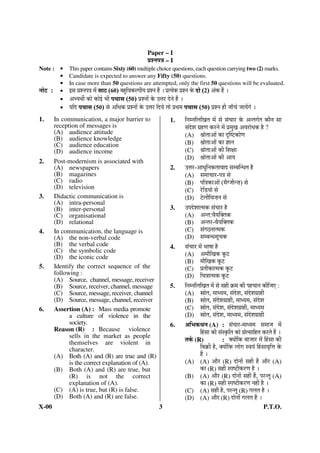
FOR OFFICE USE ONLY
                                  Marks Obtained


                                                 Obtained
          Question


                                                                               Obtained
                      Obtained

                                   Question
          Number


                                                                  Question
                                   Number


                                                                  Number
                                                  Marks


                                                                                Marks
                       Marks

             1                       21                             41
             2                       22                             42
             3                       23                             43
             4                       24                             44
             5                       25                             45
             6                       26                             46
             7                       27                             47
             8                       28                             48
             9                       29                             49
            10                       30                             50
            11                       31                             51
            12                       32                             52
            13                       33                             53
            14                       34                             54
            15                       35                             55
            16                       36                             56
            17                       37                             57
            18                       38                             58
            19                       39                             59
            20                       40                             60
       Total Marks Obtained (in words) ...........................................
                                   (in figures) ..........................................
       Signature & Name of the Coordinator ...................................

       (Evaluation)                                         Date .........................


X-00                                            2
Paper – I
                                                       ·° Ž··‚·– I
Note : • This paper contains Sixty (60) multiple choice questions, each question carrying two (2) marks.
           • Candidate is expected to answer any Fifty (50) questions.
           • In case more than 50 questions are attempted, only the first 50 questions will be evaluated.
Ž··ËzÝ • i¤··° Ž··‚·•·Ì¤··{Ý
“·§ÄݸŸ·oÛœ·À–··° Ž·§ÐÝg·°€–·Ëoې·° Ž·oËÛ…Ý·Ë
h´oÛ§ÐÝg
           • h”–·„·ÂoÛ·ËoÛ·Ëiµ”·À·t··¤·
·° Ž··ÌoËÛjƒ·™Ý…ËÝŽ·Ë§ÐÝg
           • –·¸…ݐ·t··¤·
¤·Ëh¸·oې·° Ž··ÌoËÛjƒ·™Ý¸…Ý–·Ë€··Ë·°„·•··t··¤·
·° Ž·§ÝÀv··²t·Ëv··–·Ìq·Ëg
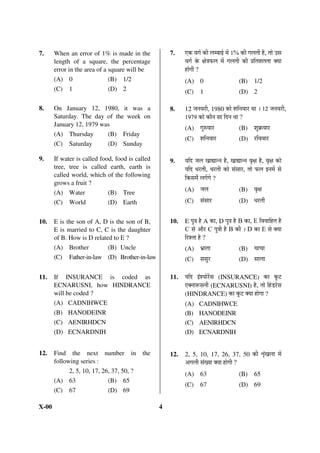
1.     In communication, a major barrier to                        1.     ¸Ž·•Ž·¸œ·¸p·€·•·Ì ¤·Ë ¤·´t··™Ý oËÛhŽ€·q·µ€·oÛ·ÏŽ·¤··
       reception of messages is                                           ¤·´…ËÝ ·q·°§Ý~·oۙݎ·Ë•·Ì·°•·Äp·hŸ·™Ý·Ë·oÛ§ÏÝ
       (A) audience attitude                                              (A) ¢··Ë€··h·ÌoÛ·†Ý¼£zÝoÛ·Ë~·
       (B) audience knowledge
       (C) audience education                                             (B) ¢··Ë€··h·ÌoÛ·w··Ž·
       (D) audience income                                                (C) ¢··Ë€··h·ÌoÛÀ¸ ·c··
                                                                          (D) ¢··Ë€··h·ÌoÛÀh·–·
2.     Post-modernism is associated with
       (A) newspapers                                              2.     jƒ·™Ýh··Ä¸Ž·oÛ€··Ÿ··…ݤ·•“·¼Ž·€·§ÏÝ
       (B) magazines                                                      (A) ¤·•··t··™Ý·‚·¤·Ë
       (C) radio                                                          (B) ·¸‚·oÛ·h·Ì•·Ïqv·ÀŽv·­
¤·Ë
       (D) television                                                     (C) ™Ëݸ|Ý–··Ë¤·Ë
3.     Didactic communication is                                          (D) zËÝœ·À¸Ÿ·v·­Ž·¤·Ë
       (A) intra-personal
       (B) inter-personal                                          3.     j·…ËÝ ··€•·oÛ¤·´t··™Ý§ÏÝ
       (C) organisational                                                 (A) hŽ€·Ÿ·Ï–·¼n€·oÛ
       (D) relational                                                     (B) hŽ€·™ÝŸ·Ï–·¼n€·oÛ
4.     In communication, the language is                                  (C) ¤·´q·{ÝŽ··€•·oÛ
       (A) the non-verbal code                                            (D) ¤·•“·Ž·¤·Çt·oÛ
       (B) the verbal code                                         4.     ¤·´t··™Ý•·Ì”··£··§ÏÝ
       (C) the symbolic code
       (D) the iconic code                                                (A) h•··Ï¸p·oÛoÇÛzÝ
                                                                          (B) •··Ï¸p·oÛoÇÛzÝ
5.     Identify the correct sequence of the                               (C) ·°€·ÀoÛ·€•·oÛoÇÛzÝ
       following :                                                        (D) ¸t·‚··€•·oÛoÇÛzÝ
       (A) Source, channel, message, receiver
       (B) Source, receiver, channel, message                      5.     ¸Ž·•Ž·¸œ·¸p·€·•·Ì¤·Ë¤·§ÝÀo¯Û•·oÛÀ·§Ýt··Ž·oÛÀ¸v·m
       (C) Source, message, receiver, channel                             (A) ¥··Ë€·•··–·•·¤·´…ËÝ ·¤·´…ËÝ ·q·°·§ÝÀ
       (D) Source, message, channel, receiver                             (B) ¥··Ë€·¤·´…ËÝ ·q·°·§ÝÀ•··–·•·¤·´…ËÝ ·
6.     Assertion (A) : Mass media promote                                 (C) ¥··Ë€·¤·´…ËÝ ·¤·´…ËÝ ·q·°·§ÝÀ•··–·•·
             a culture of violence in the                                 (D) ¥··Ë€·¤·´…ËÝ ·•··–·•·¤·´…ËÝ ·q·°·§ÝÀ
             society.                                              6.     h¸”·oÛ„·Ž· (A) : ¤·´t··™Ý•··–·•· ¤·•··v· •·Ì
       Reason (R) : Because violence                                                ¹§Ý¤··oÛÀ¤·´¤oÊÛ¸€·o۷ː·°·Ë€¤··¸§Ý€·oۙ݀·Ë§ÐÝg
             sells in the market as people
             themselves are violent in                                    €·oµÛ (R)                : n–··Ì¸oÛ“··v··™Ý •·Ì ¹§Ý¤··oÛÀ
             character.                                                             ¸“·o¯ÛÀ§ÏÝn–··Ì¸oÛœ··Ëq·¤Ÿ·–·´¹§Ý¤··Ÿ·Ê¸ƒ·oËÛ
       (A) Both (A) and (R) are true and (R)                                        §ÐÝg
             is the correct explanation of (A).                           (A) (A) h·Ï™Ý (R) …Ý·ËŽ··Ì ¤·§ÝÀ §ÐÝ h·Ï™Ý (A)
       (B) Both (A) and (R) are true, but                                           oÛ· (R) ¤·§ÝÀ¤·£zÝÀoÛ™Ý~·§ÏÝg
             (R) is not the correct                                       (B) (A) h·Ï™Ý (R) …Ý·ËŽ··Ì ¤·§ÝÀ§Ðݐ·™ÝŽ€·Ä (A)
             explanation of (A).                                                    oÛ·(R) ¤·§ÝÀ¤·£zÝÀoÛ™Ý~·Ž·§ÝÁ§ÏÝg
       (C) (A) is true, but (R) is false.                                 (C) (A) ¤·§ÝÀ§Ïݐ·™ÝŽ€·Ä (R) q·œ·€·§ÏÝg
       (D) Both (A) and (R) are false.                                    (D) (A) h·Ï™Ý (R) …Ý·ËŽ··Ìq·œ·€·§ÐÝg
X-00                                                         3                                                                P.T.O.
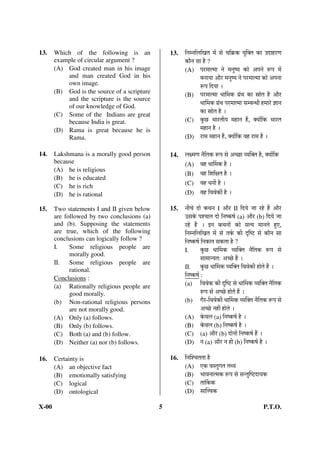
7.     When an error of 1% is made in the            7.    moÛŸ·q·µoÛÀœ·•“··iµ•·ÌoÛÀq·œ·€·À§ÏÝ€··Ëj¤·
       length of a square, the percentage                  Ÿ·q·µ oËÛ c·Ë‚·’Ûœ· •·Ì q·œ·€·À oÛÀ ·°¸€· ·€·€·· n–··
       error in the area of a square will be               §Ý·Ëq·À
       (A) 0                  (B) 1/2                      (A) 0                              (B)       1/2
       (C) 1                  (D) 2                        (C)       1                        (D) 2

8.     On January 12, 1980, it was a                 8.    12 v·Ž·Ÿ·™ÝÀ, 1980 oÛ·Ë ·¸Ž·Ÿ··™Ý„··gv·Ž·Ÿ·™ÝÀ
       Saturday. The day of the week on                    oÛ·ËoÛ·ÏŽ·¤··¸…ÝŽ·„··
       January 12, 1979 was
                                                           (A) q·ÄšÞŸ··™Ý                 (B)  ·Äo¯ÛŸ··™Ý
       (A) Thursday       (B) Friday
                                                           (C)  ·¸Ž·Ÿ··™Ý                 (D) ™Ý¸Ÿ·Ÿ··™Ý
       (C) Saturday       (D) Sunday

9.     If water is called food, food is called       9.    –·¸…Ý v·œ·p··‹·ŽŽ·§ÏÝp··‹·ŽŽ·Ÿ·Êc·§ÏÝŸ·Êc·oÛ·Ë
       tree, tree is called earth, earth is                –·¸…Ý ·™Ý€·À ·™Ý€·À oÛ·Ë ¤·´¤··™Ý€··Ë ’Ûœ·iŽ·•·Ì ¤·Ë
       called world, which of the following
                                                           ¸oÛ¤·•·ÌËœ·q·Ìq·Ë?
       grows a fruit ?
       (A) Water             (B) Tree                      (A) v·œ·                             (B) Ÿ·Êc·
       (C) World             (D) Earth                     (C) ¤·´¤··™Ý                         (D) ·™Ý€·À


10.    E is the son of A, D is the son of B,         10.   E ·Ä‚·§ÏÝ A oÛ·D·Ä‚·§ÏÝ%oÛ·(¸Ÿ·Ÿ··¸§Ý€·§ÏÝ
       E is married to C, C is the daughter                ¤·Ë h·Ï™Ý ·Ä‚·À§ÏÝ %oÛÀg'oÛ·(¤·Ë n–··
       of B. How is D related to E ?                       ¸™Ý €··§ÏÝ
       (A) Brother          (B) Uncle                      (A) ”·°·€··                     (B) t··t··
       (C) Father-in-law (D) Brother-in-law                (C) ¤·¤·Ä™Ý                     (D) ¤··œ··

11.    If INSURANCE is coded as                      11.   –·¸…Ý i´ –··Ë™Ìݤ· (INSURANCE) oÛ· oÇÛzÝ
       ECNARUSNI, how HINDRANCE                            mnŽ··›ß¤·Ž·À (ECNARUSNI) §ÏÝ€··Ë ¹§Ý|Ý™Ìݤ·
       will be coded ?                                     (HINDRANCE) oÛ·oÇÛzÝn–··§Ý·Ëq·· ?
       (A) CADNIHWCE                                       (A)      CADNIHWCE
       (B) HANODEINR                                       (B)      HANODEINR
       (C) AENIRHDCN                                       (C)      AENIRHDCN
       (D) ECNARDNIH                                       (D)      ECNARDNIH


12.    Find the next number in             the       12.   2, 5, 10, 17, 26, 37, 50                    oÛÀ ¡·Ê´p·œ·· •·Ì
       following series :                                  hq·œ·À¤·´p–··n–··§Ý·Ëq·À
             2, 5, 10, 17, 26, 37, 50, ?                   (A) 63                             (B)       65
       (A) 63                (B) 65
                                                           (C)       67                       (D) 69
       (C) 67                (D) 69

X-00                                             4
13.    Which of the following is an               13.   ¸Ž·•Ž·¸œ·¸p·€· •·Ì ¤·Ë t·¸o¯ÛoÛ –·Ä¼n€· oÛ· j…Ý·§Ý™Ý~·
       example of circular argument ?                   oÛ·ÏŽ·¤··§ÏÝ ?
       (A) God created man in his image                 (A) ·™Ý•··€•·· Ž·Ë •·Ž·Ä£–· oÛ·Ë h·Ž·Ë ›ß· •·Ì
           and man created God in his                            “·Ž··–··h·Ï™Ý•·Ž·Ä£–·Ž·Ë·™Ý•··€•··oÛ·Ëh·Ž··
           own image.
                                                                 ›ß·¸…Ý–··g
       (B) God is the source of a scripture
                                                        (B) ·™Ý•··€•·· ··º•·oÛ q·°´„· oÛ· ¥··Ë€· §ÏÝ h·Ï™Ý
           and the scripture is the source
           of our knowledge of God.                              ··º•·oÛq·°´„··™Ý•··€•··¤·•“·Ž·À§Ý•··™ËÝw··Ž·
       (C) Some of the Indians are great                         oÛ·¥··Ë€·§ÏÝg
           because India is great.                      (C) oÄÛuÜ ”··™Ý€·À–· •·§Ý·Ž· §ÐÝ n–··Ì¸oÛ ”··™Ý€·
       (D) Rama is great because he is                           •·§Ý·Ž·§ÏÝg
           Rama.                                        (D) ™Ý·•·•·§Ý·Ž·§ÐÝn–··Ì¸oÛŸ·§Ý™Ý·•·§ÐÝg

14.    Lakshmana is a morally good person         14.   œ·c•·~·Ž·Ï¸€·oۛߐ·¤·ËhtuÜ·Ÿ–·¼n€·§ÏÝn–··Ì¸oÛ
       because                                          (A) Ÿ·§Ý··º•·oÛ§ÏÝg
       (A) he is religious
                                                        (B) Ÿ·§Ý¸ ·¸c·€·§ÏÝg
       (B) he is educated
       (C) he is rich                                   (C) Ÿ·§Ý·Ž·À§ÏÝg
       (D) he is rational                               (D) Ÿ·§Ý¸Ÿ·Ÿ·ËoÛÀ§ÏÝg

15.    Two statements I and II given below        15.   Ž·Àt·Ë …Ý·Ë oÛ„·Ž· I h·Ï™Ý II ¸…Ý–·Ë v·· ™Ý§ËÝ §ÐÝ h·Ï™Ý
       are followed by two conclusions (a)              j¤·oËې· t··€·…Ý·Ë ¸Ž·£oÛ£·µ (a) h·Ï™Ý (b) ¸…Ý–·Ë v··
       and (b). Supposing the statements                ™Ý§ËÝ §ÐÝ g iŽ· oÛ„·Ž··Ì oÛ·Ë ¤·€–· •··Ž·€·Ë §ÄÝm
       are true, which of the following                 ¸Ž·•Ž·¸œ·¸p·€· •·Ì ¤·Ë €·oµÛ oÛÀ †Ý¼£zÝ ¤·Ë oÛ·ÏŽ· ¤··
       conclusions can logically follow ?               ¸Ž·£oÛ£·µ¸Ž·oÛœ·¤·oÛ€··§ÏÝ
       I.    Some religious people are                  I.          oÄÛuÜ ··º•·oÛ Ÿ–·¼n€· Ž·Ï¸€·oÛ ›ß· ¤·Ë
             morally good.
       II. Some religious people are
                                                                    ¤··•··Ž–·€·htuËܧÐÝg
             rational.                                  II. oÄÛu܍··º•·oÛŸ–·¼n€·¸Ÿ·Ÿ·ËoÛÀ§Ý·Ë€·Ë§ÐÝg
       Conclusions :                                    ¸Ž·£oÛ£·µ :
       (a) Rationally religious people are              (a) ¸Ÿ·Ÿ·ËoÛoÛÀ†Ý¼£zݤ·Ë··º•·oÛŸ–·¼n€·Ž·Ï¸€·oÛ
             good morally.                                          ›ß·¤·ËhtuËܧݷˀ·Ë§ÐÝg
       (b) Non-rational religious persons               (b) q·Ï™Ý¸Ÿ·Ÿ·ËoÛÀ··º•·oÛŸ–·¼n€·Ž·Ï¸€·oۛߐ·¤·Ë
             are not morally good.                                  htuËÜŽ·§ÝÁ§Ý·Ë€·Ëg
       (A) Only (a) follows.                            (A) oËÛŸ·œ· (a) ¸Ž·£oÛ£·µ§ÏÝg
       (B) Only (b) follows.                            (B) oËÛŸ·œ· (b) ¸Ž·£oÛ£·µ§ÏÝg
       (C) Both (a) and (b) follow.                     (C) (a) h·Ï™Ý (b) …Ý·ËŽ··Ì¸Ž·£oÛ£·µ§ÐÝg
       (D) Neither (a) nor (b) follows.                 (D) Ž· (a) h·Ï™ÝŽ·§ÝÀ (b) ¸Ž·£oÛ£·µ§ÏÝg

16.    Certainty is                               16.   ¸Ž·¼ t·€·€··§ÏÝ
       (A) an objective fact                            (A) moÛŸ·¤€·Äq·€·€·„–·
       (B) emotionally satisfying                       (B) ”··Ÿ·Ž··€•·oۛߐ·¤·Ë¤·Ž€·Ä¼£zÝ…Ý·–·oÛ
       (C) logical                                      (C) €··ºoÛoÛ
       (D) ontological                                  (D) ¤··¼ƒŸ·oÛ

X-00                                          5                                                           P.T.O.
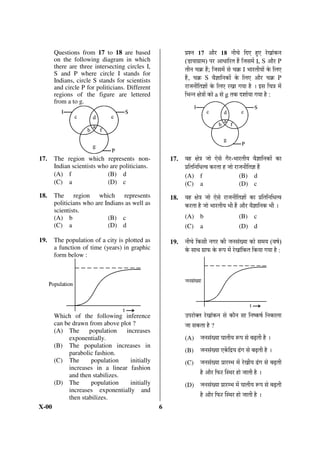
Questions from 17 to 18 are based                   ·° Ž·  h·Ï™Ý  Ž·Àt·Ë ¸…Ým §ÄÝm ™ËÝp··´oÛŽ·
       on the following diagram in which                   |Ý·–··q·°·•·
·™Ý h···¸™Ý€·§Ðݸv·¤·•·ÌI6h·Ï™Ý3
       there are three intersecting circles I,
       S and P where circle I stands for
                                                           €·ÀŽ·t·o¯Û§Ðݸv·¤·•·Ì ¤·Ë t·o¯Û,”··™Ý€·À–··Ì oËÛ¸œ·m
       Indians, circle S stands for scientists             §ÐÝ  t·o¯Û 6 Ÿ·Ïw··¸Ž·oÛ·Ì oËÛ ¸œ·m h·Ï™Ý t·o¯Û 3
       and circle P for politicians. Different             ™Ý·v·Ž·À¸€·w··Ì oËÛ¸œ·m™Ýp··q·–··§ÏÝ gi¤·¸t·‚·•·Ì
       regions of the figure are lettered                  ¸”·ŽŽ·c·Ë‚··ÌoÛ·ËD¤·ËJ€·oÛ…Ý ··µ–··q·–··§ÏÝ
       from a to g.


17.    The region which represents non-              17.   Ÿ·§Ý c·Ë‚· v··Ë mˤ·Ë q·Ï™Ý”··™Ý€·À–· Ÿ·Ïw··¸Ž·oÛ·Ì oÛ·
       Indian scientists who are politicians.              ·°¸€·¸Ž·¸·€Ÿ·oۙ݀··§Ýv··Ë™Ý·v·Ž·À¸€·w·§ÐÝ
       (A) f                (B) d                          (A) f                              (B) d
       (C) a                (D) c                          (C) a                              (D) c
18.    The region which represents                   18.   Ÿ·§Ý c·Ë‚· v··Ë mˤ·Ë ™Ý·v·Ž·À¸€·w··Ì oÛ· ·°¸€·¸Ž·¸·€Ÿ·
       politicians who are Indians as well as              oۙ݀··§ÏÝv··Ë”··™Ý€·À–·”·À§ÐÝh·Ï™ÝŸ·Ïw··¸Ž·oÛ”·Àg
       scientists.
       (A) b                (B) c                          (A) b                              (B)       c
       (C) a                (D) d                          (C)      a                         (D) d

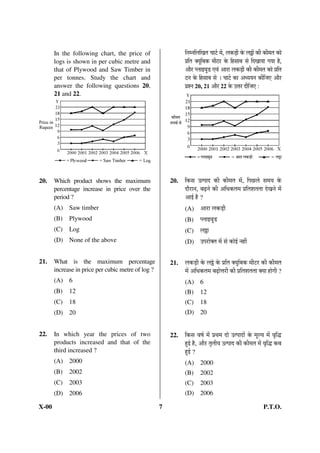
19.    The population of a city is plotted as        19.   Ž·Àt·Ë ¸oÛ¤·ÀŽ·q·™Ý oÛÀv·Ž·¤·´p–··oÛ·Ë ¤·•·–·Ÿ·£·µ
a function of time (years) in graphic               oËÛ¤··„·q·°·’ÛoËۛߐ·•·Ì™ËÝp··´¸oÛ€·¸oÛ–··q·–··§ÏÝ :
       form below :


       Which of the following inference                    j·™Ý·Ën€· ™ËÝp··´oÛŽ· ¤·Ë oÛ·ÏŽ· ¤·· ¸Ž·£oÛ£·µ ¸Ž·oÛ·œ··
       can be drawn from above plot ?                      v··¤·oÛ€··§ÏÝ?
       (A) The       population   increases
             exponentially.                                (A)      v·Ž·¤·´p–··r··€·À–·›ß·¤·Ë“·}®Ý€·À§ÏÝg
       (B) The population increases in
             parabolic fashion.                            (B)      v·Ž·¤·´p–··moÌÛ¸‡Ý–·}´Ýq·¤·Ë“·}®Ý€·À§ÏÝg
       (C) The        population    initially              (C)      v·Ž·¤·´p–···°·™Ý•”·•·Ì ™ËÝp·À–·}´Ýq·¤·Ë “·}®Ý€·À
             increases in a linear fashion
             and then stabilizes.                                   §ÏÝh·Ï™Ý¸’ۙݼ¤„·™Ý§Ý·Ëv··€·À§ÏÝg
       (D) The        population    initially              (D)      v·Ž·¤·´p–···°·™Ý•”·•·Ìr··€·À–·›ß·¤·Ë“·}®Ý€·À
             increases exponentially and
             then stabilizes.                                       §ÏÝh·Ï™Ý¸’ۙݼ¤„·™Ý§Ý·Ëv··€·À§ÏÝg
X-00                                             6
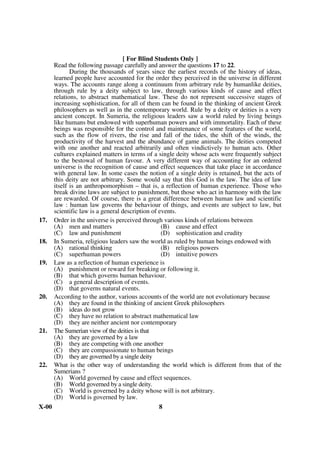
In the following chart, the price of                   ¸Ž·•Ž·¸œ·¸p·€·t··zµÝ•·Ìœ·oÛ|®ÝÀoËÛœ·žÝ·ÌoÛÀoÛÀ•·€·oÛ·Ë
       logs is shown in per cubic metre and                   ·°¸€· n–·Ç¸“·oÛ •·ÀzÝ™Ý oËÛ ¸§Ý¤··“· ¤·Ë ¸…Ýp··–·· q·–·· §ÏÝ
       that of Plywood and Saw Timber in                      h·Ï™Ýœ··iŸ·Ä|ÝmŸ·´h·™Ý·œ·oÛ|®ÝÀoÛÀoÛÀ•·€·o۷ː·°¸€·
       per tonnes. Study the chart and                        zÝŽ·oËÛ¸§Ý¤··“·¤·Ë gt··zµÝ oÛ·h–·–·Ž·oÛÀ¸v·mh·Ï™Ý
       answer the following questions 20,                     ·° Ž·h·Ï™ÝoËÛjƒ·™Ý…ÝÀ¸v·m
       21 and 22.


20.    Which product shows the maximum                  20.   ¸oÛ¤· j€··…Ý oÛÀ oÛÀ•·€· •·Ì ¸·uÜœ·Ë ¤·•·–· oËÛ
       percentage increase in price over the                  …Ý·Ï™Ý·Ž·“·}®ÝŽ·Ë oÛÀh¸·oÛ€·•··°¸€· ·€·€··…ËÝp·Ž·Ë •·Ì
       period ?                                               h·iµ§ÏÝ?
       (A) Saw timber                                         (A) h·™Ý·œ·oÛ|Ý®À
       (B)   Plywood                                          (B) œ··iŸ·Ä|Ý
       (C)   Log                                              (C) œ·žÝ·
       (D) None of the above                                  (D) j·™Ý·Ën€·•·Ì¤·ËoÛ·ËiµŽ·§ÝÁ


21.    What is the maximum percentage                   21.   œ·oÛ|®ÝÀoËÛœ·žËÝoËې·°¸€·n–·Ç¸“·oÛ•·ÀzÝ™ÝoÛÀoÛÀ•·€·
       increase in price per cubic metre of log ?             •·Ìh¸·oÛ€·•·“·}®Ý·Ëƒ·™ÝÀoÛÀ·°¸€· ·€·€··n–··§Ý·Ëq·À ?
       (A) 6                                                  (A) 6
       (B)   12                                               (B)        12
       (C)   18                                               (C)        18
       (D) 20                                                 (D) 20


22.    In which year the prices of two                  22.   ¸oÛ¤·Ÿ·£·µ •·Ì ·°„·•·…Ý·Ë j€··…Ý·Ì oËÛ•·Çœ–·•·Ì Ÿ·Ê¸‰Ý
       products increased and that of the                     §ÄÝiµ§ÏÝh·Ï™Ý€·Ê€·À–·j€··…ÝoÛÀoÛÀ•·€·•·ÌŸ·Ê¸‰ÝoÛ“·
       third increased ?                                      §ÄÝiµ?
       (A) 2000                                               (A) 2000
       (B)   2002                                             (B)        2002
       (C)   2003                                             (C)        2003
       (D) 2006                                               (D) 2006

X-00                                                7                                                                 P.T.O.
[ For Blind Students Only ]
       Read the following passage carefully and answer the questions 17 to 22.
              During the thousands of years since the earliest records of the history of ideas,
       learned people have accounted for the order they perceived in the universe in different
       ways. The accounts range along a continuum from arbitrary rule by humanlike deities,
       through rule by a deity subject to law, through various kinds of cause and effect
       relations, to abstract mathematical law. These do not represent successive stages of
       increasing sophistication, for all of them can be found in the thinking of ancient Greek
       philosophers as well as in the contemporary world. Rule by a deity or deities is a very
       ancient concept. In Sumeria, the religious leaders saw a world ruled by living beings
       like humans but endowed with superhuman powers and with immortality. Each of these
       beings was responsible for the control and maintenance of some features of the world,
       such as the flow of rivers, the rise and fall of the tides, the shift of the winds, the
       productivity of the harvest and the abundance of game animals. The deities competed
       with one another and reacted arbitrarily and often vindictively to human acts. Other
       cultures explained matters in terms of a single deity whose acts were frequently subject
       to the bestowal of human favour. A very different way of accounting for an ordered
       universe is the recognition of cause and effect sequences that take place in accordance
       with general law. In some cases the notion of a single deity is retained, but the acts of
       this deity are not arbitrary. Some would say that this God is the law. The idea of law
       itself is an anthropomorphism – that is, a reflection of human experience. Those who
       break divine laws are subject to punishment, but those who act in harmony with the law
       are rewarded. Of course, there is a great difference between human law and scientific
       law : human law governs the behaviour of things, and events are subject to law, but
       scientific law is a general description of events.
17.    Order in the universe is perceived through various kinds of relations between
       (A) men and matters                         (B) cause and effect
       (C) law and punishment                      (D) sophistication and crudity
18.    In Sumeria, religious leaders saw the world as ruled by human beings endowed with
       (A) rational thinking                       (B) religious powers
       (C) superhuman powers                       (D) intuitive powers
19.    Law as a reflection of human experience is
       (A) punishment or reward for breaking or following it.
       (B) that which governs human behaviour.
       (C) a general description of events.
       (D) that governs natural events.
20.    According to the author, various accounts of the world are not evolutionary because
       (A) they are found in the thinking of ancient Greek philosophers
       (B) ideas do not grow
       (C) they have no relation to abstract mathematical law
       (D) they are neither ancient nor contemporary
21.    The Sumerian view of the deities is that
       (A) they are governed by a law
       (B) they are competing with one another
       (C) they are compassionate to human beings
       (D) they are governed by a single deity
22.    What is the other way of understanding the world which is different from that of the
       Sumerians ?
       (A) World governed by cause and effect sequences.
       (B) World governed by a single deity.
       (C) World is governed by a deity whose will is not arbitrary.
       (D) World is governed by law.
X-00                                            8
[ oËÛŸ·œ·Ž·Ë‚·§ÝÀŽ·h”–·º„·–··Ì§ËÝ€·Ä ]
       ¸Ž·•Ž·¸œ·¸p·€·œ·Ëp··´ ·o۷ˍ–··Ž··ÇŸ·µoې·}®Ýoۙݐ·° Ž·¤·´p–··oÛ·jƒ·™Ý…ÝÀ¸v·m
                   §Ýv··™Ý·ÌŸ·£··ÎoËÛ…Ý·Ï™Ý·Ž·v·“·¤·Ë¸Ÿ·t··™Ý·ÌoËÛi¸€·§Ý·¤·oËÛh·™´Ý¸”·oÛh¸”·œ·Ëp·¸•·œ·€·Ë§ÐݸŸ·ŒÝ€·¬v·Ž··ÌŽ·Ë¤·Ê¼£zÝ•·ÌjŽ·oËÛ
       ŒÝ·™Ý·hŽ·Ä”·Ç€·Ÿ–·Ÿ·¤„··oÛ·¸Ÿ·Ÿ·™Ý~··°¤€·Ä€·¸oÛ–··§ÏÝg–·Ë¸Ÿ·Ÿ·™Ý~·moÛ¤··€·€–·oÛoÛÀ¡·Ê´p·œ··oËÛmoÛuܷ˙ݤ·Ë…Çݤ·™ËÝuܷ˙݀·oÛ
       – •··Ž·Ÿ·¤·•··Ž· …ËÝŸ·…ËݸŸ·–··Ì ŒÝ·™Ý· jŽ·oËÛ ¸Ÿ·Ÿ·ËoÛ··ÀŽ·  ··¤·Ž· ¤·Ë œ·ËoÛ™Ý …ËÝŸ·…ËݸŸ·–··Ì ŒÝ·™Ý· ¸Ž·–·•···ÀŽ·  ··¤·Ž· ¤·Ë œ·ËoÛ™Ý
       ¸Ÿ·¸”·ŽŽ··°oÛ·™Ý oËÛoÛ·–·µoÛ·™Ý~·¤·´“·´··Ì ¤·Ë œ·ËoÛ™Ýq·Ç}®Ý h•·Ç€·µ
¤·Ä¸Ž·¼ t·€·¸Ž·–·•··Ì €·oÛ’ÏÛœ·Ë §ÐÝ g–·Ë jƒ·™Ý·Ëƒ·™Ý Ÿ··µ•··Ž·
       ·¸™Ý£oÛ™Ý~·oÛÀhŸ·¤„··h·ÌoÛ··°¸€·¸Ž·¸·€Ÿ·Ž·§ÝÁoۙ݀·Ën–··Ì¸oÛ–·Ë¤·”·À·°·t·ÀŽ·–·ÇŽ··Ž·À…Ý· ·µ¸Ž·oÛ·Ìh·Ï™Ý¤··„·§ÝÀ¤··„·¸Ÿ· Ÿ·
       oËÛ¤·•·¤··•·¸–·oÛ¸Ÿ·t··™ÝoÛ·ÌoËÛ¹t·€·Ž·•·Ì¸•·œ·€·Ë§ÐÝgmoÛ–··hŽ·ËoÛ…ËÝŸ·…ËݸŸ·–··ÌŒÝ·™Ý· ··¤·Ž·moÛh¸€··°·t·ÀŽ·hŸ···™Ý~··
       §ÏÝ g¤·Ä•·Ë¸™Ý–··•·Ì ·•·µ·°•·Äp··Ì Ž·Ë h¸€··°·oÊÛ¸€·oÛ ·¼n€·–··Ì mŸ·´ h•·™Ý€··¤·Ë ¤·´·ŽŽ·•··Ž·Ÿ·¤·•··Ž·Ÿ–·¼n€·–··Ì ŒÝ·™Ý· ··¸¤·€·oÛÀ
       oÛœ·Ž··oÛÀ„·ÀgiŽ·•·Ì ¤·Ë ·°€–·ËoÛŸ–·¼n€··™Ý ¸Ÿ· Ÿ·oÛÀoÄÛuÜ ¸Ÿ·¸ ·£zÝ€··h·Ì oËÛ¸Ž·–·´‚·~·€·„··hŽ·Ä™Ýc·~·oÛ·…Ý·¸–·€Ÿ·„··
       v·Ï¤·Ë Ž·¸…Ý–··Ì oÛ··°Ÿ··§ÝvŸ··™Ý”··zÝ·oÛ·j€··™Ýt·}®Ý·Ÿ·§ÝŸ··h·Ì oÛ··¸™ÝŸ·€·µŽ·’Û¤·œ·oÛÀj€··…ÝoÛ€··€·„··¸ ·oÛ·™Ý–··Ëq–·
       · ·Äh·Ì oÛÀ“·§ÄÝœ·€··giŽ·…ËÝŸ·…ËݸŸ·–··Ì •·Ì moÛ…Çݤ·™ËÝ ¤·Ë ·°¸€·¤···µ §Ý·€·À„·À€·„··•··Ž·Ÿ·oÊÛ€–··Ì oËې·°¸€·iŽ·oÛÀ·°¸€·¸o¯Û–··
                                                                                                  Ë
       ¤Ÿ·ËtuÜ·t··¸™Ý€···Ç~·µ €·„··“·§Äݍ··…Ý~|Ý·€•·oÛ§Ý·€·À„·ÀghŽ–·¤·´¤oÊÛ¸€·–··Ì •·Ì iŽ·“··€··Ì oÛÀŸ–··p–··moÛmoÛœ·…ËÝŸ·…ËÝŸ·ÀoËÛ
                                                                      Ë
       ›ß·•·ÌoÛÀq·iµv··Ëœ··Ëq··ÌoÛ·Ë“··™´Ý“··™Ý”··Ï¸€·oÛhŽ·Äo´Û···°…Ý·Ž·oۙ݀·Ë„·ËgmoÛŸ–·Ÿ·¼¤„·€·v·q·€·¬oÛ·¸Ÿ·Ÿ·™Ý~··°¤€·Ä€·oۙݎ·Ë
       oÛ·moÛh¸€·¸”·ŽŽ·€·™ÝÀoÛ·§Ïݸv·¤·•·Ì ¤··•··Ž–·¸Ž·–·•··Ì oËÛh޷ěߐ·r·¸zÝ€·§Ý·Ž·Ë Ÿ··œ·Ë oÛ·–·µoÛ·™Ý~·hŽ·Äo¯Û•·oÛ·Ë ¤Ÿ·ÀoÊÛ¸€·
                                                                                                              Ë
       ·°…Ý·Ž·oÛÀv··€·À§ÏÝgoÄÛuÜ•··•·œ··Ì•·ÌmoÛmoÛœ·…ËÝŸ·…ËÝŸ·ÀoÛÀ··™Ý~··oÛ·Ë“·Ž··–·Ë™Ýp··q·–··g·™ÝŽ€·Äi¤·…ËÝŸ·…ËÝŸ·ÀoËÛoÊÛ€–·
       ¤Ÿ·ËtuÜ·t··¸™Ý€···Ç~·µŽ·§ÝÁ§Ý·€·Ë§ÐÝgoÄÛuÜœ··Ëq·oÛ§ÌÝq·Ë¸oÛ–·§ÝÀ…ËÝŸ·…ËÝŸ·À¸Ž·–·•·–··oÛ·Ž·ÇŽ·§ÏÝgoÛ·Ž·ÇŽ·oÛ·¸Ÿ·t··™Ý¤Ÿ·–·´§ÝÀmoÛ
                                            Ë
       •··Ž·Ÿ·€Ÿ··™Ý·Ë ·~·§ÏÝ–h„··µ€·¬•··Ž·Ÿ·hŽ·Ä”·Ÿ·oÛ··°¸€·¹“·“·§ÏÝgŸ·Ëœ··Ëq·v··Ë…ÏÝŸ·À¸Ž·–·•··ÌoÛ·Ë€··Ë|®Ý€·Ë§ÐÝŸ·Ë…Ý~|ÝoËÛh¸·ÝoÛ·™ÝÀ
       §Ý·€·Ë§Ðݐ·™ÝŽ€·Äv··Ë¸Ž·–·•··Ž·ÄoÇÛœ·h·t·™Ý~·oۙ݀·Ë§ÐÝŸ·Ë·Ä™Ý¤oÊÛ€·¸oÛ–·Ëv··€·Ë§ÐÝg¤·€–·§ÝÀ•··Ž·Ÿ·¸Ž·º•·€·¸Ž·–·•··Ì€·„··Ÿ·Ïw··¸Ž·oÛ
           Ë
       ¸Ž·–·•··ÌoËÛ“·Àt·“·§ÄÝ€·“·|®Ý·h´€·™Ý§ÏÝ•··Ž·Ÿ·¸Ž·º•·€·¸Ž·–·•·¤·ƒ··h·ÌoËÛŸ–·Ÿ·§Ý·™ÝoÛ·Ë ··¸¤·Ý€·oۙ݀·Ë§ÐÝ€·„··r·zÝŽ··m²¸Ž·–·•··Ì
       oËÛh·ÀŽ·§Ðݐ·™´Ý€·ÄŸ·Ïw··¸Ž·oÛ¸Ž·–·•·r·zÝŽ··h·ÌoÛ·¤··•··Ž–·¸Ÿ·Ÿ·™Ý~·§ÏÝg
17.    v·q·€·¬•·ÌŸ–·Ÿ·¤„··oÛ·“··Ë·iŽ·•·Ì¤·Ë¸oÛ¤·oËÛ“·Àt·¤·´“·´·oËیݷ™Ý·¸oÛ–··v··¤·oÛ€··§ÏÝ
       (A) •··Ž·Ÿ·€·„···…Ý·„·µ                                                   (B) oÛ·–·µ€·„··oÛ·™Ý~·
       (C) ¸Ž·–·•·€·„··…Ý~|Ý                                                      (D) ·¸™Ý£oÛ™Ý~·€·„··h·¸™Ý£oÛ™Ý~·
18.    ¤·Ä•·Ë¸™Ý–··•·Ì·•·µ·°•·Äp··ÌŽ·Ë¸Ž·•Ž·•·Ì¤·Ë¸oÛŽ·q·Ä~··Ì¤·Ë¤·•·ŽŽ·•··Ž·Ÿ··ÌŒÝ·™Ý· ··¸¤·€·¸Ÿ· Ÿ·oÛÀoÛœ·Ž··oÛÀ„·À
       (A) ¸Ÿ·Ÿ·Ëoې·Ç~·µ¹t·€·Ž·¤·Ë                                               (B) ··º•·oÛ ·¼n€·–··Ì¤·Ë
       (C) h¸€··°·oÊÛ¸€·oÛ ·¼n€·–··Ì¤·Ë                                          (D) h´€·w··µŽ·À ·¼n€·–··Ì¤·Ë
19.    •··Ž·Ÿ·hŽ·Ä”·Ÿ·oËې·°¸€·¹“·“·oËۛߐ·•·Ì¸Ž·–·•·n–··§ÏÝ
       (A) i¤·Ë€··Ë|®ÝŽ·Ëh„·Ÿ··i¤·oÛ·h޷Đ··œ·Ž·oۙݎ·ËoËÛ¸œ·m…Ý~|Ýh„·Ÿ···Ä™Ý¤oÛ·™Ýg
       (B) v··Ë•··Ž·Ÿ·Ÿ–·Ÿ·§Ý·™ÝoÛ·Ë ··¸¤·€·oۙ݀··§ÏÝg
       (C) r·zÝŽ··h·ÌoÛ·moÛ¤··•··Ž–·¸Ÿ·Ÿ·™Ý~·g
       (D) ·°·oÊÛ¸€·oÛr·zÝŽ··h·ÌoÛ·Ë¸Ž·–·´¸‚·€·oۙݎ·ËŸ··œ··g
20.    œ·Ëp·oÛoËÛh޷Ĥ··™Ý¸Ÿ· Ÿ·oËÛ“··™ËÝ•·Ì¸Ÿ·¸”·ŽŽ·¸Ÿ·Ÿ·™Ý~·o¯Û•·¸Ÿ·oÛ·¤··™ÝoÛŽ·§ÝÁ§ÐÝn–··Ì¸oÛ
       (A) iާÌݐ·°·t·ÀŽ·–·ÇŽ··Ž·À…Ý· ·µ¸Ž·oÛ·ÌoËÛ¹t·€·Ž·•·Ì··–··v··€··§ÏÝg
       (B) ¸Ÿ·t··™Ý¸Ÿ·oÛ¸¤·€·Ž·§ÝÁ§Ý·Ë€·Ëg
       (C) q·Ç}®Ý¤·Ä¸Ž·¼ t·€·¸Ž·–·•··ÌoËÛ¤··„·iŽ·oÛ·¤·´“·´·Ž·§ÝÁ§ÏÝg
       (D) –·ËŽ·€··Ë·°·t·ÀŽ·§ÐÝŽ·§ÝÀ¤·•·¤··•·¸–·oÛ§ÐÝg
21.    …ËÝŸ·…ËݸŸ·–··ÌoËÛ“··™ËÝ•·Ì¤·Ä•·Ë¸™Ý–·Ž·¸Ÿ·t··™Ý§ÏݸoÛ
       (A) –·ËmoÛ¸Ž·–·•·¤·Ë¸Ž·–·´¸‚·€·§Ý·Ë€·Ë§ÐÝg                            (B) –·ËmoÛ…Çݤ·™Ëݤ·Ë·°¸€·¤···µ•·Ì™Ý§Ý€·Ë§ÐÝg
       (C) –·Ë•··Ž·Ÿ·oËې·°¸€·…Ý–··œ·Ä§Ý·Ë€·Ë§ÐÝg                            (D) Ÿ·ËmoÛmoÛœ·…ËÝŸ·…ËÝŸ·À¤·Ë¸Ž·–·´¸‚·€·§Ý·Ë€·Ë§ÐÝg
22.    ¸Ÿ· Ÿ·o۷ˤ·•·x·Ž·ËoÛ·moÛhŽ–·€·™ÝÀoÛ·n–··§ÏÝv··Ë¤·Ä•·Ë¸™Ý–·Ž·¸Ÿ·t··™Ý¤·Ëhœ·q·§ÏÝ
       (A) oÛ·–·µoÛ·™Ý~·hŽ·Äo¯Û•··ÌŒÝ·™Ý·¸Ž·–·´¸‚·€·¸Ÿ· Ÿ·g
       (B) moÛmoÛœ·…ËÝŸ·…ËÝŸ·ÀŒÝ·™Ý·¸Ž·–·´¸‚·€·¸Ÿ· Ÿ·g
       (C) ¸Ÿ· Ÿ·moÛ…ËÝŸ·…ËÝŸ·À– v··Ë¤Ÿ·ËtuÜ·t··™ÝÀŽ·§ÝÁ§ÏÝ–ŒÝ·™Ý·¸Ž·–·´¸‚·€·§Ý·Ë€··§ÏÝg
       (D) ¸Ÿ· Ÿ·¸Ž·–·•·oÛ·Ž·ÇŽ·ŒÝ·™Ý·¸Ž·–·´¸‚·€·§Ý·Ë€··§ÏÝg

X-00                                                                          9                                                                      P.T.O.
23.    Which one of the following is the              23.   ¸Ž·•Ž·¸œ·¸p·€· •·Ì ¤·Ë ”··™Ý€· •·Ì ·Ä™Ý·œ·Ëp··Ì ¤·•“·Ž·À
       oldest Archival source of data in                    h·²oÛ|®ËÝ ·°…Ý·Ž·oۙݎ·Ë Ÿ··œ···Ä™Ý·€·Ž·€·•·¥··Ë€·oÛ·ÏŽ·
       India ?                                              ¤··§ÏÝ ?
       (A) National Sample Surveys                          (A)       Ž·Ë ·Ž·œ·¤·Ï•·œ·¤·Ÿ·Í
       (B)   Agricultural Statistics                        (B)       oÊÛ¸£·¤·•“·Ž·Àh·²oÛ|®ËÝ
       (C)   Census                                         (C)       v·Ž·q·~·Ž··
       (D) Vital Statistics                                 (D)       h·Ÿ· –·oÛh·²oÛ|®ËÝ

24.    In a large random data set following           24.   ¤··•··Ž–·“·´zÝŽ·oÛ·h޷Ĥ·™Ý~·oۙݎ·ËŸ··œ·ËmoÛ“·Ê§Ý…Ý
       normal distribution, the ratio (%) of                –··†Ý¼tuÜoÛ h·²oÛ|®Ý·Ì oËÛ ¤·•·Ätt·–· •·Ì •··–· ±
       number of data points which are in
                                                            •··Ž·oÛ¸Ÿ·t·œ·Ž·oËÛ¸Ÿ·¤€··™Ý •·Ì h·²oÛ|®Ý·¸“·Ž…ÄÝh·Ì
       the range of (mean ± standard
                                                            oÛÀ¤·´p–··oÛ·¤·´·Ç~·µh·²oÛ|®Ý·¸“·Ž…ÄÝh·ÌoÛÀ¤·´p–··
       deviation) to the total number of data
       points, is
                                                            oËÛ¤··„·h޷Đ··€· (%) §Ý·Ë€··§ÏÝ
                                                            (A) ~ 50%
       (A) ~ 50%
                                                            (B)       ~ 67%
       (B)   ~ 67%
                                                            (C)       ~ 97%
       (C)   ~ 97%
                                                            (D) ~ 47%
       (D) ~ 47%


25.    Which number system is usually                 25.   moÛ ¸Ÿ·¸ ·£zÝ ¸“·zÝ oÛ•–·ÇzÝ™Ý •·Ì ·°·–· ¸oÛ¤·
       followed in a typical 32-bit computer ?              ¤·´p–··¸Ÿ·¸·oÛ·h޷Ĥ·™Ý~·¸oÛ–··v··€··§ÏÝ ?
       (A) 2                                                (A) 2
       (B)   8                                              (B)       8

       (C)   10                                             (C)       10

       (D) 16                                               (D) 16


26.    Which one of the following is an               26.   ¸Ž·•Ž·¸œ·¸p·€· •·Ì ¤·Ë ·¸™Ýt··œ·Ž· ¸Ÿ·¸· h·Ë·™ËݹzÝq·
       example of Operating System ?                        ¸¤·¤zÝ•·
oÛ·j…Ý·§Ý™Ý~·oÛ·ÏŽ·¤··§ÏÝ?
       (A) Microsoft Word                                   (A)       •··io¯Û·Ë¤··Ó‘zÝŸ·|µÝ
       (B)   Microsoft Excel                                (B)       •··io¯Û·Ë¤··Ó‘zÝmn¤·œ·
       (C)   Microsoft Access                               (C)       •··io¯Û·Ë¤··Ó‘zÝmn¤·Ë¤·
       (D) Microsoft Windows                                (D)       •··io¯Û·Ë¤··Ó‘zݹŸ·|Ý·Ëv·­
X-00                                             10

J 0010 set-x

  • 1.
    Signature and Nameof Invigilator OMR Sheet No. : ......................................... (To be filled by the Candidate) 1. (Signature) __________________________ Roll No. (Name) ____________________________ (In figures as per admission card) 2. (Signature) __________________________ Roll No.____________________________ (Name) ____________________________ (In words) J 00 1 0 PAPER-I Test Booklet No. X Time : 1 1/4 hours] [Maximum Marks : 100 Number of Pages in this Booklet : 20 Number of Questions in this Booklet : 60 Instructions for the Candidates ¯Ö¸ü߁ÖÖÙ£ÖµÖÖë êú ×»Ö‹ ×­Ö¤ìü¿Ö 1. Write your roll number in the space provided on the top of 1. ¯ÖÆü»Öê ¯Öéšü êú ‰ú¯Ö¸ü ×­ÖµÖŸÖ Ã£ÖÖ­Ö ¯Ö¸ü †¯Ö­ÖÖ ¸üÖê»Ö ­Ö´²Ö¸ü ×»Ö׏֋ … this page. 2. ‡ÃÖ ¯ÖÏ¿­Ö-¯Ö¡Ö ´Öë ÃÖÖšü (60) ²ÖÆãü׾֍ú»¯ÖßµÖ ¯ÖÏ¿­Ö Æïü, וִ֭Öë ÃÖê ˆ´´Öߤü¾ÖÖ¸ü úÖê 2. This paper consists of sixty (60) multiple-choice type of ׍úÃÖß ³Öß ¯Ö“ÖÖÃÖ (50) ¯ÖÏ¿­Ö úÖ ˆ¢Ö¸ü ¤êü­ÖÖ ÆüÖêÖÖ … ˆ´´Öߤü¾ÖÖ¸ü «üÖ¸üÖ ¯Ö“ÖÖÃÖ ÃÖê questions, out of which the candidate would be required to †×¬Öú ¯ÖÏ¿­ÖÖë úÖ ˆ¢Ö¸ü ¤êü­Öê ¯Ö¸ü ˆ´´Öߤü¾ÖÖ¸ü «üÖ¸üÖ ×¤üµÖê ÖµÖê ¯ÖÏ£Ö´Ö ¯Ö“ÖÖÃÖ ¯ÖÏ¿­ÖÖë answer any fifty (50) questions. In the event of the candidate úÖ ´Ö滵ÖÖӍú­Ö ׍úµÖÖ •ÖÖµÖêÖÖ … attempting more than fifty questions, the first fifty questions 3. ¯Ö¸ü߁ÖÖ ¯ÖÏÖ¸ü´³Ö ÆüÖê­Öê ¯Ö¸ü, ¯ÖÏ¿­Ö-¯ÖãÛß֍úÖ †Ö¯ÖúÖê ¤êü ¤üß •ÖÖµÖêÖß … ¯ÖÆü»Öê ¯ÖÖÑ“Ö attempted by the Candidate would be evaluated. ×´Ö­Ö™ü †Ö¯ÖúÖê ¯ÖÏ¿­Ö-¯ÖãÛß֍úÖ ÖÖê»Ö­Öê ŸÖ£ÖÖ ˆÃ֍úß ×­Ö´­Ö×»Ö×ÖŸÖ •ÖÖÑ“Ö êú 3. At the commencement of examination, the question booklet will be given to you. In the first 5 minutes, you are requested ×»Ö‹ פüµÖê •ÖÖµÖëÖê וÖÃ֍úß •ÖÖÑ“Ö †Ö¯ÖúÖê †¾Ö¿µÖ ú¸ü­Öß Æîü : to open the booklet and compulsorily examine it as below : (i) ¯ÖÏ¿­Ö-¯ÖãÛß֍úÖ ÖÖê»Ö­Öê êú ×»Ö‹ ˆÃ֍êú ú¾Ö¸ü ¯Öê•Ö ¯Ö¸ü »ÖÖß úÖÖ•Ö úß (i) To have access to the Question Booklet, tear off the paper ÃÖᯙ úÖê ±úÖ›Íü »Öë … Öã»Öß Æãü‡Ô µÖÖ ×²Ö­ÖÖ Ã™üߍú¸ü-ÃÖᯙ úß ¯ÖãÛß֍úÖ seal on the edge of this cover page. Do not accept a booklet þÖߍúÖ¸ü ­Ö ú¸ëü … without sticker-seal and do not accept an open booklet. (ii) ú¾Ö¸ü ¯Öéšü ¯Ö¸ü ”û¯Öê ×­Ö¤ìü¿ÖÖ­ÖãÃÖÖ¸ü ¯ÖÏ¿­Ö-¯ÖãÛß֍úÖ êú ¯Öéšü ŸÖ£ÖÖ ¯ÖÏ¿­ÖÖë (ii) Tally the number of pages and number of questions in úß ÃÖӏµÖÖ úÖê †“”ûß ŸÖ¸üÆü “Öîú ú¸ü »Öë ׍ú µÖê ¯Öæ¸üê Æïü … ¤üÖÂÖ¯ÖæÖÔ ê the booklet with the information printed on the cover ¯ÖãÛß֍úÖ ×•Ö­Ö´Öë ¯Öéšü/¯ÖÏ¿­Ö ú´Ö ÆüÖë µÖÖ ¤ãü²ÖÖ¸üÖ †Ö ÖµÖê ÆüÖë µÖÖ ÃÖß׸üµÖ»Ö page. Faulty booklets due to pages/questions missing ´Öë ­Ö ÆüÖë †£ÖÖÔŸÖ ×úÃÖß ³Öß ¯ÖύúÖ¸ü úß ¡Öã×™ü¯ÖæÖÔ ¯ÖãÛß֍úÖ Ã¾ÖߍúÖ¸ü ­Ö or duplicate or not in serial order or any other ú¸ëü ŸÖ£ÖÖ ˆÃÖß ÃÖ´ÖµÖ ˆÃÖê »ÖÖî™ü֍ú¸ü ˆÃ֍êú ãÖÖ­Ö ¯Ö¸ü ¤æüÃÖ¸üß ÃÖÆüß discrepancy should be got replaced immediately by a ¯ÖÏ¿­Ö-¯ÖãÛß֍úÖ »Öê »Öë … ‡Ã֍êú ×»Ö‹ †Ö¯ÖúÖê ¯ÖÖÑ“Ö ×´Ö­Ö™ü פüµÖê •ÖÖµÖëÖê … correct booklet from the invigilator within the period ˆÃ֍êú ²ÖÖ¤ü ­Ö ŸÖÖê †Ö¯Öúß ¯ÖÏ¿­Ö-¯ÖãÛß֍úÖ ¾ÖÖ¯ÖÃÖ »Öß •ÖÖµÖêÖß †Öî¸ü ­Ö of 5 minutes. Afterwards, neither the Question Booklet Æüß †Ö¯ÖúÖê †×ŸÖ׸üŒŸÖ ÃÖ´ÖµÖ ×¤üµÖÖ •ÖÖµÖêÖÖ … will be replaced nor any extra time will be given. (iii) ‡ÃÖ •ÖÖÑ“Ö êú ²ÖÖ¤ü ¯ÖÏ¿­Ö-¯ÖãÛß֍úÖ úß Îú´Ö ÃÖӏµÖÖ OMR ¯Ö¡Öú ¯Ö¸ü (iii) After this verification is over, the Test Booklet Number †Ó׍úŸÖ ú¸ëü †Öî¸ü OMR ¯Ö¡Öú úß Îú´Ö ÃÖӏµÖÖ ‡ÃÖ ¯ÖÏ¿­Ö-¯ÖãÛß֍úÖ ¯Ö¸ü should be entered in the OMR Sheet and the OMR Sheet †Ó׍úŸÖ ú¸ü ¤ëü … Number should be entered on this Test Booklet. 4. ¯ÖÏŸµÖêú ¯ÖÏ¿­Ö êú ×»Ö‹ “ÖÖ¸ü ˆ¢Ö¸ü ׾֍ú»¯Ö (A), (B), (C) ŸÖ£ÖÖ (D) פüµÖê ÖµÖê 4. Each item has four alternative responses marked (A), (B), (C) Æïü … †Ö¯ÖúÖê ÃÖÆüß ˆ¢Ö¸ü êú ¤üß‘ÖÔ¾Öé¢Ö úÖê ¯Öê­Ö ÃÖê ³Ö¸üú¸ü úÖ»ÖÖ ú¸ü­ÖÖ Æîü •ÖîÃÖÖ and (D). You have to darken the oval as indicated below on the ׍ú ­Öß“Öê פüÖÖµÖÖ ÖµÖÖ Æîü … correct response against each item. ˆ¤üÖÆü¸üÖ : A B C D Example : A B C D where (C) is the correct response. •Ö²Ö׍ú (C) ÃÖÆüß ˆ¢Ö¸ü Æîü … 5. Your responses to the items are to be indicated in the Answer 5. ¯ÖÏ¿­Ö-¯Ö¡Ö I †Öî¸ü ¯ÖÏ¿­Ö-¯Ö¡Ö II êú ×»Ö‹ ‹ú Æüß ˆ¢Ö¸ü ¯Ö¡Öú Æîü •ÖÖê ‡ÃÖ ¯ÖÏ¿­Ö Sheet given inside this Booklet, which is common for ¯ÖãÛß֍úÖ êú †­¤ü¸ü פüµÖÖ ÖµÖÖ Æîü … ¯ÖÏ¿­ÖÖë êú ˆ¢Ö¸ü êú¾Ö»Ö ˆ¢Ö¸ü-¯Ö¡Öú ¯Ö¸ü Æüß Paper I and Paper II. If you mark at any place other than in †Ó׍úŸÖ ú¸ü­Öê Æïü … µÖפü †Ö¯Ö ˆ¢Ö¸ü ¯Ö¡Öú ¯Ö¸ü פüµÖê ÖµÖê ¤üß‘ÖÔ¾Öé¢Ö êú †»ÖÖ¾ÖÖ ×úÃÖß the ovals in the Answer Sheet, it will not be evaluated. †­µÖ ãÖÖ­Ö ¯Ö¸ü ˆ¢Ö¸ü דÖÅ­ÖÖÓ׍úŸÖ ú¸ŸÖê Æïü, ŸÖÖê ˆÃ֍úÖ ´Ö滵ÖÖӍú­Ö ­ÖÆüà Æü֐ÖÖ … ê 6. Read instructions given inside carefully. 6. †­¤ü¸ü פüµÖê ÖµÖê ×­Ö¤ìü¿ÖÖë úÖê ¬µÖÖ­Ö¯Öæ¾Öԍú ¯ÖœÍëü … 7. Rough Work is to be done in the end of this booklet. 7. ú““ÖÖ úÖ´Ö (Rough Work) ‡ÃÖ ¯ÖãÛß֍úÖ êú †Û­ŸÖ´Ö ¯Öéšü ¯Ö¸ü ú¸ëü … 8. If you write your name or put any mark on any part of the 8. µÖפü †Ö¯Ö ˆ¢Ö¸ü-¯ÖãÛß֍úÖ ¯Ö¸ü †¯Ö­ÖÖ ­ÖÖ´Ö µÖÖ ‹êÃÖÖ úÖê‡Ô ³Öß ×­Ö¿ÖÖ­Ö ×•ÖÃÖÃÖê Answer Sheet, except for the space allotted for the relevant †Ö¯Öúß ¯ÖÆü“ÖÖ­Ö ÆüÖê Ã֍êú, ׍úÃÖß ³Öß ³ÖÖÖ ¯Ö¸ü ¤ü¿ÖÖÔŸÖê µÖÖ †Ó׍úŸÖ ú¸üŸÖê Æïü ŸÖÖê entries, which may disclose your identity, you will render ¯Ö¸ü߁ÖÖ êú ×»ÖµÖê †µÖÖêµÖ ‘ÖÖê×ÂÖŸÖ ú¸ü פüµÖê •ÖÖµÖëÖê … yourself liable to disqualification. 9. †Ö¯ÖúÖê ¯Ö¸ü߁ÖÖ ÃÖ´ÖÖ¯ŸÖ ÆüÖê­Öê ¯Ö¸ü ¯ÖÏ¿­Ö-¯ÖãÛß֍úÖ ‹¾ÖÓ OMR ˆ¢Ö¸ü-¯Ö¡Öú 9. You have to return the test question booklet and OMR Answer sheet to the invigilators at the end of the examination ×­Ö¸ü߁֍ú ´ÖÆüÖê¤üµÖ úÖê »ÖÖî™üÖ­ÖÖ †Ö¾Ö¿µÖú Æîü †Öî¸ü ¯Ö¸ü߁ÖÖ ÃÖ´ÖÖÛ¯ŸÖ êú ²ÖÖ¤ü ˆÃÖê compulsorily and must not carry it with you outside the †¯Ö­Öê ÃÖÖ£Ö ¯Ö¸ü߁ÖÖ ³Ö¾Ö­Ö ÃÖê ²ÖÖÆü¸ü ­Ö »Öêú¸ü •ÖÖµÖë … Examination Hall. 10. êú¾Ö»Ö ­Öß»Öê/úÖ»Öê ²ÖÖ»Ö ¯¾ÖÖ‡Õ™ü ¯Öî­Ö úÖ Æüß ‡ÃŸÖê´ÖÖ»Ö ú¸ëü … 10. Use only Blue/Black Ball point pen. 11. ׍úÃÖß ³Öß ¯ÖύúÖ¸ü úÖ ÃÖӐ֝֍ú (îú»Öãú»Öê™ü¸ü) µÖÖ »ÖÖÖ ™êü²Ö»Ö †Öפü úÖ 11. Use of any calculator or log table etc., is prohibited. ¯ÖϵÖÖêÖ ¾ÖÙ•ÖŸÖ Æîü … 12. There is no negative marks for incorrect answers. 12. Ö»ÖŸÖ ˆ¢Ö¸üÖë êú ×»Ö‹ úÖê‡Ô †Óú úÖ™êü ­ÖÆüà •Ö֋ѐÖê … X-00 P.T.O.
  • 2.
    FOR OFFICE USEONLY Marks Obtained Obtained Question Obtained Obtained Question Number Question Number Number Marks Marks Marks 1 21 41 2 22 42 3 23 43 4 24 44 5 25 45 6 26 46 7 27 47 8 28 48 9 29 49 10 30 50 11 31 51 12 32 52 13 33 53 14 34 54 15 35 55 16 36 56 17 37 57 18 38 58 19 39 59 20 40 60 Total Marks Obtained (in words) ........................................... (in figures) .......................................... Signature & Name of the Coordinator ................................... (Evaluation) Date ......................... X-00 2
  • 3.
    Paper – I ·° Ž··‚·– I Note : • This paper contains Sixty (60) multiple choice questions, each question carrying two (2) marks. • Candidate is expected to answer any Fifty (50) questions. • In case more than 50 questions are attempted, only the first 50 questions will be evaluated. Ž··ËzÝ • i¤··° Ž··‚·•·Ì¤··{Ý
  • 4.
  • 5.
    h´oÛ§ÐÝg • h”–·„·ÂoÛ·ËoÛ·Ëiµ”·À·t··¤·
  • 6.
  • 7.
  • 8.
    ·° Ž·§ÝÀv··²t·Ëv··–·Ìq·Ëg 1. In communication, a major barrier to 1. ¸Ž·•Ž·¸œ·¸p·€·•·Ì ¤·Ë ¤·´t··™Ý oËÛhŽ€·q·µ€·oÛ·ÏŽ·¤·· reception of messages is ¤·´…ËÝ ·q·°§Ý~·oۙݎ·Ë•·Ì·°•·Äp·hŸ·™Ý·Ë·oÛ§ÏÝ (A) audience attitude (A) ¢··Ë€··h·ÌoÛ·†Ý¼£zÝoÛ·Ë~· (B) audience knowledge (C) audience education (B) ¢··Ë€··h·ÌoÛ·w··Ž· (D) audience income (C) ¢··Ë€··h·ÌoÛÀ¸ ·c·· (D) ¢··Ë€··h·ÌoÛÀh·–· 2. Post-modernism is associated with (A) newspapers 2. jƒ·™Ýh··Ä¸Ž·oÛ€··Ÿ··…ݤ·•“·¼Ž·€·§ÏÝ (B) magazines (A) ¤·•··t··™Ý·‚·¤·Ë (C) radio (B) ·¸‚·oÛ·h·Ì•·Ïqv·ÀŽv·­
  • 9.
    ¤·Ë (D) television (C) ™Ëݸ|Ý–··Ë¤·Ë 3. Didactic communication is (D) zËÝœ·À¸Ÿ·v·­Ž·¤·Ë (A) intra-personal (B) inter-personal 3. j·…ËÝ ··€•·oÛ¤·´t··™Ý§ÏÝ (C) organisational (A) hŽ€·Ÿ·Ï–·¼n€·oÛ (D) relational (B) hŽ€·™ÝŸ·Ï–·¼n€·oÛ 4. In communication, the language is (C) ¤·´q·{ÝŽ··€•·oÛ (A) the non-verbal code (D) ¤·•“·Ž·¤·Çt·oÛ (B) the verbal code 4. ¤·´t··™Ý•·Ì”··£··§ÏÝ (C) the symbolic code (D) the iconic code (A) h•··Ï¸p·oÛoÇÛzÝ (B) •··Ï¸p·oÛoÇÛzÝ 5. Identify the correct sequence of the (C) ·°€·ÀoÛ·€•·oÛoÇÛzÝ following : (D) ¸t·‚··€•·oÛoÇÛzÝ (A) Source, channel, message, receiver (B) Source, receiver, channel, message 5. ¸Ž·•Ž·¸œ·¸p·€·•·Ì¤·Ë¤·§ÝÀo¯Û•·oÛÀ·§Ýt··Ž·oÛÀ¸v·m (C) Source, message, receiver, channel (A) ¥··Ë€·•··–·•·¤·´…ËÝ ·¤·´…ËÝ ·q·°·§ÝÀ (D) Source, message, channel, receiver (B) ¥··Ë€·¤·´…ËÝ ·q·°·§ÝÀ•··–·•·¤·´…ËÝ · 6. Assertion (A) : Mass media promote (C) ¥··Ë€·¤·´…ËÝ ·¤·´…ËÝ ·q·°·§ÝÀ•··–·•· a culture of violence in the (D) ¥··Ë€·¤·´…ËÝ ·•··–·•·¤·´…ËÝ ·q·°·§ÝÀ society. 6. h¸”·oÛ„·Ž· (A) : ¤·´t··™Ý•··–·•· ¤·•··v· •·Ì Reason (R) : Because violence ¹§Ý¤··oÛÀ¤·´¤oÊÛ¸€·o۷ː·°·Ë€¤··¸§Ý€·oۙ݀·Ë§ÐÝg sells in the market as people themselves are violent in €·oµÛ (R) : n–··Ì¸oÛ“··v··™Ý •·Ì ¹§Ý¤··oÛÀ character. ¸“·o¯ÛÀ§ÏÝn–··Ì¸oÛœ··Ëq·¤Ÿ·–·´¹§Ý¤··Ÿ·Ê¸ƒ·oËÛ (A) Both (A) and (R) are true and (R) §ÐÝg is the correct explanation of (A). (A) (A) h·Ï™Ý (R) …Ý·ËŽ··Ì ¤·§ÝÀ §ÐÝ h·Ï™Ý (A) (B) Both (A) and (R) are true, but oÛ· (R) ¤·§ÝÀ¤·£zÝÀoÛ™Ý~·§ÏÝg (R) is not the correct (B) (A) h·Ï™Ý (R) …Ý·ËŽ··Ì ¤·§ÝÀ§Ðݐ·™ÝŽ€·Ä (A) explanation of (A). oÛ·(R) ¤·§ÝÀ¤·£zÝÀoÛ™Ý~·Ž·§ÝÁ§ÏÝg (C) (A) is true, but (R) is false. (C) (A) ¤·§ÝÀ§Ïݐ·™ÝŽ€·Ä (R) q·œ·€·§ÏÝg (D) Both (A) and (R) are false. (D) (A) h·Ï™Ý (R) …Ý·ËŽ··Ìq·œ·€·§ÐÝg X-00 3 P.T.O.
  • 10.
    7. When an error of 1% is made in the 7. moÛŸ·q·µoÛÀœ·•“··iµ•·ÌoÛÀq·œ·€·À§ÏÝ€··Ëj¤· length of a square, the percentage Ÿ·q·µ oËÛ c·Ë‚·’Ûœ· •·Ì q·œ·€·À oÛÀ ·°¸€· ·€·€·· n–·· error in the area of a square will be §Ý·Ëq·À (A) 0 (B) 1/2 (A) 0 (B) 1/2 (C) 1 (D) 2 (C) 1 (D) 2 8. On January 12, 1980, it was a 8. 12 v·Ž·Ÿ·™ÝÀ, 1980 oÛ·Ë ·¸Ž·Ÿ··™Ý„··gv·Ž·Ÿ·™ÝÀ Saturday. The day of the week on oÛ·ËoÛ·ÏŽ·¤··¸…ÝŽ·„·· January 12, 1979 was (A) q·ÄšÞŸ··™Ý (B)  ·Äo¯ÛŸ··™Ý (A) Thursday (B) Friday (C)  ·¸Ž·Ÿ··™Ý (D) ™Ý¸Ÿ·Ÿ··™Ý (C) Saturday (D) Sunday 9. If water is called food, food is called 9. –·¸…Ý v·œ·p··‹·ŽŽ·§ÏÝp··‹·ŽŽ·Ÿ·Êc·§ÏÝŸ·Êc·oÛ·Ë tree, tree is called earth, earth is –·¸…Ý ·™Ý€·À ·™Ý€·À oÛ·Ë ¤·´¤··™Ý€··Ë ’Ûœ·iŽ·•·Ì ¤·Ë called world, which of the following ¸oÛ¤·•·ÌËœ·q·Ìq·Ë? grows a fruit ? (A) Water (B) Tree (A) v·œ· (B) Ÿ·Êc· (C) World (D) Earth (C) ¤·´¤··™Ý (D) ·™Ý€·À 10. E is the son of A, D is the son of B, 10. E ·Ä‚·§ÏÝ A oÛ·D·Ä‚·§ÏÝ%oÛ·(¸Ÿ·Ÿ··¸§Ý€·§ÏÝ E is married to C, C is the daughter ¤·Ë h·Ï™Ý ·Ä‚·À§ÏÝ %oÛÀg'oÛ·(¤·Ë n–·· of B. How is D related to E ? ¸™Ý €··§ÏÝ (A) Brother (B) Uncle (A) ”·°·€·· (B) t··t·· (C) Father-in-law (D) Brother-in-law (C) ¤·¤·Ä™Ý (D) ¤··œ·· 11. If INSURANCE is coded as 11. –·¸…Ý i´ –··Ë™Ìݤ· (INSURANCE) oÛ· oÇÛzÝ ECNARUSNI, how HINDRANCE mnŽ··›ß¤·Ž·À (ECNARUSNI) §ÏÝ€··Ë ¹§Ý|Ý™Ìݤ· will be coded ? (HINDRANCE) oÛ·oÇÛzÝn–··§Ý·Ëq·· ? (A) CADNIHWCE (A) CADNIHWCE (B) HANODEINR (B) HANODEINR (C) AENIRHDCN (C) AENIRHDCN (D) ECNARDNIH (D) ECNARDNIH 12. Find the next number in the 12. 2, 5, 10, 17, 26, 37, 50 oÛÀ ¡·Ê´p·œ·· •·Ì following series : hq·œ·À¤·´p–··n–··§Ý·Ëq·À 2, 5, 10, 17, 26, 37, 50, ? (A) 63 (B) 65 (A) 63 (B) 65 (C) 67 (D) 69 (C) 67 (D) 69 X-00 4
  • 11.
    13. Which of the following is an 13. ¸Ž·•Ž·¸œ·¸p·€· •·Ì ¤·Ë t·¸o¯ÛoÛ –·Ä¼n€· oÛ· j…Ý·§Ý™Ý~· example of circular argument ? oÛ·ÏŽ·¤··§ÏÝ ? (A) God created man in his image (A) ·™Ý•··€•·· Ž·Ë •·Ž·Ä£–· oÛ·Ë h·Ž·Ë ›ß· •·Ì and man created God in his “·Ž··–··h·Ï™Ý•·Ž·Ä£–·Ž·Ë·™Ý•··€•··oÛ·Ëh·Ž·· own image. ›ß·¸…Ý–··g (B) God is the source of a scripture (B) ·™Ý•··€•·· ··º•·oÛ q·°´„· oÛ· ¥··Ë€· §ÏÝ h·Ï™Ý and the scripture is the source of our knowledge of God. ··º•·oÛq·°´„··™Ý•··€•··¤·•“·Ž·À§Ý•··™ËÝw··Ž· (C) Some of the Indians are great oÛ·¥··Ë€·§ÏÝg because India is great. (C) oÄÛuÜ ”··™Ý€·À–· •·§Ý·Ž· §ÐÝ n–··Ì¸oÛ ”··™Ý€· (D) Rama is great because he is •·§Ý·Ž·§ÏÝg Rama. (D) ™Ý·•·•·§Ý·Ž·§ÐÝn–··Ì¸oÛŸ·§Ý™Ý·•·§ÐÝg 14. Lakshmana is a morally good person 14. œ·c•·~·Ž·Ï¸€·oۛߐ·¤·ËhtuÜ·Ÿ–·¼n€·§ÏÝn–··Ì¸oÛ because (A) Ÿ·§Ý··º•·oÛ§ÏÝg (A) he is religious (B) Ÿ·§Ý¸ ·¸c·€·§ÏÝg (B) he is educated (C) he is rich (C) Ÿ·§Ý·Ž·À§ÏÝg (D) he is rational (D) Ÿ·§Ý¸Ÿ·Ÿ·ËoÛÀ§ÏÝg 15. Two statements I and II given below 15. Ž·Àt·Ë …Ý·Ë oÛ„·Ž· I h·Ï™Ý II ¸…Ý–·Ë v·· ™Ý§ËÝ §ÐÝ h·Ï™Ý are followed by two conclusions (a) j¤·oËې· t··€·…Ý·Ë ¸Ž·£oÛ£·µ (a) h·Ï™Ý (b) ¸…Ý–·Ë v·· and (b). Supposing the statements ™Ý§ËÝ §ÐÝ g iŽ· oÛ„·Ž··Ì oÛ·Ë ¤·€–· •··Ž·€·Ë §ÄÝm are true, which of the following ¸Ž·•Ž·¸œ·¸p·€· •·Ì ¤·Ë €·oµÛ oÛÀ †Ý¼£zÝ ¤·Ë oÛ·ÏŽ· ¤·· conclusions can logically follow ? ¸Ž·£oÛ£·µ¸Ž·oÛœ·¤·oÛ€··§ÏÝ I. Some religious people are I. oÄÛuÜ ··º•·oÛ Ÿ–·¼n€· Ž·Ï¸€·oÛ ›ß· ¤·Ë morally good. II. Some religious people are ¤··•··Ž–·€·htuËܧÐÝg rational. II. oÄÛu܍··º•·oÛŸ–·¼n€·¸Ÿ·Ÿ·ËoÛÀ§Ý·Ë€·Ë§ÐÝg Conclusions : ¸Ž·£oÛ£·µ : (a) Rationally religious people are (a) ¸Ÿ·Ÿ·ËoÛoÛÀ†Ý¼£zݤ·Ë··º•·oÛŸ–·¼n€·Ž·Ï¸€·oÛ good morally. ›ß·¤·ËhtuËܧݷˀ·Ë§ÐÝg (b) Non-rational religious persons (b) q·Ï™Ý¸Ÿ·Ÿ·ËoÛÀ··º•·oÛŸ–·¼n€·Ž·Ï¸€·oۛߐ·¤·Ë are not morally good. htuËÜŽ·§ÝÁ§Ý·Ë€·Ëg (A) Only (a) follows. (A) oËÛŸ·œ· (a) ¸Ž·£oÛ£·µ§ÏÝg (B) Only (b) follows. (B) oËÛŸ·œ· (b) ¸Ž·£oÛ£·µ§ÏÝg (C) Both (a) and (b) follow. (C) (a) h·Ï™Ý (b) …Ý·ËŽ··Ì¸Ž·£oÛ£·µ§ÐÝg (D) Neither (a) nor (b) follows. (D) Ž· (a) h·Ï™ÝŽ·§ÝÀ (b) ¸Ž·£oÛ£·µ§ÏÝg 16. Certainty is 16. ¸Ž·¼ t·€·€··§ÏÝ (A) an objective fact (A) moÛŸ·¤€·Äq·€·€·„–· (B) emotionally satisfying (B) ”··Ÿ·Ž··€•·oۛߐ·¤·Ë¤·Ž€·Ä¼£zÝ…Ý·–·oÛ (C) logical (C) €··ºoÛoÛ (D) ontological (D) ¤··¼ƒŸ·oÛ X-00 5 P.T.O.
  • 12.
    Questions from 17to 18 are based ·° Ž· h·Ï™Ý Ž·Àt·Ë ¸…Ým §ÄÝm ™ËÝp··´oÛŽ· on the following diagram in which |Ý·–··q·°·•·
  • 13.
    ·™Ý h···¸™Ý€·§Ðݸv·¤·•·ÌI6h·Ï™Ý3 there are three intersecting circles I, S and P where circle I stands for €·ÀŽ·t·o¯Û§Ðݸv·¤·•·Ì ¤·Ë t·o¯Û,”··™Ý€·À–··Ì oËÛ¸œ·m Indians, circle S stands for scientists §ÐÝ t·o¯Û 6 Ÿ·Ïw··¸Ž·oÛ·Ì oËÛ ¸œ·m h·Ï™Ý t·o¯Û 3 and circle P for politicians. Different ™Ý·v·Ž·À¸€·w··Ì oËÛ¸œ·m™Ýp··q·–··§ÏÝ gi¤·¸t·‚·•·Ì regions of the figure are lettered ¸”·ŽŽ·c·Ë‚··ÌoÛ·ËD¤·ËJ€·oÛ…Ý ··µ–··q·–··§ÏÝ from a to g. 17. The region which represents non- 17. Ÿ·§Ý c·Ë‚· v··Ë mˤ·Ë q·Ï™Ý”··™Ý€·À–· Ÿ·Ïw··¸Ž·oÛ·Ì oÛ· Indian scientists who are politicians. ·°¸€·¸Ž·¸·€Ÿ·oۙ݀··§Ýv··Ë™Ý·v·Ž·À¸€·w·§ÐÝ (A) f (B) d (A) f (B) d (C) a (D) c (C) a (D) c 18. The region which represents 18. Ÿ·§Ý c·Ë‚· v··Ë mˤ·Ë ™Ý·v·Ž·À¸€·w··Ì oÛ· ·°¸€·¸Ž·¸·€Ÿ· politicians who are Indians as well as oۙ݀··§ÏÝv··Ë”··™Ý€·À–·”·À§ÐÝh·Ï™ÝŸ·Ïw··¸Ž·oÛ”·Àg scientists. (A) b (B) c (A) b (B) c (C) a (D) d (C) a (D) d 19. The population of a city is plotted as 19. Ž·Àt·Ë ¸oÛ¤·ÀŽ·q·™Ý oÛÀv·Ž·¤·´p–··oÛ·Ë ¤·•·–·Ÿ·£·µ
  • 14.
    a function oftime (years) in graphic oËÛ¤··„·q·°·’ÛoËۛߐ·•·Ì™ËÝp··´¸oÛ€·¸oÛ–··q·–··§ÏÝ : form below : Which of the following inference j·™Ý·Ën€· ™ËÝp··´oÛŽ· ¤·Ë oÛ·ÏŽ· ¤·· ¸Ž·£oÛ£·µ ¸Ž·oÛ·œ·· can be drawn from above plot ? v··¤·oÛ€··§ÏÝ? (A) The population increases exponentially. (A) v·Ž·¤·´p–··r··€·À–·›ß·¤·Ë“·}®Ý€·À§ÏÝg (B) The population increases in parabolic fashion. (B) v·Ž·¤·´p–··moÌÛ¸‡Ý–·}´Ýq·¤·Ë“·}®Ý€·À§ÏÝg (C) The population initially (C) v·Ž·¤·´p–···°·™Ý•”·•·Ì ™ËÝp·À–·}´Ýq·¤·Ë “·}®Ý€·À increases in a linear fashion and then stabilizes. §ÏÝh·Ï™Ý¸’ۙݼ¤„·™Ý§Ý·Ëv··€·À§ÏÝg (D) The population initially (D) v·Ž·¤·´p–···°·™Ý•”·•·Ìr··€·À–·›ß·¤·Ë“·}®Ý€·À increases exponentially and then stabilizes. §ÏÝh·Ï™Ý¸’ۙݼ¤„·™Ý§Ý·Ëv··€·À§ÏÝg X-00 6
  • 15.
    In the followingchart, the price of ¸Ž·•Ž·¸œ·¸p·€·t··zµÝ•·Ìœ·oÛ|®ÝÀoËÛœ·žÝ·ÌoÛÀoÛÀ•·€·oÛ·Ë logs is shown in per cubic metre and ·°¸€· n–·Ç¸“·oÛ •·ÀzÝ™Ý oËÛ ¸§Ý¤··“· ¤·Ë ¸…Ýp··–·· q·–·· §ÏÝ that of Plywood and Saw Timber in h·Ï™Ýœ··iŸ·Ä|ÝmŸ·´h·™Ý·œ·oÛ|®ÝÀoÛÀoÛÀ•·€·o۷ː·°¸€· per tonnes. Study the chart and zÝŽ·oËÛ¸§Ý¤··“·¤·Ë gt··zµÝ oÛ·h–·–·Ž·oÛÀ¸v·mh·Ï™Ý answer the following questions 20, ·° Ž·h·Ï™ÝoËÛjƒ·™Ý…ÝÀ¸v·m 21 and 22. 20. Which product shows the maximum 20. ¸oÛ¤· j€··…Ý oÛÀ oÛÀ•·€· •·Ì ¸·uÜœ·Ë ¤·•·–· oËÛ percentage increase in price over the …Ý·Ï™Ý·Ž·“·}®ÝŽ·Ë oÛÀh¸·oÛ€·•··°¸€· ·€·€··…ËÝp·Ž·Ë •·Ì period ? h·iµ§ÏÝ? (A) Saw timber (A) h·™Ý·œ·oÛ|Ý®À (B) Plywood (B) œ··iŸ·Ä|Ý (C) Log (C) œ·žÝ· (D) None of the above (D) j·™Ý·Ën€·•·Ì¤·ËoÛ·ËiµŽ·§ÝÁ 21. What is the maximum percentage 21. œ·oÛ|®ÝÀoËÛœ·žËÝoËې·°¸€·n–·Ç¸“·oÛ•·ÀzÝ™ÝoÛÀoÛÀ•·€· increase in price per cubic metre of log ? •·Ìh¸·oÛ€·•·“·}®Ý·Ëƒ·™ÝÀoÛÀ·°¸€· ·€·€··n–··§Ý·Ëq·À ? (A) 6 (A) 6 (B) 12 (B) 12 (C) 18 (C) 18 (D) 20 (D) 20 22. In which year the prices of two 22. ¸oÛ¤·Ÿ·£·µ •·Ì ·°„·•·…Ý·Ë j€··…Ý·Ì oËÛ•·Çœ–·•·Ì Ÿ·Ê¸‰Ý products increased and that of the §ÄÝiµ§ÏÝh·Ï™Ý€·Ê€·À–·j€··…ÝoÛÀoÛÀ•·€·•·ÌŸ·Ê¸‰ÝoÛ“· third increased ? §ÄÝiµ? (A) 2000 (A) 2000 (B) 2002 (B) 2002 (C) 2003 (C) 2003 (D) 2006 (D) 2006 X-00 7 P.T.O.
  • 16.
    [ For BlindStudents Only ] Read the following passage carefully and answer the questions 17 to 22. During the thousands of years since the earliest records of the history of ideas, learned people have accounted for the order they perceived in the universe in different ways. The accounts range along a continuum from arbitrary rule by humanlike deities, through rule by a deity subject to law, through various kinds of cause and effect relations, to abstract mathematical law. These do not represent successive stages of increasing sophistication, for all of them can be found in the thinking of ancient Greek philosophers as well as in the contemporary world. Rule by a deity or deities is a very ancient concept. In Sumeria, the religious leaders saw a world ruled by living beings like humans but endowed with superhuman powers and with immortality. Each of these beings was responsible for the control and maintenance of some features of the world, such as the flow of rivers, the rise and fall of the tides, the shift of the winds, the productivity of the harvest and the abundance of game animals. The deities competed with one another and reacted arbitrarily and often vindictively to human acts. Other cultures explained matters in terms of a single deity whose acts were frequently subject to the bestowal of human favour. A very different way of accounting for an ordered universe is the recognition of cause and effect sequences that take place in accordance with general law. In some cases the notion of a single deity is retained, but the acts of this deity are not arbitrary. Some would say that this God is the law. The idea of law itself is an anthropomorphism – that is, a reflection of human experience. Those who break divine laws are subject to punishment, but those who act in harmony with the law are rewarded. Of course, there is a great difference between human law and scientific law : human law governs the behaviour of things, and events are subject to law, but scientific law is a general description of events. 17. Order in the universe is perceived through various kinds of relations between (A) men and matters (B) cause and effect (C) law and punishment (D) sophistication and crudity 18. In Sumeria, religious leaders saw the world as ruled by human beings endowed with (A) rational thinking (B) religious powers (C) superhuman powers (D) intuitive powers 19. Law as a reflection of human experience is (A) punishment or reward for breaking or following it. (B) that which governs human behaviour. (C) a general description of events. (D) that governs natural events. 20. According to the author, various accounts of the world are not evolutionary because (A) they are found in the thinking of ancient Greek philosophers (B) ideas do not grow (C) they have no relation to abstract mathematical law (D) they are neither ancient nor contemporary 21. The Sumerian view of the deities is that (A) they are governed by a law (B) they are competing with one another (C) they are compassionate to human beings (D) they are governed by a single deity 22. What is the other way of understanding the world which is different from that of the Sumerians ? (A) World governed by cause and effect sequences. (B) World governed by a single deity. (C) World is governed by a deity whose will is not arbitrary. (D) World is governed by law. X-00 8
  • 17.
    [ oËÛŸ·œ·Ž·Ë‚·§ÝÀŽ·h”–·º„·–··Ì§ËÝ€·Ä ] ¸Ž·•Ž·¸œ·¸p·€·œ·Ëp··´ ·o۷ˍ–··Ž··ÇŸ·µoې·}®Ýoۙݐ·° Ž·¤·´p–··oÛ·jƒ·™Ý…ÝÀ¸v·m §Ýv··™Ý·ÌŸ·£··ÎoËÛ…Ý·Ï™Ý·Ž·v·“·¤·Ë¸Ÿ·t··™Ý·ÌoËÛi¸€·§Ý·¤·oËÛh·™´Ý¸”·oÛh¸”·œ·Ëp·¸•·œ·€·Ë§ÐݸŸ·ŒÝ€·¬v·Ž··ÌŽ·Ë¤·Ê¼£zÝ•·ÌjŽ·oËÛ ŒÝ·™Ý·hŽ·Ä”·Ç€·Ÿ–·Ÿ·¤„··oÛ·¸Ÿ·Ÿ·™Ý~··°¤€·Ä€·¸oÛ–··§ÏÝg–·Ë¸Ÿ·Ÿ·™Ý~·moÛ¤··€·€–·oÛoÛÀ¡·Ê´p·œ··oËÛmoÛuܷ˙ݤ·Ë…Çݤ·™ËÝuܷ˙݀·oÛ – •··Ž·Ÿ·¤·•··Ž· …ËÝŸ·…ËݸŸ·–··Ì ŒÝ·™Ý· jŽ·oËÛ ¸Ÿ·Ÿ·ËoÛ··ÀŽ·  ··¤·Ž· ¤·Ë œ·ËoÛ™Ý …ËÝŸ·…ËݸŸ·–··Ì ŒÝ·™Ý· ¸Ž·–·•···ÀŽ·  ··¤·Ž· ¤·Ë œ·ËoÛ™Ý ¸Ÿ·¸”·ŽŽ··°oÛ·™Ý oËÛoÛ·–·µoÛ·™Ý~·¤·´“·´··Ì ¤·Ë œ·ËoÛ™Ýq·Ç}®Ý h•·Ç€·µ
  • 18.
    ¤·Ä¸Ž·¼ t·€·¸Ž·–·•··Ì €·oÛ’ÏÛœ·Ë §ÐÝg–·Ë jƒ·™Ý·Ëƒ·™Ý Ÿ··µ•··Ž· ·¸™Ý£oÛ™Ý~·oÛÀhŸ·¤„··h·ÌoÛ··°¸€·¸Ž·¸·€Ÿ·Ž·§ÝÁoۙ݀·Ën–··Ì¸oÛ–·Ë¤·”·À·°·t·ÀŽ·–·ÇŽ··Ž·À…Ý· ·µ¸Ž·oÛ·Ìh·Ï™Ý¤··„·§ÝÀ¤··„·¸Ÿ· Ÿ· oËÛ¤·•·¤··•·¸–·oÛ¸Ÿ·t··™ÝoÛ·ÌoËÛ¹t·€·Ž·•·Ì¸•·œ·€·Ë§ÐÝgmoÛ–··hŽ·ËoÛ…ËÝŸ·…ËݸŸ·–··ÌŒÝ·™Ý· ··¤·Ž·moÛh¸€··°·t·ÀŽ·hŸ···™Ý~·· §ÏÝ g¤·Ä•·Ë¸™Ý–··•·Ì ·•·µ·°•·Äp··Ì Ž·Ë h¸€··°·oÊÛ¸€·oÛ ·¼n€·–··Ì mŸ·´ h•·™Ý€··¤·Ë ¤·´·ŽŽ·•··Ž·Ÿ·¤·•··Ž·Ÿ–·¼n€·–··Ì ŒÝ·™Ý· ··¸¤·€·oÛÀ oÛœ·Ž··oÛÀ„·ÀgiŽ·•·Ì ¤·Ë ·°€–·ËoÛŸ–·¼n€··™Ý ¸Ÿ· Ÿ·oÛÀoÄÛuÜ ¸Ÿ·¸ ·£zÝ€··h·Ì oËÛ¸Ž·–·´‚·~·€·„··hŽ·Ä™Ýc·~·oÛ·…Ý·¸–·€Ÿ·„·· v·Ï¤·Ë Ž·¸…Ý–··Ì oÛ··°Ÿ··§ÝvŸ··™Ý”··zÝ·oÛ·j€··™Ýt·}®Ý·Ÿ·§ÝŸ··h·Ì oÛ··¸™ÝŸ·€·µŽ·’Û¤·œ·oÛÀj€··…ÝoÛ€··€·„··¸ ·oÛ·™Ý–··Ëq–· · ·Äh·Ì oÛÀ“·§ÄÝœ·€··giŽ·…ËÝŸ·…ËݸŸ·–··Ì •·Ì moÛ…Çݤ·™ËÝ ¤·Ë ·°¸€·¤···µ §Ý·€·À„·À€·„··•··Ž·Ÿ·oÊÛ€–··Ì oËې·°¸€·iŽ·oÛÀ·°¸€·¸o¯Û–·· Ë ¤Ÿ·ËtuÜ·t··¸™Ý€···Ç~·µ €·„··“·§Äݍ··…Ý~|Ý·€•·oÛ§Ý·€·À„·ÀghŽ–·¤·´¤oÊÛ¸€·–··Ì •·Ì iŽ·“··€··Ì oÛÀŸ–··p–··moÛmoÛœ·…ËÝŸ·…ËÝŸ·ÀoËÛ Ë ›ß·•·ÌoÛÀq·iµv··Ëœ··Ëq··ÌoÛ·Ë“··™´Ý“··™Ý”··Ï¸€·oÛhŽ·Äo´Û···°…Ý·Ž·oۙ݀·Ë„·ËgmoÛŸ–·Ÿ·¼¤„·€·v·q·€·¬oÛ·¸Ÿ·Ÿ·™Ý~··°¤€·Ä€·oۙݎ·Ë oÛ·moÛh¸€·¸”·ŽŽ·€·™ÝÀoÛ·§Ïݸv·¤·•·Ì ¤··•··Ž–·¸Ž·–·•··Ì oËÛh޷ěߐ·r·¸zÝ€·§Ý·Ž·Ë Ÿ··œ·Ë oÛ·–·µoÛ·™Ý~·hŽ·Äo¯Û•·oÛ·Ë ¤Ÿ·ÀoÊÛ¸€· Ë ·°…Ý·Ž·oÛÀv··€·À§ÏÝgoÄÛuÜ•··•·œ··Ì•·ÌmoÛmoÛœ·…ËÝŸ·…ËÝŸ·ÀoÛÀ··™Ý~··oÛ·Ë“·Ž··–·Ë™Ýp··q·–··g·™ÝŽ€·Äi¤·…ËÝŸ·…ËÝŸ·ÀoËÛoÊÛ€–· ¤Ÿ·ËtuÜ·t··¸™Ý€···Ç~·µŽ·§ÝÁ§Ý·€·Ë§ÐÝgoÄÛuÜœ··Ëq·oÛ§ÌÝq·Ë¸oÛ–·§ÝÀ…ËÝŸ·…ËÝŸ·À¸Ž·–·•·–··oÛ·Ž·ÇŽ·§ÏÝgoÛ·Ž·ÇŽ·oÛ·¸Ÿ·t··™Ý¤Ÿ·–·´§ÝÀmoÛ Ë •··Ž·Ÿ·€Ÿ··™Ý·Ë ·~·§ÏÝ–h„··µ€·¬•··Ž·Ÿ·hŽ·Ä”·Ÿ·oÛ··°¸€·¹“·“·§ÏÝgŸ·Ëœ··Ëq·v··Ë…ÏÝŸ·À¸Ž·–·•··ÌoÛ·Ë€··Ë|®Ý€·Ë§ÐÝŸ·Ë…Ý~|ÝoËÛh¸·ÝoÛ·™ÝÀ §Ý·€·Ë§Ðݐ·™ÝŽ€·Äv··Ë¸Ž·–·•··Ž·ÄoÇÛœ·h·t·™Ý~·oۙ݀·Ë§ÐÝŸ·Ë·Ä™Ý¤oÊÛ€·¸oÛ–·Ëv··€·Ë§ÐÝg¤·€–·§ÝÀ•··Ž·Ÿ·¸Ž·º•·€·¸Ž·–·•··Ì€·„··Ÿ·Ïw··¸Ž·oÛ Ë ¸Ž·–·•··ÌoËÛ“·Àt·“·§ÄÝ€·“·|®Ý·h´€·™Ý§ÏÝ•··Ž·Ÿ·¸Ž·º•·€·¸Ž·–·•·¤·ƒ··h·ÌoËÛŸ–·Ÿ·§Ý·™ÝoÛ·Ë ··¸¤·Ý€·oۙ݀·Ë§ÐÝ€·„··r·zÝŽ··m²¸Ž·–·•··Ì oËÛh·ÀŽ·§Ðݐ·™´Ý€·ÄŸ·Ïw··¸Ž·oÛ¸Ž·–·•·r·zÝŽ··h·ÌoÛ·¤··•··Ž–·¸Ÿ·Ÿ·™Ý~·§ÏÝg 17. v·q·€·¬•·ÌŸ–·Ÿ·¤„··oÛ·“··Ë·iŽ·•·Ì¤·Ë¸oÛ¤·oËÛ“·Àt·¤·´“·´·oËیݷ™Ý·¸oÛ–··v··¤·oÛ€··§ÏÝ (A) •··Ž·Ÿ·€·„···…Ý·„·µ (B) oÛ·–·µ€·„··oÛ·™Ý~· (C) ¸Ž·–·•·€·„··…Ý~|Ý (D) ·¸™Ý£oÛ™Ý~·€·„··h·¸™Ý£oÛ™Ý~· 18. ¤·Ä•·Ë¸™Ý–··•·Ì·•·µ·°•·Äp··ÌŽ·Ë¸Ž·•Ž·•·Ì¤·Ë¸oÛŽ·q·Ä~··Ì¤·Ë¤·•·ŽŽ·•··Ž·Ÿ··ÌŒÝ·™Ý· ··¸¤·€·¸Ÿ· Ÿ·oÛÀoÛœ·Ž··oÛÀ„·À (A) ¸Ÿ·Ÿ·Ëoې·Ç~·µ¹t·€·Ž·¤·Ë (B) ··º•·oÛ ·¼n€·–··Ì¤·Ë (C) h¸€··°·oÊÛ¸€·oÛ ·¼n€·–··Ì¤·Ë (D) h´€·w··µŽ·À ·¼n€·–··Ì¤·Ë 19. •··Ž·Ÿ·hŽ·Ä”·Ÿ·oËې·°¸€·¹“·“·oËۛߐ·•·Ì¸Ž·–·•·n–··§ÏÝ (A) i¤·Ë€··Ë|®ÝŽ·Ëh„·Ÿ··i¤·oÛ·h޷Đ··œ·Ž·oۙݎ·ËoËÛ¸œ·m…Ý~|Ýh„·Ÿ···Ä™Ý¤oÛ·™Ýg (B) v··Ë•··Ž·Ÿ·Ÿ–·Ÿ·§Ý·™ÝoÛ·Ë ··¸¤·€·oۙ݀··§ÏÝg (C) r·zÝŽ··h·ÌoÛ·moÛ¤··•··Ž–·¸Ÿ·Ÿ·™Ý~·g (D) ·°·oÊÛ¸€·oÛr·zÝŽ··h·ÌoÛ·Ë¸Ž·–·´¸‚·€·oۙݎ·ËŸ··œ··g 20. œ·Ëp·oÛoËÛh޷Ĥ··™Ý¸Ÿ· Ÿ·oËÛ“··™ËÝ•·Ì¸Ÿ·¸”·ŽŽ·¸Ÿ·Ÿ·™Ý~·o¯Û•·¸Ÿ·oÛ·¤··™ÝoÛŽ·§ÝÁ§ÐÝn–··Ì¸oÛ (A) iާÌݐ·°·t·ÀŽ·–·ÇŽ··Ž·À…Ý· ·µ¸Ž·oÛ·ÌoËÛ¹t·€·Ž·•·Ì··–··v··€··§ÏÝg (B) ¸Ÿ·t··™Ý¸Ÿ·oÛ¸¤·€·Ž·§ÝÁ§Ý·Ë€·Ëg (C) q·Ç}®Ý¤·Ä¸Ž·¼ t·€·¸Ž·–·•··ÌoËÛ¤··„·iŽ·oÛ·¤·´“·´·Ž·§ÝÁ§ÏÝg (D) –·ËŽ·€··Ë·°·t·ÀŽ·§ÐÝŽ·§ÝÀ¤·•·¤··•·¸–·oÛ§ÐÝg 21. …ËÝŸ·…ËݸŸ·–··ÌoËÛ“··™ËÝ•·Ì¤·Ä•·Ë¸™Ý–·Ž·¸Ÿ·t··™Ý§ÏݸoÛ (A) –·ËmoÛ¸Ž·–·•·¤·Ë¸Ž·–·´¸‚·€·§Ý·Ë€·Ë§ÐÝg (B) –·ËmoÛ…Çݤ·™Ëݤ·Ë·°¸€·¤···µ•·Ì™Ý§Ý€·Ë§ÐÝg (C) –·Ë•··Ž·Ÿ·oËې·°¸€·…Ý–··œ·Ä§Ý·Ë€·Ë§ÐÝg (D) Ÿ·ËmoÛmoÛœ·…ËÝŸ·…ËÝŸ·À¤·Ë¸Ž·–·´¸‚·€·§Ý·Ë€·Ë§ÐÝg 22. ¸Ÿ· Ÿ·o۷ˤ·•·x·Ž·ËoÛ·moÛhŽ–·€·™ÝÀoÛ·n–··§ÏÝv··Ë¤·Ä•·Ë¸™Ý–·Ž·¸Ÿ·t··™Ý¤·Ëhœ·q·§ÏÝ (A) oÛ·–·µoÛ·™Ý~·hŽ·Äo¯Û•··ÌŒÝ·™Ý·¸Ž·–·´¸‚·€·¸Ÿ· Ÿ·g (B) moÛmoÛœ·…ËÝŸ·…ËÝŸ·ÀŒÝ·™Ý·¸Ž·–·´¸‚·€·¸Ÿ· Ÿ·g (C) ¸Ÿ· Ÿ·moÛ…ËÝŸ·…ËÝŸ·À– v··Ë¤Ÿ·ËtuÜ·t··™ÝÀŽ·§ÝÁ§ÏÝ–ŒÝ·™Ý·¸Ž·–·´¸‚·€·§Ý·Ë€··§ÏÝg (D) ¸Ÿ· Ÿ·¸Ž·–·•·oÛ·Ž·ÇŽ·ŒÝ·™Ý·¸Ž·–·´¸‚·€·§Ý·Ë€··§ÏÝg X-00 9 P.T.O.
  • 19.
    23. Which one of the following is the 23. ¸Ž·•Ž·¸œ·¸p·€· •·Ì ¤·Ë ”··™Ý€· •·Ì ·Ä™Ý·œ·Ëp··Ì ¤·•“·Ž·À oldest Archival source of data in h·²oÛ|®ËÝ ·°…Ý·Ž·oۙݎ·Ë Ÿ··œ···Ä™Ý·€·Ž·€·•·¥··Ë€·oÛ·ÏŽ· India ? ¤··§ÏÝ ? (A) National Sample Surveys (A) Ž·Ë ·Ž·œ·¤·Ï•·œ·¤·Ÿ·Í (B) Agricultural Statistics (B) oÊÛ¸£·¤·•“·Ž·Àh·²oÛ|®ËÝ (C) Census (C) v·Ž·q·~·Ž·· (D) Vital Statistics (D) h·Ÿ· –·oÛh·²oÛ|®ËÝ 24. In a large random data set following 24. ¤··•··Ž–·“·´zÝŽ·oÛ·h޷Ĥ·™Ý~·oۙݎ·ËŸ··œ·ËmoÛ“·Ê§Ý…Ý normal distribution, the ratio (%) of –··†Ý¼tuÜoÛ h·²oÛ|®Ý·Ì oËÛ ¤·•·Ätt·–· •·Ì •··–· ± number of data points which are in •··Ž·oÛ¸Ÿ·t·œ·Ž·oËÛ¸Ÿ·¤€··™Ý •·Ì h·²oÛ|®Ý·¸“·Ž…ÄÝh·Ì the range of (mean ± standard oÛÀ¤·´p–··oÛ·¤·´·Ç~·µh·²oÛ|®Ý·¸“·Ž…ÄÝh·ÌoÛÀ¤·´p–·· deviation) to the total number of data points, is oËÛ¤··„·h޷Đ··€· (%) §Ý·Ë€··§ÏÝ (A) ~ 50% (A) ~ 50% (B) ~ 67% (B) ~ 67% (C) ~ 97% (C) ~ 97% (D) ~ 47% (D) ~ 47% 25. Which number system is usually 25. moÛ ¸Ÿ·¸ ·£zÝ ¸“·zÝ oÛ•–·ÇzÝ™Ý •·Ì ·°·–· ¸oÛ¤· followed in a typical 32-bit computer ? ¤·´p–··¸Ÿ·¸·oÛ·h޷Ĥ·™Ý~·¸oÛ–··v··€··§ÏÝ ? (A) 2 (A) 2 (B) 8 (B) 8 (C) 10 (C) 10 (D) 16 (D) 16 26. Which one of the following is an 26. ¸Ž·•Ž·¸œ·¸p·€· •·Ì ¤·Ë ·¸™Ýt··œ·Ž· ¸Ÿ·¸· h·Ë·™ËݹzÝq· example of Operating System ? ¸¤·¤zÝ•·
  • 20.
    oÛ·j…Ý·§Ý™Ý~·oÛ·ÏŽ·¤··§ÏÝ? (A) Microsoft Word (A) •··io¯Û·Ë¤··Ó‘zÝŸ·|µÝ (B) Microsoft Excel (B) •··io¯Û·Ë¤··Ó‘zÝmn¤·œ· (C) Microsoft Access (C) •··io¯Û·Ë¤··Ó‘zÝmn¤·Ë¤· (D) Microsoft Windows (D) •··io¯Û·Ë¤··Ó‘zݹŸ·|Ý·Ëv·­ X-00 10