Made by – Baldev kaushik
Mca 1
Submitted to Mr. Deepesh
Kumar Dwivedi, Assistant
Professor
ITERATIVE
WATERFALL
MODEL
TABLE
OF
CONTENTS
Iterative Waterfall
Model
03
Introduction
01
The Classical Waterfall
Model
02
Comparision
04
Conclusion
05
Introduction
Iterative waterfall model is an
extension of Classical Waterfall model,
where we have a feedback path to go
back to previous completed phases
while all the phases stays the same
The Waterfall Model is a
sequential software
development methodology
where each phase must be
completed before the next
begins, with minimal overlap.
Waterfall Model
Phases
in
Classical
Waterfall
Model
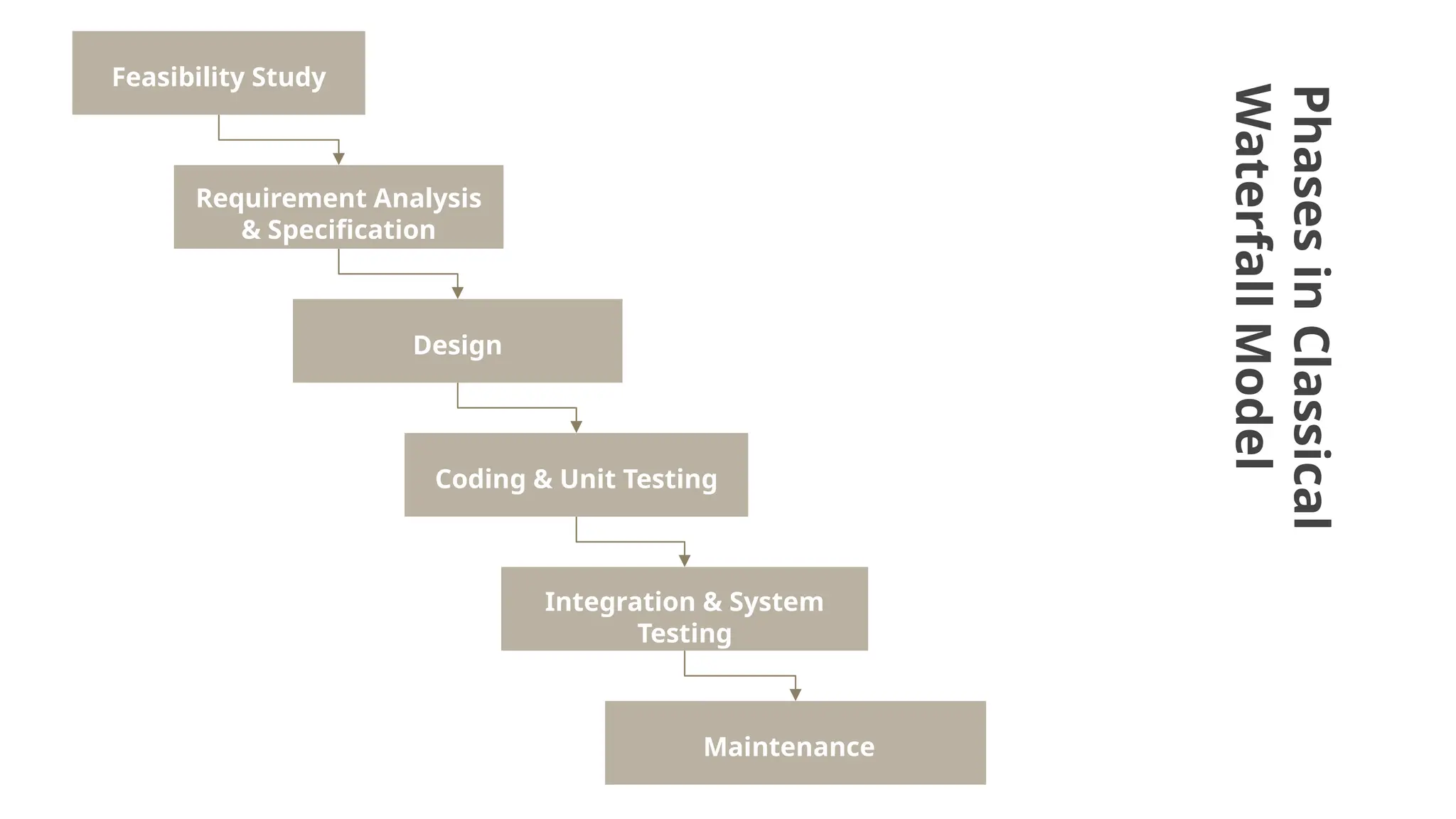
Feasibility Study
Requirement Analysis
& Specification
Design
Coding & Unit Testing
Integration & System
Testing
Maintenance
Iterative
Model
A variation of the Waterfall
Model where development flows
sequentially, but feedback loops
allow some revisiting of previous
phases.
Phases
in
Iterative
Waterfall
Model
Feasibility Study
Requirement Analysis
& Specification
Design
Coding & Unit Testing
Integration & System
Testing
Maintenance
Comparing
Iterative
Vs
Classical
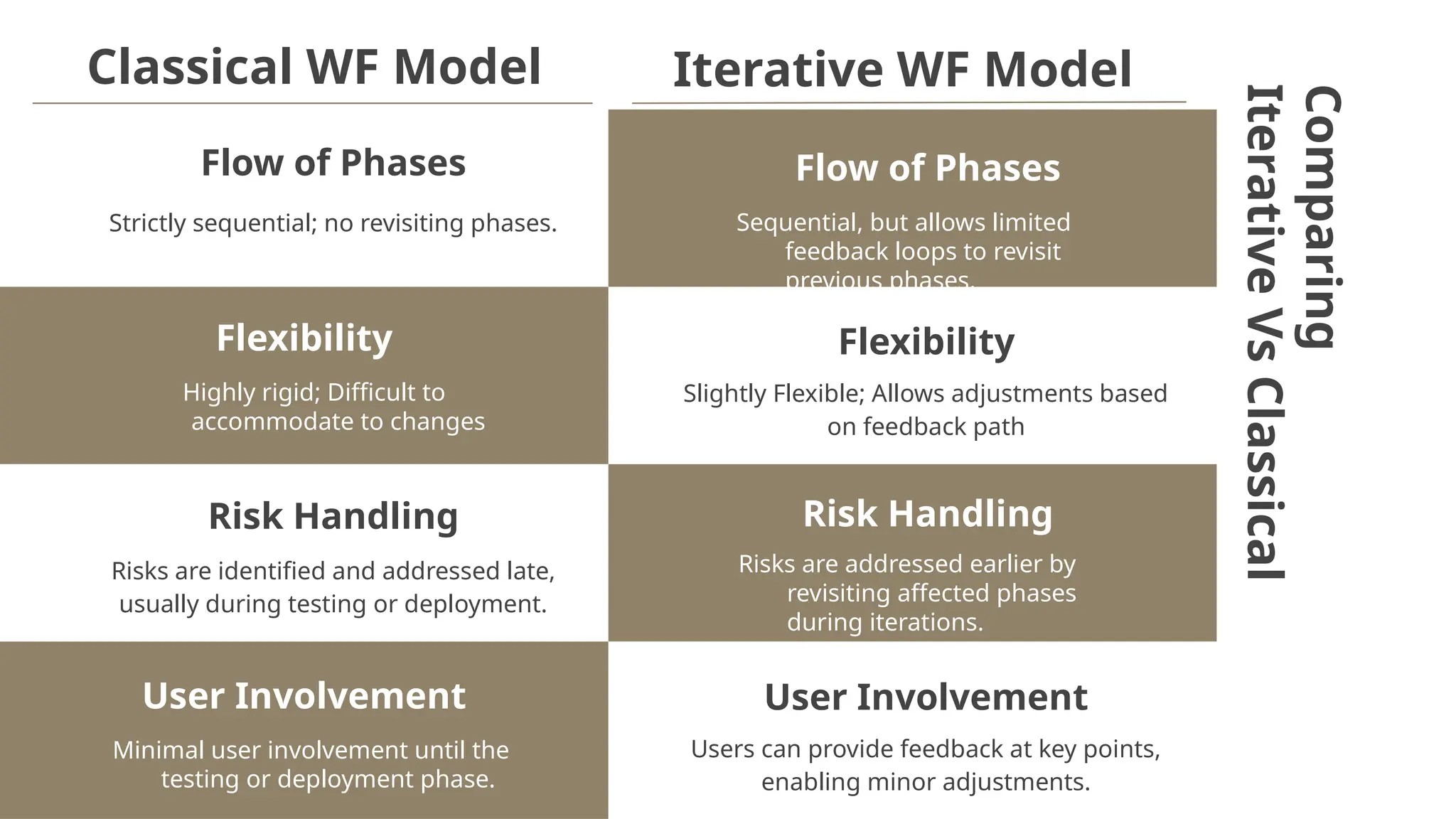
Flow of Phases
Strictly sequential; no revisiting phases. Sequential, but allows limited
feedback loops to revisit
previous phases.
Flow of Phases
Risk Handling
Risks are identified and addressed late,
usually during testing or deployment.
Flexibility
Slightly Flexible; Allows adjustments based
on feedback path
User Involvement
Users can provide feedback at key points,
enabling minor adjustments.
Risks are addressed earlier by
revisiting affected phases
during iterations.
Risk Handling
Highly rigid; Difficult to
accommodate to changes
Flexibility
Minimal user involvement until the
testing or deployment phase.
User Involvement
Classical WF Model Iterative WF Model
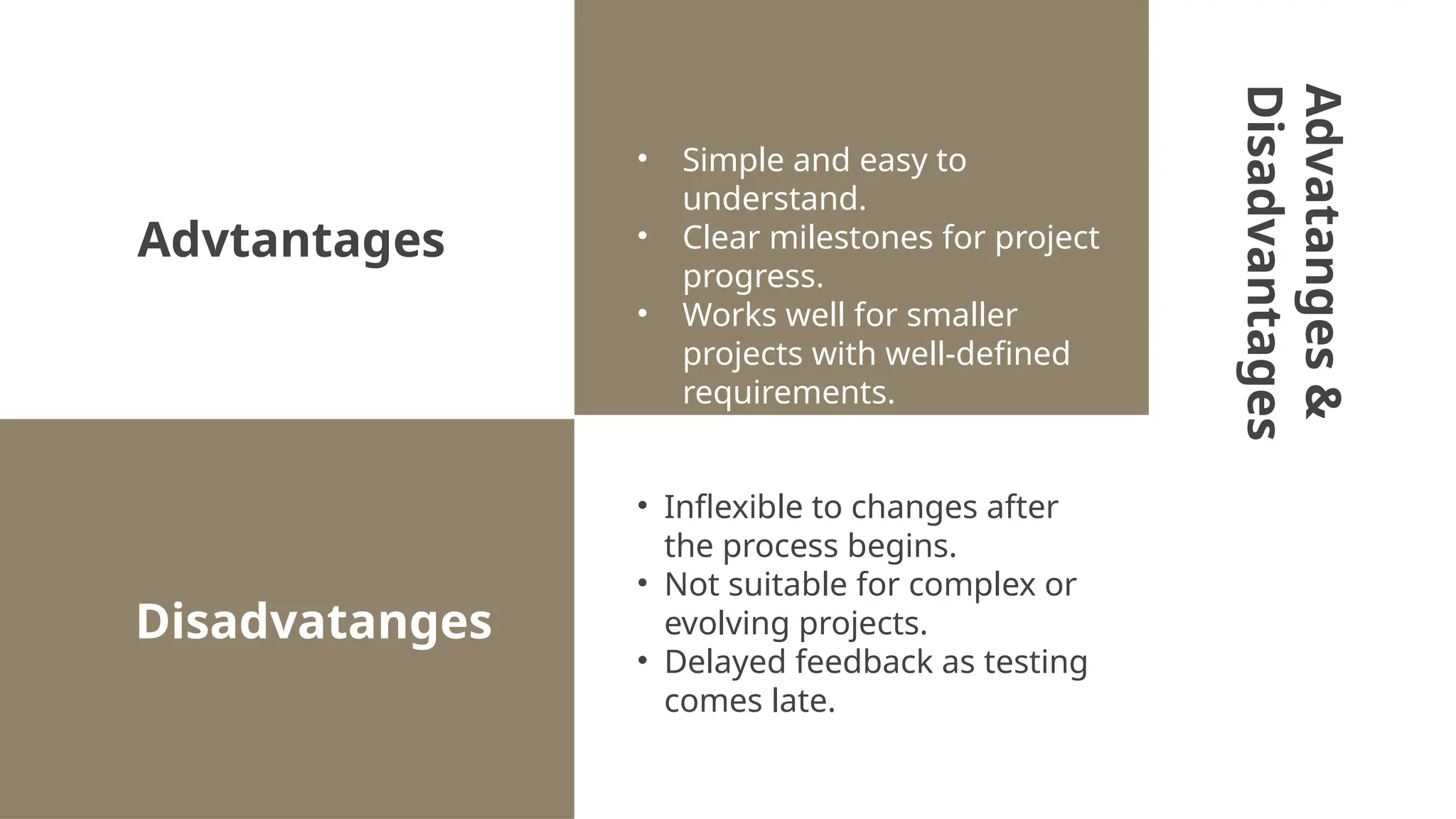
Advatanges
&
Disadvantages
• Simple and easy to
understand.
• Clear milestones for project
progress.
• Works well for smaller
projects with well-defined
requirements.
Disadvatanges
Advtantages
• Inflexible to changes after
the process begins.
• Not suitable for complex or
evolving projects.
• Delayed feedback as testing
comes late.
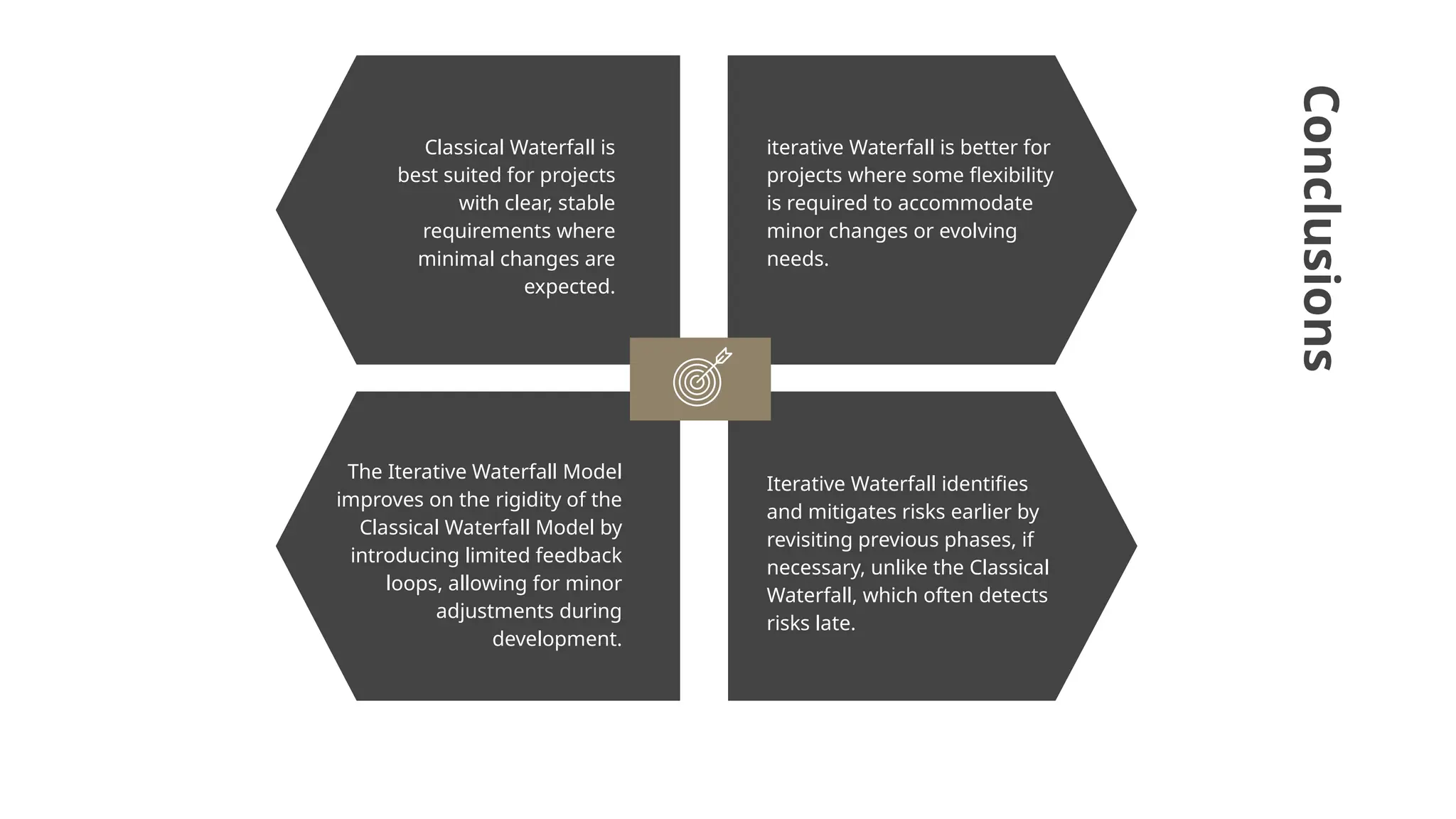
Conclusions
Iterative Waterfall identifies
and mitigates risks earlier by
revisiting previous phases, if
necessary, unlike the Classical
Waterfall, which often detects
risks late.
Classical Waterfall is
best suited for projects
with clear, stable
requirements where
minimal changes are
expected.
The Iterative Waterfall Model
improves on the rigidity of the
Classical Waterfall Model by
introducing limited feedback
loops, allowing for minor
adjustments during
development.
iterative Waterfall is better for
projects where some flexibility
is required to accommodate
minor changes or evolving
needs.
THANKS

Iterative waterfall model in software engineering.pptx

  • 1.
    Made by –Baldev kaushik Mca 1 Submitted to Mr. Deepesh Kumar Dwivedi, Assistant Professor ITERATIVE WATERFALL MODEL
  • 2.
  • 3.
    Introduction Iterative waterfall modelis an extension of Classical Waterfall model, where we have a feedback path to go back to previous completed phases while all the phases stays the same
  • 4.
    The Waterfall Modelis a sequential software development methodology where each phase must be completed before the next begins, with minimal overlap. Waterfall Model
  • 5.
    Phases in Classical Waterfall Model Feasibility Study Requirement Analysis &Specification Design Coding & Unit Testing Integration & System Testing Maintenance
  • 6.
    Iterative Model A variation ofthe Waterfall Model where development flows sequentially, but feedback loops allow some revisiting of previous phases.
  • 7.
    Phases in Iterative Waterfall Model Feasibility Study Requirement Analysis &Specification Design Coding & Unit Testing Integration & System Testing Maintenance
  • 8.
    Comparing Iterative Vs Classical Flow of Phases Strictlysequential; no revisiting phases. Sequential, but allows limited feedback loops to revisit previous phases. Flow of Phases Risk Handling Risks are identified and addressed late, usually during testing or deployment. Flexibility Slightly Flexible; Allows adjustments based on feedback path User Involvement Users can provide feedback at key points, enabling minor adjustments. Risks are addressed earlier by revisiting affected phases during iterations. Risk Handling Highly rigid; Difficult to accommodate to changes Flexibility Minimal user involvement until the testing or deployment phase. User Involvement Classical WF Model Iterative WF Model
  • 9.
    Advatanges & Disadvantages • Simple andeasy to understand. • Clear milestones for project progress. • Works well for smaller projects with well-defined requirements. Disadvatanges Advtantages • Inflexible to changes after the process begins. • Not suitable for complex or evolving projects. • Delayed feedback as testing comes late.
  • 10.
    Conclusions Iterative Waterfall identifies andmitigates risks earlier by revisiting previous phases, if necessary, unlike the Classical Waterfall, which often detects risks late. Classical Waterfall is best suited for projects with clear, stable requirements where minimal changes are expected. The Iterative Waterfall Model improves on the rigidity of the Classical Waterfall Model by introducing limited feedback loops, allowing for minor adjustments during development. iterative Waterfall is better for projects where some flexibility is required to accommodate minor changes or evolving needs.
  • 11.