IMPORTANCE OF 
INSTITUTIONAL DELIVERIES 
PRESENTED BY :- MANPREET KAUR 
MSC NURSING 1ST YEAR 
NINE ,PGIMER CHD
INTRODUCTION 
 It is well established that giving birth in a medical 
institution under the care and supervision of trained 
health-care providers promotes child survival and 
reduces the risk of maternal mortality. In India, both 
child mortality (especially neonatal mortality) and 
maternal mortality are high. India accounts for more 
than one-fifth of all maternal deaths from causes 
related to pregnancy and childbirth worldwide.
DEFINITION 
 Institutional delivery refers to the childbirth at 
technology-equipped medical facility under 
supervision of skilled medical staff. 
 In an institutional delivery, various medical tools 
and technologies are used to ascertain that health 
of neonate or mother is not compromised.
THE BACKGROUND 
 Since the 1980’s successive programmes have 
attempted to address the high MMR and IMR 
 There have been considerable decline in India’s 
MMR in the last two decades: from 398 in 1997- 
98 to 212 in 2007-09 
 Yet, this is far off from the MMR goal 
of less than 100 per 100000 live births
OBJECTIVES:- 
 Why this is a public health problem? 
 What are the socio economic factors affecting? 
 What are the role of belief and norms? 
 What are the non medical causes associated? 
 What are the psychological and cultural aspects?
A PUBLIC HEALTH PROBLEM 
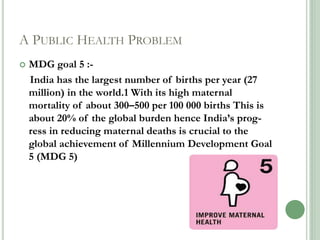
 MDG goal 5 :- 
India has the largest number of births per year (27 
million) in the world.1 With its high maternal 
mortality of about 300–500 per 100 000 births This is 
about 20% of the global burden hence India’s prog-ress 
in reducing maternal deaths is crucial to the 
global achievement of Millennium Development Goal 
5 (MDG 5)
RISK FACTORS FOR MATERNAL MORTALITY 
Socioeconomic factors 
Reproductive factors 
Health service factors
SOCIO-ECONOMIC FACTORS 
 The general socioeconomic status of mothers 
 Lack of education 
 Poor knowledge about maternal health 
 Poverty 
 Poor mothers are at high risk of developing 
pregnancy related complications. Almost all 
maternal deaths that occur in low and middle-income 
countries are mainly among the poorest of 
the poor (WHO, 2005).
A CONCEPTUAL FRAMEWORK FOR ANALYZING 
SOCIO-ECONOMIC INEQUALITIES IN HEALTH 
SERVICE UTILIZATION 
SOURCE: DE BROUWERE AND LERBERGHE (2001) 
Socio- Economic factors 
Income,wealth 
Education 
Employment, 
Occupation 
Family background 
Confounders & 
modifiers 
Age 
Place of residence 
Ethnicity, 
Religion 
Proximate Determinants 
Health status 
Perception of health 
problems 
Autonomy, social support 
Purchasing power 
Insurance cover 
Duties, opportunities costs 
Tendency to consult, 
beliefs 
Health service 
utilization 
Frequency of visits 
Type of facility 
Quality received
REPRODUCTIVE FACTORS 
 The number of pregnancies she has had in her 
lifetime. 
 The higher the number of pregnancies, the greater 
the lifetime risk of pregnancy related deaths (WHO, 
2005). 
 Maternal age also has an impact on increasing the 
risk of dying. Girls below 18 years and women older 
than 35 years are more likely to have pregnancy 
related complications that may lead to maternal 
death (USAID, 2005).
HEALTH SERVICE FACTORS 
 All pregnant women are at risk of developing 
complications during any time of their pregnancies, 
deliveries and postpartum periods. 
 Lacks of access to emergency obstetric care and 
delay for emergency referral are contributing factors 
for high maternal mortality. 
 Obstetrics complications are able to be treated in 
health institutions that are sufficiently equipped with 
supplies, medications and fully staffed with capably 
trained health professionals
MATERNITY SERVICES UTILISATION 
0 20 40 60 80 100 
C sections 
Skilled birth 
attendents 
ANC services 
poor rich
ADVANTAGES OF INSTITUTIONAL 
CHILDBIRTHS 
 Antenatal care is a perquisite for a healthy delivery. Medical 
facility with trained staff and advanced facilities provides all 
services related to antenatal check-ups and counselling. 
 In a medical institution, trained healthcare professionals 
provide specific care and attention to newborn babies with 
special needs in order to improve their survival chances and 
reducing the risk of maternal mortality. 
 Women seeking assistance of medical institution for delivery 
are the ones given ample support to conceive at the right 
maternal age without delaying childbearing. 
 Mothers are regularly assisted for post-pregnancy care, with 
medical staff discussing various aspects such as care for 
umbilical cord stump, nutrition, breastfeeding and bathing.
ADVANTAGES OF INSTITUTIONAL 
CHILDBIRTHS CONT…… 
 Institutional medical facilities aim for safe delivery by 
labour monitoring, active management of the third stage 
of delivery, immediate attention of the newborn, 
postpartum monitoring, addressing complications of 
mother and infant post-delivery. 
 Quality of care is all-important, which is provided by 
institutional medical setting. 
 Institutional medical facility also provides personnel and 
equipments to handle emergency circumstances which 
necessitate immediate medical attention. 
 Round-the-clock supervision ensures comfort for mother 
with medical staff looking after nutrition and diaper 
changes of her baby.
ADVANTAGES OF INSTITUTIONAL 
CHILDBIRTHS CONT……. 
 Improper care during pregnancy term can also affect 
overall maternal health, specifically the reproductive 
health of the woman besides the health of the newborn 
baby. 
 Hygienic conditions and surroundings are also important 
for safe delivery, which are mostly ignored in non-institutional 
setting for a delivery. 
 Immunisation chart can be easily adhered to in an 
institutional medical facility. Following immunisation 
schedule ascertains that baby as well as mother is safe 
from various health complications. 
 Institutional settings provide aid to hasten labour like 
intravenous (IV) drips and intramuscular injections 
during labour.
OBSTACLE FOR LOW UTILIZATION OF 
DELIVERY SERVICES 
 Distance from health services; 
 Costs, including user fees 
 The cost of transport 
 Quality of care 
 Drugs availability & Supplies 
 Women’s lack of autonomy indecision-making. 
(The WHO (1998) and Magadi et al (2002)
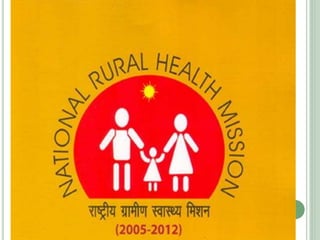
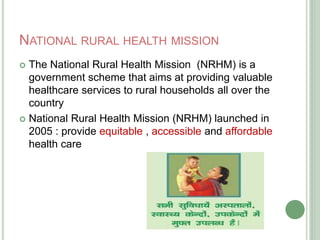
NATIONAL RURAL HEALTH MISSION 
 The National Rural Health Mission (NRHM) is a 
government scheme that aims at providing valuable 
healthcare services to rural households all over the 
country 
 National Rural Health Mission (NRHM) launched in 
2005 : provide equitable , accessible and affordable 
health care
IT SPECIALLY FOCUSES ON THE 18 STATES 
Arunachal Pradesh, Assam, 
Bihar, Chhattisgarh, Himachal 
Pradesh, Jharkhand, Jammu and 
Kashmir, Manipur, Mizoram, 
Meghalaya, Madhya Pradesh, 
Nagaland, Orissa, Rajasthan, 
Sikkim, Tripura, Uttarkhand and 
Uttar Pradesh.
OBJECTIVES 
 Decrease the infant mortality rate to 30/1,000 live 
births and maternal mortality rate to 100/1,00,000 
 Universal access to public health services such as 
Women’s health, child health, water, sanitation & 
hygiene, immunization, and Nutrition. 
 Prevent and control communicable and non-communicable 
diseases. 
 Control population as well as ensure gender and 
demographic balance. 
 Encourage a healthy lifestyle and alternative 
systems of medicine through AYUSH 
 Improved facilities for institutional delivery.
GOAL TO BE ACHIEVED BY NRHM 
IMR 30/1000 LIVE 
BIRTHS 
MMR 100/100,000 
TFR 2.1
GOAL CONT……. 
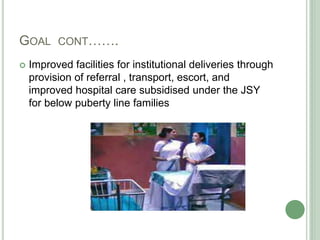
 Improved facilities for institutional deliveries through 
provision of referral , transport, escort, and 
improved hospital care subsidised under the JSY 
for below puberty line families
NRHM 
 Reduction in MMR to 100/100,000 is 
one of its goals 
 The Janani Suraksha Yojana ( Safe 
Motherhood Scheme) is the key 
strategy to achieve this reduction
JANANI SURAKSHA YOJANA 
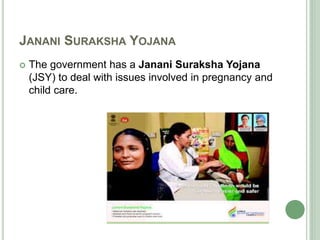
 The government has a Janani Suraksha Yojana 
(JSY) to deal with issues involved in pregnancy and 
child care.
JSY:- 
 It is a centrally sponsored scheme aimed at 
reducing maternal and infant mortality rates, and 
increase institutional deliveries in below poverty line 
(BPL) families. 
 The JSY, which falls under the overall umbrella of 
National Rural Health Mission, covers all pregnant 
women belonging to households below the poverty 
line, above 19 years of age and up to two live 
births.
JSY CONT…….. 
 The JSY, launched in 2003, modifies the existing 
National Maternity Benefit Scheme or NMBS. 
 While the NMBS was linked to provision of better 
diet for pregnant women from BPL families, the JSY 
integrates the cash assistance with antenatal care 
during pregnancy period, institutional care during 
delivery and immediate post-partum period in a 
health centre by establishing a system of 
coordinated care by field level health worker.
JSY 
 The Yojana has identified ASHA, as an effective 
link between the Government and the poor 
pregnant women in low performing states.
CONT………… 
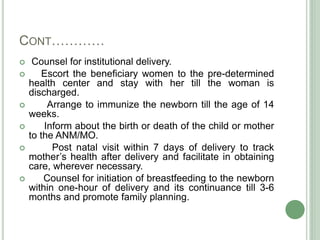
 Counsel for institutional delivery. 
 Escort the beneficiary women to the pre-determined 
health center and stay with her till the woman is 
discharged. 
 Arrange to immunize the newborn till the age of 14 
weeks. 
 Inform about the birth or death of the child or mother 
to the ANM/MO. 
 Post natal visit within 7 days of delivery to track 
mother’s health after delivery and facilitate in obtaining 
care, wherever necessary. 
 Counsel for initiation of breastfeeding to the newborn 
within one-hour of delivery and its continuance till 3-6 
months and promote family planning.
IMPORTANT FEATURES OF JSY: 
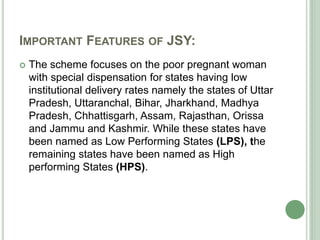
 The scheme focuses on the poor pregnant woman 
with special dispensation for states having low 
institutional delivery rates namely the states of Uttar 
Pradesh, Uttaranchal, Bihar, Jharkhand, Madhya 
Pradesh, Chhattisgarh, Assam, Rajasthan, Orissa 
and Jammu and Kashmir. While these states have 
been named as Low Performing States (LPS), the 
remaining states have been named as High 
performing States (HPS).
TRACKING EACH PREGNANCY: 
 Each beneficiary registered under this Yojana 
should have a JSY card along with a MCH card. 
ASHA/AWW/ any other identified link worker under 
the overall supervision of the ANM and the MO, 
PHC should mandatorily prepare a micro-birth 
plan. This will effectively help in monitoring 
Antenatal Check-up, and the post delivery care.
JSY :THE PACKAGE OF INCENTIVES 
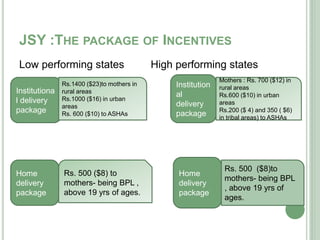
Low performing states High performing states 
Institutiona 
l delivery 
package 
Rs.1400 ($23)to mothers in 
rural areas 
Rs.1000 ($16) in urban 
areas 
Rs. 600 ($10) to ASHAs 
Home 
delivery 
package 
Rs. 500 ($8) to 
mothers- being BPL , 
above 19 yrs of ages. 
Institution 
al 
delivery 
package 
Mothers : Rs. 700 ($12) in 
rural areas 
Rs.600 ($10) in urban 
areas 
Rs.200 ($ 4) and 350 ( $6) 
in tribal areas) to ASHAs 
Home 
delivery 
package 
Rs. 500 ($8)to 
mothers- being BPL 
, above 19 yrs of 
ages.
DISBURSEMENT OF CASH ASSISTANCE: 
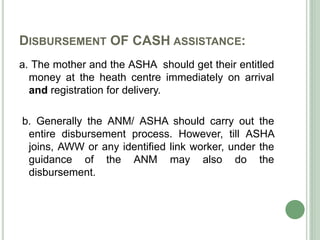
a. The mother and the ASHA should get their entitled 
money at the heath centre immediately on arrival 
and registration for delivery. 
b. Generally the ANM/ ASHA should carry out the 
entire disbursement process. However, till ASHA 
joins, AWW or any identified link worker, under the 
guidance of the ANM may also do the 
disbursement.
PAYMENT TO ASHA: 
 First payment for the transactional cost at the 
health centre on reaching the institution along with 
the expectant mother. 
 The second payment should be paid after she has 
made postnatal visit and the child has been 
immunized for BCG. 
 All payments to ASHA would be done by the 
ANM only. : It must be ensured that ASHA gets her 
second payment within 7 days of the delivery, as 
that would be essential to keep her sustained in the 
system.
ROLE OF ASHA OR OTHER LINK HEALTH WORKER 
ASSOCIATED WITH JSY:- 
 Identify pregnant woman as a beneficiary of the 
scheme and report or facilitate registration for ANC 
 Assist the pregnant woman to obtain necessary 
certifications wherever necessary, 
 Provide and / or help the women in receiving at 
least three ANC checkups including TT injections, 
IFA tablets, 
 Identify a functional Government health centre or 
an accredited private health institution for referral 
and delivery
RATIONALE 
 Institutional deliveries would help the pregnant 
woman access a team of skilled birth attendants 
more reliably and it would also improve her access : 
 emergency obstetric care 
 reduced maternal and neonatal mortality 
The scheme offers 
a package of 
financial incentives 
to pregnant women 
to improve access 
to institutional 
deliveries.
IMPACT OF JANANI SURAKSHA YOJANA ON 
INSTITUTIONAL DELIVERY RATE: AN 
OBSERVATIONAL STUDY IN INDIA 
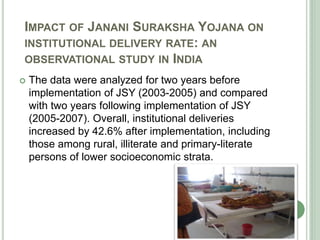
 The data were analyzed for two years before 
implementation of JSY (2003-2005) and compared 
with two years following implementation of JSY 
(2005-2007). Overall, institutional deliveries 
increased by 42.6% after implementation, including 
those among rural, illiterate and primary-literate 
persons of lower socioeconomic strata.
POSSIBLE IEC STRATEGY 
 To associate NGO and Self Help Groups for 
popularizing the scheme among women’s group 
and also for monitoring of the implementation. 
 To provide wide publicity to the scheme by: 
 Promoting JSY as a component of total package 
of services under RCH along with programmes like 
Pulse polio programme. 
 Printing and distributing JSY guidelines, pamphlets, 
notices in local languages at SC/PHCs/CHCs/ 
District Hospitals/ DM’s and Divisional 
Commissioner’s office and even in at the accredited 
Pvt. Nursing Homes, in abundance.
MATERNAL MORTALITY IN 1990-2013 
 F:Maternal mortality in 1990.docx
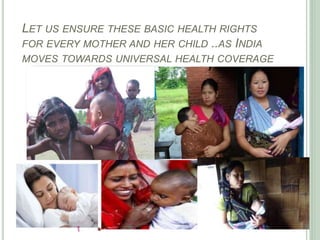
LET US ENSURE THESE BASIC HEALTH RIGHTS 
FOR EVERY MOTHER AND HER CHILD ..AS INDIA 
MOVES TOWARDS UNIVERSAL HEALTH COVERAGE
REFERENCES 
 Park.K.2009. Park’s Textbook of Preventive and 
Social Medicine. Twentieth edition. M/s Banarsidas 
Bhanot publishers, Jabalpur, India. Pp 379-381. 
 http://reports.nrhmcommunityaction.org/more.htm.
THANKS

Istitutional deliveries

  • 1.
    IMPORTANCE OF INSTITUTIONALDELIVERIES PRESENTED BY :- MANPREET KAUR MSC NURSING 1ST YEAR NINE ,PGIMER CHD
  • 2.
    INTRODUCTION  Itis well established that giving birth in a medical institution under the care and supervision of trained health-care providers promotes child survival and reduces the risk of maternal mortality. In India, both child mortality (especially neonatal mortality) and maternal mortality are high. India accounts for more than one-fifth of all maternal deaths from causes related to pregnancy and childbirth worldwide.
  • 3.
    DEFINITION  Institutionaldelivery refers to the childbirth at technology-equipped medical facility under supervision of skilled medical staff.  In an institutional delivery, various medical tools and technologies are used to ascertain that health of neonate or mother is not compromised.
  • 4.
    THE BACKGROUND Since the 1980’s successive programmes have attempted to address the high MMR and IMR  There have been considerable decline in India’s MMR in the last two decades: from 398 in 1997- 98 to 212 in 2007-09  Yet, this is far off from the MMR goal of less than 100 per 100000 live births
  • 5.
    OBJECTIVES:-  Whythis is a public health problem?  What are the socio economic factors affecting?  What are the role of belief and norms?  What are the non medical causes associated?  What are the psychological and cultural aspects?
  • 6.
    A PUBLIC HEALTHPROBLEM  MDG goal 5 :- India has the largest number of births per year (27 million) in the world.1 With its high maternal mortality of about 300–500 per 100 000 births This is about 20% of the global burden hence India’s prog-ress in reducing maternal deaths is crucial to the global achievement of Millennium Development Goal 5 (MDG 5)
  • 7.
    RISK FACTORS FORMATERNAL MORTALITY Socioeconomic factors Reproductive factors Health service factors
  • 8.
    SOCIO-ECONOMIC FACTORS The general socioeconomic status of mothers  Lack of education  Poor knowledge about maternal health  Poverty  Poor mothers are at high risk of developing pregnancy related complications. Almost all maternal deaths that occur in low and middle-income countries are mainly among the poorest of the poor (WHO, 2005).
  • 9.
    A CONCEPTUAL FRAMEWORKFOR ANALYZING SOCIO-ECONOMIC INEQUALITIES IN HEALTH SERVICE UTILIZATION SOURCE: DE BROUWERE AND LERBERGHE (2001) Socio- Economic factors Income,wealth Education Employment, Occupation Family background Confounders & modifiers Age Place of residence Ethnicity, Religion Proximate Determinants Health status Perception of health problems Autonomy, social support Purchasing power Insurance cover Duties, opportunities costs Tendency to consult, beliefs Health service utilization Frequency of visits Type of facility Quality received
  • 10.
    REPRODUCTIVE FACTORS The number of pregnancies she has had in her lifetime.  The higher the number of pregnancies, the greater the lifetime risk of pregnancy related deaths (WHO, 2005).  Maternal age also has an impact on increasing the risk of dying. Girls below 18 years and women older than 35 years are more likely to have pregnancy related complications that may lead to maternal death (USAID, 2005).
  • 11.
    HEALTH SERVICE FACTORS  All pregnant women are at risk of developing complications during any time of their pregnancies, deliveries and postpartum periods.  Lacks of access to emergency obstetric care and delay for emergency referral are contributing factors for high maternal mortality.  Obstetrics complications are able to be treated in health institutions that are sufficiently equipped with supplies, medications and fully staffed with capably trained health professionals
  • 12.
    MATERNITY SERVICES UTILISATION 0 20 40 60 80 100 C sections Skilled birth attendents ANC services poor rich
  • 13.
    ADVANTAGES OF INSTITUTIONAL CHILDBIRTHS  Antenatal care is a perquisite for a healthy delivery. Medical facility with trained staff and advanced facilities provides all services related to antenatal check-ups and counselling.  In a medical institution, trained healthcare professionals provide specific care and attention to newborn babies with special needs in order to improve their survival chances and reducing the risk of maternal mortality.  Women seeking assistance of medical institution for delivery are the ones given ample support to conceive at the right maternal age without delaying childbearing.  Mothers are regularly assisted for post-pregnancy care, with medical staff discussing various aspects such as care for umbilical cord stump, nutrition, breastfeeding and bathing.
  • 14.
    ADVANTAGES OF INSTITUTIONAL CHILDBIRTHS CONT……  Institutional medical facilities aim for safe delivery by labour monitoring, active management of the third stage of delivery, immediate attention of the newborn, postpartum monitoring, addressing complications of mother and infant post-delivery.  Quality of care is all-important, which is provided by institutional medical setting.  Institutional medical facility also provides personnel and equipments to handle emergency circumstances which necessitate immediate medical attention.  Round-the-clock supervision ensures comfort for mother with medical staff looking after nutrition and diaper changes of her baby.
  • 15.
    ADVANTAGES OF INSTITUTIONAL CHILDBIRTHS CONT…….  Improper care during pregnancy term can also affect overall maternal health, specifically the reproductive health of the woman besides the health of the newborn baby.  Hygienic conditions and surroundings are also important for safe delivery, which are mostly ignored in non-institutional setting for a delivery.  Immunisation chart can be easily adhered to in an institutional medical facility. Following immunisation schedule ascertains that baby as well as mother is safe from various health complications.  Institutional settings provide aid to hasten labour like intravenous (IV) drips and intramuscular injections during labour.
  • 16.
    OBSTACLE FOR LOWUTILIZATION OF DELIVERY SERVICES  Distance from health services;  Costs, including user fees  The cost of transport  Quality of care  Drugs availability & Supplies  Women’s lack of autonomy indecision-making. (The WHO (1998) and Magadi et al (2002)
  • 18.
    NATIONAL RURAL HEALTHMISSION  The National Rural Health Mission (NRHM) is a government scheme that aims at providing valuable healthcare services to rural households all over the country  National Rural Health Mission (NRHM) launched in 2005 : provide equitable , accessible and affordable health care
  • 19.
    IT SPECIALLY FOCUSESON THE 18 STATES Arunachal Pradesh, Assam, Bihar, Chhattisgarh, Himachal Pradesh, Jharkhand, Jammu and Kashmir, Manipur, Mizoram, Meghalaya, Madhya Pradesh, Nagaland, Orissa, Rajasthan, Sikkim, Tripura, Uttarkhand and Uttar Pradesh.
  • 20.
    OBJECTIVES  Decreasethe infant mortality rate to 30/1,000 live births and maternal mortality rate to 100/1,00,000  Universal access to public health services such as Women’s health, child health, water, sanitation & hygiene, immunization, and Nutrition.  Prevent and control communicable and non-communicable diseases.  Control population as well as ensure gender and demographic balance.  Encourage a healthy lifestyle and alternative systems of medicine through AYUSH  Improved facilities for institutional delivery.
  • 21.
    GOAL TO BEACHIEVED BY NRHM IMR 30/1000 LIVE BIRTHS MMR 100/100,000 TFR 2.1
  • 22.
    GOAL CONT……. Improved facilities for institutional deliveries through provision of referral , transport, escort, and improved hospital care subsidised under the JSY for below puberty line families
  • 23.
    NRHM  Reductionin MMR to 100/100,000 is one of its goals  The Janani Suraksha Yojana ( Safe Motherhood Scheme) is the key strategy to achieve this reduction
  • 24.
    JANANI SURAKSHA YOJANA  The government has a Janani Suraksha Yojana (JSY) to deal with issues involved in pregnancy and child care.
  • 25.
    JSY:-  Itis a centrally sponsored scheme aimed at reducing maternal and infant mortality rates, and increase institutional deliveries in below poverty line (BPL) families.  The JSY, which falls under the overall umbrella of National Rural Health Mission, covers all pregnant women belonging to households below the poverty line, above 19 years of age and up to two live births.
  • 26.
    JSY CONT…….. The JSY, launched in 2003, modifies the existing National Maternity Benefit Scheme or NMBS.  While the NMBS was linked to provision of better diet for pregnant women from BPL families, the JSY integrates the cash assistance with antenatal care during pregnancy period, institutional care during delivery and immediate post-partum period in a health centre by establishing a system of coordinated care by field level health worker.
  • 27.
    JSY  TheYojana has identified ASHA, as an effective link between the Government and the poor pregnant women in low performing states.
  • 28.
    CONT…………  Counselfor institutional delivery.  Escort the beneficiary women to the pre-determined health center and stay with her till the woman is discharged.  Arrange to immunize the newborn till the age of 14 weeks.  Inform about the birth or death of the child or mother to the ANM/MO.  Post natal visit within 7 days of delivery to track mother’s health after delivery and facilitate in obtaining care, wherever necessary.  Counsel for initiation of breastfeeding to the newborn within one-hour of delivery and its continuance till 3-6 months and promote family planning.
  • 29.
    IMPORTANT FEATURES OFJSY:  The scheme focuses on the poor pregnant woman with special dispensation for states having low institutional delivery rates namely the states of Uttar Pradesh, Uttaranchal, Bihar, Jharkhand, Madhya Pradesh, Chhattisgarh, Assam, Rajasthan, Orissa and Jammu and Kashmir. While these states have been named as Low Performing States (LPS), the remaining states have been named as High performing States (HPS).
  • 30.
    TRACKING EACH PREGNANCY:  Each beneficiary registered under this Yojana should have a JSY card along with a MCH card. ASHA/AWW/ any other identified link worker under the overall supervision of the ANM and the MO, PHC should mandatorily prepare a micro-birth plan. This will effectively help in monitoring Antenatal Check-up, and the post delivery care.
  • 31.
    JSY :THE PACKAGEOF INCENTIVES Low performing states High performing states Institutiona l delivery package Rs.1400 ($23)to mothers in rural areas Rs.1000 ($16) in urban areas Rs. 600 ($10) to ASHAs Home delivery package Rs. 500 ($8) to mothers- being BPL , above 19 yrs of ages. Institution al delivery package Mothers : Rs. 700 ($12) in rural areas Rs.600 ($10) in urban areas Rs.200 ($ 4) and 350 ( $6) in tribal areas) to ASHAs Home delivery package Rs. 500 ($8)to mothers- being BPL , above 19 yrs of ages.
  • 32.
    DISBURSEMENT OF CASHASSISTANCE: a. The mother and the ASHA should get their entitled money at the heath centre immediately on arrival and registration for delivery. b. Generally the ANM/ ASHA should carry out the entire disbursement process. However, till ASHA joins, AWW or any identified link worker, under the guidance of the ANM may also do the disbursement.
  • 33.
    PAYMENT TO ASHA:  First payment for the transactional cost at the health centre on reaching the institution along with the expectant mother.  The second payment should be paid after she has made postnatal visit and the child has been immunized for BCG.  All payments to ASHA would be done by the ANM only. : It must be ensured that ASHA gets her second payment within 7 days of the delivery, as that would be essential to keep her sustained in the system.
  • 34.
    ROLE OF ASHAOR OTHER LINK HEALTH WORKER ASSOCIATED WITH JSY:-  Identify pregnant woman as a beneficiary of the scheme and report or facilitate registration for ANC  Assist the pregnant woman to obtain necessary certifications wherever necessary,  Provide and / or help the women in receiving at least three ANC checkups including TT injections, IFA tablets,  Identify a functional Government health centre or an accredited private health institution for referral and delivery
  • 35.
    RATIONALE  Institutionaldeliveries would help the pregnant woman access a team of skilled birth attendants more reliably and it would also improve her access :  emergency obstetric care  reduced maternal and neonatal mortality The scheme offers a package of financial incentives to pregnant women to improve access to institutional deliveries.
  • 36.
    IMPACT OF JANANISURAKSHA YOJANA ON INSTITUTIONAL DELIVERY RATE: AN OBSERVATIONAL STUDY IN INDIA  The data were analyzed for two years before implementation of JSY (2003-2005) and compared with two years following implementation of JSY (2005-2007). Overall, institutional deliveries increased by 42.6% after implementation, including those among rural, illiterate and primary-literate persons of lower socioeconomic strata.
  • 37.
    POSSIBLE IEC STRATEGY  To associate NGO and Self Help Groups for popularizing the scheme among women’s group and also for monitoring of the implementation.  To provide wide publicity to the scheme by:  Promoting JSY as a component of total package of services under RCH along with programmes like Pulse polio programme.  Printing and distributing JSY guidelines, pamphlets, notices in local languages at SC/PHCs/CHCs/ District Hospitals/ DM’s and Divisional Commissioner’s office and even in at the accredited Pvt. Nursing Homes, in abundance.
  • 38.
    MATERNAL MORTALITY IN1990-2013  F:Maternal mortality in 1990.docx
  • 39.
    LET US ENSURETHESE BASIC HEALTH RIGHTS FOR EVERY MOTHER AND HER CHILD ..AS INDIA MOVES TOWARDS UNIVERSAL HEALTH COVERAGE
  • 40.
    REFERENCES  Park.K.2009.Park’s Textbook of Preventive and Social Medicine. Twentieth edition. M/s Banarsidas Bhanot publishers, Jabalpur, India. Pp 379-381.  http://reports.nrhmcommunityaction.org/more.htm.
  • 41.