CHEMICAL ELEMENTS
AND THE ISOTOPES
ALBERT REJAS
ISOTOPES
are atom species of the same chemical element that
have different masses. they have the same number
of protons and electrons but a different number of
neutrons.
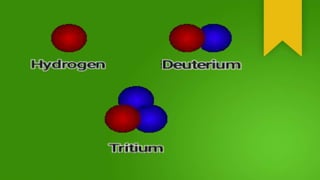
- the element hydrogen has three isotopes. the
nucleus of a "normal" hydrogen atom has one
proton. hydrogen's other far less abundant
isotopes are deuterium (1 proton and 1 neutron)
and tritium (1 proton and 2 neutron).
- for the most part, all of the isotopes of a
particular element behave the same way in
chemical reaction.
- some isotopes are radioactive, "can decay" by
emitting energy in the form of some type of
radiation. Atoms that decay typically lose one or
more proton(s) and/or neutron(s) converting the
atom to a different isotope or even a different
element.
- isotopes that are not radioactive are called
"stable isotopes"
•where do these different isotopes come from ?
-astronomers believe that the only elements
created in the big bang were various isotopes of
hydrogen, helium, and probably lithium, beryllium
and boron. since then, enormous supernova
explosions have created the remaining elements,
including most of their isotopes. some isotopes
form when high-energy cosmic rays collide with
various atoms. isotopes are also created when
other radioactive isotopes decay.

Isotopes

  • 1.
    CHEMICAL ELEMENTS AND THEISOTOPES ALBERT REJAS
  • 2.
    ISOTOPES are atom speciesof the same chemical element that have different masses. they have the same number of protons and electrons but a different number of neutrons.
  • 3.
    - the elementhydrogen has three isotopes. the nucleus of a "normal" hydrogen atom has one proton. hydrogen's other far less abundant isotopes are deuterium (1 proton and 1 neutron) and tritium (1 proton and 2 neutron). - for the most part, all of the isotopes of a particular element behave the same way in chemical reaction.
  • 5.
    - some isotopesare radioactive, "can decay" by emitting energy in the form of some type of radiation. Atoms that decay typically lose one or more proton(s) and/or neutron(s) converting the atom to a different isotope or even a different element. - isotopes that are not radioactive are called "stable isotopes"
  • 6.
    •where do thesedifferent isotopes come from ? -astronomers believe that the only elements created in the big bang were various isotopes of hydrogen, helium, and probably lithium, beryllium and boron. since then, enormous supernova explosions have created the remaining elements, including most of their isotopes. some isotopes form when high-energy cosmic rays collide with various atoms. isotopes are also created when other radioactive isotopes decay.