ISO/IEC 17025:2005 – 2017
Clause Changes to the Standard
www.bywater.co.uk
What is ISO/IEC 17025?
ISO/IEC 17025 is the International Standard
specifying criteria for competence for
laboratories.
The new standard was updated in
November 2017.
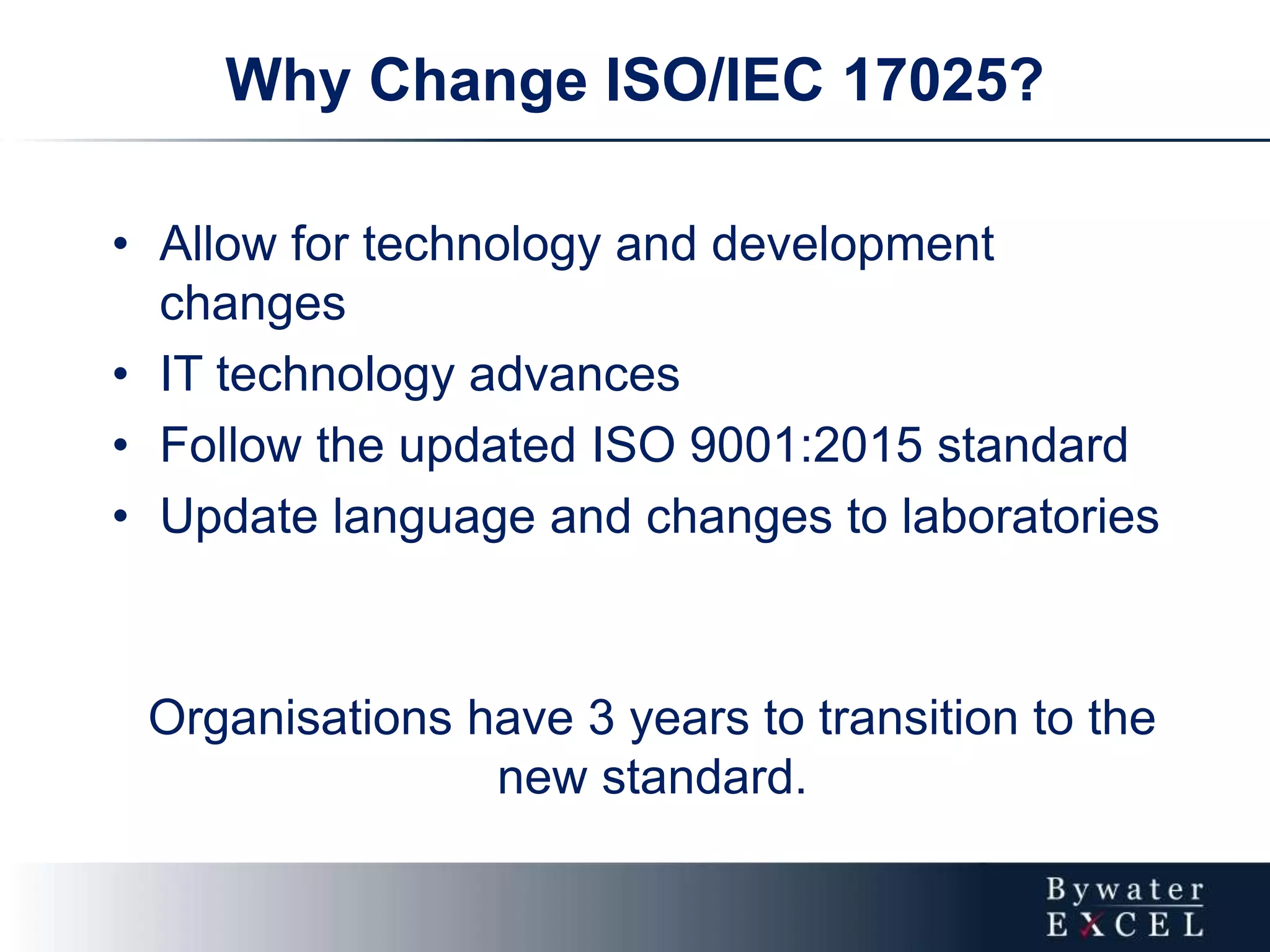
• Allow for technology and development
changes
• IT technology advances
• Follow the updated ISO 9001:2015 standard
• Update language and changes to laboratories
Organisations have 3 years to transition to the
new standard.
Why Change ISO/IEC 17025?
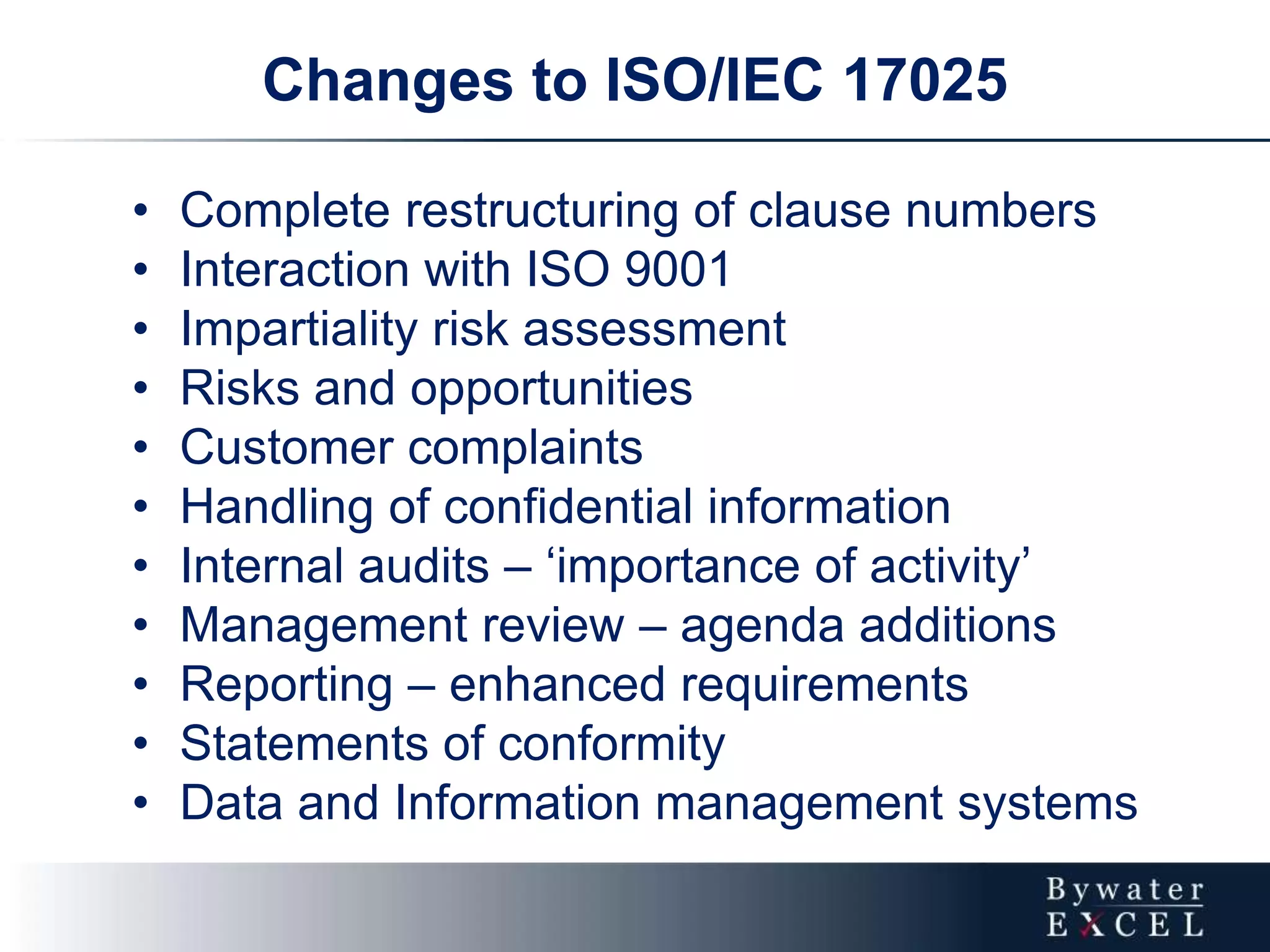
• Complete restructuring of clause numbers
• Interaction with ISO 9001
• Impartiality risk assessment
• Risks and opportunities
• Customer complaints
• Handling of confidential information
• Internal audits – ‘importance of activity’
• Management review – agenda additions
• Reporting – enhanced requirements
• Statements of conformity
• Data and Information management systems
Changes to ISO/IEC 17025
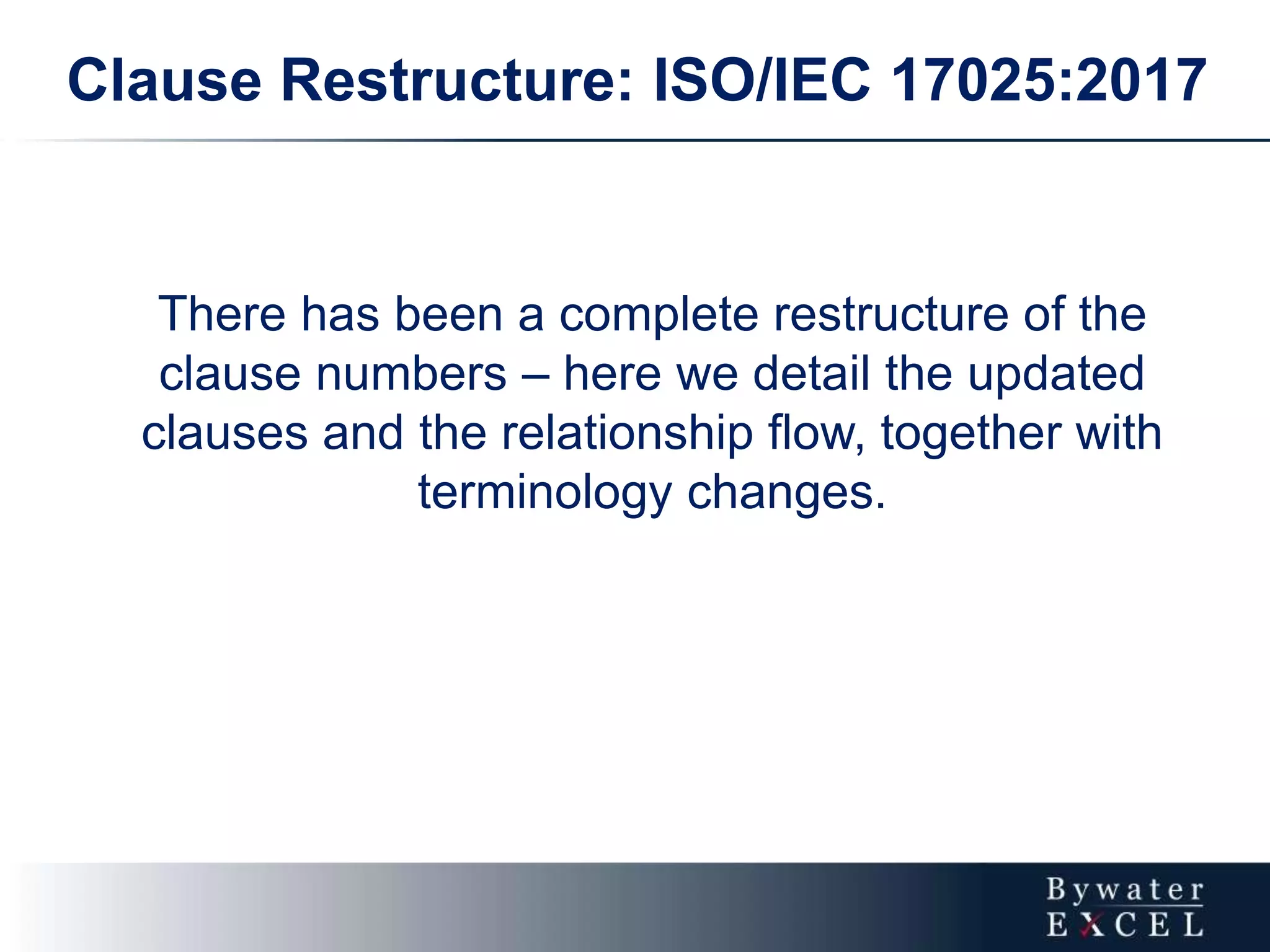
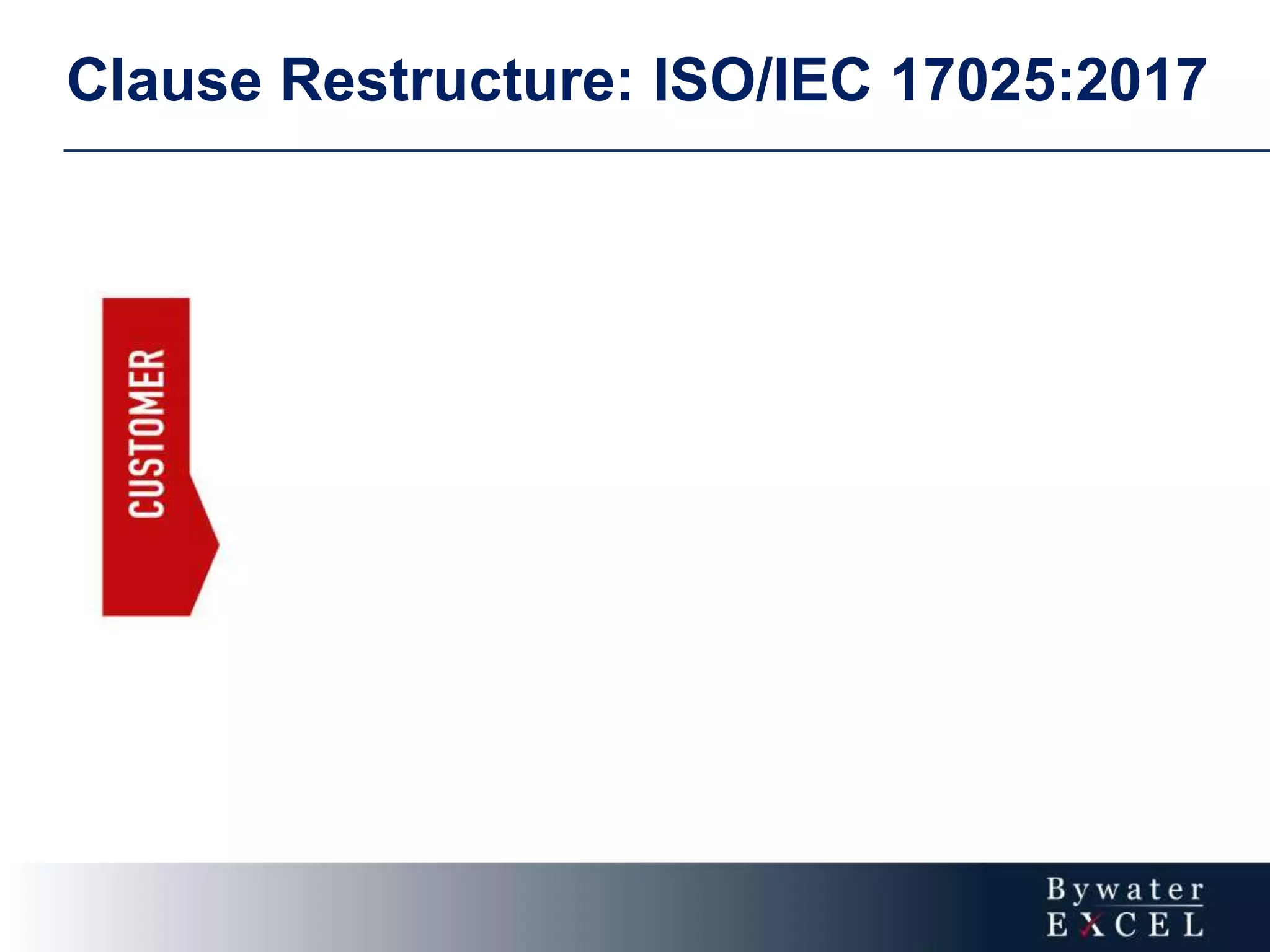
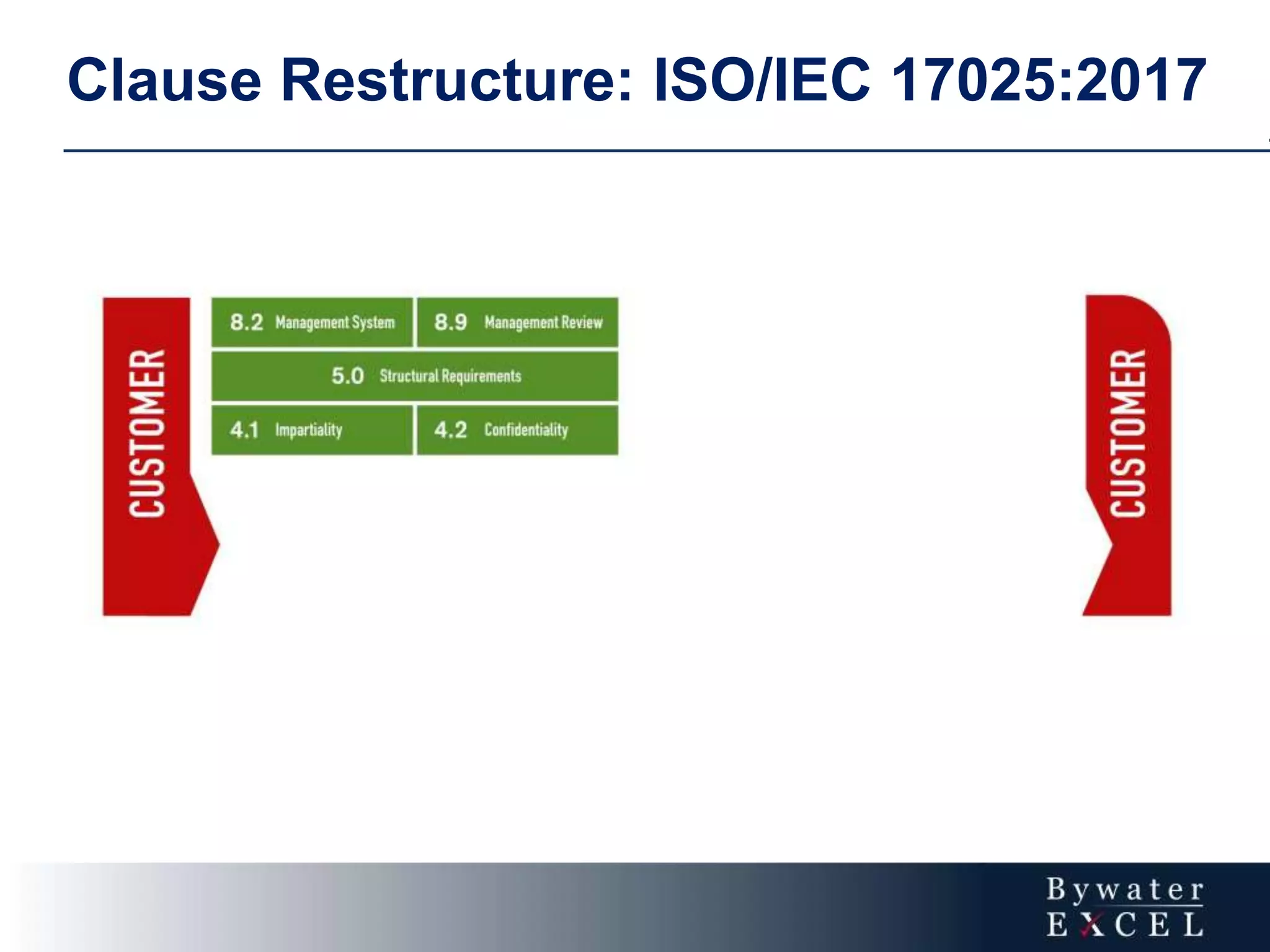
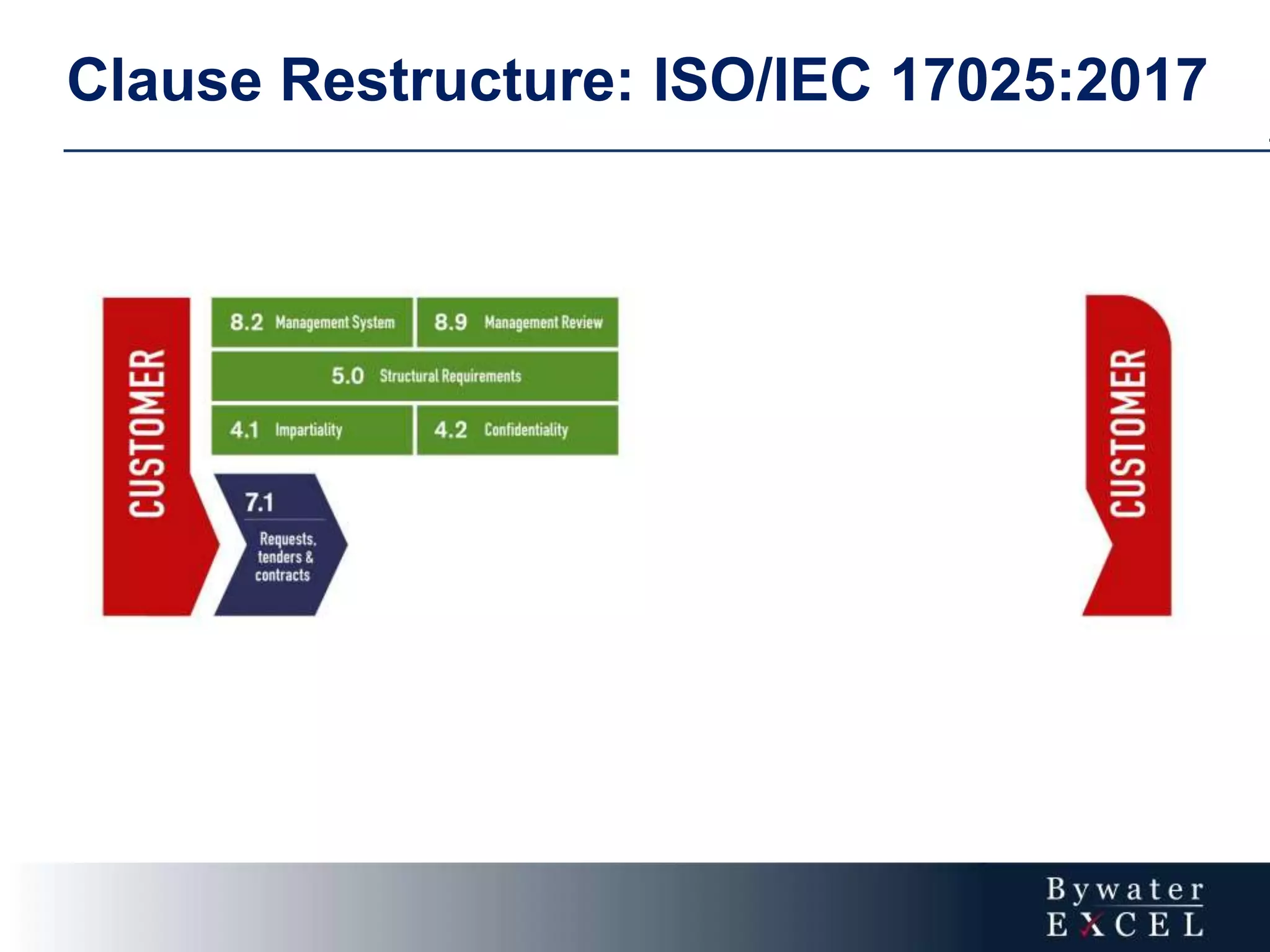
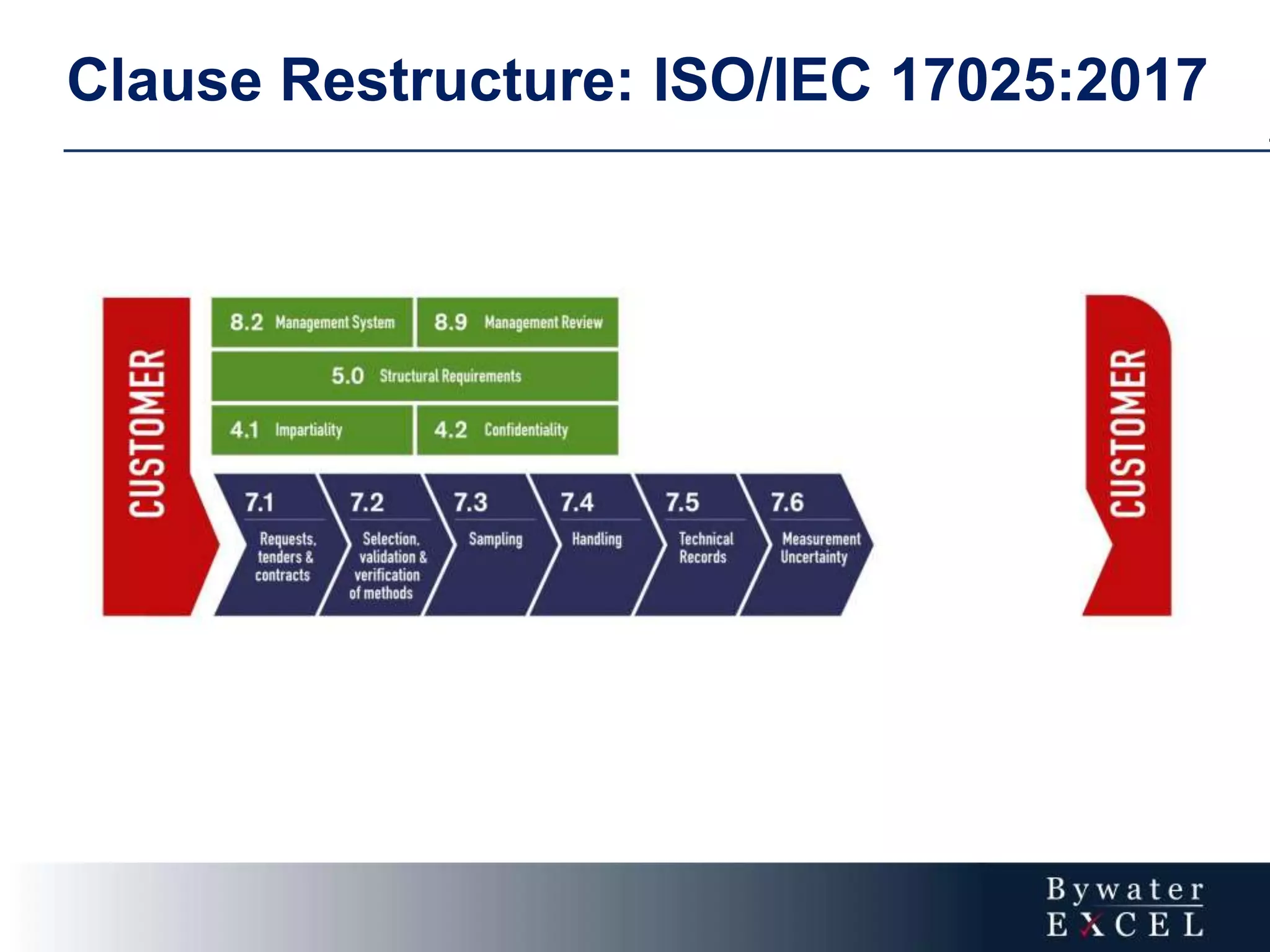
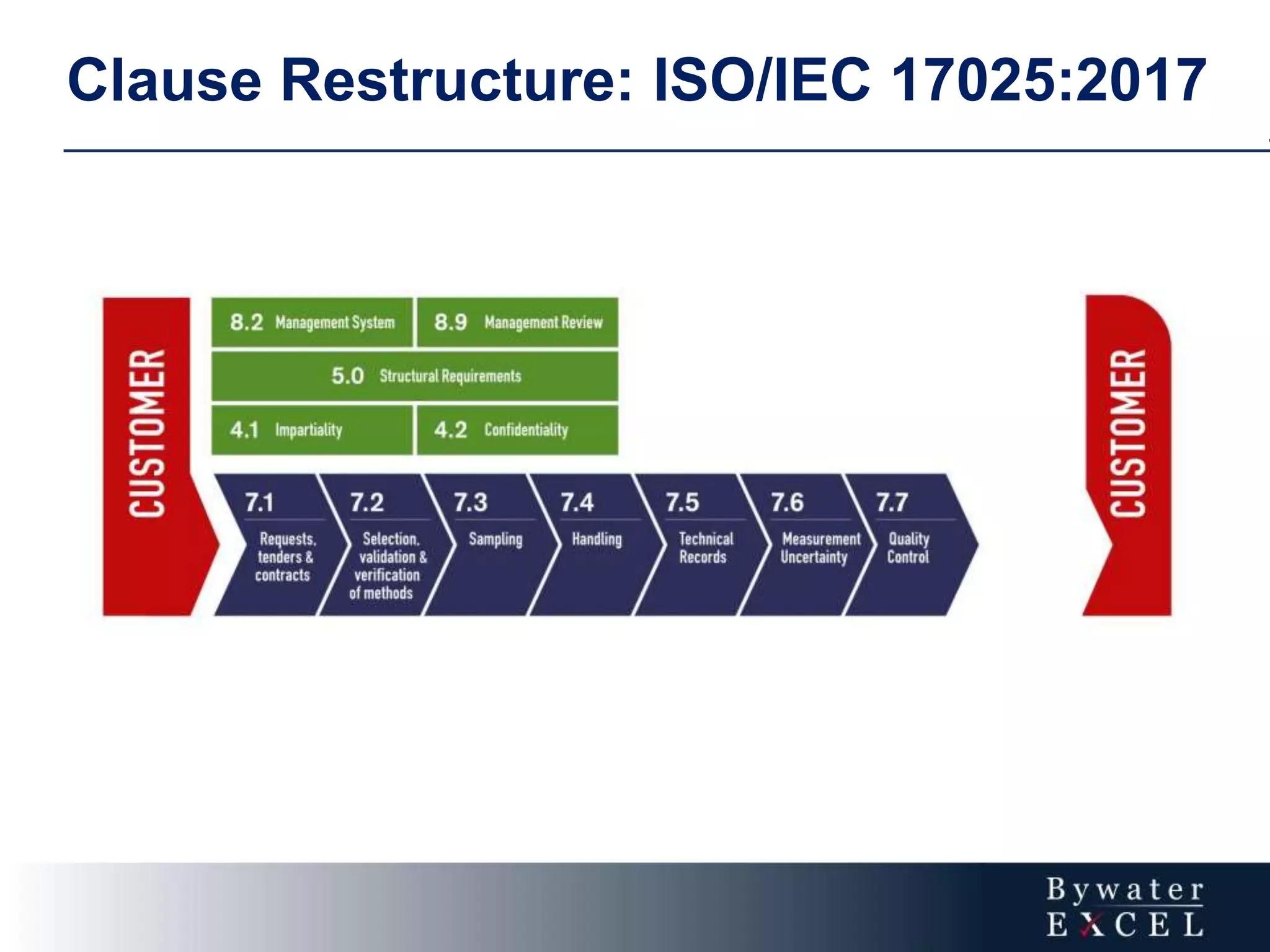
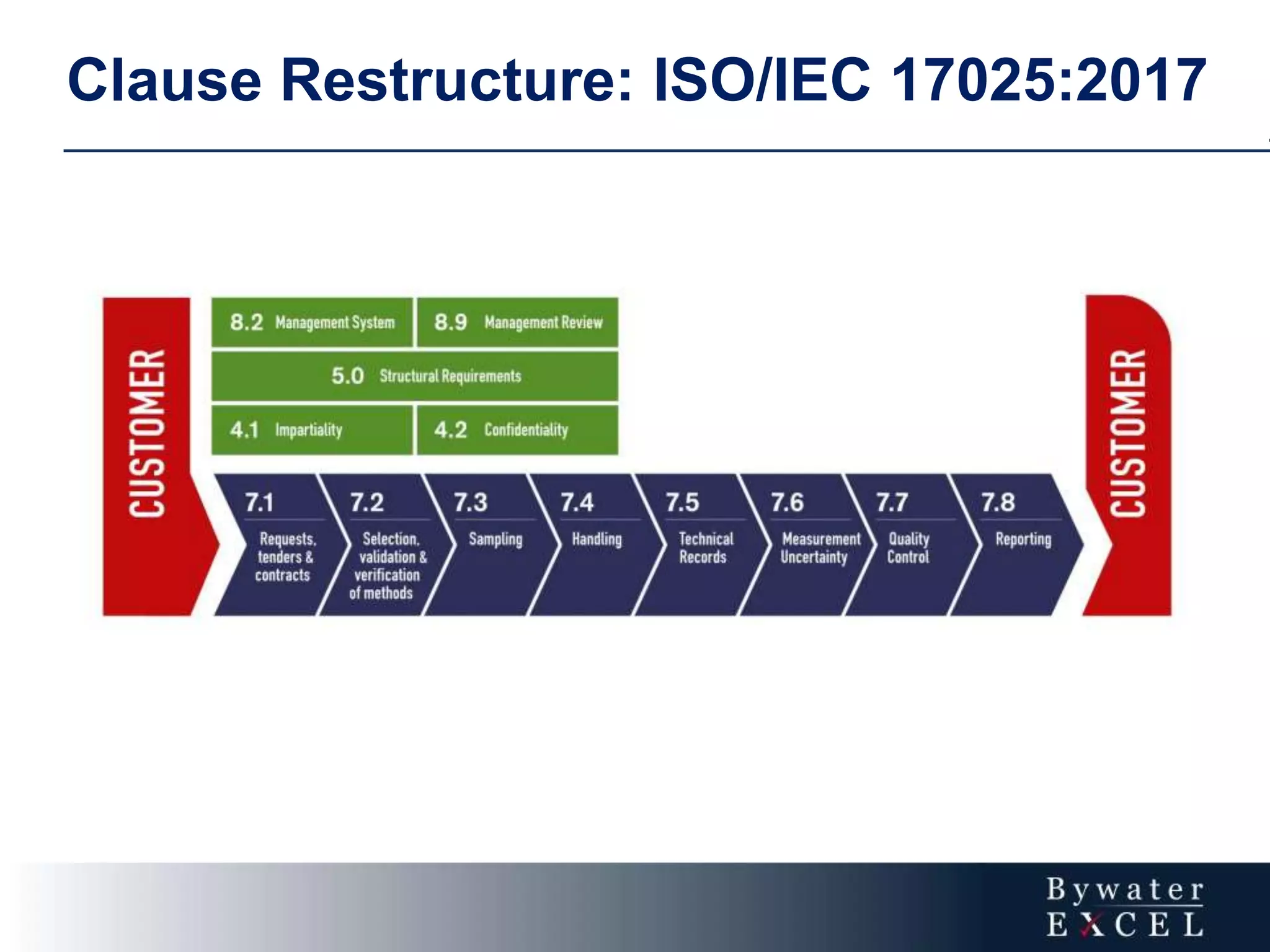
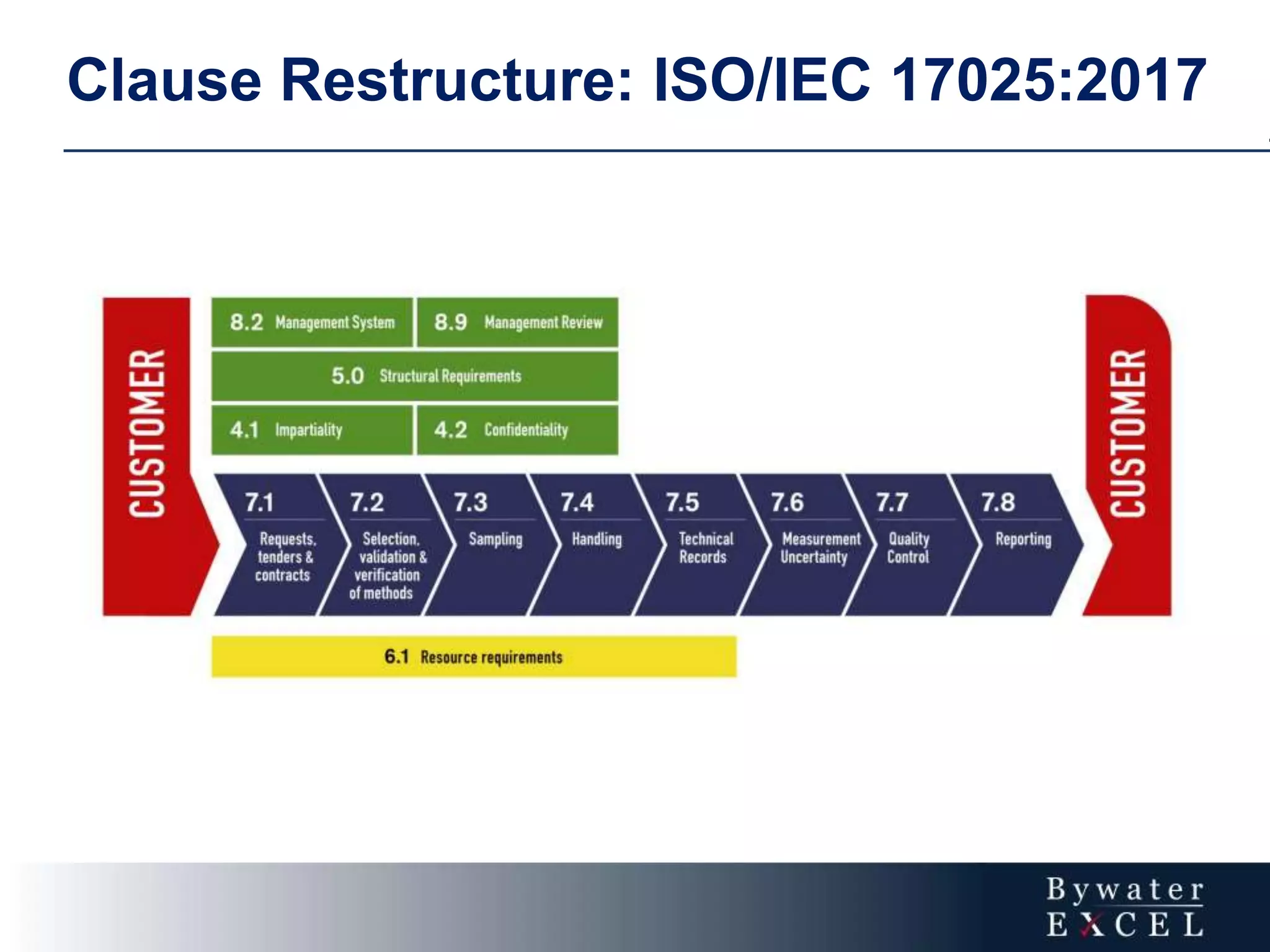
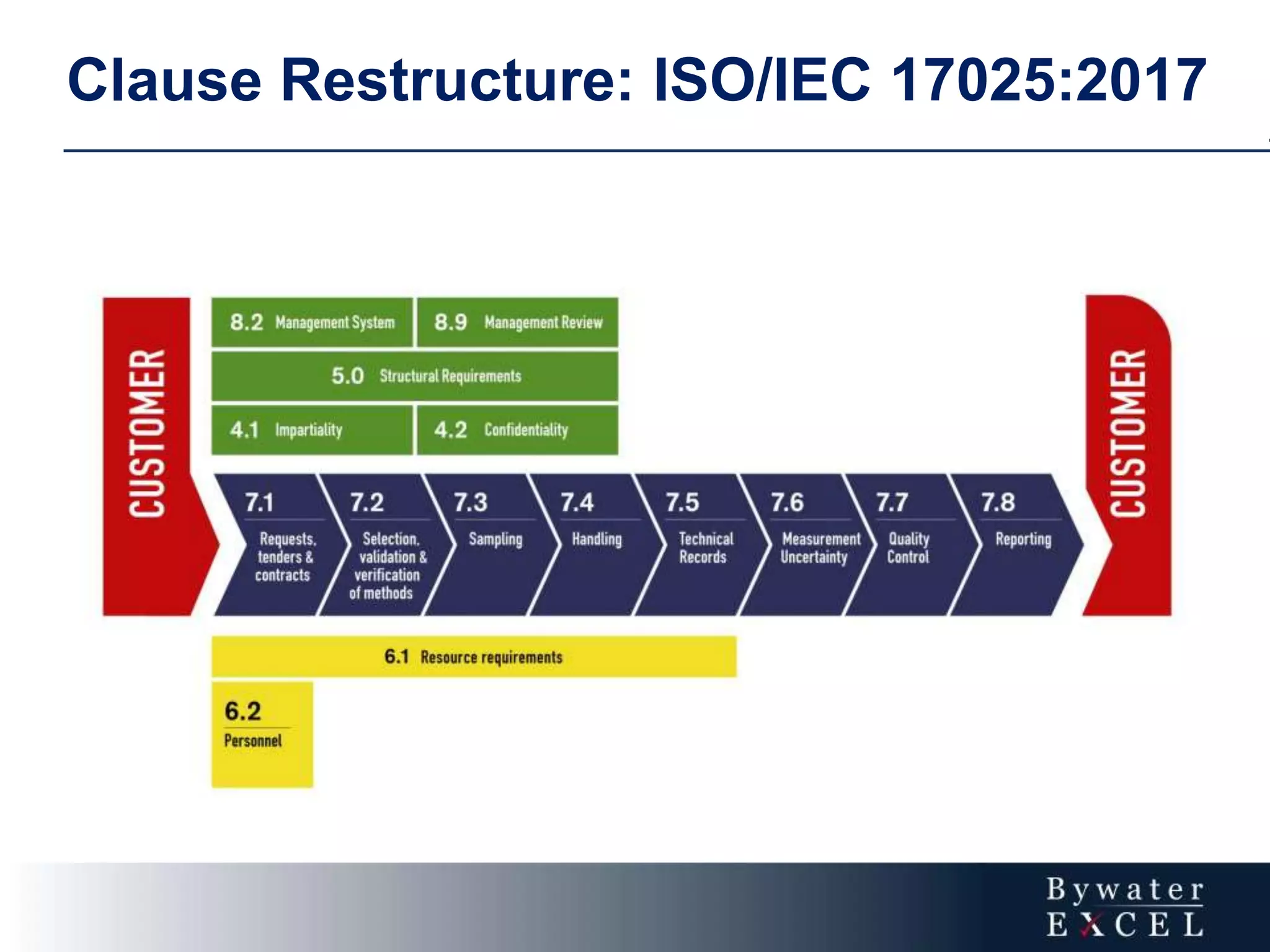
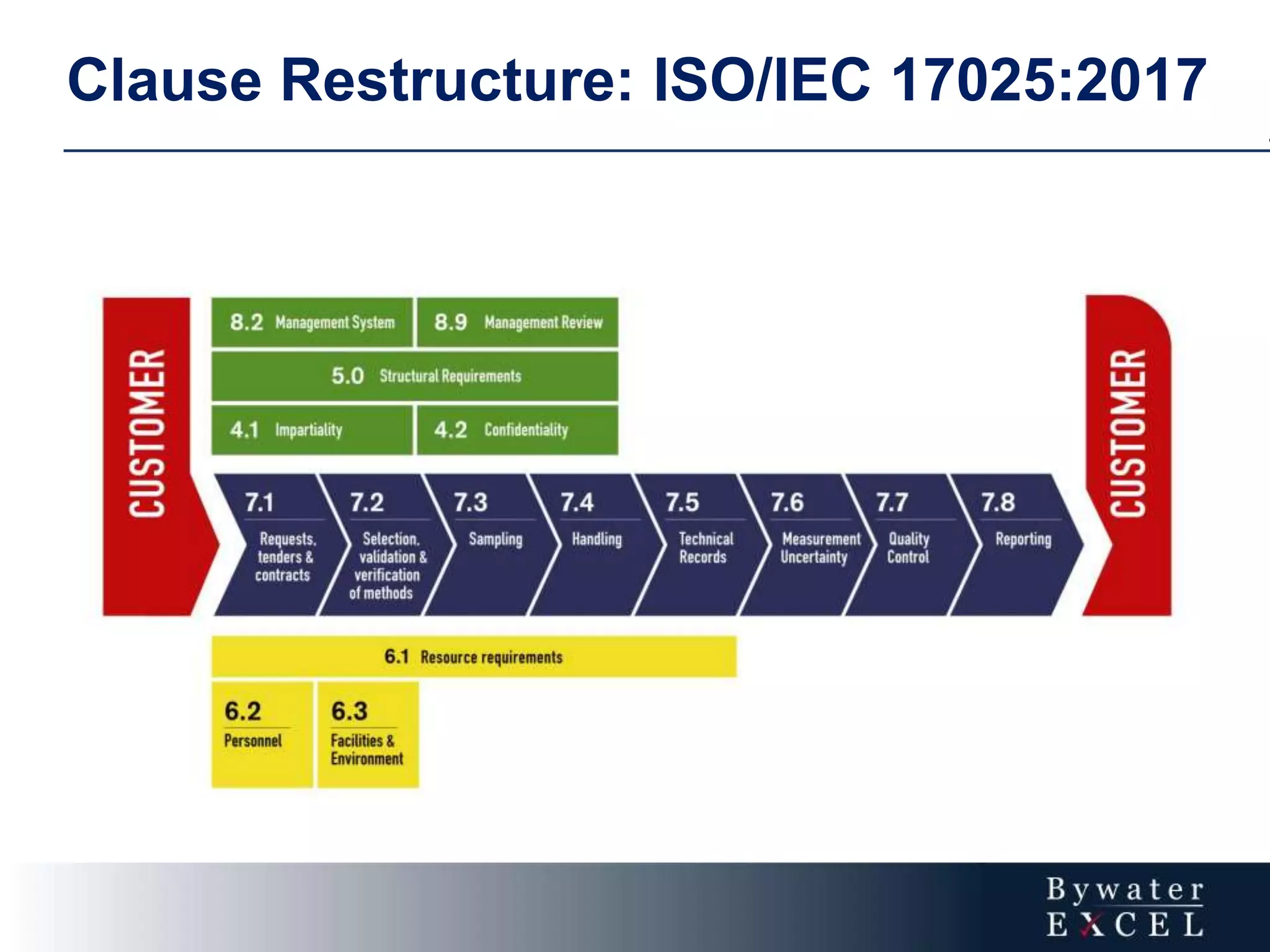
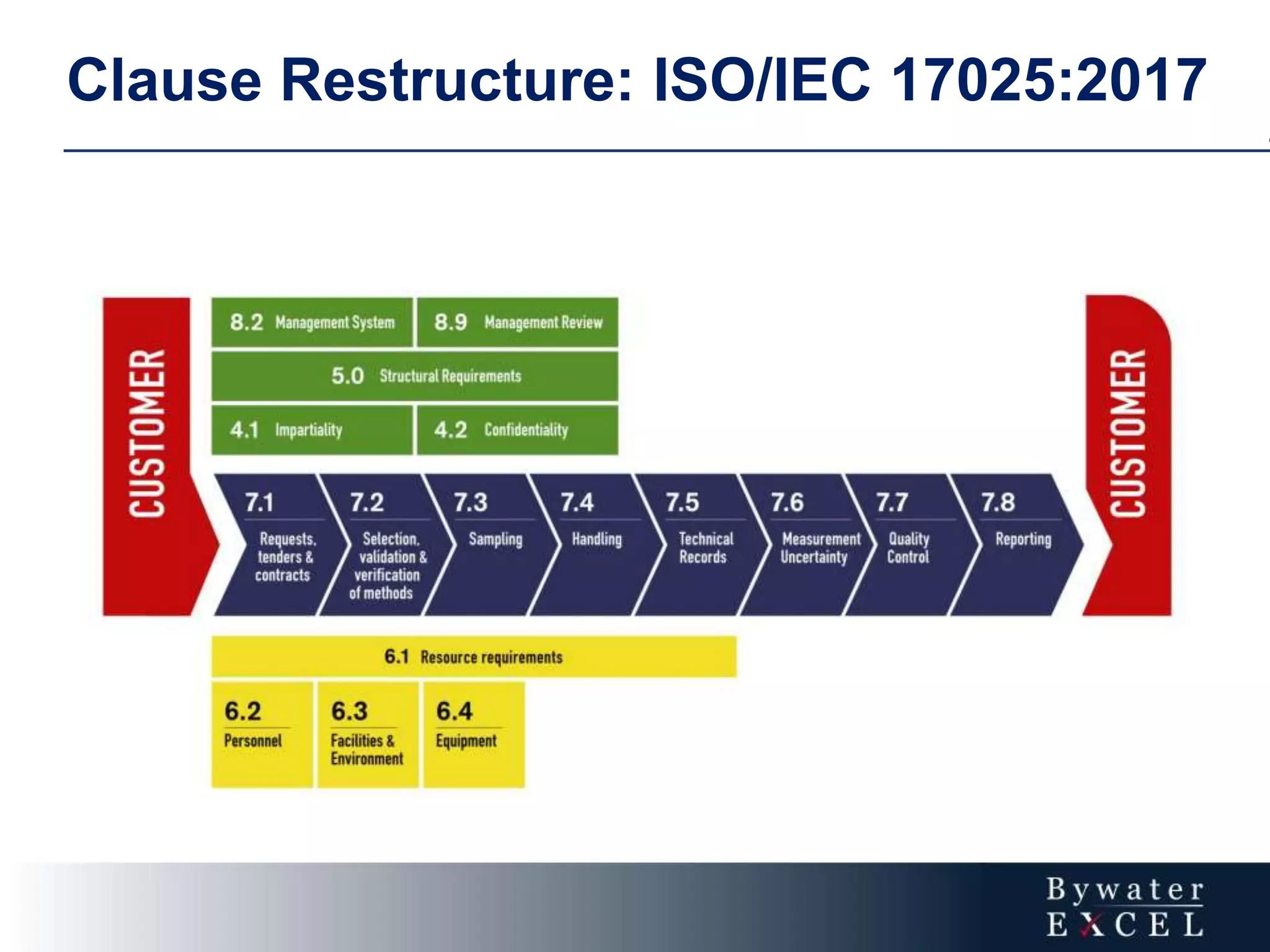
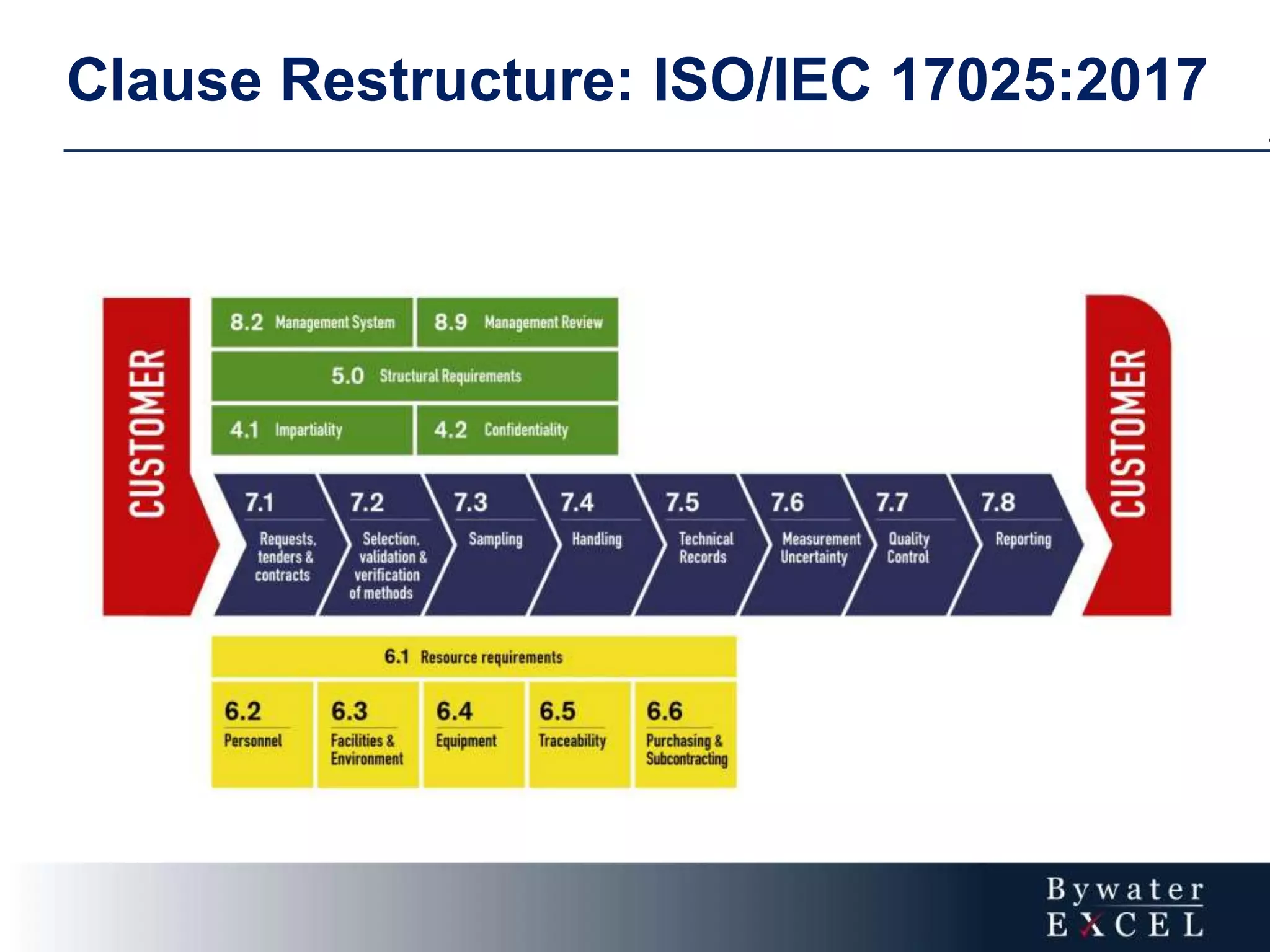
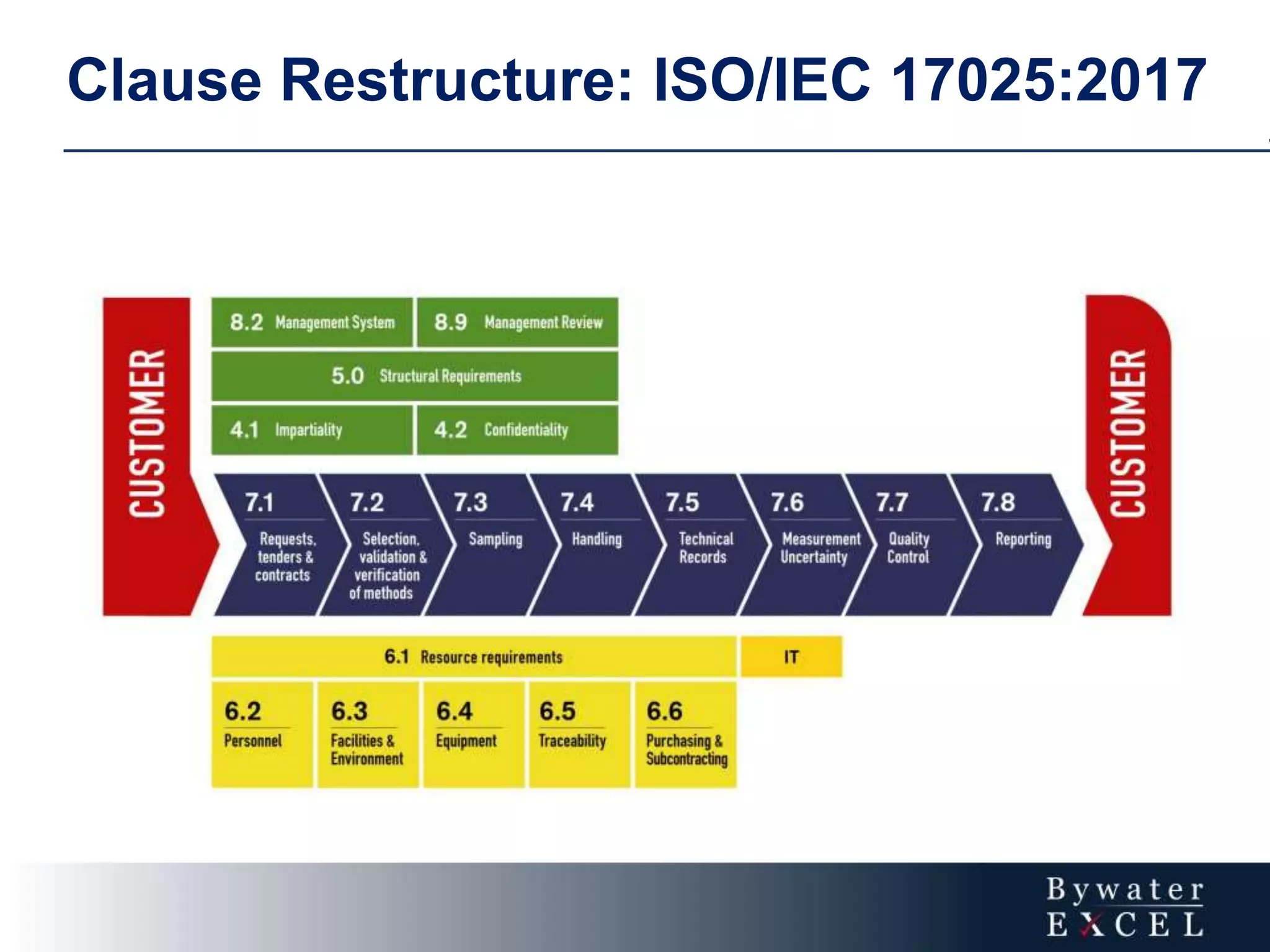
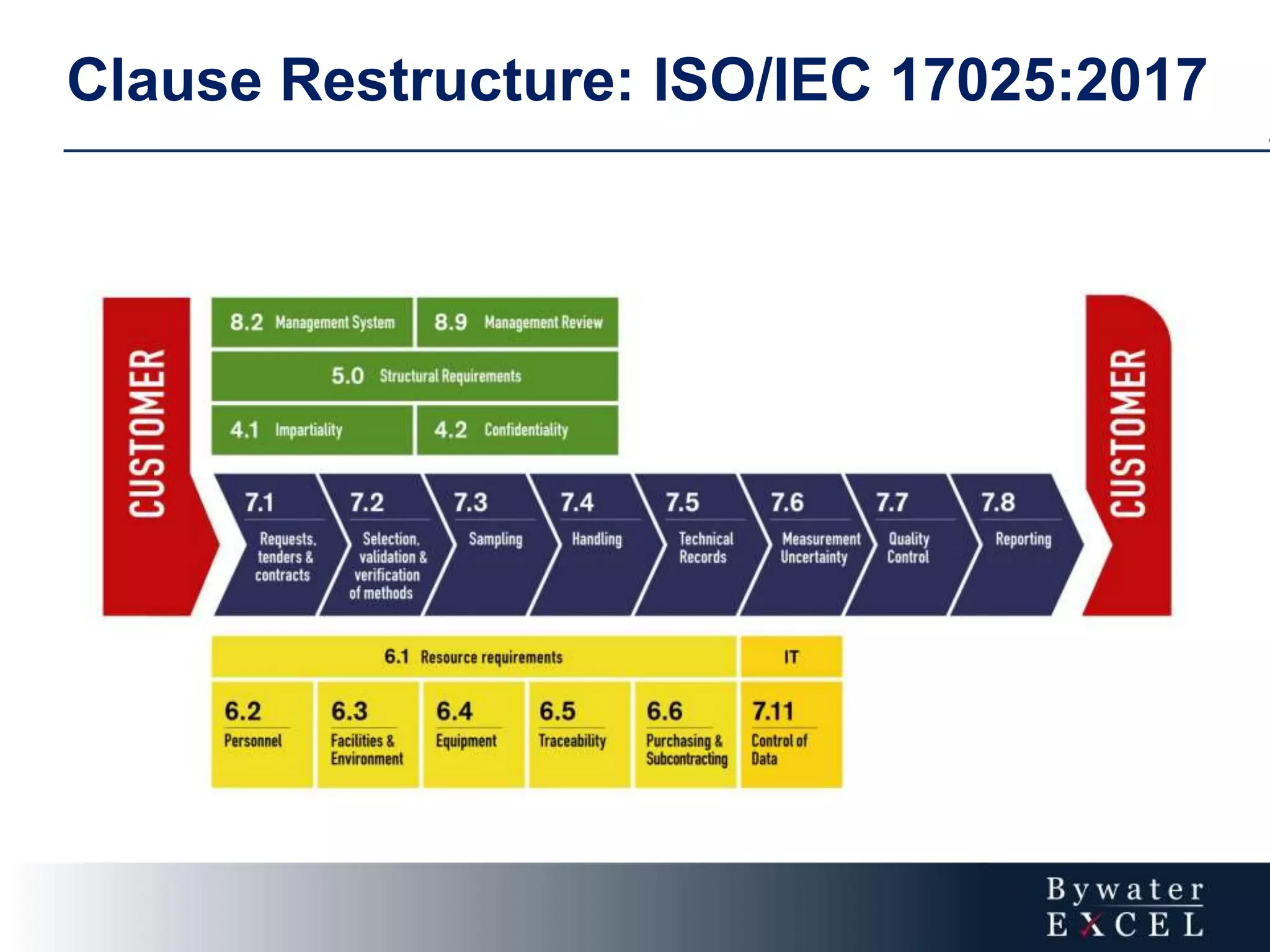
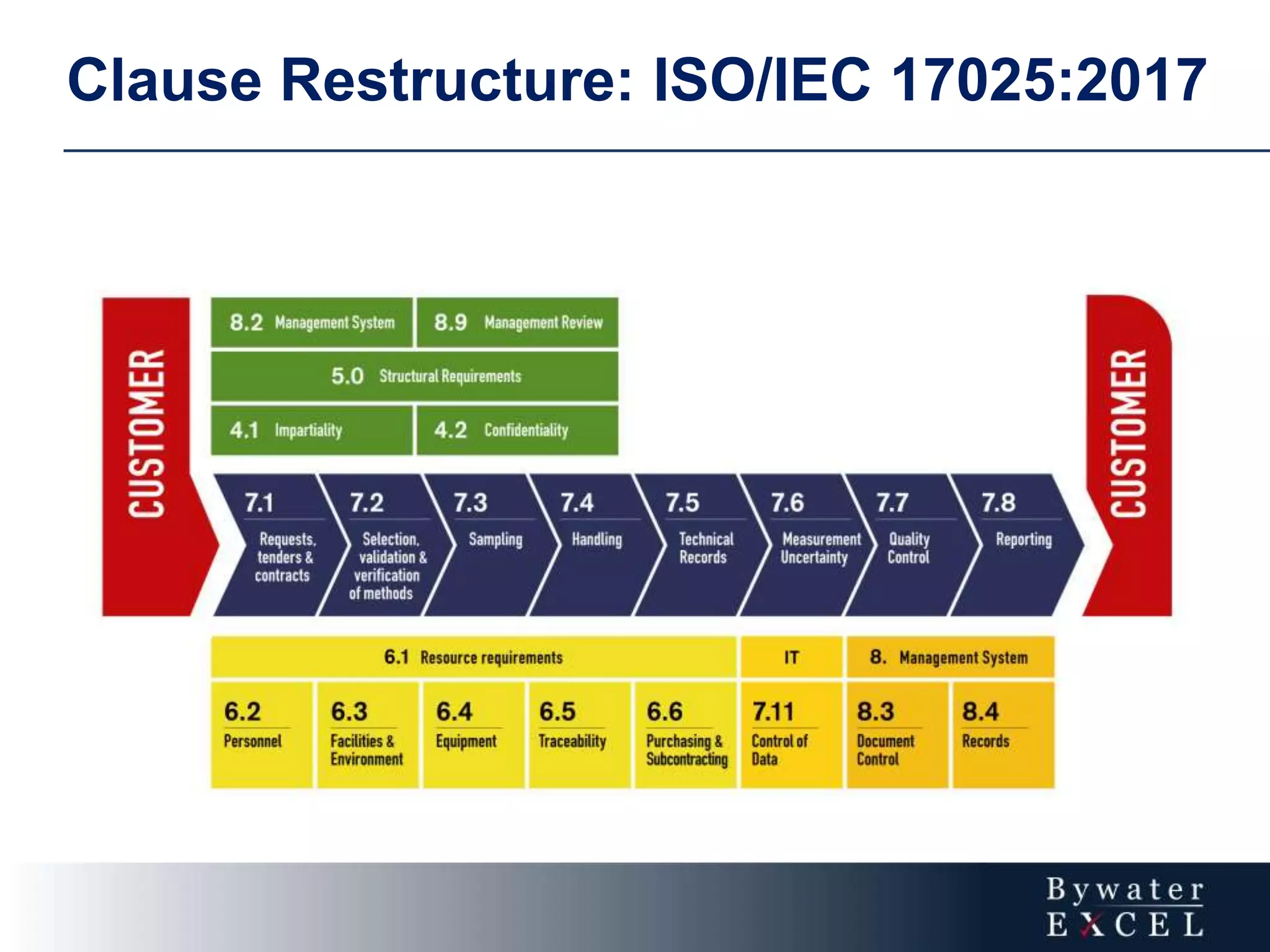
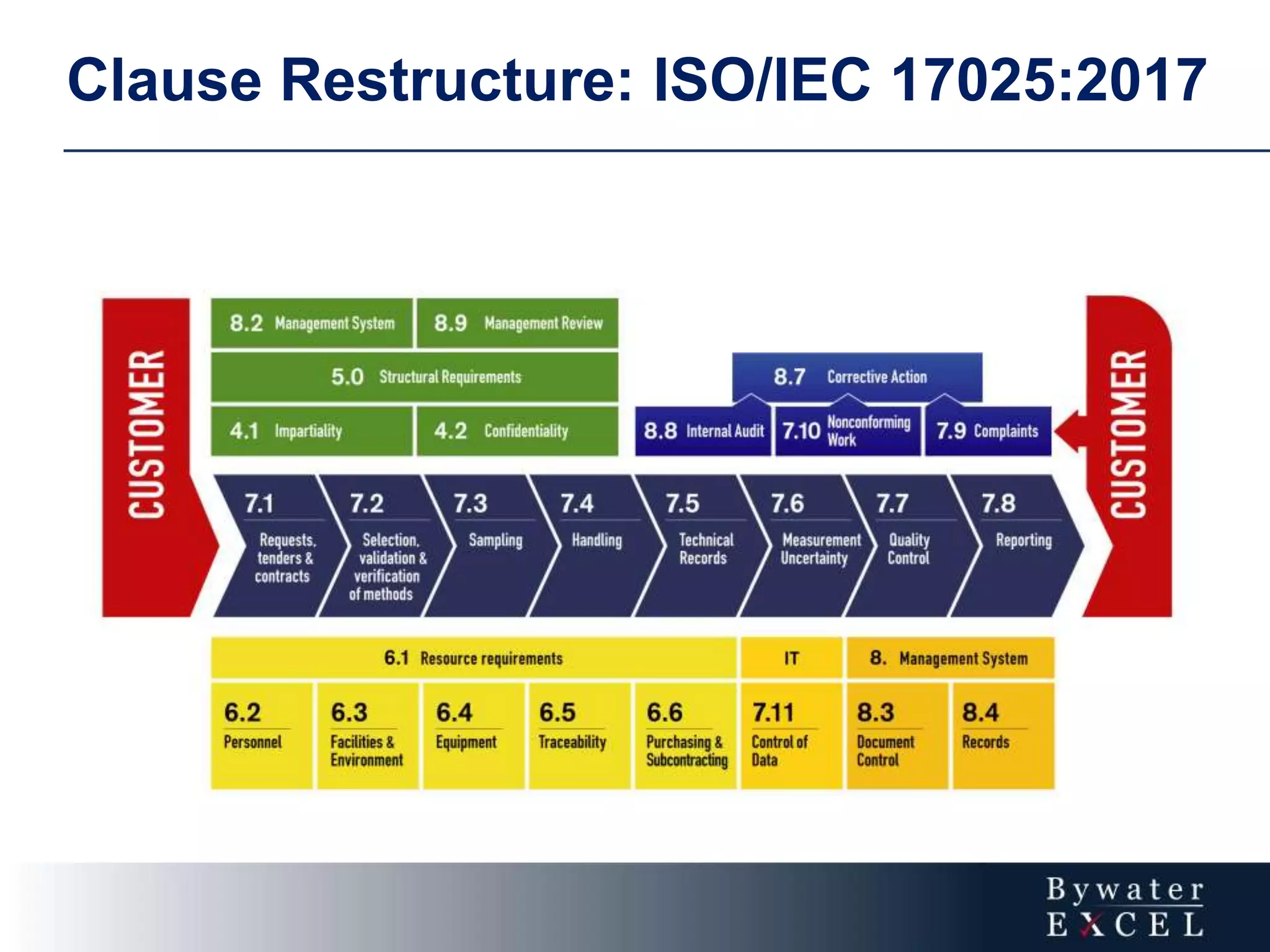
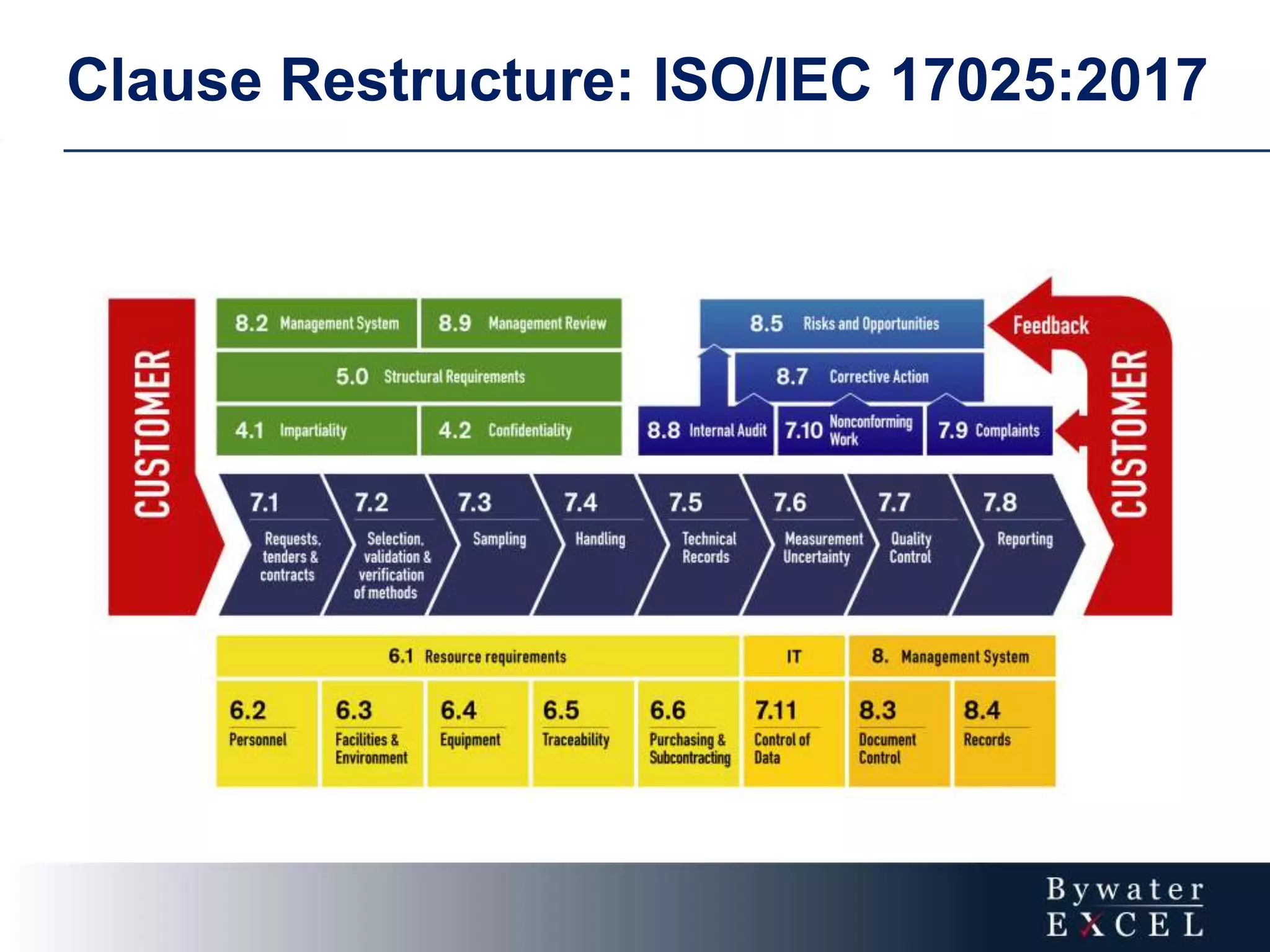
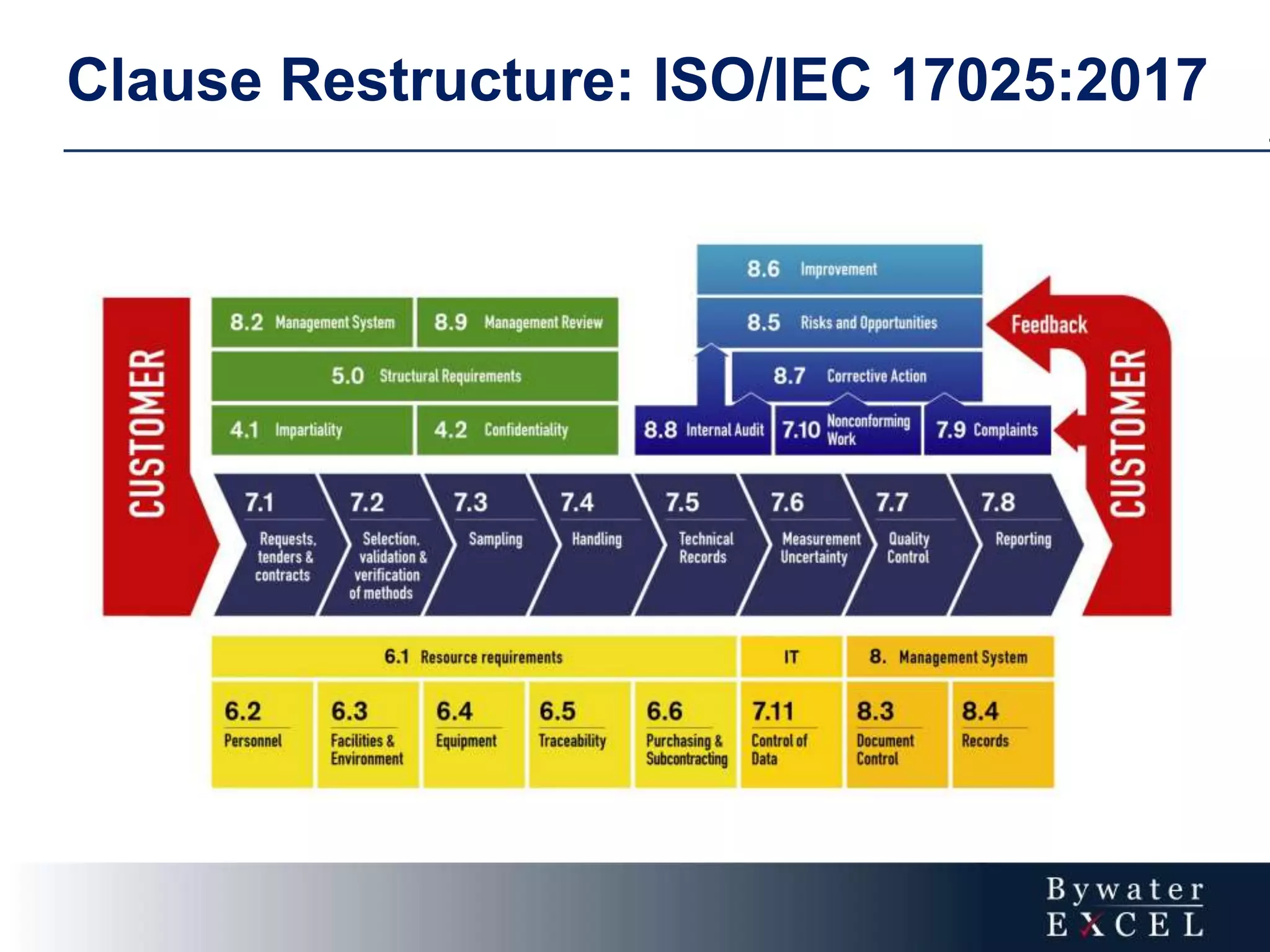
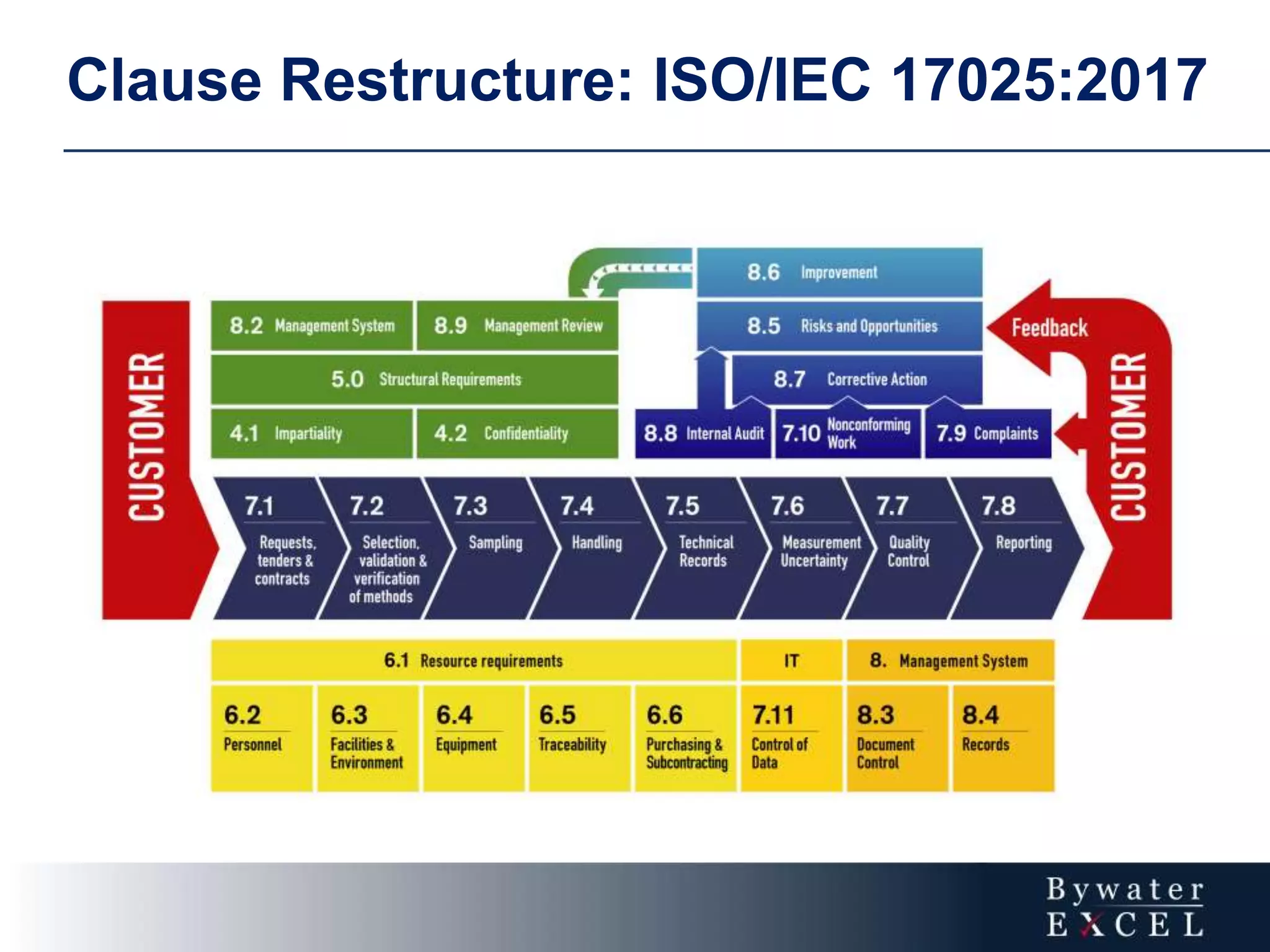
There has been a complete restructure of the
clause numbers – here we detail the updated
clauses and the relationship flow, together with
terminology changes.
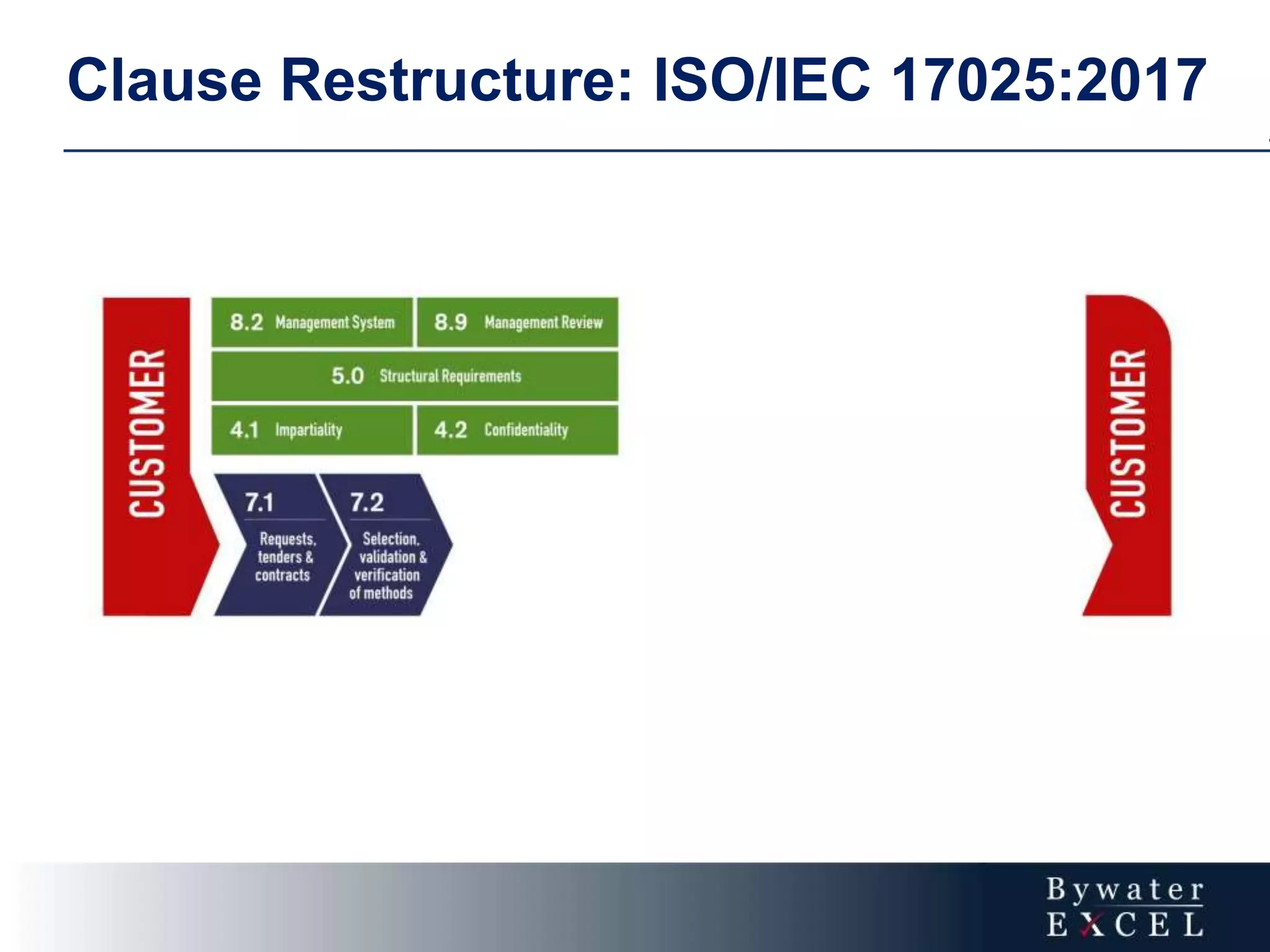
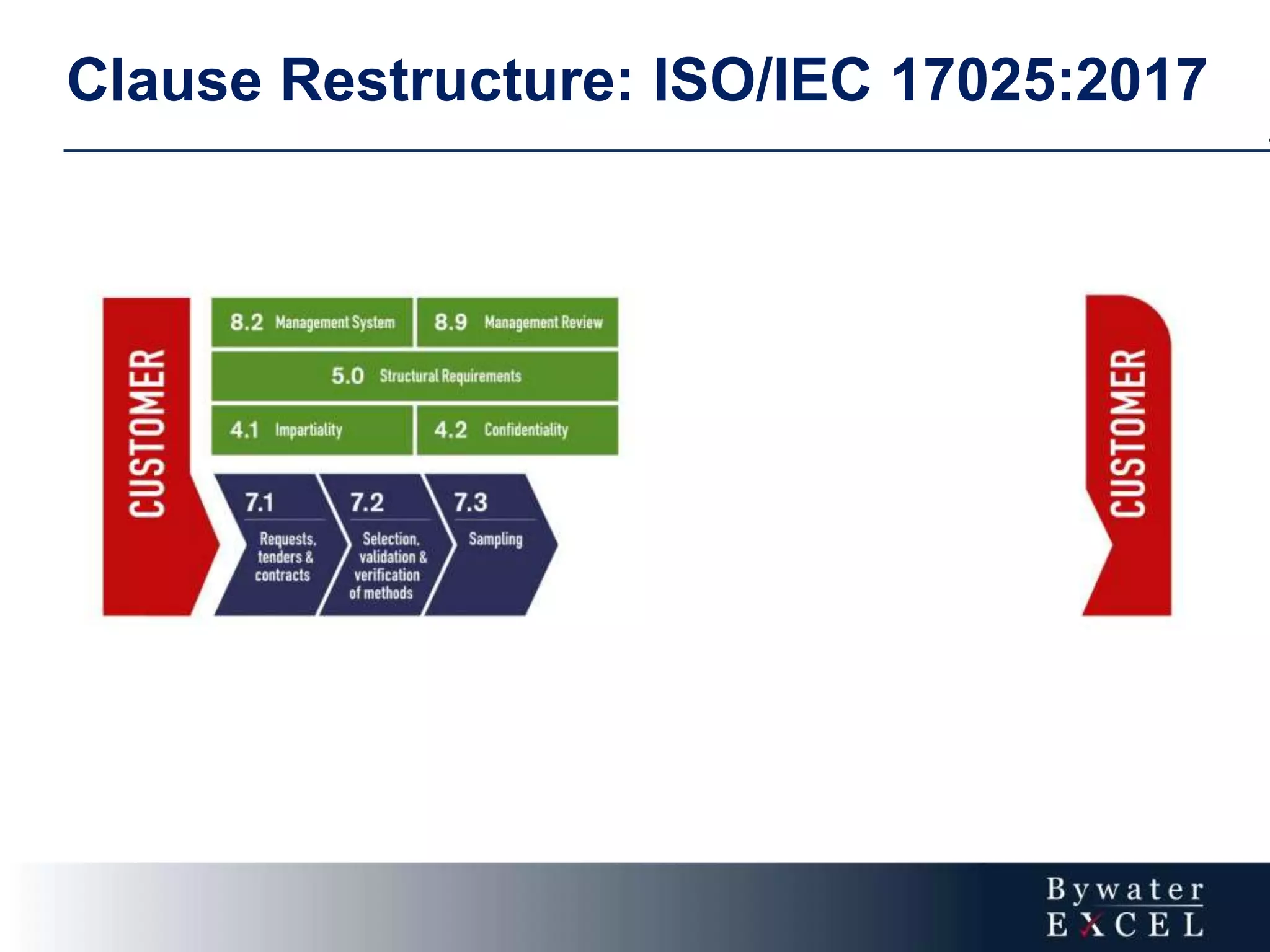
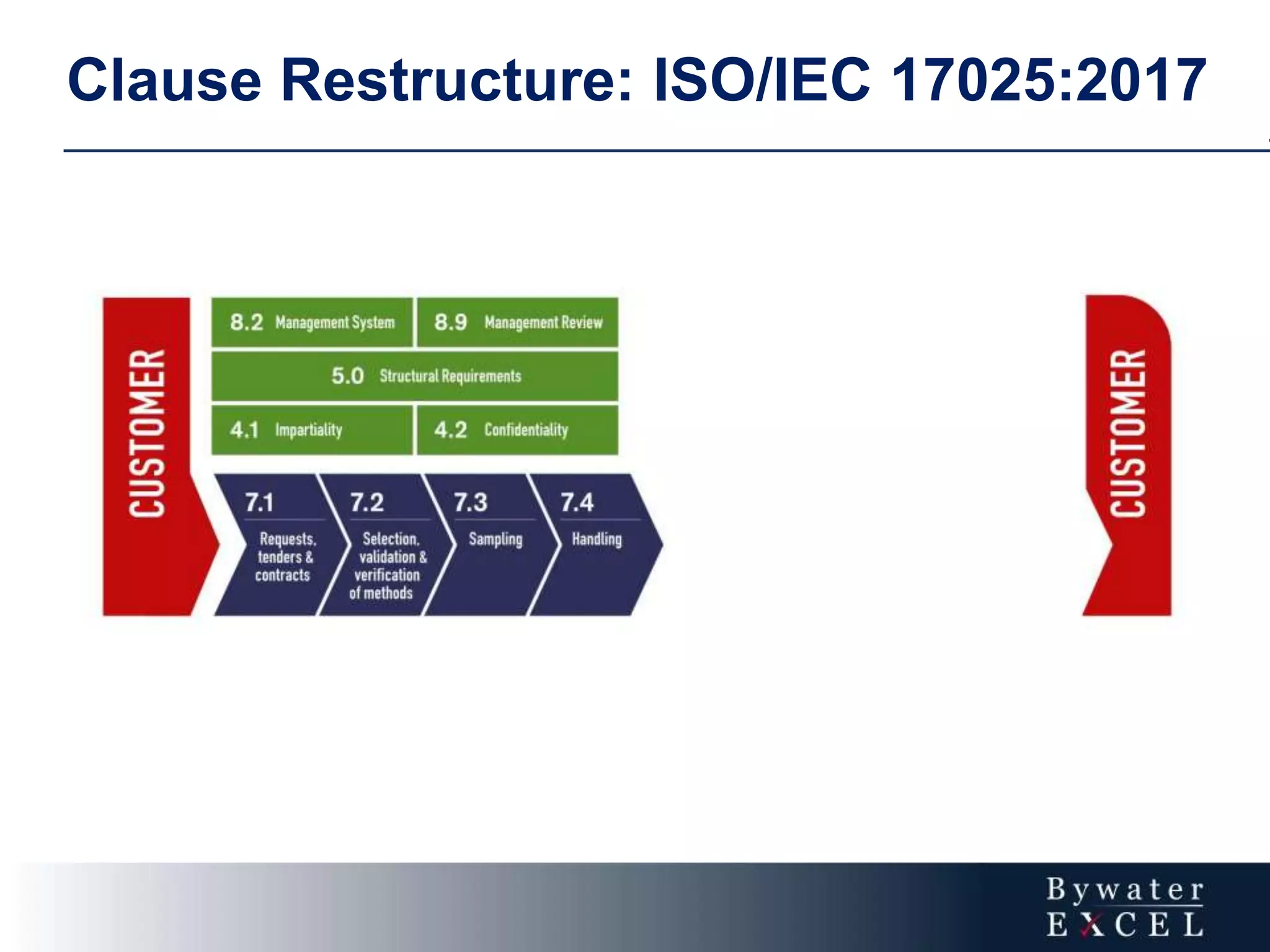
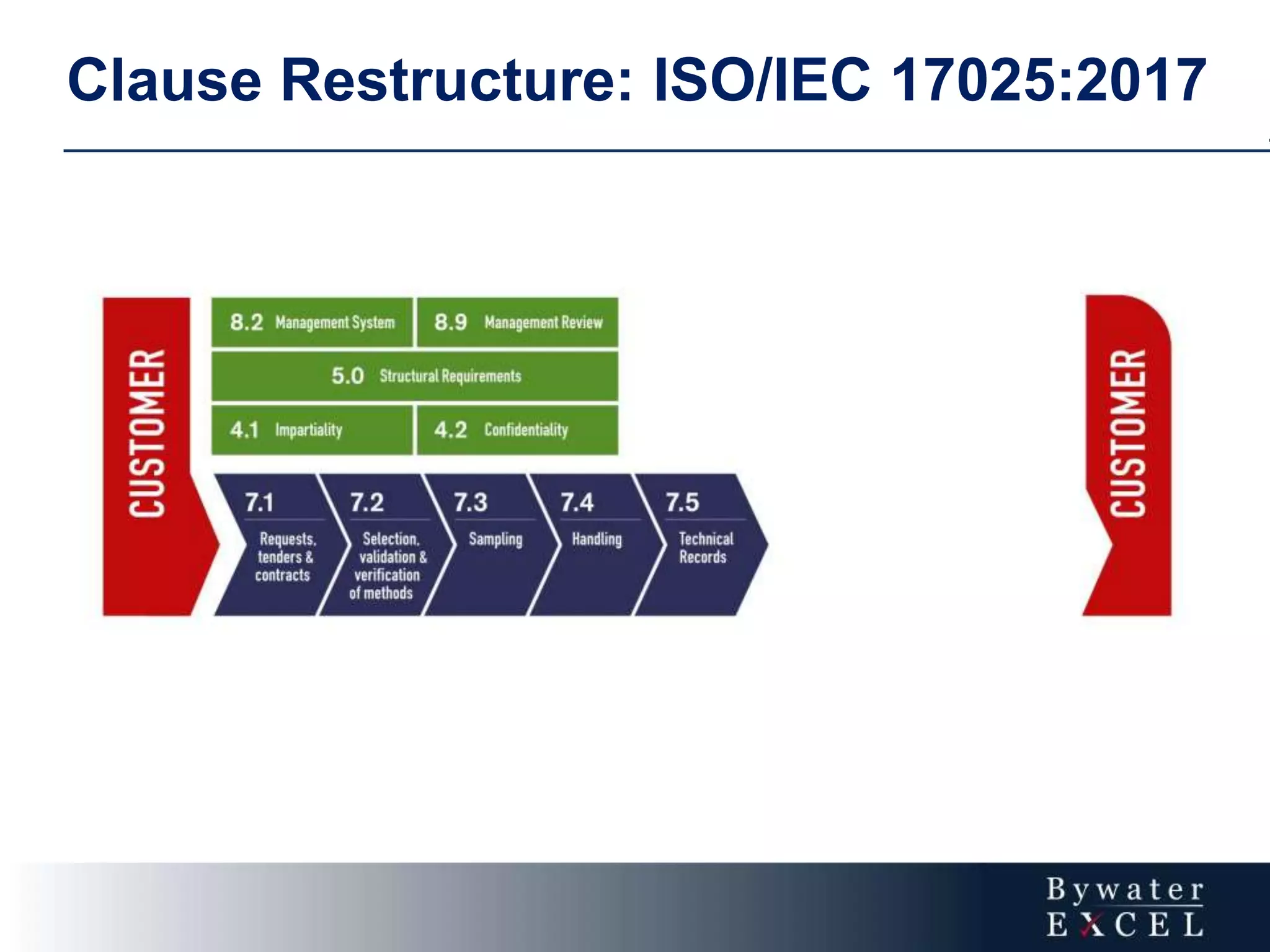
Clause Restructure: ISO/IEC 17025:2017
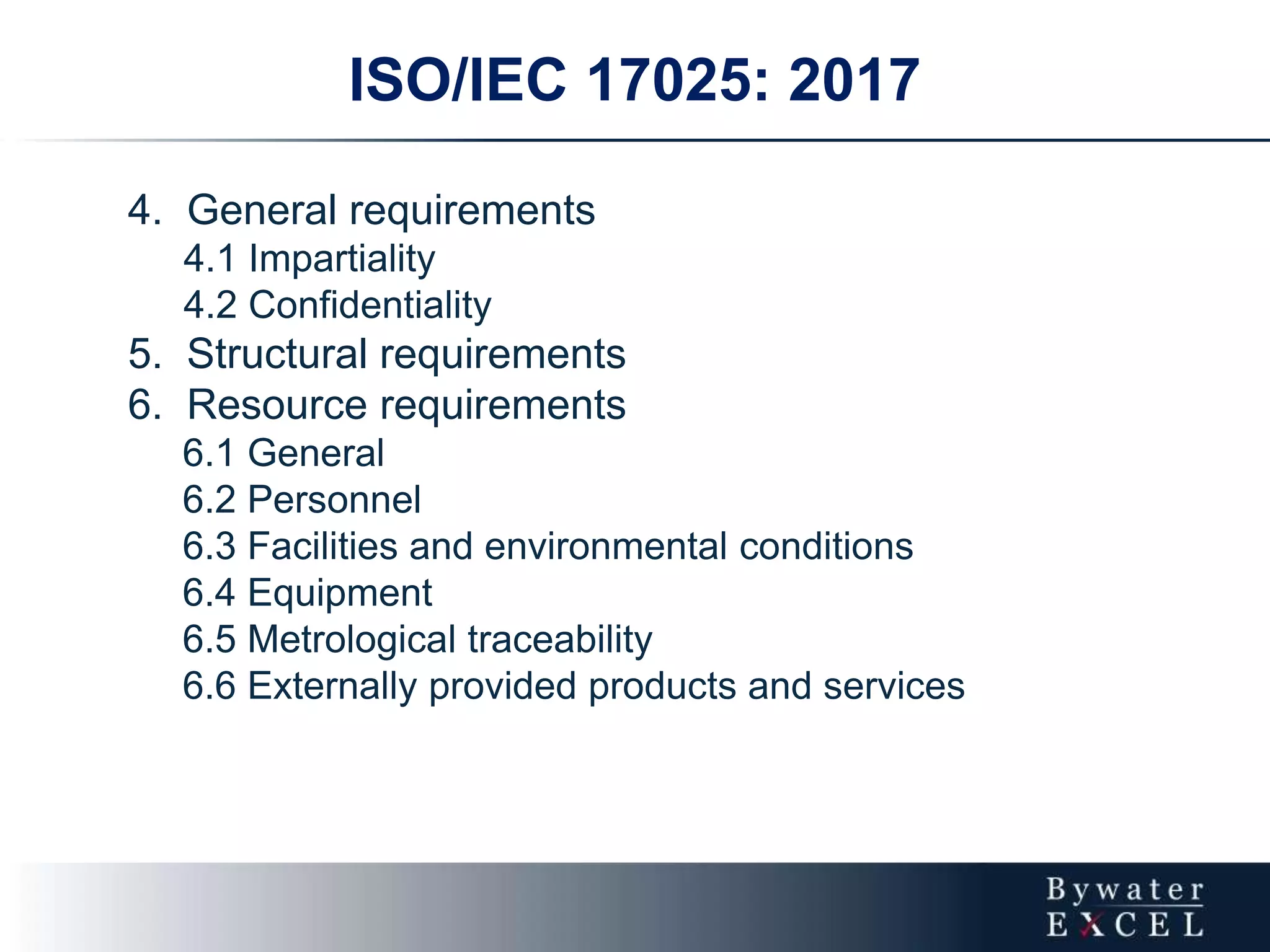
ISO/IEC 17025: 2017
4. General requirements
4.1 Impartiality
4.2 Confidentiality
5. Structural requirements
6. Resource requirements
6.1 General
6.2 Personnel
6.3 Facilities and environmental conditions
6.4 Equipment
6.5 Metrological traceability
6.6 Externally provided products and services
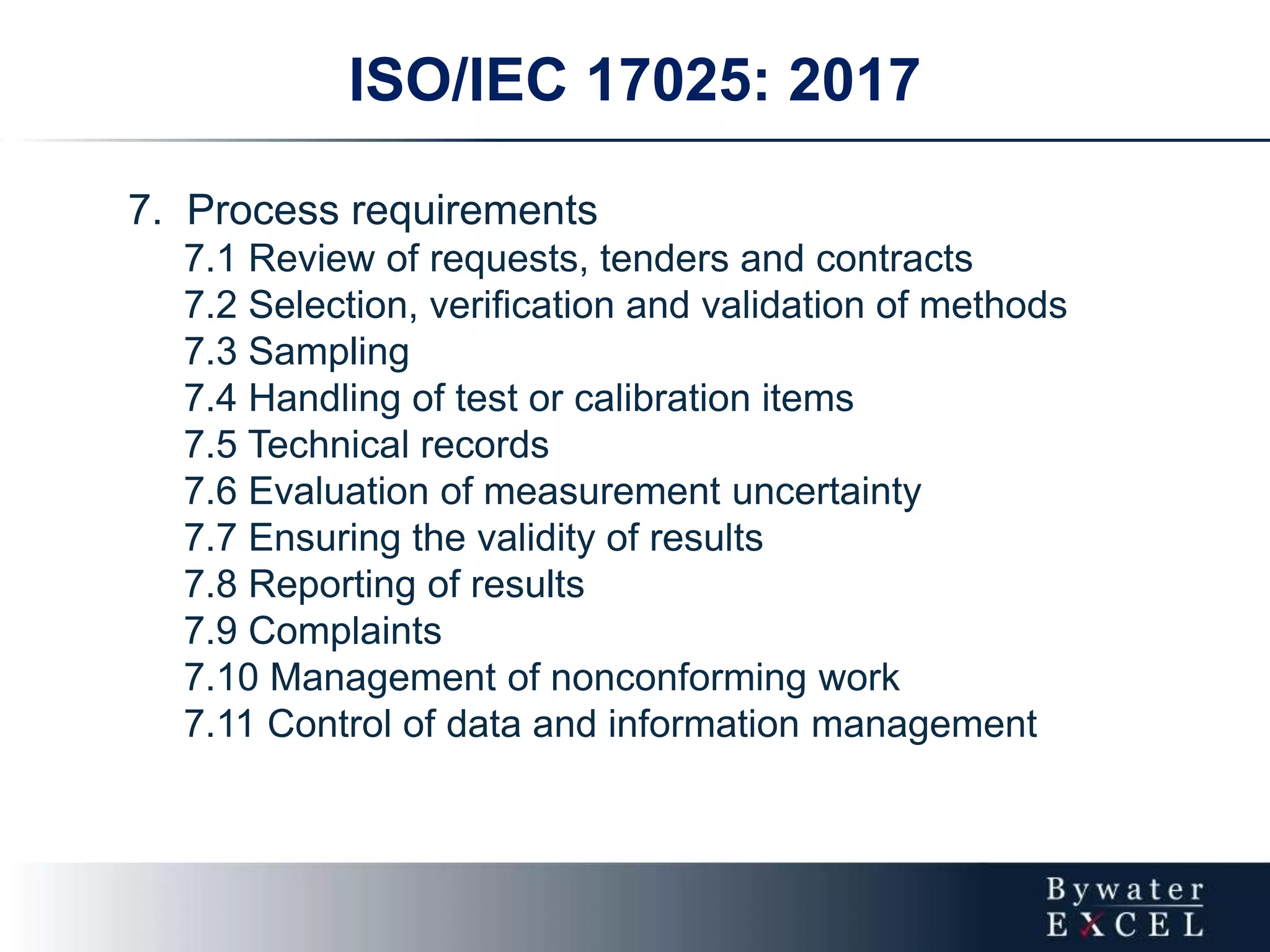
ISO/IEC 17025: 2017
7. Process requirements
7.1 Review of requests, tenders and contracts
7.2 Selection, verification and validation of methods
7.3 Sampling
7.4 Handling of test or calibration items
7.5 Technical records
7.6 Evaluation of measurement uncertainty
7.7 Ensuring the validity of results
7.8 Reporting of results
7.9 Complaints
7.10 Management of nonconforming work
7.11 Control of data and information management
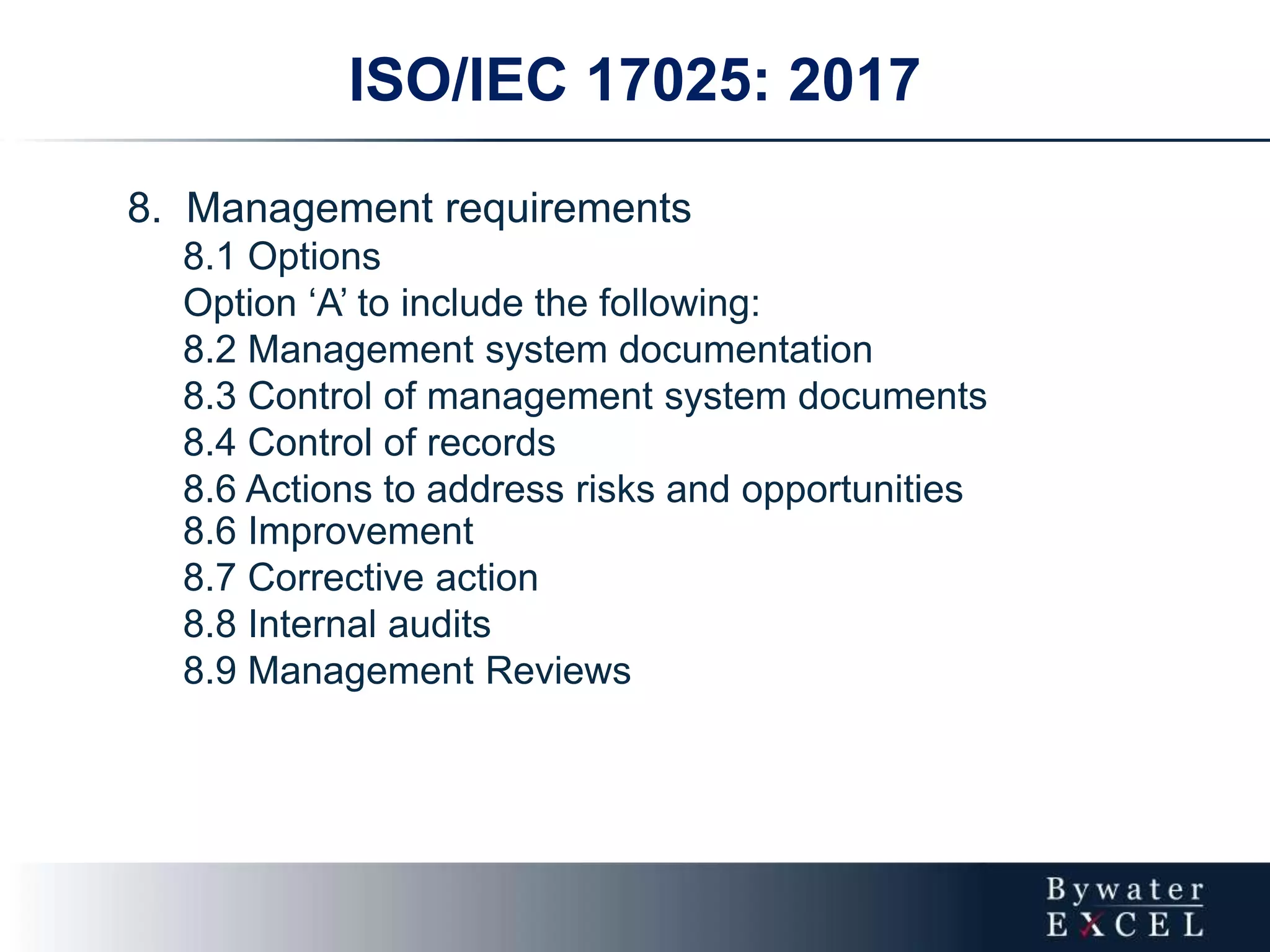
ISO/IEC 17025: 2017
8. Management requirements
8.1 Options
Option ‘A’ to include the following:
8.2 Management system documentation
8.3 Control of management system documents
8.4 Control of records
8.6 Actions to address risks and opportunities
8.6 Improvement
8.7 Corrective action
8.8 Internal audits
8.9 Management Reviews
Terminology
New Term
This ‘document’
Laboratory Management
Customer
Externally provided products
and services’
Introduced
Risks and Opportunities
Was
This ‘International Standard’
Top Management
Client
Purchasing and Subcontracting
Removed
Preventive Action
Quality Manual
Quality Manager
Technical Management
‘Safe’
Clause Restructure: ISO/IEC 17025:2017
3
Clause Restructure: ISO/IEC 17025:2017
Need Help to Transition?
If you need to learn more about the changes to
ISO/IEC 17025:2017 and how it can help you deliver
your services, Bywater offers Transition Training to
help you update your knowledge.
Consultancy is also available to help your
organisation transition to the new standard.
ISO/IEC 17025:2017 Transition Training
Public training
• 2 hour webinar
• Background and detail of the changes
• Provides practical guidance on the changes
• Repercussions and required actions
In-house training
• Available as a 1 day in-house training course at your
organisation’s premises.
• Includes implementation to help you transition to the new
standard smoothly.
• It can be bespoke to your industry or organisation.
• Contact us for a proposal.
Why attend?
• Highlight changes to the standard
• Consider impact on existing systems
• Provide ideas on how to comply
• Additional inputs for internal and external audit checklists
• Evidence of training in the new requirements
• Save time in identifying and implementing changes
Post course
• Detailed template of changes enabling your own gap
assessment
• Certificate of attendance
ISO/IEC 17025:2017 Transition Training
Contact the Bywater Team
Visit ISO/IEC 17025 Transition Training course for more
information and dates of the webinars.
or contact the Training Team on
Telephone: 0333 123 9001
Email: contact@bywater.co.uk
Website: www.bywater.co.uk
www.bywater.co.uk

ISO IEC 17025 Clause Changes from 2005 to the new standard 2017

  • 1.
    ISO/IEC 17025:2005 –2017 Clause Changes to the Standard www.bywater.co.uk
  • 2.
    What is ISO/IEC17025? ISO/IEC 17025 is the International Standard specifying criteria for competence for laboratories. The new standard was updated in November 2017.
  • 3.
    • Allow fortechnology and development changes • IT technology advances • Follow the updated ISO 9001:2015 standard • Update language and changes to laboratories Organisations have 3 years to transition to the new standard. Why Change ISO/IEC 17025?
  • 4.
    • Complete restructuringof clause numbers • Interaction with ISO 9001 • Impartiality risk assessment • Risks and opportunities • Customer complaints • Handling of confidential information • Internal audits – ‘importance of activity’ • Management review – agenda additions • Reporting – enhanced requirements • Statements of conformity • Data and Information management systems Changes to ISO/IEC 17025
  • 5.
    There has beena complete restructure of the clause numbers – here we detail the updated clauses and the relationship flow, together with terminology changes. Clause Restructure: ISO/IEC 17025:2017
  • 6.
    ISO/IEC 17025: 2017 4.General requirements 4.1 Impartiality 4.2 Confidentiality 5. Structural requirements 6. Resource requirements 6.1 General 6.2 Personnel 6.3 Facilities and environmental conditions 6.4 Equipment 6.5 Metrological traceability 6.6 Externally provided products and services
  • 7.
    ISO/IEC 17025: 2017 7.Process requirements 7.1 Review of requests, tenders and contracts 7.2 Selection, verification and validation of methods 7.3 Sampling 7.4 Handling of test or calibration items 7.5 Technical records 7.6 Evaluation of measurement uncertainty 7.7 Ensuring the validity of results 7.8 Reporting of results 7.9 Complaints 7.10 Management of nonconforming work 7.11 Control of data and information management
  • 8.
    ISO/IEC 17025: 2017 8.Management requirements 8.1 Options Option ‘A’ to include the following: 8.2 Management system documentation 8.3 Control of management system documents 8.4 Control of records 8.6 Actions to address risks and opportunities 8.6 Improvement 8.7 Corrective action 8.8 Internal audits 8.9 Management Reviews
  • 9.
    Terminology New Term This ‘document’ LaboratoryManagement Customer Externally provided products and services’ Introduced Risks and Opportunities Was This ‘International Standard’ Top Management Client Purchasing and Subcontracting Removed Preventive Action Quality Manual Quality Manager Technical Management ‘Safe’
  • 10.
  • 11.
  • 12.
  • 13.
  • 14.
  • 15.
  • 16.
  • 17.

  • 18.
  • 19.
  • 20.
  • 21.
  • 22.
  • 23.
  • 24.
  • 25.
  • 26.
  • 27.
  • 28.
  • 29.
  • 30.
  • 31.
  • 32.
  • 33.
    Need Help toTransition? If you need to learn more about the changes to ISO/IEC 17025:2017 and how it can help you deliver your services, Bywater offers Transition Training to help you update your knowledge. Consultancy is also available to help your organisation transition to the new standard.
  • 34.
    ISO/IEC 17025:2017 TransitionTraining Public training • 2 hour webinar • Background and detail of the changes • Provides practical guidance on the changes • Repercussions and required actions In-house training • Available as a 1 day in-house training course at your organisation’s premises. • Includes implementation to help you transition to the new standard smoothly. • It can be bespoke to your industry or organisation. • Contact us for a proposal.
  • 35.
    Why attend? • Highlightchanges to the standard • Consider impact on existing systems • Provide ideas on how to comply • Additional inputs for internal and external audit checklists • Evidence of training in the new requirements • Save time in identifying and implementing changes Post course • Detailed template of changes enabling your own gap assessment • Certificate of attendance ISO/IEC 17025:2017 Transition Training
  • 36.
    Contact the BywaterTeam Visit ISO/IEC 17025 Transition Training course for more information and dates of the webinars. or contact the Training Team on Telephone: 0333 123 9001 Email: contact@bywater.co.uk Website: www.bywater.co.uk
  • 37.

Editor's Notes