Civic issue
Isaiah Adkins
Cycle 1
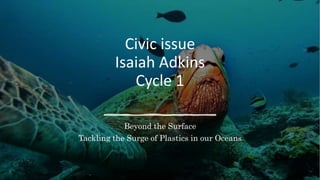
Beyond the Surface
Tackling the Surge of Plastics in our Oceans
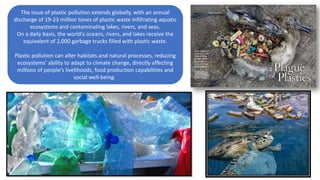
The issue of plastic pollution extends globally, with an annual
discharge of 19-23 million tones of plastic waste infiltrating aquatic
ecosystems and contaminating lakes, rivers, and seas.
On a daily basis, the world's oceans, rivers, and lakes receive the
equivalent of 2,000 garbage trucks filled with plastic waste.
Plastic pollution can alter habitats and natural processes, reducing
ecosystems’ ability to adapt to climate change, directly affecting
millions of people’s livelihoods, food production capabilities and
social well-being.
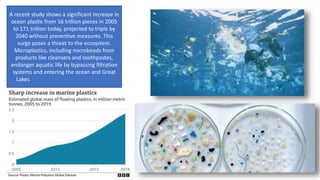
A recent study shows a significant increase in
ocean plastic from 16 trillion pieces in 2005
to 171 trillion today, projected to triple by
2040 without preventive measures. This
surge poses a threat to the ecosystem.
Microplastics, including microbeads from
products like cleansers and toothpastes,
endanger aquatic life by bypassing filtration
systems and entering the ocean and Great
Lakes
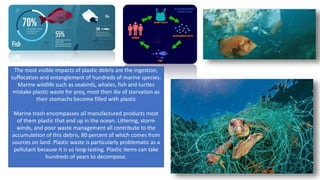
The most visible impacts of plastic debris are the ingestion,
suffocation and entanglement of hundreds of marine species.
Marine wildlife such as seabirds, whales, fish and turtles
mistake plastic waste for prey, most then die of starvation as
their stomachs become filled with plastic
Marine trash encompasses all manufactured products most
of them plastic that end up in the ocean. Littering, storm
winds, and poor waste management all contribute to the
accumulation of this debris, 80 percent of which comes from
sources on land. Plastic waste is particularly problematic as a
pollutant because it is so long-lasting. Plastic items can take
hundreds of years to decompose.
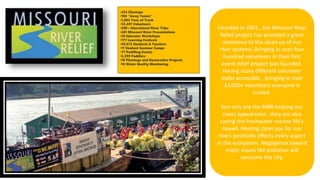
Founded in 2001 , the Missouri River
Relief project has provided a great
assistance to the clean up of our
river systems. Bringing in over four
hundred volunteers in their first
event relief project was founded.
Having many different volunteer
styles accessible , bringing in over
33,000+ volunteers everyone is
invited.
Not only are the MRR helping our
rivers appearance , they are also
saving the freshwater marine life's
Aswell. Hosting clean ups for our
rivers positively effects every aspect
in the ecosystem. Negligence toward
major issues like pollution will
consume the city.
•224 Cleanups
•100 "Away Teams"
•1,064 Tons of Trash
•33,491 Volunteers
•300+ Educational River Trips
•401 Missouri River Presentations
•26 Educator Workshops
•177 Learning Festivals
•39,673 Students & Teachers
•11 Student Summer Camps
•77 Paddling Events
•5,399 Paddlers
•10 Plantings and Restoration Projects
•16 Water Quality Monitoring
• Kansas city's clean up projects are
constantly going on to keep our city
looking beautiful. The Great Kansas
City Cleanup supports the process
though volunteer and charity work.
They are devoted to keeping the parks
and neighborhoods clean with the help
of our community. Gather with friends
and work as a team to help tackle this
nasty issue. Hosting new events
monthly, just check out their calendar
to get involved in their movement.
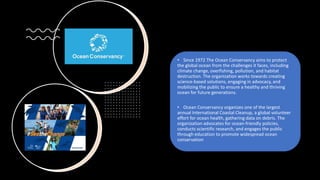
• Since 1972 The Ocean Conservancy aims to protect
the global ocean from the challenges it faces, including
climate change, overfishing, pollution, and habitat
destruction. The organization works towards creating
science-based solutions, engaging in advocacy, and
mobilizing the public to ensure a healthy and thriving
ocean for future generations.
• Ocean Conservancy organizes one of the largest
annual International Coastal Cleanup, a global volunteer
effort for ocean health, gathering data on debris. The
organization advocates for ocean-friendly policies,
conducts scientific research, and engages the public
through education to promote widespread ocean
conservation
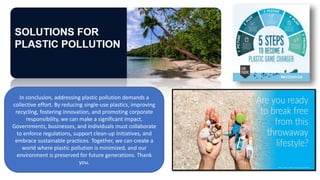
In conclusion, addressing plastic pollution demands a
collective effort. By reducing single-use plastics, improving
recycling, fostering innovation, and promoting corporate
responsibility, we can make a significant impact.
Governments, businesses, and individuals must collaborate
to enforce regulations, support clean-up initiatives, and
embrace sustainable practices. Together, we can create a
world where plastic pollution is minimized, and our
environment is preserved for future generations. Thank
you.
Resources
About Us - Ocean Conservancy
Plastic Pollution
https://riverrelief.org/about/our-history
https://www.kcmo.gov/programs-initiatives/cleanup
https://www.britannica.com/science/plastic-pollution
https://oceanservice.noaa.gov/facts/microplastics.html
https://oceanliteracy.unesco.org/plastic-pollution-ocean
Thank you for listening, -
Isaiah Adkins
Isaiah Adkins Civic presentation

Isaiah Adkins Civic presentation

  • 1.
    Civic issue Isaiah Adkins Cycle1 Beyond the Surface Tackling the Surge of Plastics in our Oceans
  • 2.
    The issue ofplastic pollution extends globally, with an annual discharge of 19-23 million tones of plastic waste infiltrating aquatic ecosystems and contaminating lakes, rivers, and seas. On a daily basis, the world's oceans, rivers, and lakes receive the equivalent of 2,000 garbage trucks filled with plastic waste. Plastic pollution can alter habitats and natural processes, reducing ecosystems’ ability to adapt to climate change, directly affecting millions of people’s livelihoods, food production capabilities and social well-being.
  • 3.
    A recent studyshows a significant increase in ocean plastic from 16 trillion pieces in 2005 to 171 trillion today, projected to triple by 2040 without preventive measures. This surge poses a threat to the ecosystem. Microplastics, including microbeads from products like cleansers and toothpastes, endanger aquatic life by bypassing filtration systems and entering the ocean and Great Lakes
  • 4.
    The most visibleimpacts of plastic debris are the ingestion, suffocation and entanglement of hundreds of marine species. Marine wildlife such as seabirds, whales, fish and turtles mistake plastic waste for prey, most then die of starvation as their stomachs become filled with plastic Marine trash encompasses all manufactured products most of them plastic that end up in the ocean. Littering, storm winds, and poor waste management all contribute to the accumulation of this debris, 80 percent of which comes from sources on land. Plastic waste is particularly problematic as a pollutant because it is so long-lasting. Plastic items can take hundreds of years to decompose.
  • 5.
    Founded in 2001, the Missouri River Relief project has provided a great assistance to the clean up of our river systems. Bringing in over four hundred volunteers in their first event relief project was founded. Having many different volunteer styles accessible , bringing in over 33,000+ volunteers everyone is invited. Not only are the MRR helping our rivers appearance , they are also saving the freshwater marine life's Aswell. Hosting clean ups for our rivers positively effects every aspect in the ecosystem. Negligence toward major issues like pollution will consume the city. •224 Cleanups •100 "Away Teams" •1,064 Tons of Trash •33,491 Volunteers •300+ Educational River Trips •401 Missouri River Presentations •26 Educator Workshops •177 Learning Festivals •39,673 Students & Teachers •11 Student Summer Camps •77 Paddling Events •5,399 Paddlers •10 Plantings and Restoration Projects •16 Water Quality Monitoring
  • 6.
    • Kansas city'sclean up projects are constantly going on to keep our city looking beautiful. The Great Kansas City Cleanup supports the process though volunteer and charity work. They are devoted to keeping the parks and neighborhoods clean with the help of our community. Gather with friends and work as a team to help tackle this nasty issue. Hosting new events monthly, just check out their calendar to get involved in their movement.
  • 7.
    • Since 1972The Ocean Conservancy aims to protect the global ocean from the challenges it faces, including climate change, overfishing, pollution, and habitat destruction. The organization works towards creating science-based solutions, engaging in advocacy, and mobilizing the public to ensure a healthy and thriving ocean for future generations. • Ocean Conservancy organizes one of the largest annual International Coastal Cleanup, a global volunteer effort for ocean health, gathering data on debris. The organization advocates for ocean-friendly policies, conducts scientific research, and engages the public through education to promote widespread ocean conservation
  • 8.
    In conclusion, addressingplastic pollution demands a collective effort. By reducing single-use plastics, improving recycling, fostering innovation, and promoting corporate responsibility, we can make a significant impact. Governments, businesses, and individuals must collaborate to enforce regulations, support clean-up initiatives, and embrace sustainable practices. Together, we can create a world where plastic pollution is minimized, and our environment is preserved for future generations. Thank you.
  • 9.
    Resources About Us -Ocean Conservancy Plastic Pollution https://riverrelief.org/about/our-history https://www.kcmo.gov/programs-initiatives/cleanup https://www.britannica.com/science/plastic-pollution https://oceanservice.noaa.gov/facts/microplastics.html https://oceanliteracy.unesco.org/plastic-pollution-ocean
  • 10.
    Thank you forlistening, - Isaiah Adkins